Colonial Williamsburg, Virginia – Part 1: The Governor’s Palace

Monday, July 14 — We were still confused about Colonial Williamsburg. According to what we’d read online, we needed to buy tickets to see the historic town at the Regional Visitor’s Center, which was about 3/4 of a mile away from the historic district (by car, not as the bird flies). The visitor’s center opened at 1000. We pulled into the parking lot promptly at 1000, and it was packed. Parking cost $10, and it was a flat fee for the entire day.
Inside the center, there was a fairly long line to purchase tickets, which were $35 per person for 13 and up. The cashier gave us a map and explained that there was more to see and do than could be done in one day and that we needed to decide on what we wanted to see and plan our day in advance. When we asked for clarification of what exactly it was that we were going to see, he explained that the Colonial Williamsburg Foundation owned several of the buildings in the historic downtown. Their buildings had been restored to look as they had in 1775. Inside, there were actors dressed in costumes of the era explaining the history of their particular building, with the focus being on the years between 1699 (when Williamsburg became the capital of Virginia) and 1776 (just as the Revolutionary War began). Anybody could walk around the historic downtown for free and look at the buildings, but only ticket holders could go inside of the foundation’s buildings. All the buildings on the map were color coded to identify which buildings were owned by the foundation. There were several buildings that were not owned by the foundation which were open to the general public, mostly shops and restaurants. Some of those venues had their employees dressed up in period costumes, too. We later found out that not every foundation building was open every day; if it had a flag out front, then visitors knew it was open.

There was no museum in the visitor’s center like there had been at Jamestown, but there was a 70-minute movie. We decided to save the movie for the end of the day. We followed the signs out to the exit, where we could either take a walking trail to the historic area or take a bus. It was blazing hot, so we opted for the bus. We waited about 10-minutes. There was a long line, and we lucked out and got some of the last seats. According to the map, the bus did a loop around the outer edges of the 3/4 mile historic area, with multiple stops along the loop.

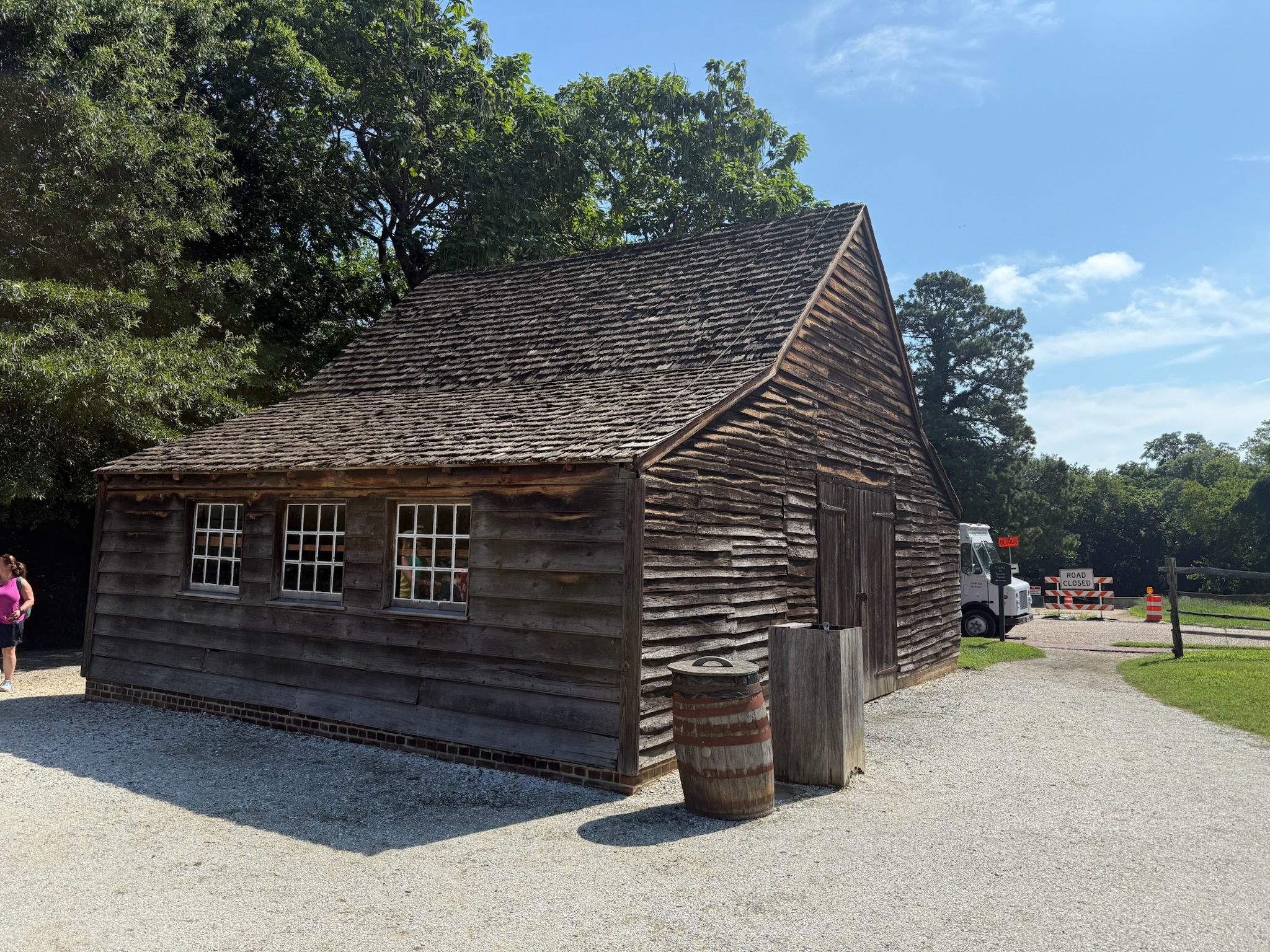
We decided to get off at stop 1, the governor’s palace. From the bus stop at the main road, we followed a small foot path to a smaller paved road. We passed this along the path, but the map didn’t specify what it was and the color indicated that it didn’t belong to the foundation.
Continue reading

Keith’s Perspective on Assorted Historic Sites in Virginia/Le point de vue de Keith sur divers sites historiques en Virginie

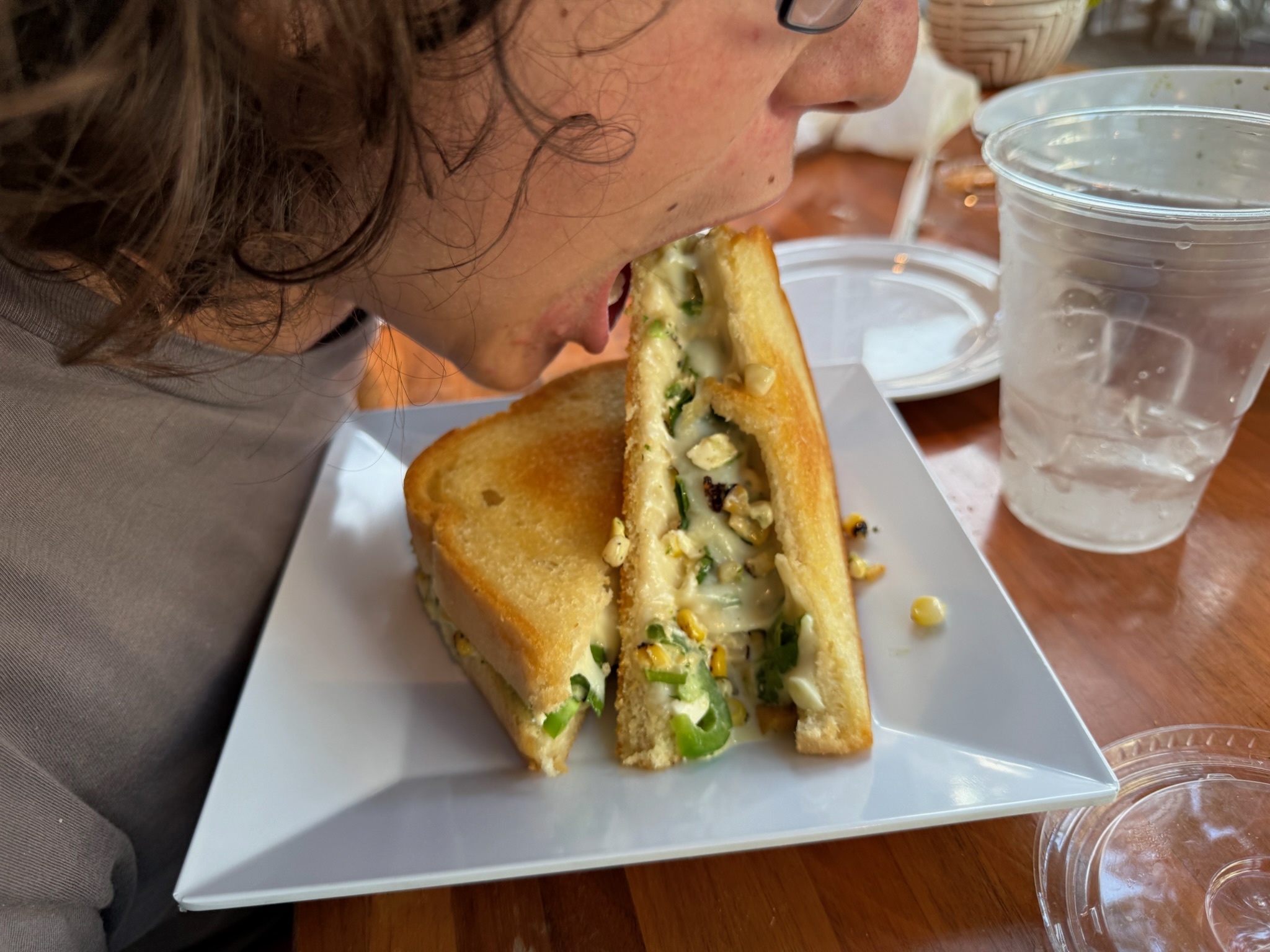
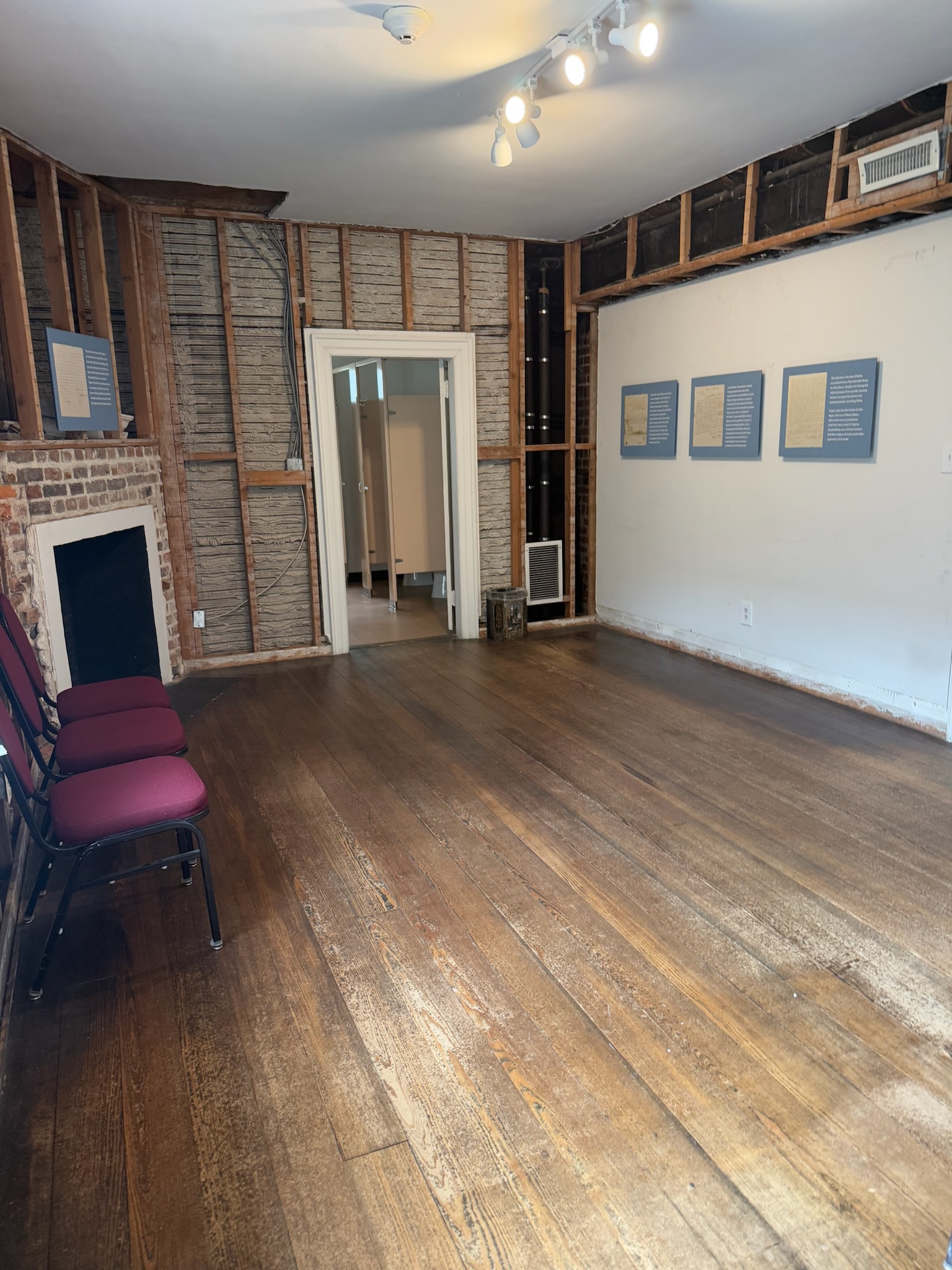
On Saturday, Dad went to a marina event, then we went sightseeing around Old Town Norfolk. We came upon this museum called The Meyers House. It had a bunch of information, and I learned that a presidential candidate named Decatur was killed in a duel. If he hadn’t been killed, then Andrew Jackson wouldn’t have won, and America would likely be very different. For dinner we went to a gourmet grilled cheese restaurant. It was soooooo good, and all the ingredients were top notch. The fries in particular were very good. 

Moses Meyers House, Norfolk, VA

Samedi, Papa est allé à un évènement de la Marina, puis nous sommes allés découvrir la vielle ville de Norfolk. On a vu a musée qui s’appelle la Maison de Meyers. Il y avait beacoup d’informations, et j’ai appris que le candidate à la présidentielle qui s’appellait Decatur a été tué dans un duel. Si il n’avait pas été tué, Andrew Jackson n’aurait pas gagné, et Les Etats Unis seraient très différents. Pour le dîner on a mangé à un restaurant de Grilled Cheese raffinés. C’était trop bon, et tous les ingredients etaient de très bonne qualité. Les frites étaient très bonnes. 

On Sunday, we went to a nautical museum where they had an actual battleship that you could tour. We went to the battleship and looked around one of the decks. I got super claustrophobic and hot, so we didn’t tour the entire thing. There are some crazy things in a battleship. There was a dentist, a post office and even a donut factory! After the battleship, we looked at the museum, which was pretty interesting. I learned that the mascot for the naval training academy is a goat! 

Continue reading

The Moses Myers House and Gourmet Grilled Cheese in Norfolk, Virginia

Continued… From Adeline’s room, we moved into the part of the slaves quarters that was above the utility room. The signs said that the Myers had dozens of slaves over the decades, but didn’t say how many slaves the household typically had at any given time. The guides did tell us, but we don’t remember now. But we do remember they always had several, not only one or two. There was a big binder full of information that we didn’t read. Some of the displays on the walls were bills of sale for the various people. One display showed a bill of sale for a mother and daughter. In the bankruptcy inventory, they were identified as “washer and daughter.” John Myers did allow at least one of his slaves to purchase his freedom. We didn’t go into the portion of the slaves quarters over the kitchen.

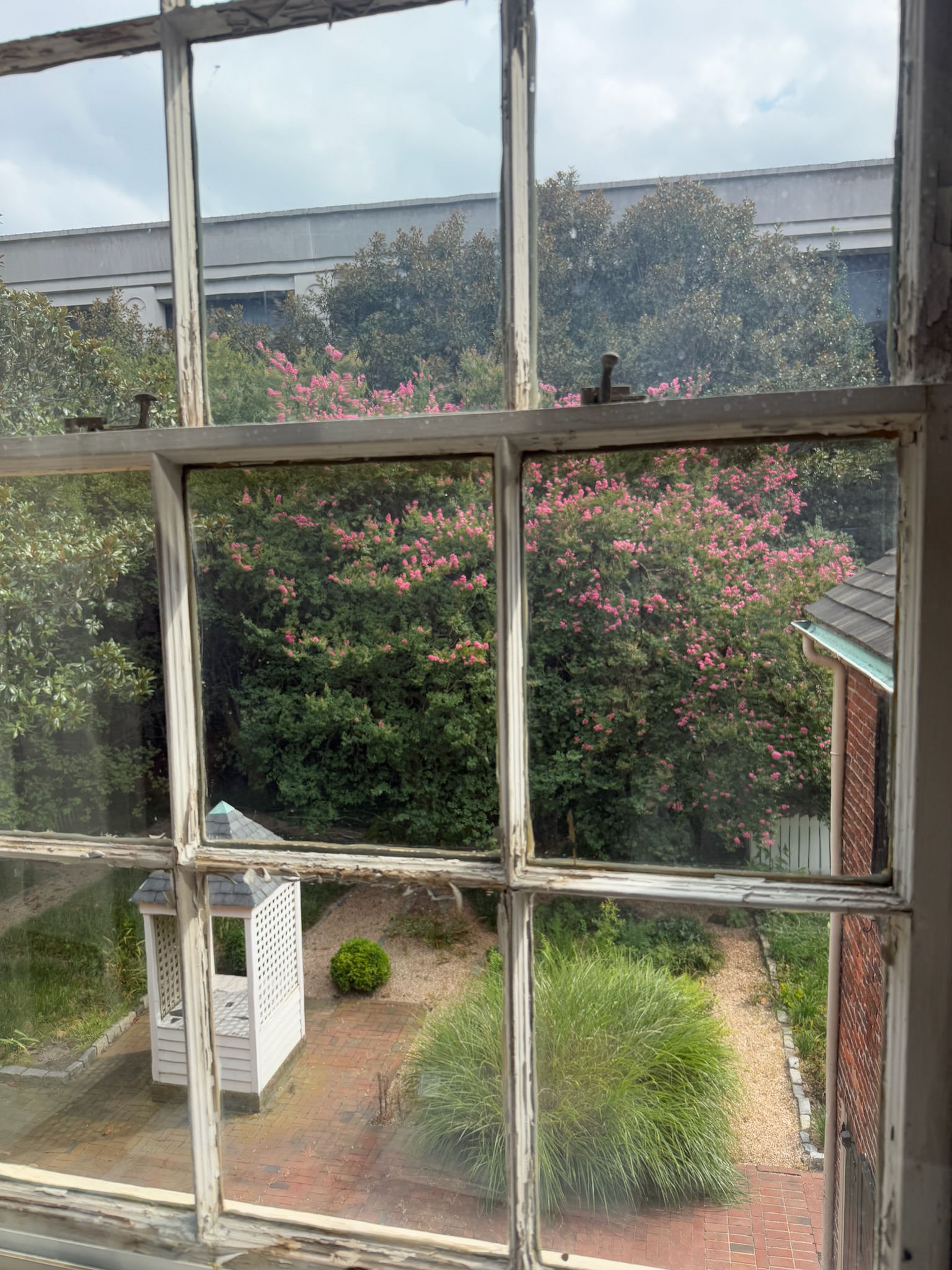
View of the back yard from the slave’s quarters. What is now a parking garage was once a creek.
Continue reading

The Moses Myers House in Norfolk, Virginia

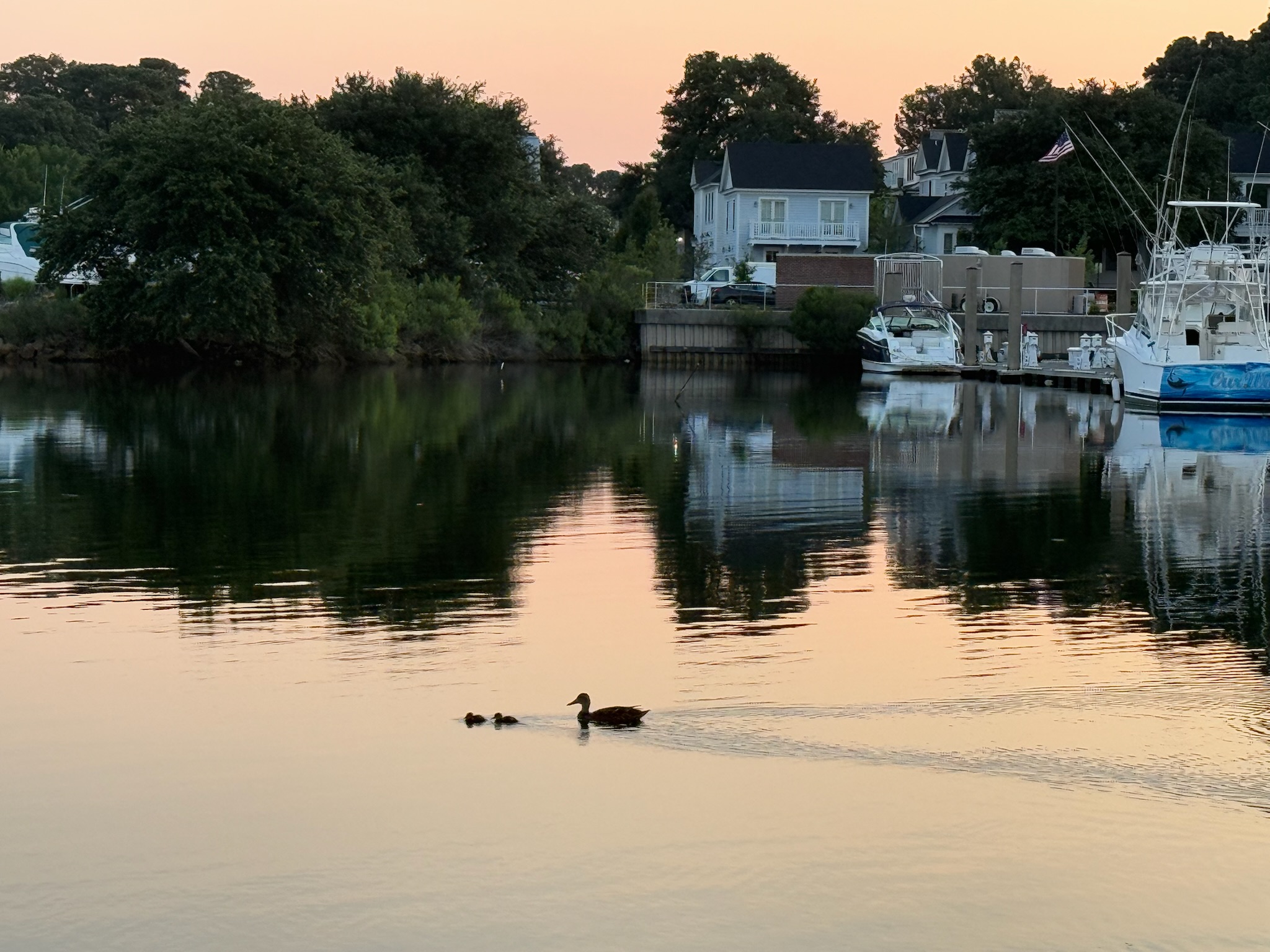
Dawn on Saturday, July 5, 2025

Our plan was to go to historic Ft. Norfolk. There was a marina barbecue from 1300 – 1500 that Eric went to, so we didn’t head out until 1500. When we entered the fort into the map app, it said it was closed on weekends. We decided to go sightseeing in historic downtown Norfolk, anyways, as there were plenty of other things to see. Even though we hadn’t entered the MacArthur Memorial as our destination, the map app sent us to the Memorial’s parking garage. At first we were confused, but then we realized the garage was for the general downtown area, not only the Memorial. Parking was free for the first two-hours, and it was inexpensive for additional time.

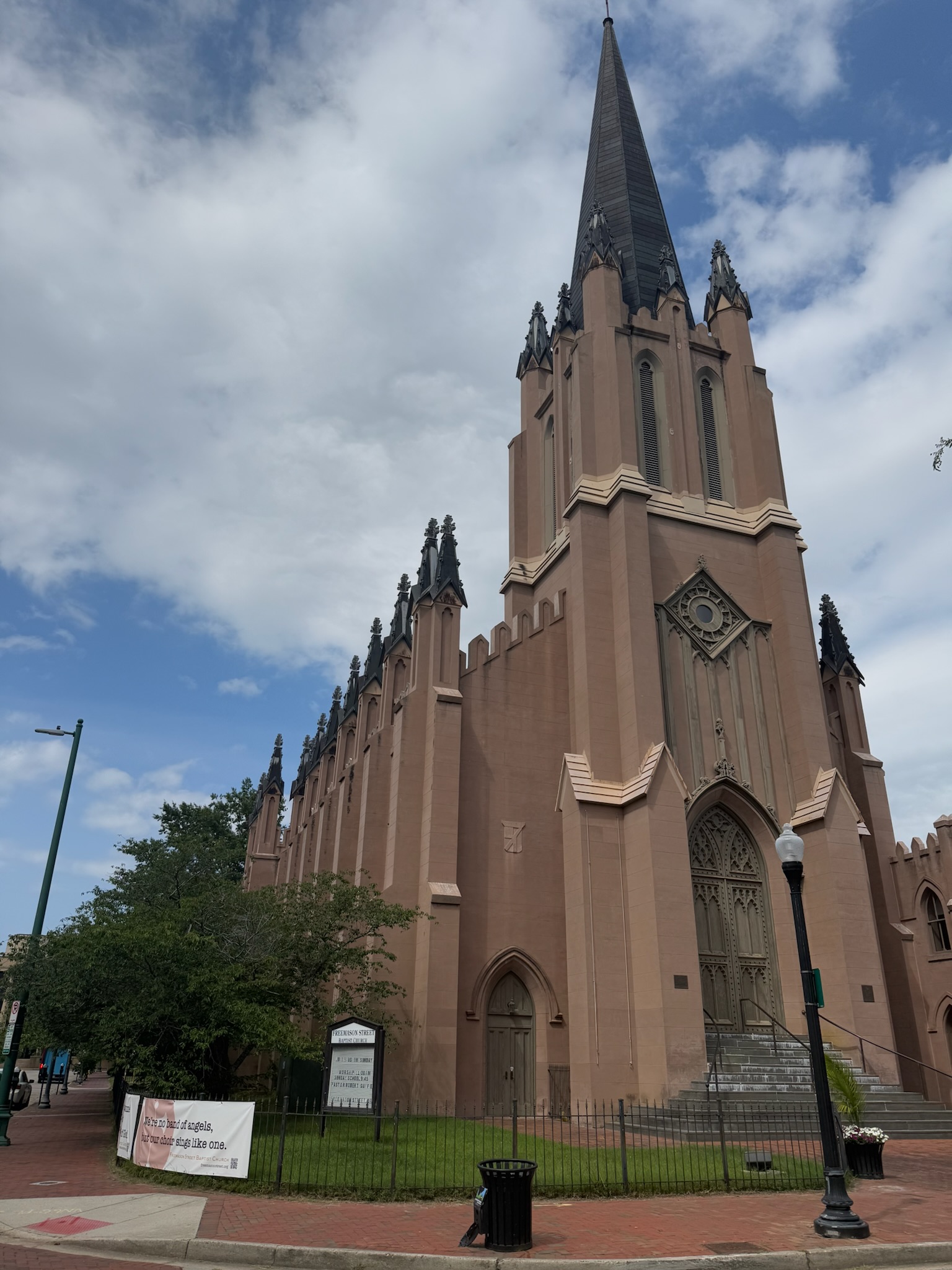
When we walked out of the parking garage, the first thing that caught our eye was a church across the street.

We later found out this church was built in 1850 and was designed by Thomas U. Walter, who designed the US Capitol dome. The original steeple toppled over in 1879 and was replaced in 1897.
Continue reading

Celebrating Independence Day at Historic Fort Monroe — Part 2

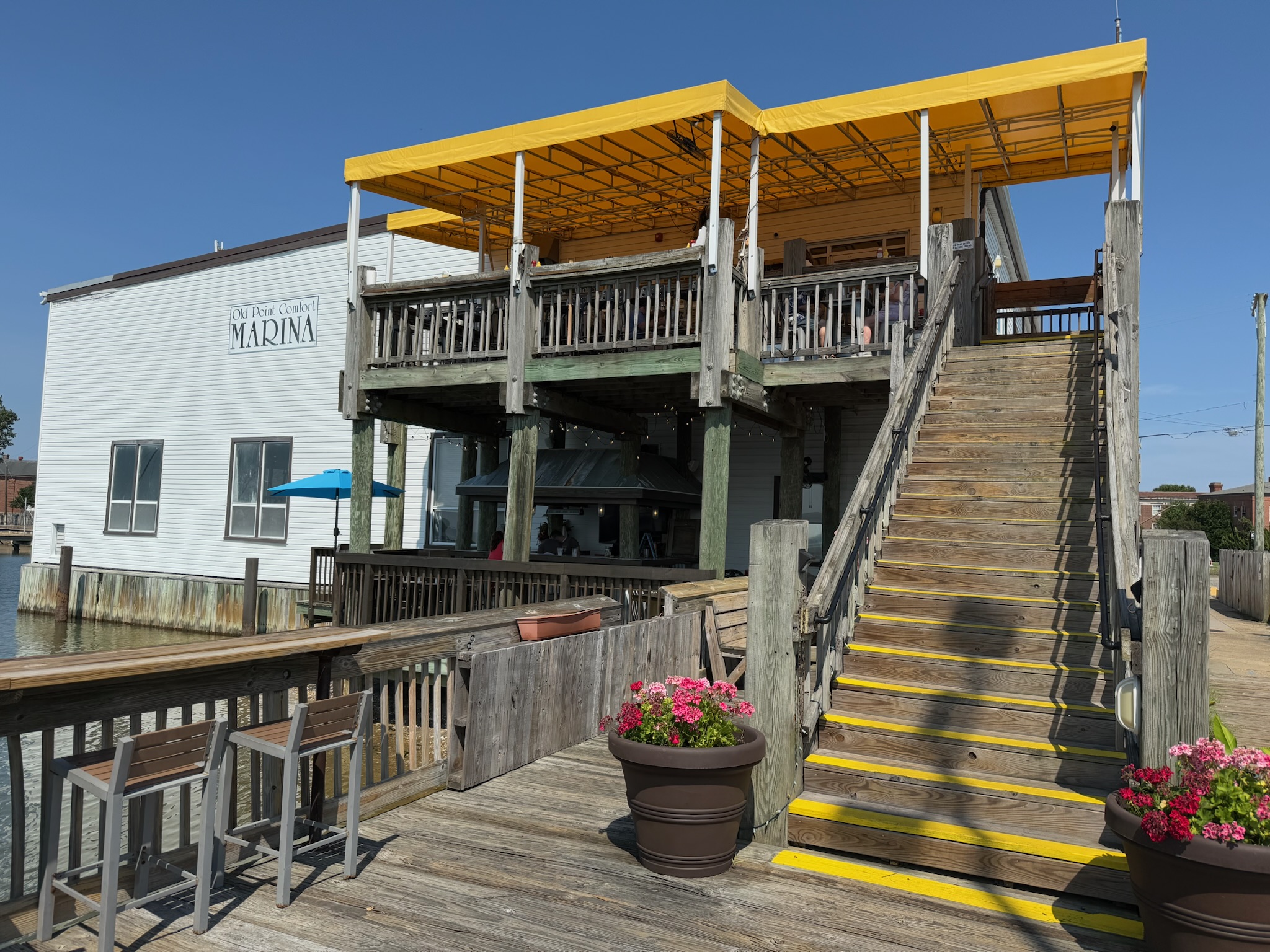
Continued… When the tour concluded, Eric and Keith announced they were hungry. They went to a nearby restaurant called The Deadrise, which was over at the marina.

The food was good and the portions were huge. Keith, who was not a seafood fan, loved the crab dip (even though it wasn’t as good as Haste Away’s).

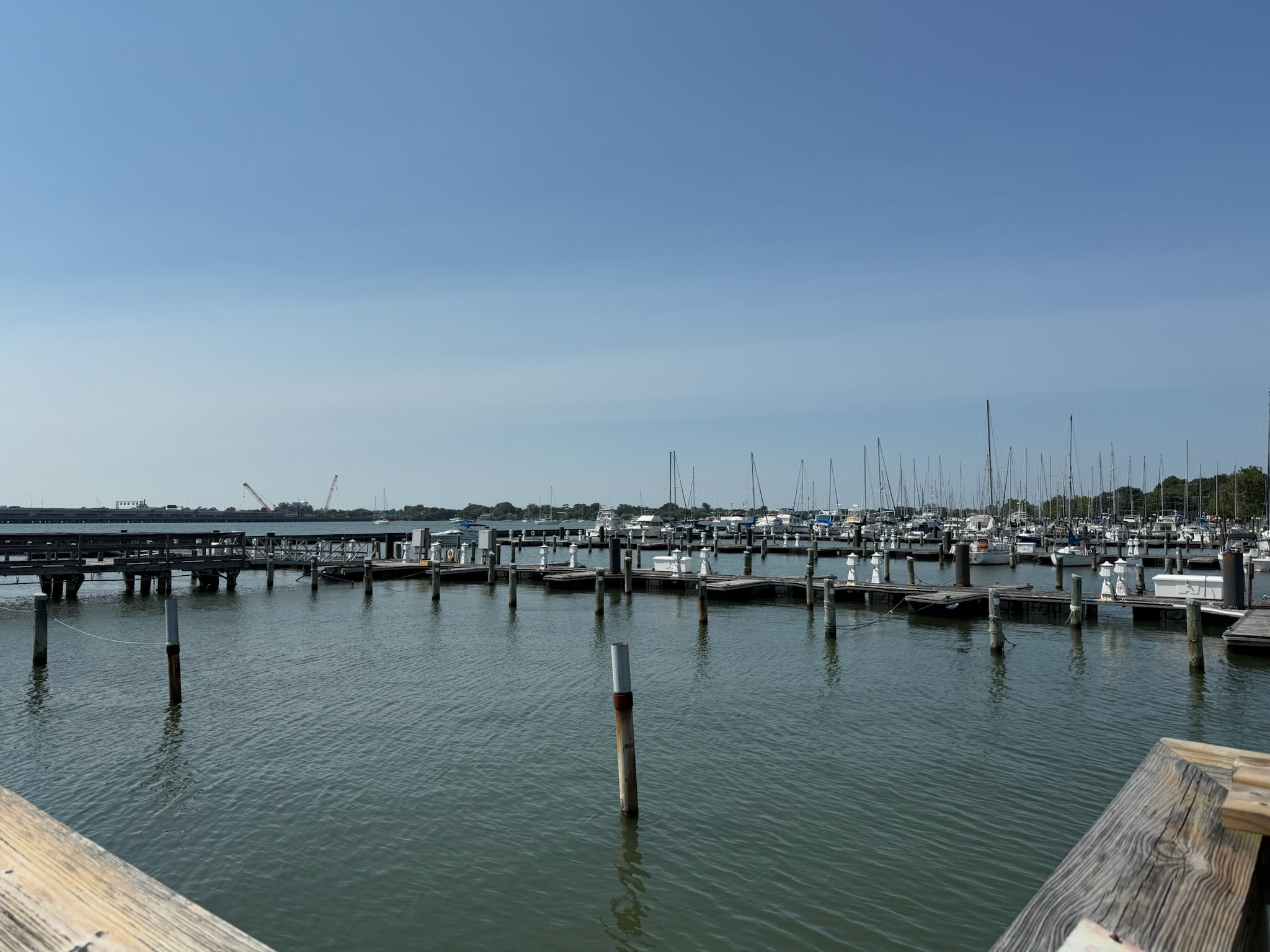
It looked like the section of the marina closest to the restaurant was closed, as there weren’t any boats in the slips. We were too far away to get a look at the part of the marina that was occupied. There was an anchorage beyond the marina that was deep enough for Kosmos. Given that it was a holiday weekend, we were surprised there weren’t more boats anchored out there.

Christi stayed at the Visitor’s Center and went on the 1500 tour. It began much the same as the 1400 tour had. But instead of stopping at the entrance casement, the group walked on to the four-acre parade ground.

Continue reading