Wednesday, October 1 — We were not surprised to hear that the federal shutdown happened. Some of the yacht club members had told us that few agencies would actually shut down today; that many had squirreled away some funds to keep operating — at least for a little while — in case the shut down occurred. We found out that the museums would be open for a few more days, so we hadn’t needed to force ourselves to go to the Natural History Museum and Hirshhorn Museum yesterday, after all.
Our plan for today had been to finish seeing the outdoor monuments, but we were tired and needed to take care of some “life chores.” We decided to take the day off of sightseeing. After Keith and Christi finished school, all three of us washed the boat. We don’t think we’ve washed the whole boat with soap and a brush since Panama! It has rained enough – and hard enough – that it just hasn’t been necessary. In Baltimore, we’d had some air pollution settle on the boat, but that had been easily rinsed away with just the hose. But here in DC, under the flight path of Reagan International airport, we had a layer of jet fuel building up on the deck. And jet fuel didn’t rinse away — it needed to be scrubbed with a brush and hand wiped off with rags.
After boat washing, we went to lunch at a restaurant called Kinfolk, which was right near us on The Wharf (where the police car often sat).
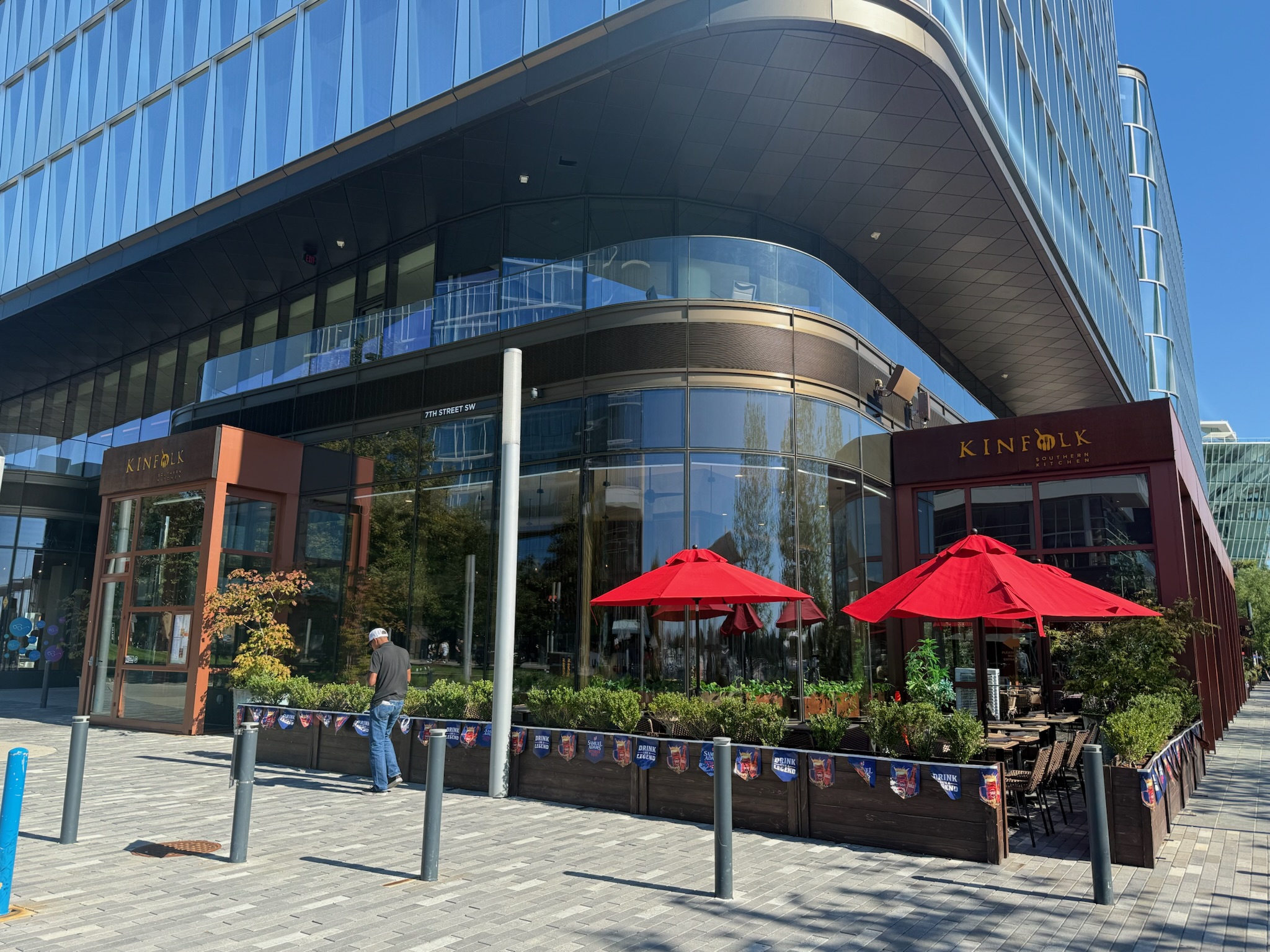
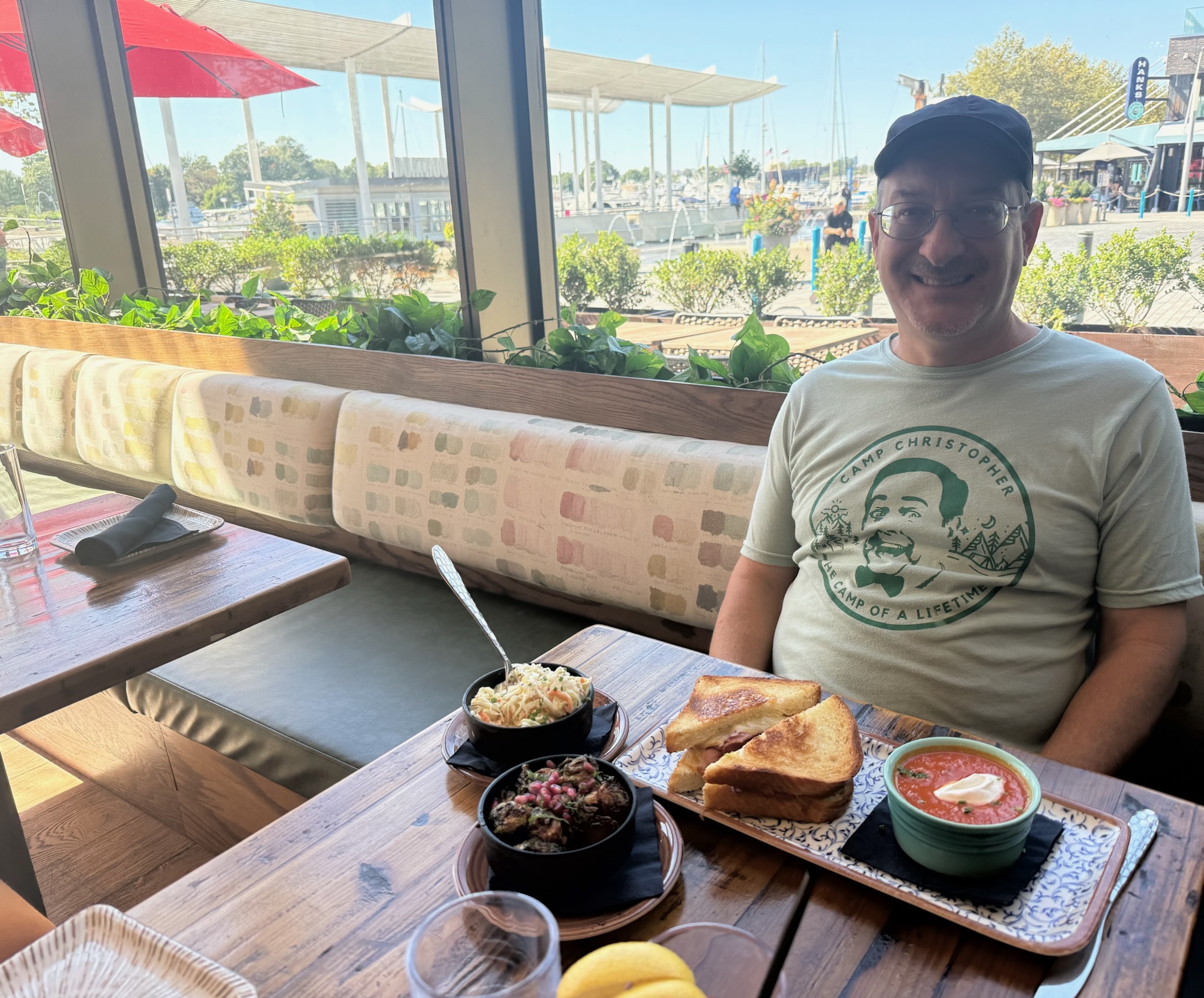
It was southern food, and we hadn’t gone in earlier because we were dubious that they could accommodate Christi’s food allergy. But they actually had a lot of pepper-free choices, and the food was incredible. We wished we’d eaten there sooner!
The afternoon was mellow. We puttered around the boat taking care of lots of small things that needed to get done, like paperwork. In the evening, Peaks meet us at the Yacht Club and we played a card game. Then they briefly stopped by Kosmos. They’d had a very long day of sightseeing and were exhausted, so it was a relatively short visit.
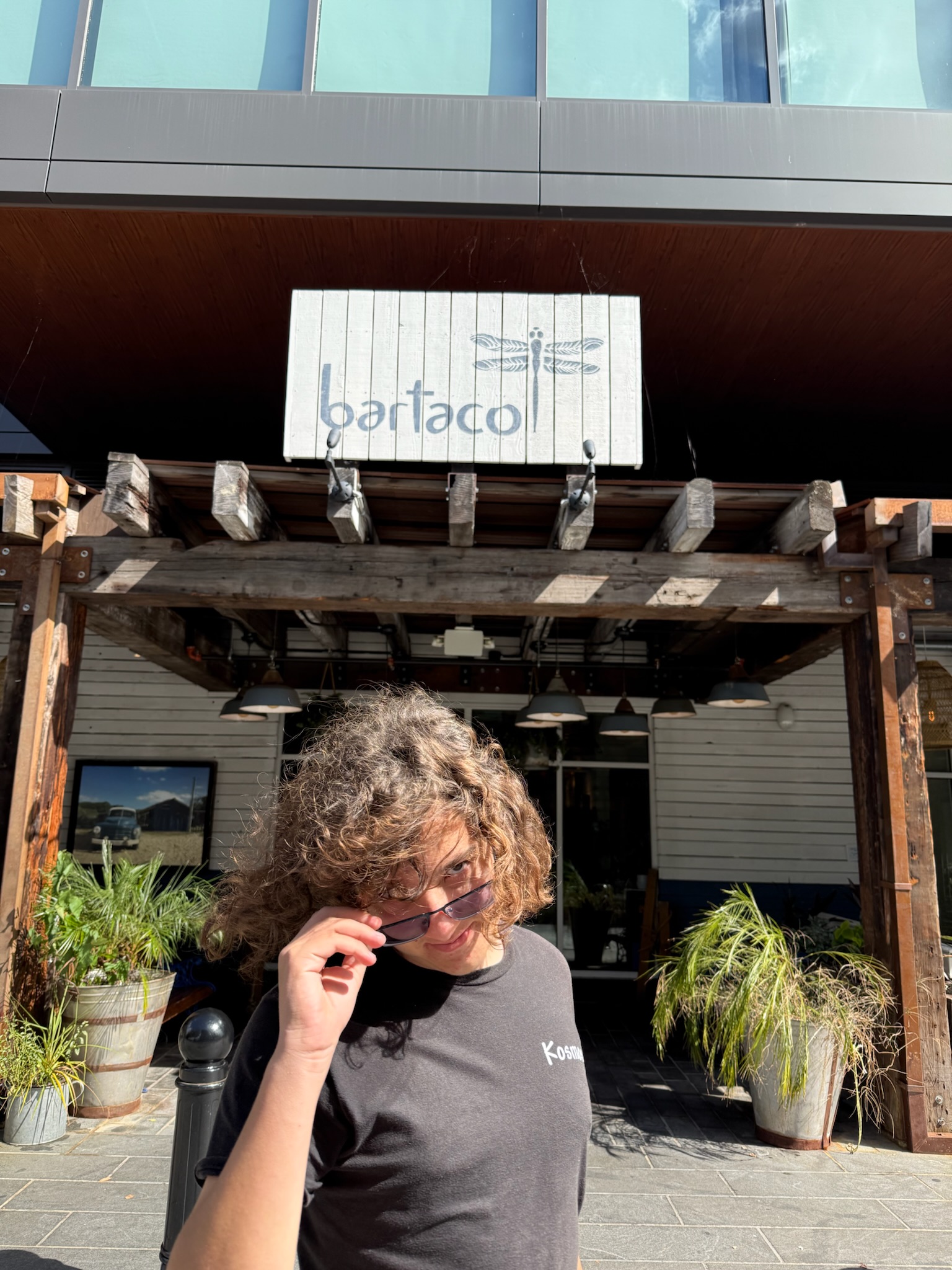
On Thursday, we went back to Bartaco for lunch.
After lunch, we hailed a ride share to take us to the Martin Luther King, Jr Memorial, which was on the west side of the tidal basin, north of the Franklin Delano Roosevelt Monument. The ride share saved us 1.2 miles of walking. Our plan was to walk back to The Wharf, visiting various monuments along the way.
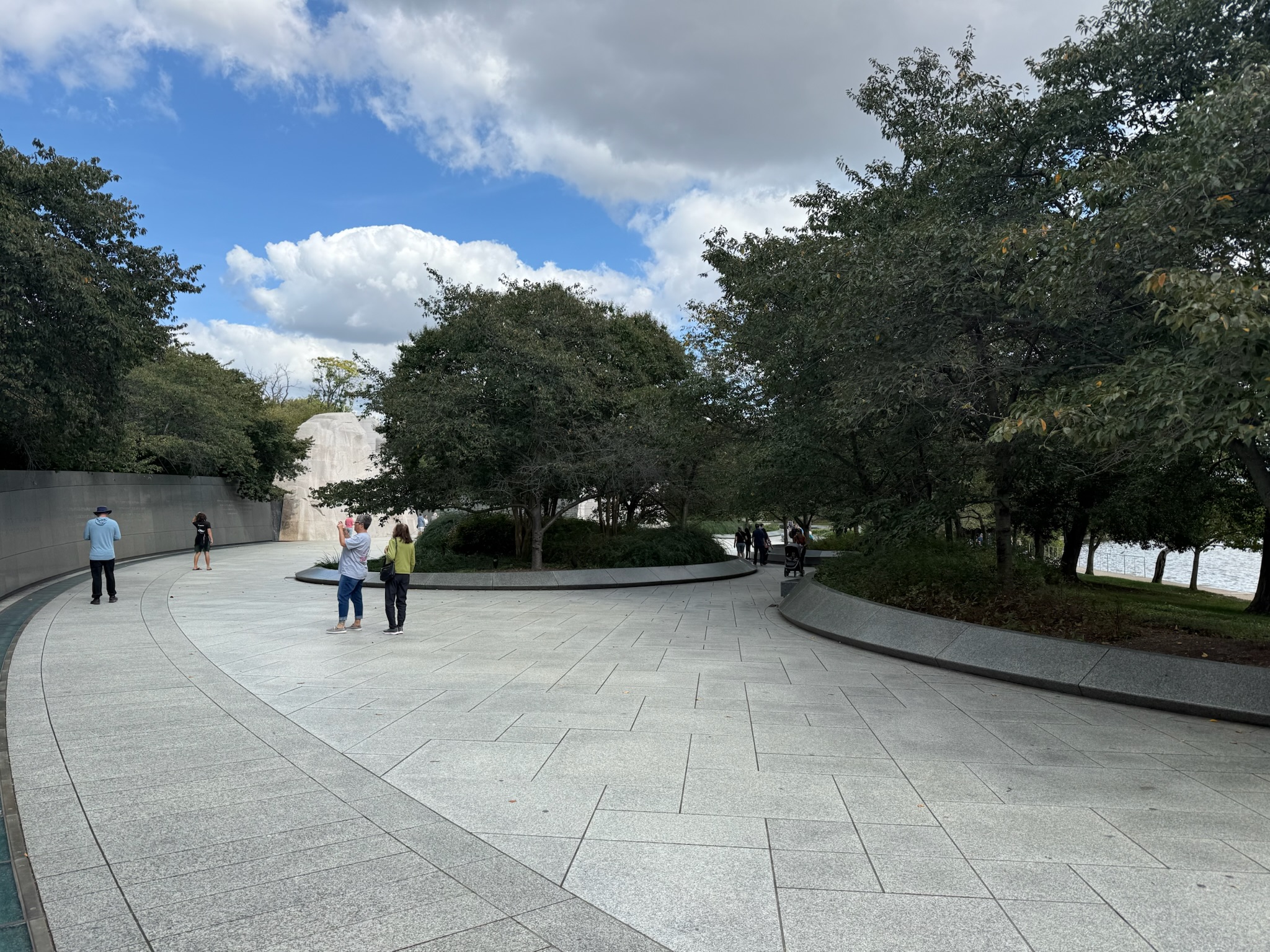
While the Martin Luther King, Jr. Memorial wasn’t as large in terms of acreage as the Franklin Delano Roosevelt Memorial, it was still quite large. It was long and relatively narrow.
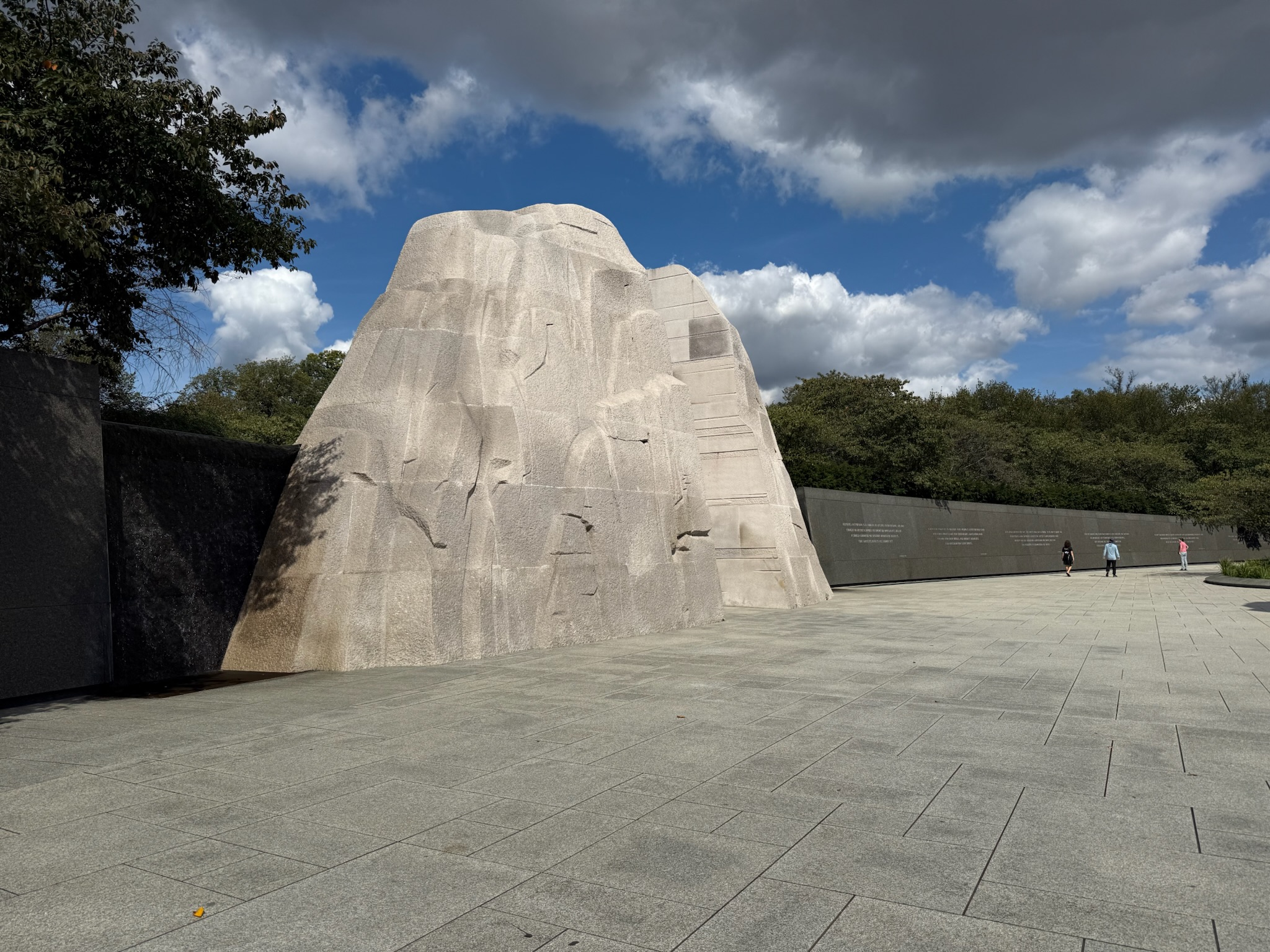
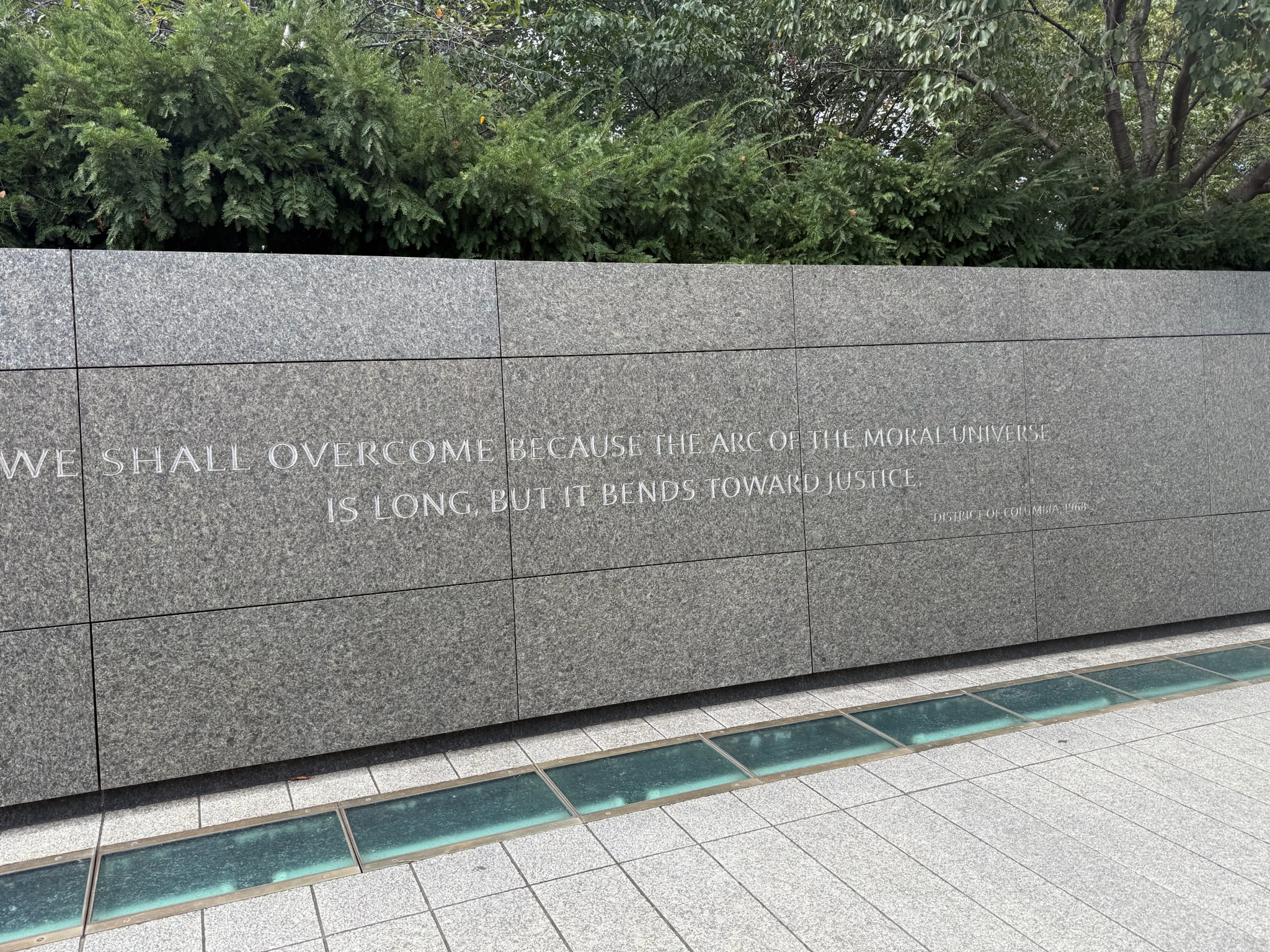
The majority of the exhibit was a granite wall that had assorted famous quotes from MLK etched into it.
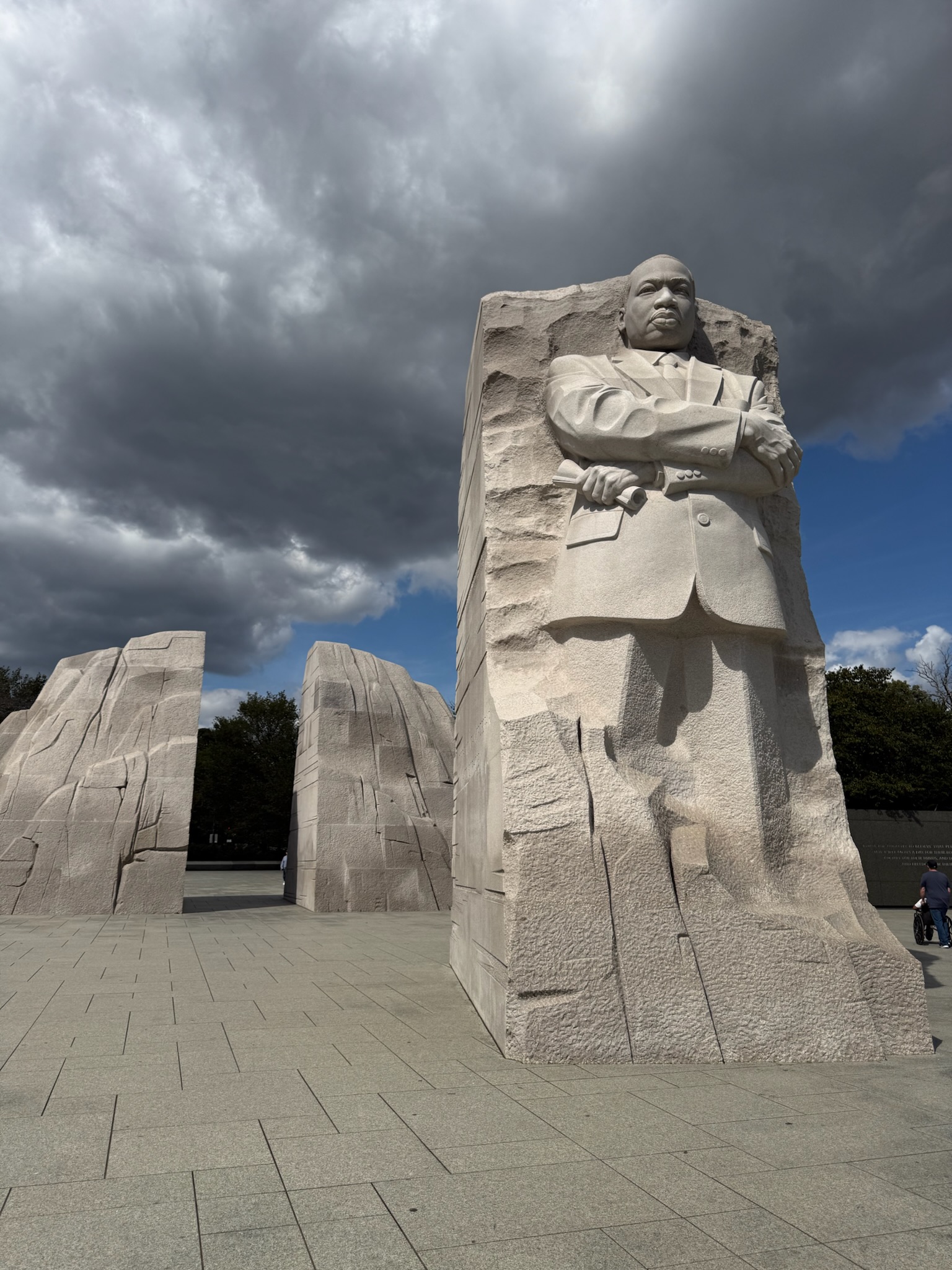
A few large “rocks,” dotted the Monument, one of which had a portrait of MLK carved into it.
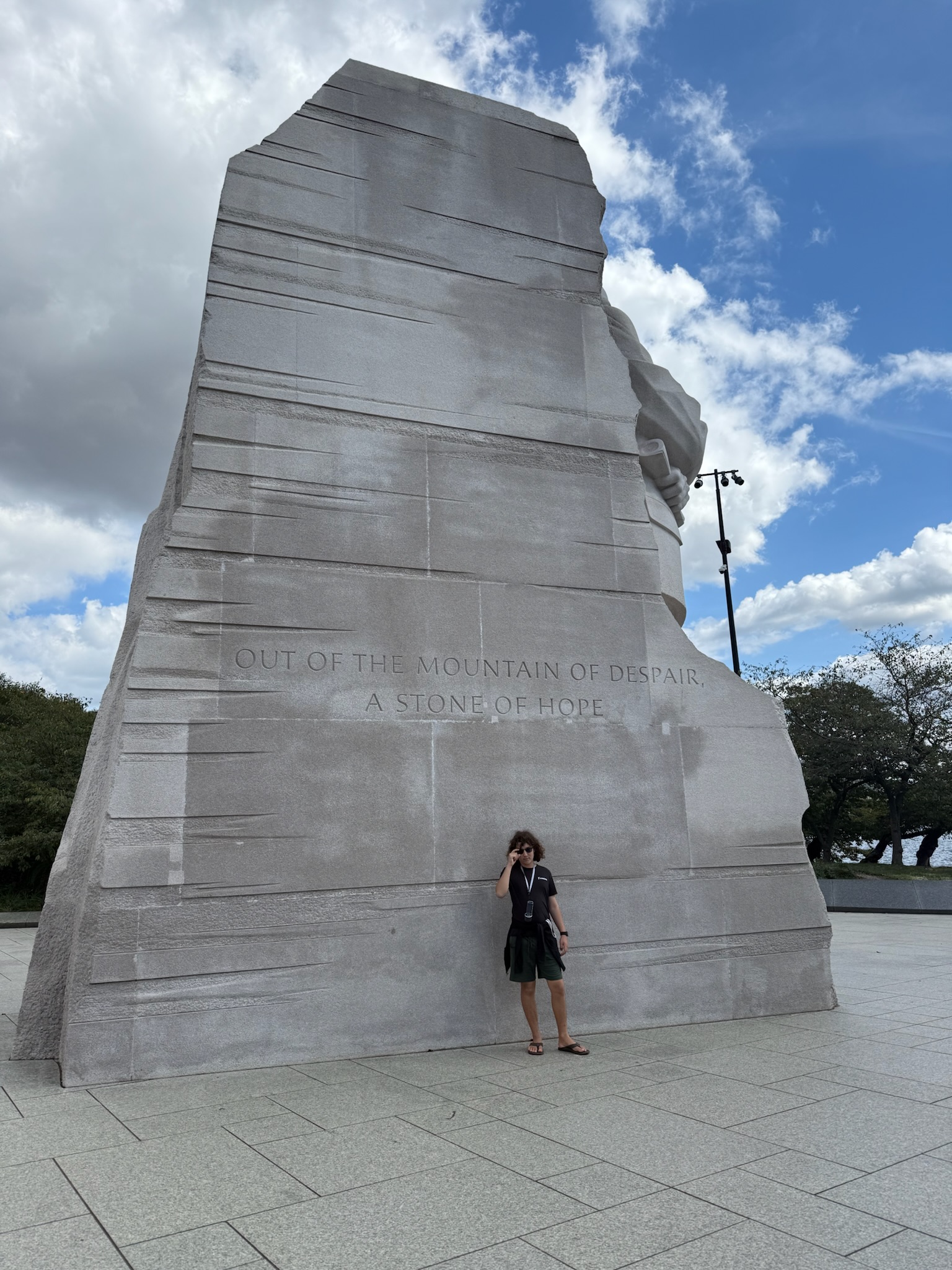
There were also several green spaces dotting the monument, too.
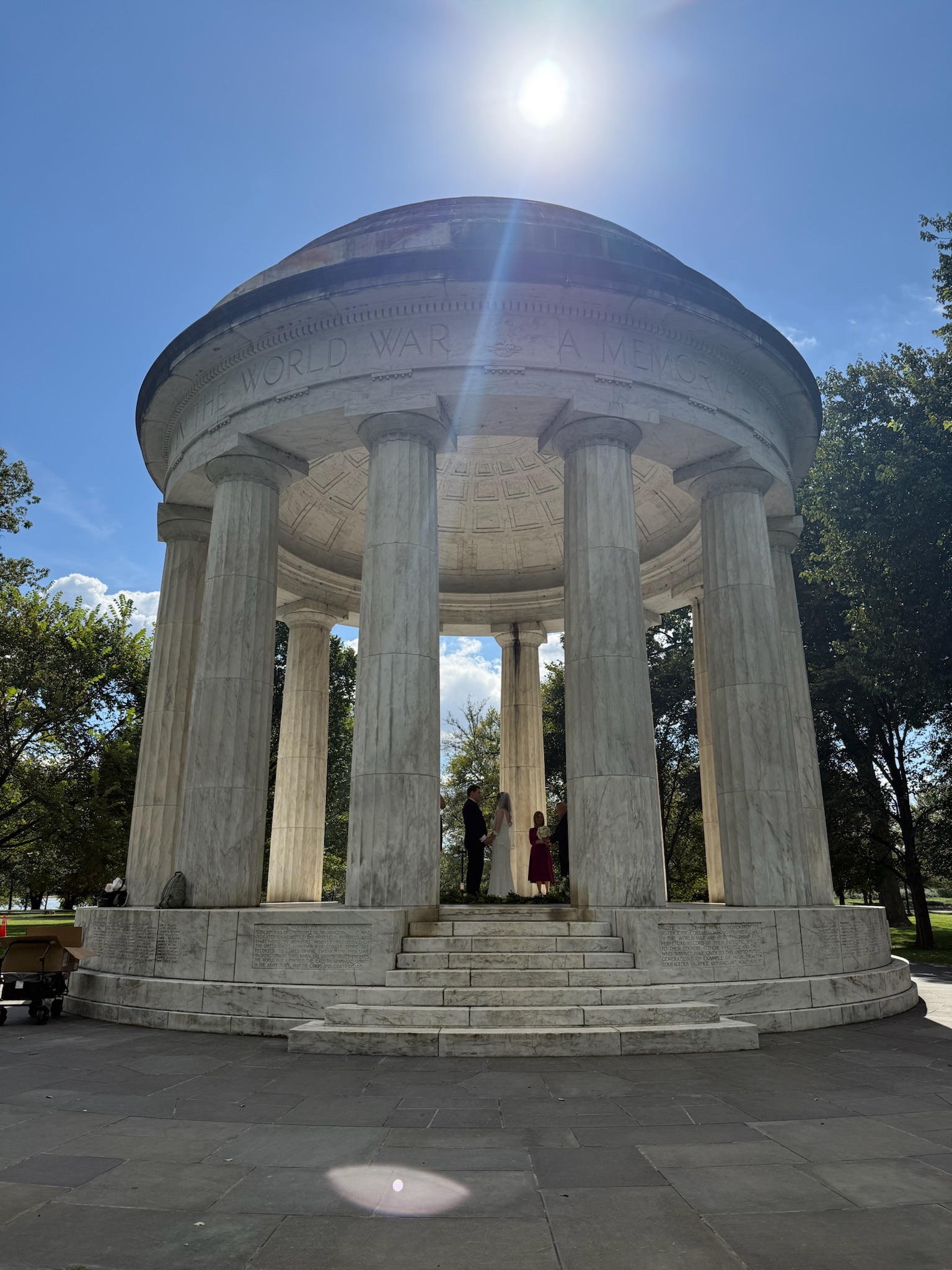
We crossed over to the north side of the street, which we think took us from the Tidal Basin to the National Mall. The District of Columbia War Memorial, built in 1931 to honor all who served and died in The Great War (later renamed World War I), was on the other side of the street. Etched around the base were the names of all who died in the war. We didn’t get too close to the memorial because there was a wedding in progress.
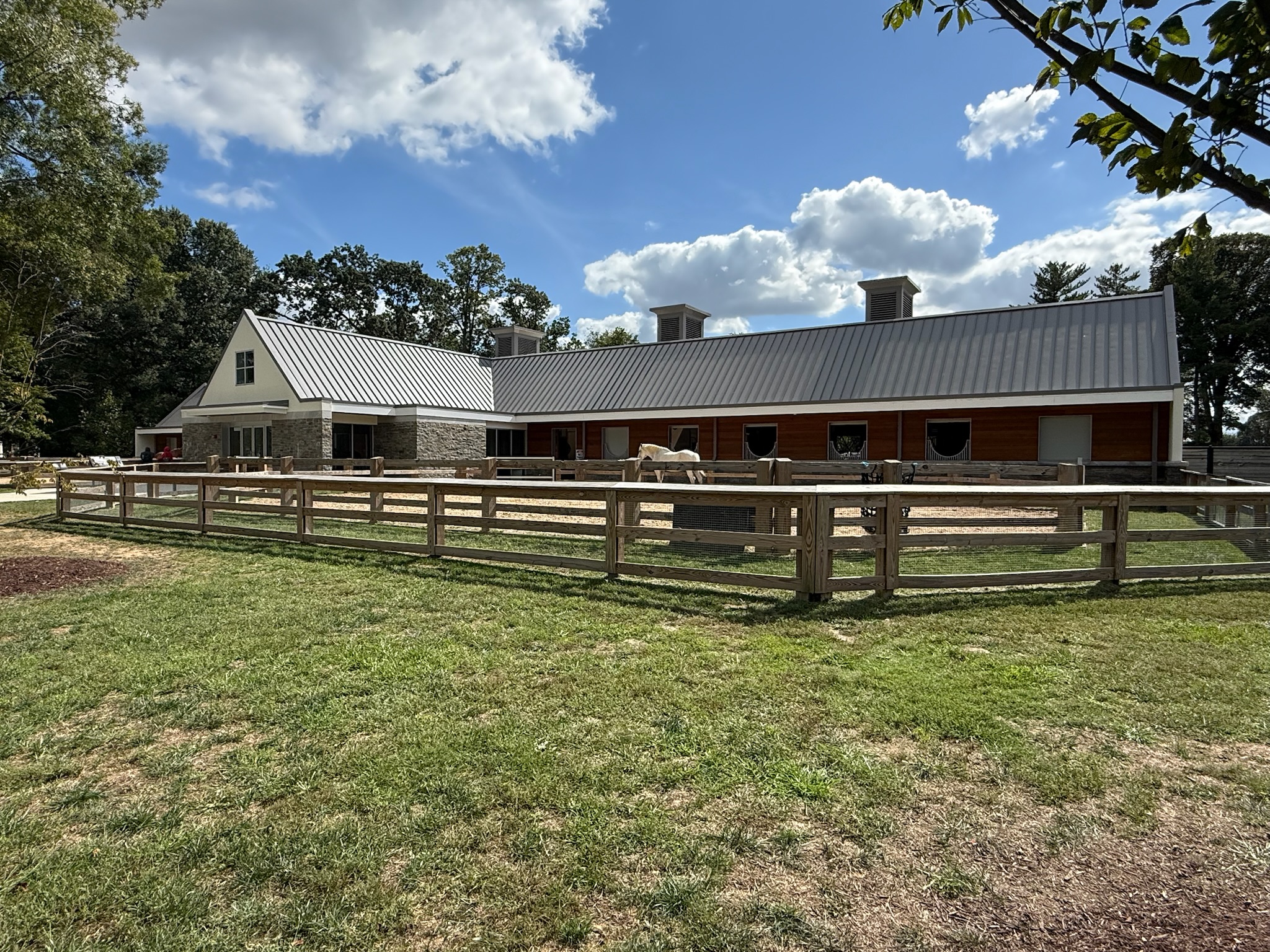
We headed west and walked by horse stables, which really took us by surprise. The sign said the police patrolled the National Mall on horseback and that these were the newly renovated Park Police Horse Stables. There was an education center inside that was open to the public to learn about the horses and the history of the Mounted Unit, which began in 1934. That might be something interesting to do if we ever come back to DC.
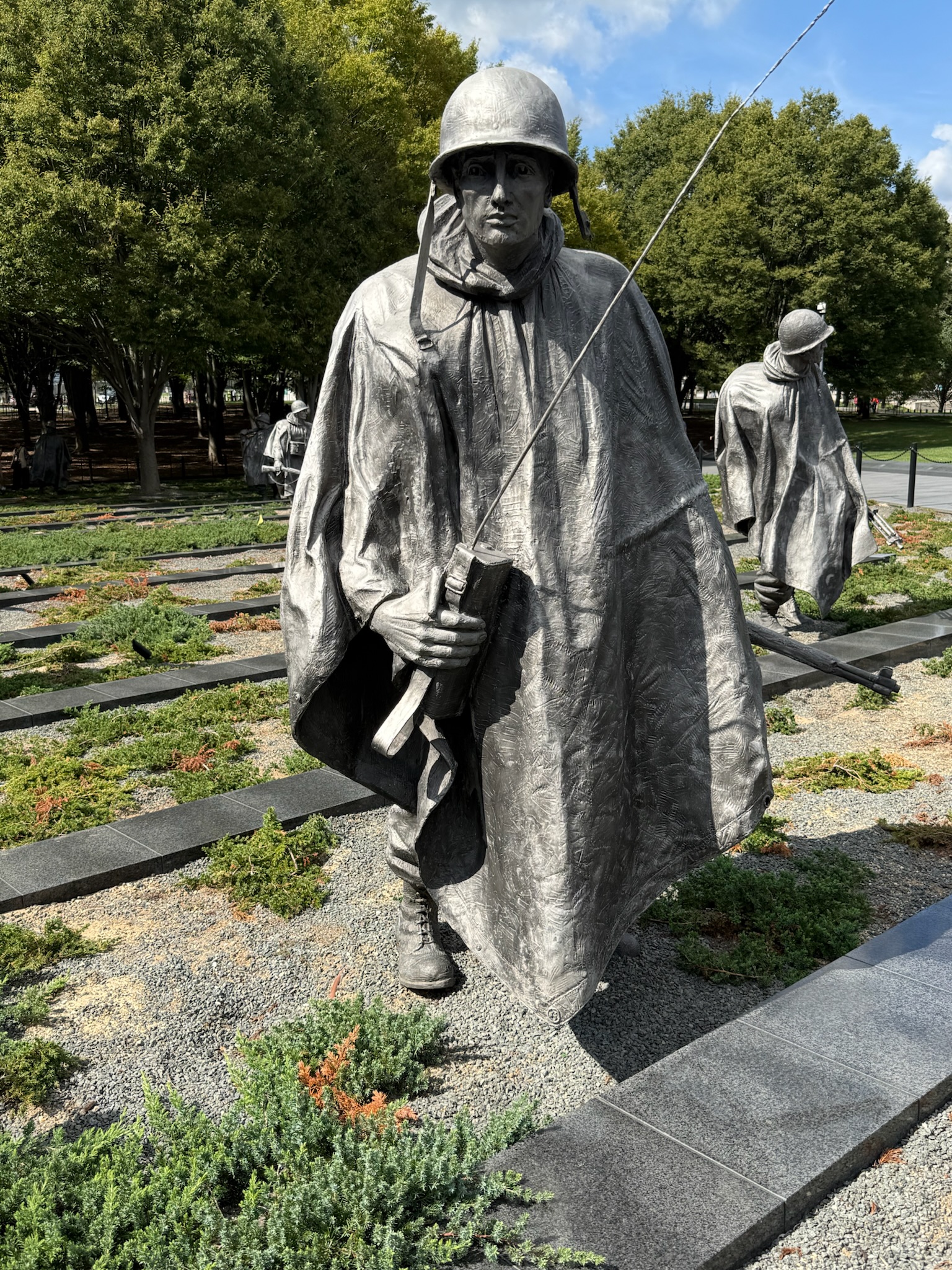
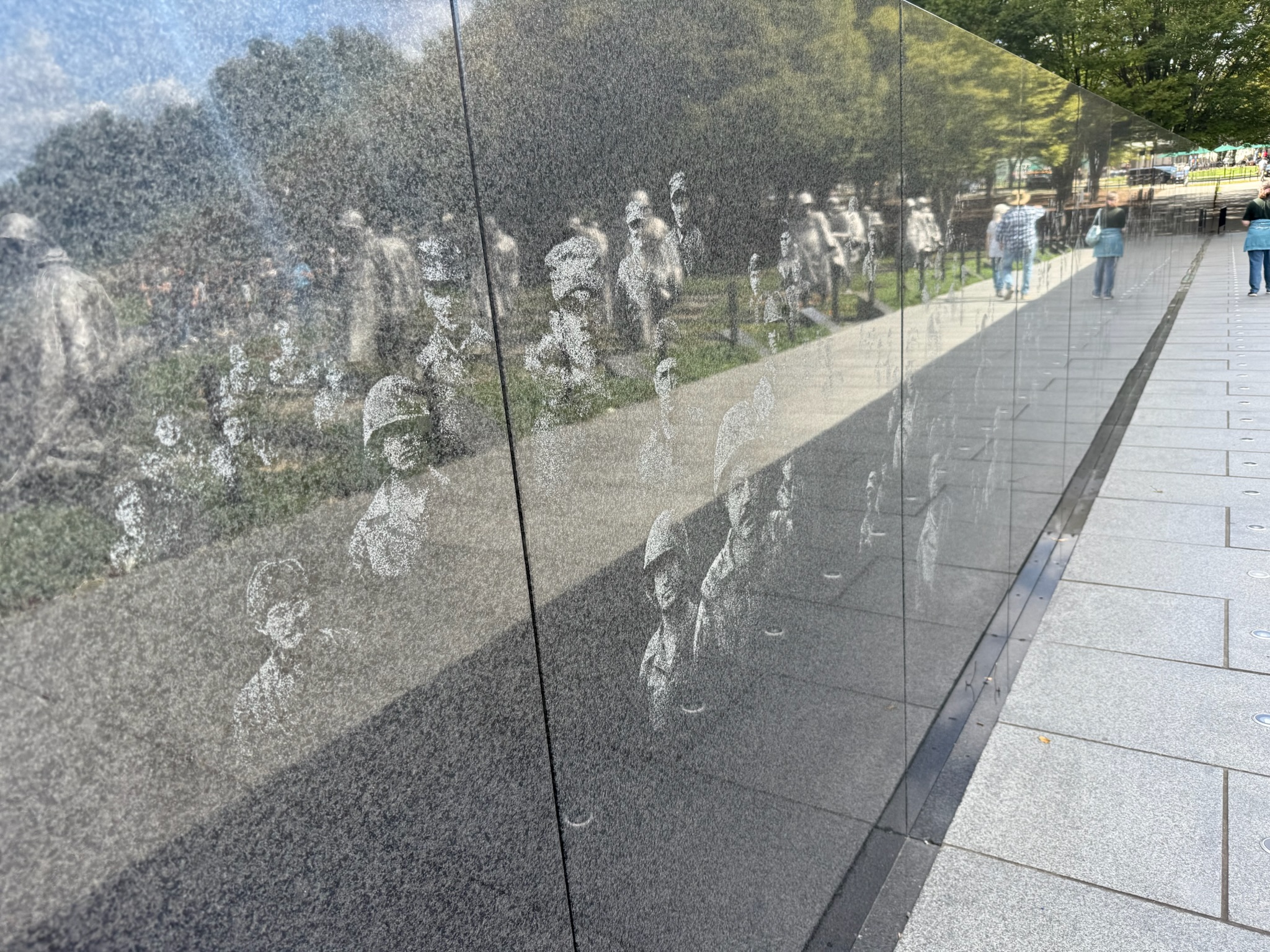
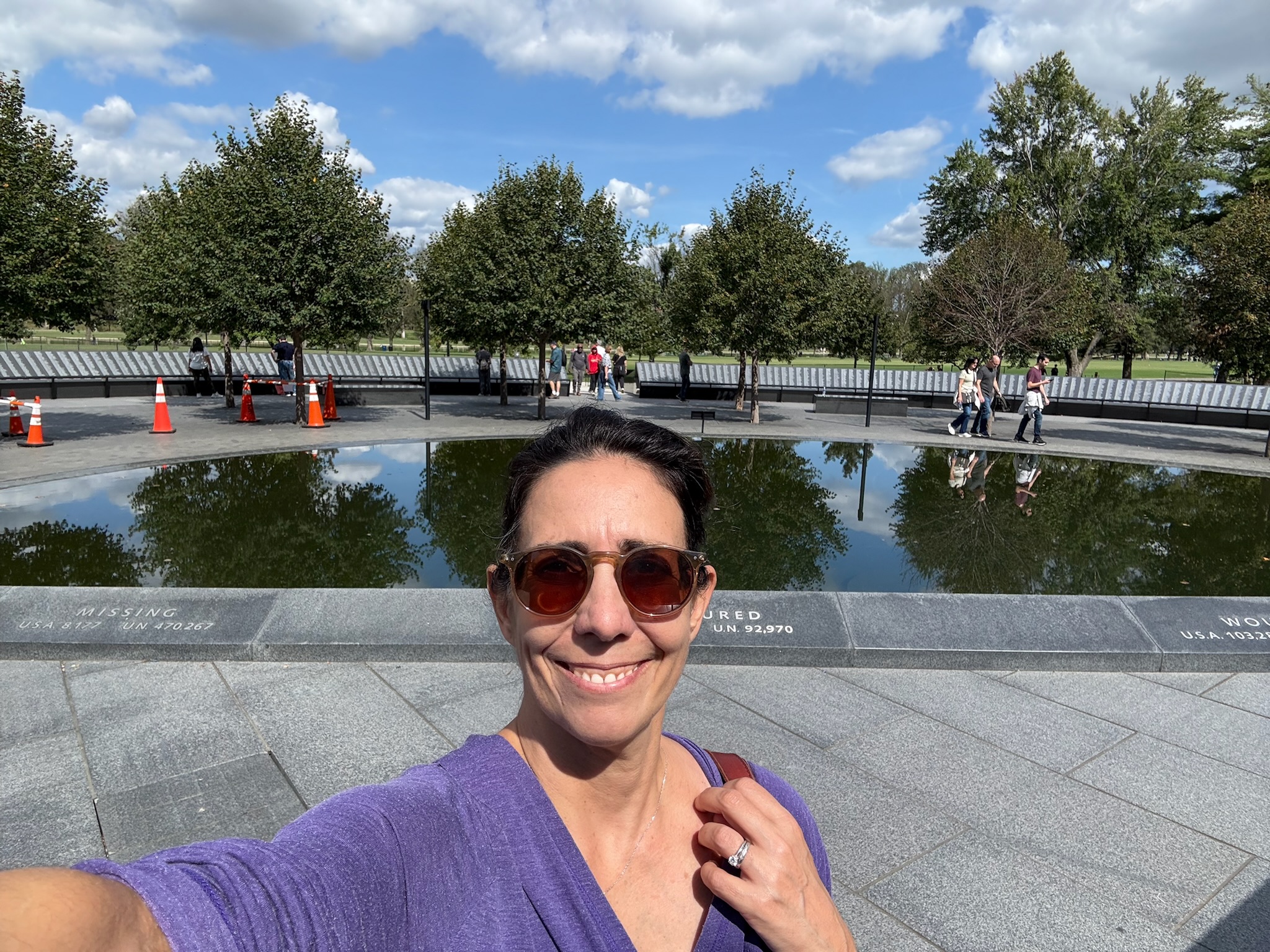
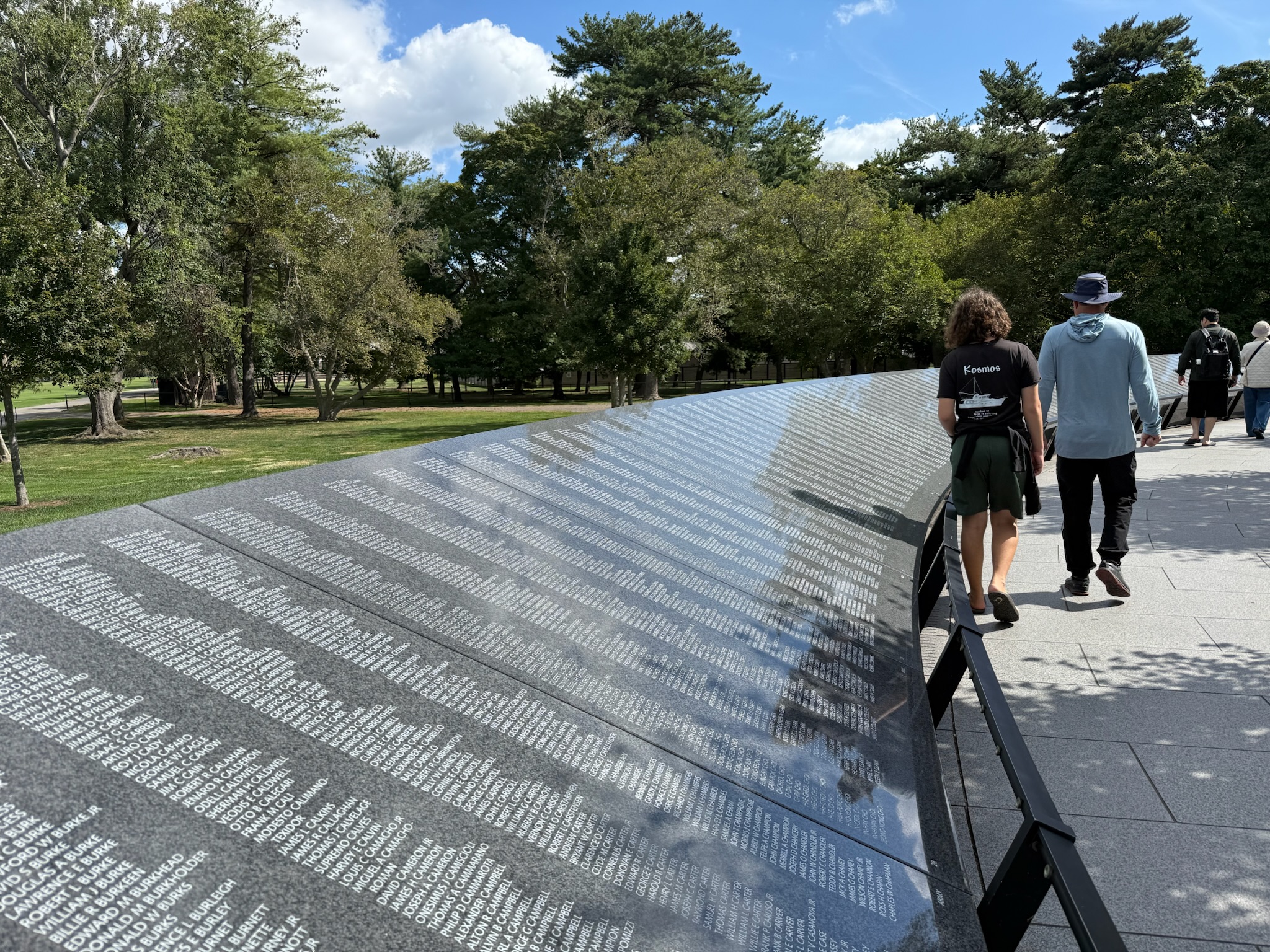
We continued west to to the Korean War Memorial. The US was involved in the Korean War from 1950 – 1953. 1.789 million Americans served in the war, alongside South Korean and UN troops. The sign said the statues represented the ground troop patrols and that the soldiers depicted were from different branches of military service. They were crossing a rice paddy alongside the mural wall, which had etchings with the faces of people who had supported the ground troops. The troops were walking towards a quiet pool and Wall of Remembrance that held the names of 43,100 names people that gave their lives in that war.
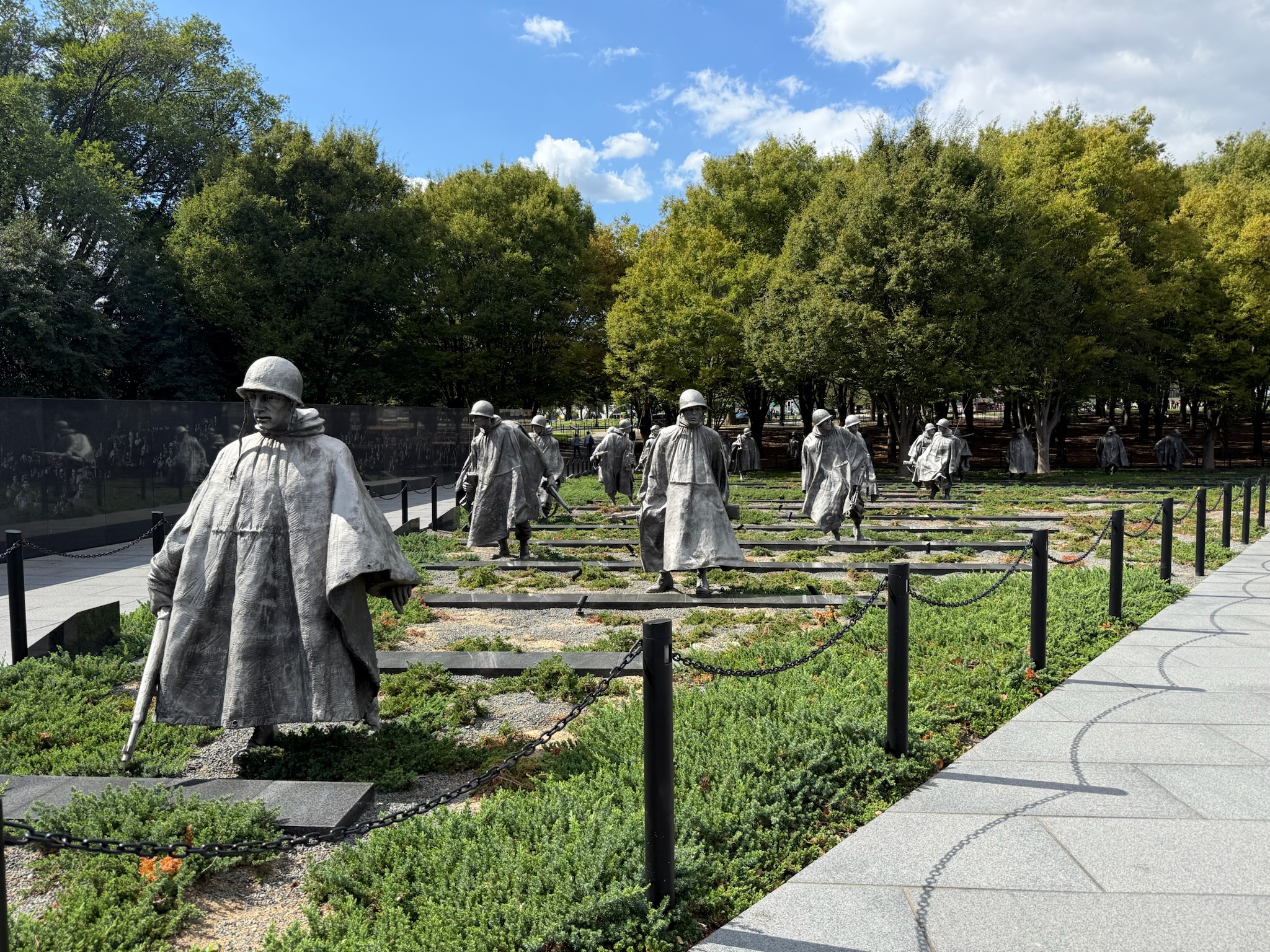
The soldiers were haunting. The faces etched in the walls were creepy. This was probably by design to emphasize the horror of war.
The Wall of Remembrance circled a large part of the pool. It was disconcerting to see how long the wall was and how tightly packed together the names were.
We continued west to the… To be continued…