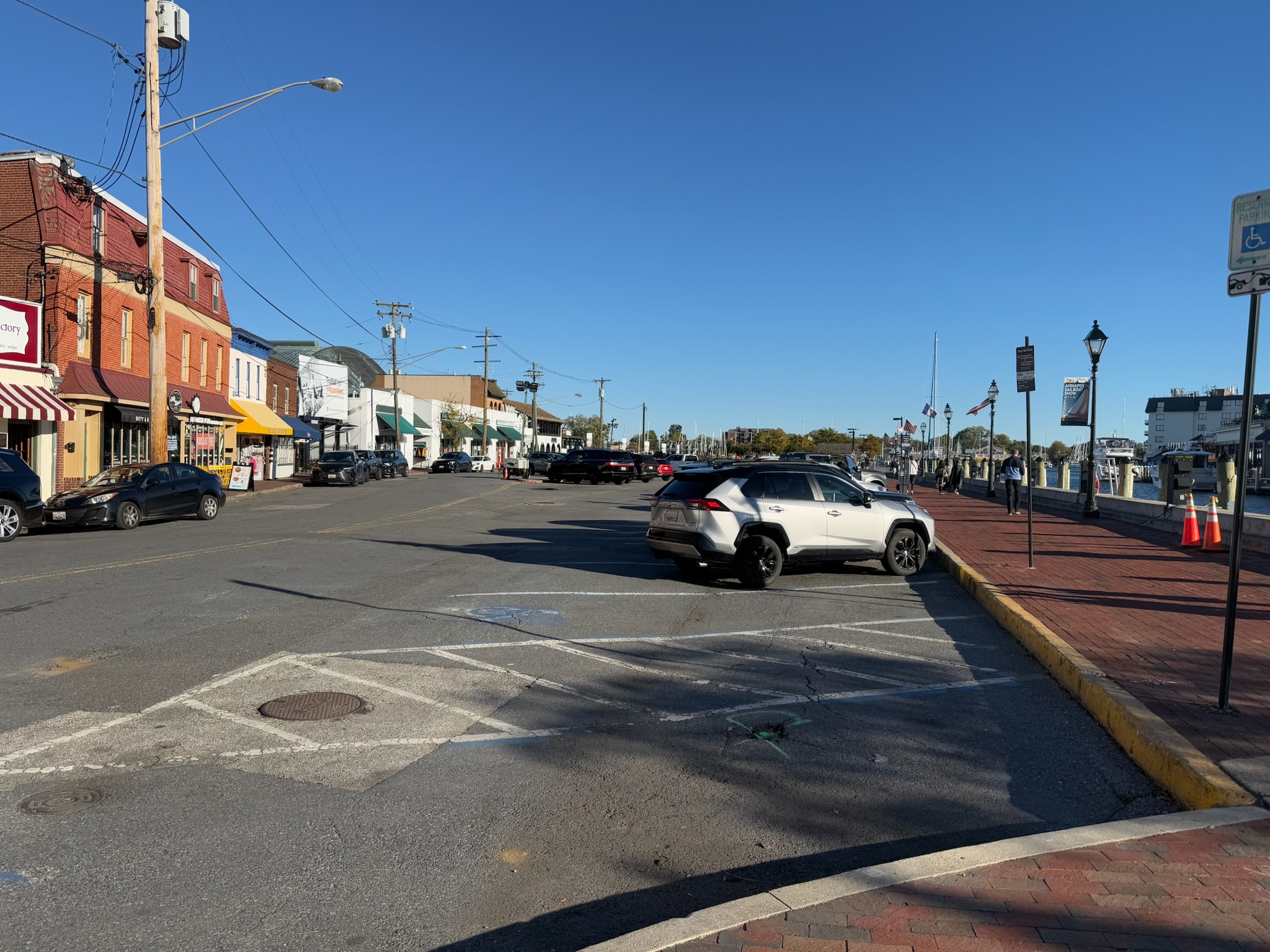
continued… On the walk back, we marveled at how different the town looked now that the extra infrastructure for the boat show had been cleared away. This entire street had been part of the show. Only the sidewalk in front of the stores had been open to the public. Even yesterday, the road was open, but the parking spots were still closed off, and so was pedestrian traffic along the waterfront.
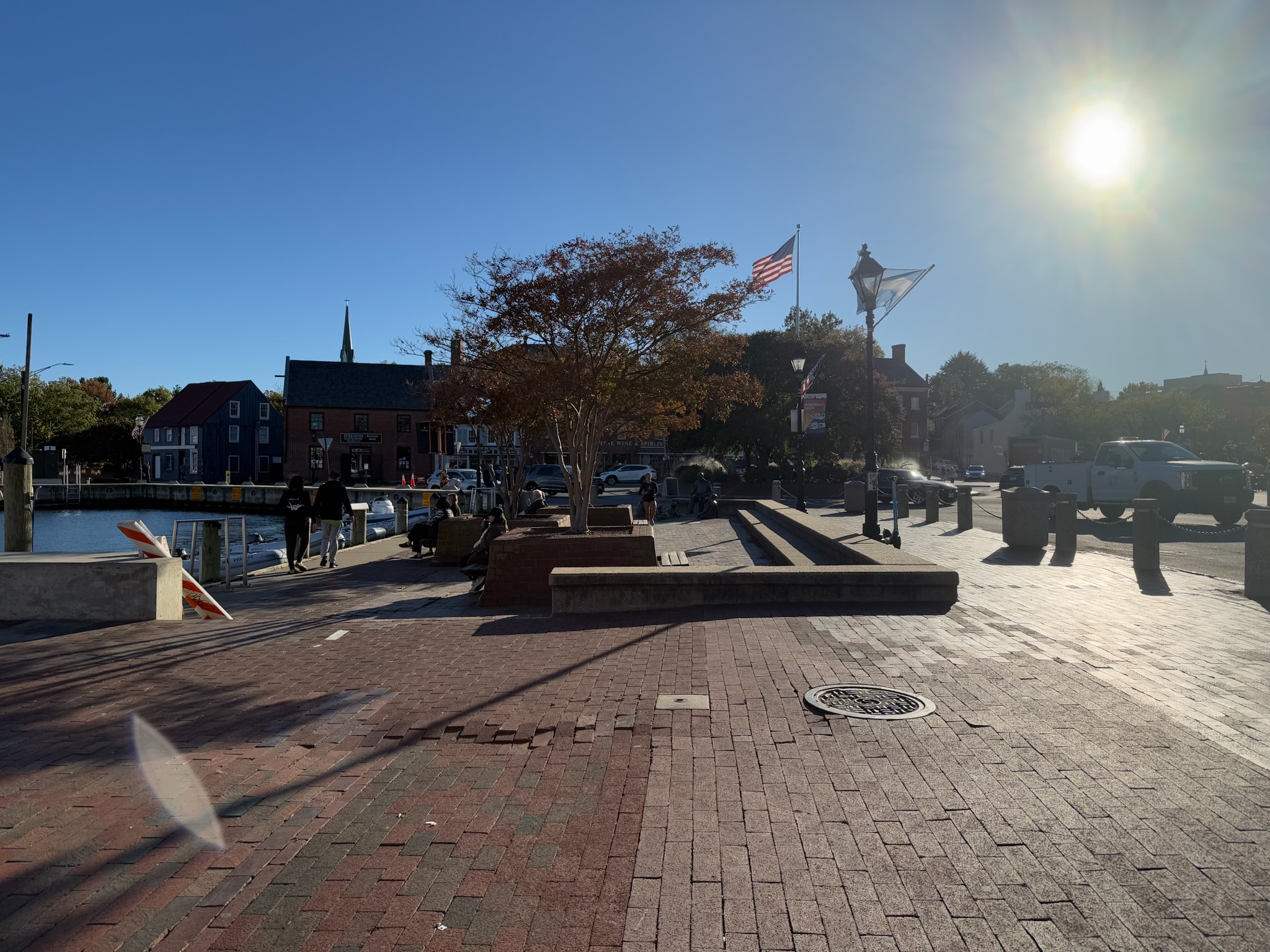
The Market was to the right, on the other side of the street.
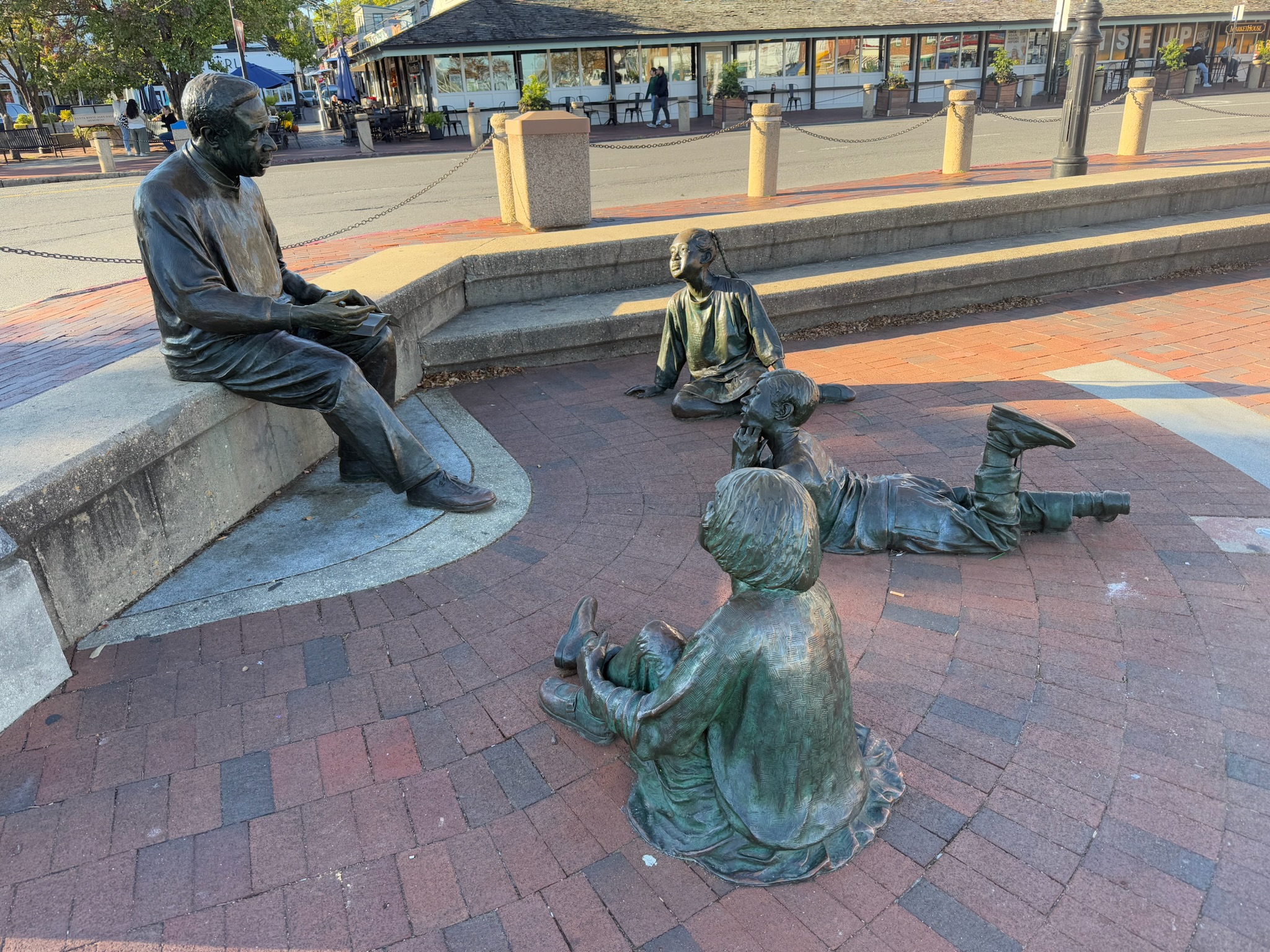
There were some statues in the pedestrian area. The sign said it was Alex Haley, author of the book “Roots,” sharing heritage stories with children from diverse ethnic groups. “Roots” was about one of Haley’s ancestors, named Kunta Kinte, who was kidnapped in Africa, transported by slave ship to Annapolis, and sold into slavery a week later. The Market is in the background.
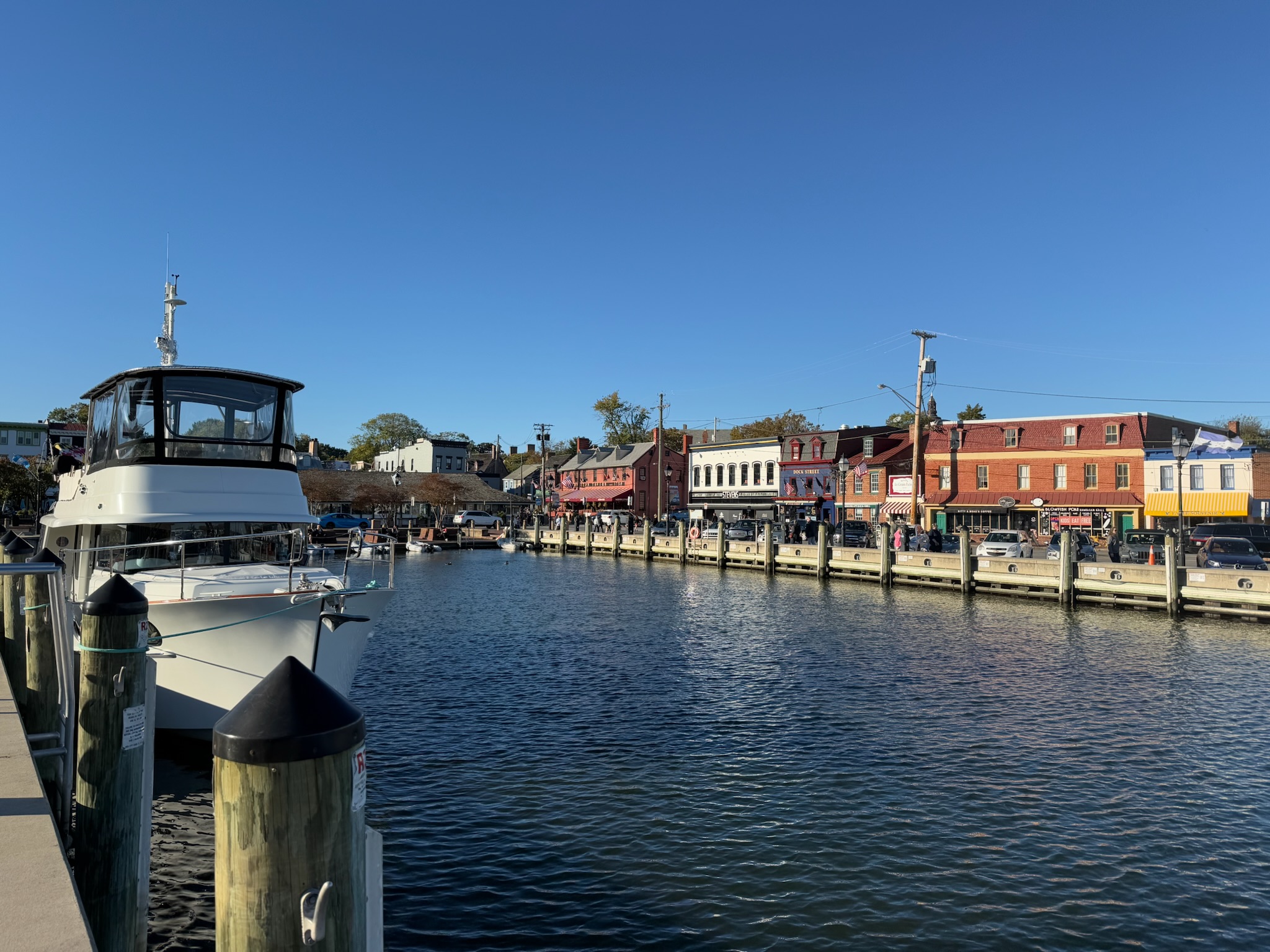
We noticed another sign that talked about the history of the city. The general region around the Severn river was first settled by a small group of puritan tobacco farmers in 1649. In 1695, the governor of Maryland, Francis Nicholson, decided to move the capital to this location since it was centrally located, had protected harbor, and had a protestant friendly population. He named the city of Annapolis after Princess Anne, who was soon to become the queen of England. Nicholson designed the master planned community himself. It was the “oldest surviving Baroque city plan in the United States.” Back then, the waterway in City Dock was much larger than it was today. Over the years, natural silting and intentional landfill have shrunk the waterway to the small finger that it was now.
This photo was looking southeast towards Spa Creek. The dome to the left was Halsey Field House.
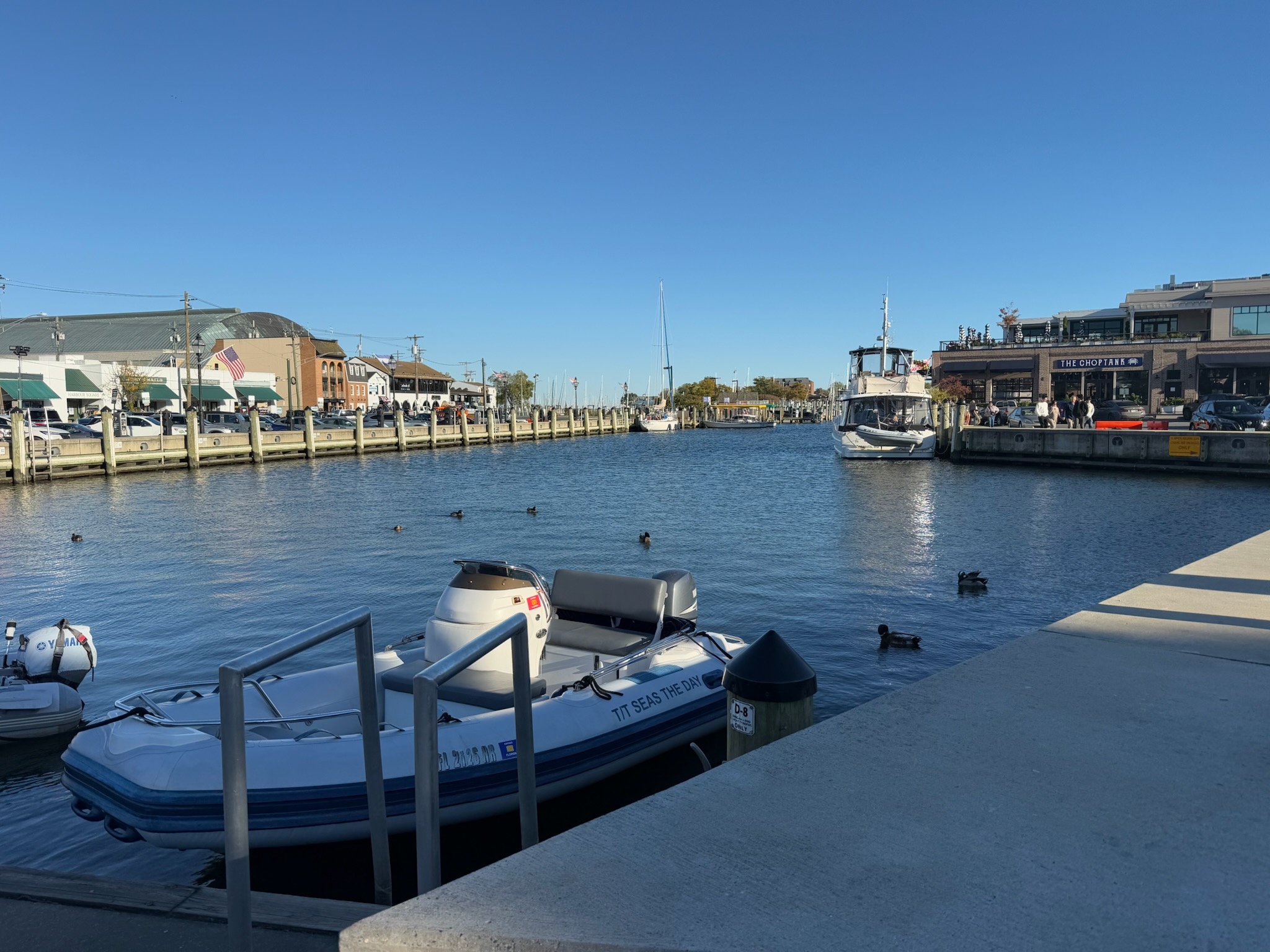
View of the east side of City Dock, taken from the Fleet Reserve Club’s parking lot.
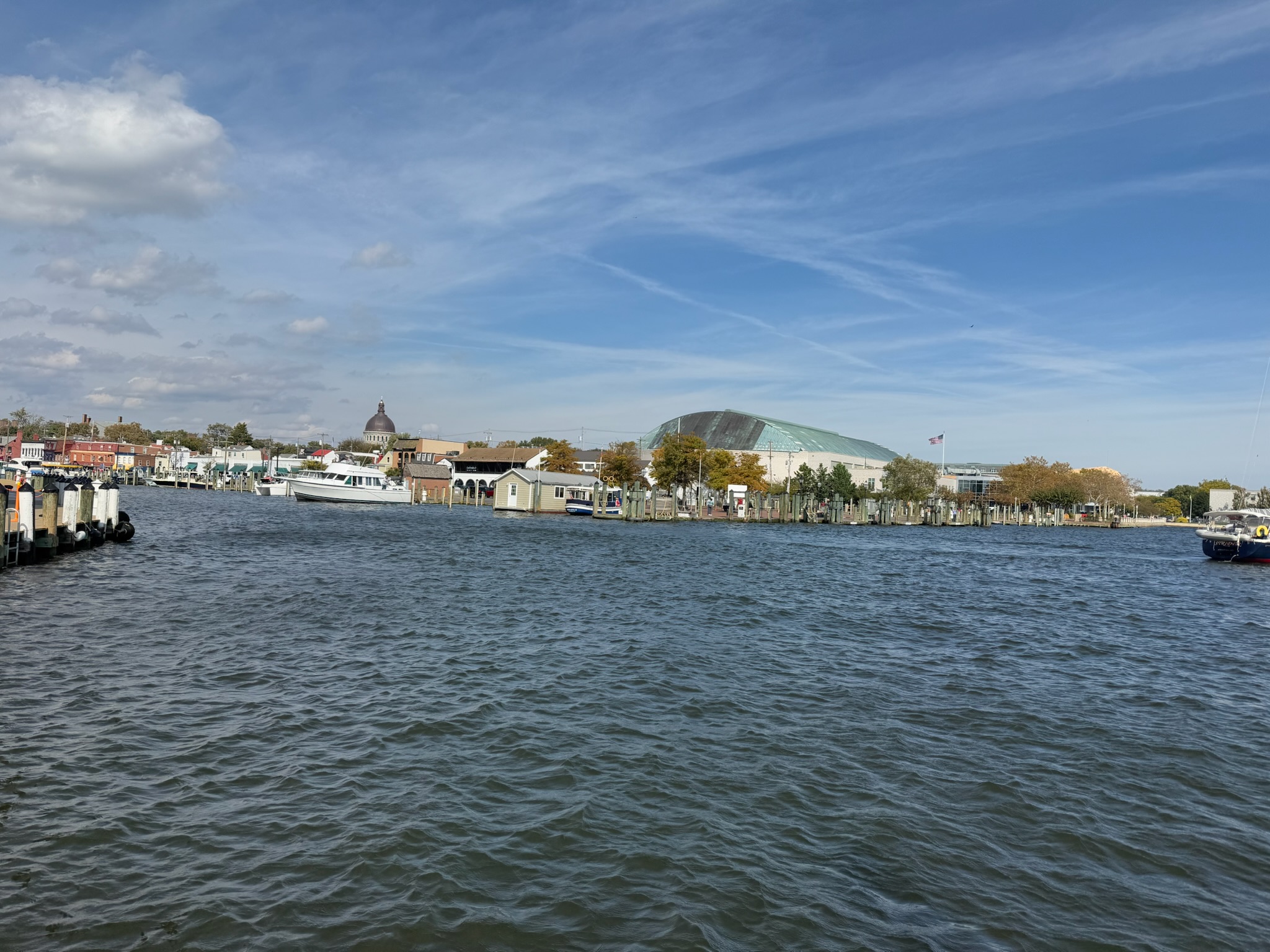
This photo was taken from one of the other docks in our marina. The view was of the mouth of City Dock, with the Naval Academy on the other side of the waterway. Halsey Field House and the chapel’s dome both stood out from amongst the rest of the buildings. The sign we’d seen earlier had also said that since 1850, there have been several landfill projects to add acreage to the Naval Academy. It said the school’s shoreline has seriously changed since it was first established.
All evening, Eric and Christi teased Keith about going to school at the Naval Academy. Keith was not interested in athletics. Going to a school that seemed to focus primarily on athletics sounded awful to him. During our tour of the USS Wisconsin battleship, Keith had determined that the Navy was not a career path that interested him. This decision was reinforced by our visit to the USS Torsk submarine. The idea of going to a college that he knew he’d hate to prepare for a career that he knew he’d hate was too terrible of a concept for him to try to wrap his head around.
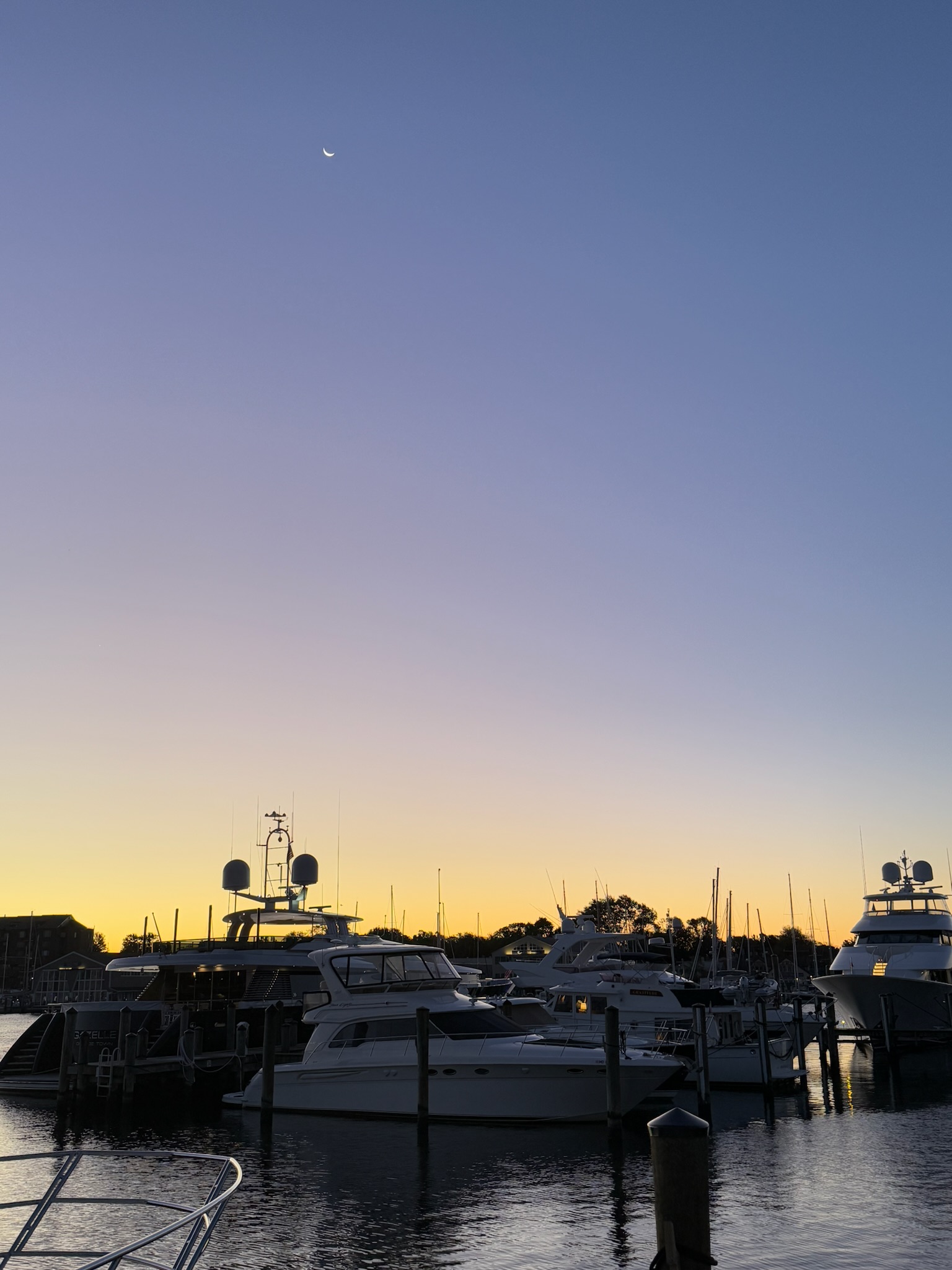
Twilight
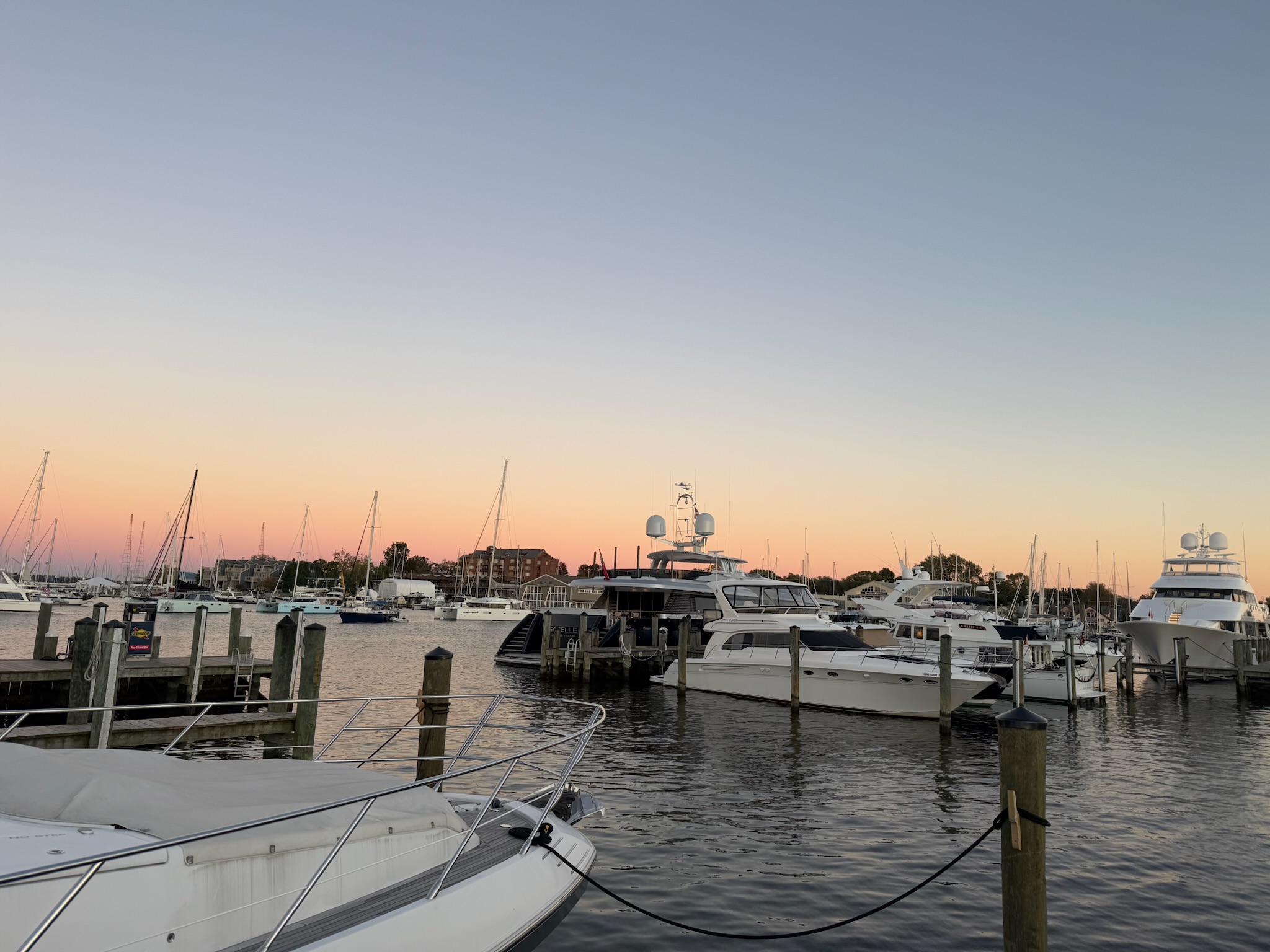
Dawn on Friday, October 17:
In the morning, while Christi and Keith were doing school, Eric organized stuff.
At around 1000, someone came to inspect and service the heating/air conditioning units. He cleaned the filters, checked the pressure, checked the electrical connections, checked the hoses, and flushed hydrogen peroxide down system to make sure nothing was leaking. He told us that the pumps downstairs weren’t installed right — the pump supposed to be above the intake valves. Ah ha! That explained why we’ve always had a problem with the unit shutting itself off in big seas! Eric asked if we should replace the units. He said that all three units were in great shape and that newer units are not as well made as the ones we have now, so we should stick with what we’ve got.
In the afternoon, we got together with the family that we’d first met in Deltavilla, called Sauvage. We met at an ice cream/candy shop on Main Street called Kilwins. We’d been in one on The Wharf, but we hadn’t bought anything then. Truth be told, we were kind of shocked by the prices — they were nearly double our beloved See’s (and we thought See’s was expensive). Eric and Christi both got caramel apples and Keith got ice cream. Everything was really good, but it was expensive for what it was. Keith said the ice cream at the place we went to on the day we’d arrived in Annapolis was just as good, and it was a fraction of the price.
After we were hyped up on sugar, we walked over to the park near the marina. The kids ran around while the adults chatted. It was a mellow, pleasant afternoon. In the evening, the three of us went back to The Market for dinner. We really like that place. it had good prices and great food. The sign about the evolution of the city that we’d seen yesterday said that there has been a Market House at this spot since 1784 — basically as far back as the country itself. This building was constructed just before the Civil War (it didn’t say what happened to the previous building). It was hard to believe this building was 241 years old!
We had a quiet night aboard.