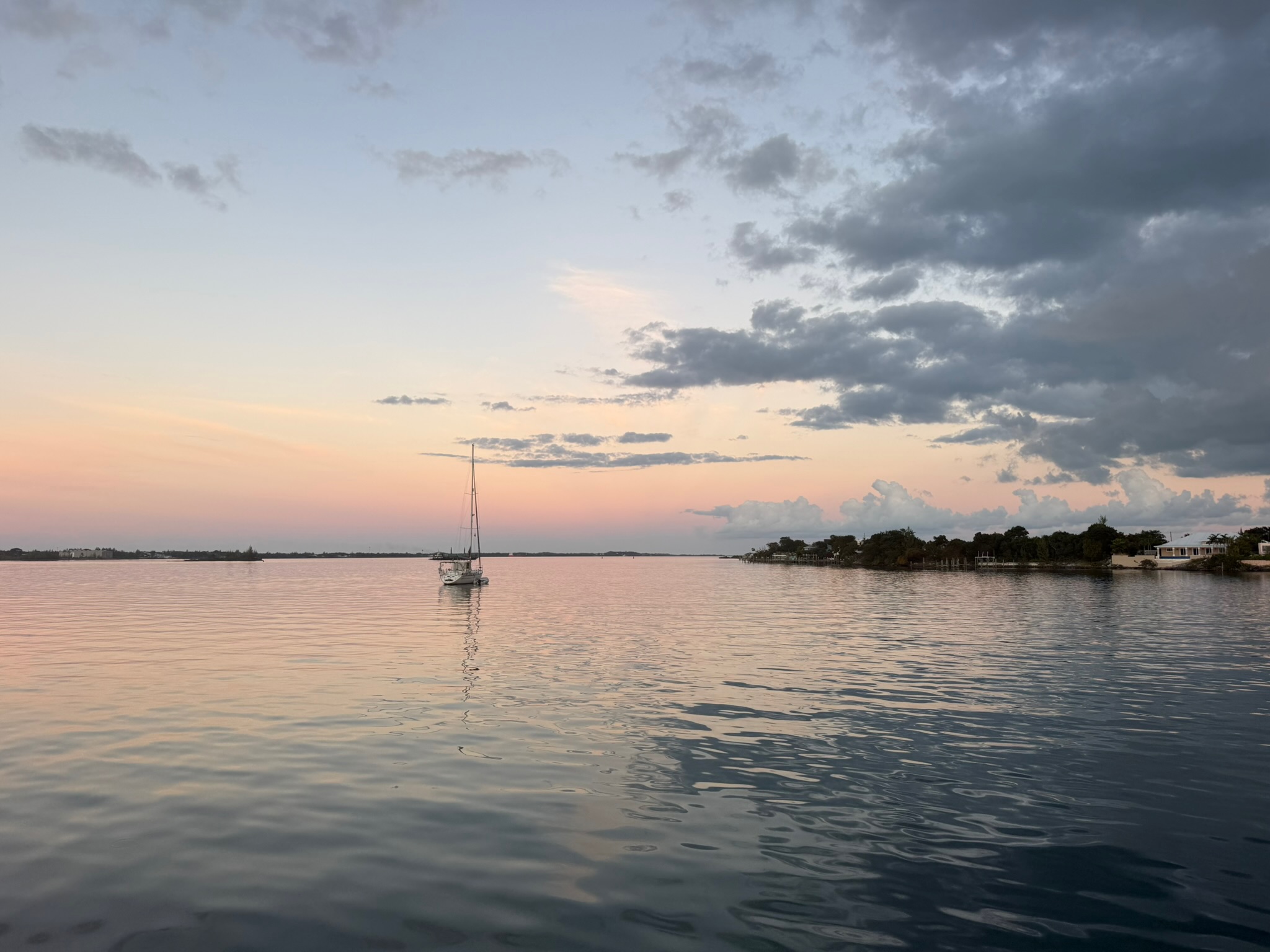
Saturday, November 22, 2025 — This morning, the sunrise was blocked by the clouds. But the sky still turned pretty colors.
Yesterday, we’d walked by a cafe that looked promising. This morning, we took the dinghy over to the dock by Snappas and walked over to the cafe for breakfast.
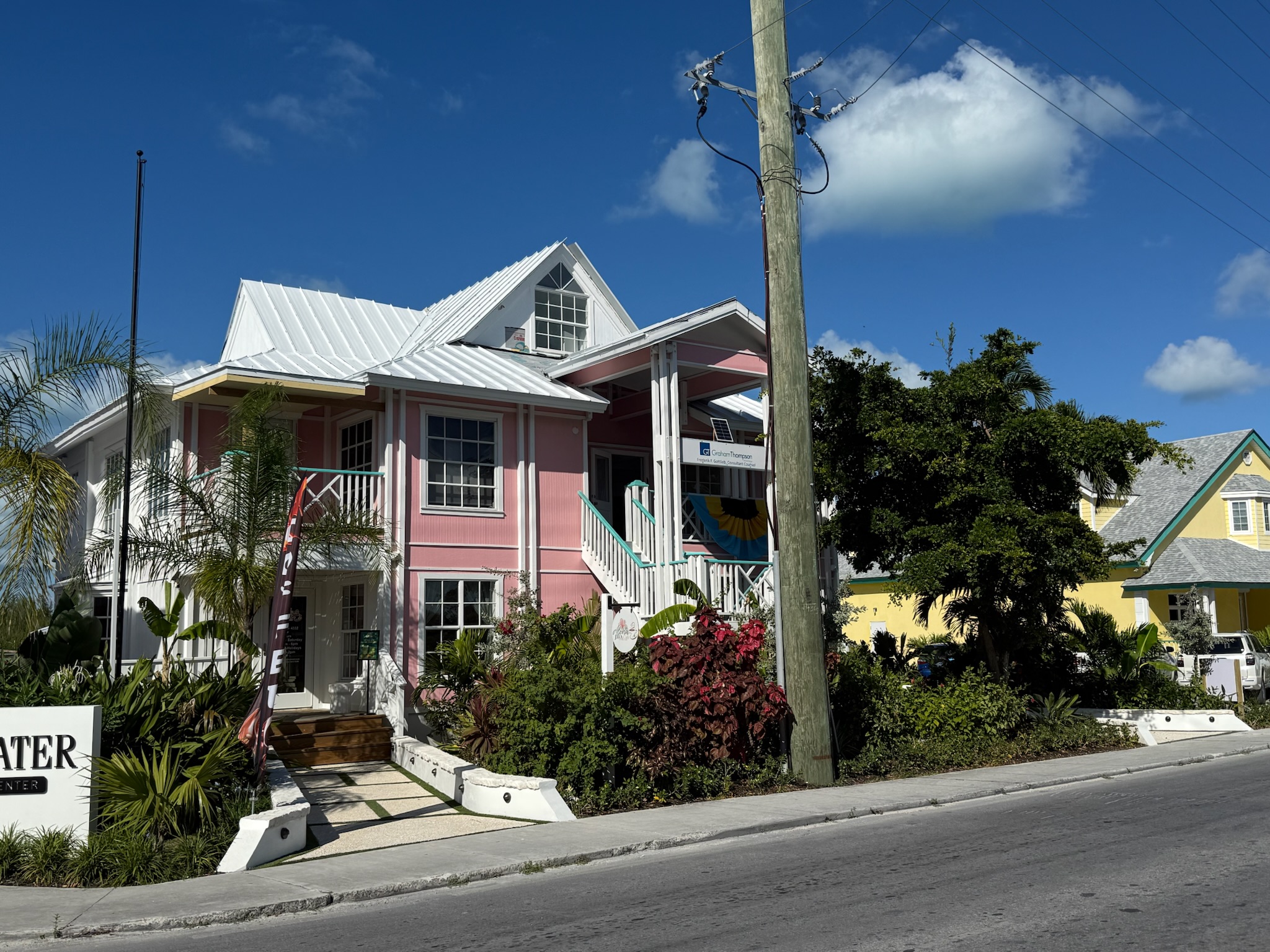
It looked brand new.
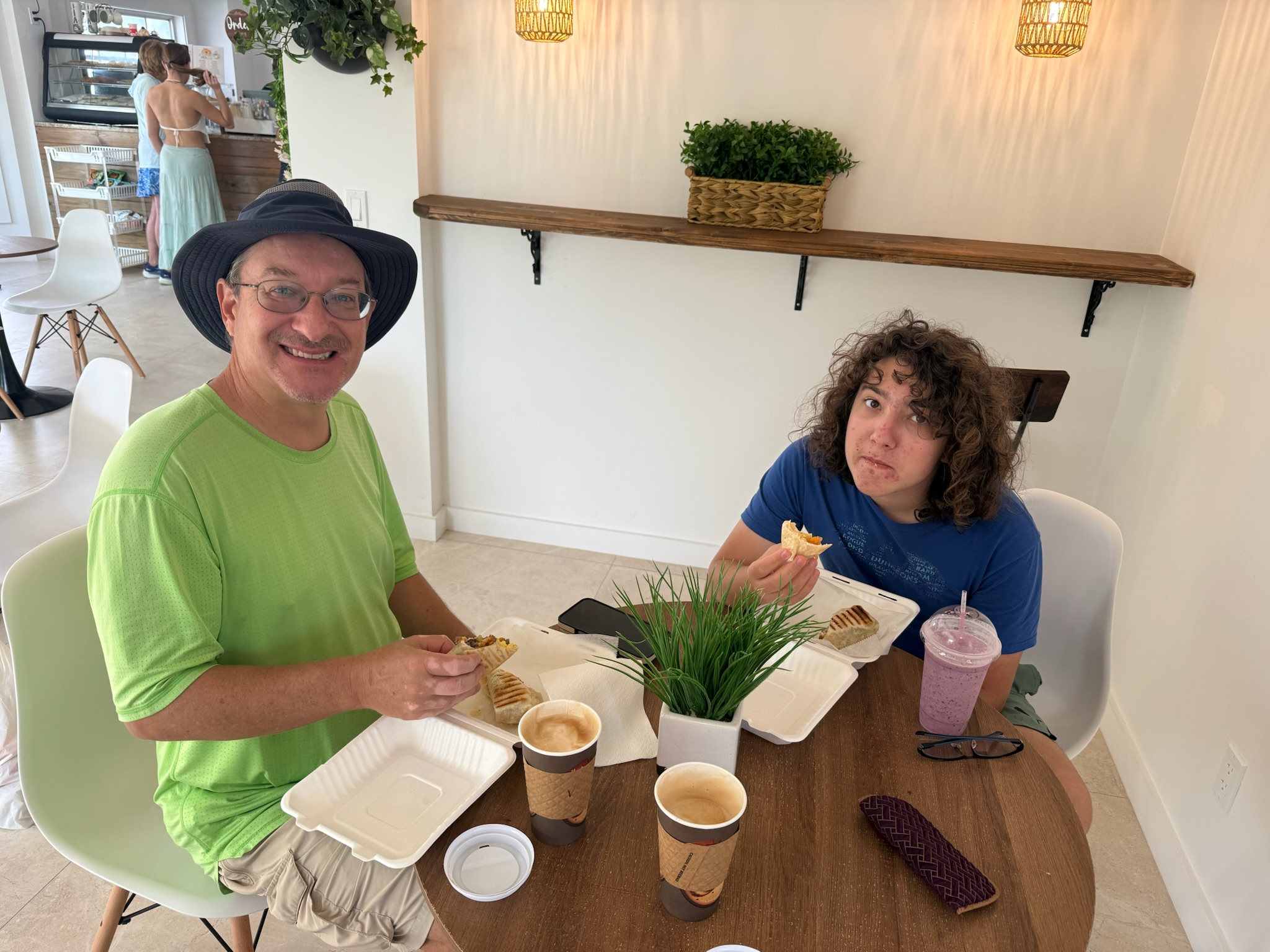
We overheard some locals talking, and it sounded like the cafe had opened within the last few weeks. The person we presumed was the owner said she was anxious for the tourist season to start, implying it had been expensive to open and she needed more customer traffic. After breakfast, we headed back to Kosmos, raised the dinghy and headed over to a nearby anchorage behind a barrier island a little bit to the west, called Tiloo Cay.
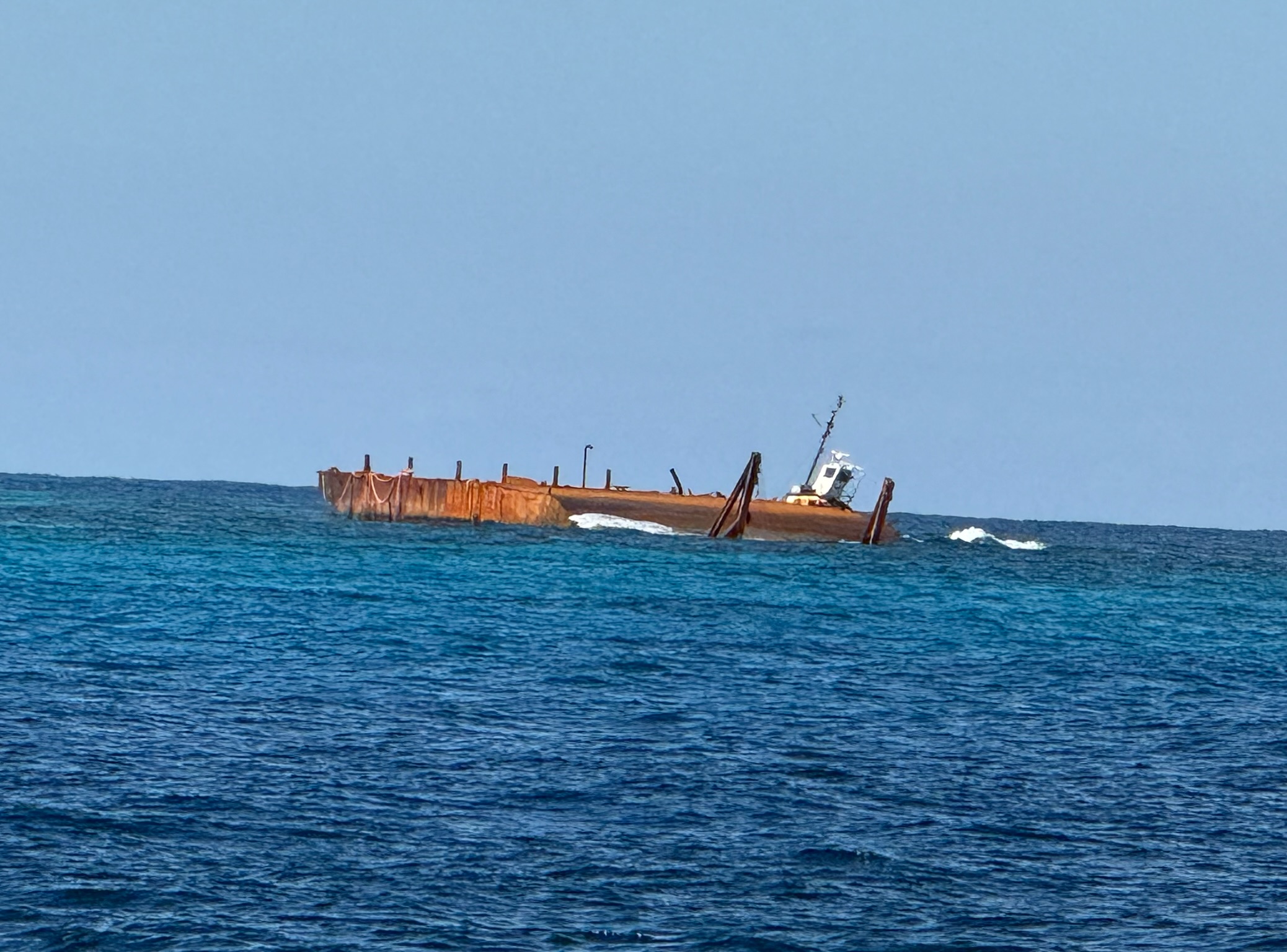
On the way, we passed a sunken vessel. We’d actually passed it on our way into Marsh Harbor on Monday. It had still been dark, so we hadn’t been able to see it, but thanks to one of the apps that we use, No Foreign Land (NFL), we had been aware of it. Per NFL, it had (relatively) recently hit the reef and sunk, so it wasn’t on Kosmos’s navigational charts. We’re thankful for NFL for many reasons, and one was because it often had the most up to date information.
We chose a route on the outside of the reef, and took about three hours to get there. Seas were calm. The area around Tiloo Cay looked to be mostly residential.
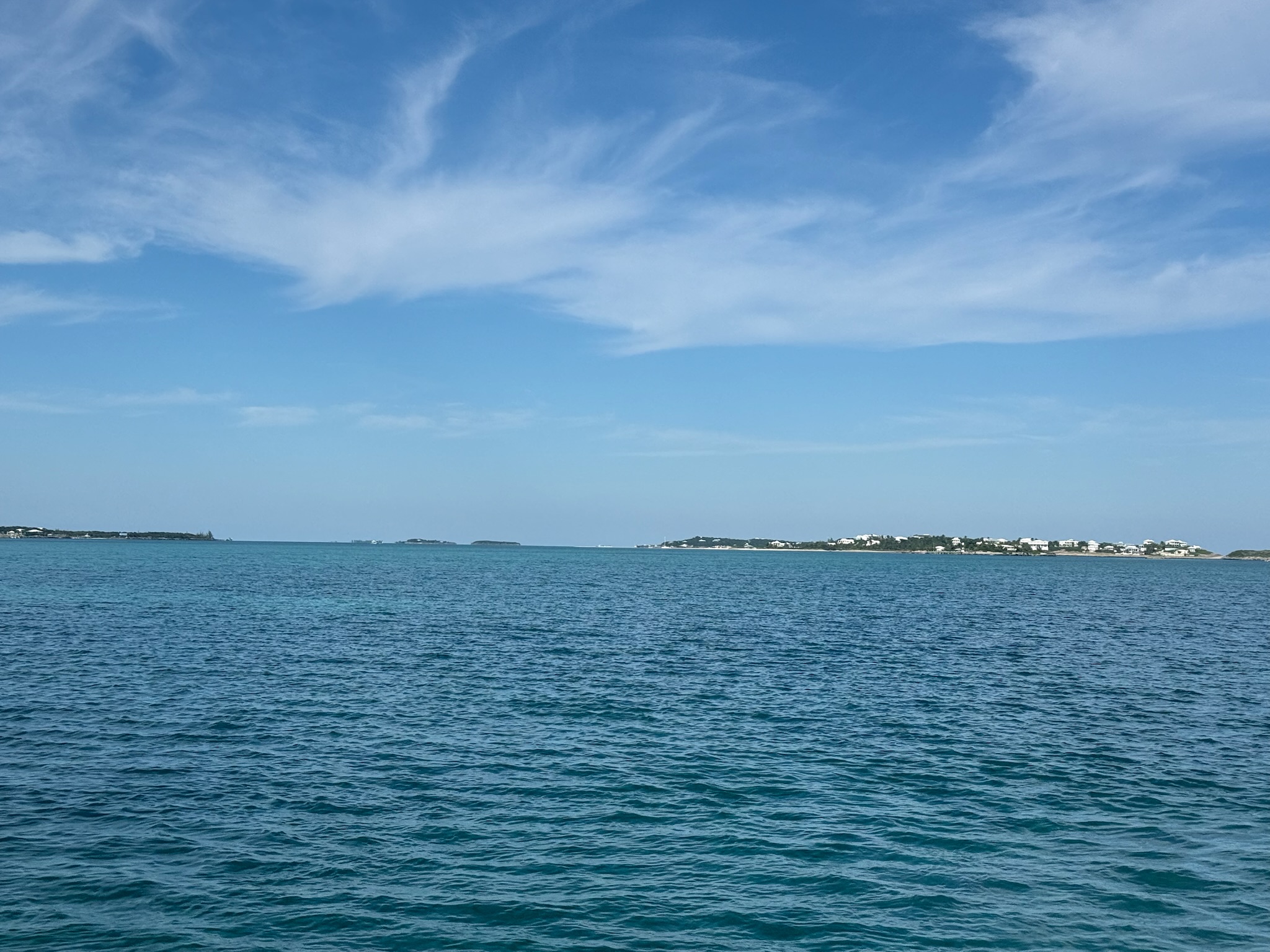
The majority of the anchorage had sea grass on the bottom, but we did manage to find a patch of sand to drop the anchor into. When Eric backed down on the anchor, the boat jerked far more forcefully than we’ve ever experienced before. Keith wasn’t holding on to anything and lost his balance.
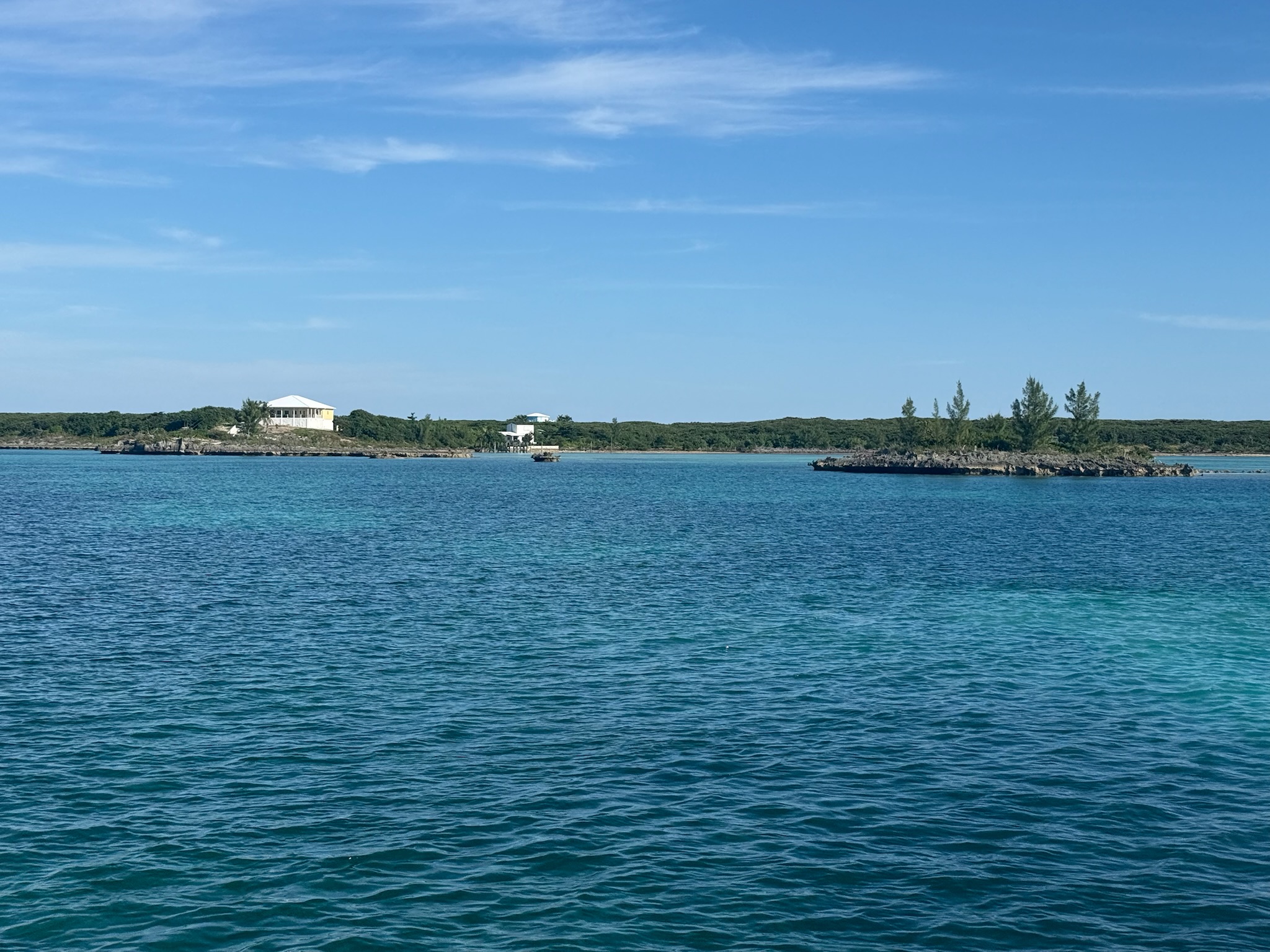
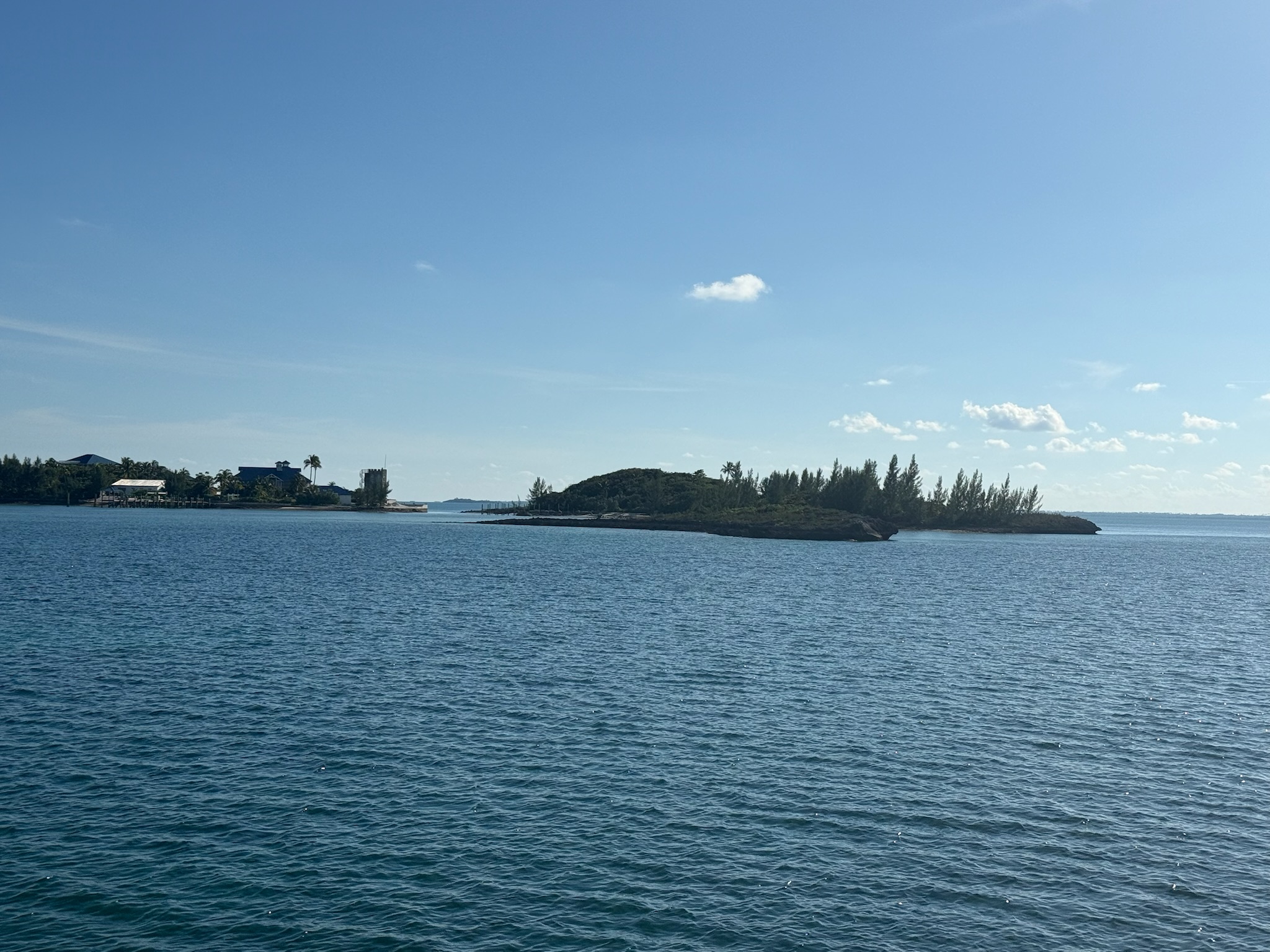
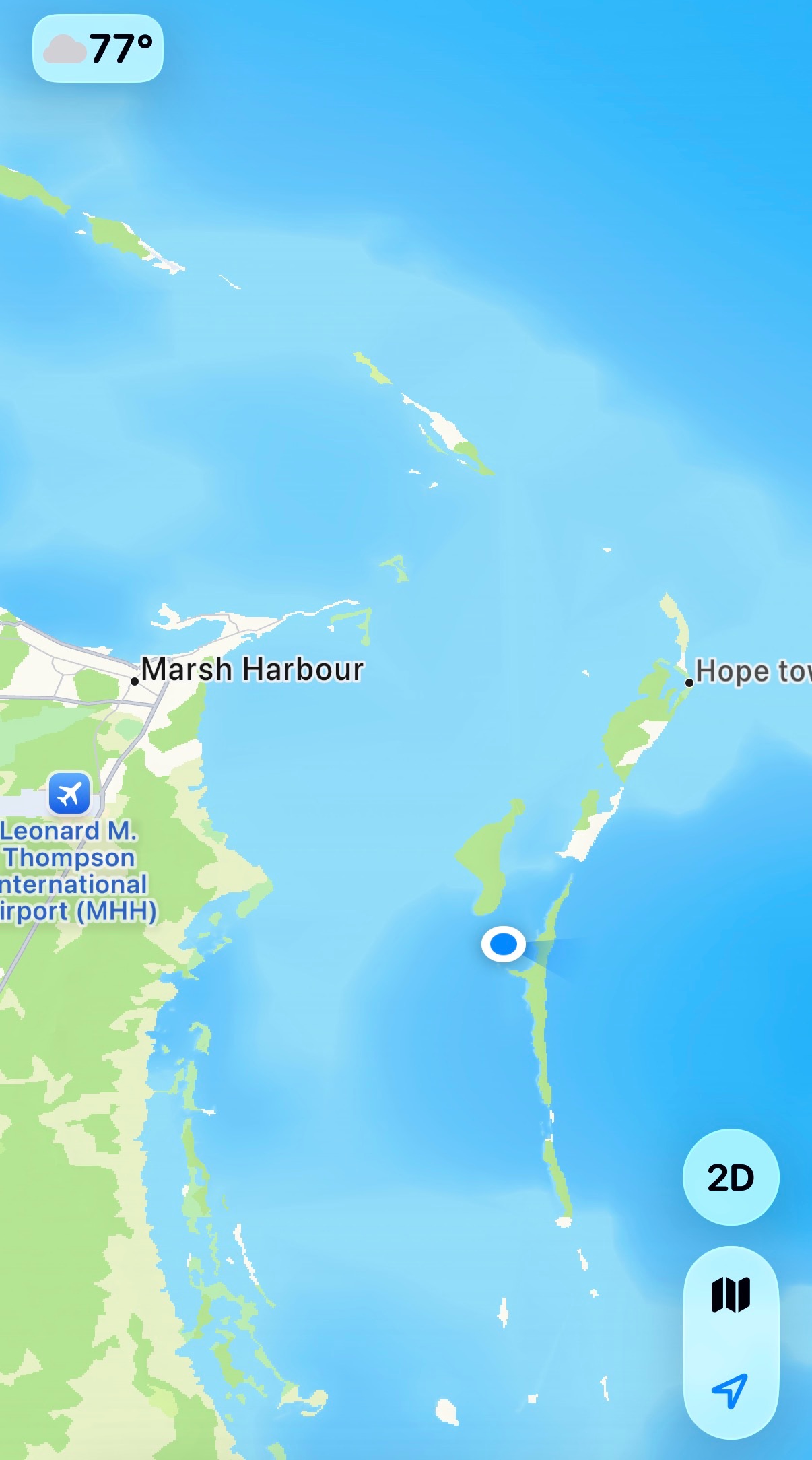
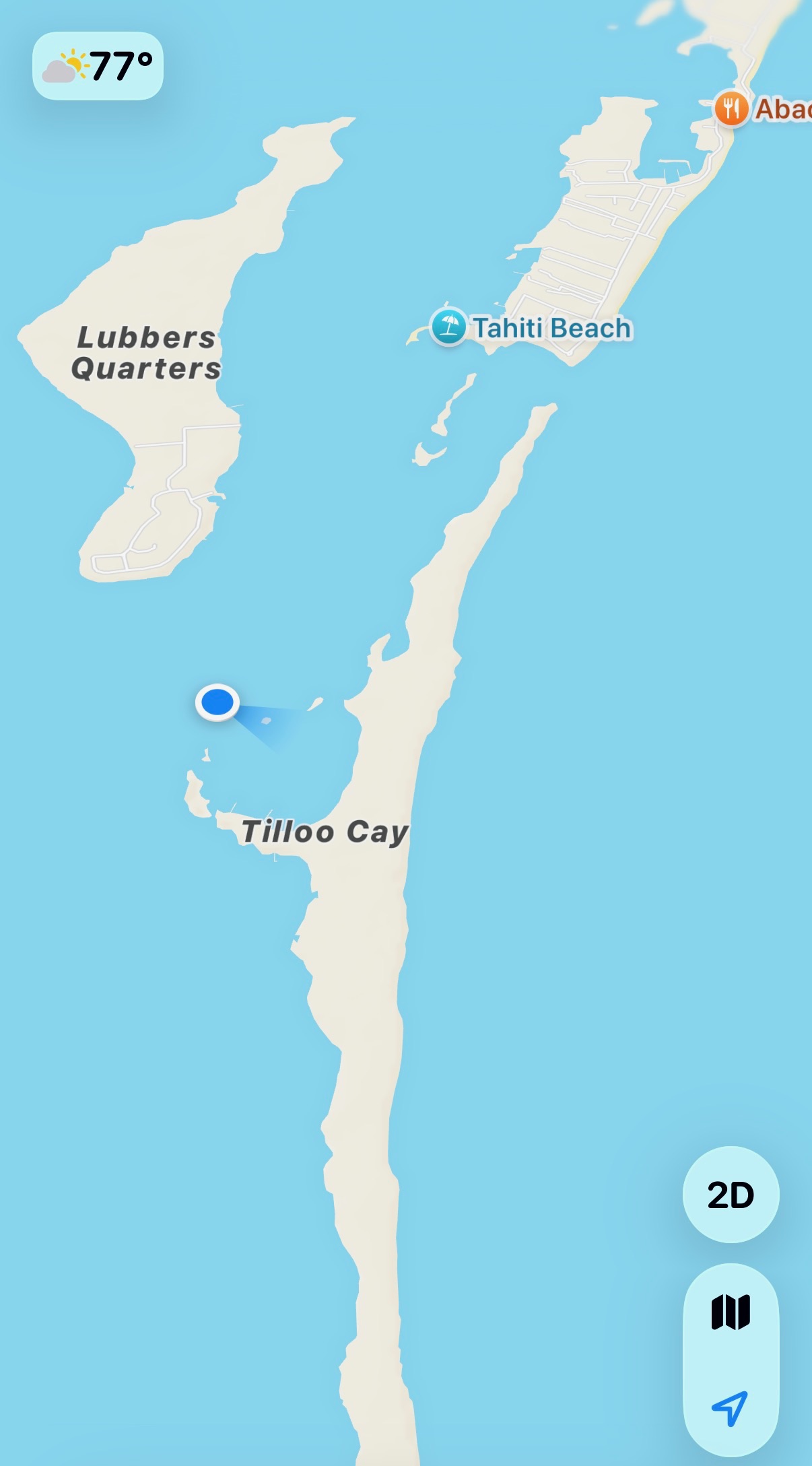
The anchorage had a little bit of swell, but it was gentle and we barely moved. The water was crystal clear. It was a pleasant spot. Here were a couple of maps so you could see how far we’d gone from Marsh Harbor and exactly where we dropped anchor.
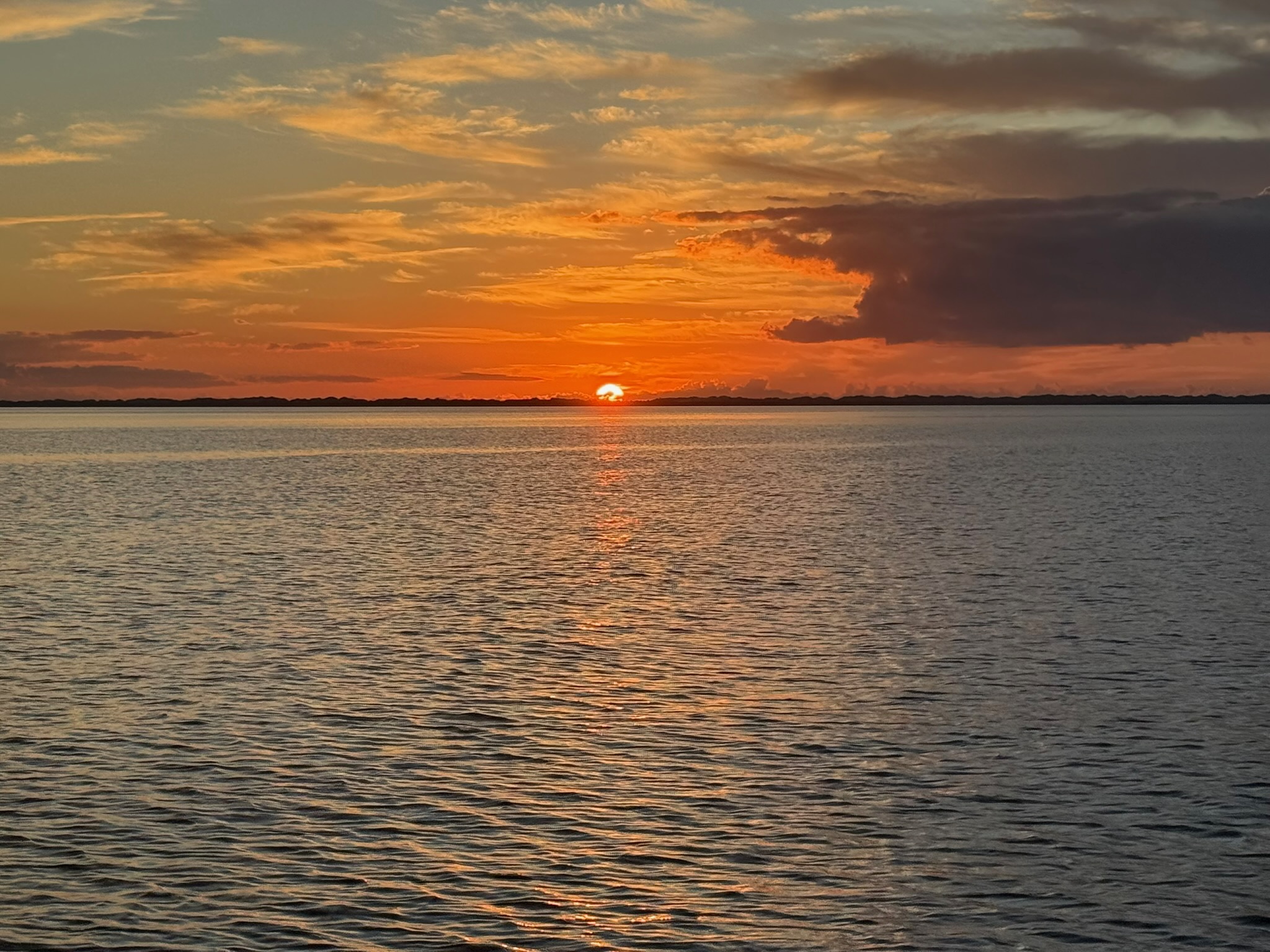
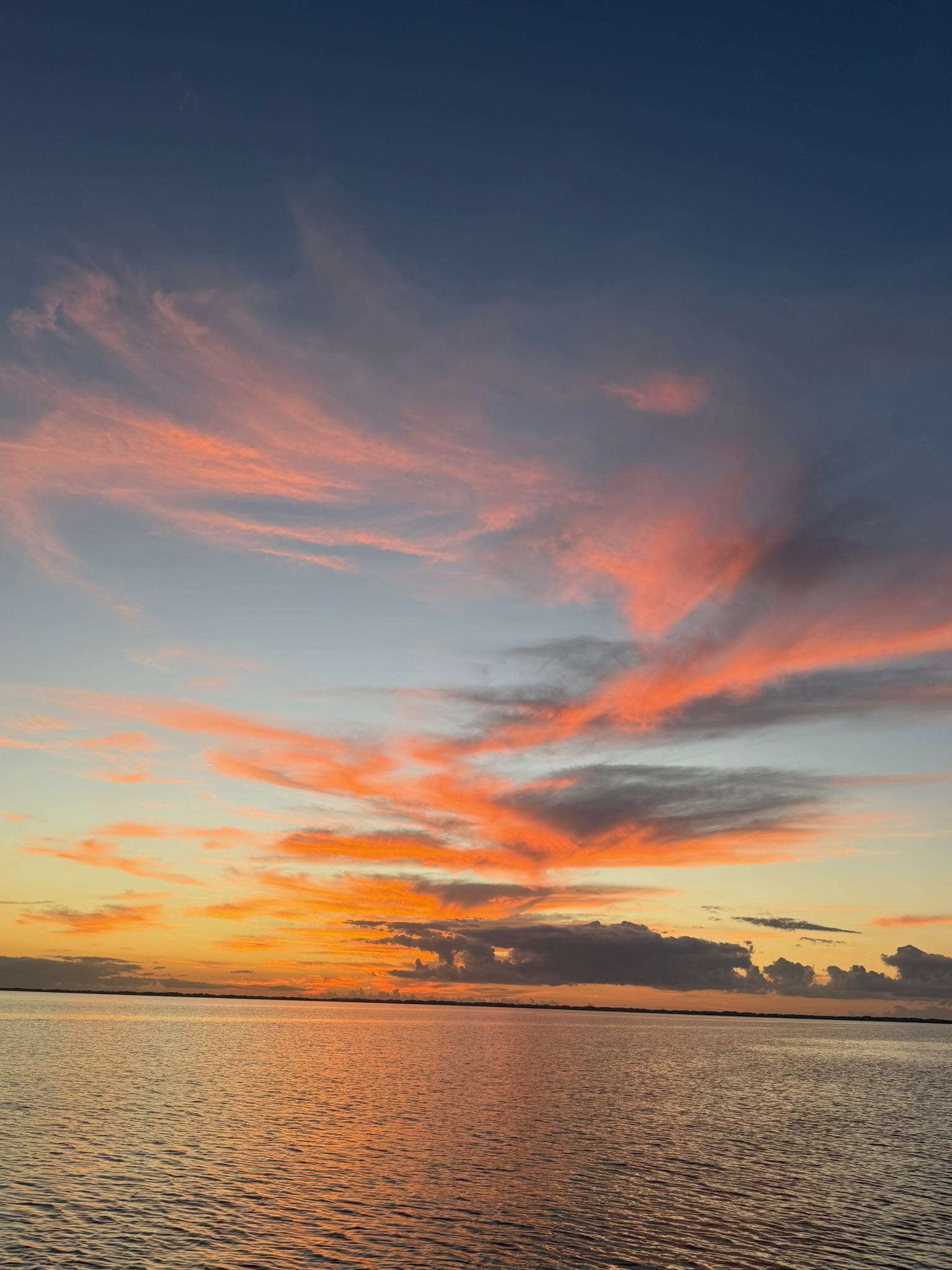
It was another gorgeous sunset and twilight.
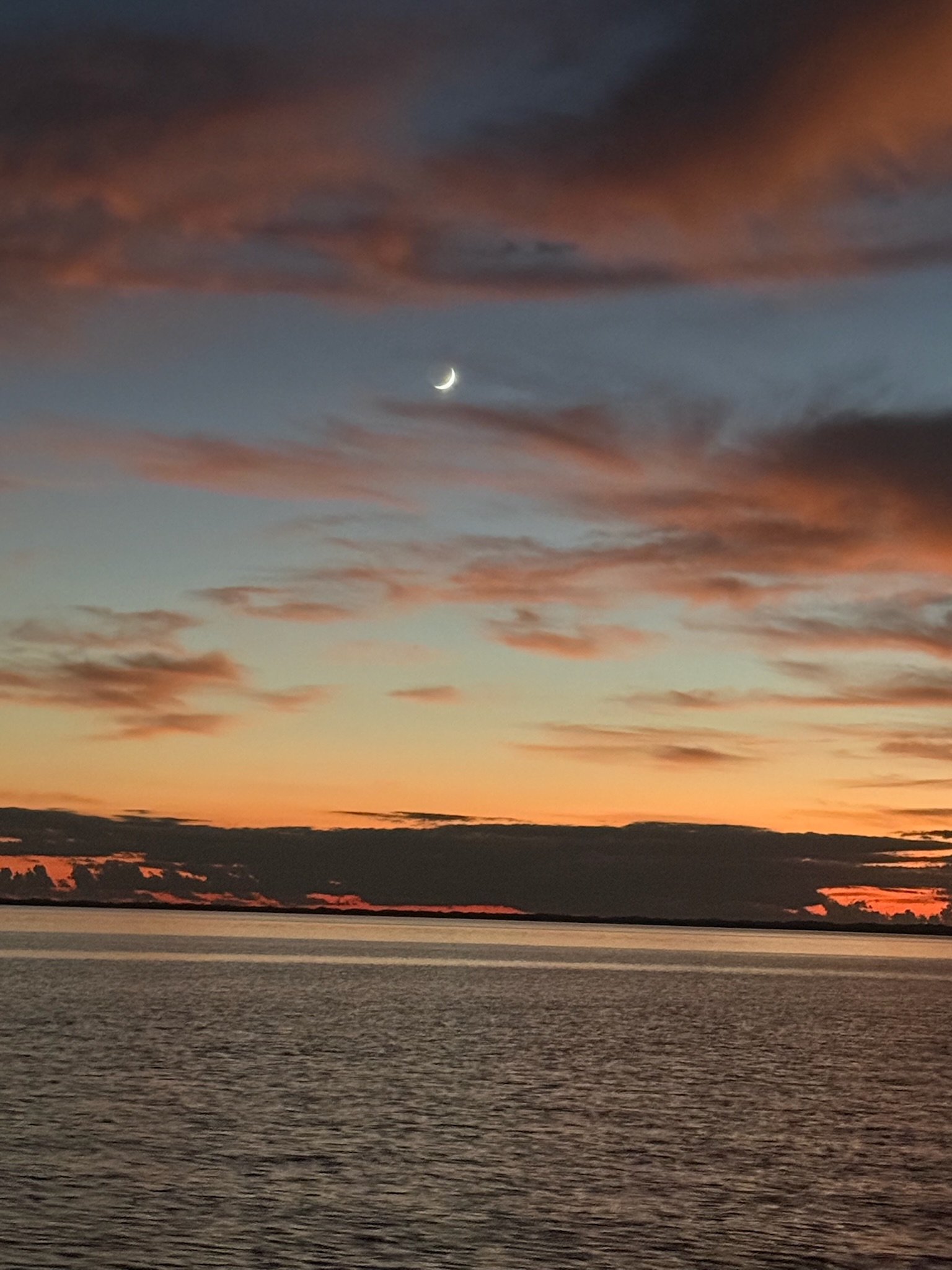
After dark, Christi sat outside for a while and watched the stars. We didn’t watch the stars that often since ideal stargazing conditions were few and far between. In the summer, we’d usually go to bed shortly after sunset, before the stars were bright. In the winter, the evening had to have clear skies and be warm enough to sit outside.