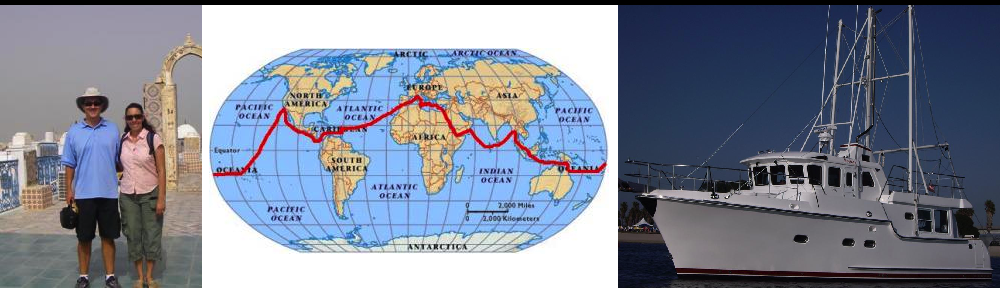
continued… The Captain’s cabin was a suite of six rooms used for sleeping, administration, dining and entertaining. The signs in this room also had details about USS Constellation’s early years and Civil War service: her first assignment after commissioning was in the Mediterranean Sea protecting merchant ships from raiders, and she was there for the first few years of the war (under the Union). If we understood the sign correctly, it sounded like the Confederates may have been confiscating ships.
The middle area with the dining table and lounge chairs was called the “Day Cabin.” Apparently, etiquette required the captain to entertain frequently. He’d host dinners for his officers and, when the ship was in foreign ports, would host dinner parties for foreign dignitaries. There were small private rooms with doors on the port and starboard sides.
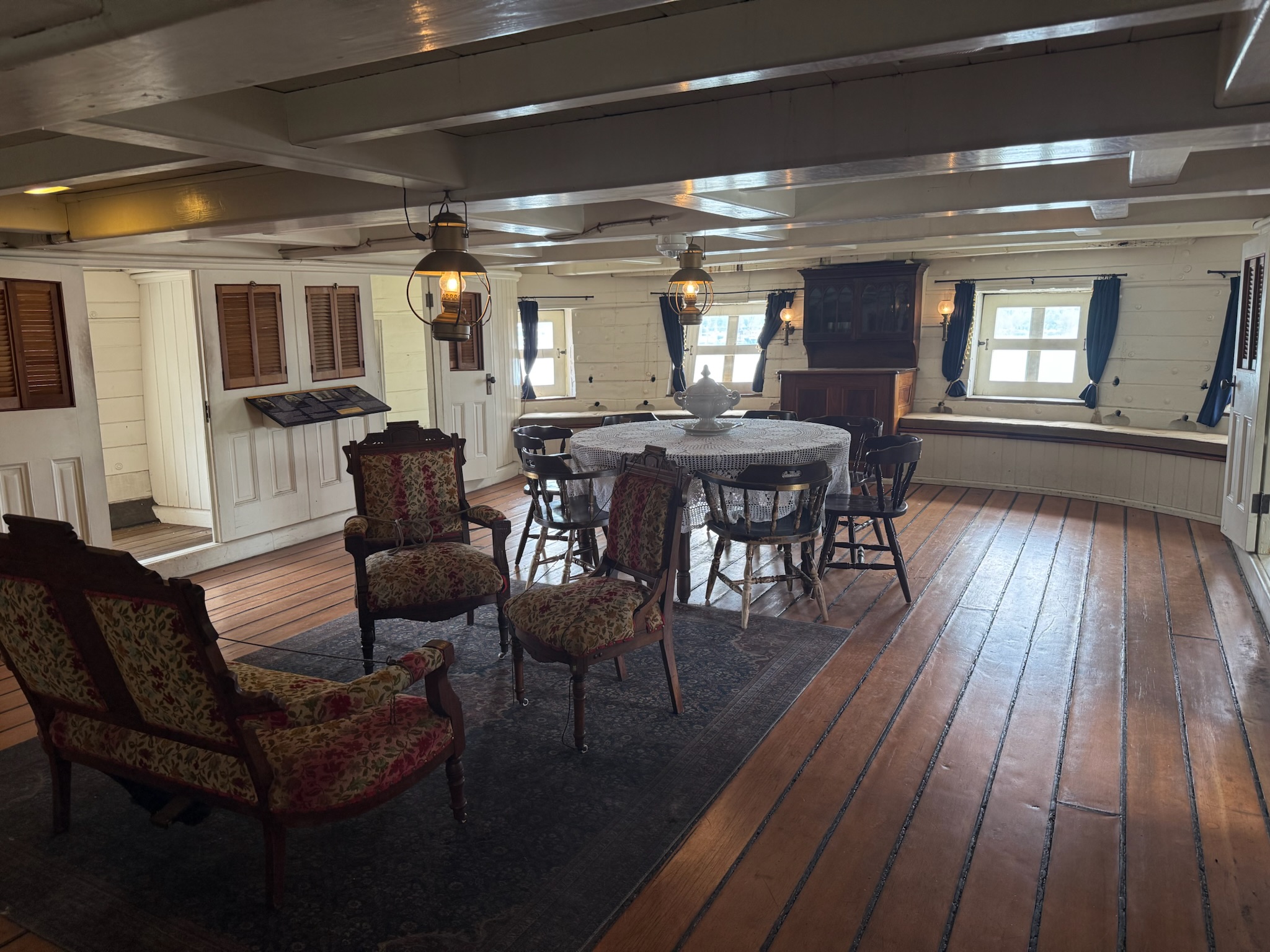
The captain had a feather bed in his sleeping area.
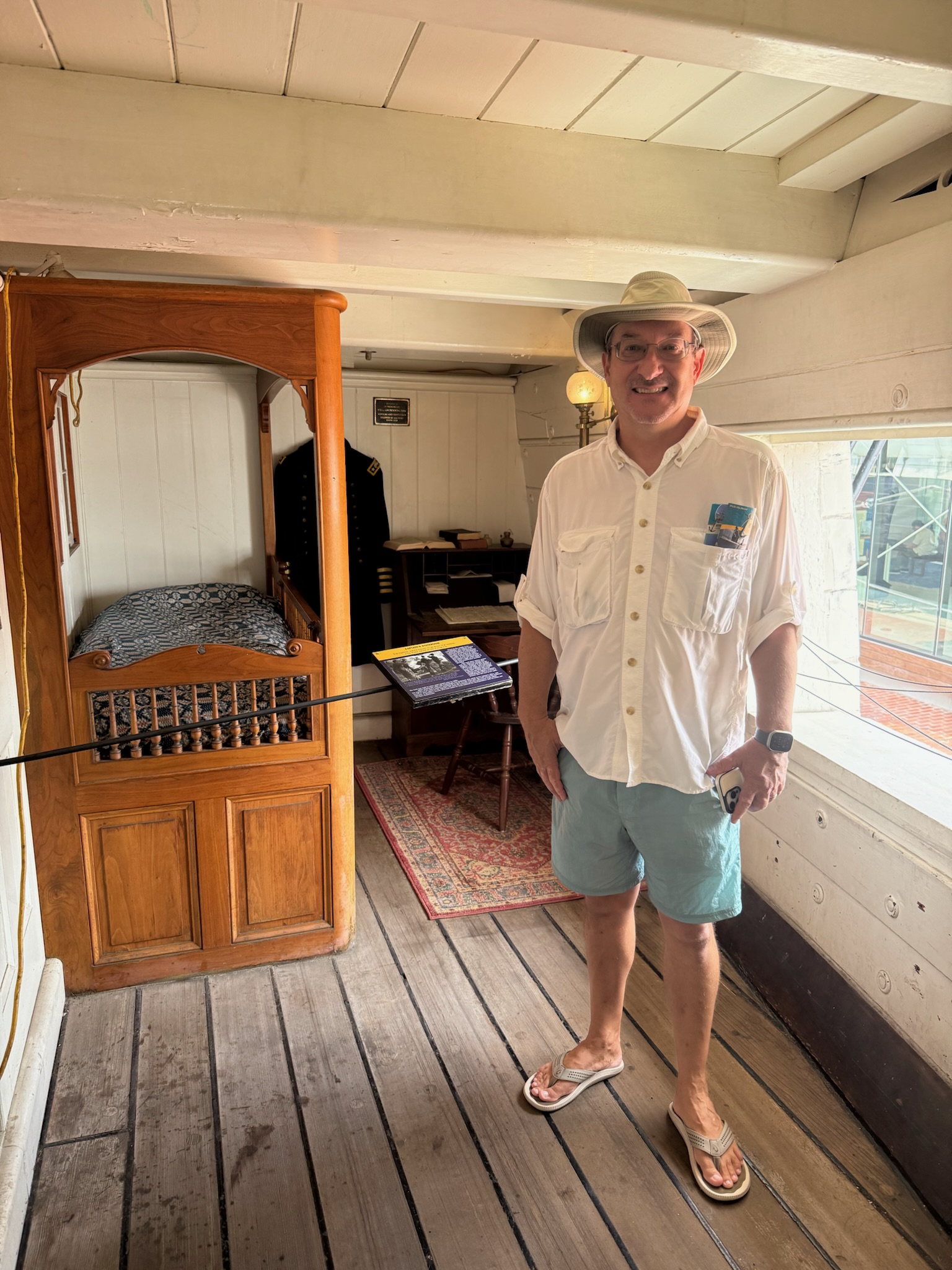
This was his head (bathroom) at the starboard aft. We assumed he went potty in a bucket and tossed the contents out the widow, but the sign had no details.
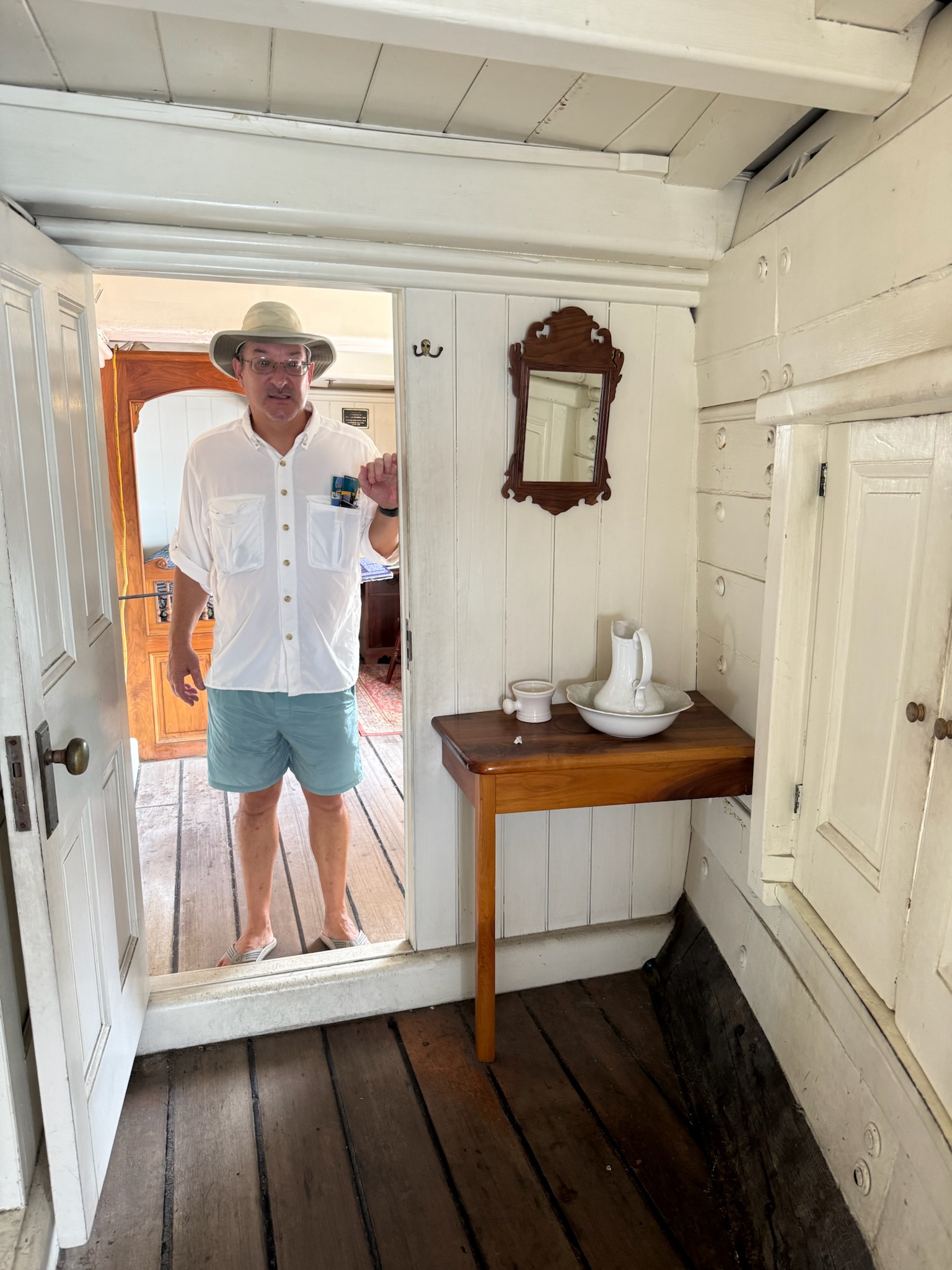
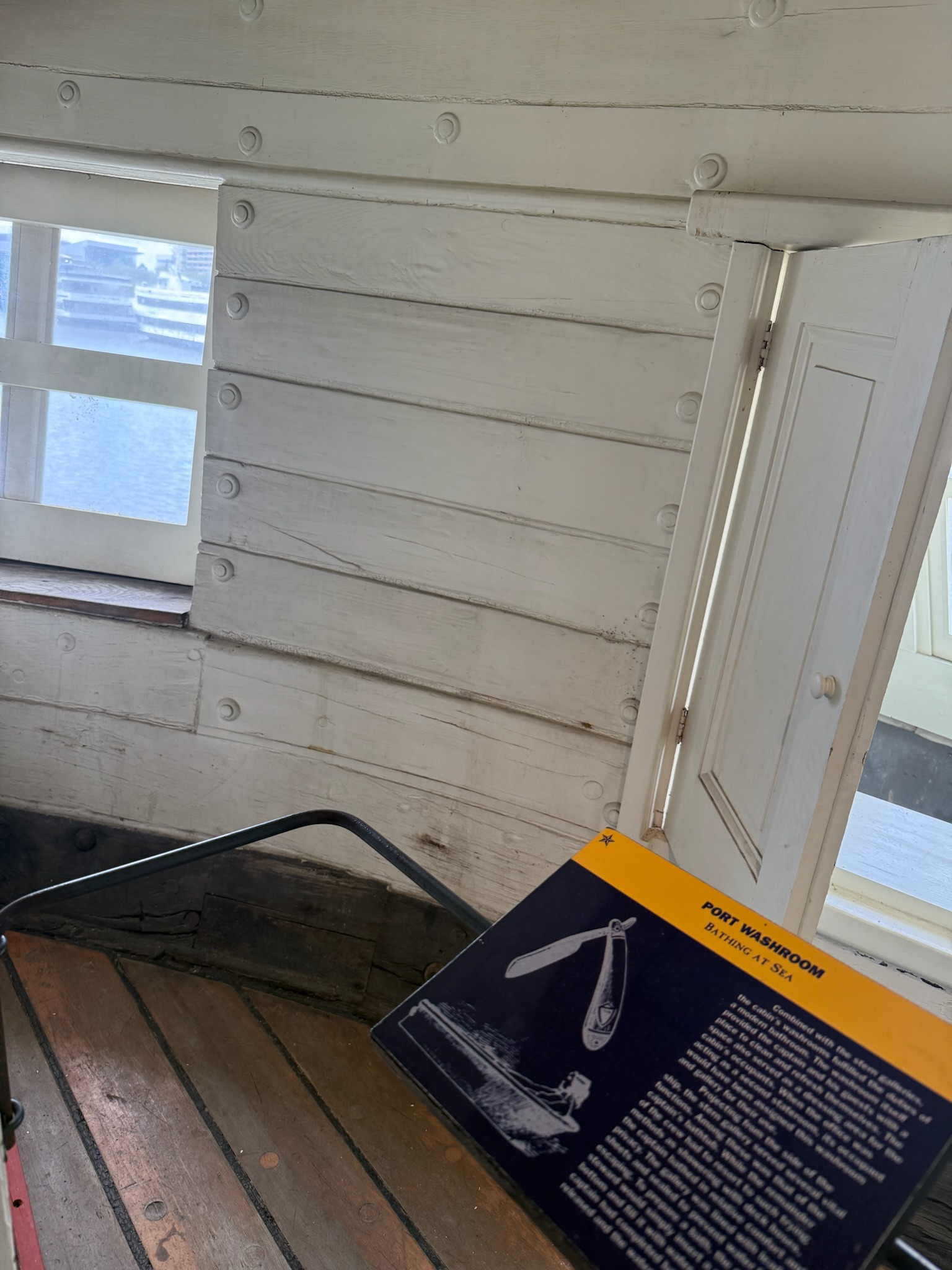
According to the signs, the little area at the port aft was a bathtub! It was lined with lead to make it watertight and had a drain in the floor.
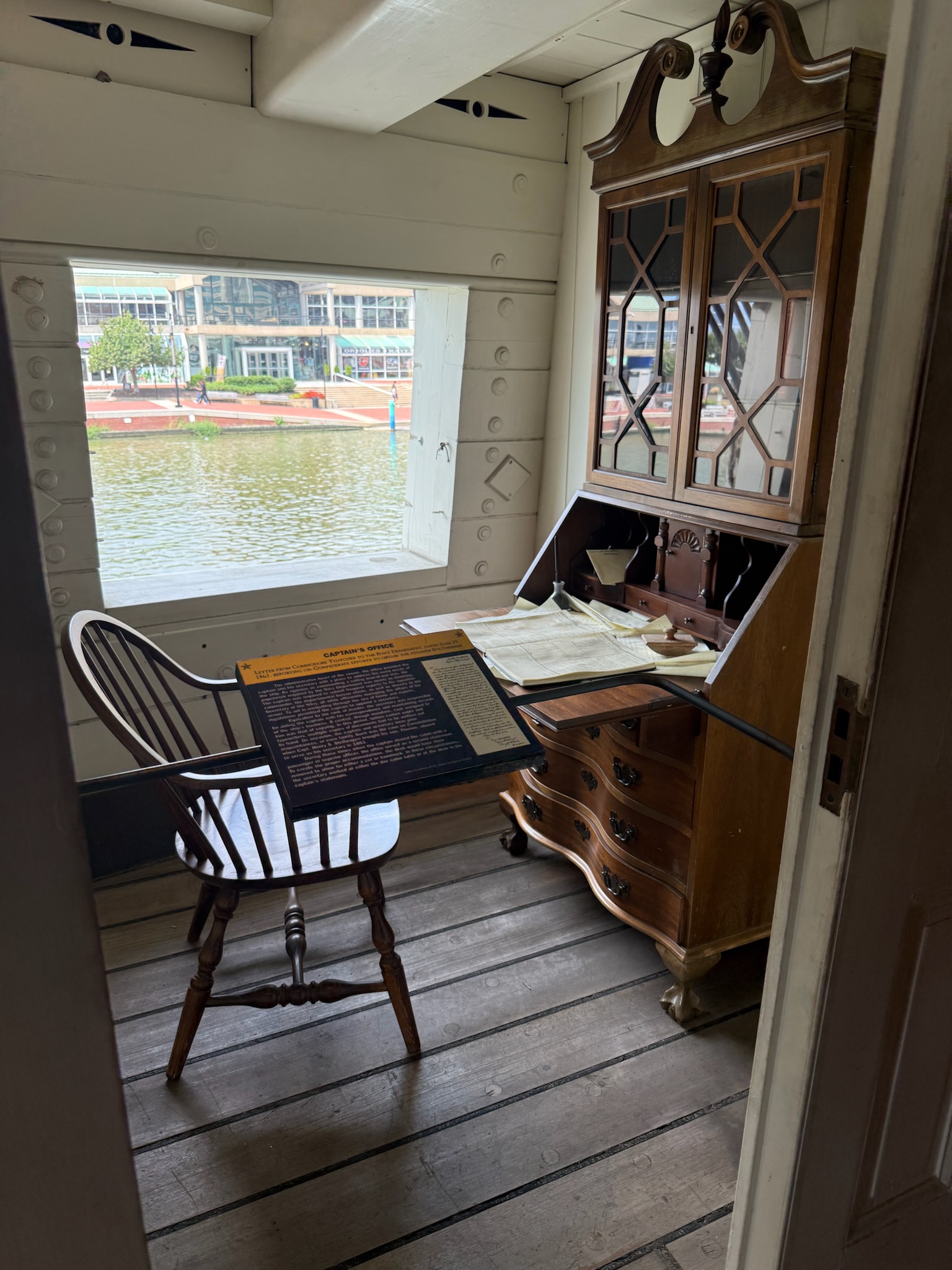
The office. The Secretary worked in here, too. The sign noted that since typewriters and carbon paper hadn’t been invented yet, the Secretary had to write multiple copies of every document by hand. And the navy bureaucracy was apparently just as bad back then as it was now.
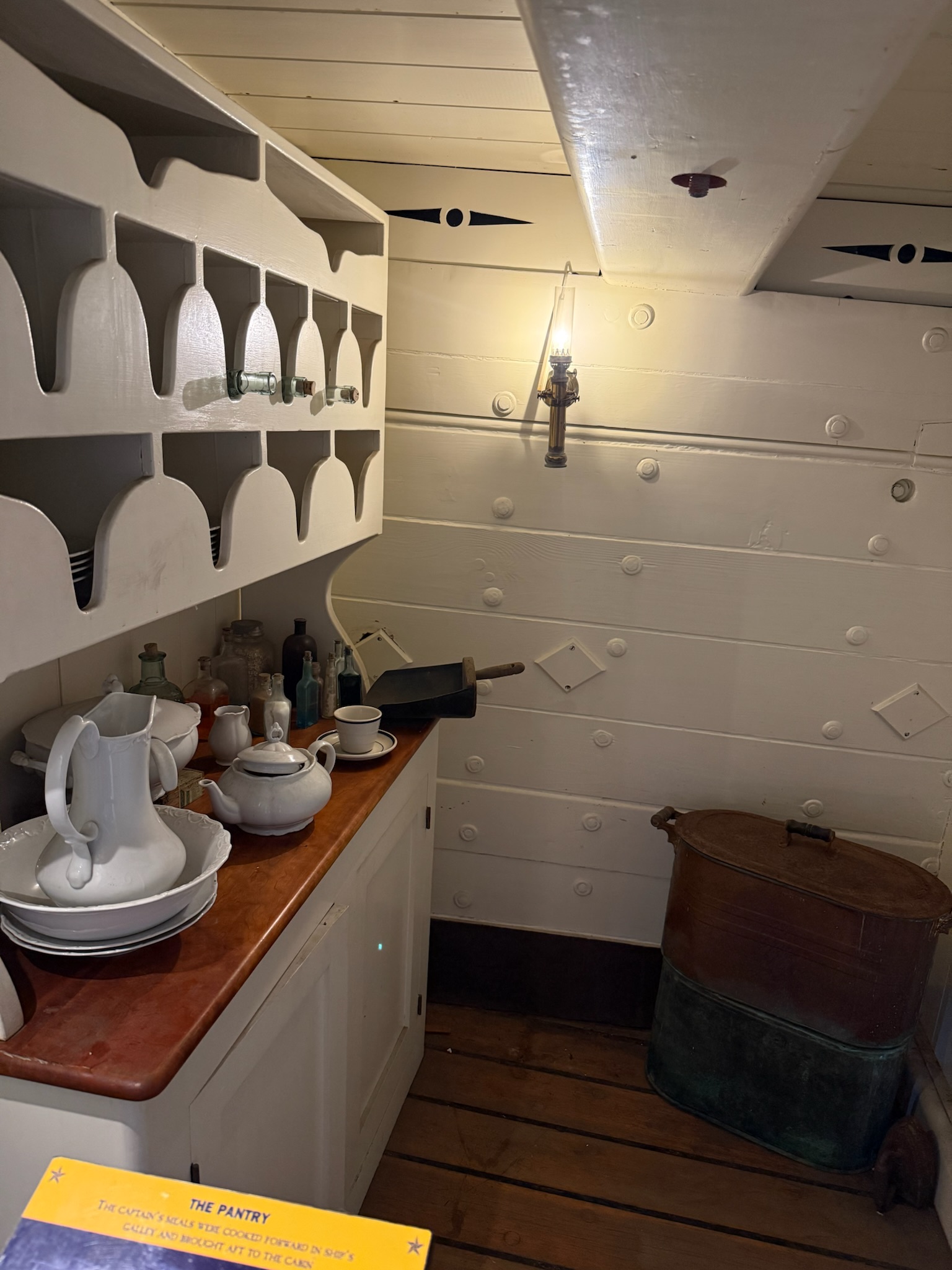
The pantry. The captain was allowed to buy his own food and drink separate from the rest of the crew, most of which was utilized as part of his hosting duties. When alcohol was abolished onboard in 1862, the captain was still allowed to have his own stash.
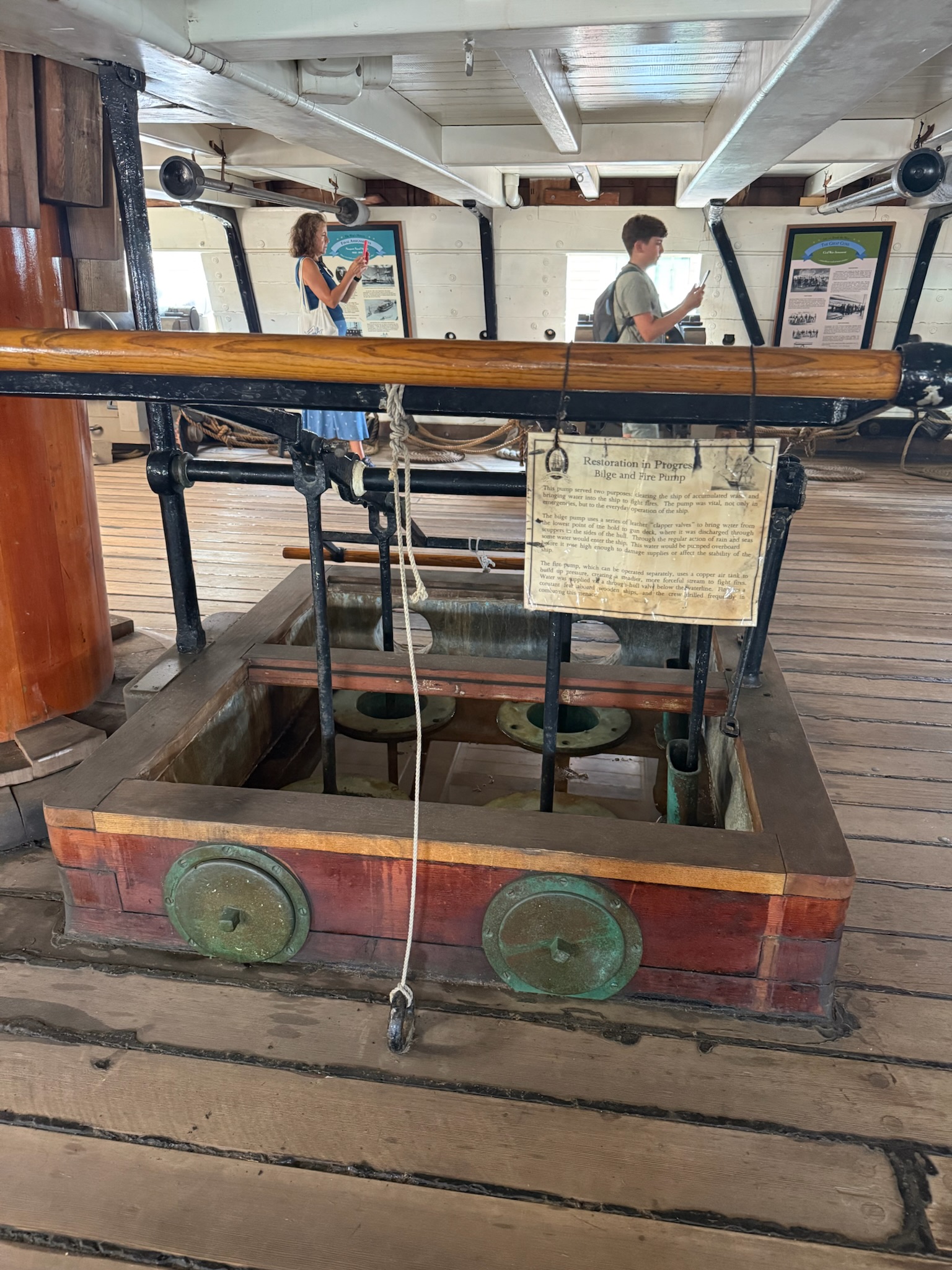
From here, we went back out onto the main part of the gun deck and walked to the front of the ship. In the middle of the boat were the bilge and fire pumps. The bilge pump pushed out rain/sea water that had gotten into the boat. The fire pump brought sea water into the boat. A good fire pump was critical on a wooden boat full of gun powder!
Near the front was the galley (kitchen), which cooked food for everyone onboard, including the captain. Christi found it odd that they cooked food using fire in an area filled with gunpowder. We’re sure there must have been many precautions in place to prevent an explosion.
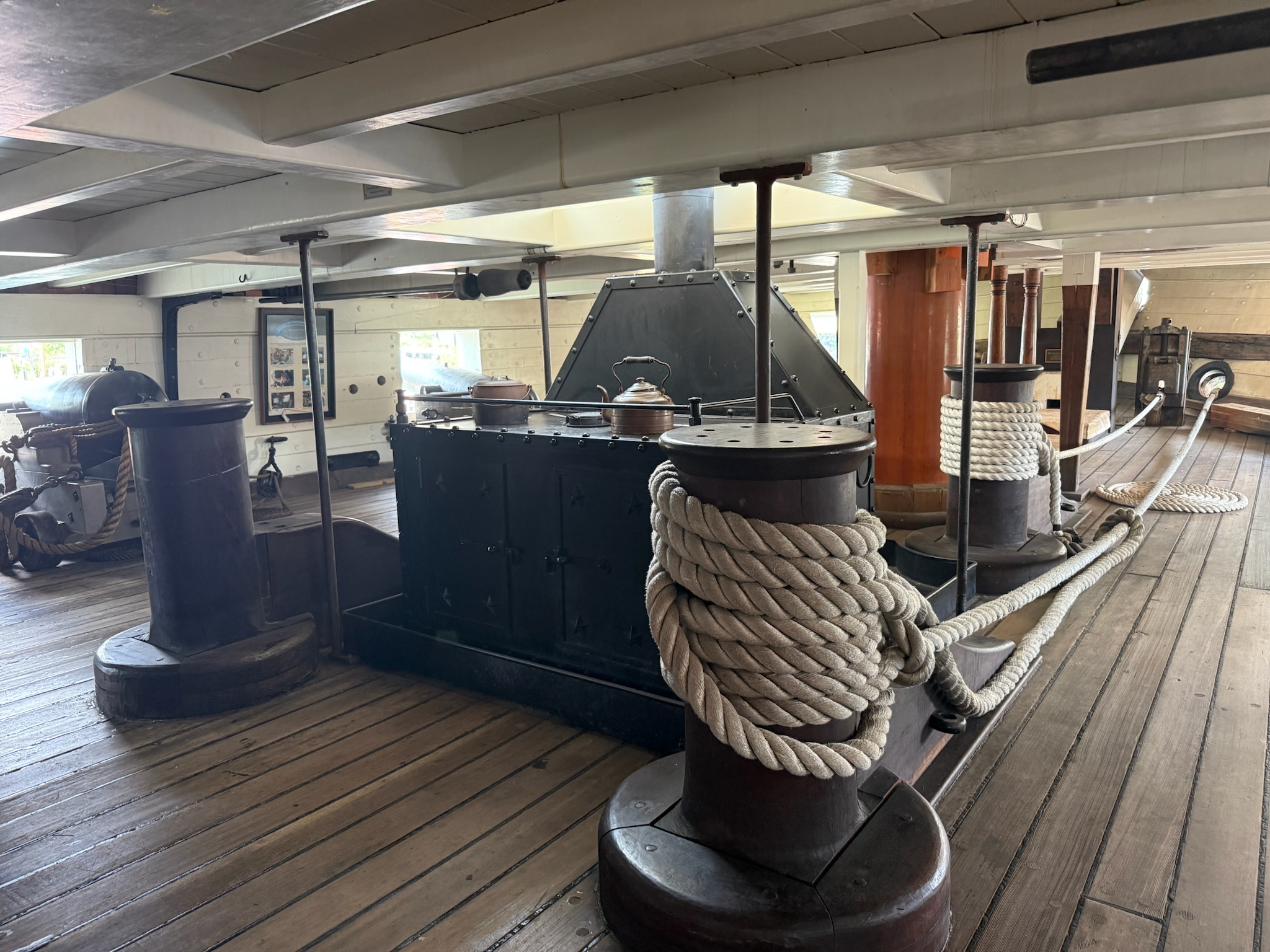
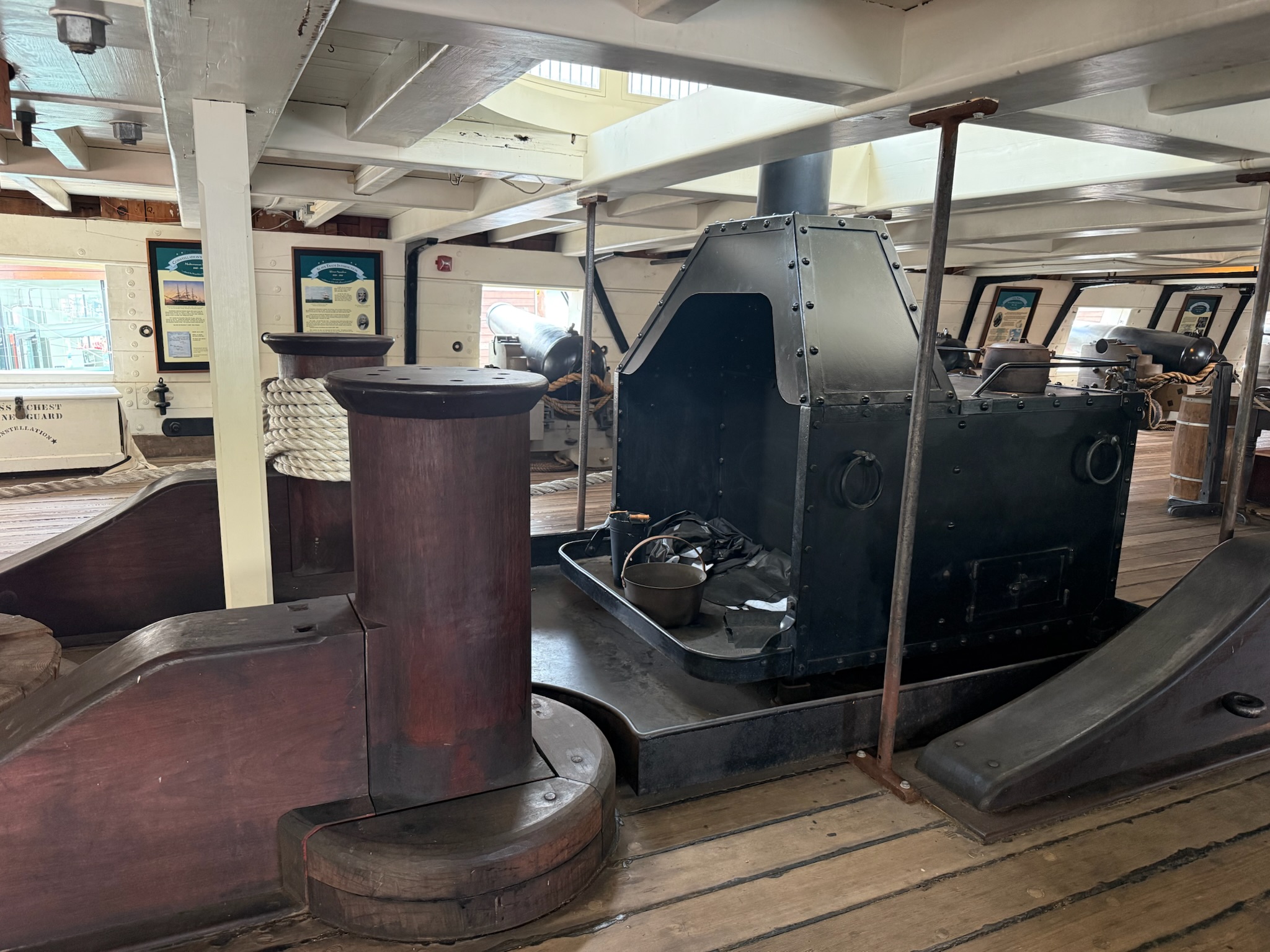
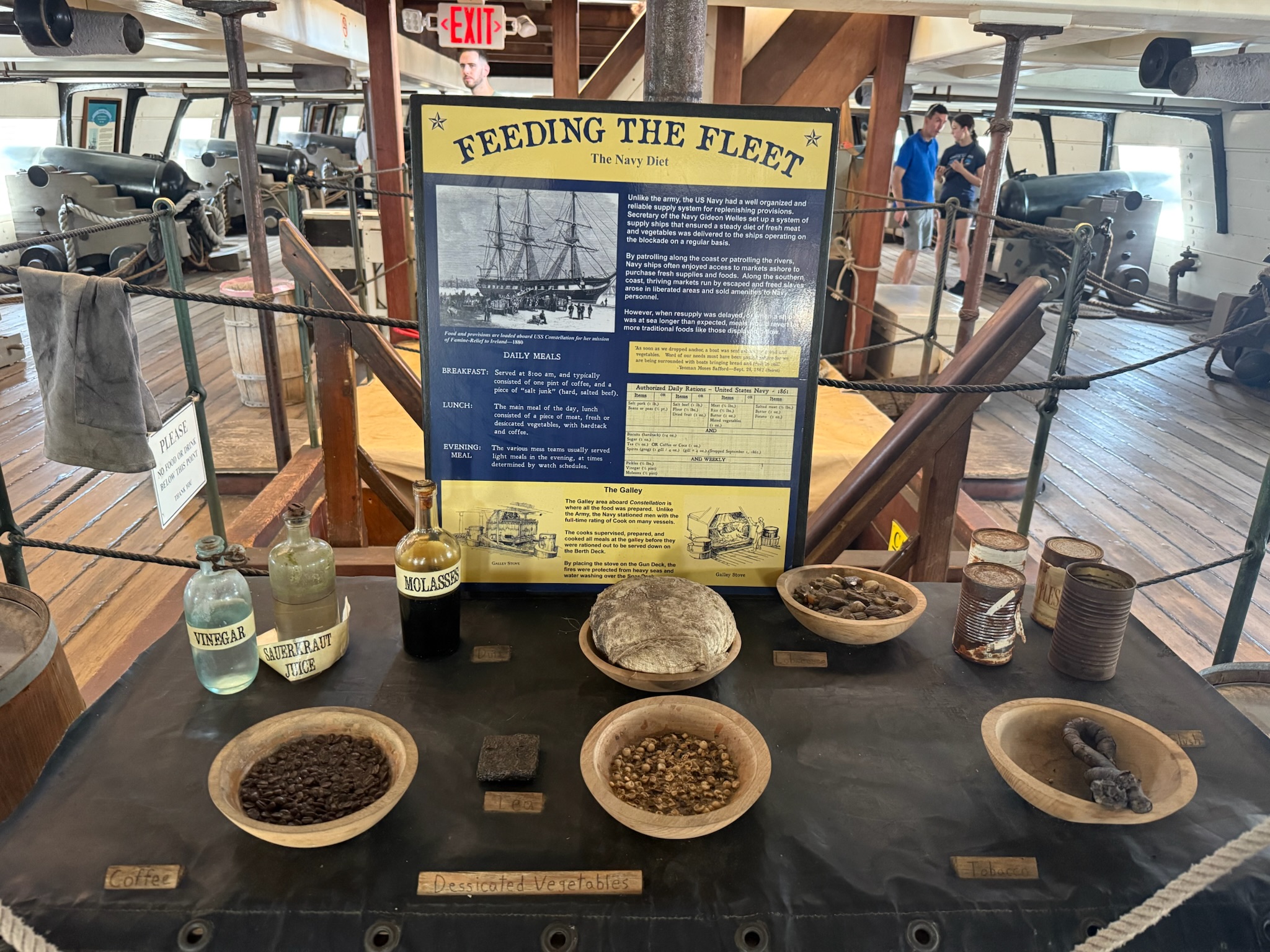
The sign below is probably hard to read, but the summary is that, unlike the army, the navy had dedicated cooks and a dedicated supply chain. They were also allowed to go to shore to procure fresh foods, so they usually had decent food. However, when they were at sea for extended periods of time or there was a glitch in the supply chain, the meals were limited. Below was an example of a typical day of food during the limited times.
There were more signs about the ship at the front. The ship was made of six different types of wood, with copper and iron bolts and fasteners. Because she was so large (186 feet), she could carry a heavier battery of guns than a conventional sloop-of-war could (22-guns onboard). Her beam was 42 feet, 6 inches — she was almost as wide as Kosmos was long! She had five dinghies, a crew of 285 marines and carried 28,000 gallons of freshwater. It sounded like when the ship was patrolling Africa, they also had 40 skilled African fishermen and navigators living onboard, as well.