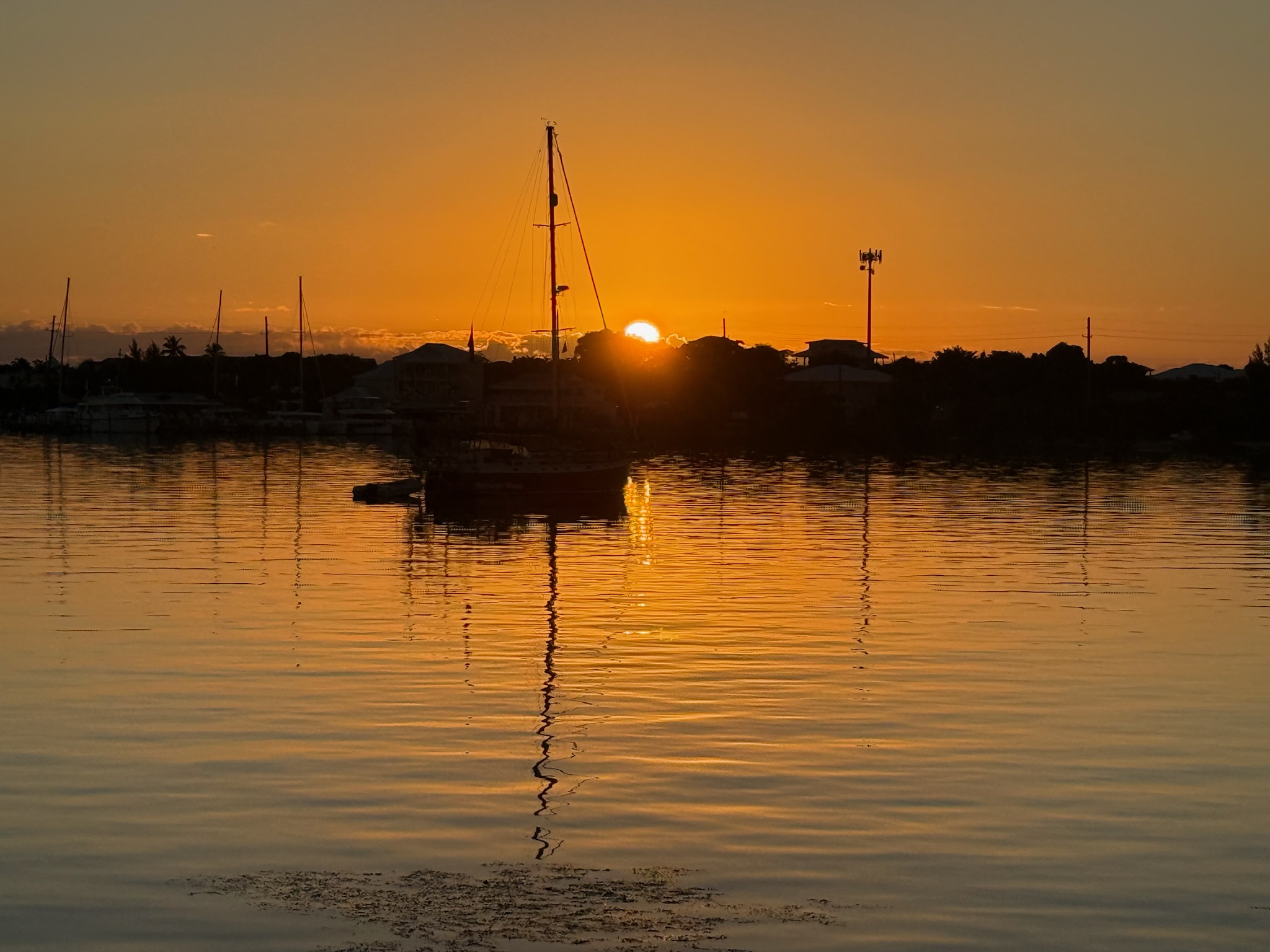
Monday, November 17 continued… once we’d anchored, we breathed a huge sigh of relief. We made it! Woo hoo! We watched the sunrise.
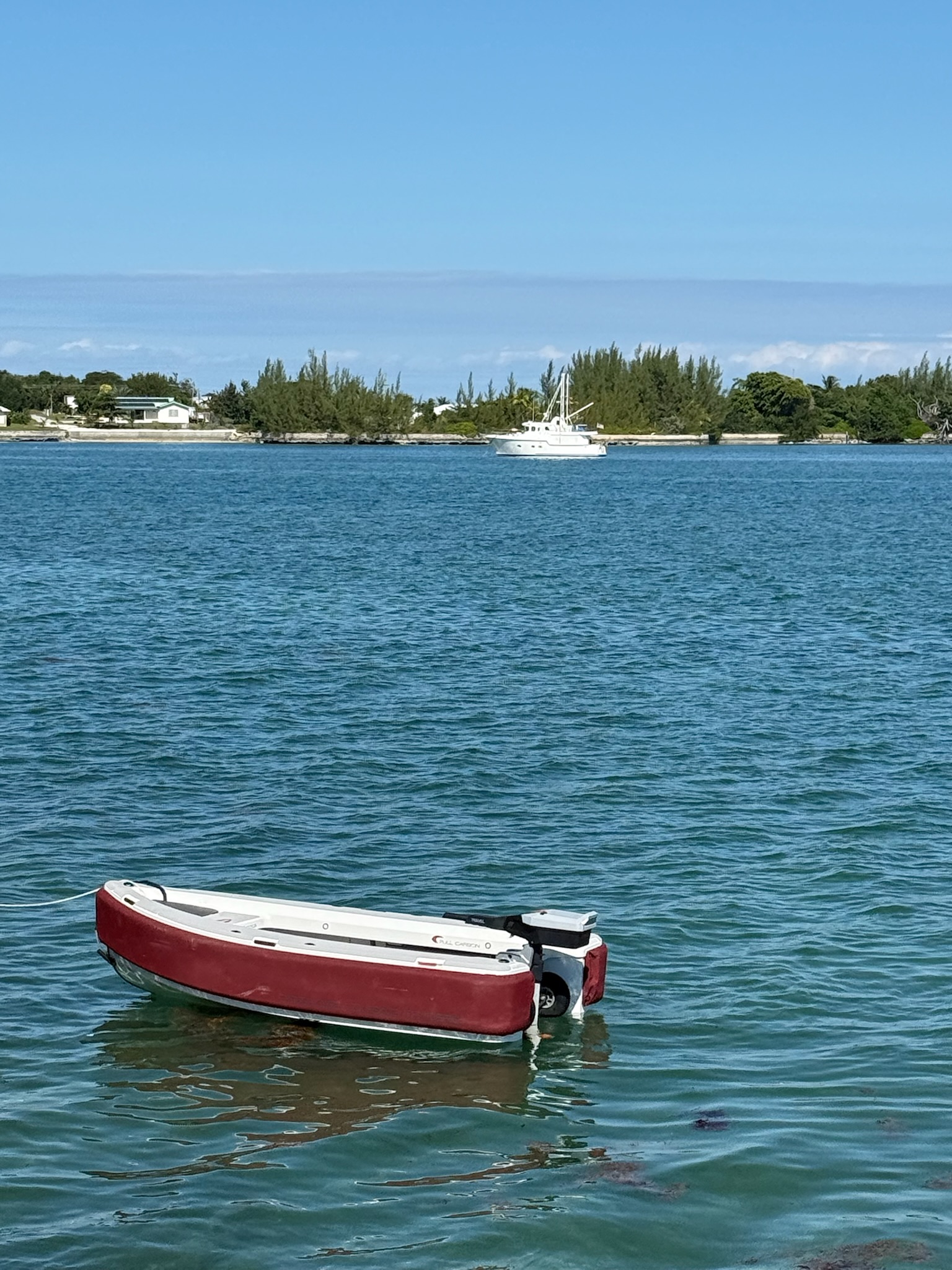
We noticed that, unlike most of the other places we’d visited in The Bahamas, the water had a green hue to it instead of the typical stunning azure blue. The water in and of itself was clear, but there was algae on the sand, giving the water the green tint.
After the sunrise, we got to work. Keith did a light rinse down to get the worst of the salt off. Now that we were back to making all of our own water, we were concerned about water usage, so he was careful to not use more than was absolutely necessary. Christi wiped down the windows with wet, lightly soaped rags.
Eric went out to the back deck and configured the boom from paravane mode to dinghy mode. He had to twist a little awkwardly to undo the shackles and reattach them differently, which involved bending and twisting at awkward angles. At one point, he felt something was wrong, and realized that he’d hurt his back.
Next we got the dinghy down. For passages, we store a lot of items that live on the top deck inside the dinghy to ensure they don’t fall off with all the motion. The first step was to empty out the dinghy and put all the gear back in the spots where they live at anchor. While all three of us normally help with the dinghy, Eric typically did the lion’s share of the work. With his back hurt, Christi and Keith did the majority of the gear moving. Eric used the winch to leverage the items that were too heavy for them, like the inflatable dinghy. Eric also used the winch to help make it easier to get the motor on the dinghy.
Once the dinghy was down, Keith and Christi set up the solar panels on the top deck, which also involved moving items around from where they had been secured for the passage to where they lived at anchor. It was 76-degrees Fahrenheit outside, and we were melting. Normally, Christi would not consider any temperature with a 7 as the first digit as hot, so we must have acclimated to the cold in the Chesapeake more than we’d realized. Keith and Christi also put on all the window covers, which was normally Eric’s job.
At 1000, we went to shore to check into the country. It appeared that there were a couple of public docks, which was nice. The closest dock to Kosmos was also the closest to the customs and immigration building. The dock was large, very sturdy, and looked like it had been recently built. This wasn’t a surprise. In 2019, Marsh Harbour was hit by a Hurricane Dorian, which was a Category 5. The town was decimated. We’re guessing the old dock had been one of the hurricane victims.

We thought this was a cool shot.
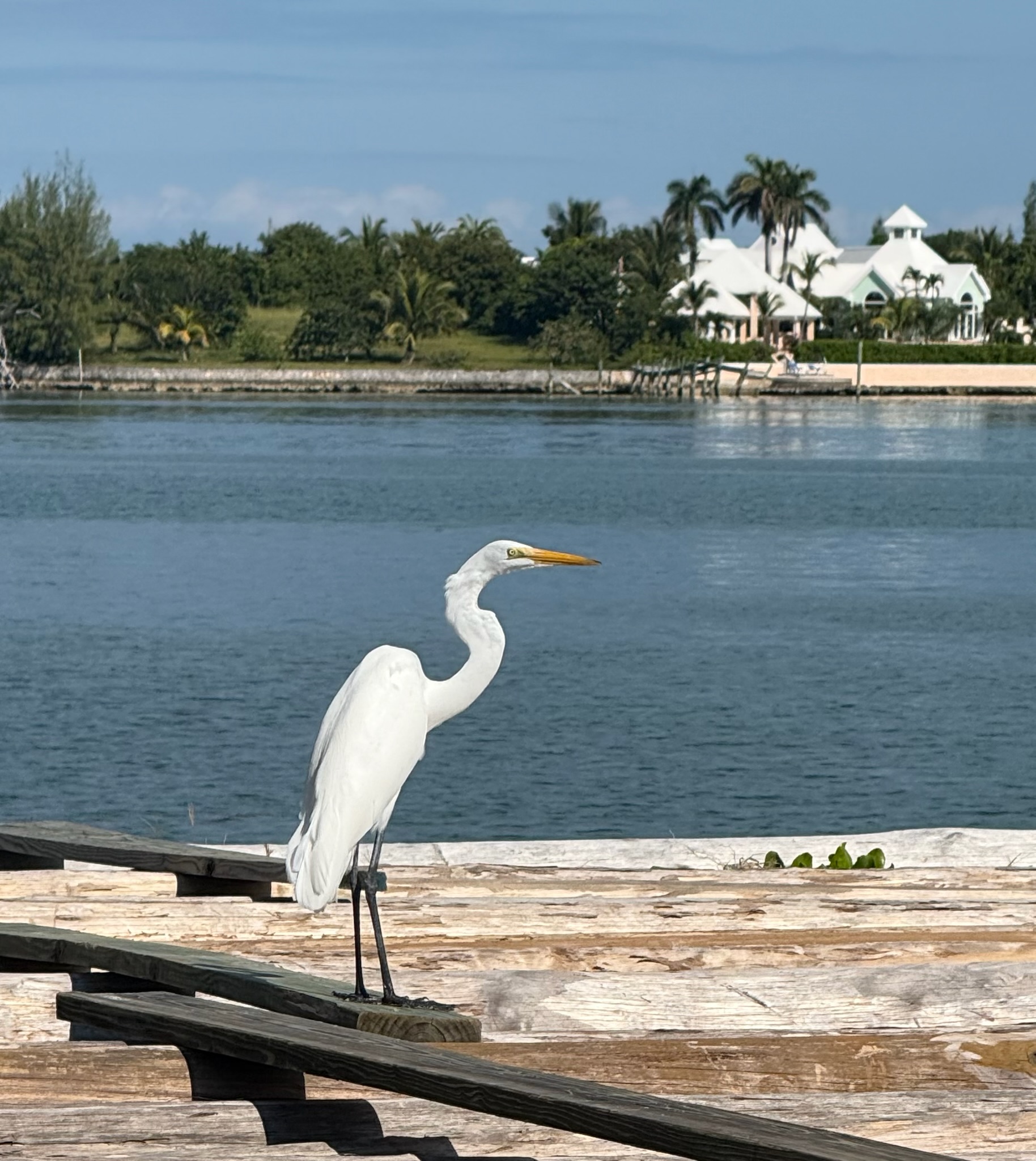
Like at Rock Sound, there was a big public trash can at the foot of the dock, with free trash disposal. That was nice. Trash disposal was a problem on some of the Bahamian islands. This egret posed for us.
The immigration and customs office was a short walk from the dock. The building looked brand new.

We had done an online check in for Kosmos prior to leaving the Chesapeake, so Kosmos already had a one-year cruising permit, which cost about $700. There has been a lot of complaints in the cruiser circles about The Bahamas recently raising fees, so we’re sure people were wondering how much more we paid over last season. Last season’s cruising permit was $325, but it also had only been for 3 months, so this wasn’t an apples to apples comparison. Last season, the customs guy had also insisted on their fees in cash. We can’t remember now how much the fee was, but $50 was in the ballpark of what we’d paid last time.
We had to go to the office because Kosmos still needed to clear customs and Eric, Christi and Keith needed to get visas in person. The waiting area was tiny. There were only three seats, which were narrow and secured together, so the people seated were pretty much touching one another. There were two other people ahead of us. With 5 people in the waiting area, it was jam packed.
The line moved slowly; we were there for almost an hour before our immigration check in was complete. The visas were free. We’d asked for 180 day visas, which was maximum time allowed. They said no and gave us 90-day visas. Last year, we’d asked for 90-day visas and they only gave us 60-days. Since it was $200 per person to renew a visa, we’re staring to wonder if it’s standard operating procedure to give less extra (free) time than requested in order to ensure money could be made on renewals.
They told us to stay put to wait for the customs guy. A couple minutes later, the door opened and the customs guy came in. He said no inspection was required, we just needed to pay him the $50 fee in cash and we were done. We didn’t have any cash on us, so he walked us over to the dock and waited while we made a run to the boat to get cash and bring it back to him. We did not get a receipt. We have our doubts that this was a legitimate fee.
Our normal routine after a passage was to have a celebratory meal. Eric wasn’t feeling up to eating out today. It hurt to sit; he either wanted to stand or lie down. Knowing how slow the service was in The Bahamas, he knew it would be too painful to sit for that long.
Instead, Eric and Christi took long naps. We’re always tired after a passage due to the broken sleep schedule, but Eric was extra tired from this passage as the rough seas had kept him from sleeping well.
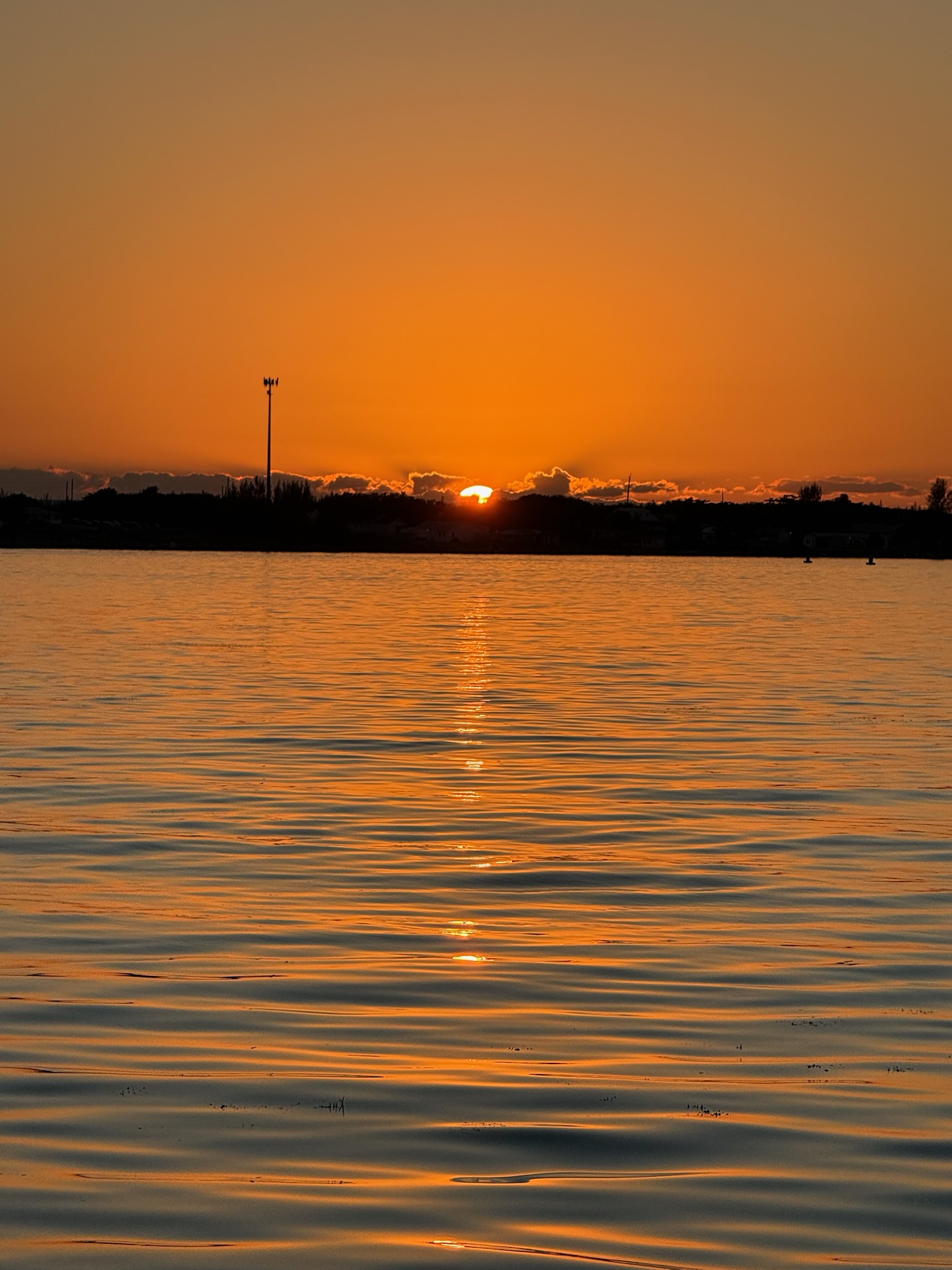
After napping, we went back to situating the boat. Christi did some cleaning and laundry. Eric and Keith set up the dinghy lines so it was secured better, they moved some fenders, organized and stored lines that weren’t needed at anchor, and rinsed down a few more spots. Here was the sunset.
Needless to say, it was a quiet evening onboard.