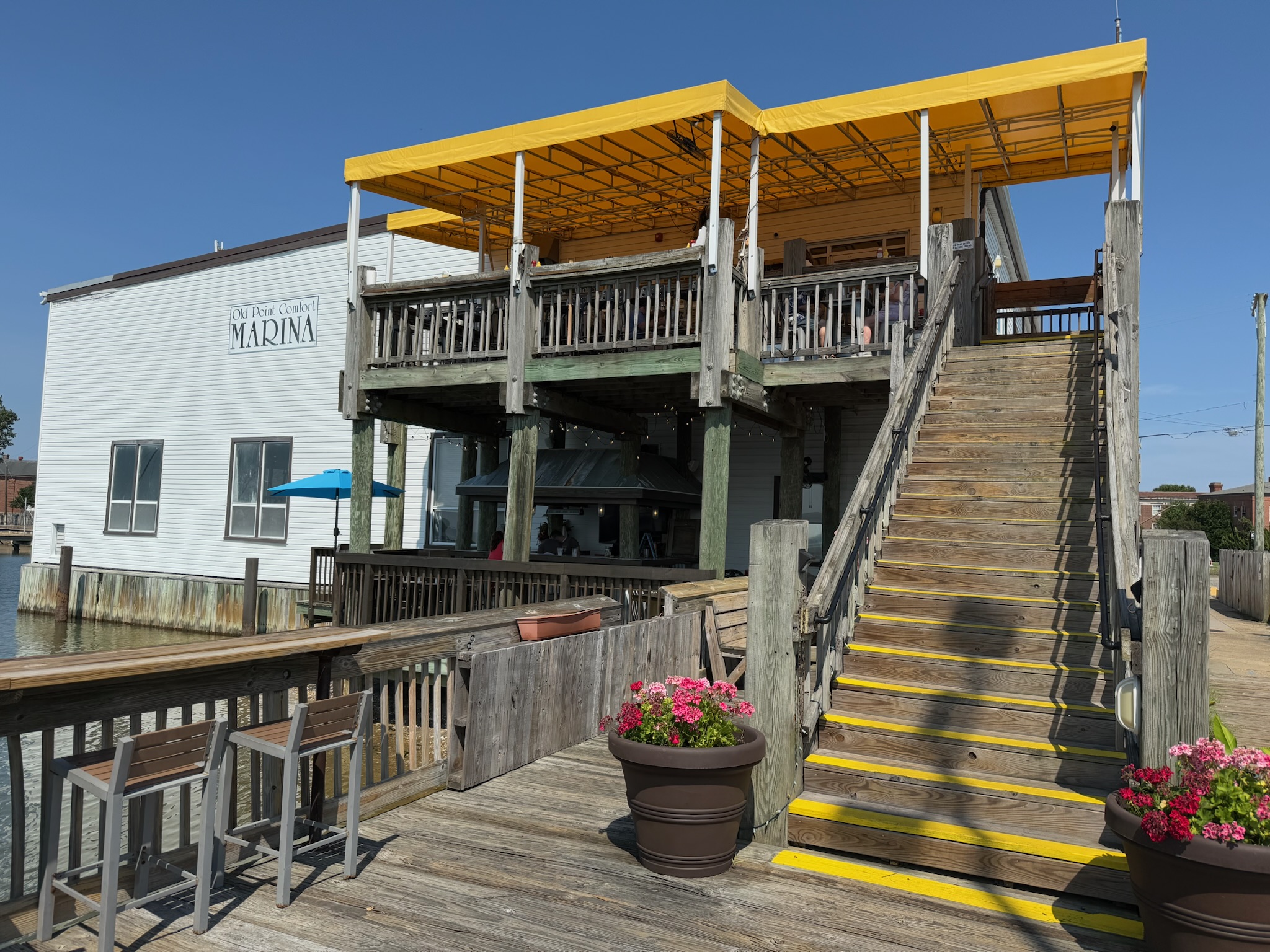
Continued… When the tour concluded, Eric and Keith announced they were hungry. They went to a nearby restaurant called The Deadrise, which was over at the marina.
The food was good and the portions were huge. Keith, who was not a seafood fan, loved the crab dip (even though it wasn’t as good as Haste Away’s).
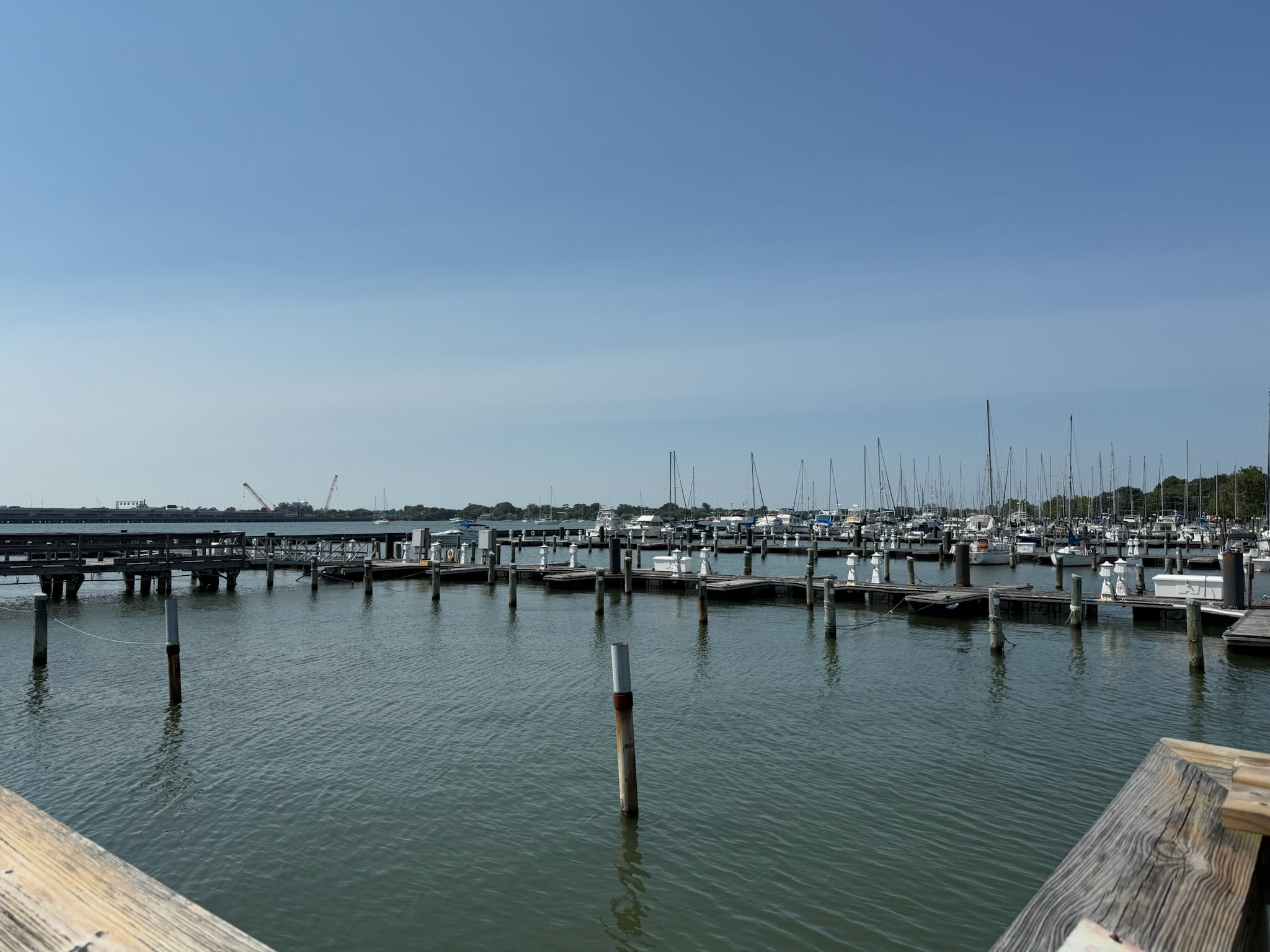
It looked like the section of the marina closest to the restaurant was closed, as there weren’t any boats in the slips. We were too far away to get a look at the part of the marina that was occupied. There was an anchorage beyond the marina that was deep enough for Kosmos. Given that it was a holiday weekend, we were surprised there weren’t more boats anchored out there.
Christi stayed at the Visitor’s Center and went on the 1500 tour. It began much the same as the 1400 tour had. But instead of stopping at the entrance casement, the group walked on to the four-acre parade ground.
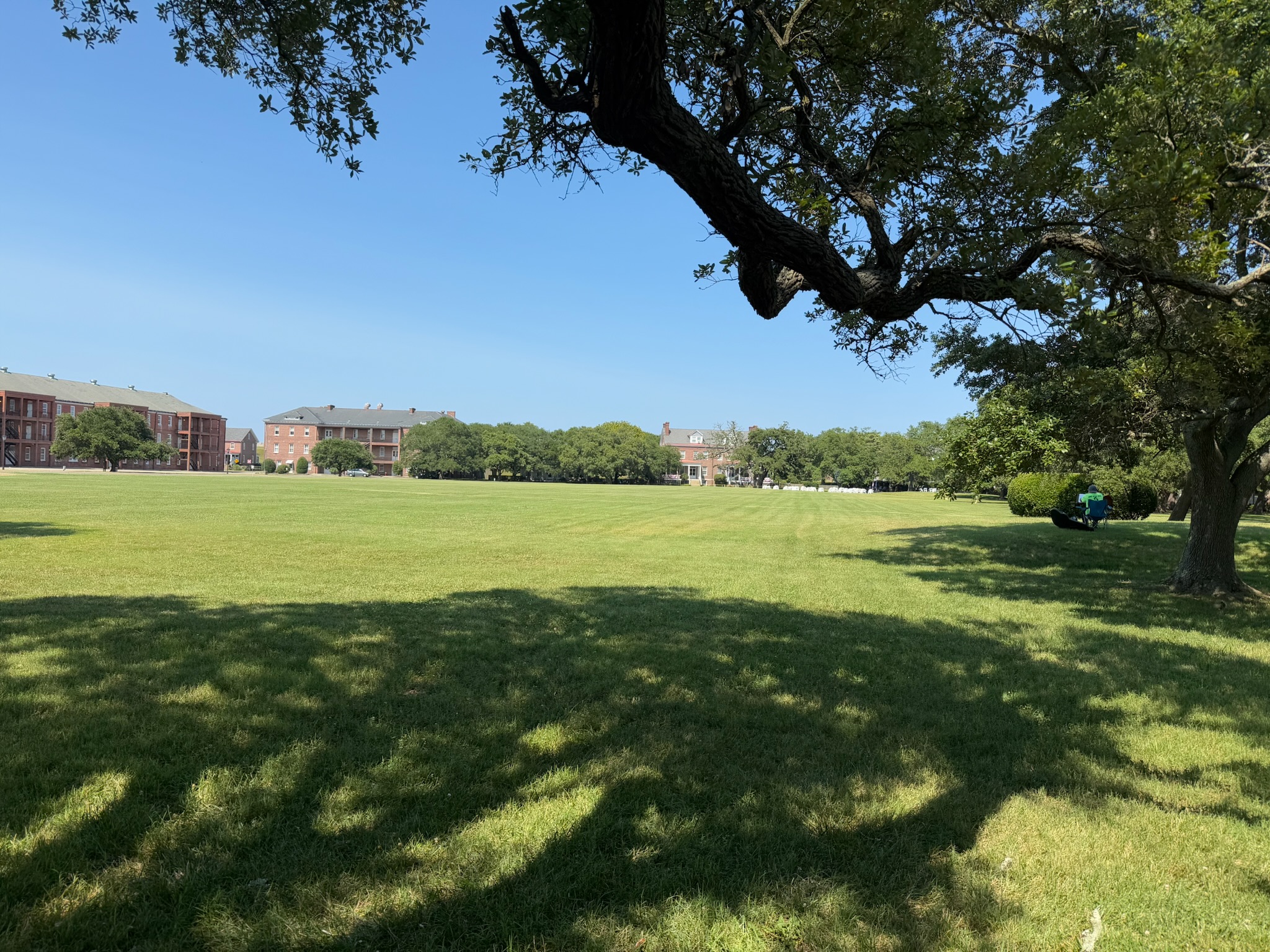
We stopped at The Lincoln Gun, the first 15-inch Rodman gun. It was cast in 1860 and had a 4-mile range. Fortunately, there were benches under a shady tree, making it a pleasant place to listen to the guide on such a hot day.
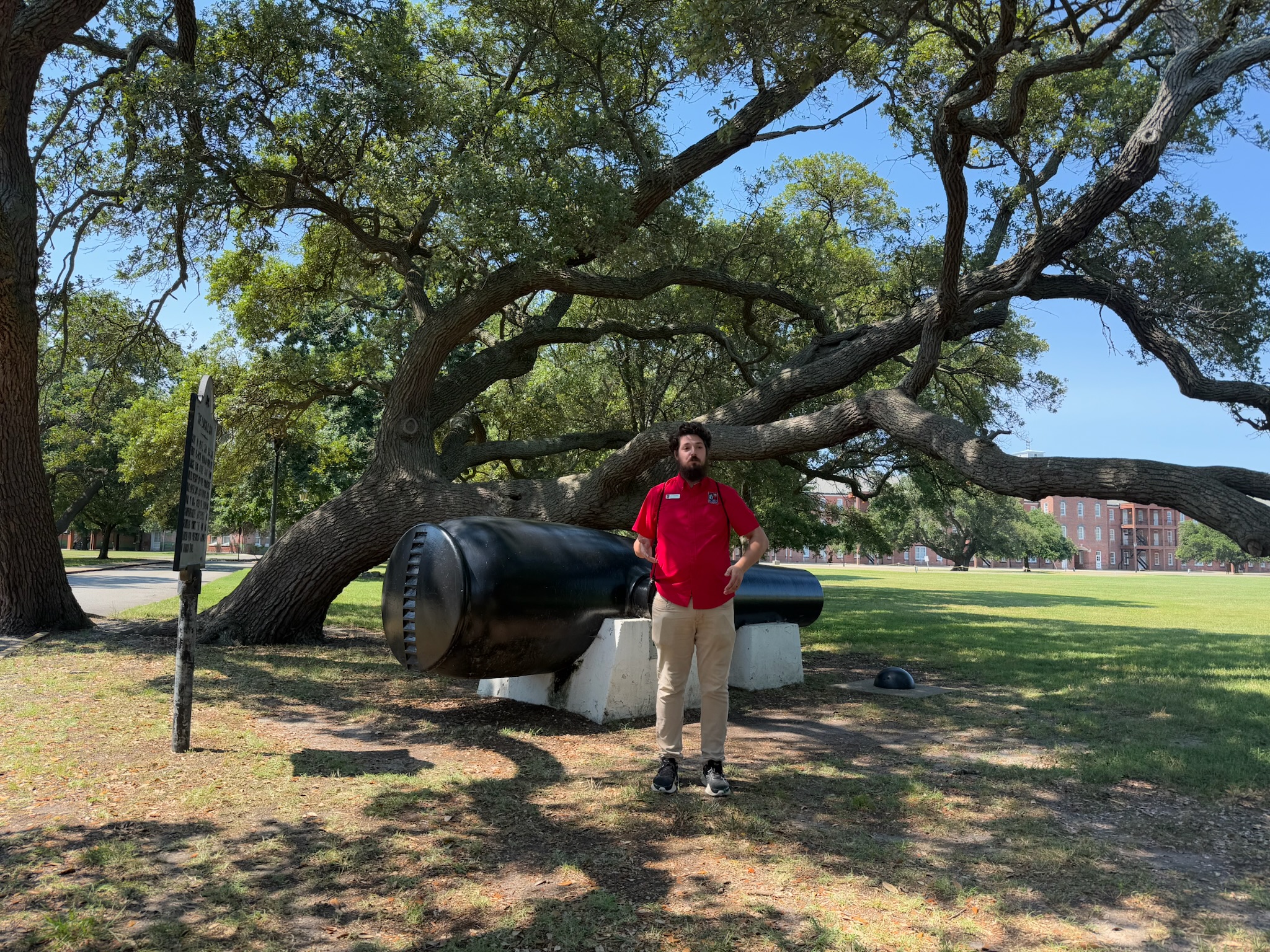
The guide talked in depth about military strategies that the forts used that helped win the War of Independence and Civil Wars. As Rachel had alluded to earlier, the secret in this area was understanding the waterways and how to control them.
In the War for Independence, the Patriots would sink vessels in the deep water channels to make the channels shallow and impassable, thus preventing the British from advancing. In narrow channels that were close to shore, the Patriots would station snipers to fire on the British ships as they passed. During the Civil War, Fort Monroe’s position deep in Confederate territory allowed the Union to strike many devastating blows to the Confederate troops. Abraham Lincoln personally came to Fort Monroe to strategize an attack on Norfolk.
We were disappointed to find that the inner fort was closing early today, so there wasn’t time to explore the rest of the inner fort or visit the museum. However, the entire fort and museum were always free for the public to visit, and since it was relatively close to Morningstar marina, we could easily go back another day. We got the sense that tours were normally only for private groups and that the tours normally had fees, so we were glad we had the opportunity to do the tours for free. They were informative and helped bring history to life in a way that signs can’t.
Christi walked over to the restaurant to meet Eric and Keith, then we all went to the event area. More vendors and patrons had arrived, but attendance was still sparse.
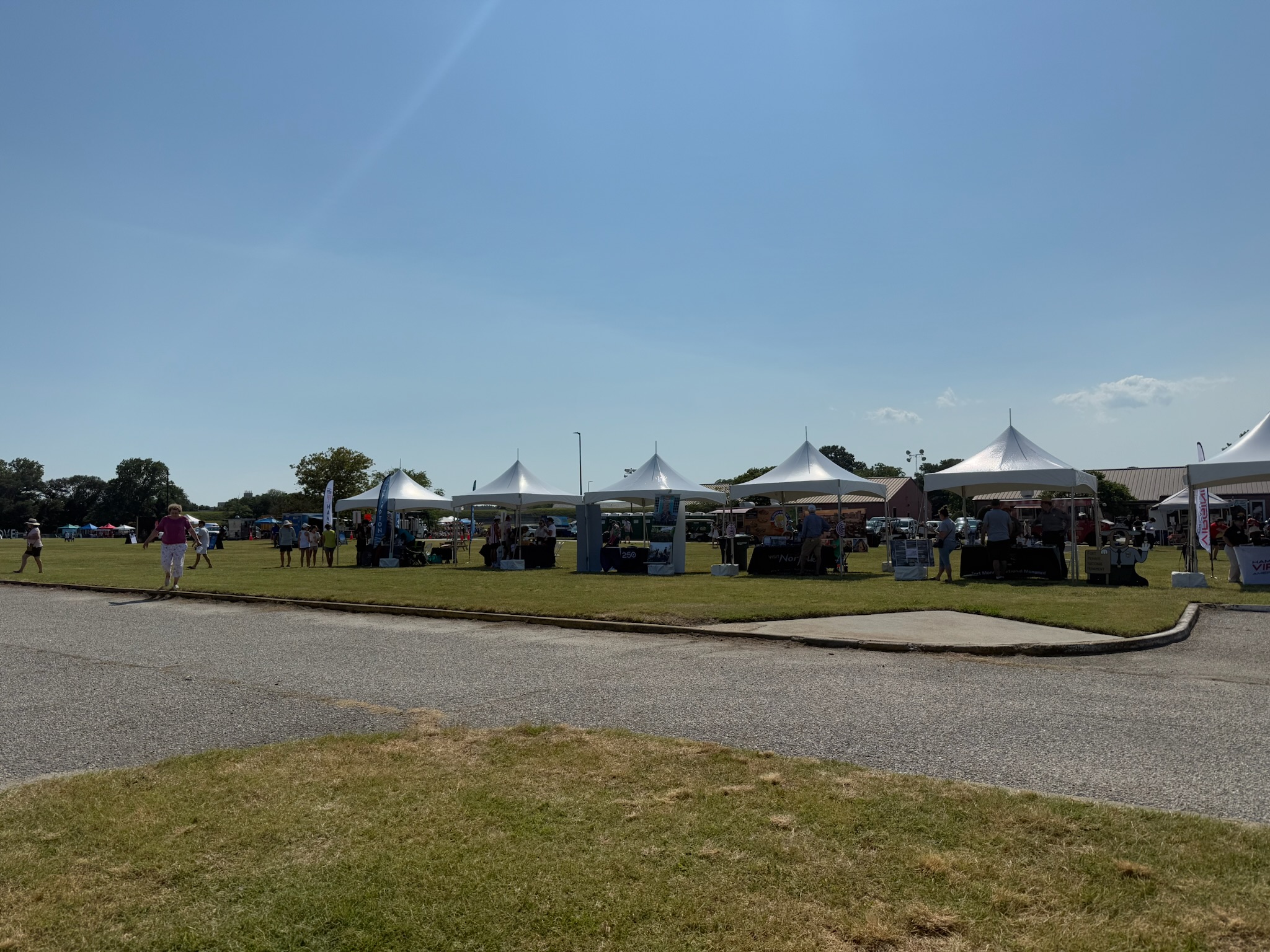
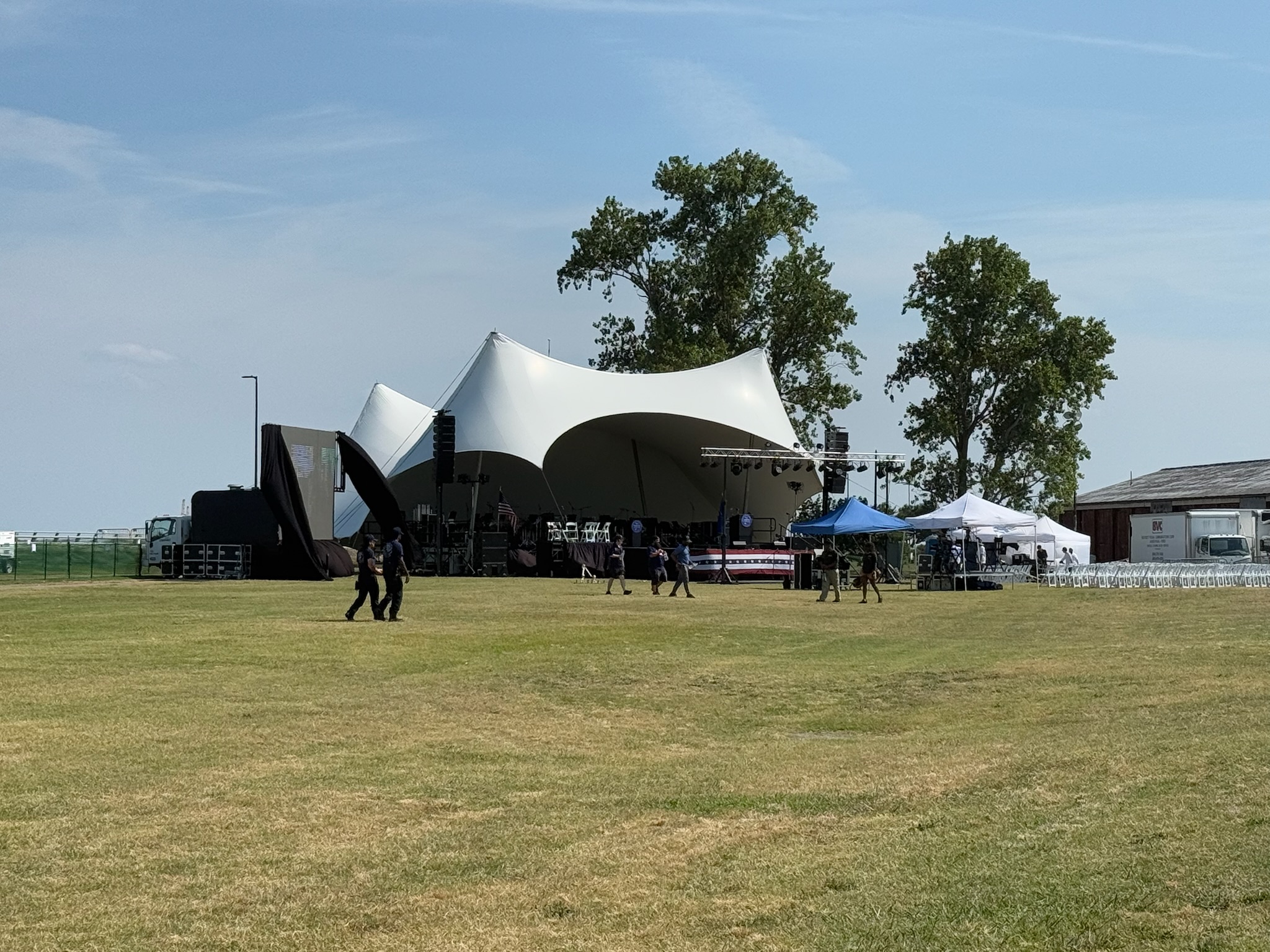
They had set up a stage, but no one was performing as of yet.
We saw that the VA250 Mobile Museum was open, so we went inside. As you can see from the photo, they’d created a museum inside a cargo container and were hauling the museum around the state as a part of the year-long ongoing national celebration of the 250th year of the American Revolution
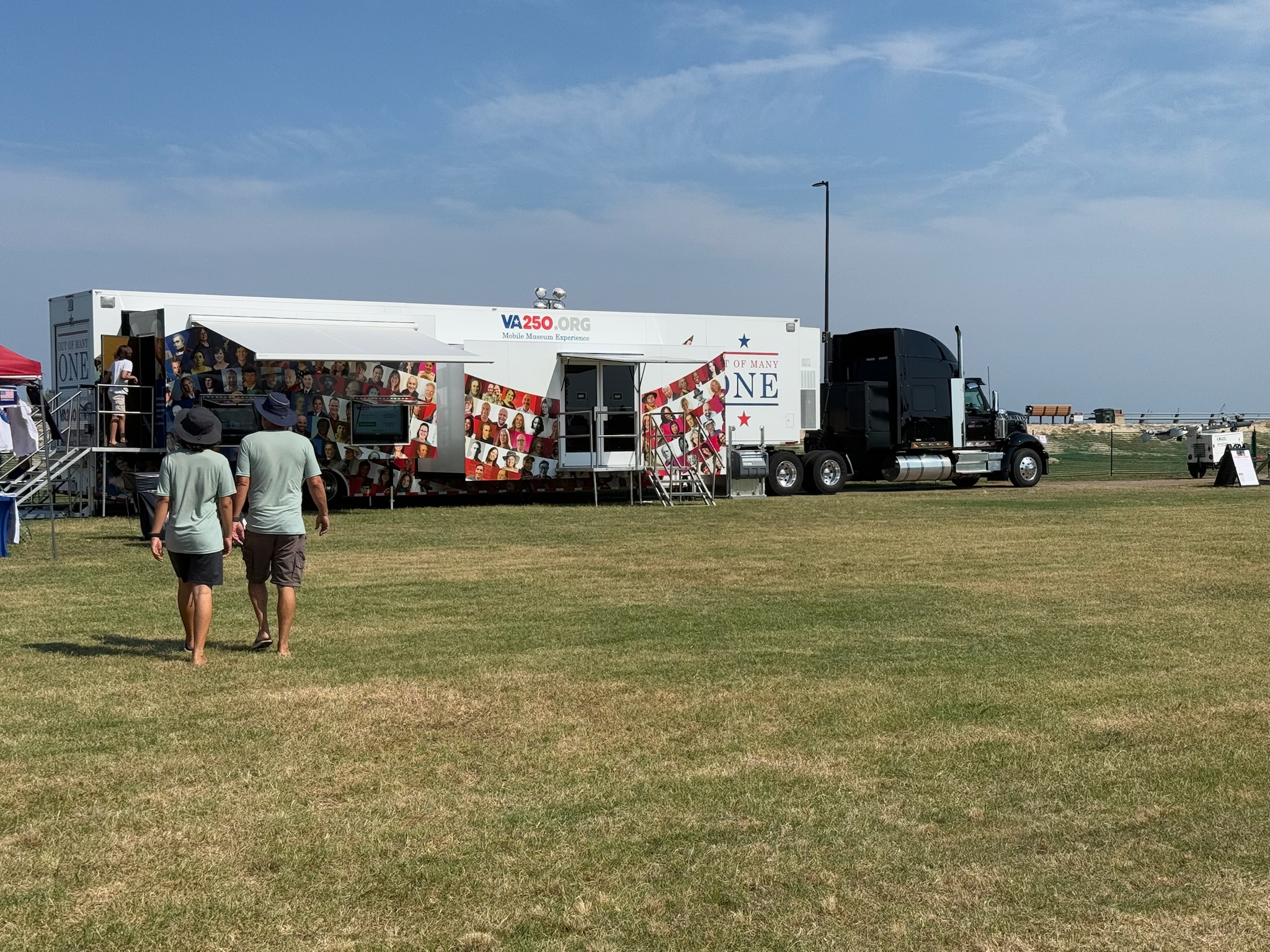
Its theme was “E Pluribus Unum — Out of many, one.” The museum had a surprising amount of exhibits — they had really done a good job of maximizing the use of the space. And it was a little space, so it didn’t take many people inside to feel very claustrophobic. There were two rooms.
The mobile museum had similar information about the lead up to the War of Independence as was in the temporary exhibit in the Visitor’s Center, but it was displayed differently. Many of the exhibits here were interactive and more engaging. There was a lot more information on the war itself. In November 1775, Dunmore’s soldiers started to set up a base eight miles south of Norfolk. The Patriots ultimately destroyed the new base and wiped out half of the soldiers. On New Year’s Day 1776, British troops set Norfolk on fire. The Patriots, worried that the British would move in and use Norfolk as a base, doubled down and made sure every one of Norfolk’s 1,333 structures was burned completely to the ground.
In Virginia, the war was fought mainly along the coasts of the oceans and navigable rivers until 1781, when British troops (who were mostly fellow-American Loyalists) raided and burned down Richmond, Charlotte, and many other inland areas, destroying buildings, crops, etc.
Meanwhile, the war made many colonists more aggressive about moving west (and stealing Native American land). While most indigenous tribes wanted to remain neutral in the war, some allied with the British to protect their traditional lands from the colonists. The British didn’t have many troops to fight on the western front, so they relied on Canadian allies, Loyalists, and the indigenous to fight the colonists.
At the end of 1783, the victorious George Washington — who was at that point the most powerful man in the country — chose to give up command of the American army.
The mobile museum had exhibits on the Declaration of Independence, which had been curiously missing from the Visitor Center exhibit. The sign said that Thomas Jefferson, the primary author of the document, never claimed any new thoughts or arguments in the Declaration of Independence. Instead, Jefferson stated that the Declaration was “an expression of the American mind.” As Keith had leaned in school this year, the War of Independence occurred during the Enlightenment, a period of history where European views had evolved to believe that every person had universal, unalienable rights and that the job of government was to protect these rights. The Declaration was revolutionary as it declared their new society would be the first government to model itself using this Enlightenment world view: casting off the aristocracy, monarchy and/or church as rulers and instead ruling themselves via “consent from the governed.”
The signs pointed out that the founders only believed that white males had these unalienable rights, and made a poignant statement at the end: “The measure of the Declaration is not in the time-bound failures of any generation, but in the timeless promise of the Declaration itself — and how we use it.” The Constitution was activated in 1789 and the system of government is still in place today.
This museum also had information about the Loyalists. In Virginia, anyone who was identified as being loyal to Britain could not vote, hold office, buy property, serve on juries, and had to pay double the taxes of Patriots. Americans who joined the British army or Loyalist militia had their land and possessions confiscated. When the war ended, the British moved most of the Loyalists to Britain, Canada, and other British colonies — and as we’d learned in Spanish Wells, one of those colonies was the Bahamas.
Another curious thing we noticed was that this exhibit said 7,000 enslaved men joined the British troops. We wonder if the Visitor’s Center number was just as the war began and the mobile museum’s number was by the war’s end. The sign said that about 2,000 previously enslaved British soldiers died during the war, 2,000 were returned to their owners after the war, and that the British resettled the remaining 3,000 to Canada and other British colonies.
When we exited the museum, we saw that quite a few more vendors had arrived and set up, and more were streaming in. More patrons had arrived, as well.
We perused the vendors. There were a lot of local tourist venues — Virginia has so many that we were overwhelmed by the choices of places to visit. There were several clubs, such as the Boy Scouts, sailing clubs, and religious organizations. There were a few booths selling interesting crafts. There were a few food vendors, and they all had long lines. It seemed each food booth that we saw setting up had lines form the instant they opened. There was an indigenous drum circle.
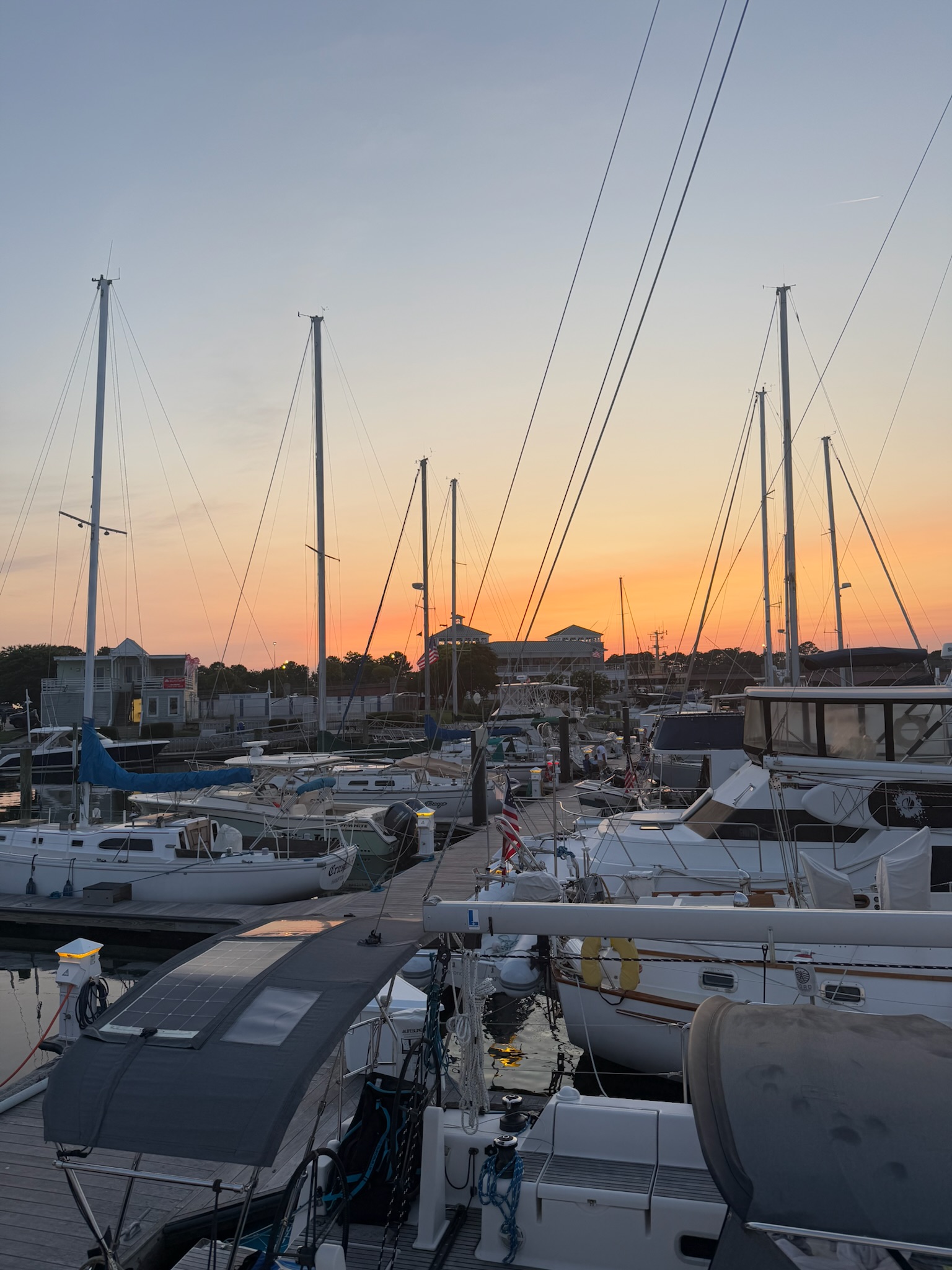
Anxious to avoid terrible crowds and traffic, we left the fort at about 1645. As we were leaving, we noticed several more vendors streaming in and a conga line of people entering the field. We felt like we were getting out just in the nick of time. Dusk at the marina:
We watched fire works at boat, where we were able to see three shows relatively clearly (though they were a little far away).
I can tell you guys are big fans of history. Super fascinating!