
Dawn on Saturday, July 5, 2025

Our plan was to go to historic Ft. Norfolk. There was a marina barbecue from 1300 – 1500 that Eric went to, so we didn’t head out until 1500. When we entered the fort into the map app, it said it was closed on weekends. We decided to go sightseeing in historic downtown Norfolk, anyways, as there were plenty of other things to see. Even though we hadn’t entered the MacArthur Memorial as our destination, the map app sent us to the Memorial’s parking garage. At first we were confused, but then we realized the garage was for the general downtown area, not only the Memorial. Parking was free for the first two-hours, and it was inexpensive for additional time.
When we walked out of the parking garage, the first thing that caught our eye was a church across the street.
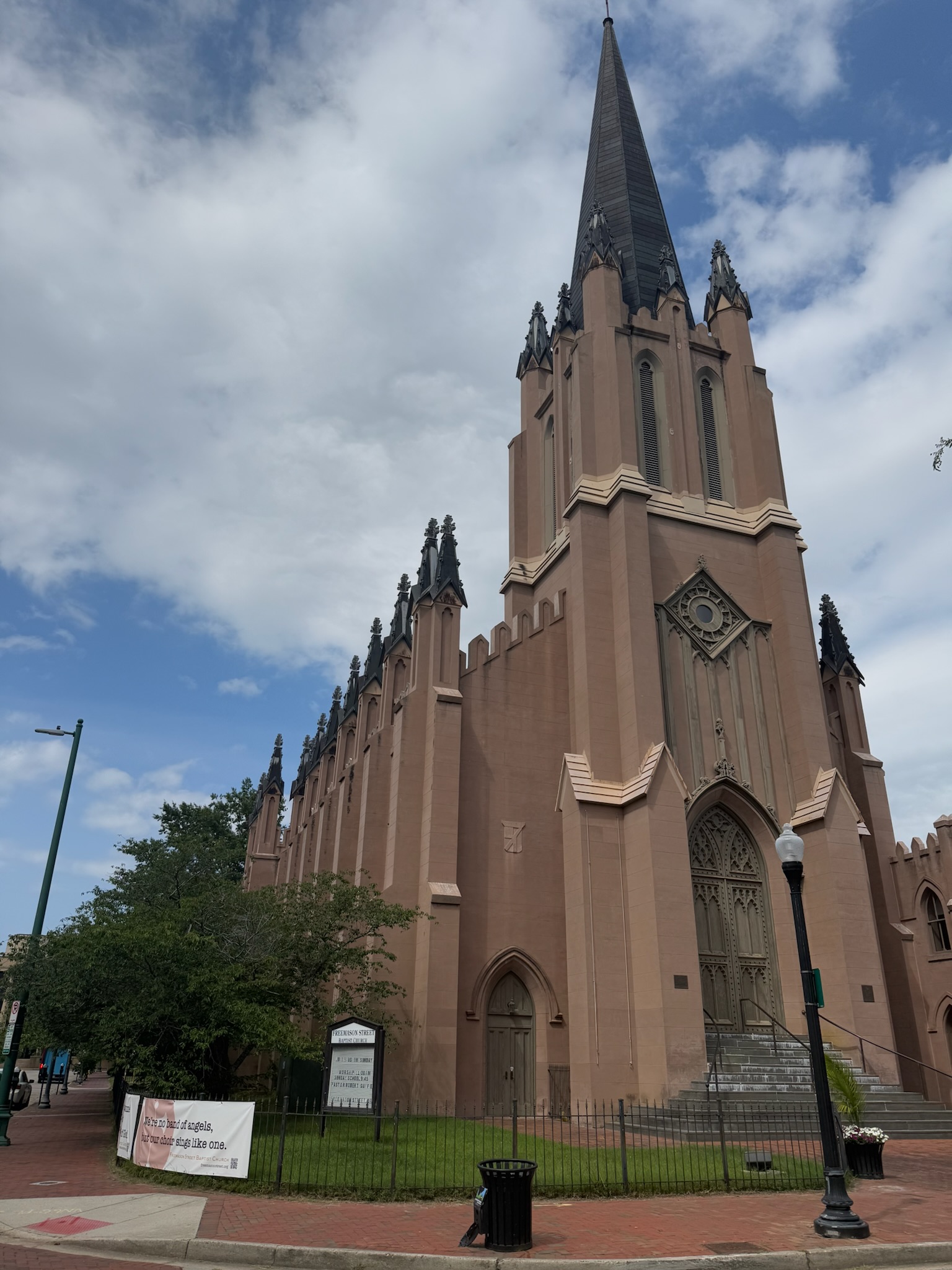
According to the sign, this was Joseph’s Catholic Church and School, which was established for blacks in 1889. The school was elementary through high school. They moved into this building in 1932, which had previously been a Methodist church, and closed this location in 1961 when they merged with another church. The sign didn’t say when the church was built. It appeared to be a Baptist church now.
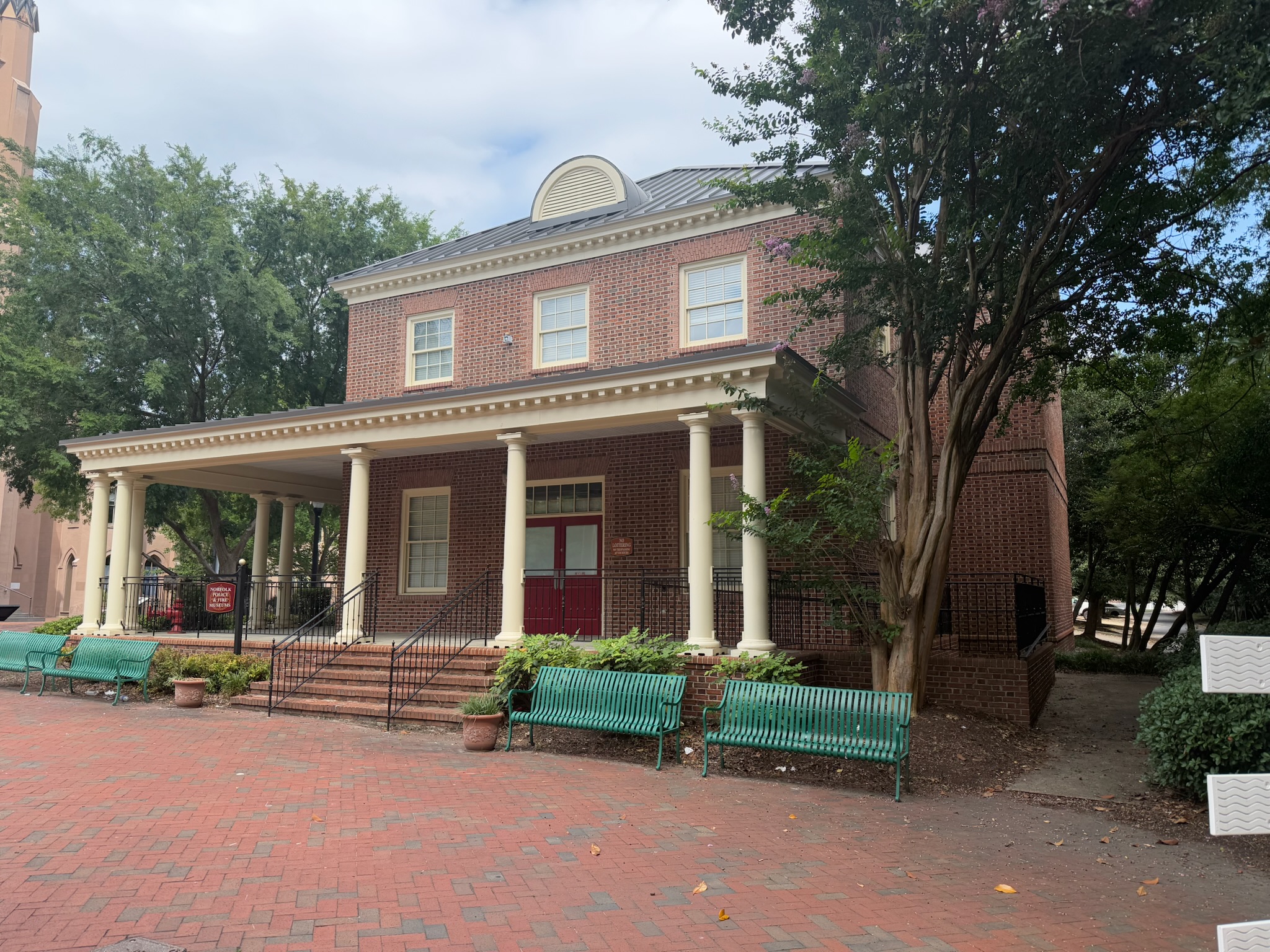
On our side of the street there was a museum on each side of the exit. One was the Norfolk police and fire museum, which was not in a historic building.
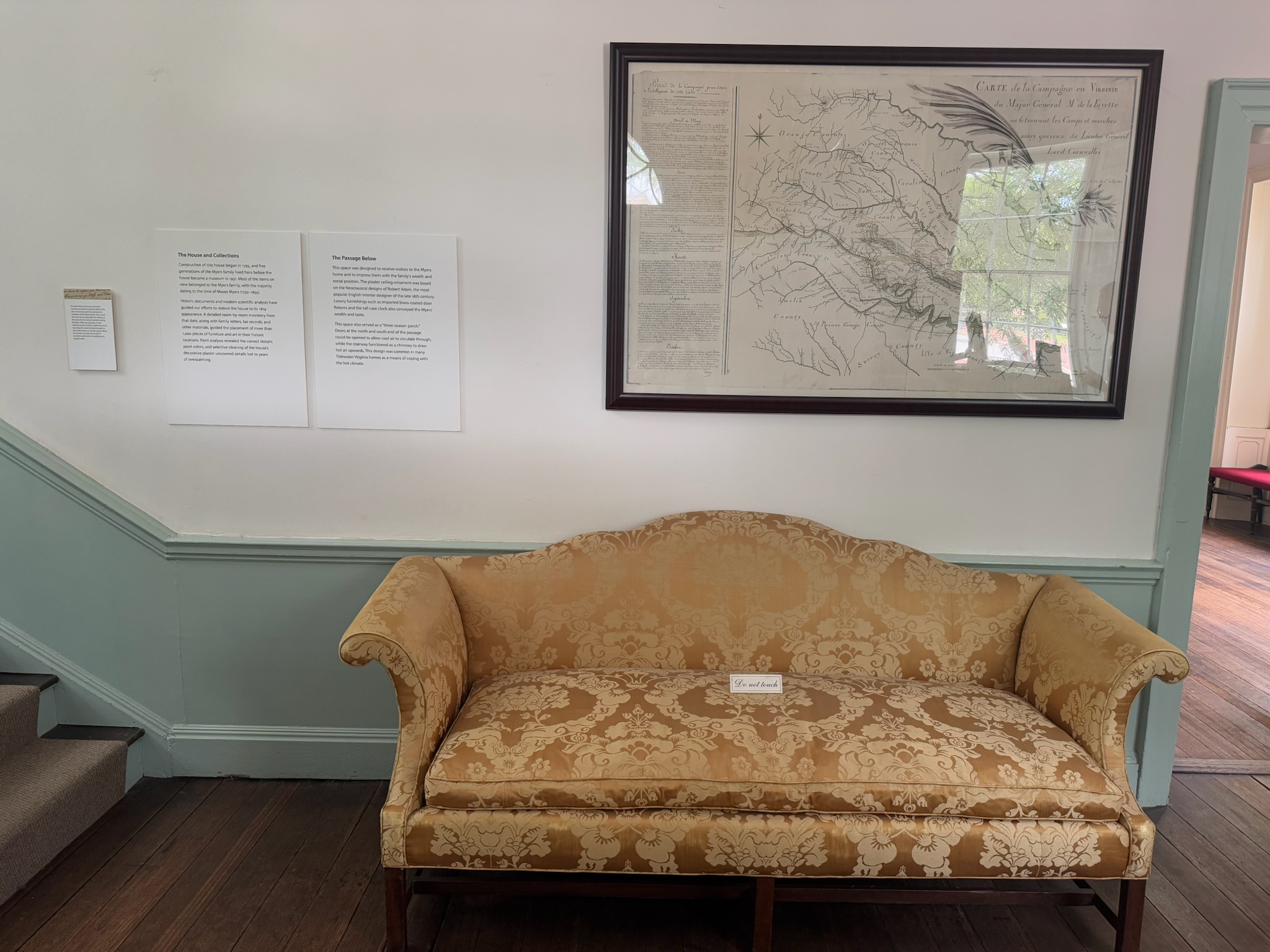
The other was the Moses Myers House, which was built in 1792 and contained original furnishings and belongings from the Myers family. The museum was not only open, it was free and air conditioned. We figured we’d take a quick tour.
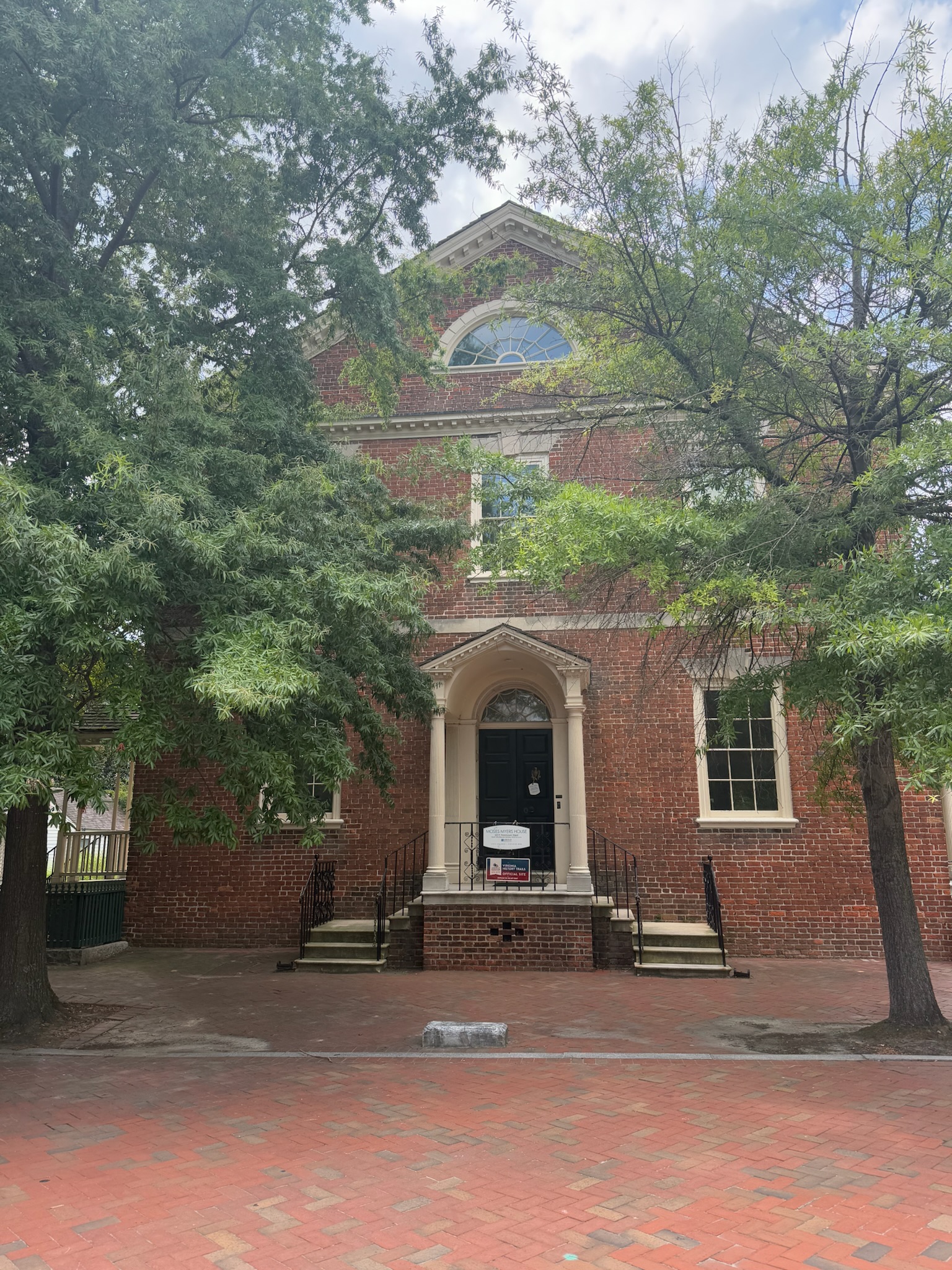
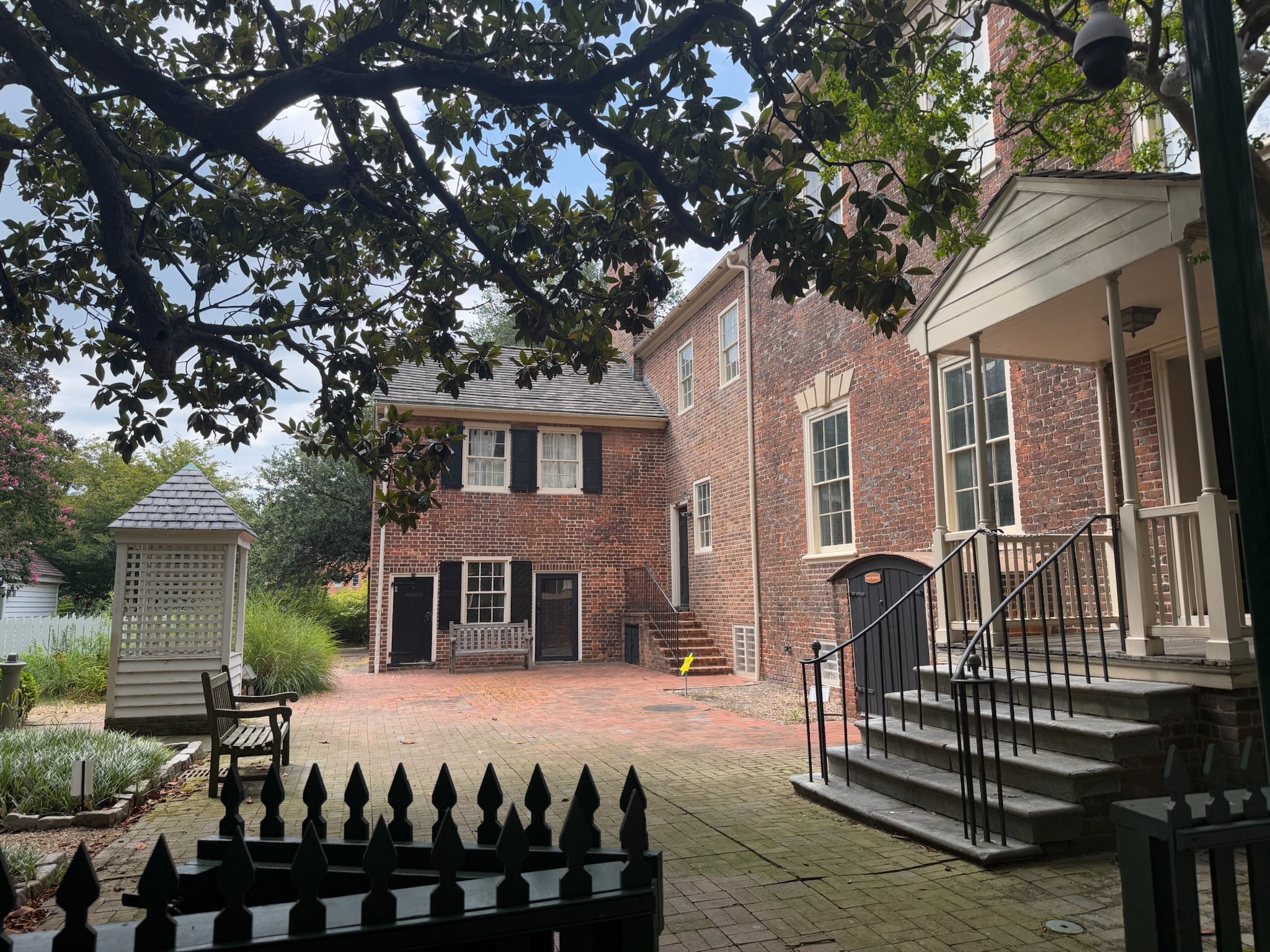
We were greeted by three tour guides. They gave us a some background information on the couple who’d built the home. Moses Myers was a shipping merchant from New York. He’d been a part of the rebellion as a blockade runner in the War of Independence. He was captured by British troops and held as a prisoner of war for several years. When he was released, his life in New York was basically shattered. In 1787, Moses married a rich widow from Montreal named Eliza and they moved to Norfolk to start a new life. Norfolk had a deep water port in a strategic location, so it was a logical location for a ship merchant to relocate there. However, it was speculated that the Myers’ chose Virginia because they were Jewish and it was the first state with complete religious freedom. They were the first Jews to settle in Norfolk, and this house was one of the earliest buildings constructed after Norfolk had been destroyed in the War of Independence.
Myers’s new shipping business was highly successful, and he became a wealthy, well-connected, and an influential member of Virginian society. Moses and Eliza had 12 children together. The house was originally significantly smaller, but as Myers’s business expanded and they had more children, they added additional rooms. Four generations of heirs occupied the house after Moses and Eliza passed. Over the years, the Myers family had many important people visit the house, including the Marquis de LaFayette, President Monroe, President Taft and President Teddy Roosevelt.
The house has been restored to look like it did in 1819. As the guide explained, they picked that year because Mr. Myers had filed bankruptcy, and there was an itemization of all of his assets — including the furnishings in each room of his home — at that point in time. Myers was able to pay off his debts without selling the home nor the majority of the assets. A large percentage of the furnishings listed were still in the home. Sadly, Moses outlived his wife and 9 of his children, so there weren’t many heirs. Barton Myers was the last heir to occupy the home. When he died, his wife Katherine didn’t want the house or furniture, so in 1931 she sold it all to the city under the stipulation that it would become a museum.
This was the foyer. It had doors on three sides for ventilation.
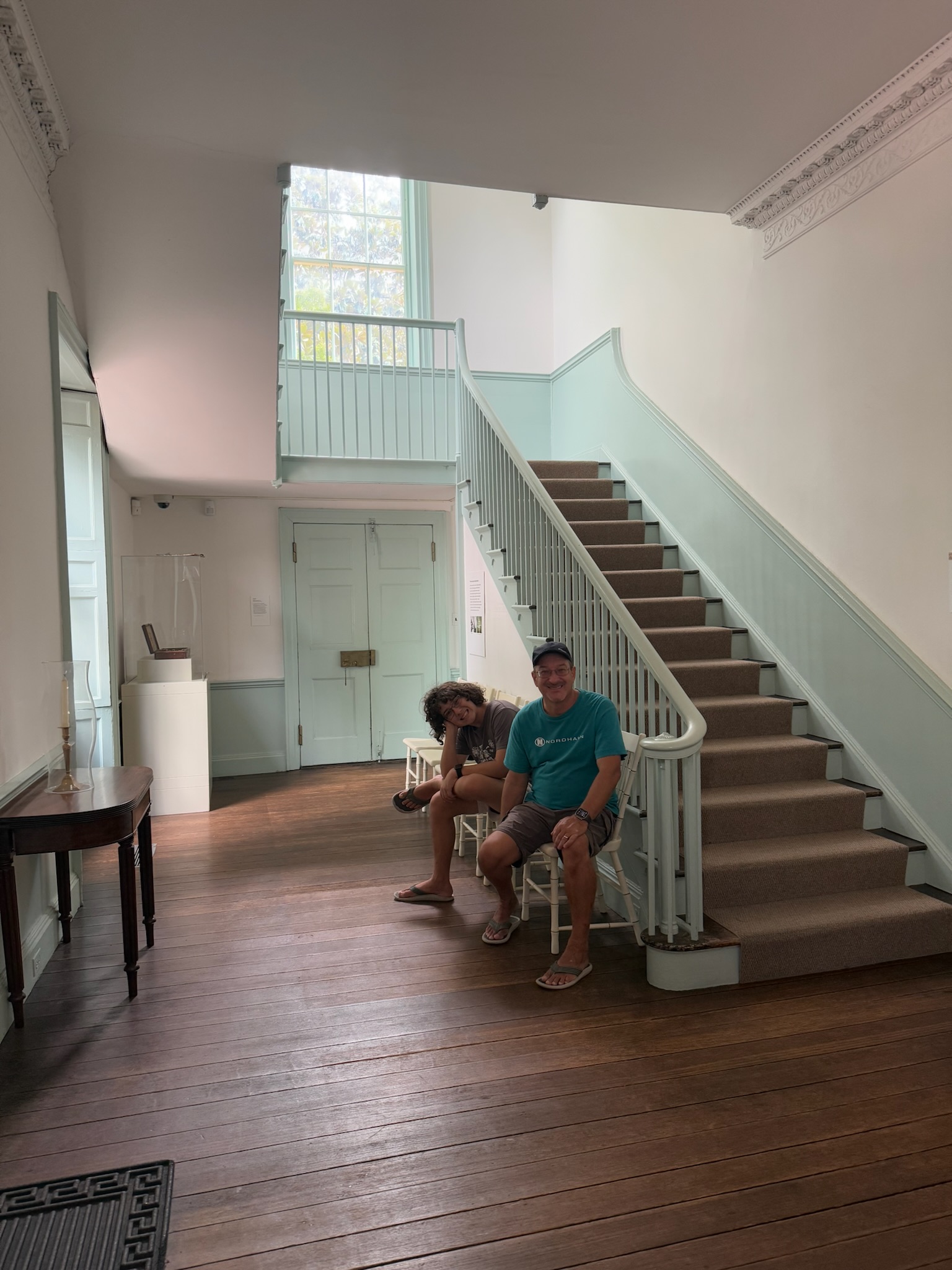
One of the most lengthy and fascinating stories the guides shared was about a set of English pistols, which were on display in the corner of the foyer, to the left of the door in the photo above. The summary was that John Myers (Moses’s son) owned the guns and loaned them to James Barron to use in a duel against Stephen Decatur. Decatur was running for president at the time and was favored to win. Had Decatur not been killed in the duel, Andrew Jackson would likely not have won the presidency. That duel changed the course of history.
The drawing room was used solely for formal entertaining. The room was intended to wow people with their wealth, hence the real gold leaf on the mantle and the expensive paintings of the family members on the wall. Fun fact: the gold leaf was painted over before the assets in the home were inventoried. As we’d mentioned in the 4th of July post, the Revolution occurred during a period in history called The Enlightenment. The Enlightenment ideals were heavily influenced by the Ancient Greek and Roman doctrines, and thus, the popular decorating style of the time was Neo-Classical. The Myers’ furniture and decor was very en-vogue for the era.
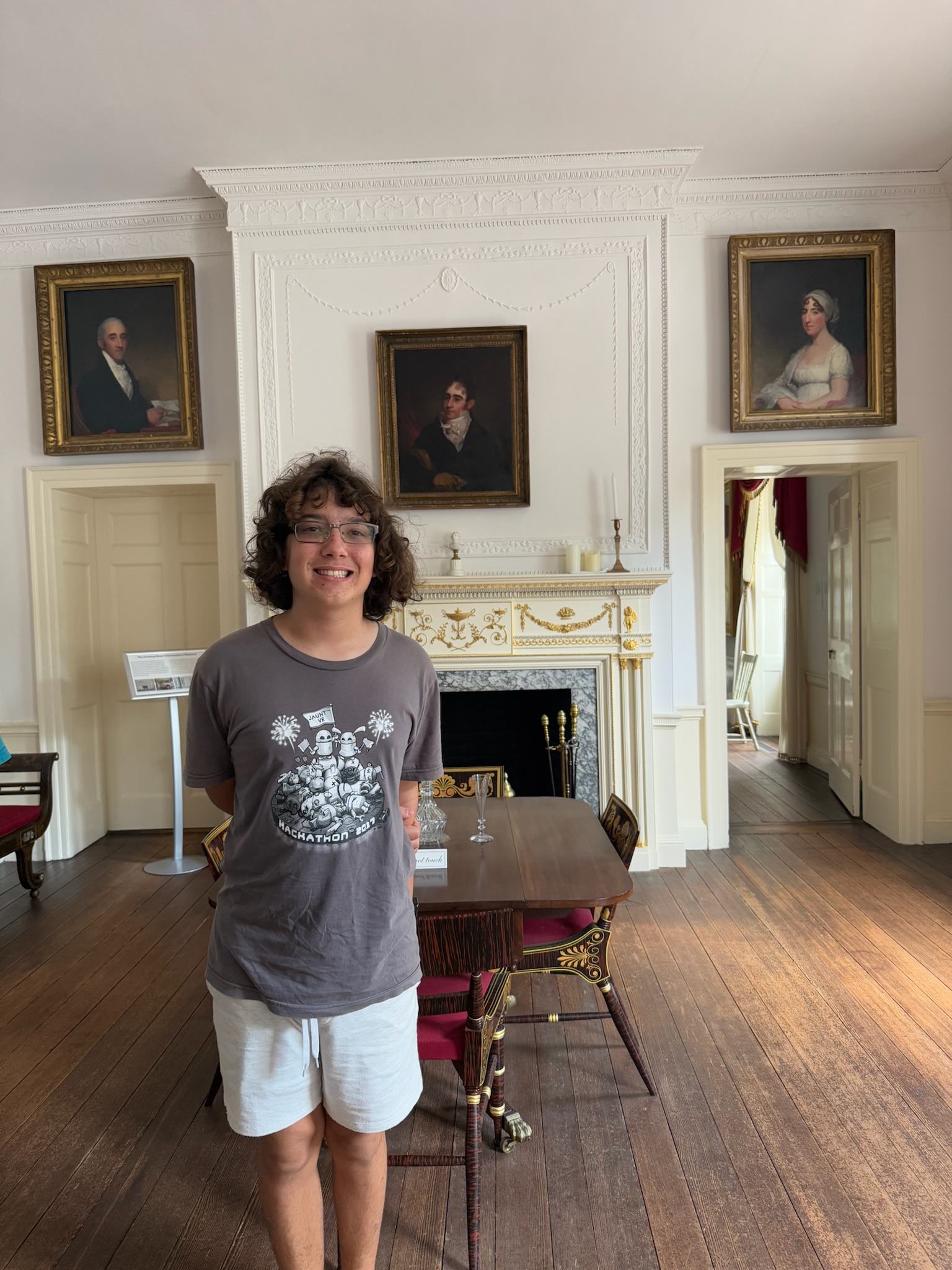
In the drawing room, there were portrait of some Moses and Eliza and some of their sons. The guide pointed to one painting, and explained that was Sam. As a young adult, Sam shot and killed a former business partner of his father’s. Because Moses was so wealthy and politically connected, Sam was found not guilty. After the trial, Moses sent Sam to Europe for a couple of years until the dust settled.
The dining room was a later addition, circa 1805 – 1810 (as were the bedrooms above the dining room).
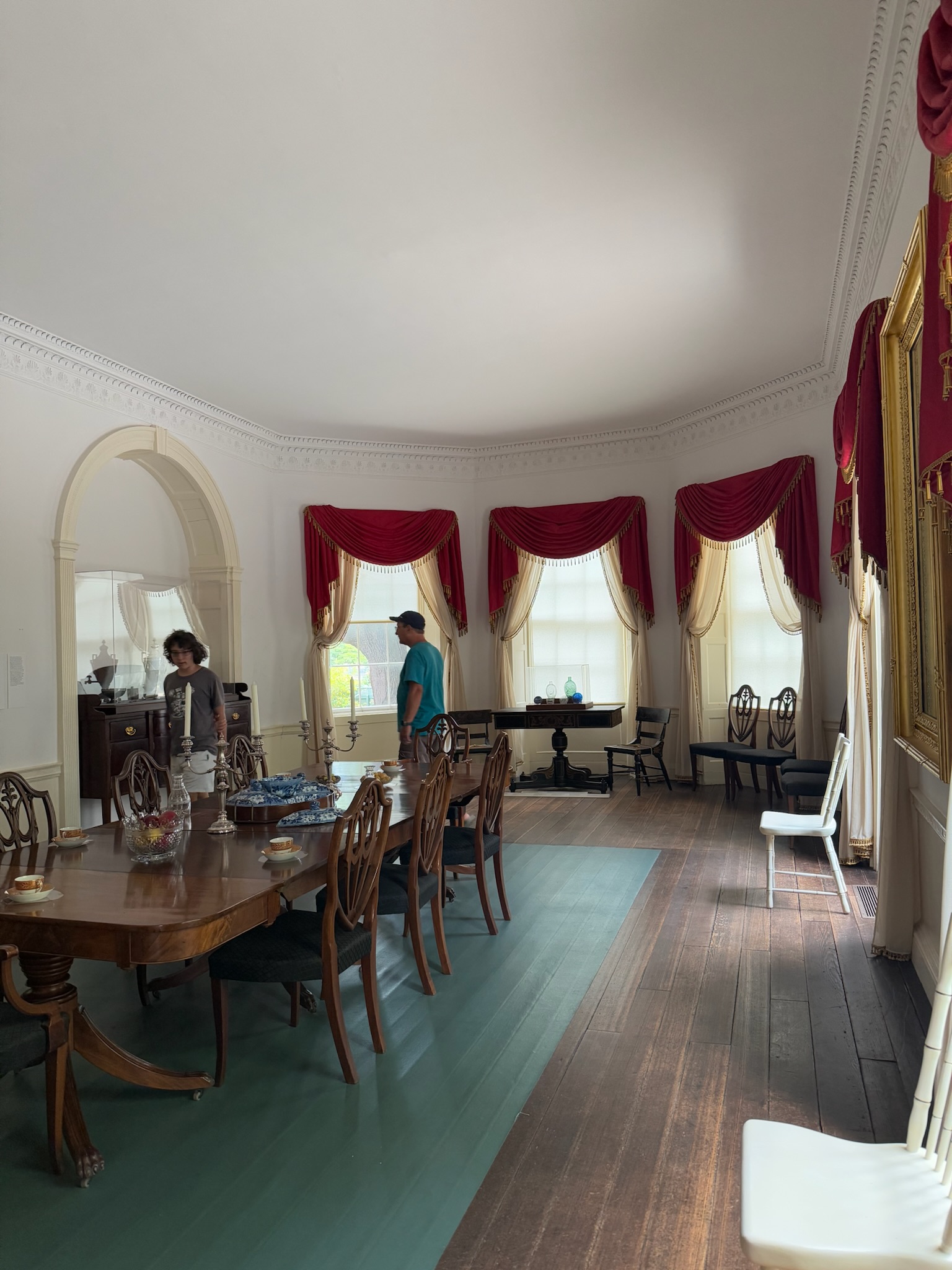
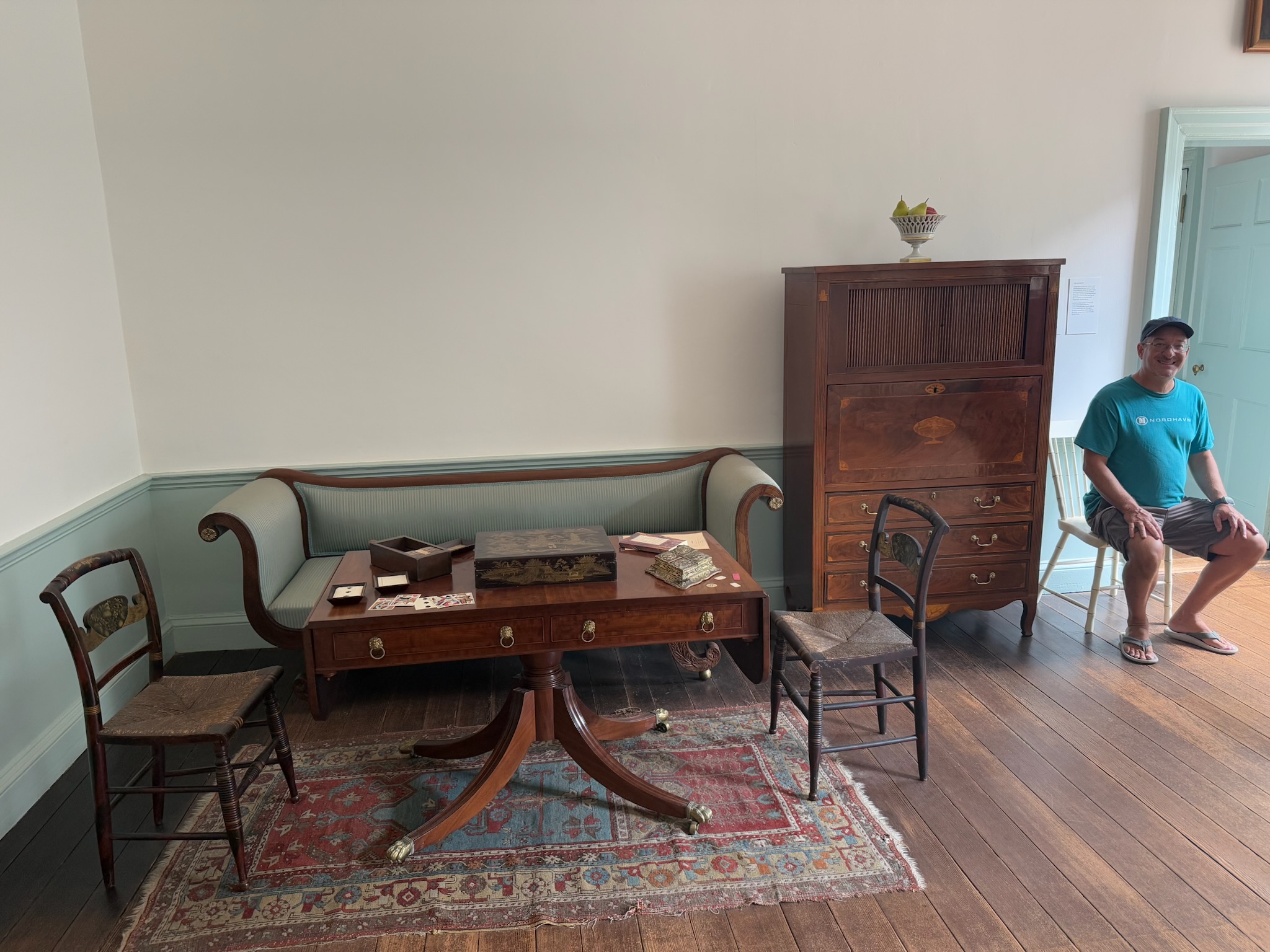
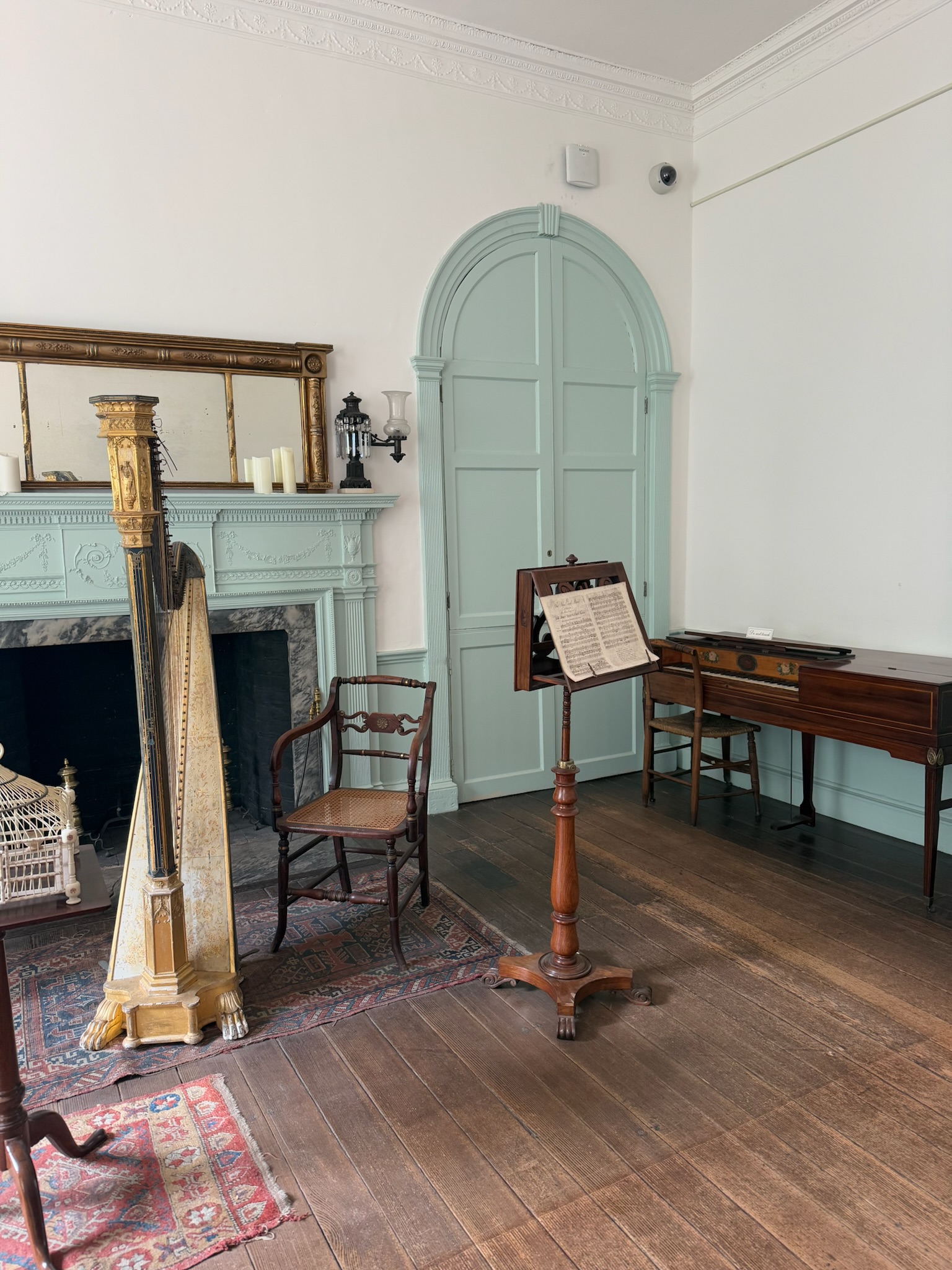
The parlor was for informal entertaining, including playing cards and music. The Myers children all played instruments. At the time, they had the largest sheet music collection in the US with over 900-pieces.
We poked our head into a sort of utility room between the parlor and dining room. Originally, the house didn’t have a kitchen. In 1797 and 1800, a separate building was created for the kitchen, with a covered patio between the house and kitchen. When the dining room was added on, the patio was enclosed into what appeared to be an area for the slaves to do work unseen. It also had a separate staircase to the upper floors so the slaves could move about the house unseen. The tour guide did not take us into the kitchen, which was on the ground floor.
We then went up the main staircase to the second floor. This was the master bedchamber.
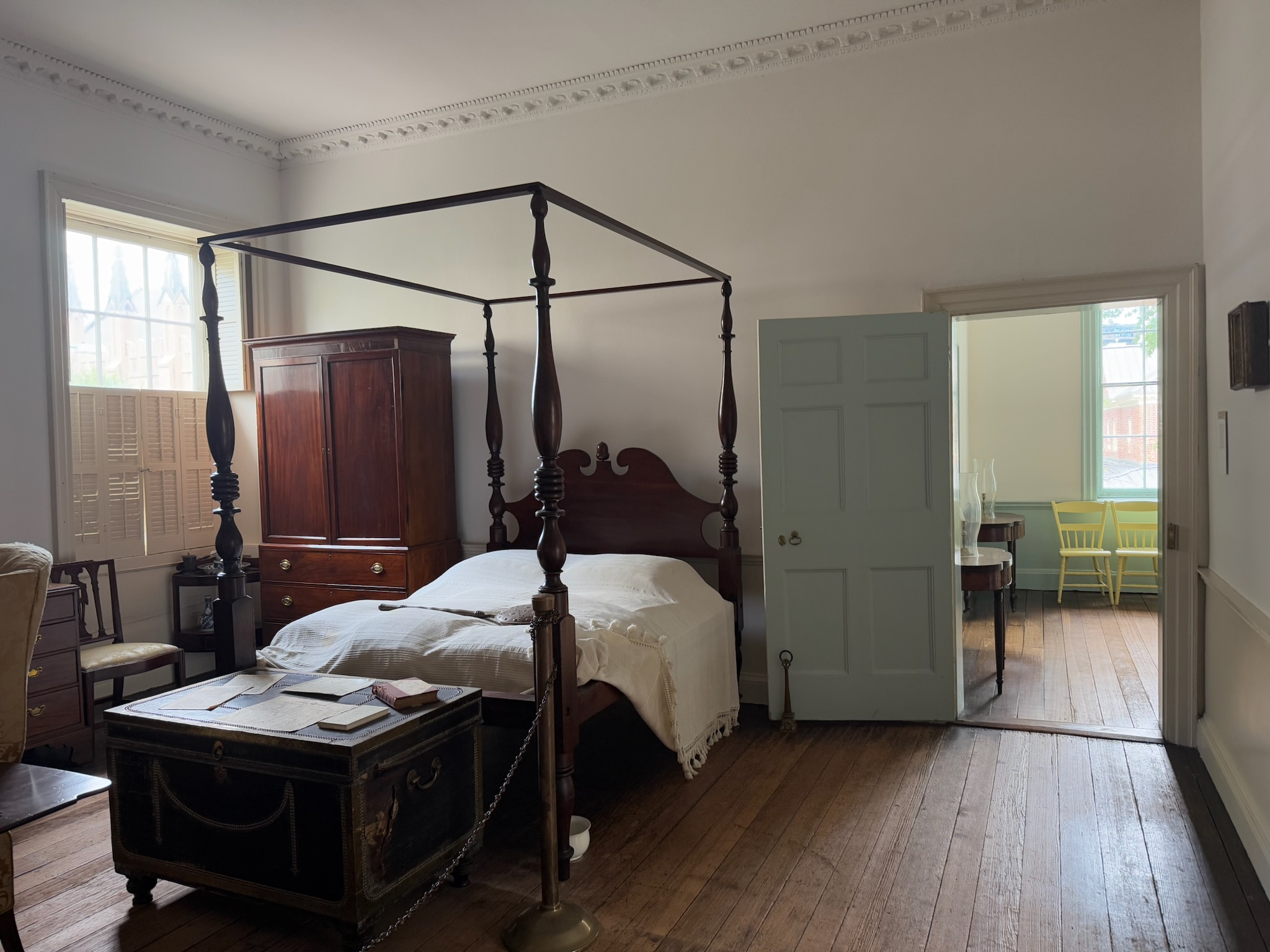
Some custom tailored clothes.
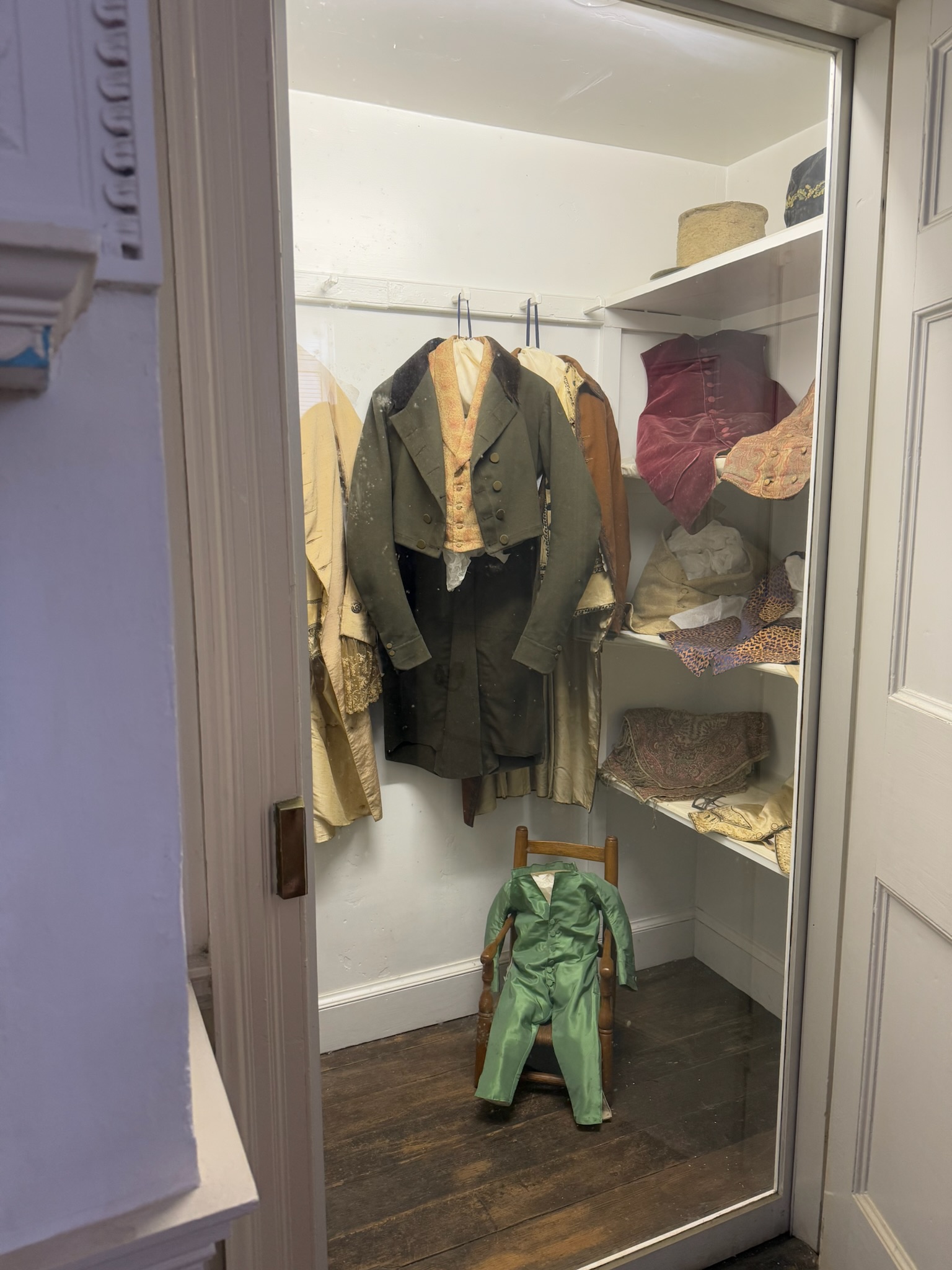
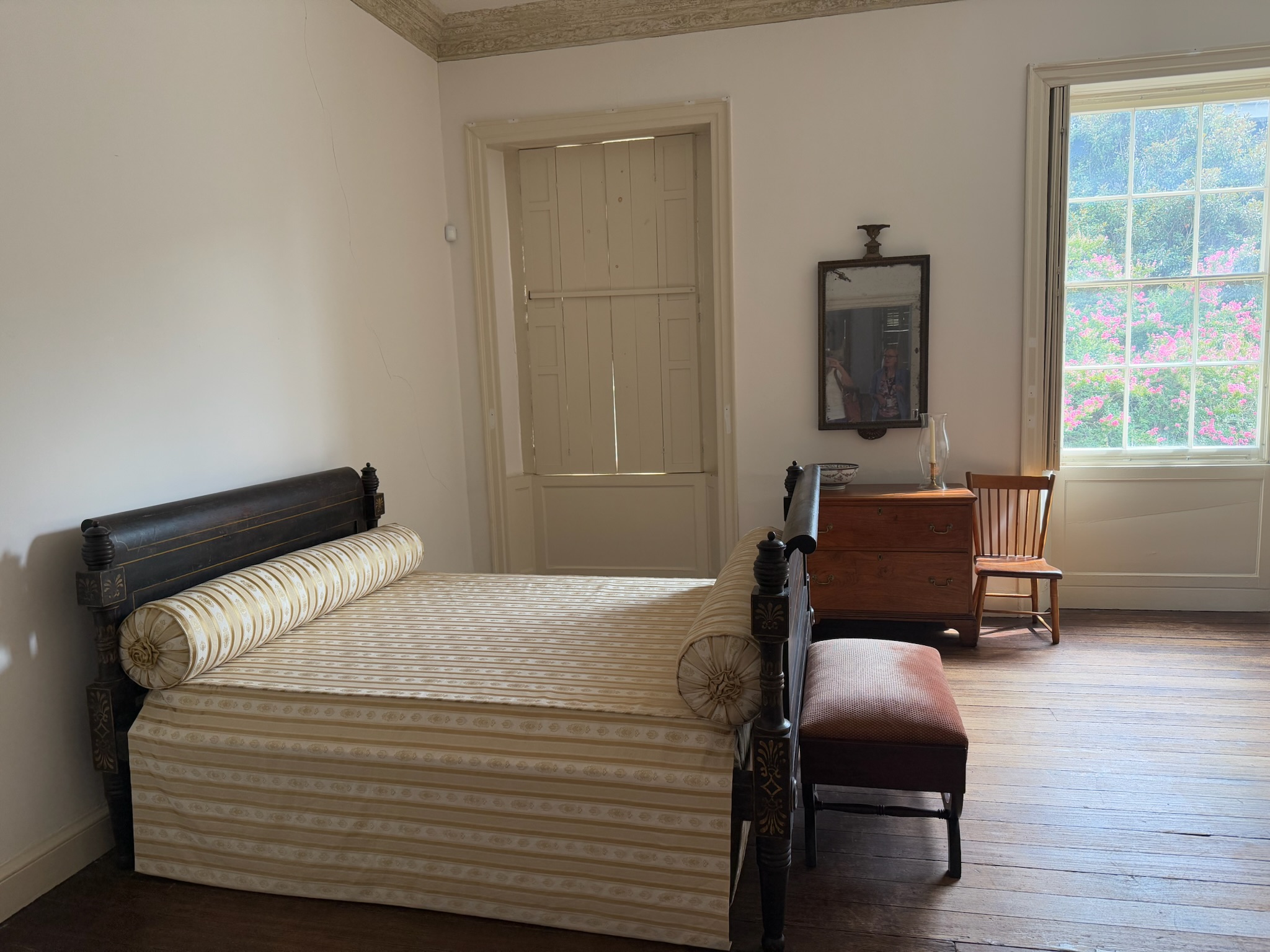
This room had belonged to Moses and Eliza’s eldest daughter, Adeline. The guide told us that for one of her birthdays, she asked for her own slave as her gift (we think it was Adeline. Maybe it was one of the other girls). If we recall correctly, she said that Adeline was engaged twice but never actually married. We believe the guide said that her first fiancé died days before the wedding and the other one backed out due to a Myers family scandal.
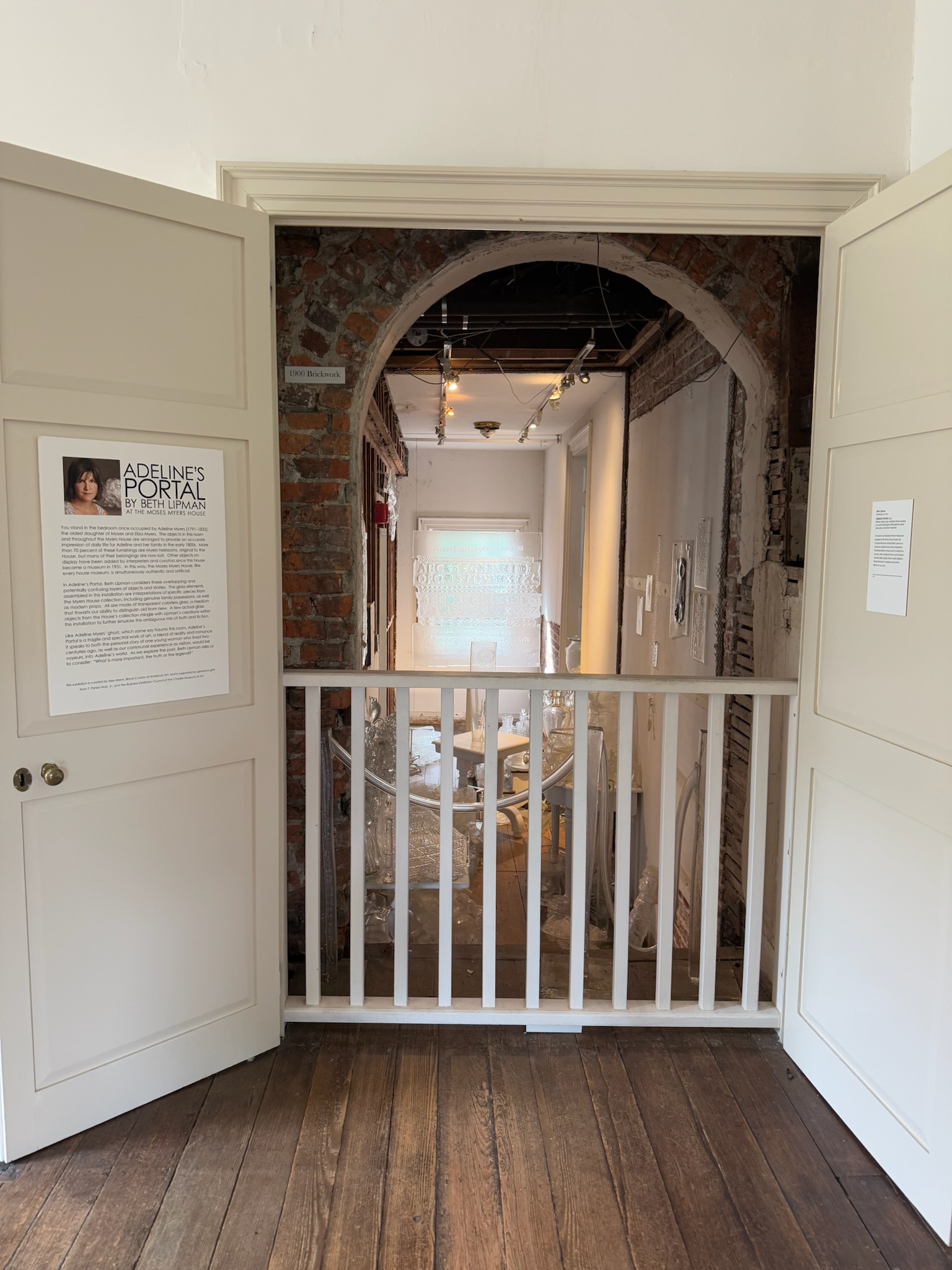
One of the doors in Adeline’s room opened into the upstairs of the utility area that we’d mentioned. The museum had turned that space into an odd display — they put a bunch of clear glass objects on exhibit. About 70% of the objects were heirlooms that came with the house. The other 30% were recreations based on descriptions in various records.
From Adeline’s room, we moved into part of the slaves quarters… to be continued…