Sunday, July 6 — It was supposed to rain hard in the afternoon, so we decided that an indoor activity was a good idea. We settled on a museum called Nauticus, which had a retired Navy battleship on display. The museum didn’t open until noon, so we left the boat at 1130 and headed to downtown Norfolk. It was close to the historic area we’d visited yesterday. This section of town was built up and modern. Even though the two museums were only blocks apart, it felt like two totally different worlds.
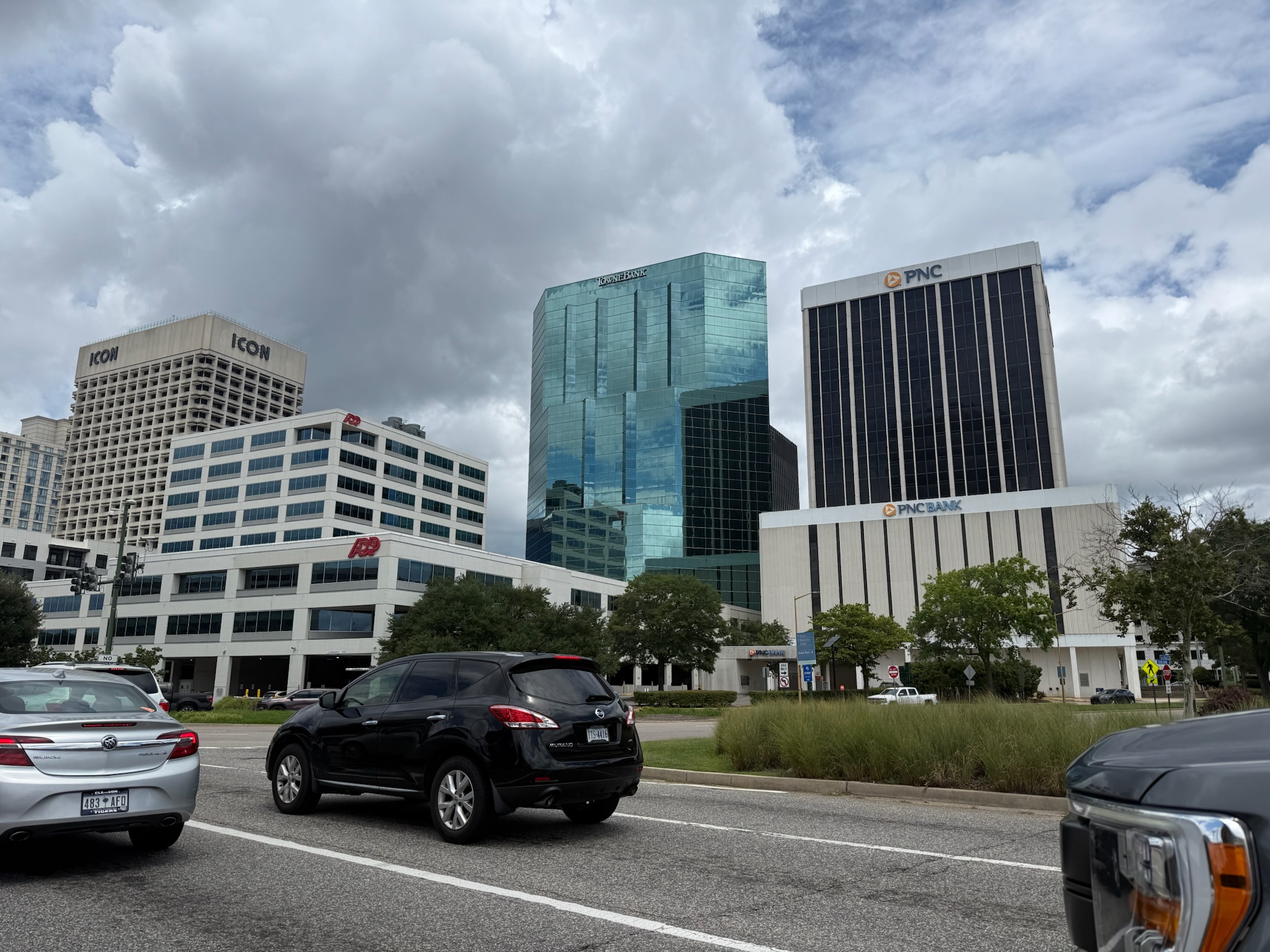
We were sad to see there was a traffic jam around the museum. We also noticed a conga line of people with suitcases walking towards the museum. Eventually, we realized that there was a cruise ship next to the museum that was currently boarding. We found a parking garage directly across the street. Like the other garage, parking was free for the first two hours and inexpensive for more time. As we approached the ship, we were struck by how huge it was.
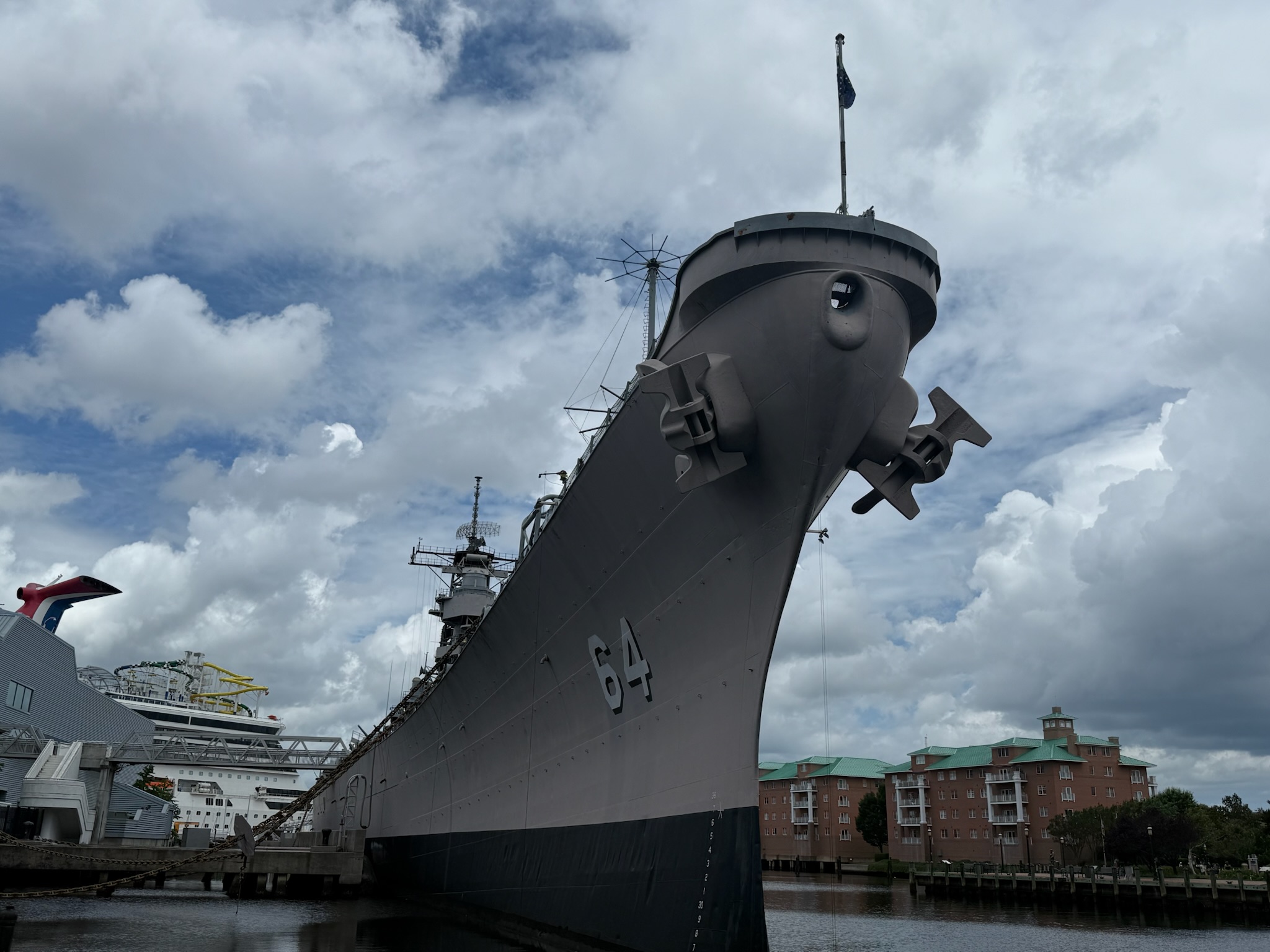
The battleship Wisconsin, nicknames Wisky, was first commissioned on April 16, 1944. She was an Iowa class battleship. Her specs: 45,000 tonnes, 887.3 feet long, 108 feet wide, and 37 feet deep. They had to specially dredge a channel to bring her up the Elizabeth River and into this berth. She was floating on her own keel, with about 2 – 4 feet of water under her (depending on tide swing).
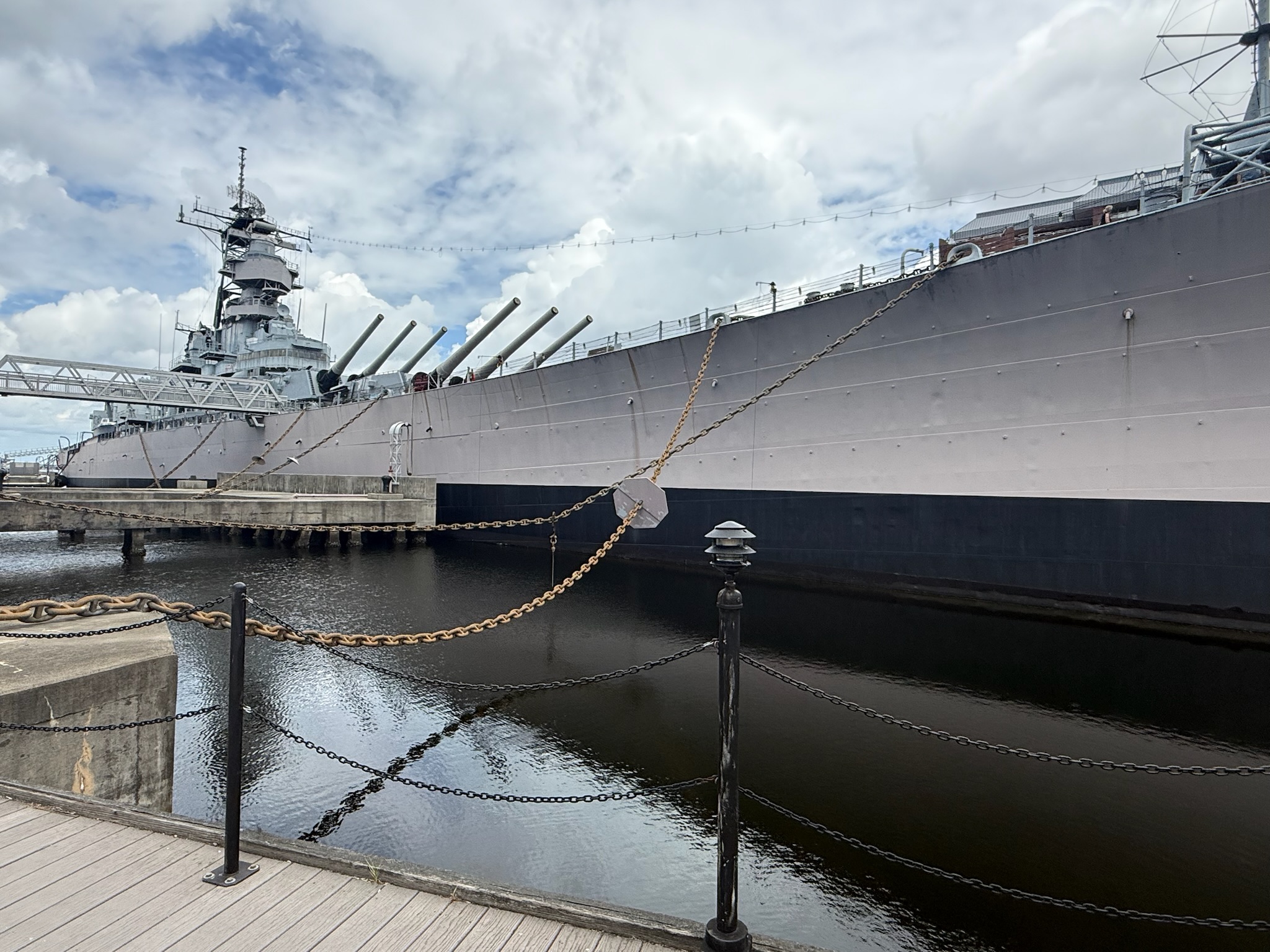
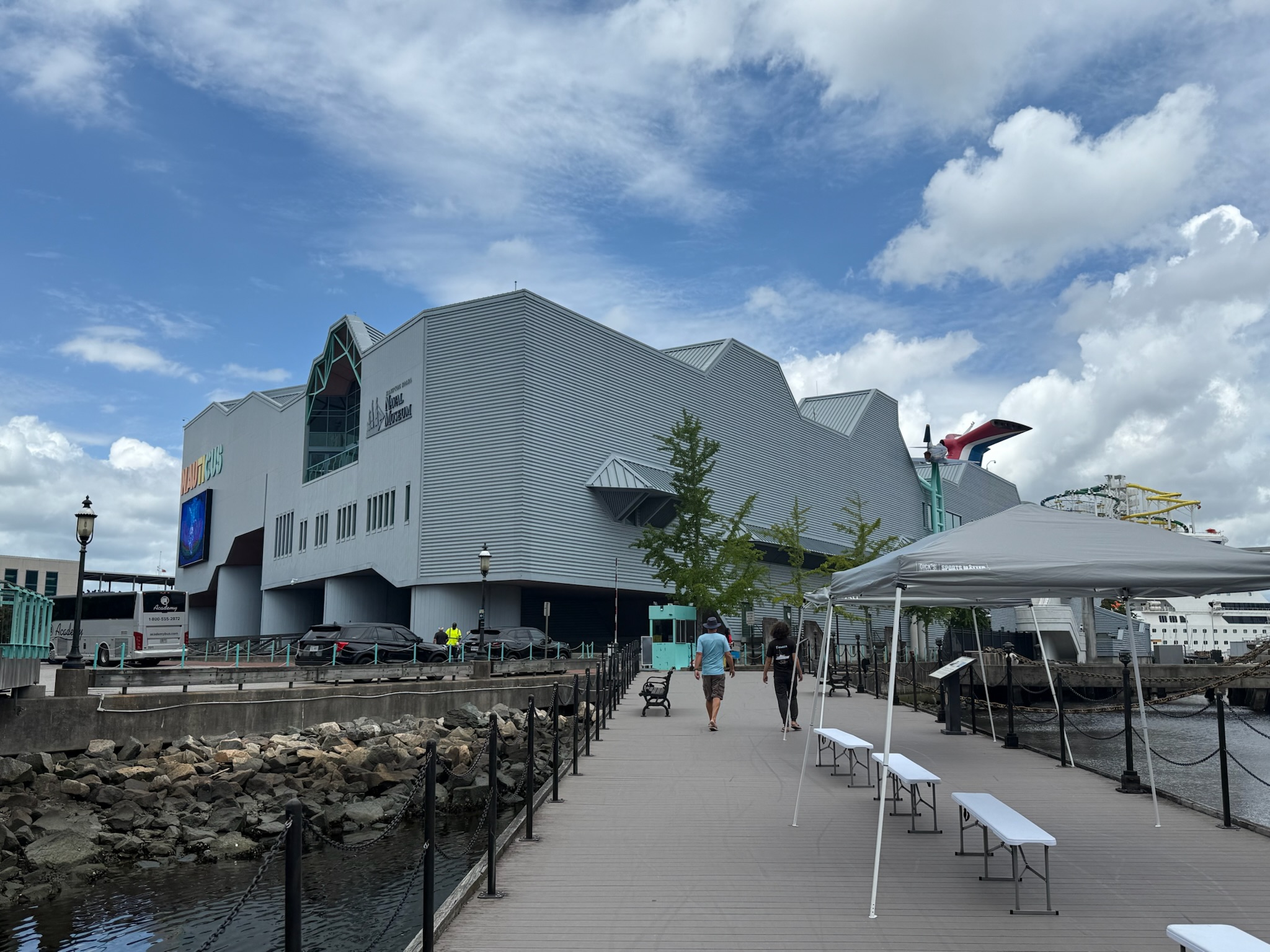
The architecture of the museum was interesting. We guess it was supposed to be battleship-esque?
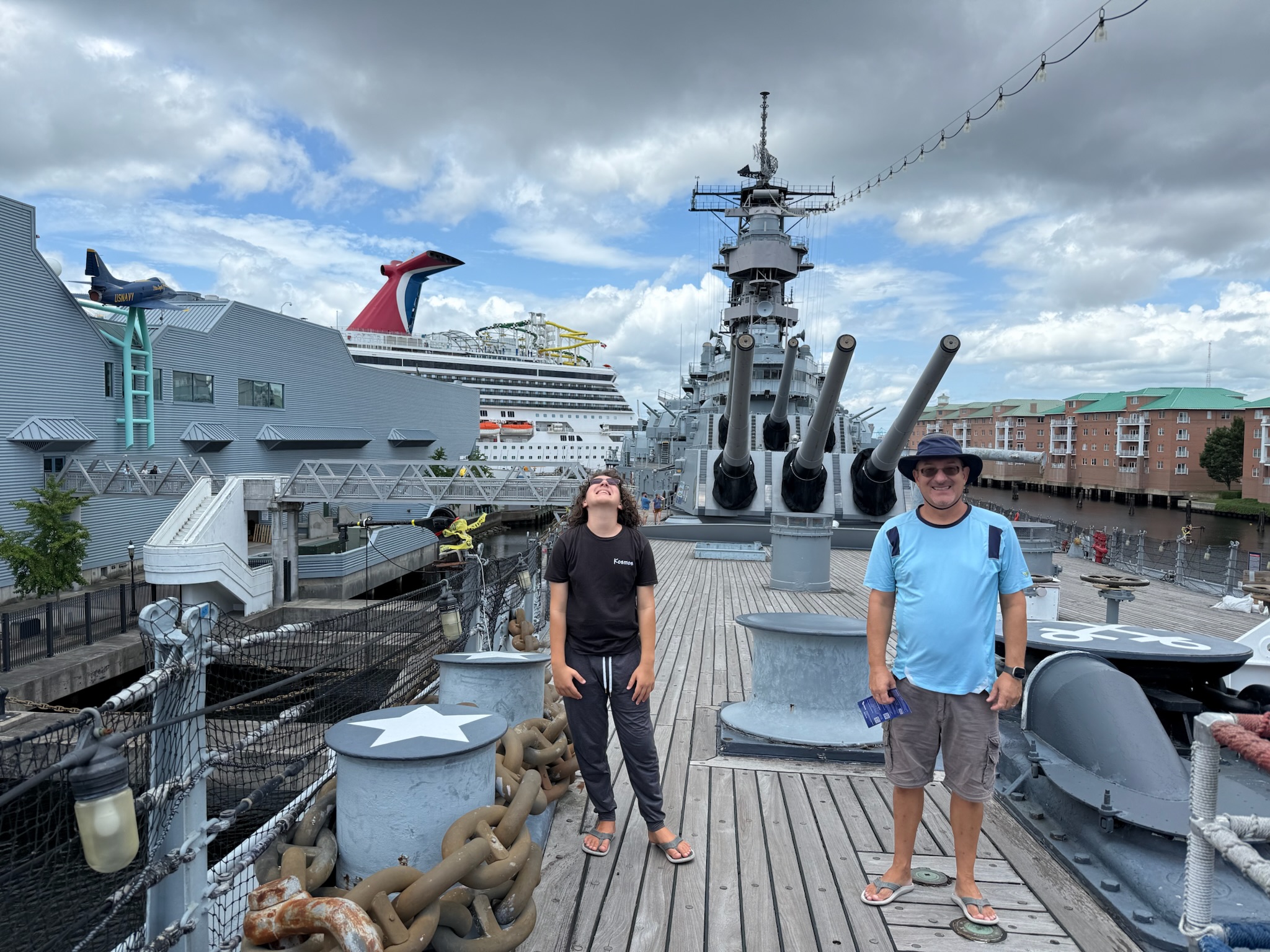
We headed into the museum and bought tickets, which were $20 each (Keith was considered an adult). Wanting to see the outer part of the ship before the rain started, we skipped all the indoor exhibits and made a bee-line to the deck of the Wisconsin. She felt even bigger when we were onboard than she had felt when we were looking at her from land! This was taken from the front of the bow. Look at how big the anchor chain was (left of Keith below)! And how big the windlass was (right of Eric below). Looking down at the water from the bow made us feel queasy with height sickness.
The turret tower, or armored enclosure for the guns, was massive — 5 decks in total, manned by 77 people! Only the top deck was visible in this photo.
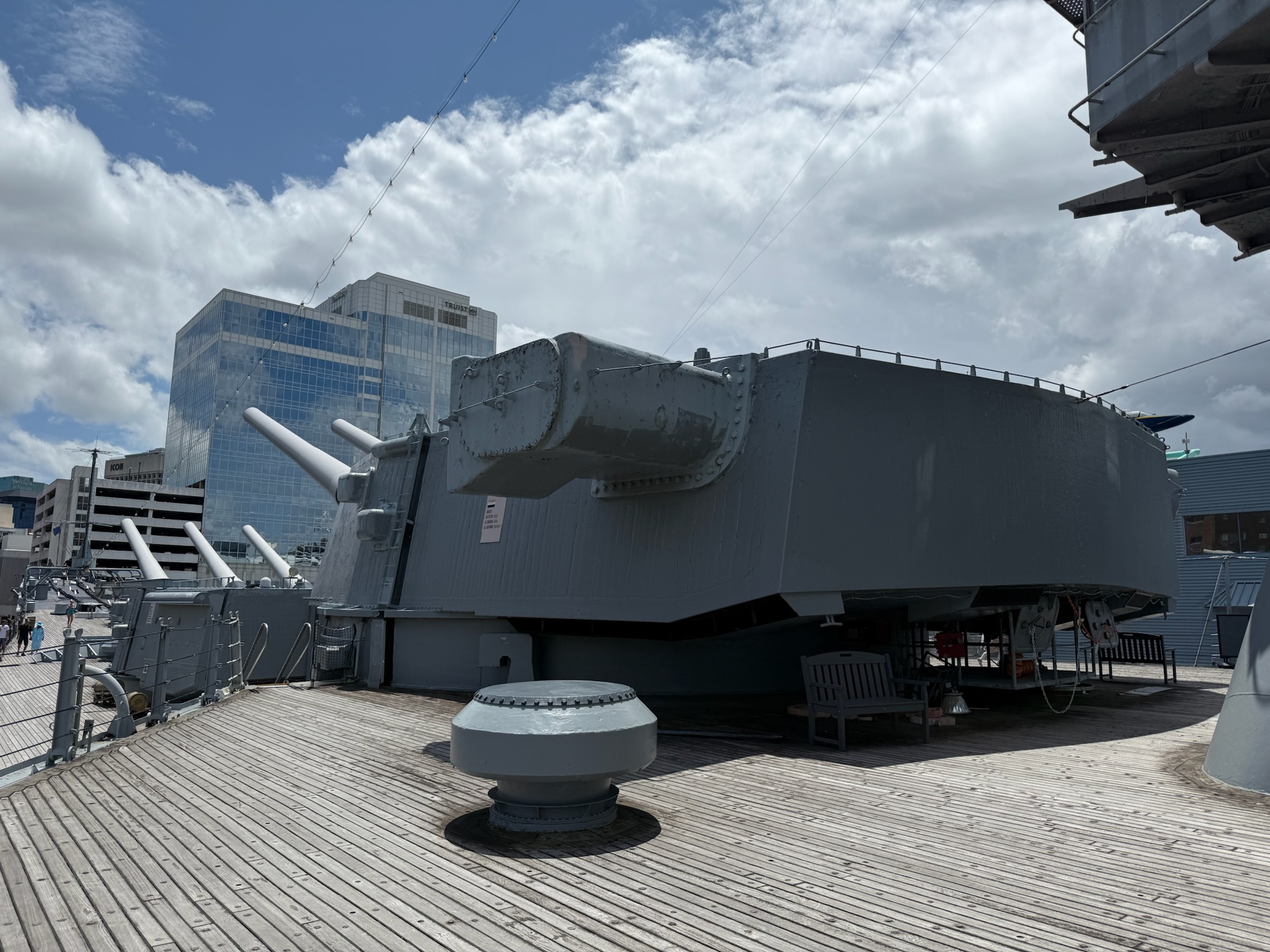
if you look carefully, you’ll notice a small platform between the two benches under the shade of the turret’s overhang. That was the entrance to the turret! We would have never noticed it had the docent not pointed it out.
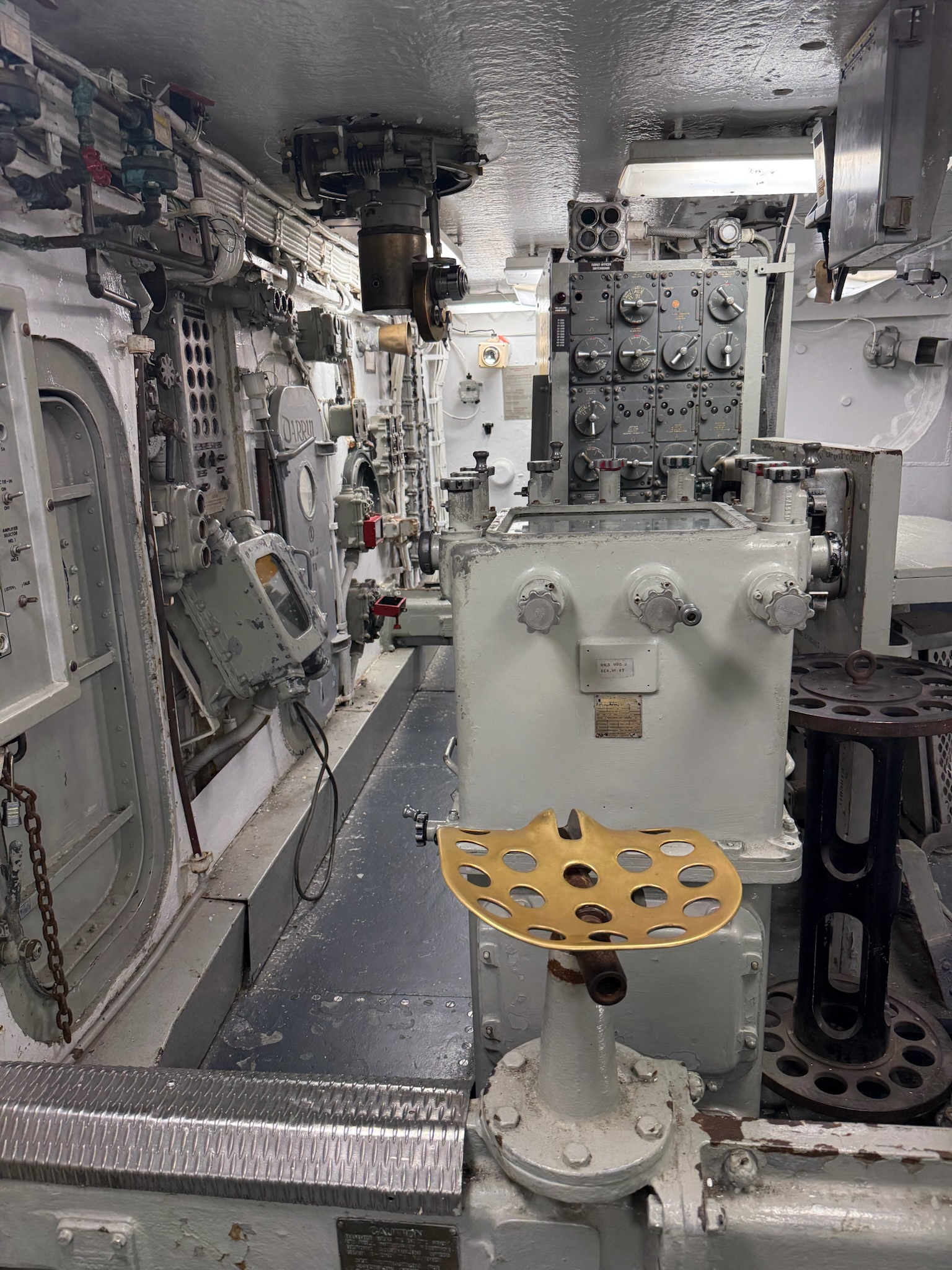
The inside of the turret.
The’d named the guns.
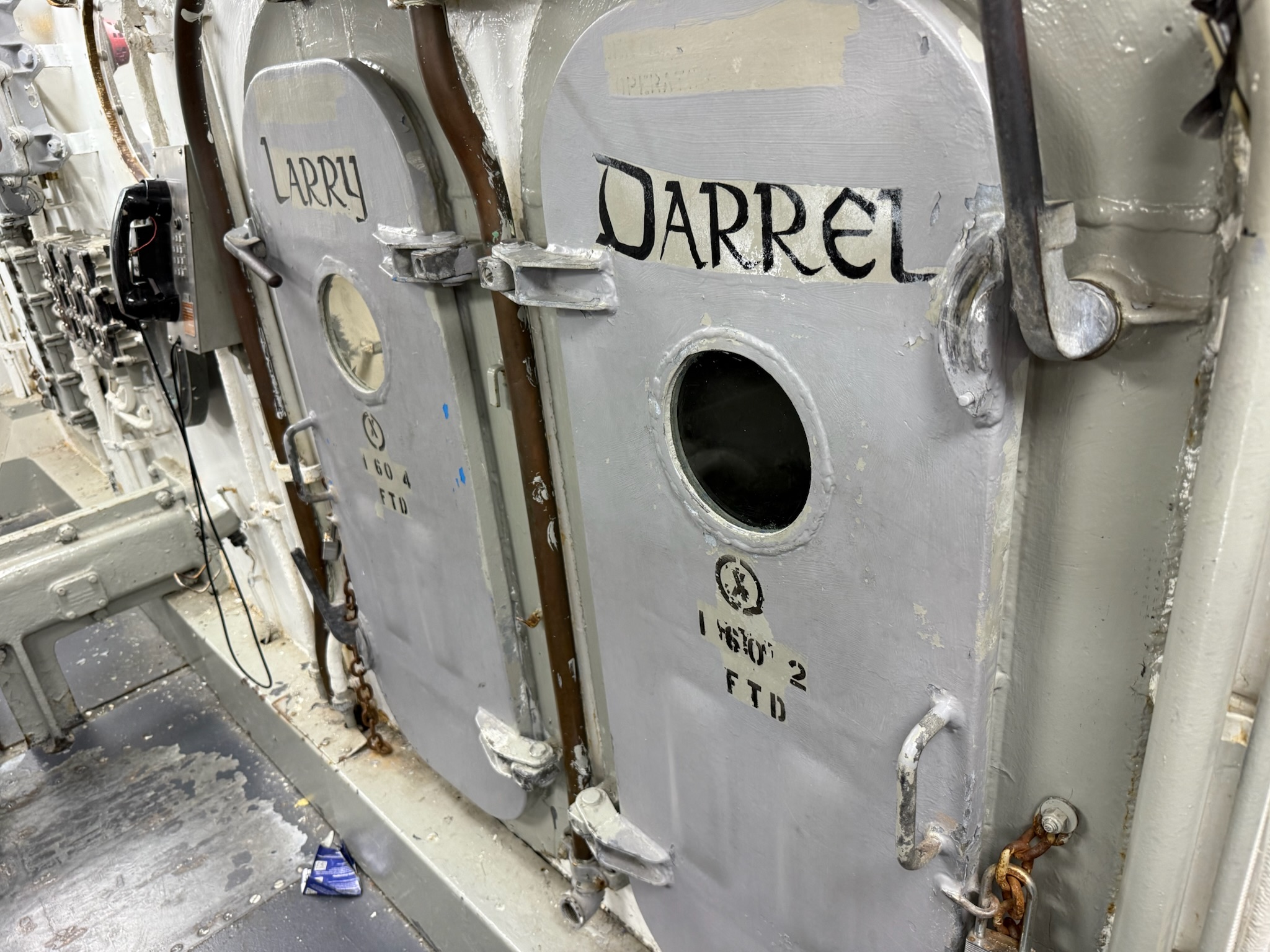
The shells were massive.
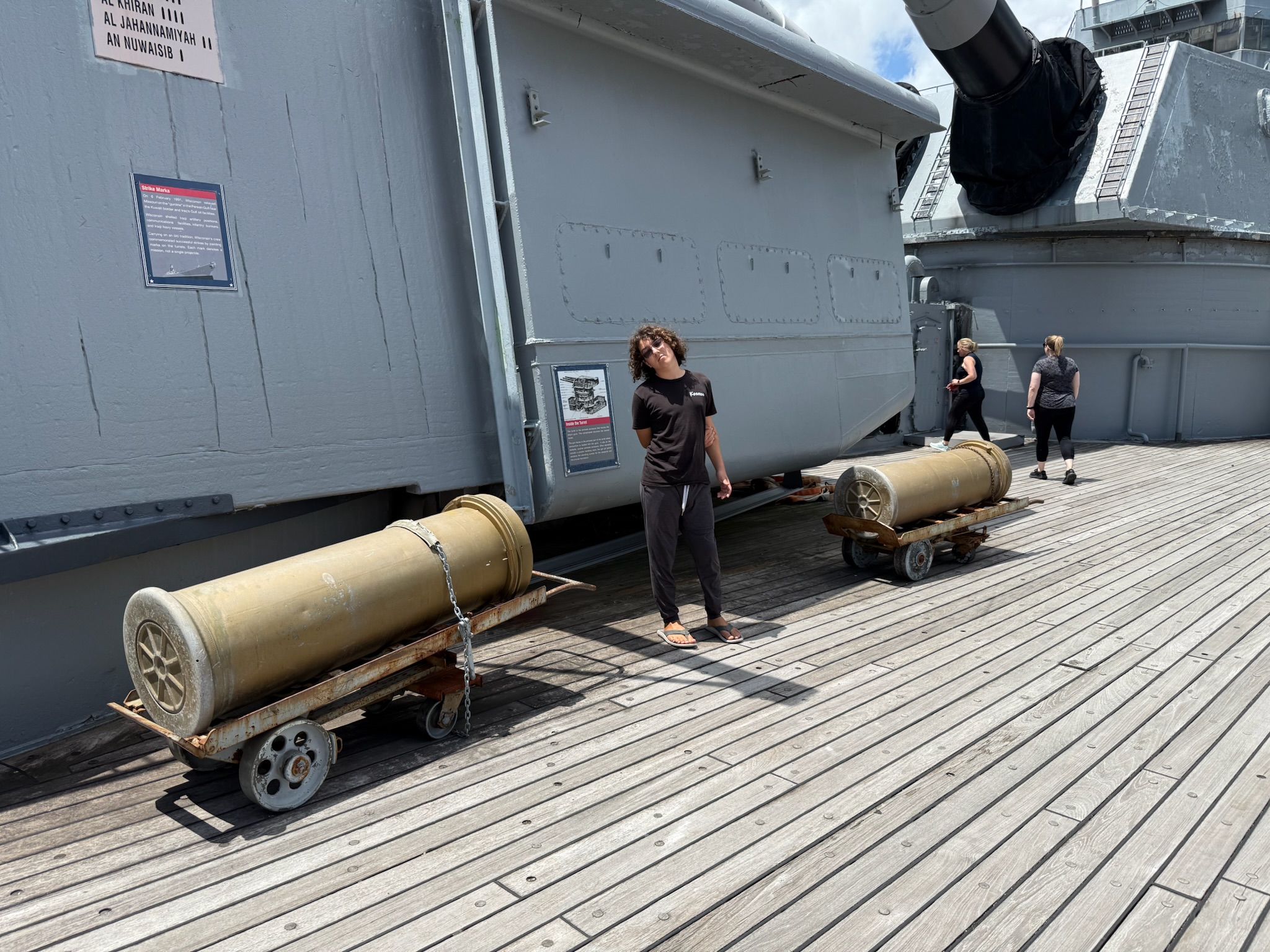
We believe the area up there was the bridge and quarters for high ranking officers, including the admiral. However, to see inside those spaces, one had to pay extra for a guided tour.
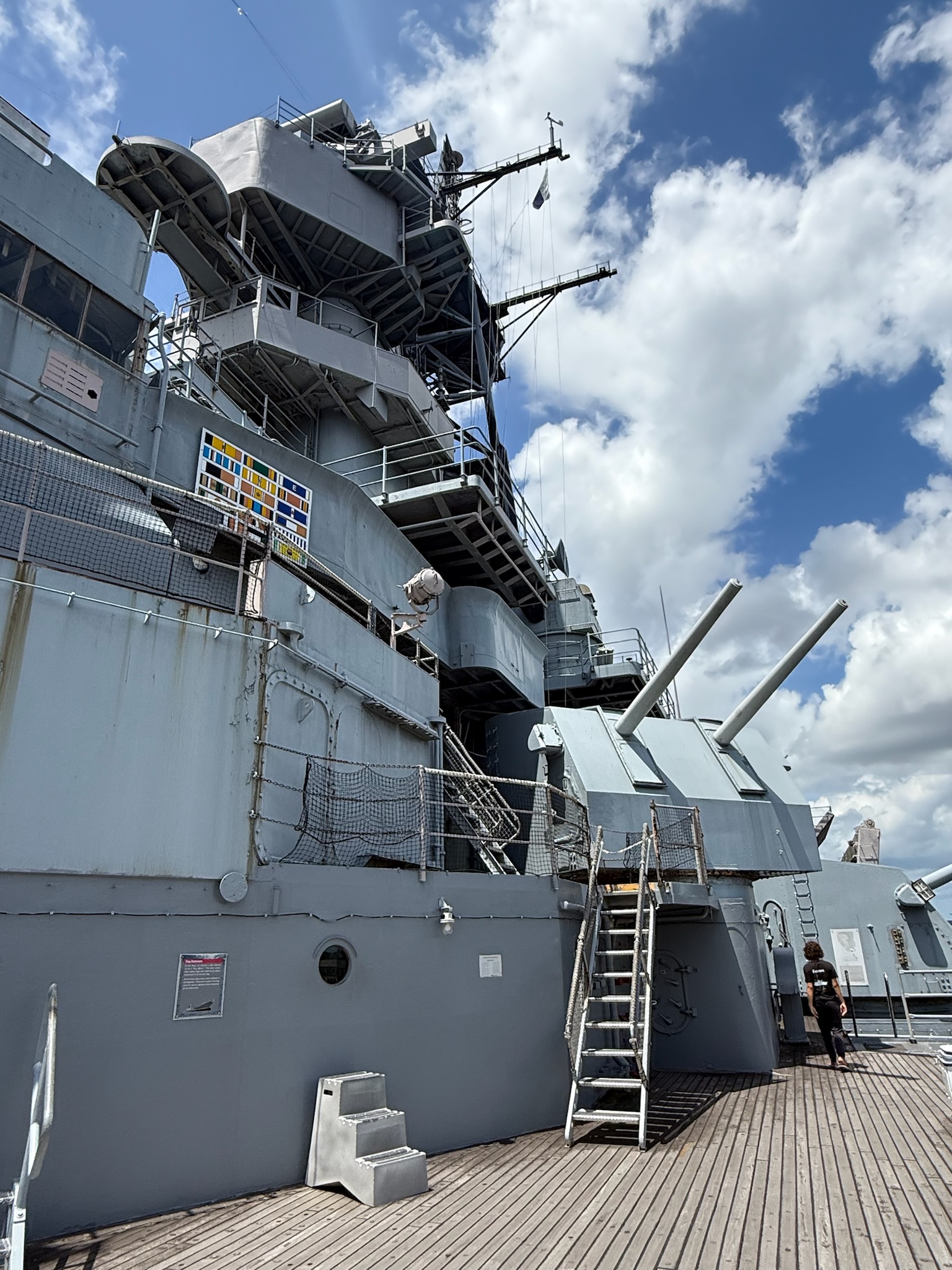
The dinghies were 40 feet long with 165 hp diesel engines that could do 13-knots for 120 nm on a single tank of fuel.
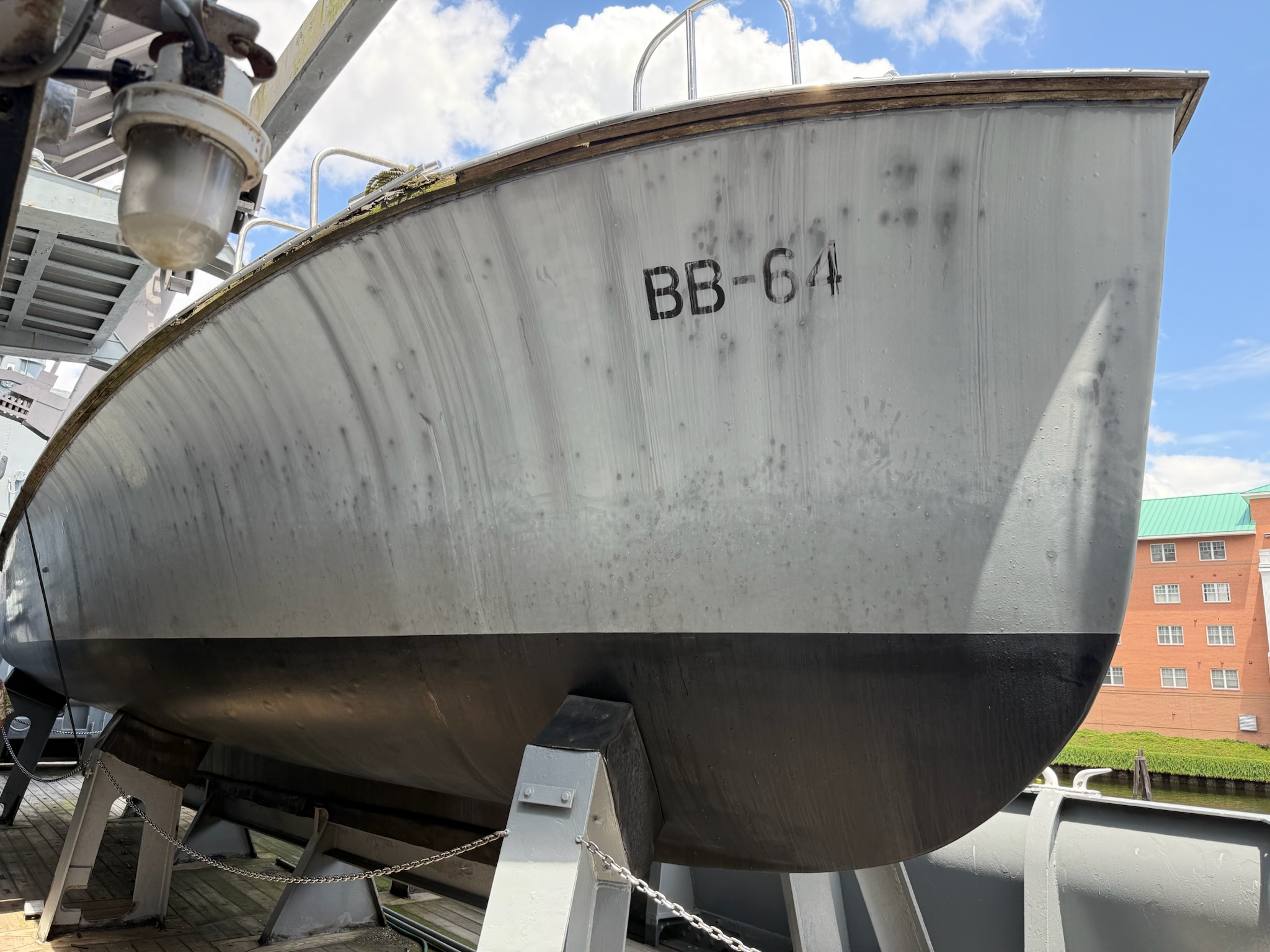
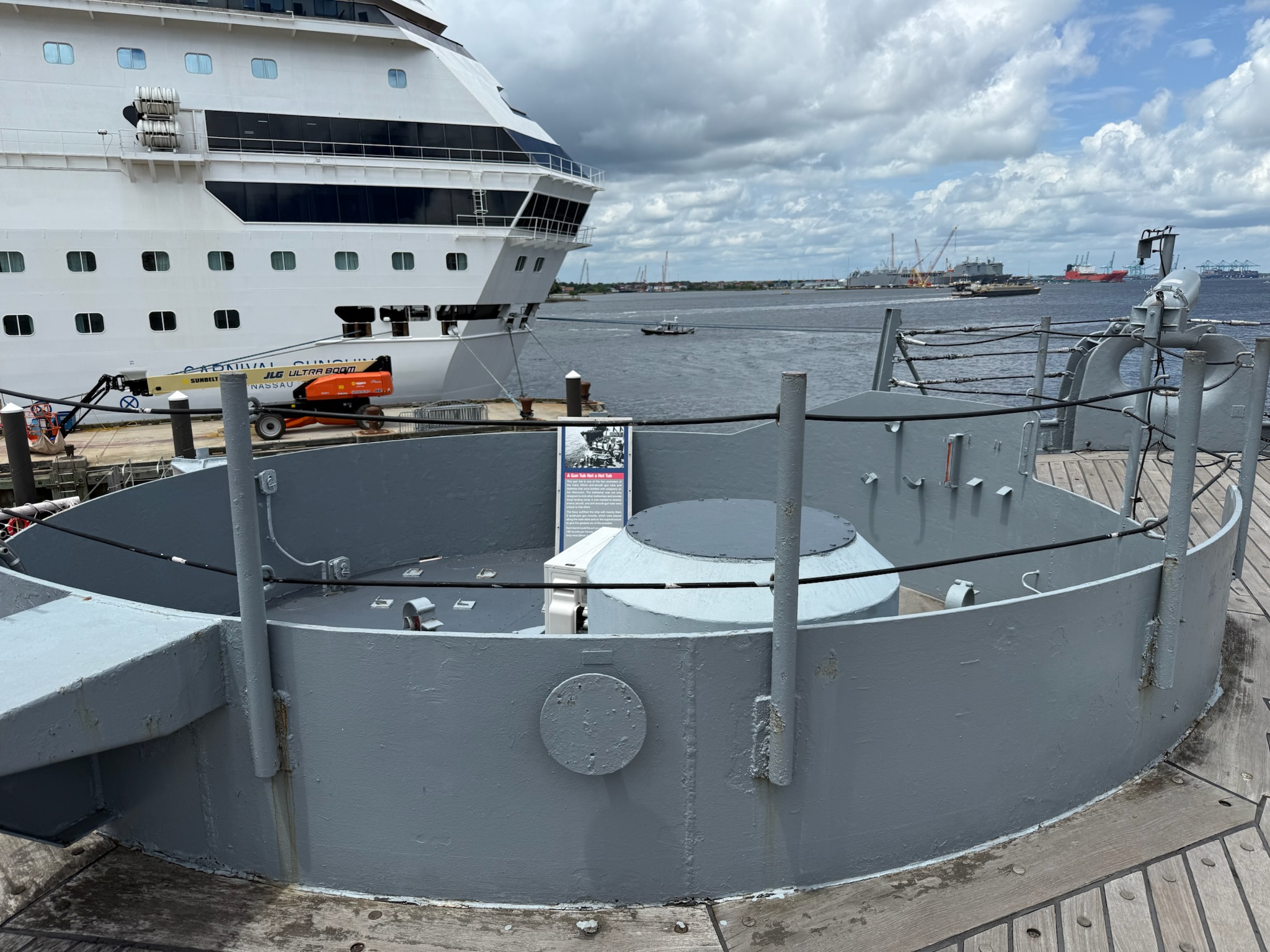
The area between the back of the ship and the bridge was apparently called the fantail. Its primary purpose was for launching vehicles, such as sea planes and helicopters, but it doubled as a party area.
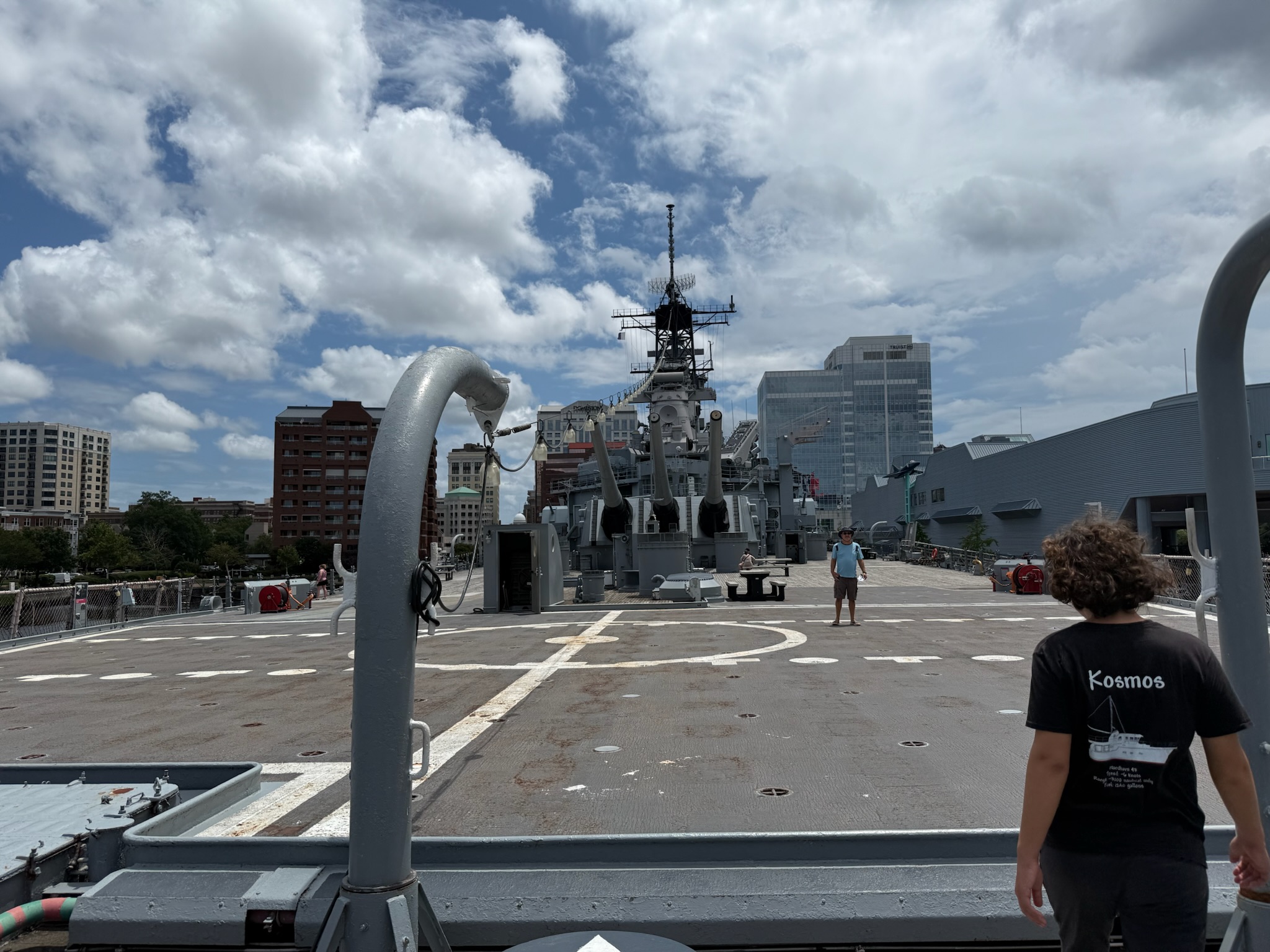
The photo below was of a Mark 2 quadruple gun mount, nicknamed a gun tub. It could fire 2-pound shells at a rate of 160 shells per minute. Apparently, there used to be 20 of these around the deck. There also used to be forty-nine 20mm guns.
Once we’d toured the entire deck, we headed inside to see the below decks. It was a hot, humid day and Keith was melting in the sun. He’d been begging to skip the outer areas and go inside right away, where he’d assumed it would be cooler. He was horrified to find it was even hotter inside than outside.
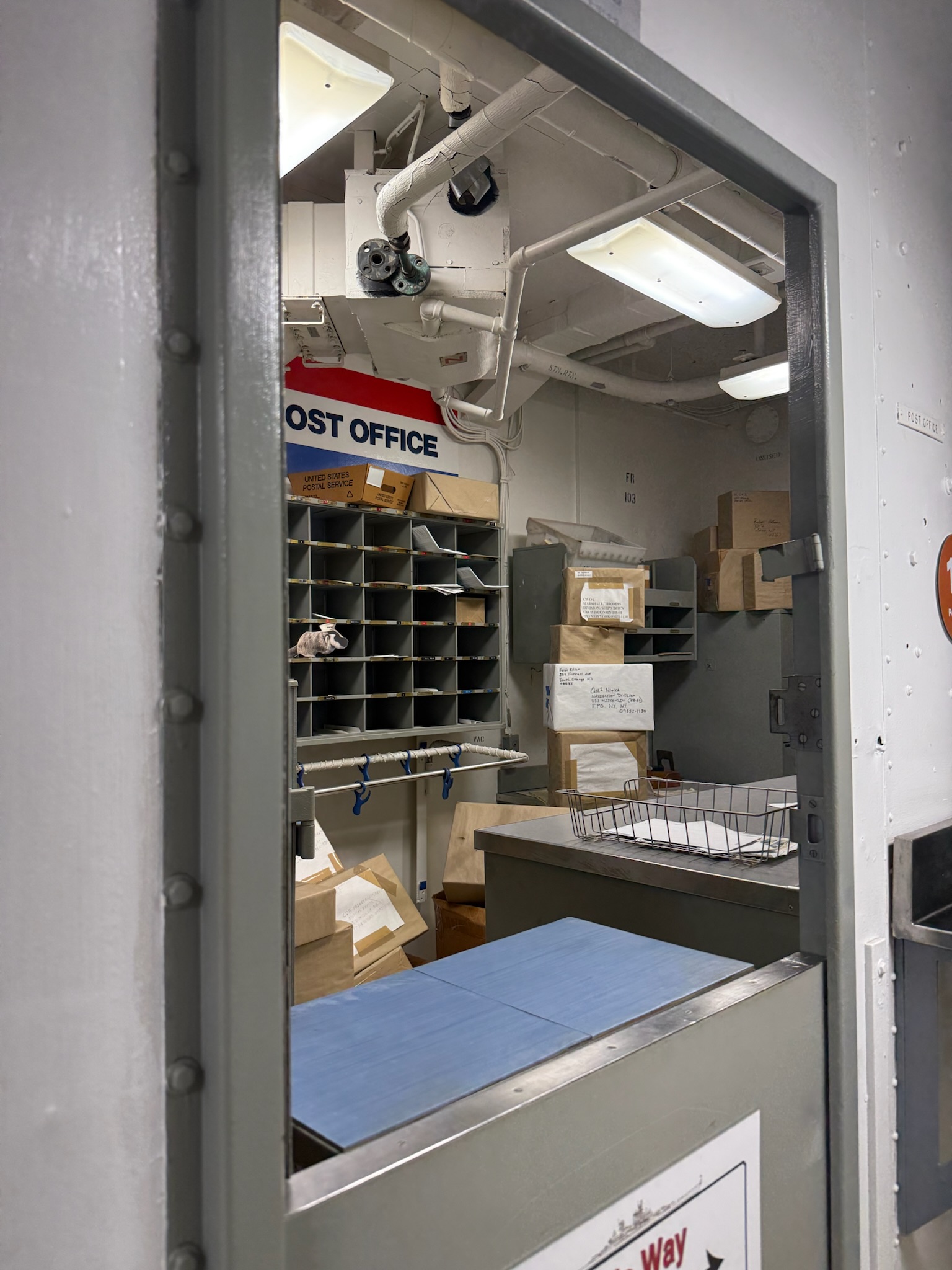
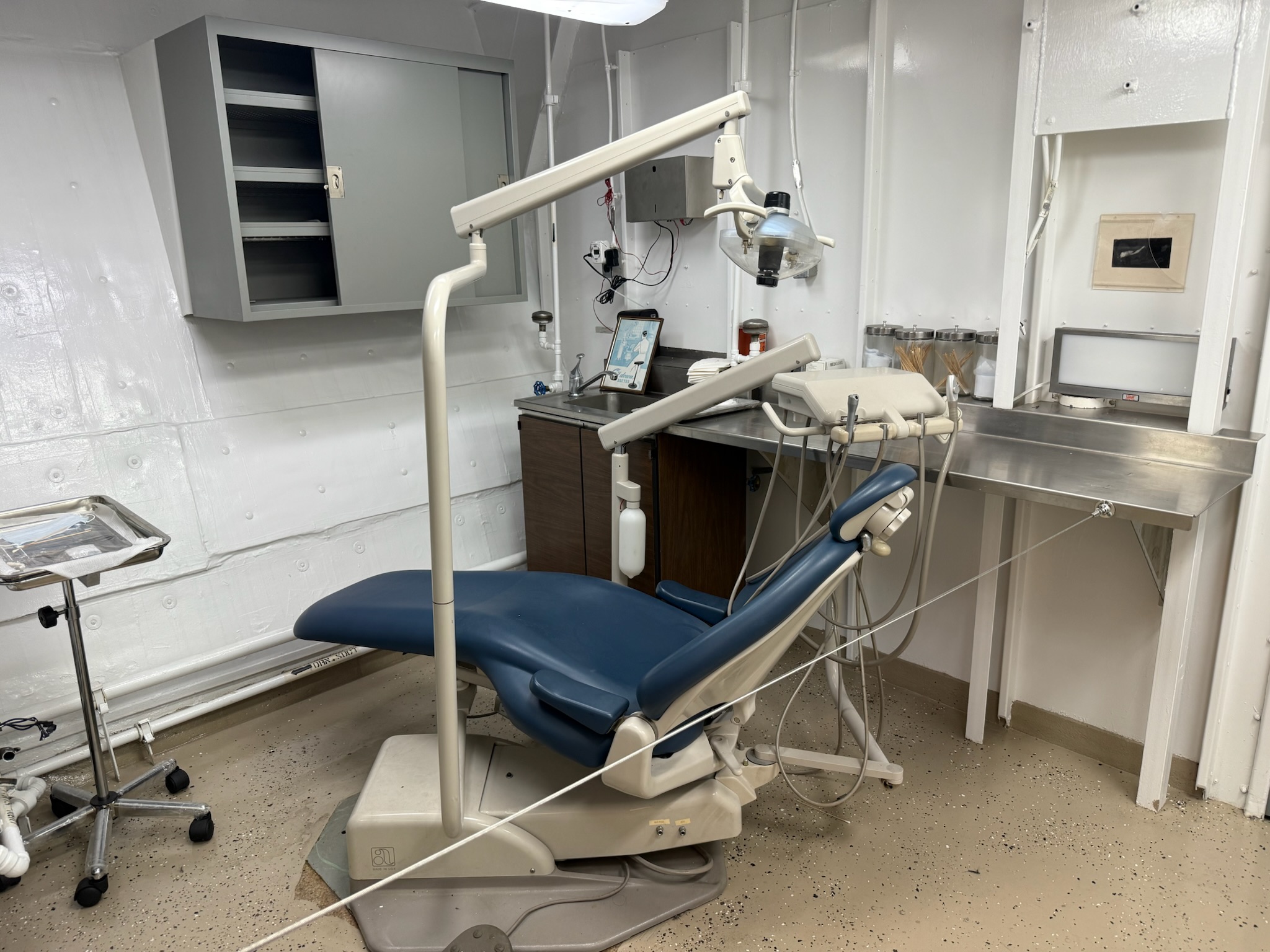
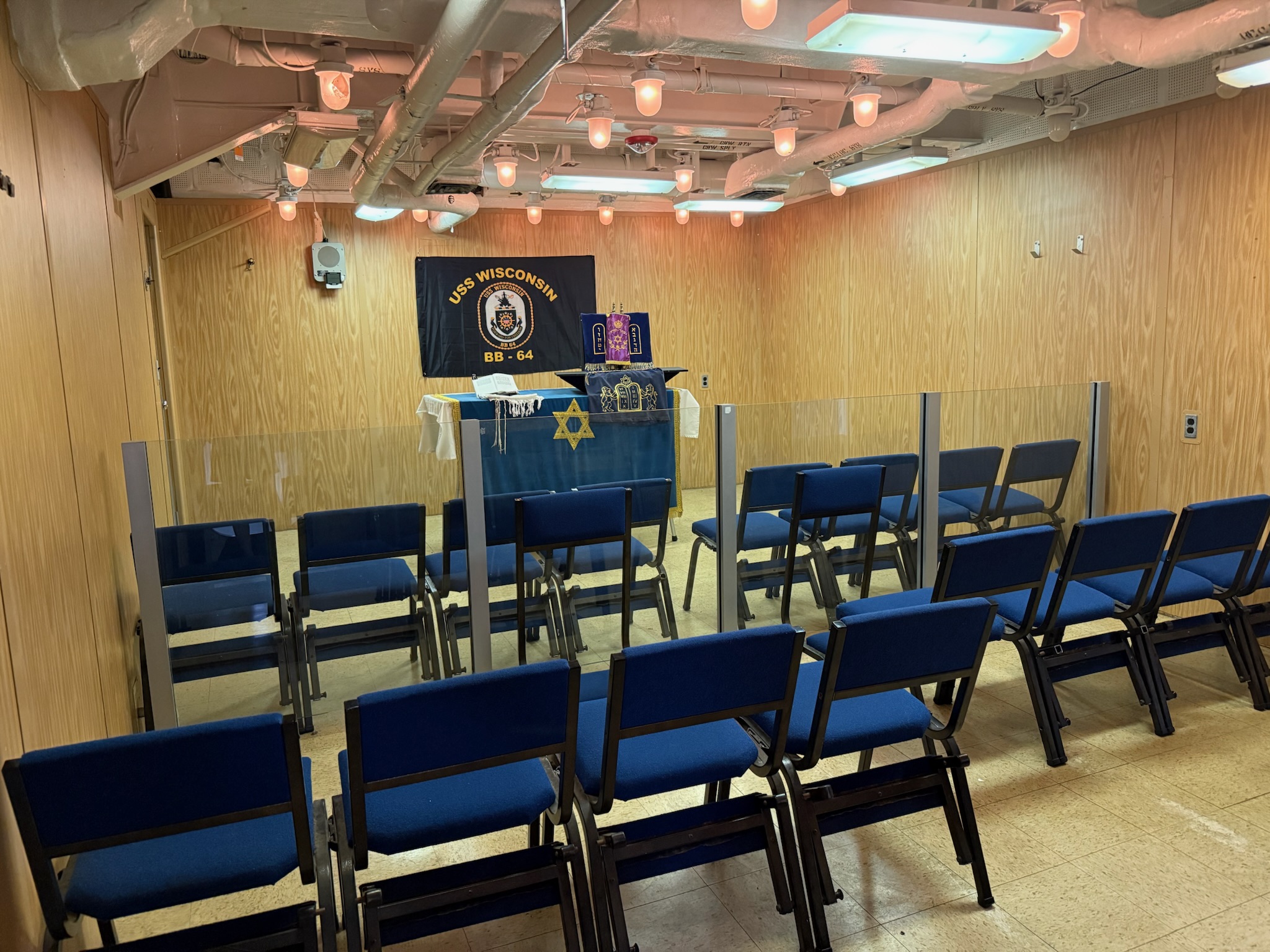
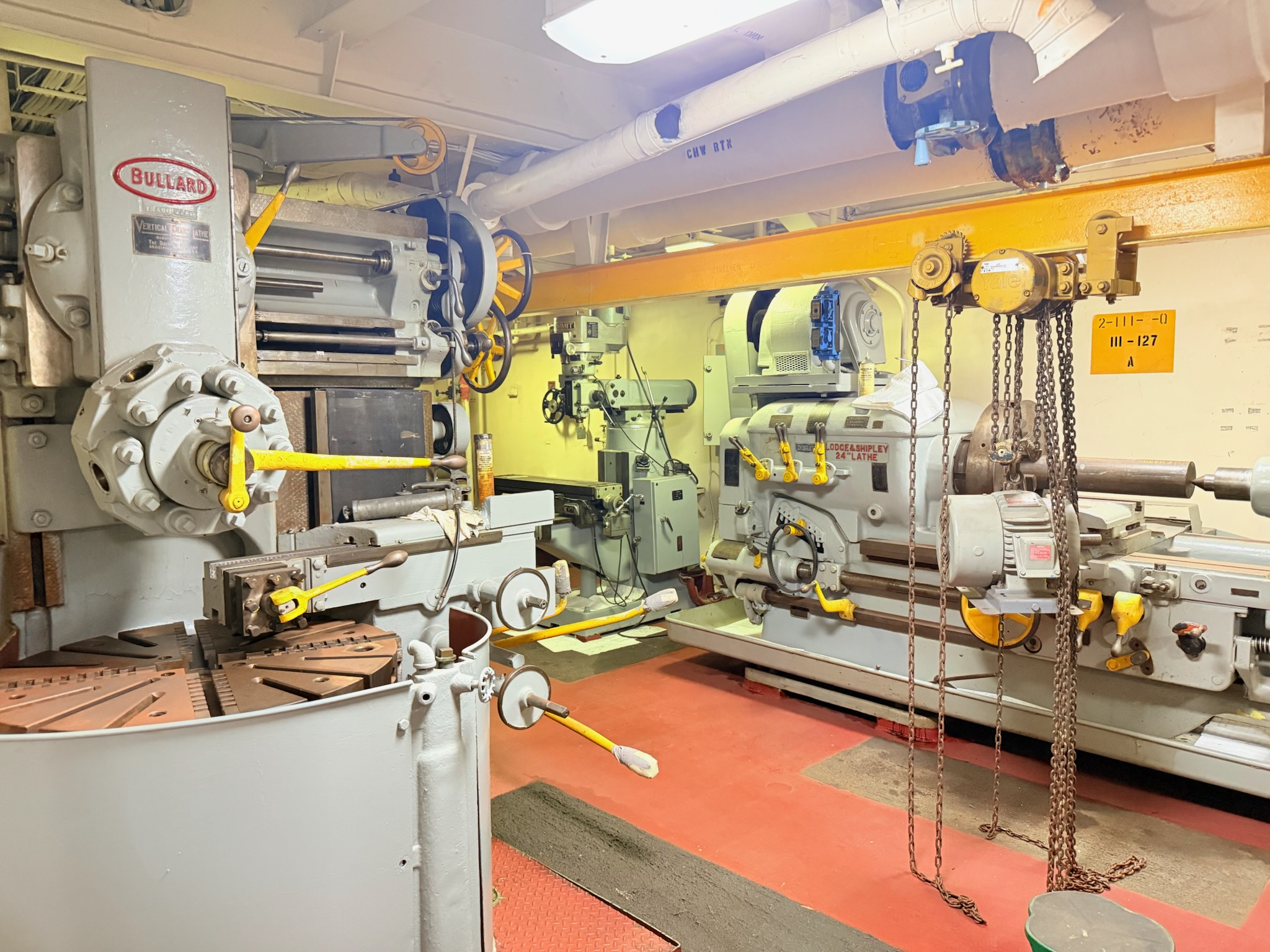
Ships this big were basically floating cities, and thus needed all the amenities of a city. A few examples of services we saw on the deck that we toured were a post office, a dentist, a chapel that served all denominations, and a machine shop.
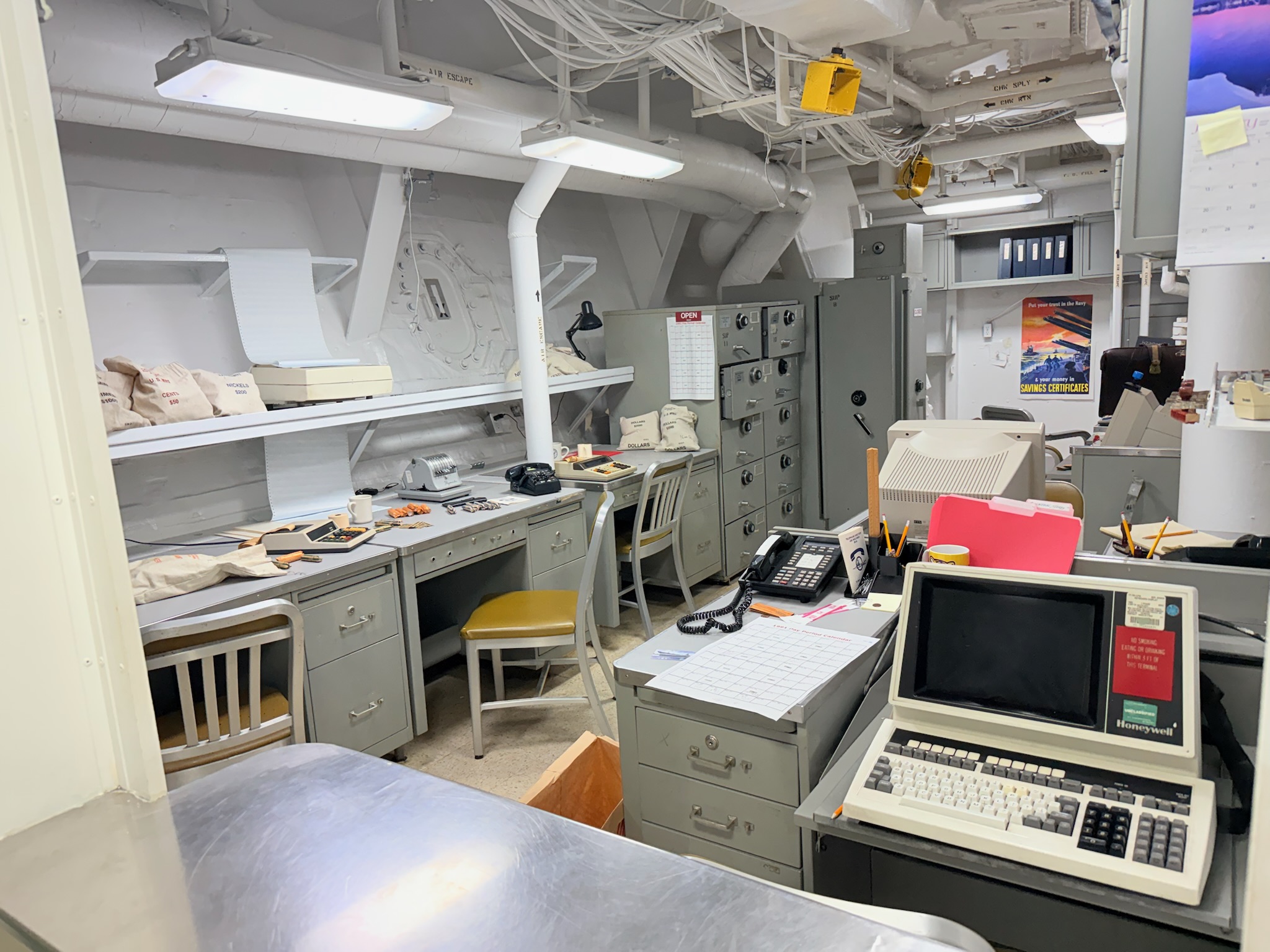
There were lots of administrative offices serving various purposes.
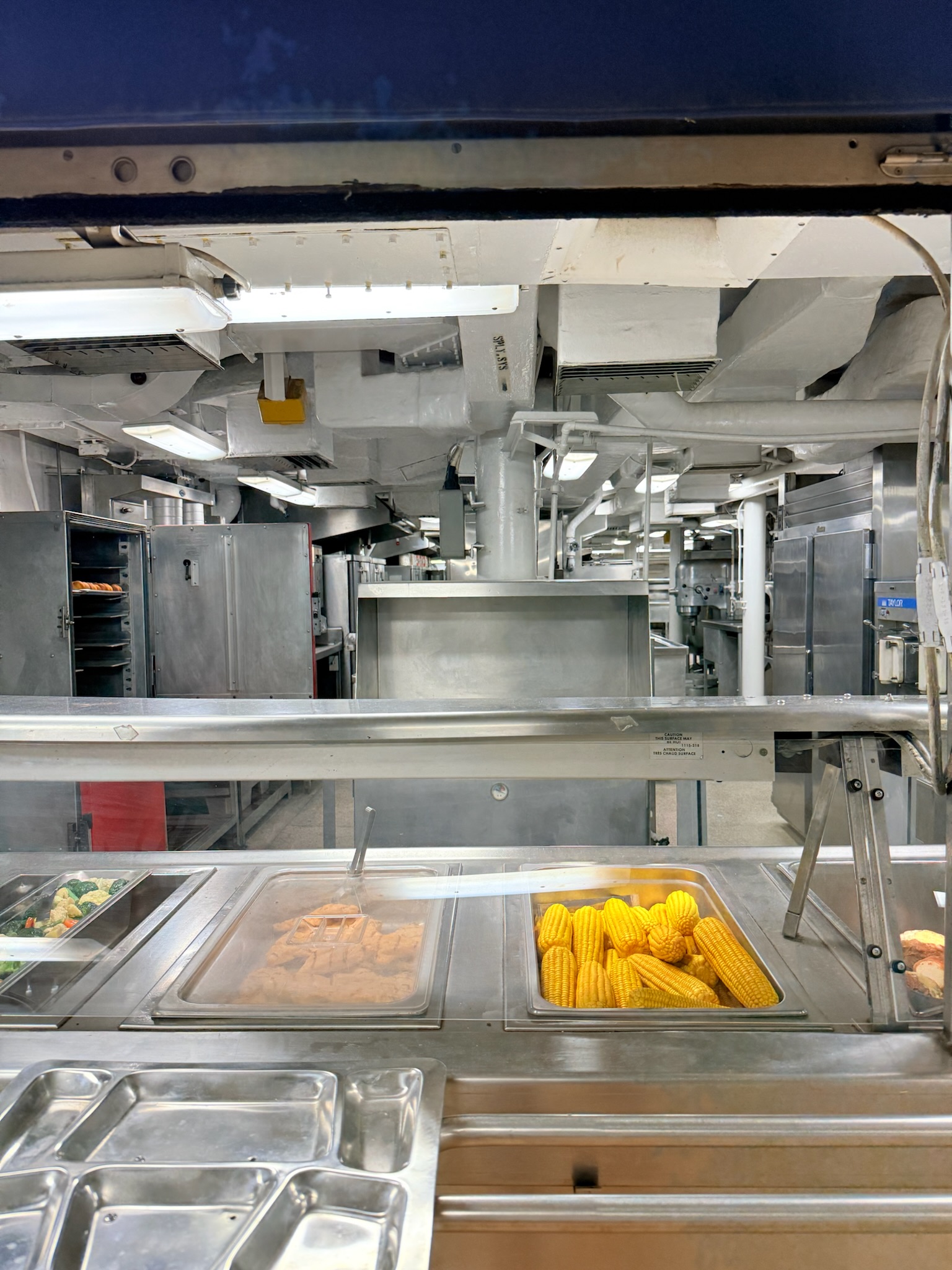
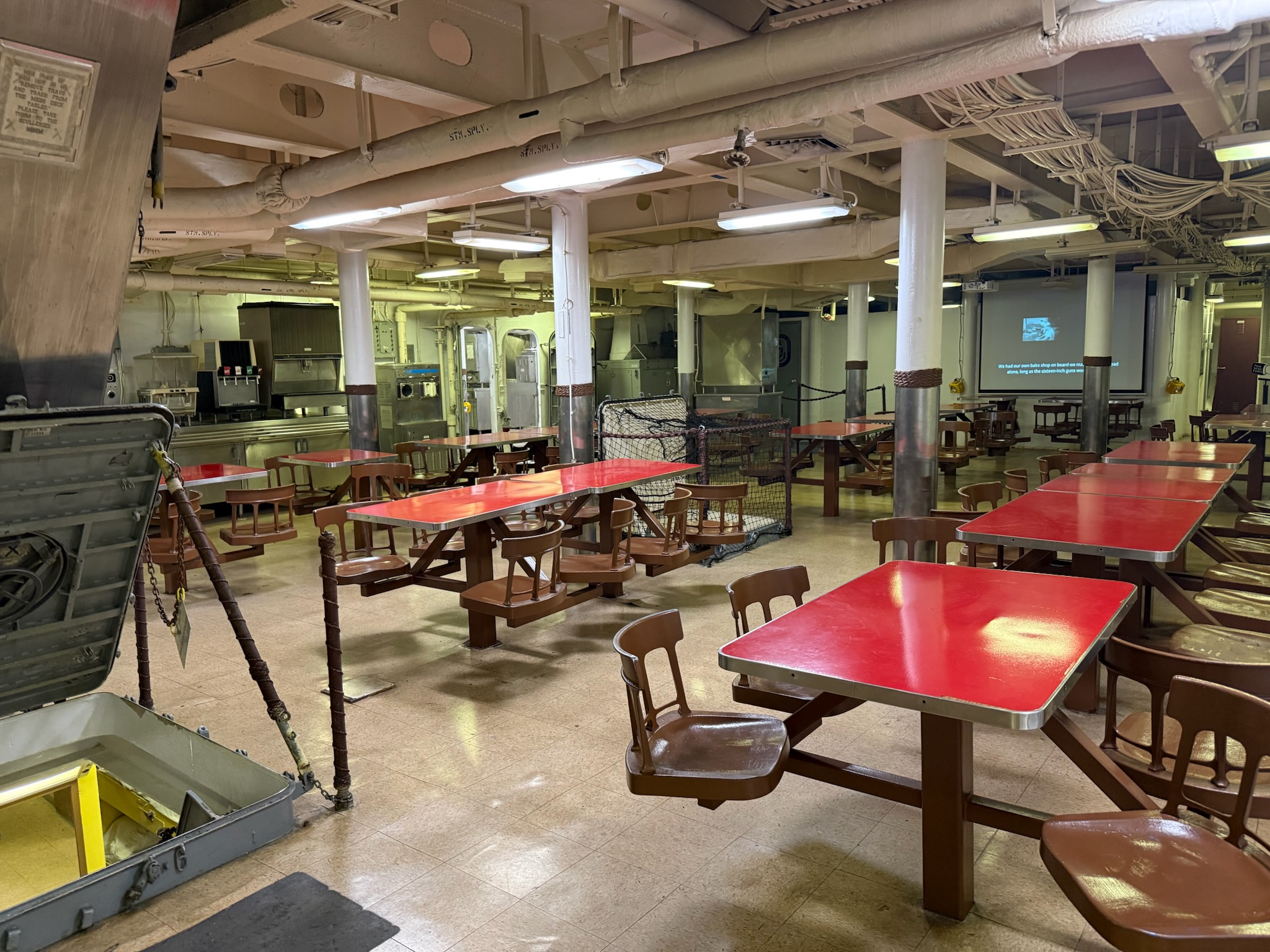
The deck had multiple kitchens and eating areas, as well as an ice cream station and a donut factory.
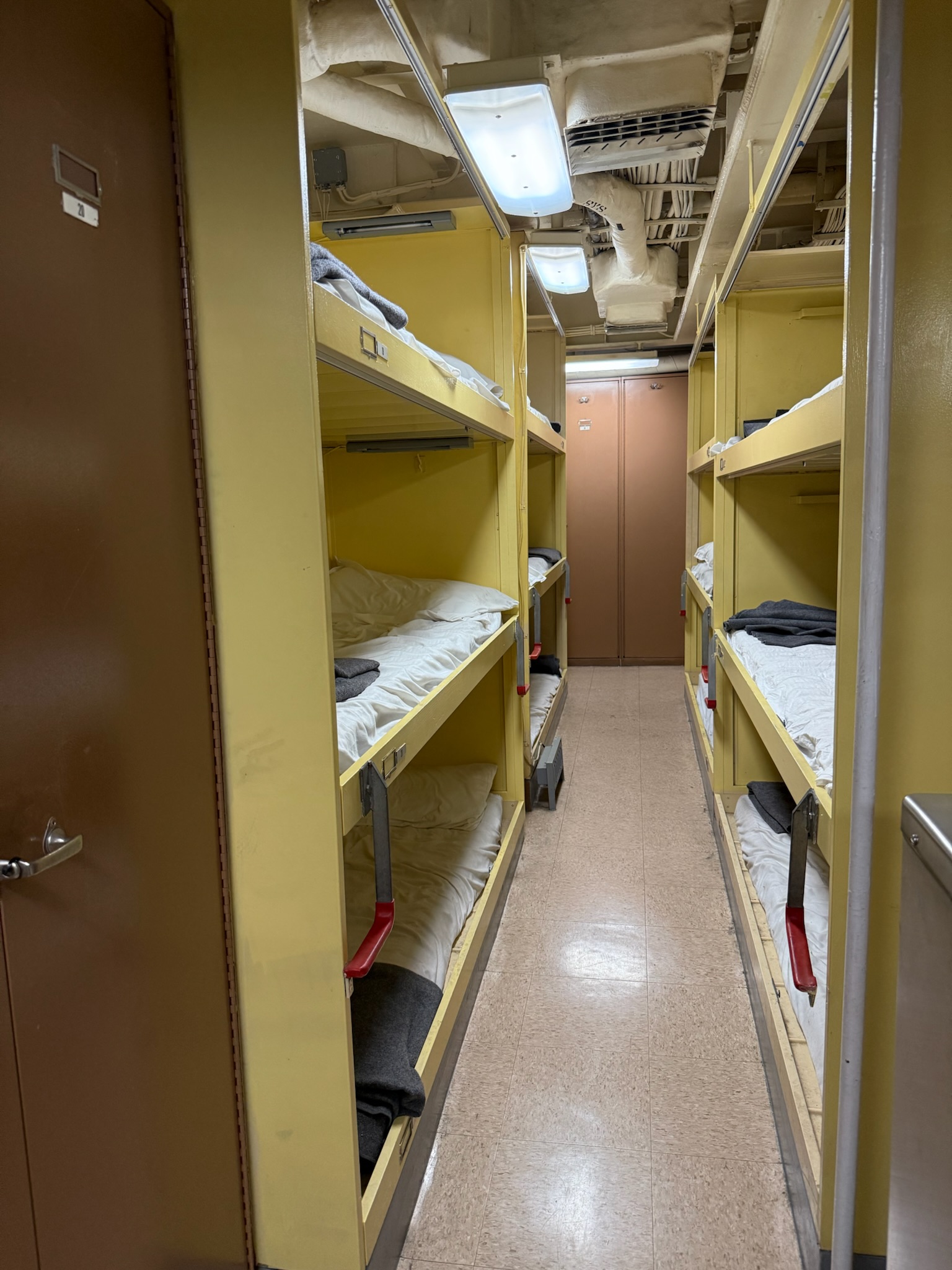
There were lots and lots of triple decker bunk beds all throughout the deck. Some, like in the photo below, were squeezed together into little rooms. But many of the bunk beds were placed in strange locations, such as hallways. It almost felt like they’d squeezed beds into any nook and cranny that they could.
After 20-minutes below deck, Keith demanded that we leave the ship as he was overheating and feeling claustrophobic. Keith has decided that the navy life is not for him.
We headed inside the museum, where the air conditioning was cranked down so low that Christi was cold… to be continued….