continued... Shortly after we left Thingvellir National Park, the tour guide made a big deal about the continental divide line that we were about to cross on the road. We’d been on the North American side and we drove through a sizable stretch of road that the guide explained was technically defined as “nowhere” before we entered the European side. Who knew there were gaps of land that didn’t belong in either continental plate?
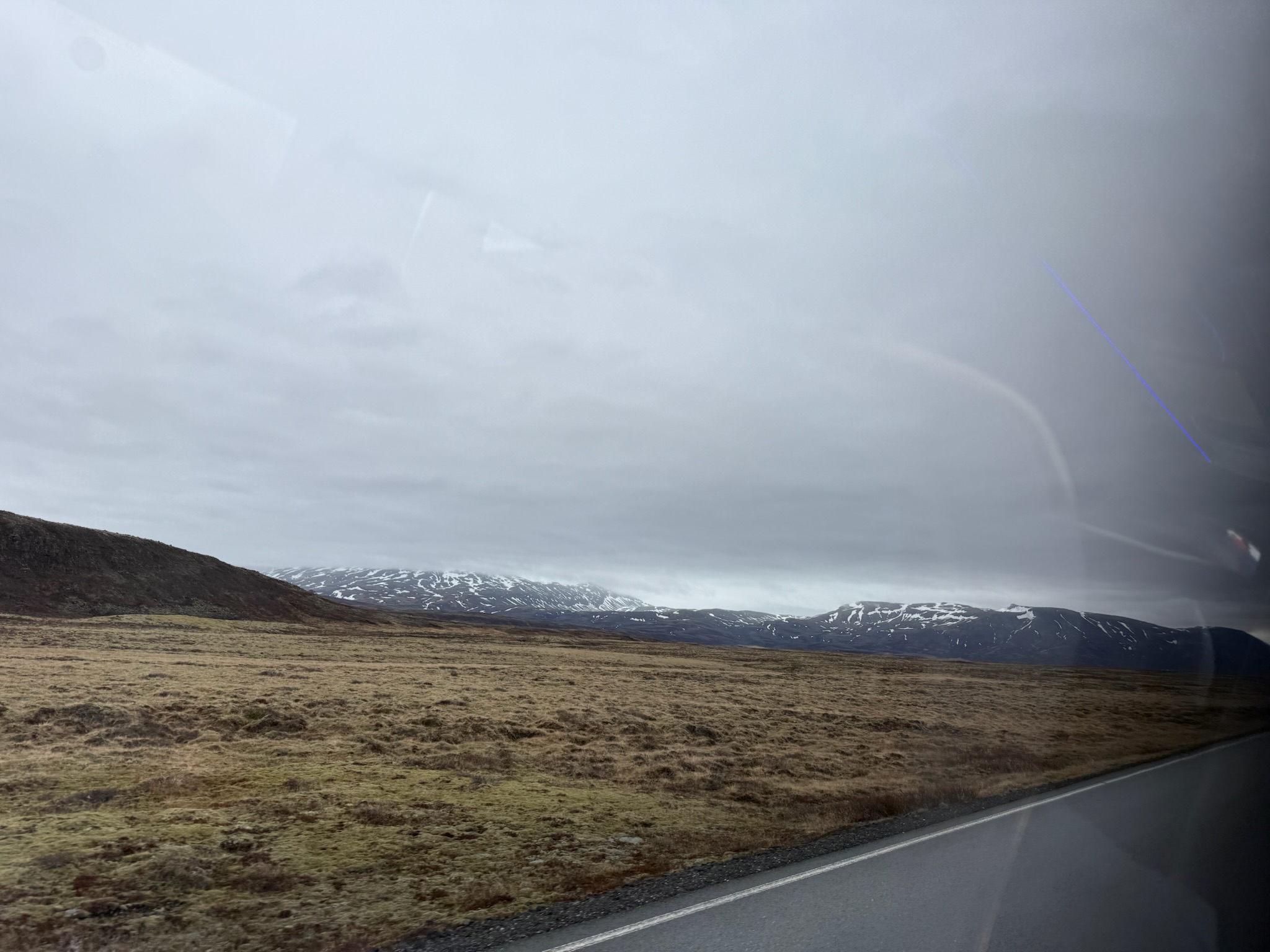
Our next stop was a dairy farm where they made their own ice cream. Here was a shot of the scenery along the way.
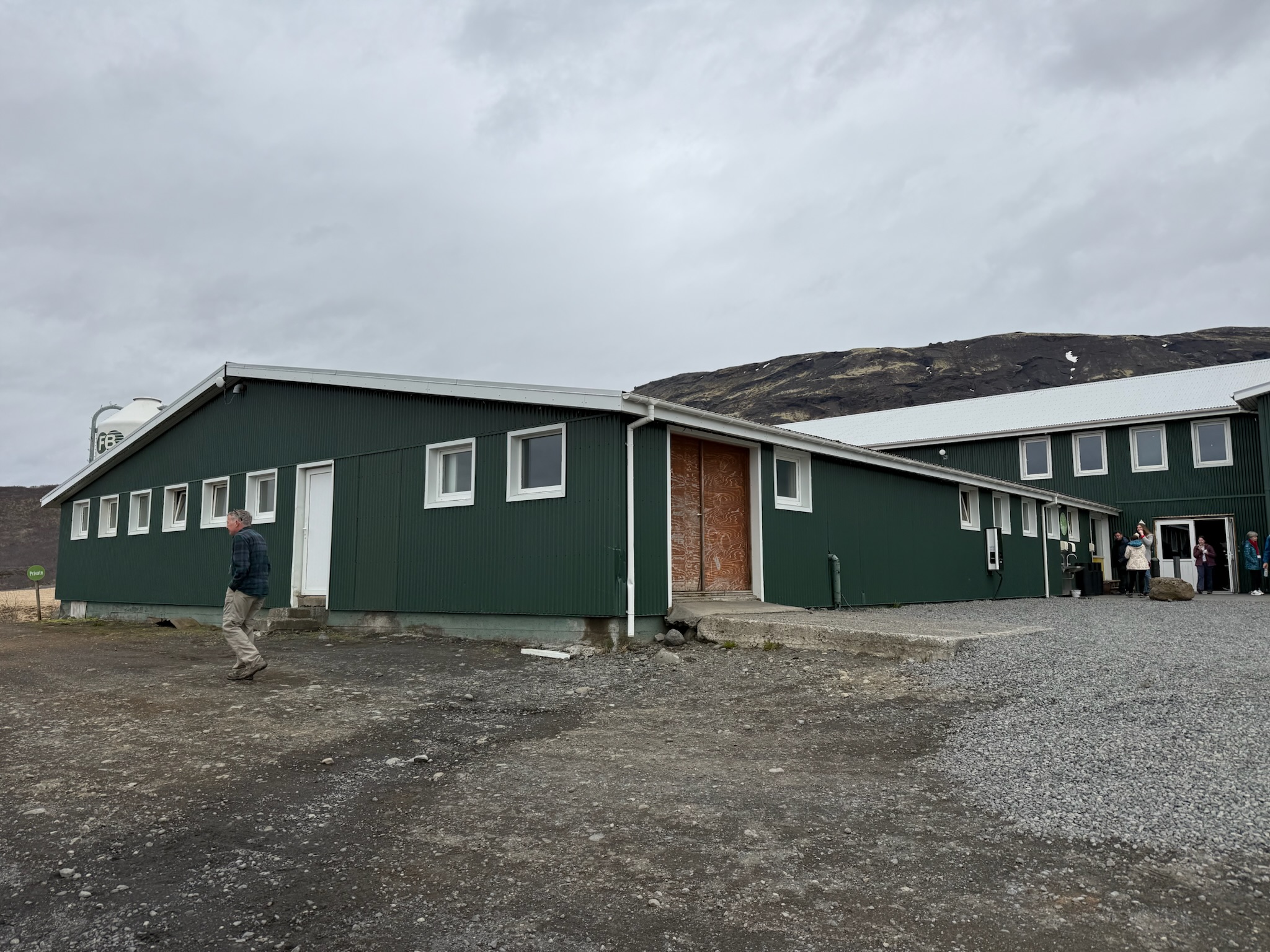
The guide said the ice cream was amazing and they didn’t it in the stores; this was the only place it could be purchased. The parking lot was packed with tour busses, which made parking tough. The left wing of the building was the dairy, the door on the first floor to the right was the entrance to the ice cream shop.
Friday, May 15 continued… The Golden Circle was the most popular tour in Iceland, and these two busses were a private tour group only for the partners/families of the conference attendees. Keith was hoping there would be other teens aboard that he could hang out with, but the person closest in age was 20. And we knew that because he’d shared his age while telling us that he was overjoyed that he could legally drink alcohol here in Iceland (he was American, and in the US, the legal drinking age was 21).
As we left the city, the bus driver said that Reykjavík was originally a small fishing village surrounded by potato farms until 1940. In the midst of World War II, then British established a military base. A year later, the US took control of the base and operated it until 2006. Reykjavík grew up around the base to service the military staff. He told us a lot more about the history of Iceland, as well, but we didn’t remember the other details. He made a lot of jokes and was hilariously funny, so it was a fun ride.
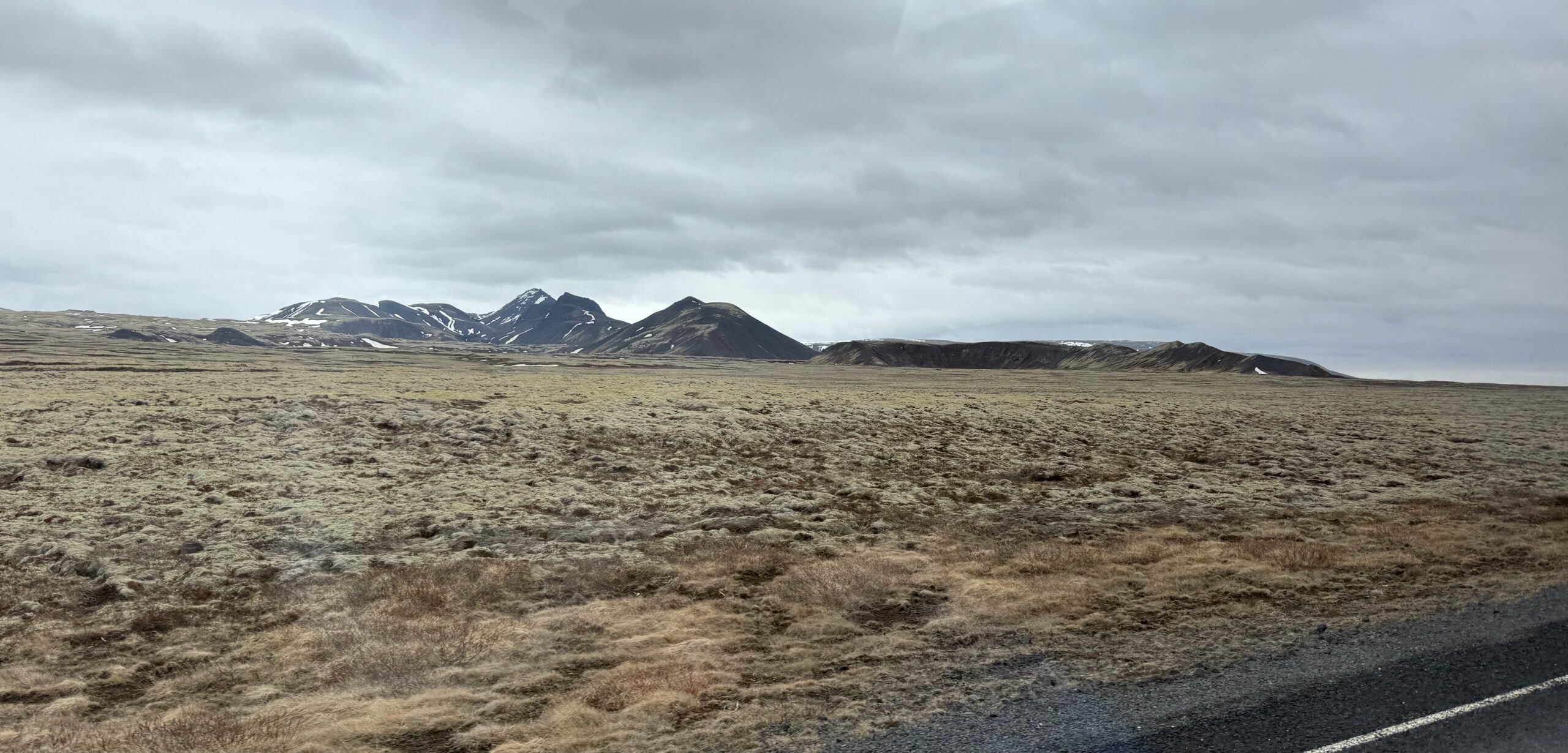
The scenery looked like this for the majority of the drive. It was probably really green later in the spring and in the summer, but now the grass was just beginning to come back to life from winter dormancy.
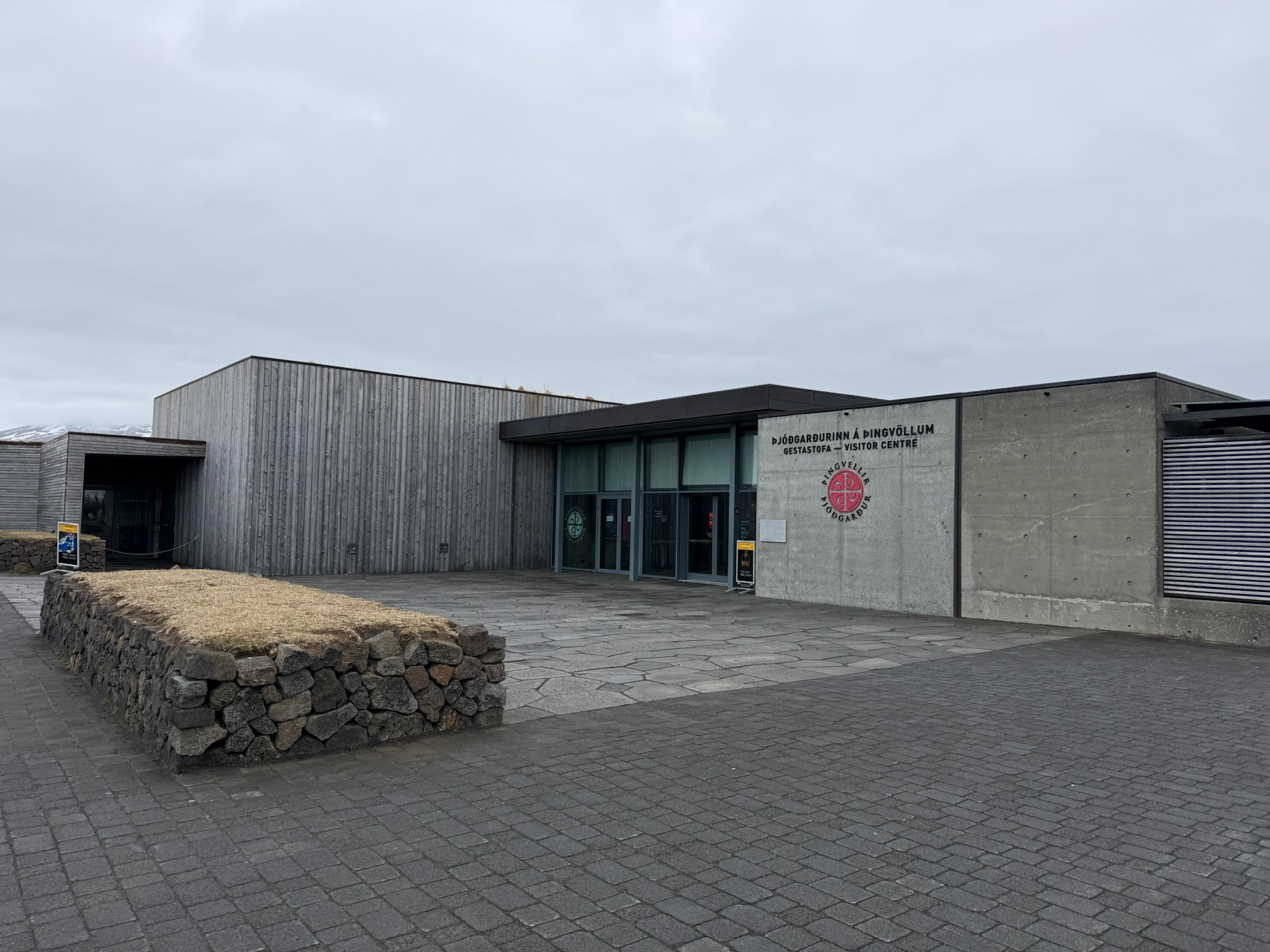
Our first stop was the Visitor’s Center in the Thingvellir National Park.
Saturday, April 4 – Friday, April 10 — This week has been boring. On Saturday, we layed low for most of the day. We had dinner with the leader of the Ocean Posse and some of his friends. Some other boaters joined us later on. On Sunday, we went to Dad’s cousin’s house for Easter dinner. The food was good but other than that it was boooorrrrriiiiiiinnnnnnggggggg. At one point we went for a walk and saw at least a dozen rabbits.
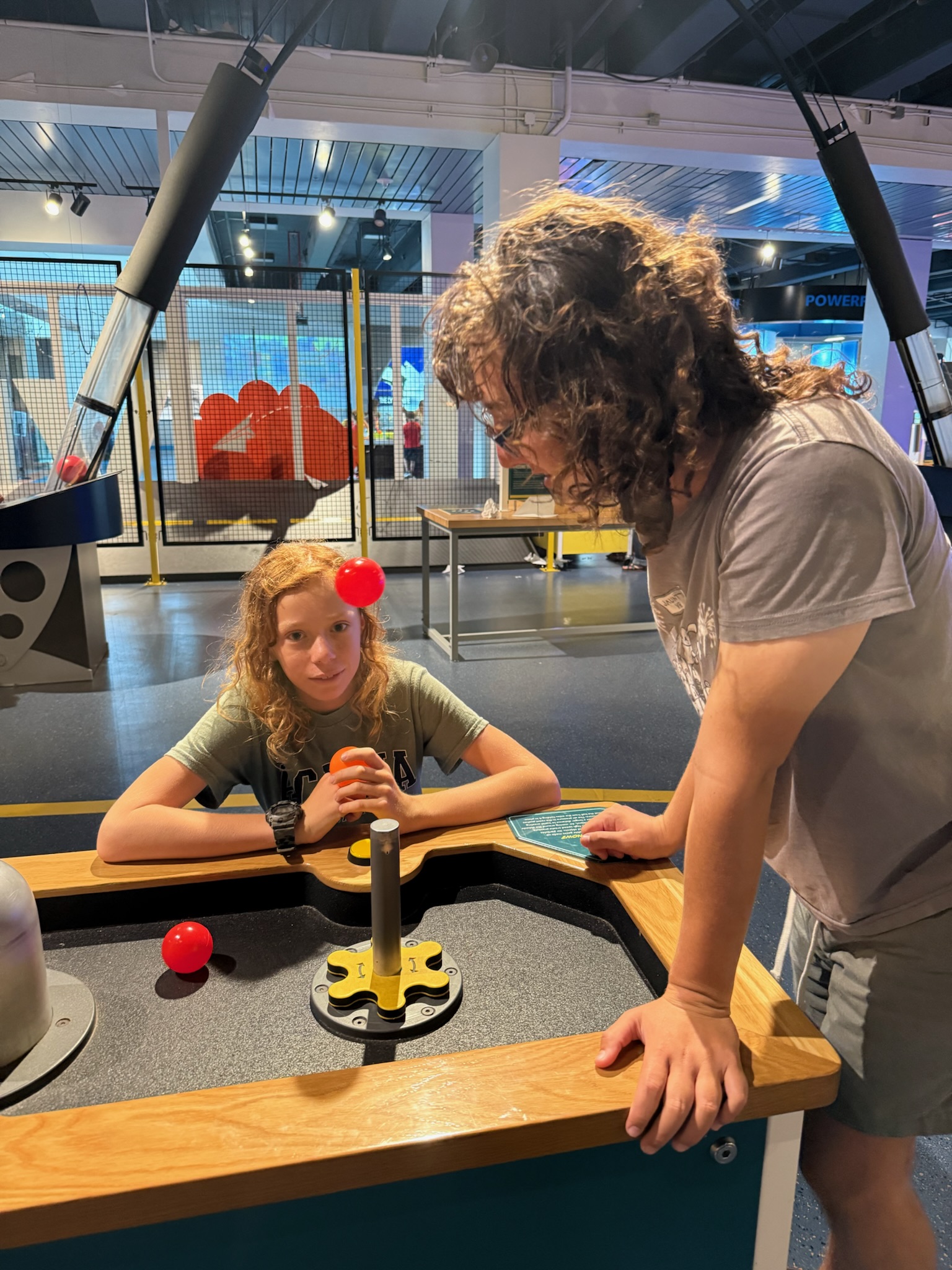
Museum of Discovery and Science in Ft. Lauderdale, FL
Cette semaine était ennuyante. Samedi, on n’a pas fait beaucoup de choses. On a mangé le dîner avec le chef d’Ocean Posse et ses amis. D’autres marins nous ont rejoints. Dimanche, nous sommes allés à la maison du cousin de papa pour un dîner de Pâques. La nourriture était bonne mais tout le reste était ennuyant. A un moment nous sommes allés nous promener, et on a vu beaucoup de lapins.
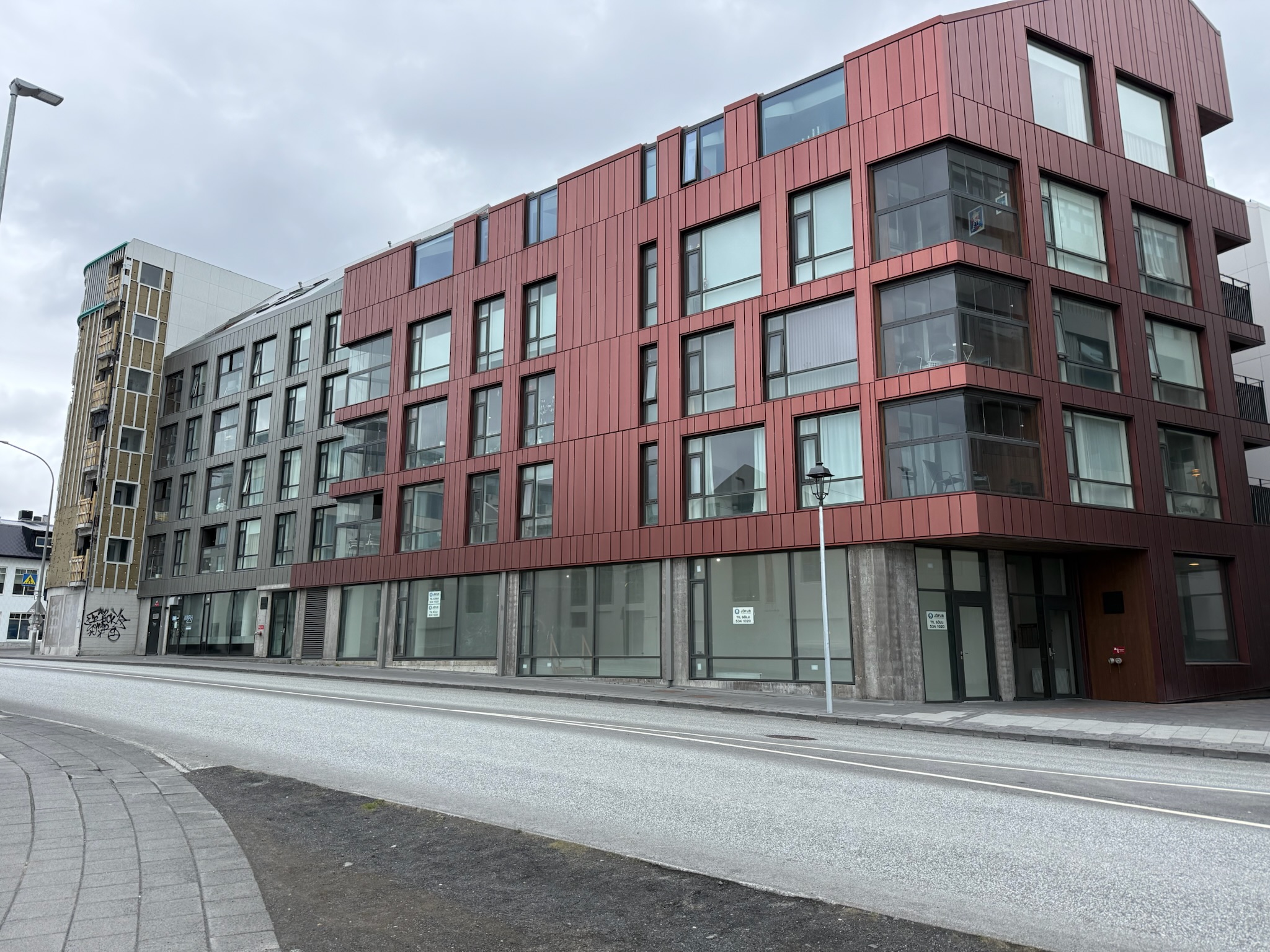
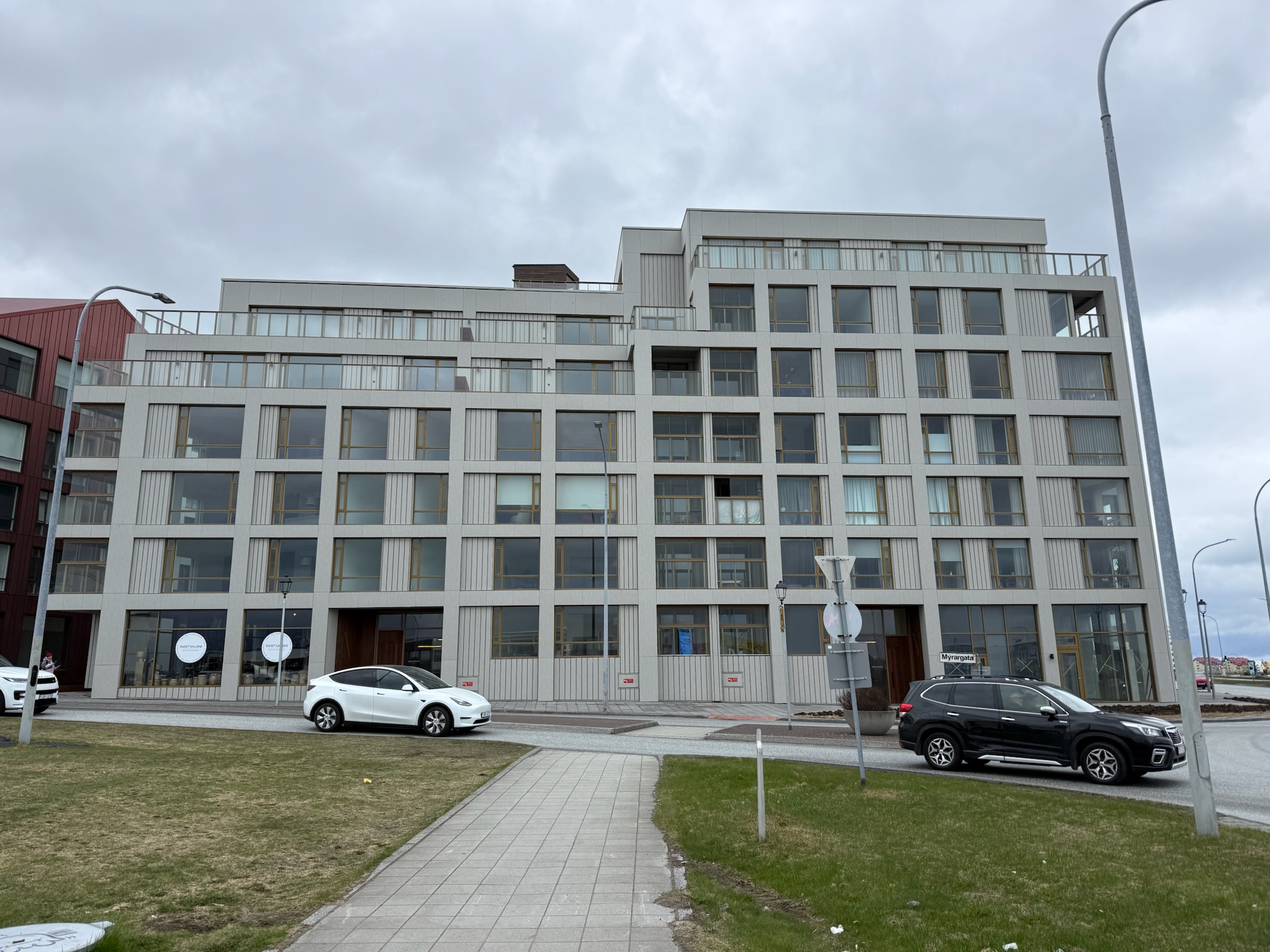
Thursday, May 14 continued… We left the hotel at 1330. The Grandi was on the corner of Myrargata and Seljavegur. The map app directed us to turn northeast on Myrargata, which was a direction we hadn’t yet explored. The taller part of the building at the far left was definitely The Grandi. We weren’t sure if the grey and red buildings with the slanted roofs were a new wing of the Grandi or were different buildings altogether.
The next building over also looked relatively new.
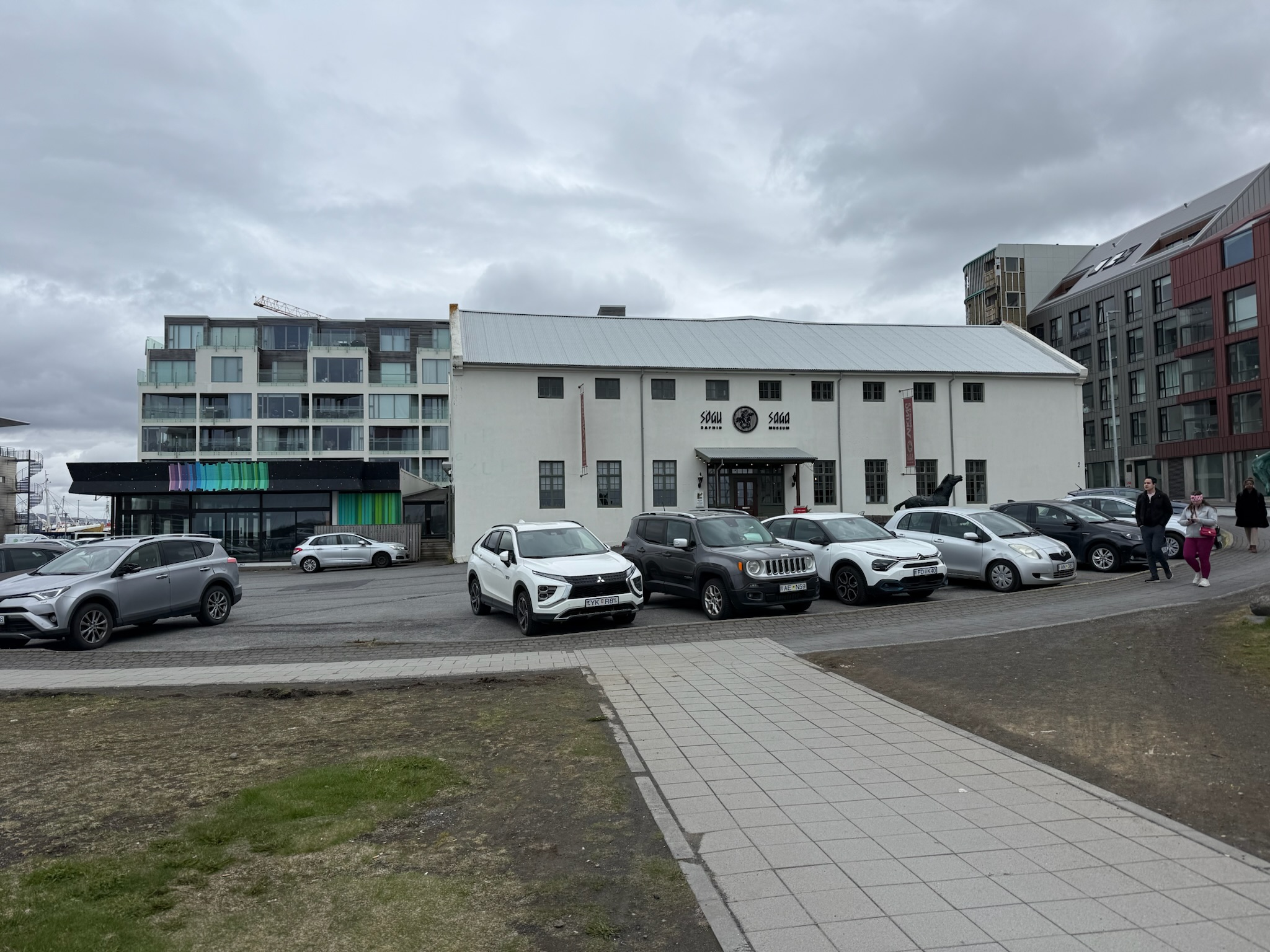
Across the street was the Saga Museum. According to the brochure that Christi had picked up today, it was about early Icelandic history, particularly viking. It was on the to-do list.
continued… We noticed it was nearly time for the IMAX movie about the northern lights to begin, so we headed back down to the first floor and lined up outside the IMAX theater. At the time the movie was supposed to start, we were still lined up. We’d expected them to open the doors to let us in, but instead they turned on a video that gave us some basic information that would help us to understand the main feature better. After that short video ended, they opened the door to the theater, and we quickly got seated. They told us no photography was allowed after Christi took this shot of the images that were being shown during seating.
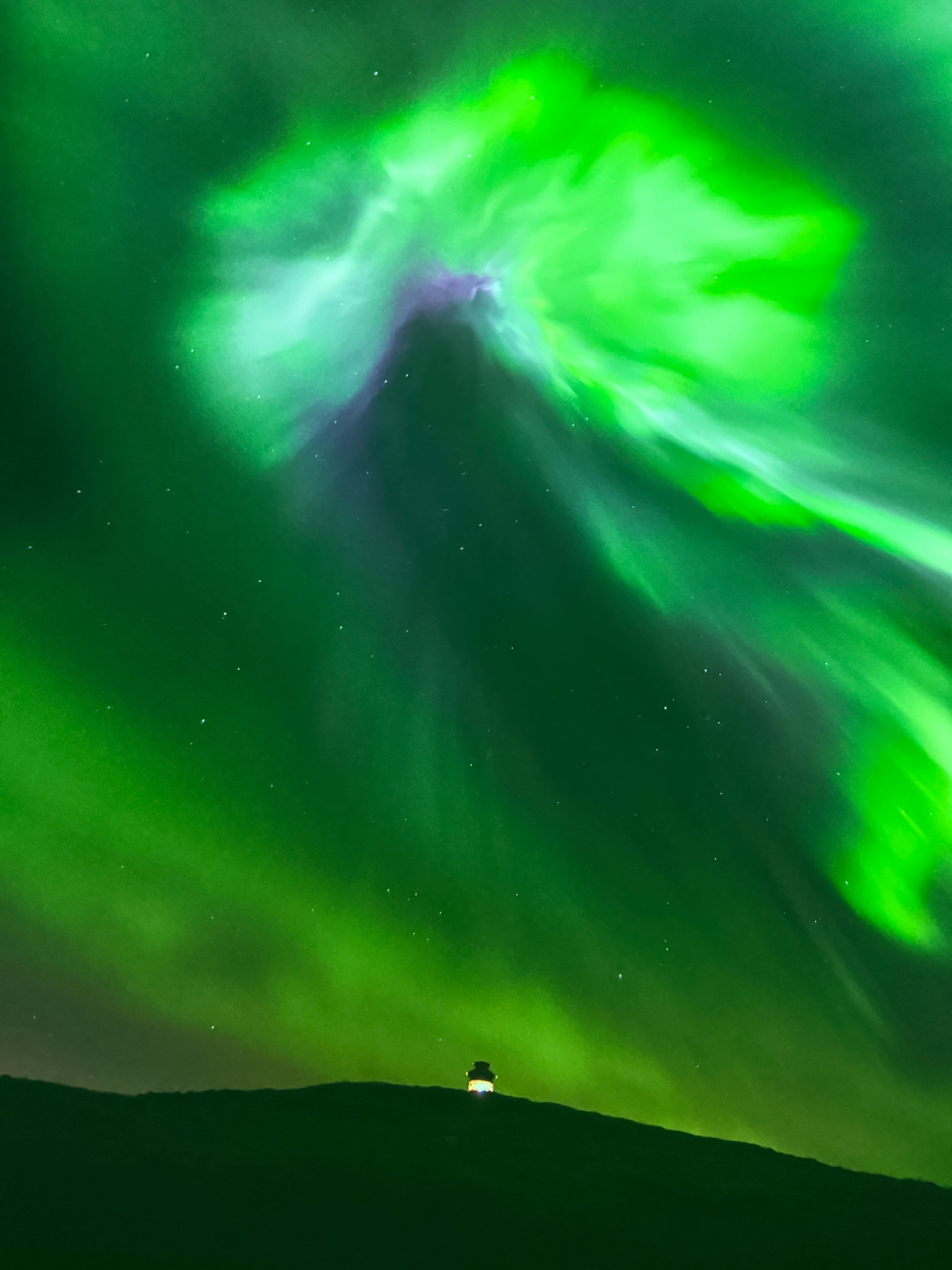
It was a story told from the perspective of one of the deities from their traditional Norse mythology. She explained a little bit about astronomy and that other planets, as well as our moon, also had special activity at their north poles. She explained what the magnetosphere was and how it reacted to electromagnetic field (EMF) bursts that came from the sun, why the EMF bursts created auroral lights, etc. The video did an excellent job of explaining complicated science in an easy to understand manner, while also blending the science with some local folklore. Visually speaking, the film was stunning. The images of the auroral lights and the celestial bodies were gorgeous. There were also some folklore images weaved in there that were also beautiful.
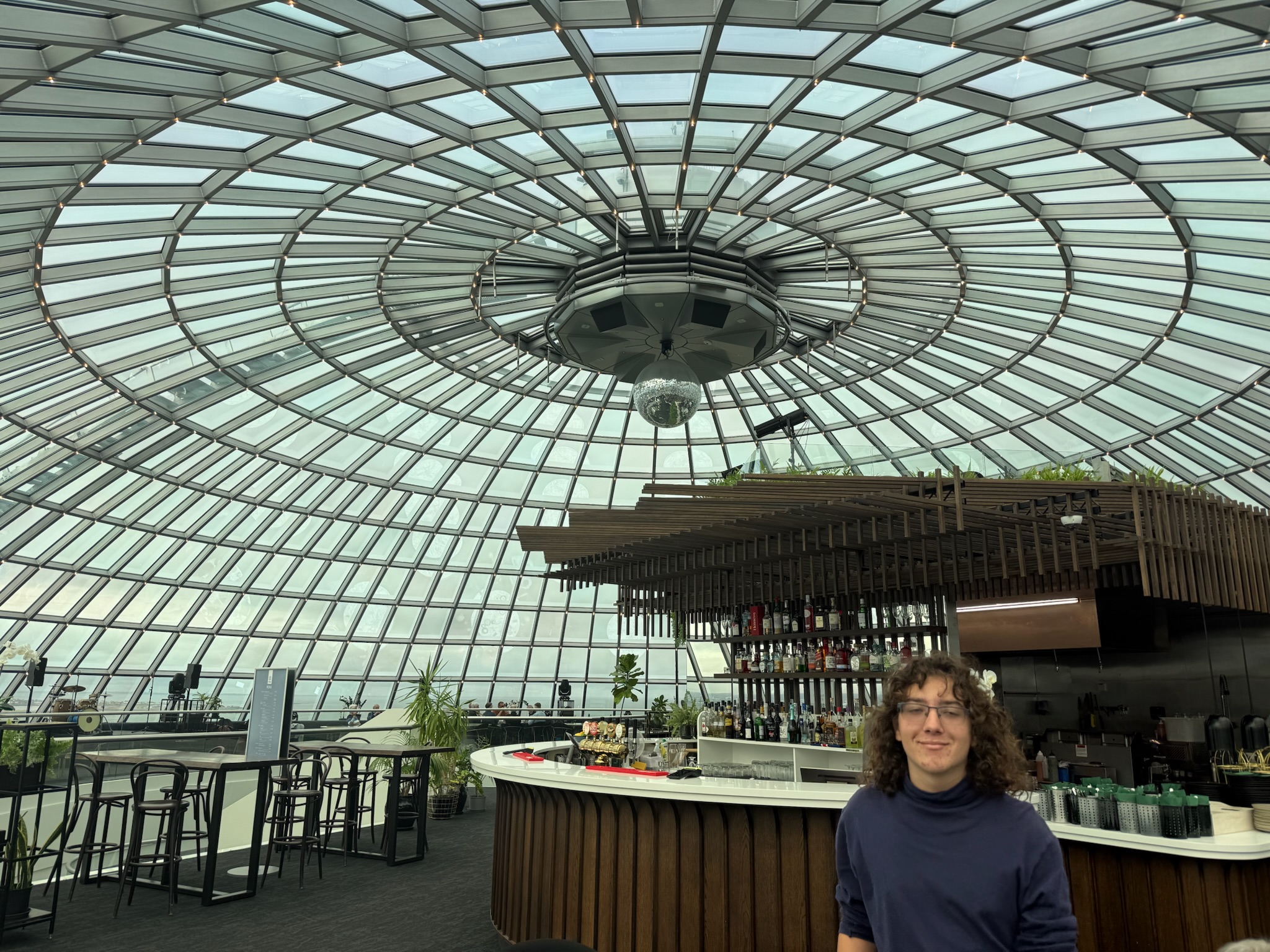
When movie let out, we took the elevator up to the cafe on the 5th floor for a latte (Christi) and lemonade (Keith). It was the top floor of the building, and it was a dome with a 360-degree view of the city. The latte was just as good as the one she’d gotten yesterday. She was pretty sure they used the same magical milk.