On Monday, July 7, we took the tunnel north under the James River, went past Ft. Monroe, and continued north to a city called Williamsburg (which was not far south of Deltaville). We’ve been confused about Williamsburg because it has several historic places: Historic Jamestown, Jamestown Settlement, Yorktown Living History Area, Yorktown Battlefield, Historic Yorktown, Colonial Williamsburg, Colonial Williamsburg Merchant Square, and William and Mary College.
Jamestown was the first British colony in the US that prospered and was considered the birthplace of America, so we decided to start there. After doing some research, we determined that Historic Jamestown was the archeological site of the colony, and it sounded like excavations were still underway. Jamestown Settlement was about a mile away and was a recreation of what Jamestown had looked like in its hey-day, complete with actors playing characters from that era. We opted for Jamestown Settlement.
The Settlement opened at 0900, but we got off to a late start and hit some traffic, so we didn’t pull into the parking lot until 0950. There were hardly any other cars in the parking lot, and we guessed it was because of the on-again, off-again drizzle. Parking was free. The building was huge.
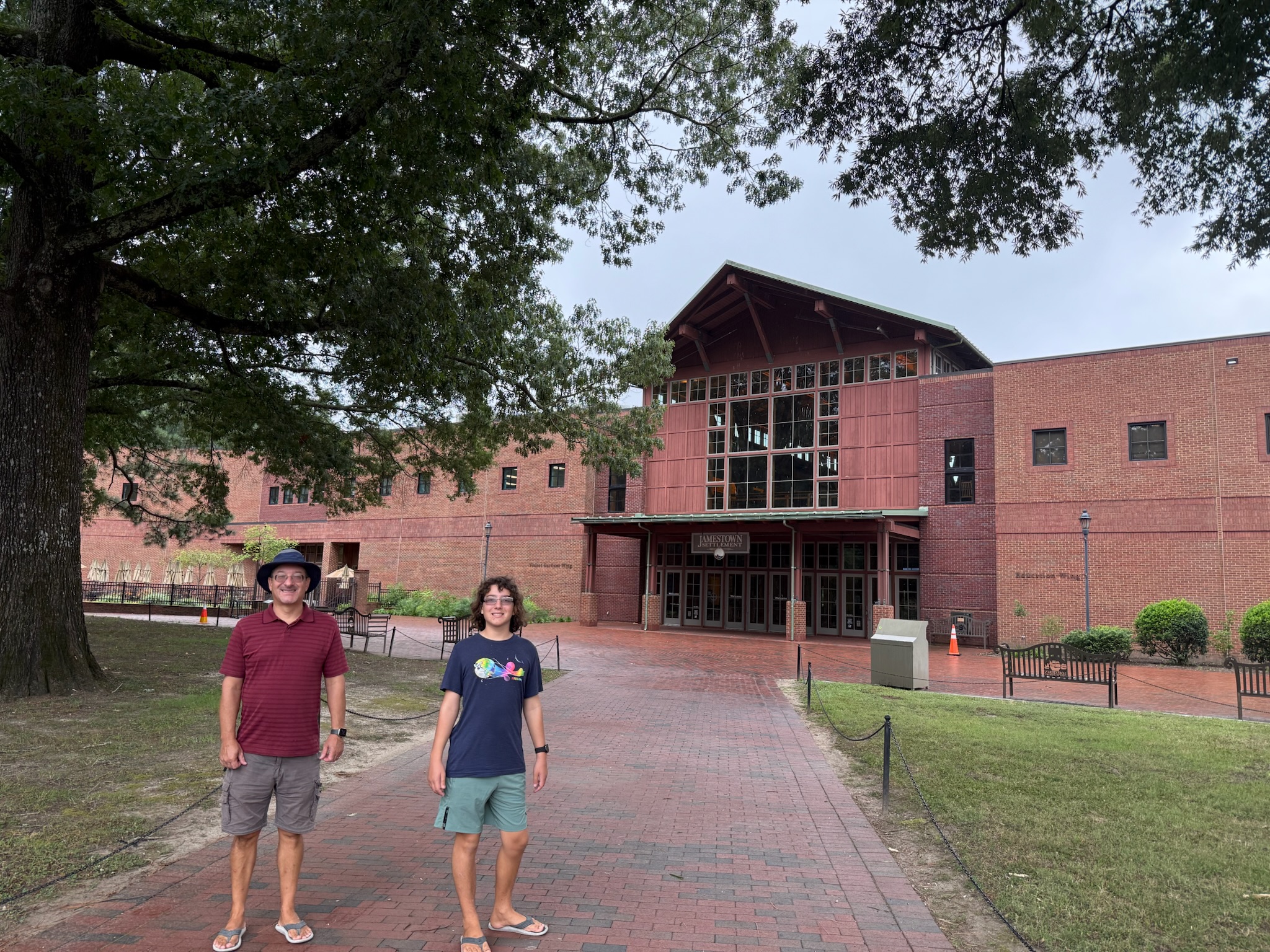
Tickets were $20 per person for 13+. According to the placard, there was a special talk on indigenous bone tools at 1000 in the Paspahegh village, who were the indigenous people of that area. We made a beeline for village. We had to walk the length of the museum to get to the “living exhibits” outside.
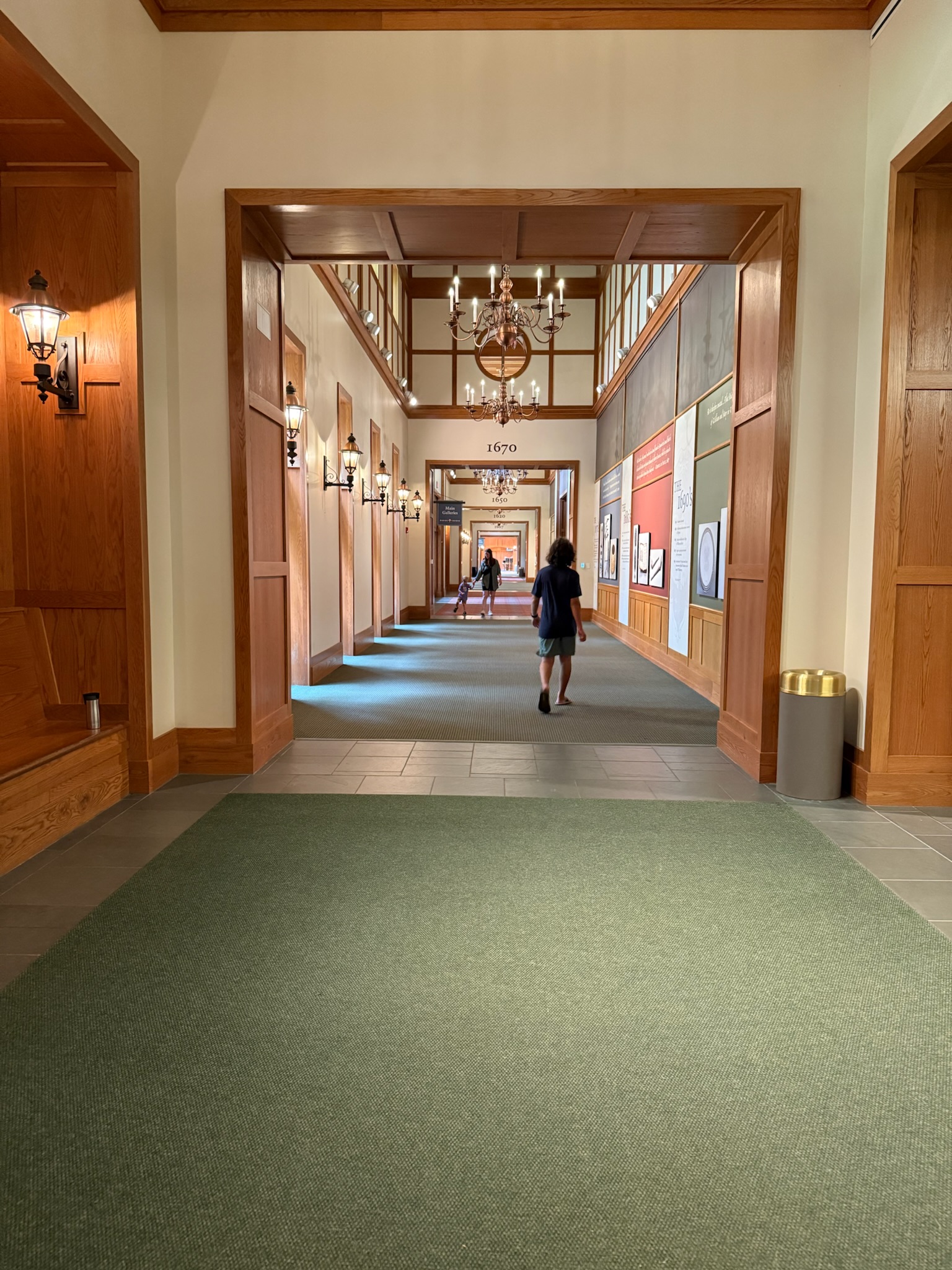
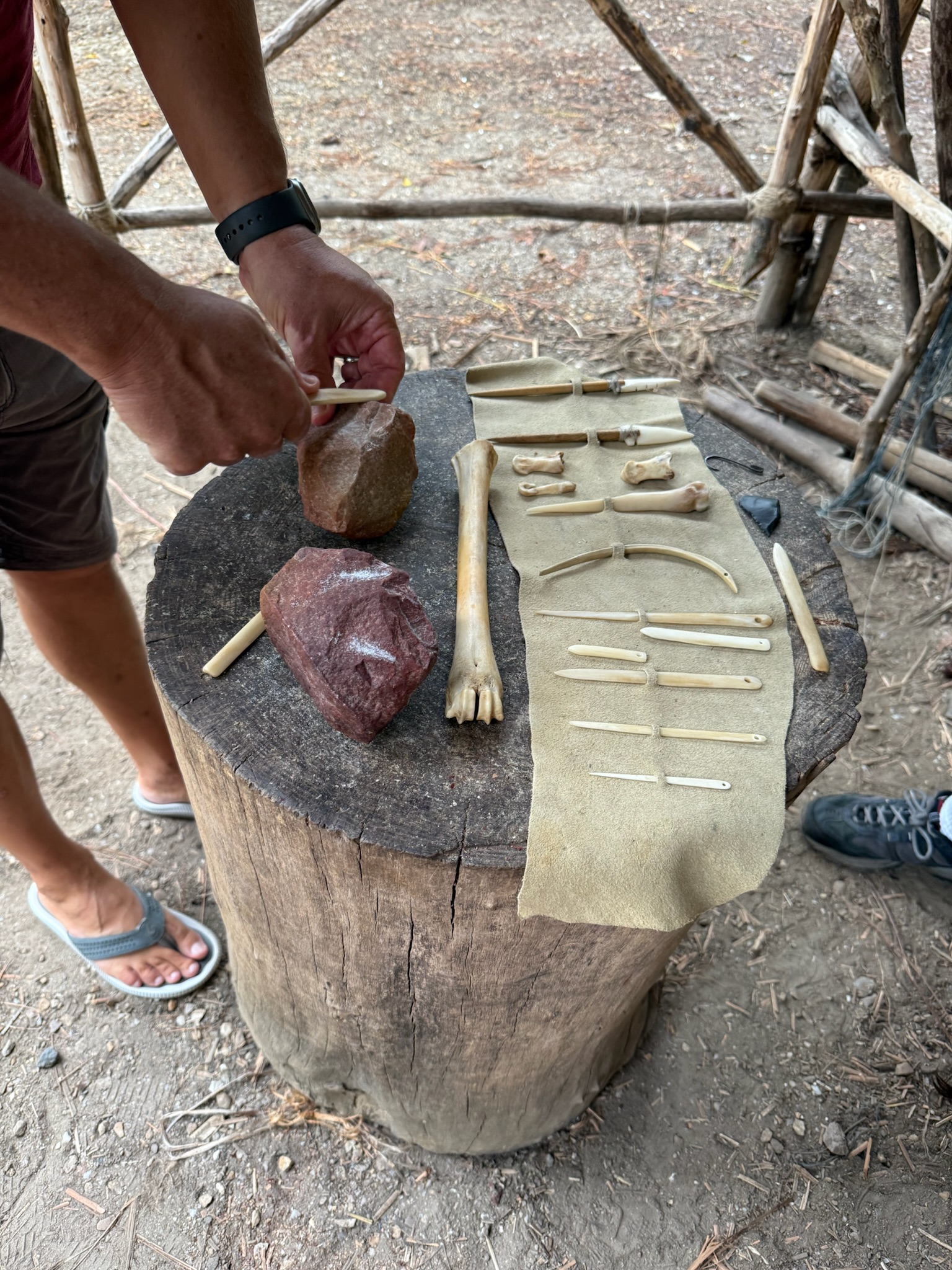
Once outside, it was just a little farther to the village. They’d artfully separated it from the view of the museum building and the other recreation areas so that it felt like we were in an isolated area. The talk had already started. She basically explained that each tool took a lot of work and they were prone to breaking, so the indigenous people preferred the metal tools that the colonists had. The indigenous eventually stopped making their own tools and became reliant on the colonists, but fortunately, the art was not lost and was still passed down. We all gave sanding the bones on the rock a try. It would definitely take a long time to shape each tool.
The village had several homes that looked like semi-permanent dwellings.
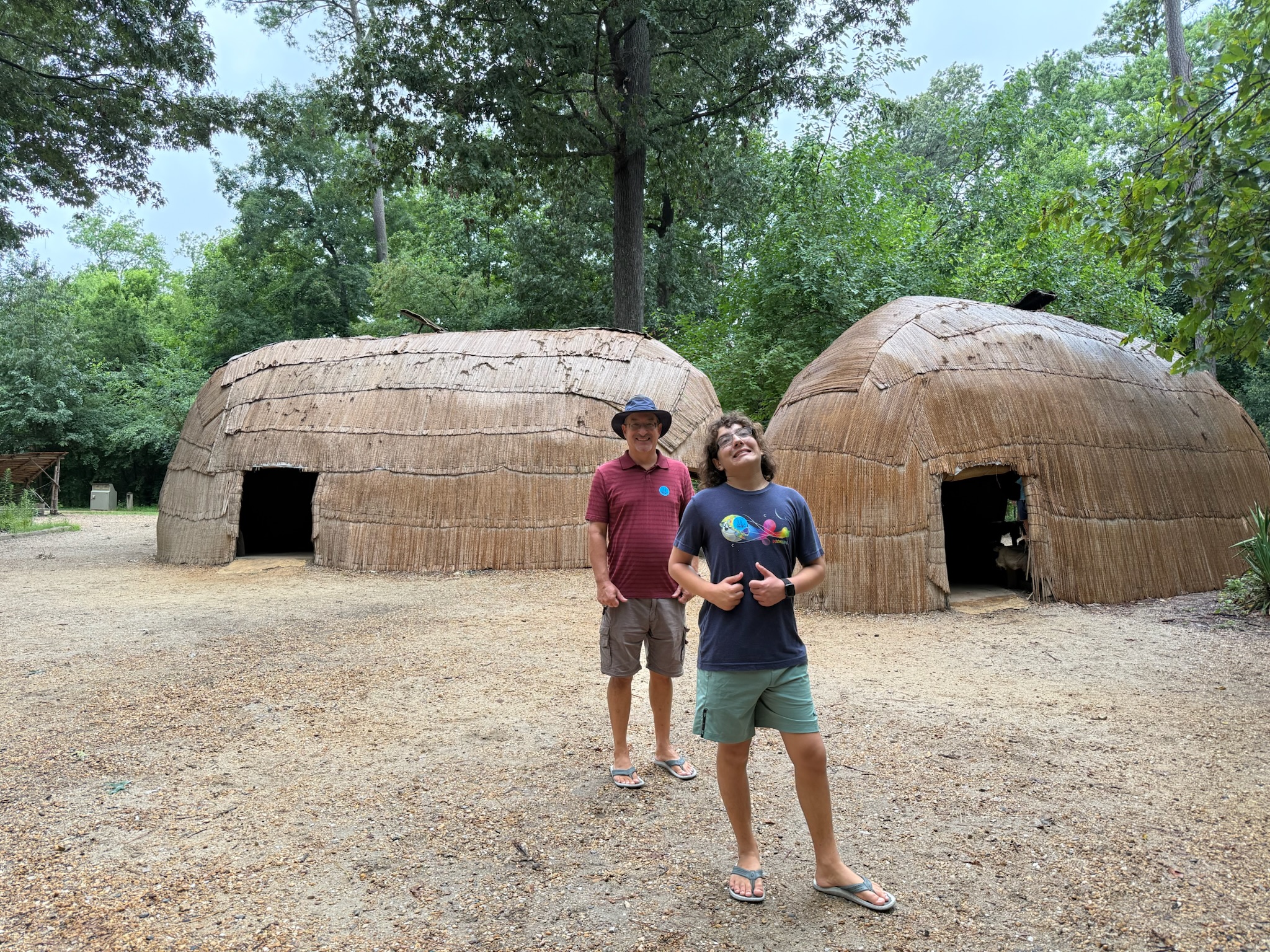
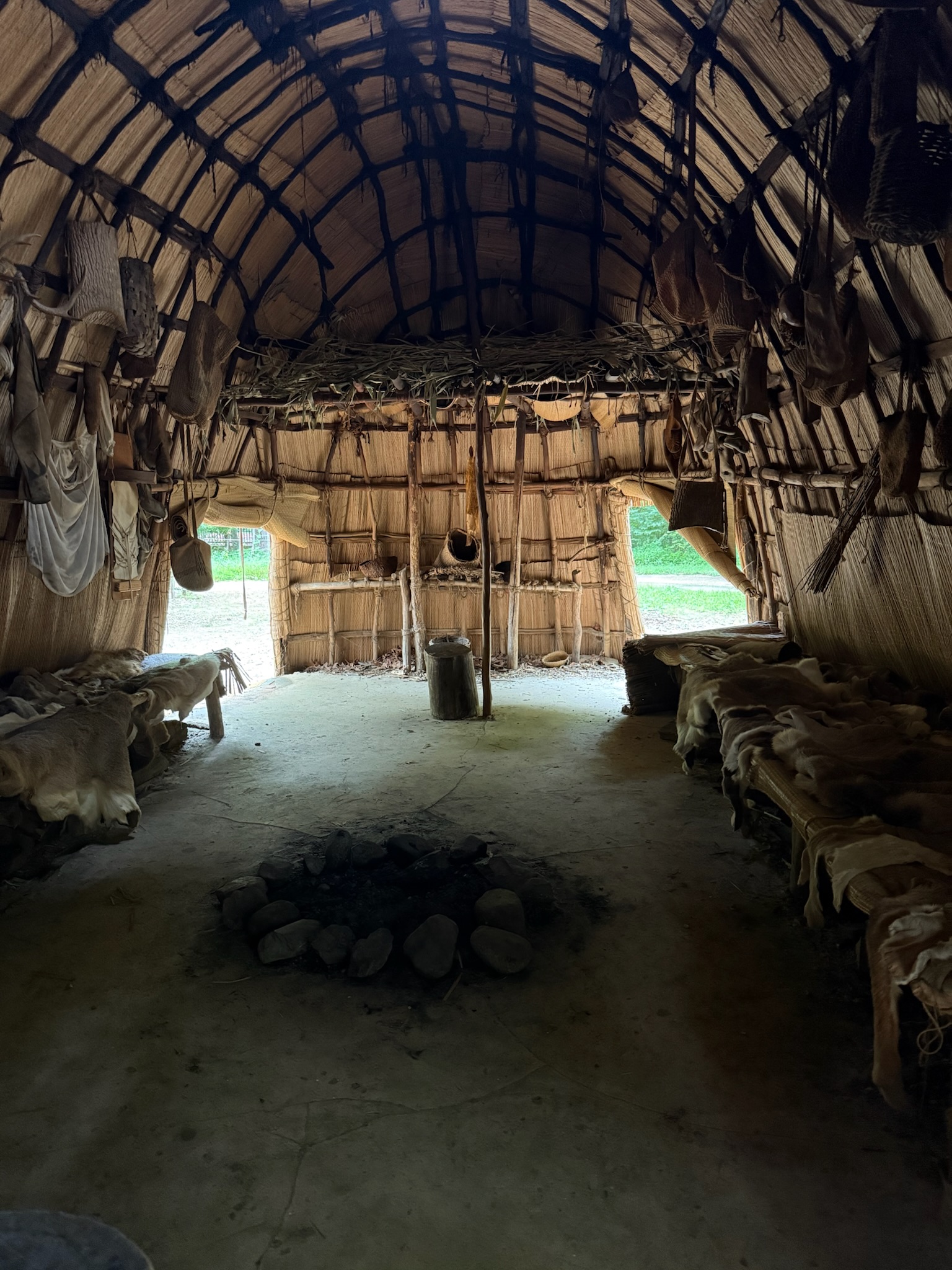
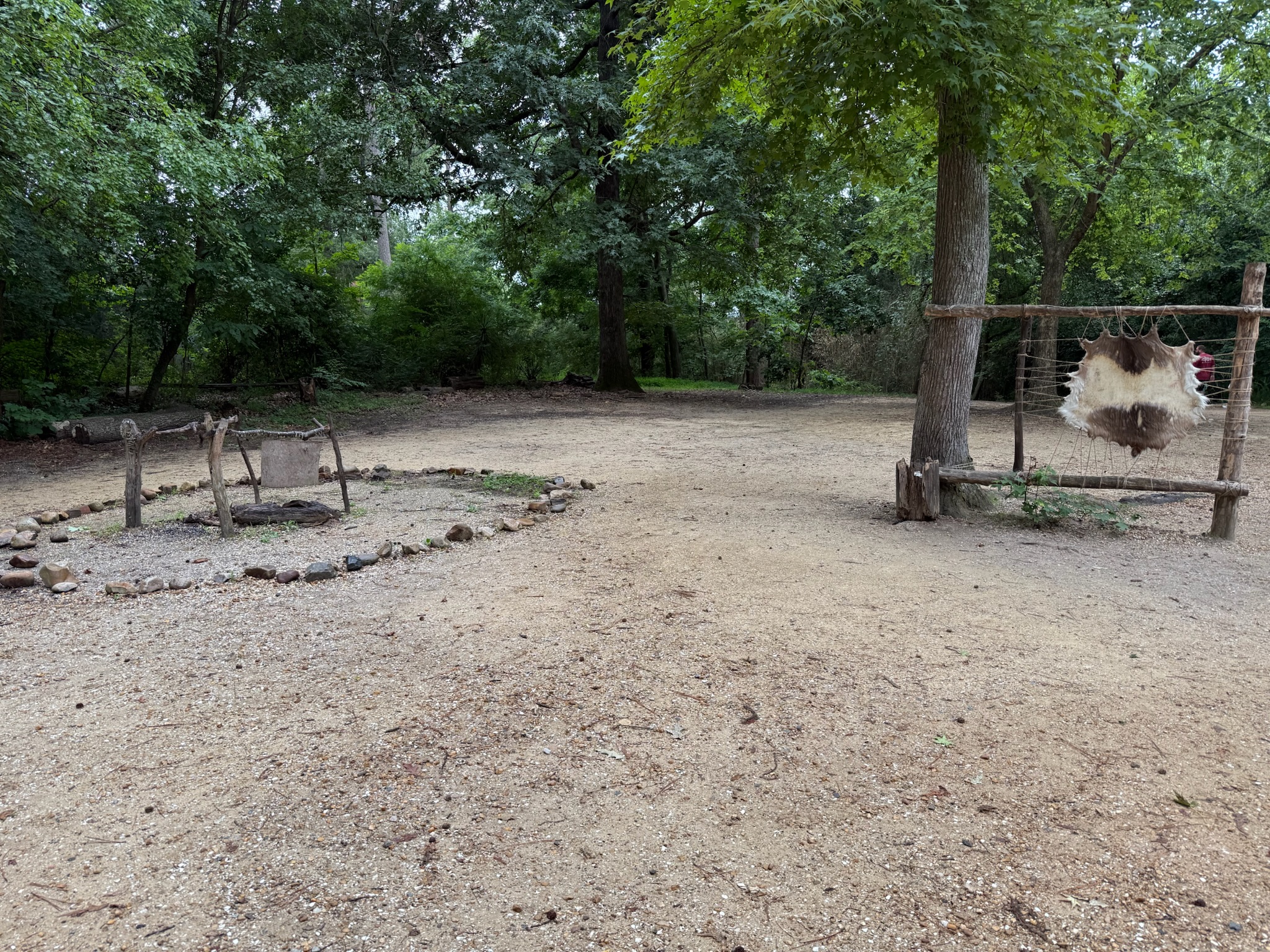
There was a kitchen area and a few other areas that we weren’t sure what they were utilized for. We didn’t see any signs to clarify.
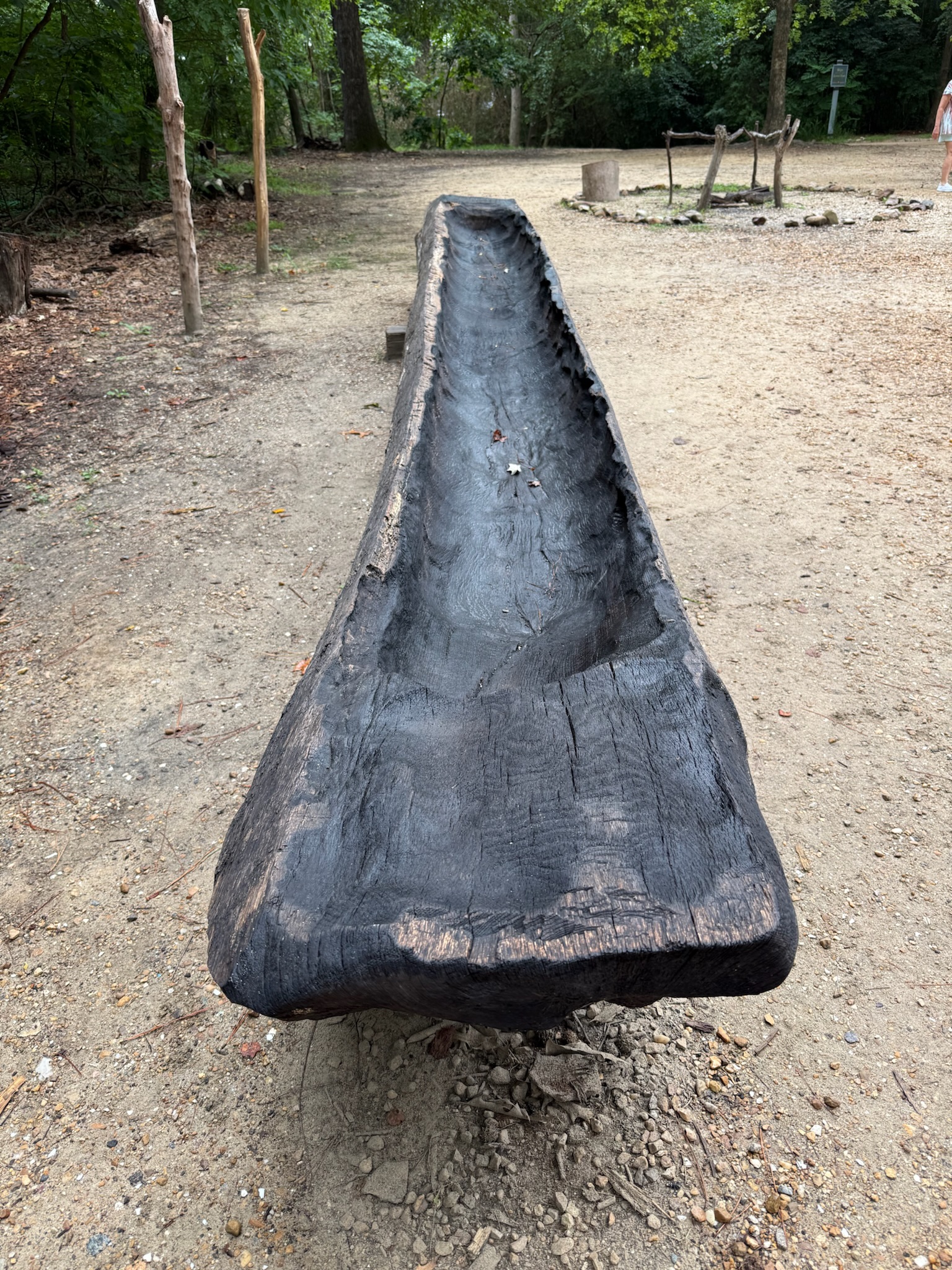
There were a couple of felled trees that they were process of turning into dug-out canoes.
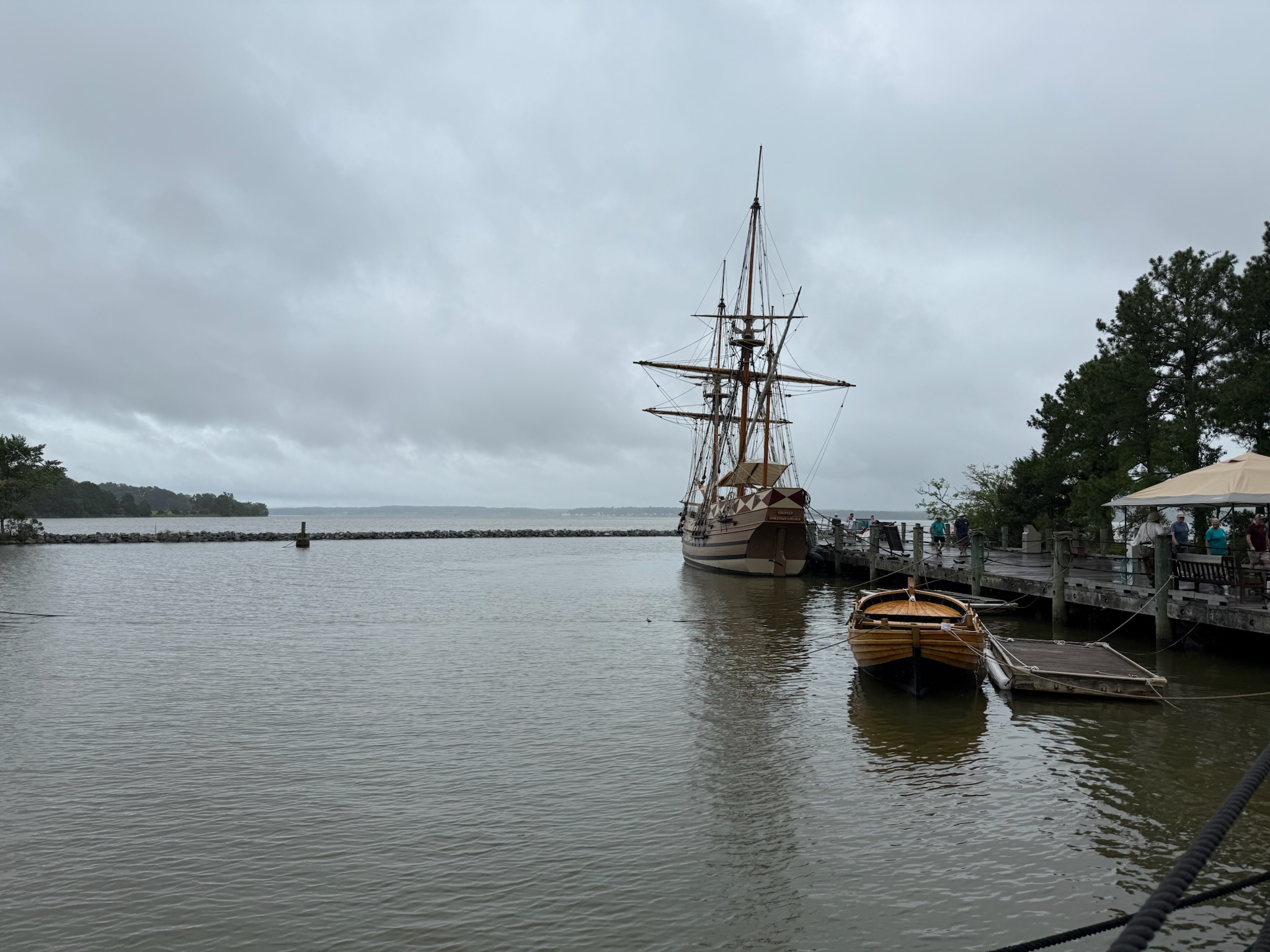
The village was sparse in terms of amenities. It didn’t look like the Native Americans had an easy life. From there we moved on to the docks. The docks had signs. In December 1606, three ships set sail from England with 105 colonists to start a new colony in Virginia. The investors who’d funded this colony, The Virginia Company, hoped to tap into Virginia’s valuable resources, encourage new industries and find a route to the East Indies. In order to utilize the trade winds, the ships went down to the Caribbean and back up north to Virginia, so it was a 6,000-mile voyage that took four months (they did stop several times along the way). Only one person died. The two ships here were recreations of those original ships.
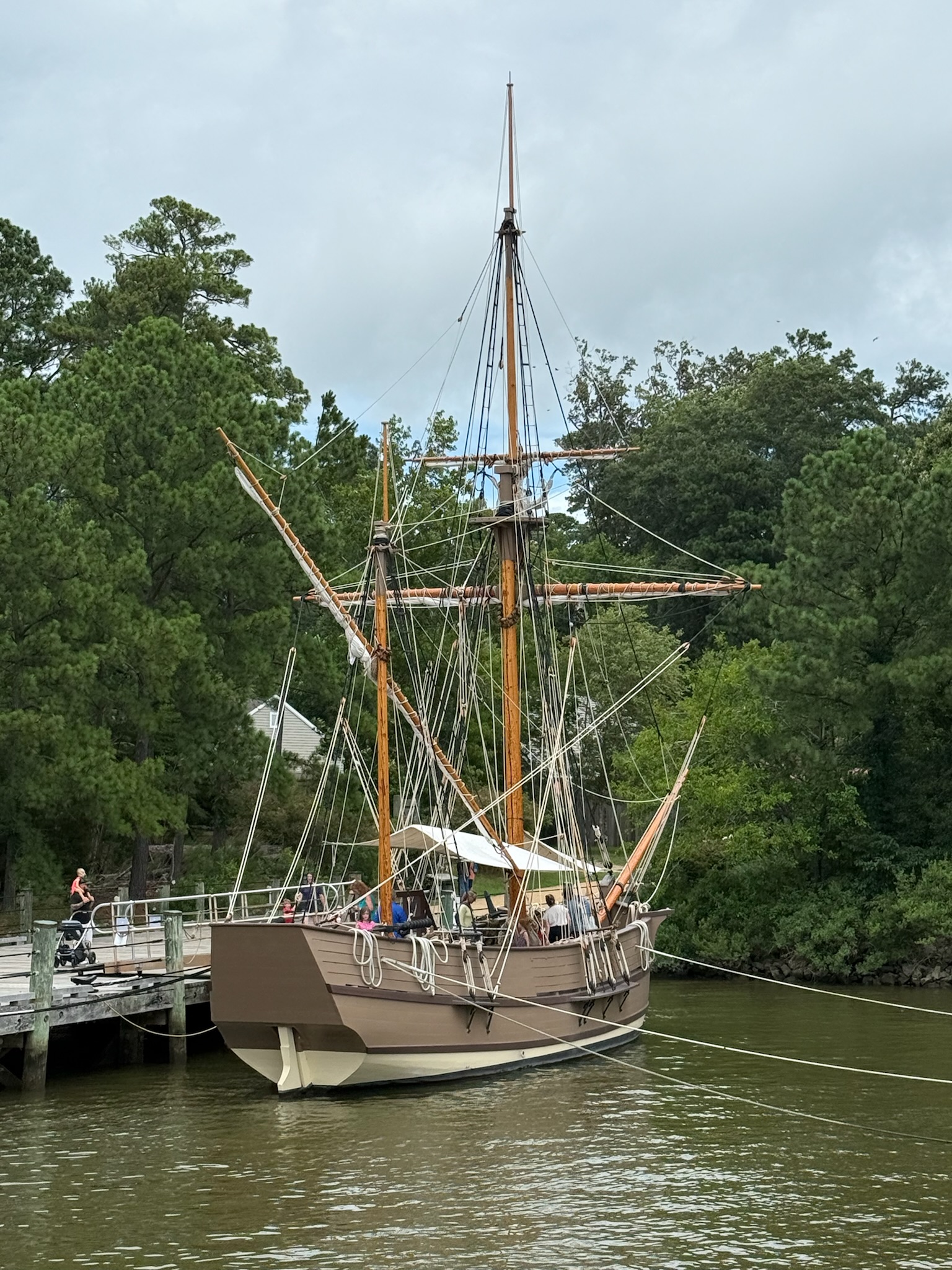
We went aboard the Discovery, the smallest of the three original ships with a 51-foot deck length and 14-foot beam (for comparison: Kosmos was 1-foot wider and 8-feet shorter). It had 12 passengers and 9 crew. While the other two ships had returned to England after dropping off the colonists, Discovery stayed with the colony for use by the settlers.
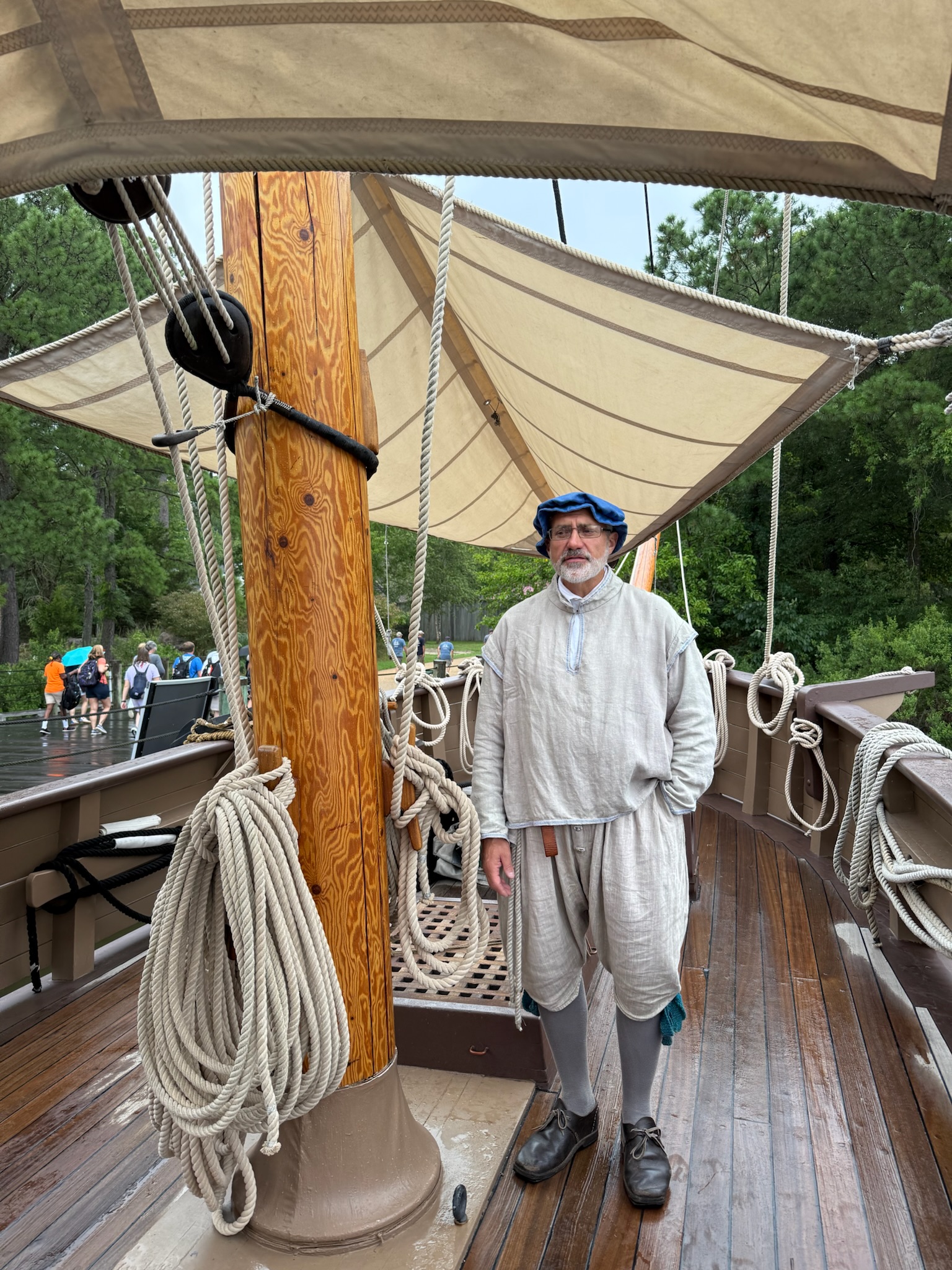
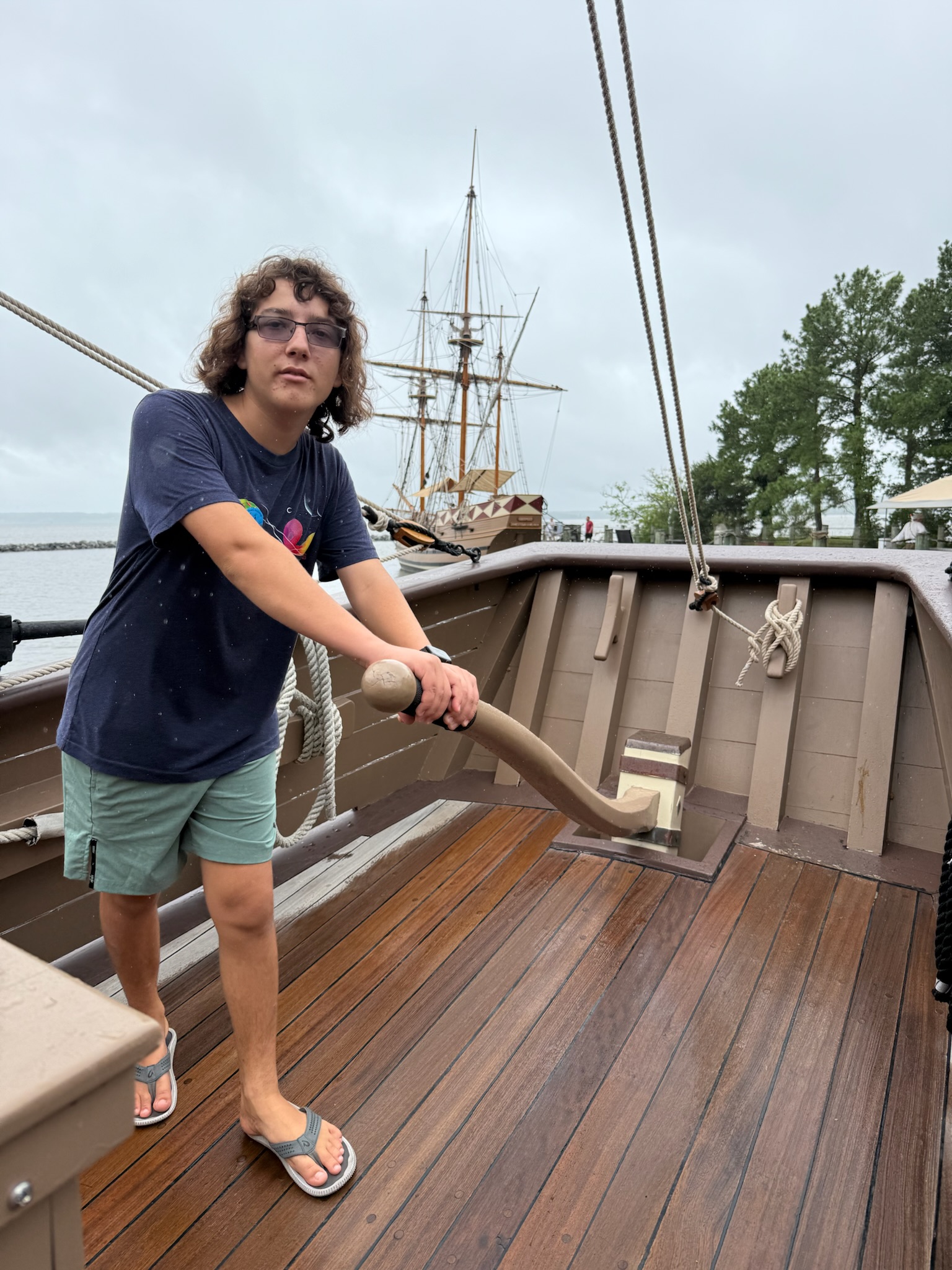
The captain onboard had told us that it was a cargo vessel not intended to transport passengers, thus it was a miserable ride for the passengers who were shoved into the holds with the cargo. He showed us the different spaces under the deck, but we couldn’t go into them, just look at them from the deck. He told us about what life was like on the ship during the voyage. It sounded heinous. For example, the passengers were told to stay below deck so that they were out of the sailor’s way. The cargo hold smelled bad and was poorly ventilated, so they had a hard time breathing. We can’t imagine how they endured. Here was Keith steering the ship from the tiller (it was before they’d invented steering wheels!).
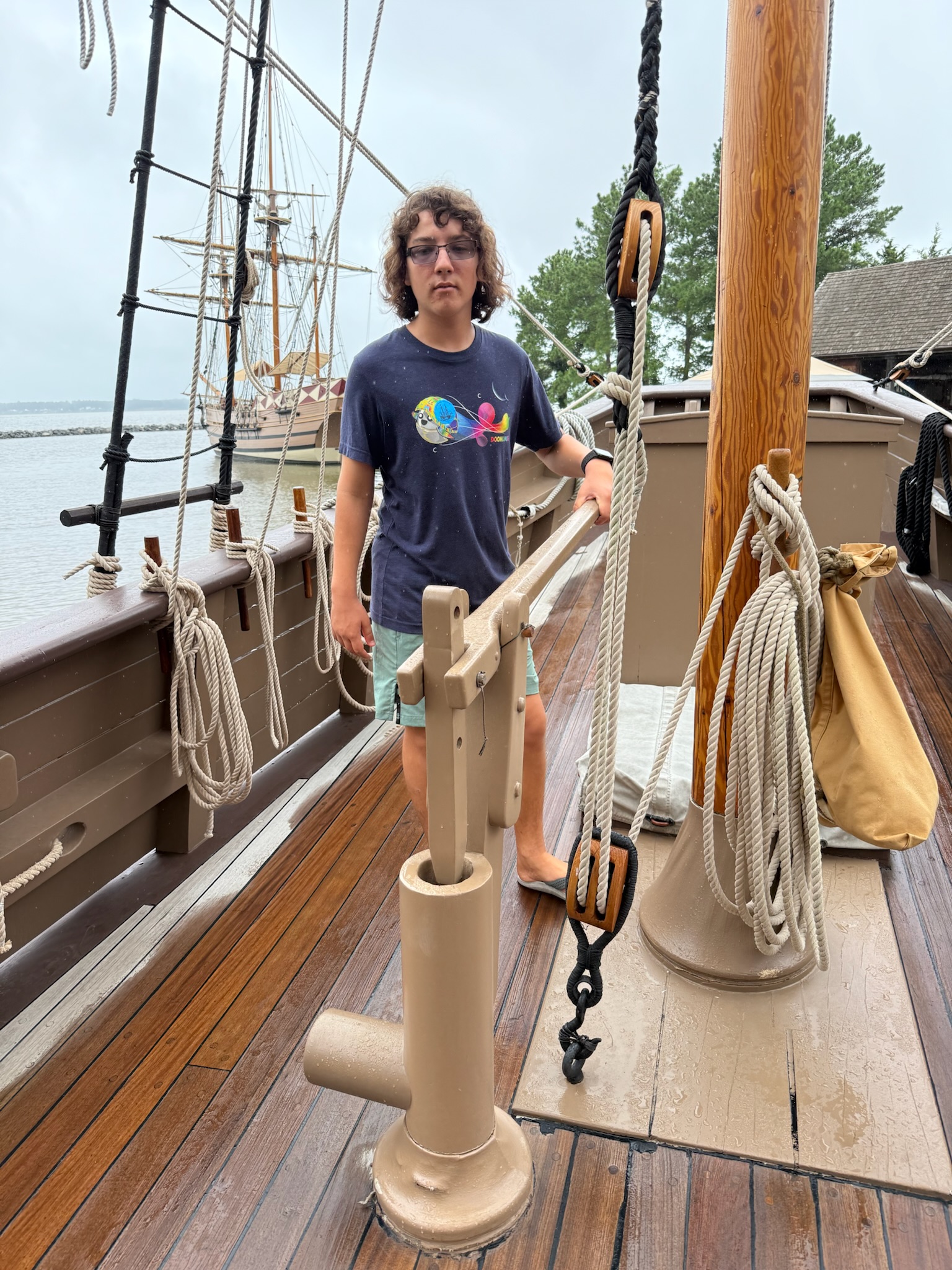
And Keith pumping the bilge, since in those days they certainly didn’t have sensors that turned on automatic pumps.
The other ship, the Godspeed, was closed, but we were told it would open later.
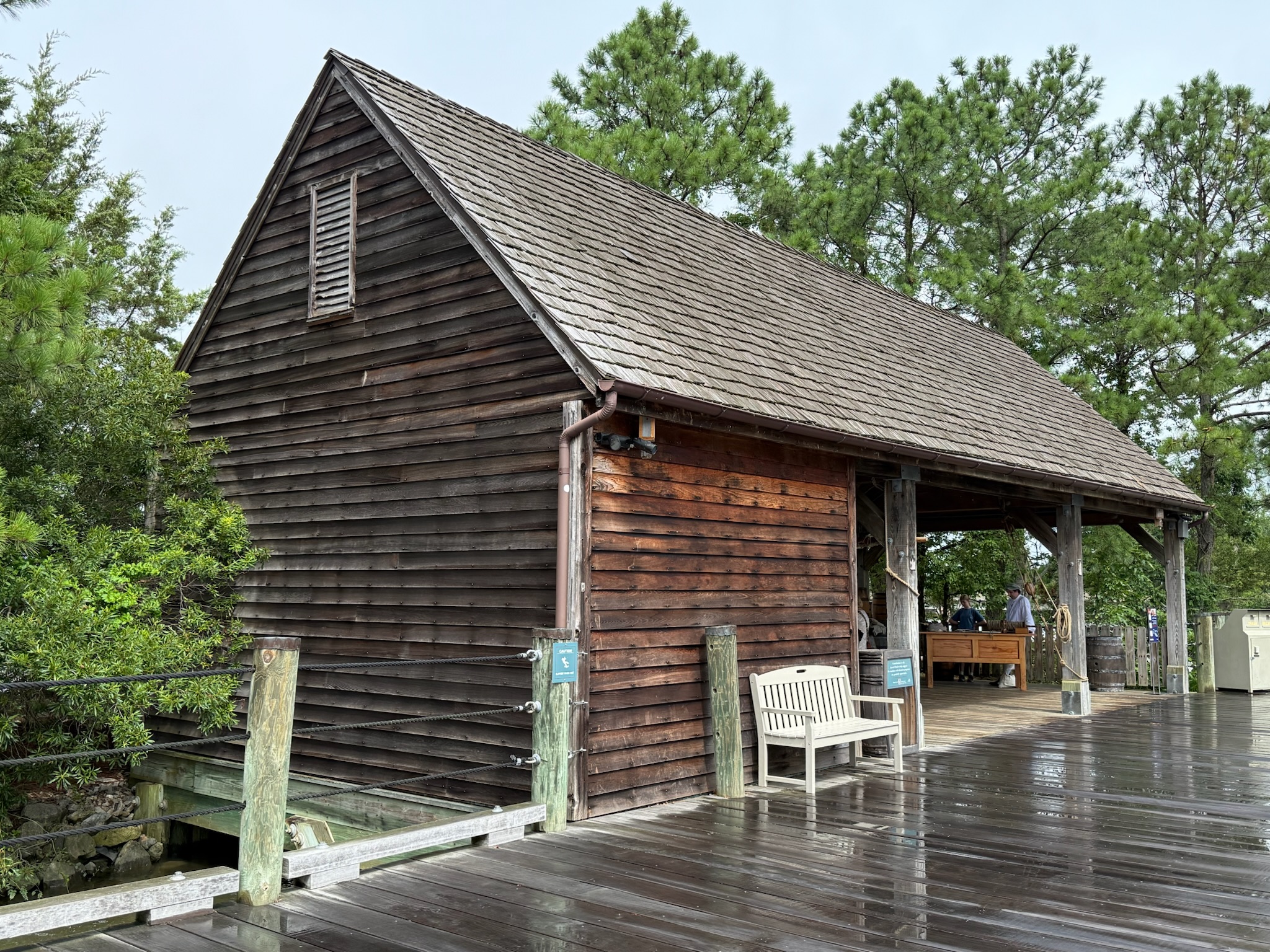
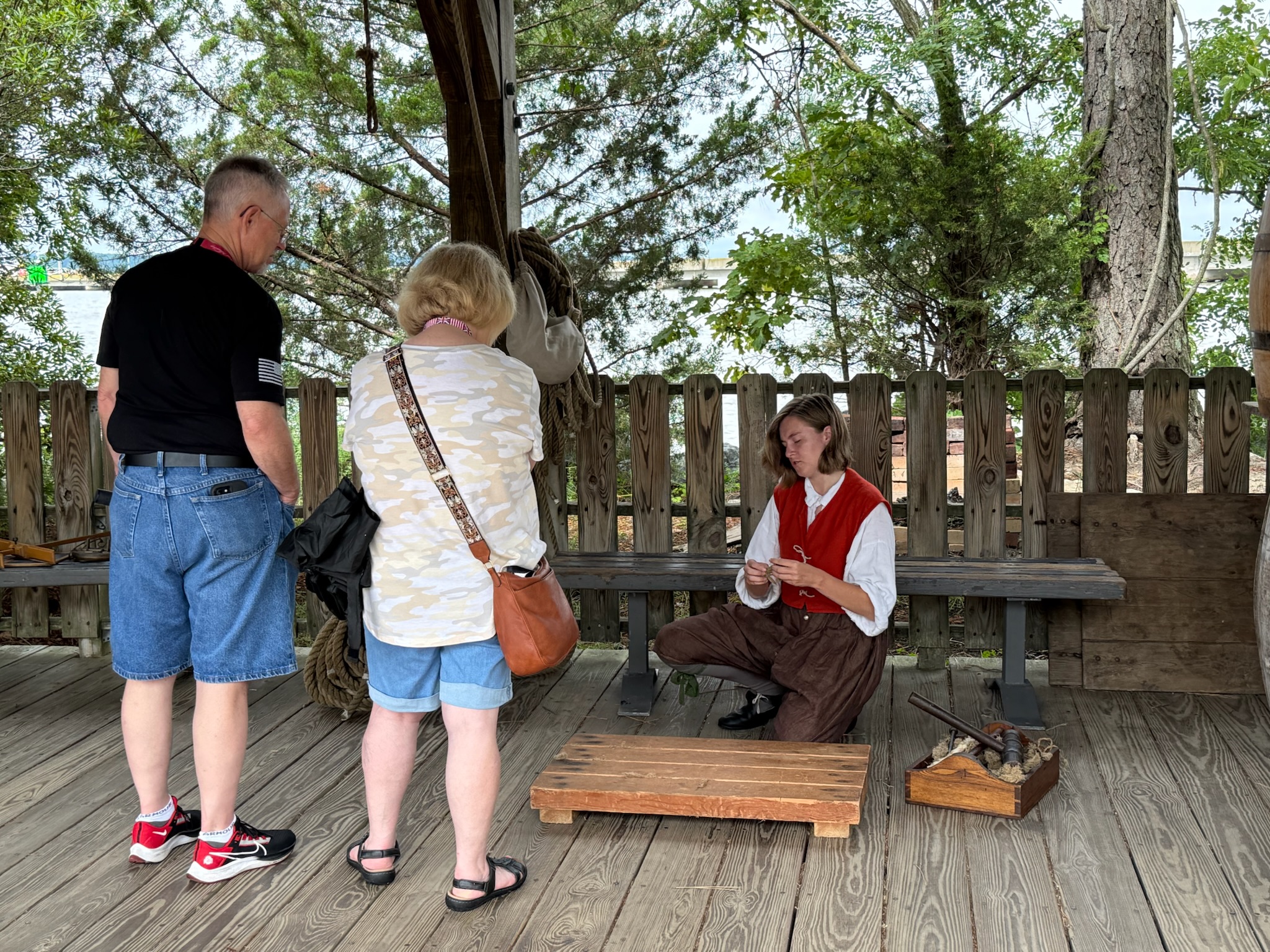
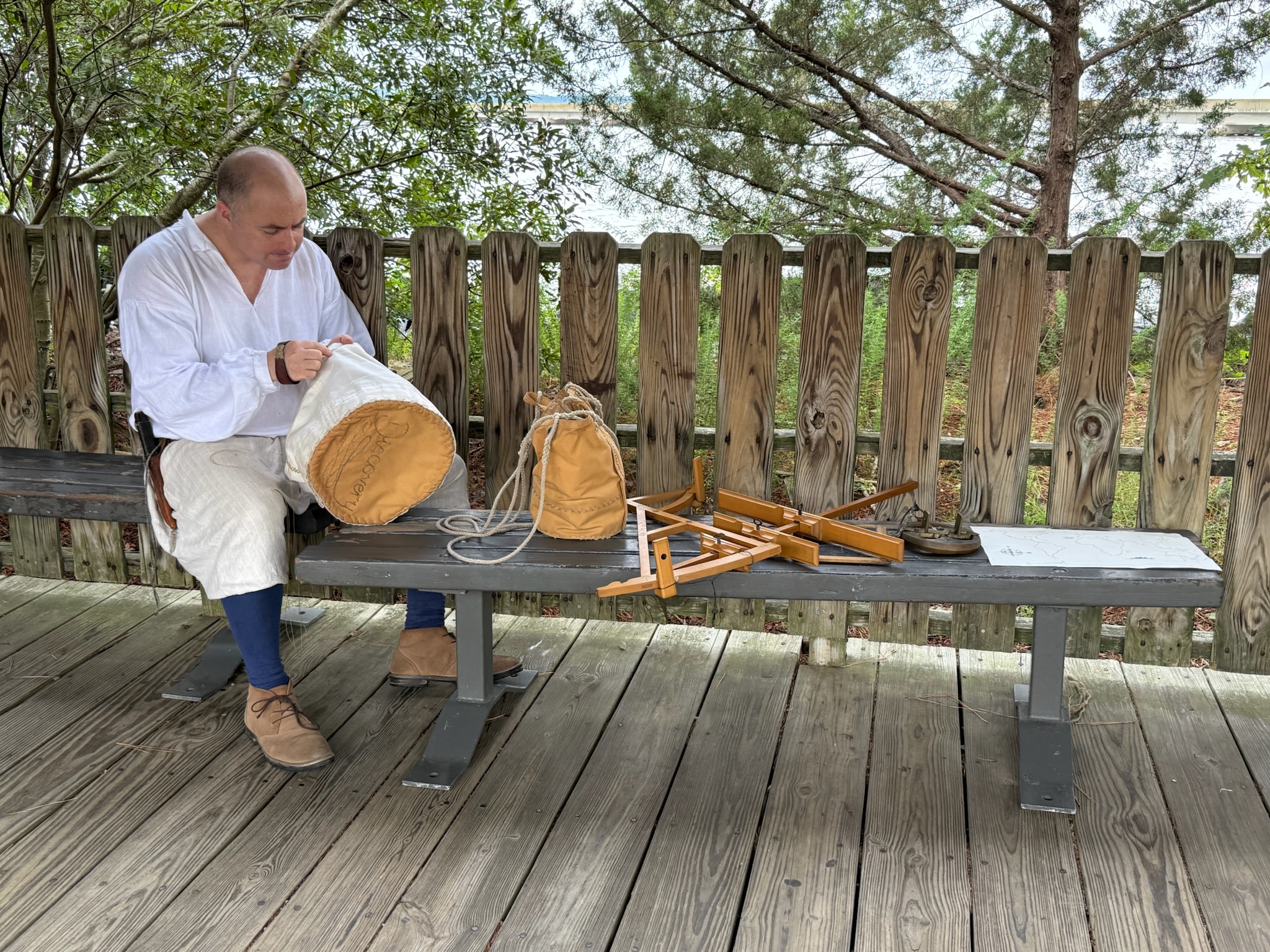
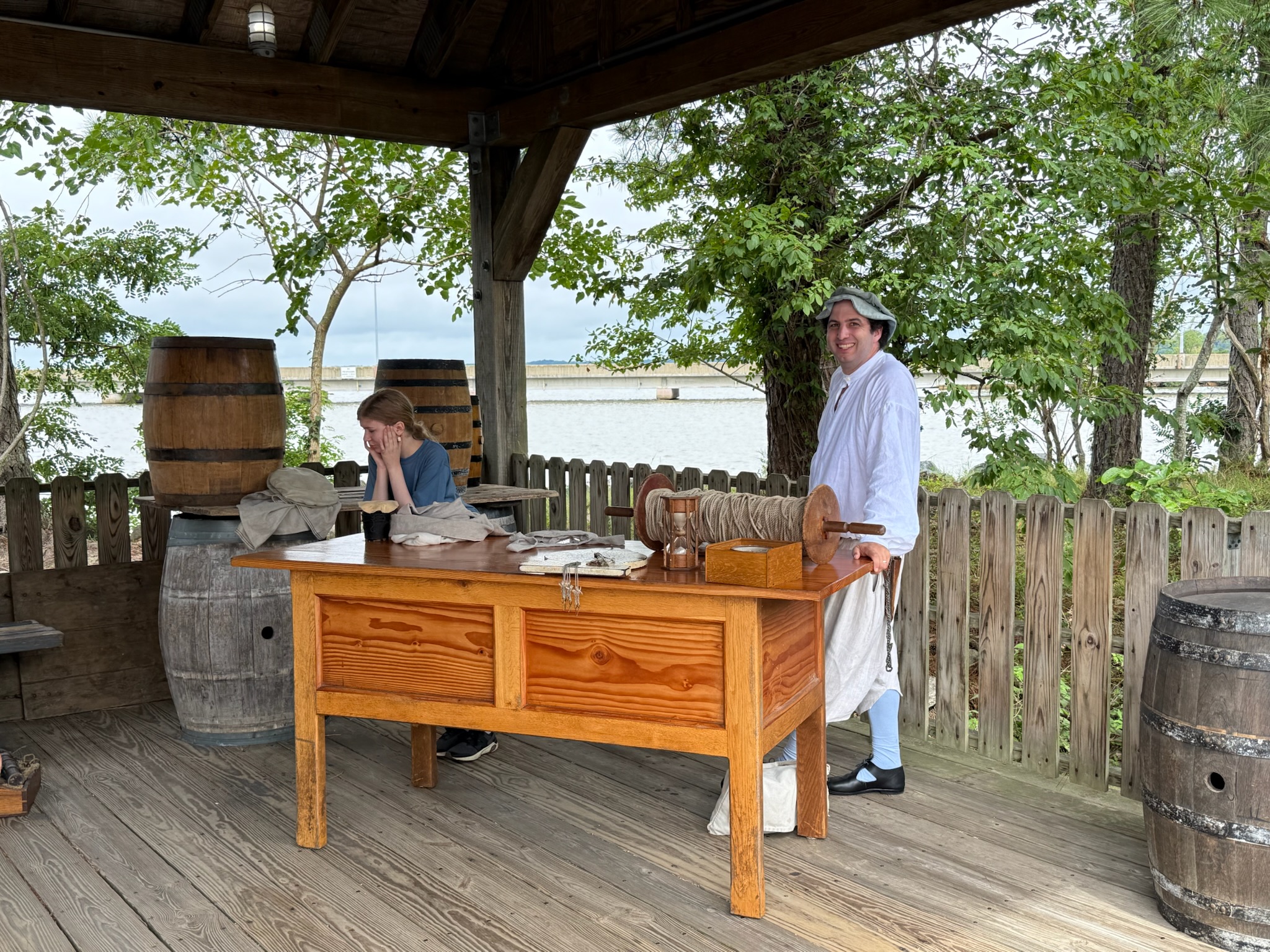
Under the covered area , there were three period actors making things that were necessary for life in that era. They explained what they were doing to anyone who asked.
Eric was eager to get to the cafeteria as soon as it opened at 1100, so at 10:50, we walked back main building. During lunch, it poured rain. Fortunately, the rain stopped before we finished eating. Talk about great timing! There was a presentation on muskets at noon outside the entrance to James fort, so… to be continued…