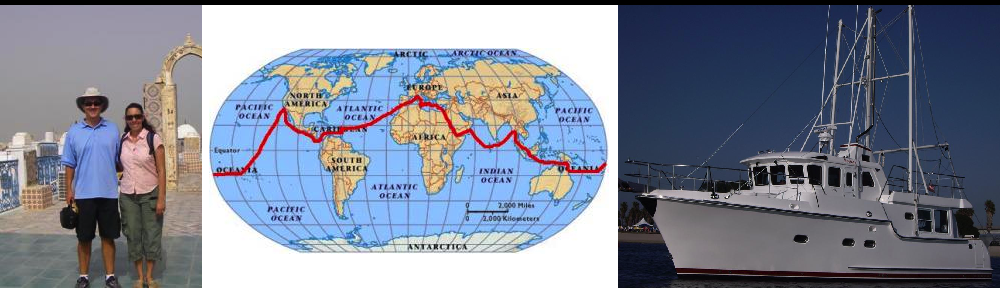
Sunday, August 3 — The water here in Little Creek was 81 degrees Fahrenheit (27.2 degrees celsius). When water temperatures were this warm, we generally cleaned Kosmos’s bottom once a week. However, we’d just gotten new bottom paint, and with new paint, you were supposed to wait a full two months until it was fully cured before you clean it. We found out the hard way that cleaning it early just takes the paint off and significantly shortens the life of the paint.
The two months were just about up. Kosmos’s bottom was so full of growth that she looked like she had a bushy beard. We couldn’t believe the growth was so bad on brand new paint. Generally speaking, neither Christi nor Eric were willing to do the bottom in a marina, especially this one, which had brackish water from the creek (there was a possibility of electrocution if one of the boats were leaking electricity into the water). Maybe if the water in the Chesapeake were clearer, we might have taken Kosmos to an anchorage and done her bottom ourselves, but since the water was totally murky, neither Christi nor Eric wanted to do it. So we hired a diver. He charged $150 per hour and had estimated it would take 2-hours.
He came this morning. Instead of a wetsuit hood and goggles that divers usually wear, he wore a full head mask so his entire head was covered. He had lights attached to the mask to help him see. As anticipated, he said the bottom was really bad. It took him 4.5 hours to do the whole bottom, but he kindly only charged us for 3.5. And he confirmed there was a big crab living on the bottom. We’ve seen a lot of crabs in the marina around the boats and we’d suspected for a while that the crabs were living under the boats.
Since the diver was working, we turned on the AC, which had been running 24/7 since we’d pulled into this slip. The temperatures were so pleasant today that we left the A/C off even after he’d finished.
Once he finished, we met Blue Heeler at the Trail Center in First Landing National Park, which was a large state park that encompassed the tip of Cape Henry (where the Chesapeake Bay met the Atlantic Ocean). Karen had pointed it out to us when she’d given us the tour of Virginia Beach, but up until now, it had been way too hot to go hiking in the forest. But the weather was glorious today, so it was the perfect day for a hike. We apparently weren’t the only ones with that bright idea — the lines to enter the park were quite long, especially the beach entrance. The parking fee was $10. We miraculously found a parking spot. Next to where we parked was a Chesapeake burial ground. According to the sign, in 1997, the 64 bodies had been unearthed during excavation for a bridge in the city of Chesapeake, and the bodies had been reinterred here in a traditional ceremony.
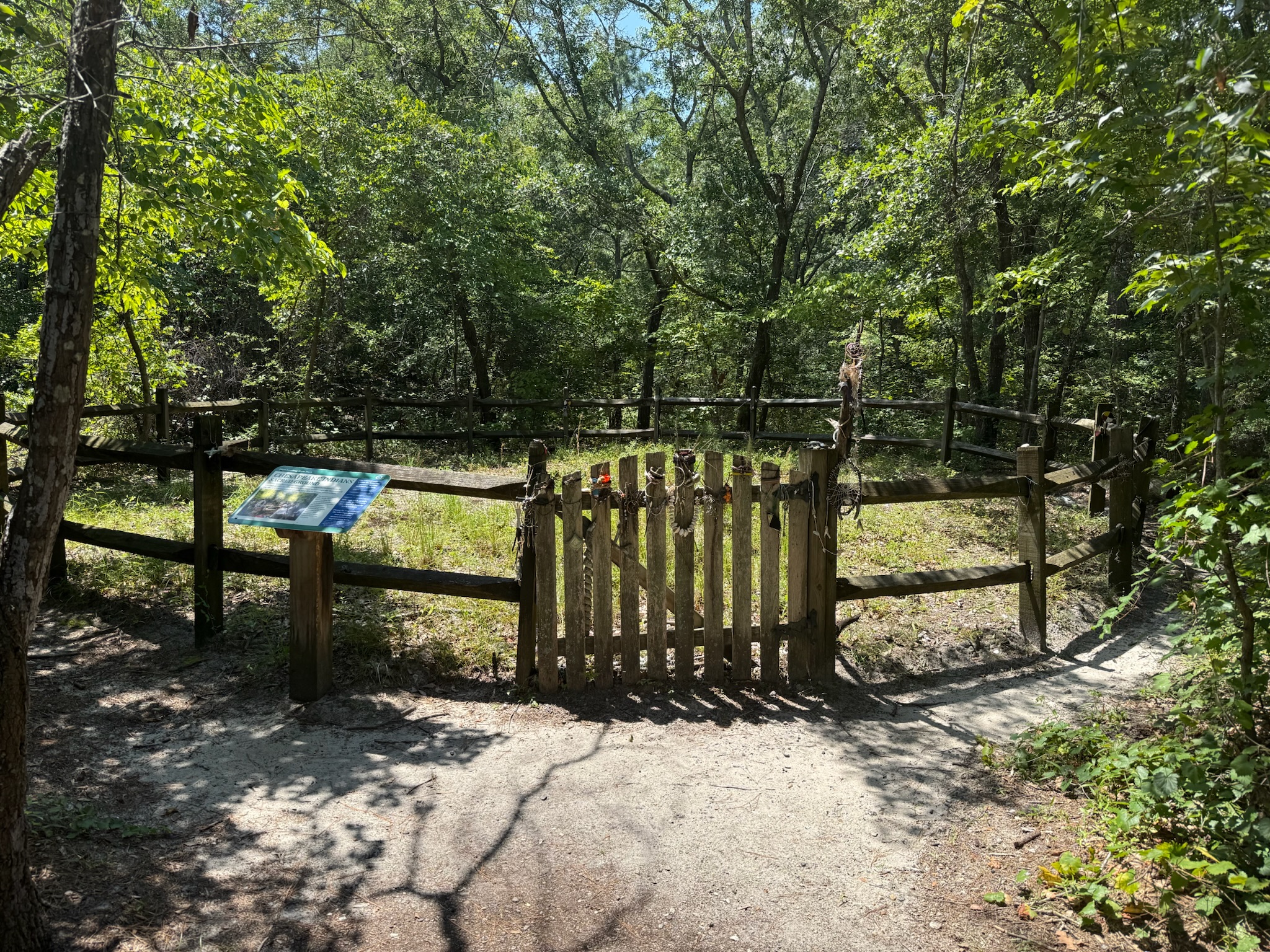
The Trail Center was small, but interesting. It focused primarily on the different species that lived in the preserve, but it did have some history. The indigenous people of what is now Virginia Beach, Norfolk, Portsmouth and the town of Chesapeake were the Chesapeake Tribe of Native Americans, who inhabited the area from 800 BC to 1600 AD. The Virginia Company’s English colonists had landed at Cape Henry on April 26, 1607, and they had interacted with the Chesapeake tribe then. However, about the time that Jamestown was settled, the Chesapeake’s territory was taken over by the Nanosecond tribe, who were one of the tributary tribes to the Powhatan. If we interpreted the signs correctly, it sounded like none of the various Chesapeake tribes up and down the coast ever joined the Powhatan.
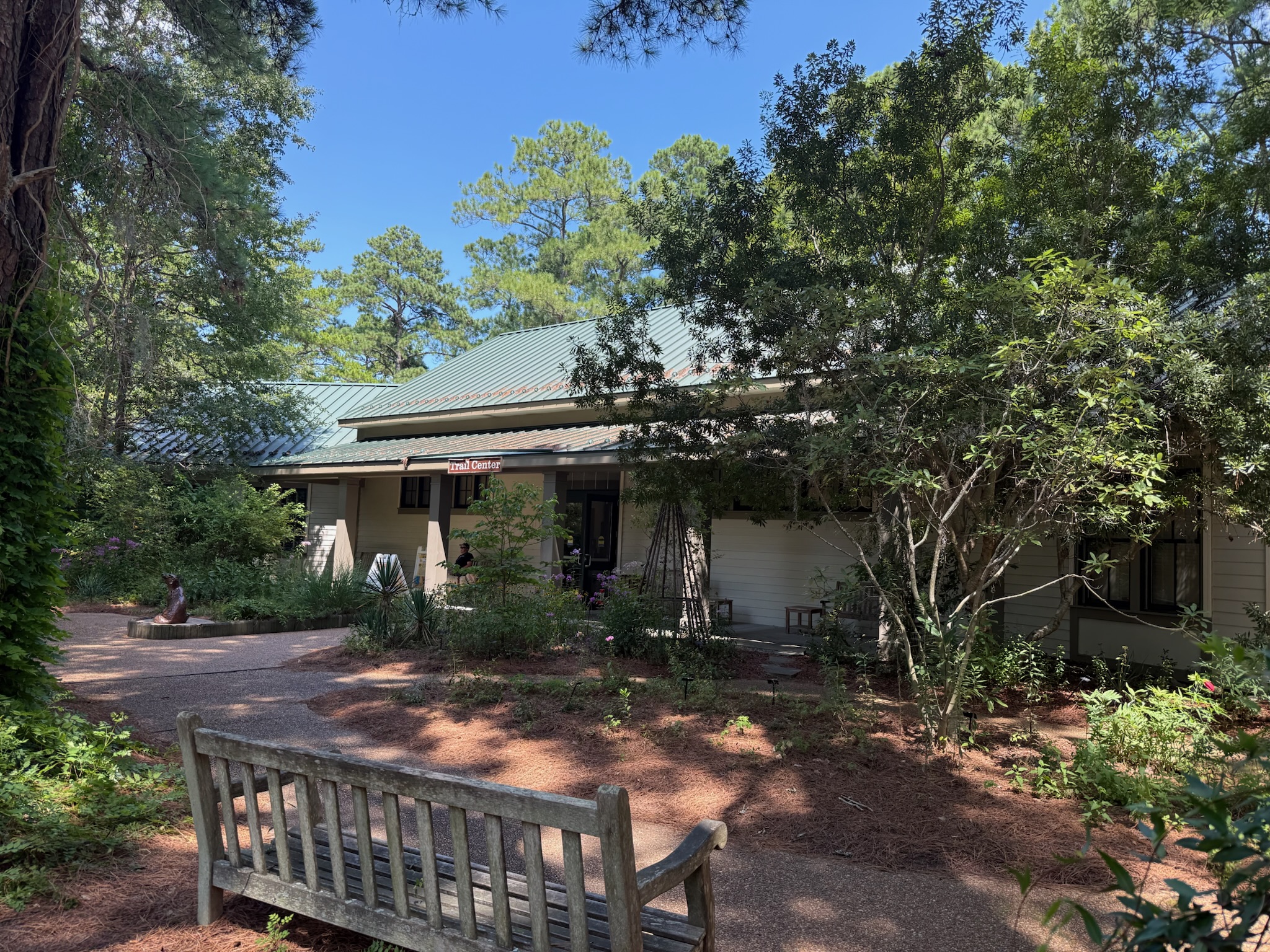
This park has a unique ecosystem because it is where the Chesapeake Bay, the Atlantic’s warm water Gulf Stream and the cold Labrador current all converged. Both subtropical and temperate plants grew here. The shoreline was covered in tidal salt marshes and sand dunes, which were areas with grass and reeds that slowed erosion from the waves, filtered out pollutants, and provided nesting grounds for birds, clams, oysters and juvenile fish. The Chesapeake tribe had eaten the seafood, utilized the marsh grasses and reeds to make ropes, mats and dwellings, and had made pottery out of the clay soil on the shore.
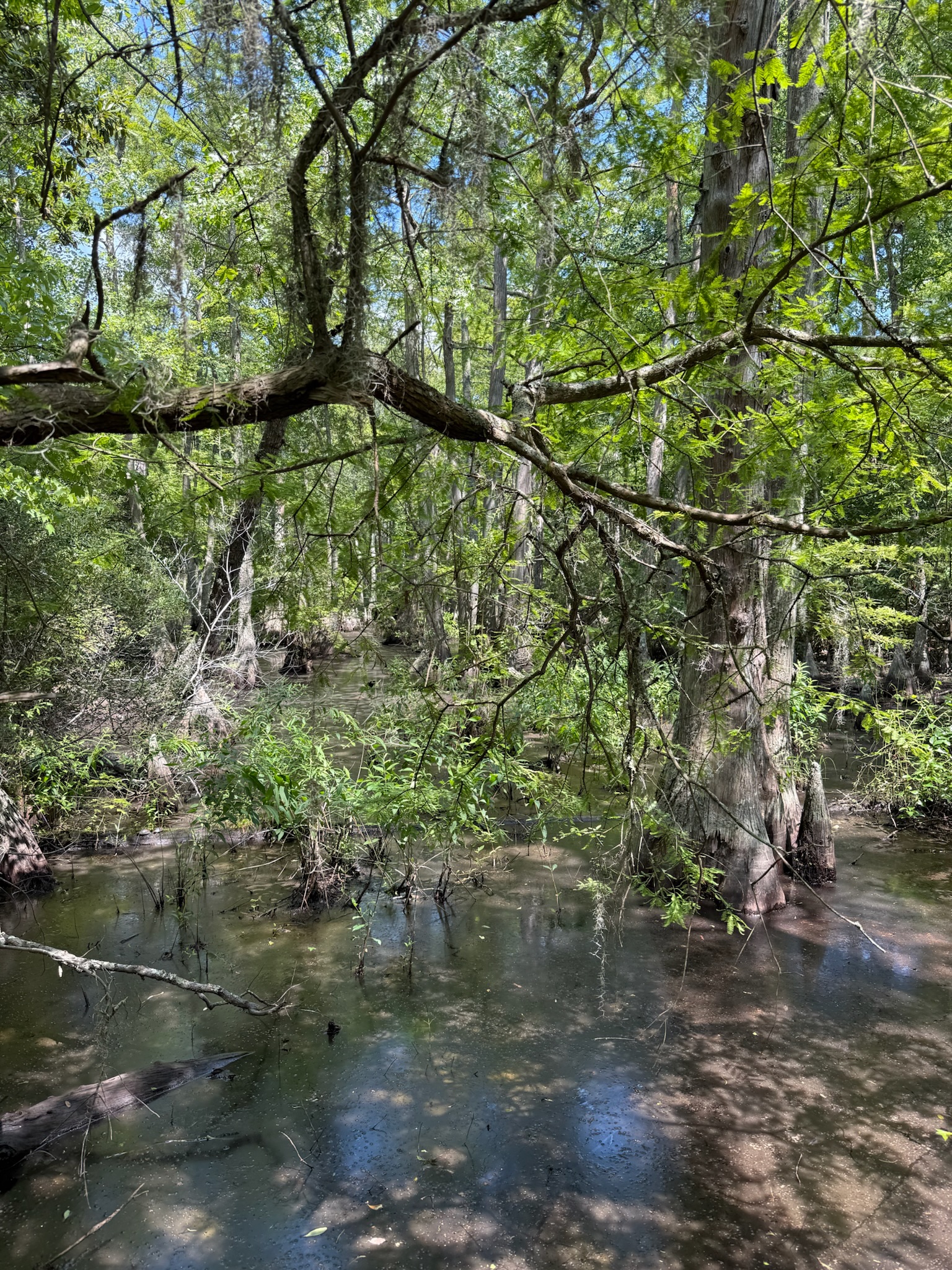
The inland area had a freshwater swamp, called the Bald Cypress Freshwater Swamp because of the prevalence of the Bald Cyprus trees. The trees were part of the redwood family, typically grew to 120 feet high and five feet in diameter, but could grow as high as 150 feet tall and ten feet wide, and live as long as 600 years. They got their name because, unlike most evergreens, they dropped their needles in the autumn. Since the wood from these trees and the white cedar were both resistant to rot, they were popular for building, and many local swamps were decimated as the trees were cleared to be used as lumber.
According to the sign, the swamp areas were once tidal salt marshes and sand dunes. Over hundreds of years, through the process of “succession,” the coastal shores had filled in and became land. The sign said that this was a “maritime forests,” which was a coastal forest that could not exist without the protection from the ocean that the dunes provided.
The Chesapeake Bay was the largest estuary in North America at over 64,000 square miles spanning over six states and had over 100,000 streams, rivers and creeks flowing into it. With so many tributaries to hide in between raids, and so many resources to sustain their physical needs, Chesapeake Bay was popular with the pirates.
The park was initially segregated. After the ruling of Brown v. Board of Education in 1954, Virginia state officials chose to close the park rather than desegregate it. It wasn’t reopened until 1965.
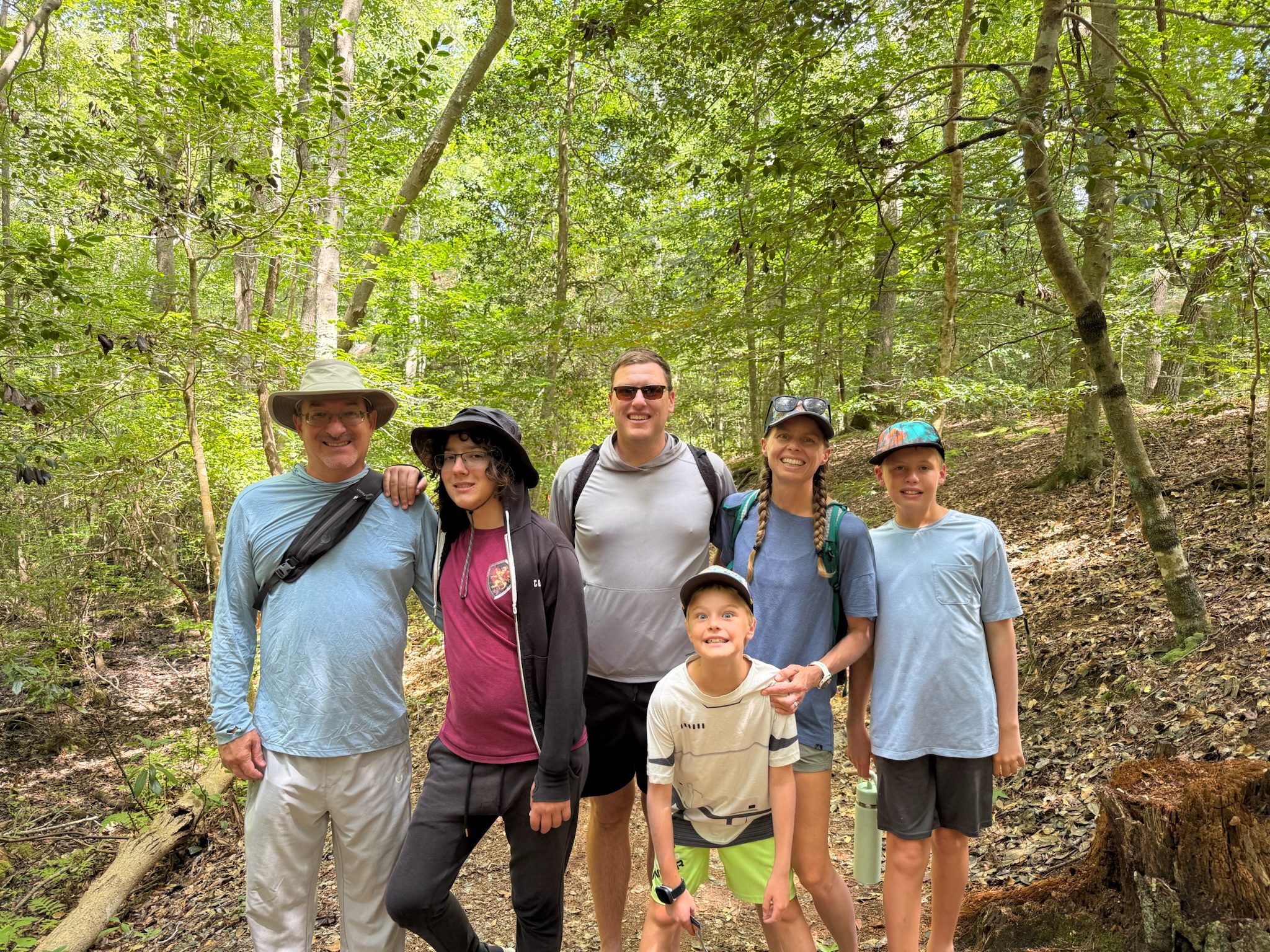
After looking at the exhibits we did a 2-mile loop called The Bald Cypress Trail that started just behind the Trail Center. It was an easy, well-groomed, mostly flat trail for the entire loop.
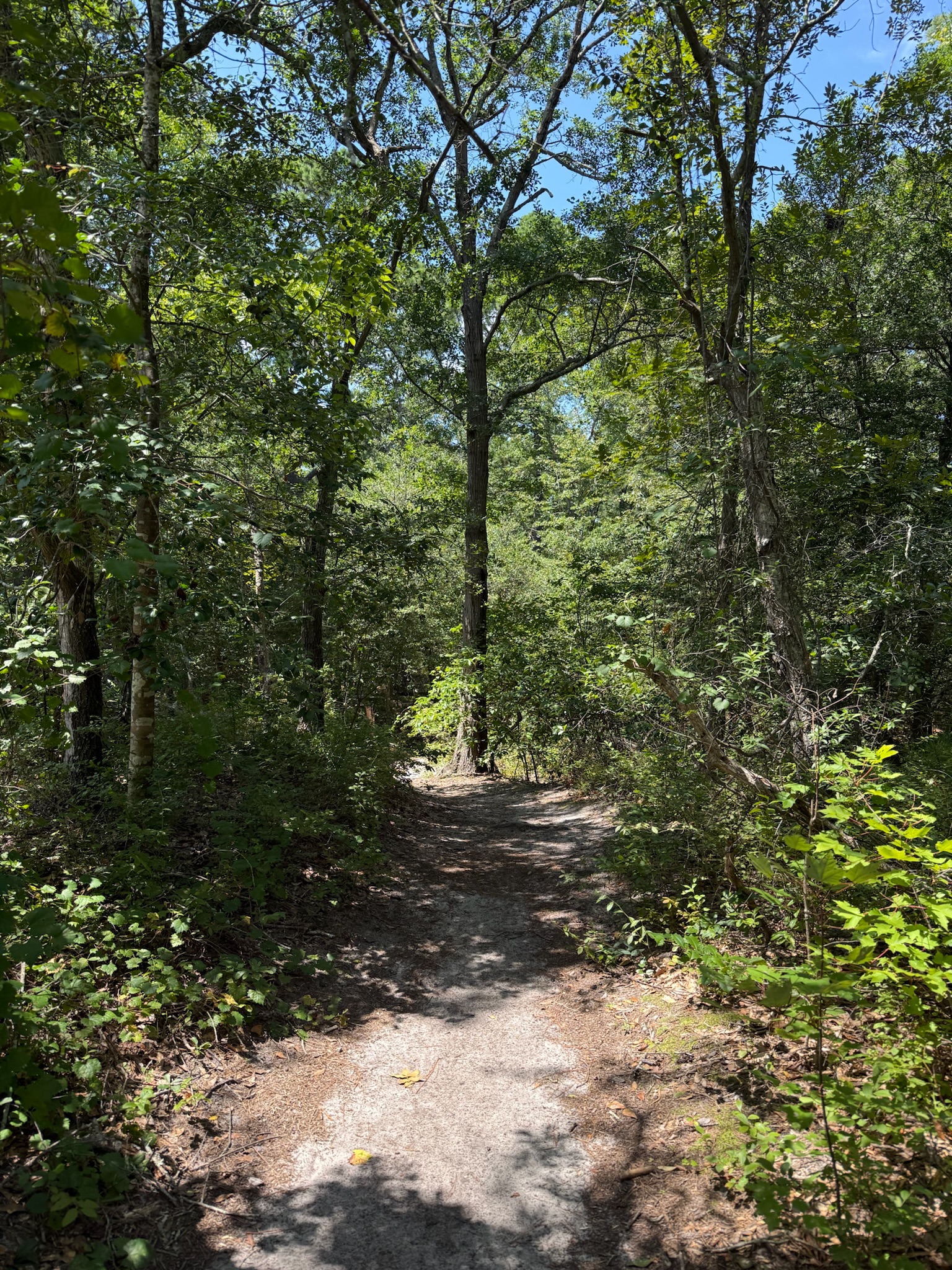
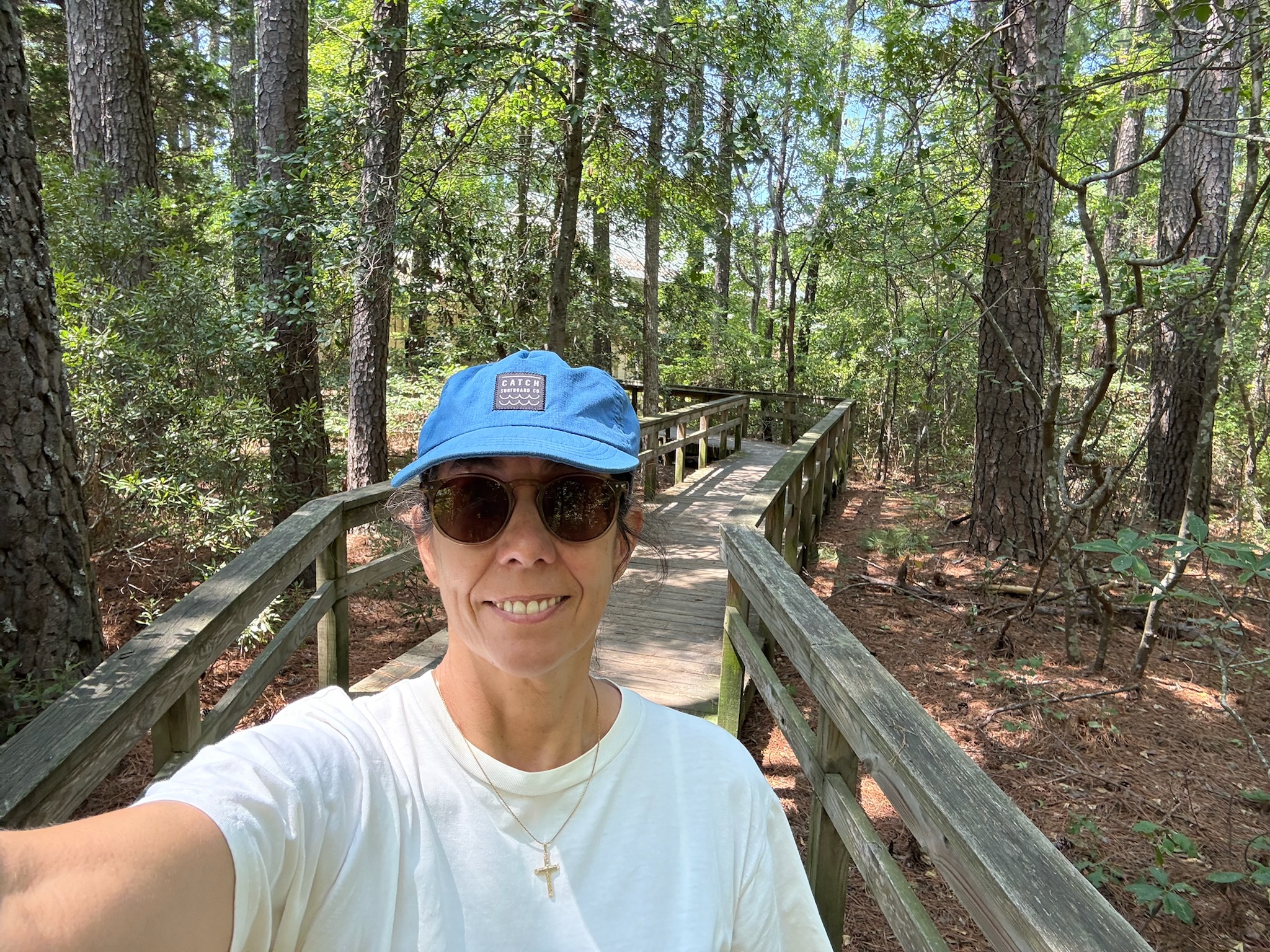
At a few points, the trail became boardwalks over swamps instead of the ground. It was all beautiful forest, even in the swampy parts.
As hard as it was to believe, it was safe to drink the brown swamp water. The water was full of tannic acid from the fallen leaves, which killed bacteria and germs.
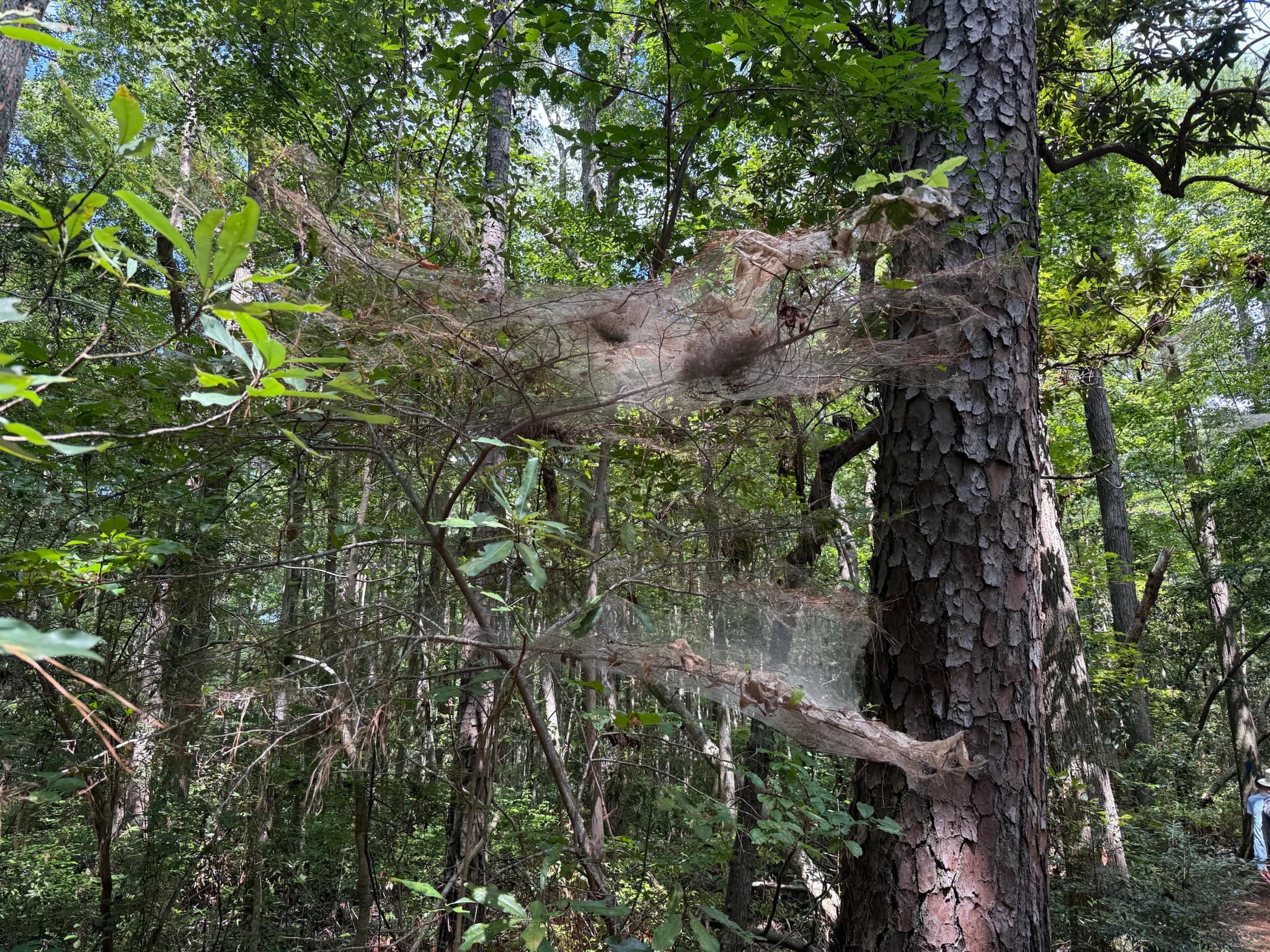
We were struck by the vast number of enormous spider webs in the trees. We wondered how big the spiders were that made them.
Near the end of the trail, the kids found a small green snake climbing up a tree and were fascinated by it.
After the walk, we went back to Kosmos and had a quiet night aboard.