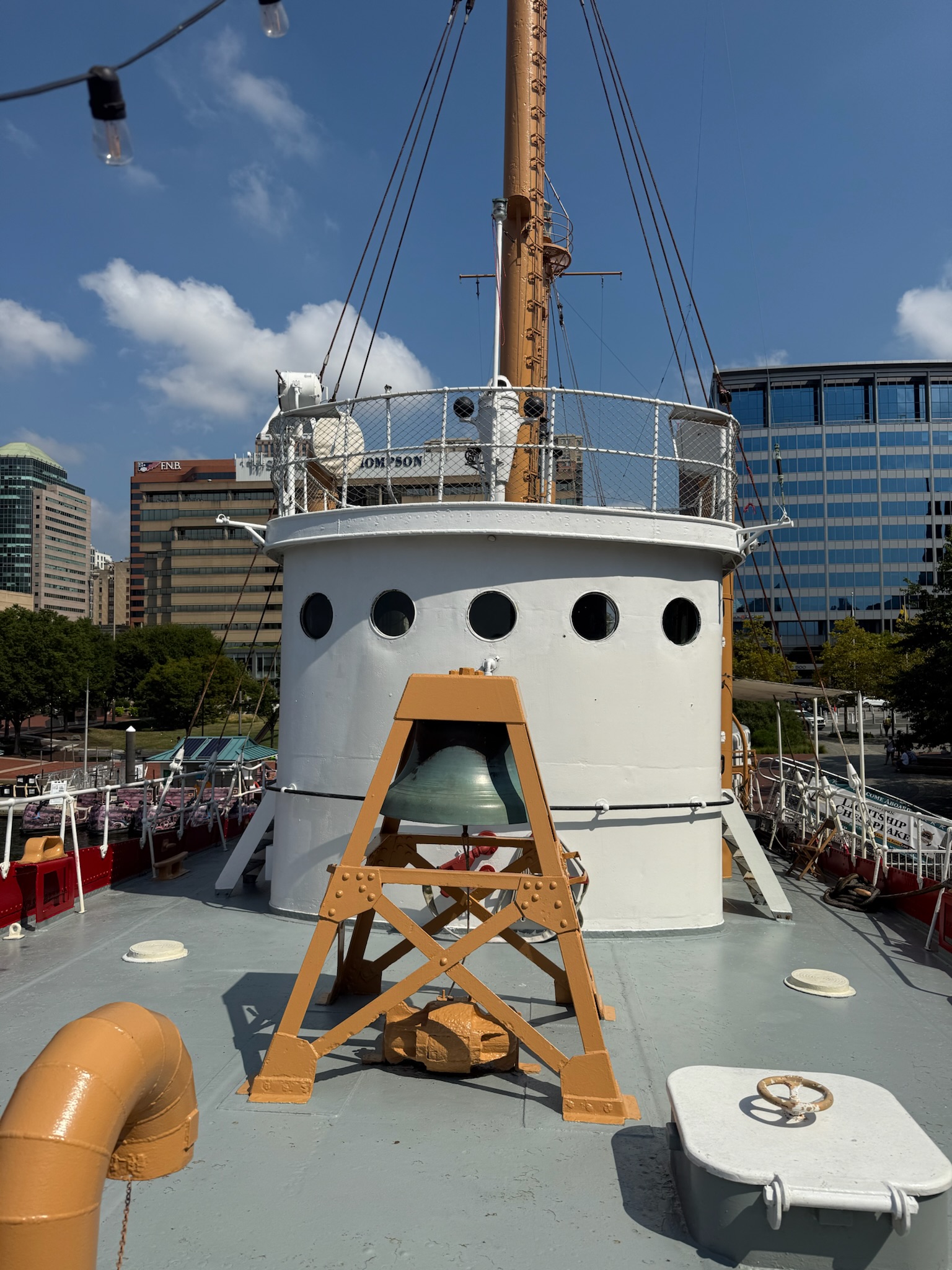
continued… This was aft (back) of the pilot house, and was closed so we couldn’t go inside.
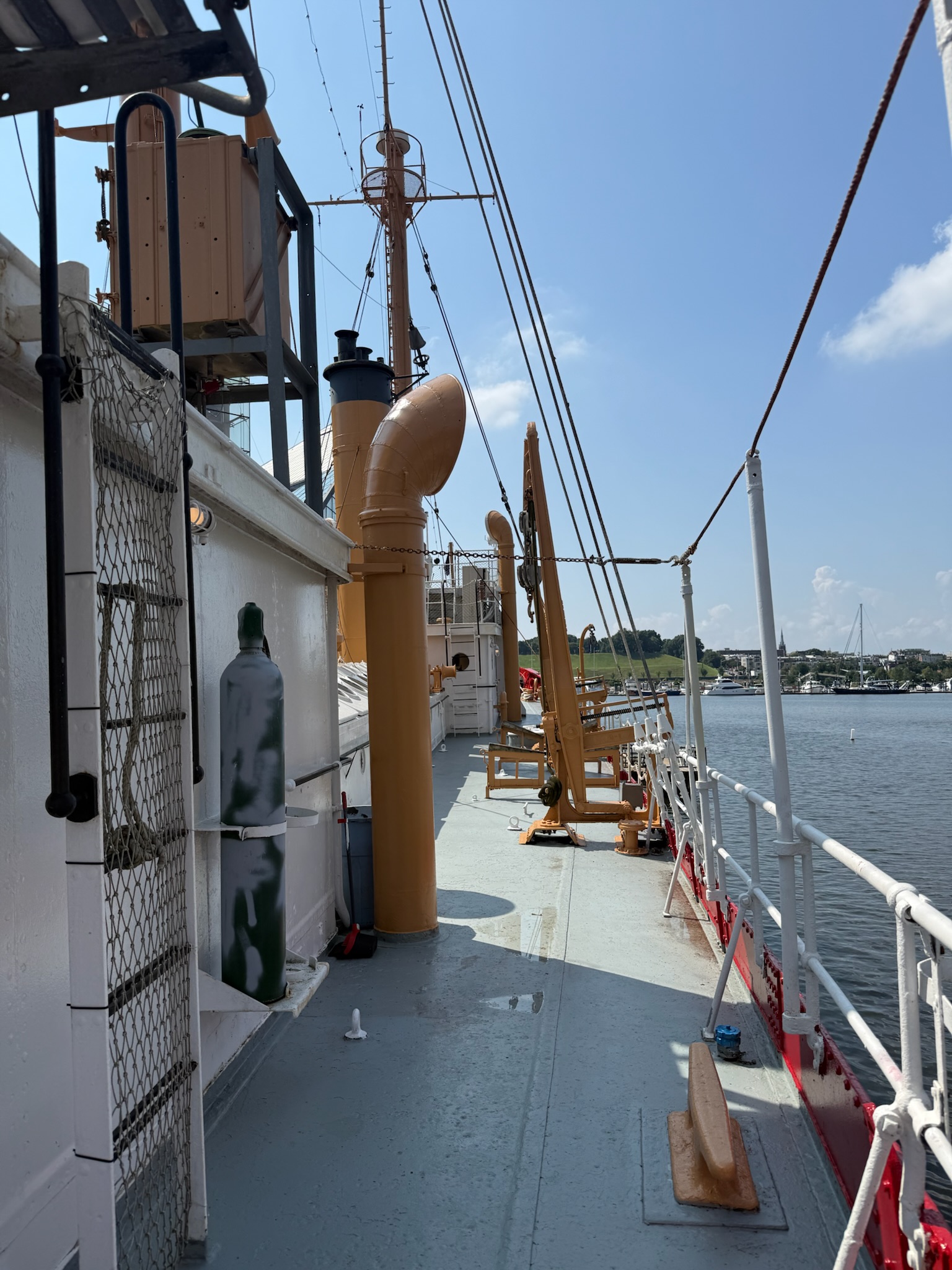
Looking forward from about mid-deck
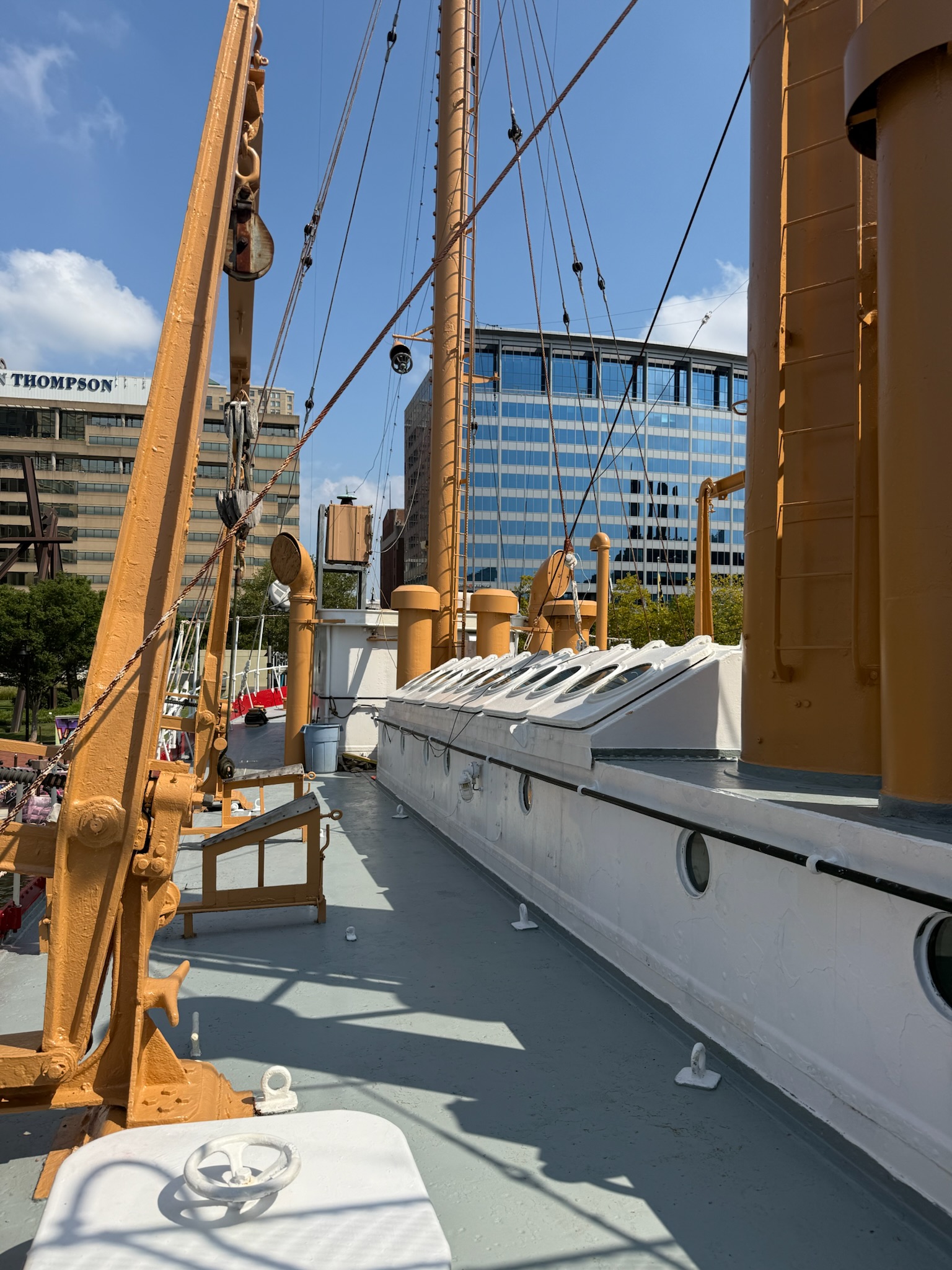
Looking aft from about mid-deck
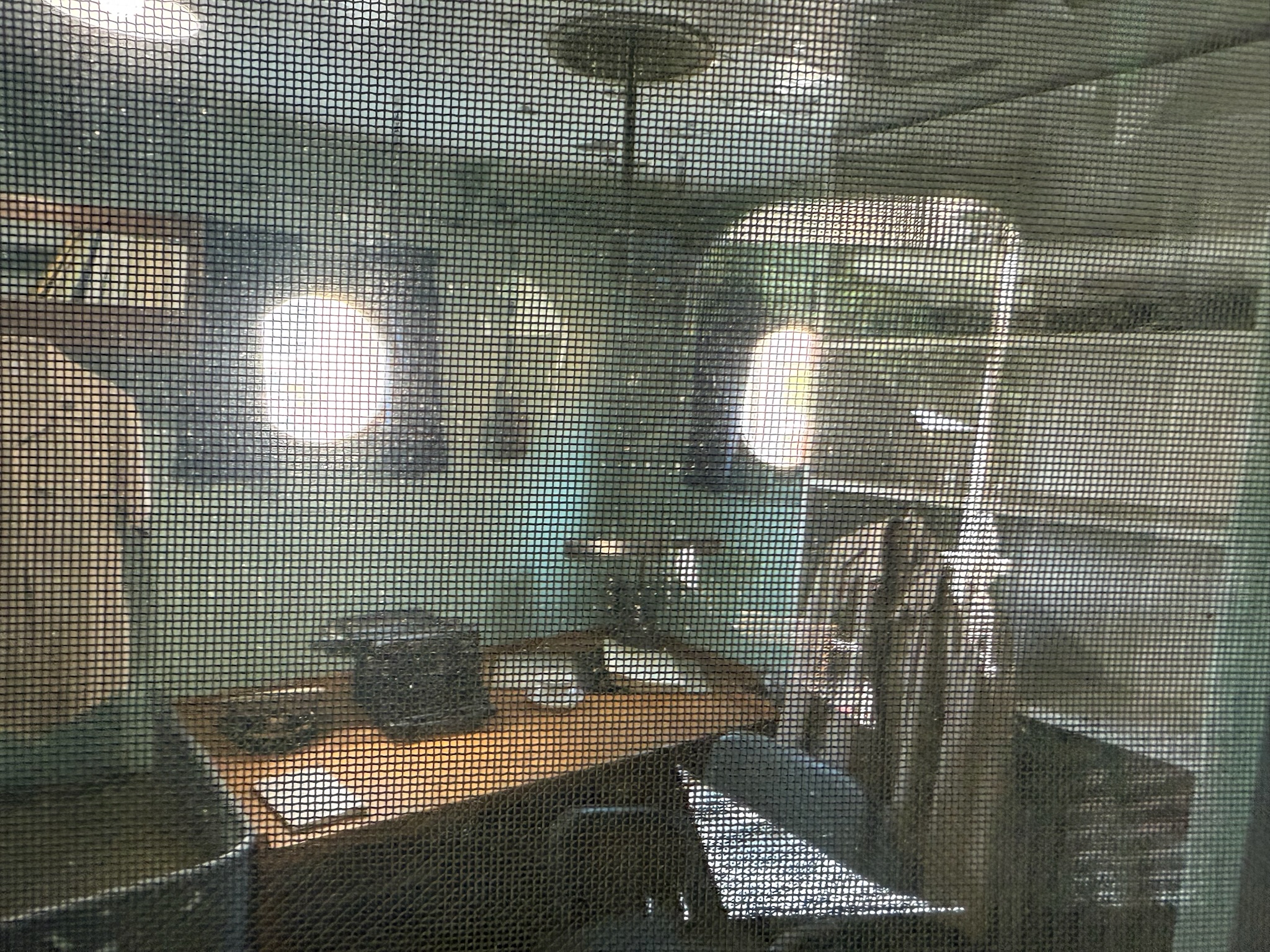
From the top deck, we backtracked through the pilot house to the small open area. There was a door that led into a tiny stateroom for the Captain.
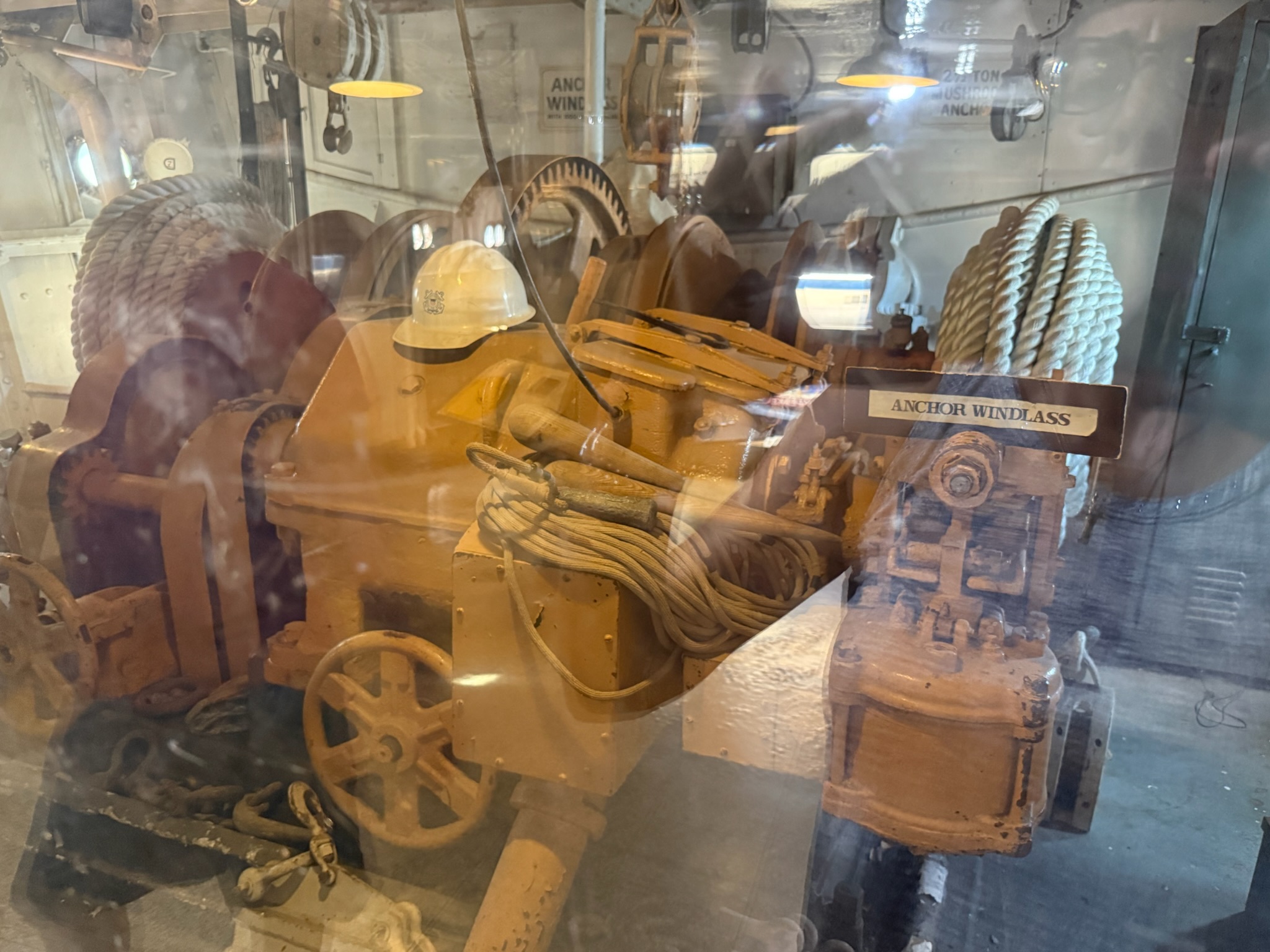
We could peek into a below deck area with the windlass. A sign explained that the mushroom anchor filled with sand and silt, so the longer it was anchored, the stronger the holding power became. The Chesapeake was normally anchored in 65 feet of water and had 120 fathoms of chain out.
We followed the port (left side of the boat) hallway to the mess hall (dining area).
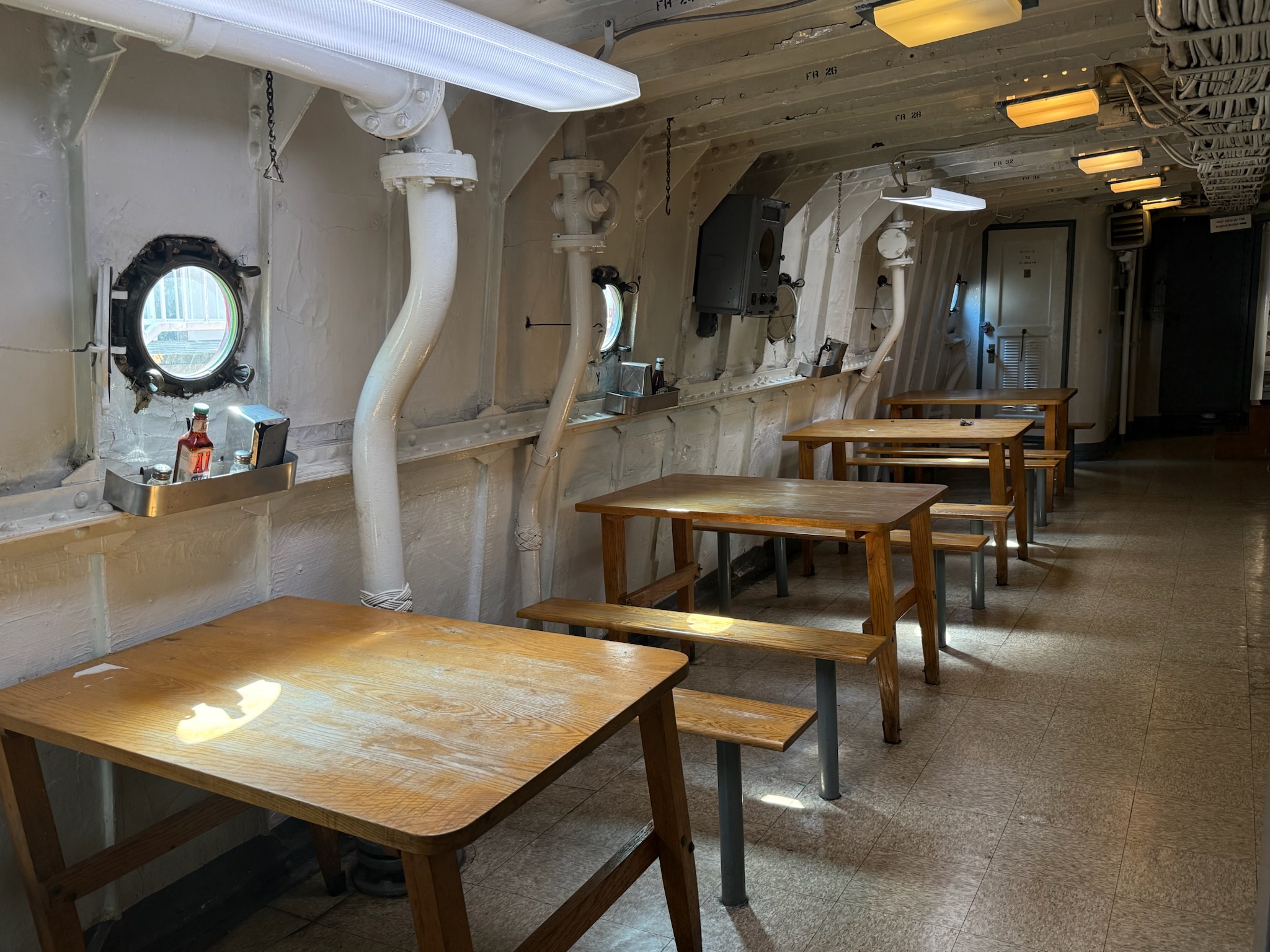
Life on a lightship sounded terrible. Prior to the creation of the Lighthouse Board in 1850s, the ships were poorly designed causing poor living conditions, and the pay, food supply and shore leave were erratic. Even after the Lighthouse Board took over, crewmen routinely spent months onboard between shore leaves. Once the Coast Guard took over in 1939, shore leave was regularized: 30-days on, 10-days off. Tenders would bring mail, food, and supplies out to the ship and transport crew going on/off shore leave.
It was monotonous days with dangerous job duties done in mostly uncomfortable sea conditions. Sometimes lightships were hit by the vessels they were providing navigation for. In 1934, Lightship 117 sank after it was hit by a cruise ship. They had to ride out all the ugly storms. In 1936 and again in 1962, the Cheaspeake’s anchor chain broke while they were riding out a hurricane. They had to station keep in the violent winds and seas and try to re-anchor at the exact same spot. When it was foggy, they had to listen to the fog-horn non-stop.
And it was a partially isolated job, with only a handful of crew mates around. The sign said that to entertain themselves, the crew did a lot of fishing, card playing and reading.
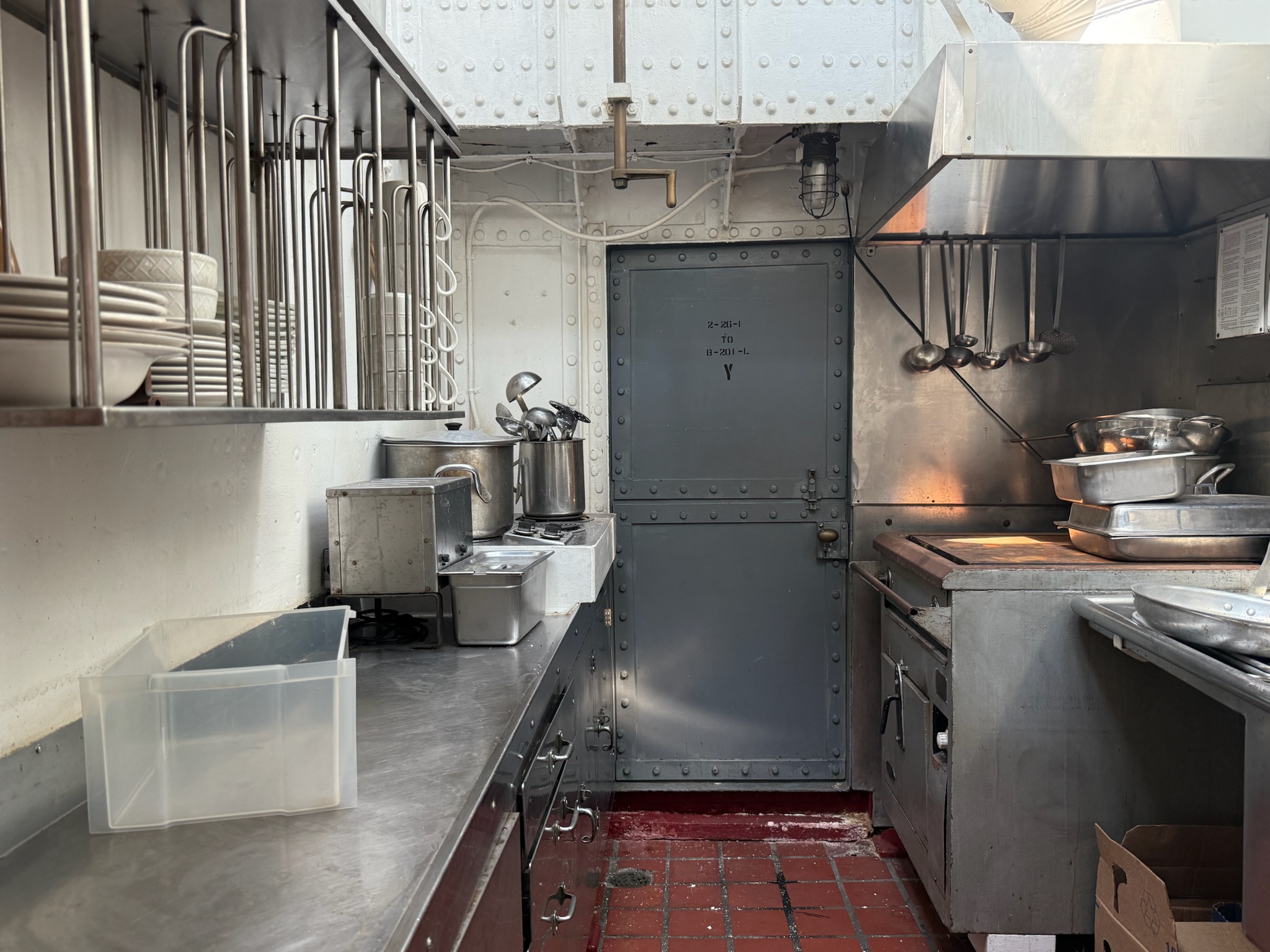
Next to the mess hall, in the center of the ship, was the galley. It was state of the art for its time, and even had a refrigerator, which was a rare luxury in those days.
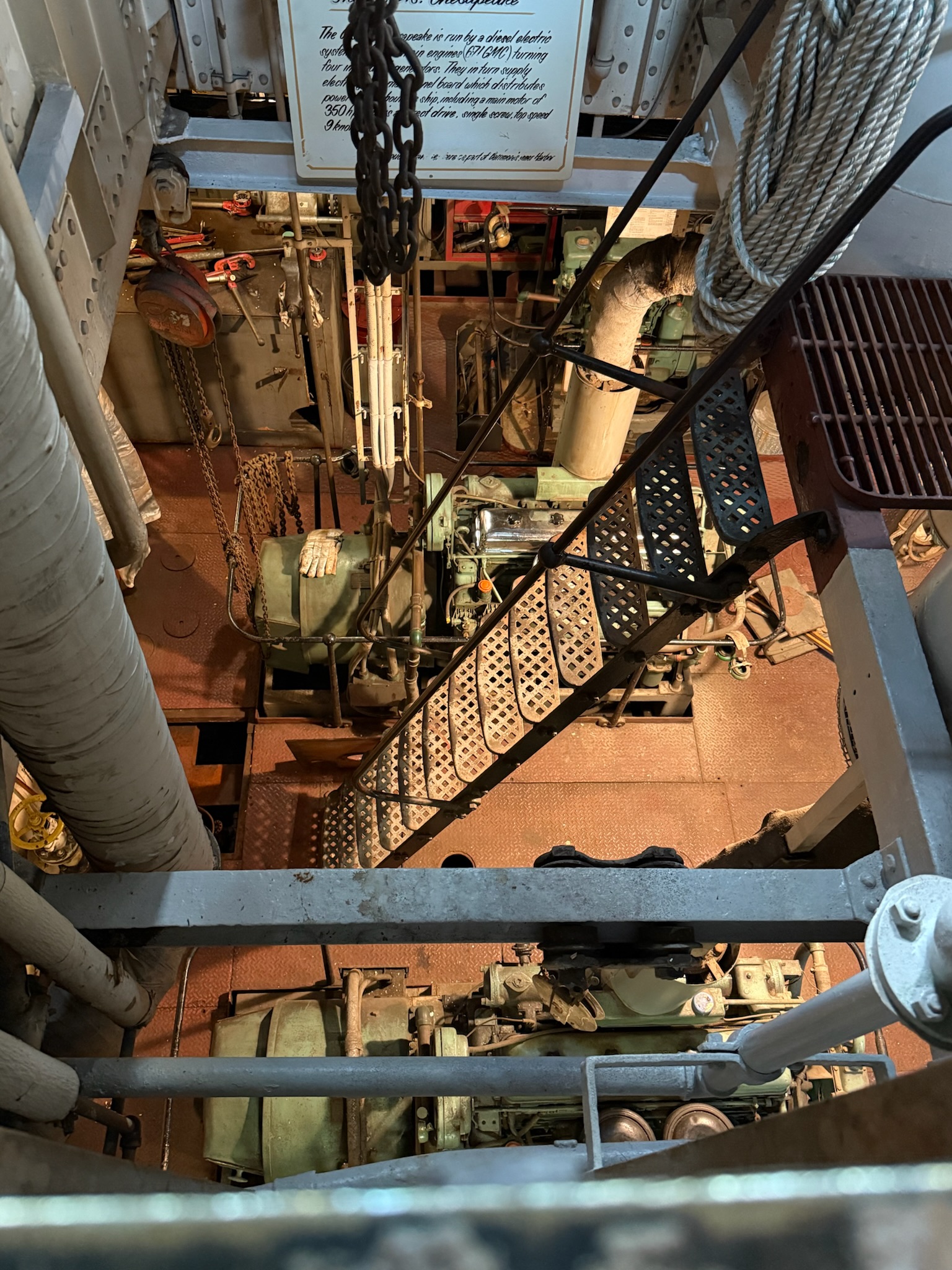
The engine room was under the galley/dining area.
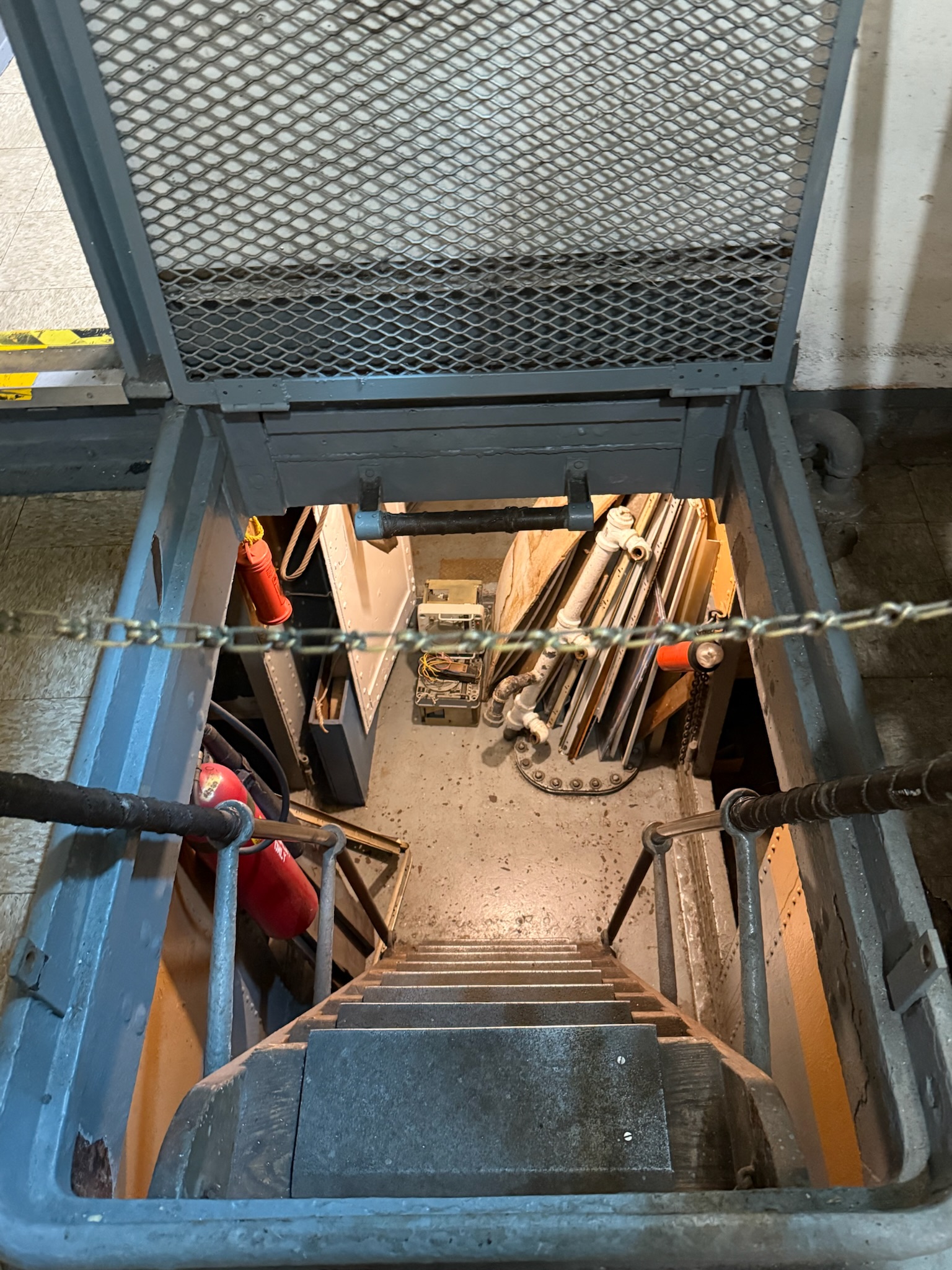
We couldn’t go inside, but we could peek in through some windows.
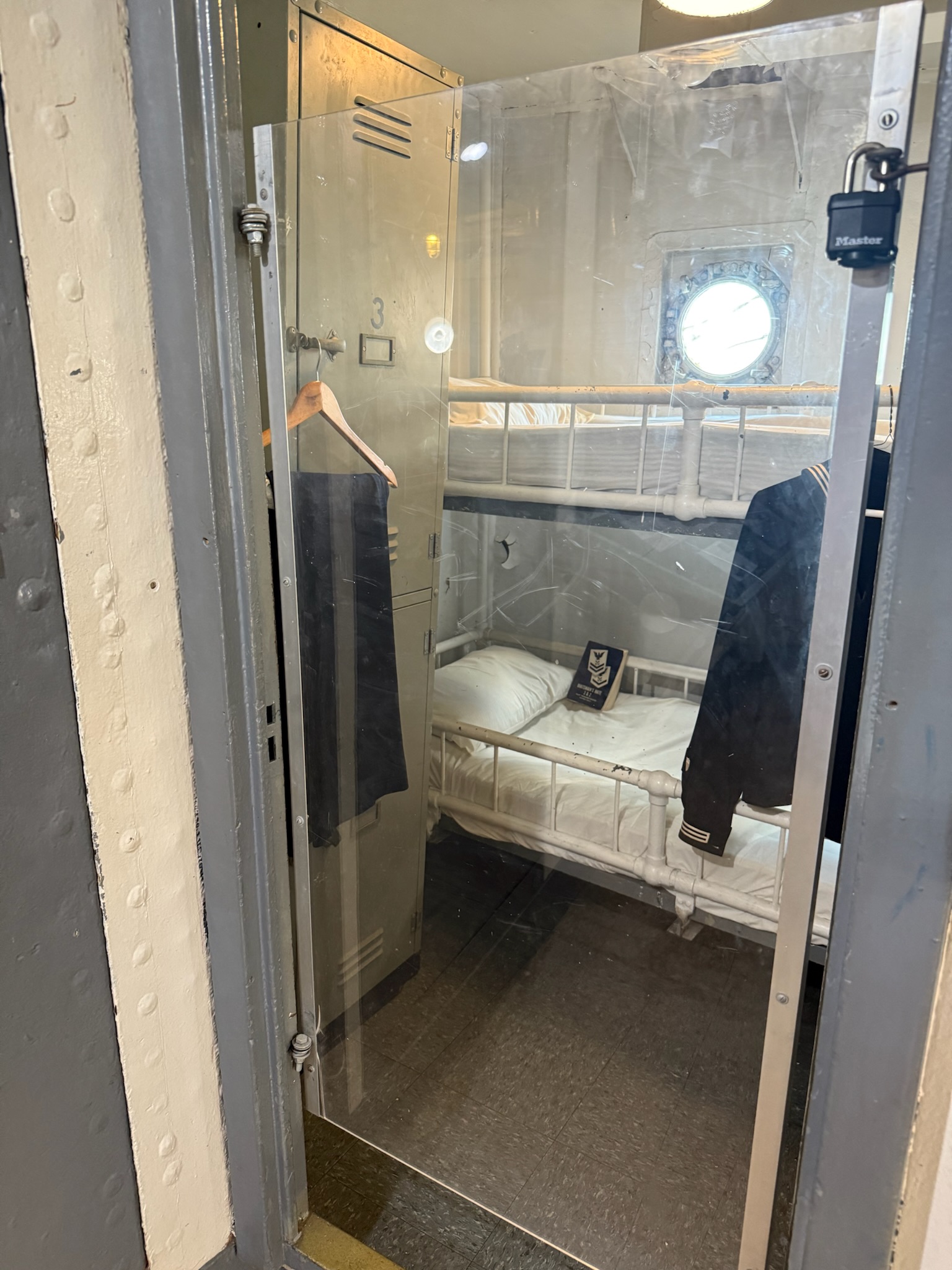
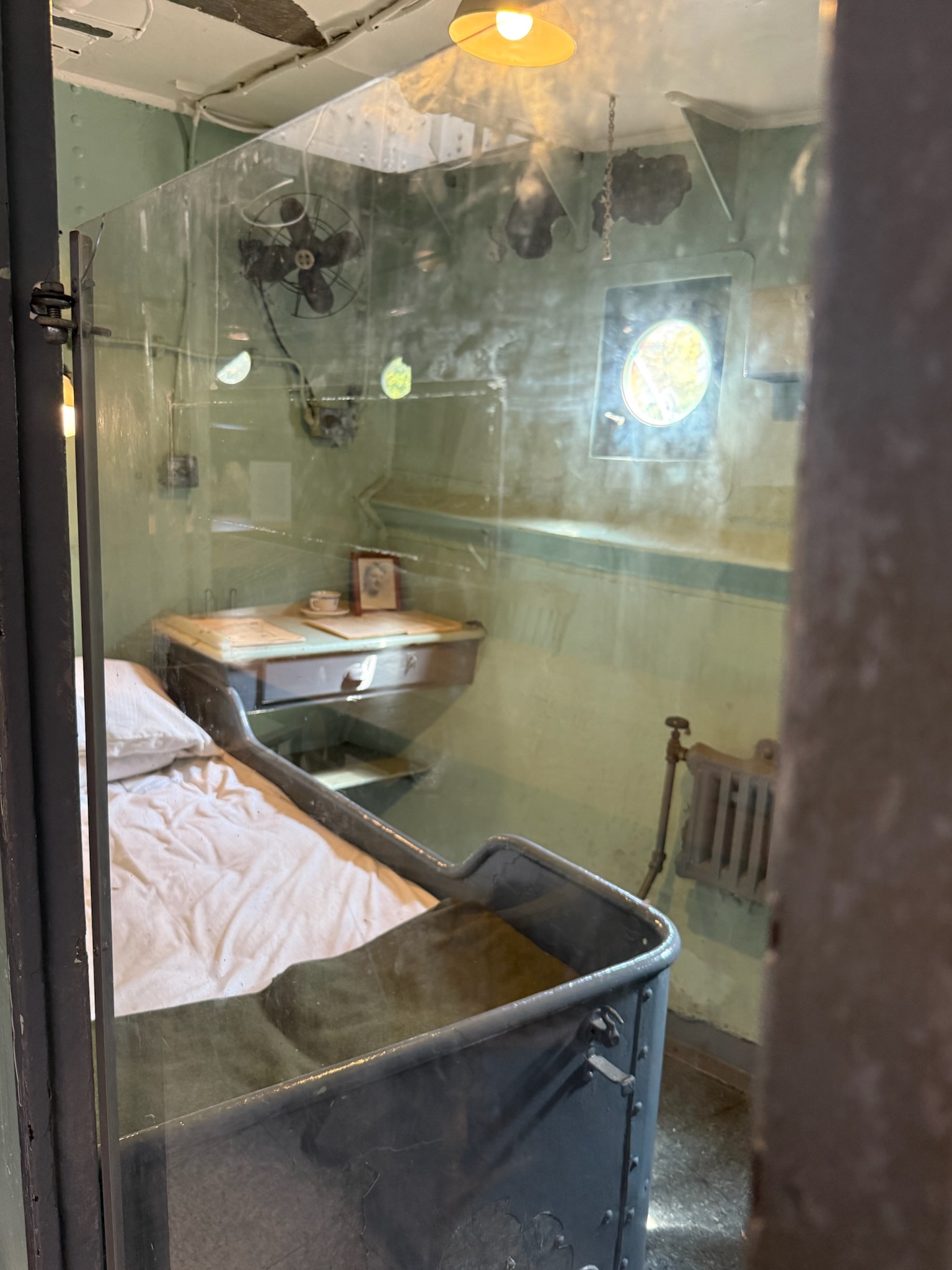
We doubled back to the entrance area and went down the starboard (right side of the boat) hallway. We passed some enlisted men’s quarters. While the rooms were tiny, they were actual rooms with doors, and there were only two beds per room. They looked luxurious compared to the berths in the USS Torsk and the USS Wisconsin. Officer’s had private staterooms.
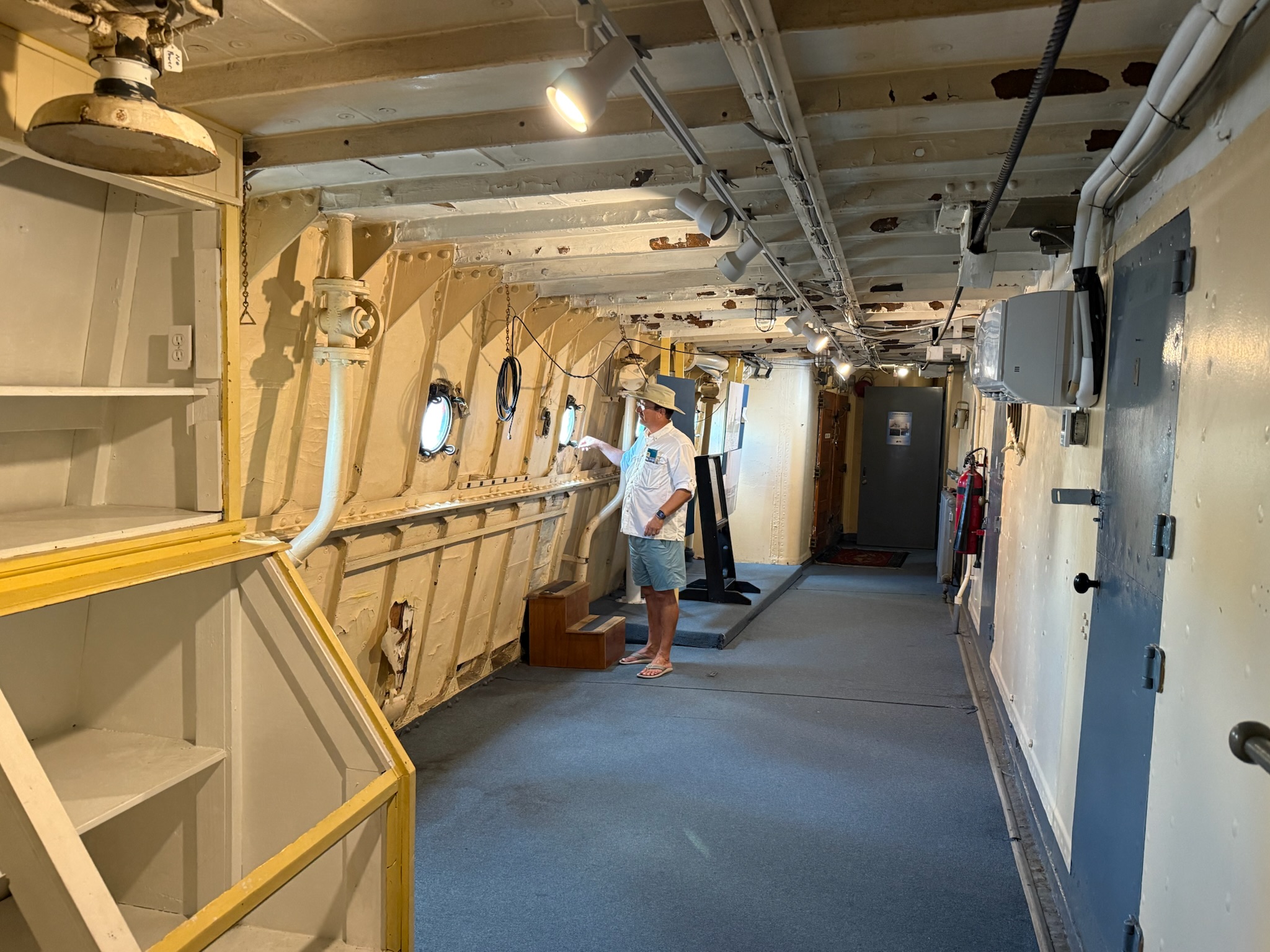
The next area, to the starboard of the galley, was empty. A sign said that a new exhibit was under development.
Aft of the dining area/galley/empty area was what the wardroom (where the officers ate and lounged), and there were officer’s quarters off to the sides. The radio room was also back here, but it was not open for viewing. A sign said that the equipment had been stripped out of the room before the City of Baltimore had acquired it and it was now used as a private office.
Prior to the Coast Guard taking over, there were 7 officers onboard, but after that, there was only one officer, a Boatswain. This wardroom area was used as an office.
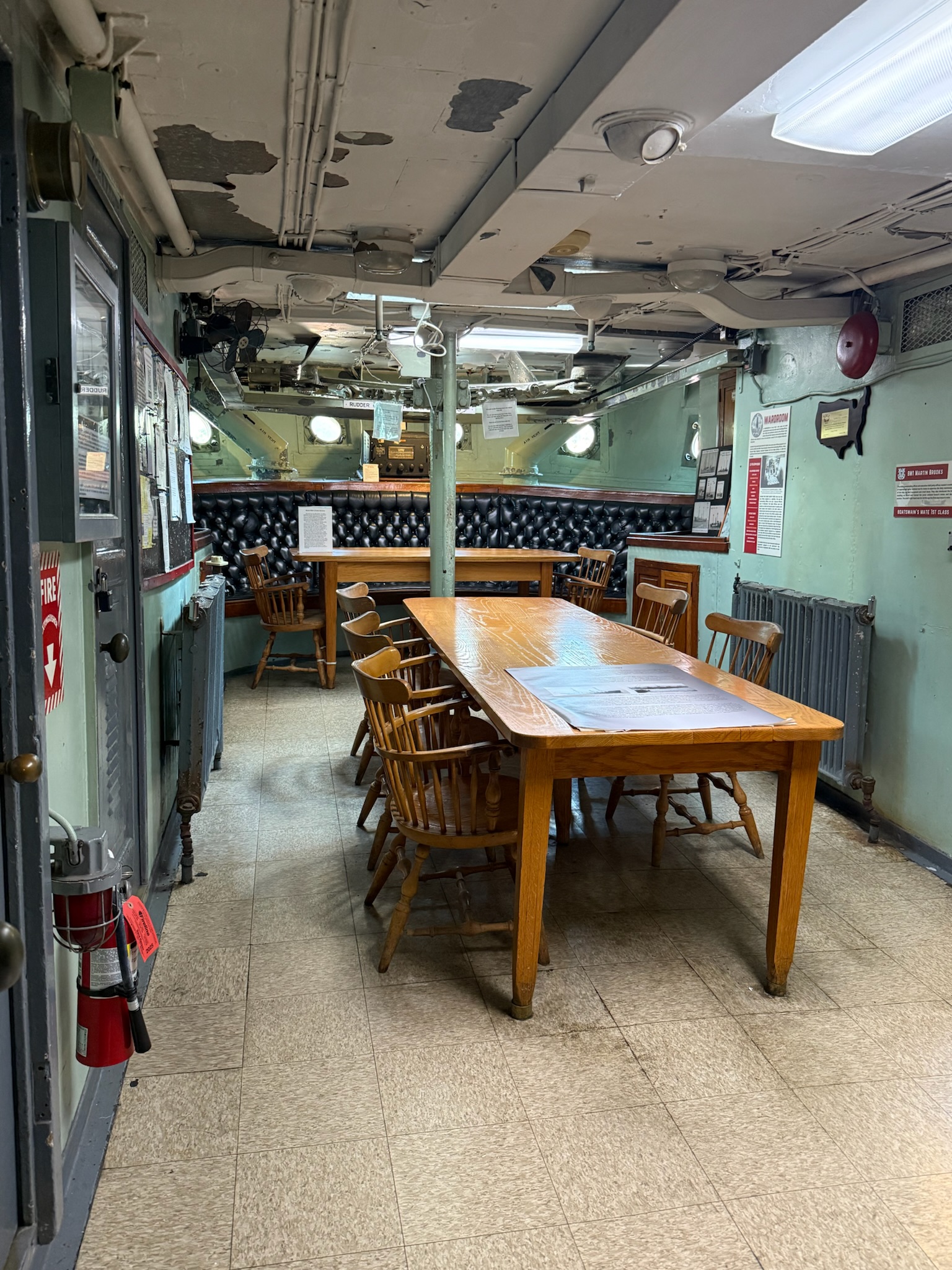
And the remaining staterooms were occupied by the Chief Boatswain’s Mate, the Boatswain’s Mate 1st Class, the Chief Engineman, and the Chief Engineman 1st Class.
A sign in the wardroom said that this ship had changed names three times so that its name matched its duty stations: first it was the Fenwick and was assigned to the Fenwick Island Shoal in Delaware. In 1933, she was moved to the entrance of the Chesapeake Bay and renamed The Chesapeake, and in 1965 was moved to Delaware Bay and renamed the Delaware. As has been the case with many of the historic places we’ve visited here on the east coast, since things changed over time, they’ve chose a single year to focus on for their restoration efforts. The year chosen for this restoration was 1965. So they renamed Lightship 116 back to the Chesapeake as that was her name in 1965.
After we exited the Lightship, we headed to the Coast Guard ship… to be continued...