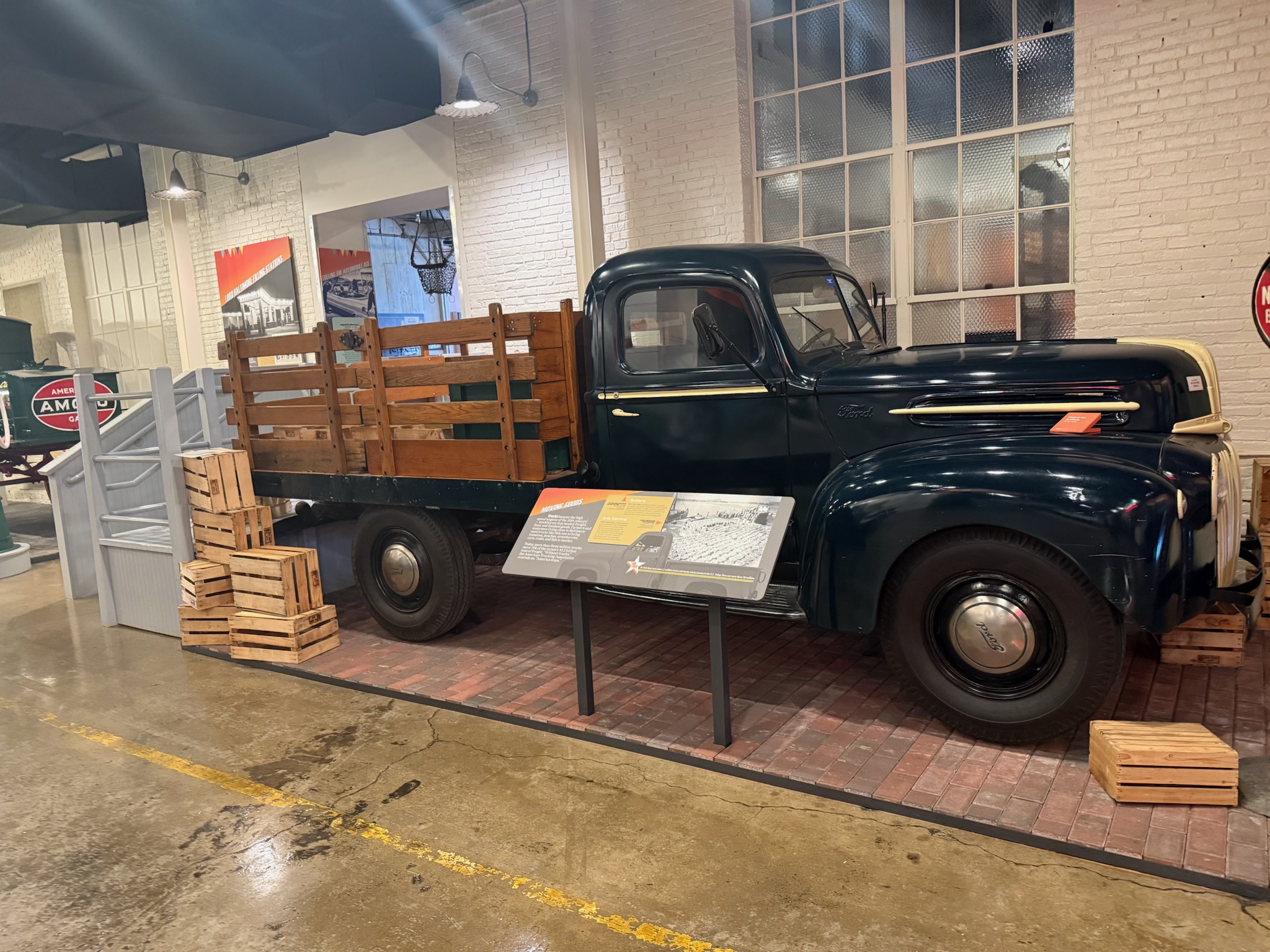
continuing on in the transportation section… in 1935, Chevrolet opened a manufacturing plant south of Baltimore that produced more than 12-million vehicles during its 70+ years of operation. It closed in 2005.
There was a small display on a tire manufacturer. In 1921, Frank Schenuit patented a non-skid, pneumatic rubber tire that he began to manufacture through contractors. In 1925, he opened his own factory in Baltimore, employing 300 people and producing up to 1,000 tires per day. He expanded to airplane tires and niche specialty tires, such as for wheelbarrows. Schenuit sold the company in 1972, and in 1975, the new owner shut the plant down.
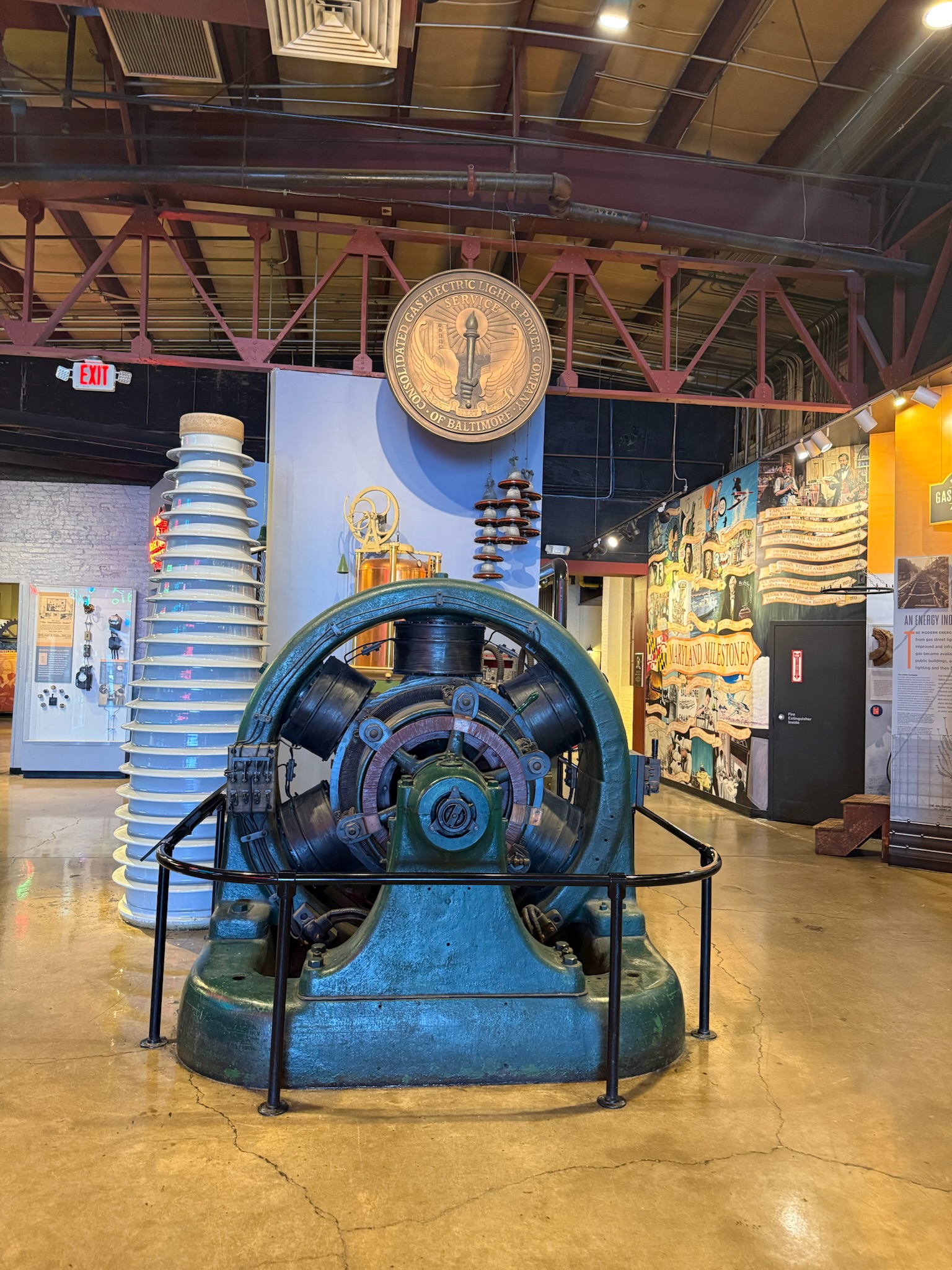
From there, we headed back to the northern part of the building. The first display focused on Baltimore being home to the nation’s first natural gas company, formed in 1816. Within a year, the city streets were illuminated with gas lights. From there, gas infrastructure expanded and became available to businesses and homes. Since gas was cleaner, cheaper and more reliable than coal or oil, the availability of gas attracted many industries to Baltimore. When flat rate billing became problematic, the first gas meter factory opened in Baltimore in 1834. Metering made gas cheaper for most homes and small businesses, making it possible for people of more moderate means to afford to use gas. Electricity arrived in Baltimore in 1881, but early equipment wasn’t reliable, so electrical usage didn’t really take off until the 1920s.
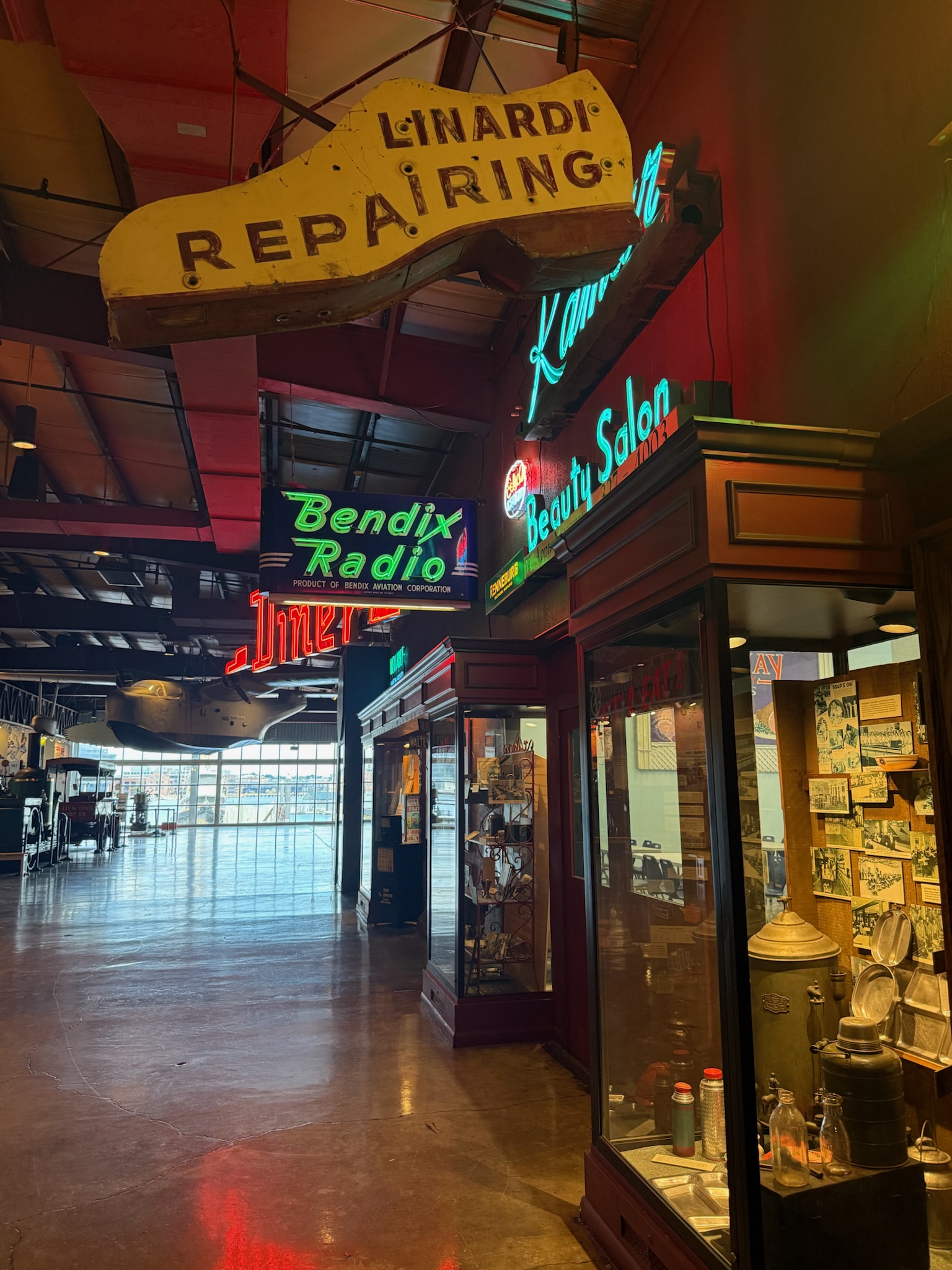
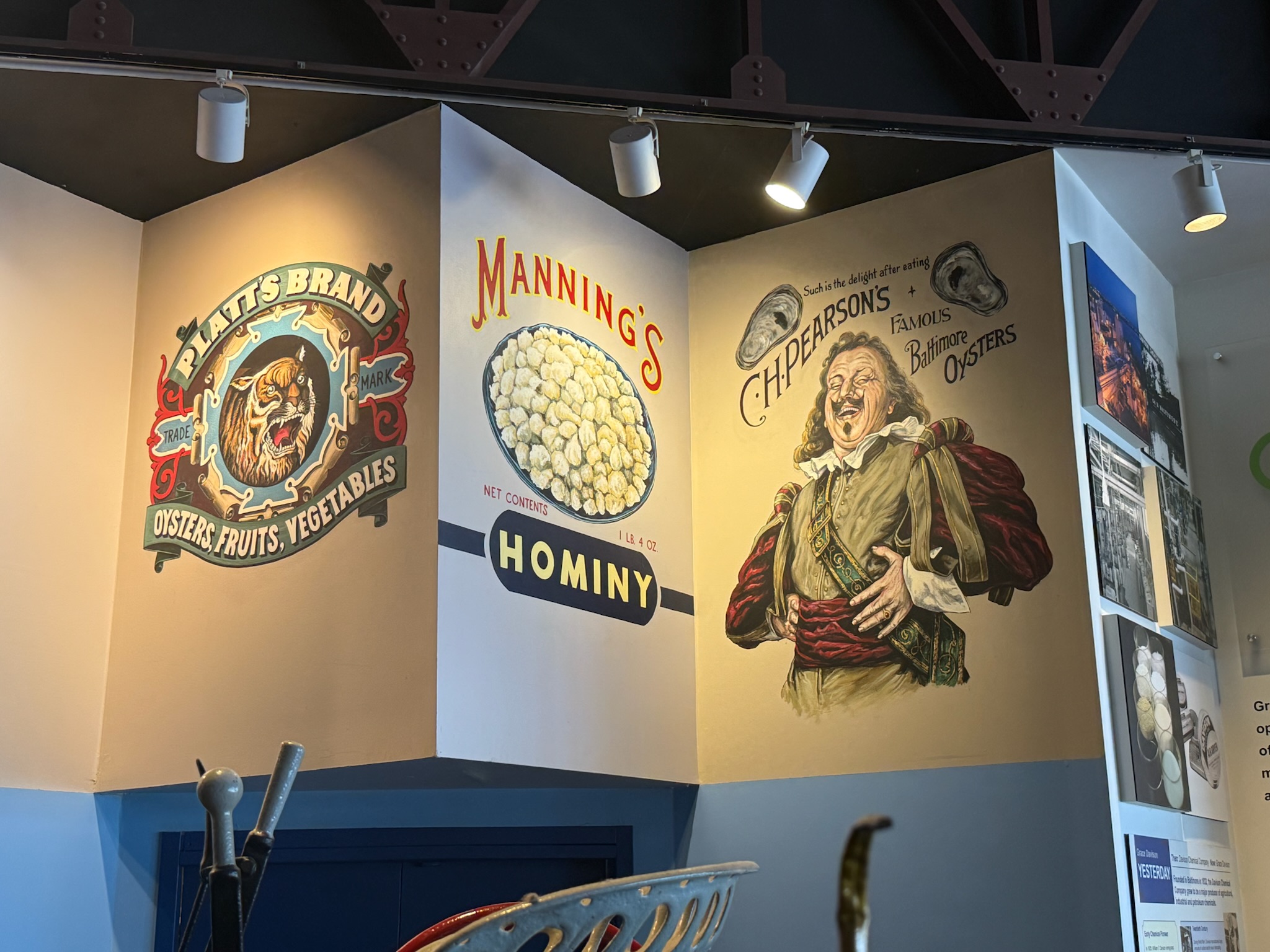
The rest of the room had small displays on many of the important Baltimore businesses. There were too many to name them all, and all were interesting. Some of the more prominent were: B & O, America’s first railroad (established in 1827); the world’s first disposable standard bottle cap (patented in 1892); Bethlehem Steel, which was built in 1889 and was the largest steel mill in the world from 1950 – 1969; and Black & Decker (established in 1910).
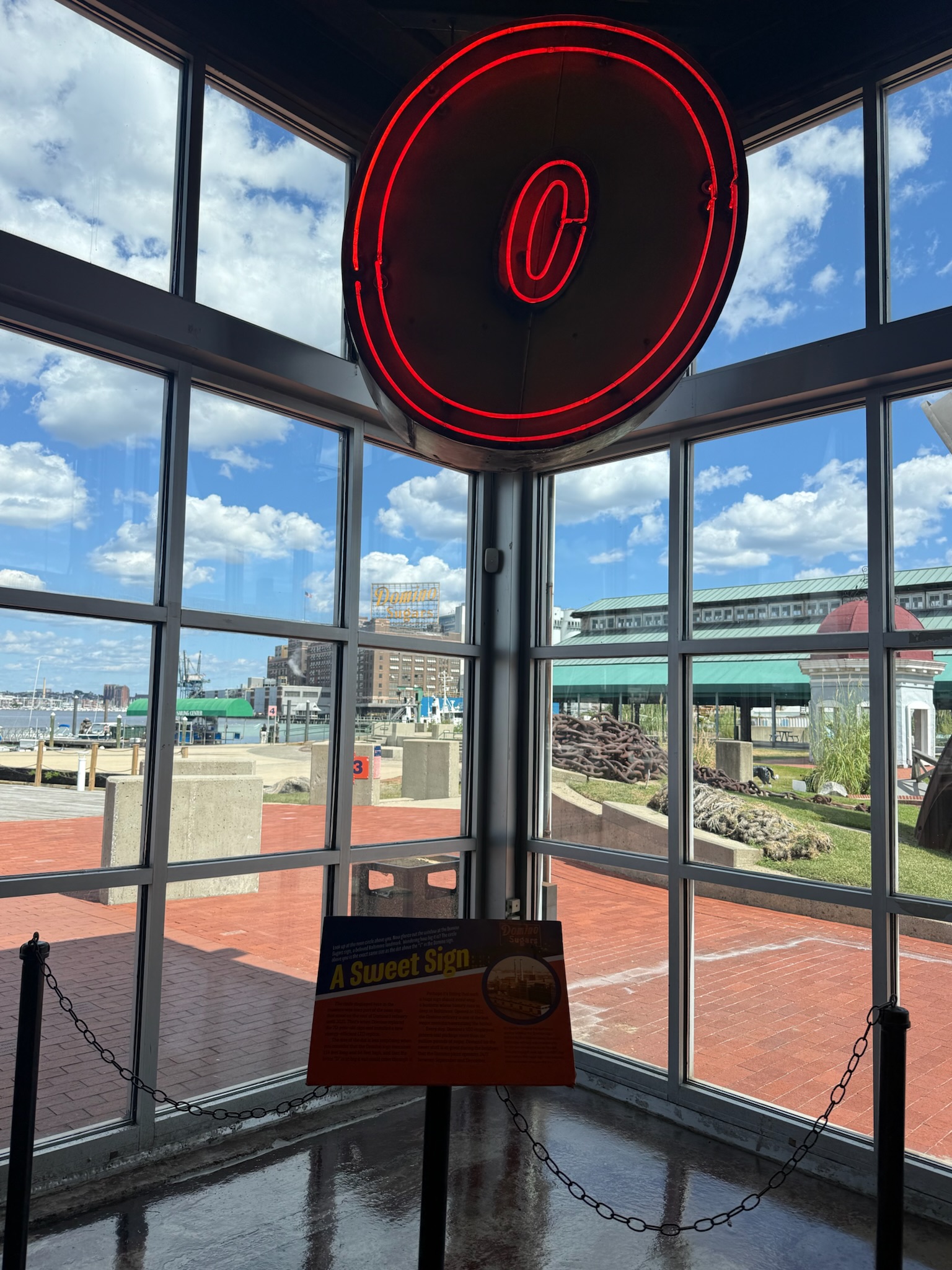
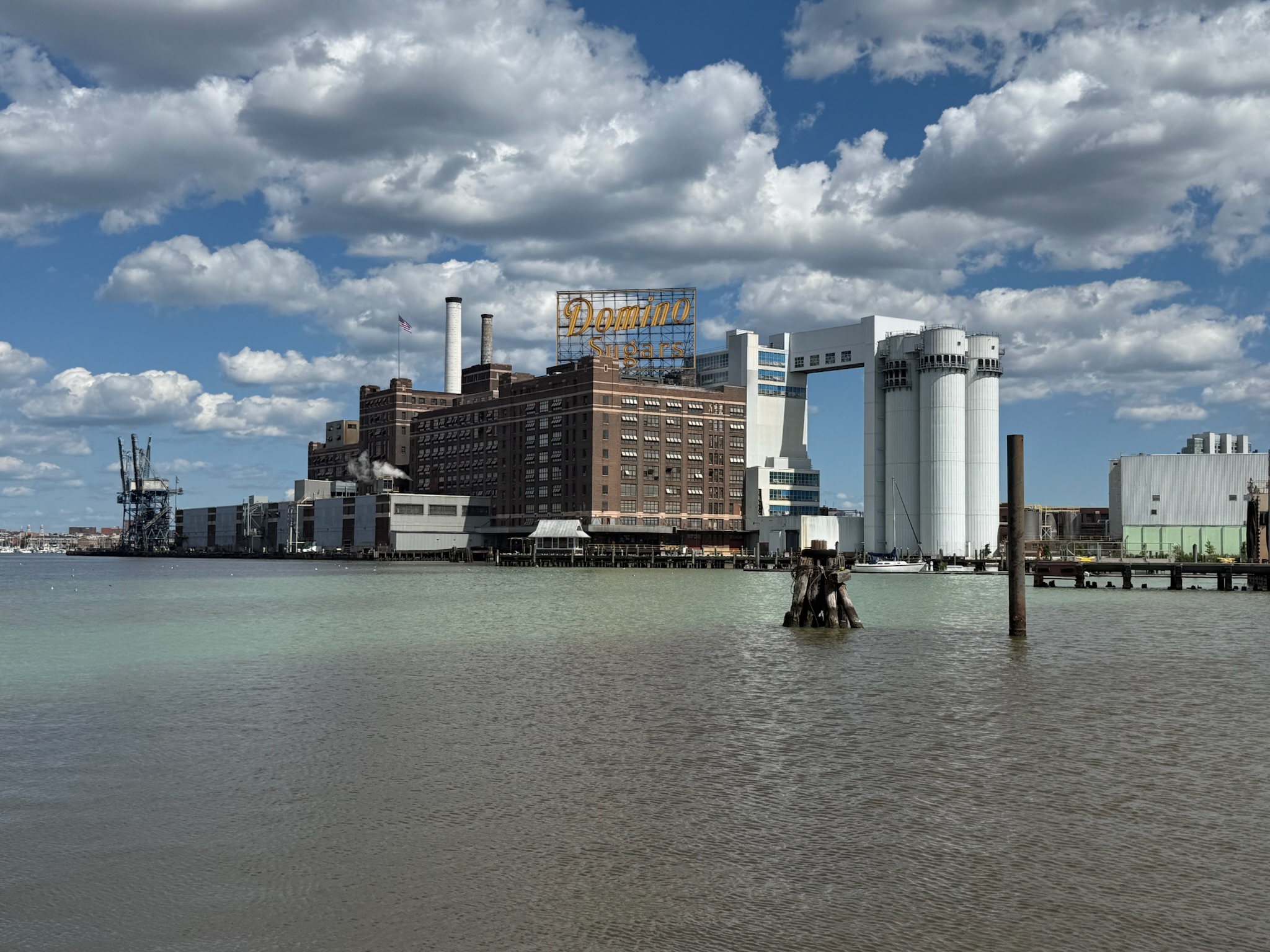
Even though Domino Sugar should have been in the food section, they put the display along the north windows so that patrons could see the factory while looking at the exhibit. Domino opened in 1922, processed and packed 6 million pounds of sugar a day, and employed 500 people. They were one of the last manufacturers left in Baltimore’s bay.
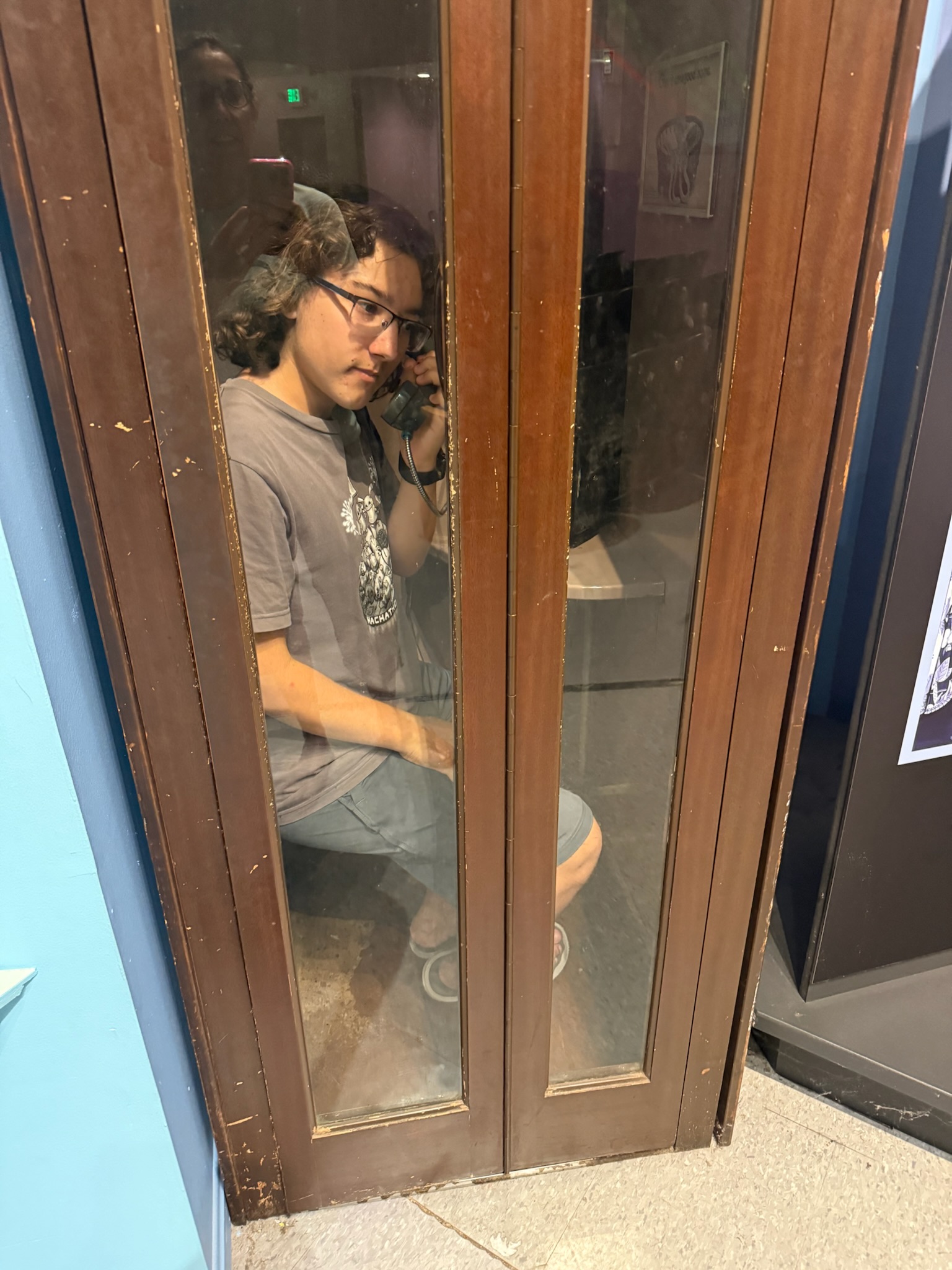
A room off to the side had an exhibit on the history of telecommunications, which started with smoke signals and carrier pigeons and ended with smartphones. Unlike the rest of the museum, this exhibit wasn’t focused primarily on Baltimore. Keith was bored, so he called one of his friends. 😉
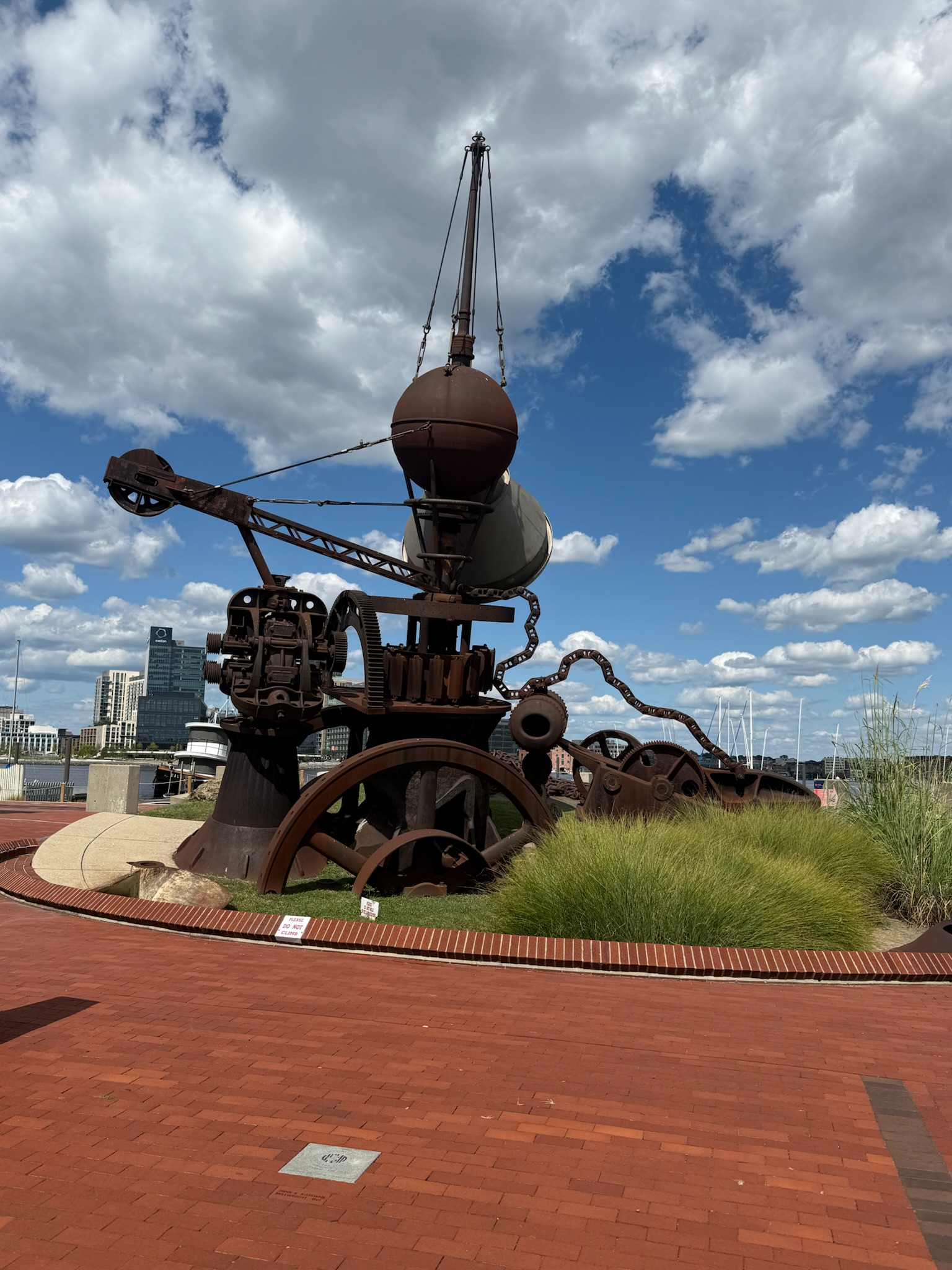
The outdoor area had an interesting sculpture made of now obsolete industrial machinery that was donated to the sculptor by various businesses.
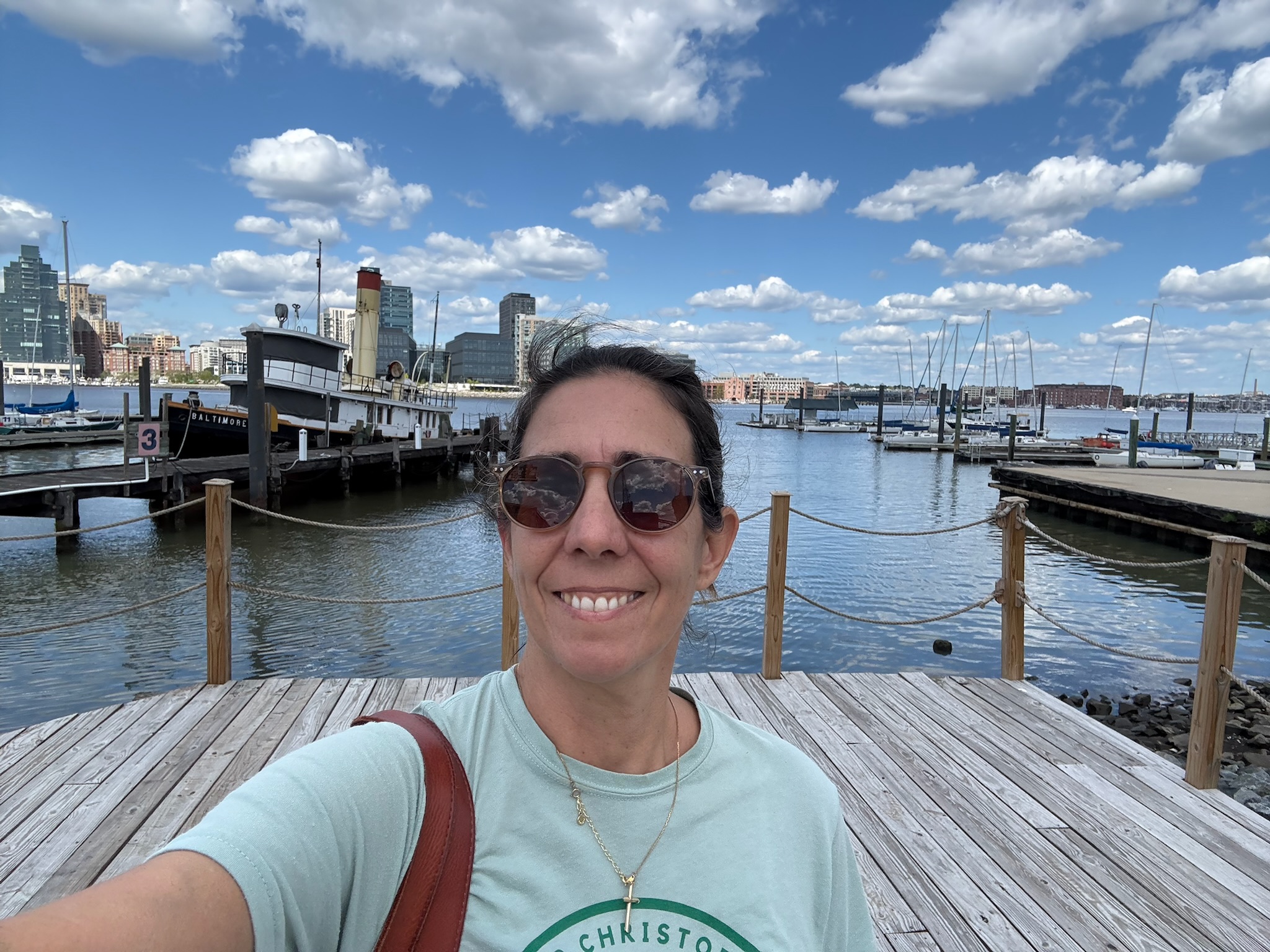
Two boats were part of the museum. One was an 89-foot tug built in 1906 and used by the city as an ice breaker, inspection vessel and towing vessel until 1962. We didn’t check to see if it was open.
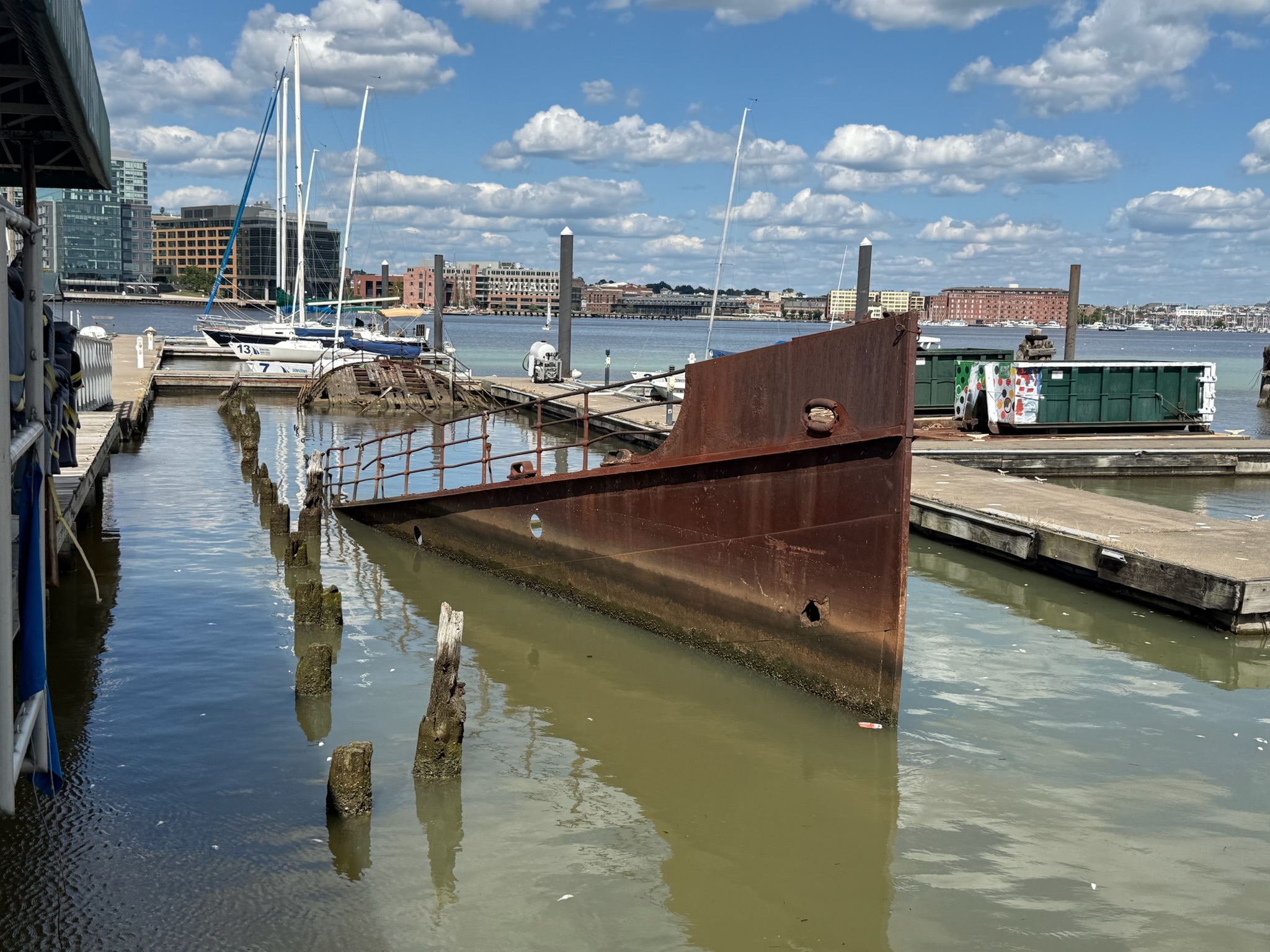
The other was a 114-foot sailboat built in 1884 that was the flagship of the Maryland Oyster Navy until 1931. The Oyster Navy was formed in 1867 to enforce fishery laws on the Chesapeake. We suspect she has some deferred maintenance issues.
There was a nice view of the Domino sugar factory.
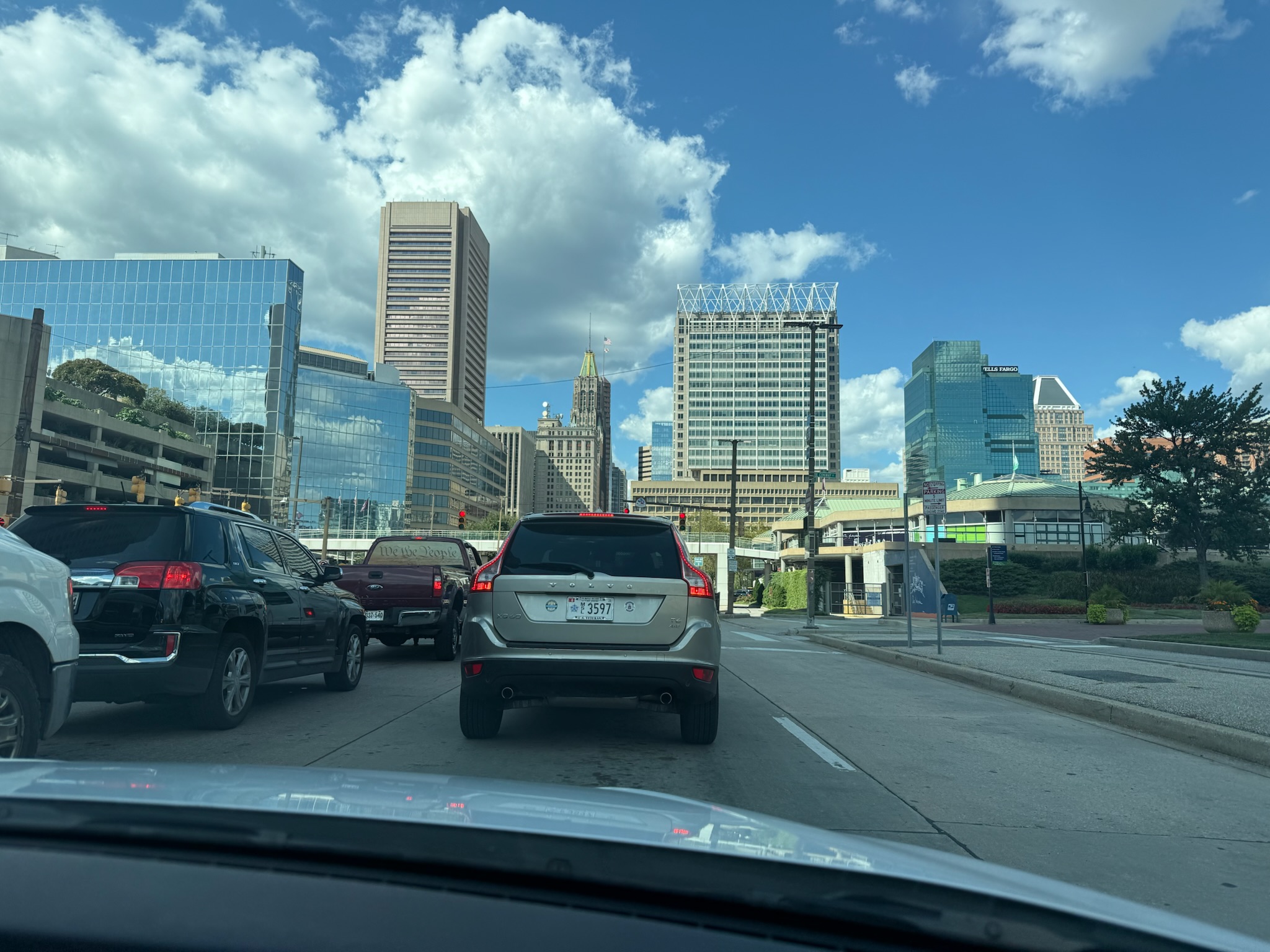
We left the museum about 1500 and were unhappy to find ourselves in the middle of a terrible traffic jam through downtown. As we neared the sewage plant, we saw that it was caused by road work. It cleared once we passed the work.
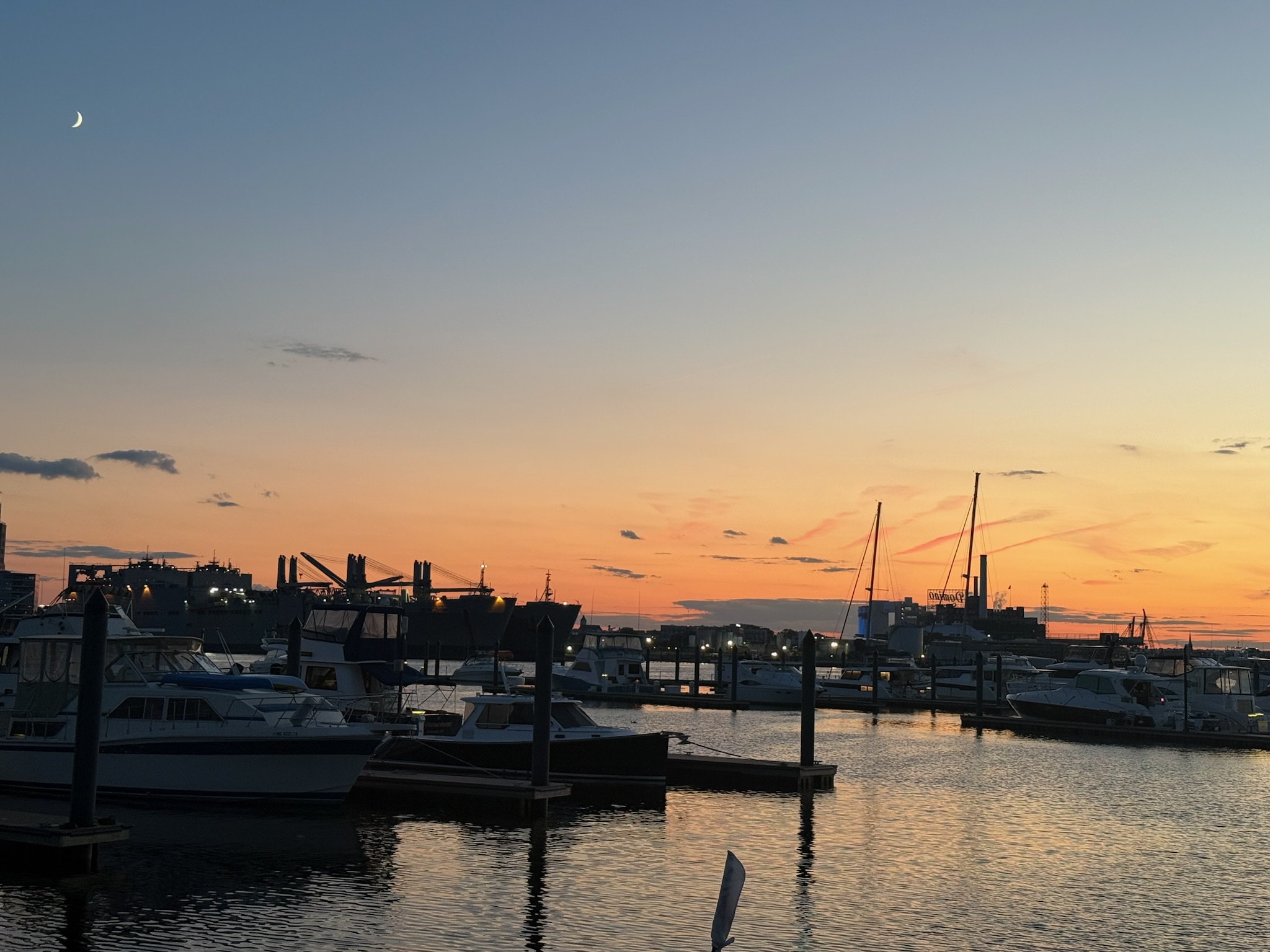
It was a nice sunset.