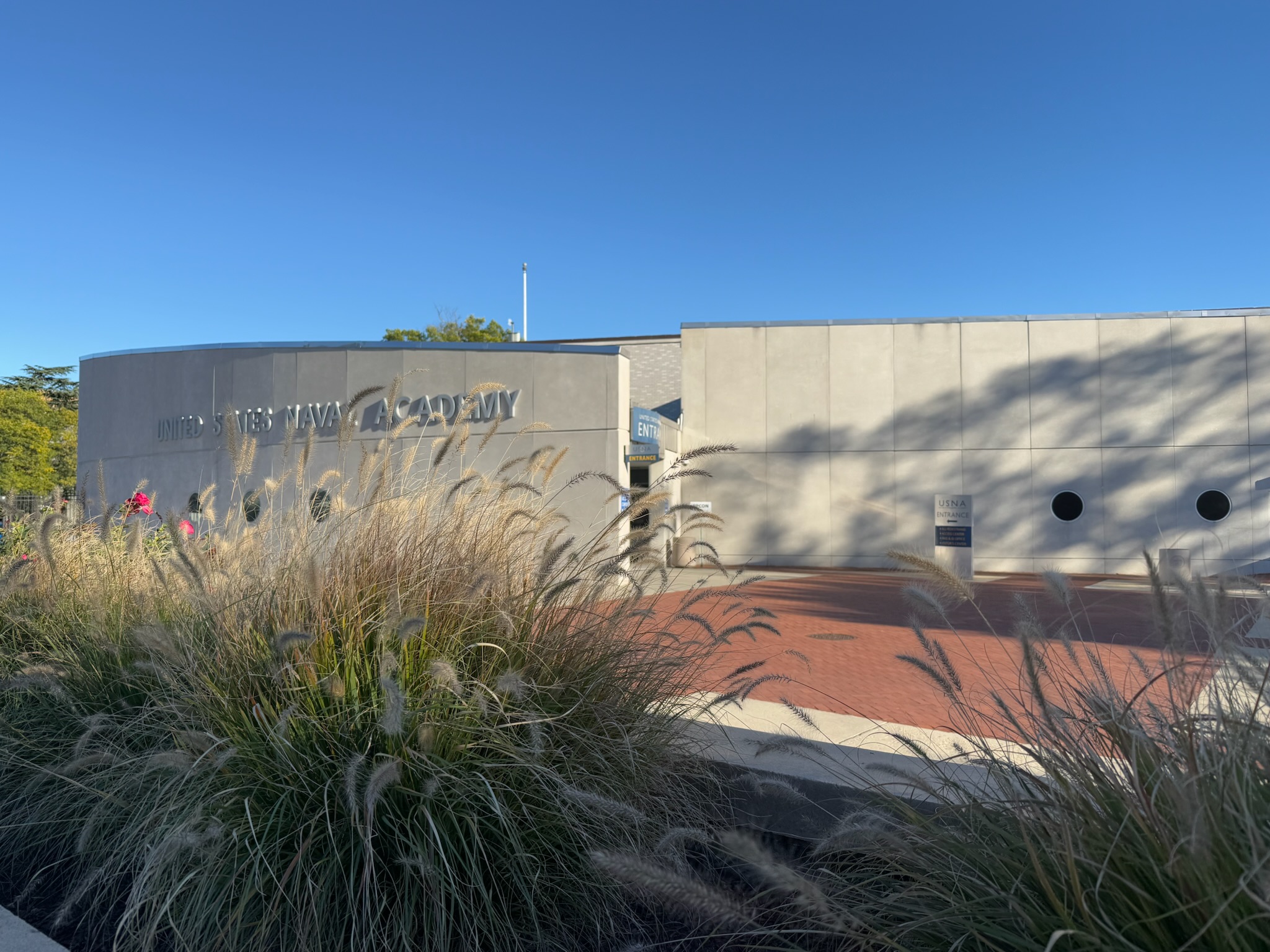
The security guard said the last tour of the day was just beginning, so we rushed into the visitor’s center to get tickets. We passed a group that was standing near the entrance; an older gentleman was introducing himself, so we figured that was our group and they’d already started.
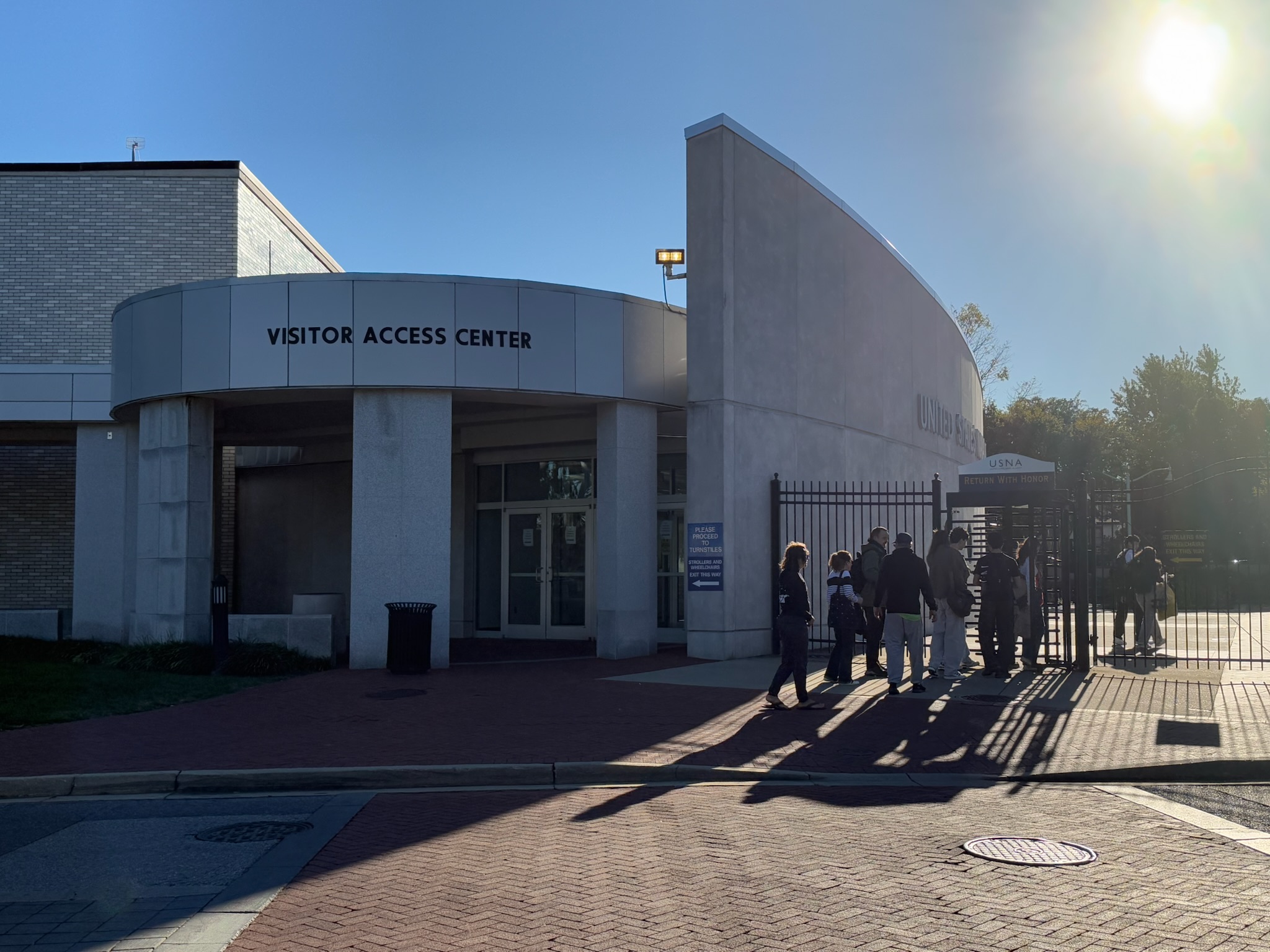
It looked like there was a film that showed every few minutes and a small museum in the visitor’s center, but we obviously didn’t have time watch the film or to look around. Tickets were $18 for adults and $16 for ages 5 – 17. The man at the register tried to charge Keith for an adult ticket. When we said he was a student he said “Oh, here for a college tour?” When we said he was only 13, he looked disbelieving.
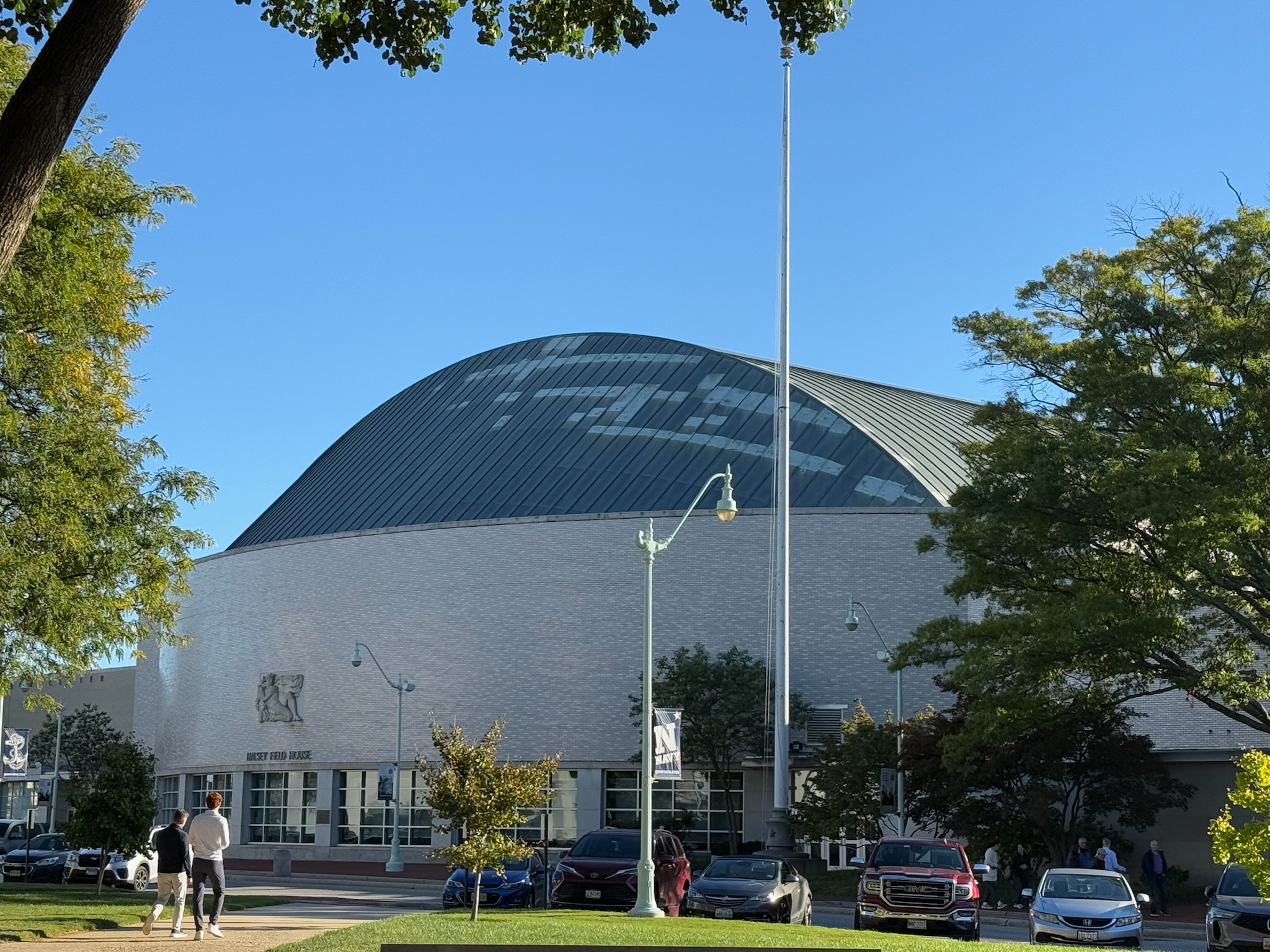
We joined the tour group, which had moved a little ways and were outside the entrance to an indoor football field, called the Halsey Field House. We asked someone what we had missed, and he replied that the guide had mostly given a background on himself and was just beginning to talk about the school.
The Naval Academy at Annapolis was the second oldest of the five U.S. service academies and it educated midshipmen for service in the officer corps of the United States Navy and United States Marine Corps. It was part of the Naval University System. The 338-acre campus was located on the former grounds of Fort Severn. The students here were active duty soldiers in the U.S. Navy; they were considered midshipmen who were receiving training to become officers while pursuing their education. After finishing the four-year course, they would graduate with a Bachelors of Science degree and be ranked as an ensign in the Navy or a second lieutenant in the Marines. After graduation, they were required to serve as active duty officers for a minimum of five years. We supposed one of the big draws of this school was that it was free — the Navy covered 100% of tuition, room, and board costs.
The guide told us about the various sports that were played on this field, and about various championship and awards the teams had won. He went on and on and on about the football victories. Since we weren’t big sports fans, we didn’t pay much attention. He also said that another sports complex on campus was being renovated and that the sports normally played in the other complex have been moved here until that field reopens. We got the clear sense that our guide was obsessed with sports.
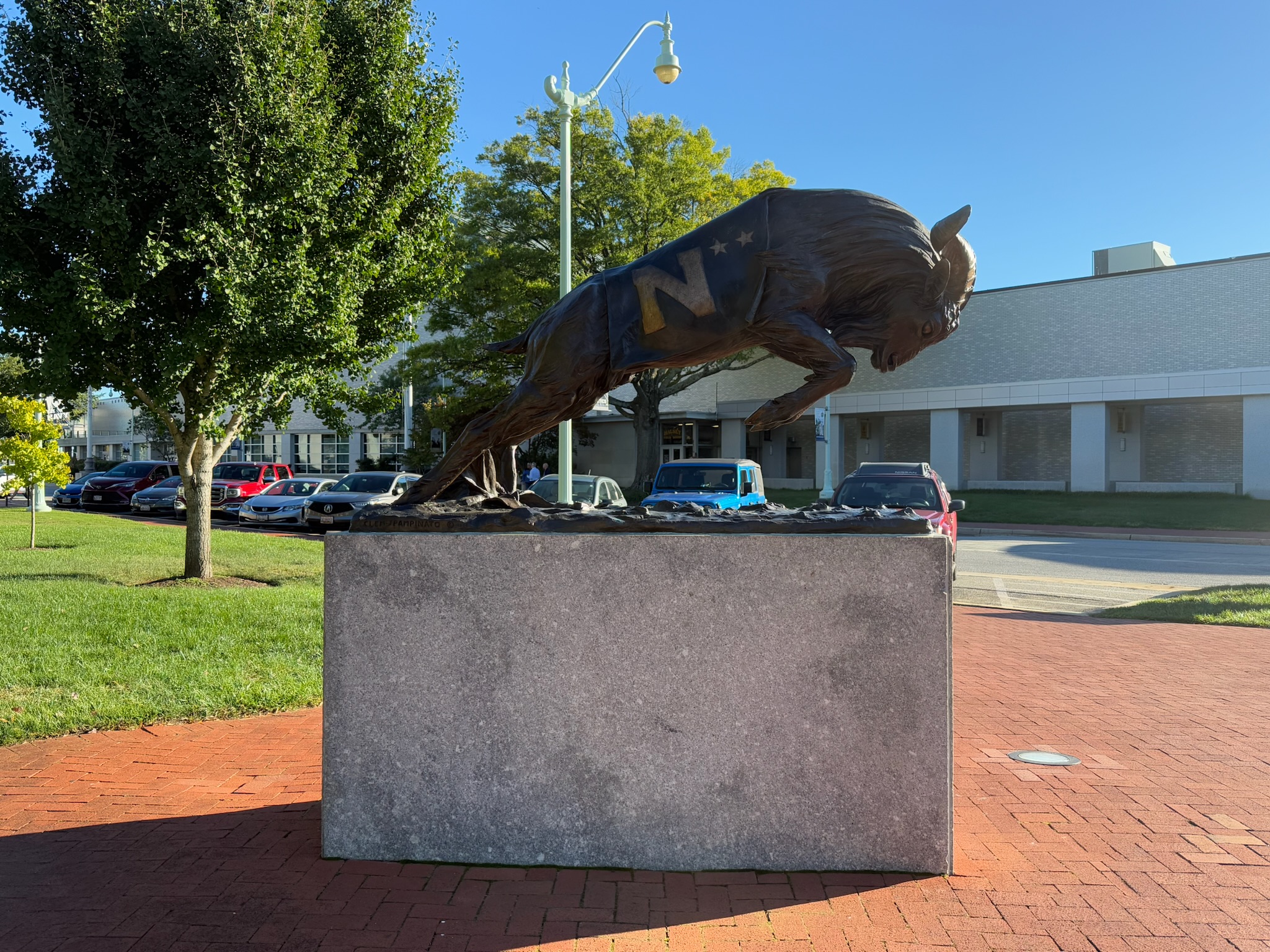
Our next stop was a statue of a goat. He explained that the goat was the school’s mascot. Then he told us that his particular alumni class was currently tasked with maintaining the statue and gave us the complex details about how statue maintenance assignments were scheduled. Keith was glaring at Christi and Eric for making him take this painfully boring tour.
Next we went into the Lejeune building, which was a sports complex.
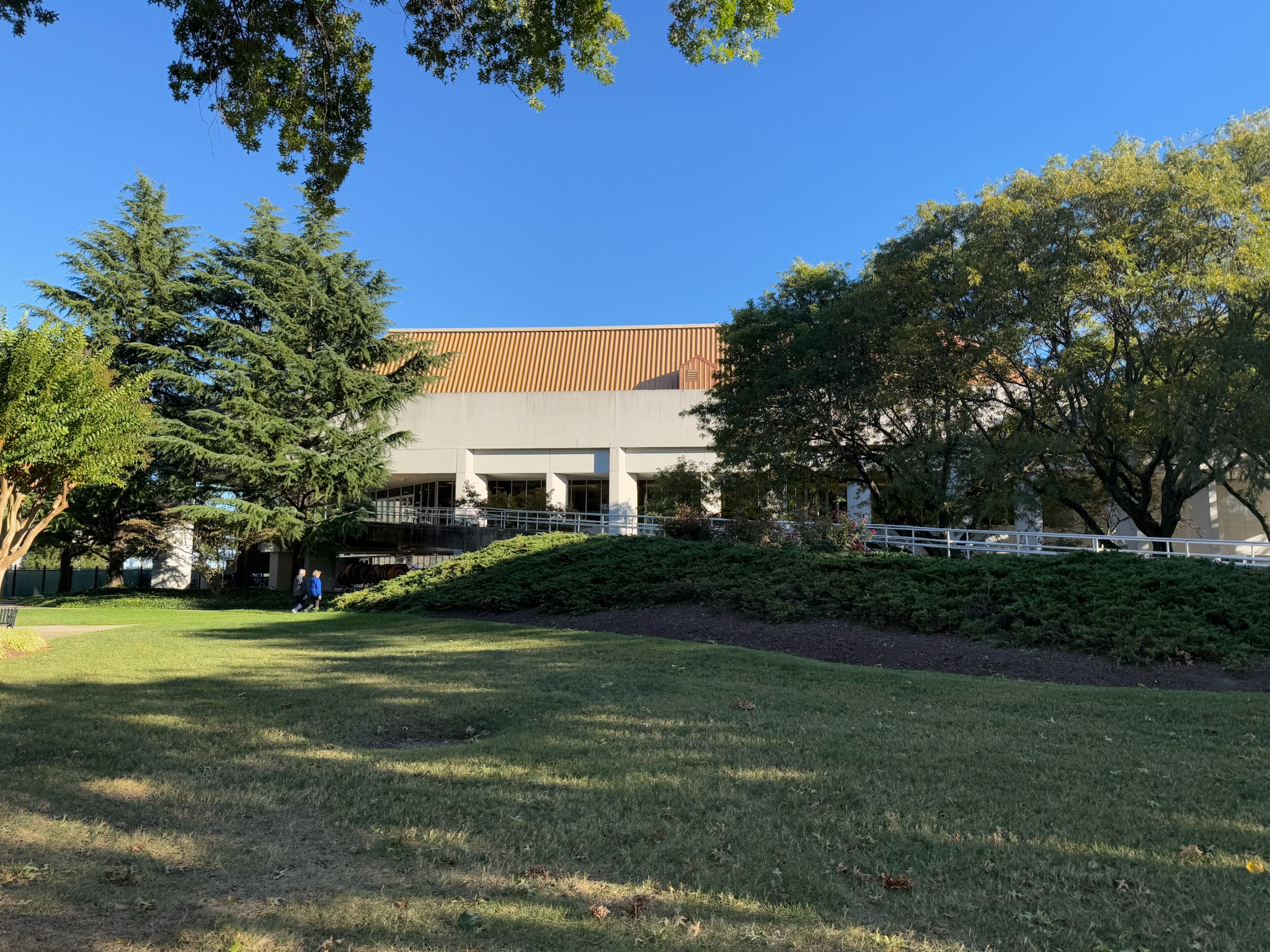
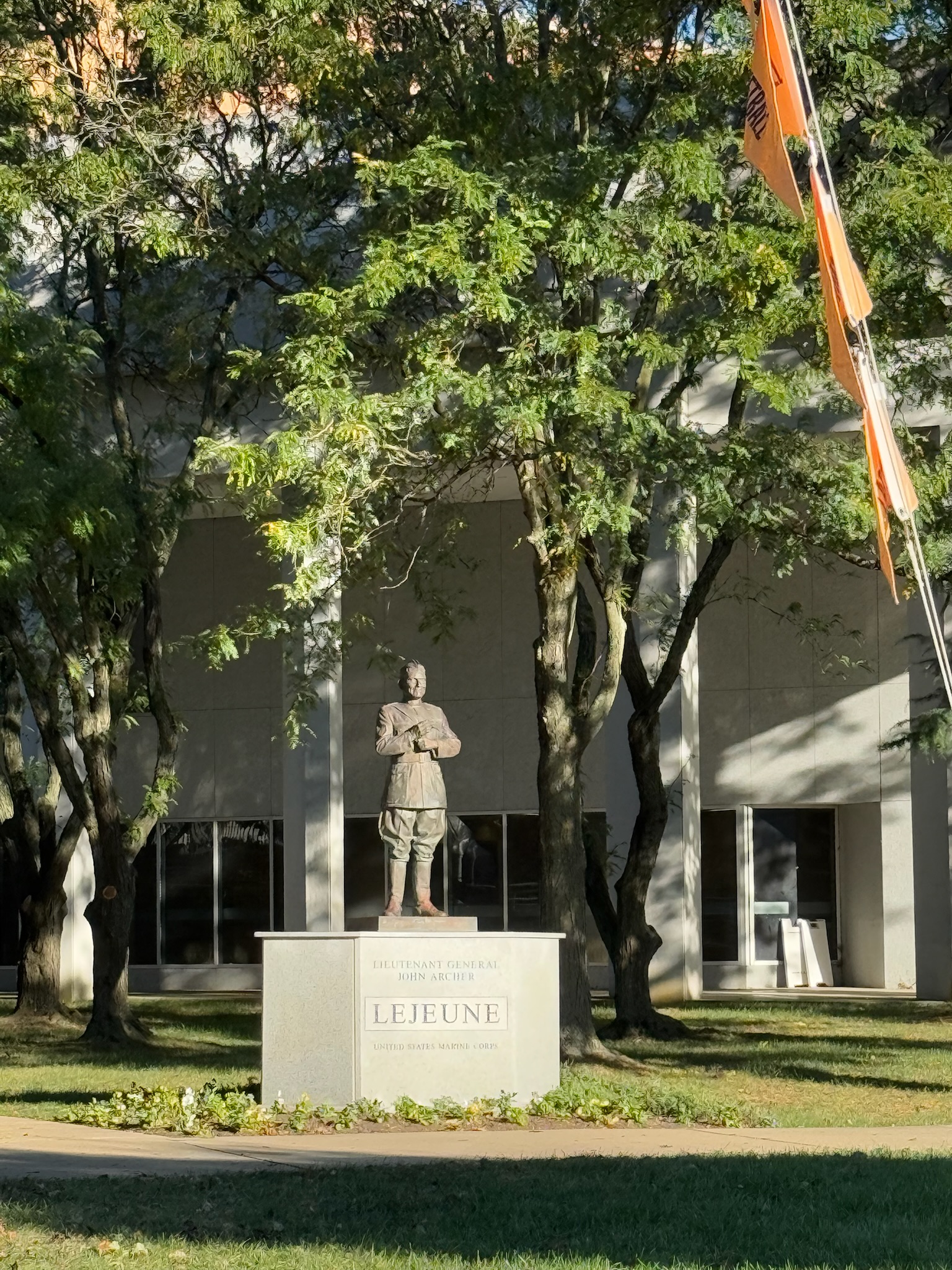
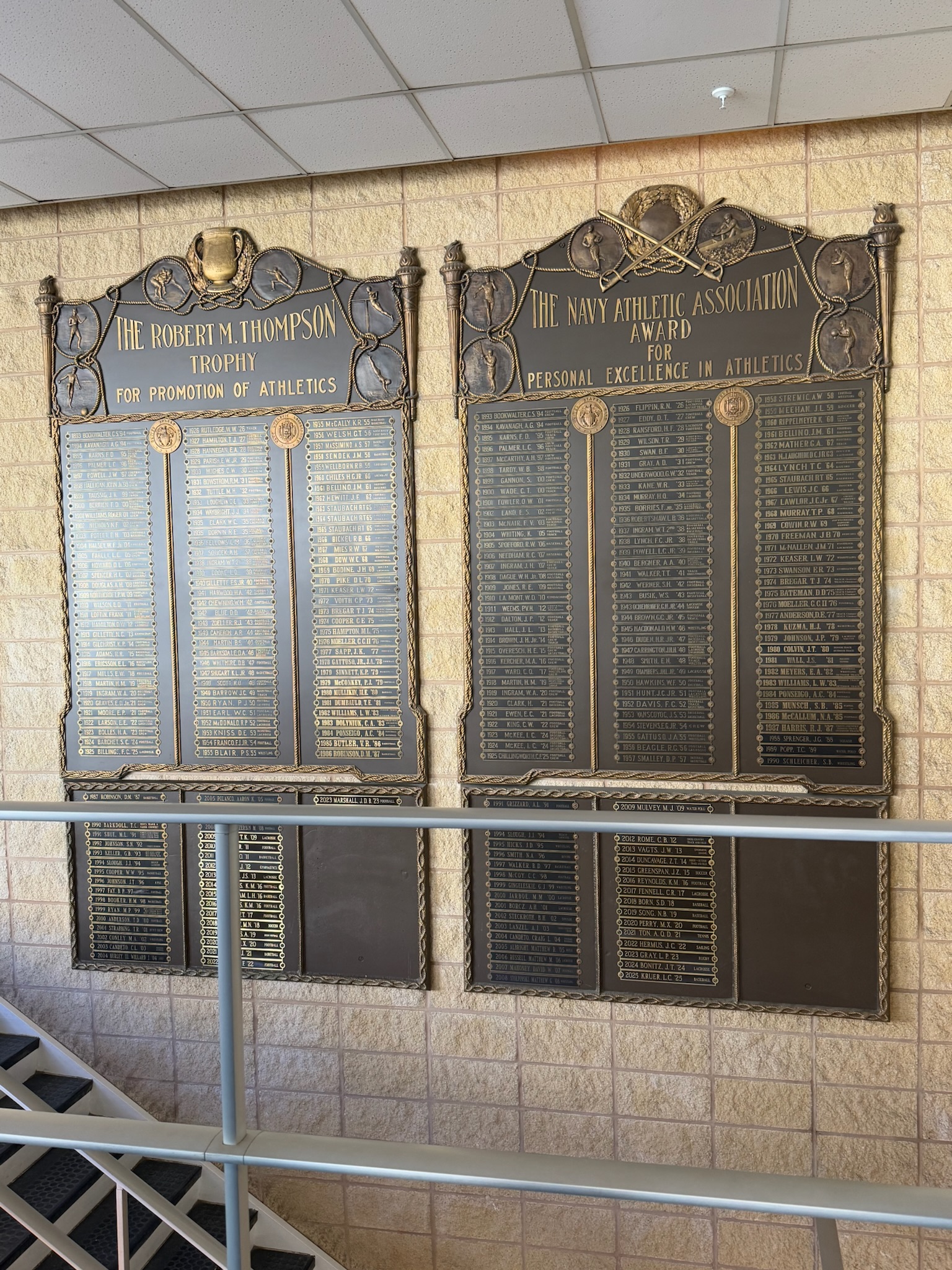
We assumed it was the complex being renovated, but our guide said a different complex was under renovation. The building was state of the art. For each area that we passed, he explained which sport(s) were played in that area and gave a list of championships won and notable players. He especially highlighted tennis and rowing. There were many, many trophies, plaques, and awards on display in the halls. The school was clearly very focused on sports.
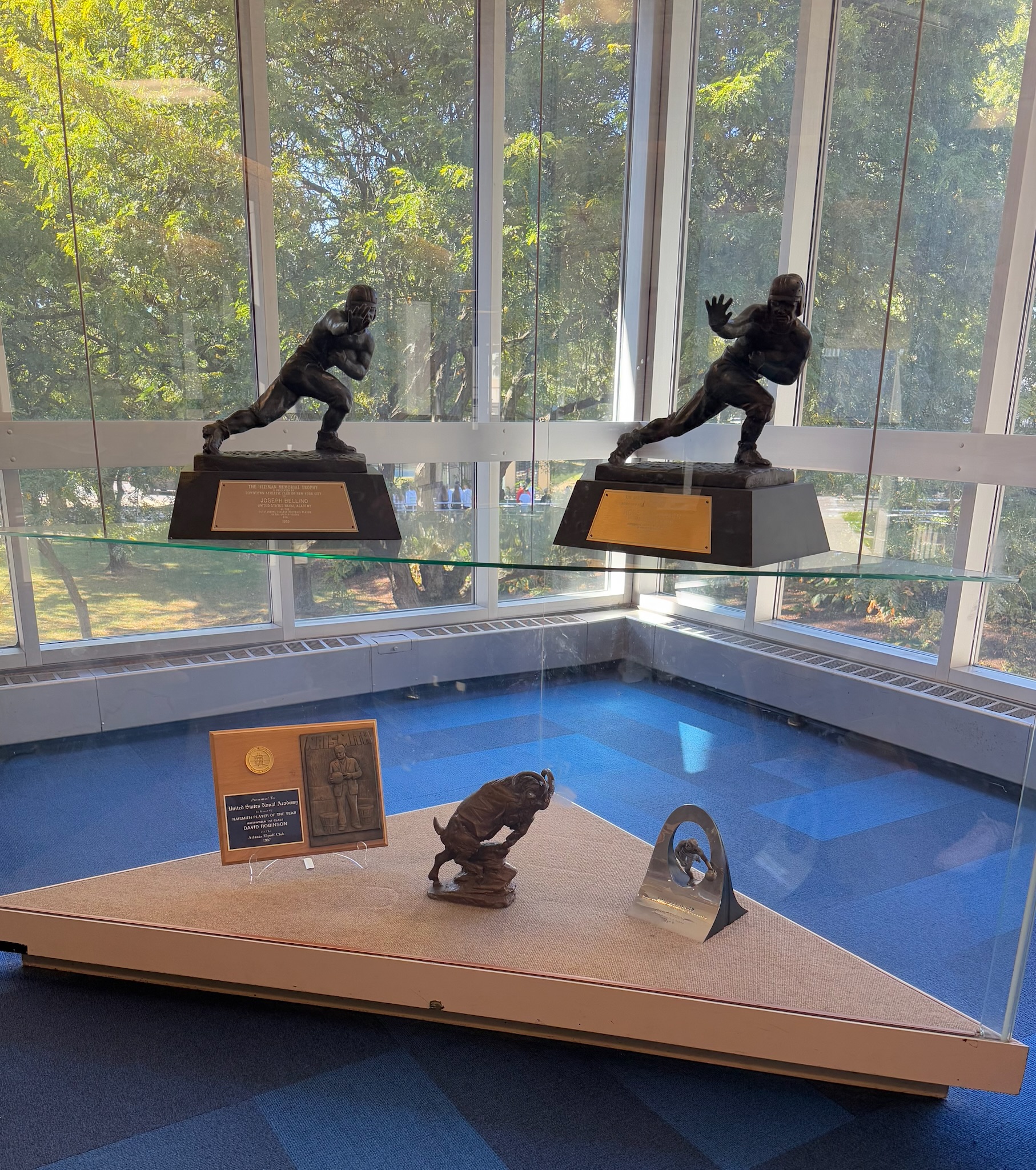
As we walked around, the guide also went into detail about the rigorous physical fitness requirements that the school had. Every cadet had to pass a physical fitness test. 80% of students failed physical exam during the first week of school, and by the 6-week mark, 90% passed. If they didn’t pass the physical fitness test by the end of their first — we couldn’t remember if he said semester or year — they failed out of school. We didn’t remember most of the test requirements, but we did remember that he said that every cadet has to swim 15 laps in full uniform (except shoes) under a certain time, and they also had to jump off the high dive fully clothed.
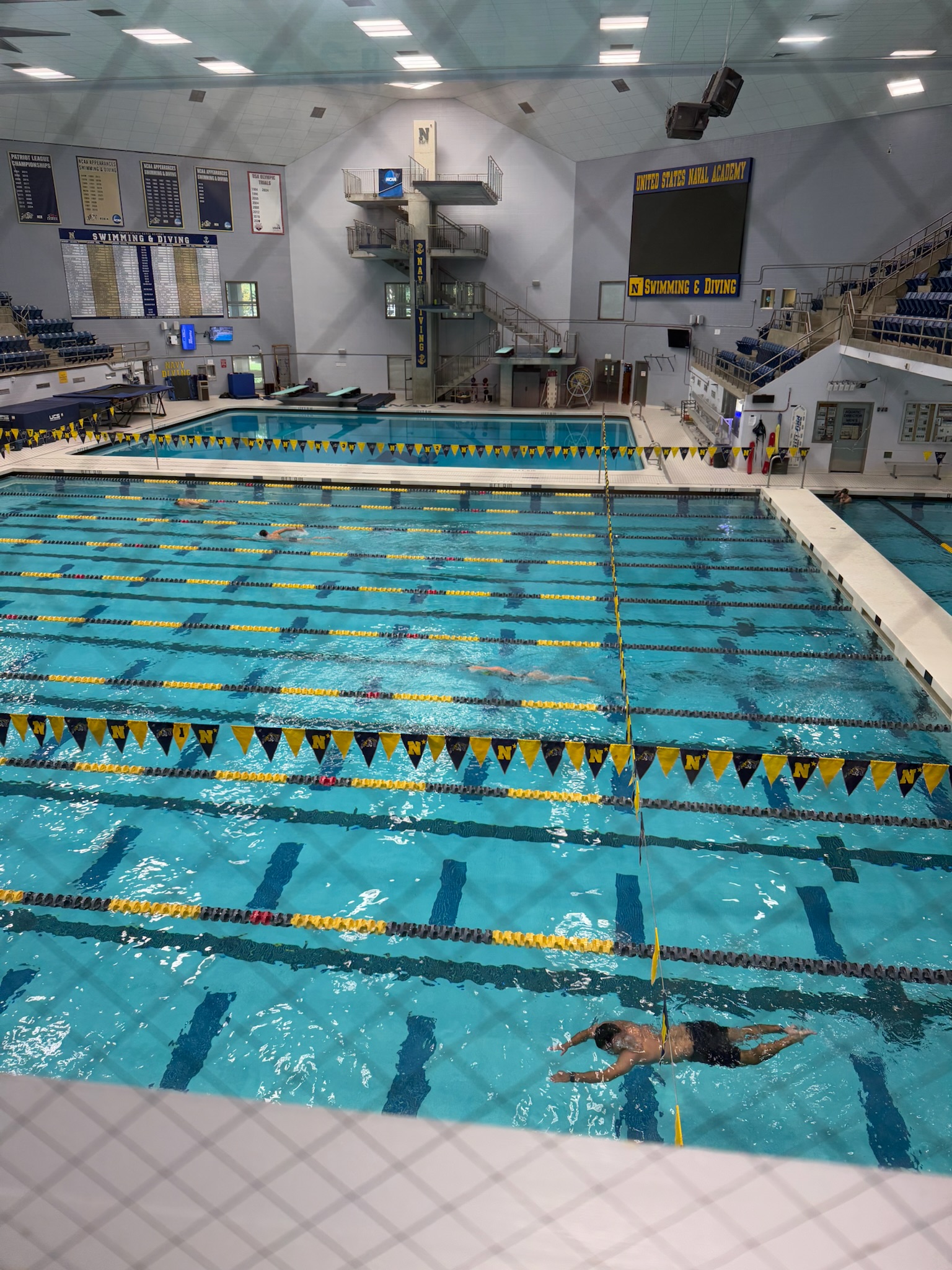
We also remembered that he said that every student was required to take self-defense classes along with participating in a sport — though we can’t remember if that was just for freshmen or if it was for all students.
Next we went to the staff housing, which was really nice. Certain jobs on campus included housing as a benefit, and he listed which jobs included this particular housing.
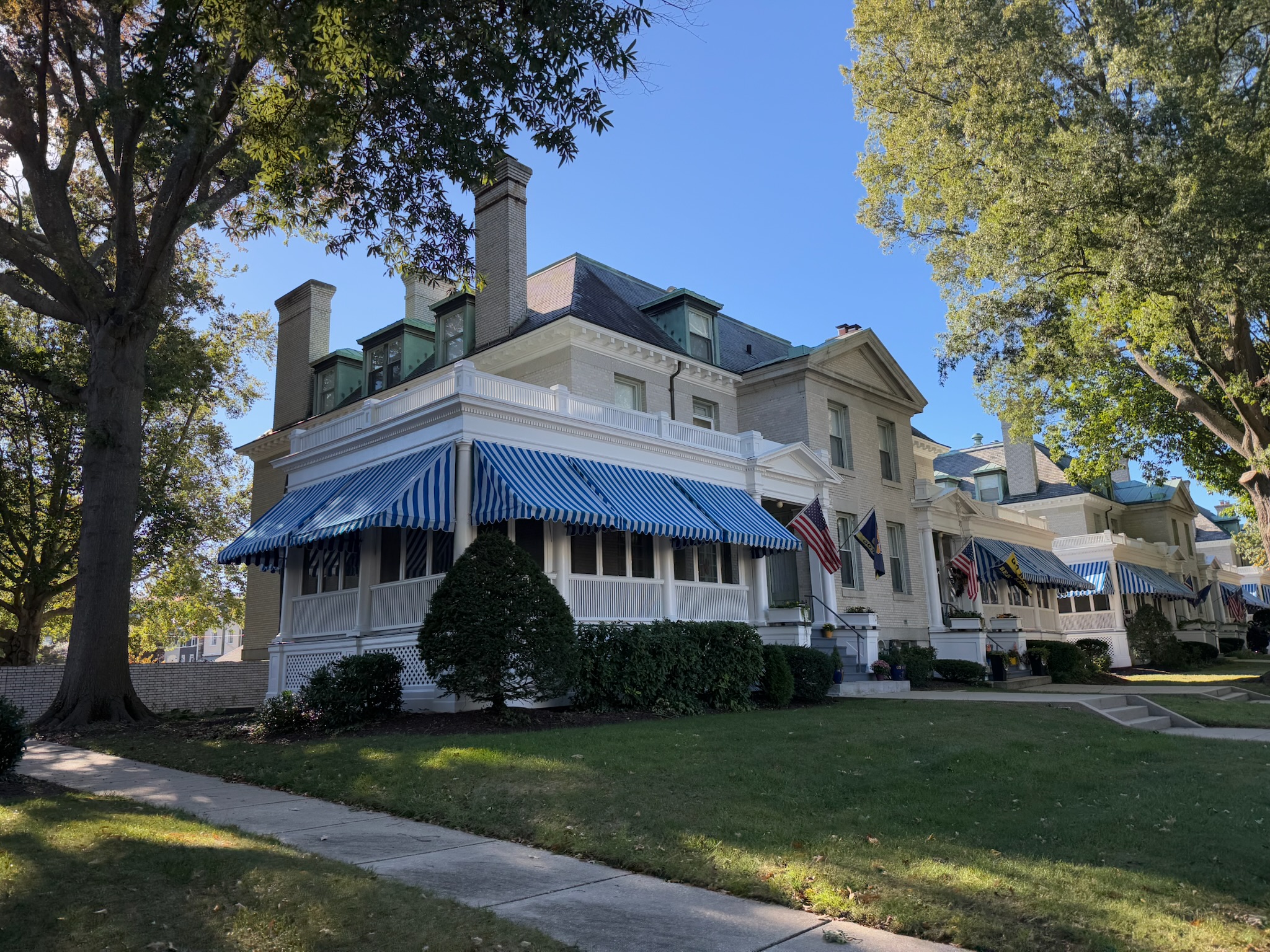
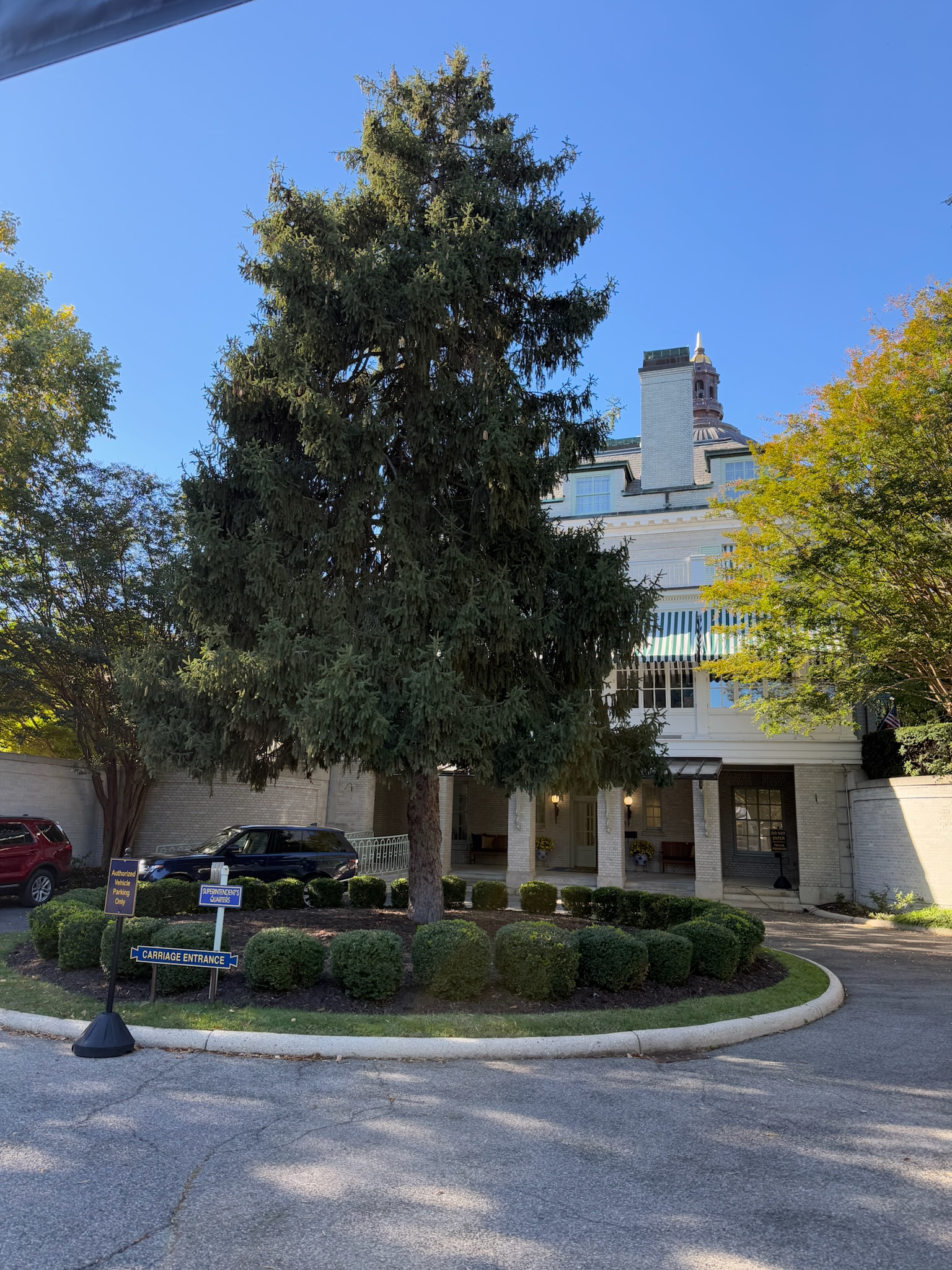
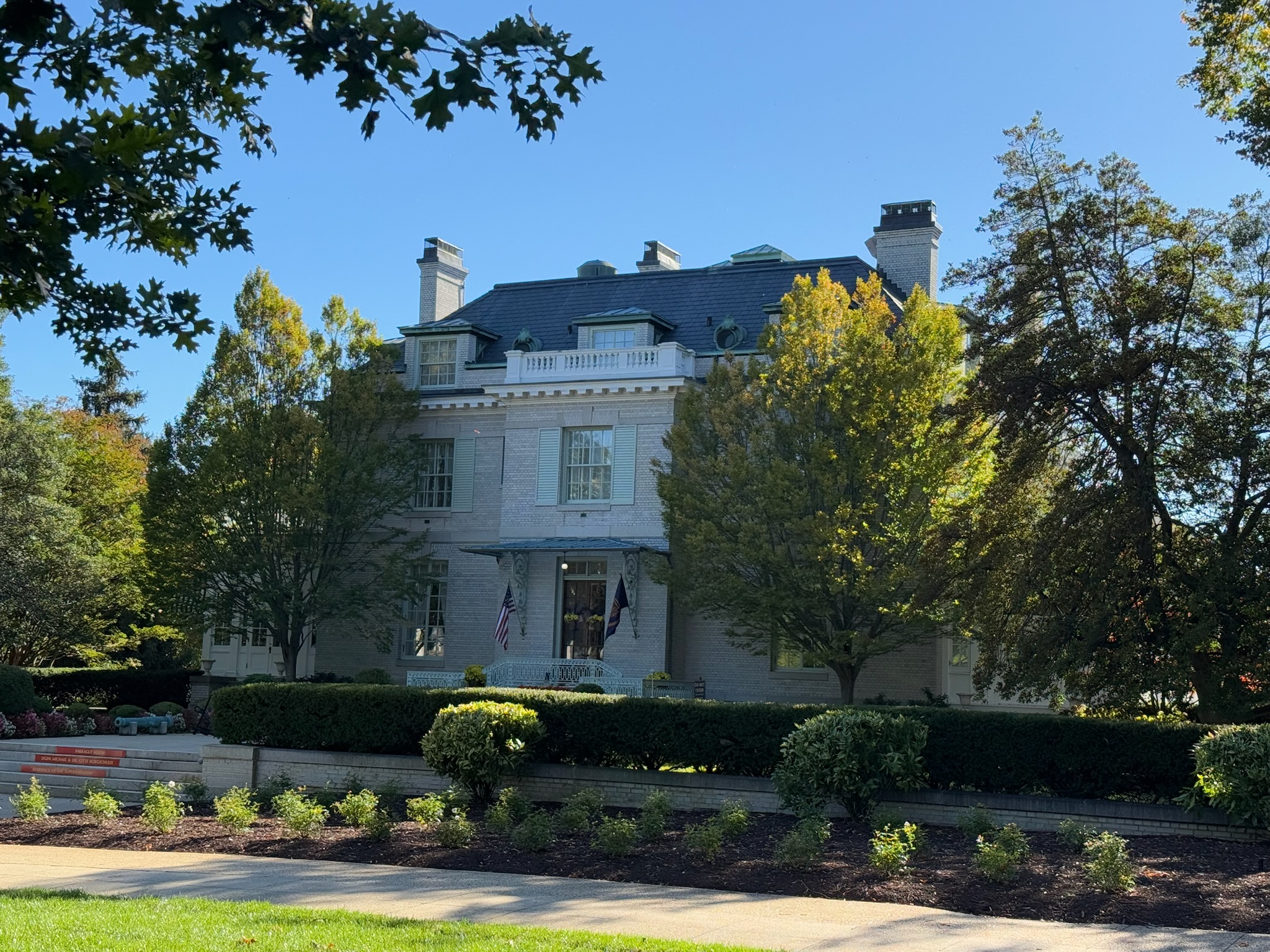
We rounded a corner and came to the superintendent’s house, which was giant. The superintendent was the top person on campus; the commanding officer of the school. According to our guide, the reason for the big house was because the superintendent did a lot of entertaining. We think he said that of everyone in the military, he entertained 2nd most behind the president (the president is also the commander-in-chief of the military), but we’re not 100% sure if we’re remembering that correctly. The first photo is the front, the second photo is one of the sides — which was a long ways away from the front!
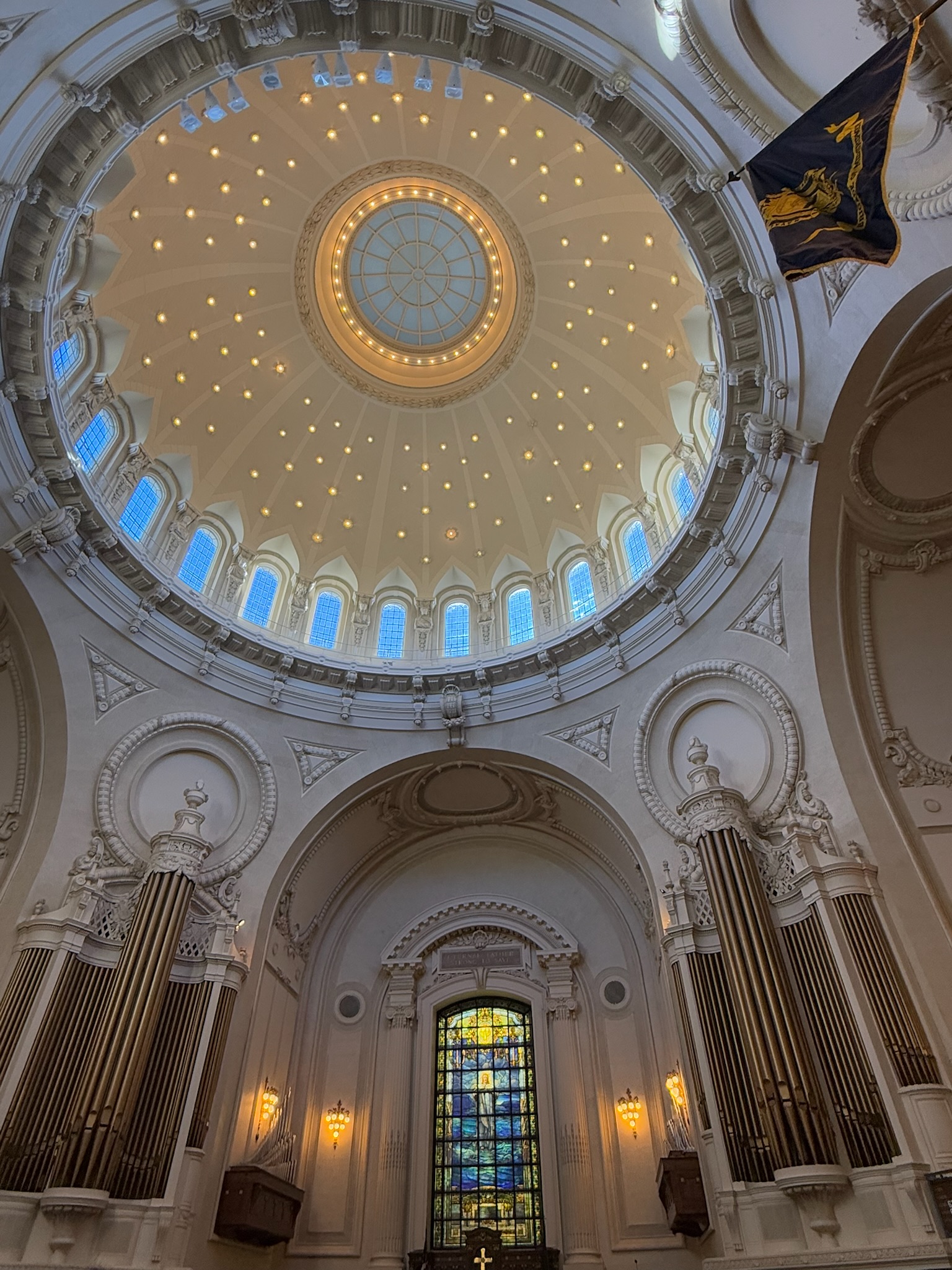
Then we went to the chapel. The first photo was taken from a distance, where we could see the dome. From the front of the building, the dome wasn’t visible.
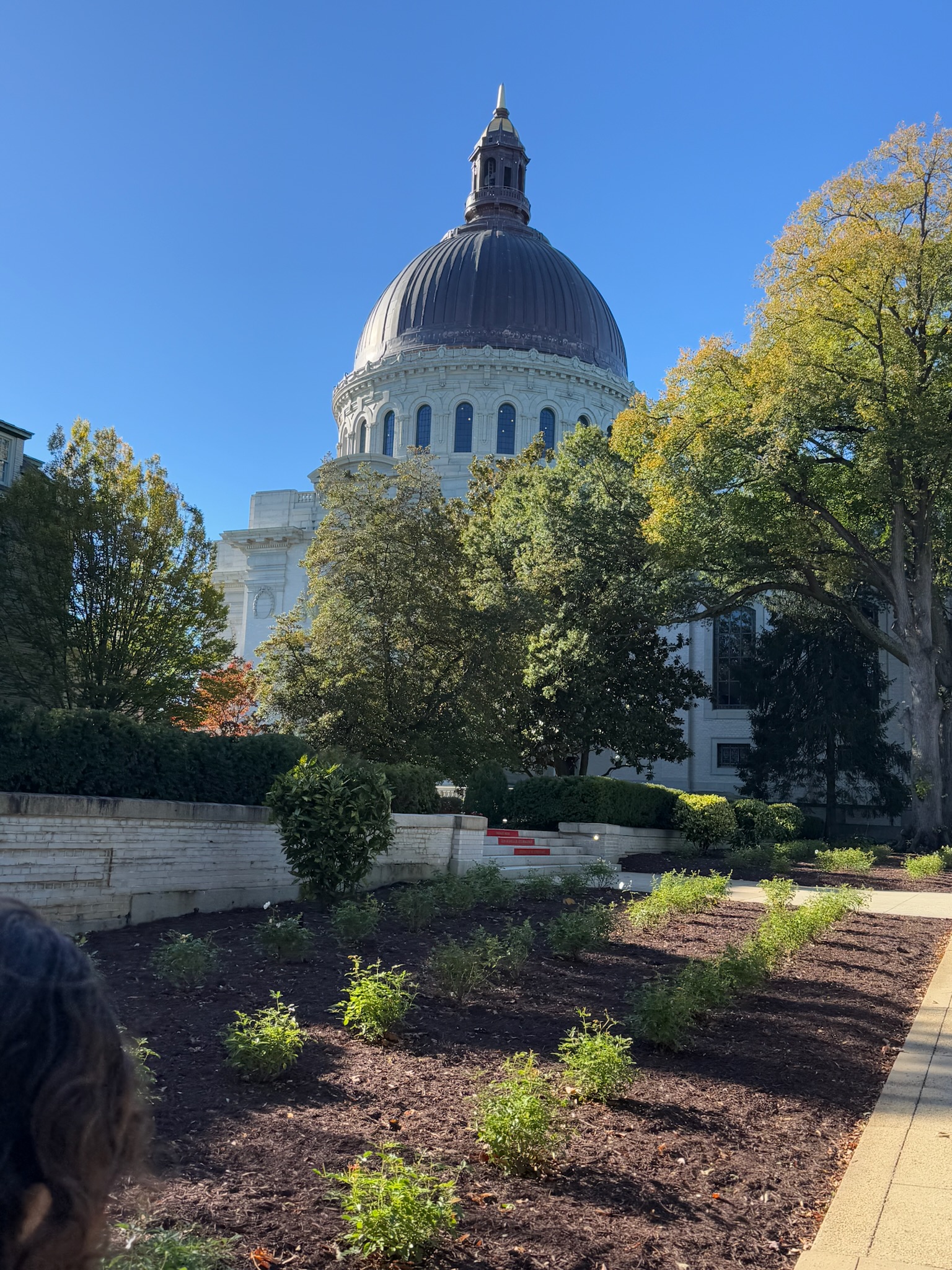
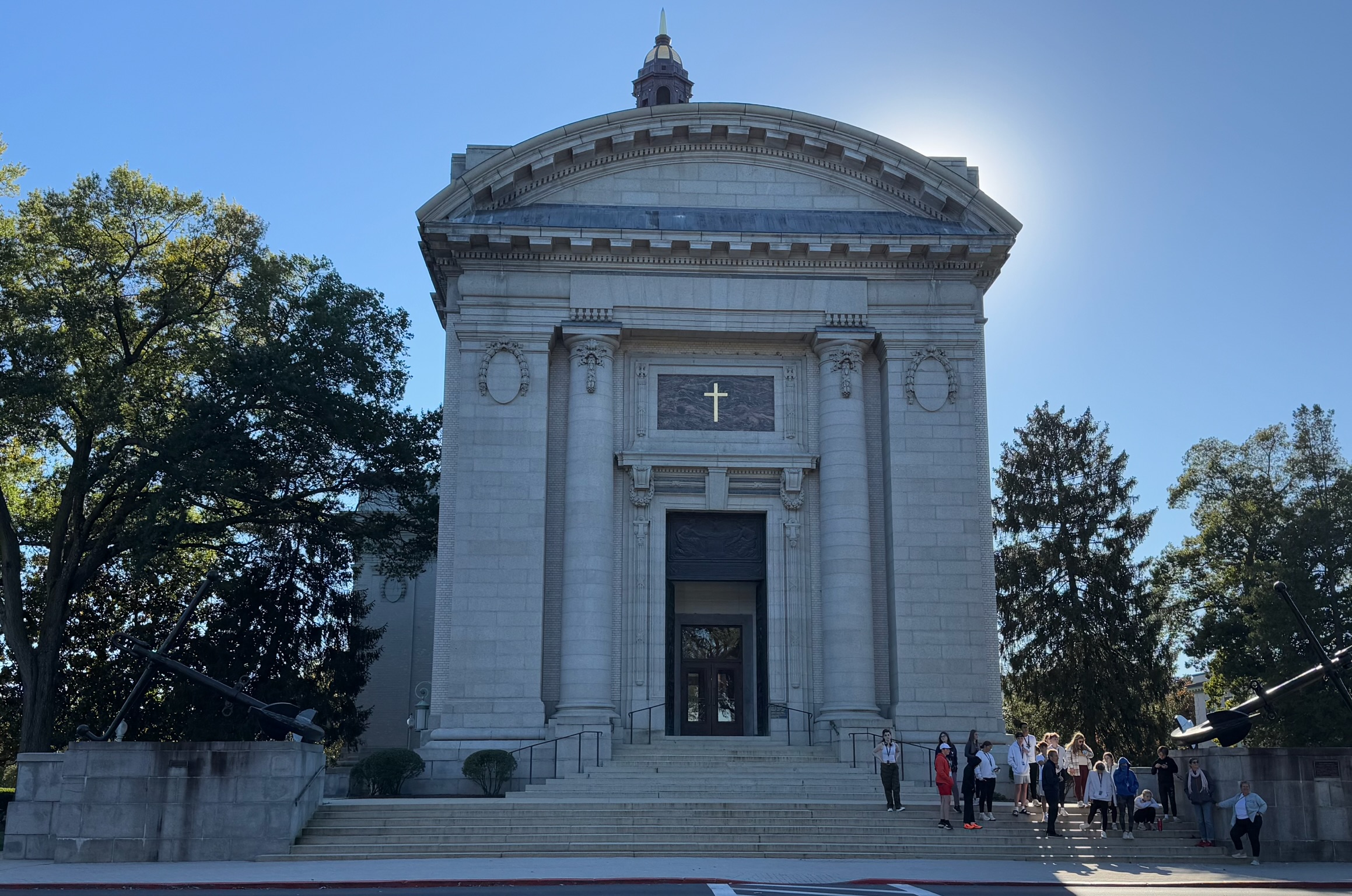
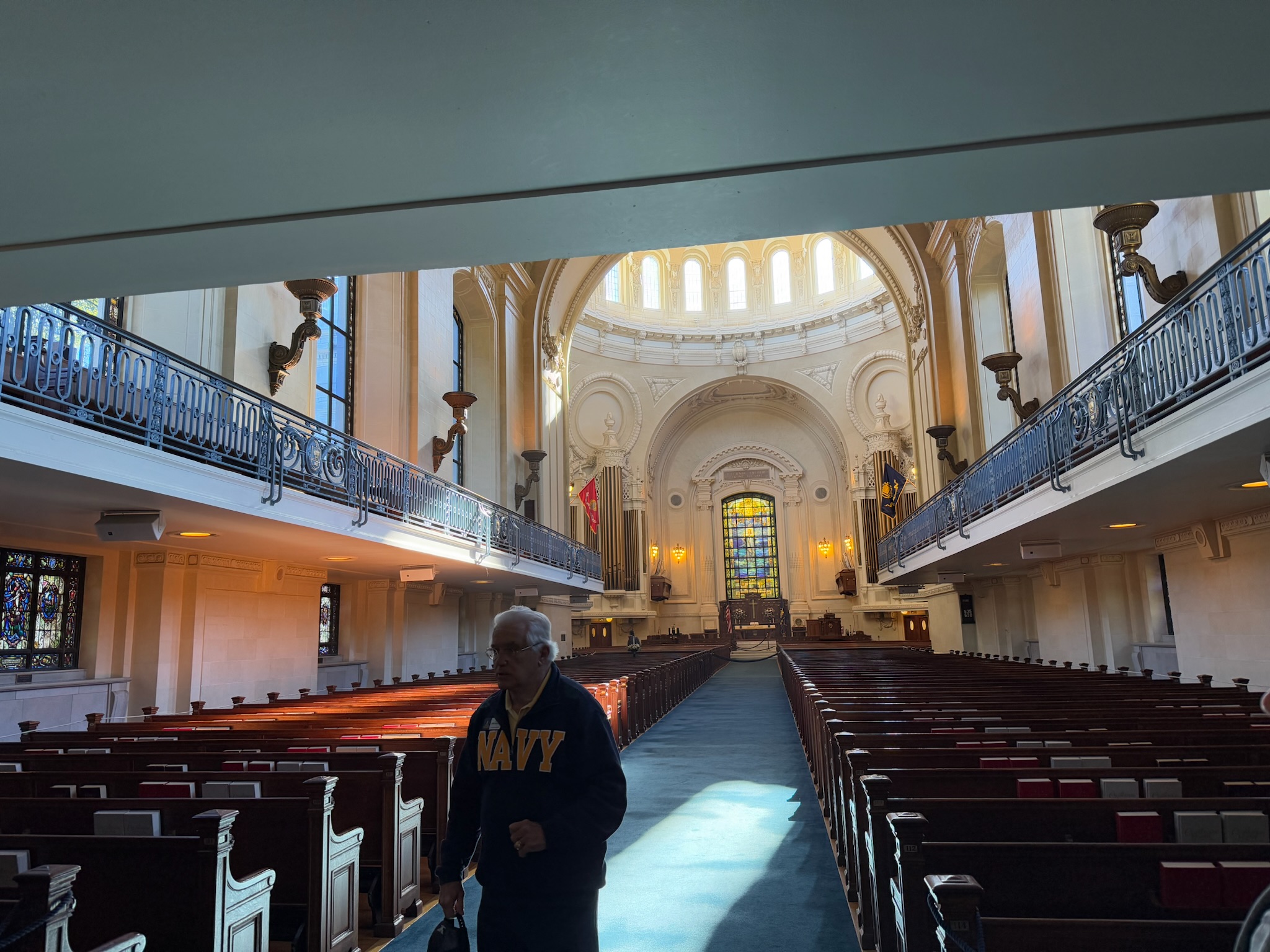
Our guide told us that the original part of the chapel was just the dome in the middle; they extended the church by adding the annex later. He went into detail about all of the renovations and improvements that were made by various alumni classes — and he was pointed about the large dollar amounts spent by each class. He made it very clear to the teens in the group who were considering applying to the Naval Academy that there was an expectation that the alumni would financially support the school for the rest of their lives.
We went outside through a side door, and down a set of slippery stairs to the crypt where John Paul Jones, considered the father of the navy, was entombed.
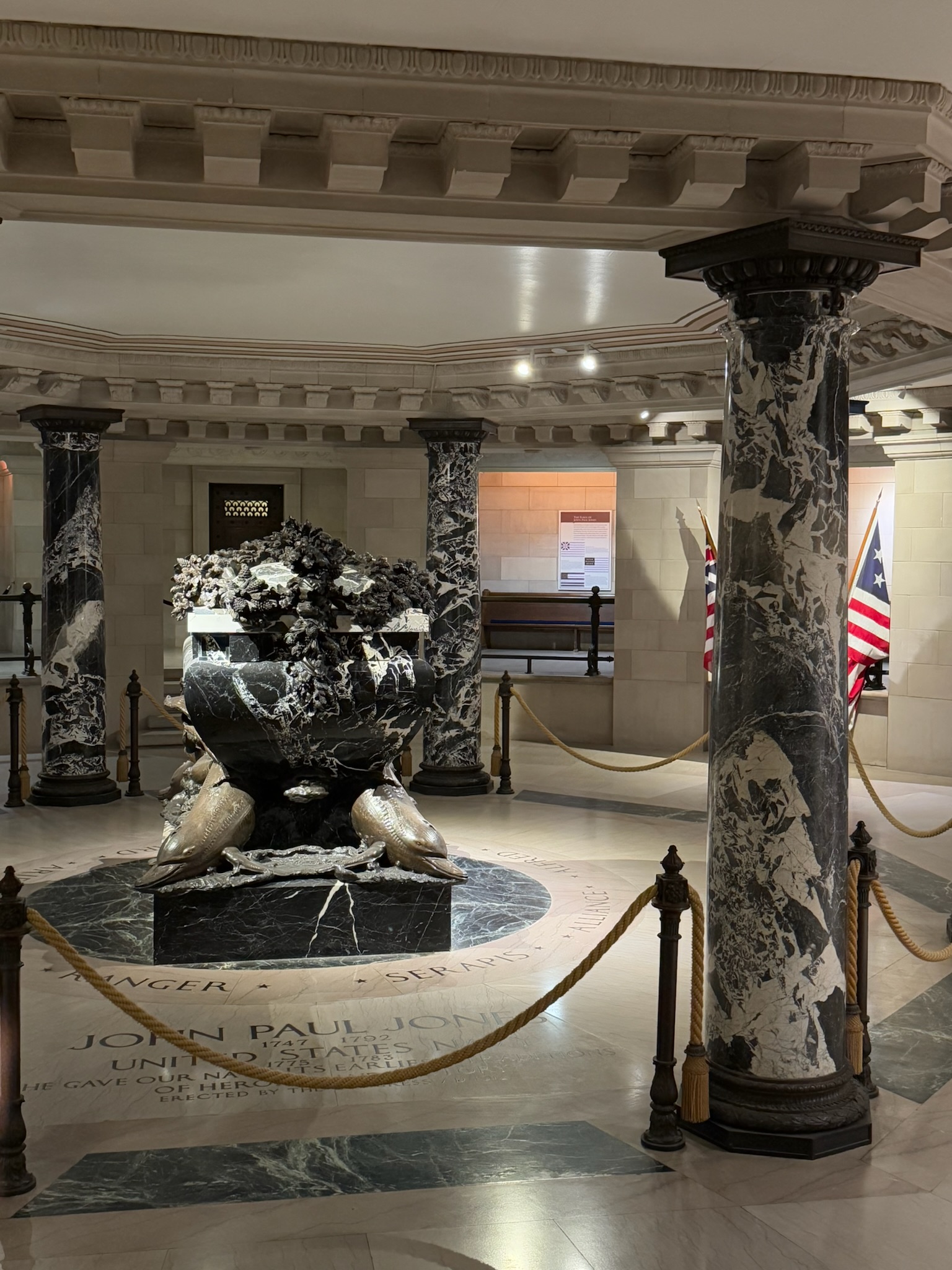
John Paul Jones served in the brand new Navy during Revolutionary War. He’d been a merchant shipper since he was 13 years old, and was a captain of a merchant ship by 21. He must have been in his late 20s or early 30s when he joined the new Navy. Apparently, he had many victories, but his most notable was when in 1779, while commanding the the Bonhomme Richard, engaged in a battle with the superior British frigate Serapis, and after a lengthy battle, forced the British to surrender. The sign said “…and his fighting spirit, gave to the United States Navy its earliest traditions of courage, honor and victory.”
He died in Paris in 1792 and was buried there. Our guide said that his body was “lost,” meaning no one knew where he’d been buried. People searched for years. In 1905, he was located. He had been buried in Cemetery of St. Louis, which was where Protestant foreigners were buried at the time. The difficulty in locating it was because the cemetery had been built over. They somehow arranged to excavate under the buildings to search for his body. The excavators found a coffin that matched the description of Jones’s burial records. Jones was exhumed him and his remains were taken to Annapolis, where they created this shrine to him. Keith was seriously creeped out by the shrine.
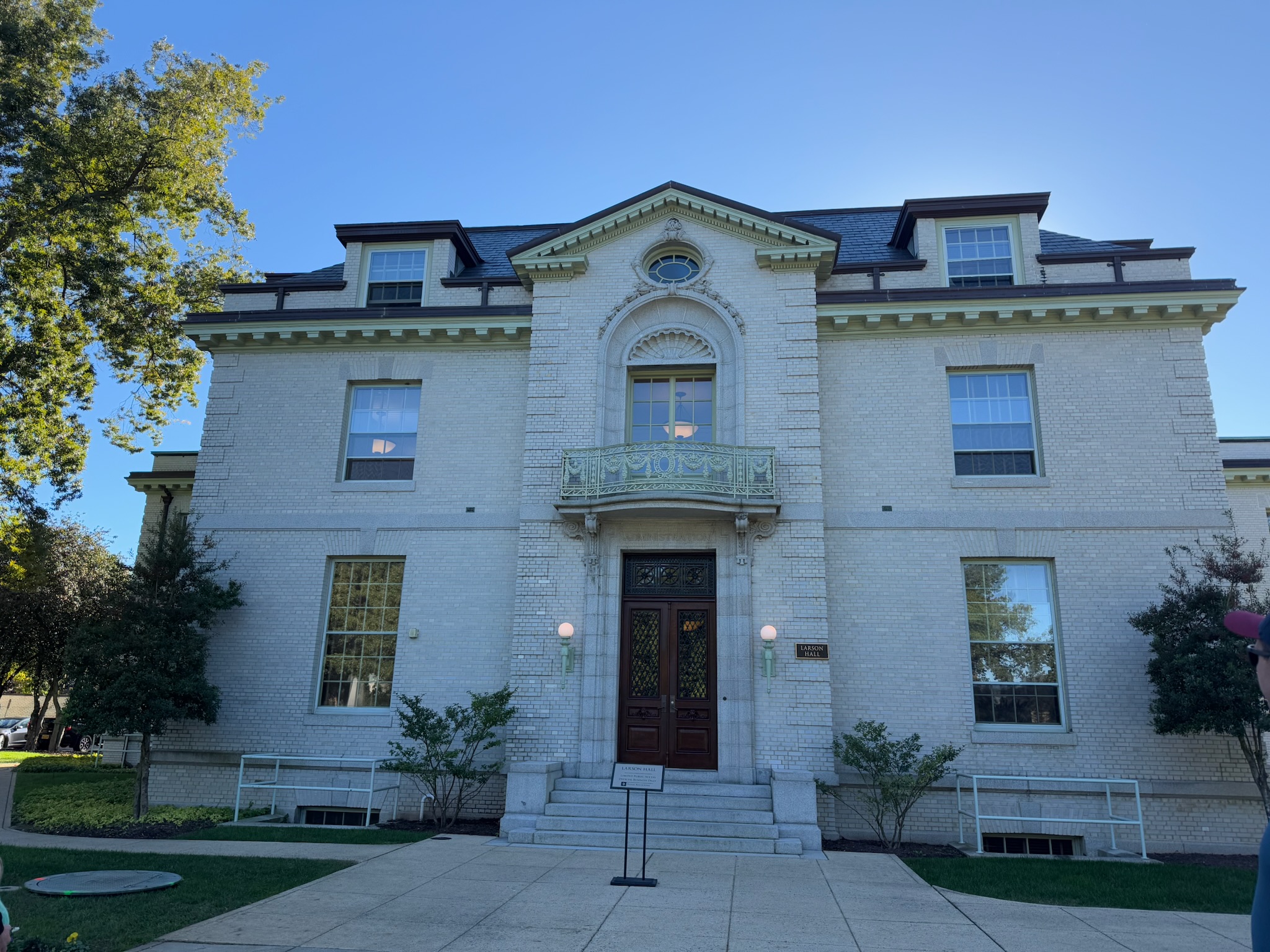
The next stop was Larson Hall, which was next door to the Chapel. It was an administration building. We didn’t remember what he said about it beyond that the name had been changed a while back.
Our next stop was a park-like area across from the chapel and Larson Hall. We forgot what the guide called it, but similar spaces at our schools were called “quads.” There was a gazebo and several monuments in the park. He told us about several traditions and rituals that were performed at the park, including one where they greased the cap on the obelisk, and the students have to work together to climb up and get the cap down. We believe he said this annual ritual was performed by freshman at end of year.
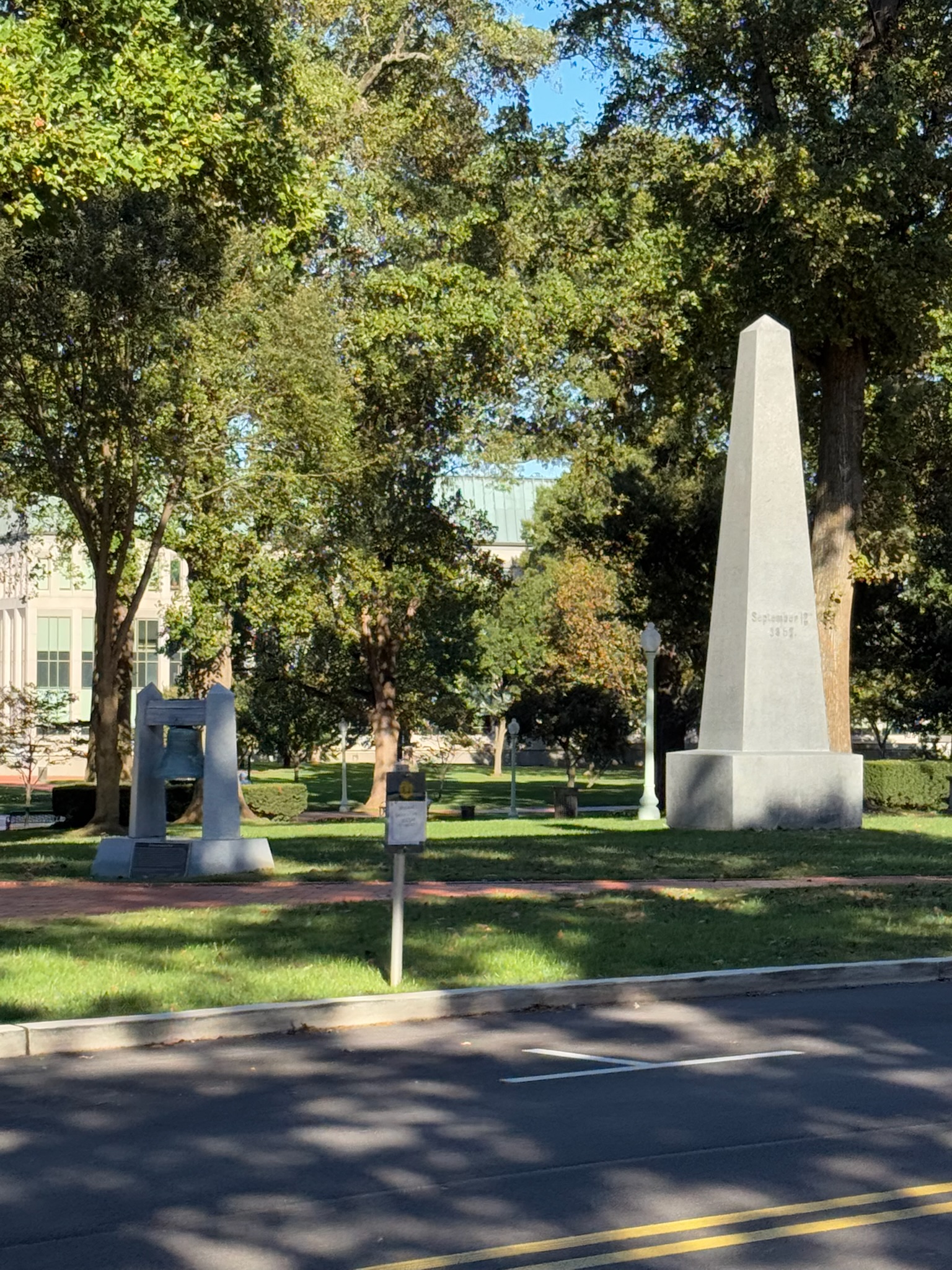
This was another statue at the park that we stopped at. We couldn’t remember what he said about it, but we think another ritual centered around it.
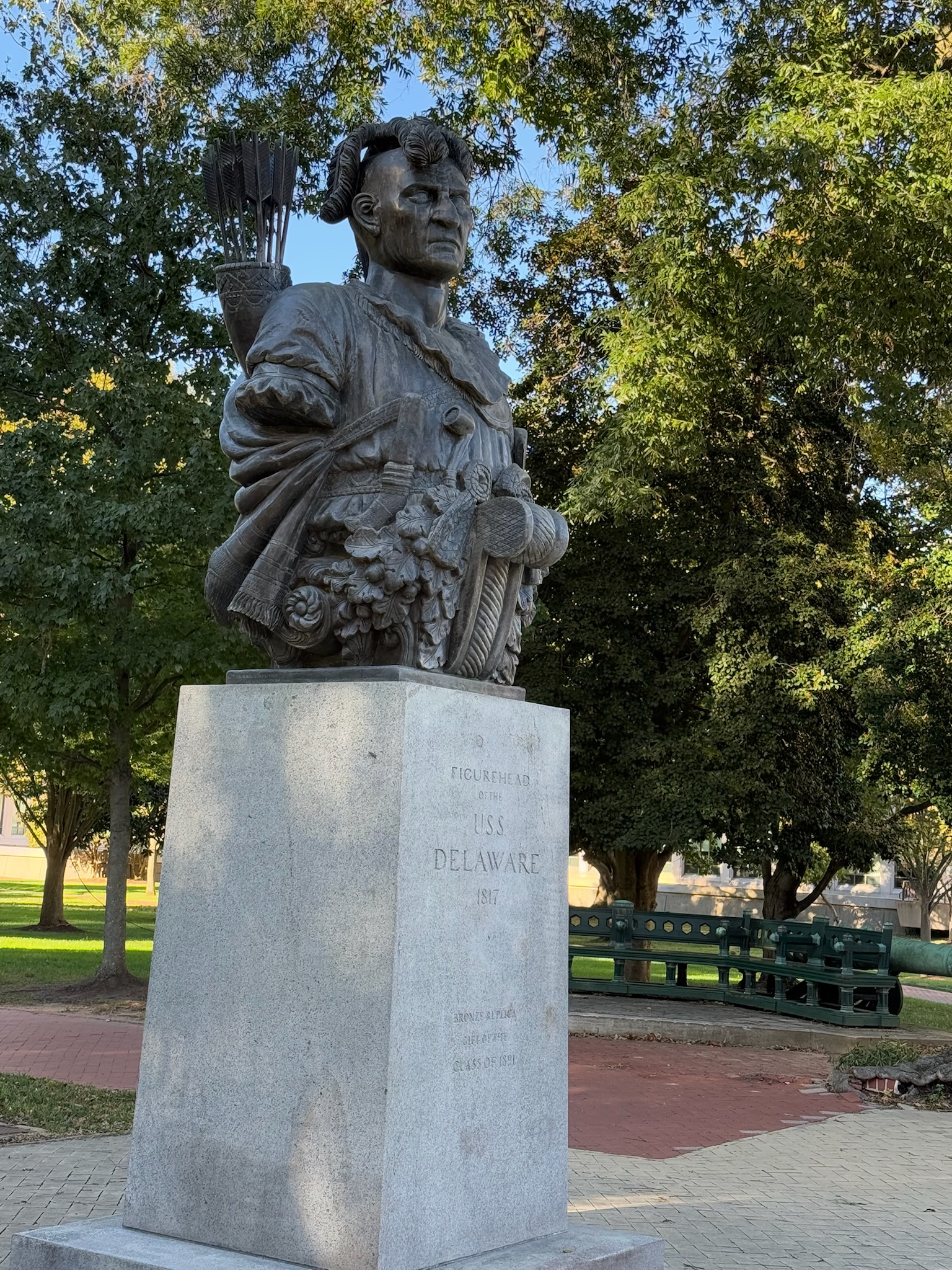
Next was the dorms, which looked like typical Parisian buildings. Our guide told us that, in order to bring in the concrete blocks to build the dorms, they built a temporary canal and transported the blocks by boat.
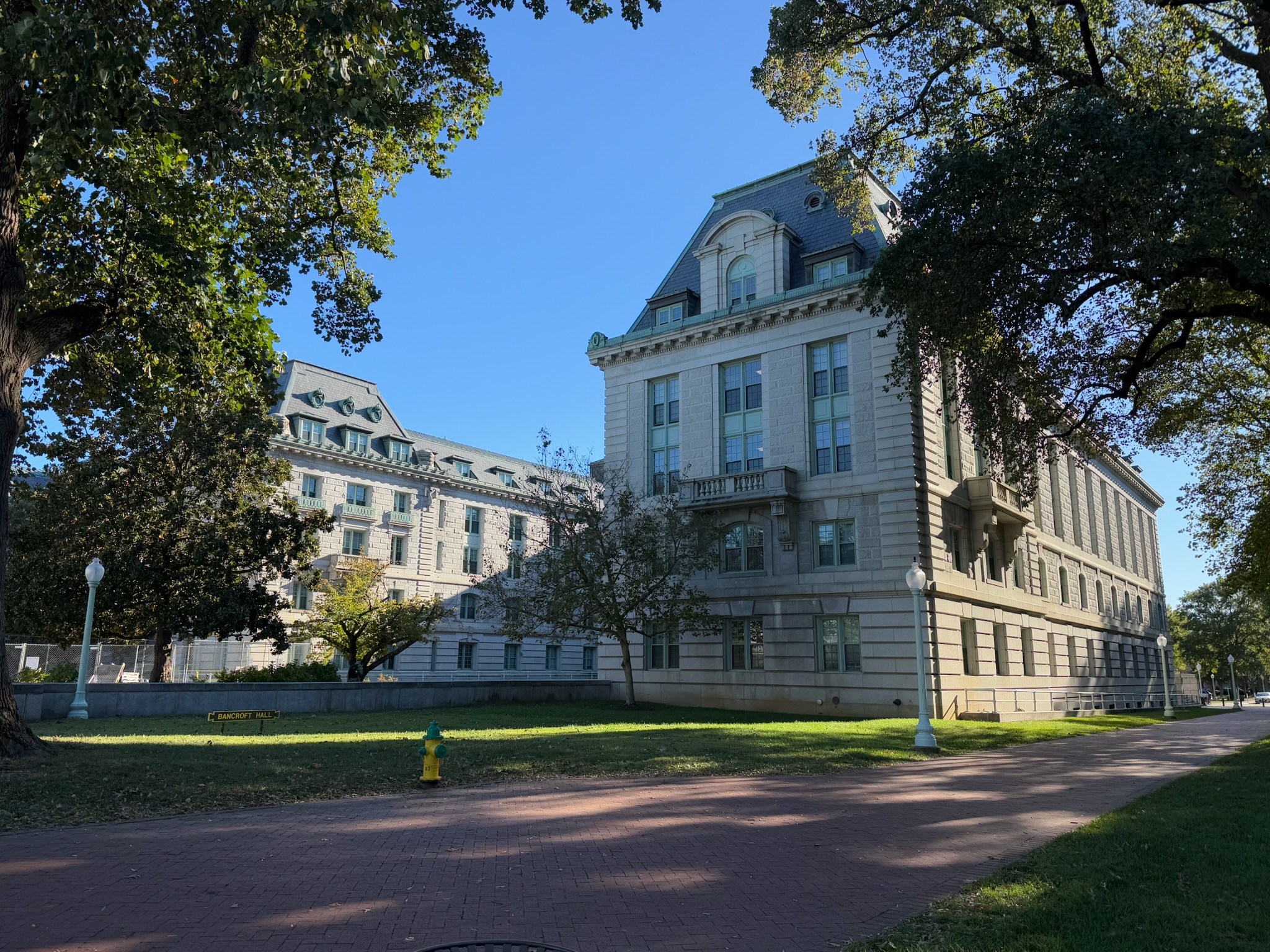
The main hall was normally part of tour, but it was currently closed for renovation. He showed us photos of the main hall, and it was beautiful.
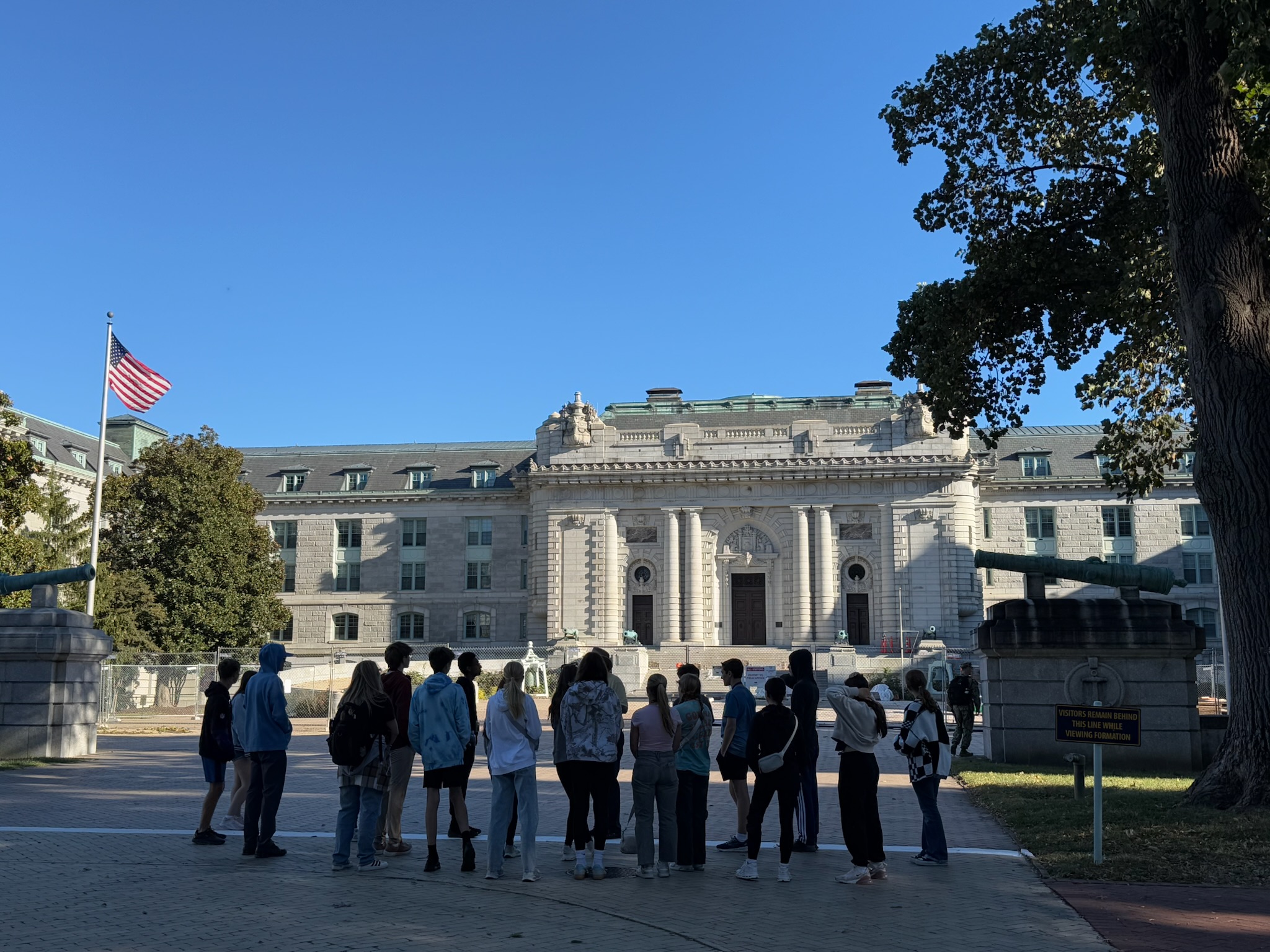
Here, our guide shared more traditions. He told us that freshman were not allowed to speak unless spoken to first, and responses were always required when a freshman was spoken to. Apparently, the word “sir” was always required in said response. Then he recited for us the ridiculously long speech that the students were required to recite when they forget to say “sir.” He said that freshmen usually only forgot to say “sir” once; that the first painful recitation was usually enough for them to never forget again.
The dorms also had strict rules about leaving campus. We didn’t remember the details, but we remembered being horrified that the kids weren’t allowed to go home and visit their families on weekends.
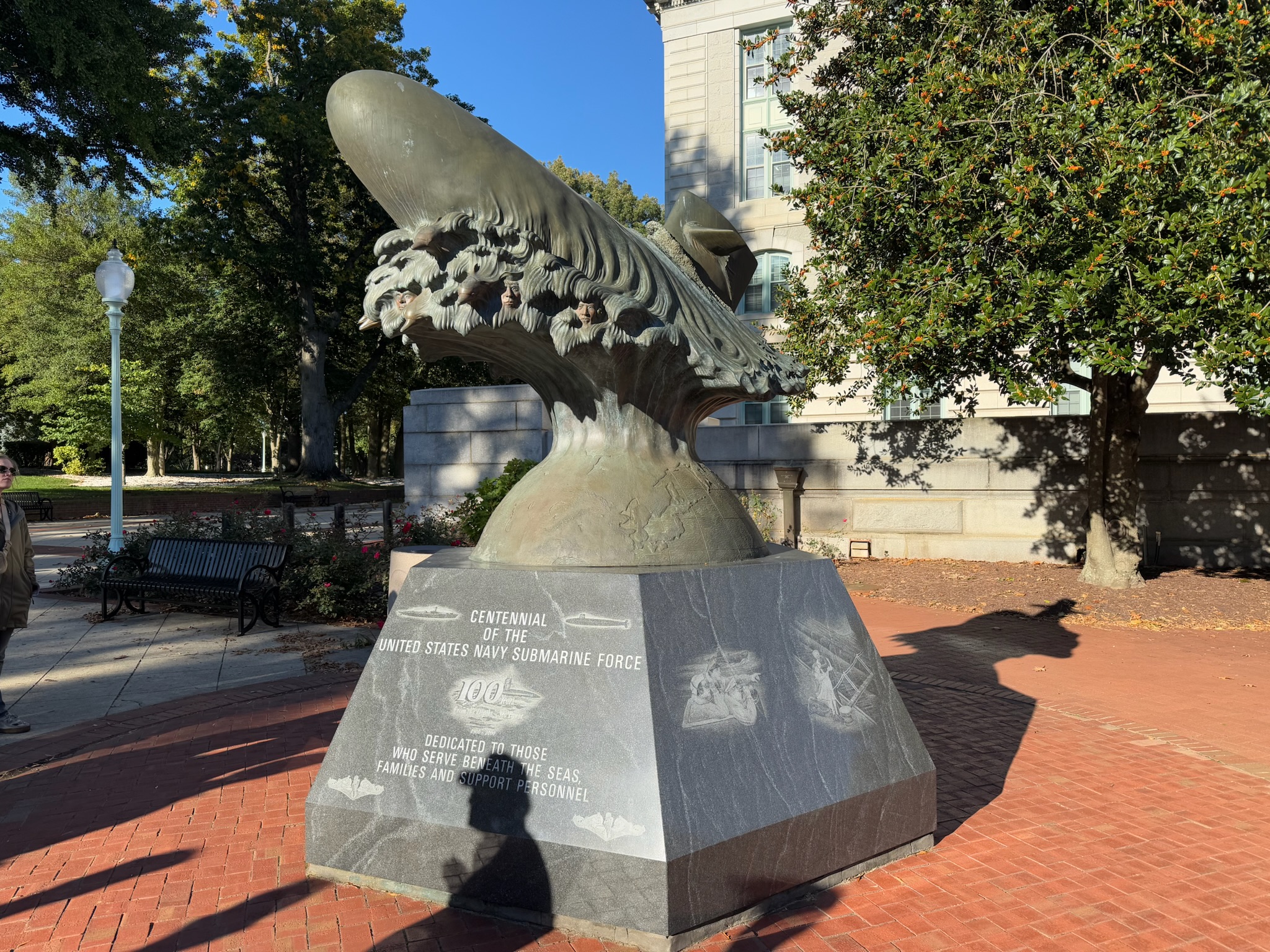
In between the dorms and the next building that we visited (visible in the photo below) was a statue commemorating 100 years of the submarine force. We hadn’t realized that the submarine force had started in 1900! Next to it was a statue commemorating The Battle of Midway, which was fought against the Japanese during World War II. Near the statues were two real Japanese missiles from World War II. According to the sign, these were the largest enemy weapons that the US encountered during that war.
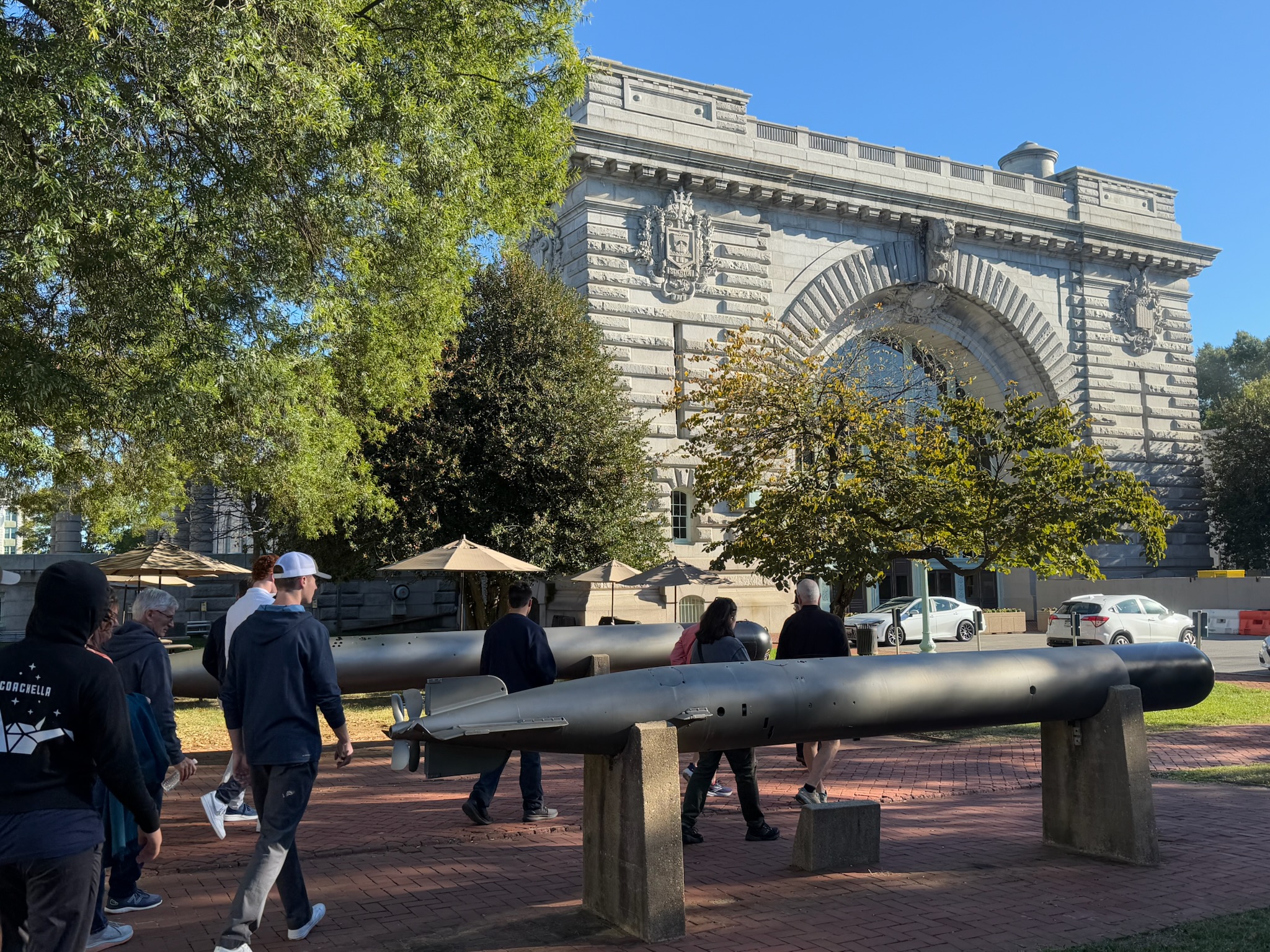
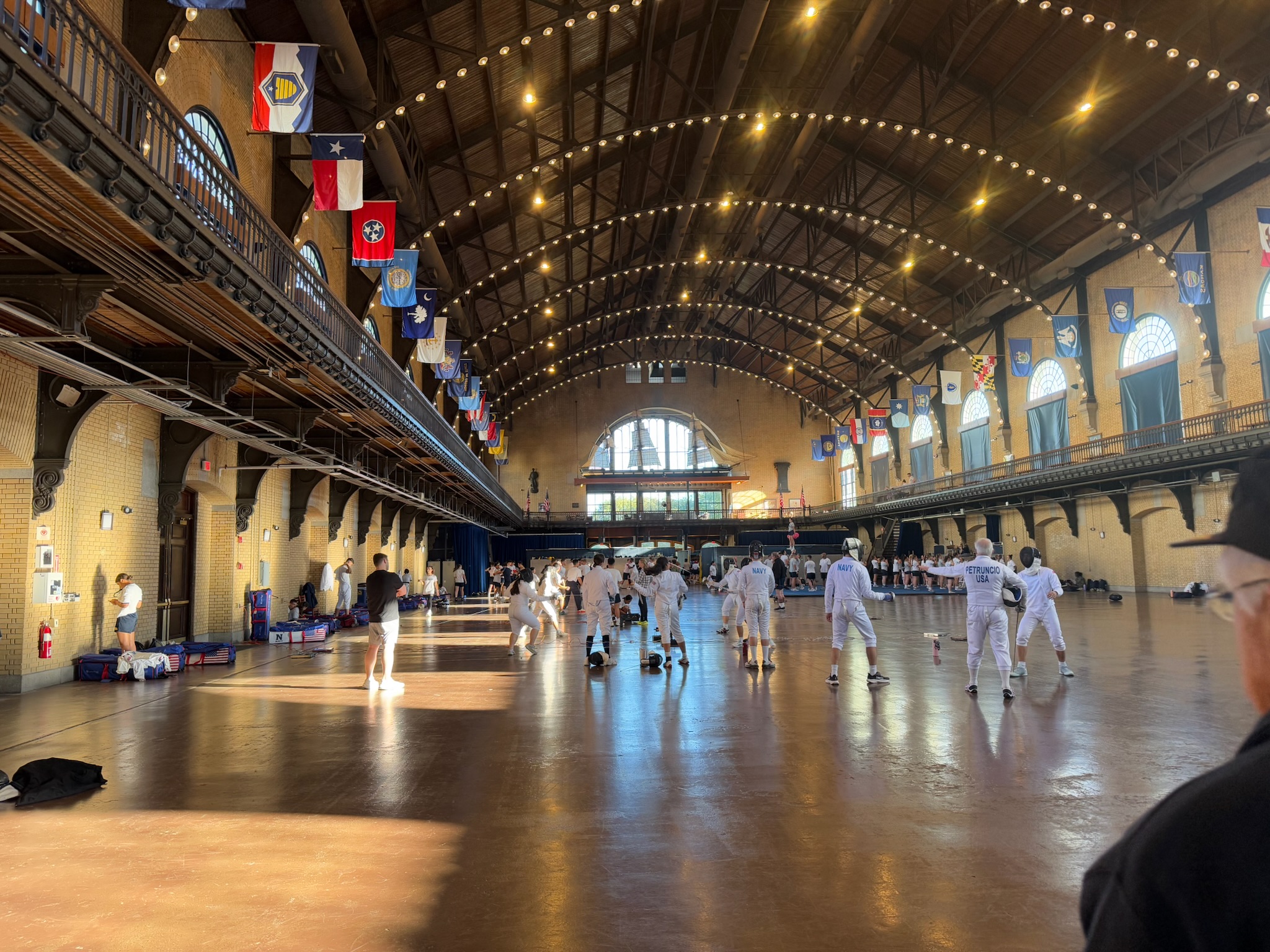
After the guide talked about the memorial statues and torpedoes, we went into yet another sports building where they were wrestling, fencing and boxing. It was definitely not being renovated, so apparently there was a fourth indoor sports complex on campus, too.
We exited the building and stopped in the parking lot between the sports complex and the dorms. This photo gives a sense of how big the dorm complex was — it looked much bigger from the back than it had from the front.
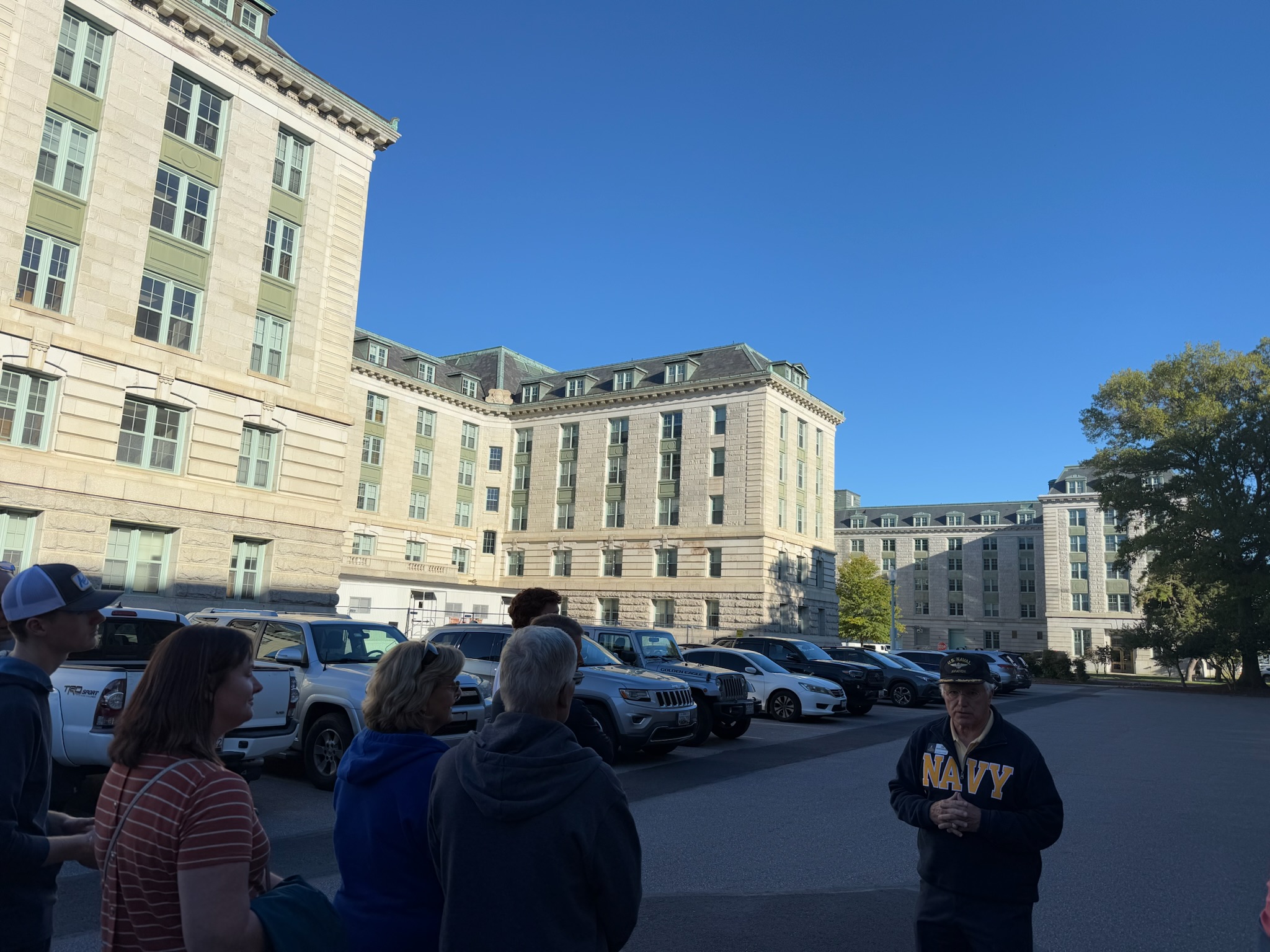
He explained that had been the last stop on our tour, and now was question and answer time. The young men who were apparently on the tour because they were considering applying to the school were full of questions. We only remembered a few of the questions/answers:
Q: Did the military consider a ROTC education just as good as a US military academy education for promotions, etc?
A: US Naval Academy graduates tended to move up in the ranks of military service faster, moved up higher and stayed in service longer than typical ROTC graduates. Naval operations commanders were almost exclusively Annapolis graduates. (ROTC — Reserve Officer Training Corps — were students going to regular colleges who were simultaneously serving part-time in the military. They were also receiving officer training as part of their service. The military paid for all or part of their schooling in exchange for a commitment to enter military service for a certain number of years after graduation).
Q: Could someone get a law degree from Annapolis to become a JAG officer (JAG stands for Judge Advocate General and it was a military law attorney).
A: Annapolis ddid not offer a law degree. However, the Navy would happily pay to send Annapolis graduates to a law school if they wanted to be a JAG.
Q: What was the quota for admitting women into the school?
A: There were no quotas for women. Annapolis only took the best of the applicants in the pool, and most years, about 30% of the new students were women. He said “that was how the numbers shook out.”
Once we were done with questions and answers, it was 1630. The visitor’s center didn’t close until 1700, and Christi wanted to go back to see the film and check out the museum, but Eric and Keith vetoed it. They were both eager to get back to Kosmos.
On the walk back, we… to be continued…