continued… By February 1861, six more states had seceded: Mississippi, Florida, Alabama, Georgia, Louisiana, and Texas. In March 1861, still using the model set by the founding father’s during the Revolution, they ratified a new Constitution for the Confederate States of America and elected Jefferson Davis as their first president. Like all other governments, they issued currency, bonds and postage stamps.
As we’d learned at the USS Constellation, about 1/4 of the Union navy’s fleet resigned to join the Confederacy, leaving the navy woefully understaffed. We didn’t see a sign that gave statistics of exactly how many military personnel joined the Confederacy in total; the sign we saw said “…hundreds of …US Officers resigned their commissions to join the Confederacy…” One of them was Robert E. Lee, who was recognized as a top military leader who had served with distinction in the Mexican-American War.
The Civil War began about 0430 on April 12, 1861, when Confederate batteries opened on Fort Sumpter. The fort guarded the entrance to Charleston Harbor in South Carolina, making it a strategic location. Both the new Confederate States of America and the United States of America claimed the fort. By the time the battle started, negotiations had already dragged on for months. For the Union, abandoning Sumter would be an admission of weakness, but they knew if they reinforced it, they’d risk war. Lincoln decided to resupply the fort without bringing in any more weapons or troops. The new Confederacy viewed even this as too much, and President Davis gave the order to take the fort. The battle lasted for 34 hours and the Confederates won.
In April and May 1861, Virginia, Arkansas, Tennessee and North Carolina seceded from the US and joined the new Confederate States of America. People in Missouri, Kentucky and Maryland tried to get their states to secede, but failed to rally enough support.
With war begun, both sides desperately scrambled to significantly expand their military. Neither side was prepared to train, equip, feed and clothe so many new recruits. At first, both sides had a lot of volunteers, but due to logistical limitations, thousands of volunteers were initially turned away.
The first major battle of the Civil War was the First Battle of Manassas, fought on July 21, 1861, near Manassas, Virginia. 220,000 people died in total as a result of the battle: 69,000 people died in combat, the rest died from wounds, disease, accidents or other causes. The Confederates won, but the battle showed that both sides were inexperienced and poorly trained. Both sides realized it would be a long and bloody war.
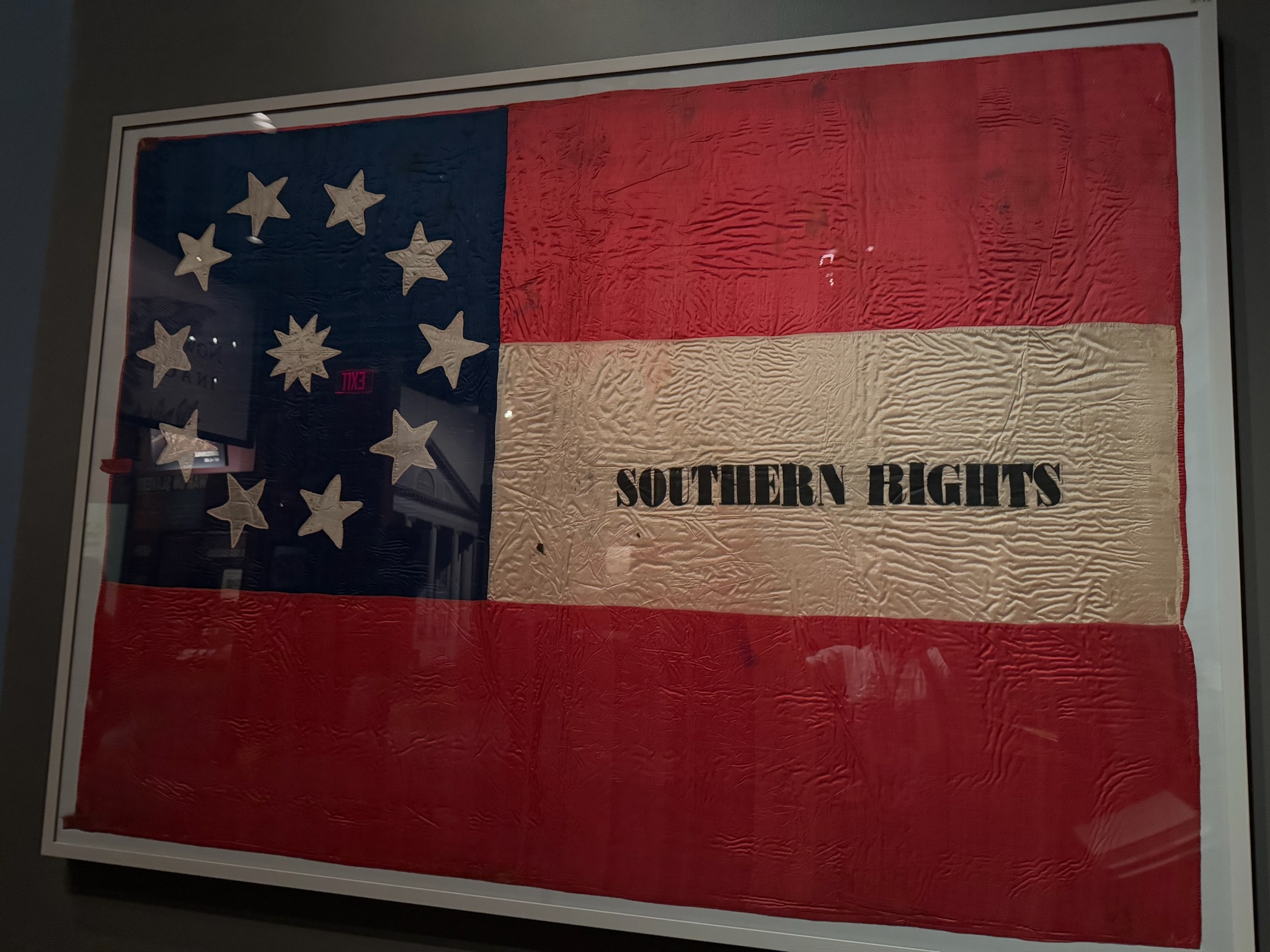
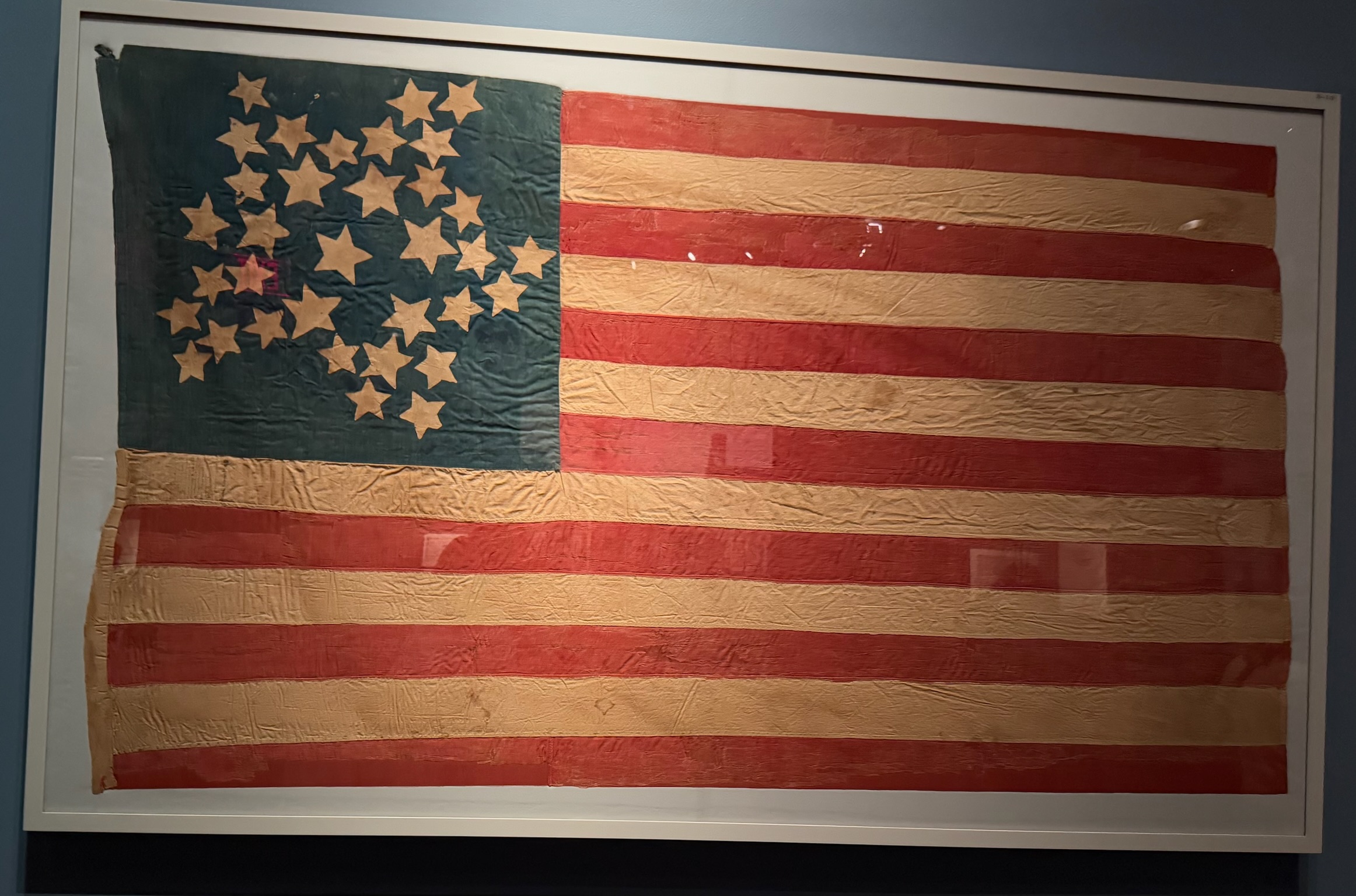
The museum had quite a few exhibits about how the soldiers communicated on the battlefield — lanterns, torches, flares, and flags — flags were apparently very important and they talked about flags a lot. Music was another important one — the soldiers had to memorize which commands were associated with different rifts.
After the gruesome Battle of Manassas, the number of people eager to volunteer significantly dwindled. Both sides struggled with recruiting soldiers for the rest of the war. Before the Civil War, only free black men could join the Union’s military, but in 1862, Lincoln allowed escaped slaves to join. Both sides extended the terms of enlistment — the north to three years and the south to the duration of the war. The south instituted a draft in April 1862. The north instituted a draft the following year. For both sides, men with money could escape the draft by paying a fee or hiring a substitute. In the south, one white male per plantation was exempted if it had 20 or more slaves.
As we’d learned at the USS Constellation, in the Union’s Navy, black soldiers served alongside whites and were treated exactly the same. In the Army, black soldiers served in separate regiments from the whites, though the colored regiments were usually led by white officers. By the end of the war, the Union’s infantry, artillery and calvary had 164 colored regiments. More than 90,000 of them were escaped slaves.
On January 1, 1863, Abraham Lincoln signed the Emancipation Proclamation, proclaiming that all slaves in the seceded states were free, and encouraged them to flee to Union lines and join the Union Army. The focus of the war shifted to being about ending slavery. However, freedom was not given to the slave states that had remained in the Union: Missouri, Kentucky, Maryland, and Delaware. Lincoln justified this by saying he didn’t believe he had the authority to free the slaves still under the Union jurisdiction; but more importantly, he didn’t want those states to secede, too.
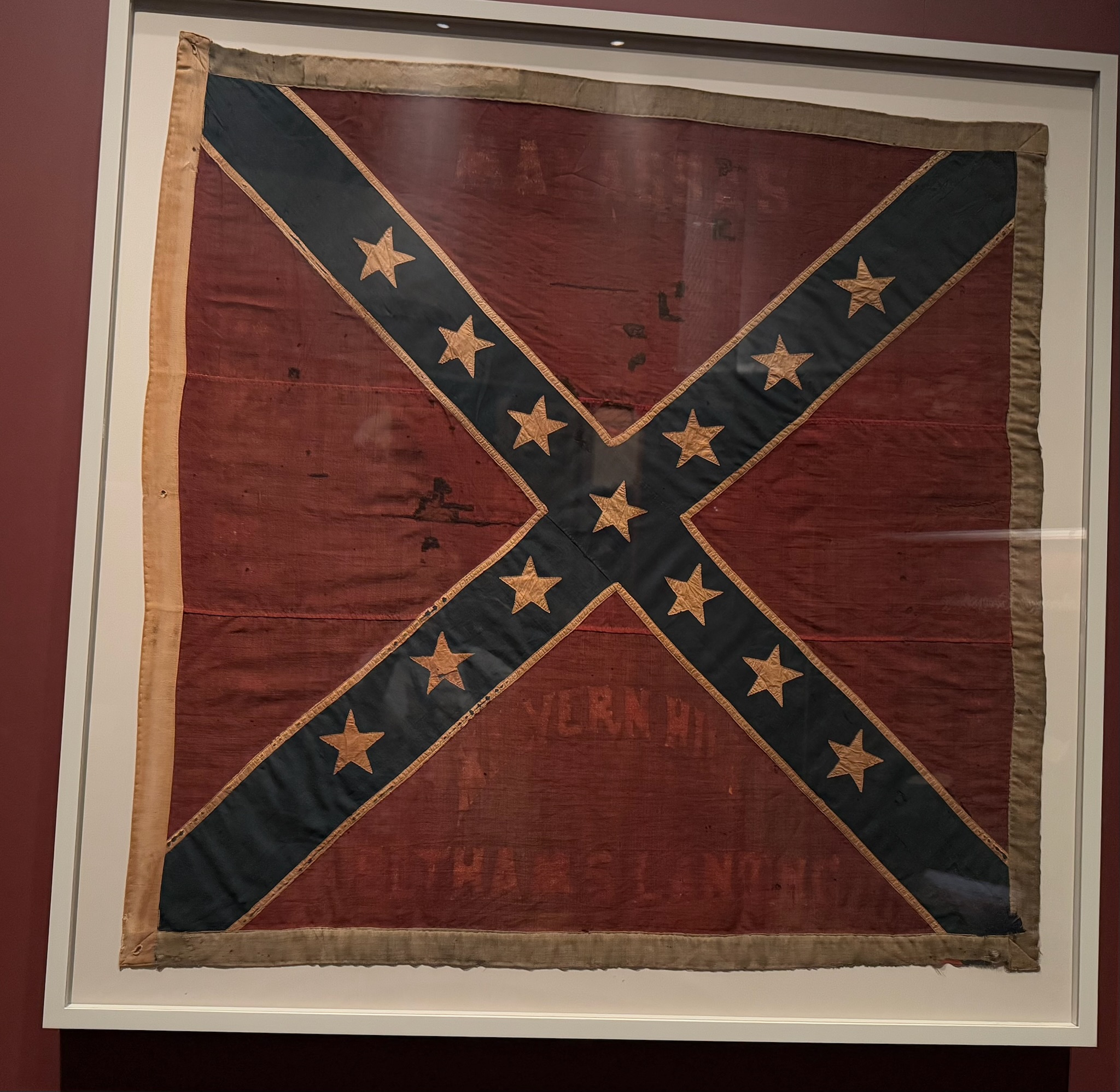
By June 1863, Lee and his Confederate army had won four major battles that had demoralized the Union army. To the north, he seemed unstoppable.
But the Confederacy faced many problems. Lee had lost many of his ablest soldiers in the battles. Since the north had manufacturing facilities, they were better able to supply their troops with weapons, uniforms and other supplies than the south could. The south had little manufacturing, and the Union’s blockades on the southern ports made bringing the equipment in challenging. Also, as soon as the war began, inflation skyrocketed in the south. In 1861, flour was $4 per barrel and coffee 12.5 cents per pound. In 1865, flour was $425 per barrel and coffee $50 per pound.
Lee knew that the Confederates couldn’t continue on indefinitely and that he needed to make a bold move to bring the war to an end one way or another. He decided to invade Pennsylvania.