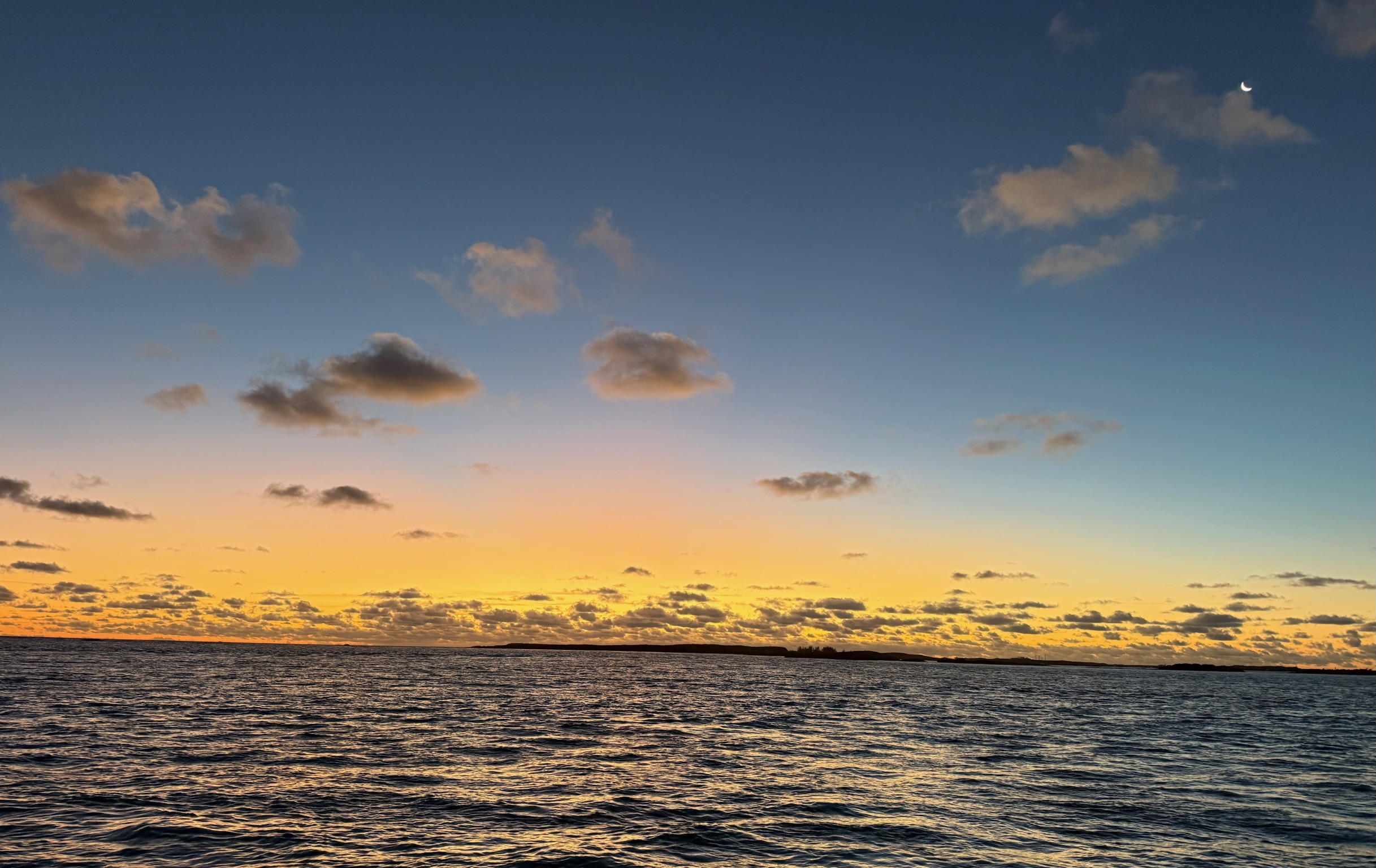
Dawn on Wednesday, January 14
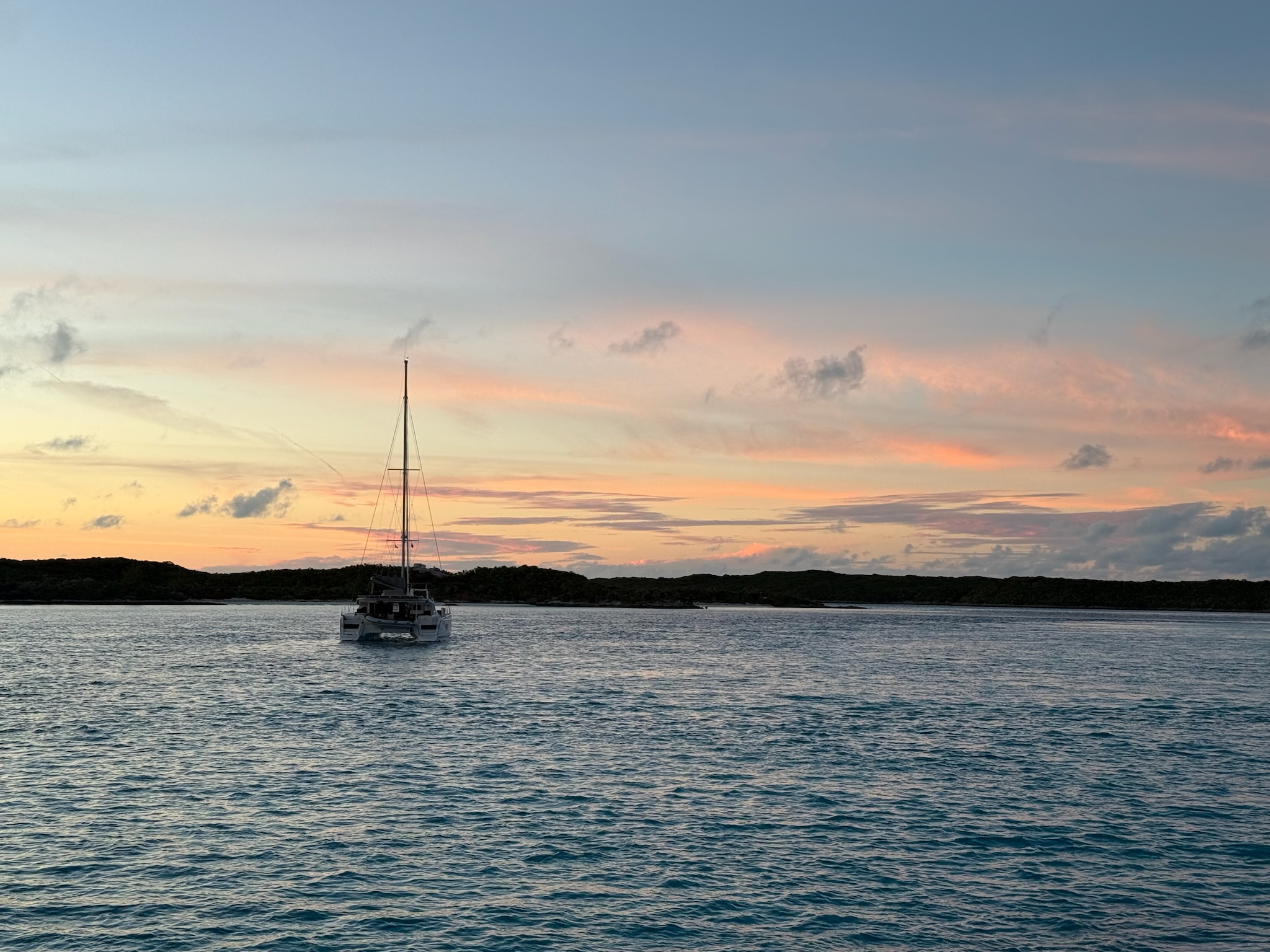
Keith had a fever of 101 when he woke up, so we skipped school and let him rest. We had a quiet day onboard. By the late afternoon, his fever was gone and he was feeling better. In the evening, we went over to Mellow Puff for a short visit. They had a large cockpit area, and we made sure to sit far enough away from them, and down wind of them, to ensure that we didn’t expose them to any germs. It was a nice visit. This was Mellow Puff at dusk.
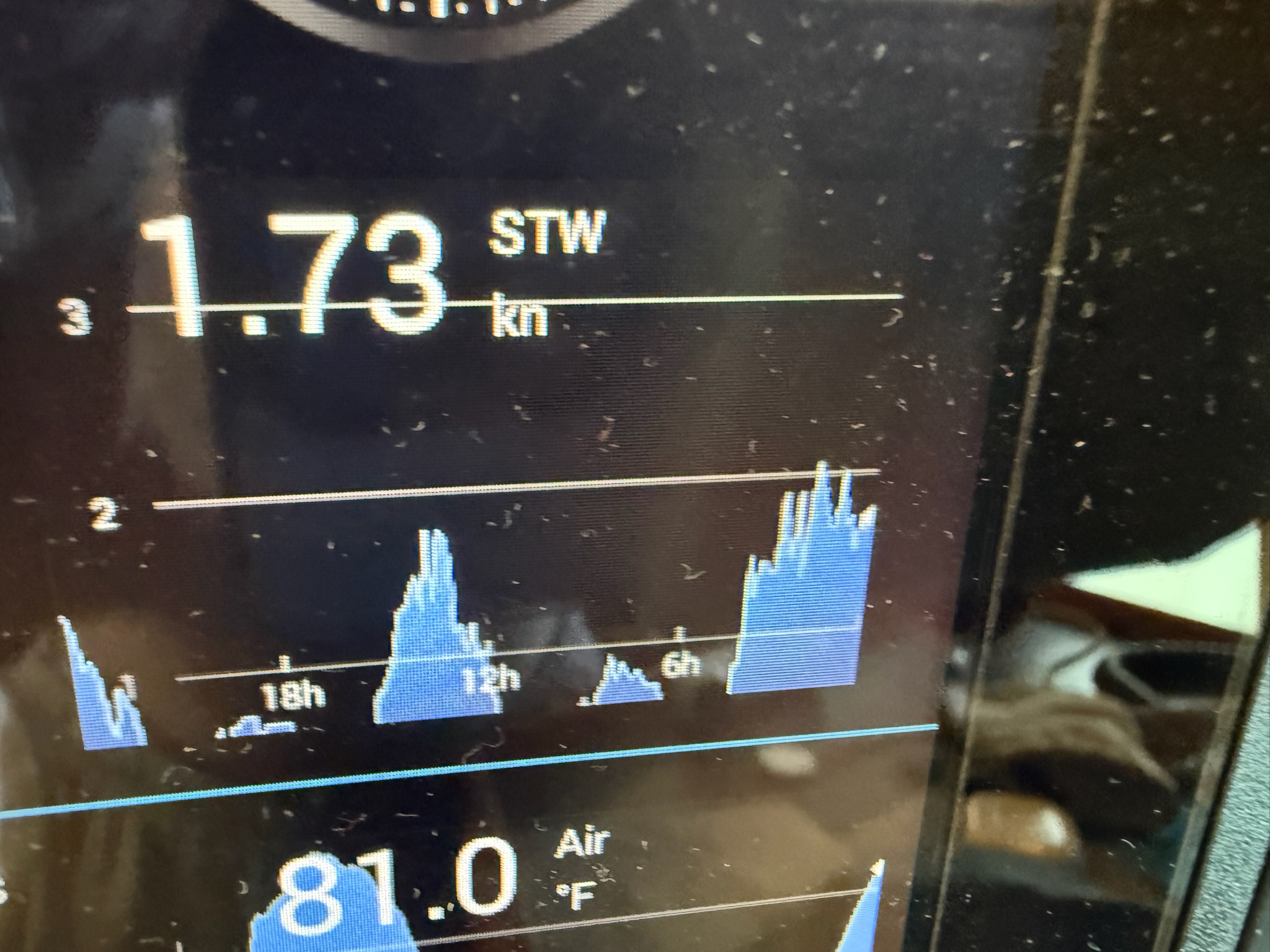
On Thursday morning, there was a 2-knot current — it was so strong that the little electric motor on the dinghy probably couldn’t overcome it. Over the past few days, we’ve been tracking the current and noticed that the current was stronger when it came from the northwest than when it came from the southeast. Our speculation was that, since the pass between the islands was smaller on the northwest side than the southeast side, having less physical space to flow made it flow faster.
This was a graph of current speeds over the last day.
It was also windy, with speeds consistent at 15 – 16 knots. Thanks to the current pushing us to an abnormal position, the wind wasn’t hitting the wind generator at the right angle to make it run. Since it was cloudy, we weren’t making much solar power, either. Eric was bummed that we weren’t making any wind power to offset the lack of solar power.
We’d mentioned that the channel that we’d anchored in was narrow. The strong wind, combined with the shifting current, pushed us disconcertingly close to the sandbar. Eric was worried about hitting it.
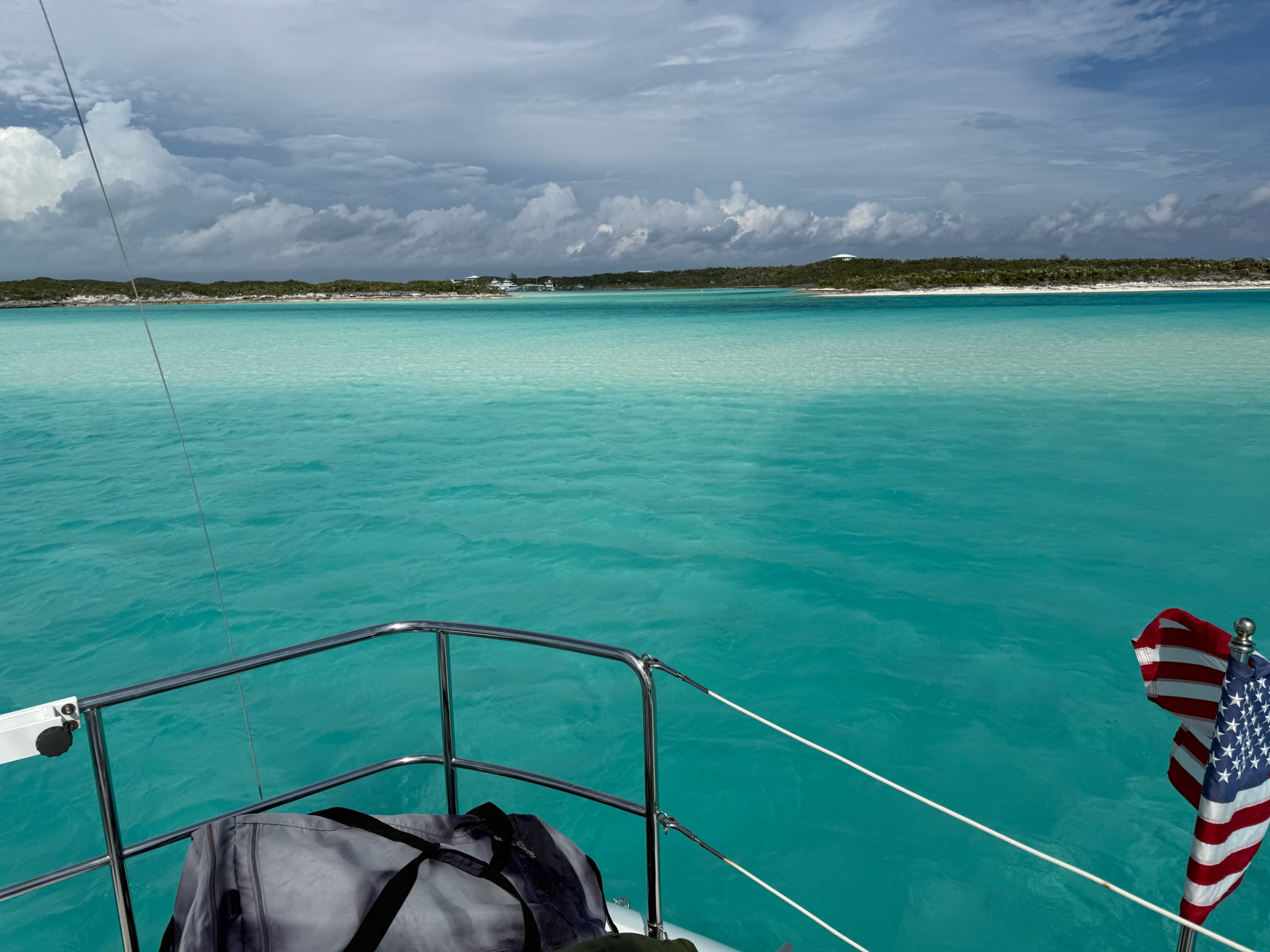
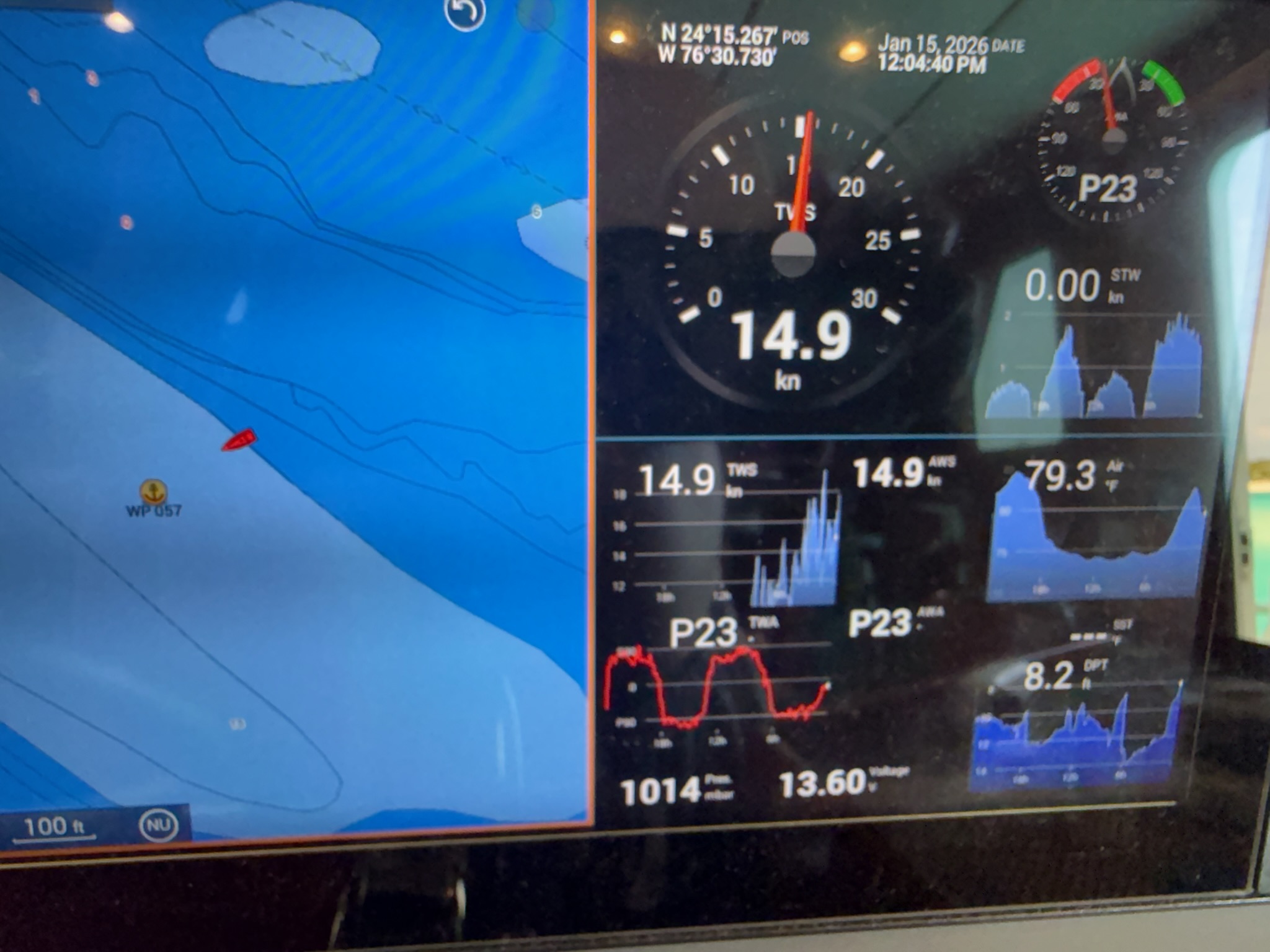
At 1300, it started to rain a little bit, but the rain didn’t last long. At 1415, the threatening storm finally blew through. The wind jumped up to over 25-knots sustained, with gusts of 33-knots. It rained really hard, which was accompanied by thunder and lightning. We were excited for a good boat washing!
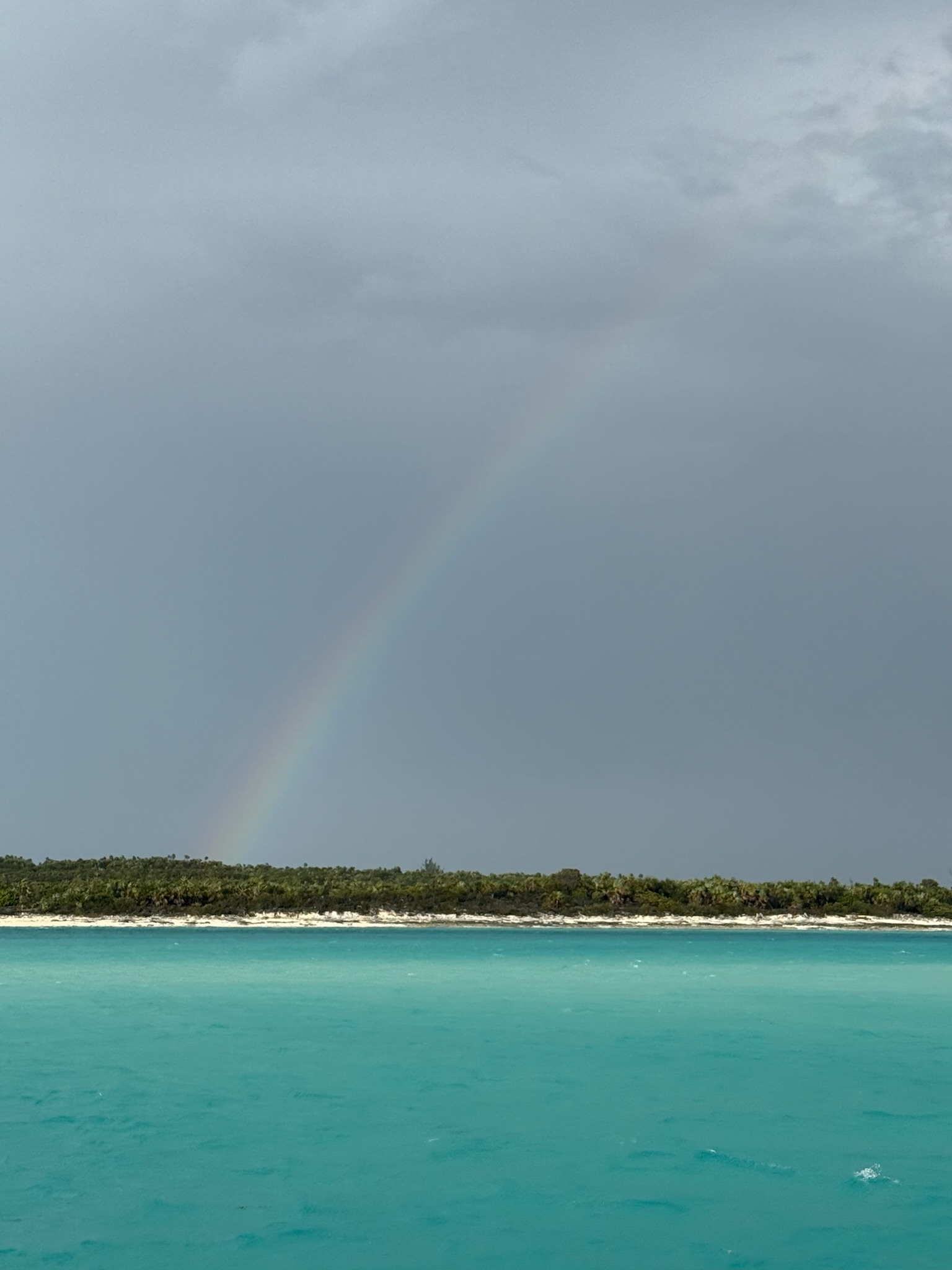
After the storm passed, there was a rainbow.
A little before 4:00 pm, another squall rolled through. This time, the winds were 35-knots sustained, with gusts up to 42-knots. The anchor shifted. We weren’t sure if we were dragging, so Eric turned on the engine and Christi went out in the rain to remove the window covers so that we were ready to move if it turned out that we were dragging. She was sopping wet. Our friends on Mellow Puff took a great shot of Kosmos in the storm.
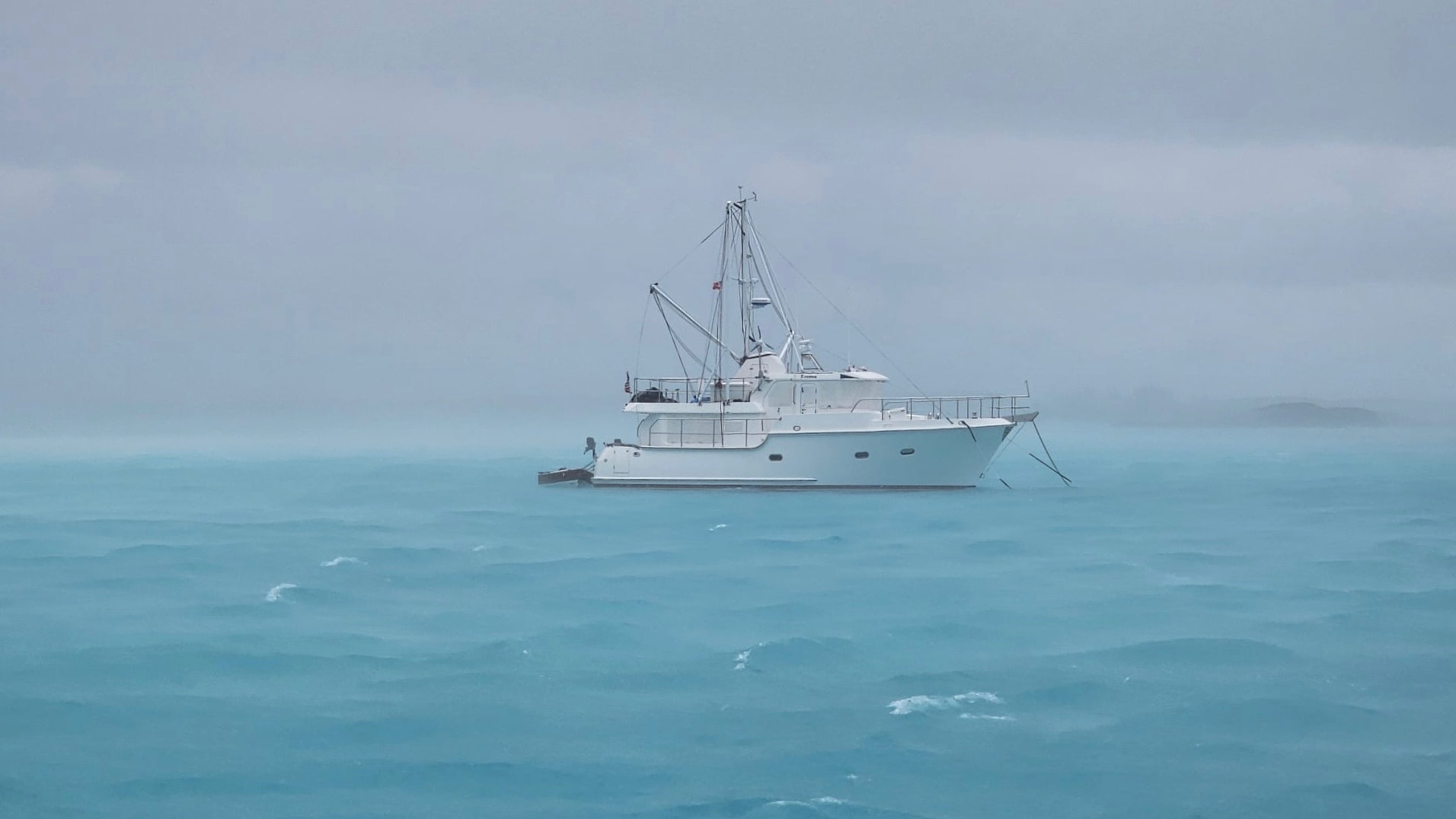
After waiting 15-minutes, Eric determined that the anchor had reset itself. He and Keith went outside and brought in the flopper stopper for two reasons: 1. In case a quick exit was needed and 2. it was causing more drag, adding to the stress. It had stopped raining, so they didn’t get wet.
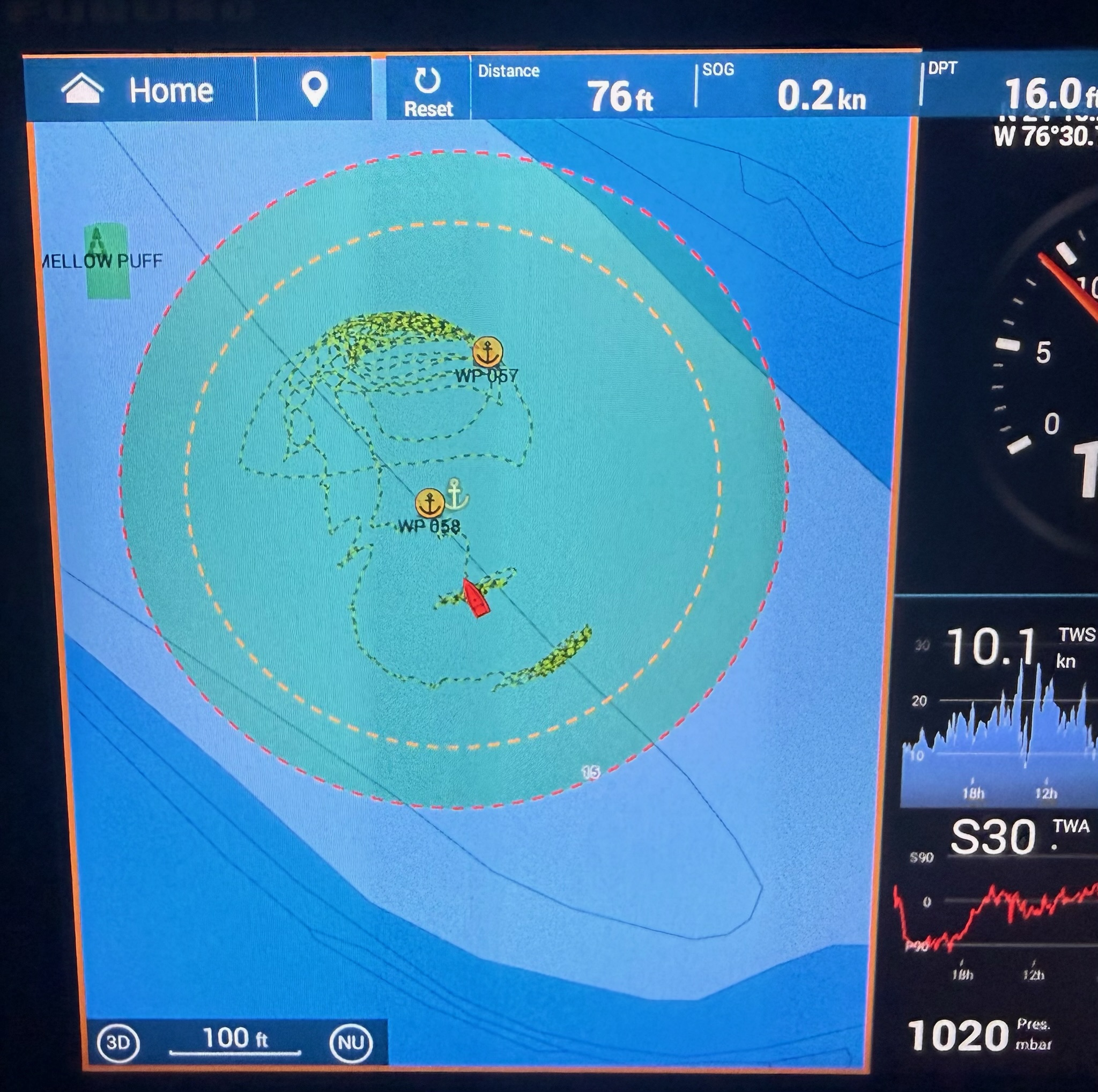
After Eric came back in, he studied the track pattern and determined that we’d been dragging very slowly since we’d anchored, but hadn’t realized because it was so slow. It didn’t become apparent until the giant gusts came. We knew this anchorage had a relatively thin layer of sand and was hard beneath the sand. His theory was that the anchor was dug into the sand, but there wasn’t enough sand down there to hold us as solidly as it should have. Eric and Keith took the snubber off. Christi lifted the anchor. Mellow Puff got another shot of us on deck preparing to move.
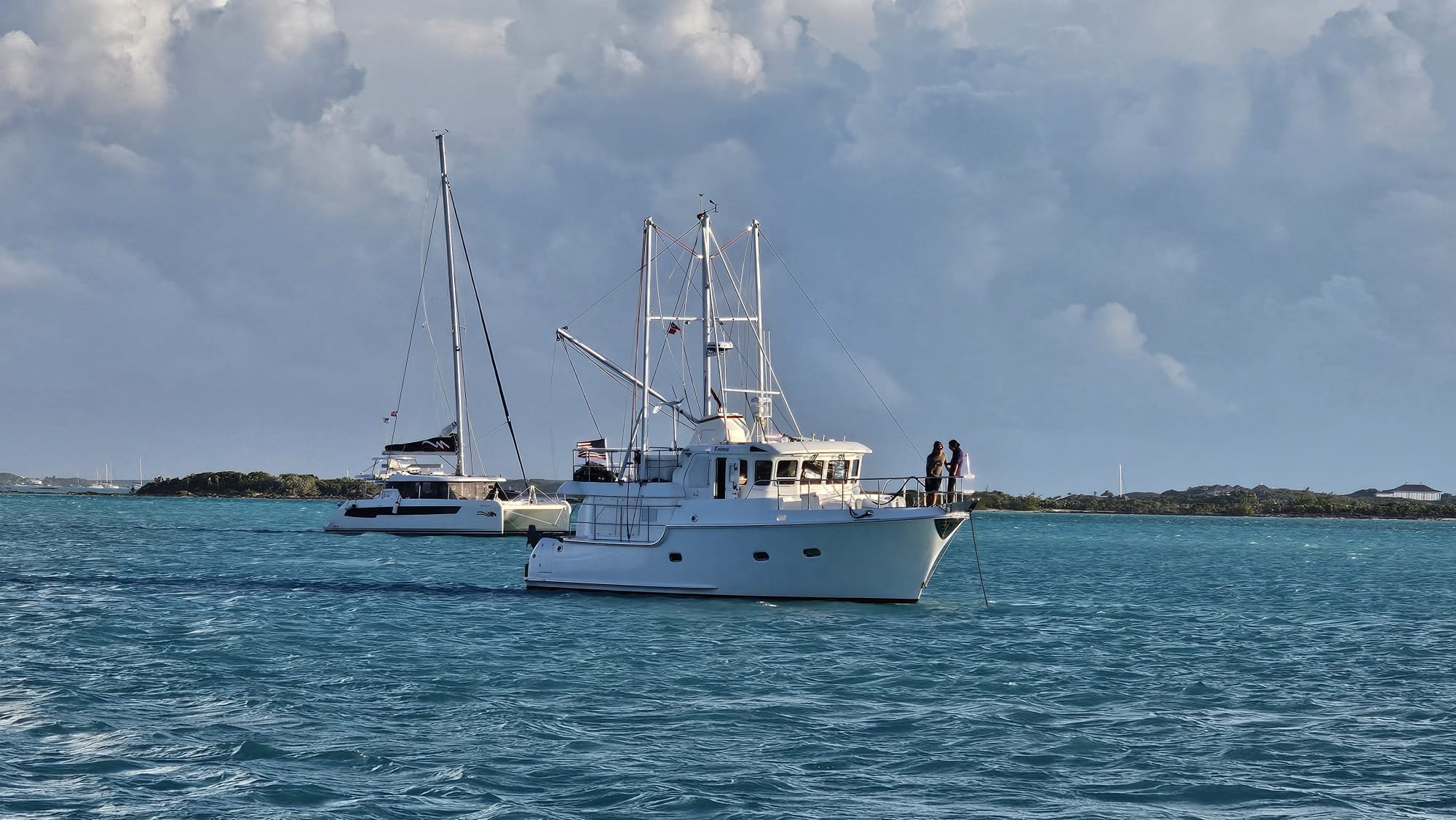
We moved a short distance into deeper water and put out 130-feet of scope. When we’d set the anchor a few days ago, the wind and current situations were different, and thus the anchor had set differently. By re-anchoring now, the anchor was properly oriented in the direction of the wind and current.
In our new position, if we dragged, it would just be to shallower water, not into the sand bar. Eric was feeling much less stressed now that we had more margin for error. At this point, the current was at 1.5 knots and Eric struggled to get the snubber on with the current creating so much tension on the chain.
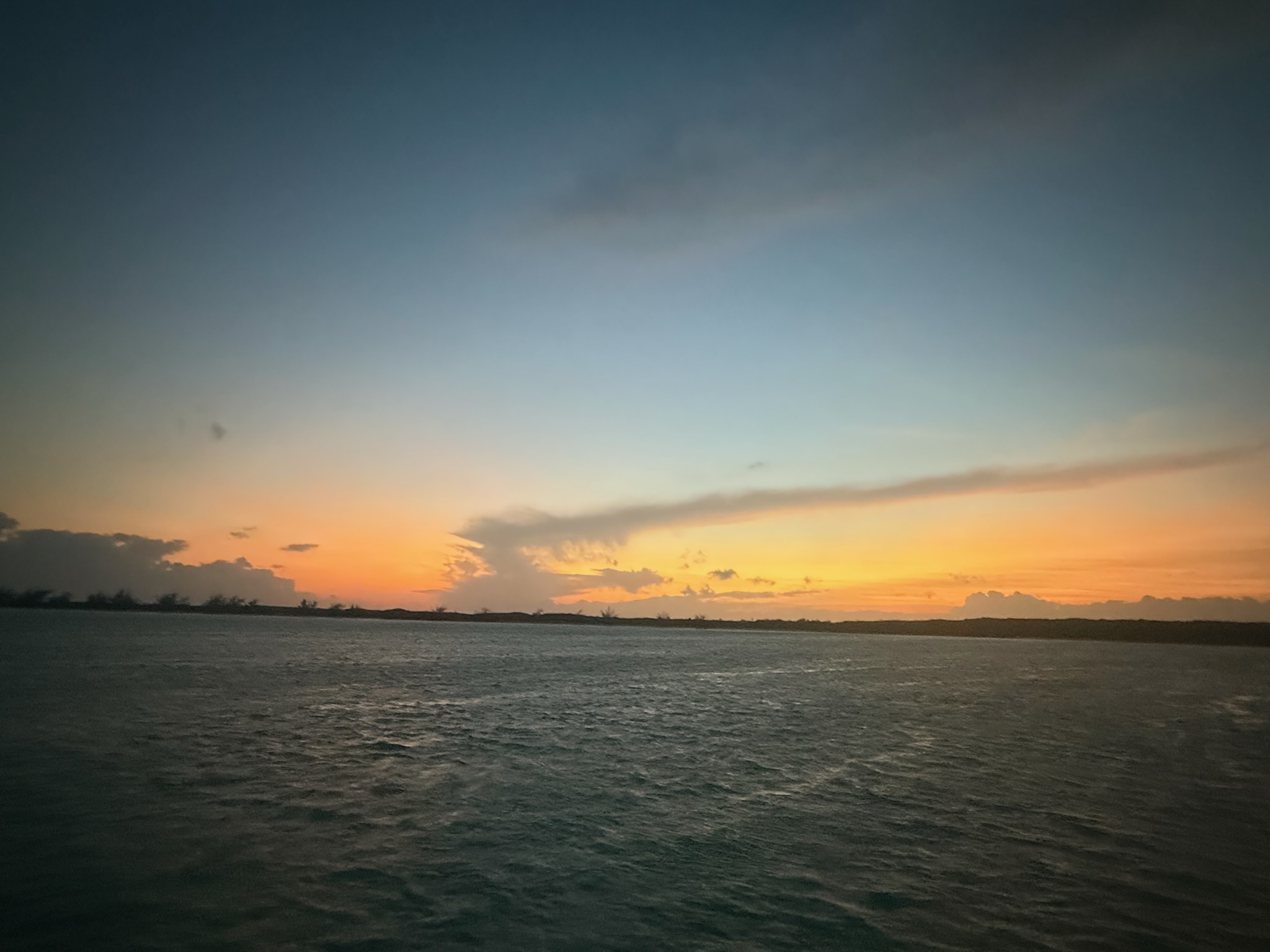
Strangely, the current didn’t reverse when it should have. Eric suspected the force of the wind was so strong that it had altered the tides and currents in the region. Interestingly, our friends on Clean Cup, who were anchored only a few miles away, said that both of the squalls had missed them. Here was the dusk.
Eric had a hard time falling asleep because he was anxious about whether the boat would drag when the current finally switched directions. At around 1130, not long after he’d finally dozed off, he awoke to the sound of people talking. He freaked out, thinking that we must be way too close to another boat. He went upstairs and looked outside. He saw that the two charter catamarans that had come in during the day were disconcertingly close to one another. There were people on each of the decks holding flashlights. He realized what he’d heard was them screaming to one another to be heard over the wind. He turned on the radar and saw that disconcerting wasn’t a strong enough word — they were dangerously close. At one point, the two boats blurred together, so he thinks they may have collided.
One of the charter cats reset its anchor. Eric turned on the electronics on in case something went wrong with their anchoring and we had to escape. Apparently, they were having a hard time getting set properly because they reset another two or three times. They got a little close to us, but nothing scary. Eric suspected the other one had put out a stern anchor.
As Eric was monitoring the situation with the catamarans, he also watched our movement on the chart plotter and saw that we were swinging around. For a while, we were moving with the wind, not with the current, but then the current picked up and overrode the wind. At that moment, Kosmos drastically shifted position. Eric heard the anchor chain scraping on rocks as we swung around.
In the middle of all this, another charter catamaran came in and anchored, which was a bold move in the middle of the night during a storm. It looked to Eric that the cat was on the sand bar, so he was worried about them re-anchoring, too, and getting too close to us. Fortunately, they stayed put.
When the drama with the catamarans finally subsided, Eric went to sleep in the pilot house, wanting to be ready to go if another dangerous situation arose. He woke up many times throughout the wee hours of the morning to monitor. Throughout the night, the wind was consistent in the mid-20s, with gusts got up to 30-knots. We changed directions frequently as the wind and current battled for dominance in dictating which direction we faced. The anchorage was rolly and uncomfortable when we were facing certain directions, and comfortable when facing other directions. It was a strange night, that was for sure! Here was the track we made.