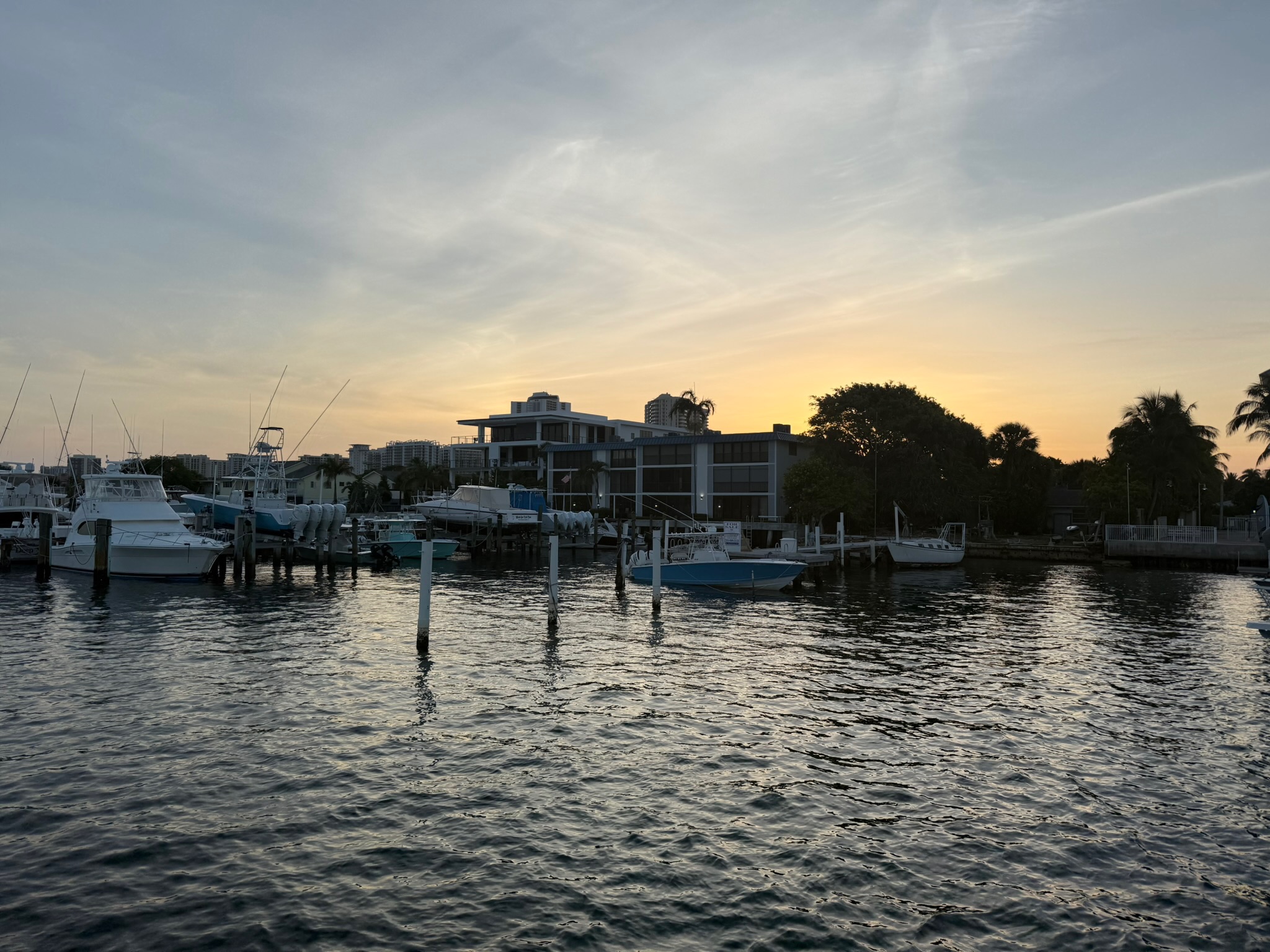
On Wednesday, May 21, it was a hazy morning, obscuring the colors of dawn.
In preparation for the haul out, Eric spent the morning stowing away gear that normally lives on the deck. Moving it all was quite a project.
Once school and morning chores were done, we drove over to the Manatee Discovery Center. While the center itself looked like it was relatively new, it was located next to an electricity plant in an older, lower socioeconomic area.
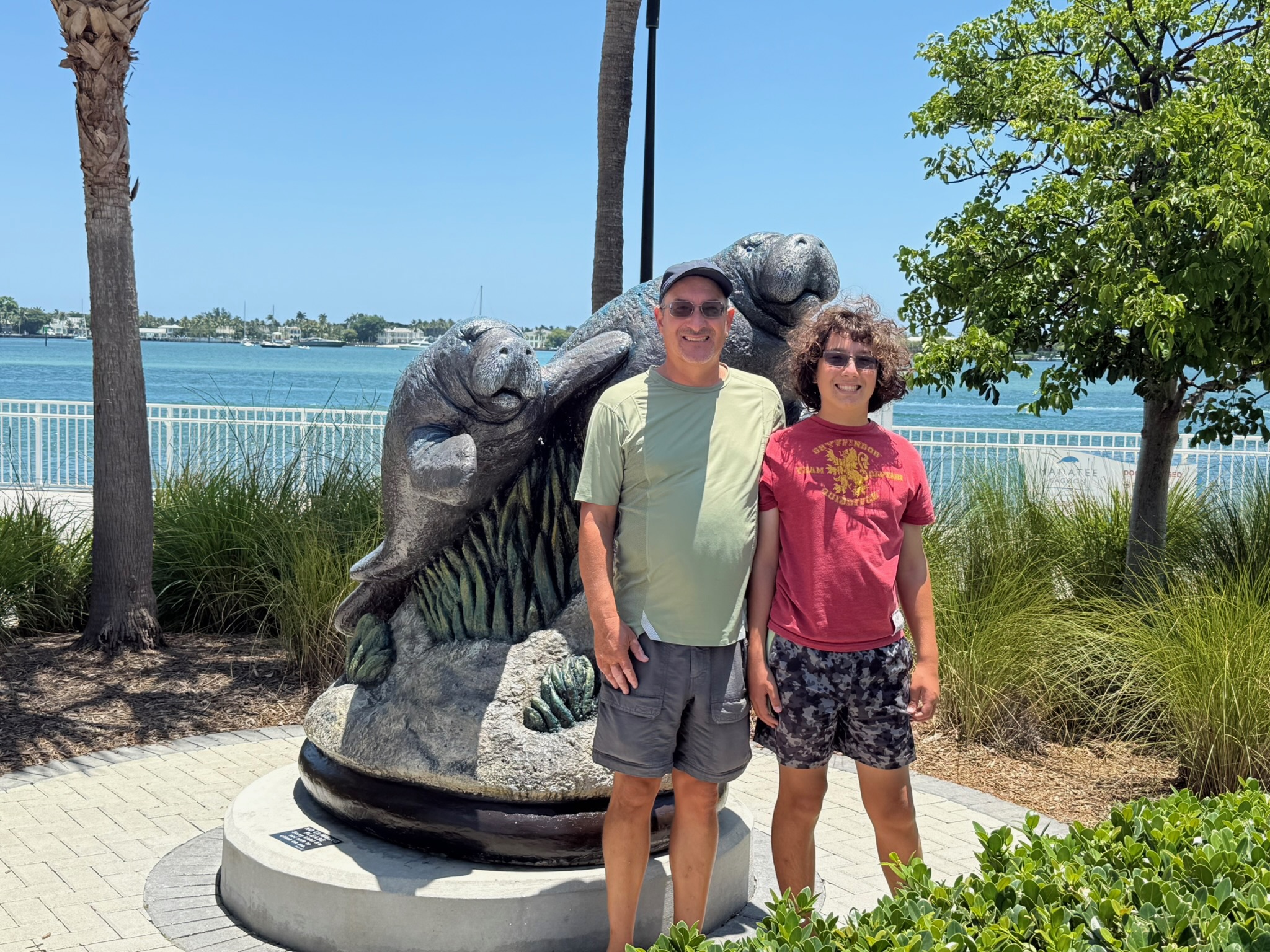
We were pleased to find out that there was no admission fee, though donations were accepted. The upstairs was closed today for a private event, but the upstairs had traveling art exhibits and beautiful views, so we didn’t miss any important information about manatees.
Much to Keith’s relief, the museum was small and consisted mostly of signs. He’d been pretty grossed out by pickled organs on display at the Whale Museum in La Paz and was relieved there were none on display here. Keith is not destined to be a doctor.
Manatees are Florida’s largest mammal (black bears are the second largest). Apparently, there are different manatee species, and the Florida manatee is the biggest of them all. Most weigh in at above 1,200 pounds, and the largest can be up to 12-feet and 3,500 pounds. They generally eat 100-pounds of food a day. They can live up to 60 years old, but rarely reach that age. Even though the federal government didn’t recognize them as an endangered species until 1972, Florida has had them as a protected species since 1893.
Like all mammals, manatees breathe air, usually every 3 – 5 minutes while swimming and can go up to 20-minutes in between breaths when at rest. While they can move fast in short bursts, they typically swim at about 5-mph. Manatees are primarily vegetarian, and their preferred food is sea grass. They also prefer calm water. Their ideal depth for a feeding ground is 3 – 6 feet, making it easy for them to frequently come up for air while feeding on the bottom.
Even though they can live in fresh, brackish or saltwater, they drink only freshwater. They sign said they can go quite a while without water, but gave no timeframes. We realized that the manatee in Atlantis hadn’t been eating the waterline growth as we’d assumed; it had been sucking the freshwater from the air conditioning condensation that was coming out of the through-hull. That made more sense!
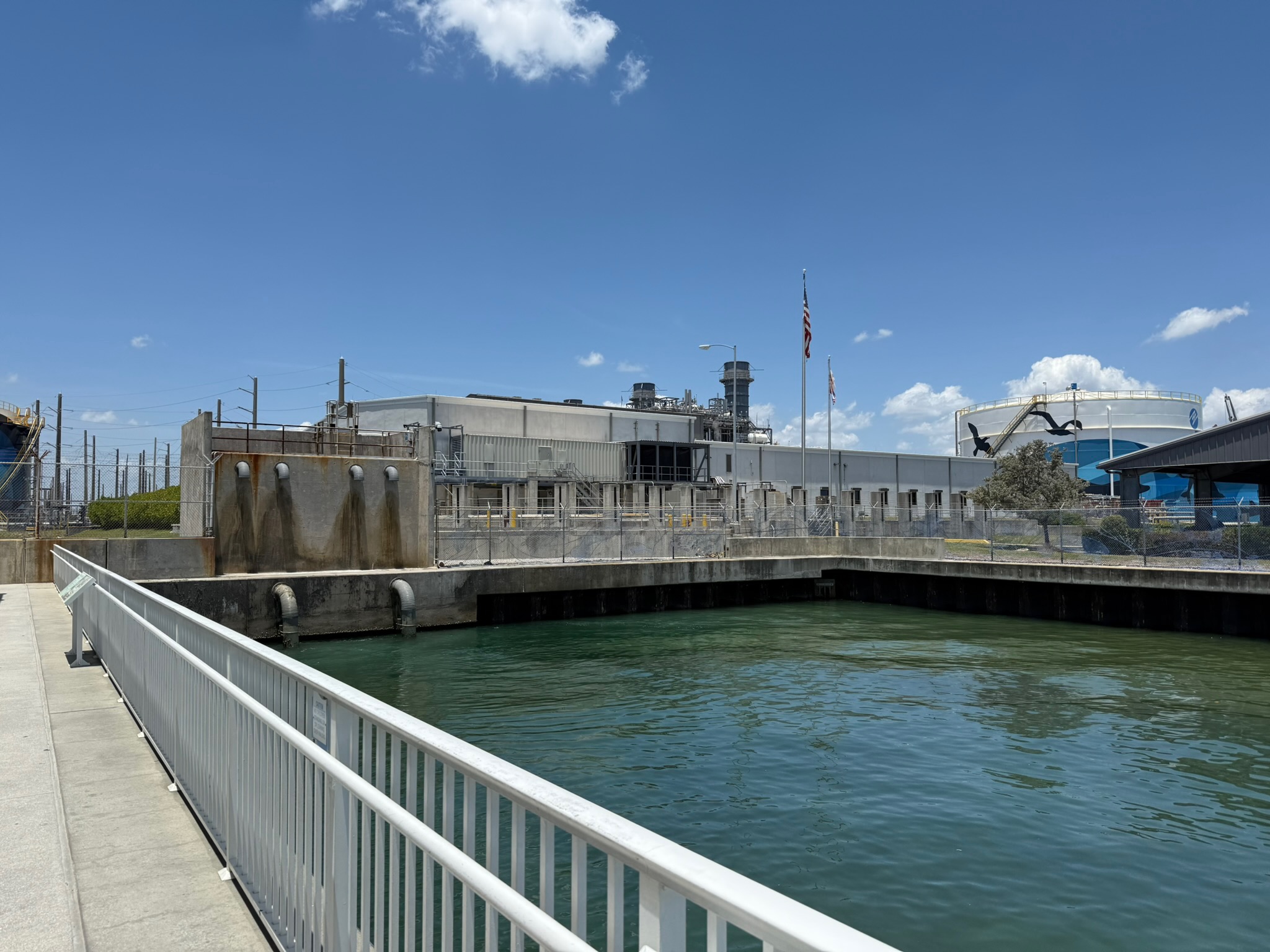
Manatees can die from being in water less than 68-degrees Fahrenheit. They tend to migrate to northern Florida (and sometimes beyond) in the summer and move to southern Florida in the winter, though they won’t necessarily move south if they find a spot with warm water to spend the winter in. One of the warm spots that they congregate at is this little alcove along the patio of the Manatee Discovery Center. The adjoining electricity plant makes electricity via steam, and the excess water is drained into the lagoon via the pipes pictured, making this spot warm. While manatees generally live alone or in small groups, larger groups will congregate here peacefully. Since it was summer, there were none here today.
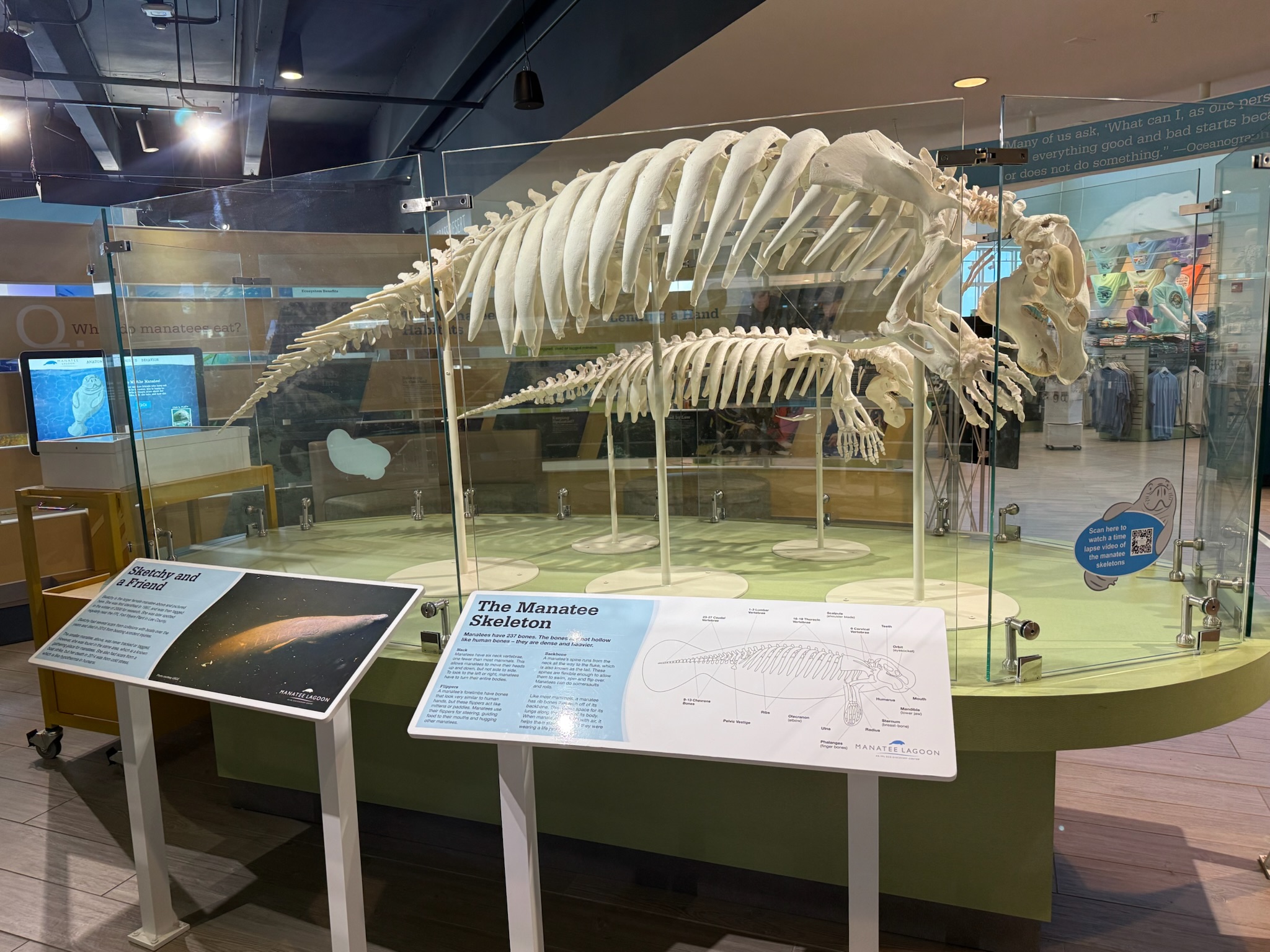
Their skeletal structure is surprisingly similar to humans, with a spine that goes from the neck all the way to the fluke (tail), with ribs and finger-like appendages in their flippers. They have eyes, nostrils and strong lips that are dexterous, similar to the end of an elephant trunk. Elephants are manatees closest cousin. Manatees usually have one calf every 2 – 3 years, and the calf usually stays with its mother until it’s two. As their front teeth wear out, they grow new teeth. Interestingly enough, the old teeth move to the front of the mouth and the new teeth grow in the back of the mouth.
Manatees don’t have many predators. Sharks will only eat baby manatees, and crocodiles and alligators leave manatees alone. Several species of fish have a symbiotic relationship with manatees, with the fish eating the algae off the manatee’s backs. While many species live in the sea grass, such as invertebrates, small fish and the juveniles of turtles and larger fish, few other species eat it, so they don’t have a lot of competition for food, either.
Probably about half the signs were about the efforts to restore Lake Worth to be a suitable habitat for the indigenous creatures. According to the signs, by the 1940s, the building in Palm Beach County had caused much of the shorelines, with their mangroves and sea grass, to be replaced with sea walls. Lake Worth was filthy. Palm Beach County is part of a 105-mile barrier coral reef system — the only on in the US — and much of it was damaged. A conservation group began restoring reefs and creating artificial reefs, replanting sea grass and mangroves, adding rocks to shorelines to make homes for oysters, which naturally filter sediment out of water, and trying to eradicate invasive species, such as the lion fish and Australian pine trees. A sign indicated that some — or maybe even all of the islands in Lake Worth were created from dredgings, and indicated that these islands helped with replacing the natural ecosystems that had been destroyed by development.
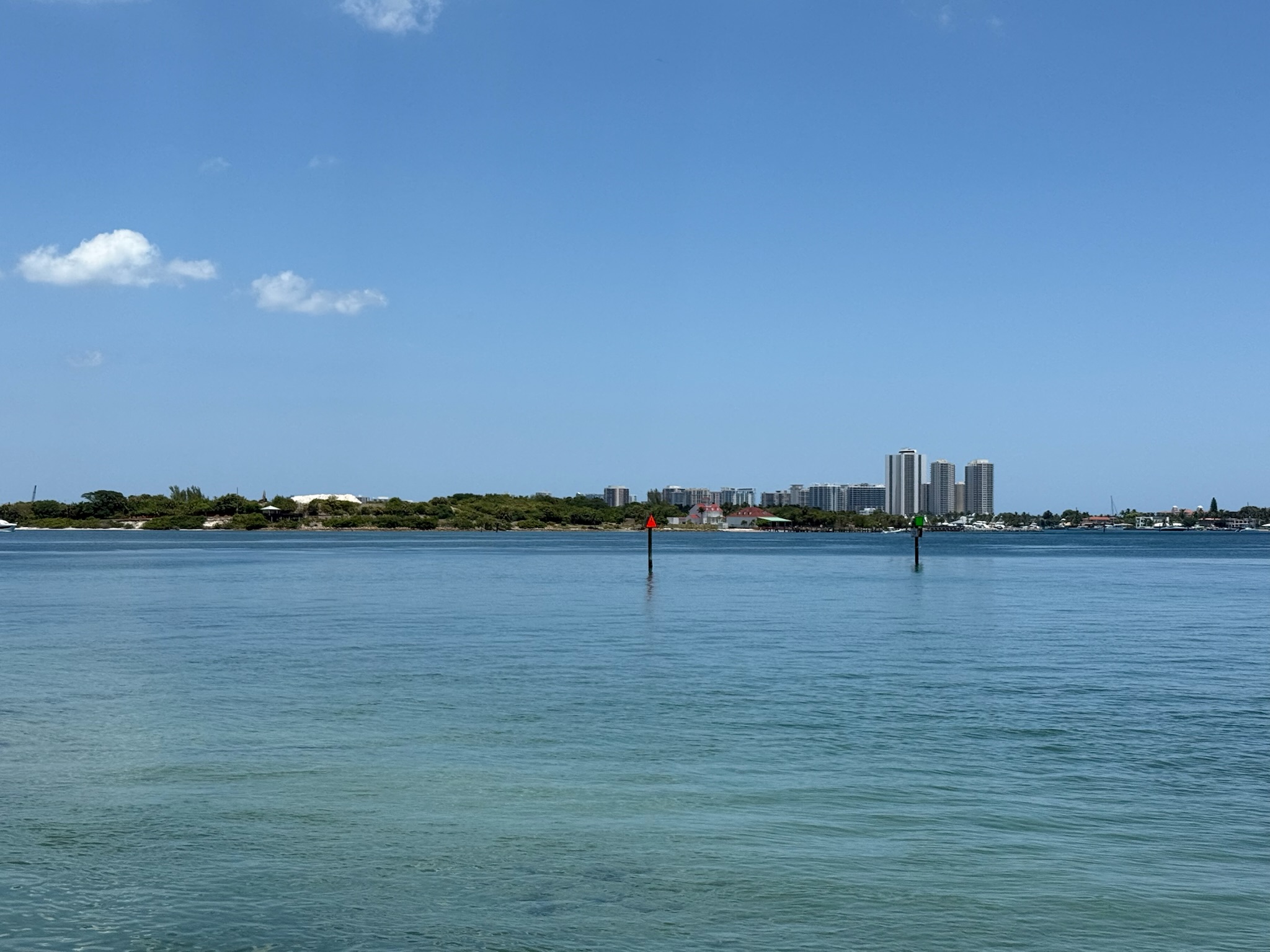
Here was the view looking northeast towards Peanut Island, Singer Island and the Lake Worth Inlet. Note the channel markers and how narrow the dredged channel really is.
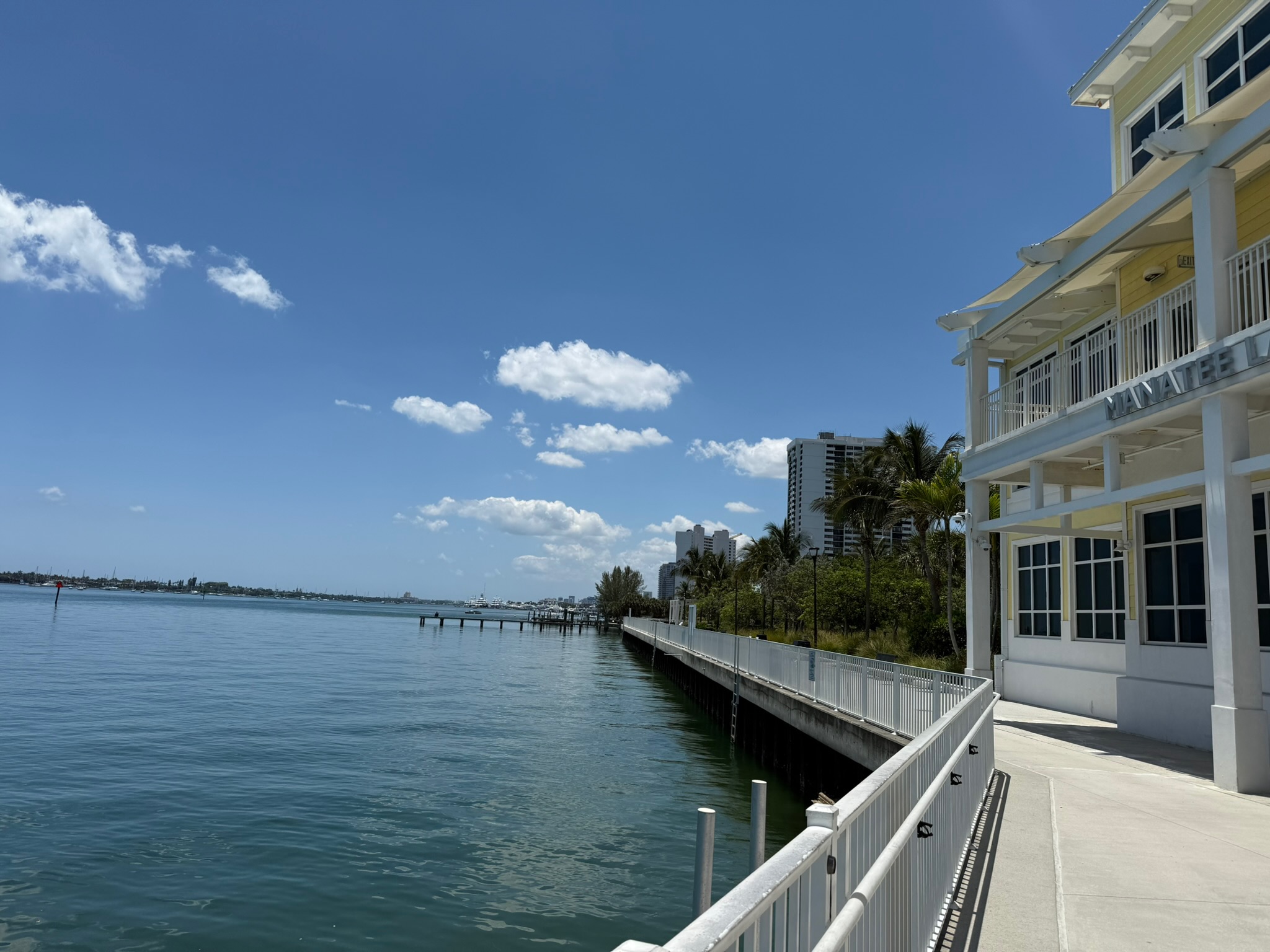
And the view looking south to West Palm Beach.
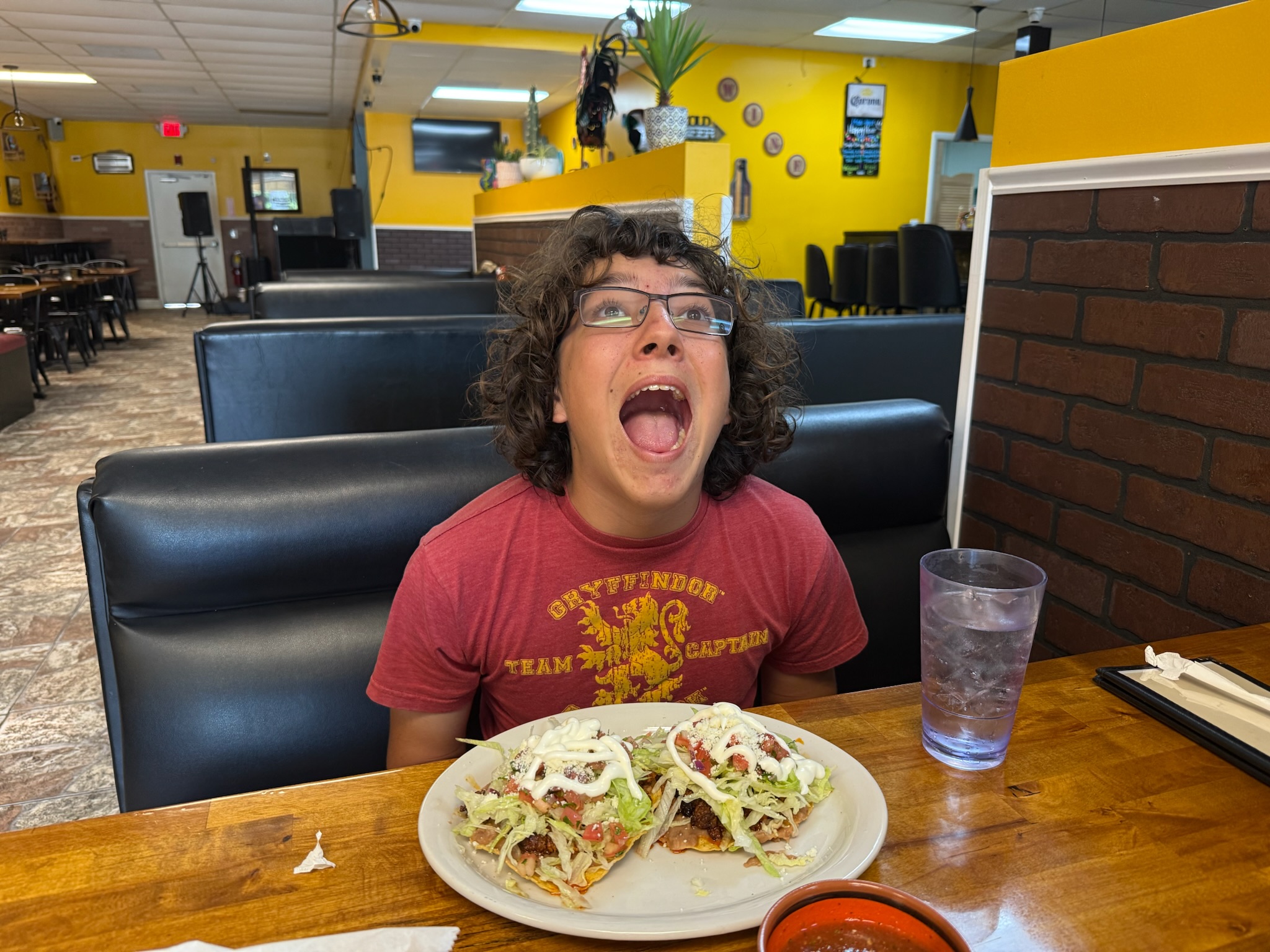
For lunch, we went to a (relatively) nearby Mexican restaurant called El Mezcal. It was the best tasting and most authentically Mexican food we’ve had since leaving Mexico. The potions were generous and the prices good. Given the food portions, quality and price, it was an excellent value for the money.
After lunch, we went to Carvel for Ice cream. On the way back to boat, we drove by a waterpark. It appeared to be open, but empty.
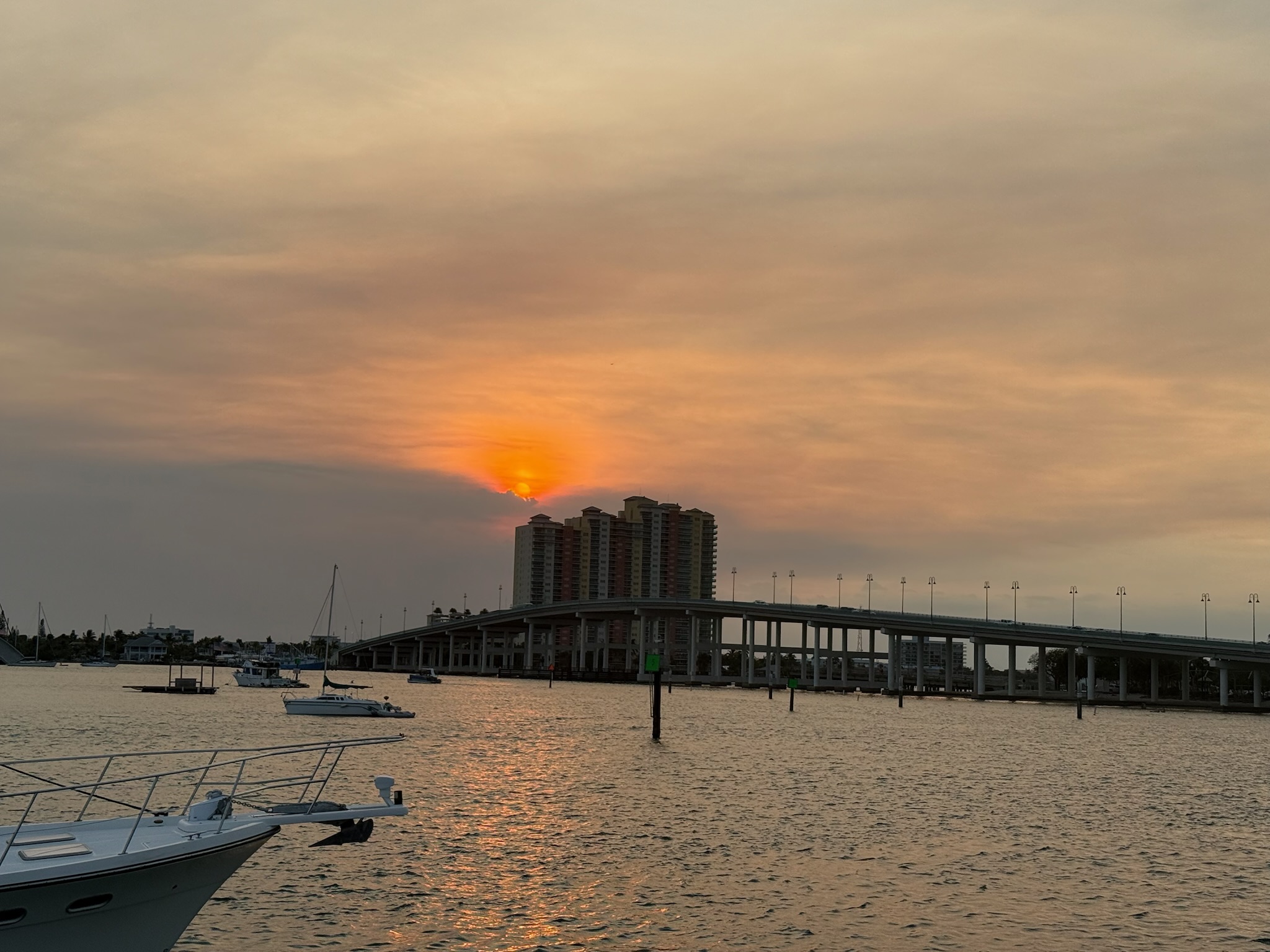
It was also a hazy evening. Normally, the sun was glaringly bright when it dips behind the building, but thanks to the haze, we were able to capture it before it disappeared.