continued... Once tobacco exports were established, the tobacco farmers quickly grew wealthy. They used their money to buy even more land, taking all of the prime locations. As the society evolved, these large plantation owners dominated Virginia’s economy and government. In 1670, laws were changed so that property ownership and payment of taxes was required to vote or hold public office (both white and black), giving the plantation owners even more power over everyone else.
There had already been growing tensions amongst the freed indentured servants. The plantations primarily utilized slaves, so there were no jobs for these freed men to go to after their time in service ended. While they could start their own farms, they’d have to go to the edges of the settled areas, where there would inevitably be conflicts with the indigenous over the land. While the Powhatan (and tribes under the Powhatan umbrella) had made an agreement with the colonists, the colonists were now expanding beyond the Powhatan lands into areas with no such agreements. The government of Virginia did little to help protect these outlying farms from attack.
In 1674, Nathaniel Bacon arrived in Virginia. Bacon was arrogant, bold, active, moody and taken to alarming outbursts. He was also charismatic and an eloquent speaker. He was cajoled into leading a rebellion of disgruntled colonists. Some of the elite who were concerned about government corruption and mismanagement joined the rebellion, too. In 1676, Bacon formed his own militia whose goal was to remove all indigenous from the lands. They attacked and killed some Pamunkey, who were a friendly indigenous tribe under the Powhatan umbrella. The indigenous retaliated. The governor was furious that Bacon’s militia had disrupted peace with the Pamunkey as they’d had a lucrative fur trade relationship with them. In September 1676, there was a battle between the Virginia Militia and Bacon’s Militia in Jamestown. Bacon’s militia set fire to the town. Soon after, Bacon died of illness and the rebellion fizzled. The Queen of the Pamunkey signed a peace treaty with the colonists on behalf of her own tribe and several others that lasted almost 100 years
The capital of Virginia was moved to Williamsburg, ten miles away, in 1699. By that time, Virginia had grown from 104 colonists in Jamestown in 1607 to 60,000+ people spread all over the Virginia territory. Only about 600 Powhatan still remained in the English controlled areas. Blacks made up 10% of the population. Most people worked on plantations. After the capital moved, Jamestown declined rapidly. By 1716, all that was left was a church, a court house and three of four houses. Eventually, those buildings were cleared for agriculture. Once we’d finished in the museum, we headed back out to explore the fort some more.
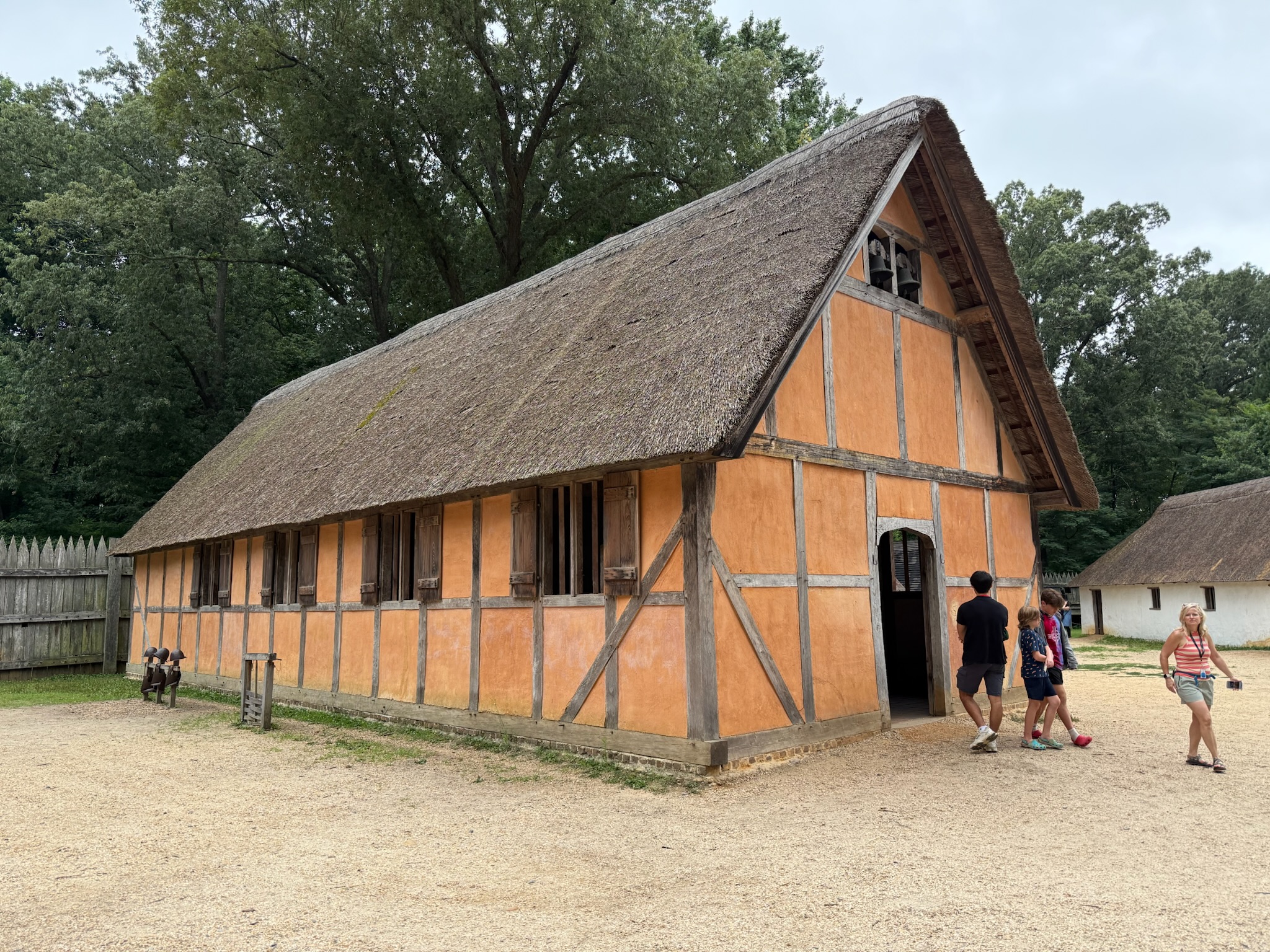
This was the church, which was one of the first buildings the settlers built. Virginia was not a state that had focused on religious freedom, and as such, there was no separation of church and state — all Virginians were required to be Anglican. When representative government was enacted, they met in the church. Non-Anglicans were not allowed to vote or otherwise participate in the government.
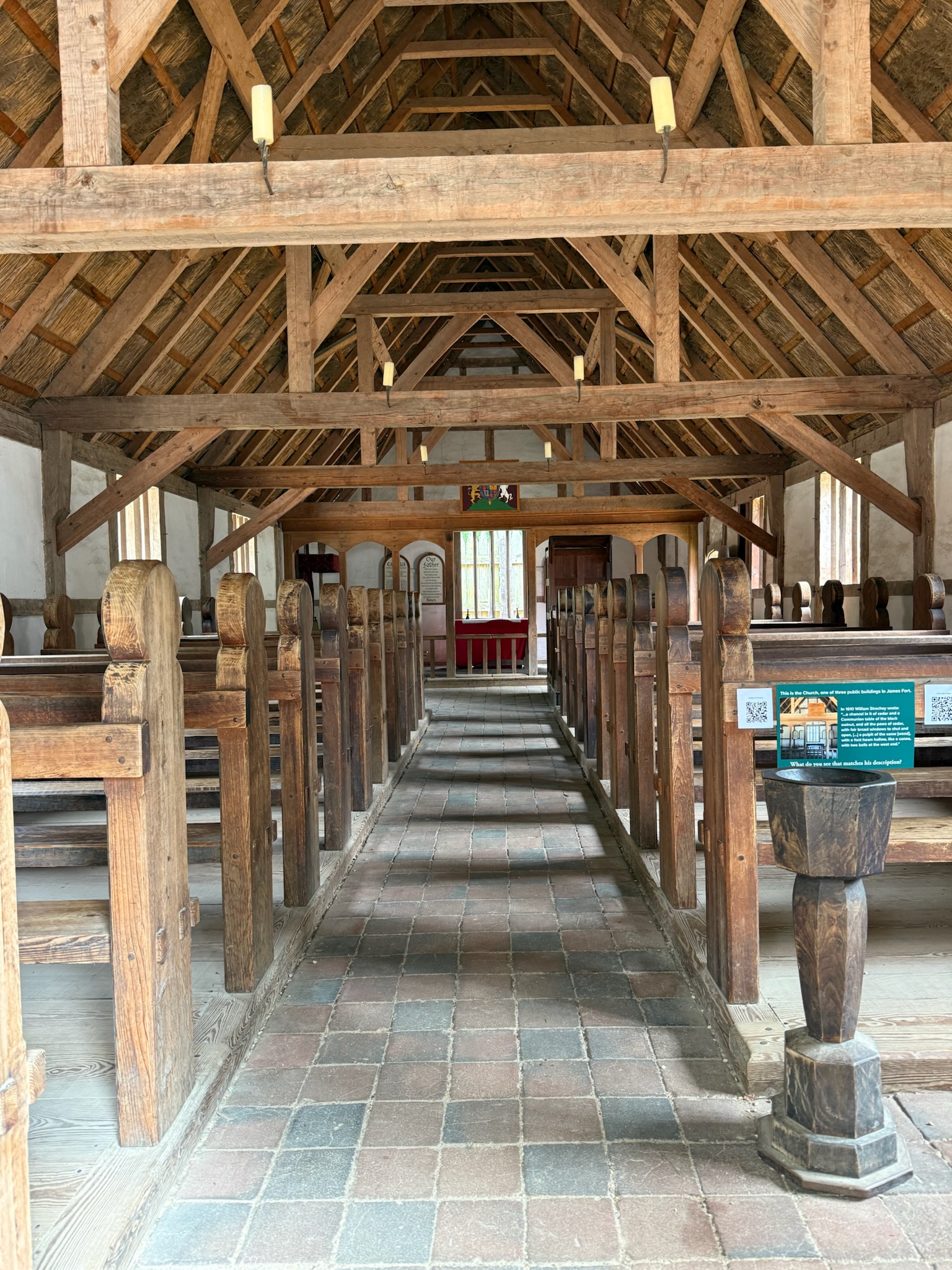
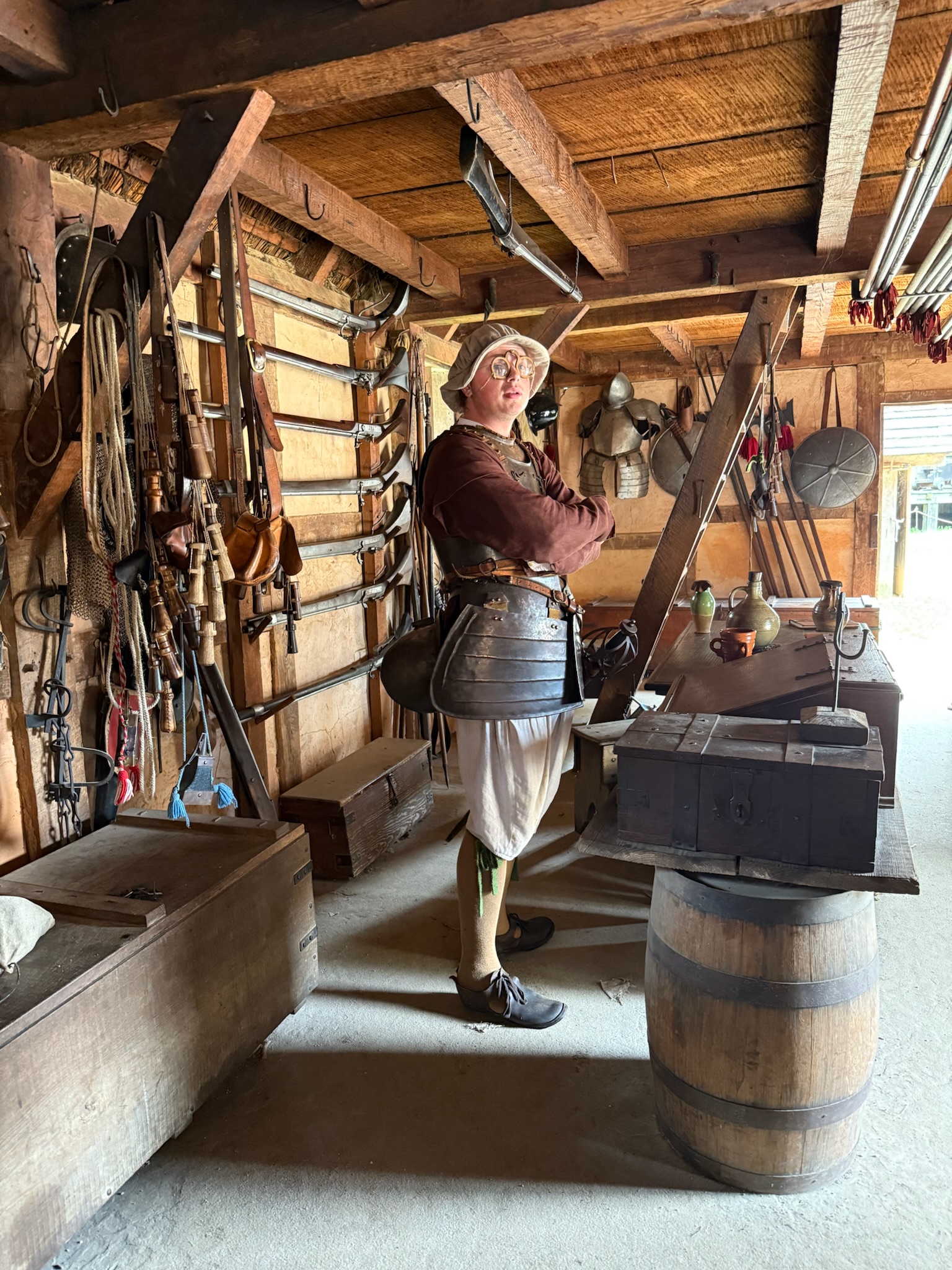
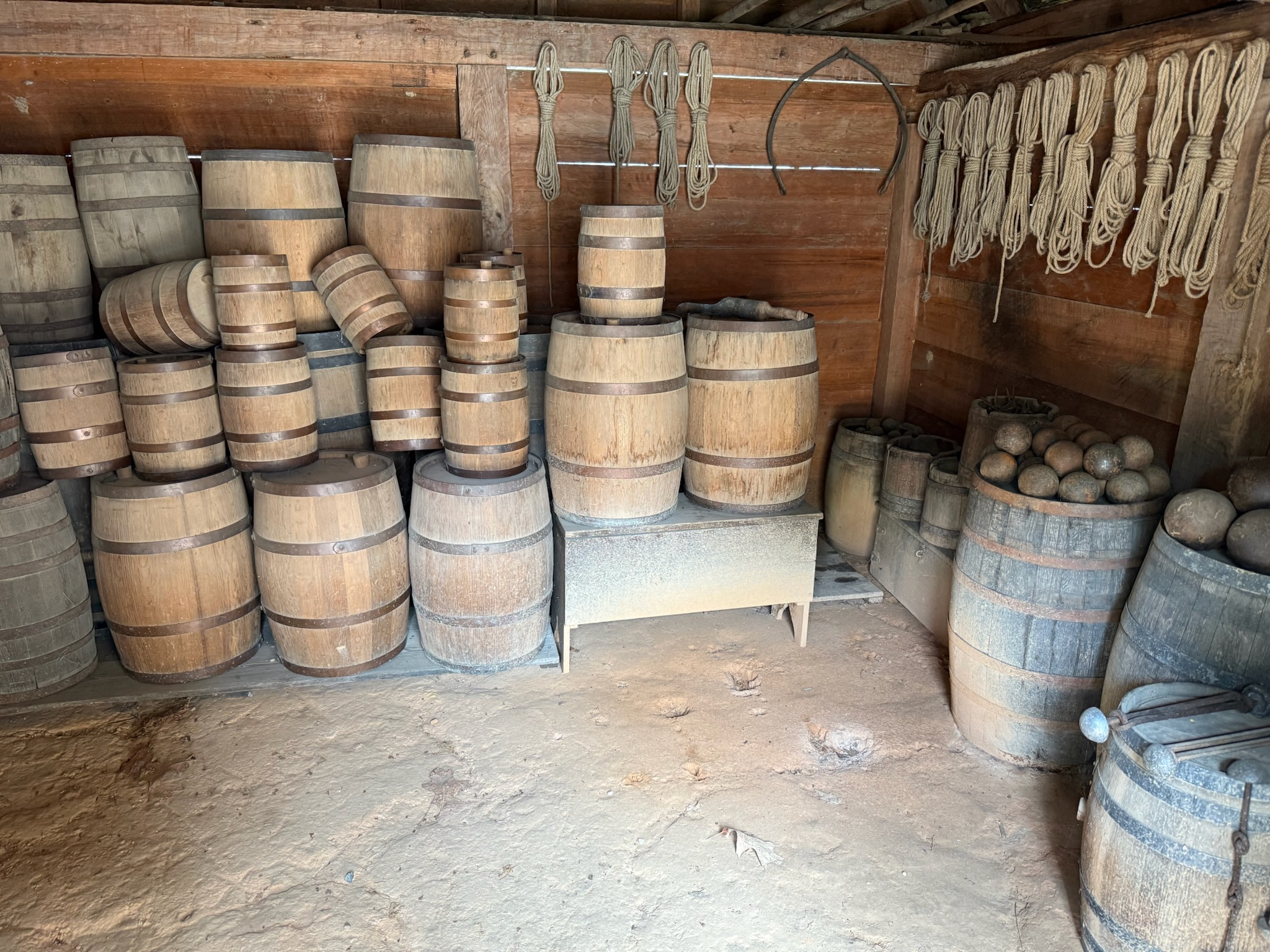
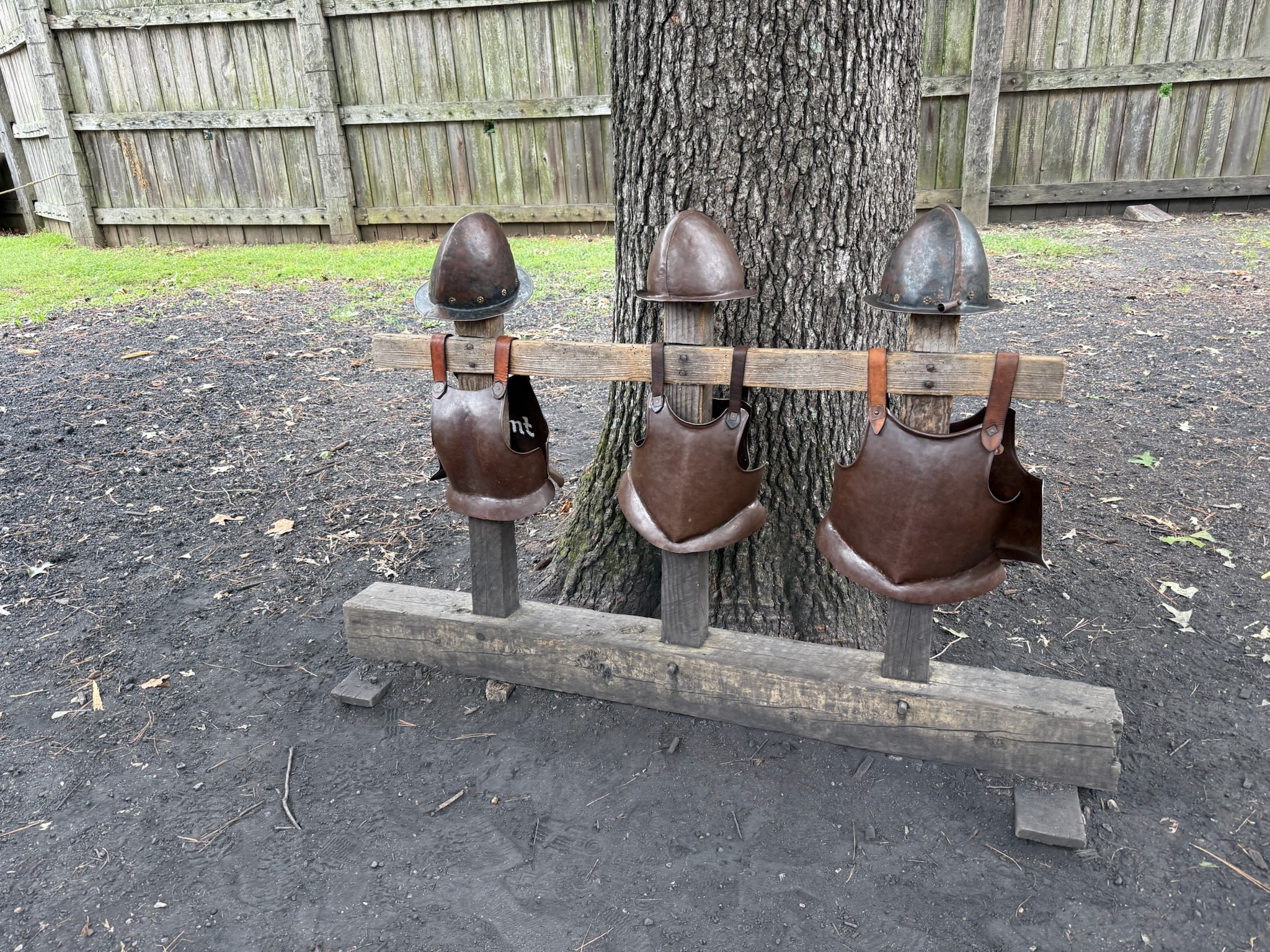
This was the armory, or guardhouse, which was a public building for shared community resources. It was one of the first structures that were erected. It was Keith’s favorite place in the settlement.
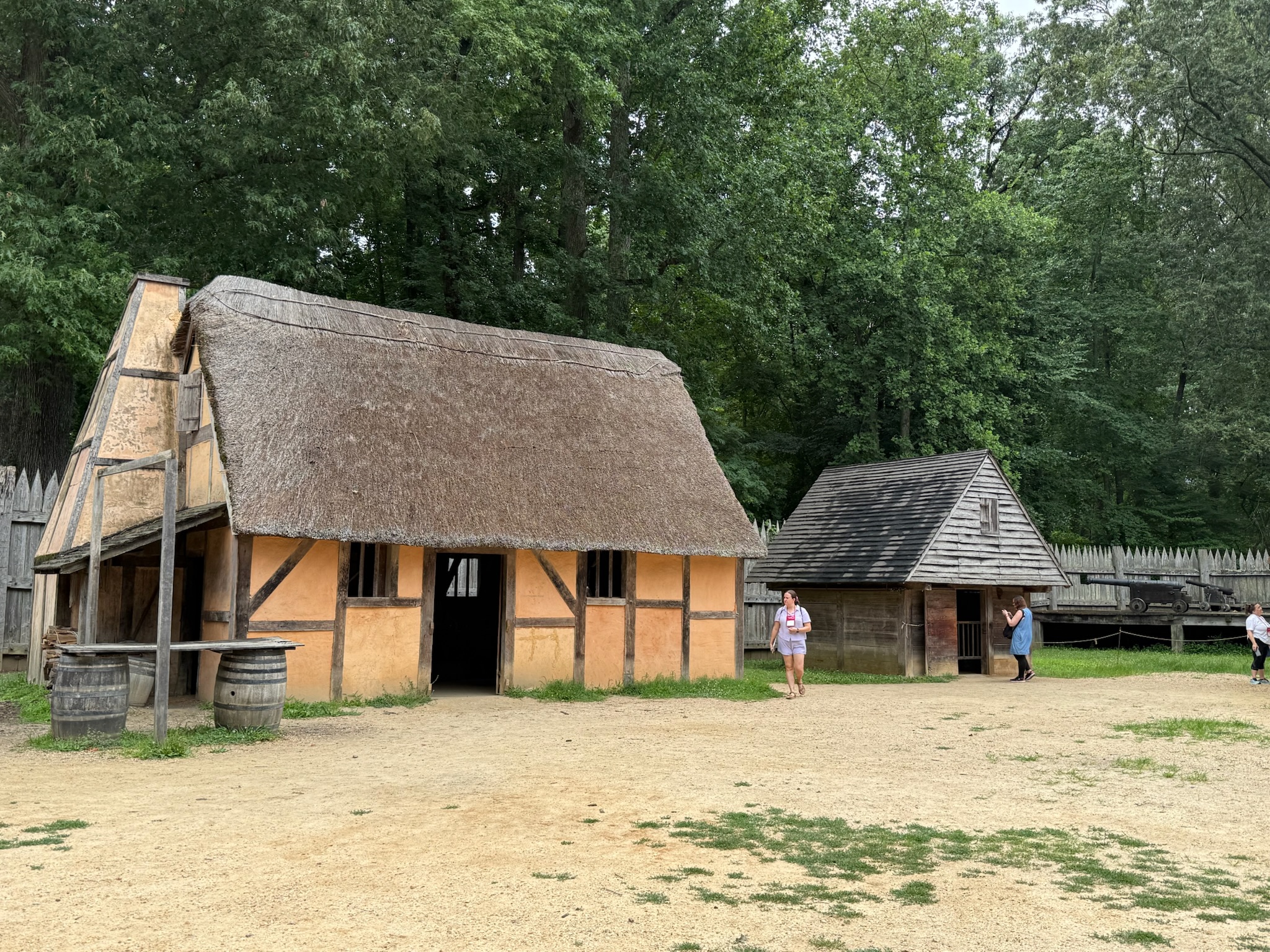
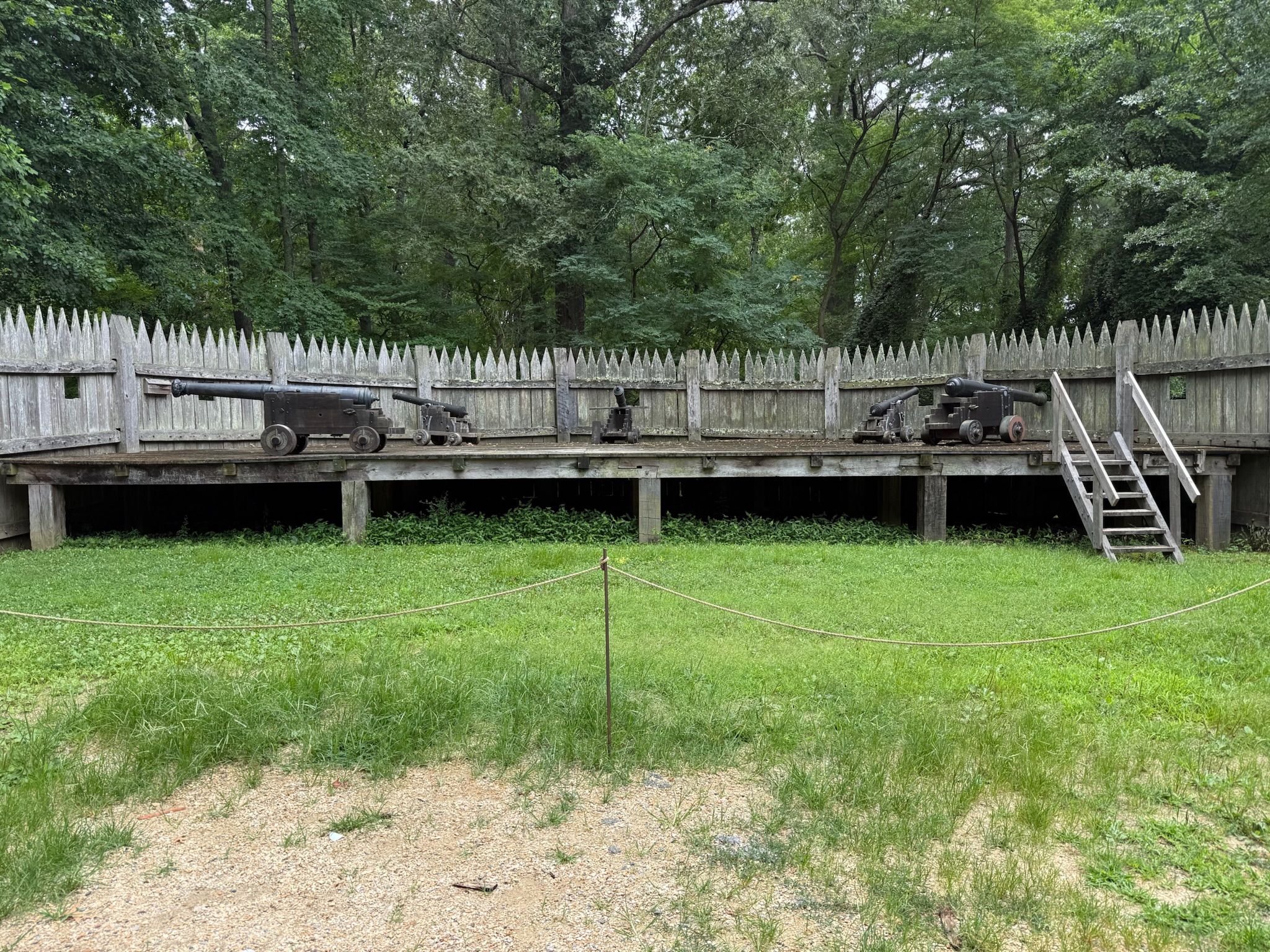
The fort was sort of triangular in shape, and each corner of the triangle was a guard post.
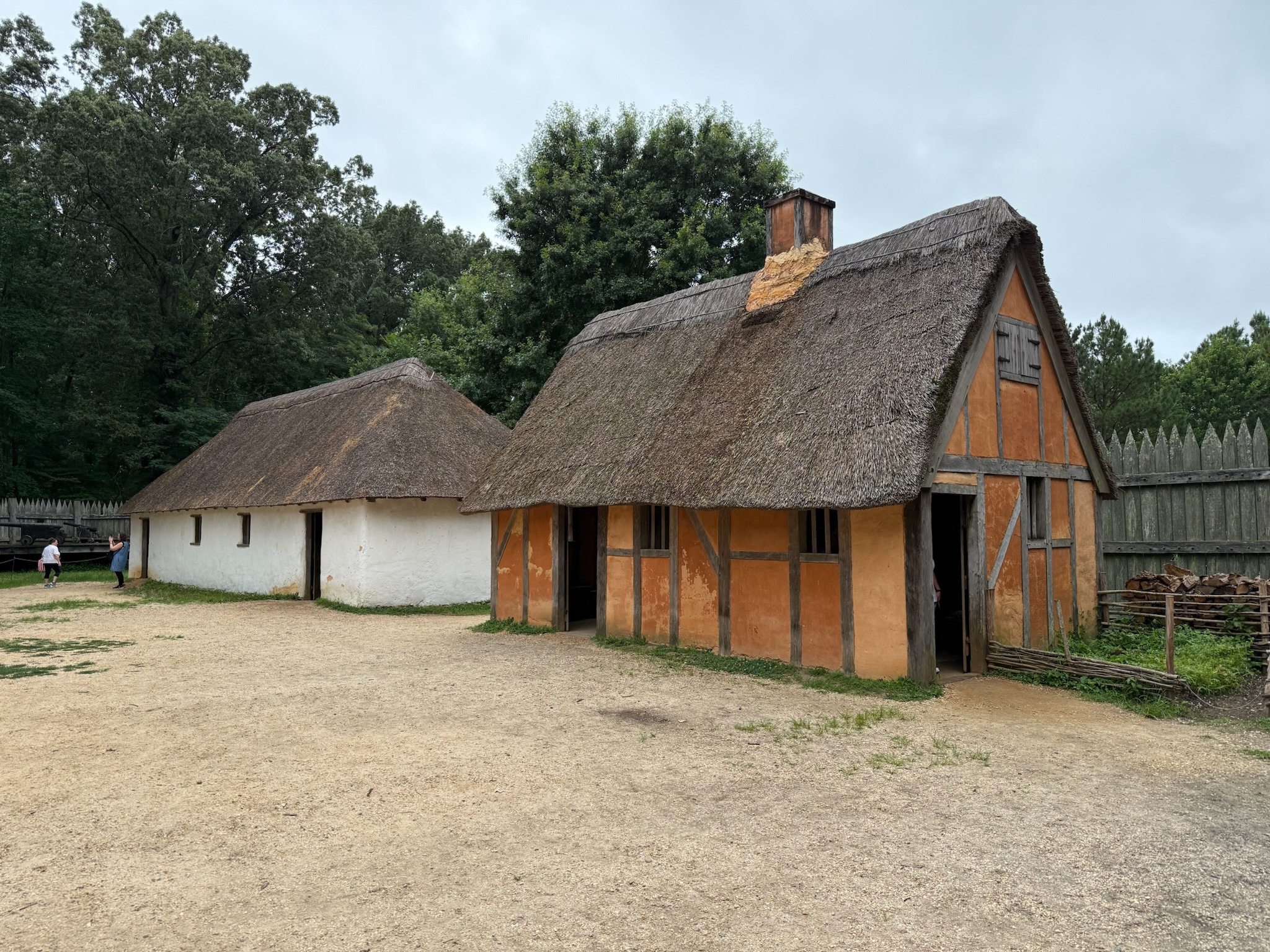
The white building was the storehouse, which was another shared public building that was one of the first structures built. The brown building looked like a private residence. Initially, the settlers lived in tents. The residences were slowly built after the walls and public buildings were completed.
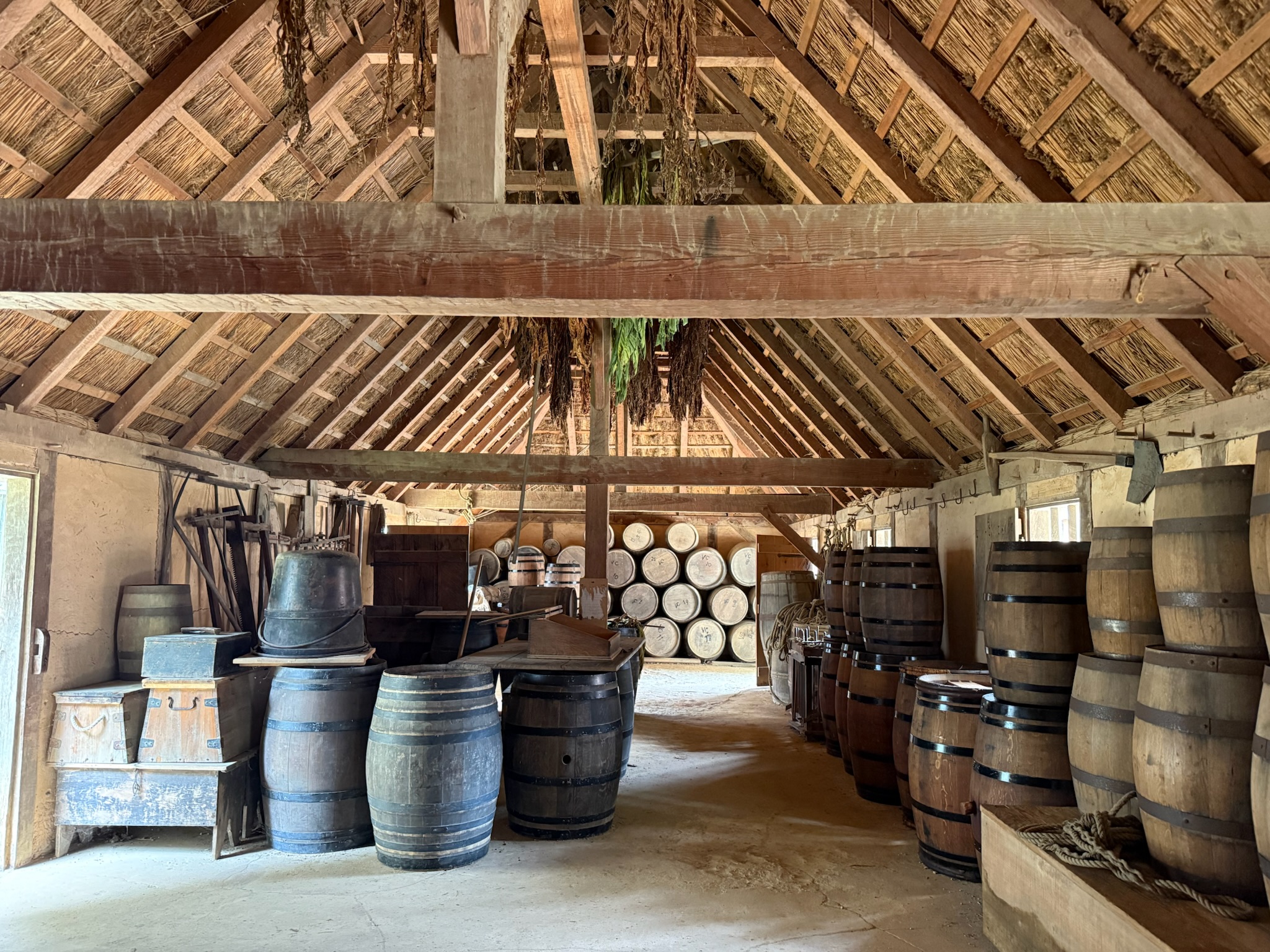
Inside of the storehouse:
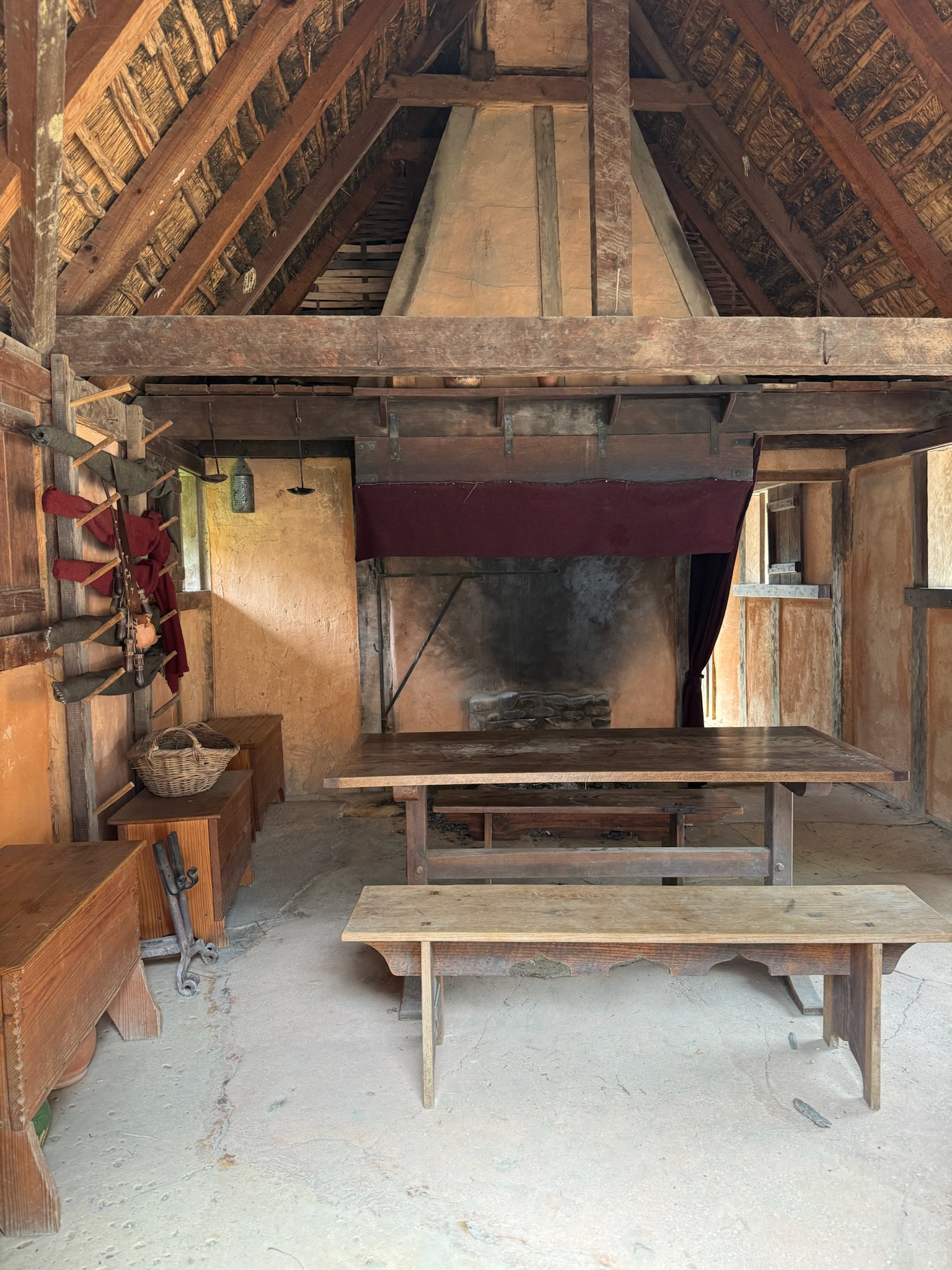
Inside of the residence:
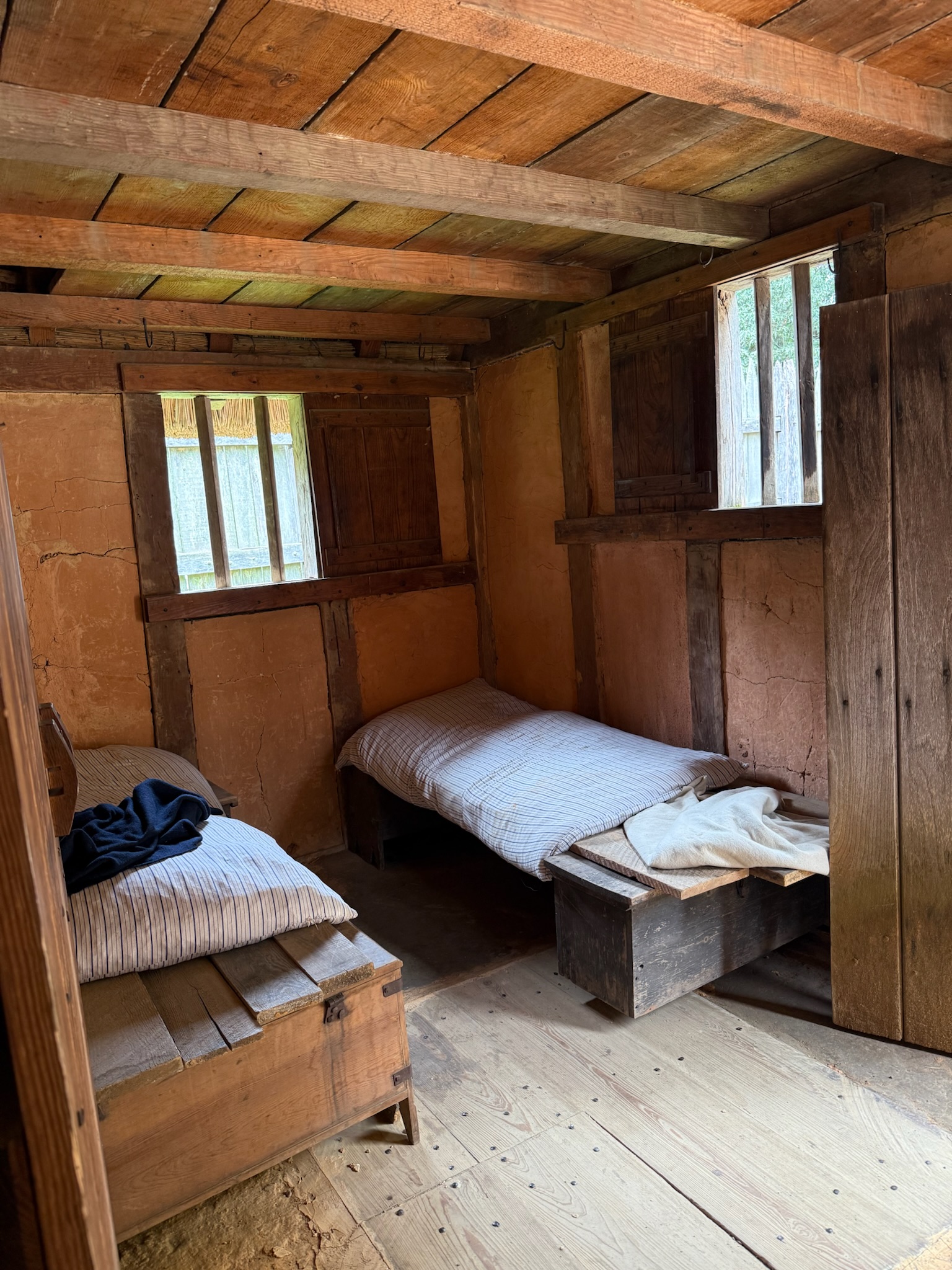
This was a bunkhouse where the male indentured servants lived. There was a common area in the middle and a bedroom on each side.
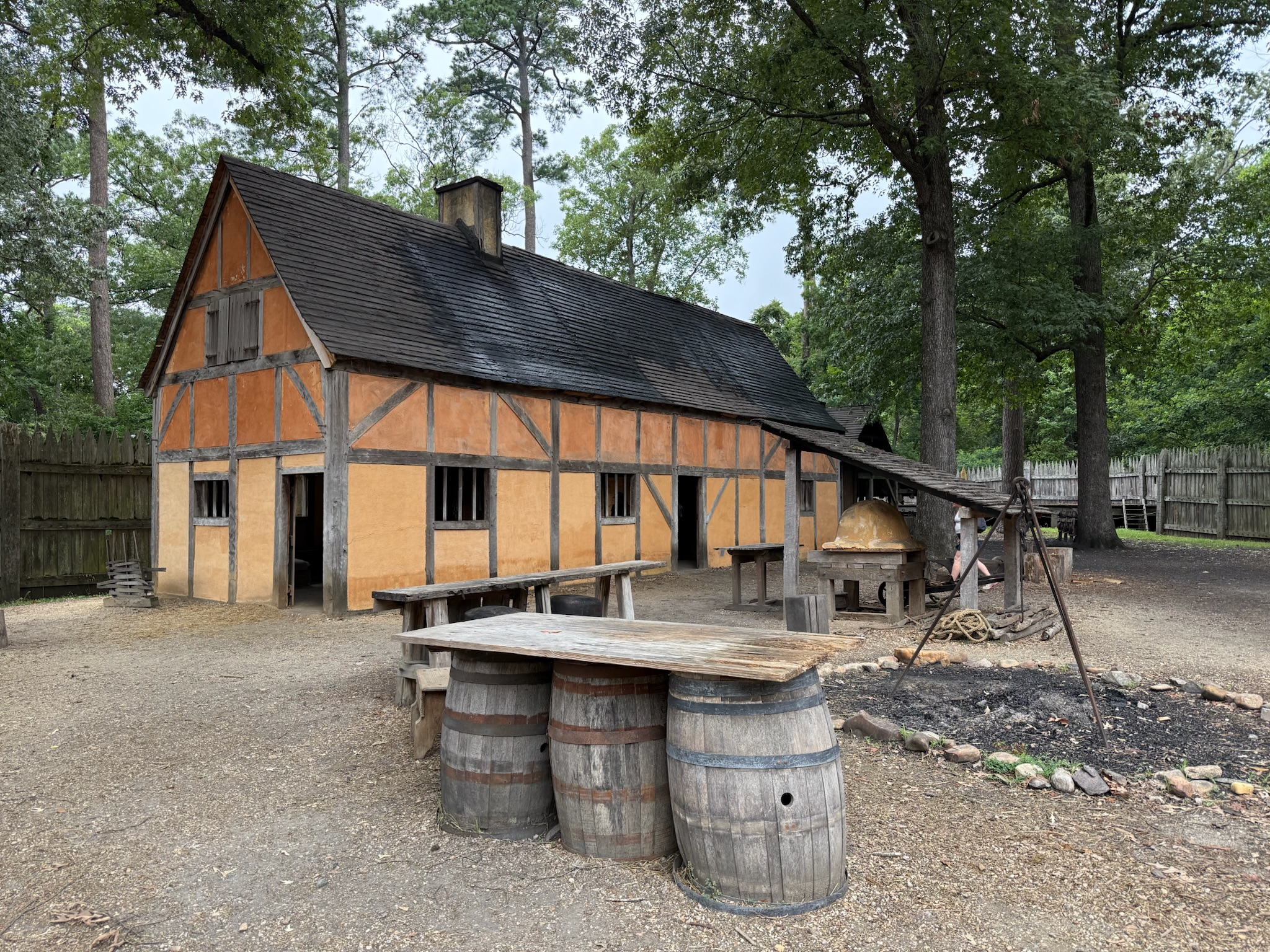
The women in the common room were playing the role of indentured servants assigned to care for the men. The woman to the left was making a pot of stew in the fireplace and the other woman was knitting something (we forget what).
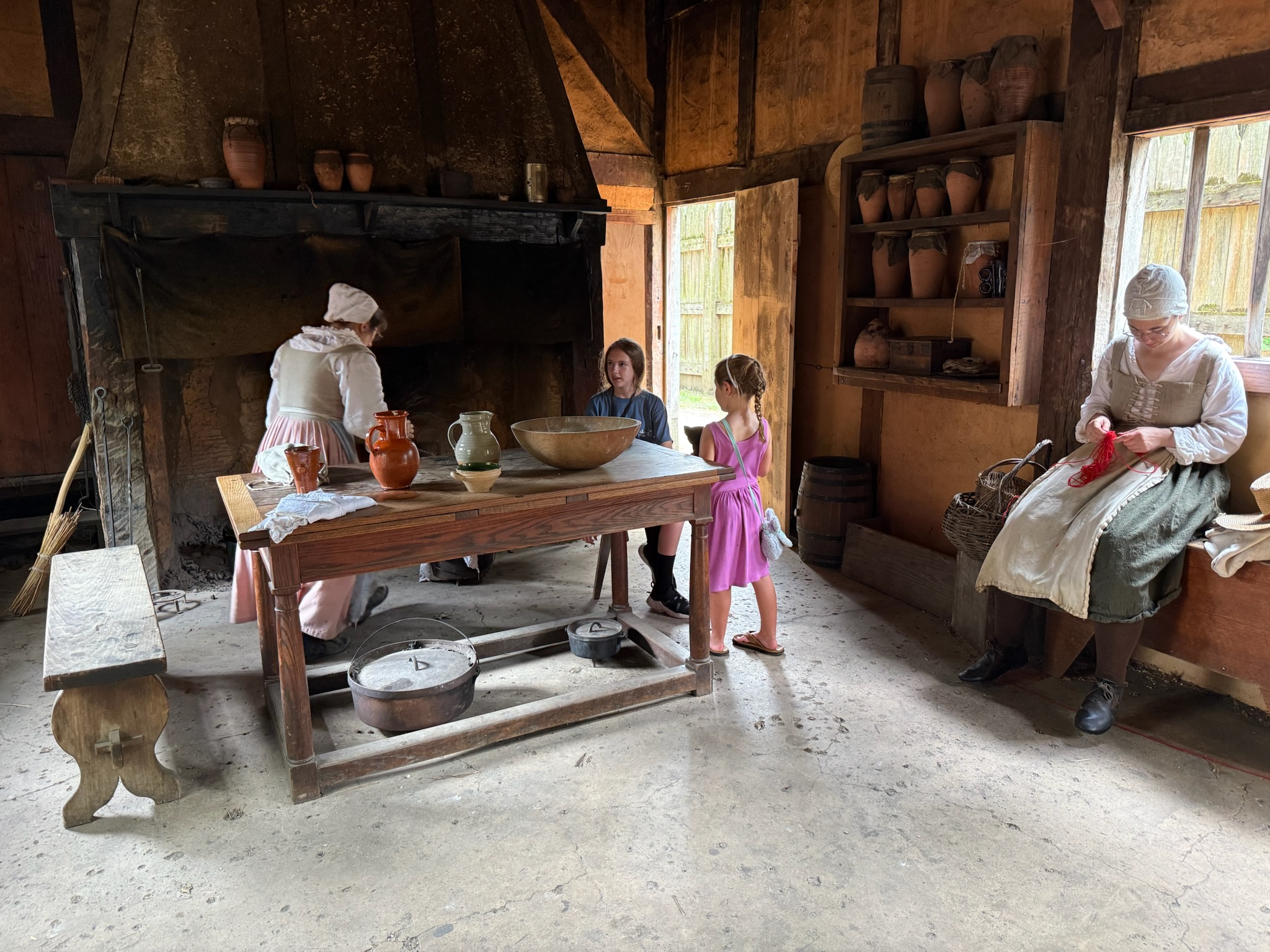
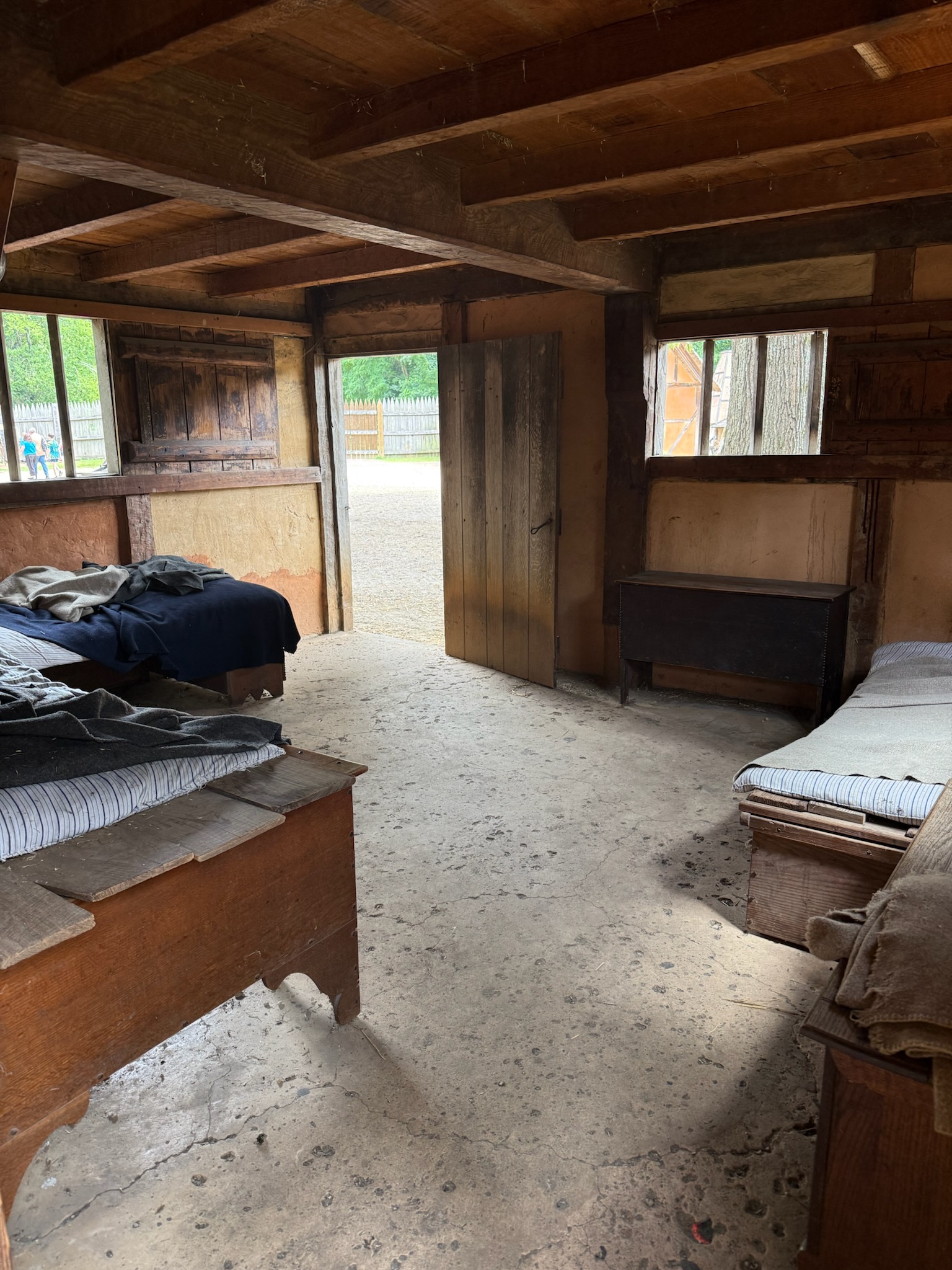
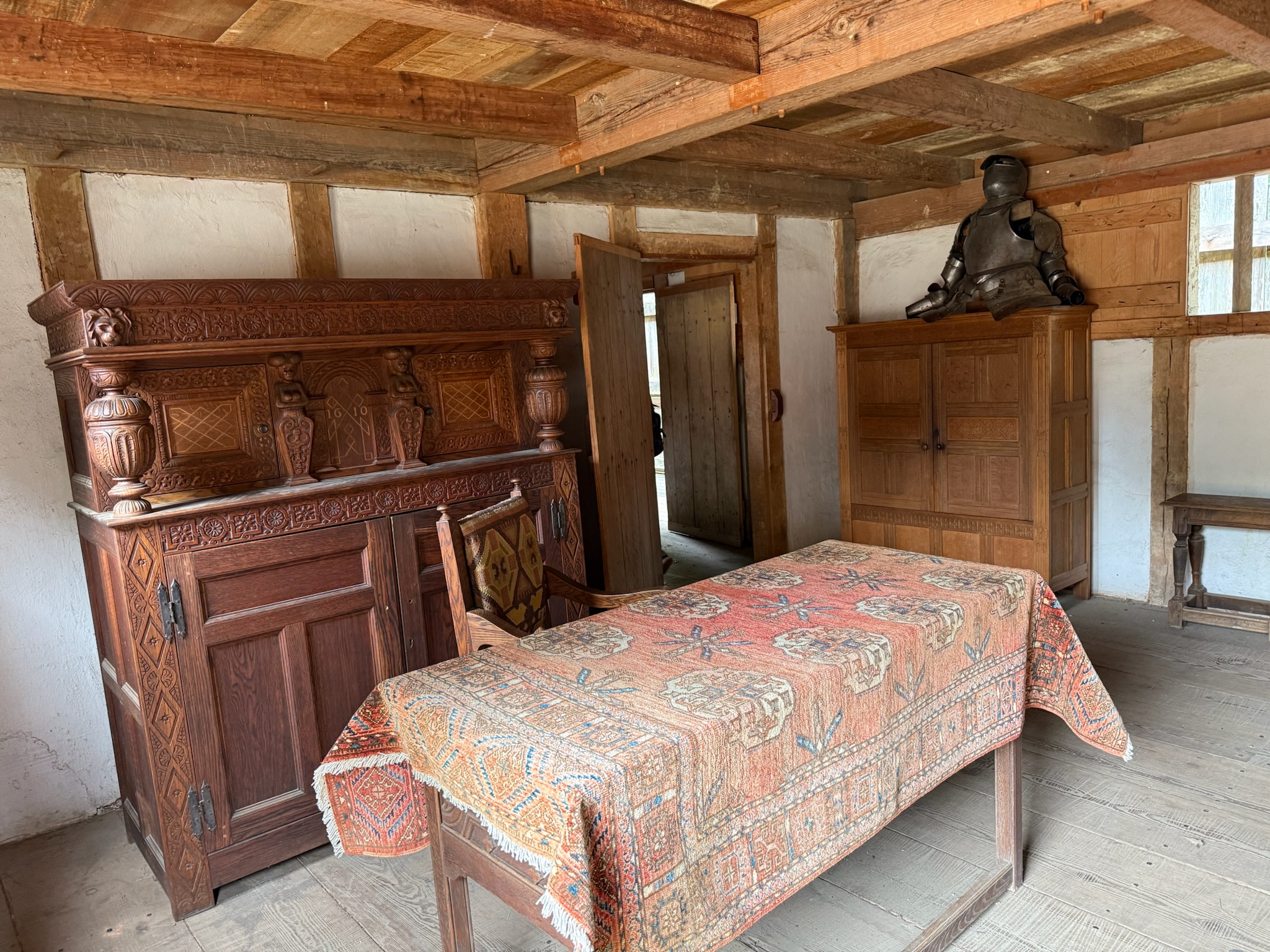
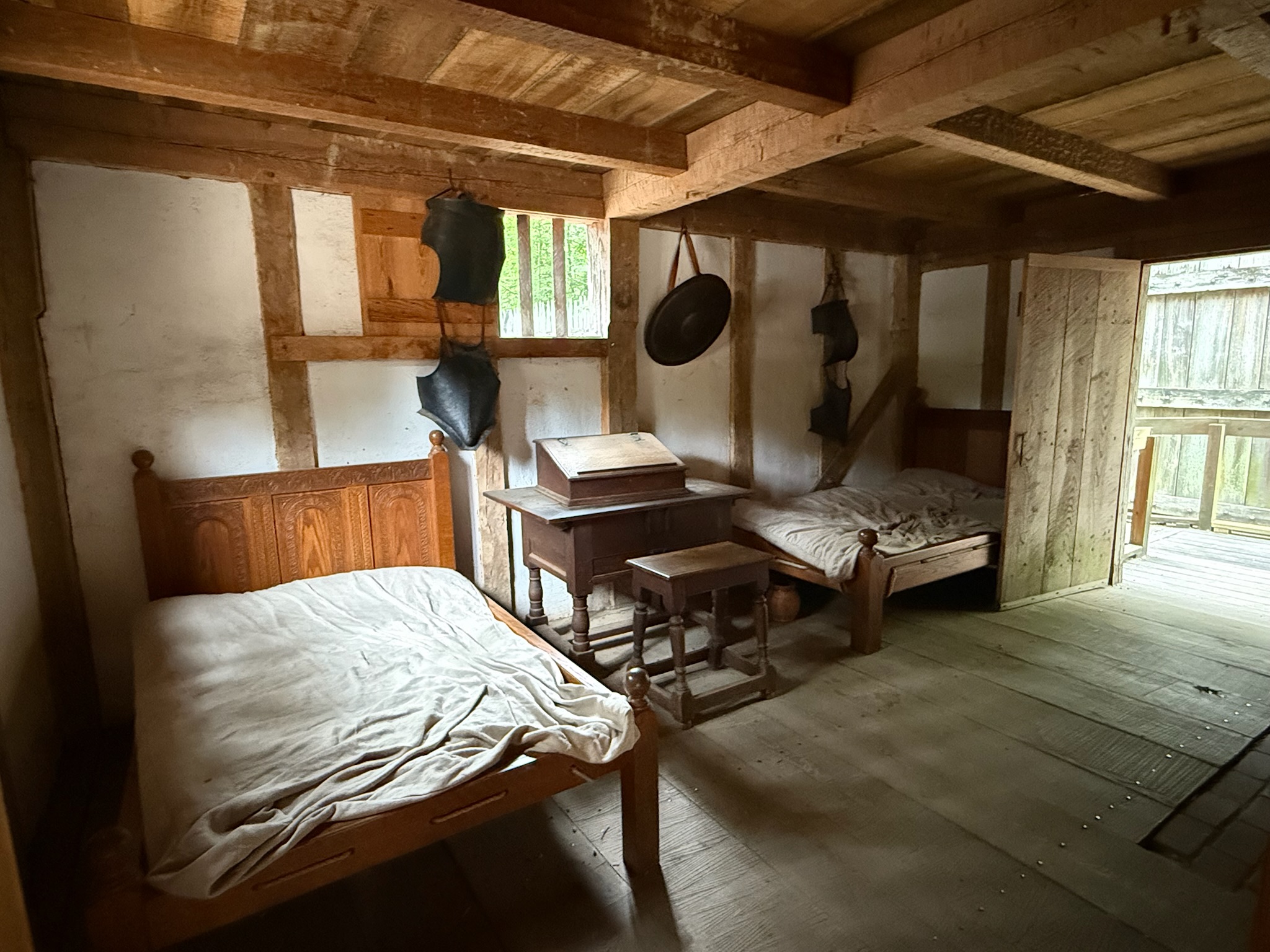
We weren’t sure if this was one giant home or three small homes.
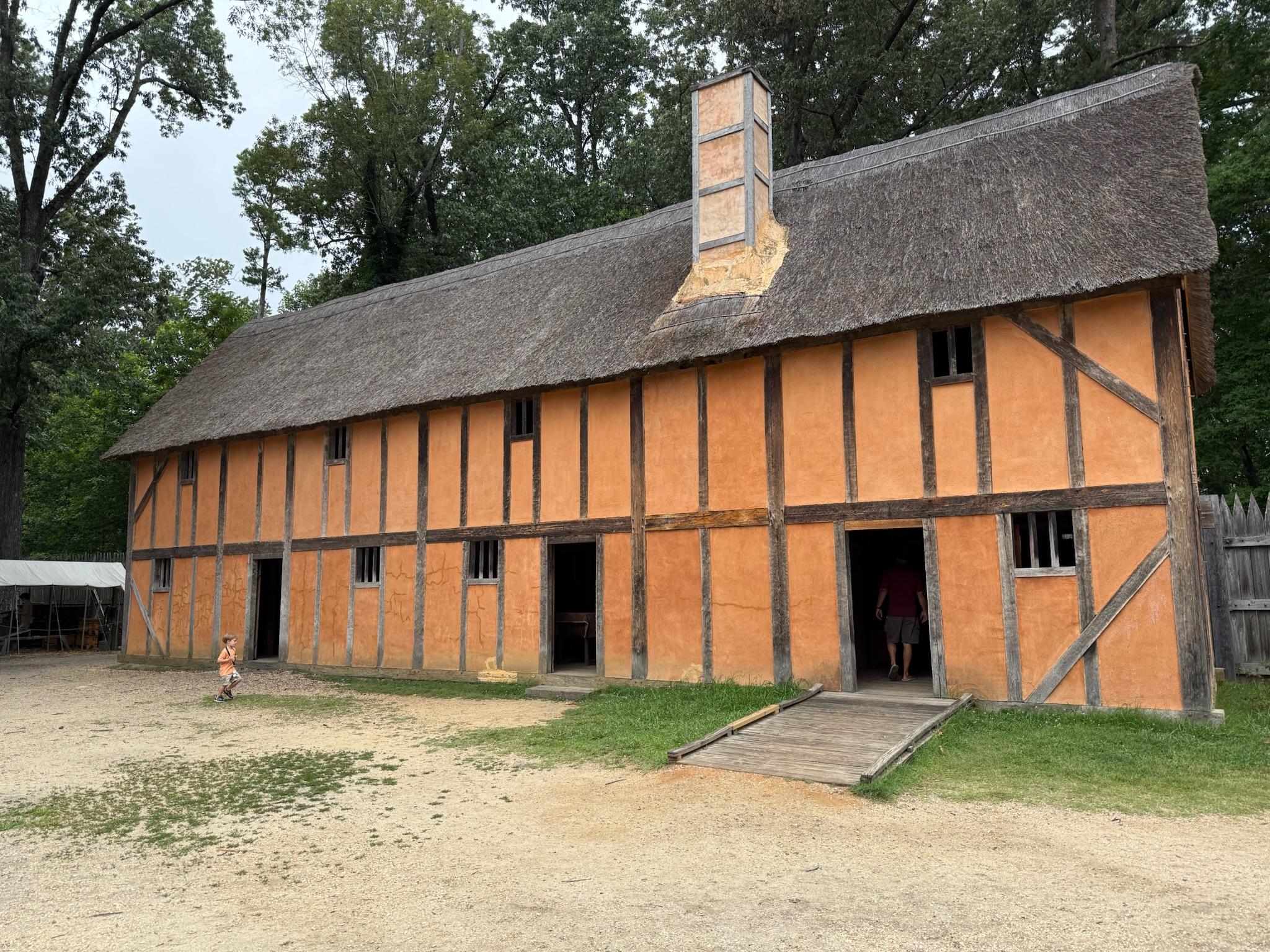
We weren’t allowed to go upstairs. The downstairs was furnished as if it was three units (in each of the three, one room was a living room/dining room and the other a bedroom). However, there were interior doors connecting the three units together. Here were a couple photos of the interior.
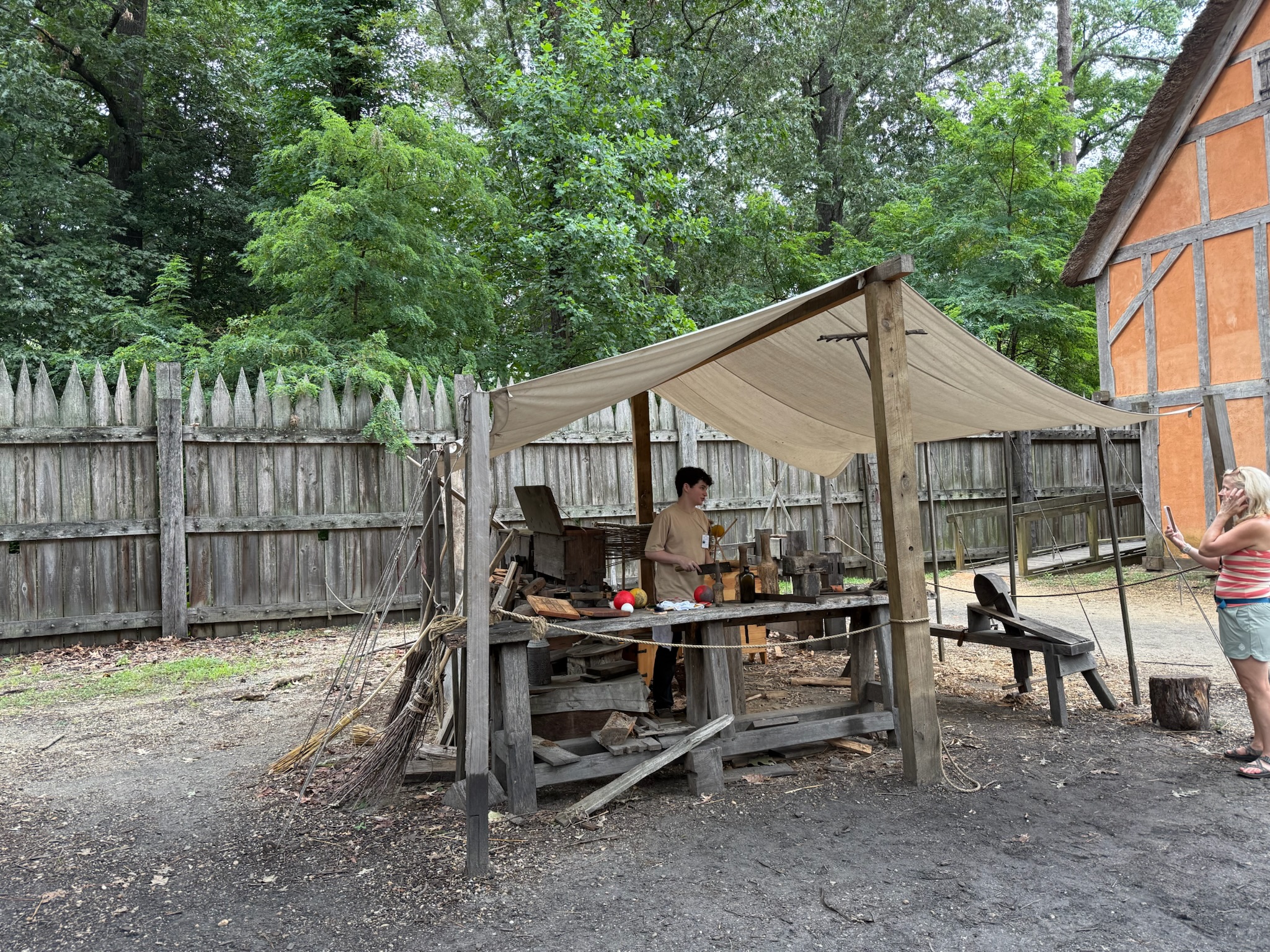
This was the carpenter shop — basically a table with a tarp over it.
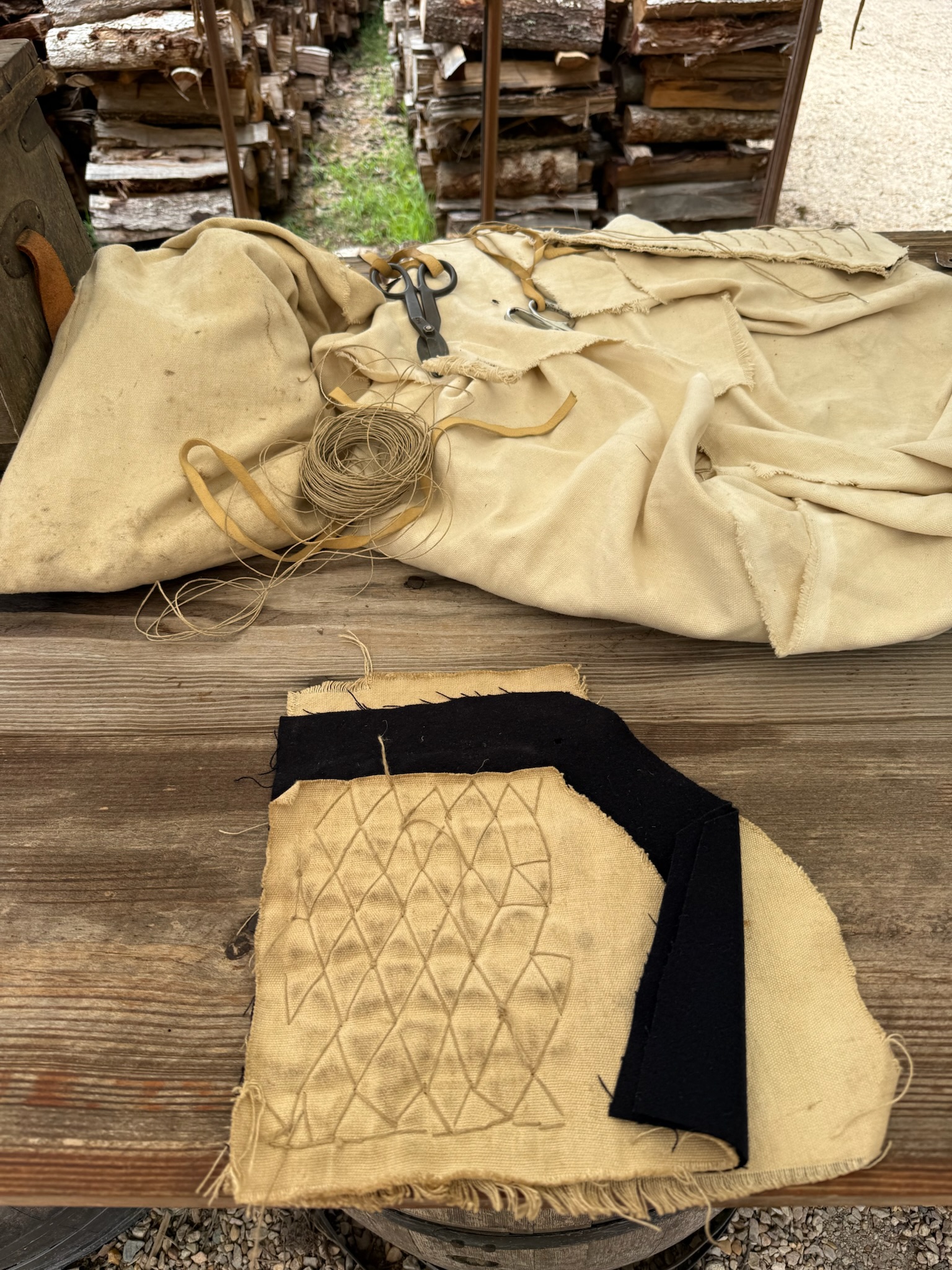
There was a similar table with tarp over it that had a character sewing metal into fabric to make a type of light armor. While the armor wasn’t as effective as the other types of armor, it was more comfortable as the metal didn’t touch the skin and the fabric absorbed sweat.
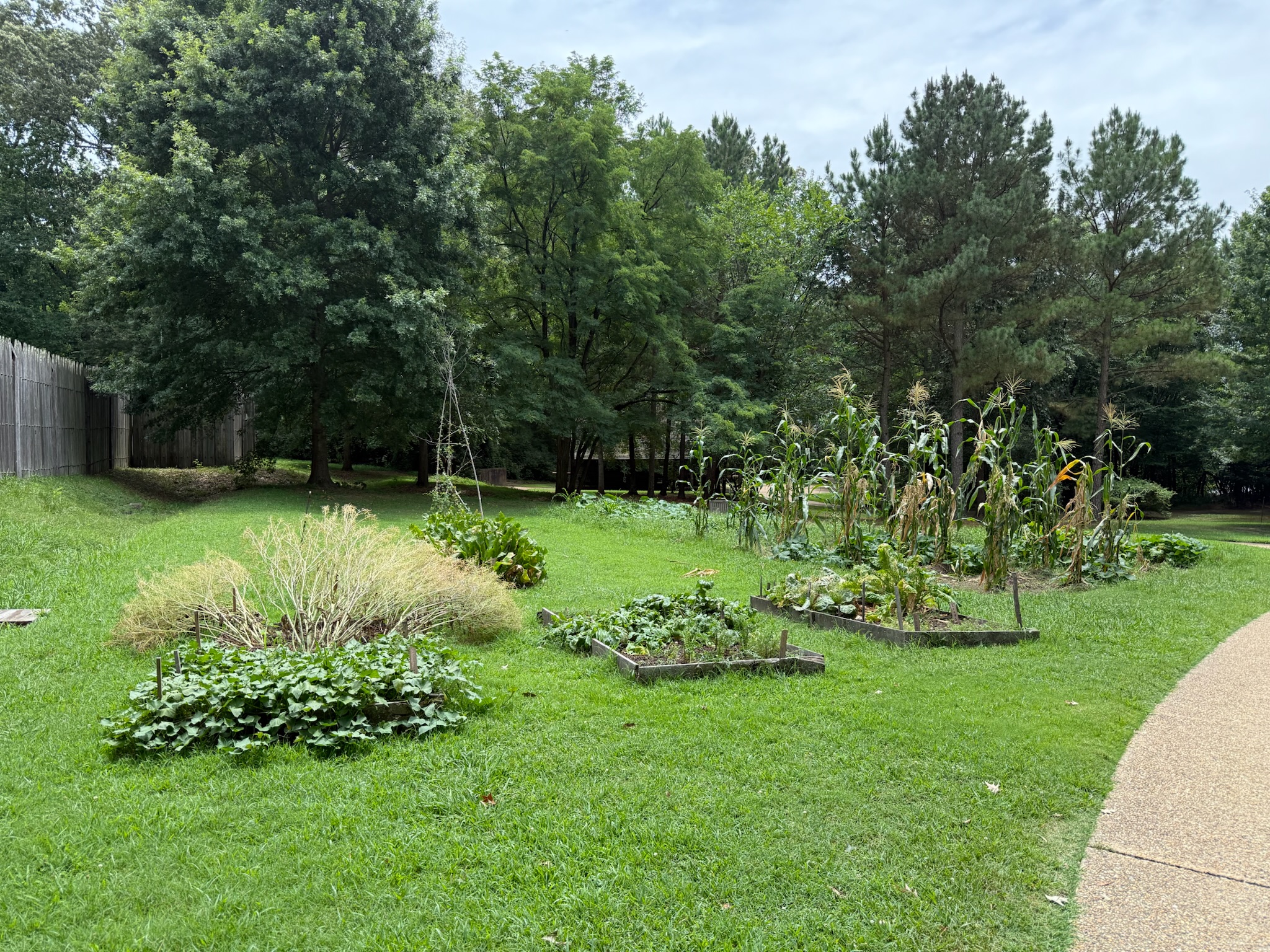
There was a small garden inside the fort, and a much larger garden just outside the wall.
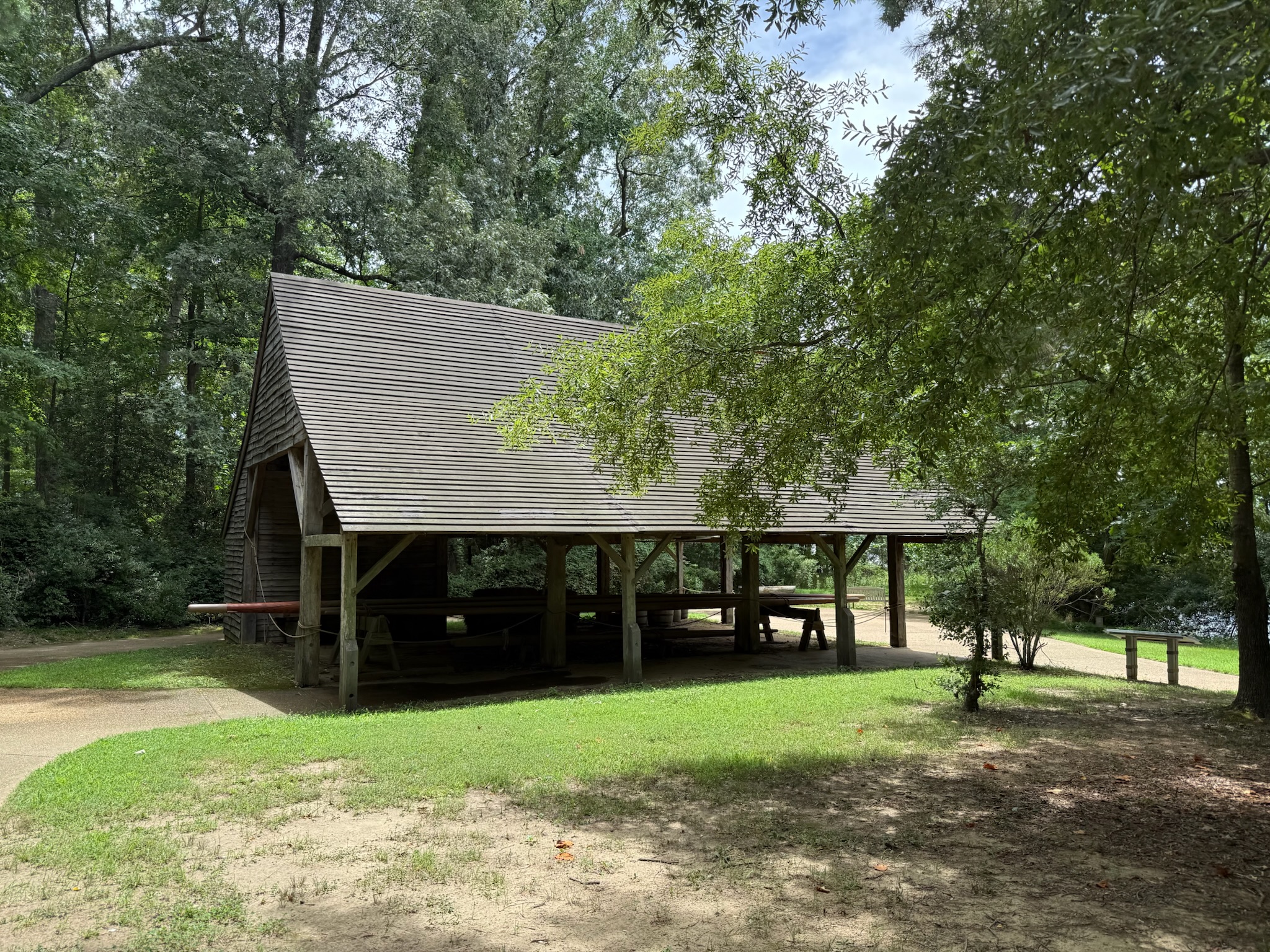
From the fort, we walked over to the riverfront, which was not the same place as the docks. Since this spit of land was a peninsula, just as the original Jamestown was, the riverfront was on one side of the peninsula and the docks on the other. The signs near the shed were about how they used small boats/canoes to catch seafood and to transport materials/goods. We weren’t sure if this was a boat building shed or a boat storage shed.
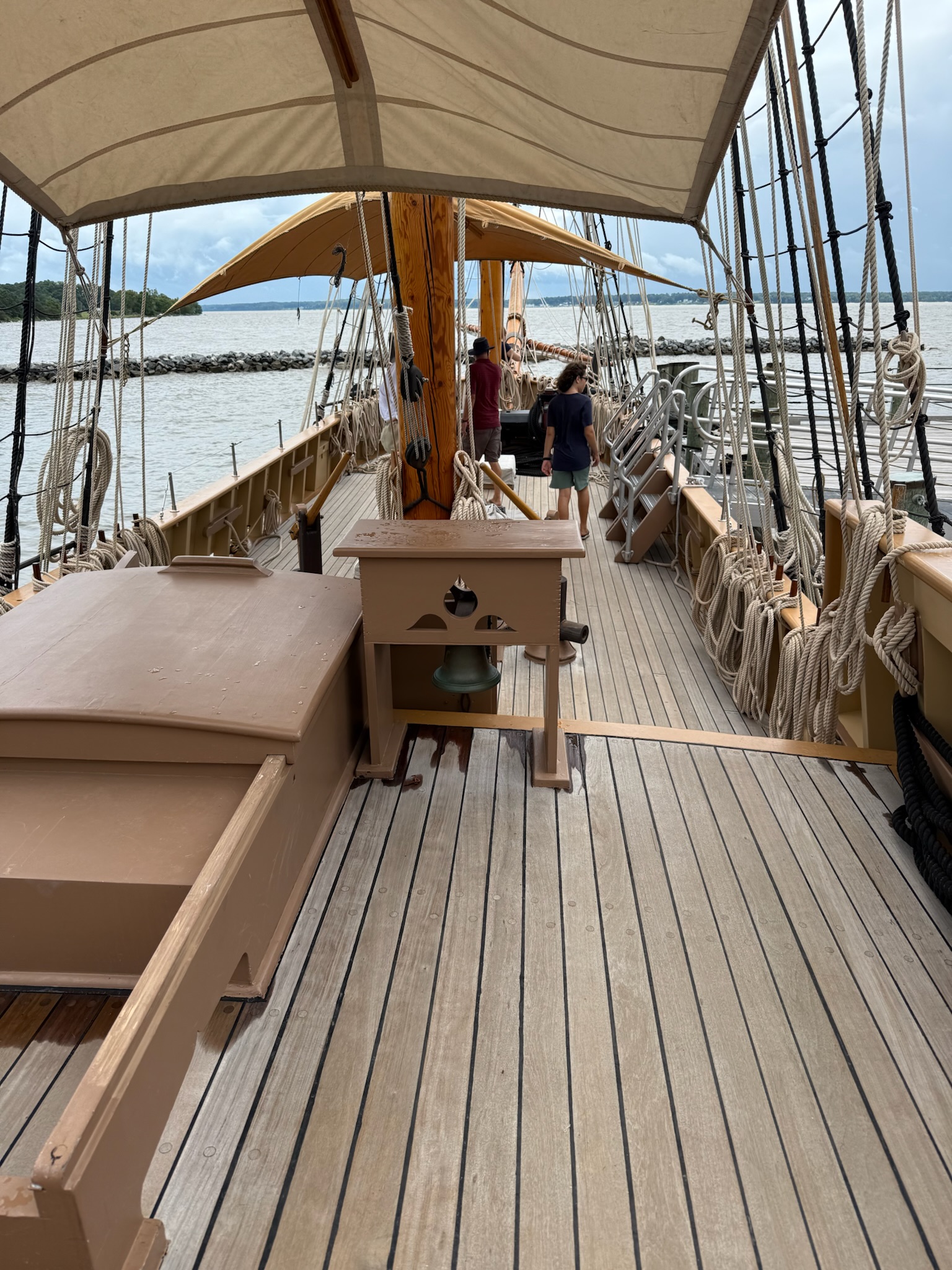
Finally, we went back to the docks to see the Godspeed. Her deck was 65.5 feet. Her mast was 71.5 feet tall. On the voyage to Jamestown, she had carried 39 passengers and 13 sailors. The three replicas here in Jamestown apparently actually sailed and the museum periodically took people out on trips. Thus, they were equipped with modern equipment. The captain in this ship was focused on pointing out which equipment was modern versus what was used back in the 1600s. We again couldn’t go below.
There was another period actor on the docks talking about charting the waterways. Prior to the arrival of the Jamestown colonists, there were already maps of it in Europe from previous explorations. In 1607 and 1608, John Smith utilized the local knowledge of the indigenous people to expand and add detail to the existing maps. He also extensively explored the area himself, adding more detail and corrections to the map. The map Smith made was surprisingly accurate, even by today’s standards, and was the primary map utilized for another half-century.
With the Godspeed, we’d seen everything. We could have gone back to the various period actors and talked to them more about their trades and way of life, but we felt like we’d already learned enough and were ready to head out. We decided to go to Colonial Williamsburg for dinner… to be continued…