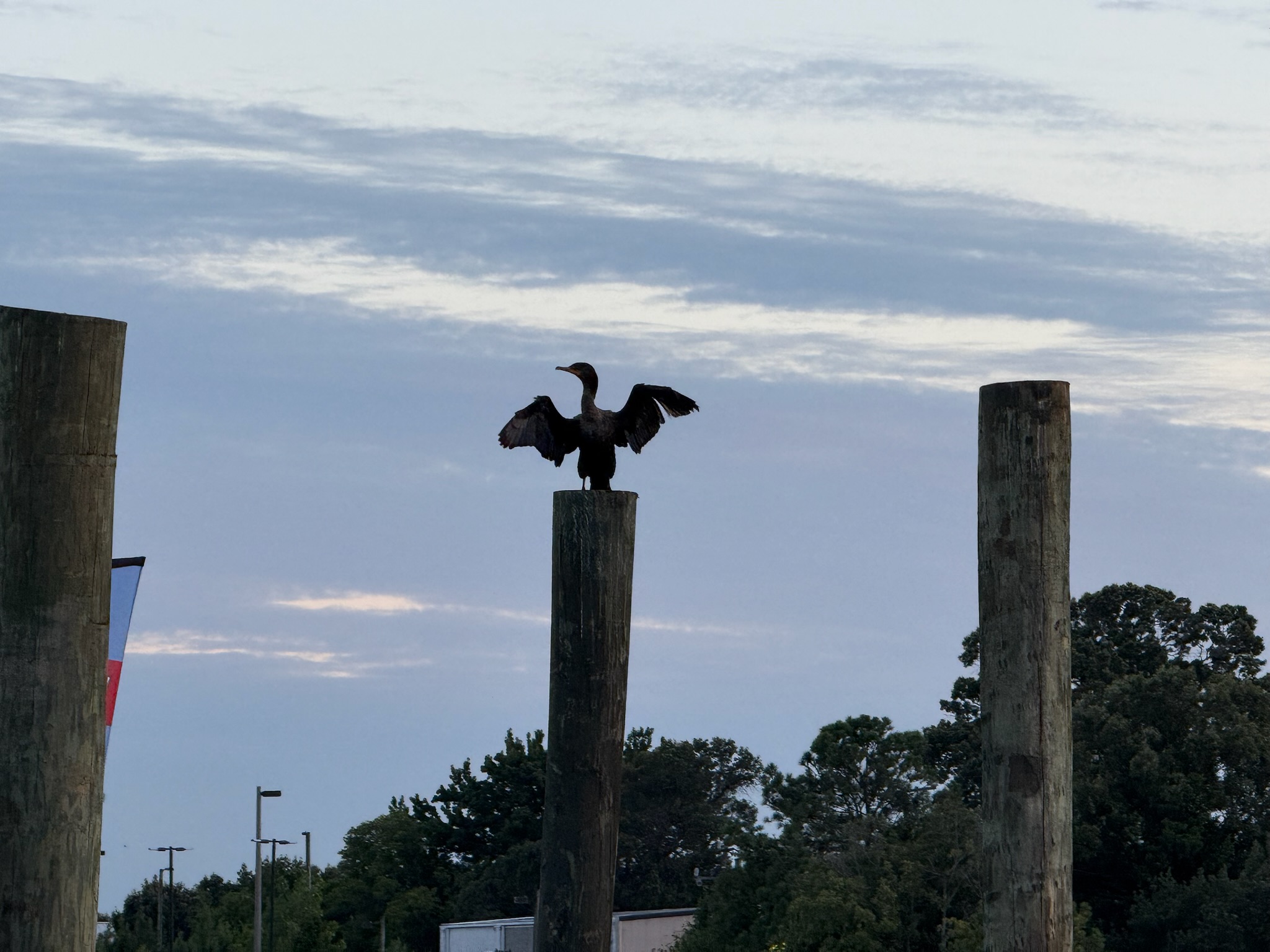
The day that we went to the game store to play Magic the Gathering, we saw a flier for an upcoming Dungeons & Dragons one-week half-day camp at the store. Keith had gone to a D & D camp while we were in San Diego and he’d loved it. He asked if he could go to this upcoming camp, so we registered him for it. Camp started on Monday, August 4 and ran from 1000 – 1400. While Keith was gone, Eric and Christi did chores around the boat, then ran errands after we picked him up. We had dinner onboard, then went over to Blue Heeler for games in evening. The duck was performing for us while we played.
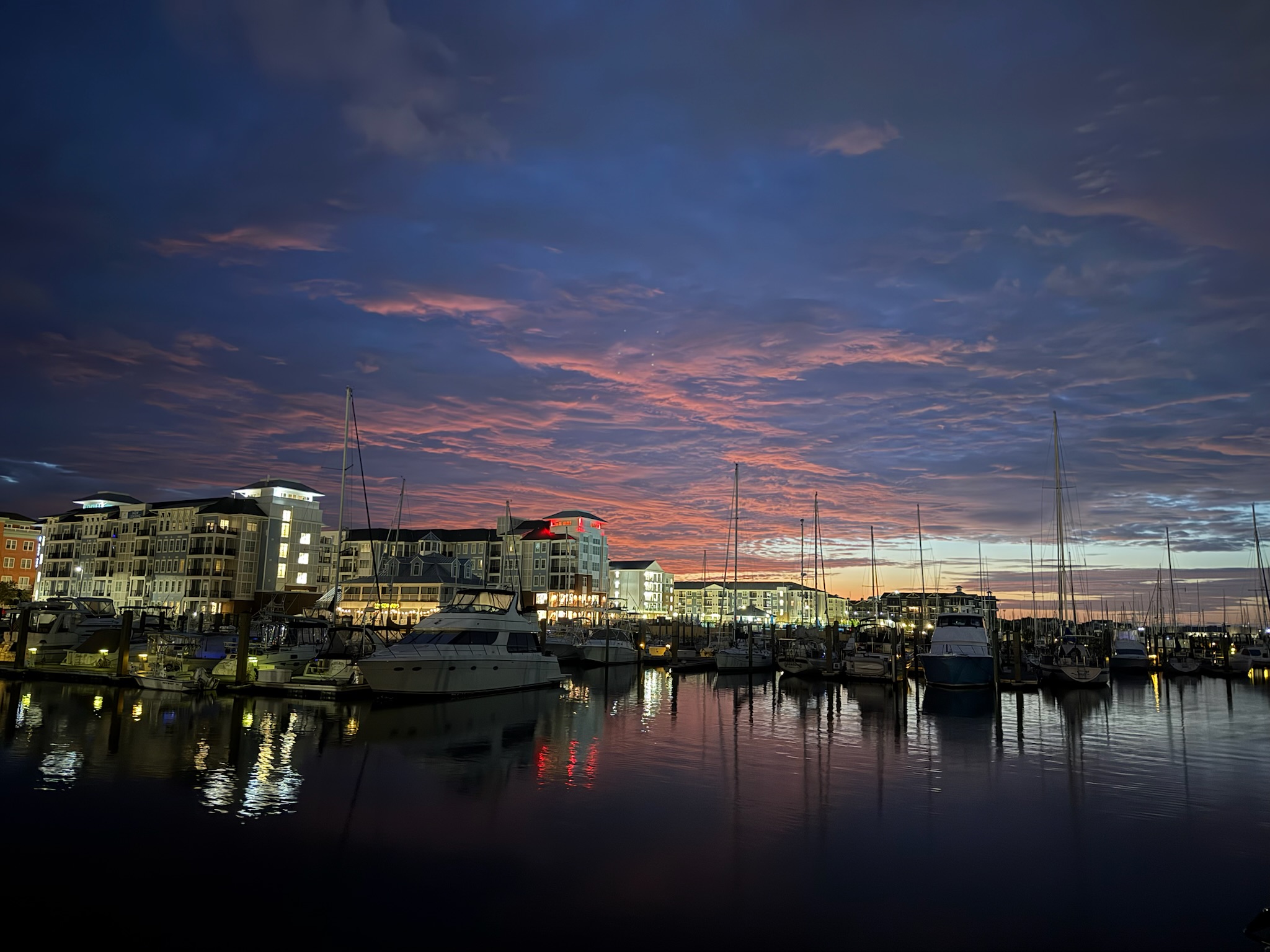
On Tuesday, the sunrise was almost apocalyptic. This was as dawn was beginning to break.
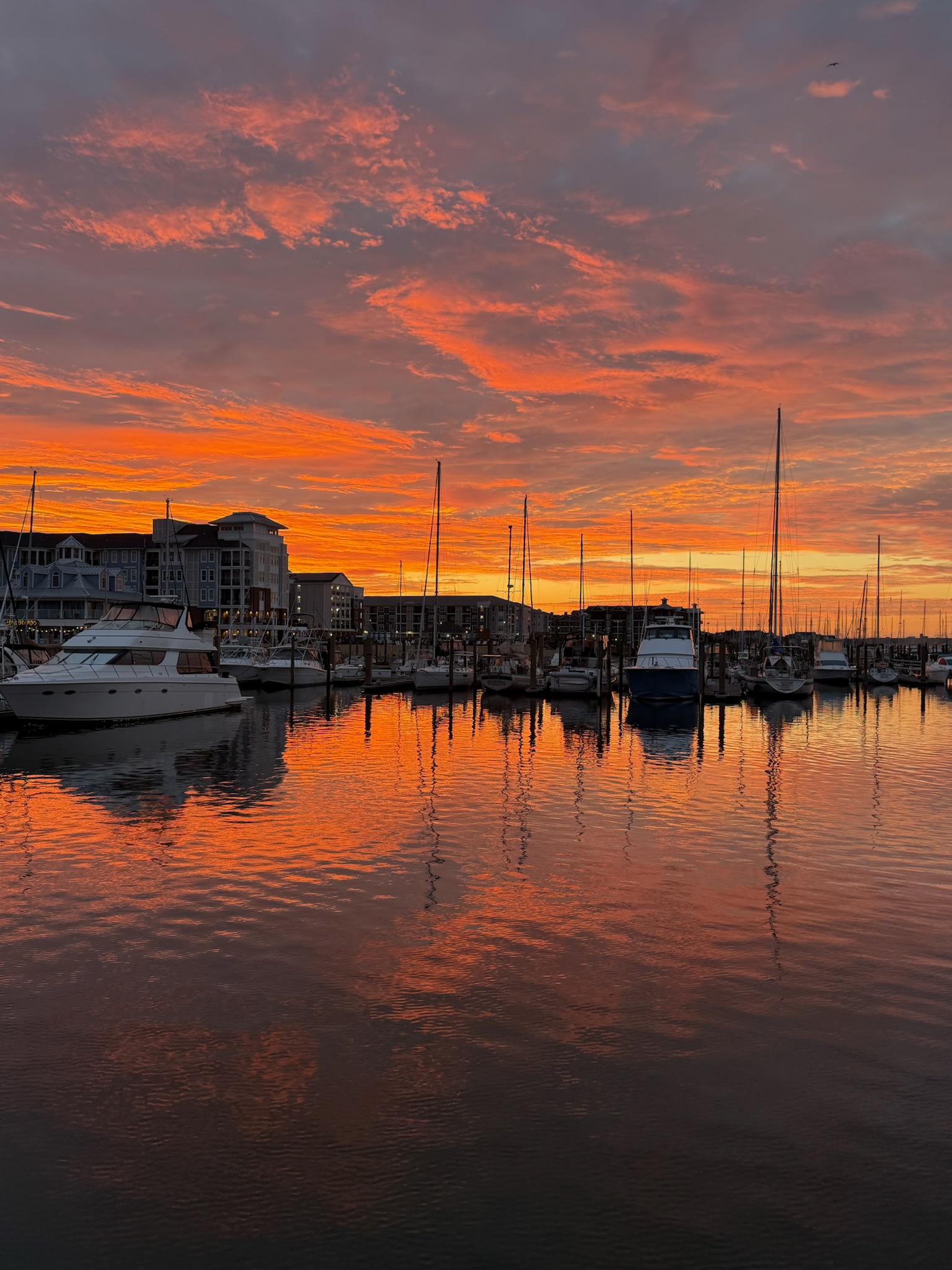
The clouds just kept getting redder and redder, and looked like this as the sun rose above the horizon line.
Christi and Eric again did chores while Keith was at camp. Eric ran the generator and wing engine, balanced the fuel, and cleaned the sea strainers. He also did a Furuno firmware update, then tested all the electronics to make sure that the update didn’t mess them up.
After camp, we met Bigger Boat at Fort Norfolk. We’d picked up a brochure for it on the 4th of July. The brochure had said it was the best preserved War of 1812 site in America. The brochure turned out to be much more interesting than the fort itself. At least the fort was free. Since the historic Fort Norfolk was preserved within an existing secured area, we had to stop at the guardhouse on the left and show ID to get in.
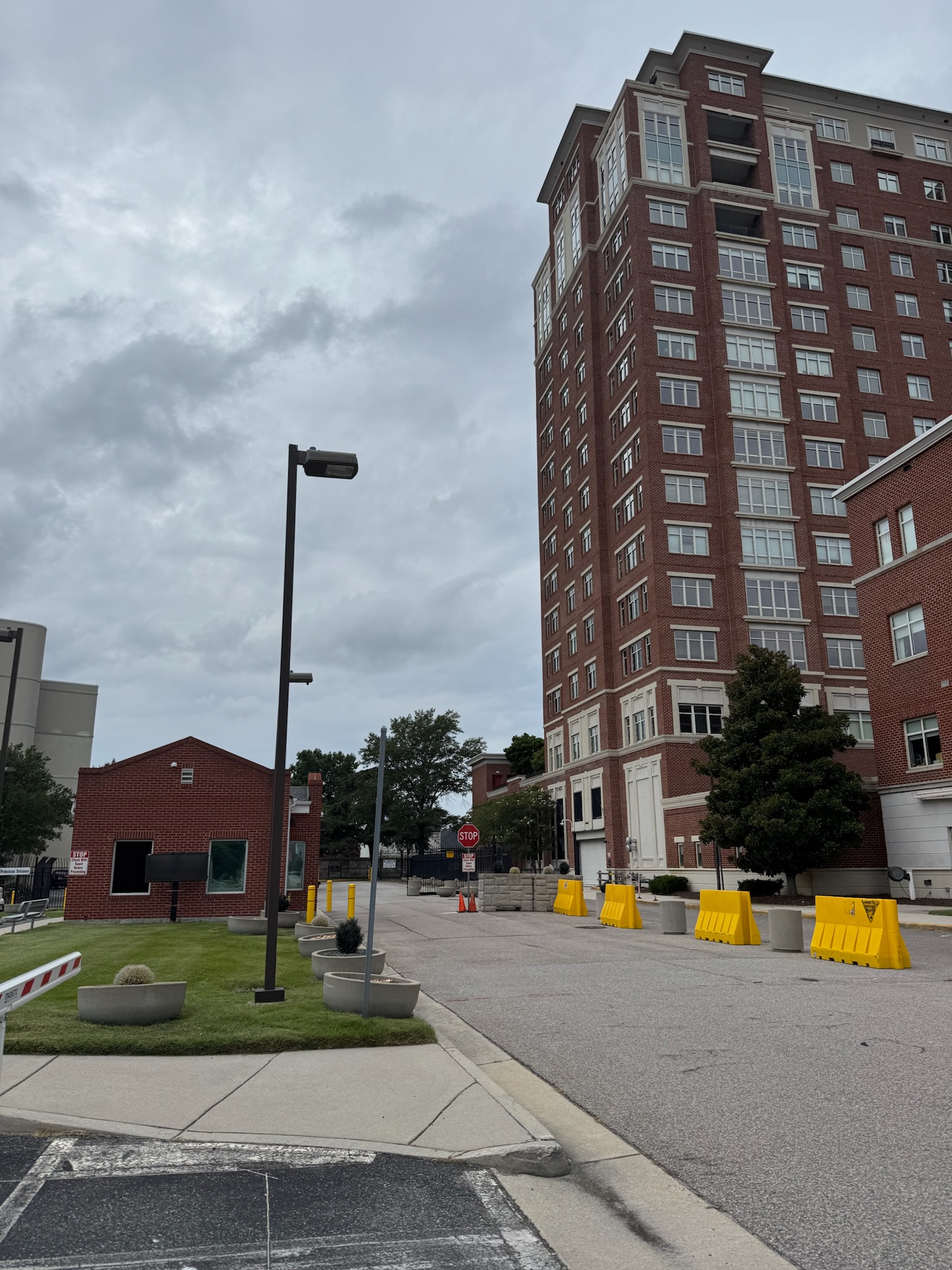
We were instructed not to walk anywhere other than into the historic site. This was the entrance.
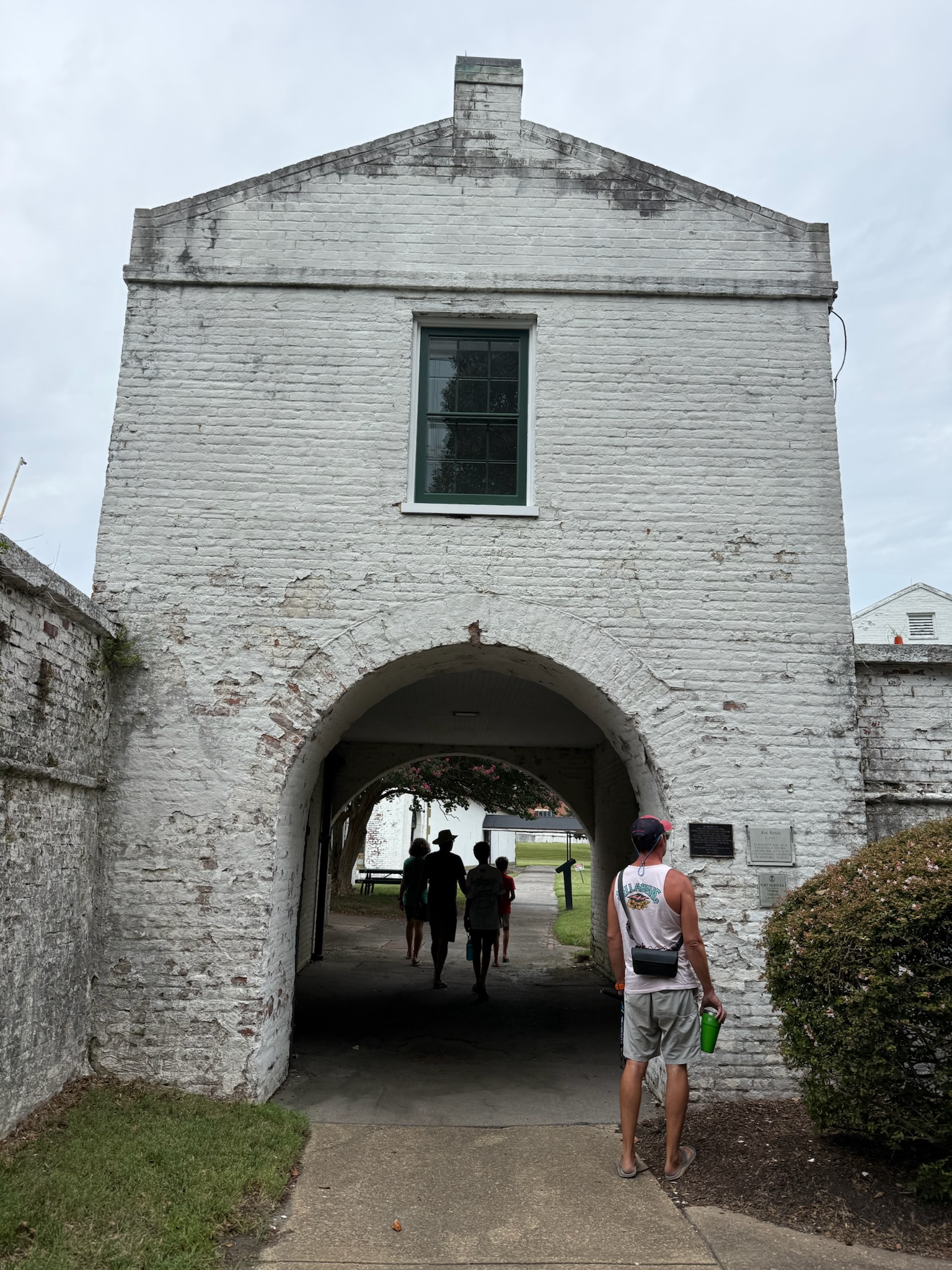
None of the nine buildings were open, there were only two signs, few of the buildings had plaques, and there were no brochures out for people to pick up. One sign gave a brief history: Construction on the first fort in Norfolk was begun in 1776 to guard the entrance to the ports of Norfolk and Portsmouth. It was destroyed by British troops in 1779 during the War for Independence. Rebuilding was completed in 1810, and they had upgraded from earth walls and wooden structures to masonry exterior walls and buildings. It was manned by the militia during the war of 1812, but no shots were fired. The Confederates evacuated Norfolk on May 10, 1862 and the Union army occupied the fort and used it as a prison. After the war, the fort was returned to the navy and became an ordnance depot in 1875. At the turn of the century, it was used for storage. From 1921 – 1983, it was used by the Army Corps of Engineers (who now occupied a building inside the secured area directly next door to the fort). In 1991, it became the headquarters for the Norfolk Historical Society.
The other sign gave a tiny bit of information about the buildings, little of which was helpful, such as the roofs had originally been slate but were replaced with asphalt in the 20th century. It also mentioned some buildings that once existed but were torn down. We’d forgotten to bring the flyer with us, so we didn’t have the detailed information about the various buildings. To us, they just looked like a bunch of old buildings.
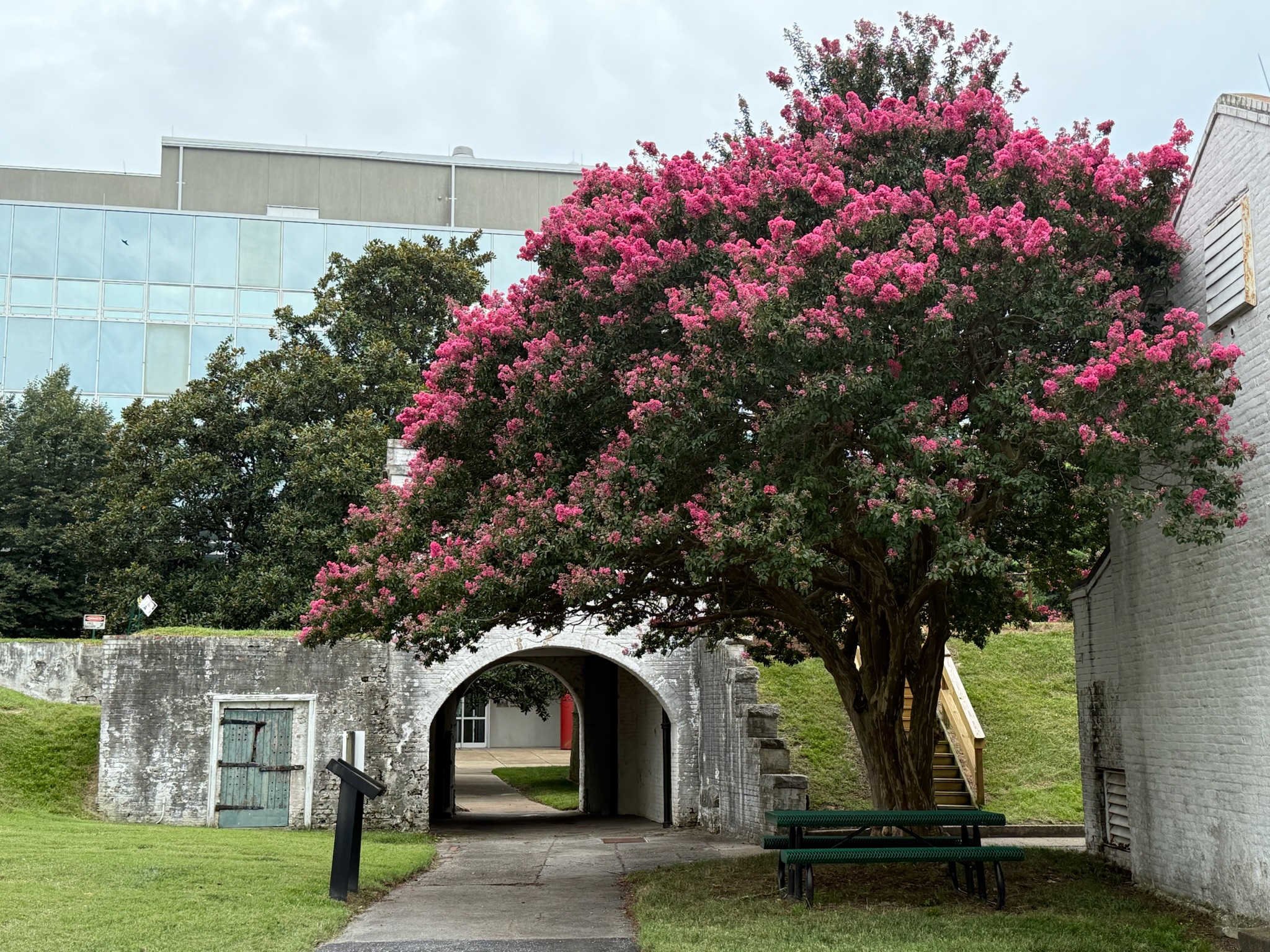
This photo was looking back at the entrance from the inside. Later, when we consulted the brochure, we found out the building on the left was originally a magazine for storing gun powder and shot, and later became a prison. The room above the entrance (blocked by the tree but clearly visible in the previous photo) was the guardhouse, where the main security guard for the fort had lived.
Per the brochure, the building on the right was originally built in 1810 as a carpenter shop on the ground floor and storage on the upper floor. It was restored in 1992 and was now a welcome center with exhibits and artifacts and the headquarters for the Norfolk Historical Society.
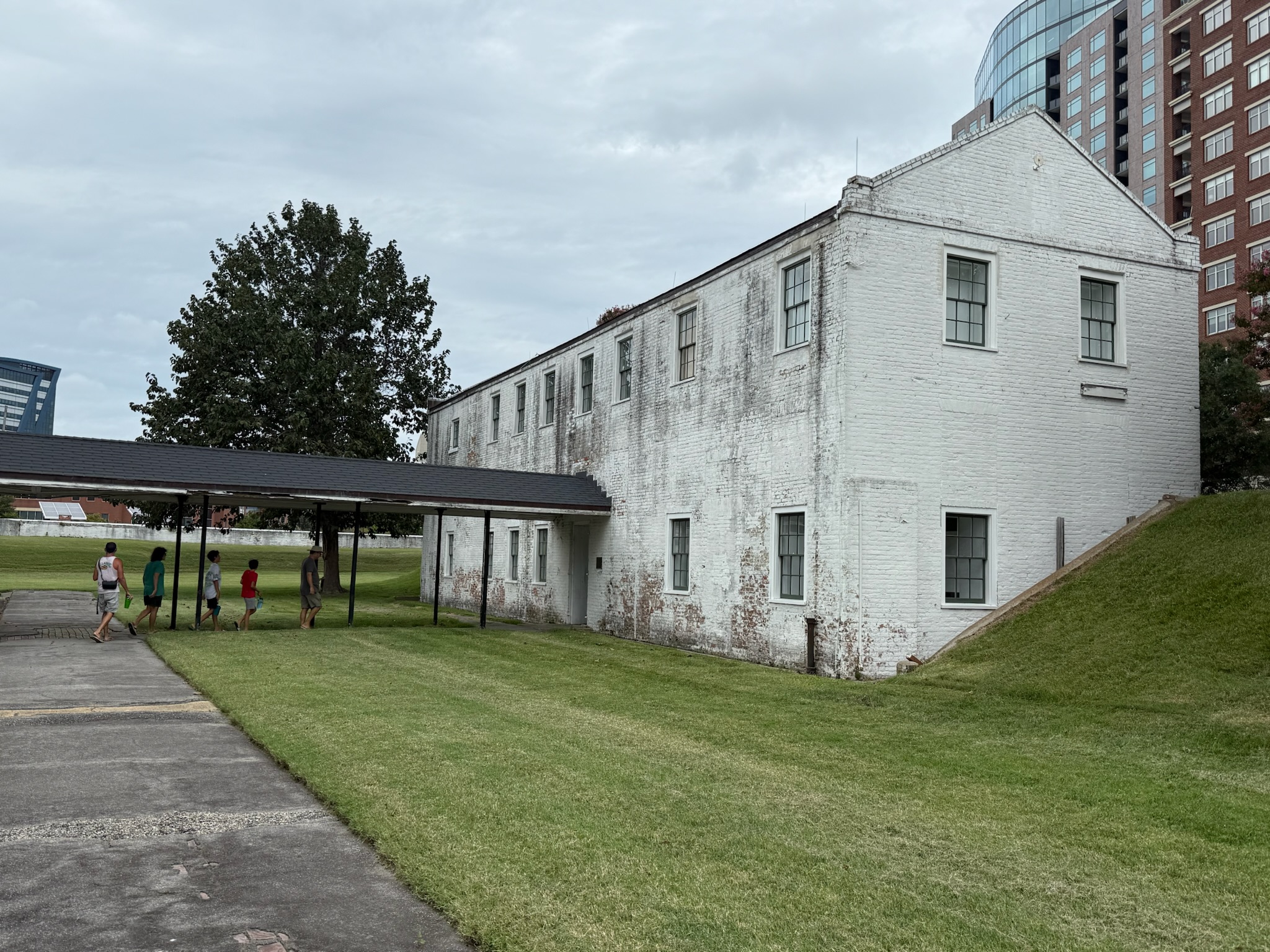
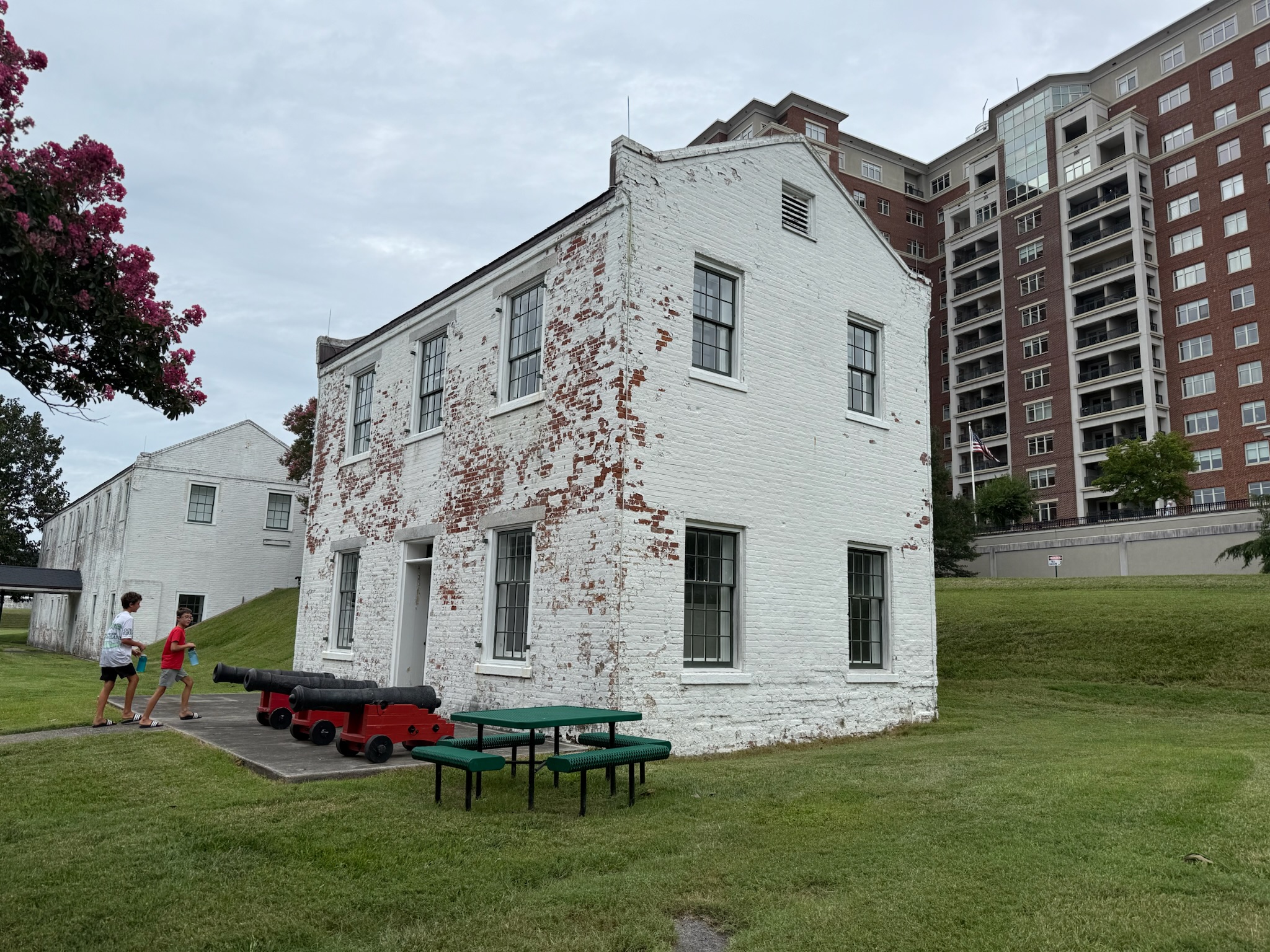
Per a small plaque on the building, this was built in 1810 as officer’s quarters. Per the brochure, it had 8 rooms, four on each floor. In the mid-1800s, the navy used it for filling canon balls with gunpowder. The cover over the walkway between this building and the magazine was to help keep the powder dry as they moved it between the buildings. There was graffiti on the second floor made by confederate soldiers imprisoned during the Civil War, which was believed to be the oldest graffiti in the country. The building was restored in 2000.
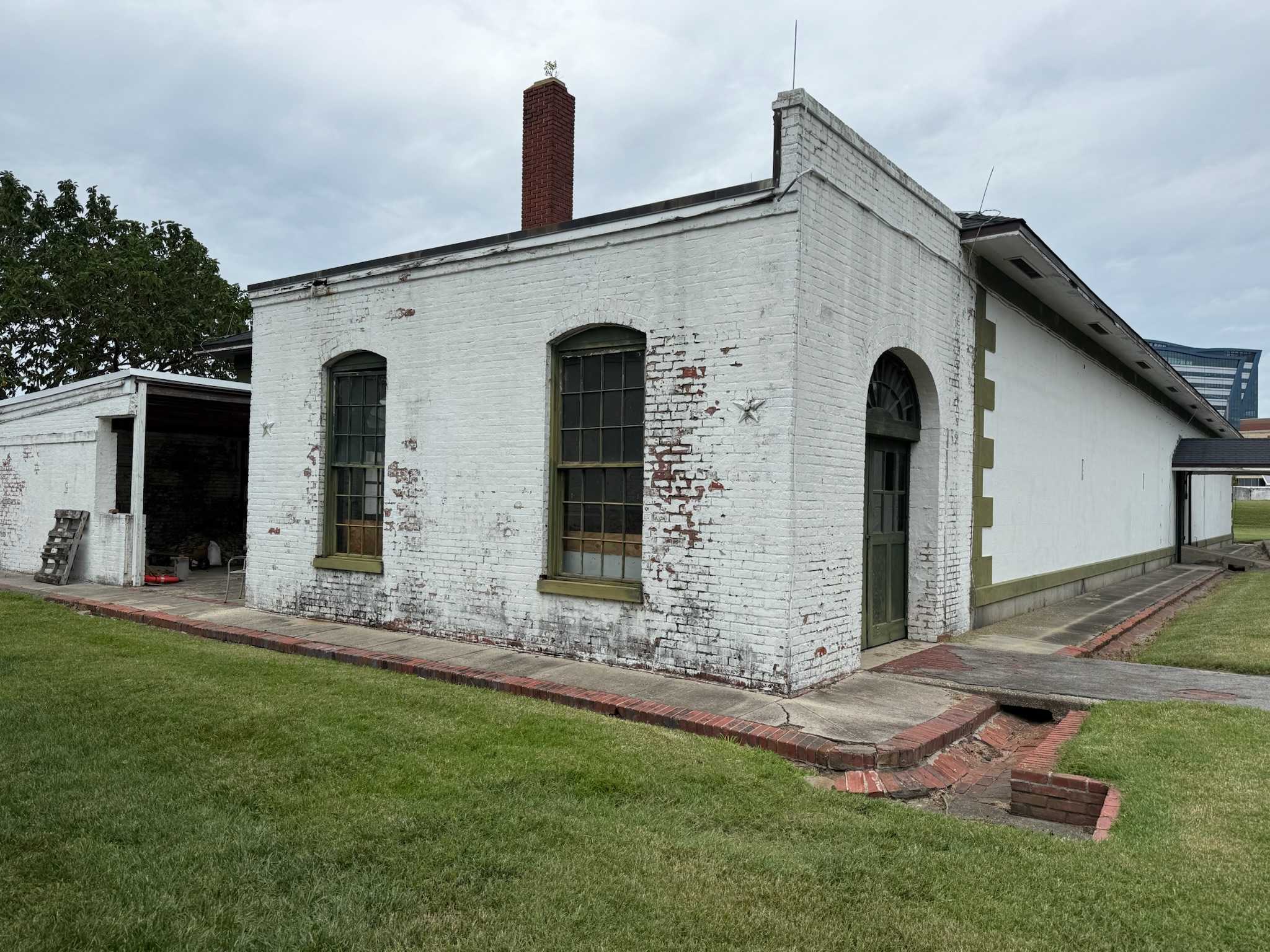
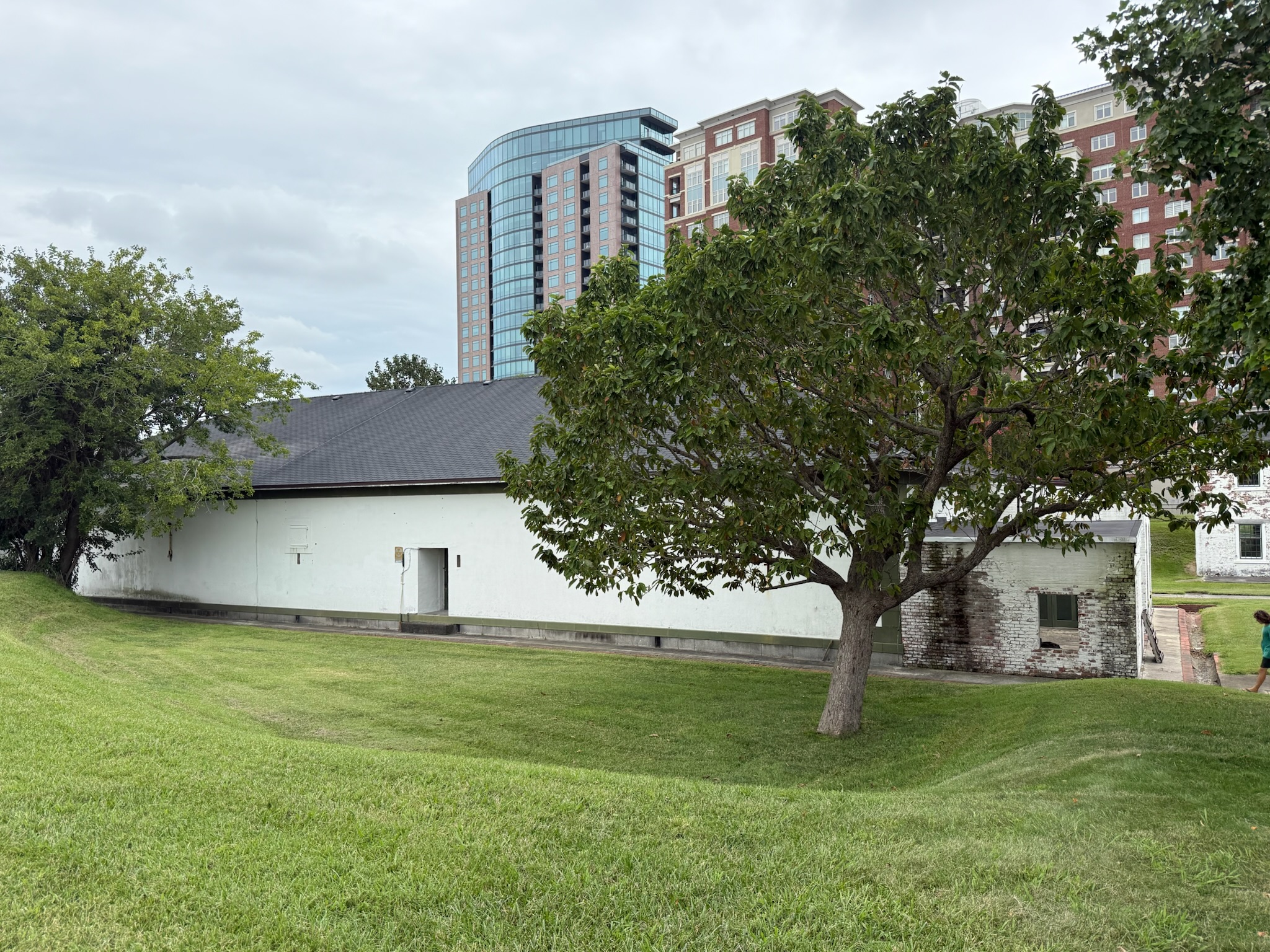
Per the brochure, the little brick building stuck onto the edge of the bigger building was where they stored the carriages. It may have been used as a workshop in later years. Behind the carriage house was a weird little three-sided structure. We were totally baffled as to what it could have been. Later, when we consulted the brochure, we found out it was a stable, which was added in 1875. The big building was a magazine, built in the mid-1850s. The walls were 4-feet. 3-inches thick, 55-feet wide and 136-feet long.
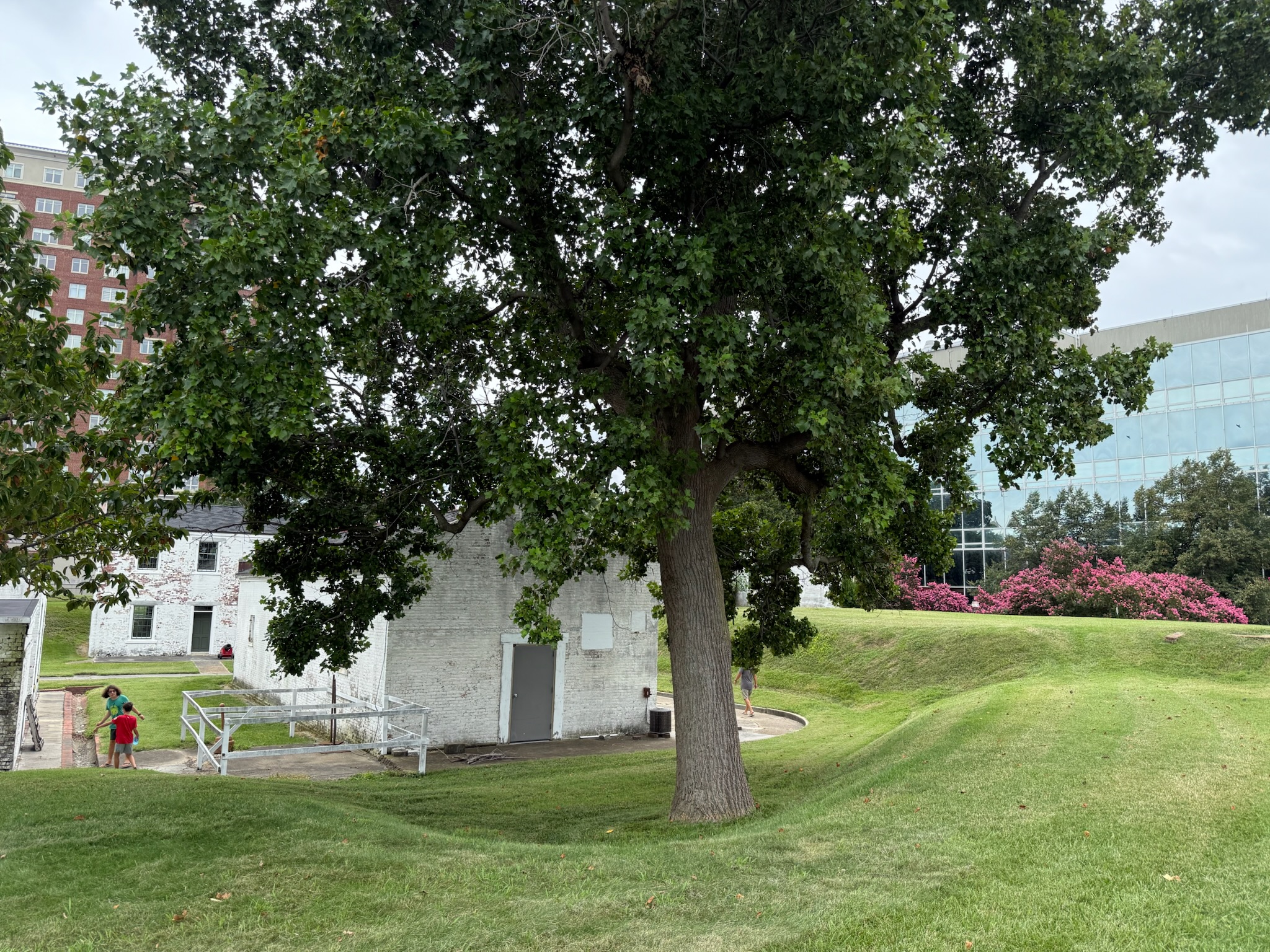
Per the brochure, this was another original 1810 building. It had originally been solider barracks, but the navy later used it for filling cartridge bags with gun powder, then putting them into watertight copper tanks for shipboard use.
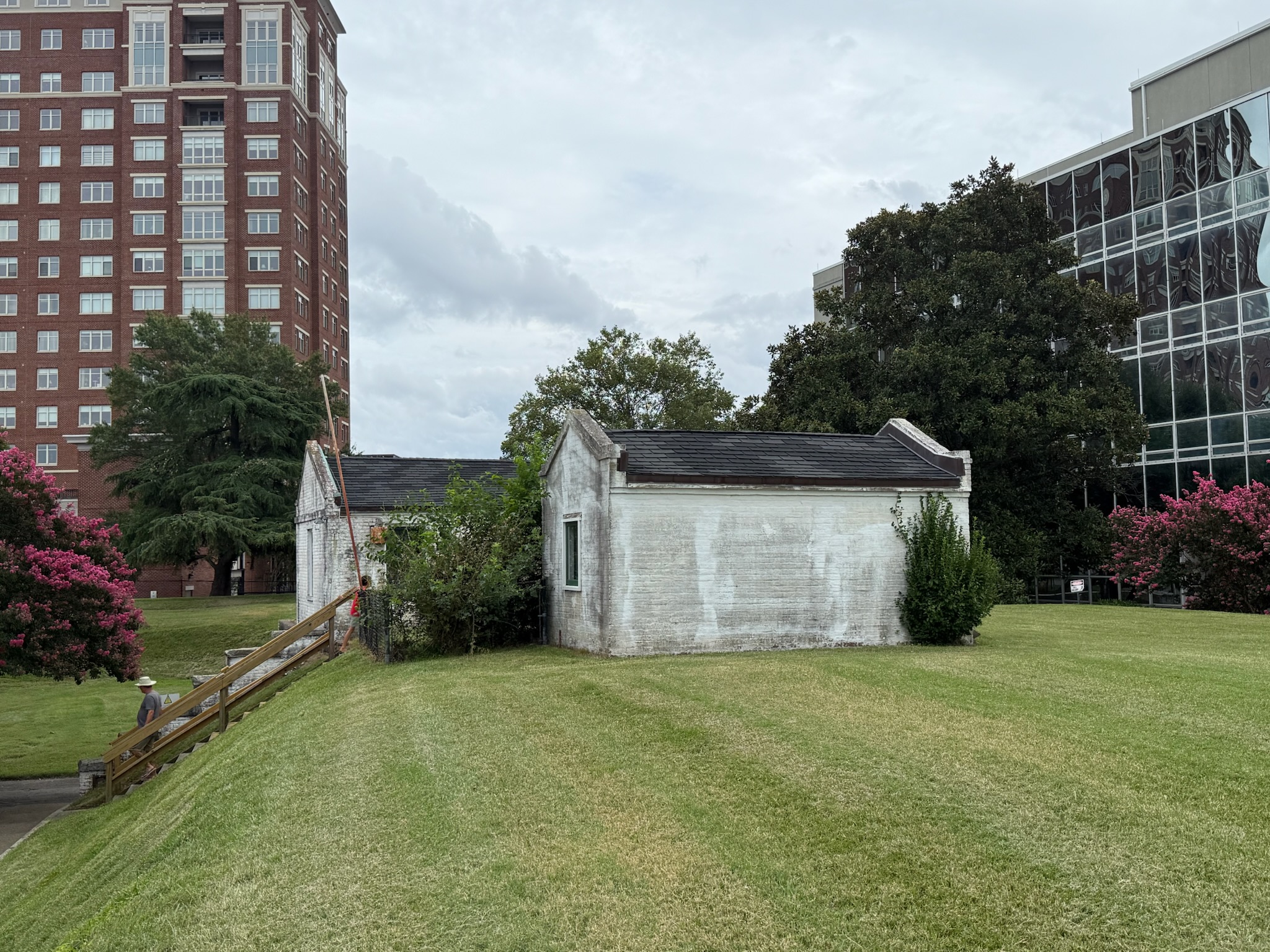
The last building (on the right) housed the cistern. Per the brochure, it was completed in 1856 and held 90,000 gallons of water. The building to the left was the guardhouse over the entrance, so this was the full circle.
The brochure had a few more details on the history. After the War of 1812, Fort Norfolk was abandoned in favor of Fort Monroe. The navy began utilizing it again in 1849 as a weapons annex. Virginia seceded from the Union on April 17, 1861. Virginia’s troops seized the fort, which was full of ammunition, and made it a river battery defending the chief naval station of the Confederacy. The Confederates evacuated Norfolk on May 10, 1862 and the Union army occupied the fort.
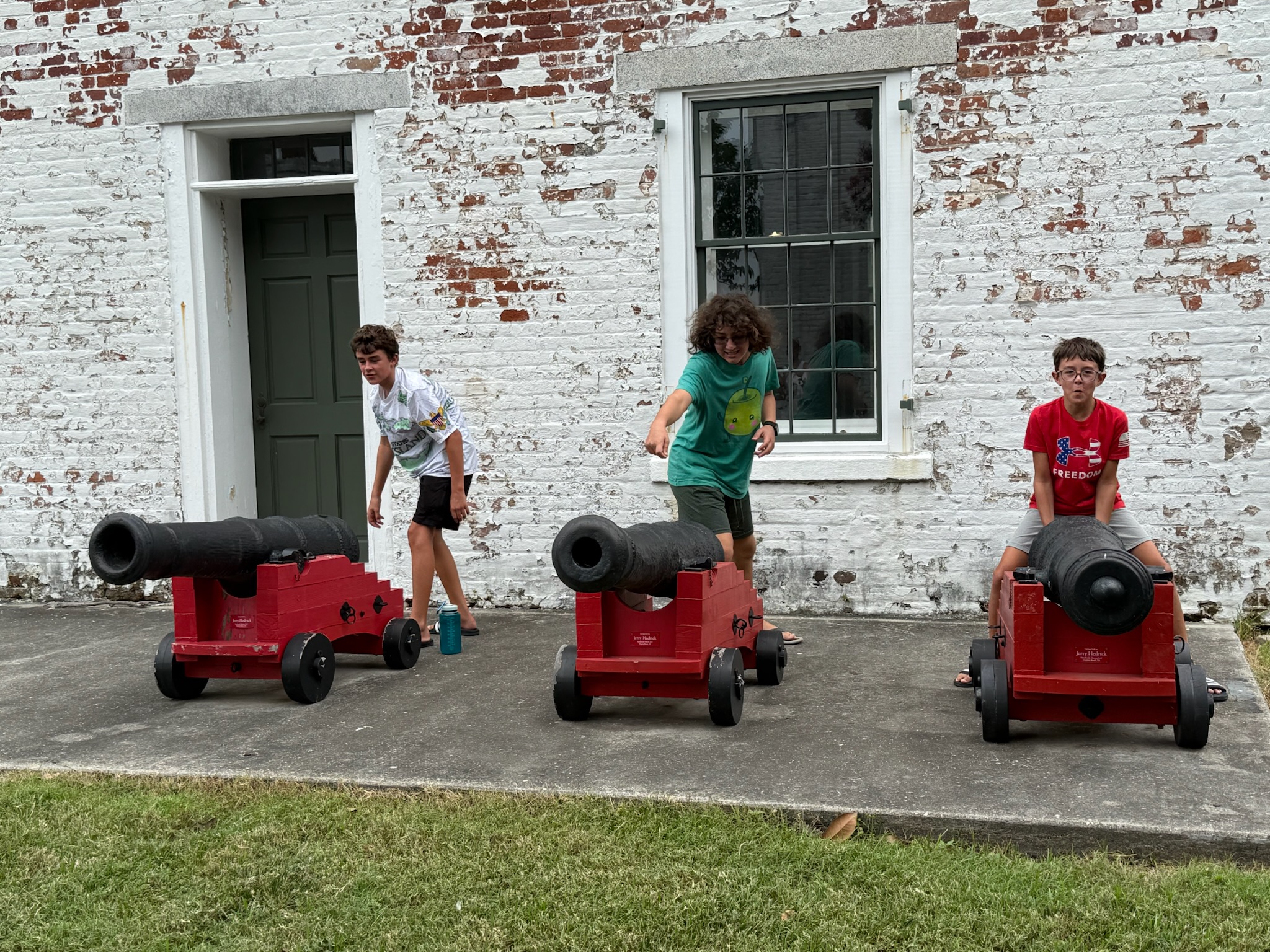
The kids had fun. They played on the cannons and ran around on the grass for a while. Actually, they probably had more fun running around than they would have had going into a museum.
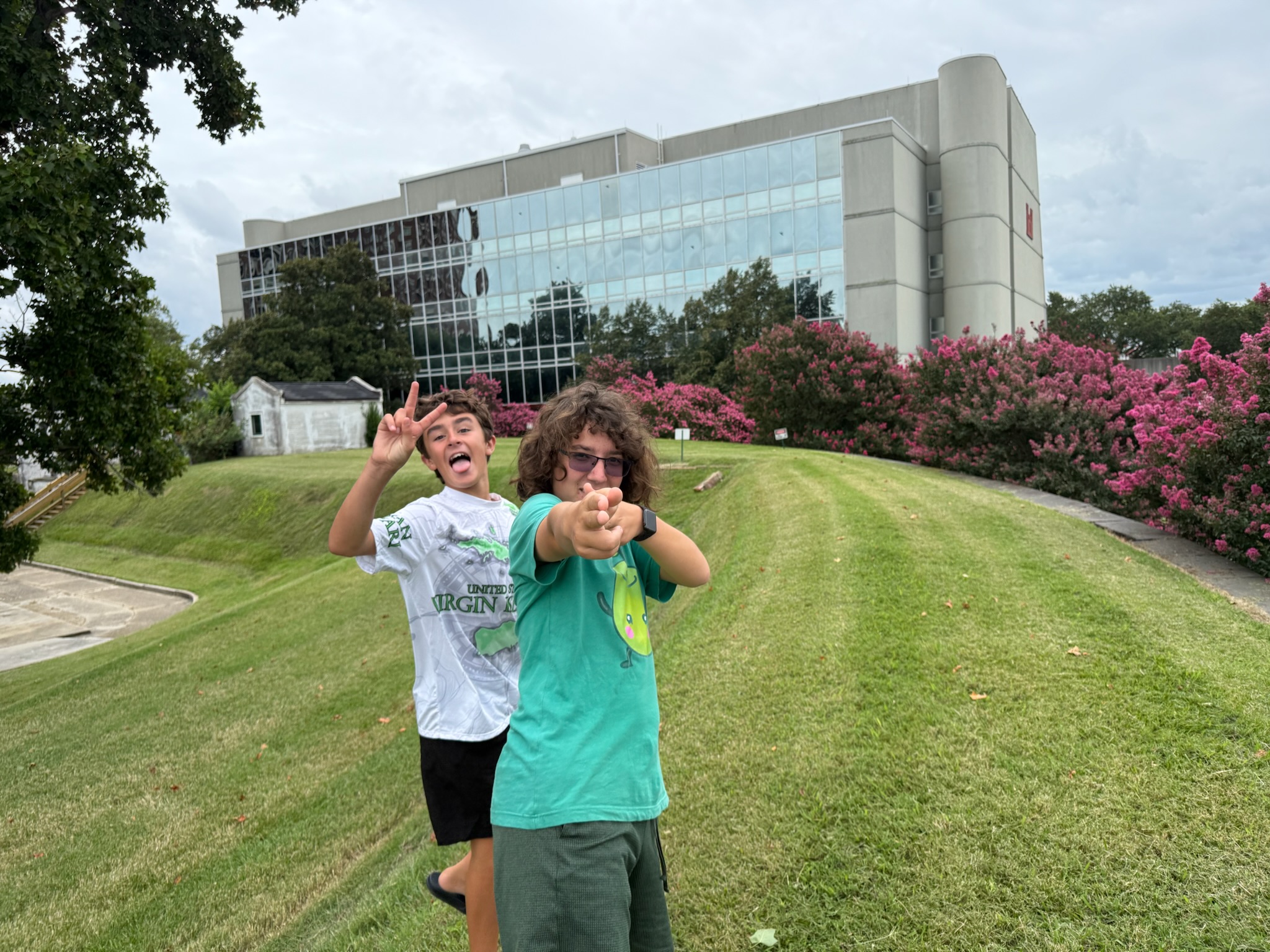
We all enjoyed the lovely views of the waterfront from the semi-circular main battery. Per the brochure, the fort had 30 cannons, and the majority were mounted along the top of the battery.
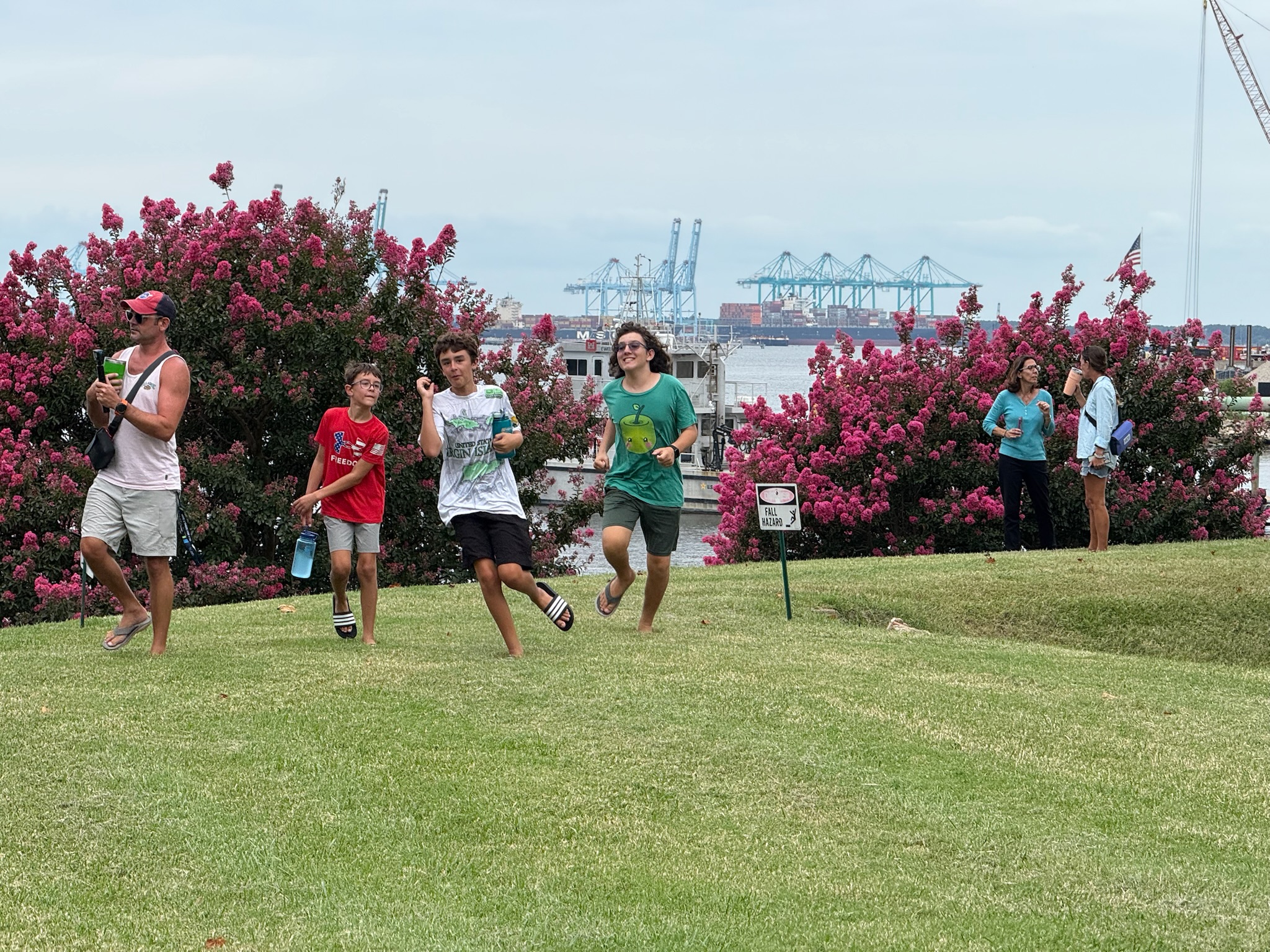
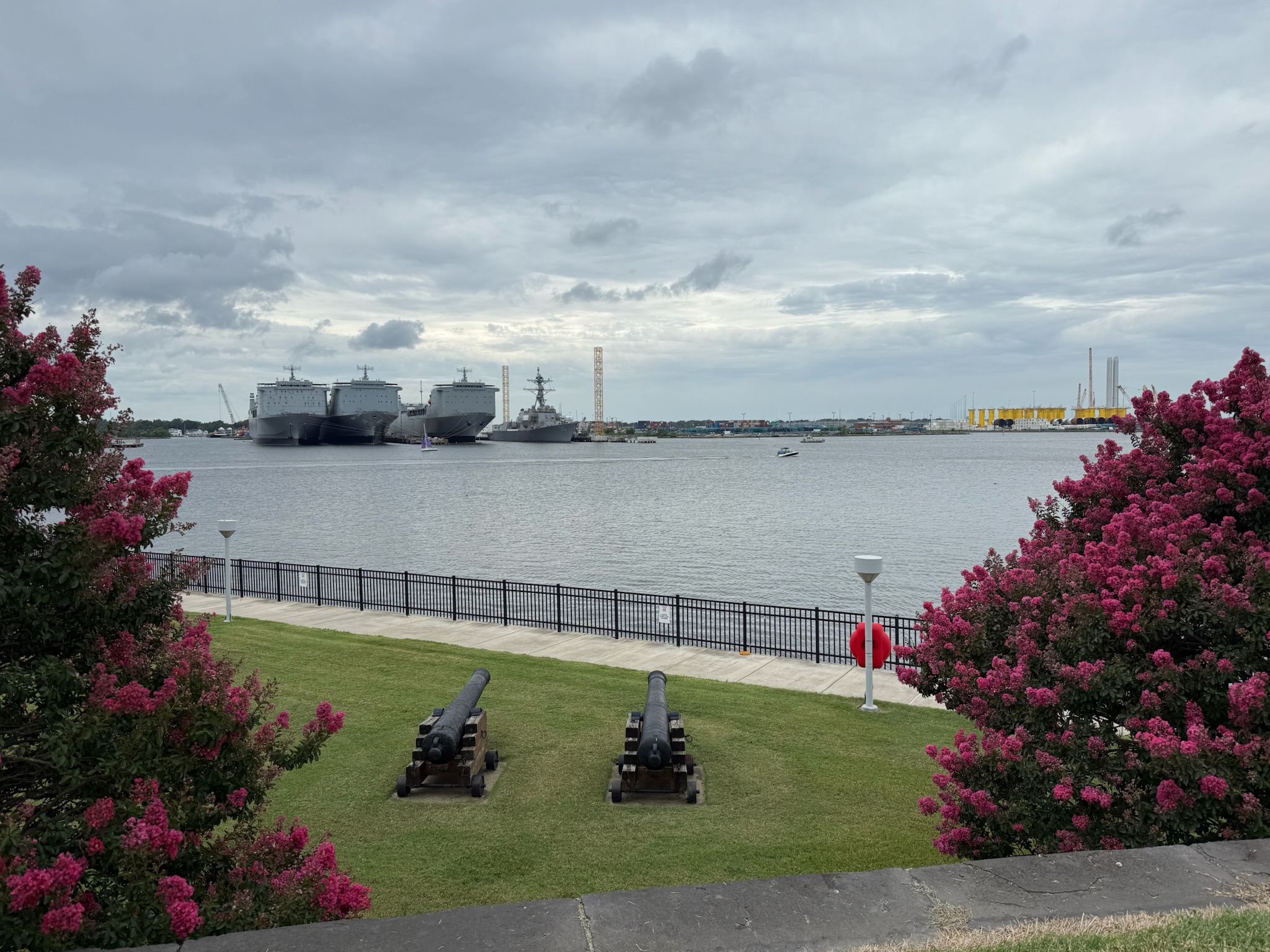
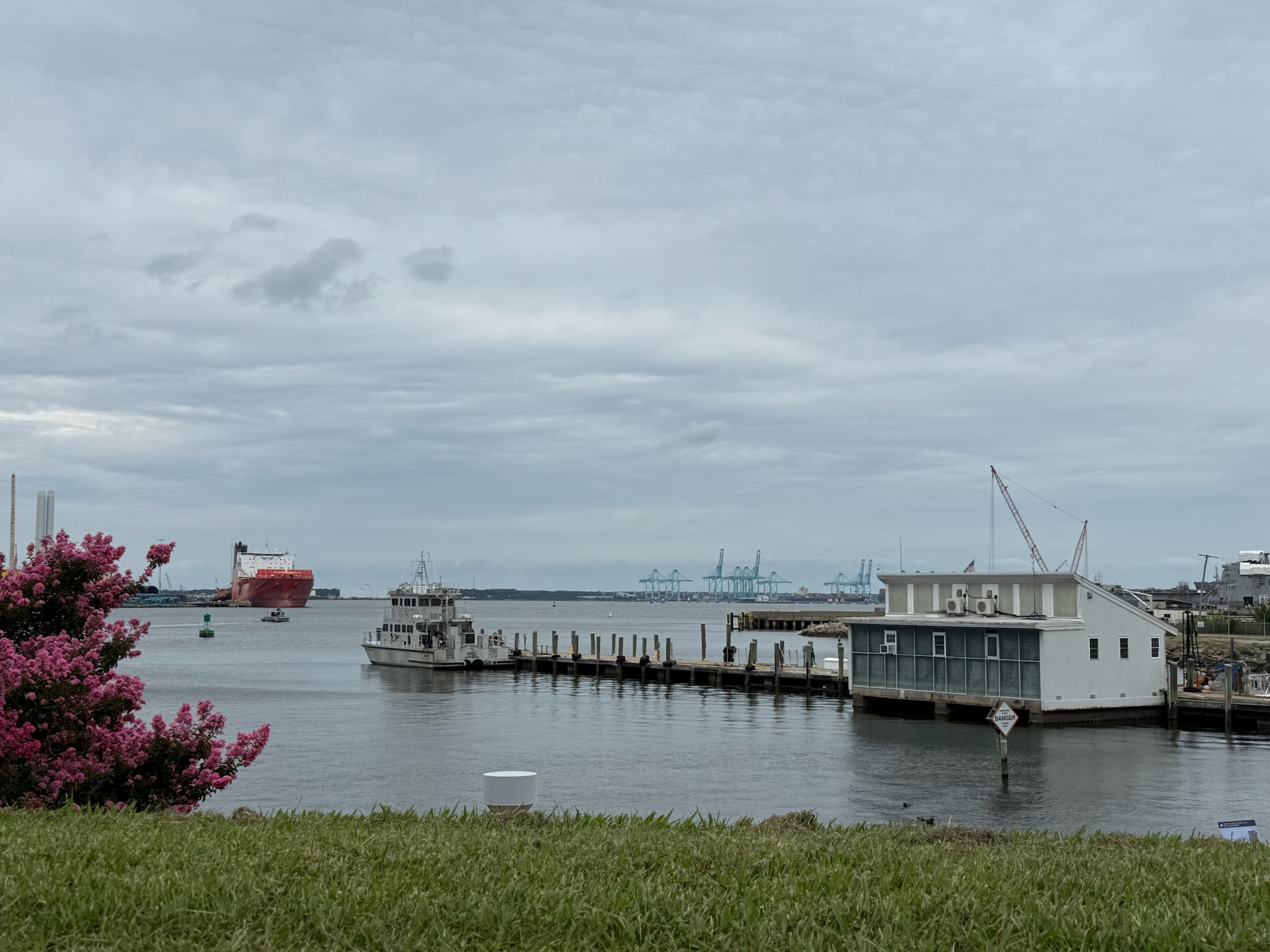
When the kids tuckered out, we said our goodbye’s to Bigger Boat and headed out. Since we were so close to the grilled cheese restaurant, we were going to go there for dinner, but it wasn’t open on Tuesdays. So we went back to Lola’s instead.