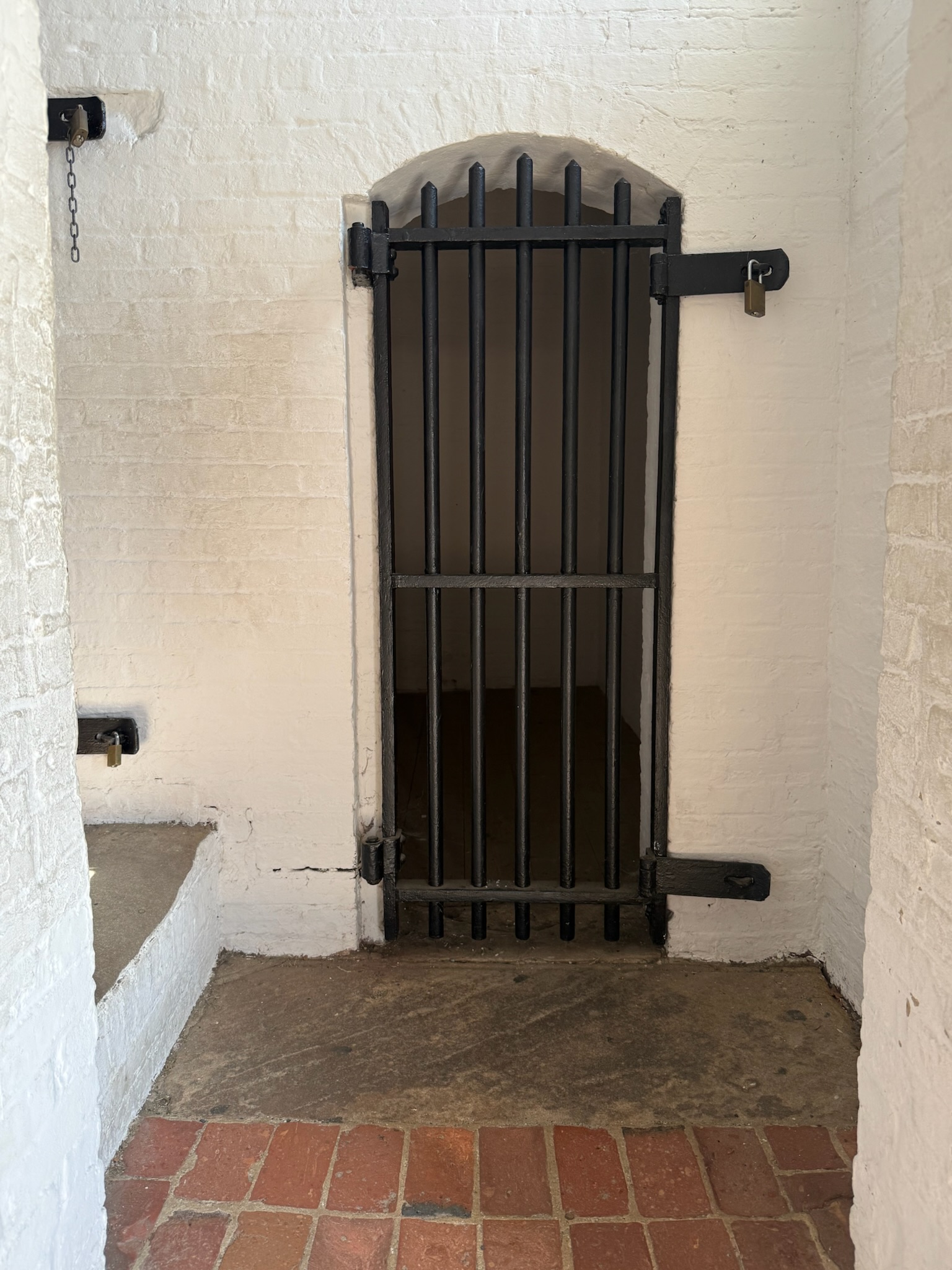
continued…. Going clockwise, the next building (the one near the flag and entrance), was a casemate (fortified chamber) and was used as a prison. The prison had three cells. According to the sign, there was a mattress that was leaned up against the wall during the day and laid on the floor at night for sleeping. The toilet was a barrel that was emptied every morning. They did not allow silverware to be used and cut up the food into small pieces for the prisoners. Bathing was apparently not allowed.
It also had an exhibit about the Civil War. In February of 1861, the southern states formed the Confederacy. It sounds like Maryland had not joined, even though it was a slave state. In April, Confederate forces fired upon Ft. Sumter in Charleston Harbor. A week later, there was an attack on an infantry regiment stationed in Baltimore, and a riot broke out. Four Union soldiers and nine civilians died, telegraph lines were cut and railroad bridges burned. On April 22, President Lincoln suspended the writ of habeas corpus, which meant people could be detained without proof, and put Baltimore under federal control for 6-months. Martial law was imposed, police officers were replaced with Union soldiers, newspapers shut down, telegraph lines were monitored, hundreds of citizens and elected officials were arrested (many held here at Ft. McHenry) for being Southern sympathizers, and Ft. McHenry’s cannons were turned to face the city. The Maryland legislature condemned Lincoln’s actions, viewing him as a dictator who overthrew the public’s freedom. Lincoln believed it was essential to prevent Maryland from joining the Confederacy for Maryland’s own safety and security.
During the Civil War, Ft. McHenry was a hub of activity, serving as a prisoner of war compound for Confederate soldiers, a training ground for Union soldiers, and central command post for Union forces in the Baltimore area.
During the Civil War, 180,000 blacks served the Union, most as laborers building fortifications. The Union took able-bodied black slaves who had been imprisoned and gave them their freedom from both prison and slavery in exchange for serving as soldiers. Free black men also enlisted.
One of the park rangers told us that one of the reasons why Lincoln was so determined not to let Maryland join the Confederacy was because Maryland was the middle state, and was not considered part of the north or south. He couldn’t lose the middle ground.
The next building going clockwise had an exhibit with more details of the history of the fort. Construction began in 1798 and was completed in 1805. It was named after the Secretary of War, James McHenry. When the British started attacking the east coast as part of the War of 1812, upgrades were quickly made to the fort to bolster its defenses. The fort was upgraded again in 1829 and 1836, and the sign says that today is looks much the same as it did in 1836.
In 1846, the US went to war with Mexico. Fort McHenry was used as a training ground, supply depot and embarkation point for troops heading to the front lines. There wasn’t much in this room about the Civil War since there had been so much in the other room. The signs were vague, but it sounds like at some point between the Civil War and 1914, the fort was decommissioned and turned into a park. During World War I, from 1917 – 1923, the army reclaimed the fort and built 100 buildings in the outer fort that were used as a military hospital. It had 3,000 beds, 1,000 staff and treated over 20,000 servicemen. It was credited for advancing neurosurgery and reconstructive surgery techniques and rehabilitative therapies. It was also the first program to teach disabled soldiers new skills, such as metal work and auto repair, so that they could reintegrate into civilian life.
It sounds like the fort was decommissioned again in the 20s, the hospital was torn down, and it was turned over to the National Park Service in 1933. As part of President Franklin Roosevelt’s New Deal to create jobs, many people were hired to restore the fort. When World War II broke out, the US Coast Guard established a fire control and port security training facility on the site. Over 26,000 people trained here.
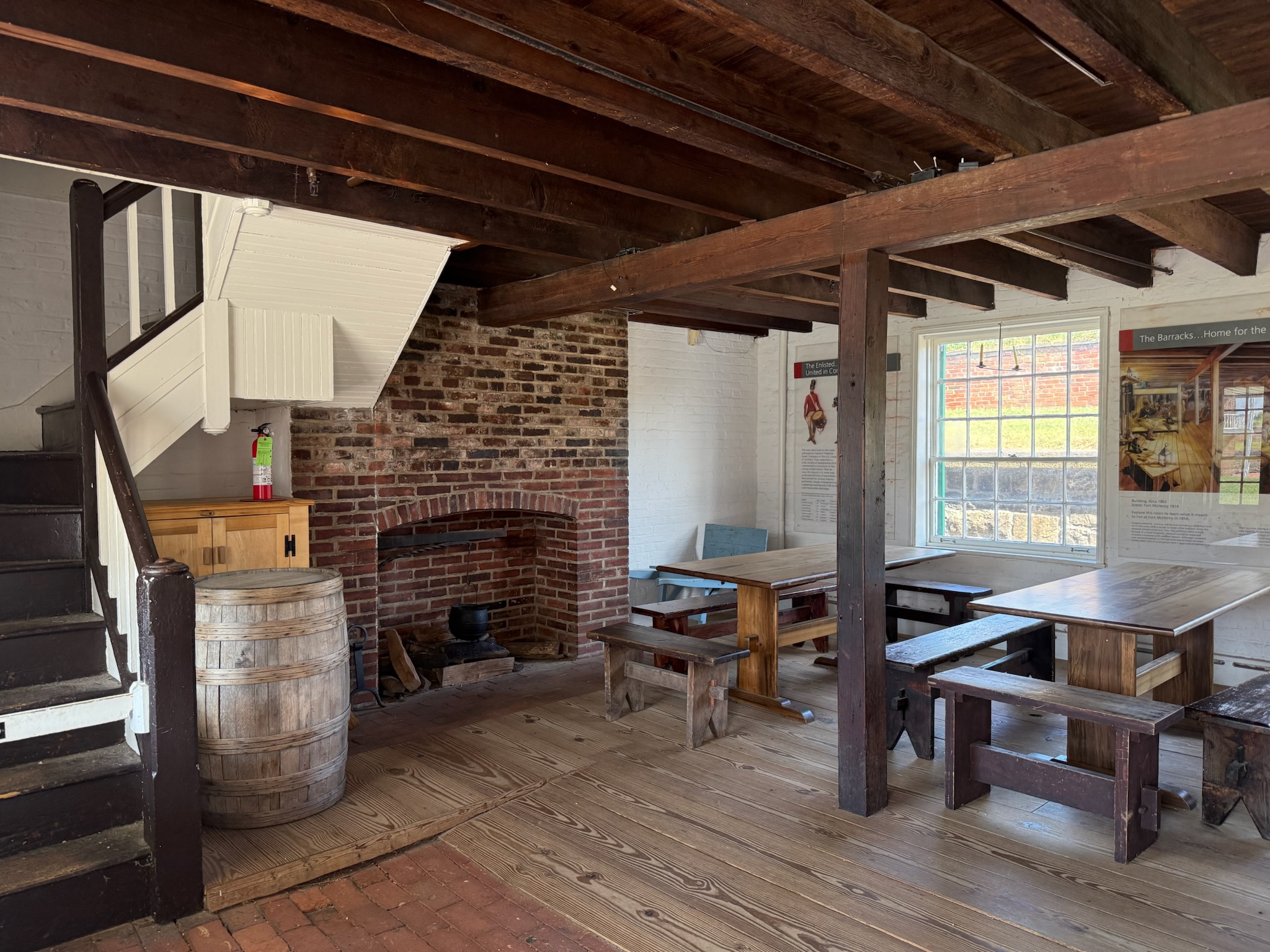
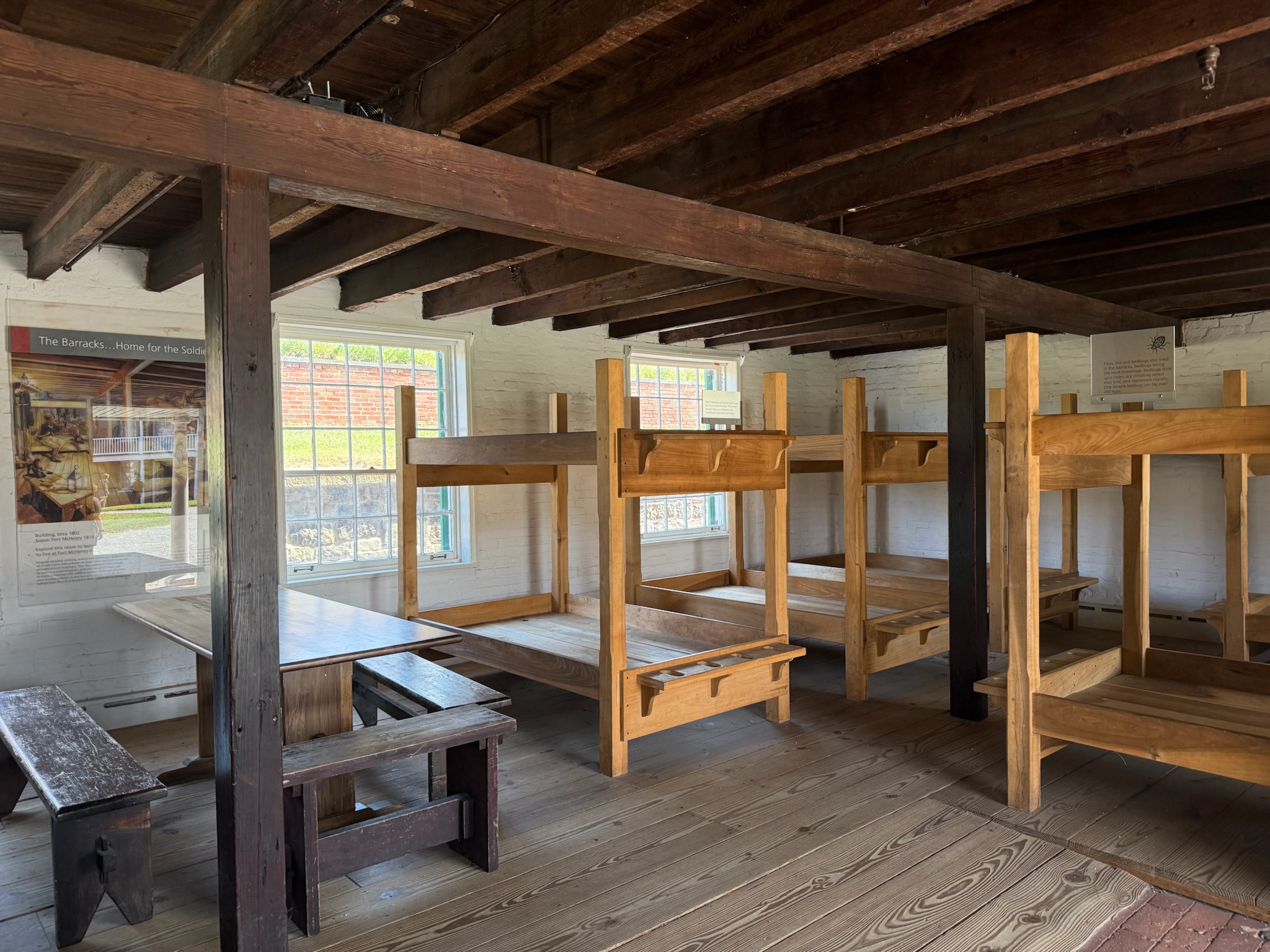
The next building was the enlisted barracks; the room where the enlisted men slept, cooked, and ate. It had been refurbished to look as it would have in 1814. Back then, military service was completely volunteer, but many men volunteered for the steady paycheck of $8 per month and the 160 acres of land granted upon honorable discharge. There were two men assigned to each bed (one worked day shift, one night shift), and the beds were made of straw. Fleas, lice and bedbugs were a problem.
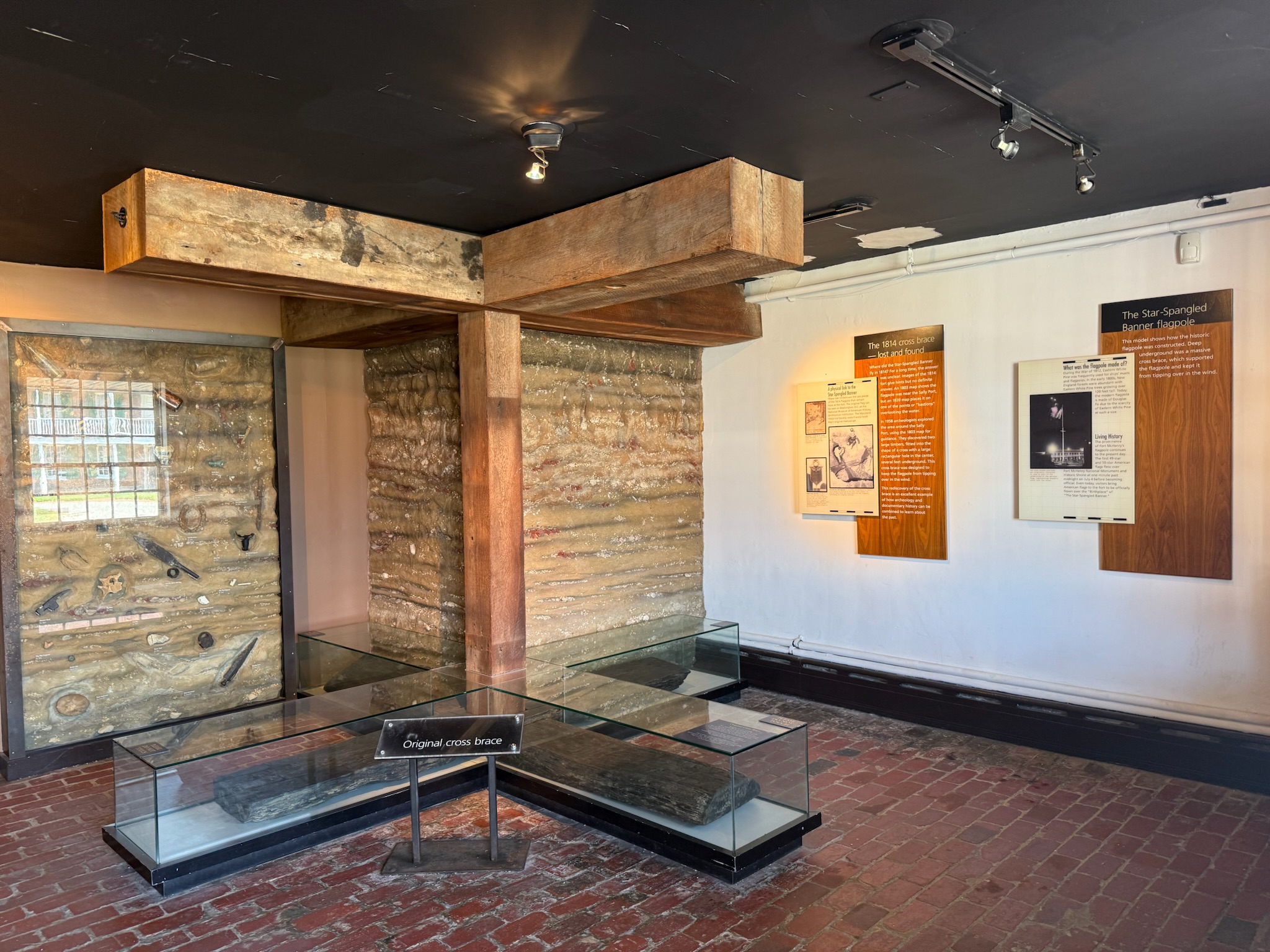
Part of one of the buildings had fossils that had been dug up by archeologists, who have been doing excavations around the fort since the 1950s. The most exciting thing they’ve found was the cross brace for the flagpole that held the giant flag during the Battle of Baltimore. It had been buried deep underground to keep the flag from falling. There would have been another one at ground level, as well. The earthworks had been upgraded several times over the 100+ use the base was in service, with a lot of dirt brought in to make the ramparts higher. They’ve found the original ramparts from 1814 completely intact, buried about a foot underground (note: Christi had no idea that “rampart” was the technical term for a fort’s walls). They also found an old trench that they were able to also date to 1814 thanks to a bomb fragment and button. They mentioned finding the foundations of buildings in the outer fort that have since been torn down, including a tavern and horse stables. Most of the rest of what they found were remnants of every day life, such old bottles, ceramics, tools, bone fragments from food, etc.
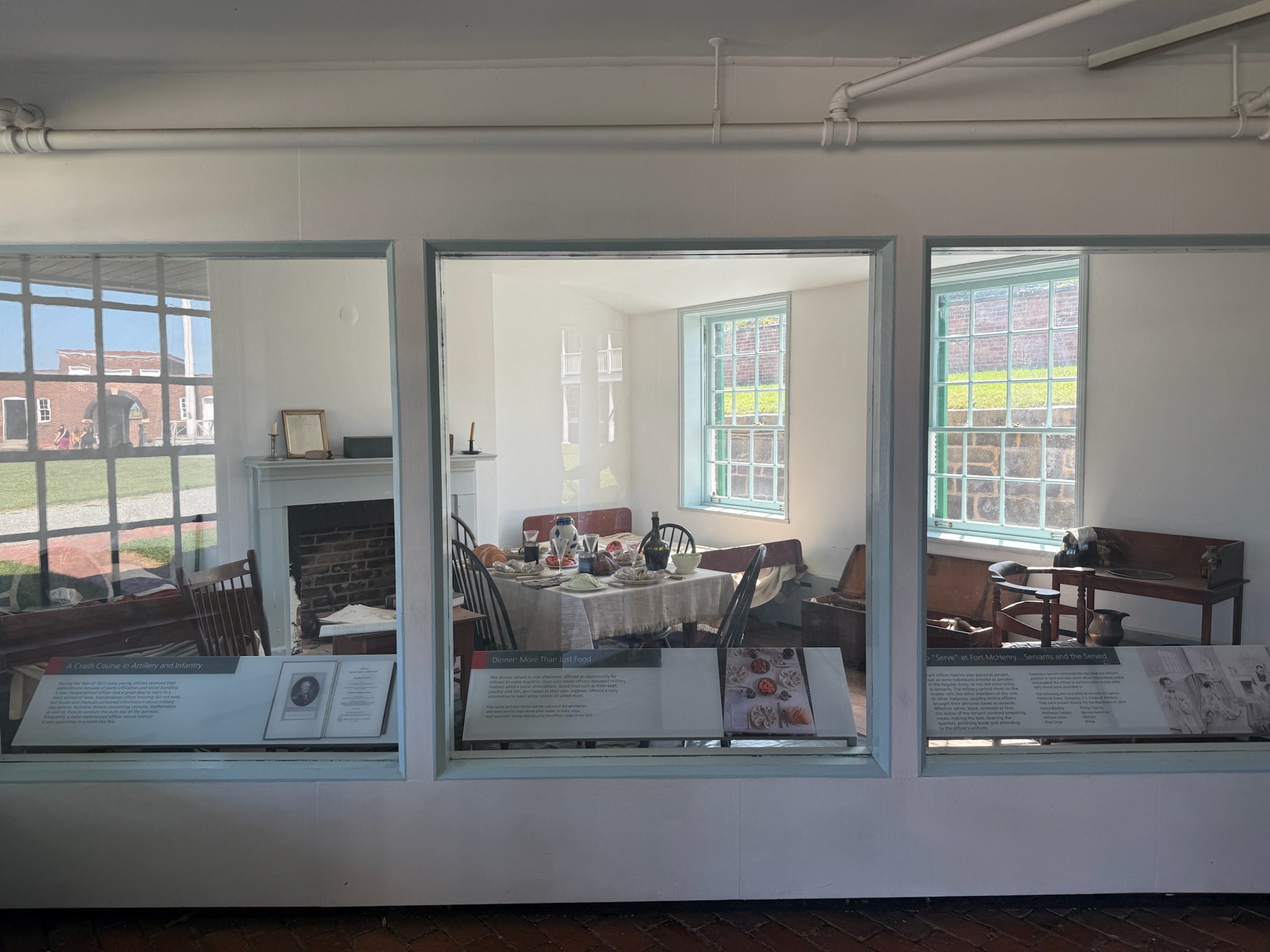
The last area was the officer’s quarters, as it would have looked in 1814. Since officers usually came from families of wealth, they would purchase their own higher quality food and drink. Each officer had their own personal servant that would cook the meals, clean the quarters, and attend to other daily chores. Sometimes the servants were enlisted men assigned to the officer; sometimes the officer’s brought their own un-enlisted personal slave. The sign indicated that the officers shared the quarters and that at night, the servants would set up cots for them to sleep on.
As we were exiting the main entrance, one of the park rangers asked if we had seen the bomb shelters under the prison and pointed to a short door near the ground. We hadn’t noticed it on the way in.
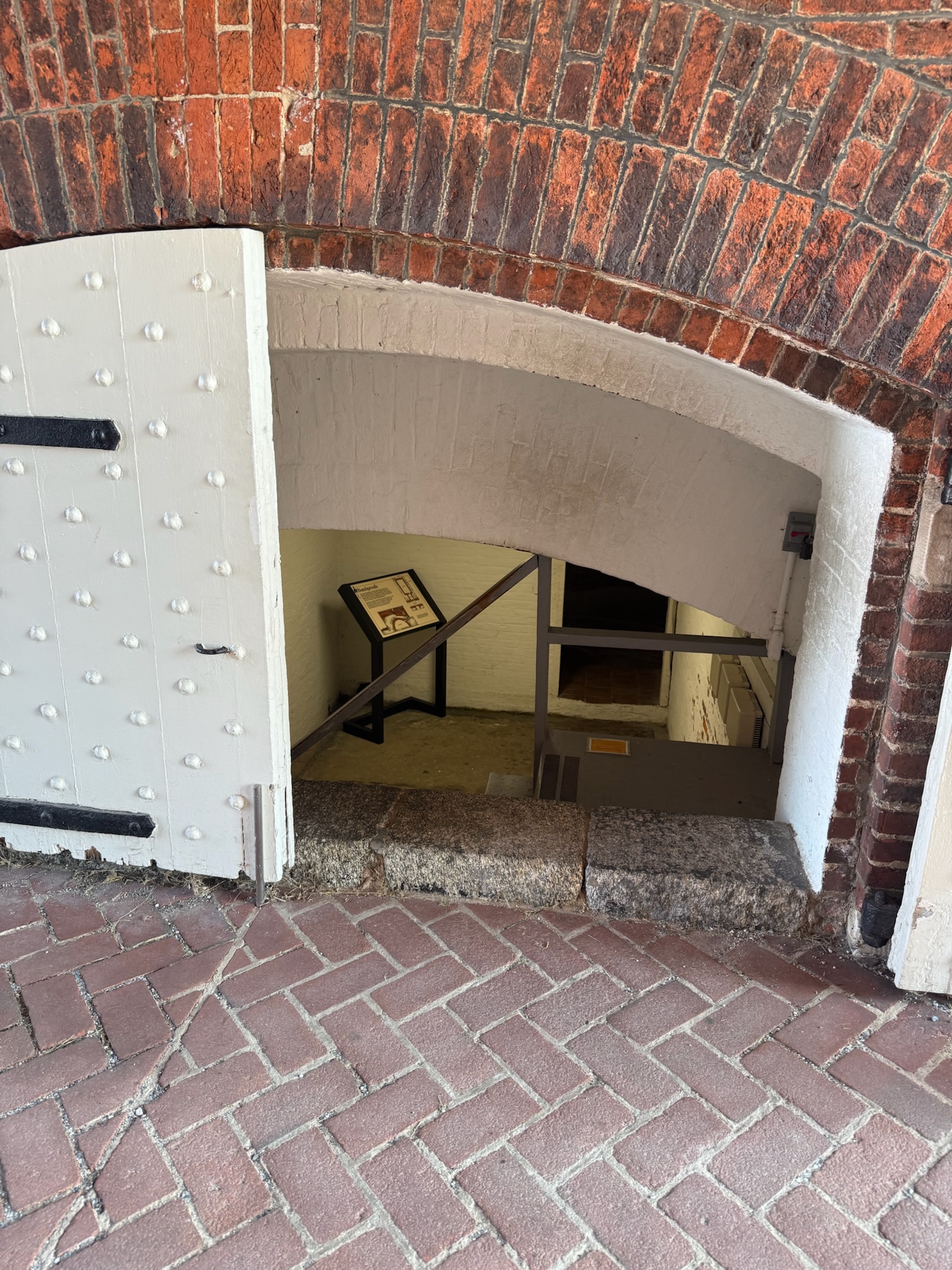
The sign said that this bomb shelter was also created after the War of 1812. It had an inner room that was pretty deep.
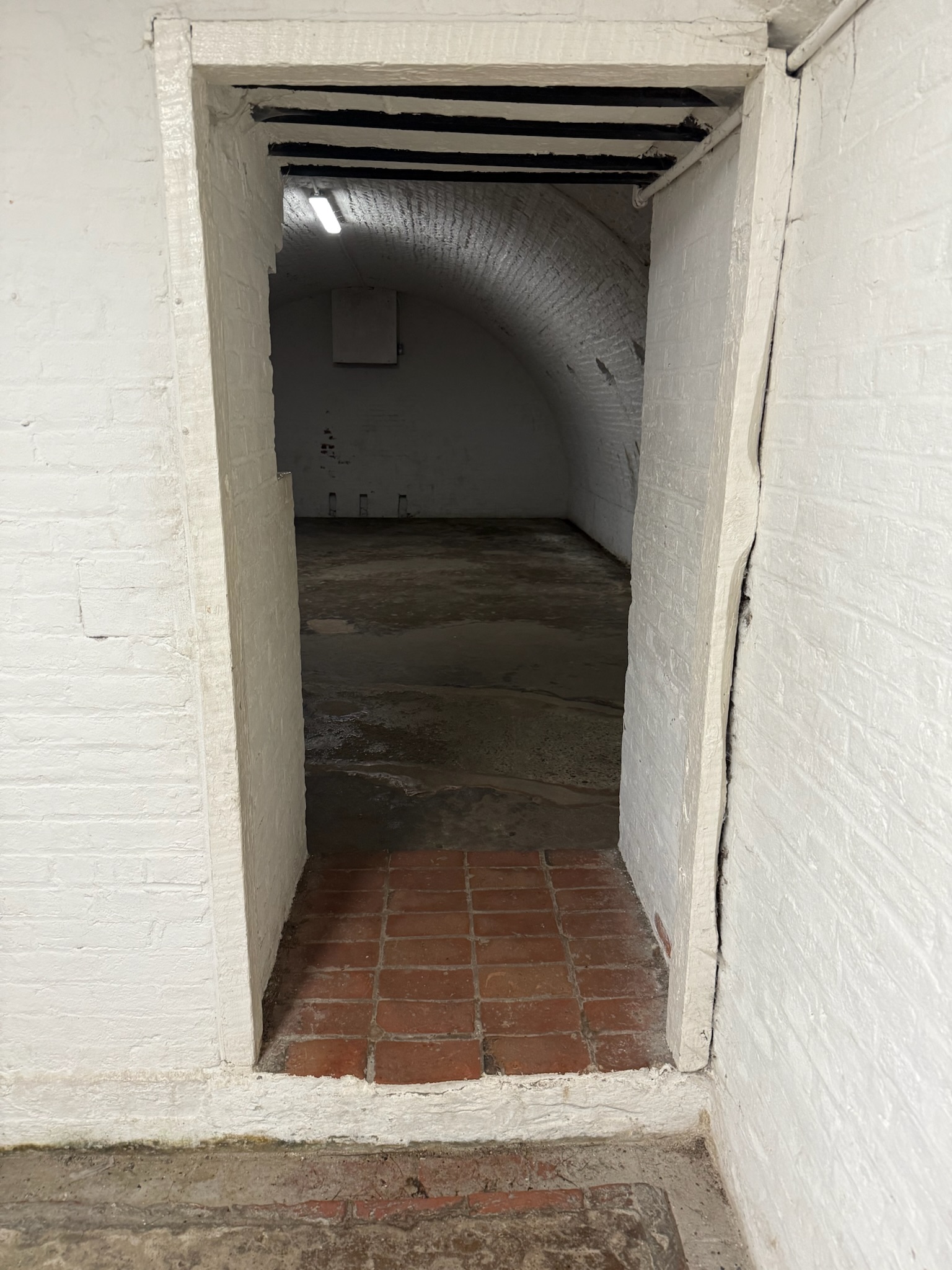
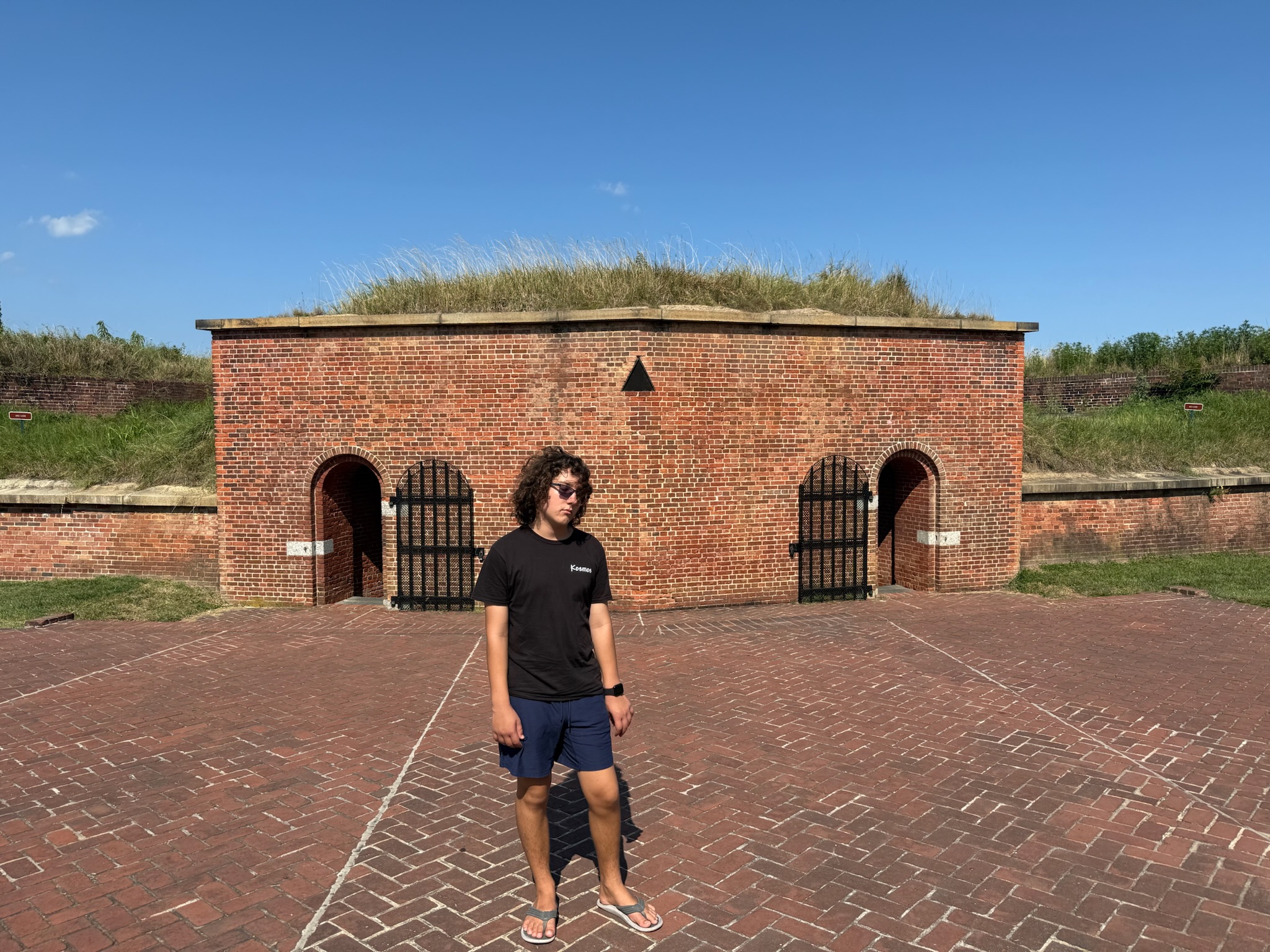
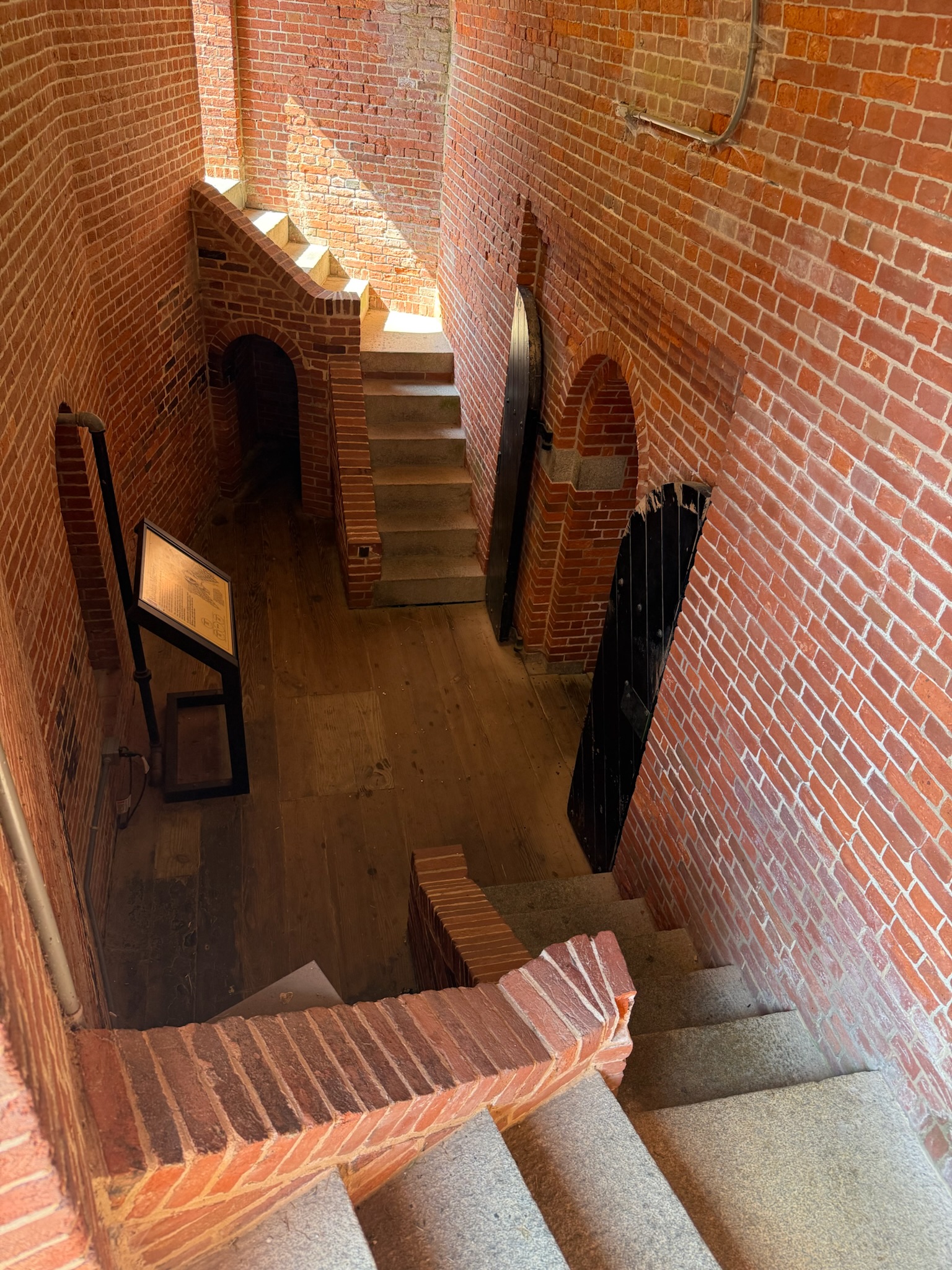
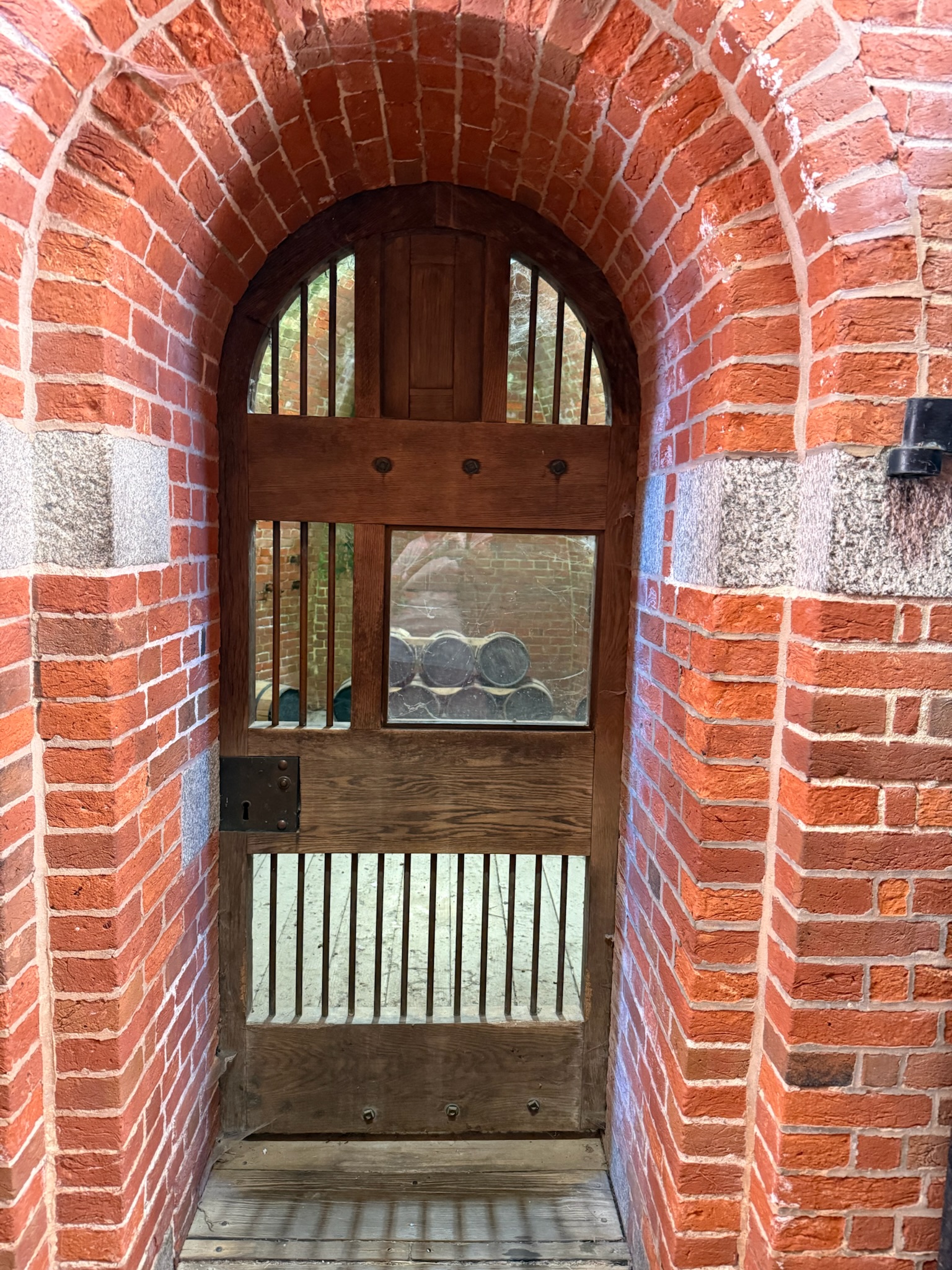
The last building to look at was another magazine, located just outside the main entrance, near the ring of cannons. It was built in 1866. Apparently, there used to be two more similar magazines along the edge of the inner fort to hold powder and ammunition for the cannons. The walls were three feet of brick and it had 16 feet of dirt laid over the ceiling. The angled entrance was supposed to help keep bombs from getting in.
The temperature had been steadily increasing, and at this point, it was hot and humid. Keith was unhappy about the long walk from the visitor’s center to the bus stop, the long wait at the bus stop, the long walk to the water taxi, and the walk back to the marina from the water taxi. Needing to get him fed ASAP, we went to the Japanese restaurant on the ground floor of the condo complex adjacent to the marina.
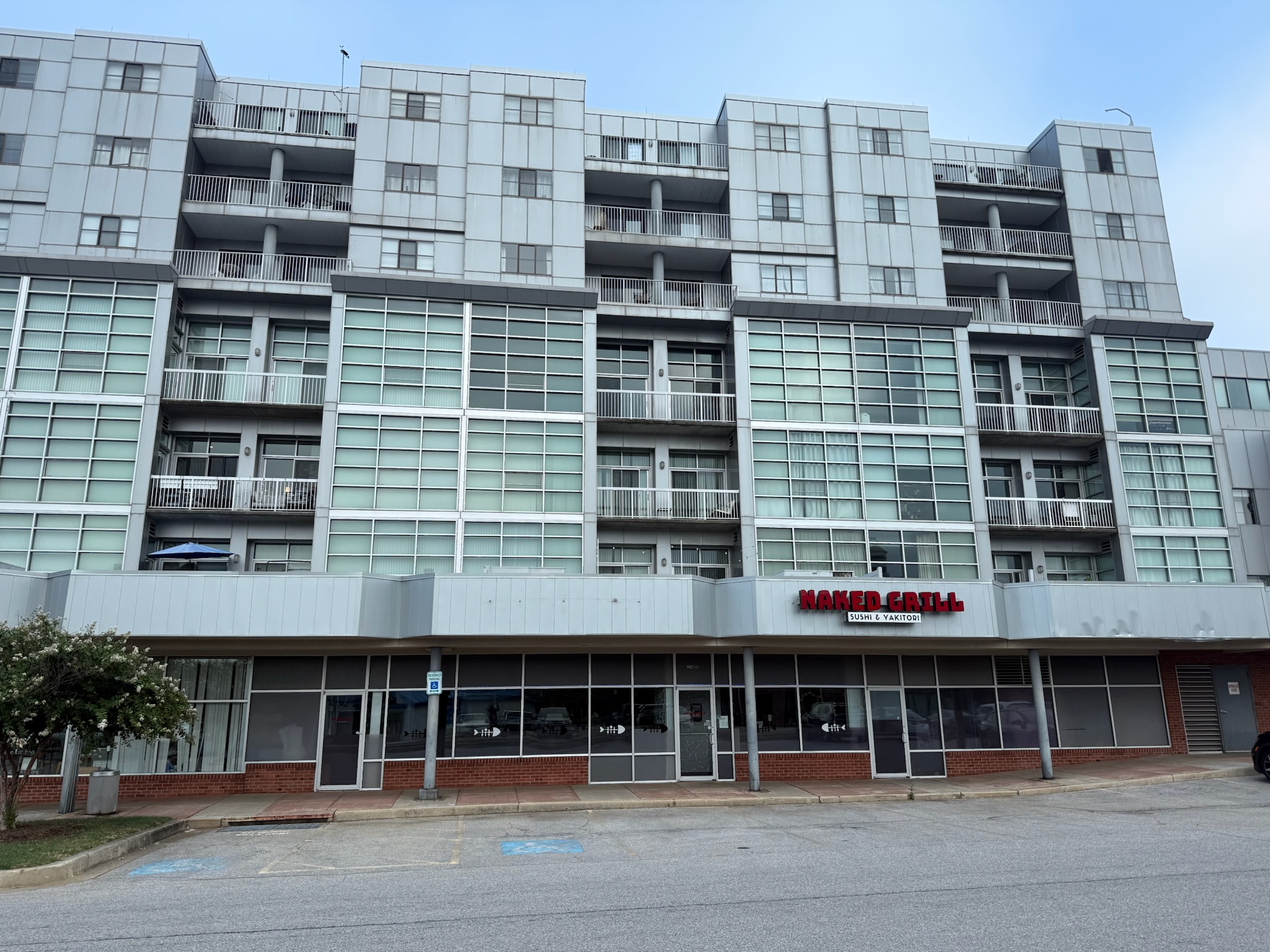
The sushi that Eric and Christi ordered was great. Keith ordered Mongolian Beef. Keith had a pretty high tolerance level for spicy food, but this was so hot that he was unable to eat it. This did not help his mood. We ordered him a different meal and took the Mongolian beef home so Christi could make fried rice with it, knowing that once the beef was mixed with rice and veggies, Keith would like it.
Dusk was nice.