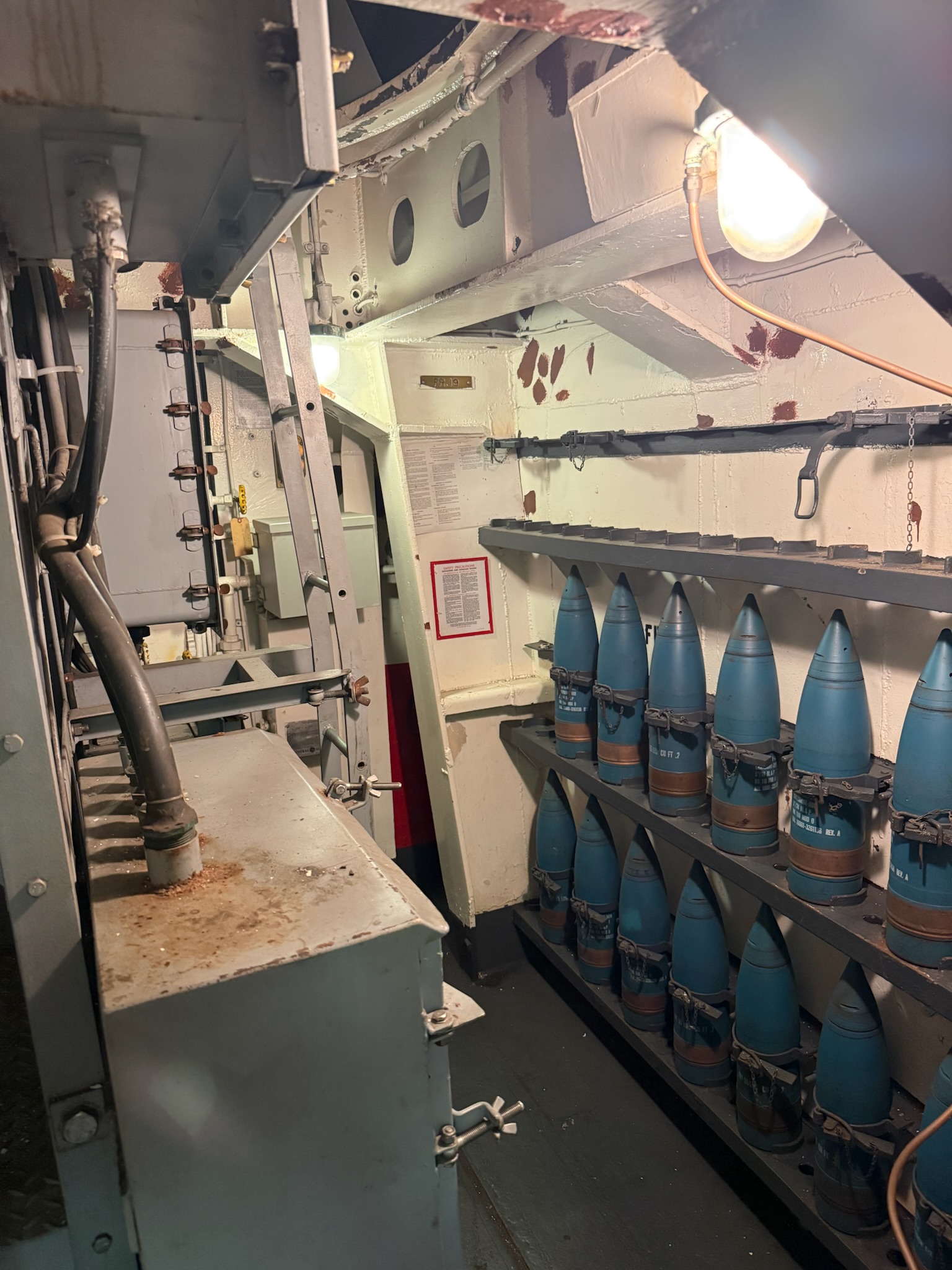
continued… Next was the 5″/38 Caliber upper handling room. The 5″/38 gun was mounted on deck directly above this room. Projectiles (top half of the ammunition) and powder cartridges (bottom half of the ammunition) were stored separately. When needed, they were put together and passed to the gunmen above.
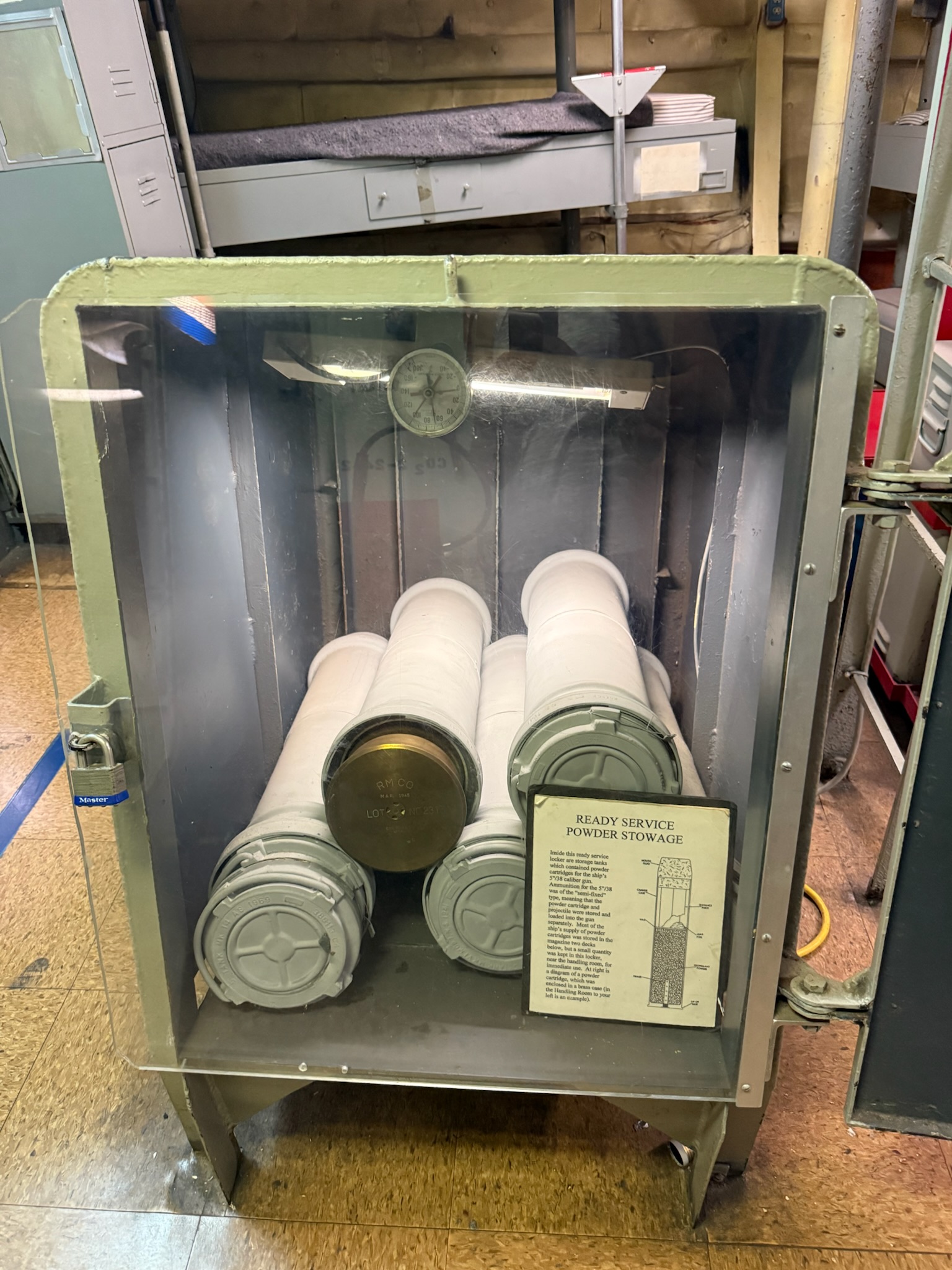
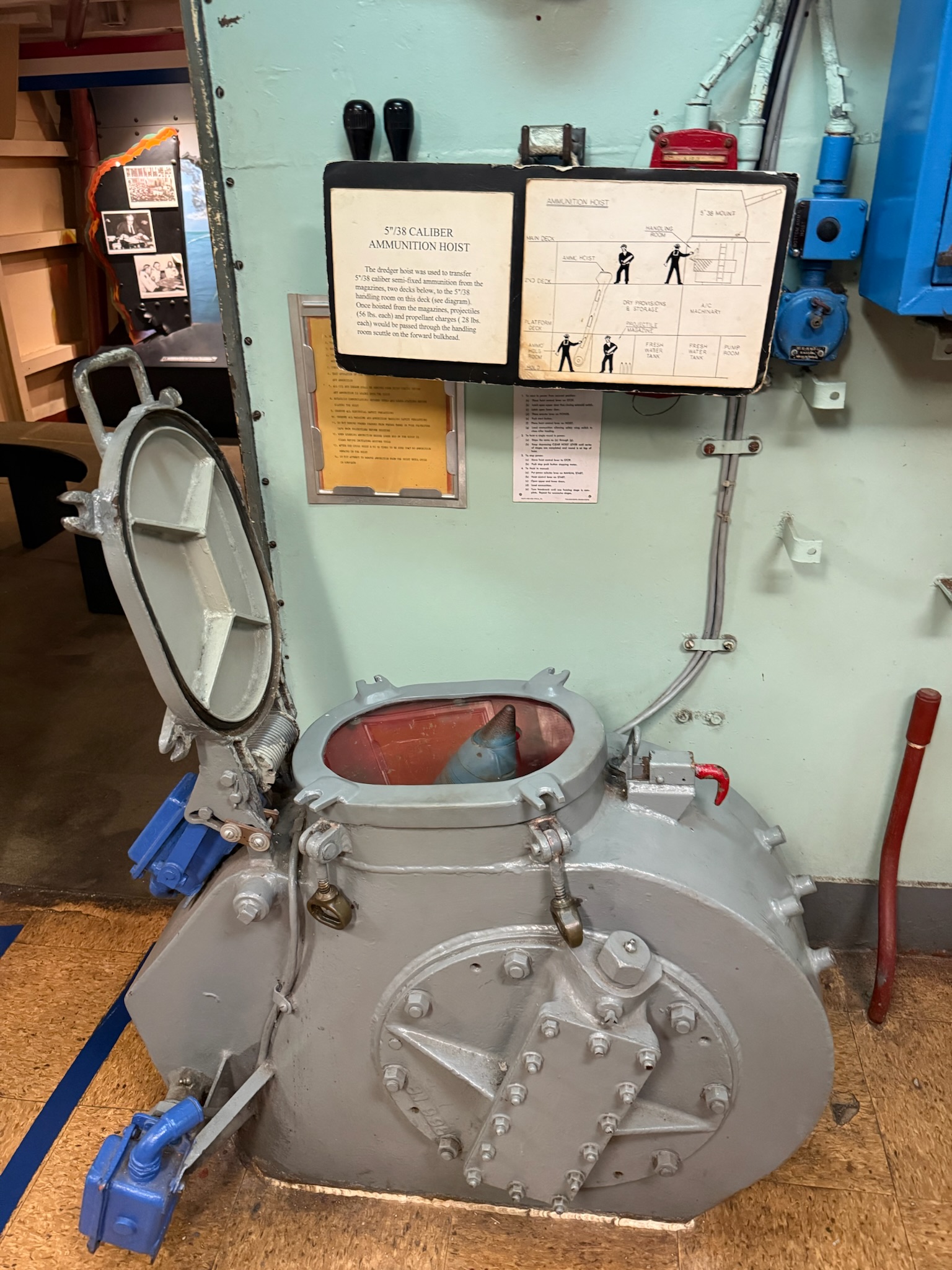
Only a limited amount of ammunition was kept here. The rest were stored two decks below and were brought up when needed via an ammunition hoist.
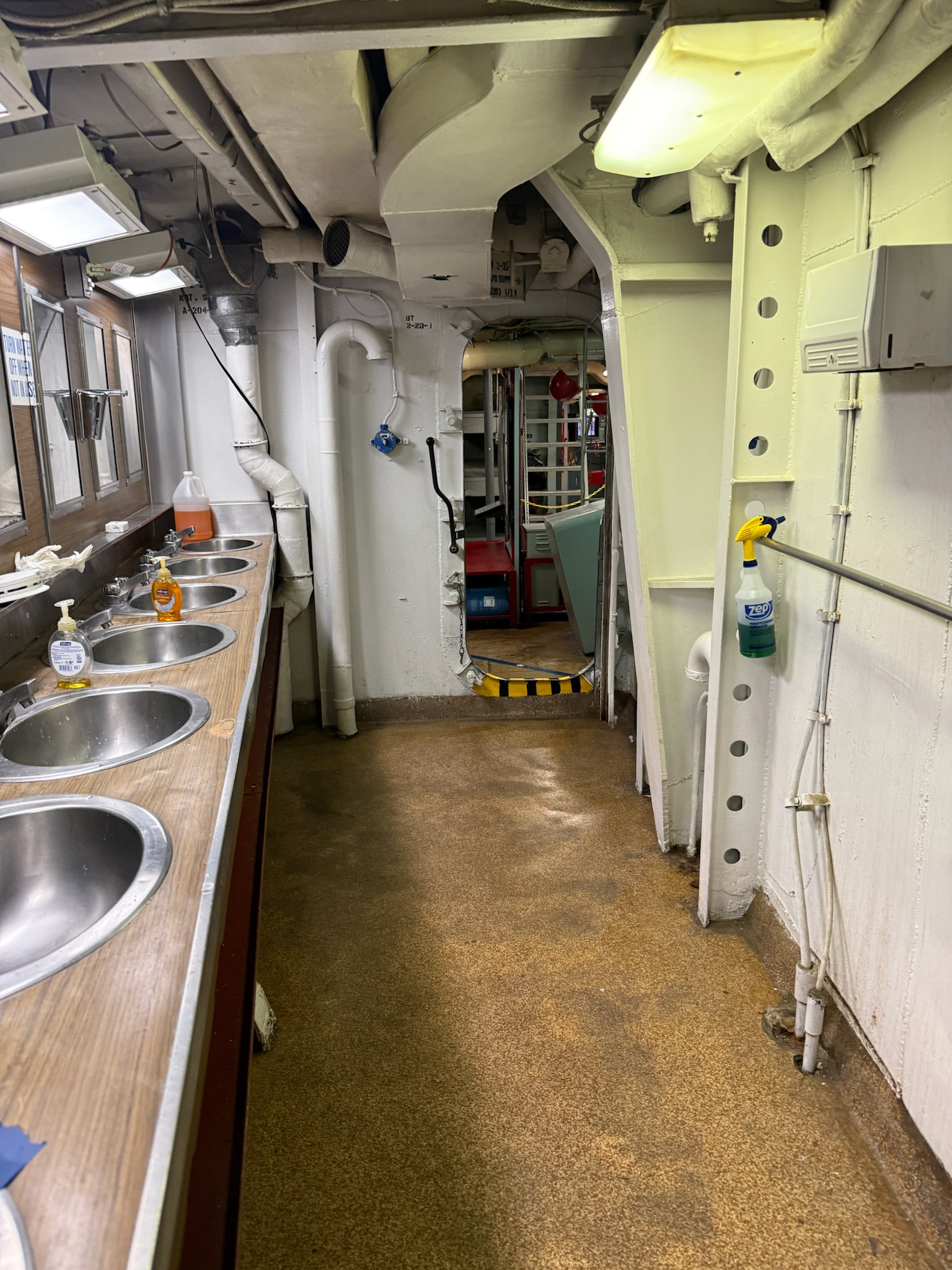
Next was the crew head (bathroom) and more enlisted crew quarters.
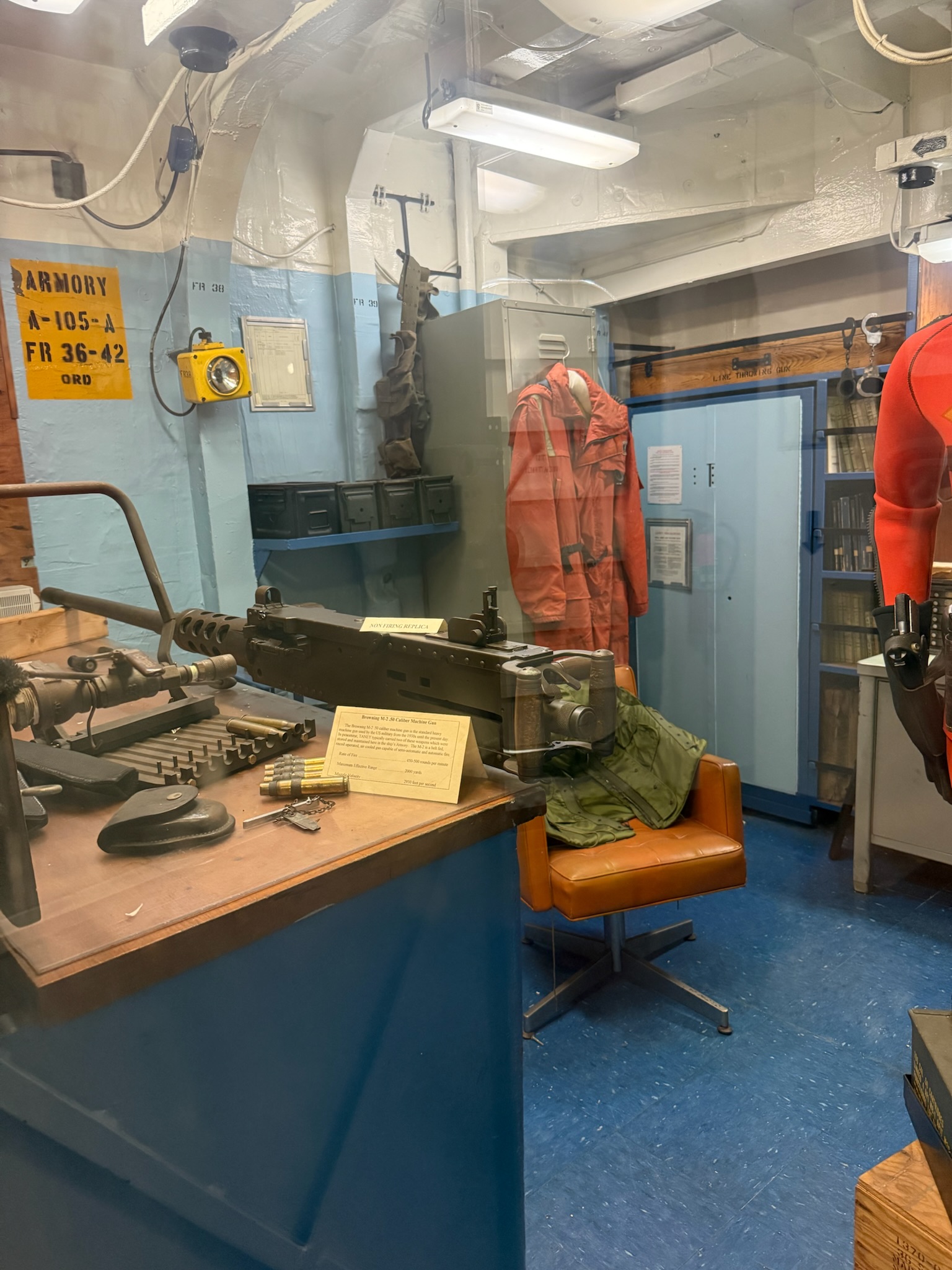
Next was the ship’s armory
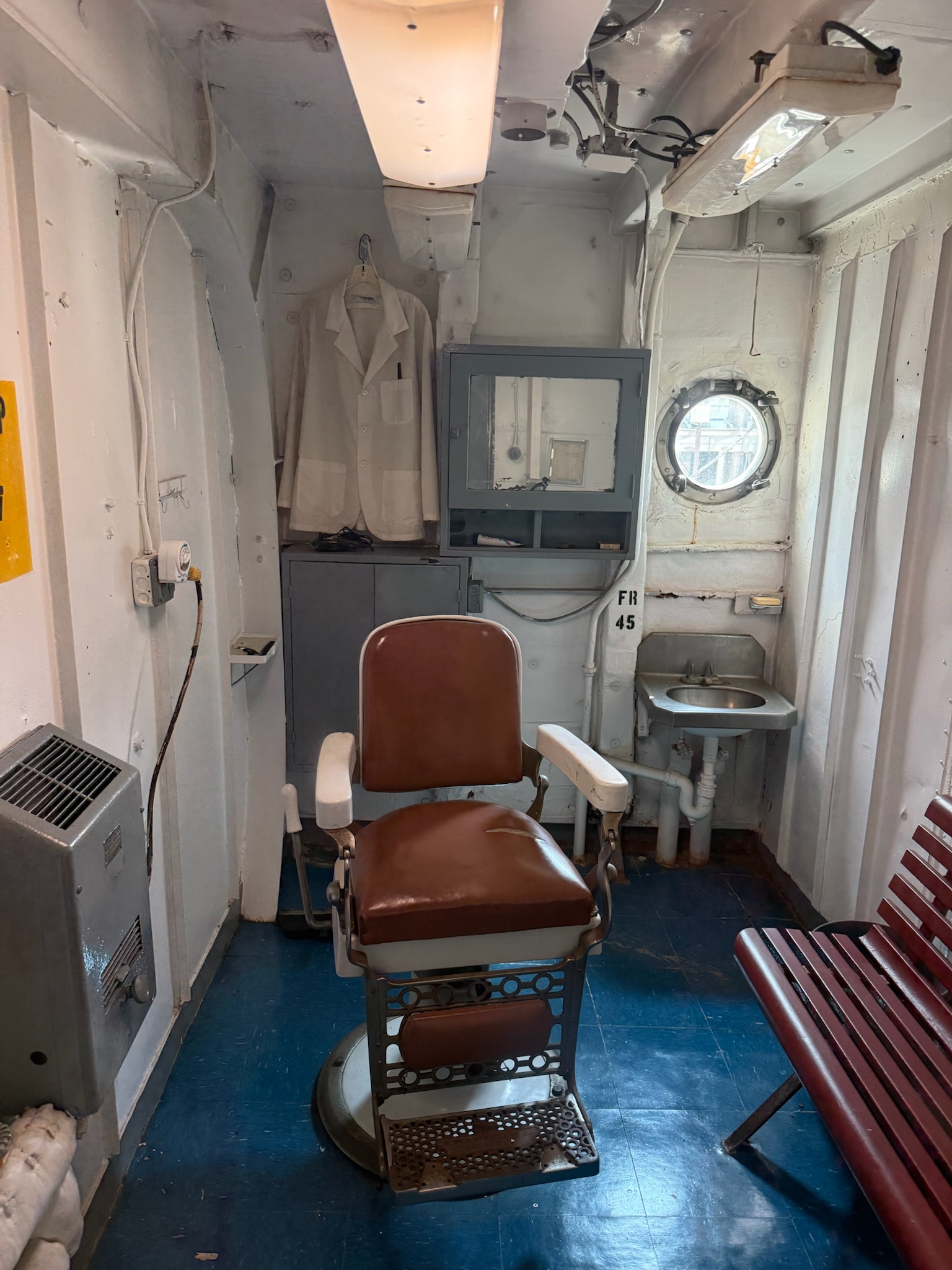
Then the barber shop.
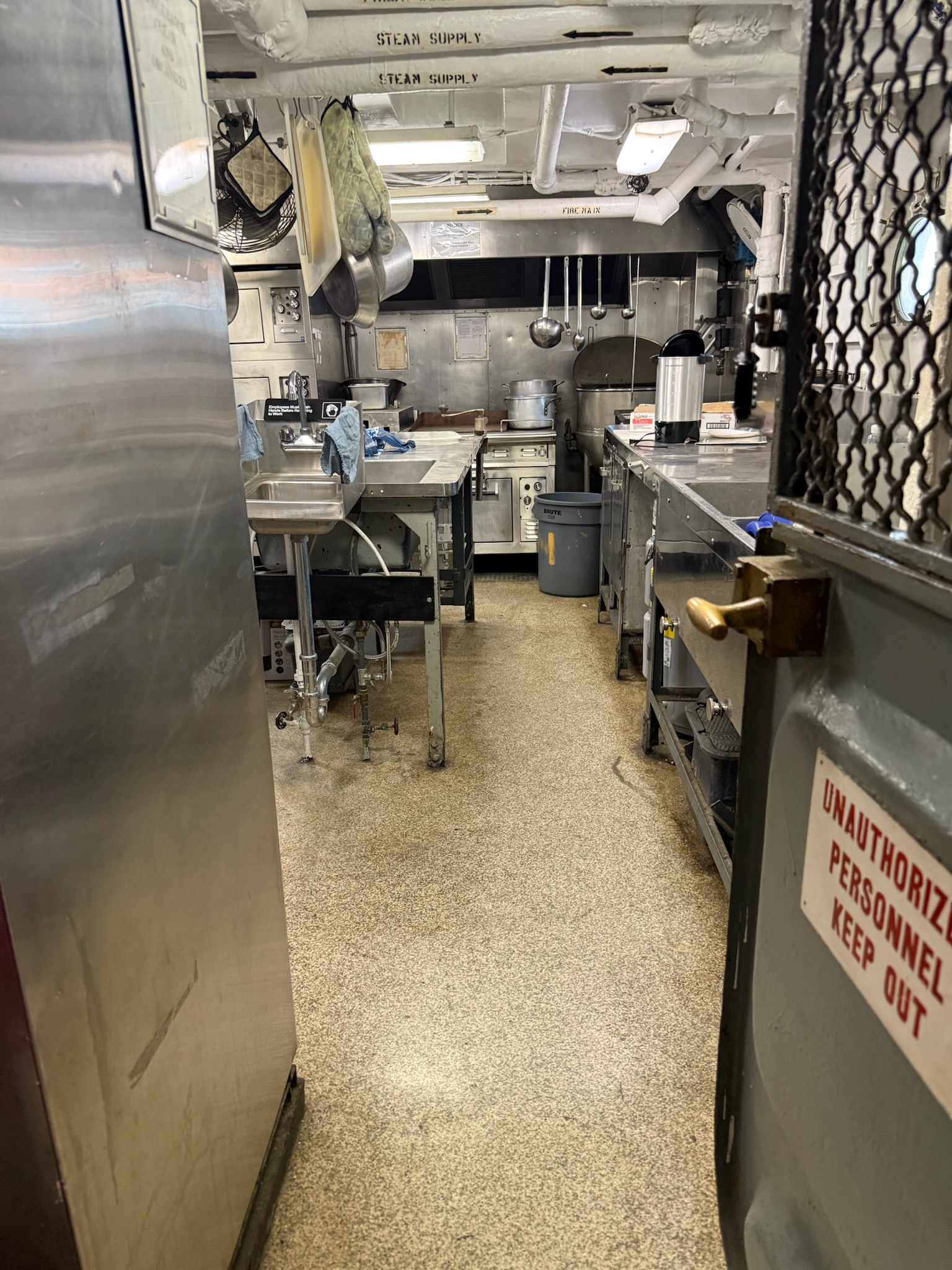
And the kitchen for the enlisted crew.
The arrows took us back out to the deck.
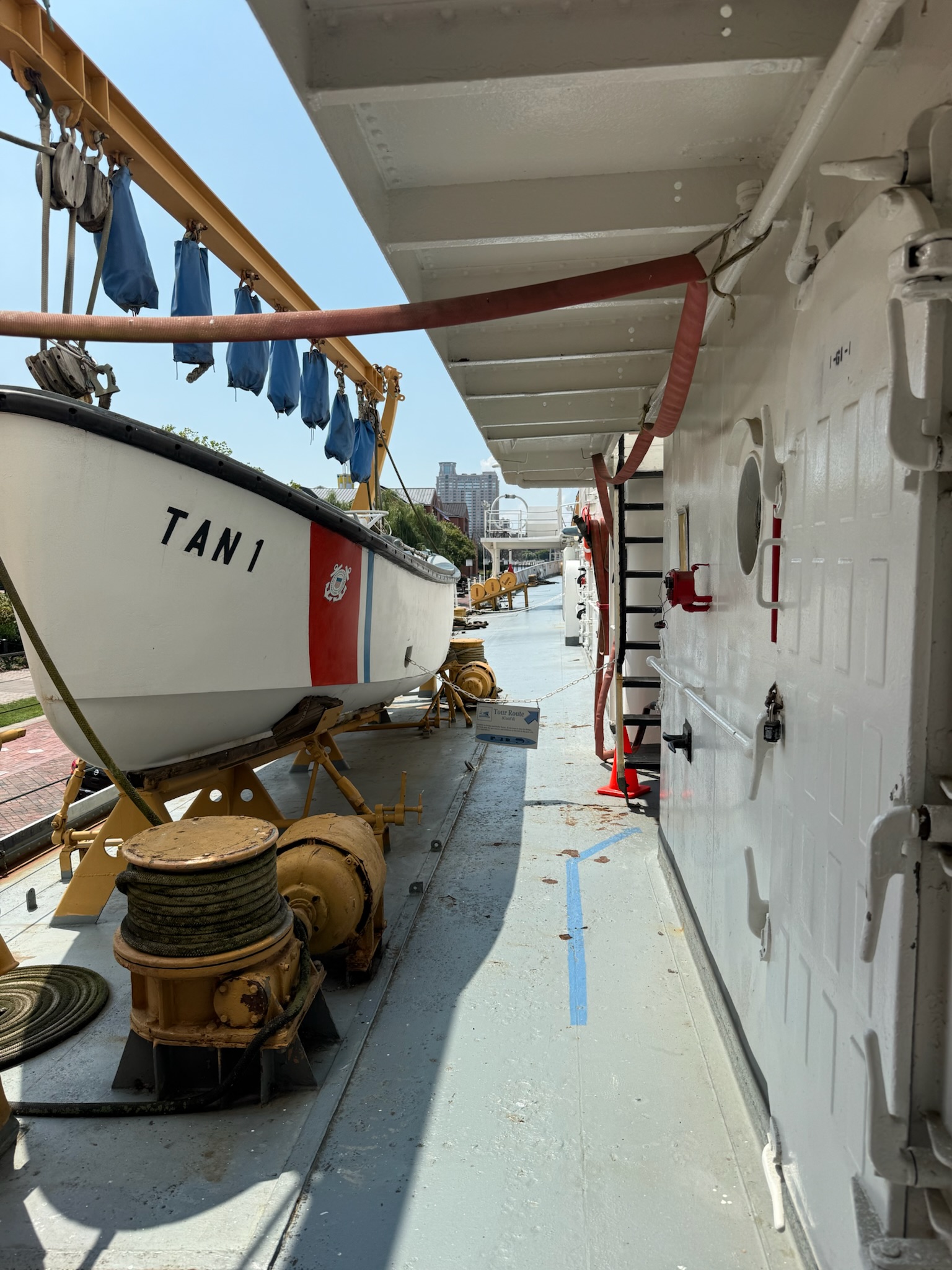
Past the giant gun
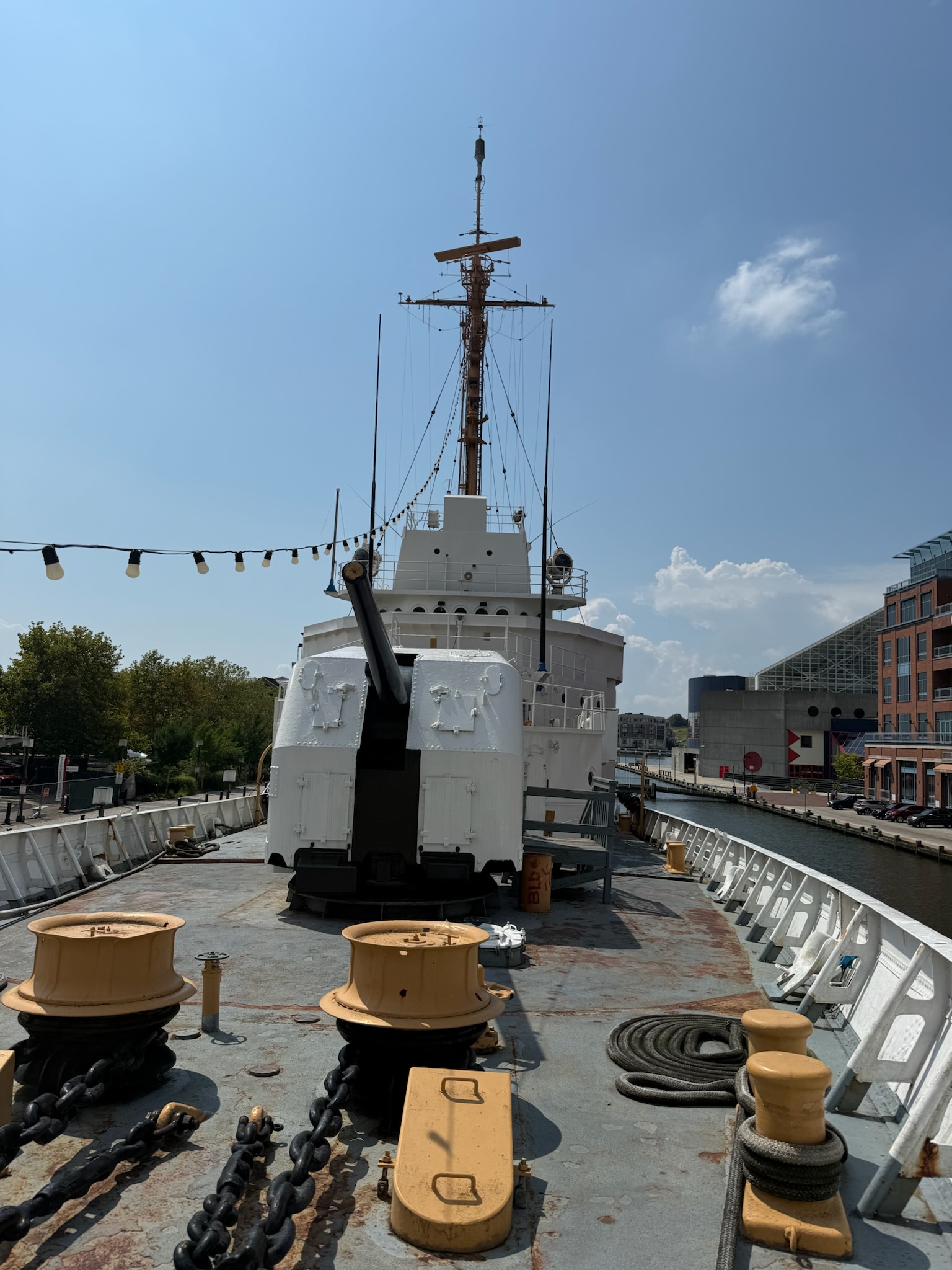
And up to the pilot house. This was looking aft from the doorway into the pilot house.
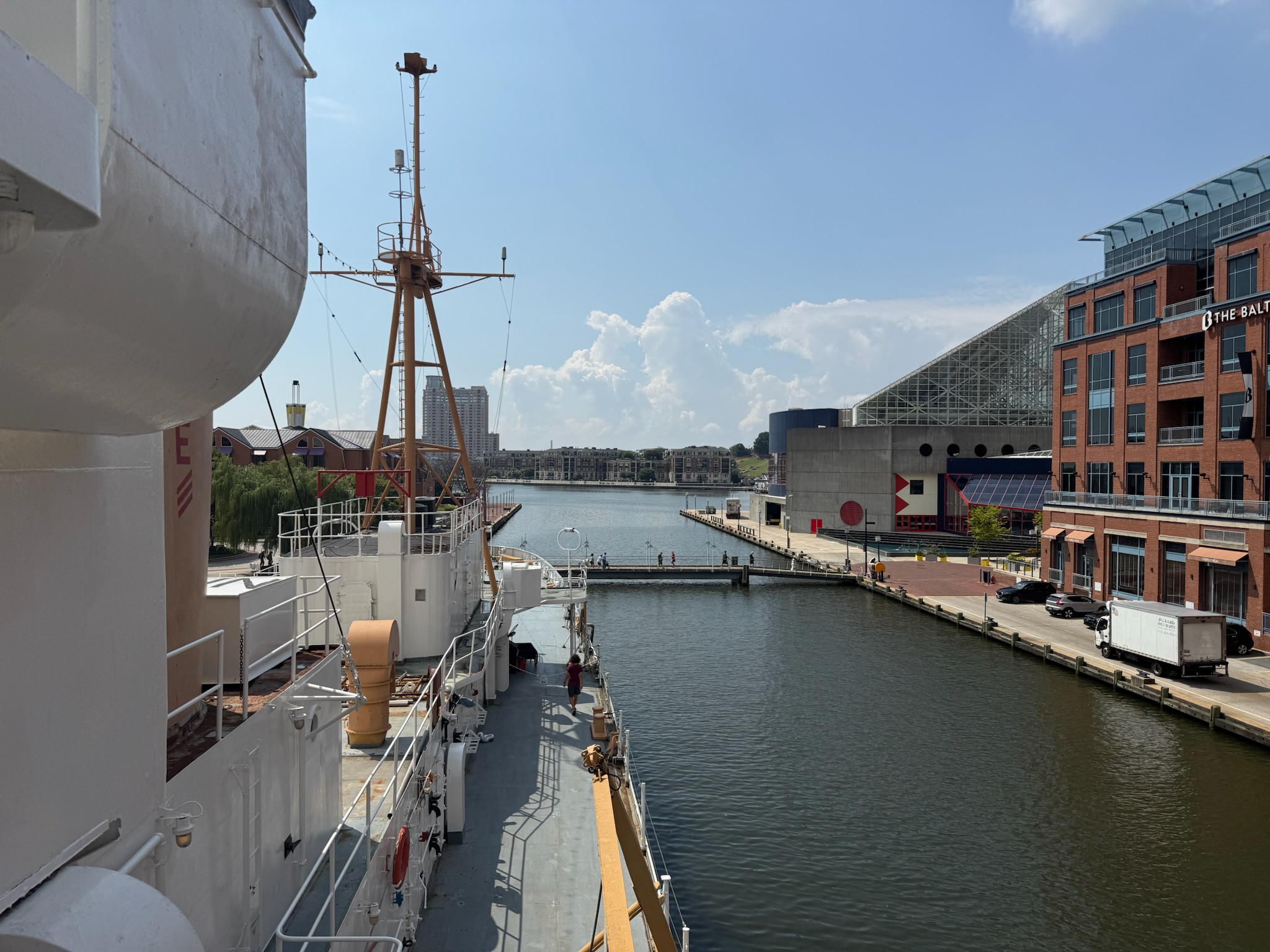
The pilot house interior
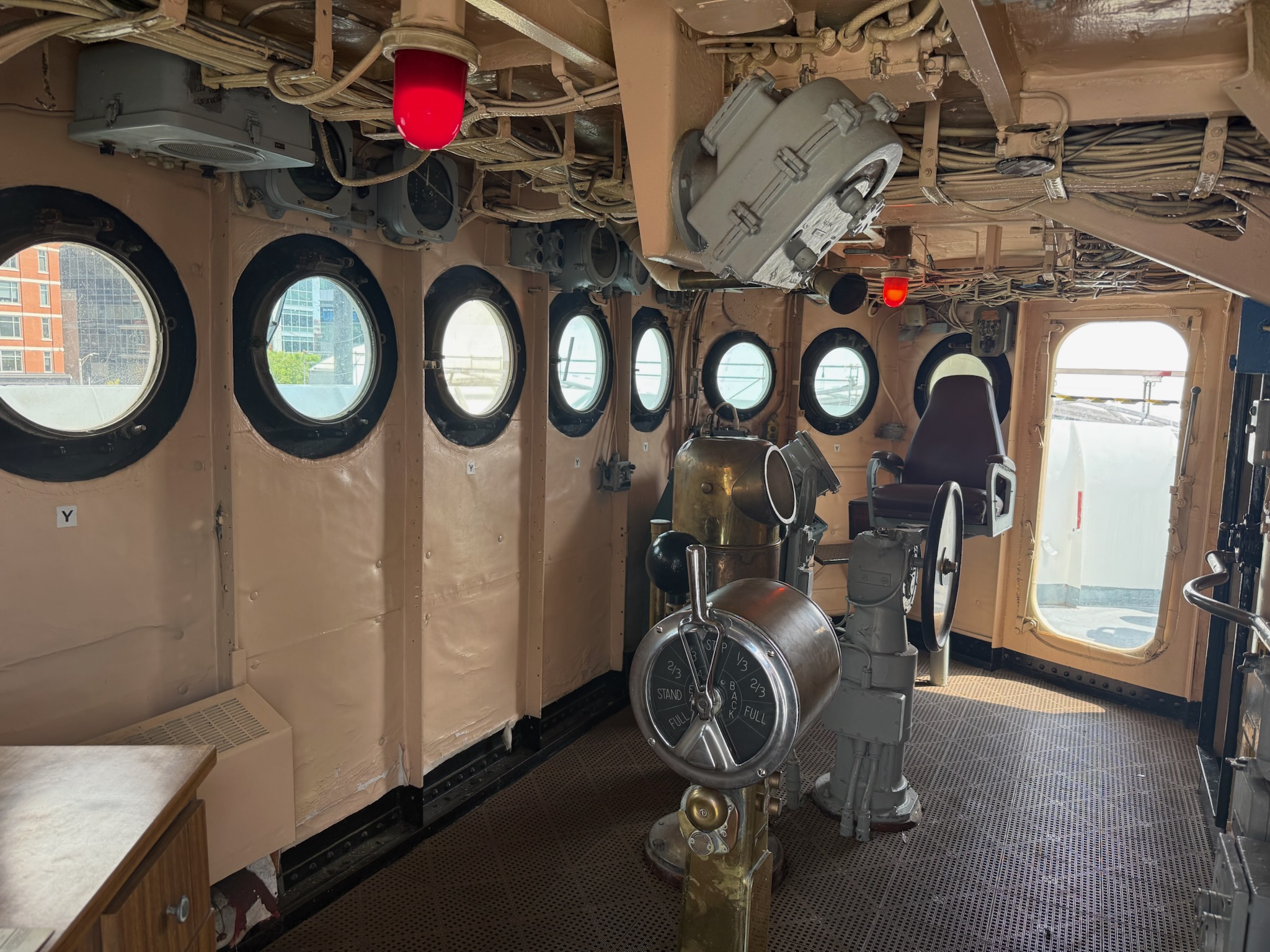
View from the pilot house
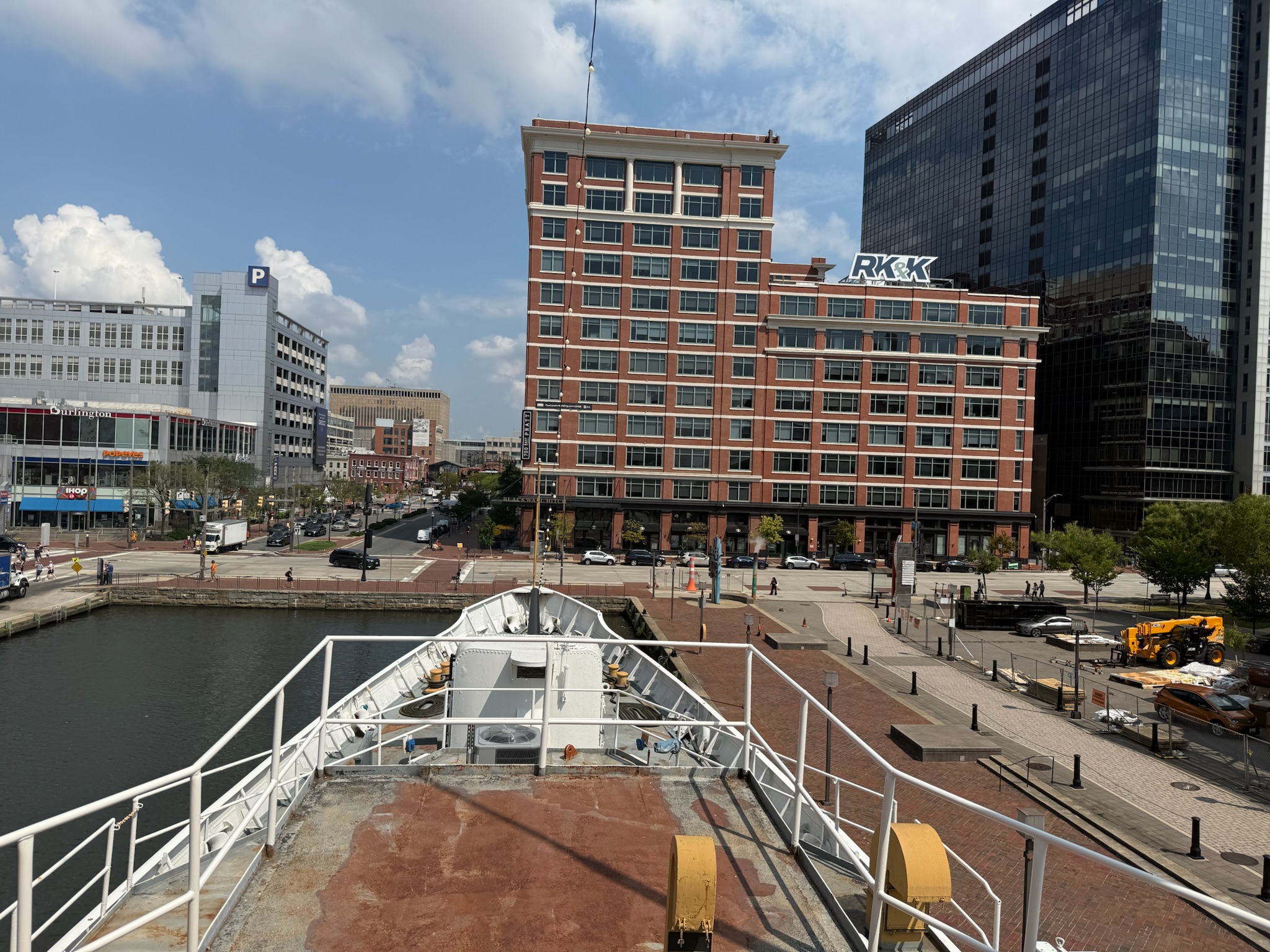
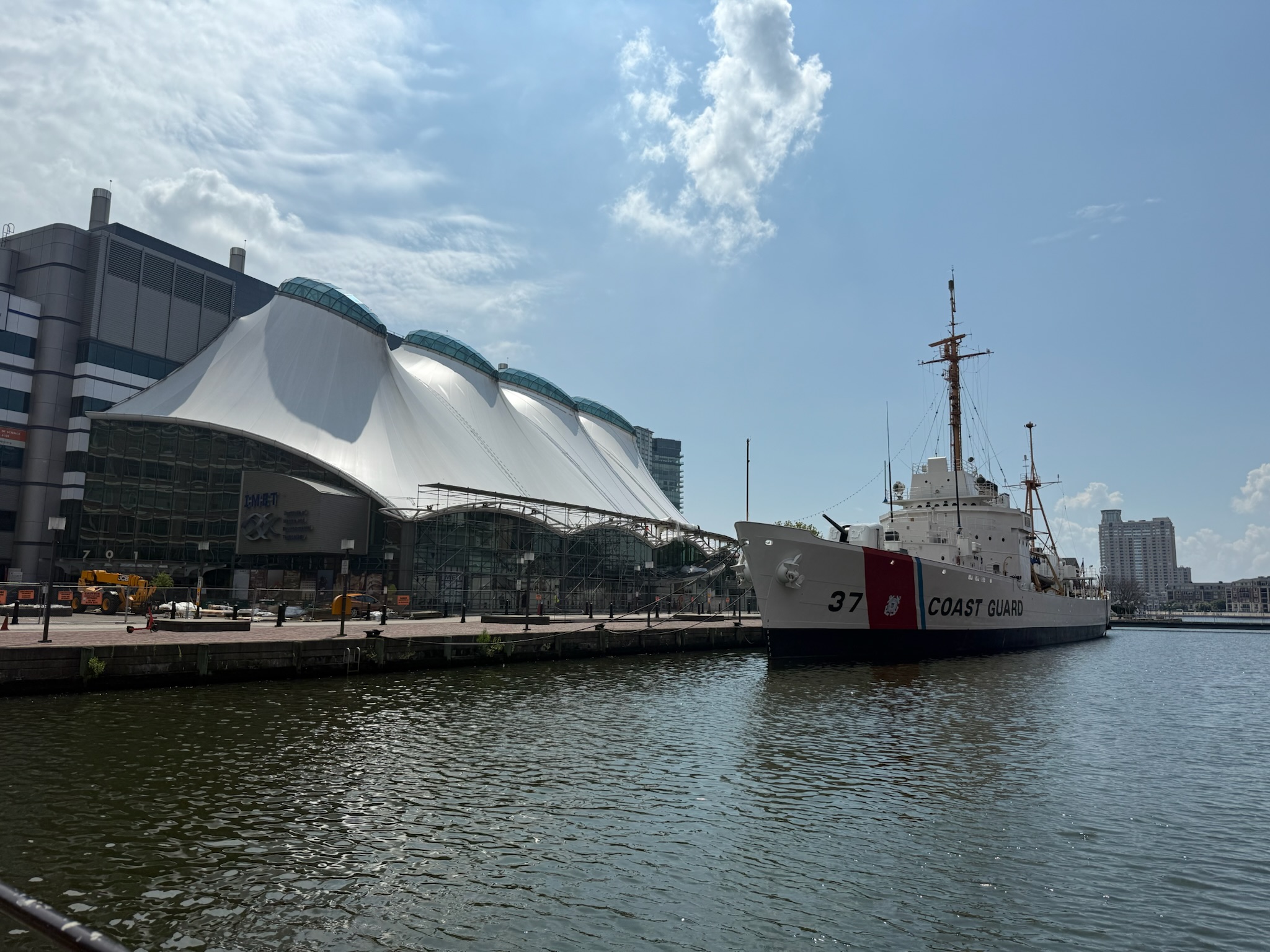
The pilot house was the last stop on the tour, and the arrows led us back to where we’d entered. Once back on land, we headed over to Pier 1 to see the last boat on the tour. However, we totally forgot about the lighthouse on Pier 5 that was included in the package. Had we seen it, we probably would have remembered, but we hadn’t seen anything that looked lighthouse-esque. This was a nice shot of the Taney as we walked west.
It was really hot out. Even though it wasn’t a long walk from Pier 5 to Pier 1, it was tiring in the heat. We stopped for ice cream at a place called Lucky’s that was in the same building as the Hard Rock Cafe.
At Pier 1, we were surprised to see that there was a small building attached to the USS Constellation.
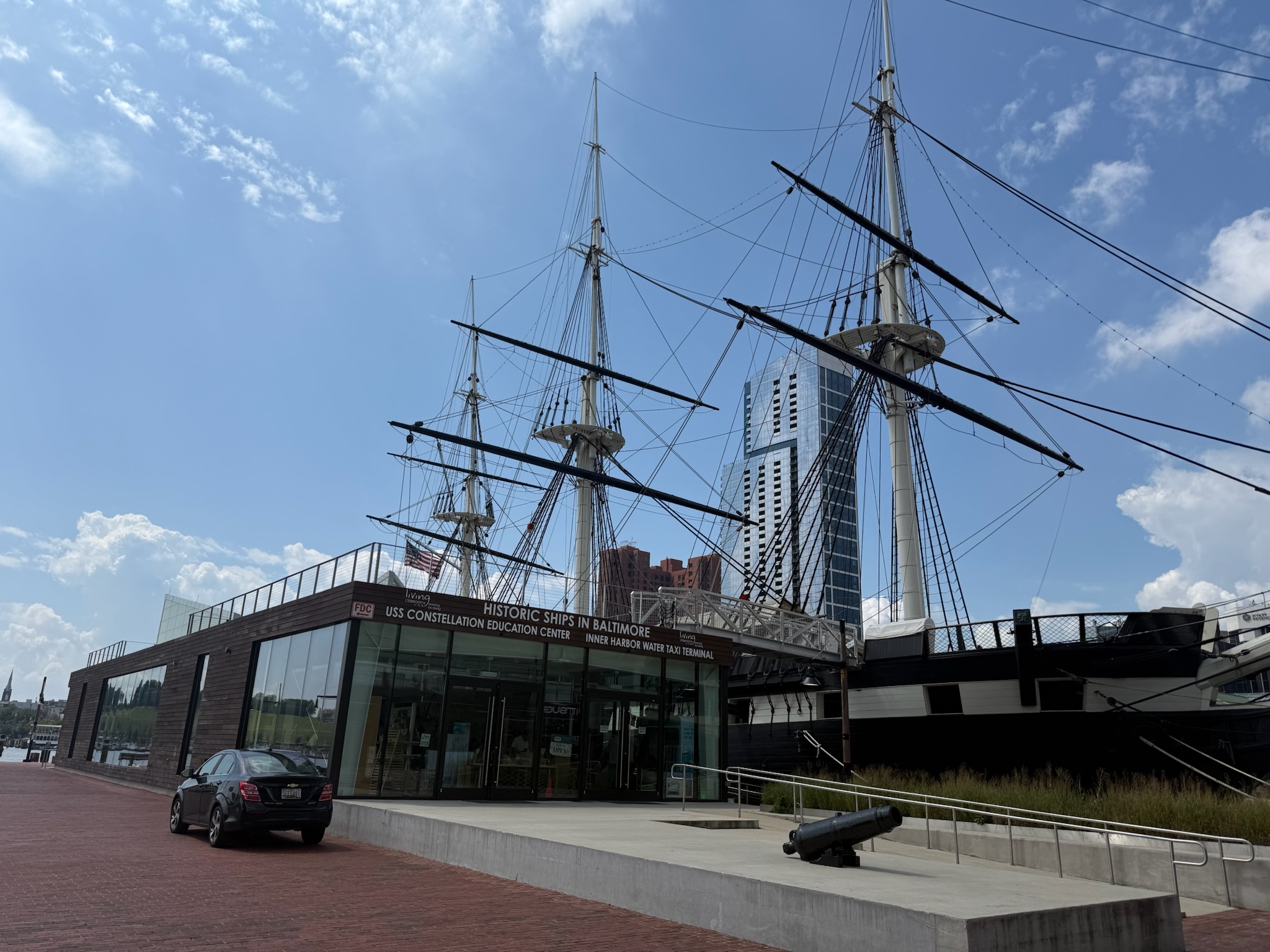
Here was the view of her from the other side.
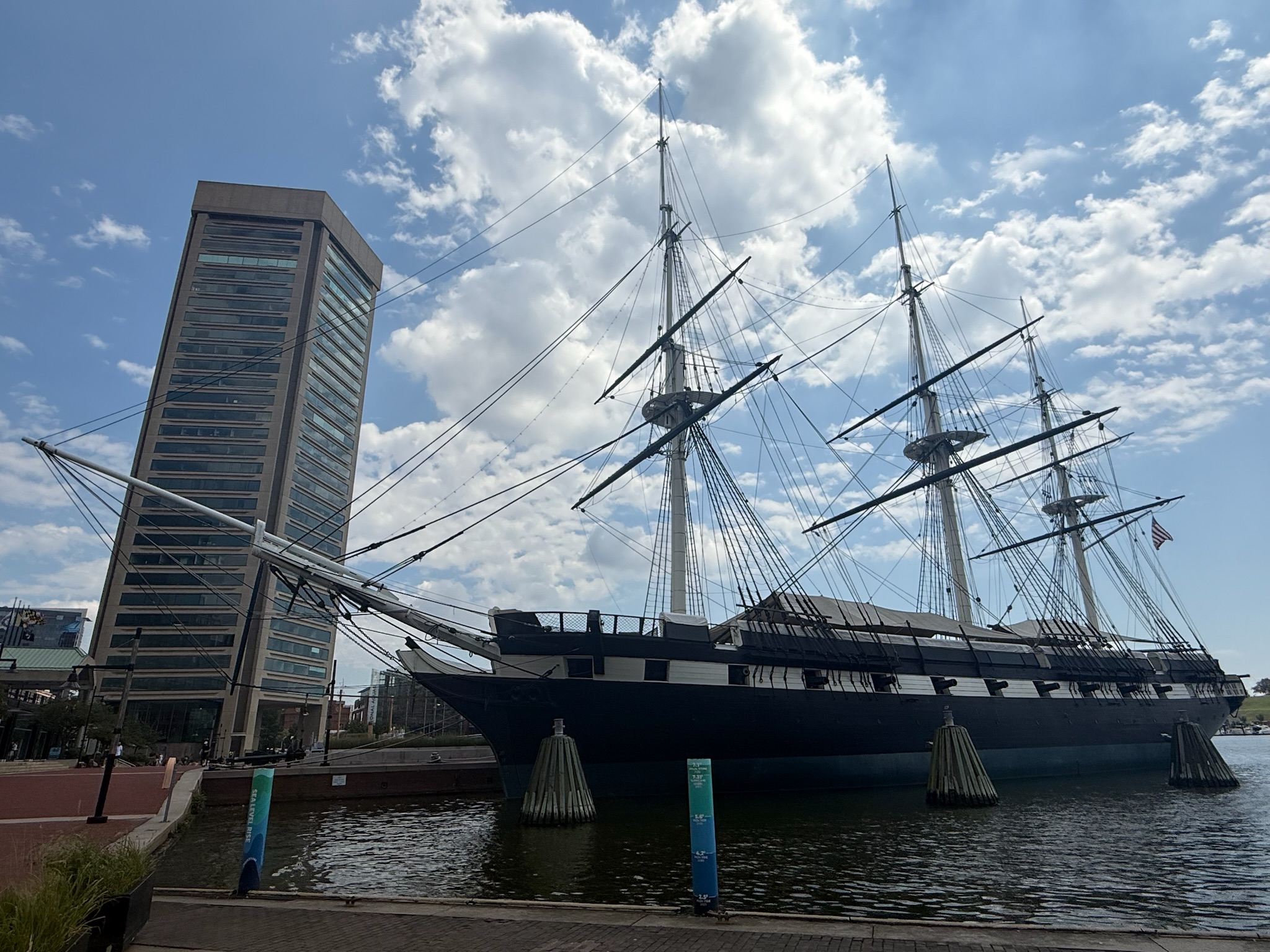
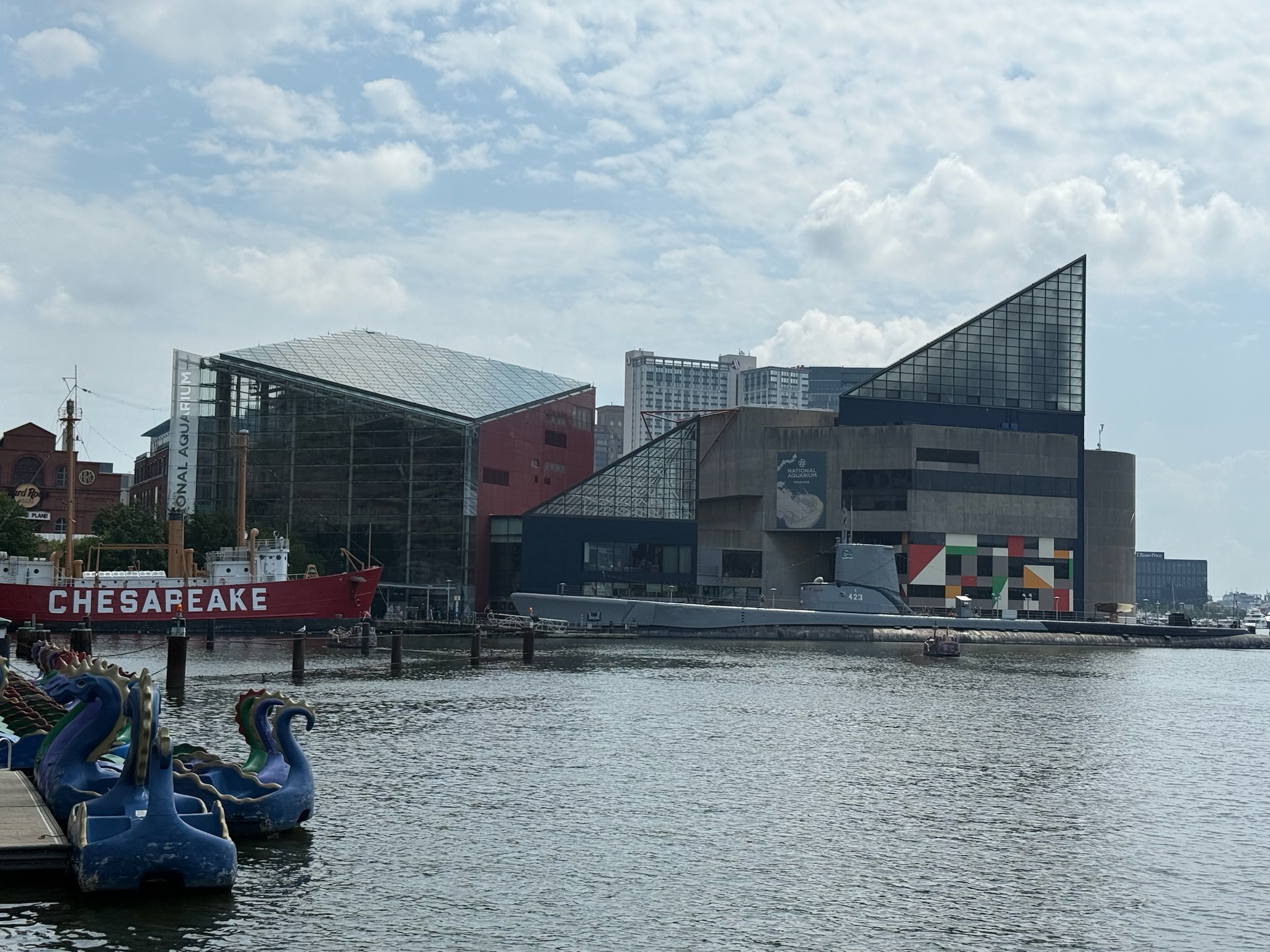
From the USS Constellation, there was a nice view of the Aquarium, the Chesapeake and the Torsk.
The building was a small museum. The USS Constellation was a 186 foot, 22-gun Sloop-of-War (which means her battery of guns was carried on one deck). She was launched in 1854 and commissioned in 1855, was the largest US sloop-of-war ever built (at the time) and was the last all-sail ship built for the navy; sadly, she was obsolete by the time she was completed. Despite that, she served in the Civil War and had a distinguished career as the flagship of the African Squadron — a group of ships that patrolled 3,000 miles of African coast looking for ships illegally carrying slaves — from 1859 – 1861. During that time, her crew captured 14 slave ships, liberating almost 4,000 Africans who had been en route to a slave destination. She is the only ship to actively serve in the Civil War that was still floating!