Saturday, August 16 — When we’d looked at tourist attractions in Baltimore, the one we wanted to see the most was the Phoenix Shot Tower. Per what we read online, instead of using molds, molten lead was dropped from a platform at the top of the tower, through a sieve-like device, into a vat of cold water at the bottom of the tower to produce “drop shot” for muskets. It sounded like the “tours” were just poking one’s head inside to see how the mechanism worked. The sites we looked at all said it was only open on Saturdays and Sundays, but some said from 1000 – 1200 and others said 1200 – 1600. We decided that the best bet was to go at 1130. It was not open.
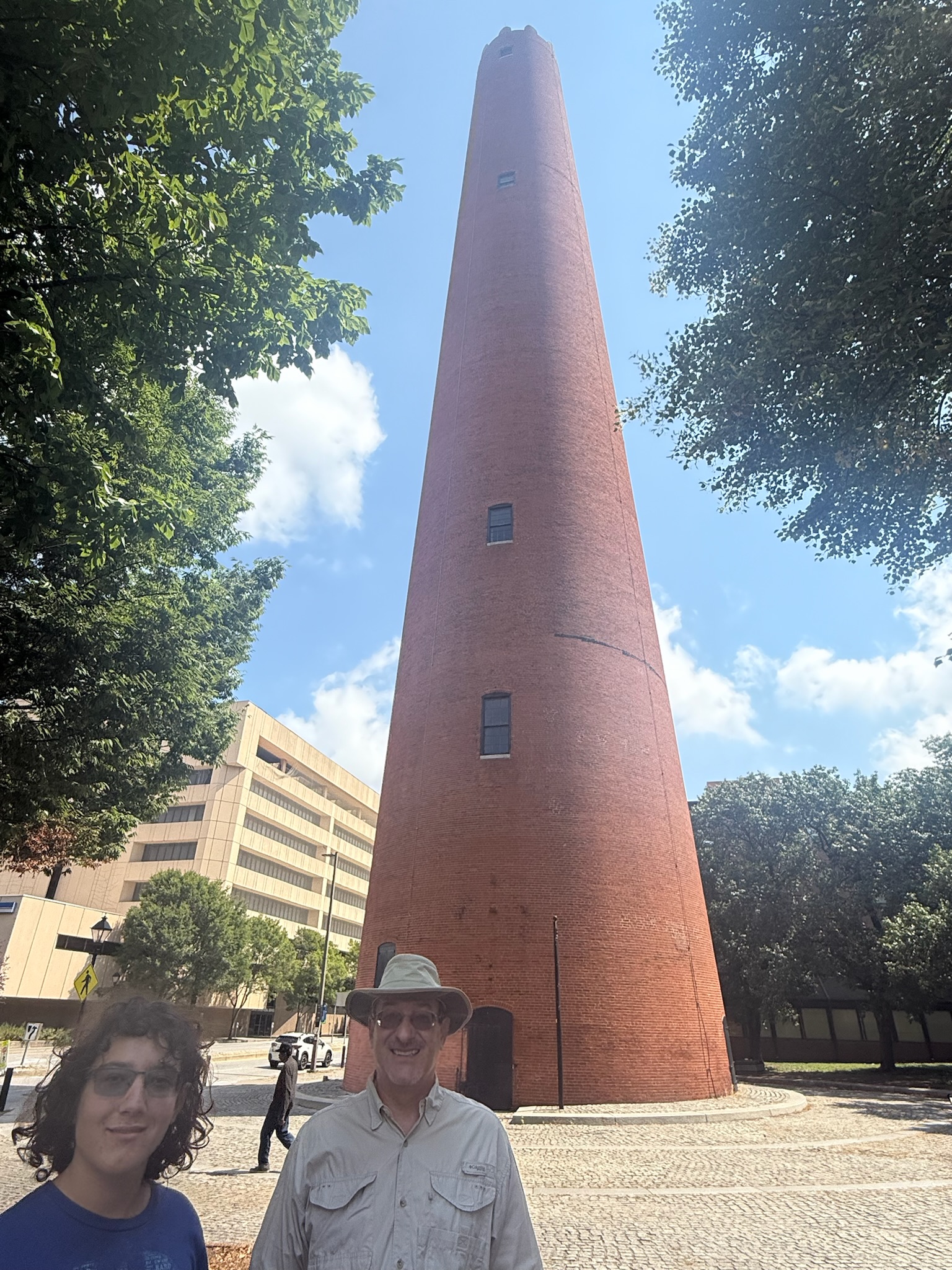
Our friends on Parabola that we’d met in the Bahamas, David and Hazel, were from Baltimore. They met us at the Shot Tower. The Shot Tower was surrounded by a park. In the park was another historical home, built in the 1790. It was now occupied by the Women’s Civic League and not open to the public.
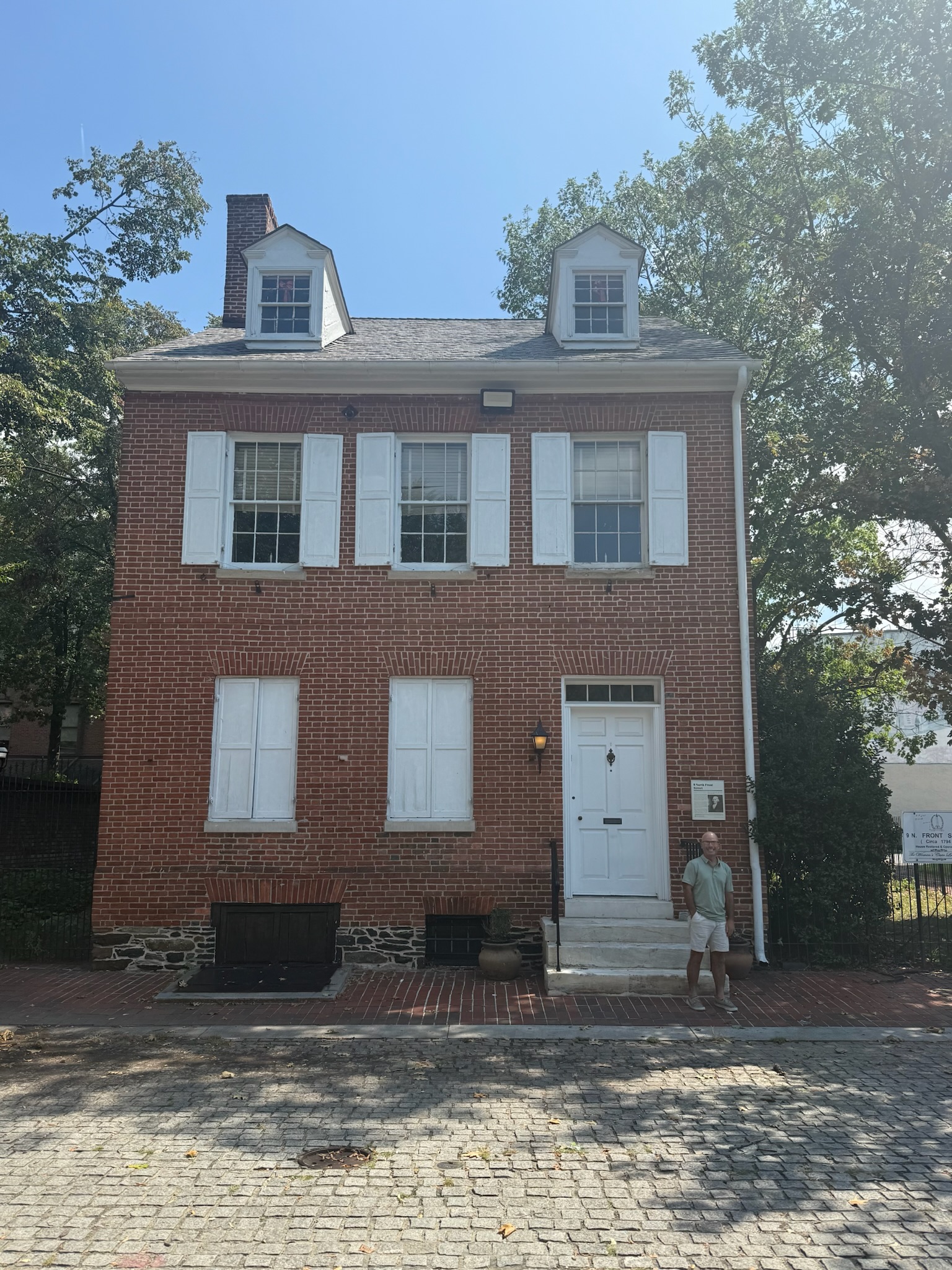
Since this park attracted some unsavory characters, David didn’t want to linger. He suggested that instead of waiting, we could make the short walk over to the Star Spangled Banner Flag Museum. Along the way, we passed the historical Carroll House, which was built in 1808 by Charles Carroll, one of the signers of the Declaration of Independence.
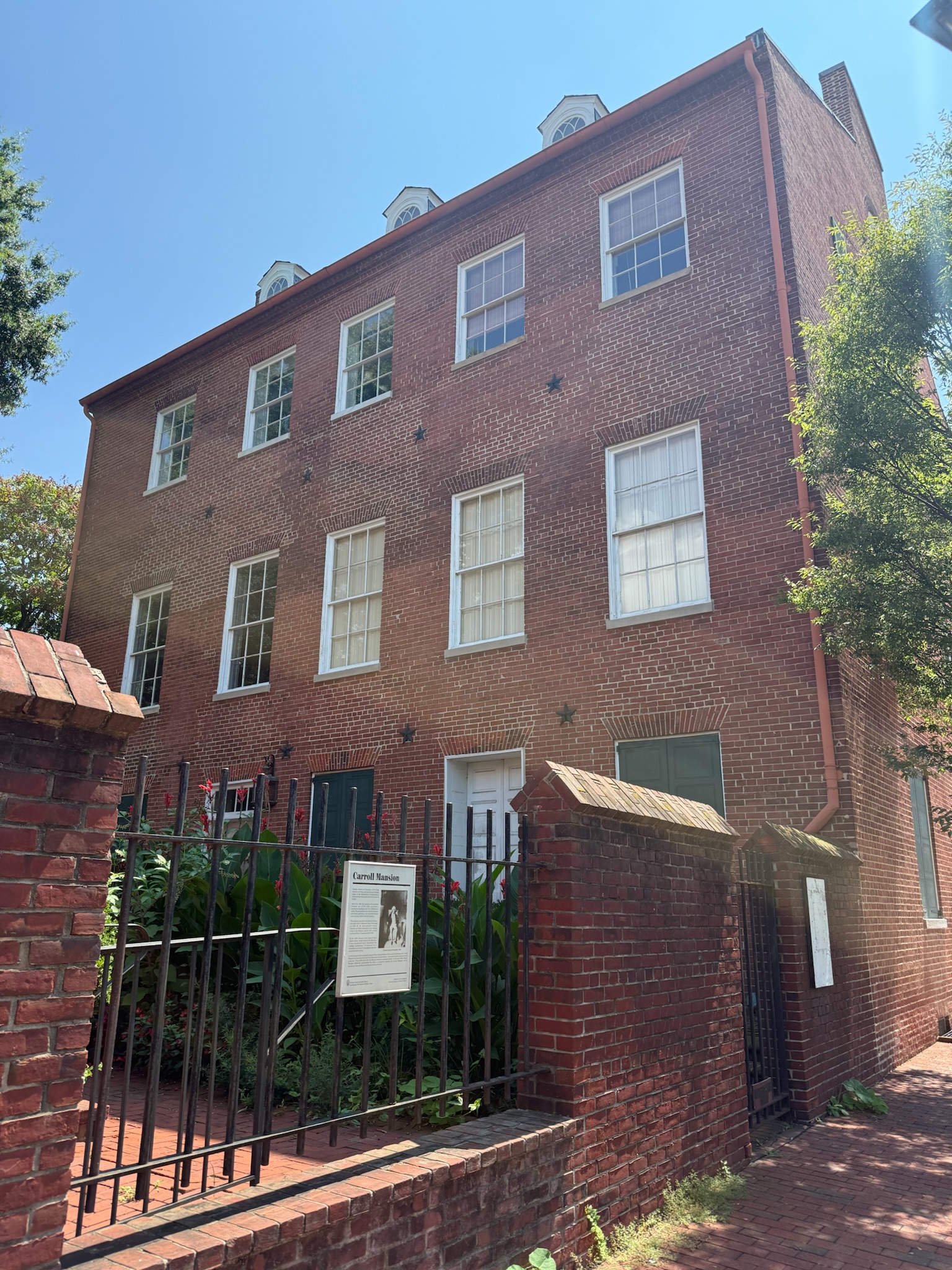
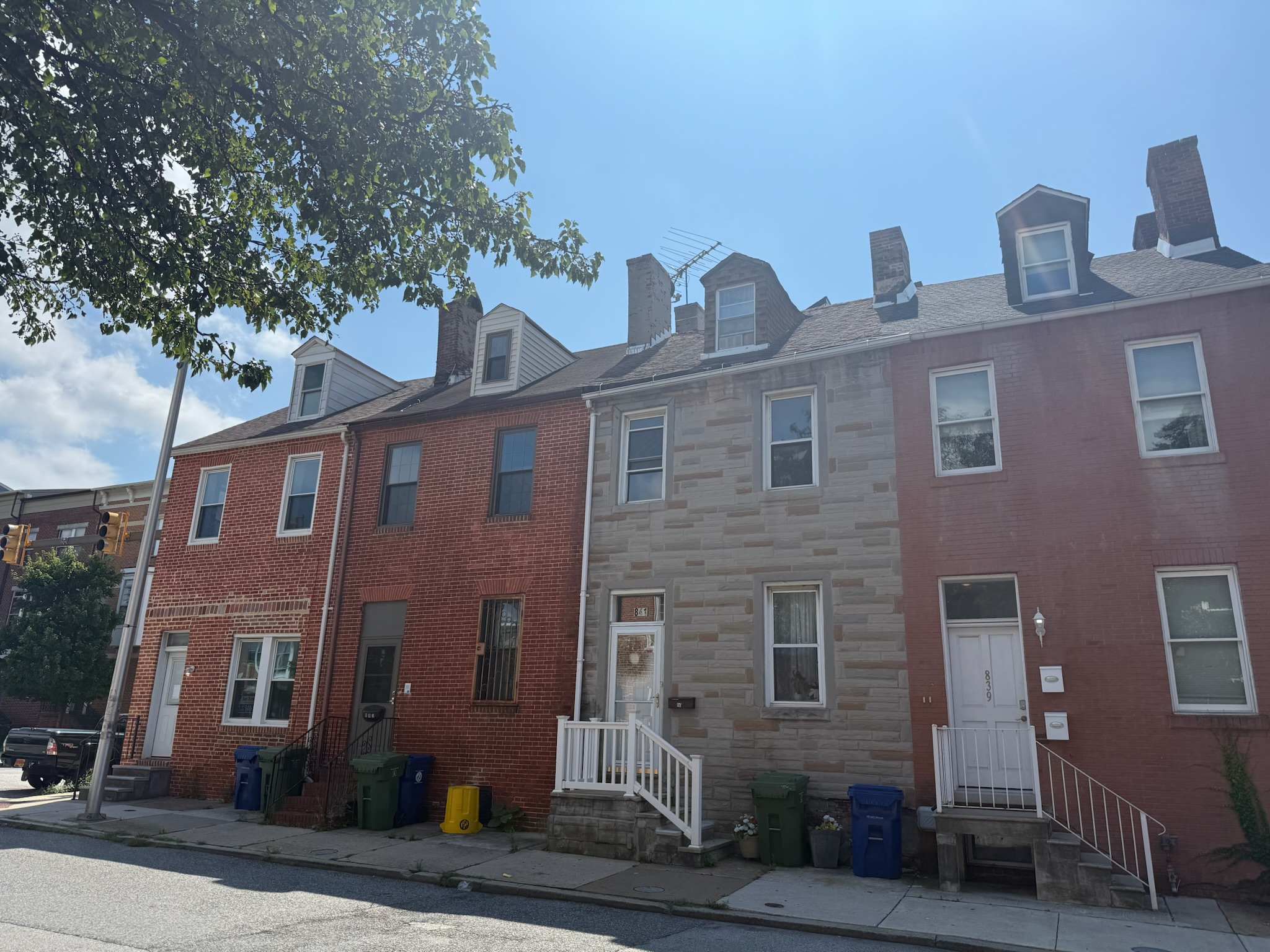
A sign in front of The Carroll House said that the daily 1000 tour included a visit to the Shot Tower. When we asked Keith about visiting the Carroll House so that we could see the Shot Tower, Keith said he’d already seen enough old houses. David said that the row homes that we passed along the way were some of the first homes built in the city.
The flag that inspired Francis Scott Key to write the Star Spangled Banner was enormous. It had been specially ordered in 1813 by the Major at Fort McHenry to ensure “the British will have no difficulty in seeing it from a distance.” The museum was about the creation of that flag.
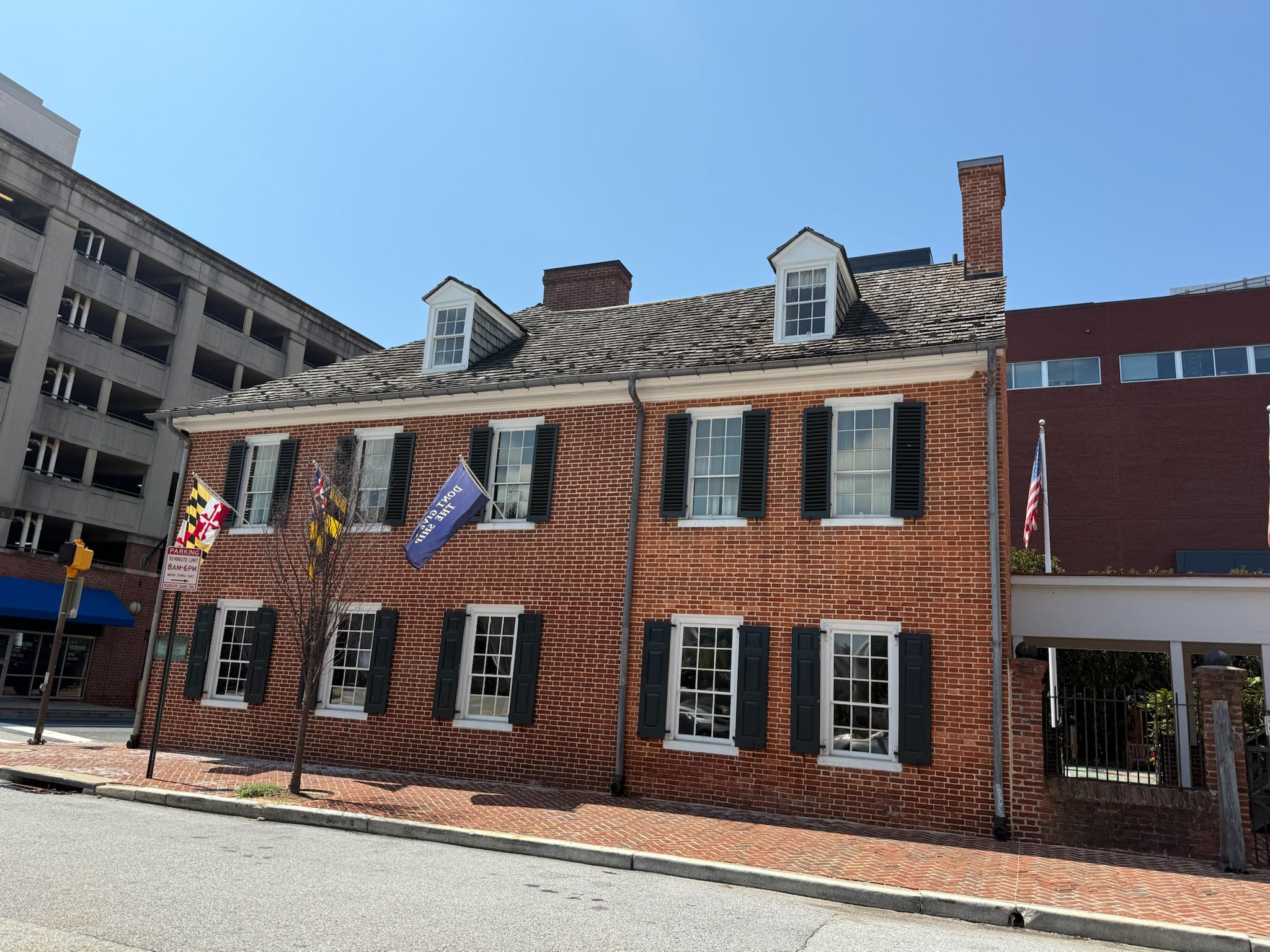
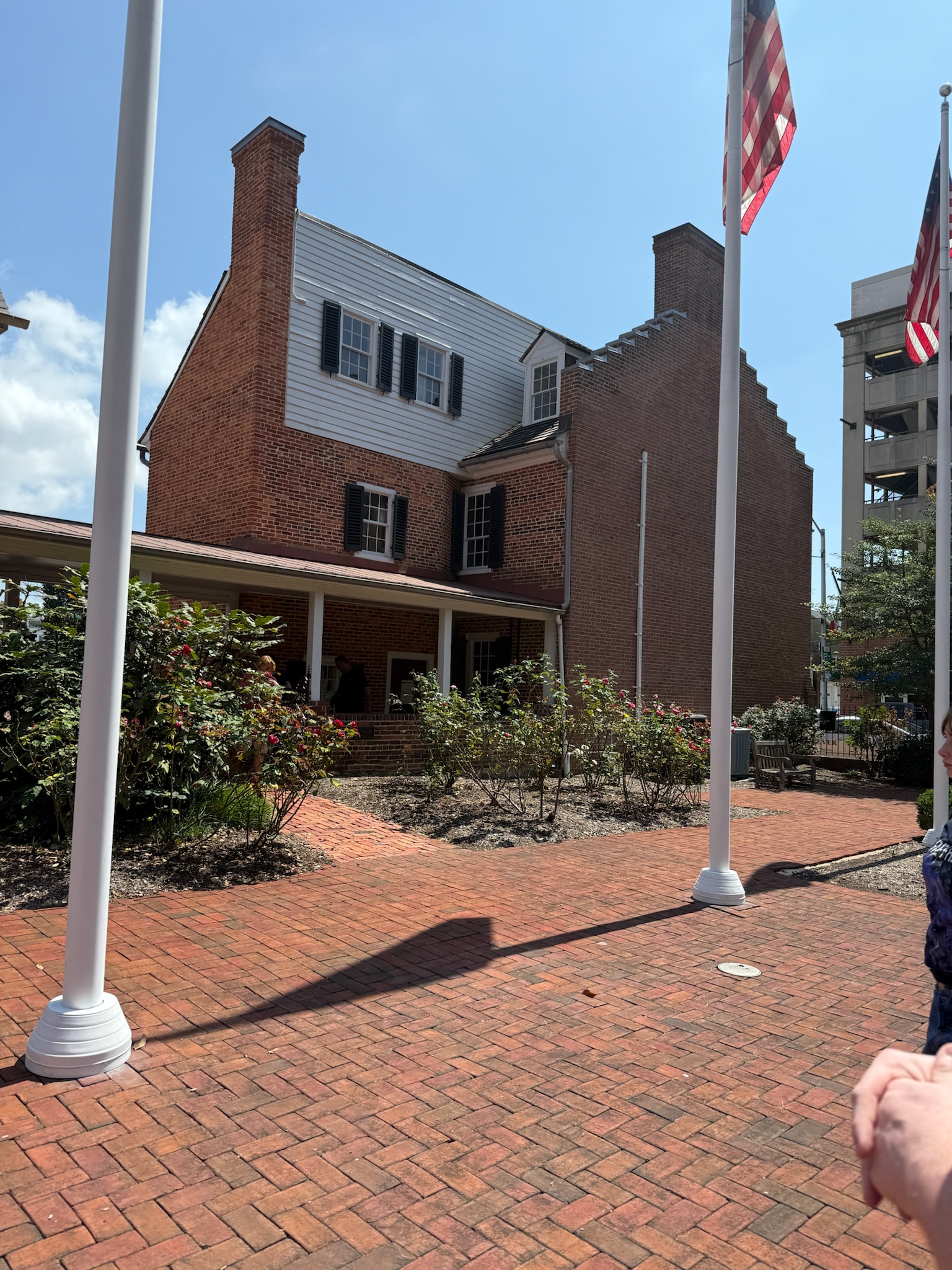
The museum was in three buildings. The brick one on the corner (above) had been the home of the seamstress who made the flag, Mary Pickersgill. The brick one behind it was the original visitor’s center and was currently closed. The two story building along the back of the property with the big flag was the current visitor’s center.
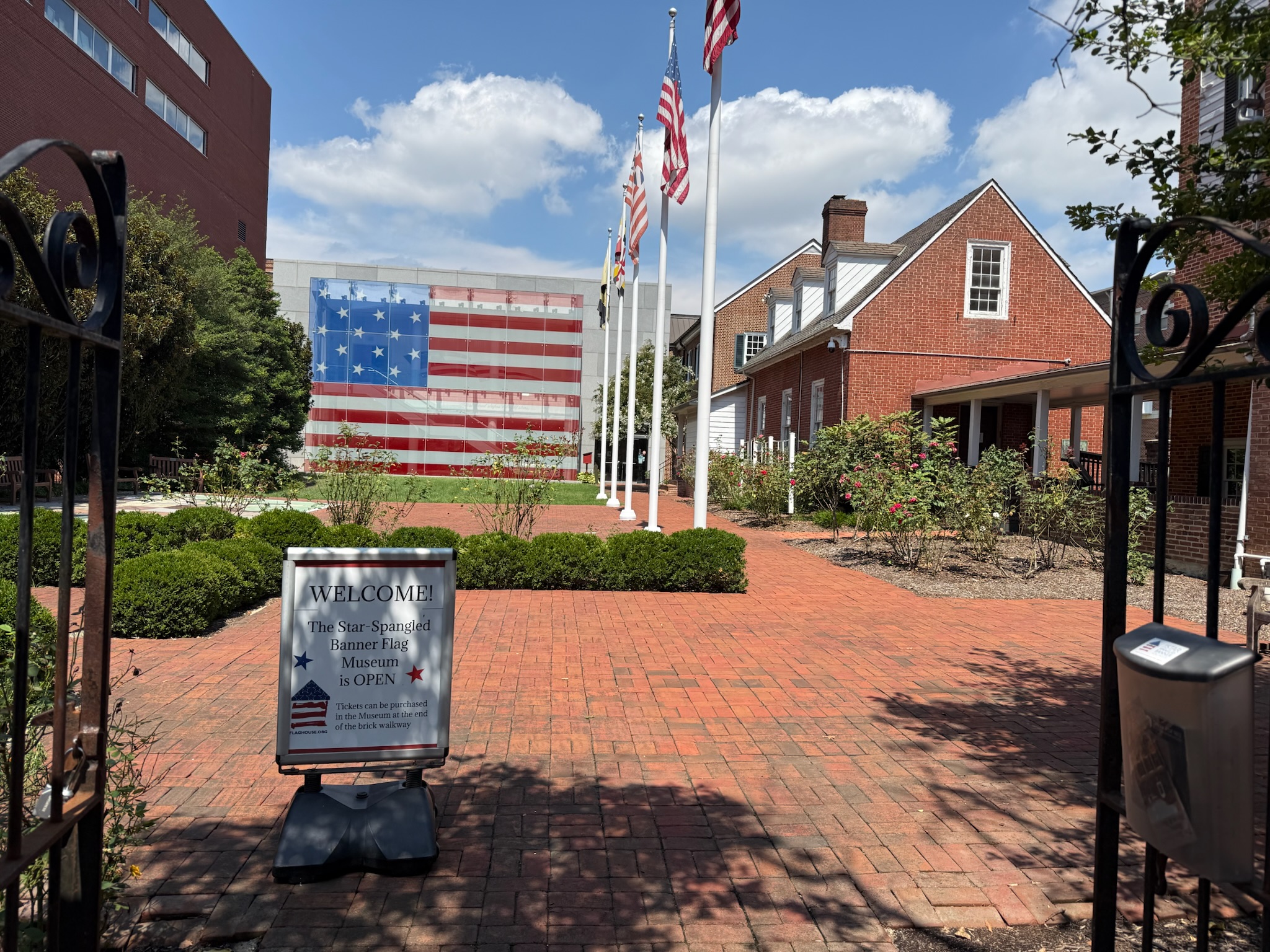
Tickets were $9 for adults and $7 for students. The tour started with a short video which gave the background on the War of 1812, essentially calling it a second Revolutionary War. We can’t remember now, but we think it gave details about the flag, too.
The museum was small, but interesting. Mary’s father had died in the Revolutionary War when she was a child. In order to support herself and her five children, Mary’s mother, Rebecca, began supplying the military with assorted goods, including flags, musket balls, shirts, candles, etc. Mary married John Pickersgill in 1795. They had four children, but three of them died in infancy. John died in 1805, when Mary was 29 and their remaining daughter, Caroline, was 5-years old. Rebecca leased the house on the corner so that Mary and Caroline could live with her. The women opened a flag making business in the front room of the house. Since every ship needed flags and Baltimore was a shipping hub, their business did well. It sounds like Mary eventually bought the house. In 1810, three of Mary’s nieces (Rebecca’s grandchildren) moved in with them. They also had a young black indentured servant living with them that they were training (she was 13 when they’d made the flag). It sounds like at some point before the War of 1812 began, Rebecca’s health began failing and Mary took over as sole proprietor. Rebecca died in 1819. It didn’t say when Mary died, but there was a photo of her at 75, so she had a long life.
Around July 7, 1813, Major Amistad had ordered two flags: the large 30-foot by 42-foot American flag and a 17-foot by 25-foot storm flag, both of “first quality bunting.” He gave Mary a deadline of six-weeks to complete, which was amazingly short deadline given the amount of work involved. She charged $405.90 for the large flag and $168.54 for the storm flag, so the total bill for both flags was $574.44. The sign said that would be equivalent to $8,500 today, but we have no idea how old that sign was. Per the US inflation calculator, it would be more like $20,000 in 2025 money.
Bunting was a type of English manufactured worsted wool. The bunting came in 18-inch wide bolts. However, the stripes were to be 24-inches wide. They got into detail on the cutting and sewing techniques, and let’s just say it took a lot of work to make the wider strips. And this was before sewing machines, so it was all sewn by hand. While the stripes and blue corner were made of bunting, the stars were made of cotton, which was more expensive at that time (the cotton gin hadn’t been invented yet). The stars were also each 24-inches from tip to tip. We remember them saying some of the cloth she had made by hand, but it wasn’t clear exactly what that meant — did she spin wool and/or cotton or did she dye already woven fabric? The flag was so big that she couldn’t spread it out in her home and had to assemble it on the floor of a nearby brewery. The final flag weighed 75-pounds.
In 1777, the 13-star, 13-stripe flag was adopted as the official flag of the new United States of America. In 1794, congress had changed the flag to be 15-stars and 15-stripes in order to reflect the addition of Kentucky and Vermont into the Union (in 1818, congress decided to change the flag back to 13-stripes and have one star for each state). We remember something about how back then the stars were offset and nowadays they are straight, and we can’t remember if we learned that in the introductory movie here or at Ft. McHenry.
In addition to information about Mary, there was also information about a couple of her neighbors who were important in history, Charles Carroll and privateer Thomas Boyle. It also tracked the various places the giant flag has been displayed over the years. It is currently in the Smithsonian National Museum of American history.
After we finished looking at the exhibits in the visitor’s center, we went inside Mary’s home. The house was built in 1793. Caroline sold it in 1867, and over the next sixty years, it was used for a wide variety of purposes, so it was altered many times. In 1927, the City of Baltimore purchased the house and went to work on restoring its appearance to how it would have been in 1813. The city also bought the neighboring buildings and demolished them.
There was a phone number we could have called from our cell phones for a guided audio tour, but we didn’t bother. We quickly walked through the house.
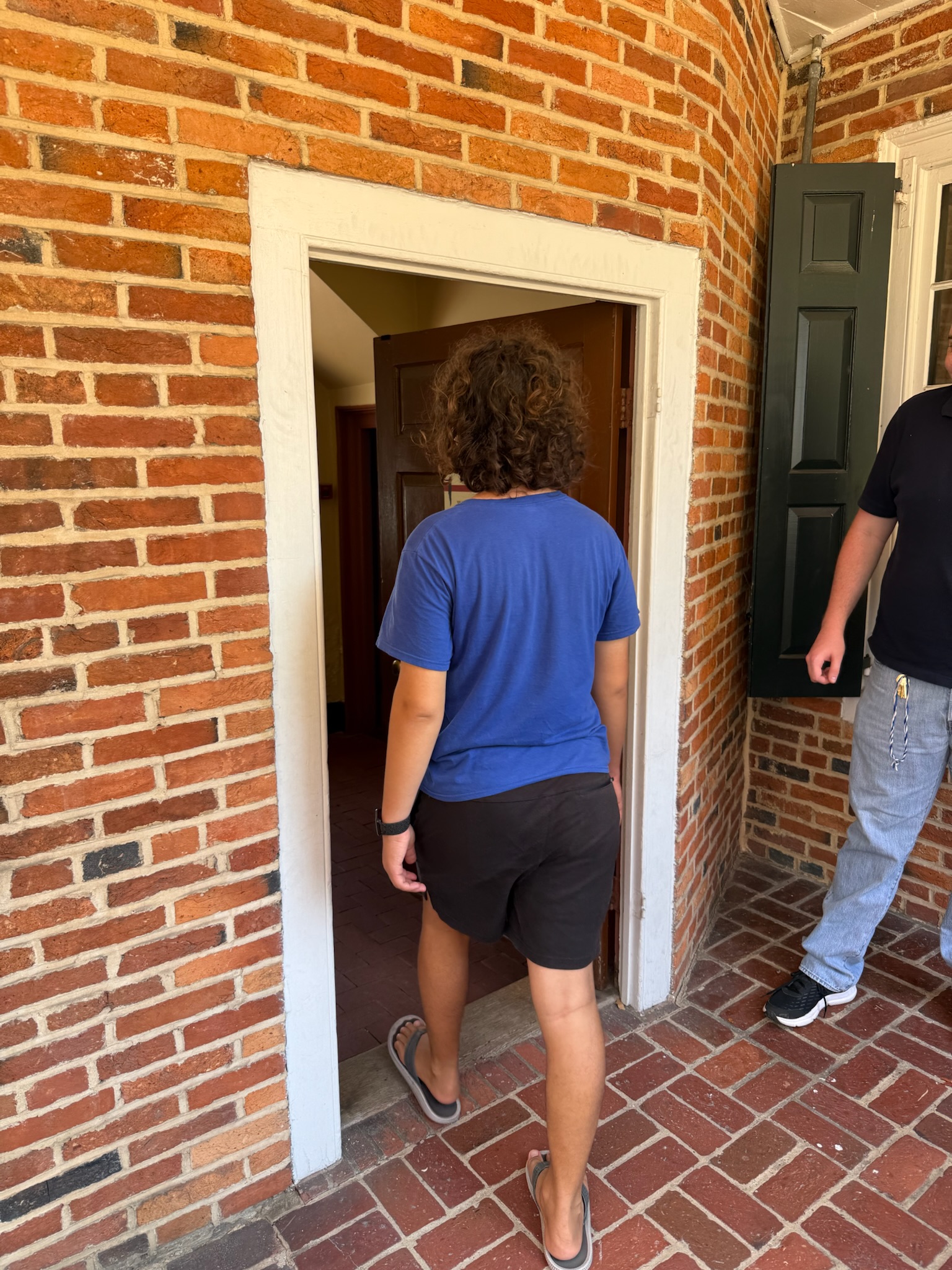
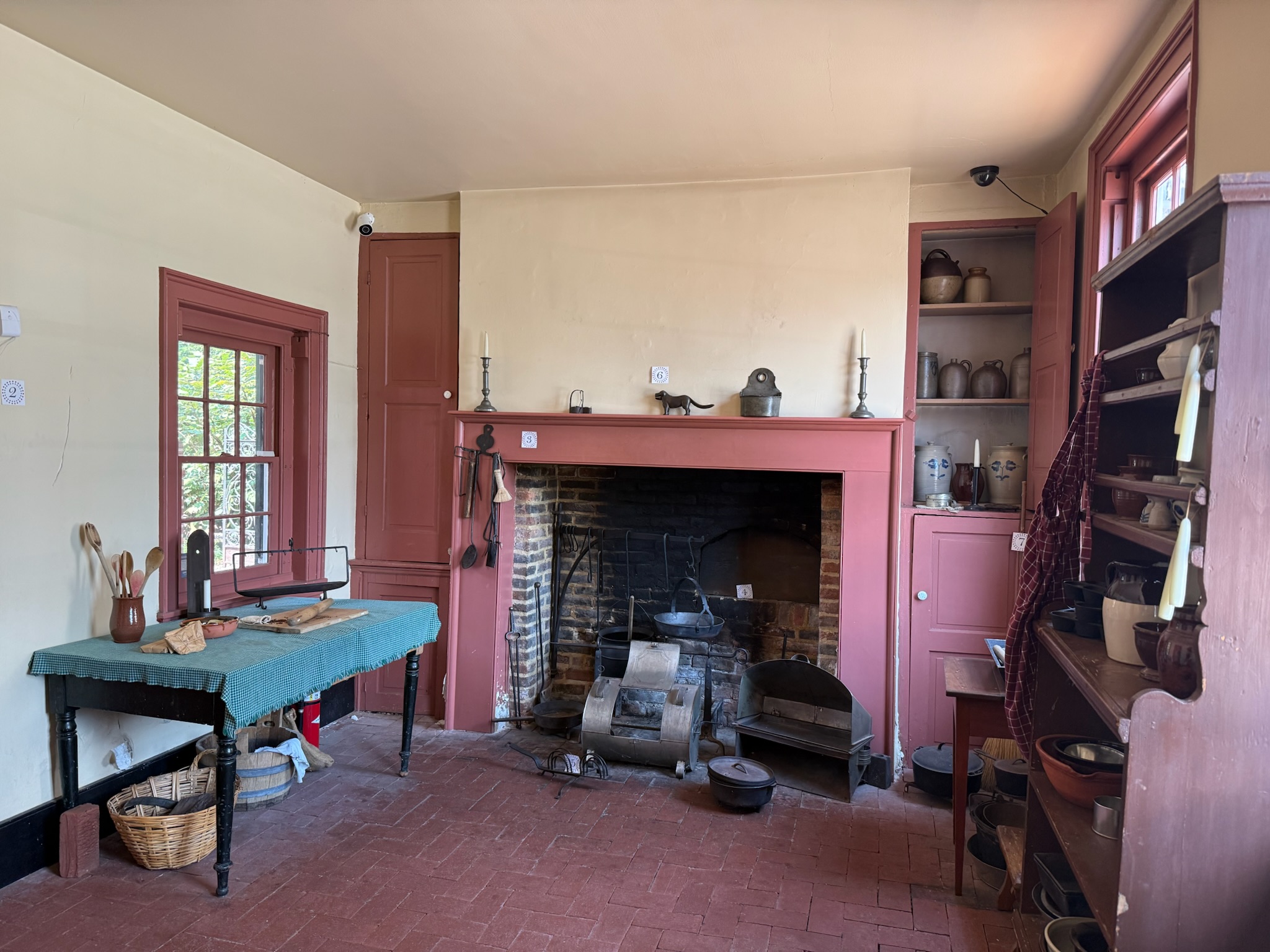
The back door led into the kitchen.
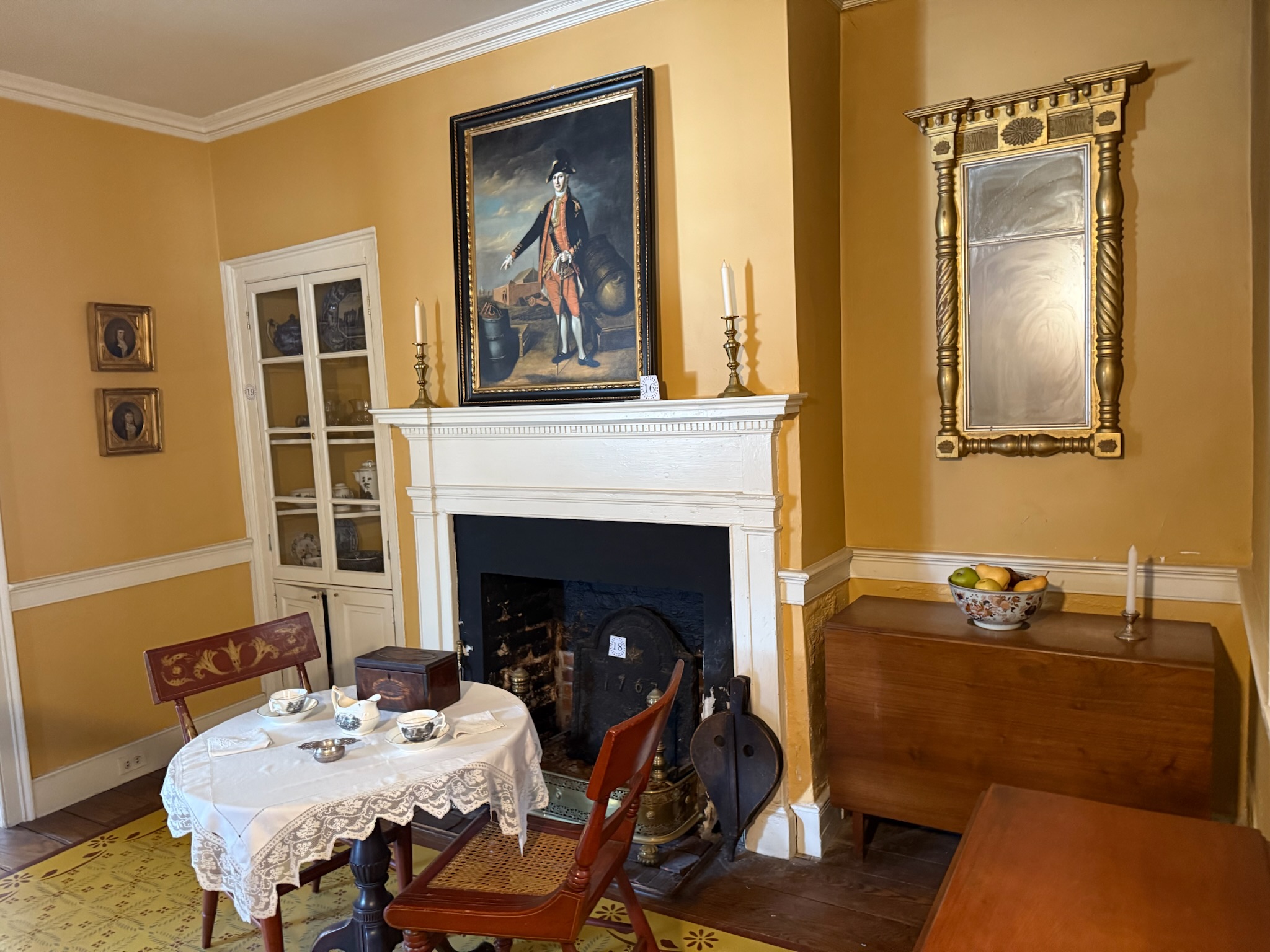
The room between the kitchen and shop looked like it was their entertaining area.
The front room of the house was their shop. The sign in the visitors center said it would have been filled with fabric samples for customers to look at.
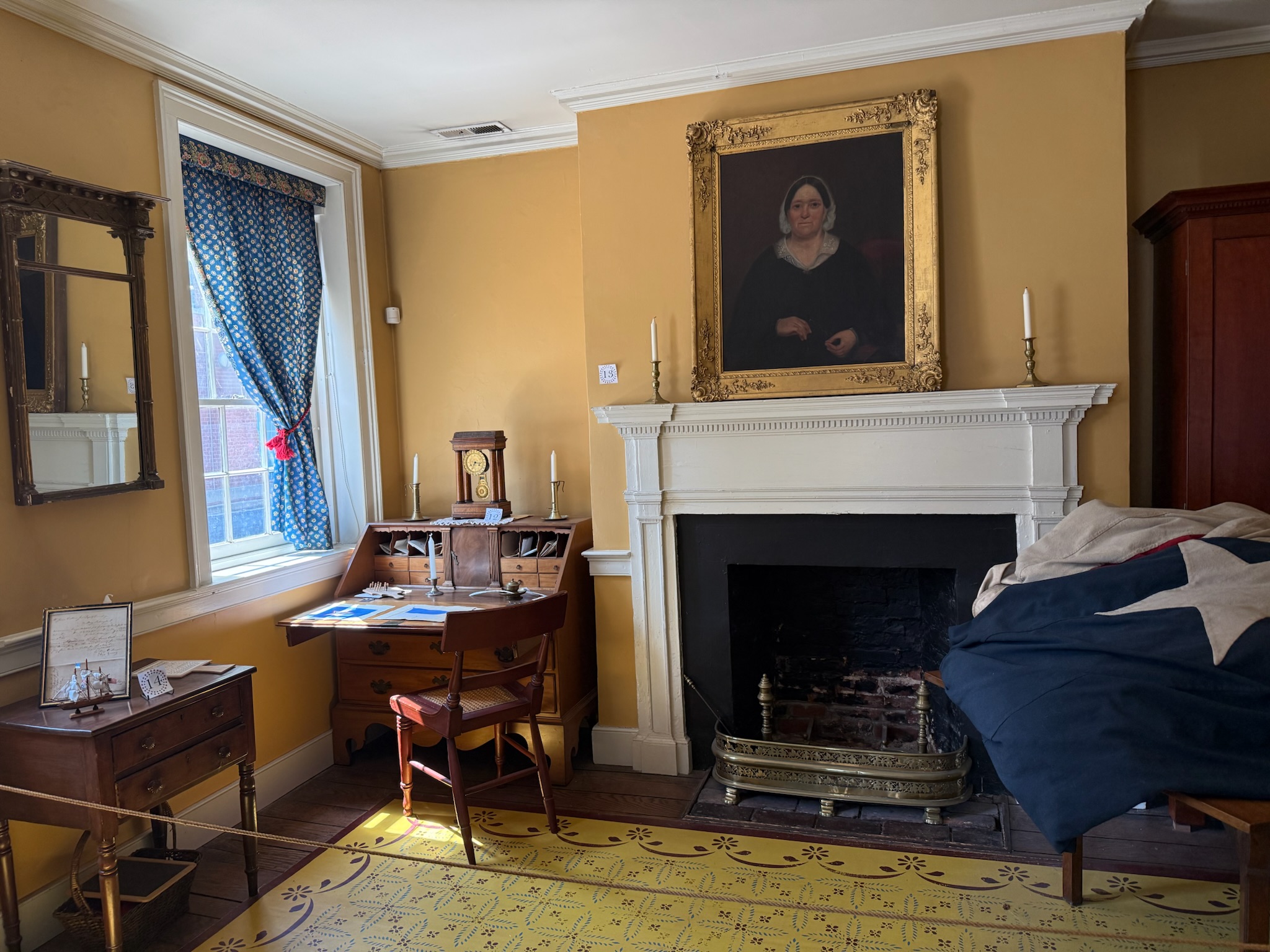
Upstairs were three bedrooms.
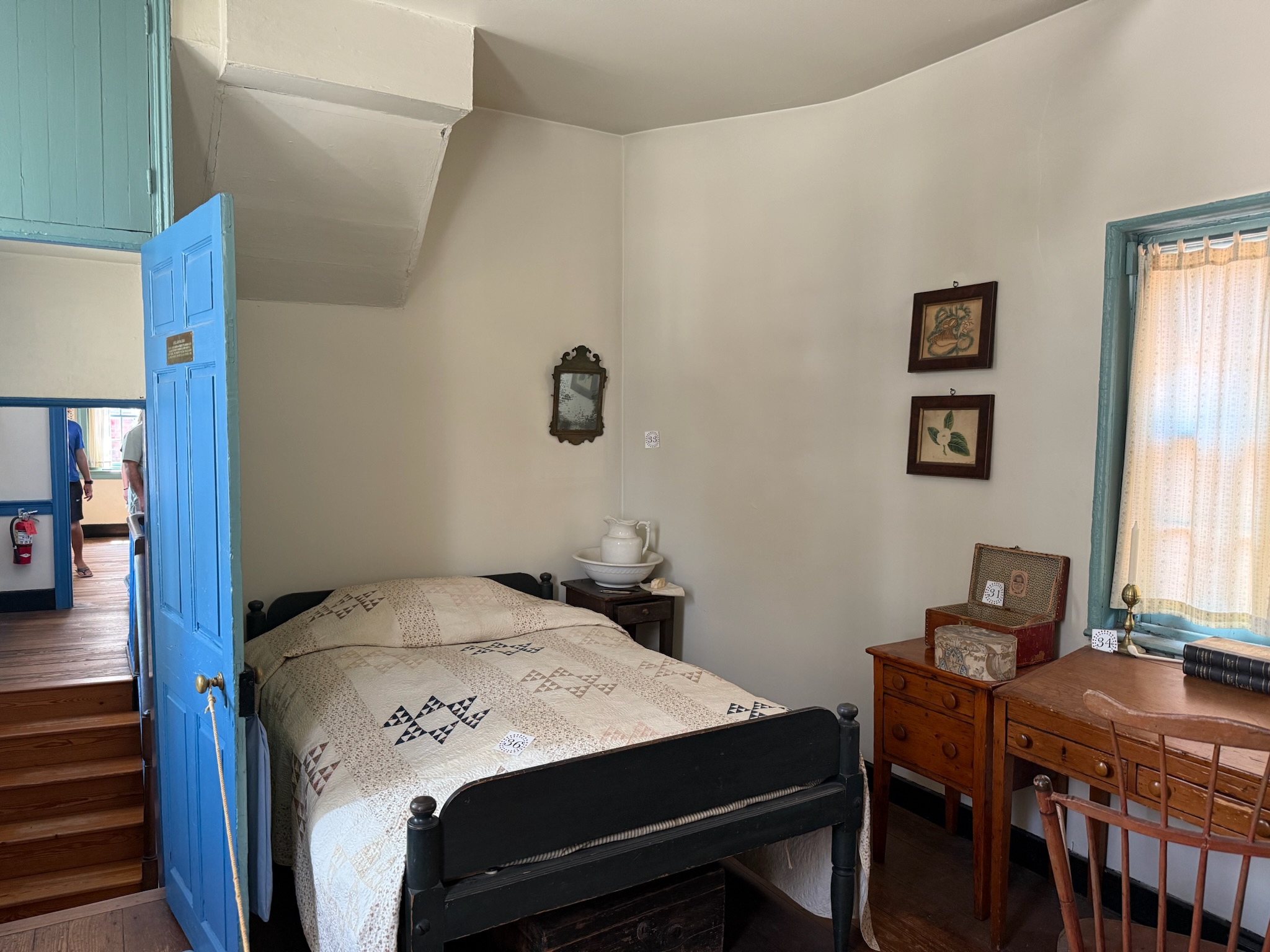
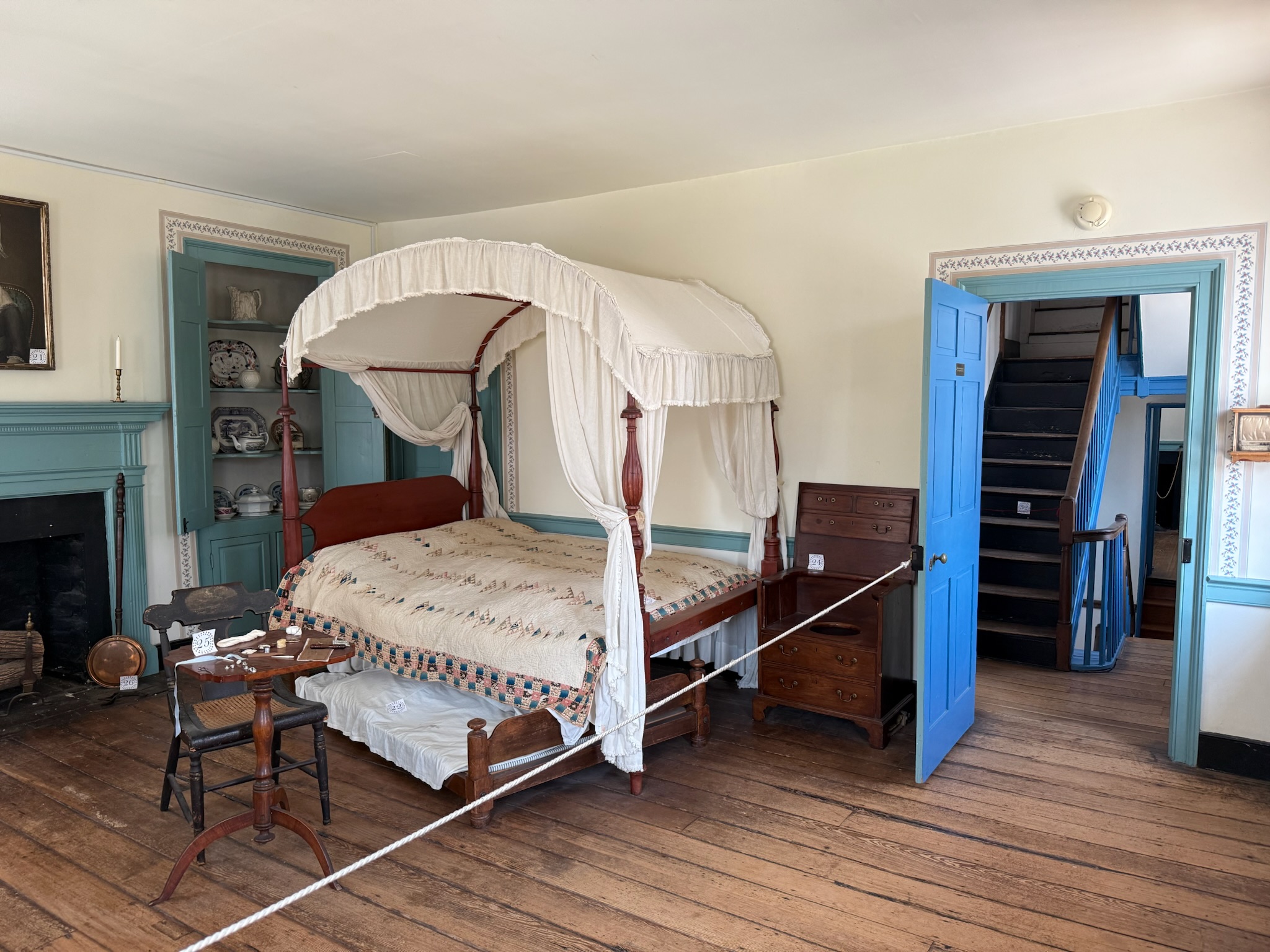
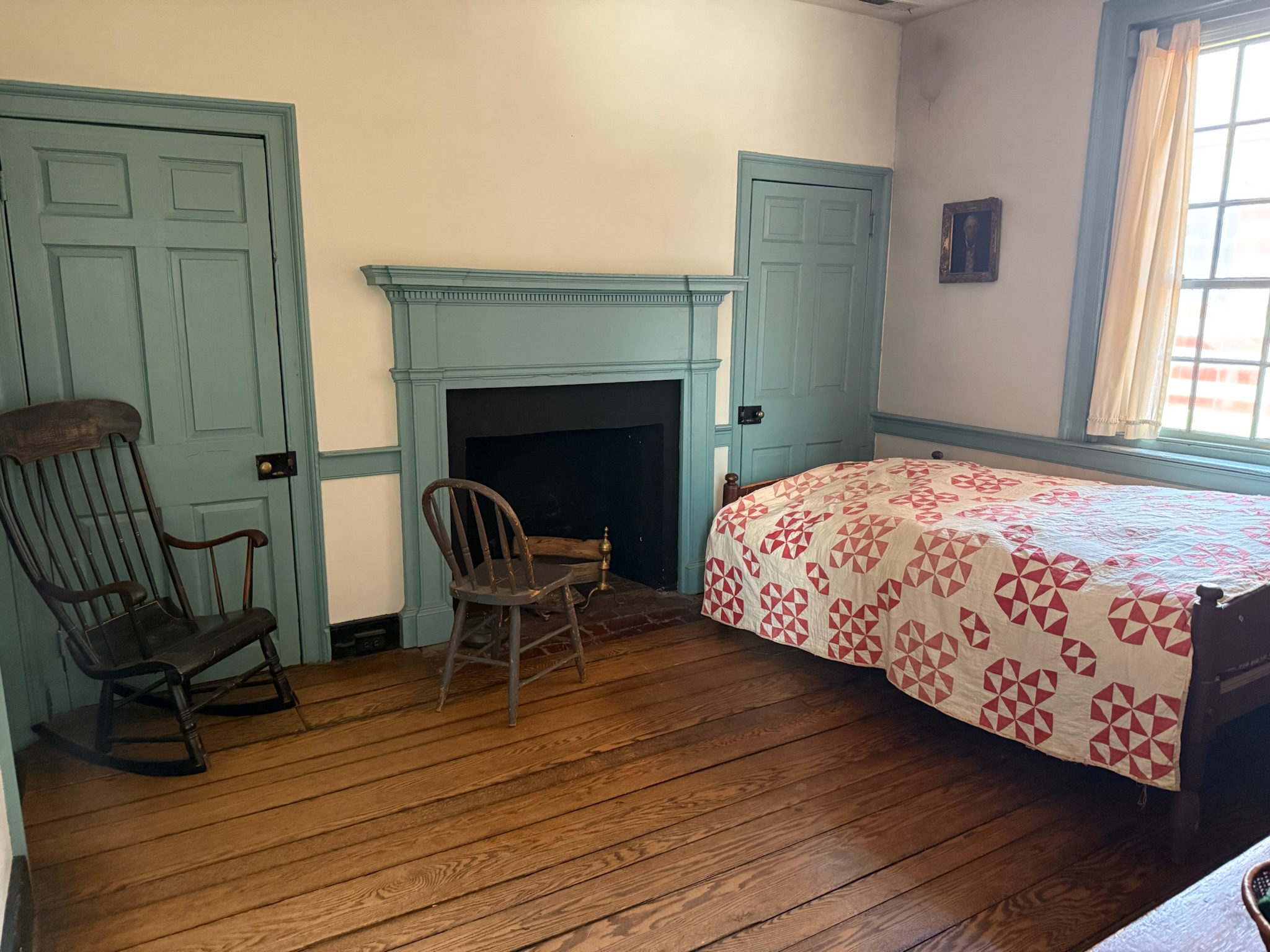
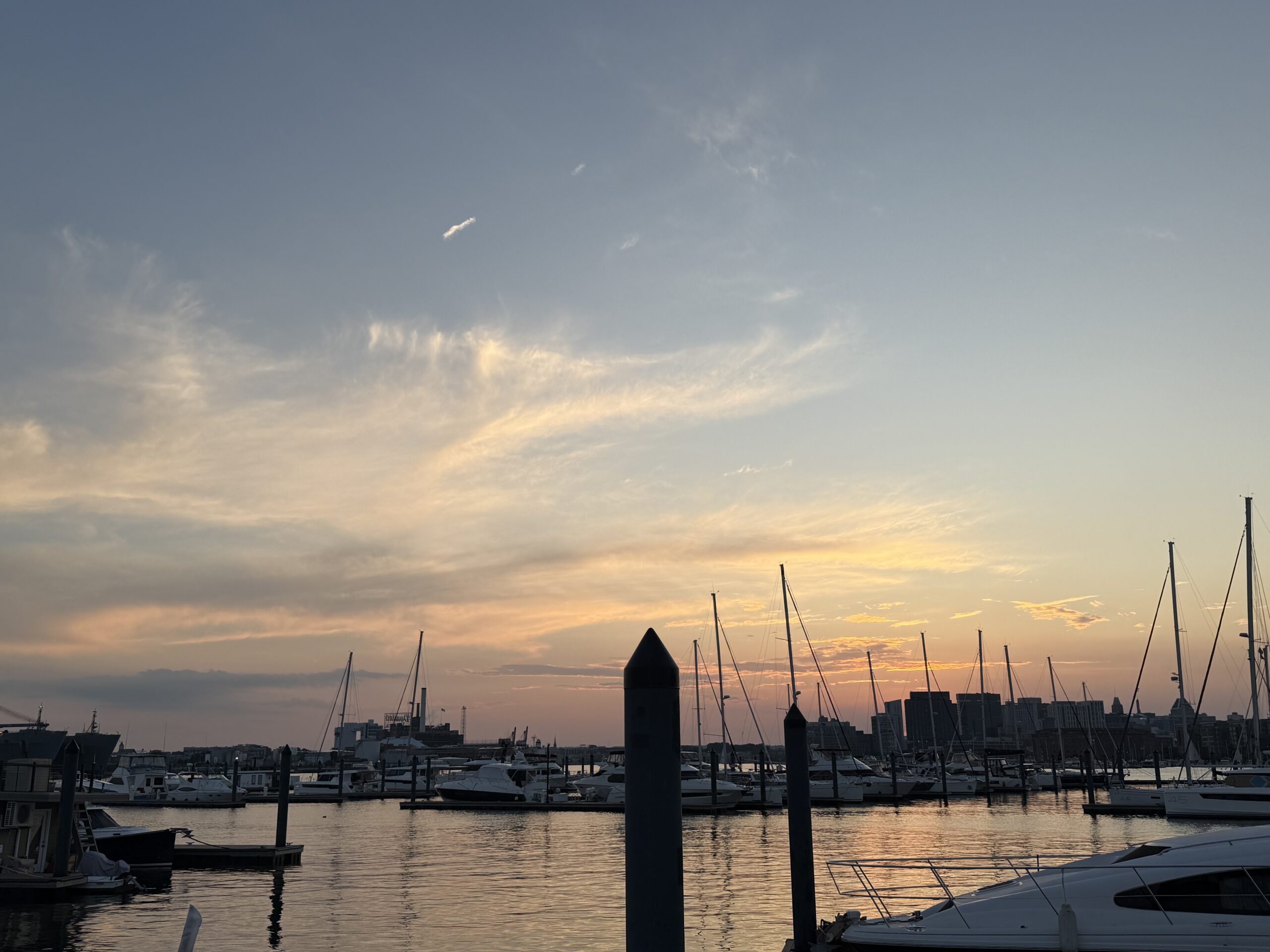
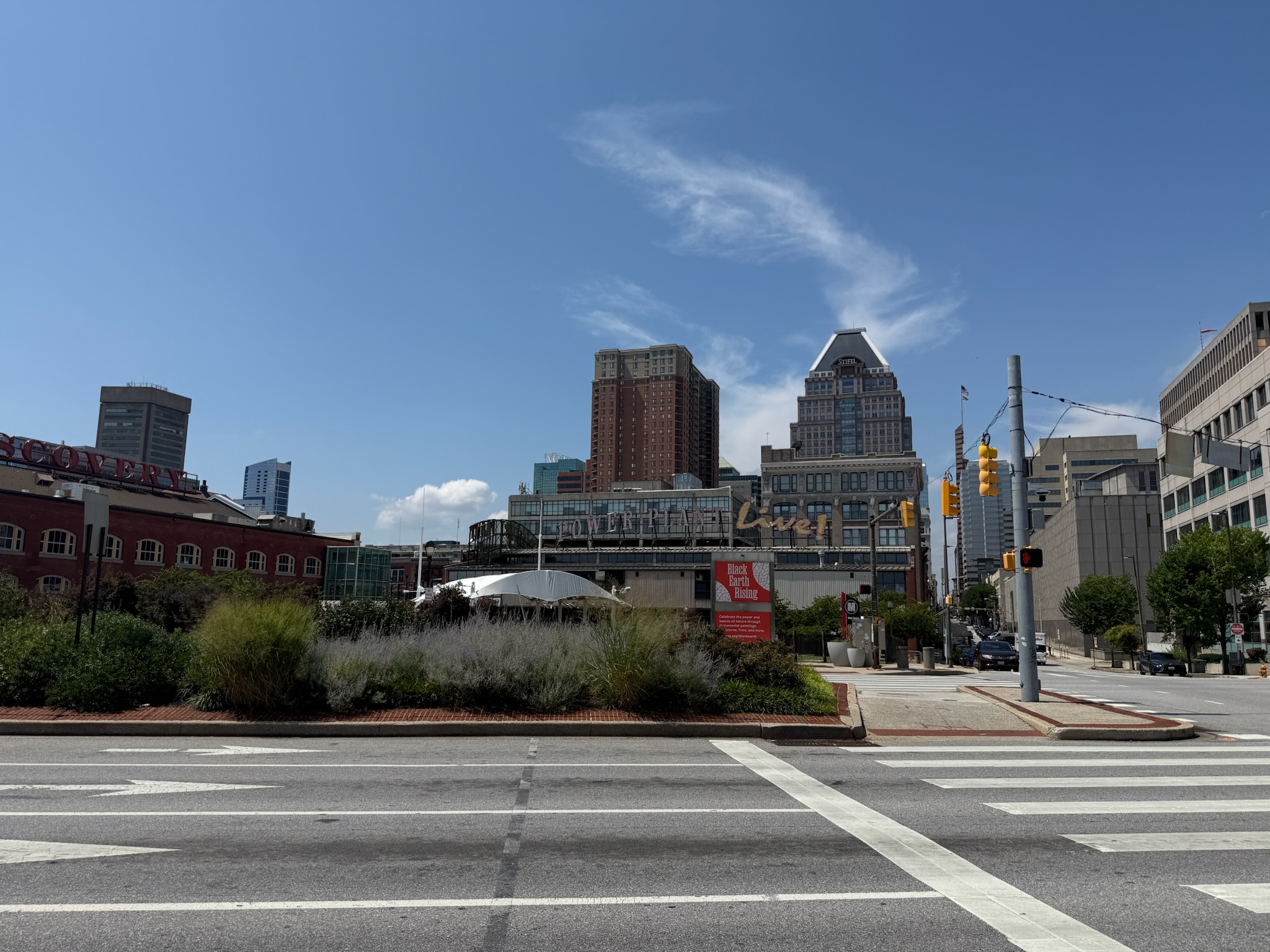
The top floor was closed, so we weren’t sure what was up there. After the museum, we went back to our cars. On the way, we made a quick pass by the Shot Tower, and it was still closed. This was the view of downtown from our parking spot.
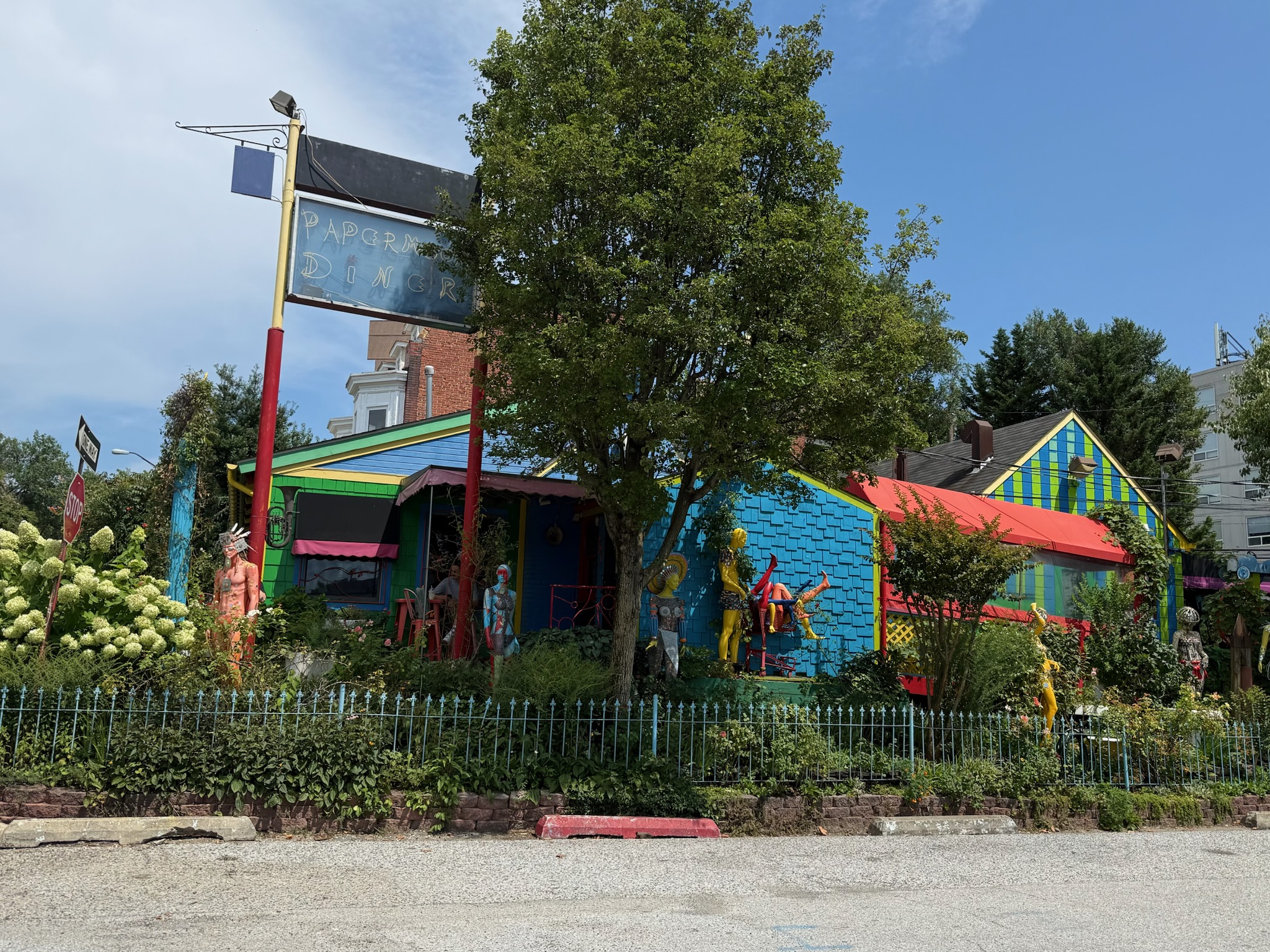
We drove to an iconic Baltimore restaurant called Paper Moon.
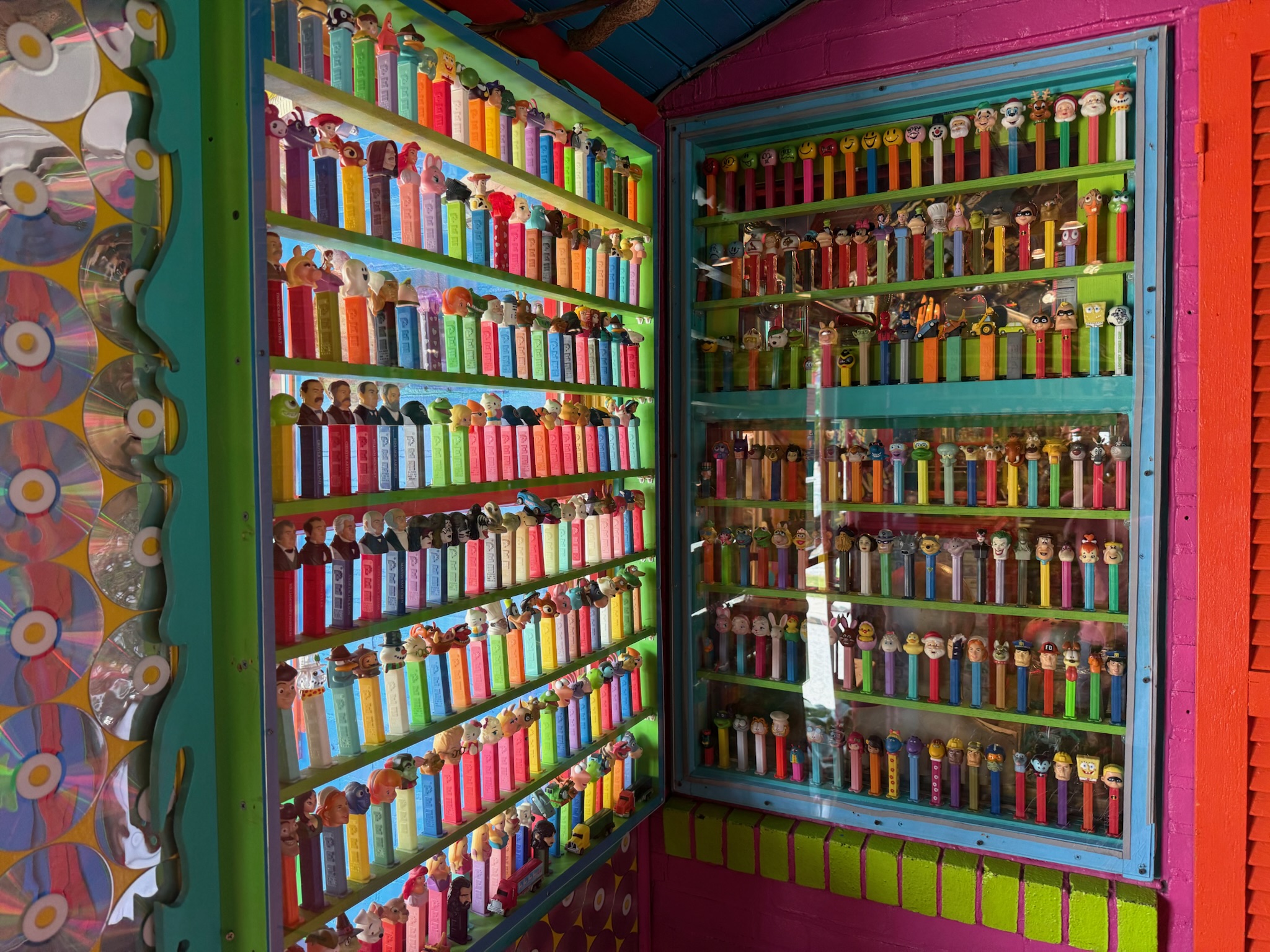
Almost every inch of the entire restaurant was covered in toys from yesteryear, including the ceilings.
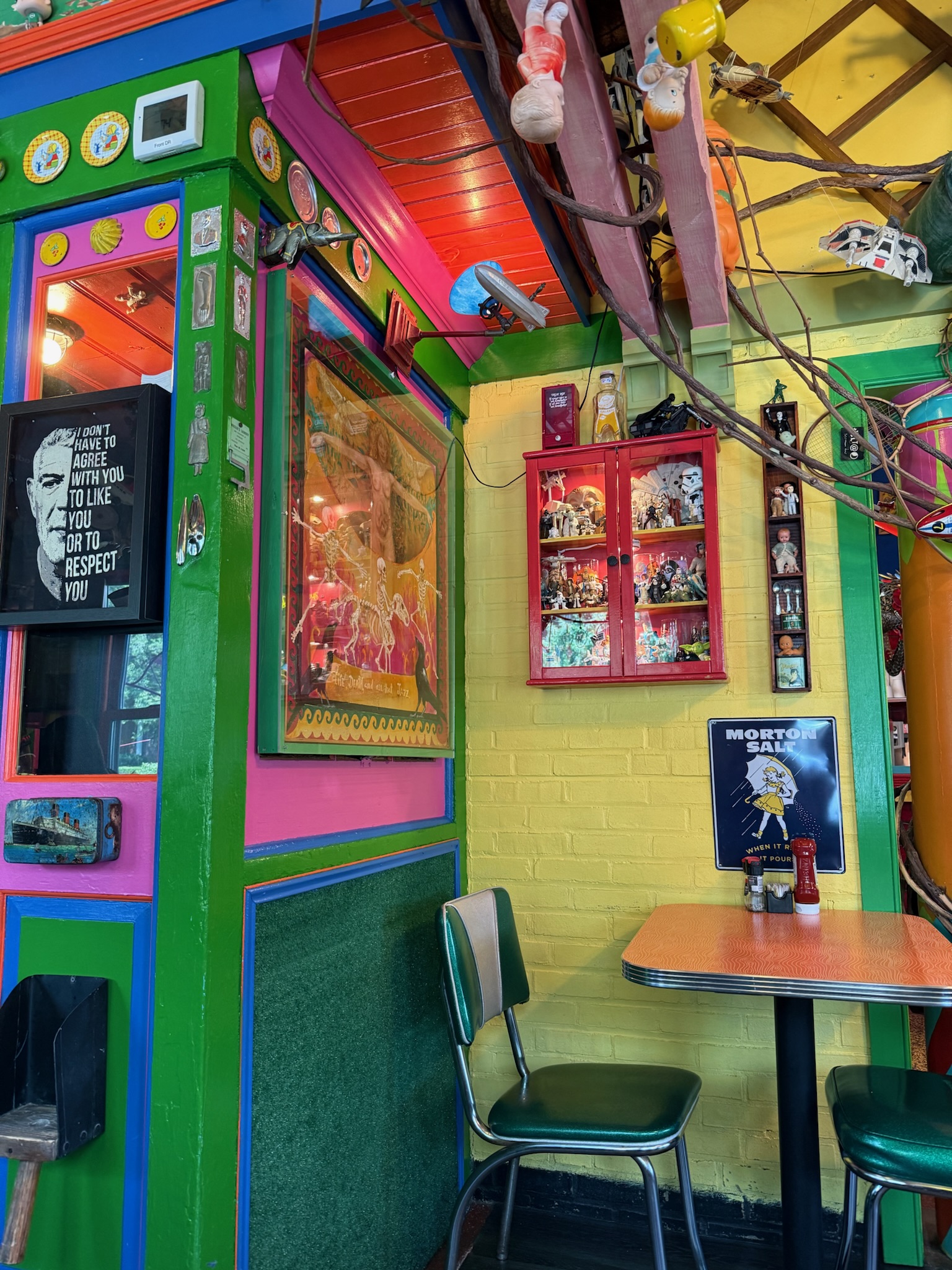
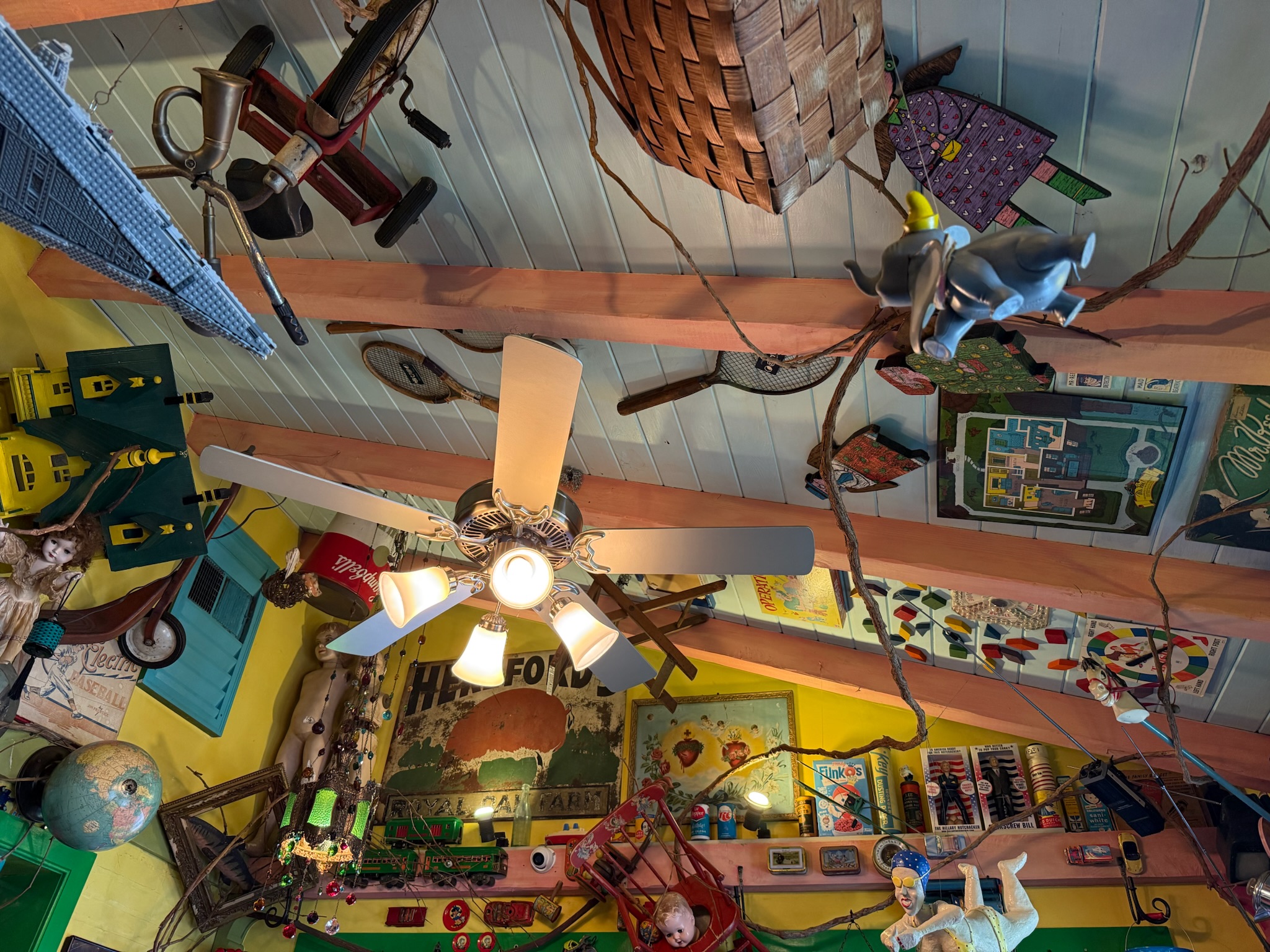
The menu was eclectic; a “something for everyone” kind of place. The food was great. After lunch, Dave and Hazel came over to Kosmos to play games. Instead of taking a direct route, Dave took us on a tour of the city. There were quite a few interesting neighborhoods that we had yet to explore. We had a nice afternoon with them.
Dusk