Tuesday, August 25 — We were heading back to San Diego soon, so we spent the morning and early afternoon doing chores and getting things ready to go. Keith also continued tightening screws around the boat. Eric ran the engines.
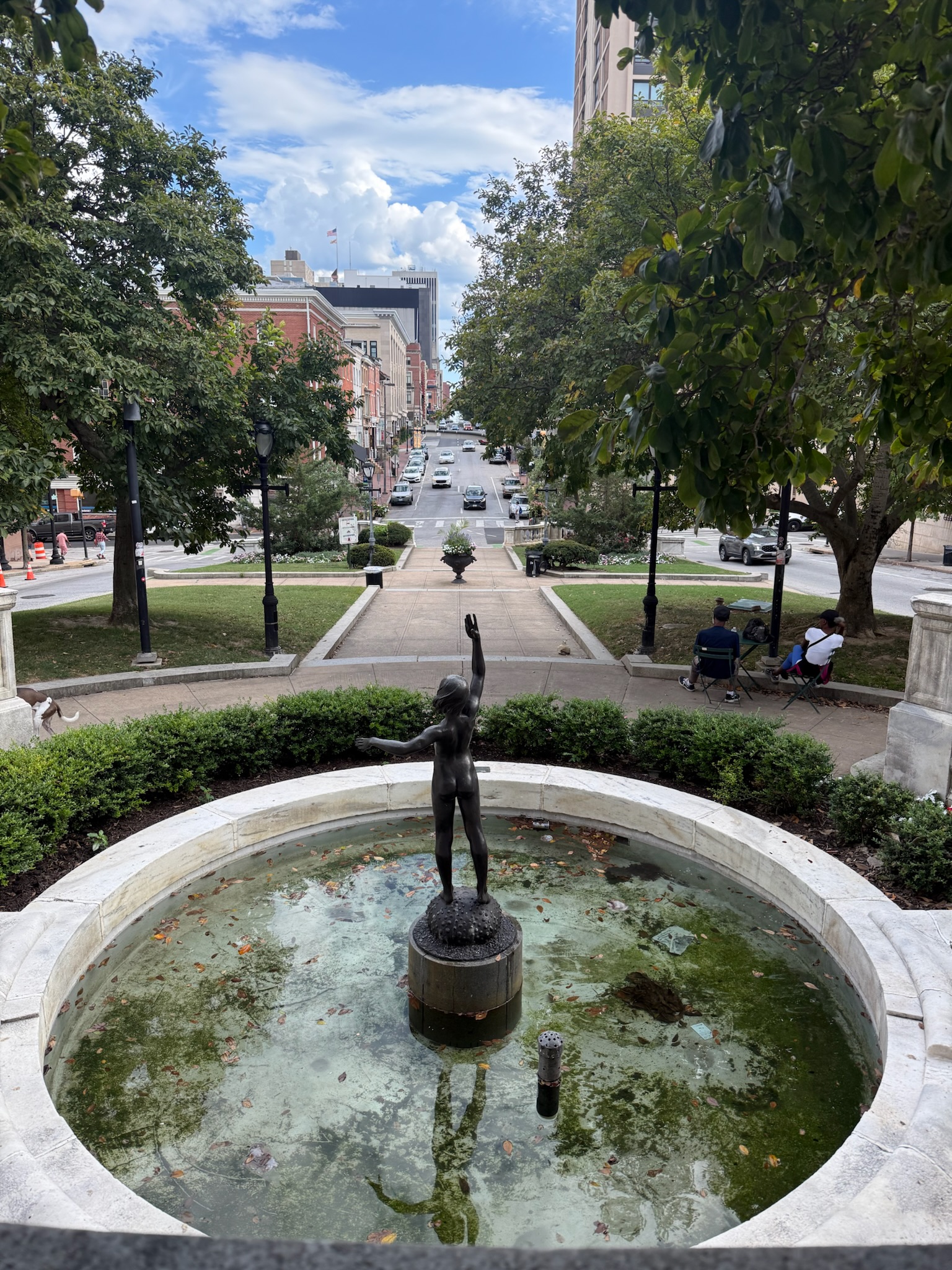
In the mid-afternoon, we wanted to go out, but nothing sounded good. There were still a few museums on the “to do” list, but none of us felt like going to a museum. We finally agreed on the Washington Memorial solely because we wanted to walk around, and we liked the idea of seeing the historic “wealthy” part of town. When we arrived, we were kind of surprised to see the Washington Memorial was in a roundabout in the middle of an intersection.
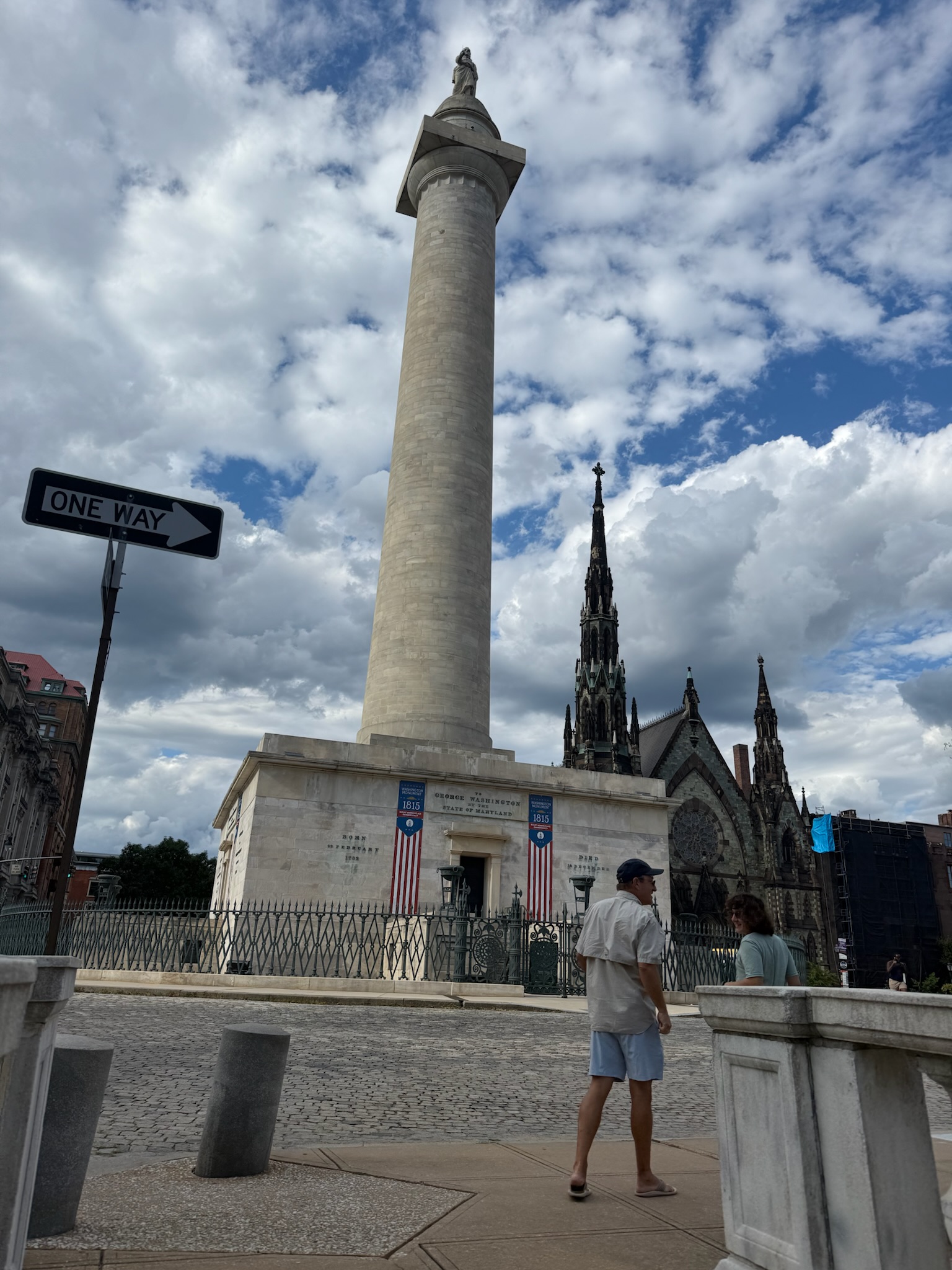
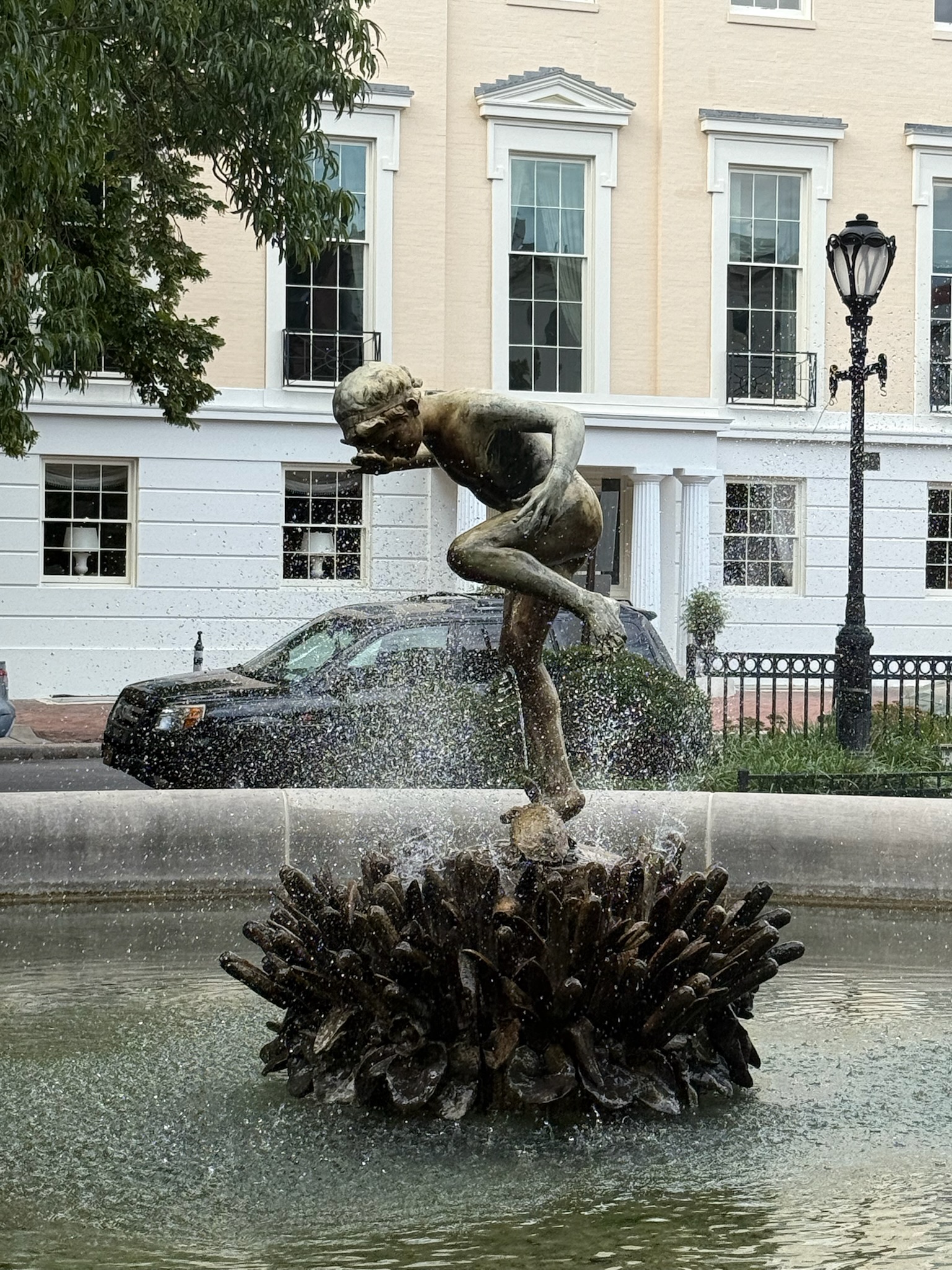
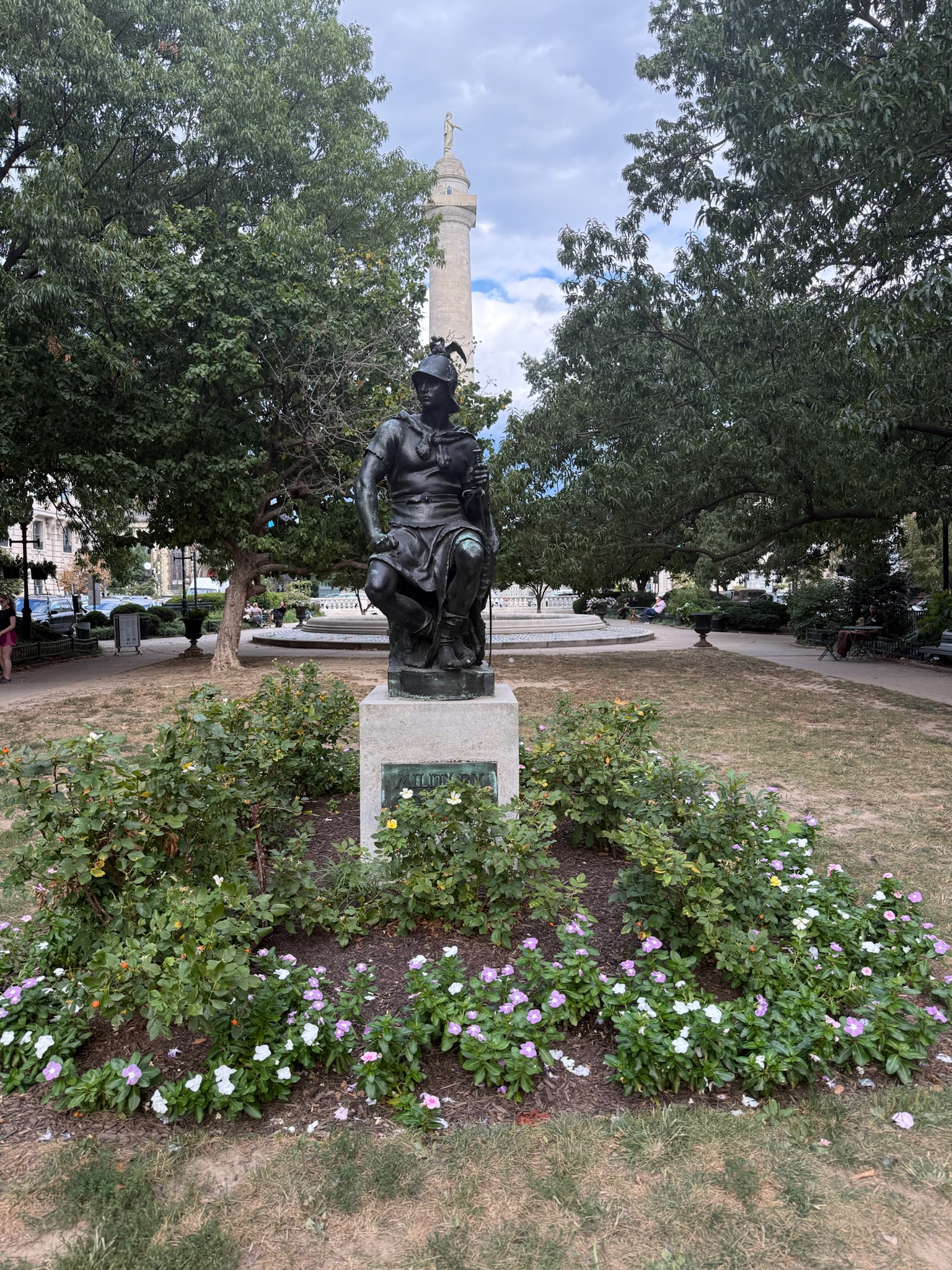
We found street parking easily just south of the monument. Here the meter was only $2.50 per hour, also with a four-hour limit. Each of the four streets feeding into the intersection had a park in their median. The monument plus the four parks together was called Mt. Vernon Place. Here were some shots of the park that we walked through on our approach to the monument.
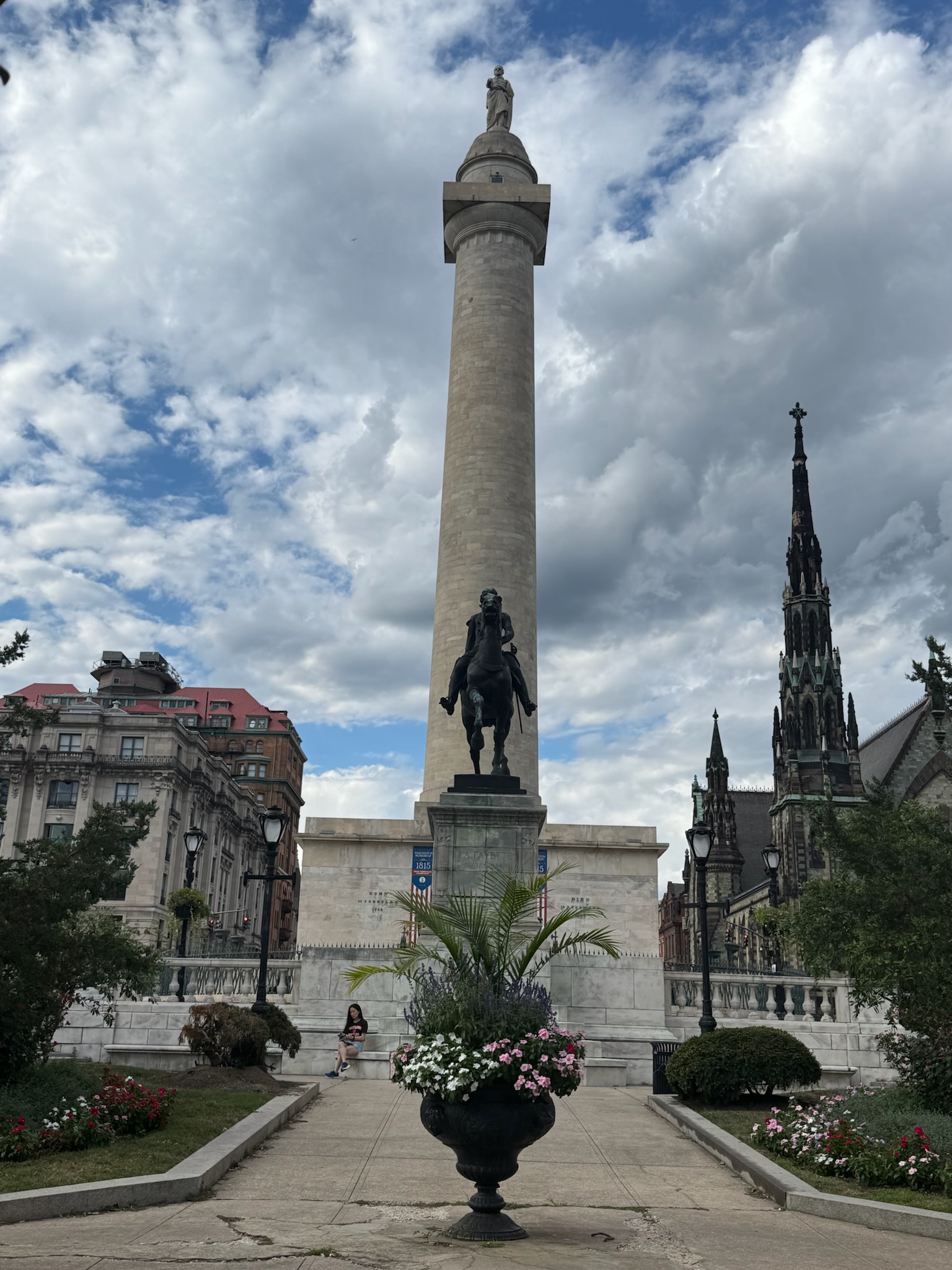
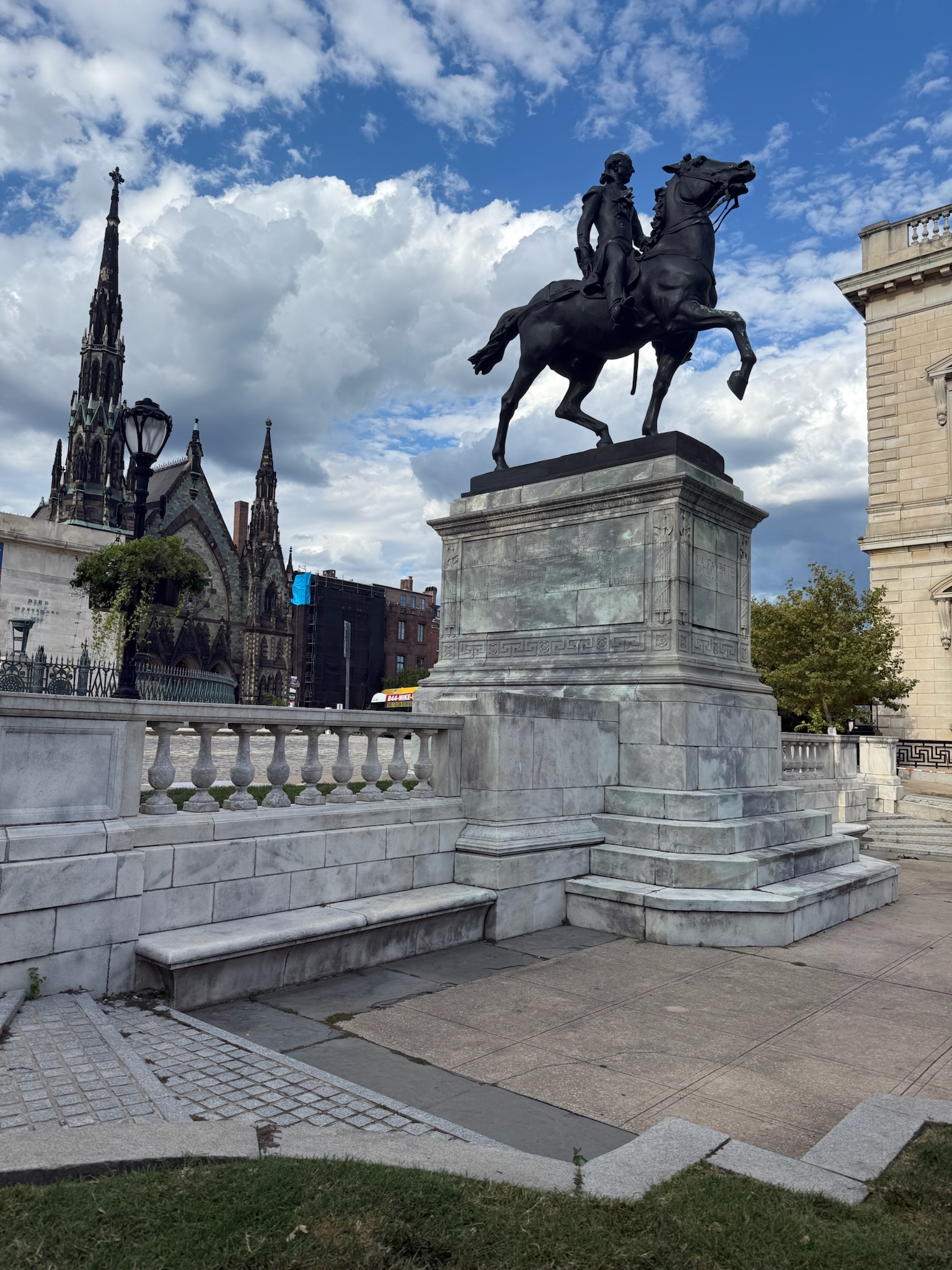
Here was the statute of the Marquis de Lafayette from another angle.
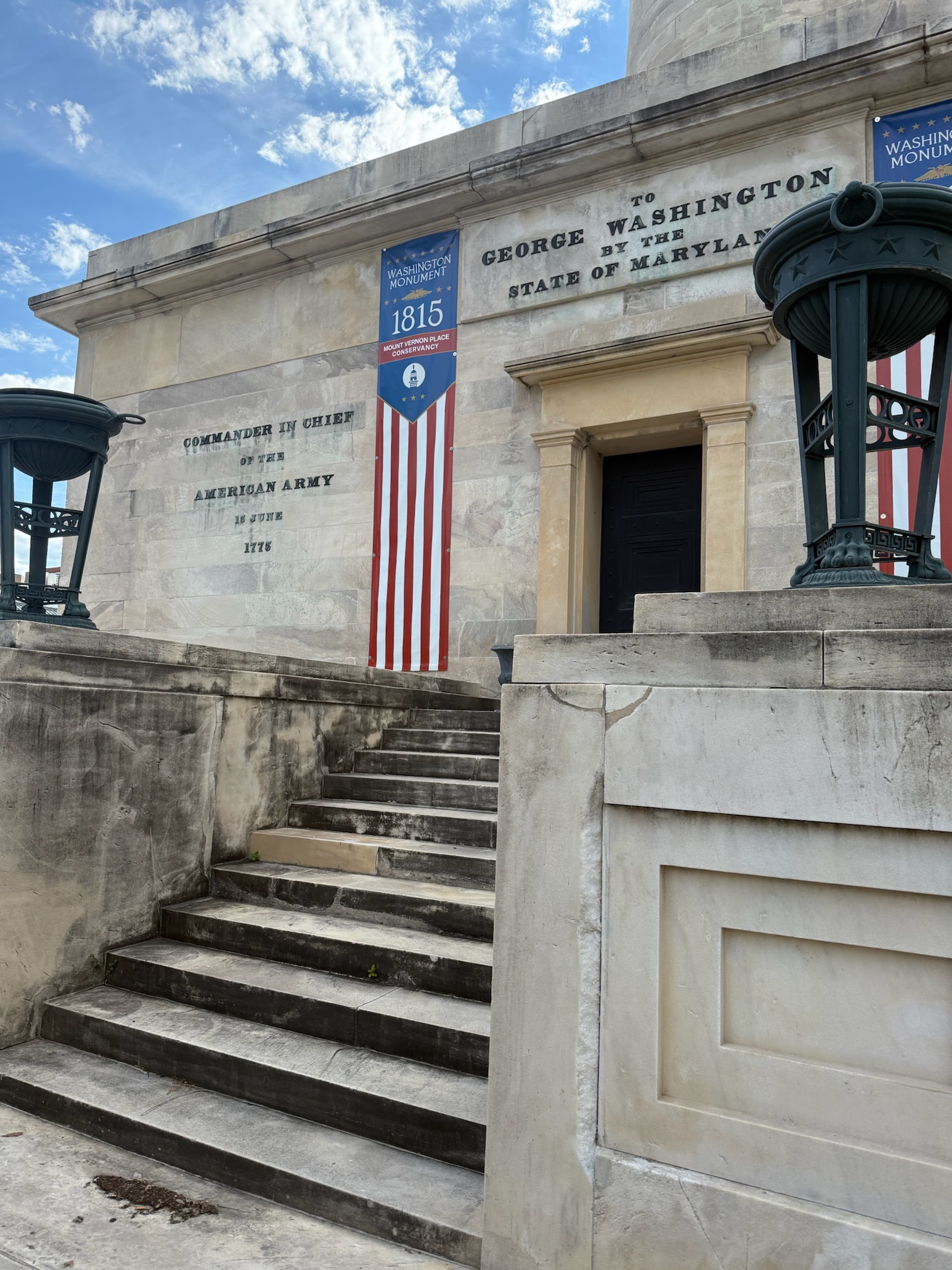
Construction of this Washington Monument was begun in 1815 and mostly completed by the early 1820s. The statute of George Washington was added to the top in 1829. It was the nation’s first monument to our first president (the one in DC was completed in 1884). There was a gallery with exhibits on the ground level that were free, and for $6.00 each, visitors could ascend the 160-feet to the top of the tower. The reviews said the view was gorgeous and worth the fee. We were still undecided about whether we wanted to climb the stairs when we arrived at the gate to find that the monument was closed on Tuesdays. Bummer.
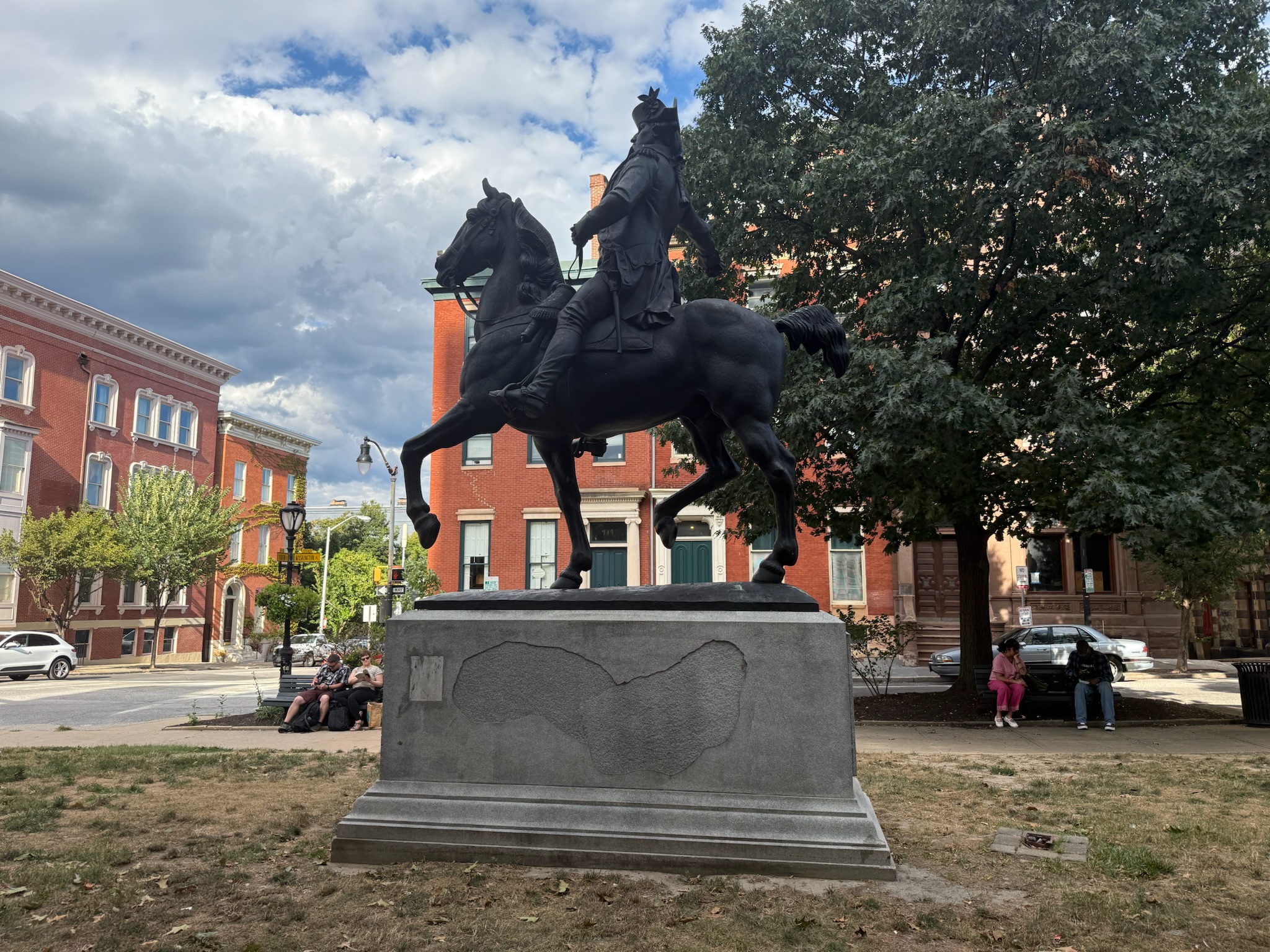
We walked around the monument. It looked more or less the same from all sides. Then we explored the other three parks. They each had statues and, if we remember correctly, three had fountains. The statue on the north side was of John Eager Howard, who was a Revolutionary War hero. The land Mount Vernon Place was on had once been part of his plantation. He’d donated the small piece of land that the monument was on. Later, his heirs created the four parks and sold off the land near Mount Vernon Place. It became an exclusive area where the wealthy people built homes.
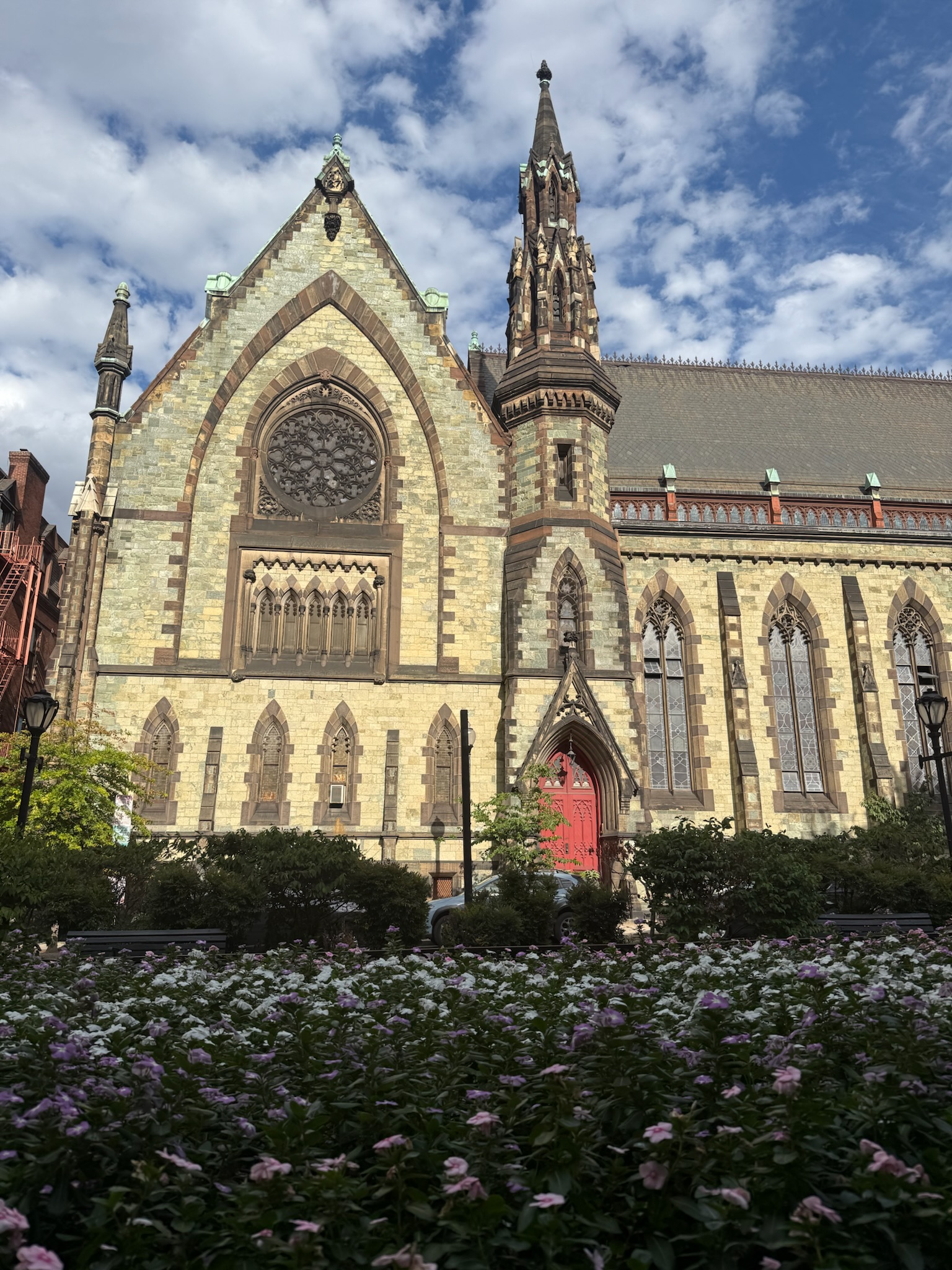
The United Methodist Church, built in 1872, was on the northeast corner.
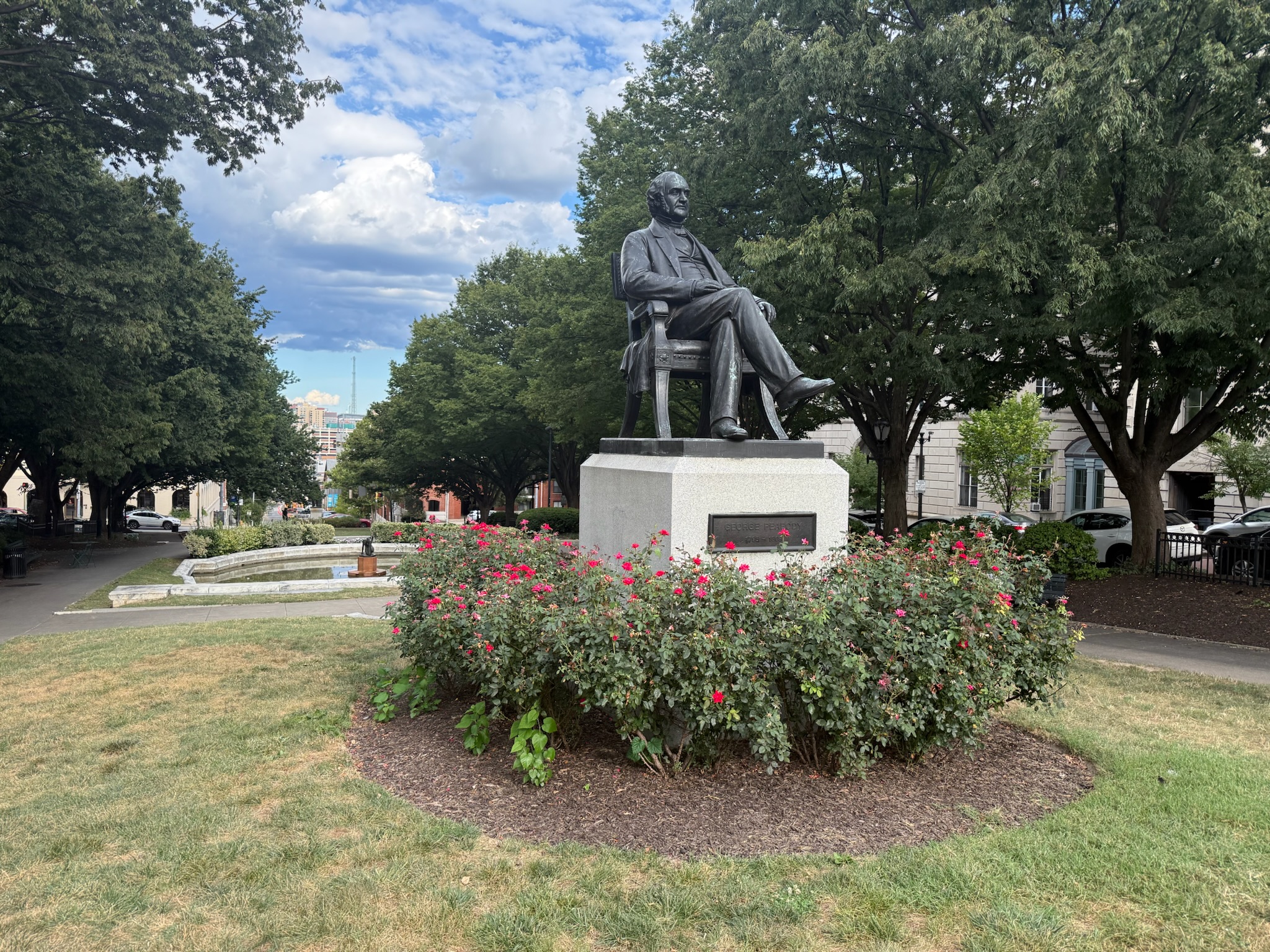
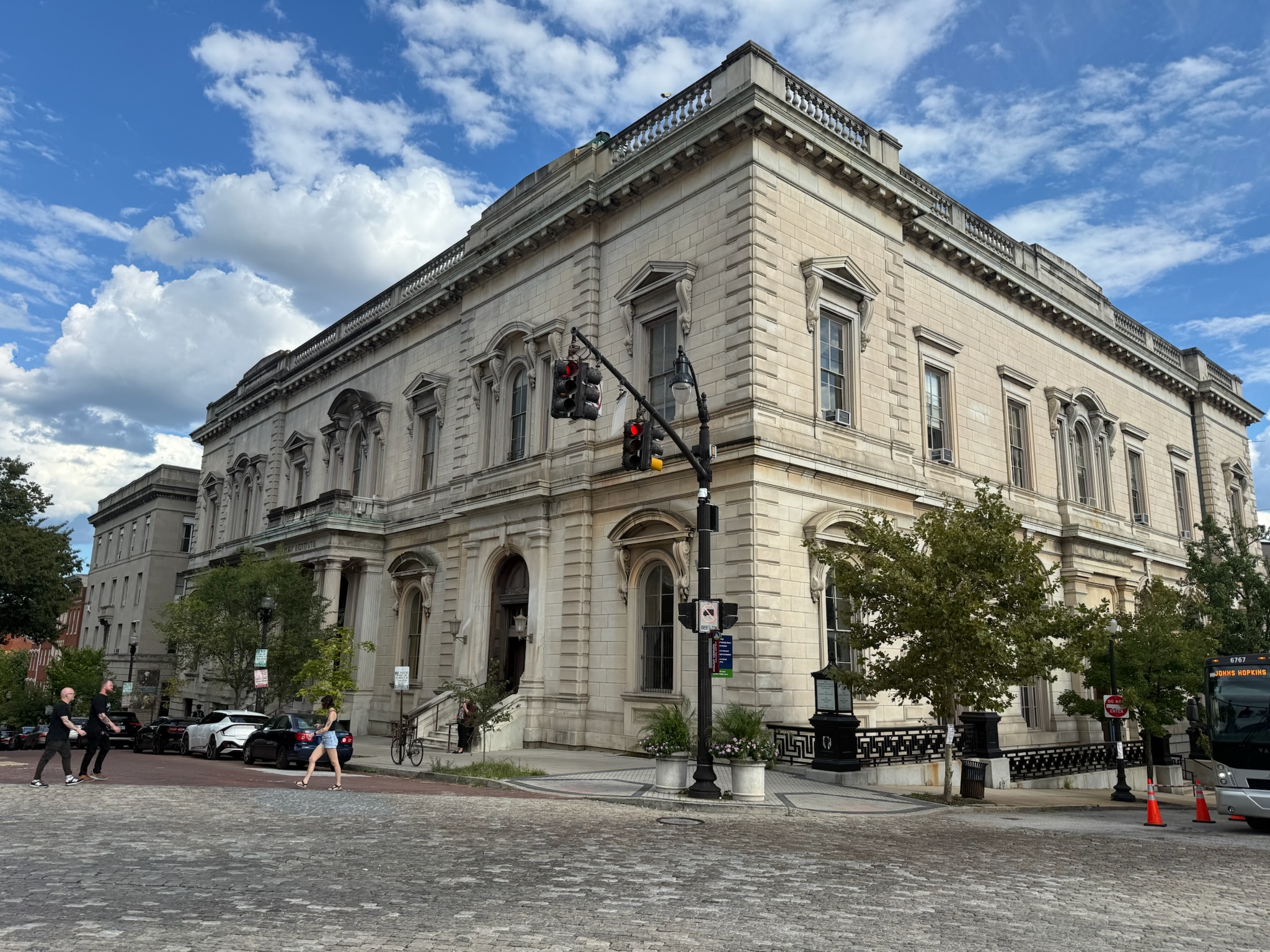
The park on the east side had a statue of George Peabody, who donated a lot of money to create a music conservatory, library, and art gallery.
And his library/conservatory were on the southeast corner.
The west side.
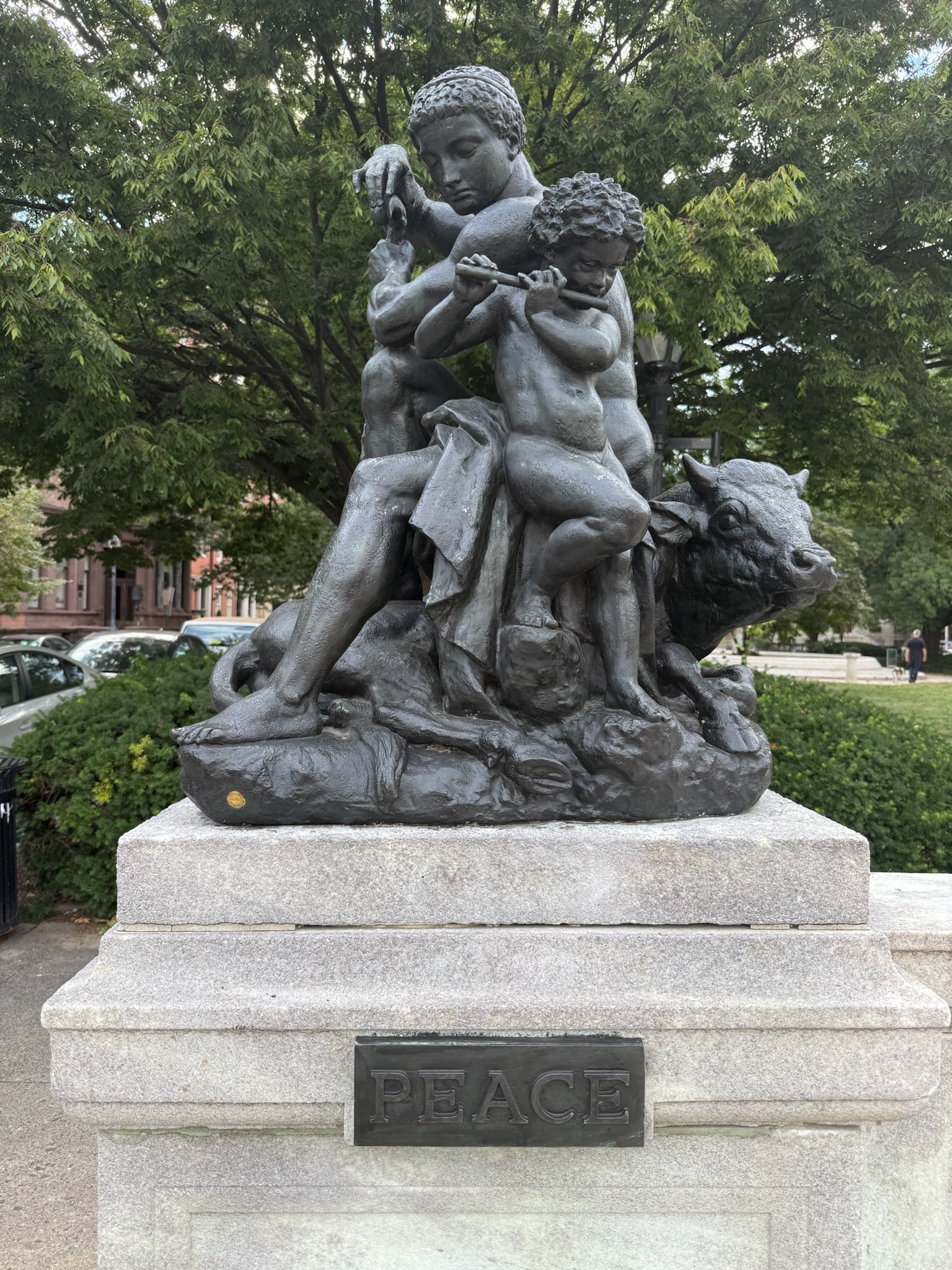
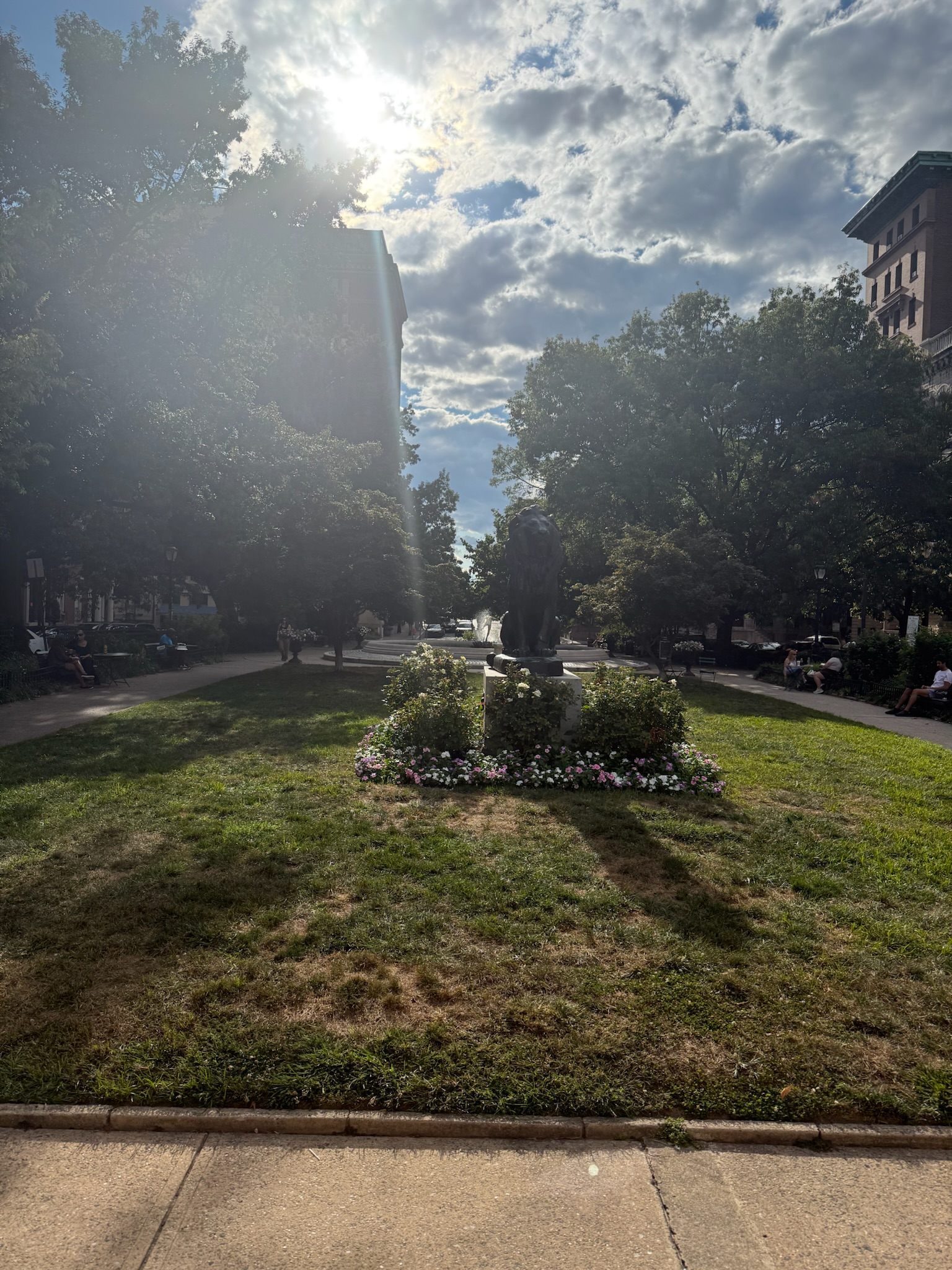
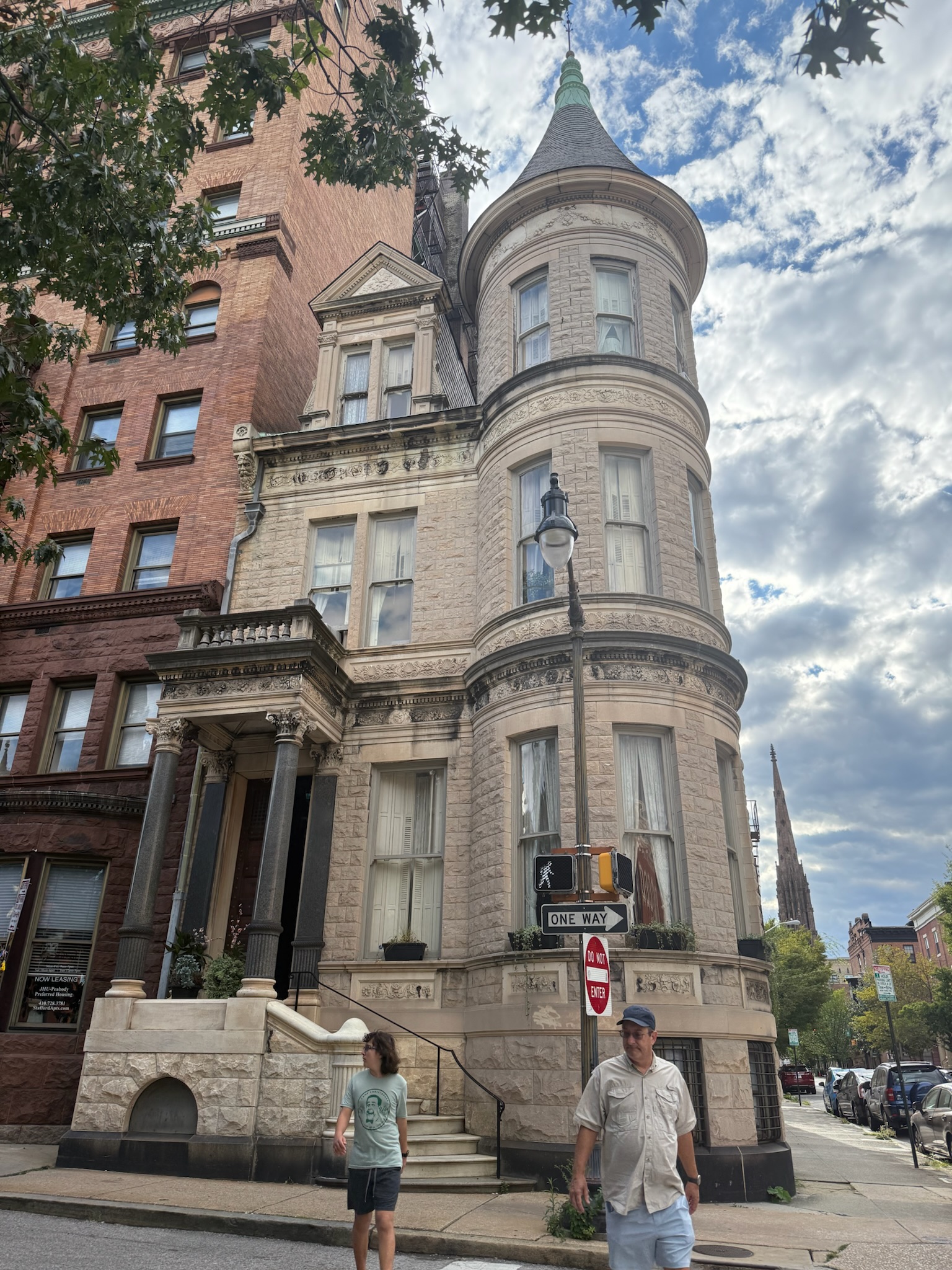
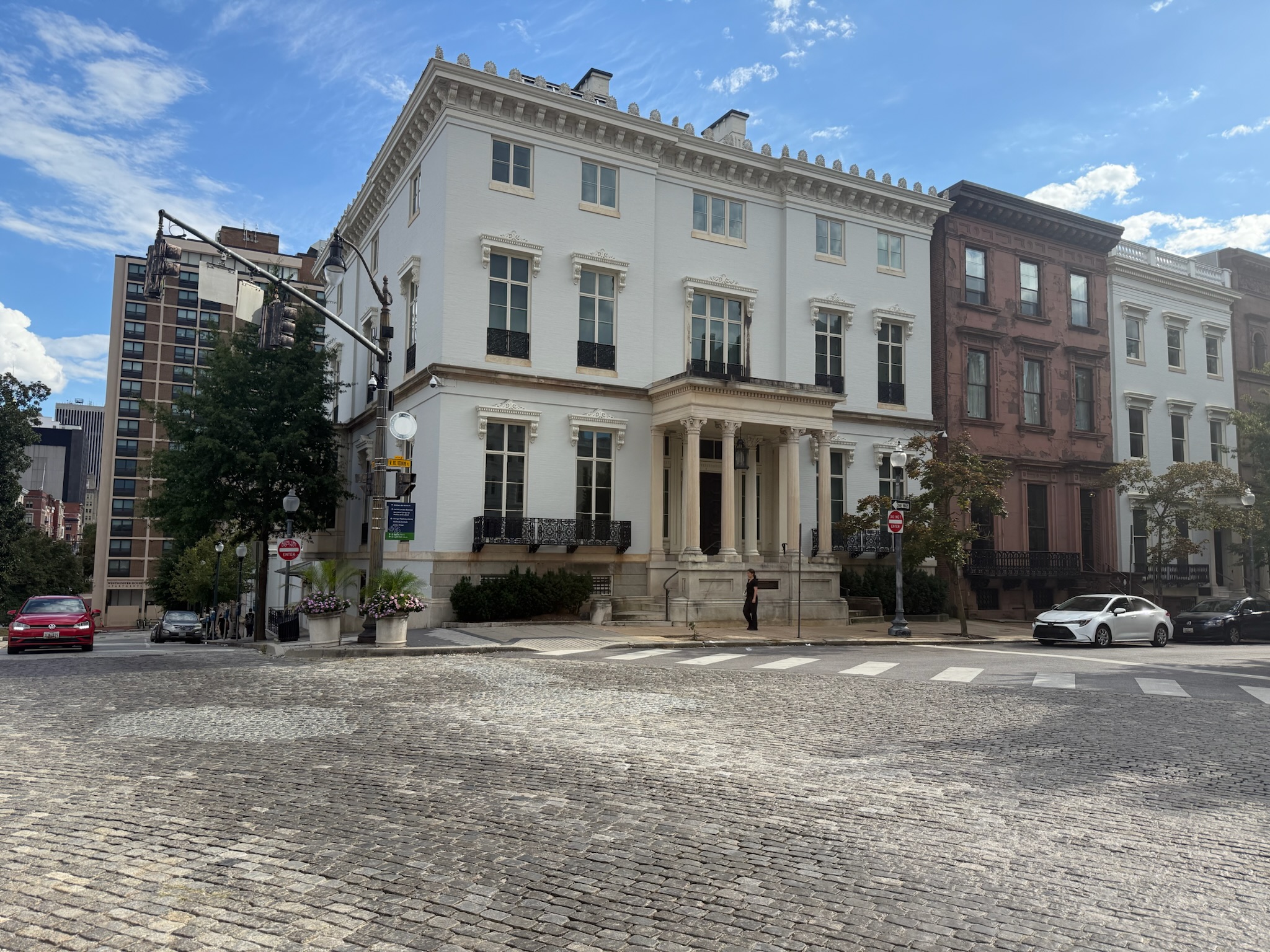
We’d kind of expected the buildings to be more spread out in the “wealthy” part of town. The buildings were still basically touching one another. It seemed like each lot was only slightly wider than the lots in the rest of the town, but it looked like many people had bought multiple lots side-by-side in order to build larger homes.
While it didn’t feel like we were in a bad part of town, there were some people loitering around that made us feel uncomfortable about walking around beyond the little parks in the median. We loaded back into the car and drove to Patterson Park, large park that was walking distance from the marina.
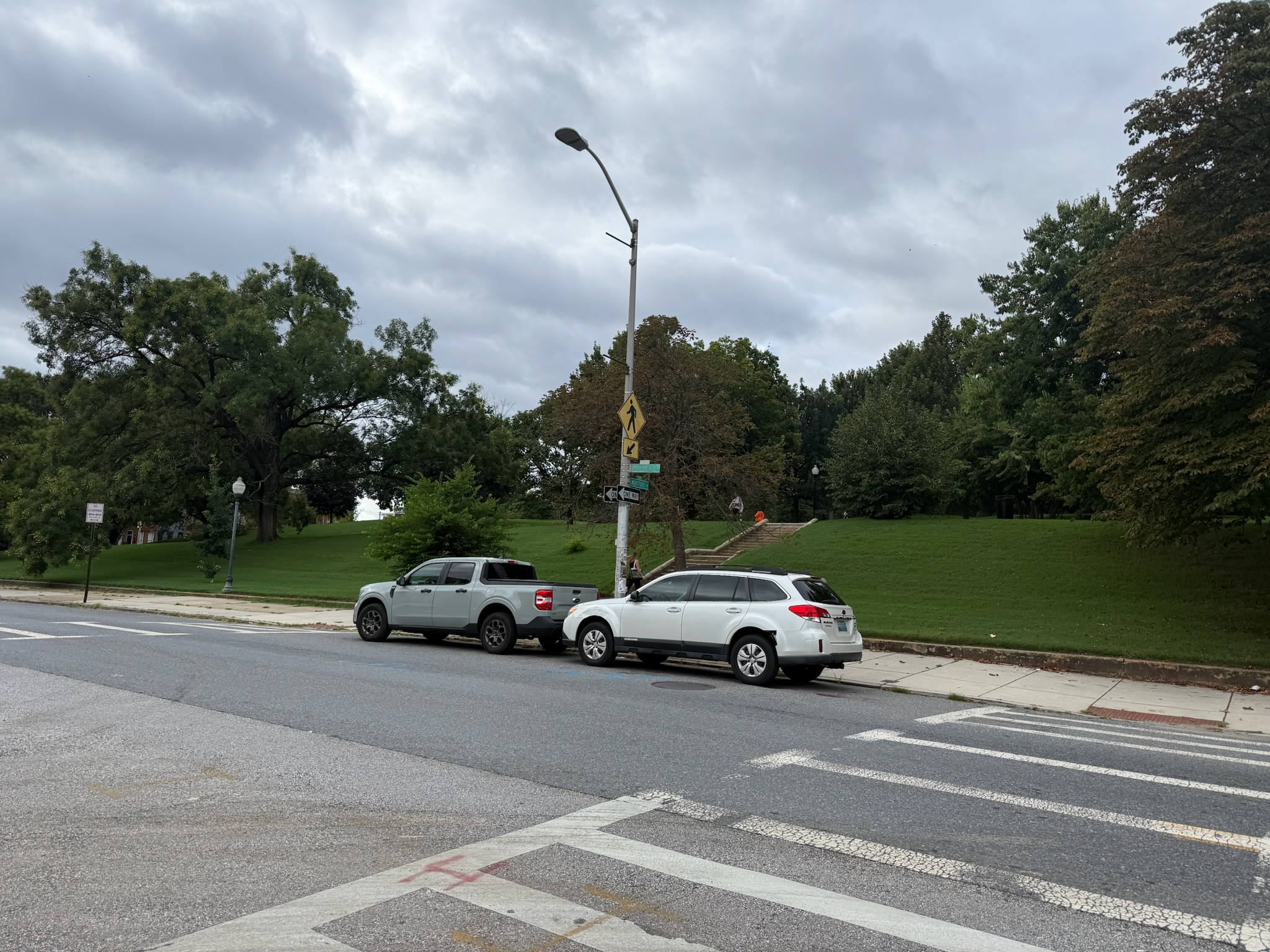
It was a typical park, and there were a lot of people out enjoying the nice evening.
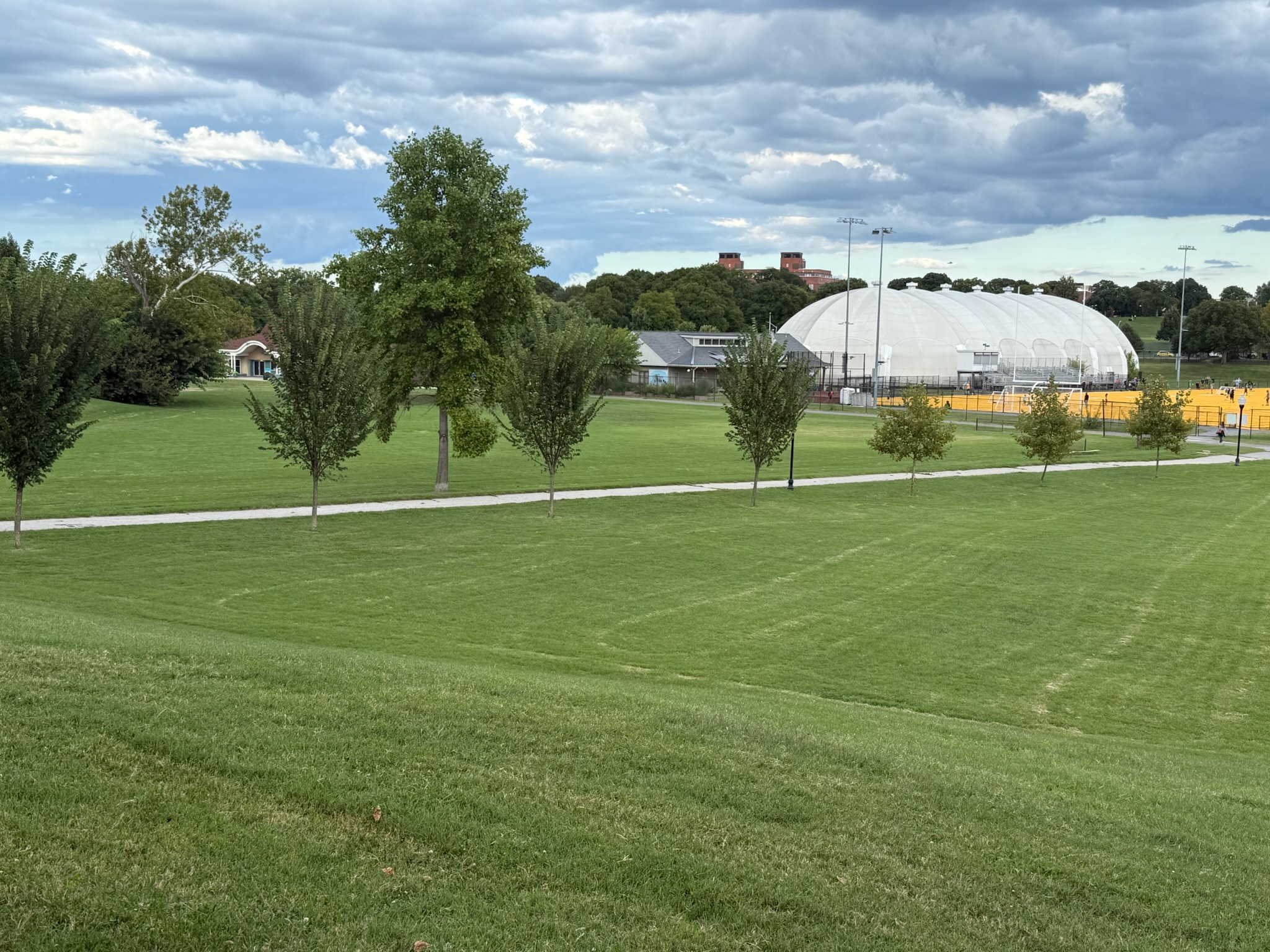
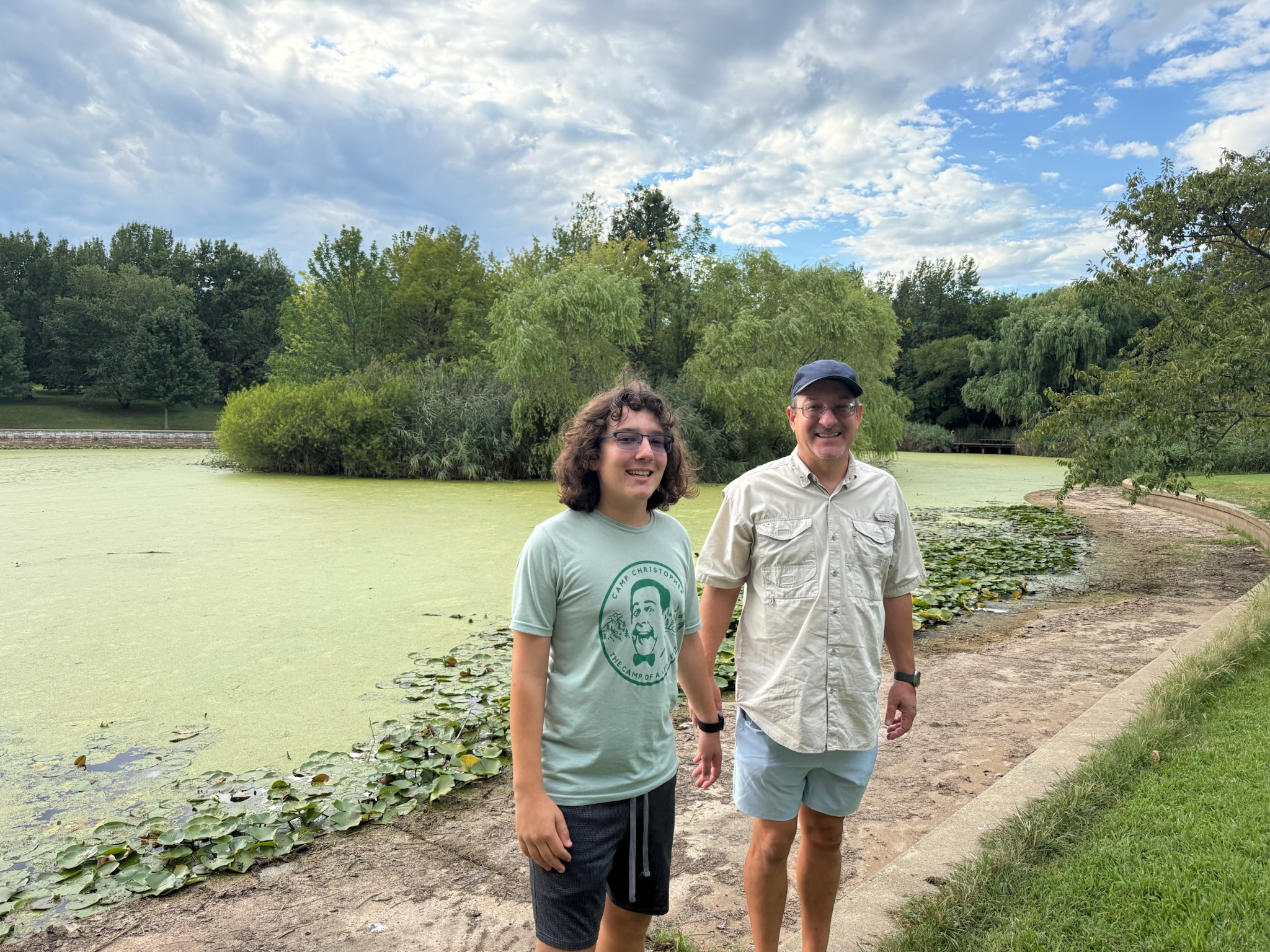
We walked around until we felt like we’d gotten enough exercise for the day. On part of the walk, we passed a very green pond.
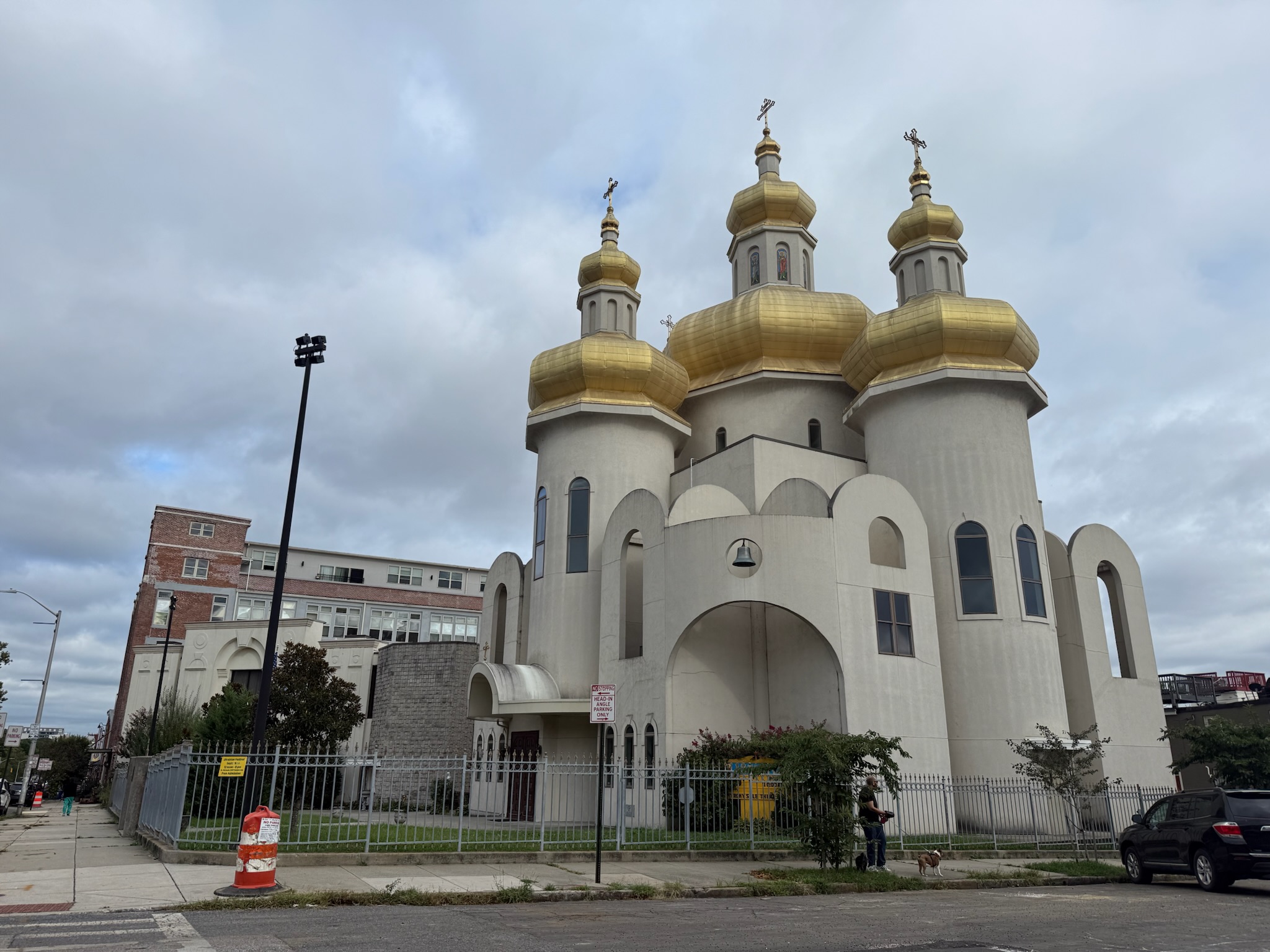
As we were leaving, we noticed a beautiful Ukrainian Catholic Church across the street. We could actually see the very tips from the spots near the marina and had wondered what the gold bulbs were.
We went back to Kosmos and had a quiet night aboard.