Saturday, September 13 — We’d planned to go to The Walters Museum and Peabody Library this afternoon. Keith was opposed to going to yet another museum, but Christi and Eric managed to talk him into going because Walters had a large collection of medieval weaponry and armory.
The museum was almost 3.5 miles away, near the Washington Memorial. We could have taken public transit, but it would have taken at least an hour and involved about a mile of walking each way to/from the transit stops. Even though it was a gorgeous day, we’d walked 8-miles yesterday and just didn’t feel like we could do another extensive day of walking. We called a ride-share, instead, and were door to door in minutes.
The museum appeared to be two separate buildings that had been fused together. They each had a very different architectural style, so it was kind of weird looking. We entered through a set of doors set in the glass panel towards the left in this photo. Per the map, we were in the Centre building. The more ornate building was the Charles building. The map indicated there was also a third building on the west side of the Charles building called the Hackerman House.
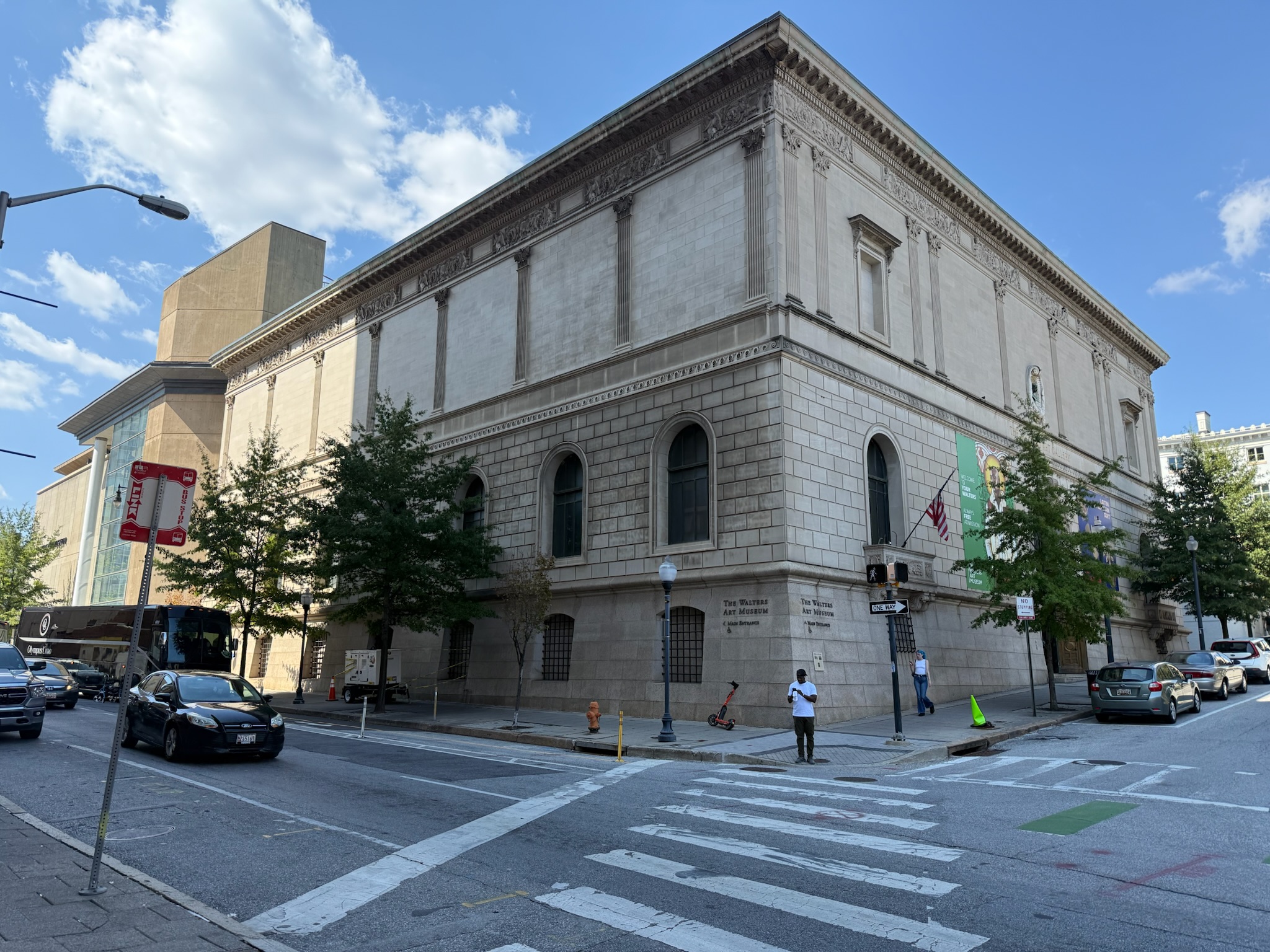
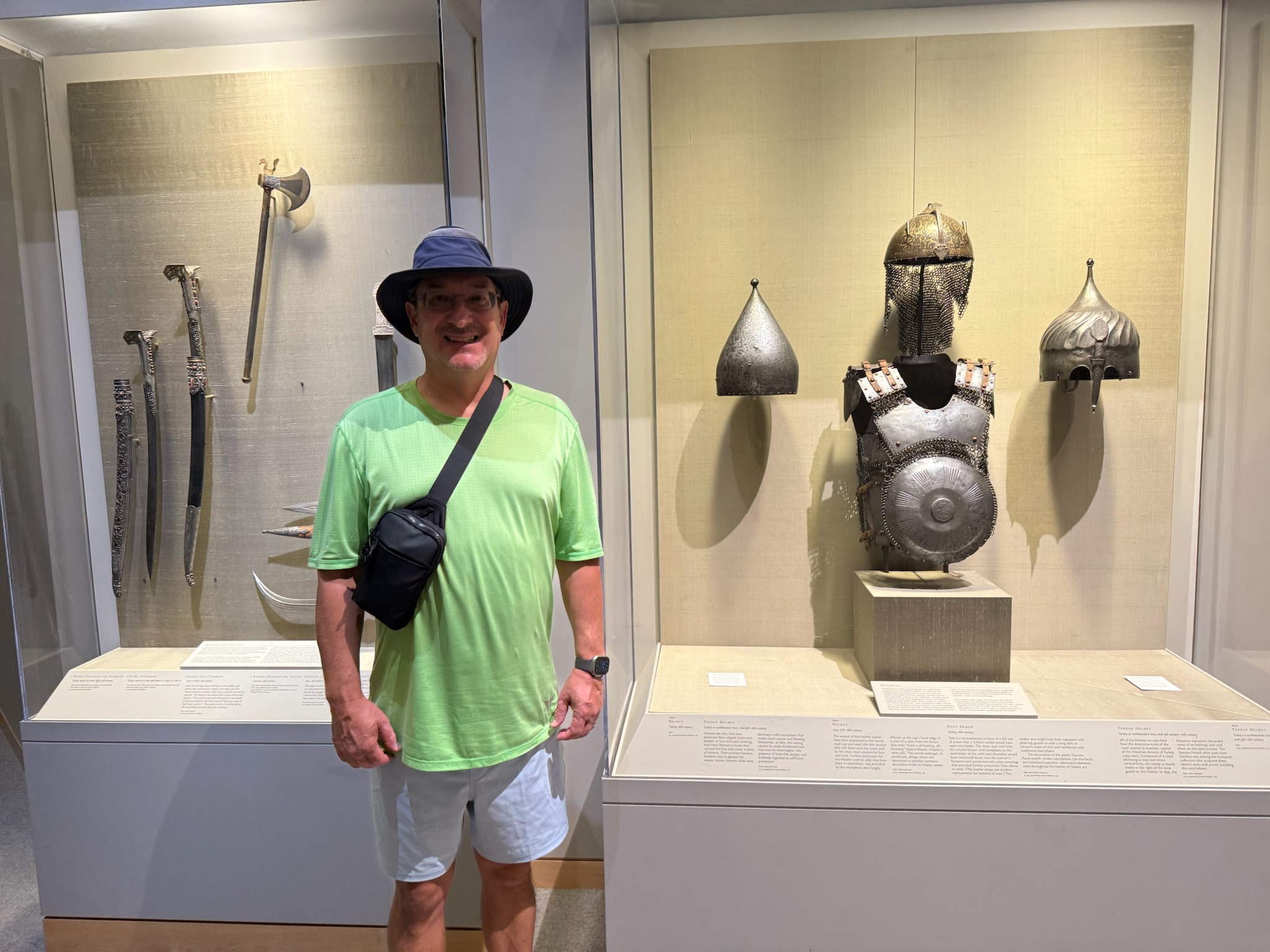
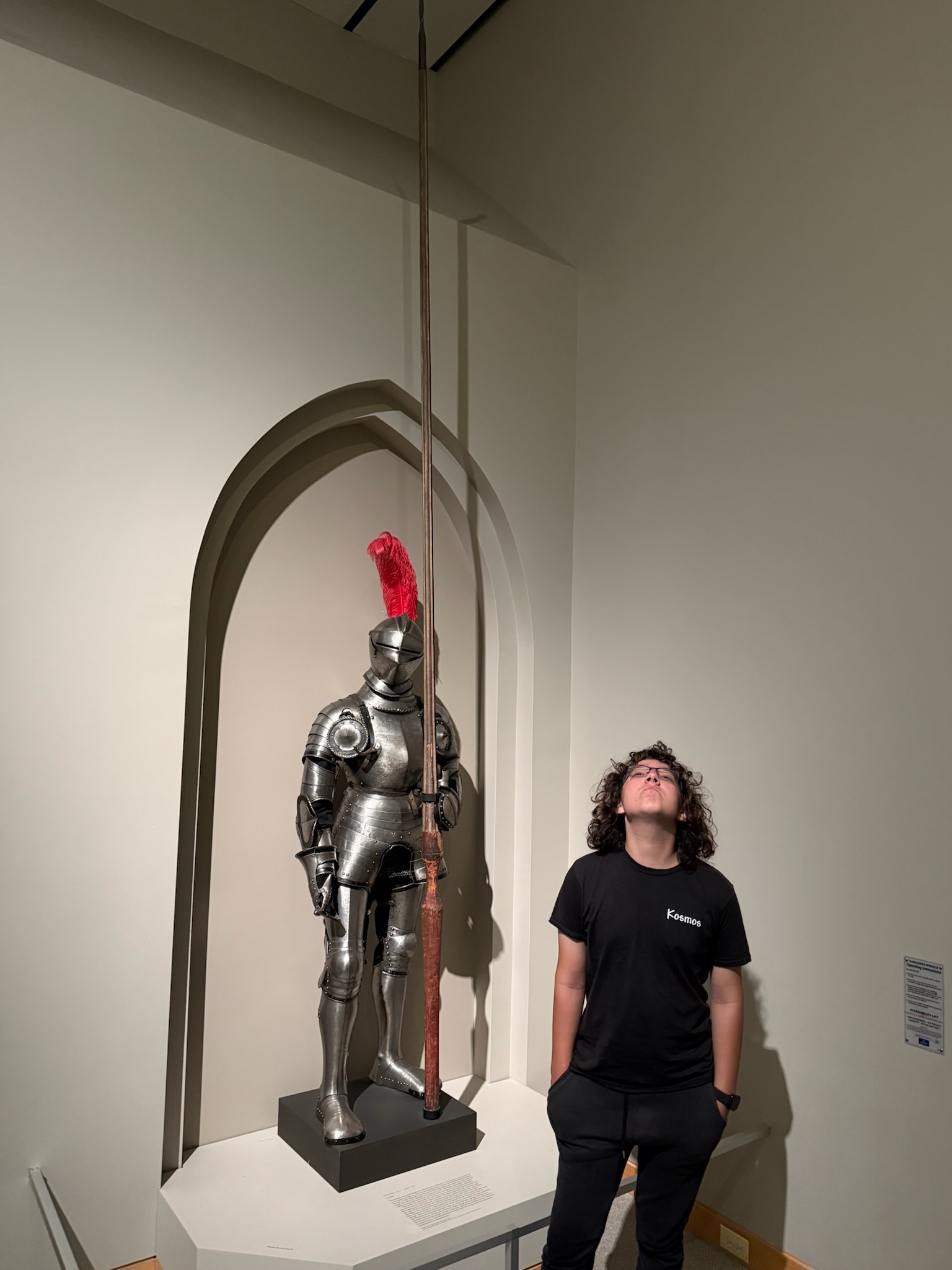
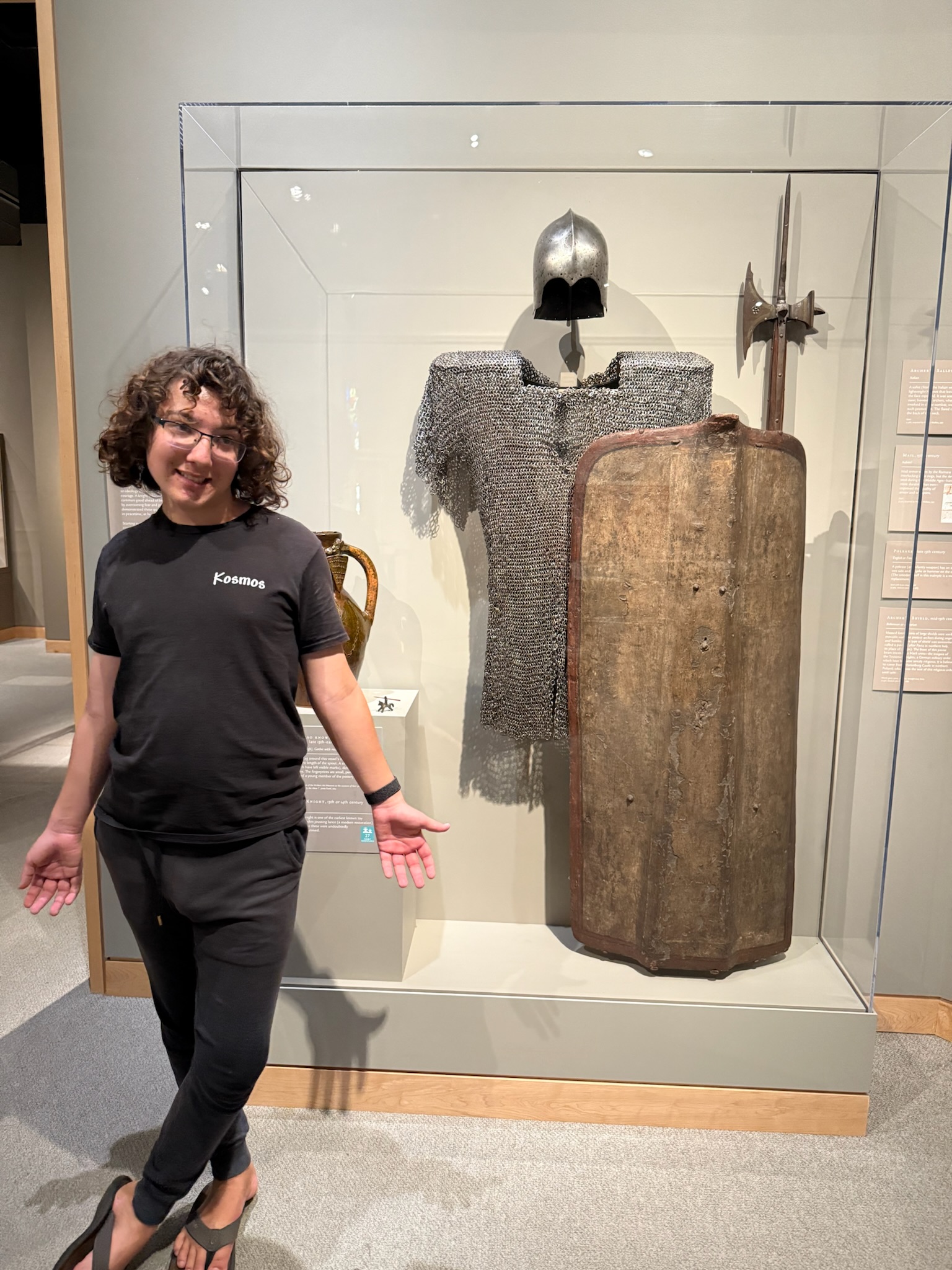
The bus belonged to a tour group of senior citizens from Georgia, and we entered with them. We were delighted to find that admission was completely free for everyone! In order to leave the group behind, we headed up the stairs and started on the 3rd floor of the Centre building, where the medieval exhibit was located. Keith was disappointed to find that the armory exhibit was small.
The art collection was begun by a liquor wholesaler and railroad magnate named William T. Walters. His son, Henry, expanded the collection and opened the Charles building part of the museum in 1909. Henry gifted the collection to Baltimore in 1934. Since it was a private collection, we’d expected the museum to be small and that it would be a quick visit. We were wrong.
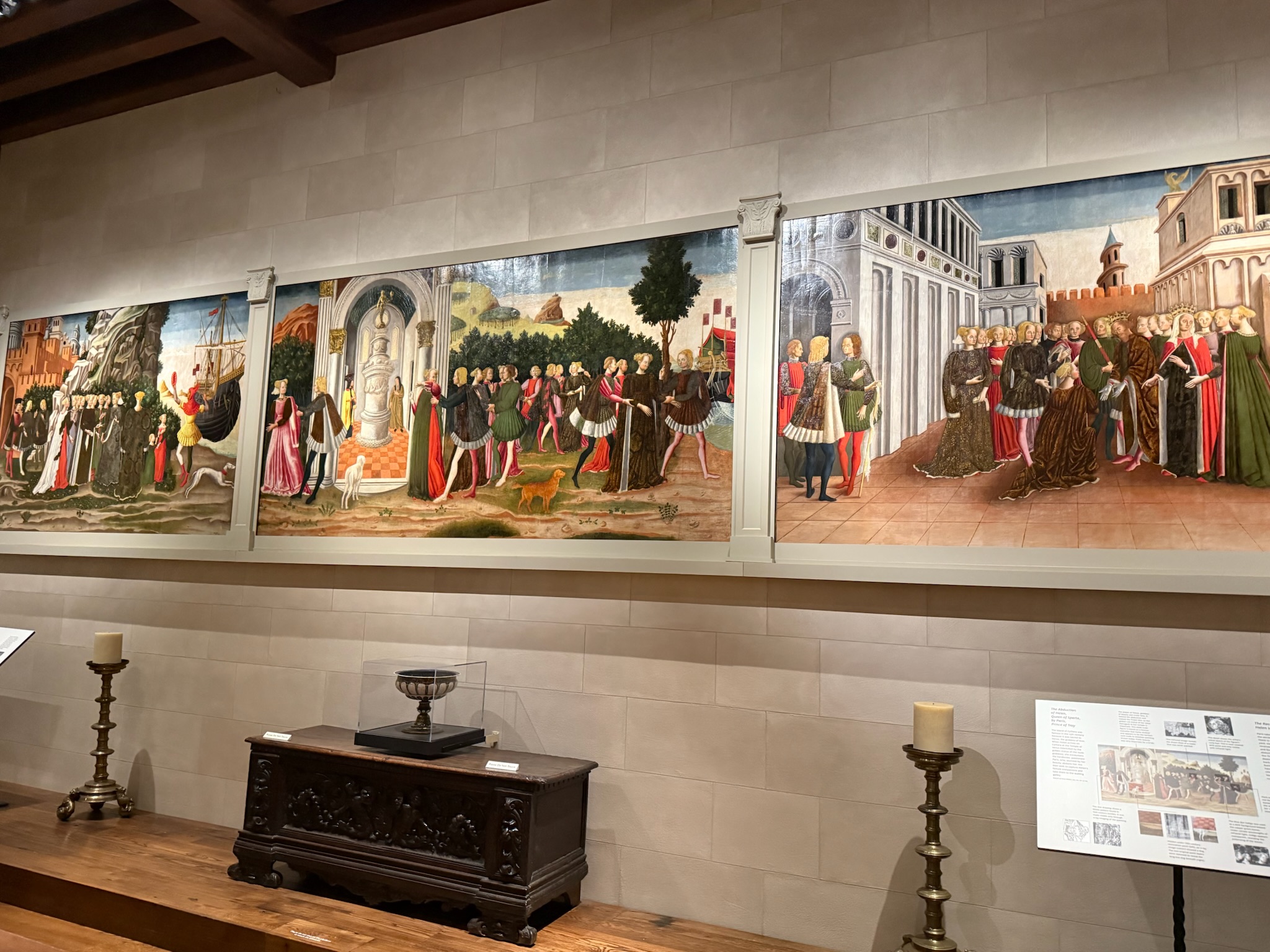
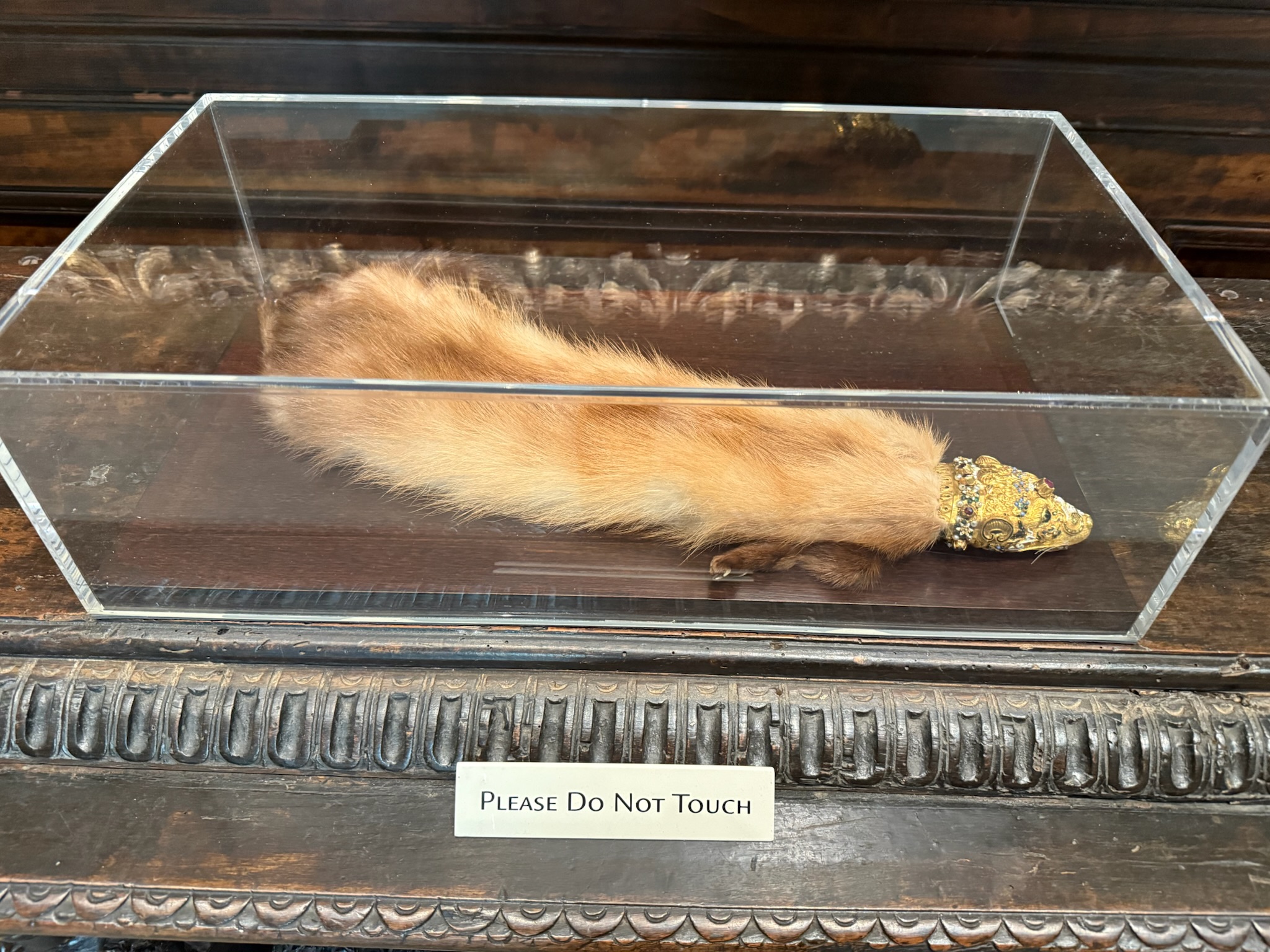
The medieval exhibit was extensive and highly impressive. There were many types of mediums: jewelry, manuscripts, sculptures, paintings, mosaics, and on and on… In addition to medieval works, it had also had Byzantine, Romanesque and Gothic art and artifacts. The focus was primarily on religious artifacts. This exhibit in and of itself was more impressive than most of the museums we’ve been to — it was hard to believe there was more! Here is just a small sampling of the items on display:
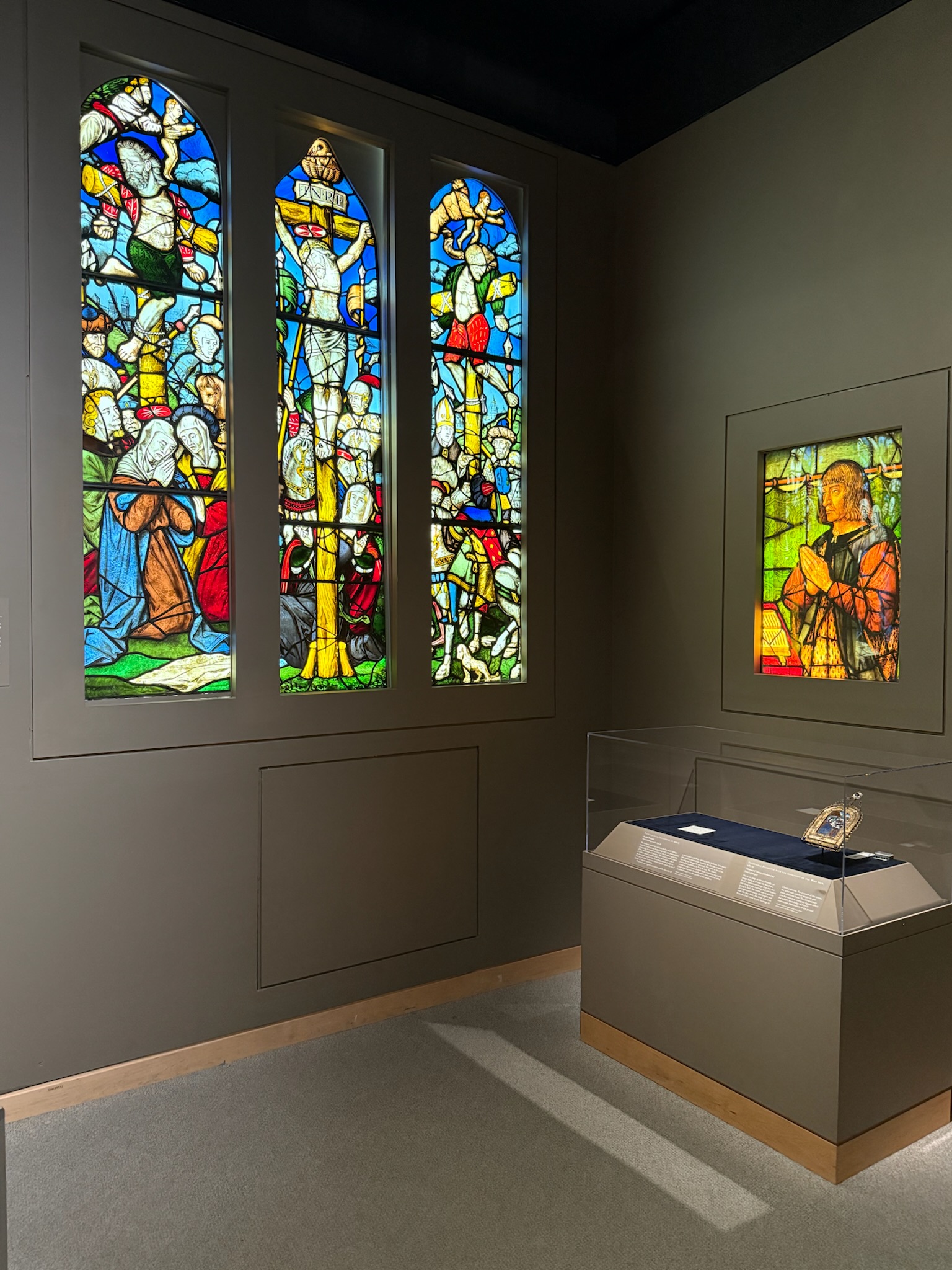
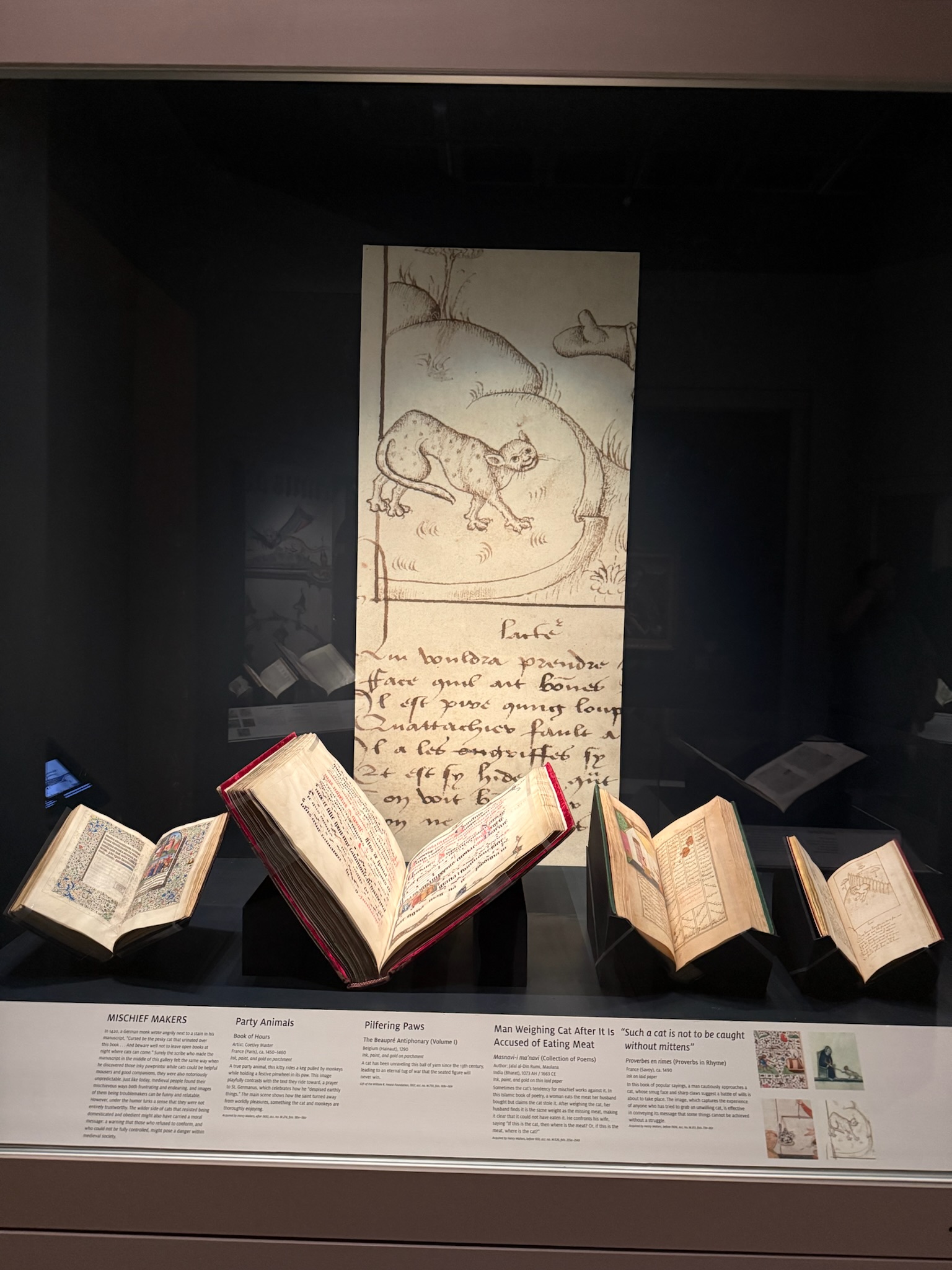
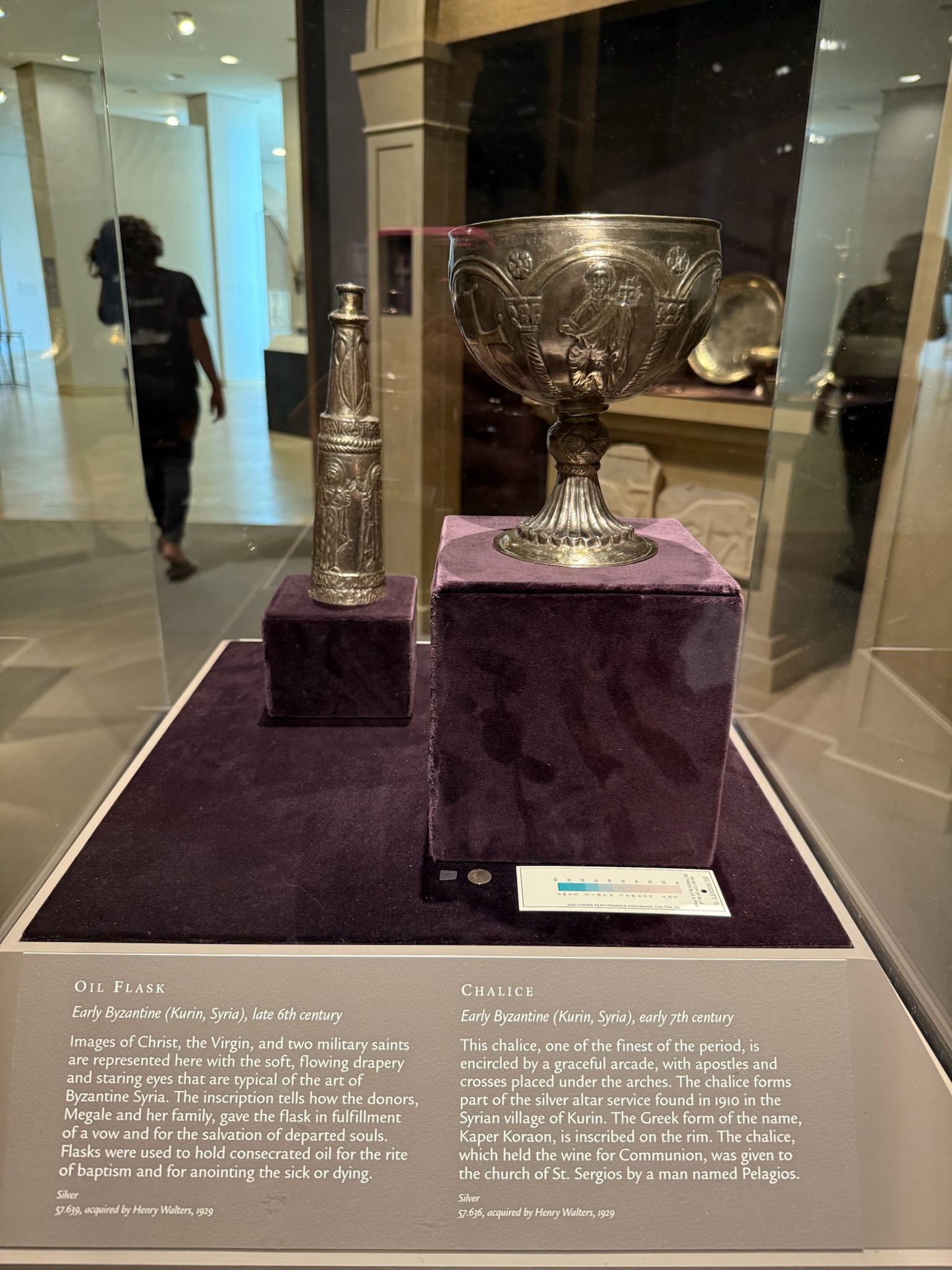
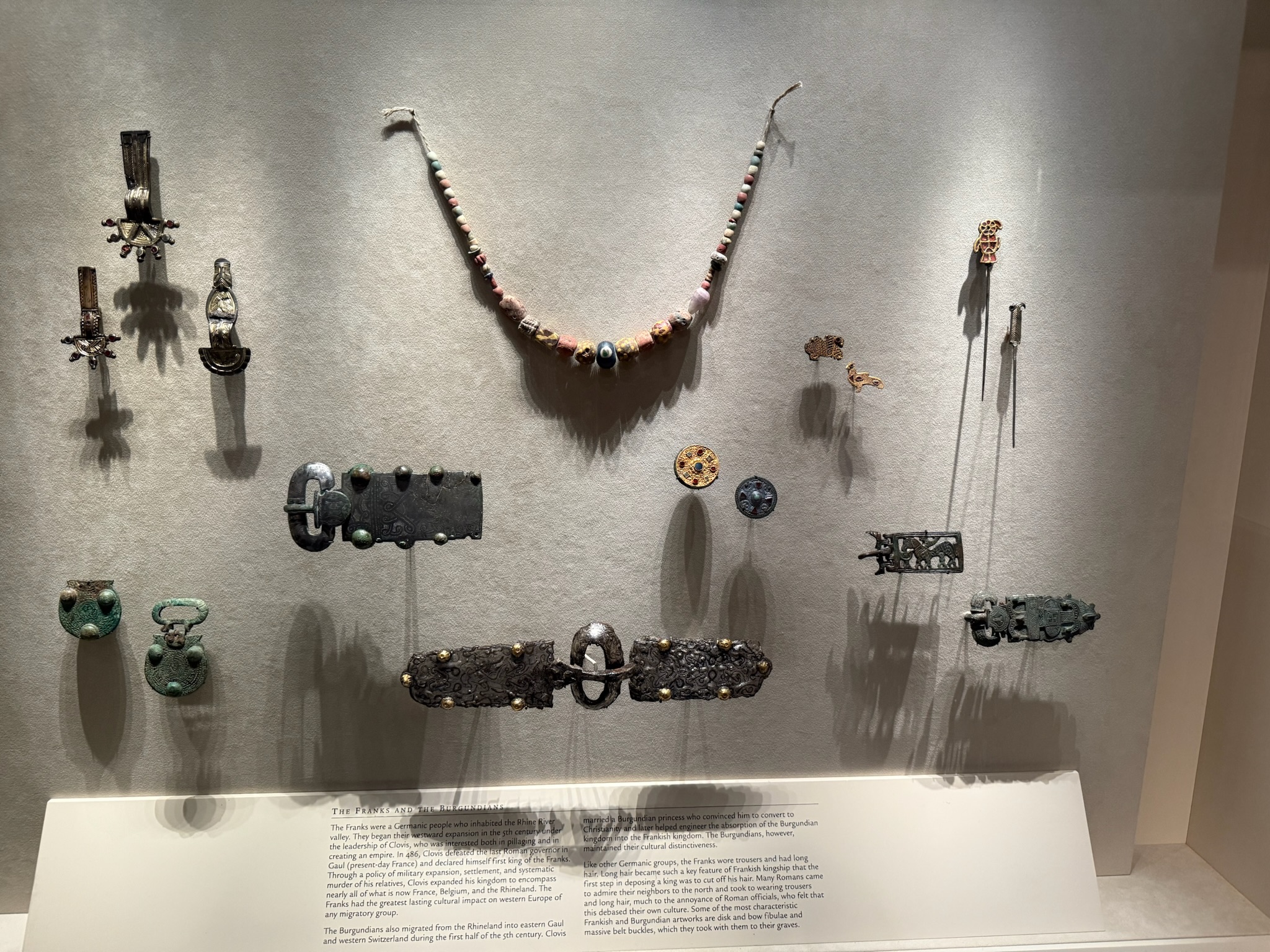
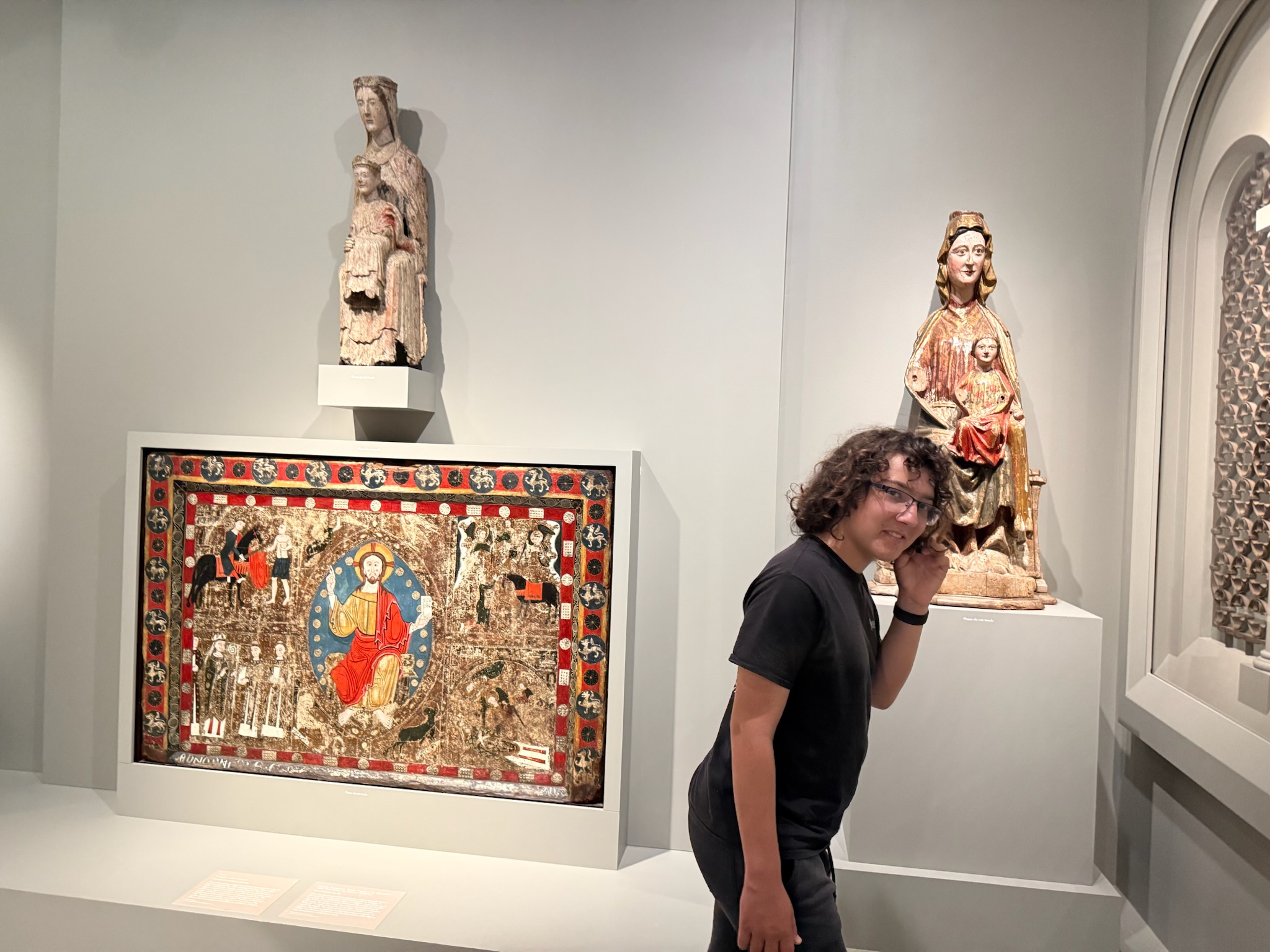
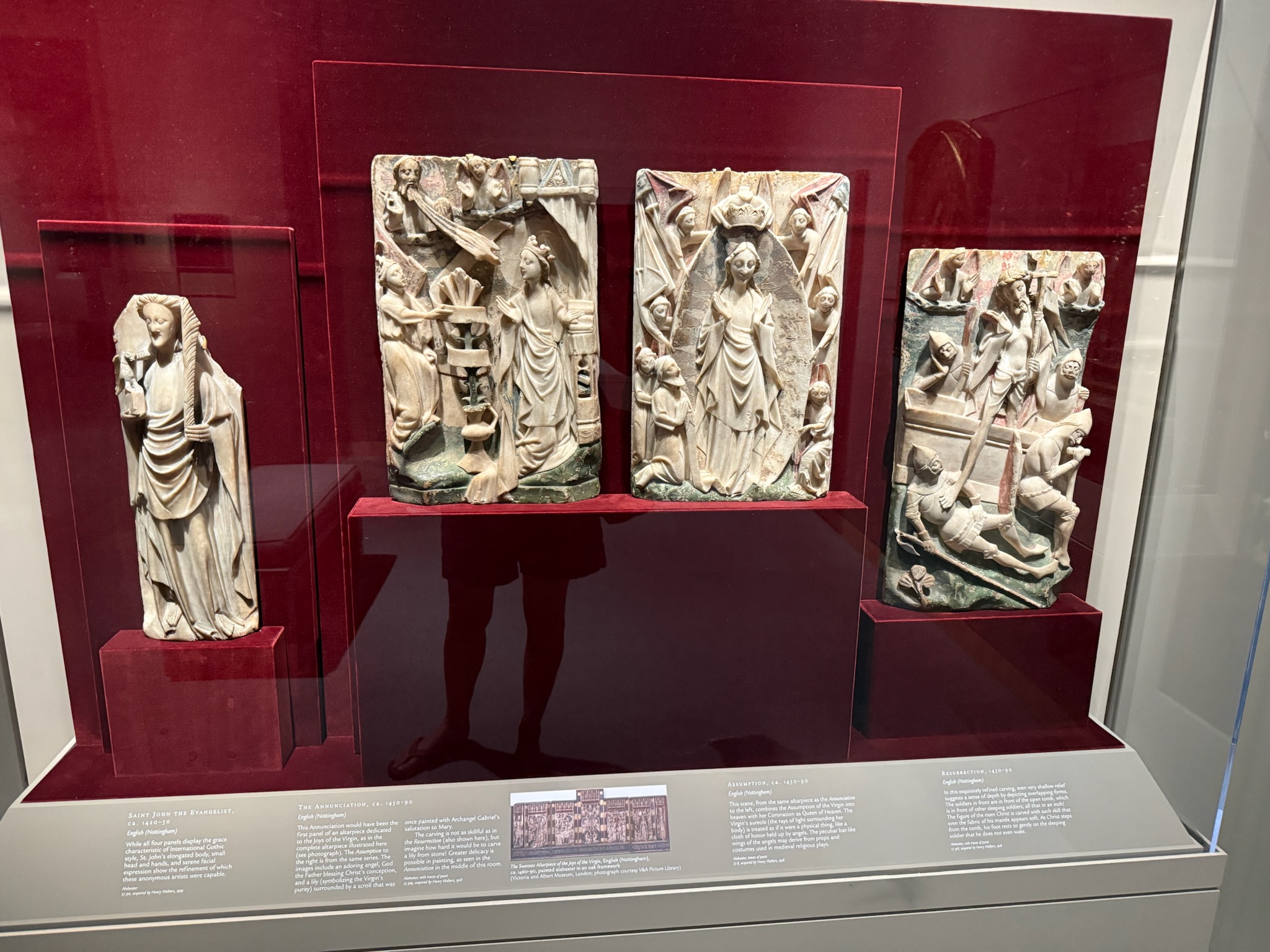
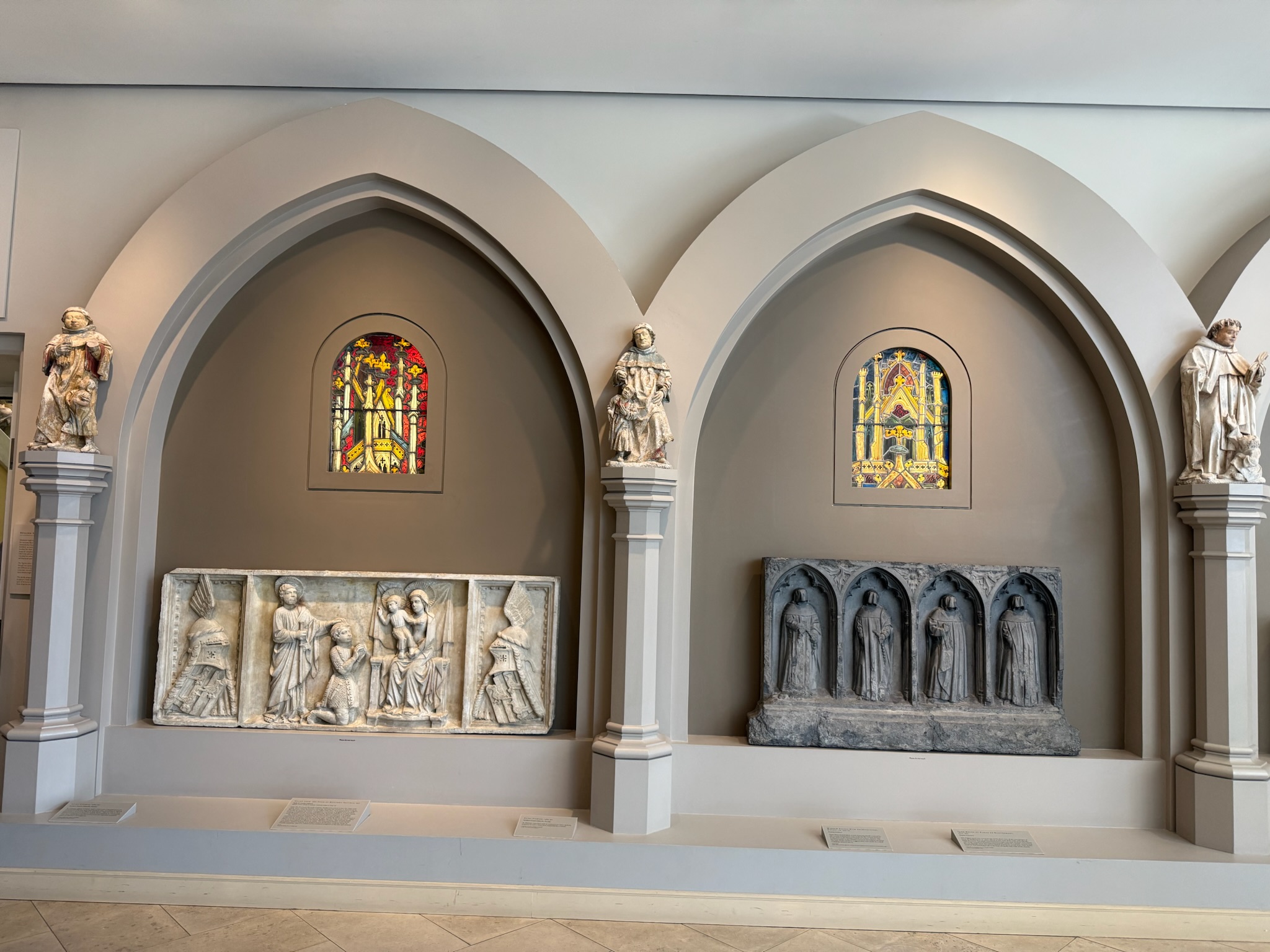
By the time we’d finished in the medieval area, the senior citizens had moved up to our level. Instead of moving to the European renaissance and baroque exhibit on the 3rd floor of the Charles building, we went up to the 4th floor, which was called Across Asia. It had East Asian and Islamic art and artifacts, and again focused primarily on religious works. Again, this is a small sample of the very diverse range of artifacts in the exhibit.
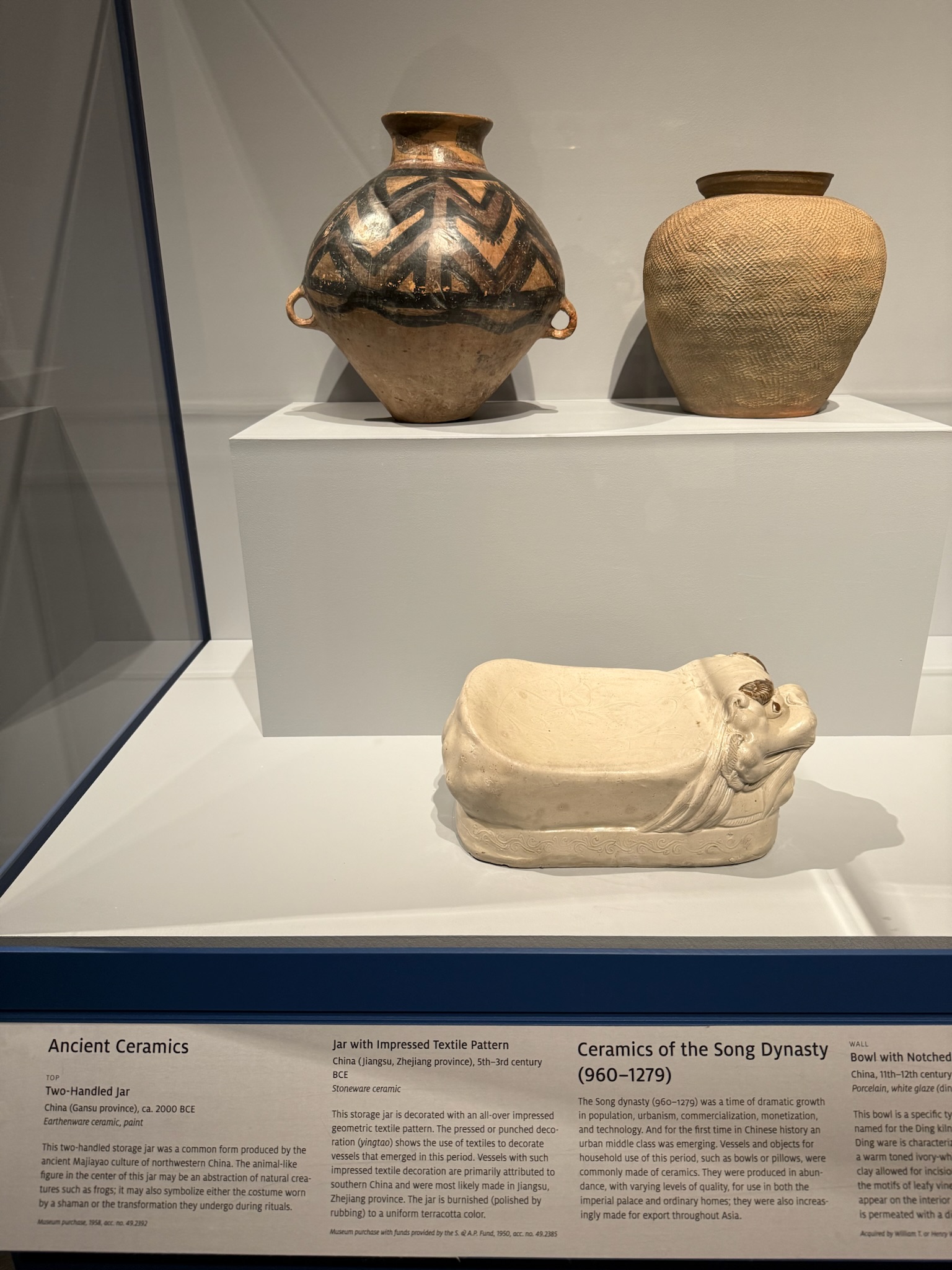
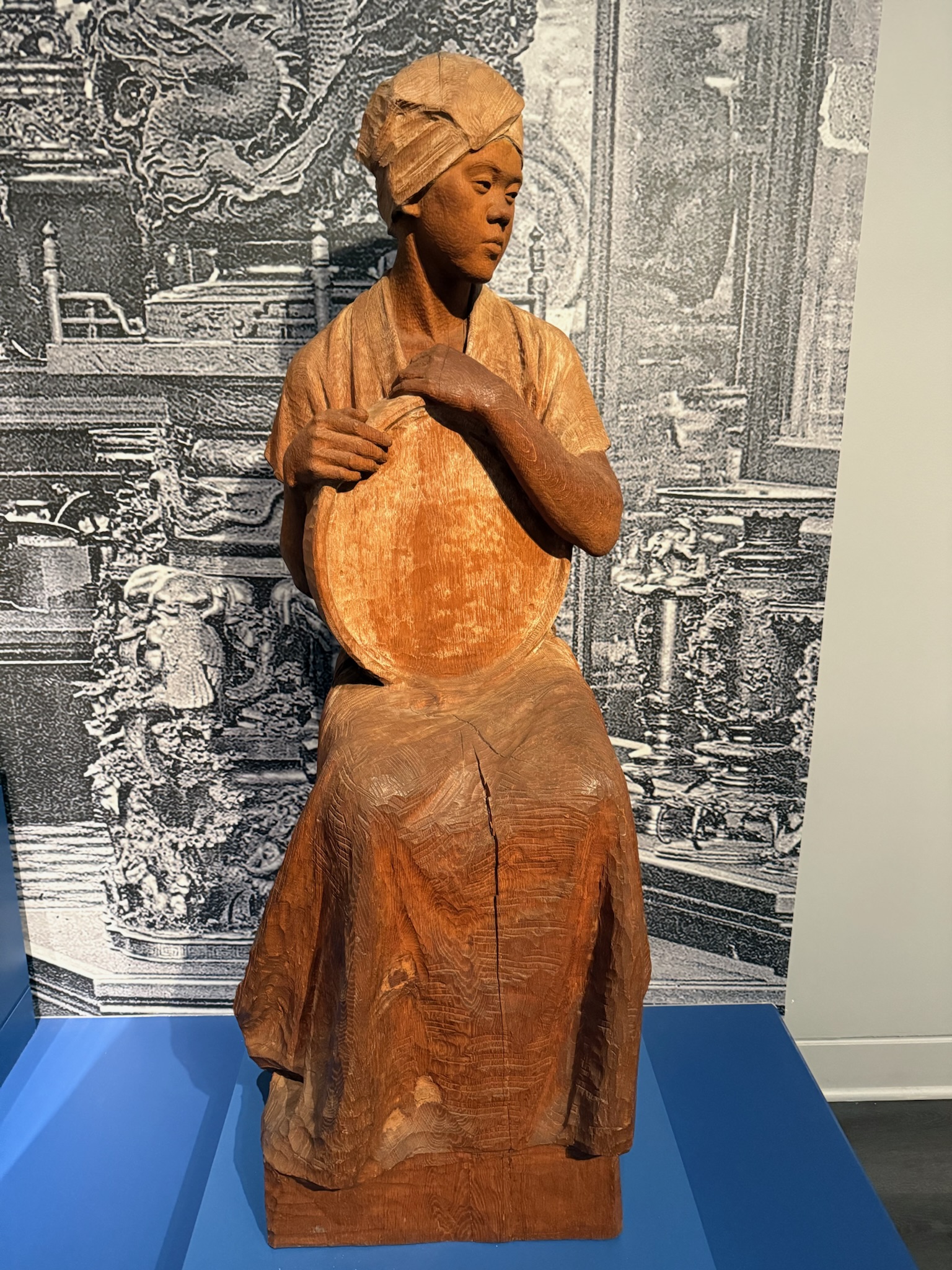
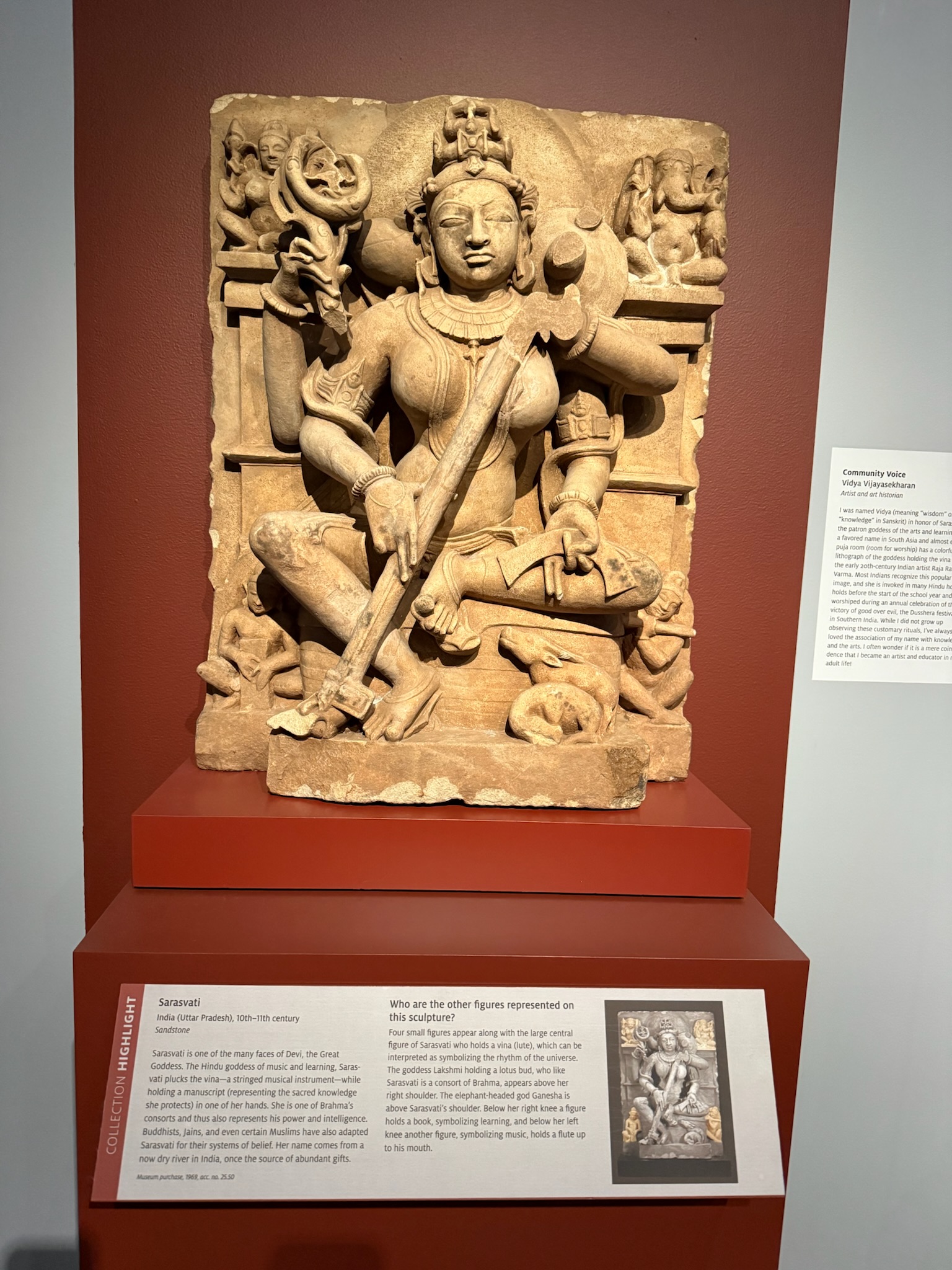
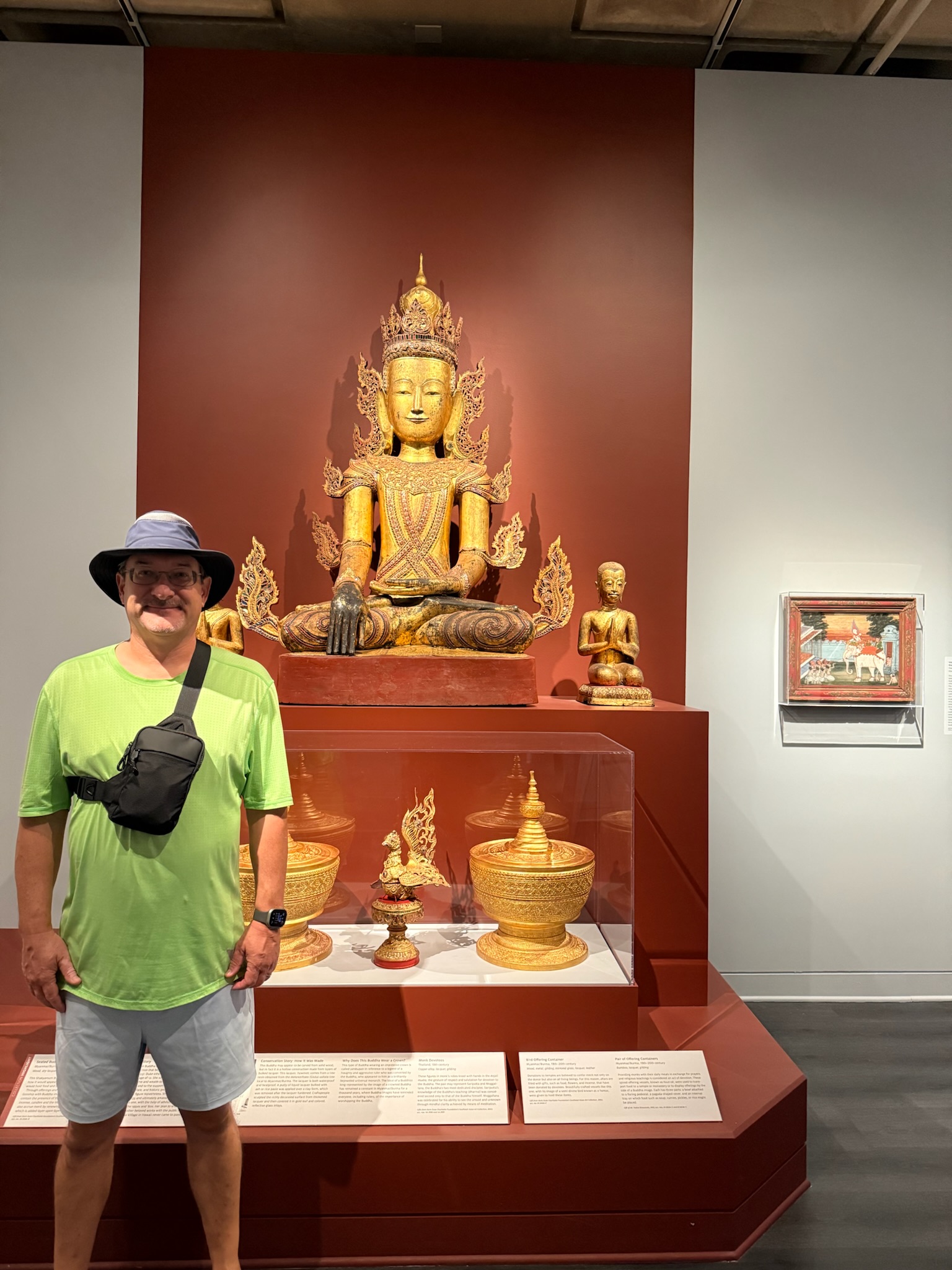
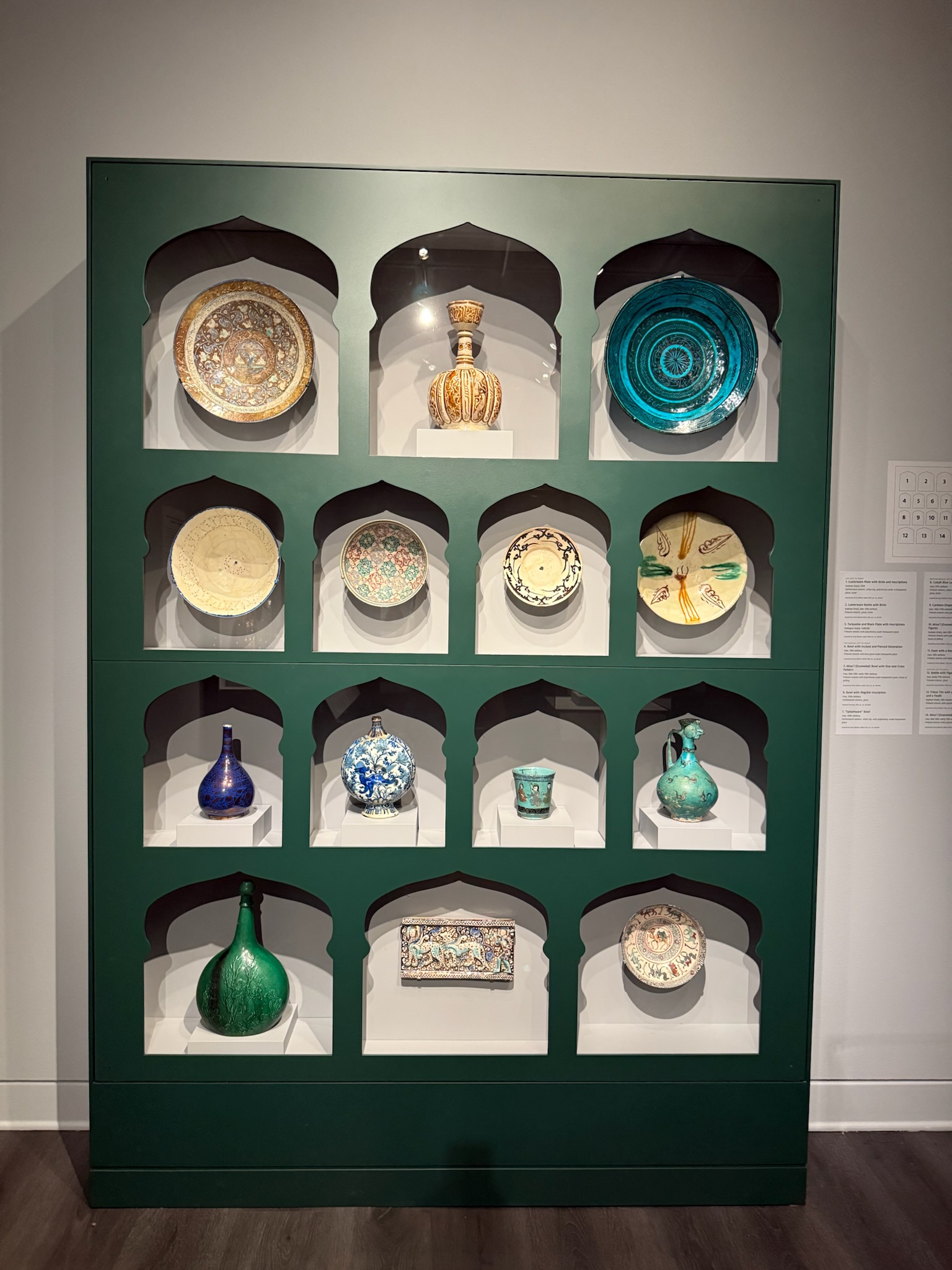
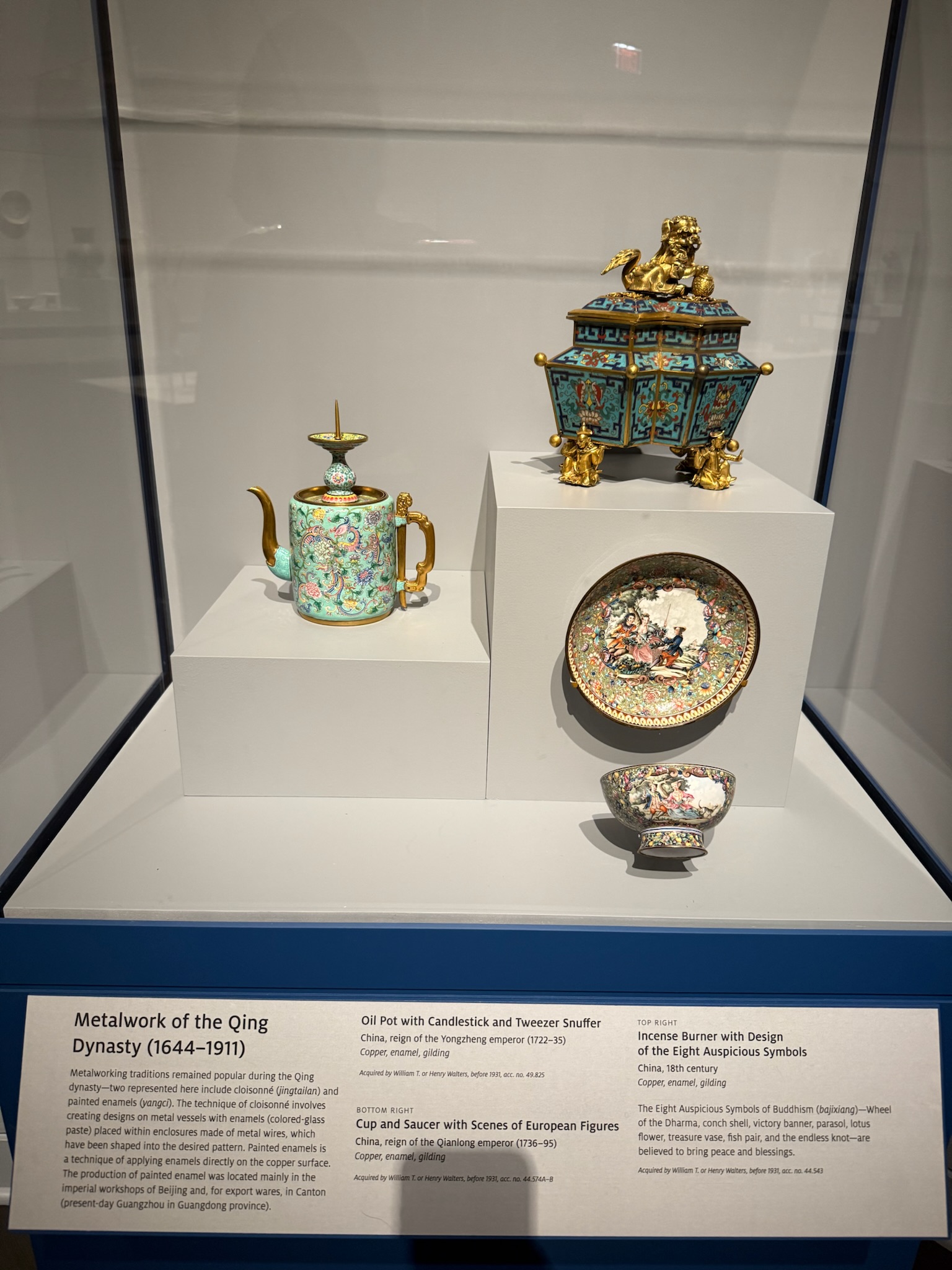
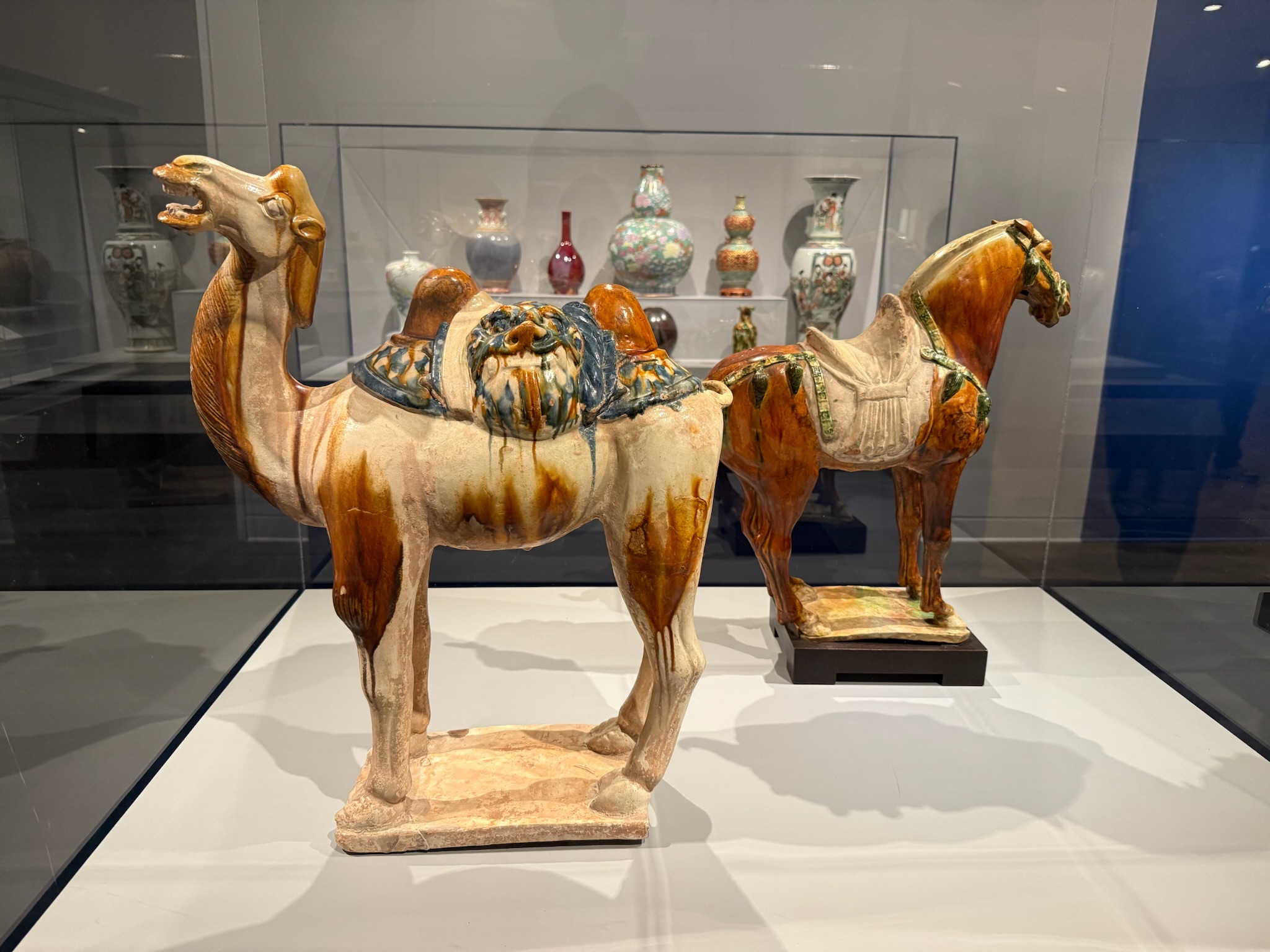
There was a little bit of weaponry/armory in this exhibit, too.
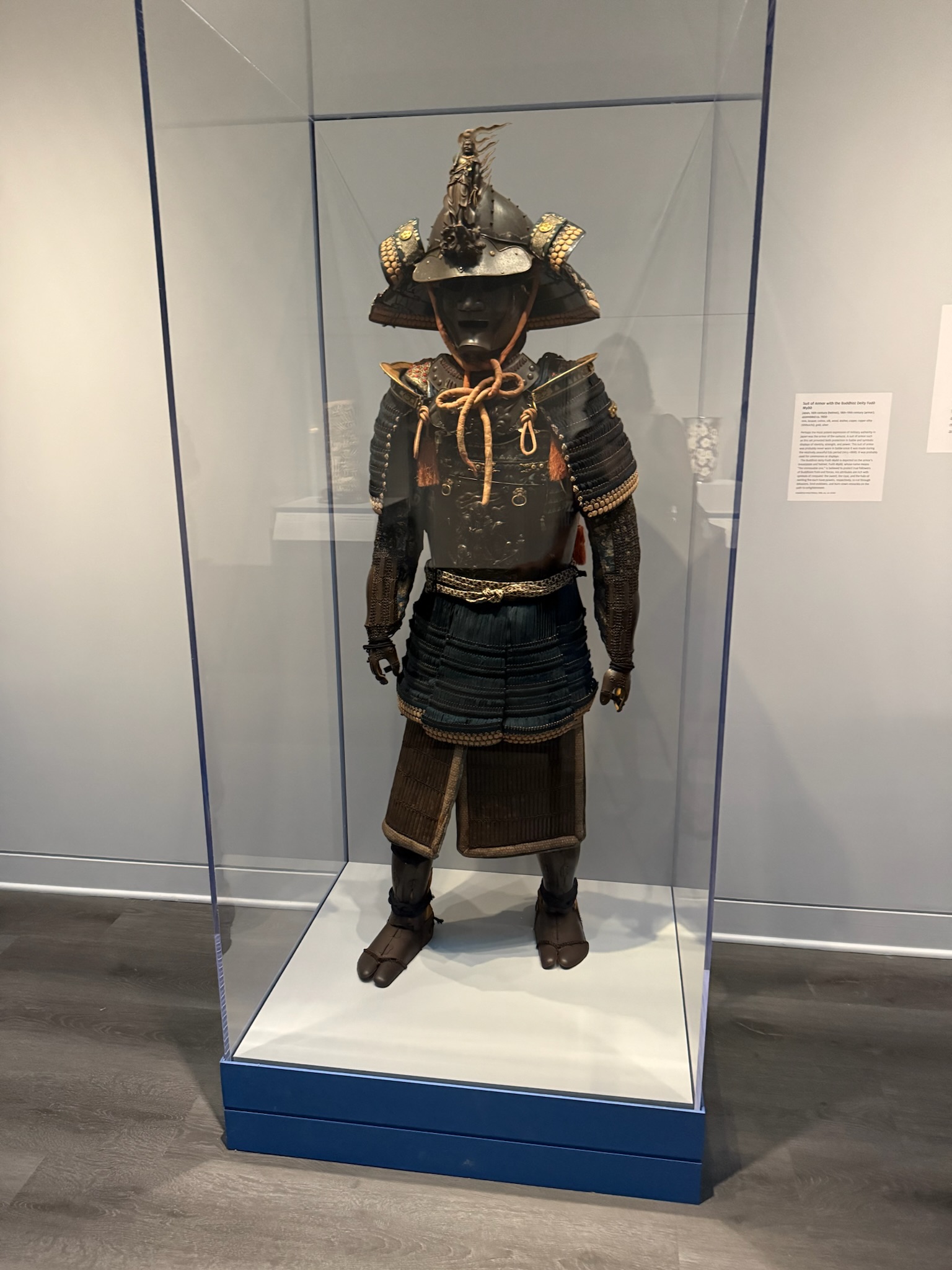
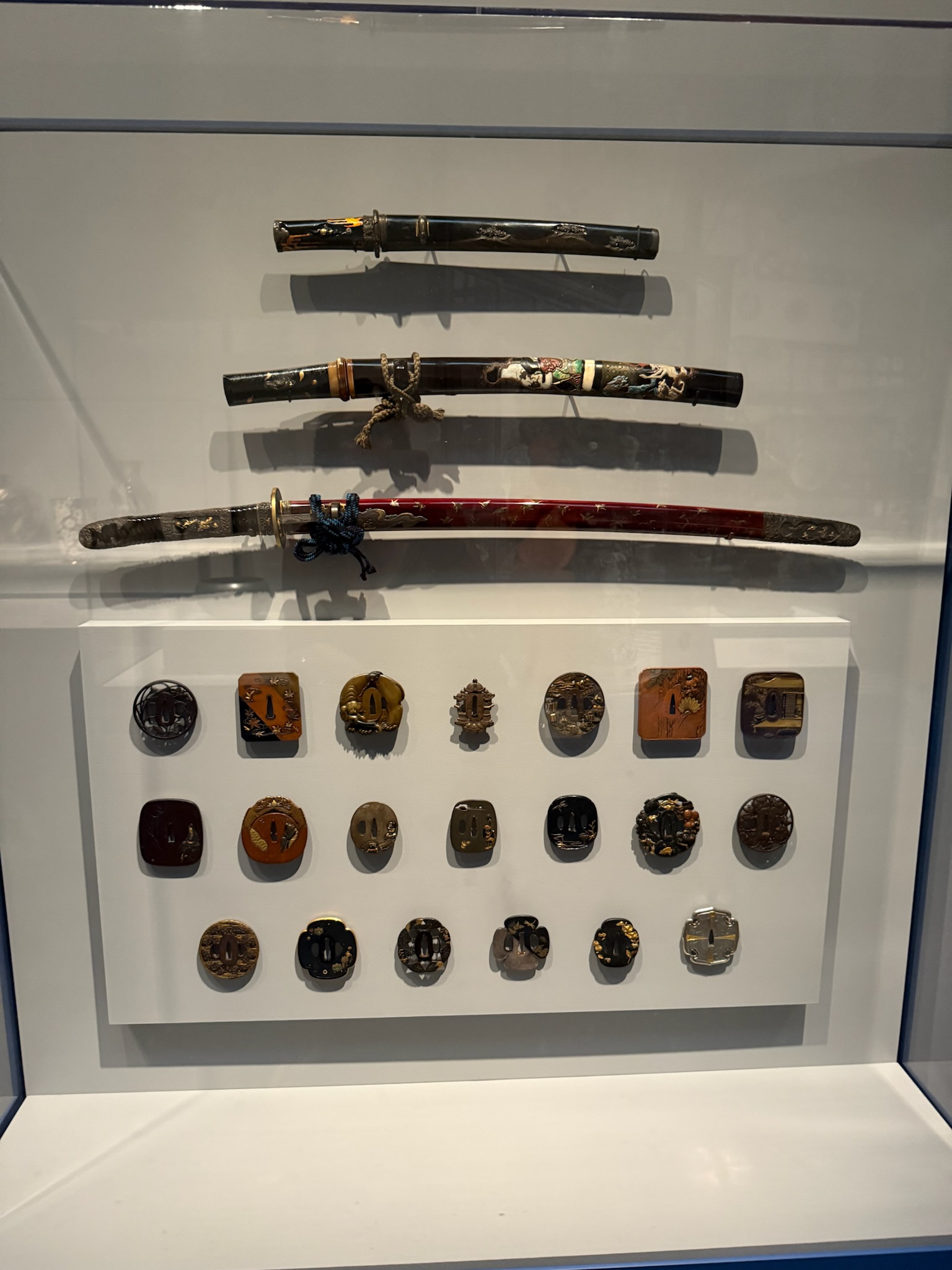
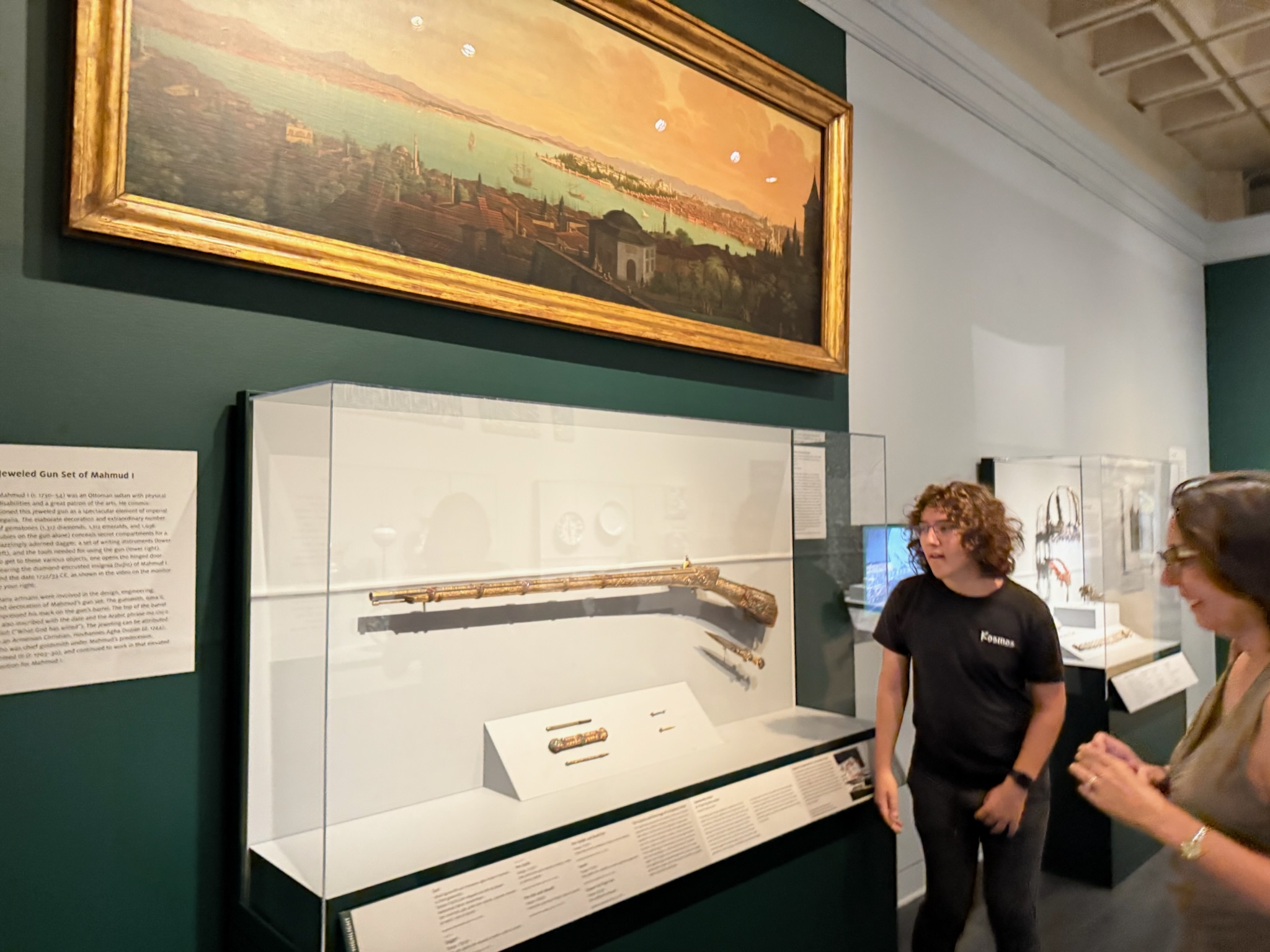
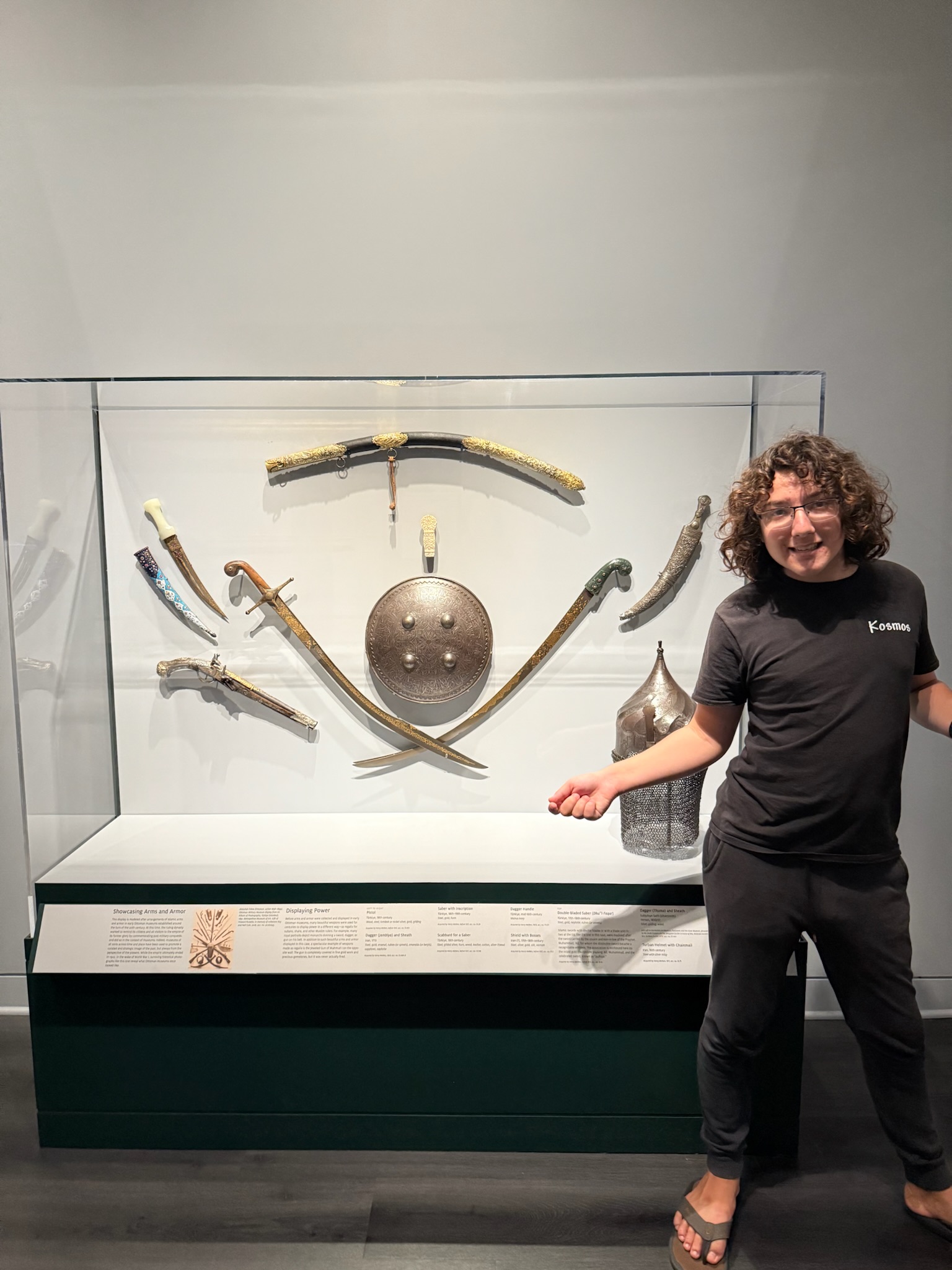
As you may have noticed in the first photo above, the fourth floor was quite small relative to the rest of the structure, but it was actually much bigger inside than we’d expected. After we finished the 4th floor, we went back down to the 3rd floor to see the European renaissance and baroque exhibit. We instantly knew when we’d crossed the threshold between the Centre and Charles buildings. Christi found the Charles building reminiscent of the original Getty Museum in Malibu.
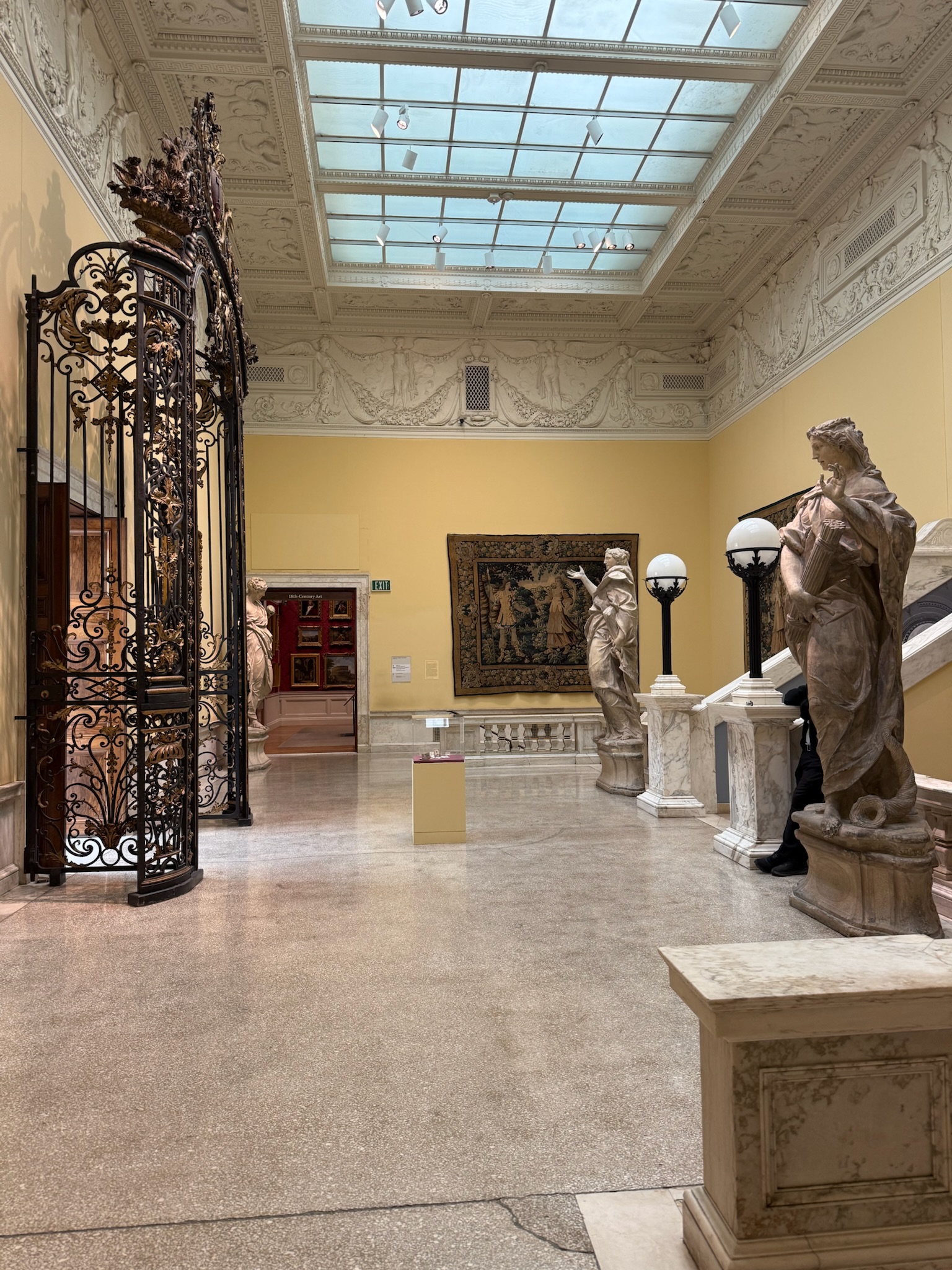
We weren’t sure where the massive group of seniors was at that moment, but after peeking in, we deduced that it was a big enough space that we could get around them, if needed. The exhibits we’d seen in the Centre building were much closer together and thus harder to navigate around than in this exhibit.
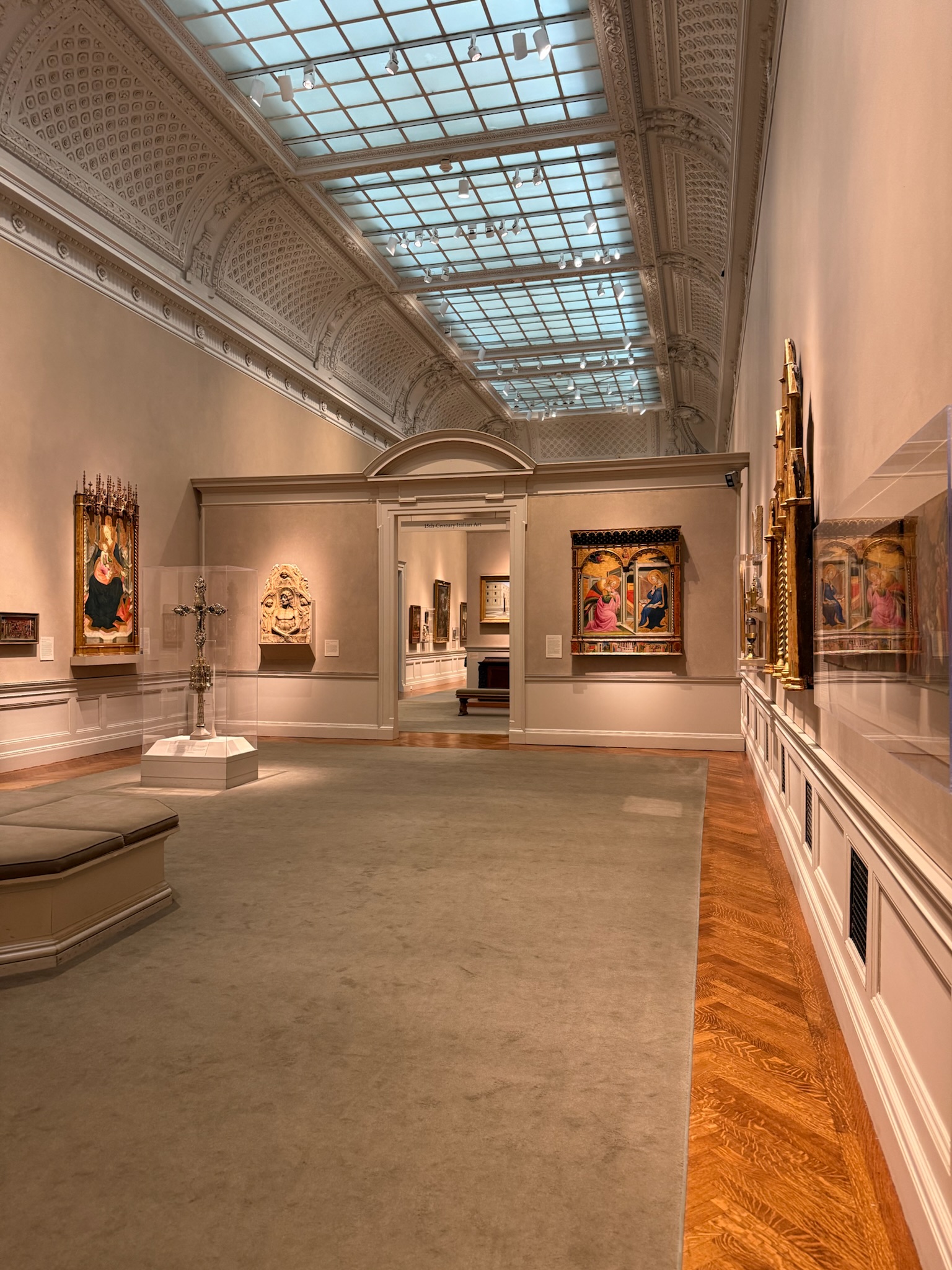
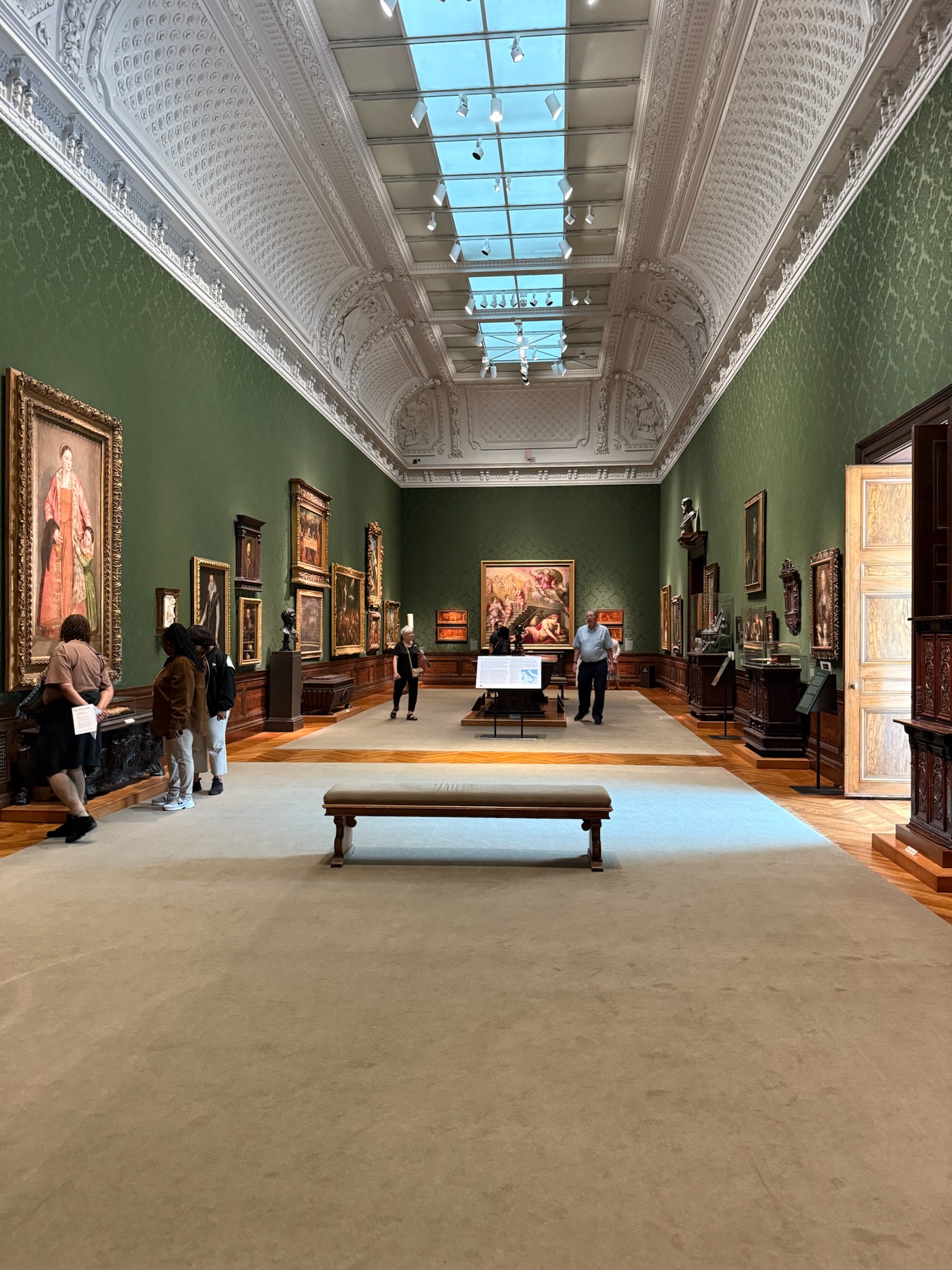
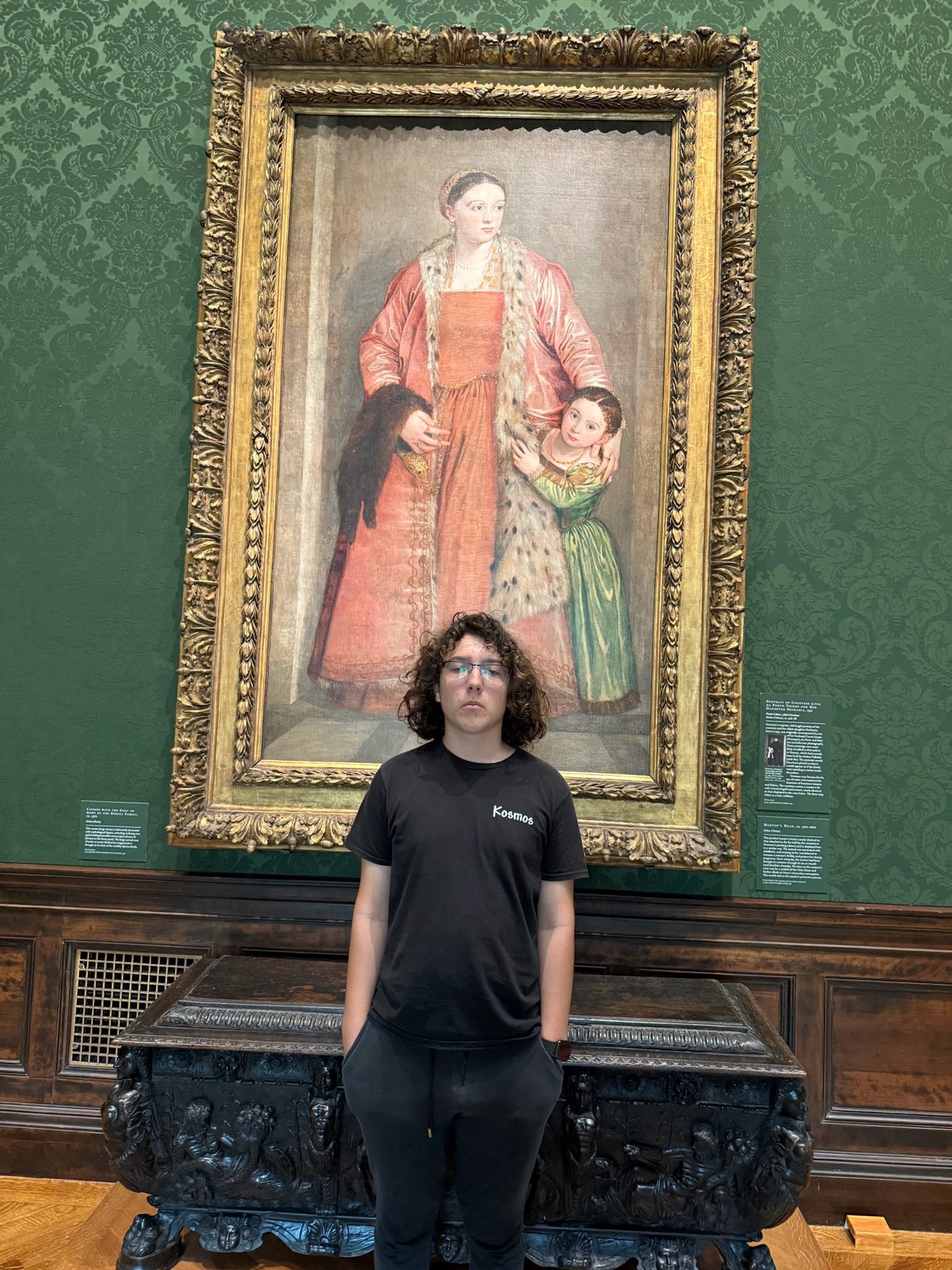
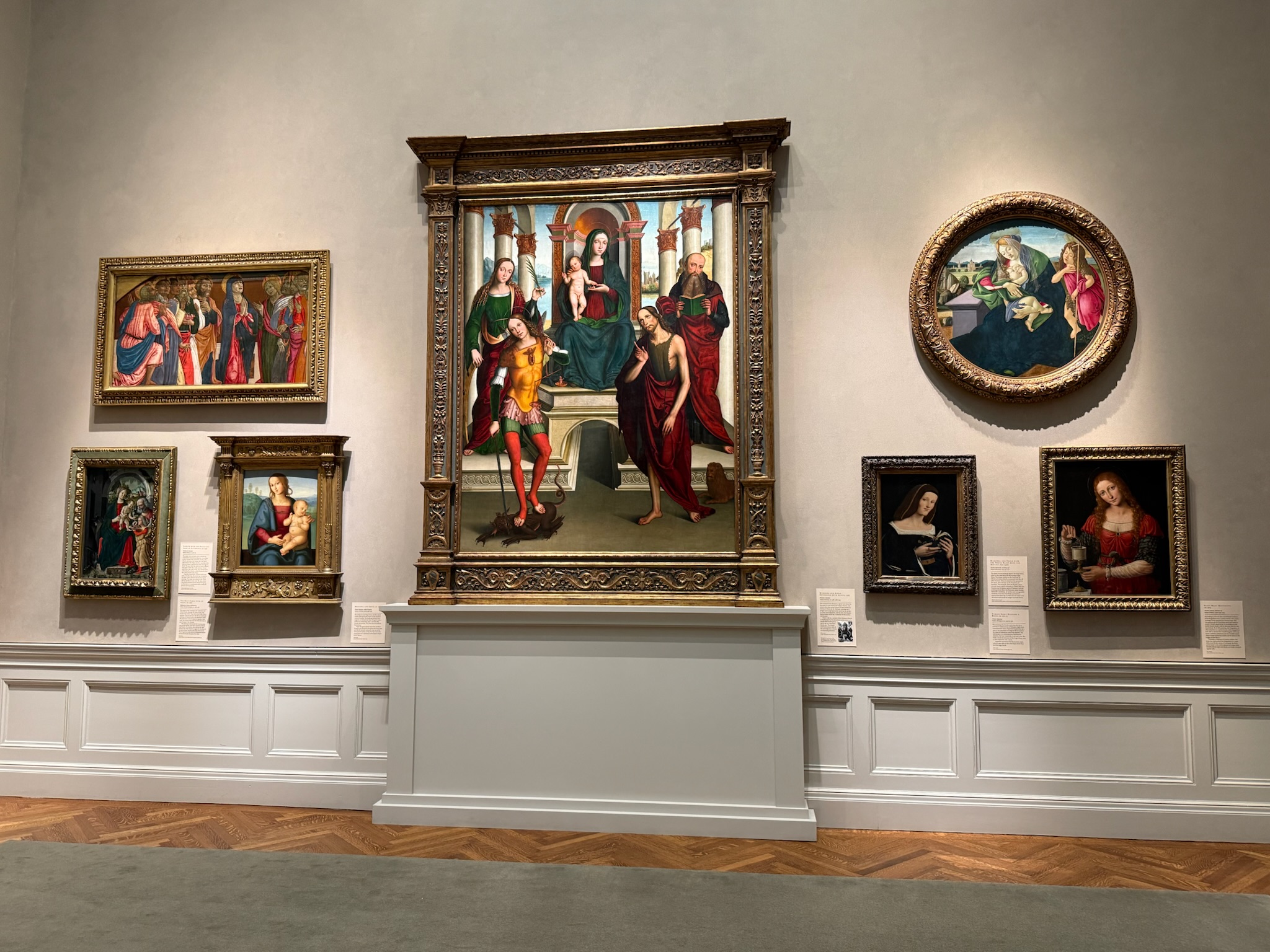
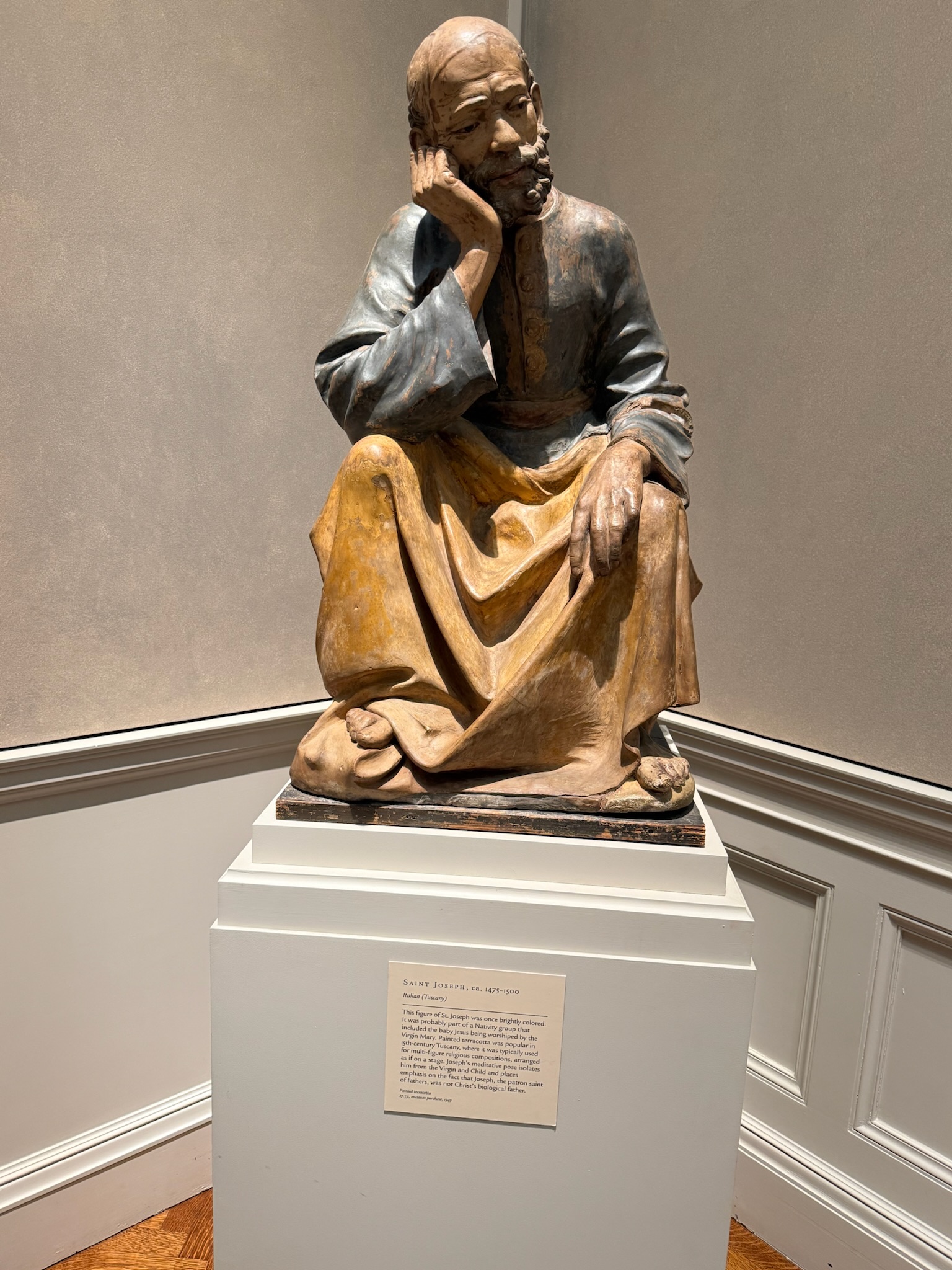
While this exhibit also had a wide variety of art mediums, the majority were large paintings.
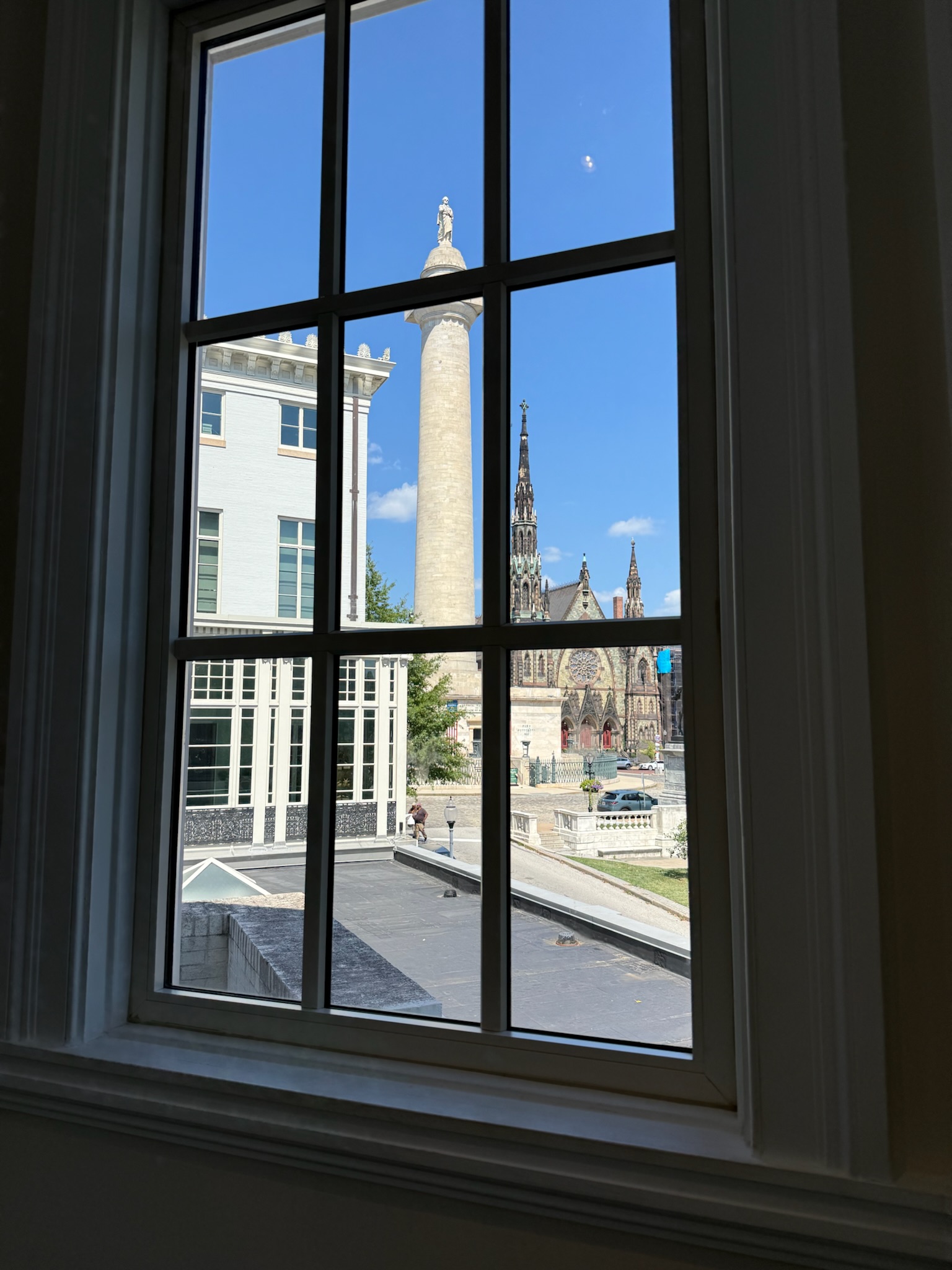
In the corner of the tan room was a doorway that led to a small alcove with a stairwell. The window in the stairwell had a clear view of the Washington Monument and the Methodist church next to it.
The next room in the gallery was similar to the first, though it had more pieces of furniture on display.