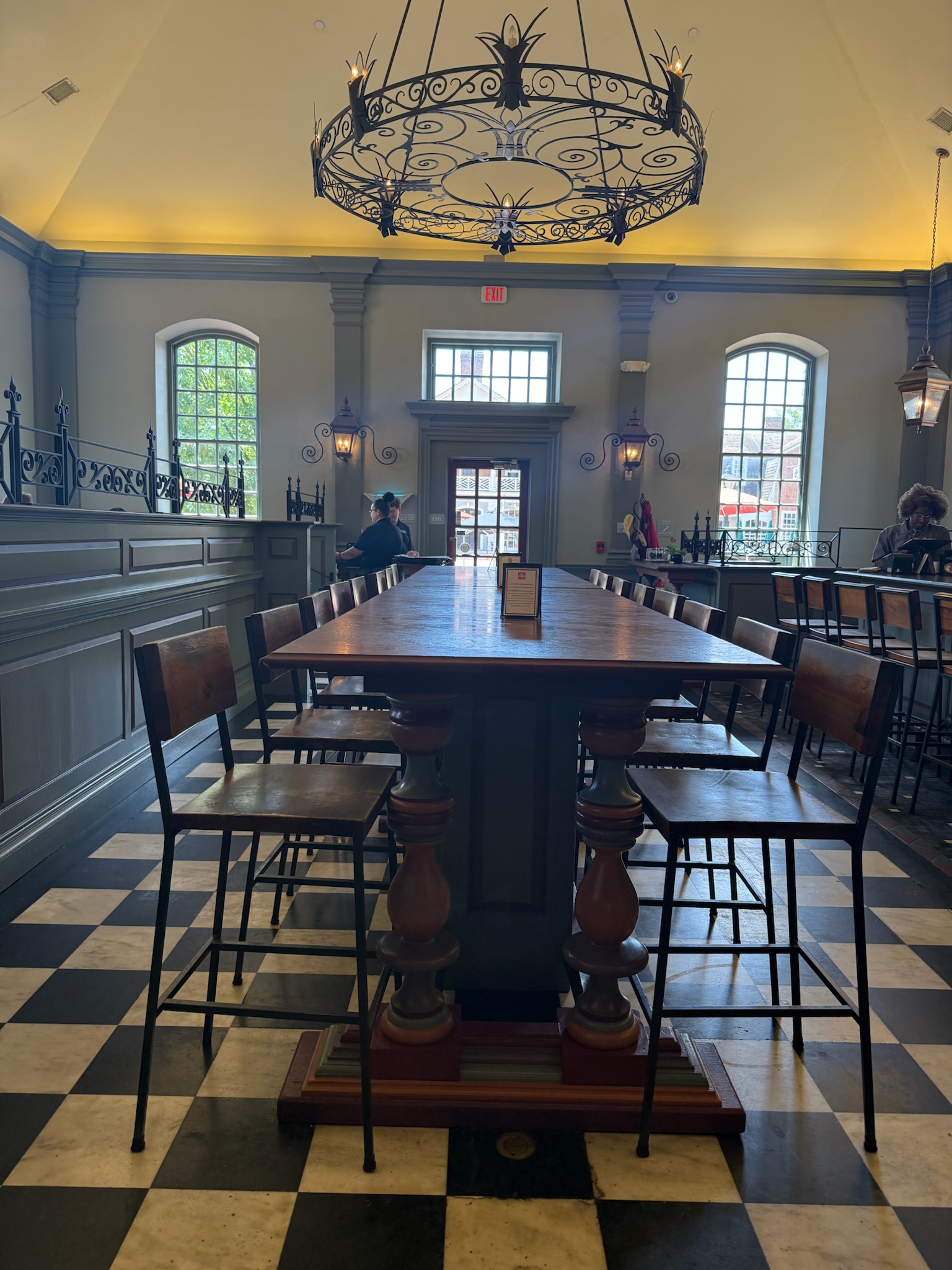
continued... We picked a restaurant called Dog Street Pub, which served traditional British food. It was decorated in the colonial theme and the staff wore period costumes.
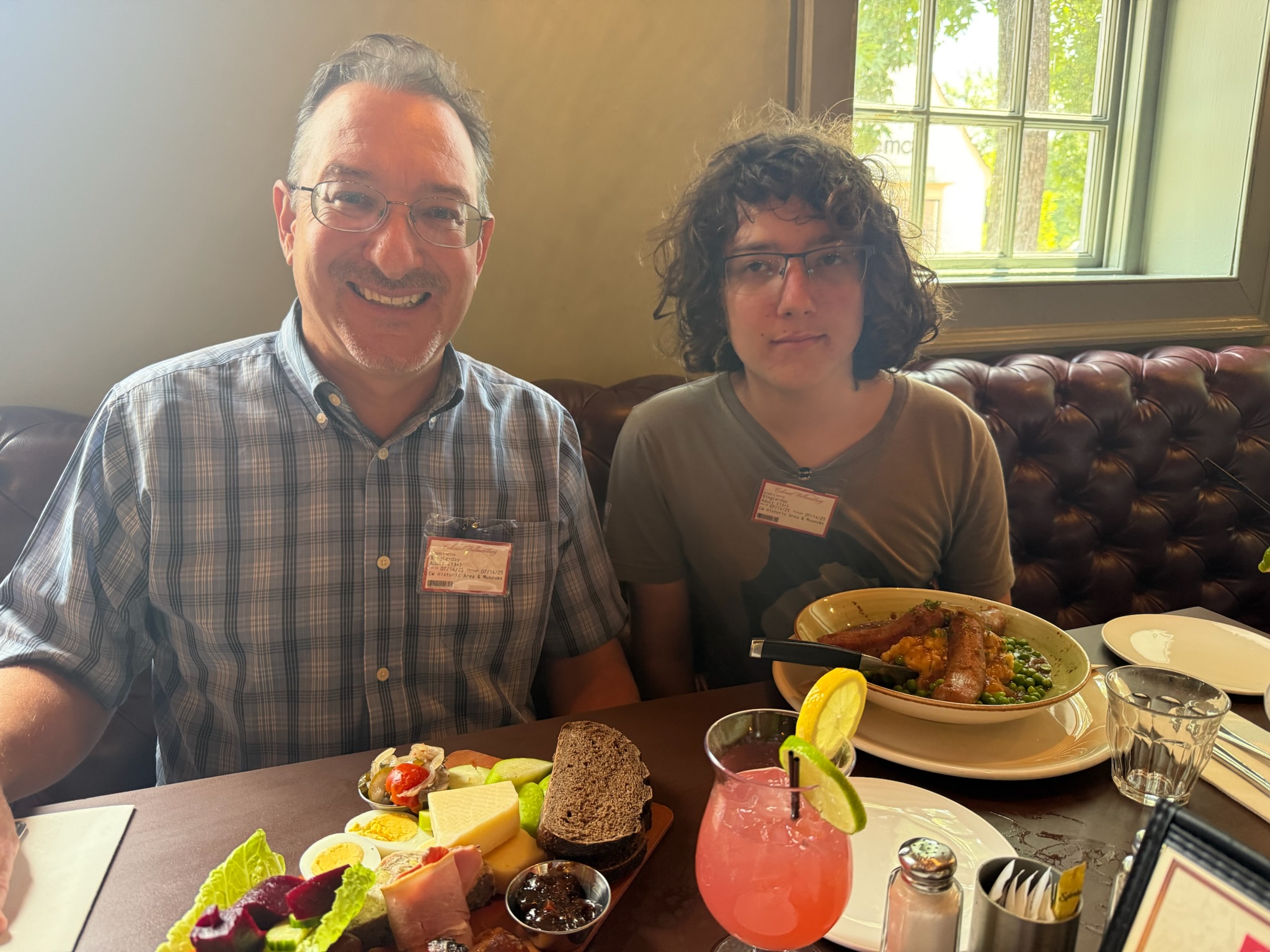
Eric ordered a sampler platter, which had ham, cheddar, stilton cheese (which wasn’t crumbly like Trader Joe’s stilton), apples, beets, hard boiled egg, salad greens, chutney and black bread. He loved it. Keith ordered bangers and mash, which was sausage served on a bed of mashed potatoes and peas and smothered in gravy. Keith liked the sausage and the potatoes, but he didn’t like the gravy… and since the gravy covered everything, he didn’t love his meal.
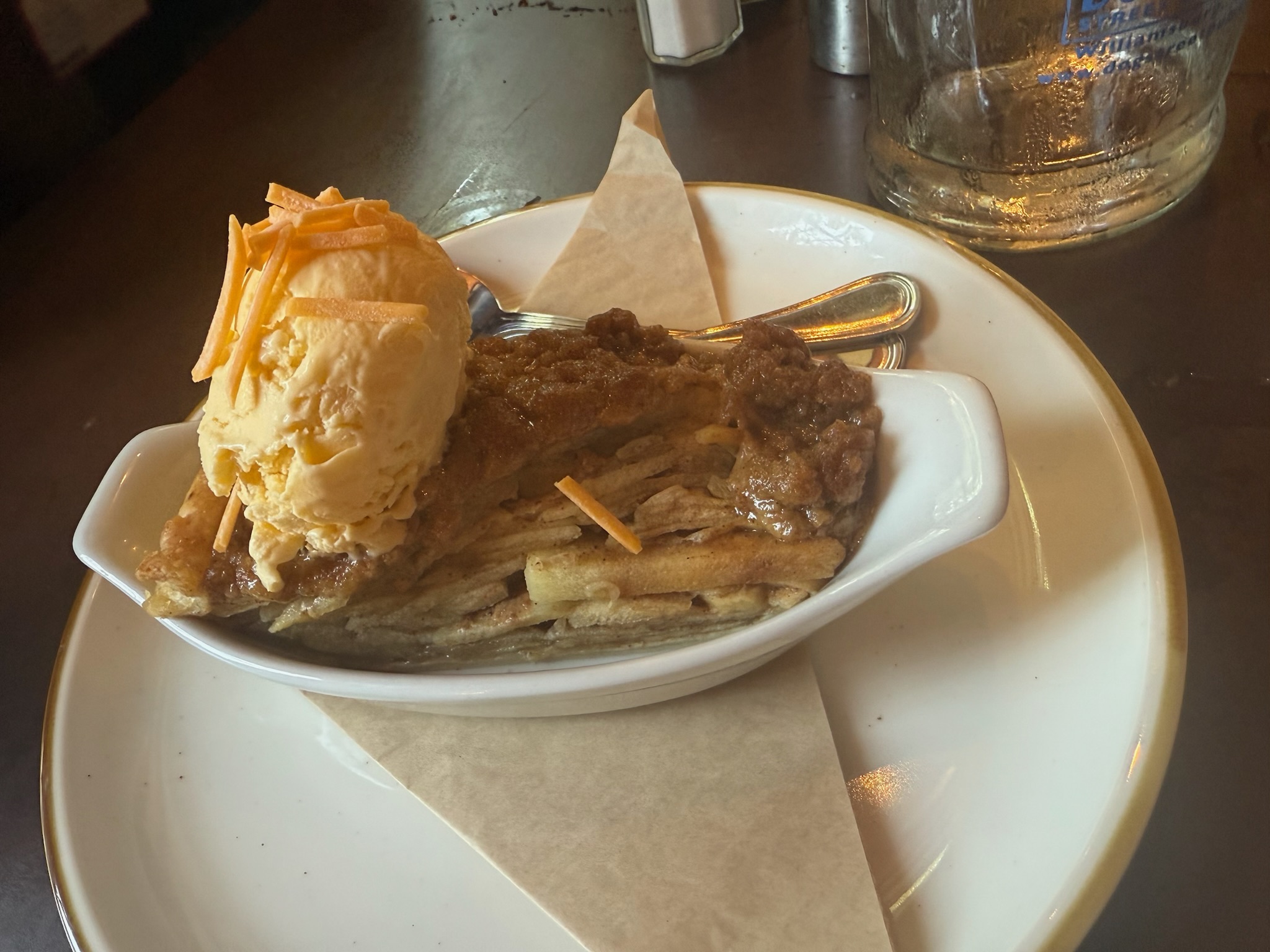
For dessert, we got a slice of apple pie with cheddar cheese ice cream to share. The cheddar flavor was very light. If we didn’t know it was cheddar, we would have thought it was vanilla ice cream that had orange food coloring.
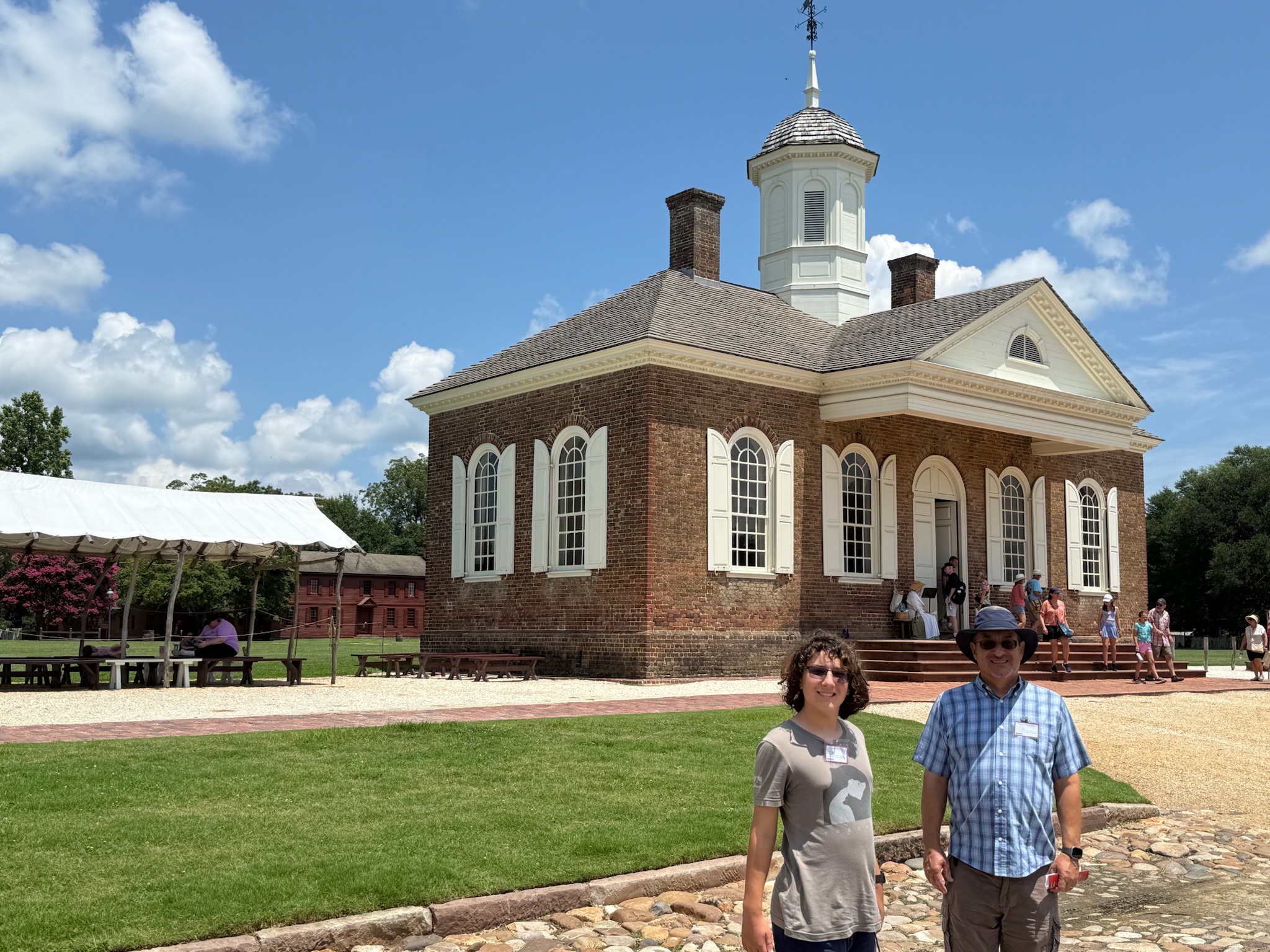
After lunch, we headed back east on Duke of Gloucester Street. Our destination was the courthouse, which was another half block east of the palace green.
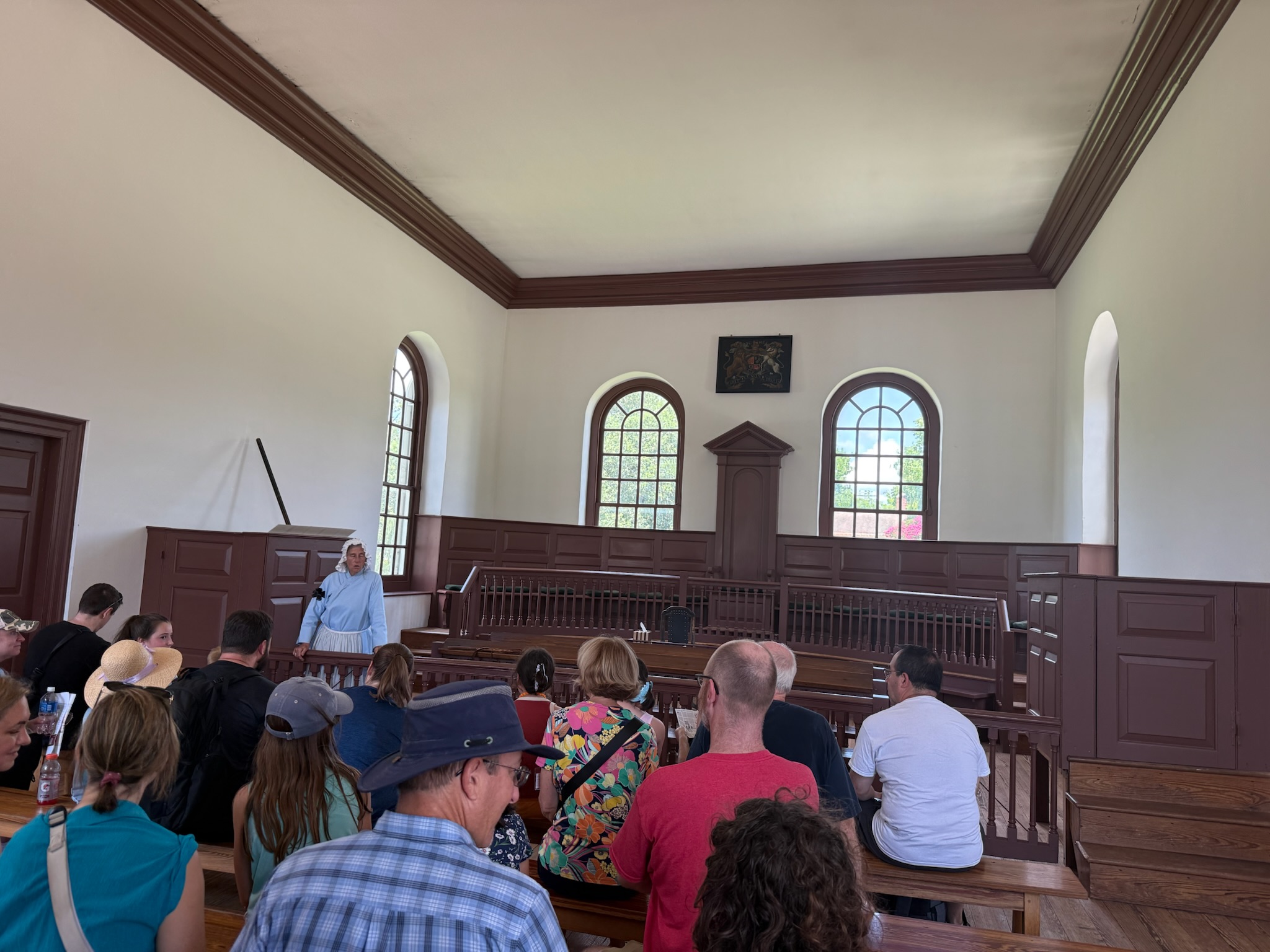
A woman was in the main chamber explaining what the laws were like back in the pre-revolutionary era.
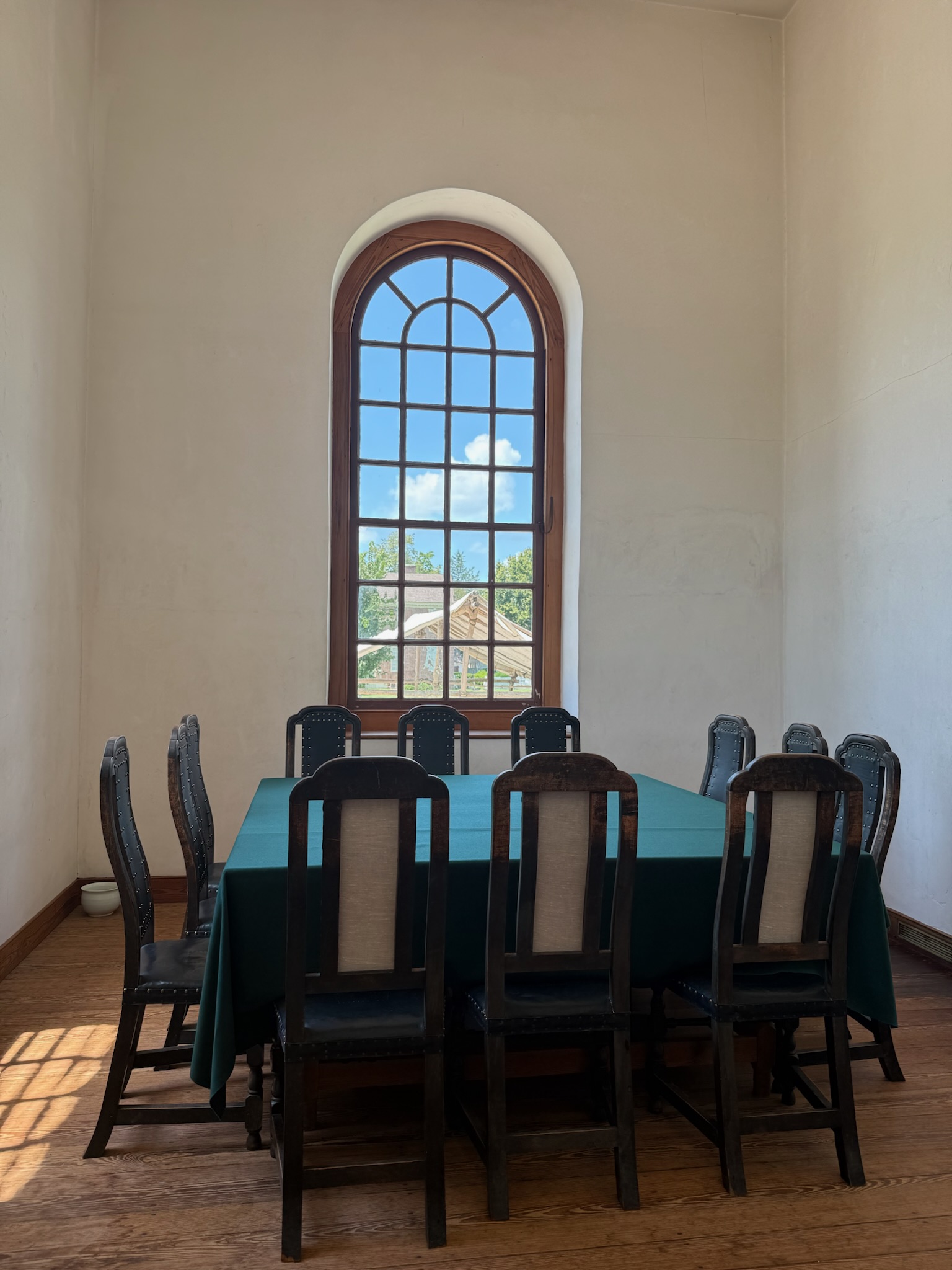
To the right of the main chamber was a small meeting room, probably for jury deliberations.
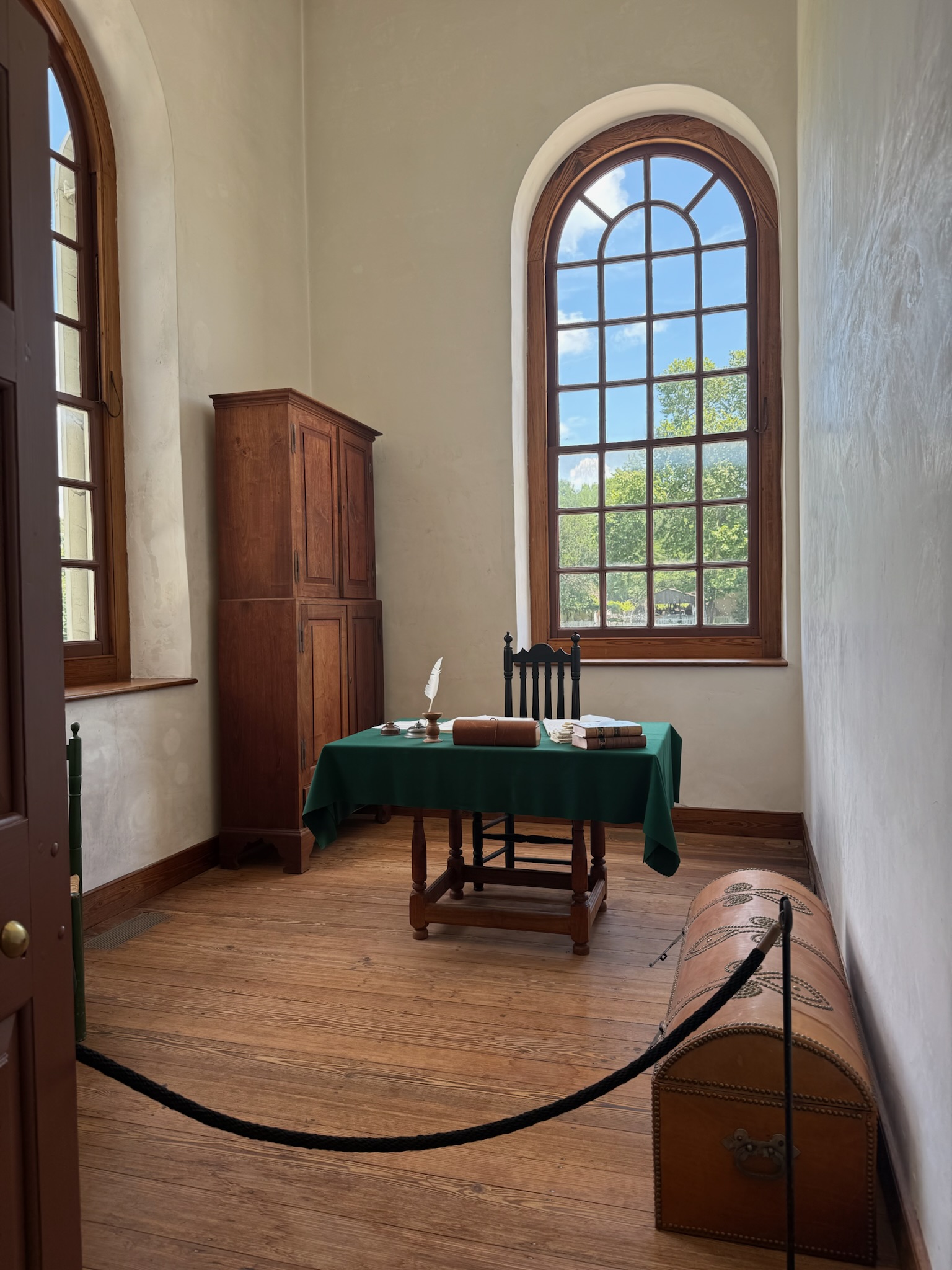
To the left was a small office, probably for the judge.
We sat down and listened to the woman talk for a while. The courthouse presided over misdemeanor and civil matters in the general Williamsburg area. Other areas had their own courthouses. The cases were heard by a jury. As we’d learned at Ft. Monroe and Jamestown, by 1774, In order to vote or serve on a jury, one had to be white, male, a landowner, a tax payer and part of the Anglican Church. People of color could only testify for/against people of their same color; they could not testify against a white person. Criminal matters were presided over by the House of Burgess, which covered crimes in all of Virginia.
She gave examples of laws that were punishable. Unfortunately, we didn’t remember any specifics, but we remember thinking that they were ludicrous. She said that the court system was a way the local government generated revenue. The punishments were usually fines. If one couldn’t afford to pay the fine, they could substitute two public lashings for every shilling.
She said that the courthouse was often packed with spectators. She compared it to watching Judge Judy on TV nowadays– many people find court proceedings to be generally interesting. And other people also like to stay up on the local gossip, and lots of dirt came out in court cases.
She gave a little bit of background on the terminology used in courts, which were based on the British legal system. For example, the area where the attorneys and judges sat was separated from the general seating area by a low fence. The fence was called a bar. One had to “pass the bar” In order to be allowed to sit on the other side.
She said that other denominations were suspiciously tolerated. They were allowed to have houses of worship, but when people were inside, the doors and/or windows had to be open so people outside could eavesdrop. If we recall correctly, she said non-Anglicans had to pay higher tax rates than Anglicans. She said that Virginia was one of the more free states in tolerating other denominations — in the states that had been founded on “religious freedom,” people were only free to practice their particular state’s denomination; they weren’t “free” to practice any religion they desired.
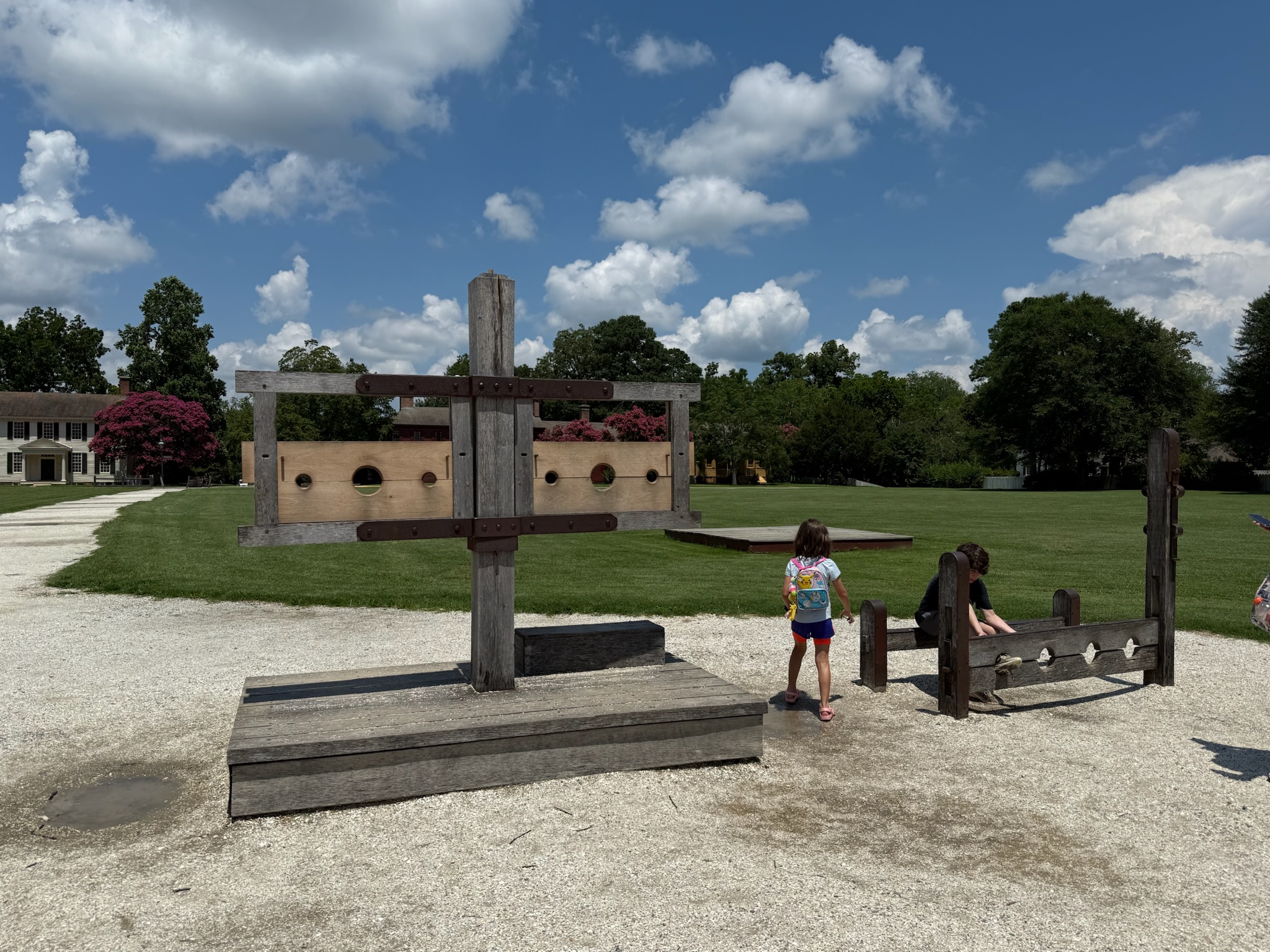
Christi could have probably listened to her all day as she was interested in law, but Keith was bored and complained that he wanted to move on to the military encampment across the street, so we headed out. On the way out, we stopped by the gallows/lashing area.
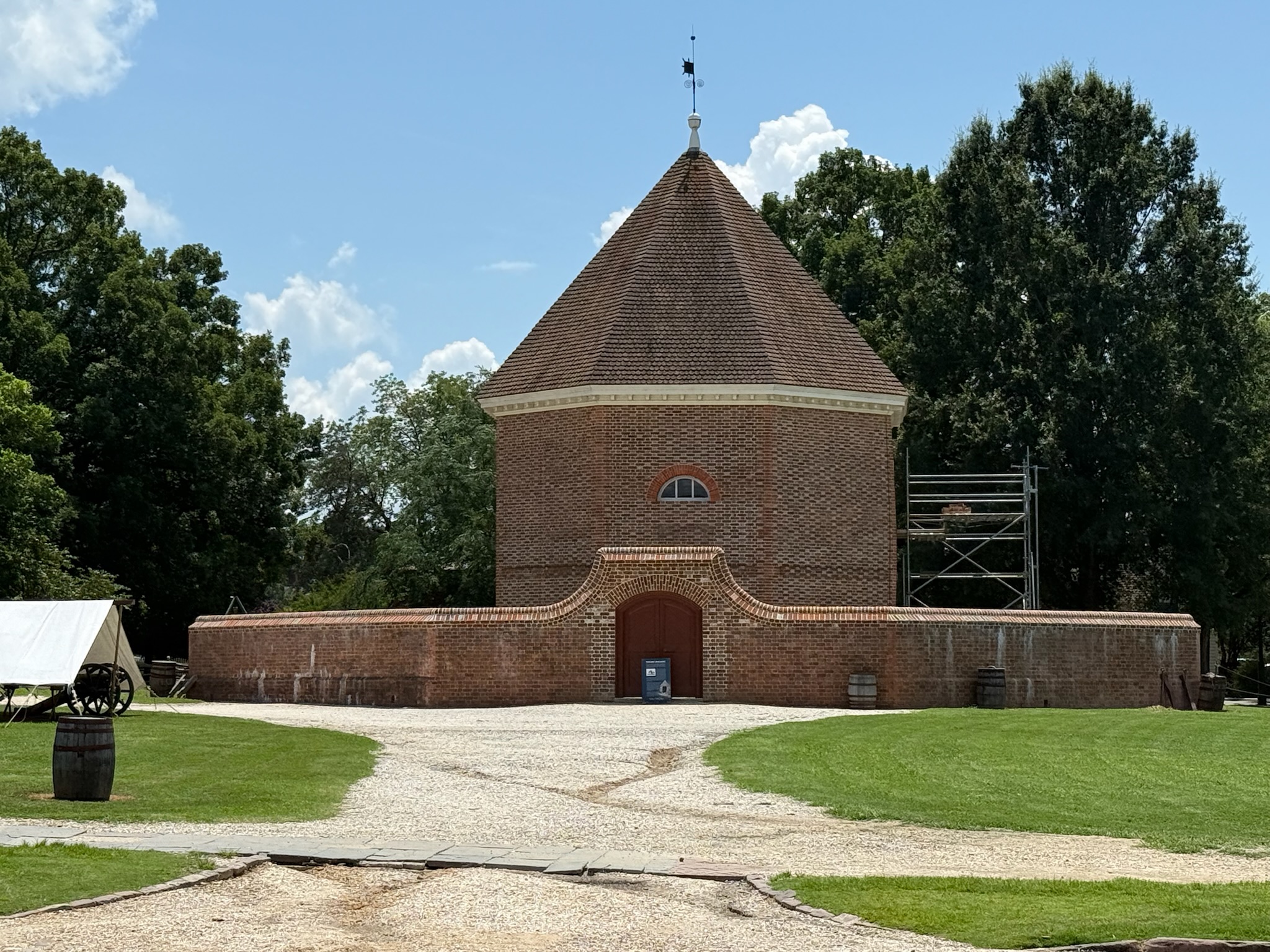
Across the street from the courthouse was the powder magazine, which was built in 1714. In the tour at Ft. Monroe, the guides had told us that by the time of the revolution, each man was required to have their own gun and bullets, but the gun powder was provided by the government. It sounded like this powder magazine stored all of the town’s gunpowder and other military supplies. When Lord Dunmore ordered the gunpowder and gunlocks to be seized in April 1775, he had the military sneak them out in the middle of the night. When the people noticed the gunpowder was gone, they took to the streets demanding its return. The news spread to the other colonies and increased resentment towards the British Crown. The building served as ammunition storage until 1781. Over the next century, it was used in many different ways — as a market, church, dance hall, and stable. It was currently closed as they were renovating it to look more like it had in 1775.
In front of the powder magazine was a grass area with several small tents.
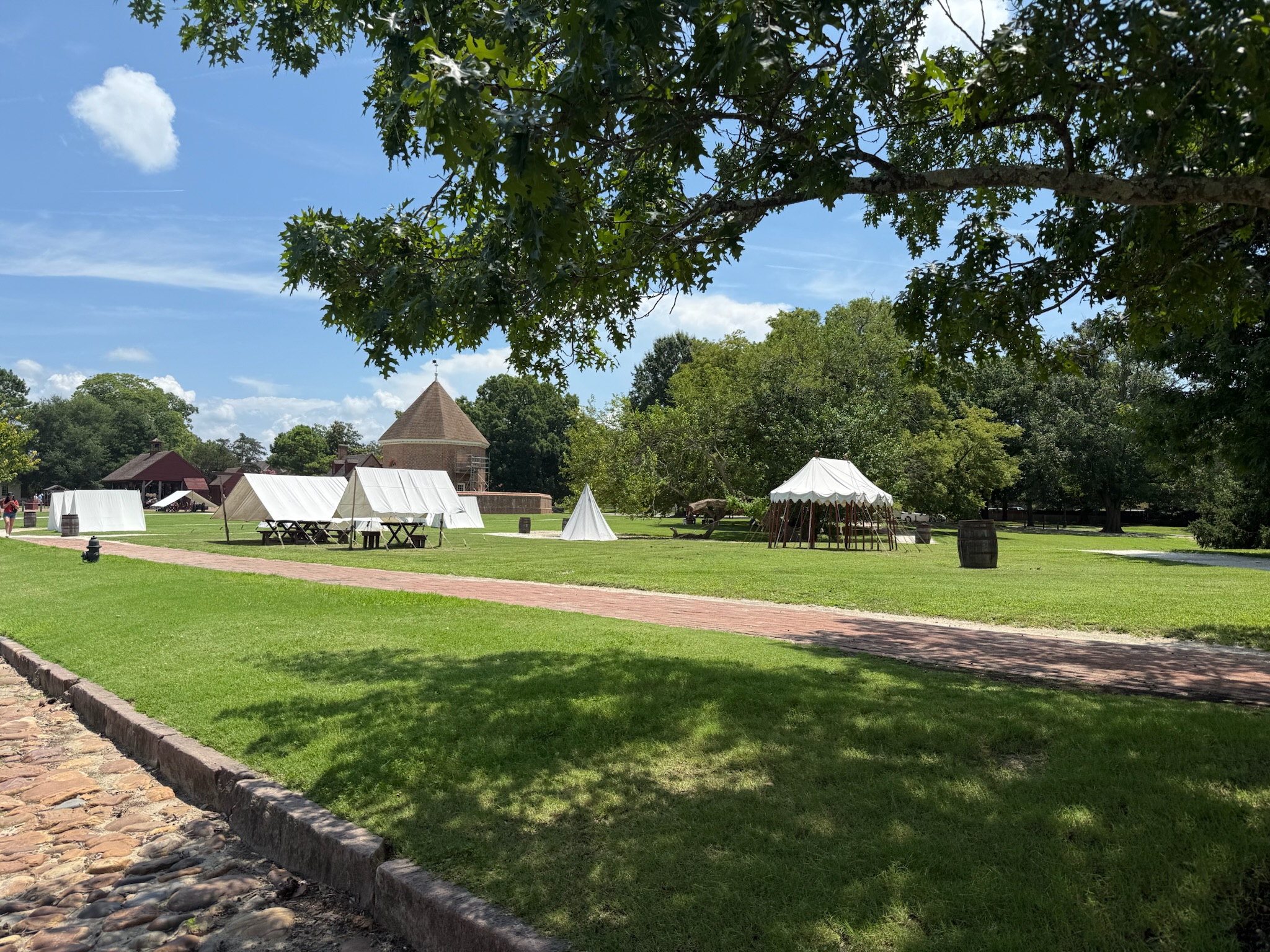
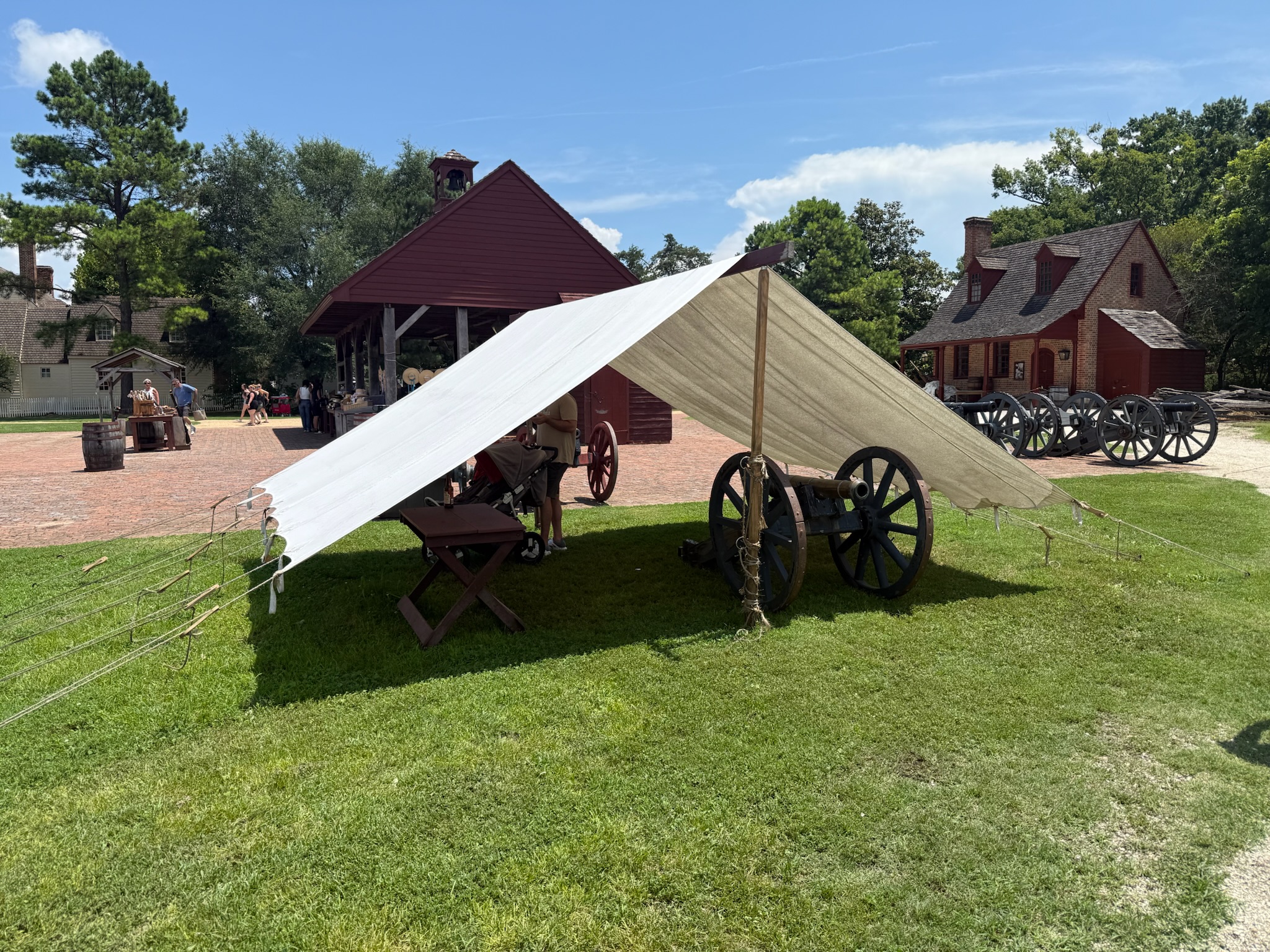
An actor dressed as a soldier told us that the main military camp had been located on the western edge of town, just past the merchant zone in what was now the edge of William and Mary College. However, there was always a garrison camped out in front of the powder magazine to protect it.
We’d asked him why they’d chosen Williamsburg as the new location for the capital. He said that in Jamestown, they had gotten their water from the river and they’d had issues with water contamination. Williamsburg had aquifers, so the water was cleaner. It was on slightly higher ground than Jamestown, so there was less concerns with flooding. It was also an easier to defend area, militarily speaking. A bonus was that some land had been cleared for agriculture that was available to build the Congressional building on, so having a ready to build lot was enticing. He said that when Williamsburg was chosen, there was really nothing there beyond some farms and William and Mary College. The town developed because of the Congress. Duke of Gloucester Street emerged as the main drag because the Congressional building was on the east end and William and Mary on the west end.
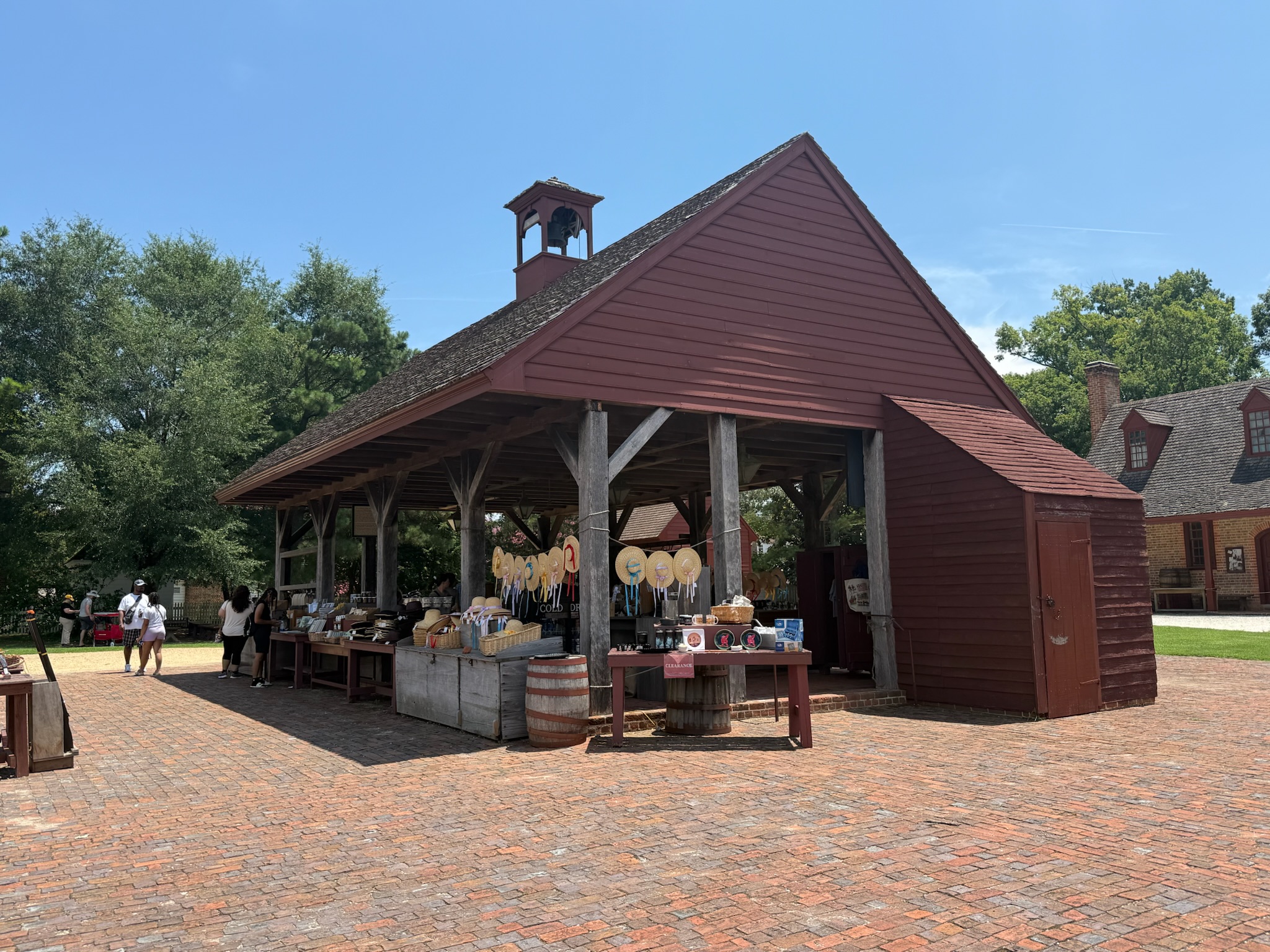
Next to the powder magazine was the public market, which back in the pre-revolutionary days, was a hub of activity. Nowadays, it sold mostly tourist souvenirs, though there were some snack food, too. A sign that was presumably a replica of a sign that would have been posted in the pre-revolutionary era said that the public market was only open certain hours and was only for people to purchase necessities for their own households. Anyone caught selling outside of operating hours or reselling would be fined and have the goods confiscated.
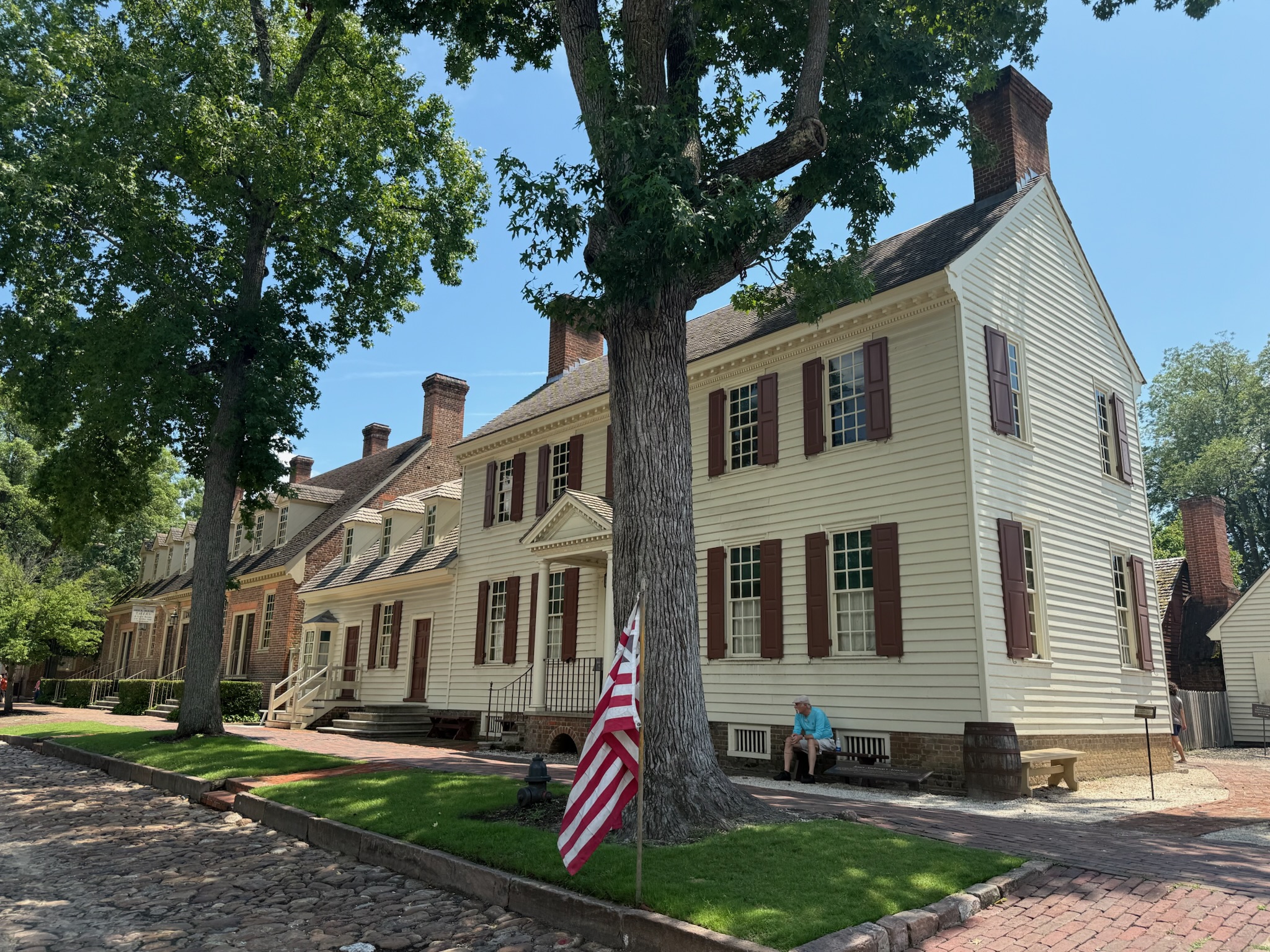
We continued east down Duke of Gloucester Street until we got to the Blacksmith and Tinplate shops, which was located behind one of the homes. The map indicated this home was not owned by the foundation and it didn’t look to be open to the public, so it felt kind of weird to walk into its back yard.
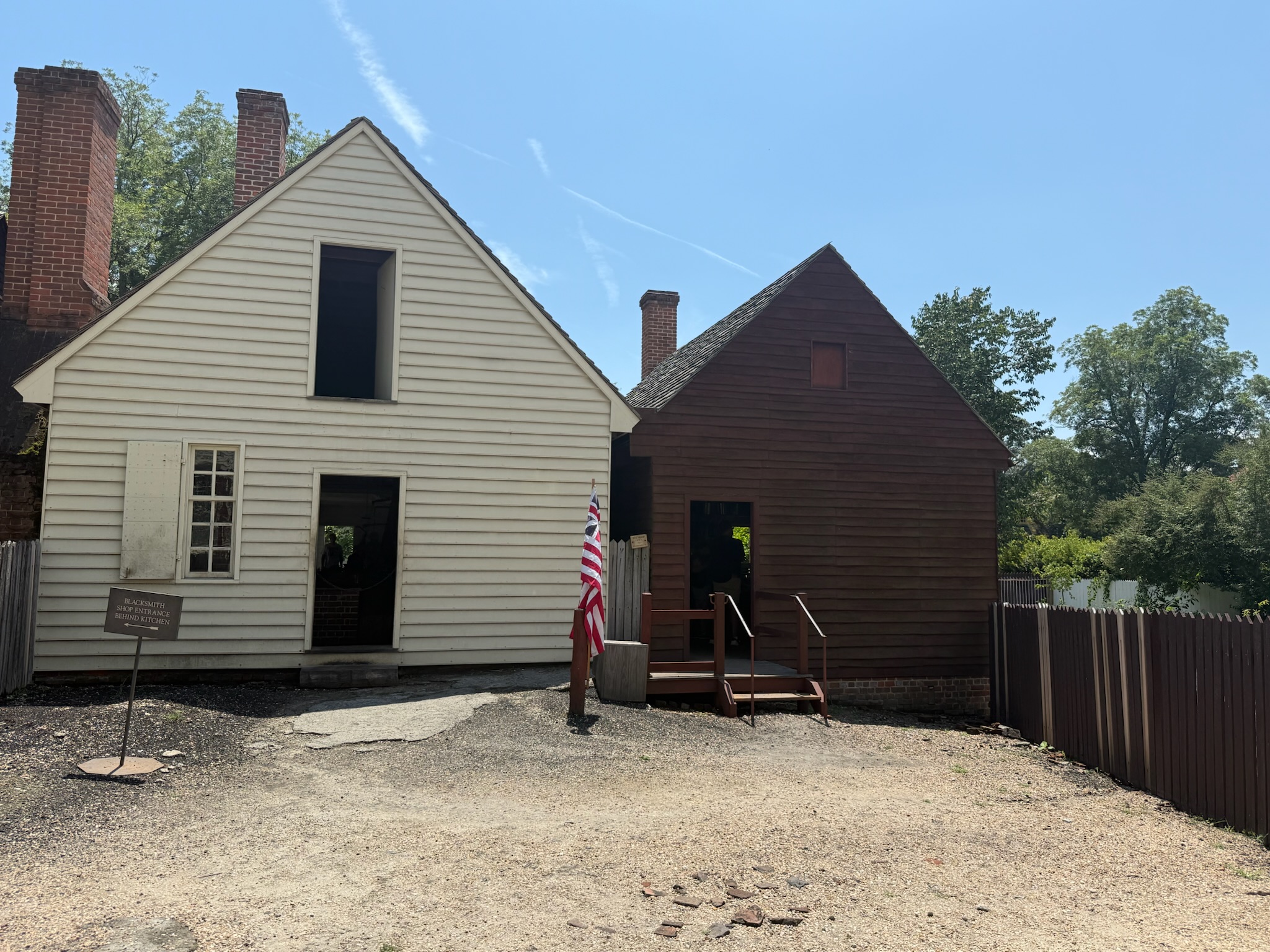
The white building was the blacksmith shop. We think the brown building was tinplate, but we didn’t go in that one so we weren’t sure.
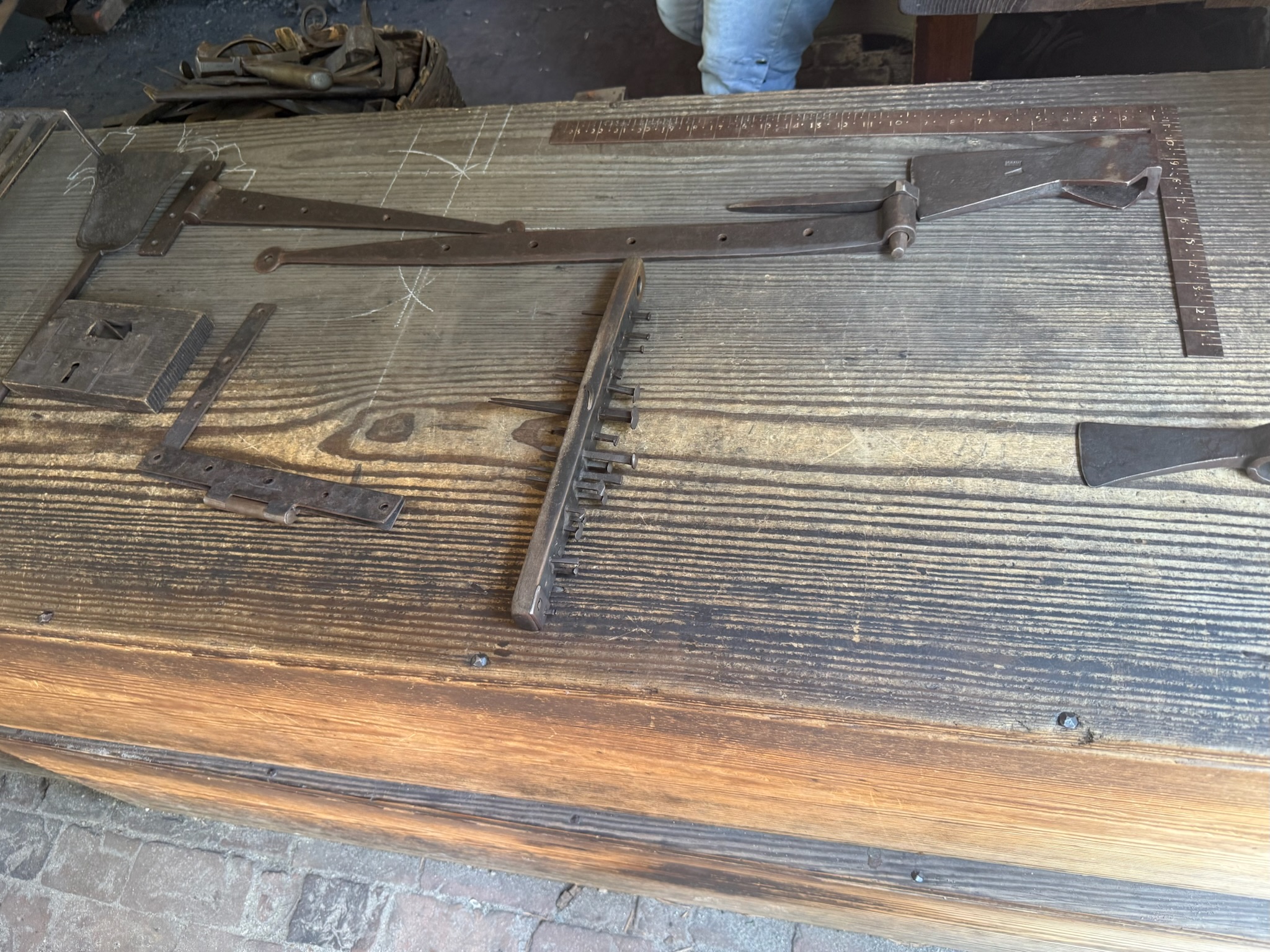
When we walked in, the blacksmith was in the middle of making something. Apparently, most of the items used in the various restorations were fabricated right here, including all the nails.
They said that they really only had a little over one-minute to shape the metal before it needed to be reheated. Each time it had to be reheated, the smith had to stop and wait, so the slower the smith was at shaping the metal while hot, the exponentially longer it took to complete each project. It took 3 – 4 years to become a master blacksmith that could quickly and efficiently shape the metal into complicated pieces. There were many items on display, all made in-house.
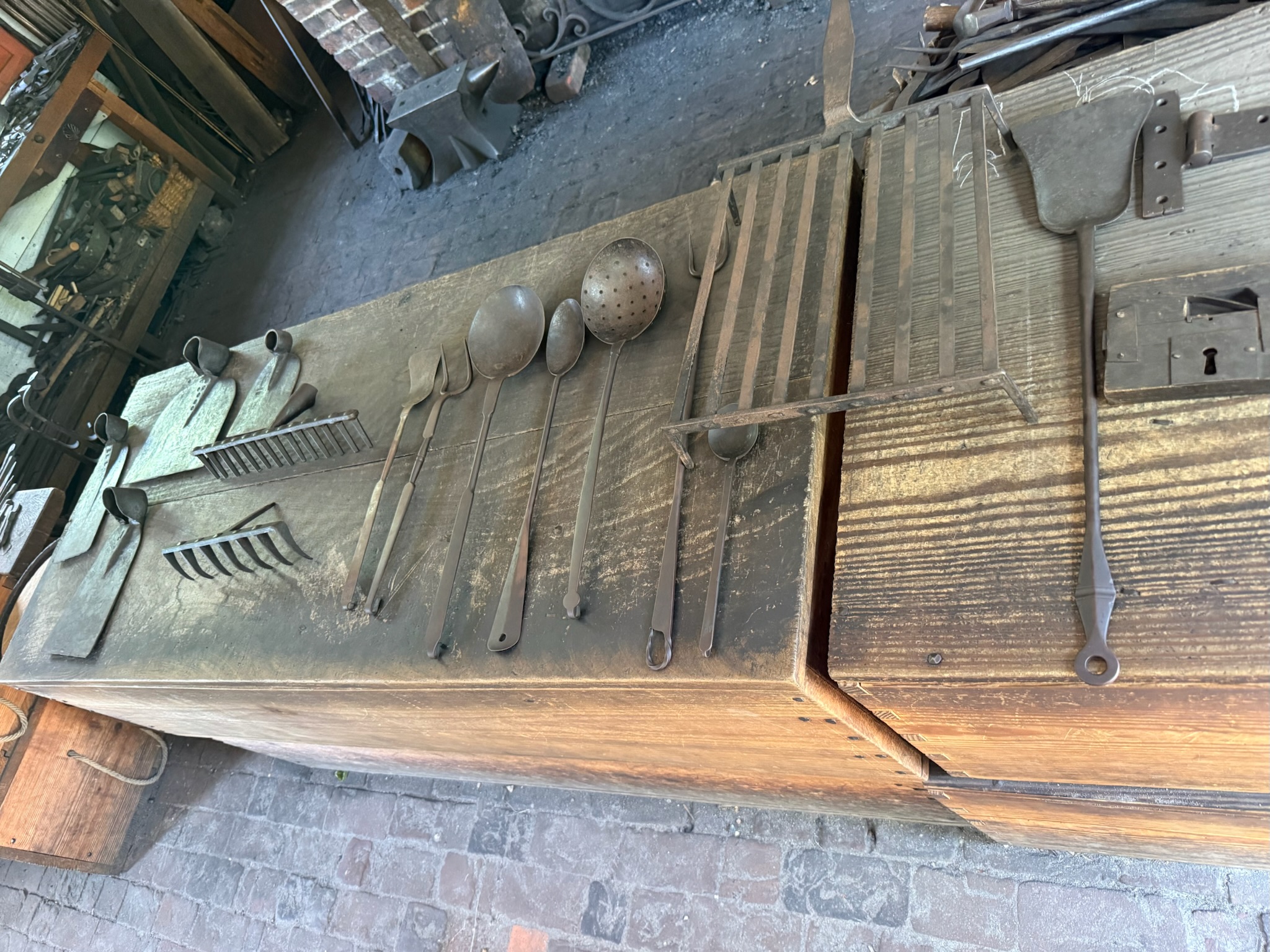
They even made some of the tools that the builders used to do the renovation work.
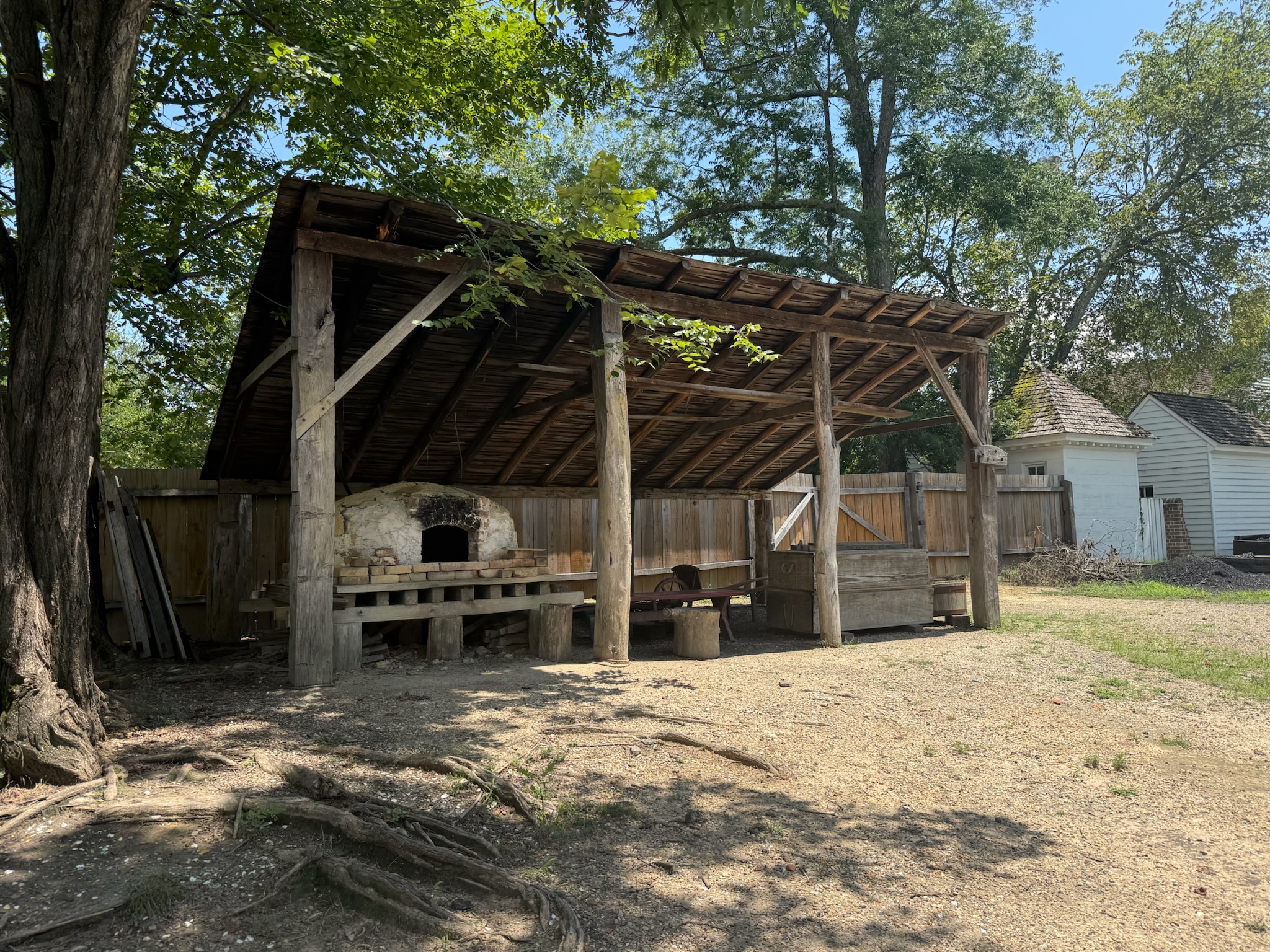
At the back of the property was what we believe was a kiln and an area with coal (the pile to the right).
After we left the blacksmith shop, we continued east down Duke of Gloucester Street… to be continued…