continued… After we left the blacksmith shop, we continued east down Duke of Gloucester Street to the Capitol Building, which was at the end of the street.
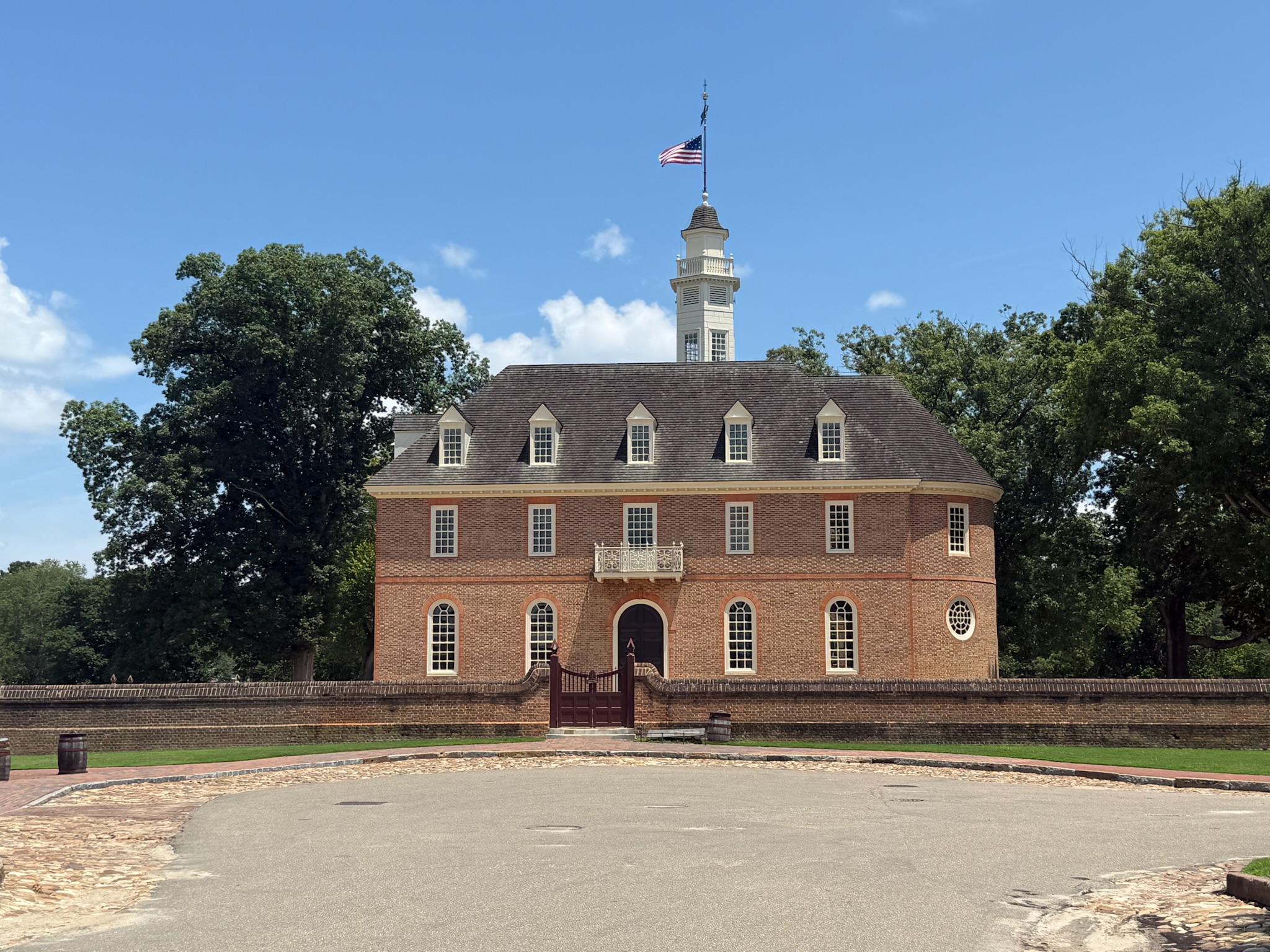
This was the side of the building. We had to make a right turn on Blair street to get to the entrance.
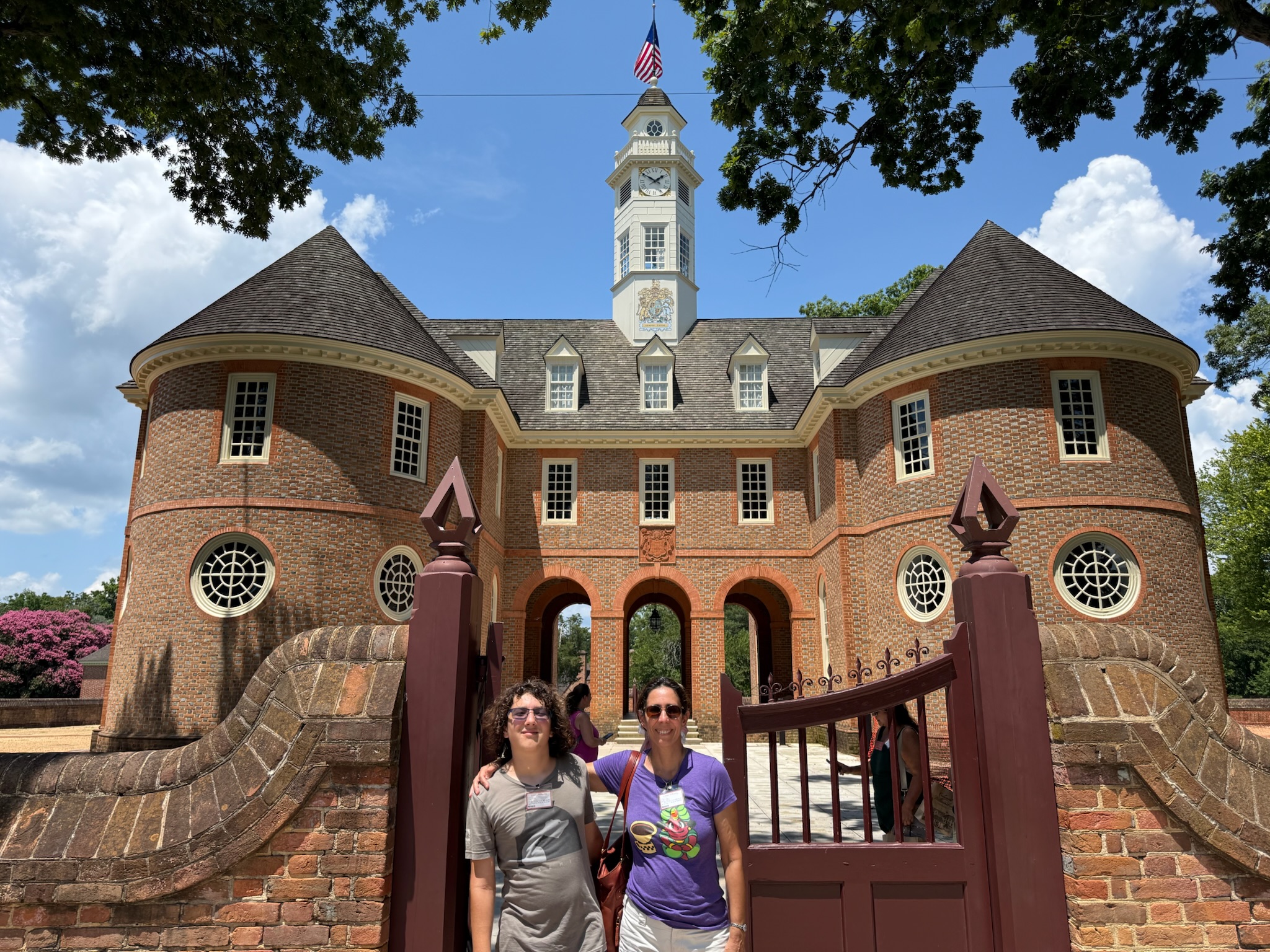
Just like at the Governor’s Palace, we were told to sit on benches outside and wait until the next tour. We told the lady at the gate that we were going to go across the street to the gunsmith shop and would come back later. She said that it wasn’t open today and pointed over to it — “See, no flag out.”
At this point, it was nearly 1400. It was in the mid-90s Fahrenheit, and with the humidity factored in, it felt like well over 100 degrees. We’d done a good deal of walking and were sweating profusely. Keith was already tired and grouchy from walking in the heat. The gunsmith was the venue that he’d been most excited about. Hearing that the gunsmith was closed took him over the edge. From there on out, for the entire rest of the day, he complained incessantly that he wanted to leave.
We were eventually ushered into the building and seated in the east wing (rounded room on the left in the photo above). Thank goodness, it was air conditioned. Like the palace, this building was a reconstruction. The original had been built in 1705 and burned down in 1747. It was immediately rebuilt and burned down again in 1832. By that time, the capital had already been moved to Richmond, so there was no need to rebuild it. The Colonial Williamsburg project completed the replica in 1934.
Much like at the courthouse, the guide explained to us what the legislative and legal system was like back in the pre-revolutionary days. The Virginia House of Assembly had two branches. This room was dual purpose: it was the Governor’s Council or the “upper legislative house” and also the General Court, which was the highest court in the colony. Both were presided over by the governor and his council of officials. The officials were appointed by the king or queen, and were usually people from the colony’s wealthiest and most powerful families. The guide said that the majority of appointments were via nepotism and good ol boys taking care of one another, not by merit. They considered legislation originated from the Burgesses, managed several aspects of colonial affairs, tried criminal cases, heard appeals and decided on slave emancipation requests.
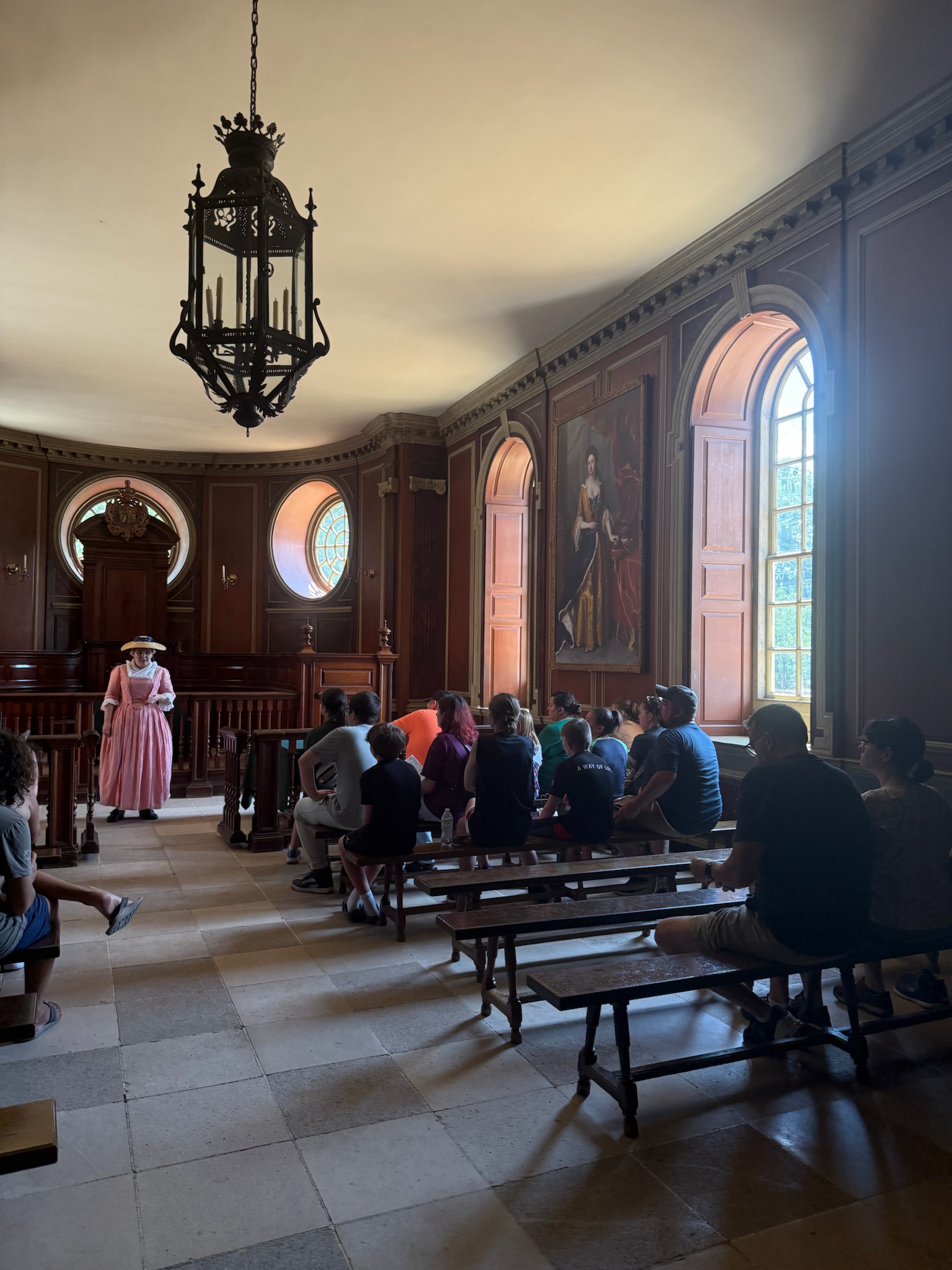
When she finished, we were escorted to the west wing, where a gentleman completed the talk. That room was The House of Burgess, the “lower” house where the representatives were elected by the local districts to make laws for the colonies. Many of Virginia’s leading revolutionaries, including Peyton Randolph, George Washington, Thomas Jefferson, George Mason and Patrick Henry, served as Burgesses. In response to revolutionary agitation, Governor Dunmore dissolved the House of Burgesses in 1774, but the delegates continued to meet in other locations, such as Raleigh Tavern. In May 1776, the Virginia delegates met here and voted to propose at the upcoming Continental Congress meeting in Philadelphia that the colonies declare themselves independent from Great Britain (which they did). The Virginia Constitution of 1776 replaced the House of Burgesses with the House of Delegates.
He explained the controversy around the stamp act. The colonists didn’t mind paying taxes — they’d actually been paying taxes ever since they became a crown colony. Up until the Stamp Act of 1765, Great Britain decreed how much money they wanted collected from each colony and allowed the local representatives to determine how to best raise those funds. What the colonists were angry about was having the method of collection dictated to them. If we understood correctly, the imposed taxes also had some regulatory burden on the colonists, too. This sparked the desire to secede from Great Britain.
One of the things he talked about was how offensive Patrick Henry was to the rest of the House of Burgess. He showed up wearing work clothes instead of his finery. As a new member, he was supposed to keep his mouth shut. Instead, he spoke profusely and his words were compelling.
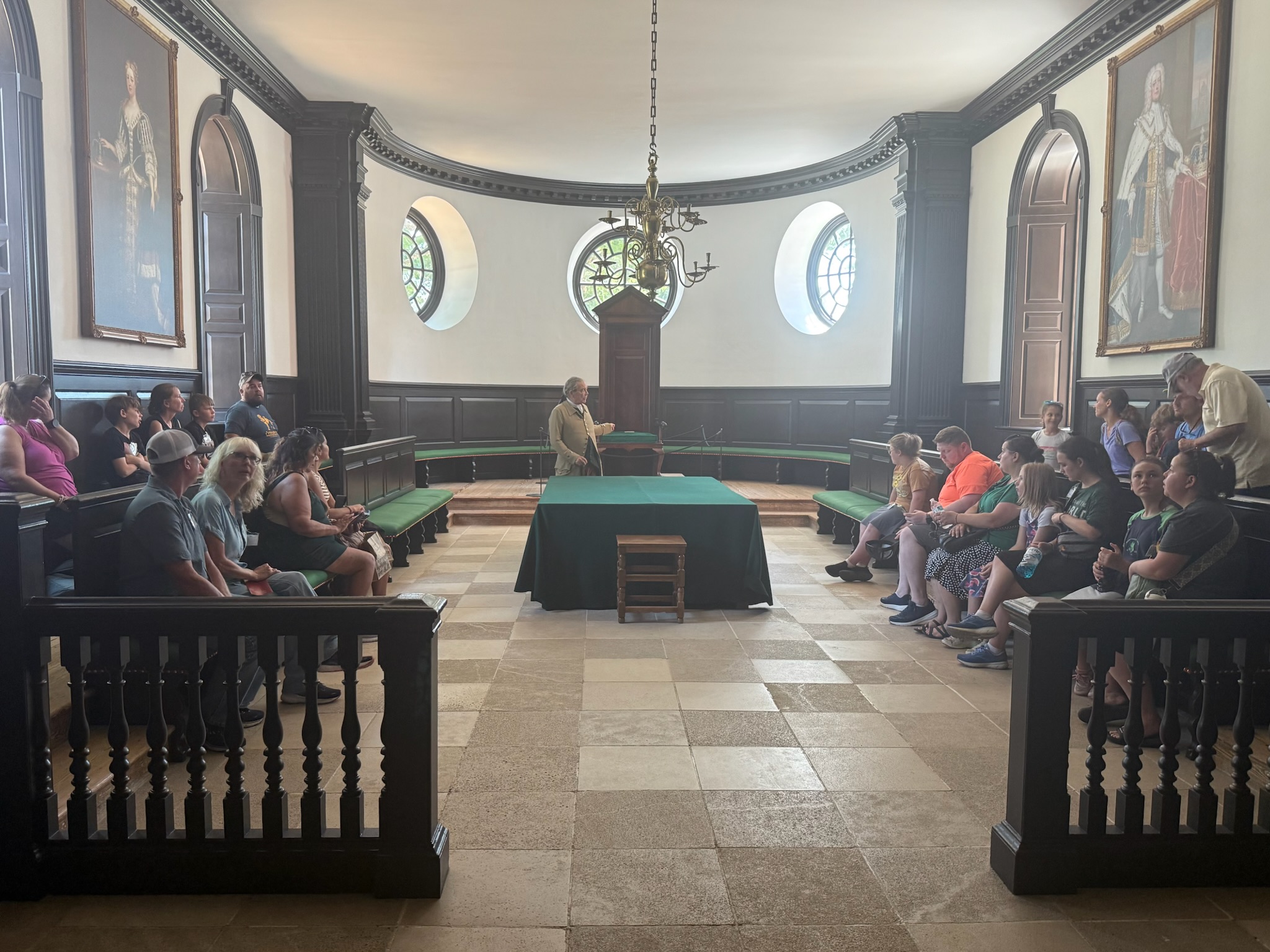
He explained the seating arrangement. The Speaker (leader) sat in the chair. The committee heads sat on the rounded bench behind him. The rest of the delegates were seated in the middle benches. Interestingly, the Speaker’s chair was the actual chair that was used in the original Congress building. It was rescued when both of the buildings burned down, was used in the Richmond Capital Building for many years, and was eventually returned to Colonial Williamsburg on a permanent loan.
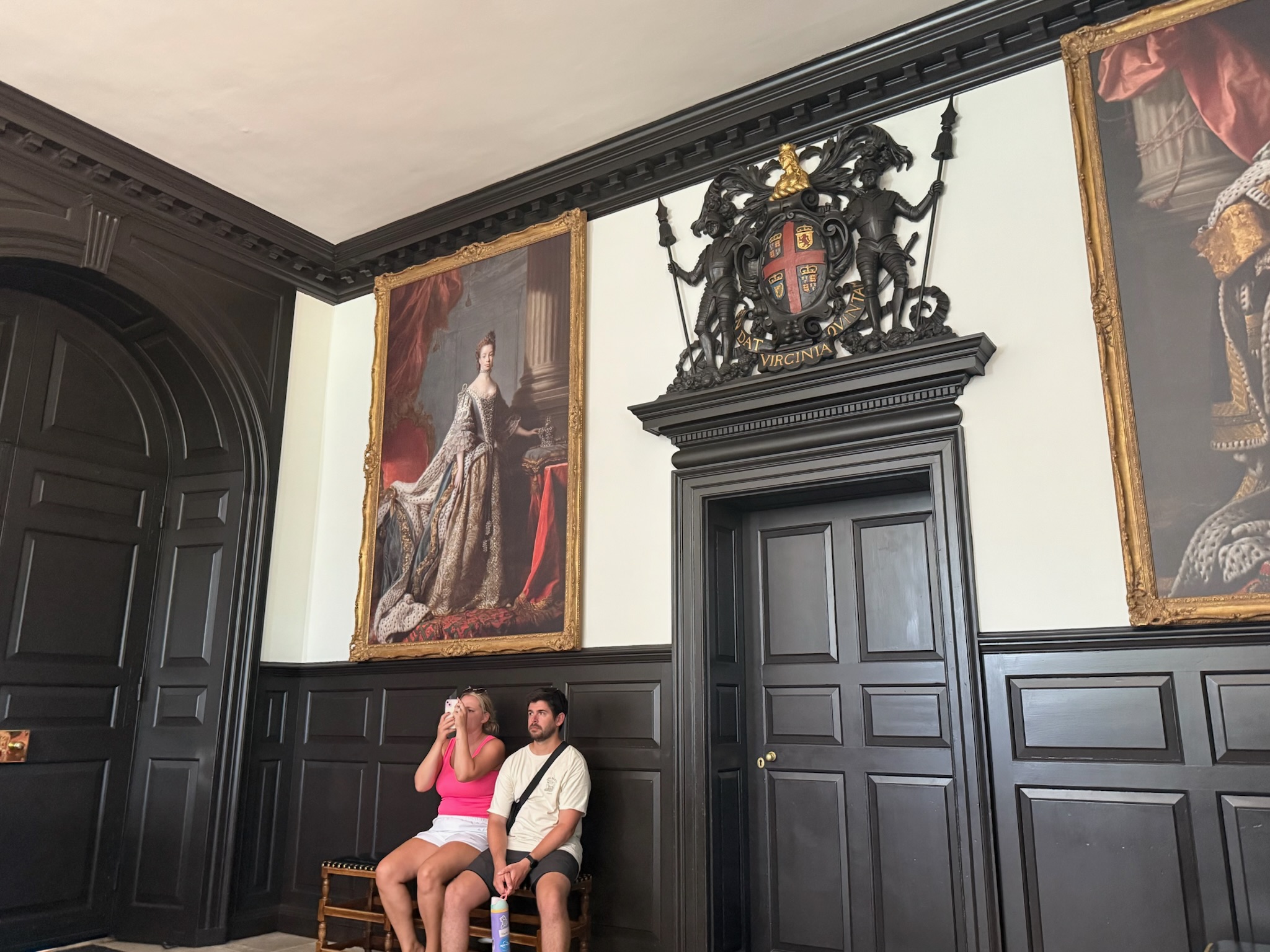
The two congressional houses didn’t meet very often, we think she said 3 or 4 times a year (though for several weeks per meeting). The king’s appointees and elected delegates came from all over the state, so hotels and taverns flourished in Williamsburg. Since only wealthy landowners could participate in the government, many of them built second homes to live in while congress was in session.
The Congress and gunsmith had been the last two items in the “do not miss” category. Our new plan was to head west on Duke of Gloucester Street and to go to all the buildings that we’d skipped.
The first foundation building was Charleton’s Coffee House, which was built in 1750 as both a store and residence. It became a coffee house in the mid-1760s, serving hot liquids: teas, coffees and hot chocolate (which was closer to Mayan hot chocolate than to what we drink today). It was the house on the right.
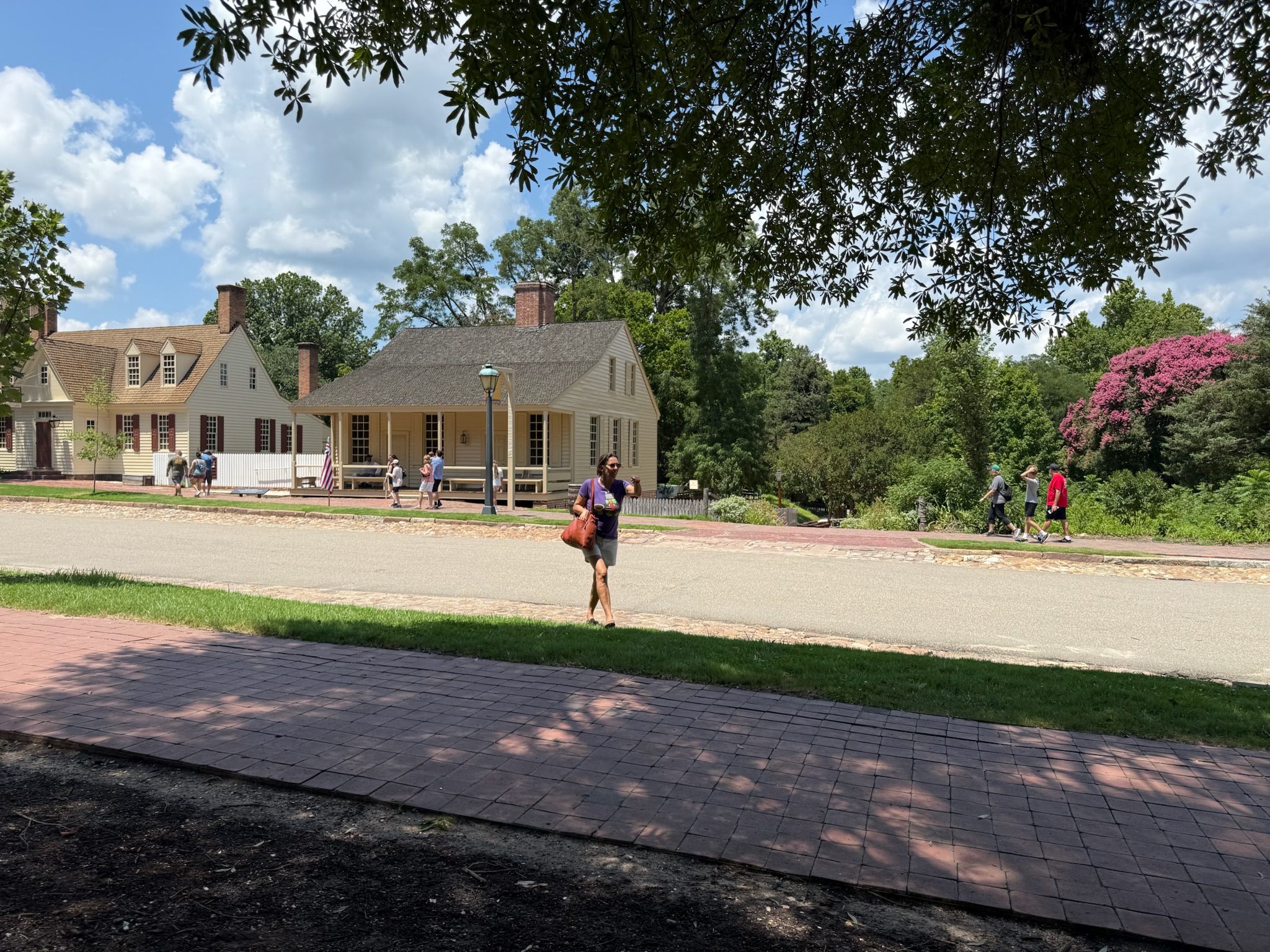
The front two rooms were the shop, the back of the house and upstairs had still been the residence. This shop and the taverns were popular places for the patriots to meet in small groups to talk about politics and make plans for political action.
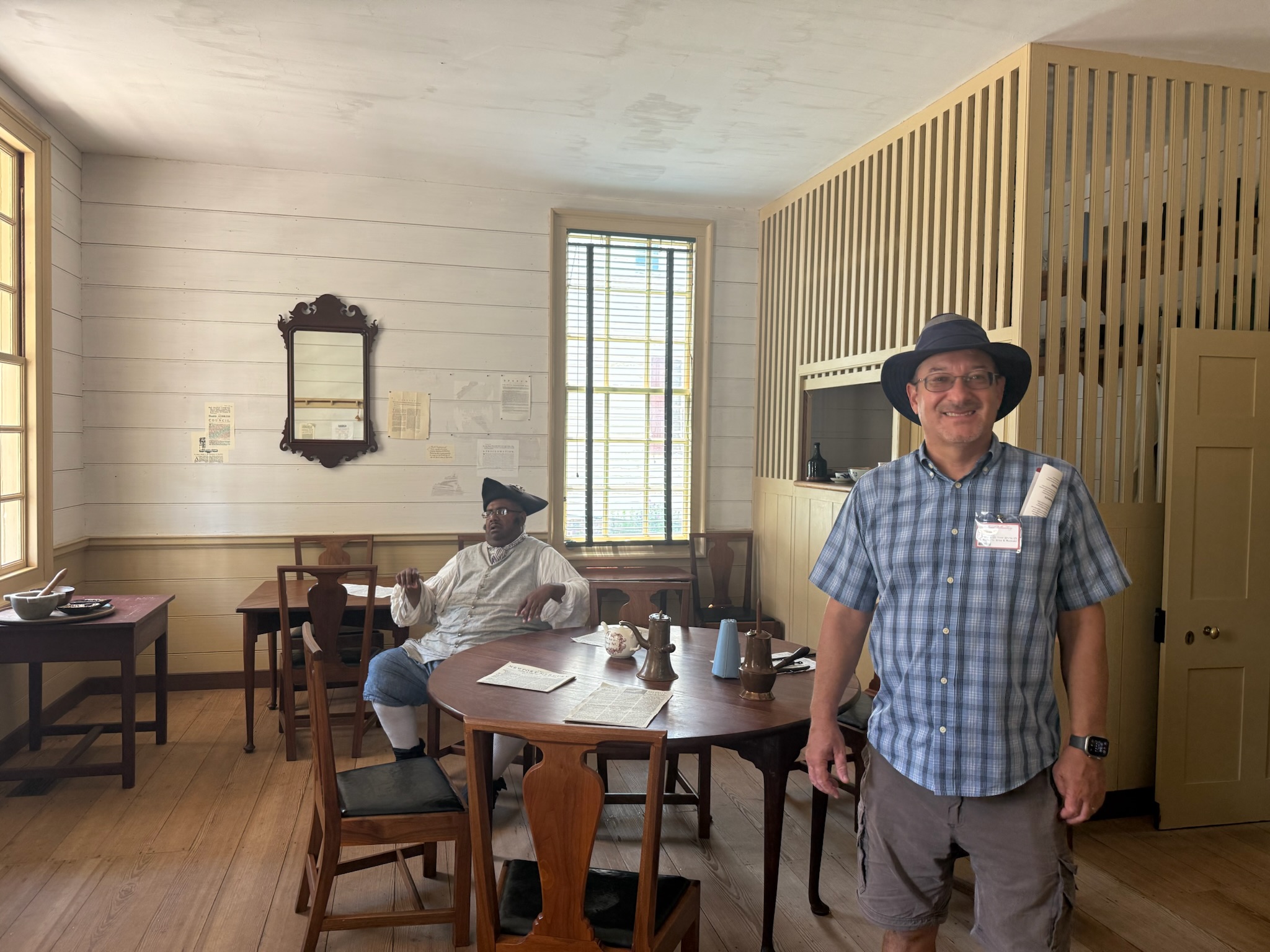
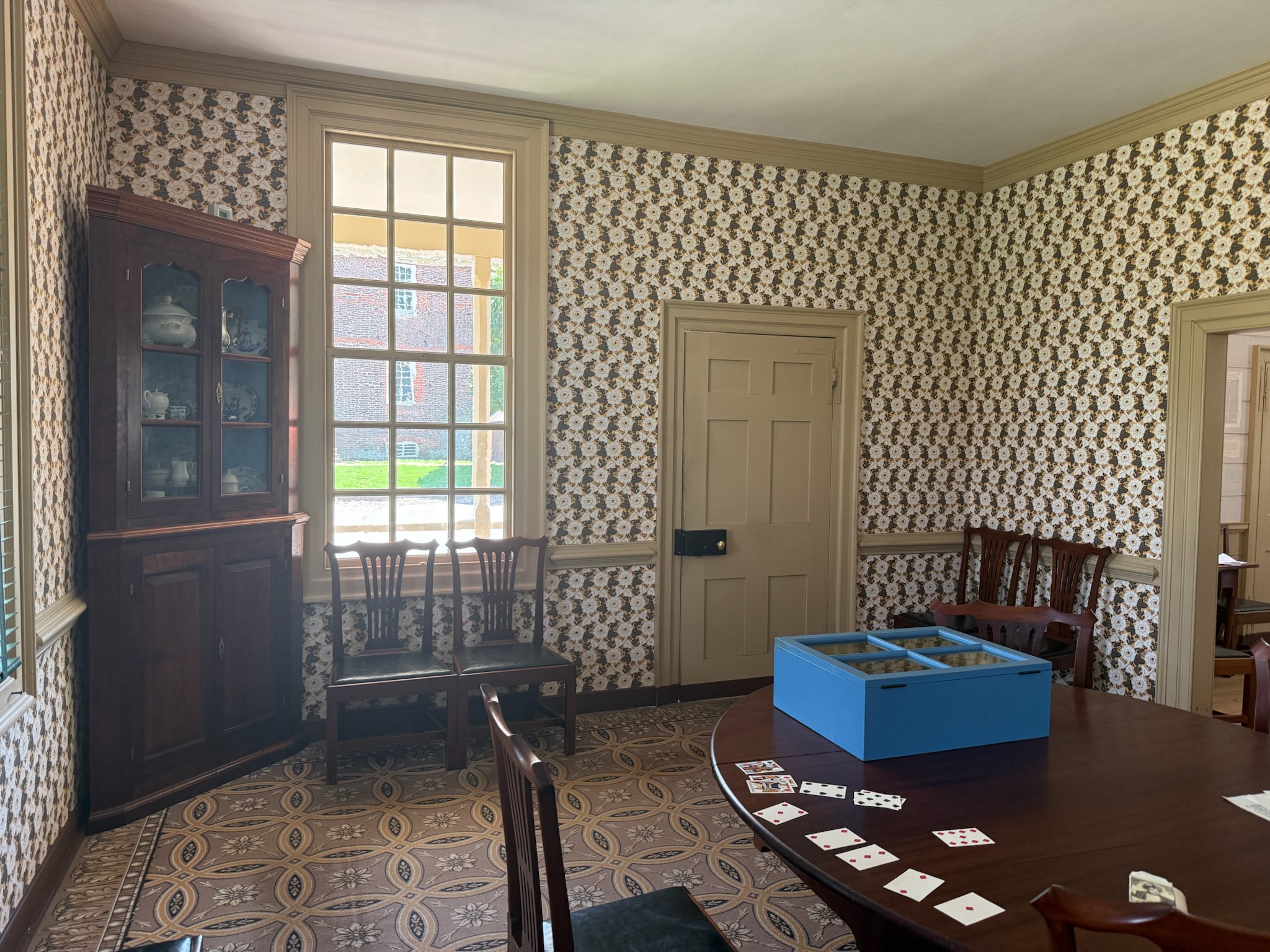
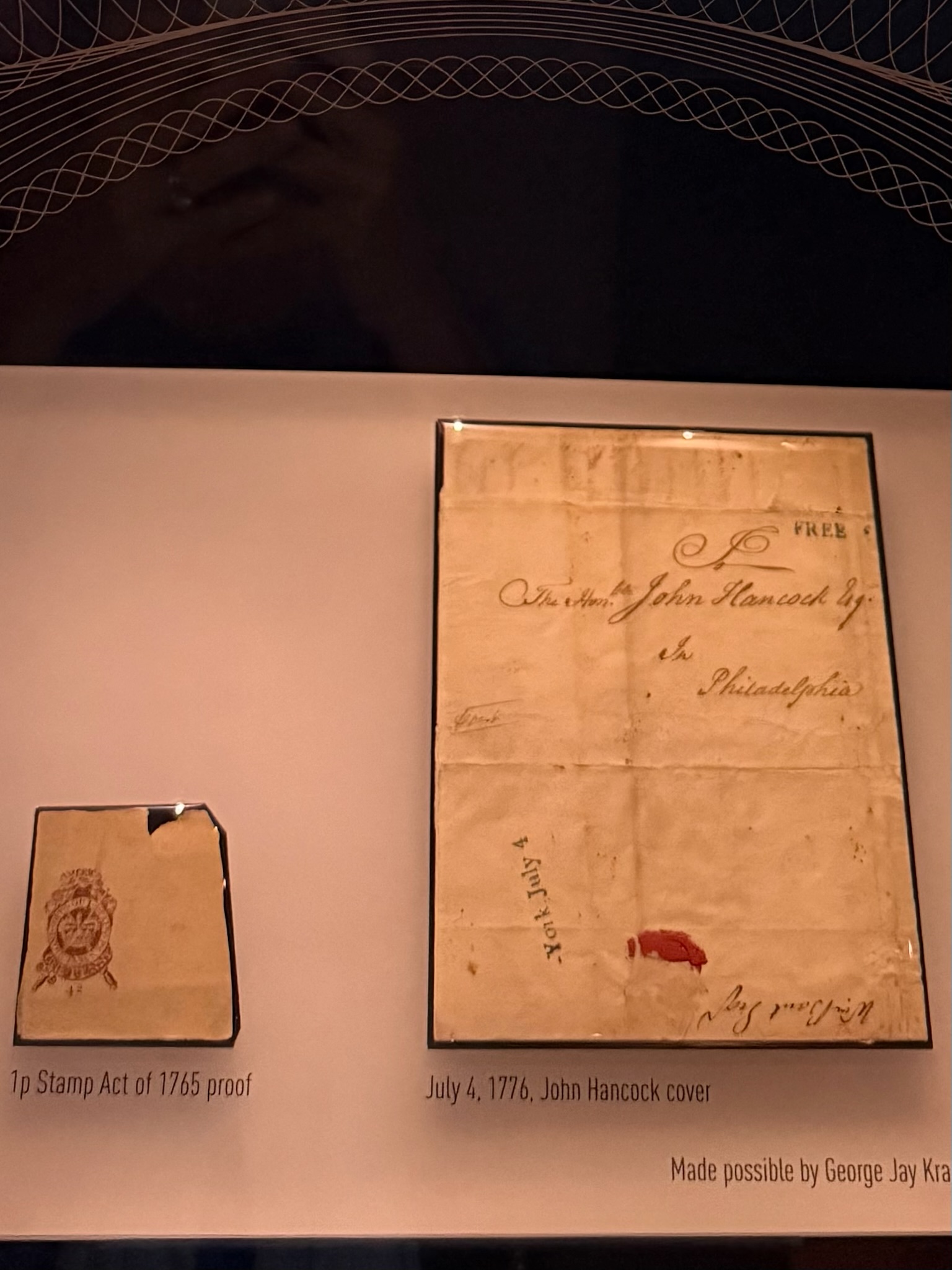
When we left, we’d noticed a sign that said it was “the scene of resistance to the British Parliament’s Stamp Act,” but the actors inside hadn’t told us about that incident. Our next stop was the apothecary. At this point, the buildings were beginning to blur together. We think the white building in the middle was the apothecary, but we’re not 100% sure. The sign indicated that the apothecary was only in business from 1775 – 1778.
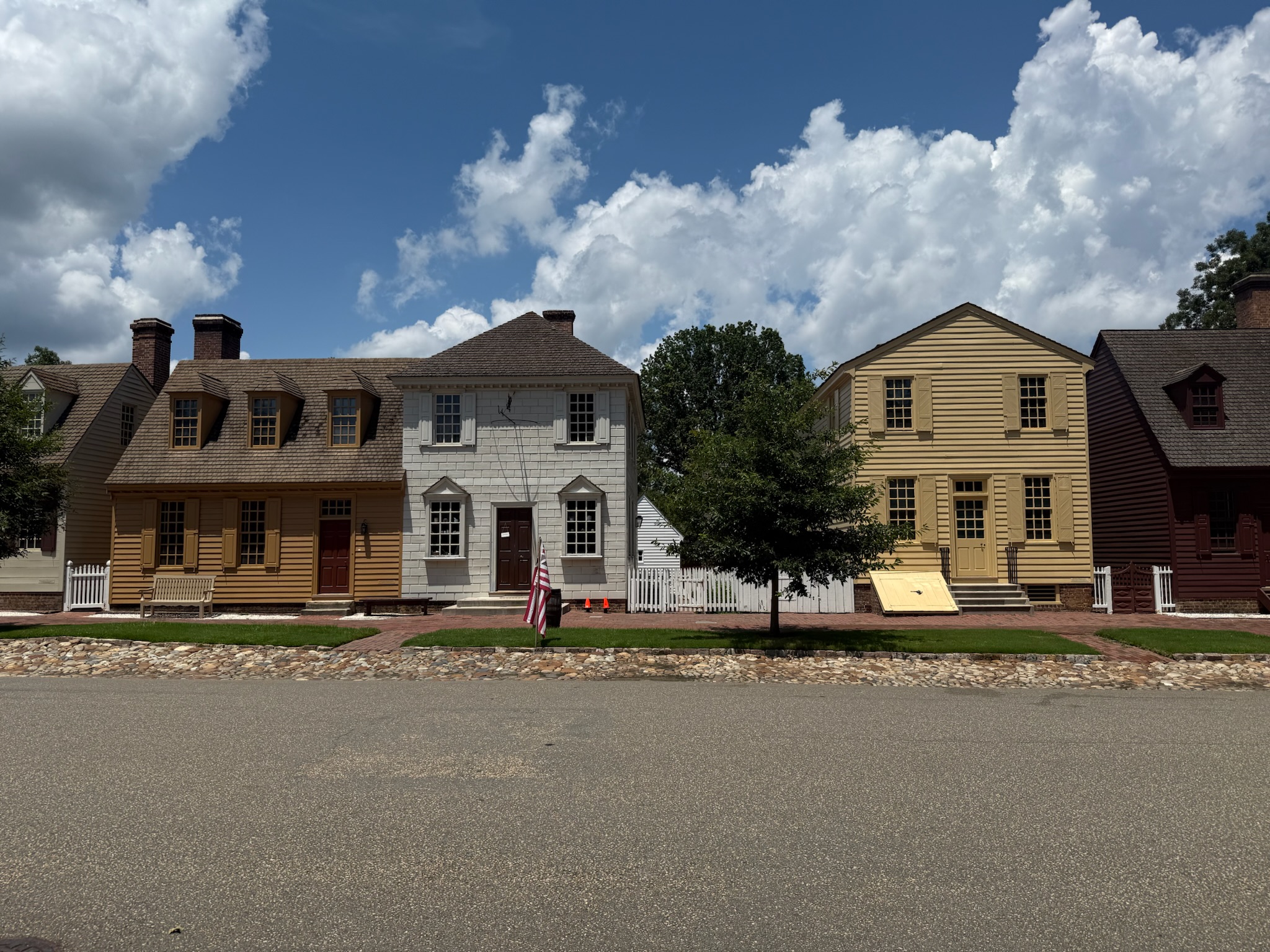
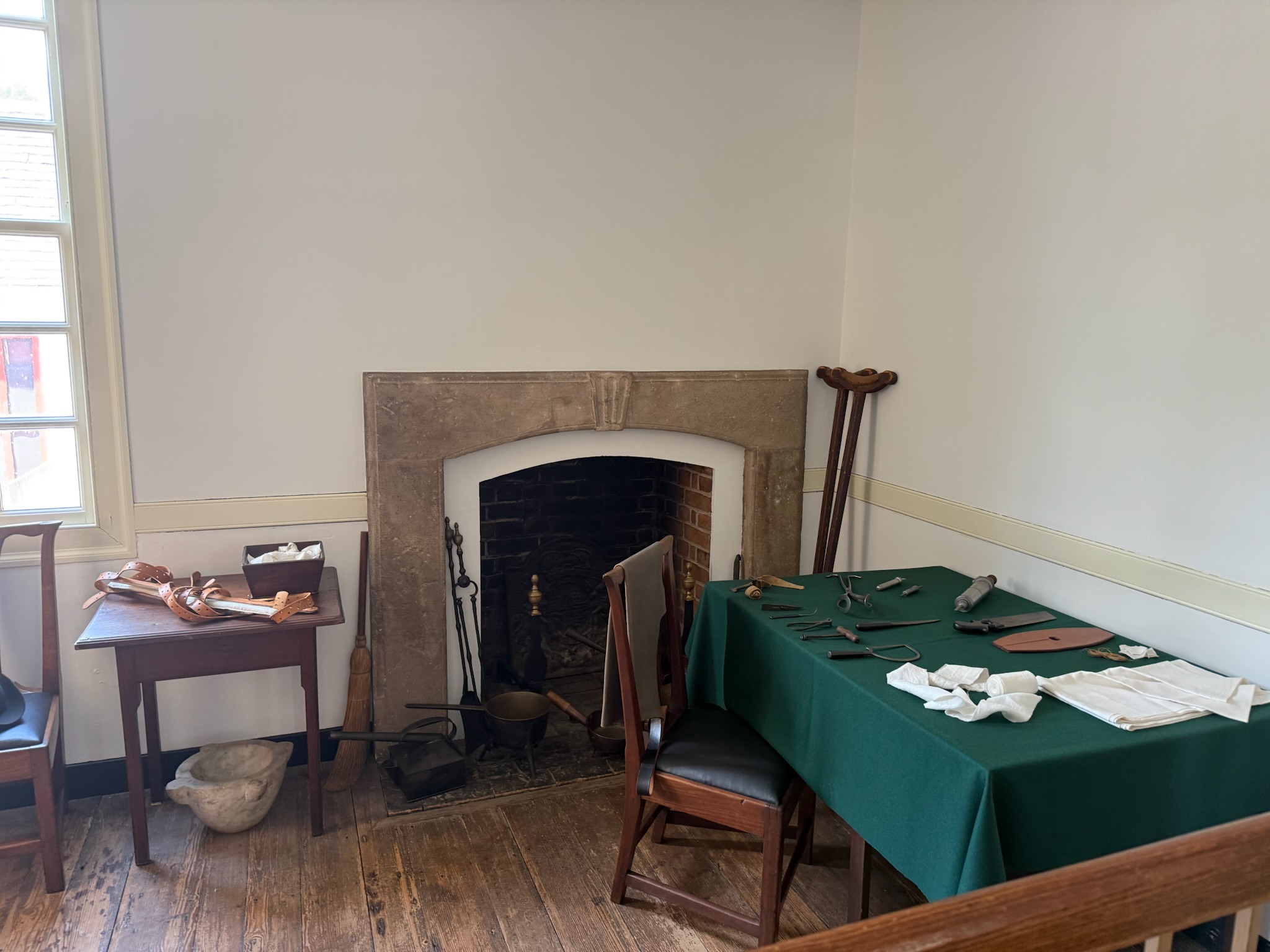
The upstairs was closed off, and the downstairs only had two tiny rooms — one room had a wall filled floor to ceiling with various medicinal ingredients.
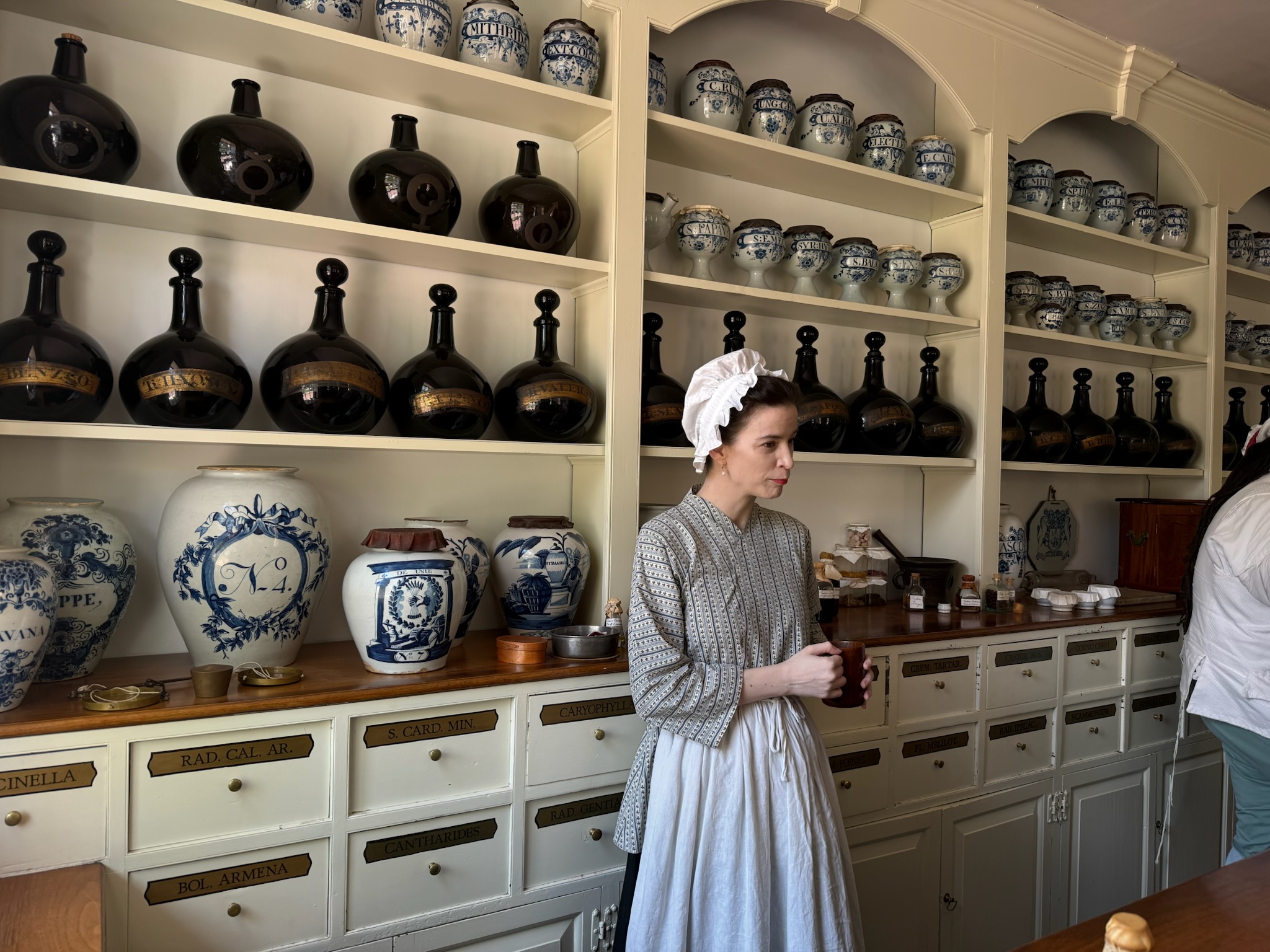
The other was a tiny office that had a desk, skeleton and a table with some terrifying looking medical tools displayed on it. Christi had wanted to stay and listen to the guides talk about the various herbal remedies that were utilized in those days, but Keith was grossed out and crabby, so we moved on quickly.
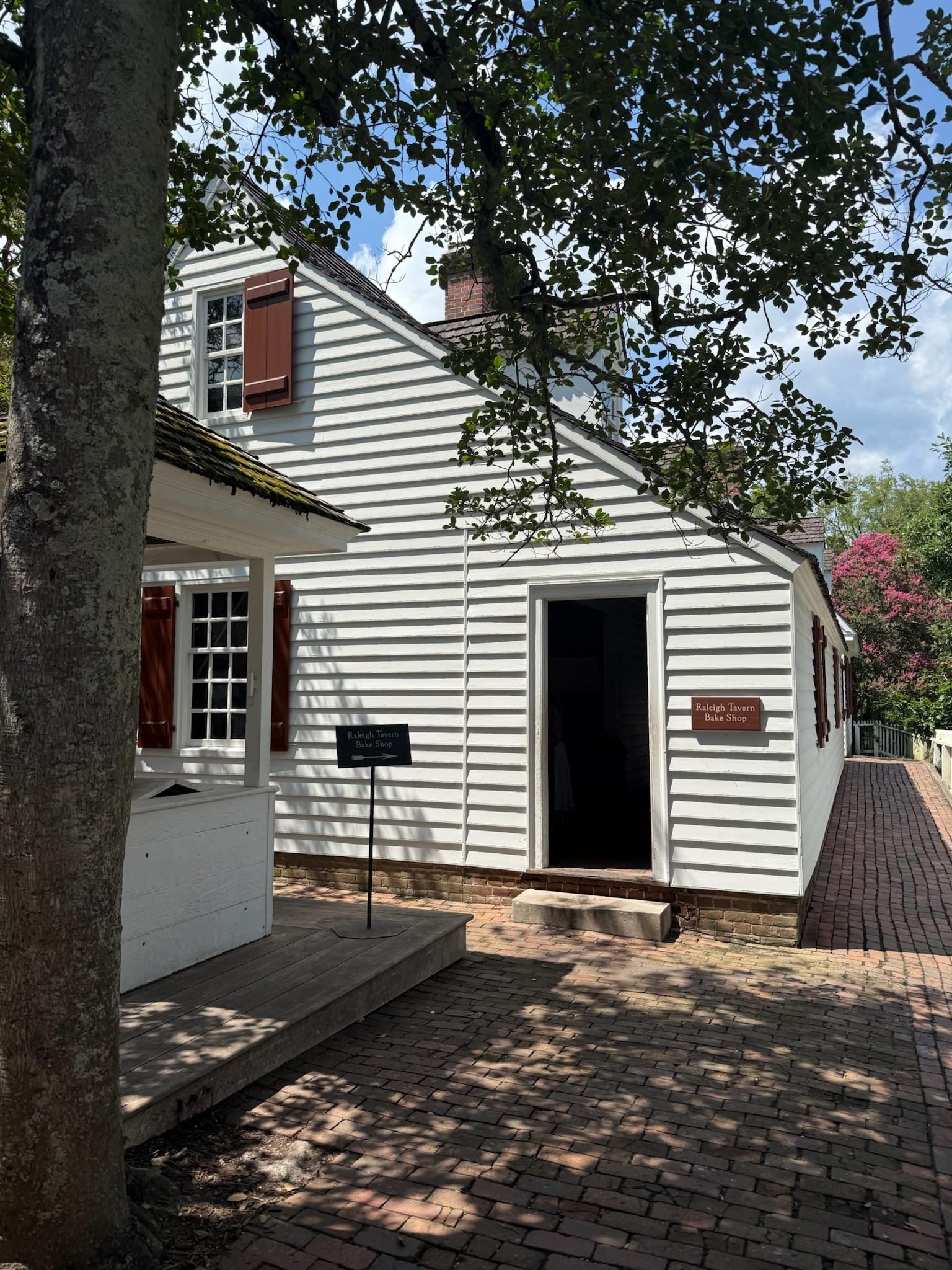
Our next stop was the Raleigh Tavern Bakeshop, located behind the Raleigh Tavern.
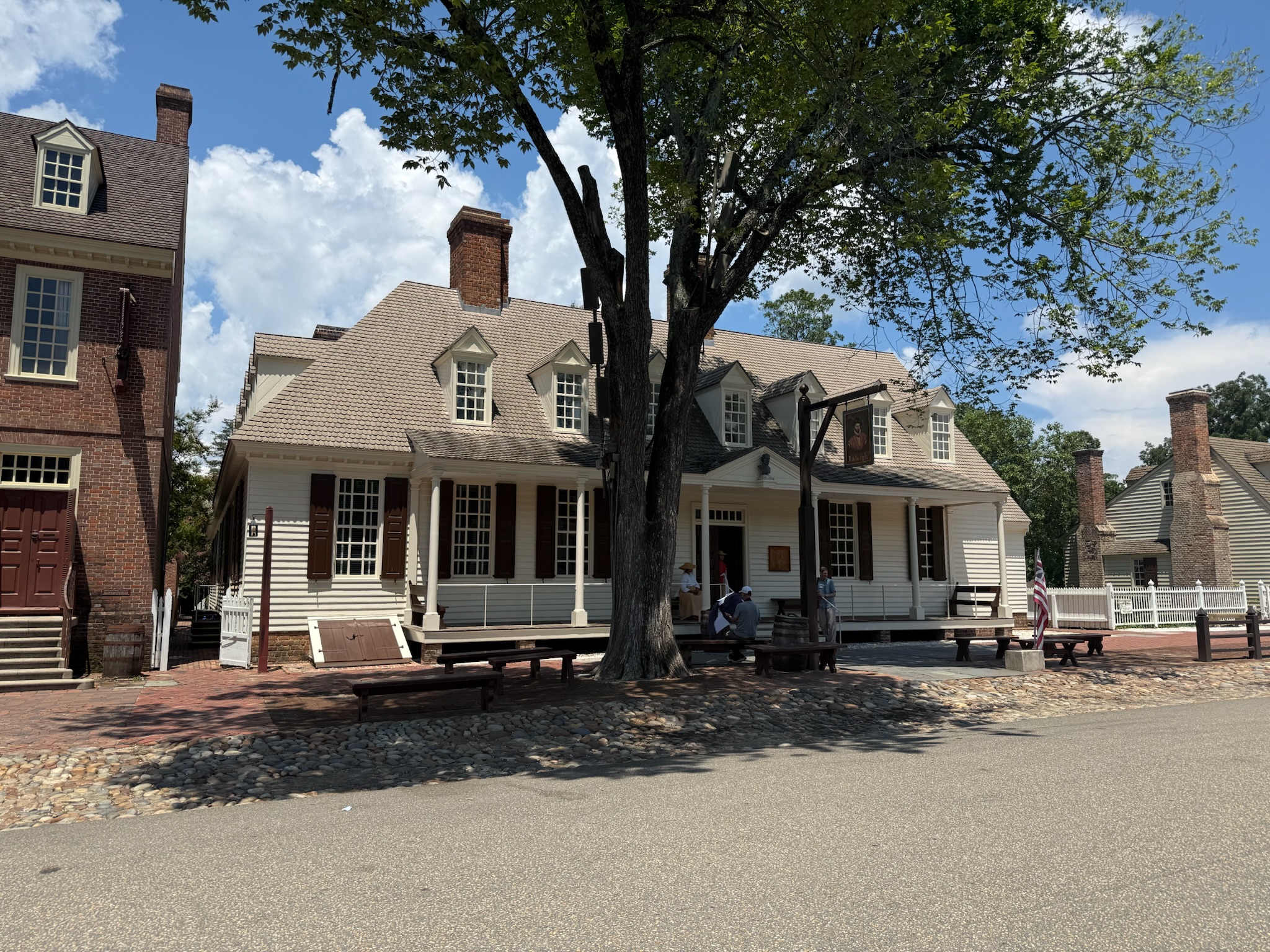
We were hoping beverages and treats would put Keith into a better mood.
There was a colonial-era kitchen that was cordoned off from the rest of the shop.
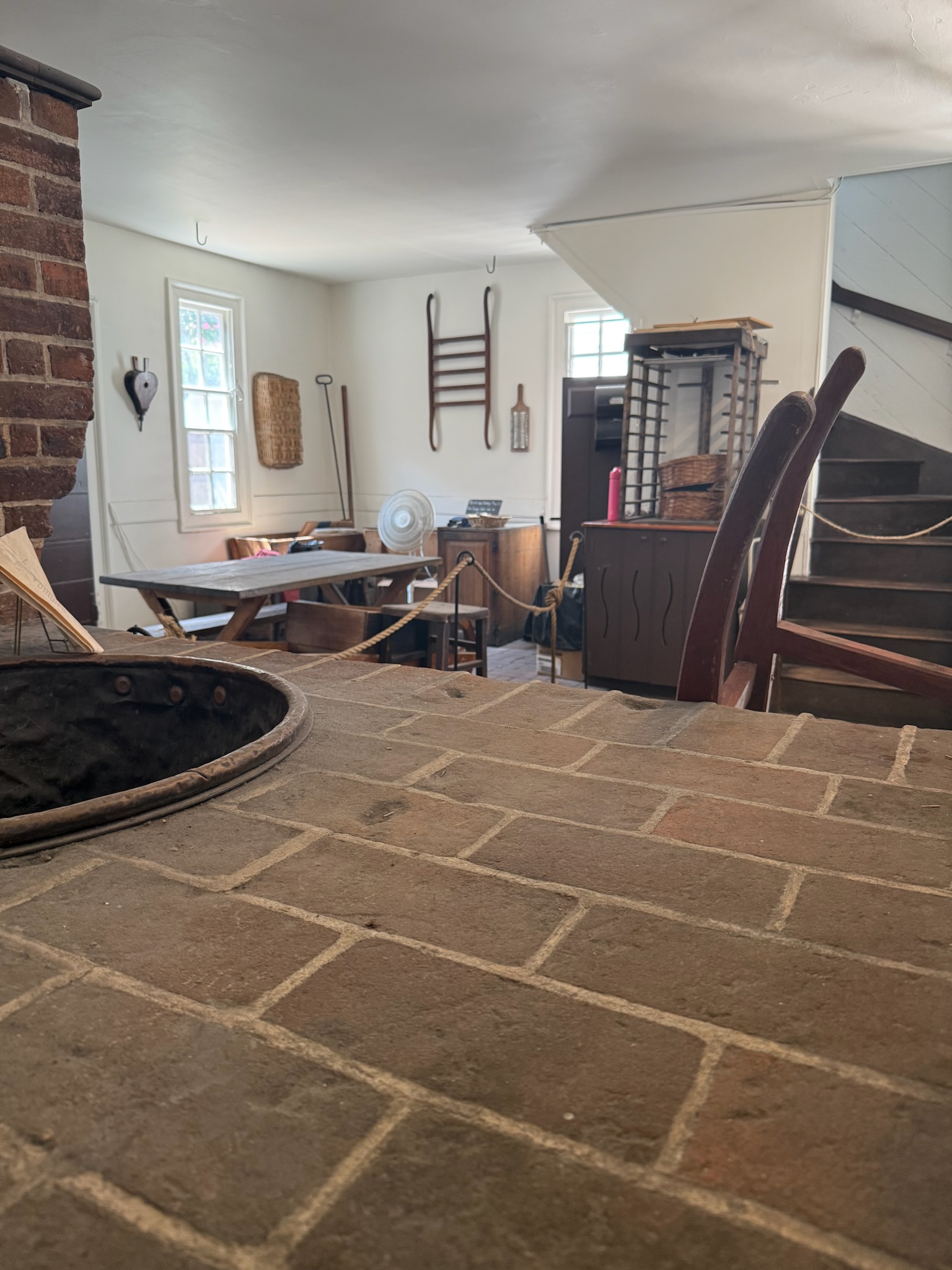
Since we knew from the palace that kitchens were in separate buildings back then, our guess was that this had been the kitchen for the tavern. It certainly was not a working bakery now — it looked like a mini-mart with a few prepackaged sandwiches, some packaged desserts, packaged snacks and bottled drinks. They did have cold apple cider available for purchase by the cup, but it was just regular mass-produced cider poured from a big Costco-sized bottle. We all felt a little better after a cup of the cold, sugary cider.
We tried to go to the tavern, but like the palace and Congress, they had specified tour times. We decided that it was better to visit the nearby air-conditioned foundation buildings until the tour started than to wait outside in the heat. Our next stop was the milliner, which was the red building on the left in this photo.
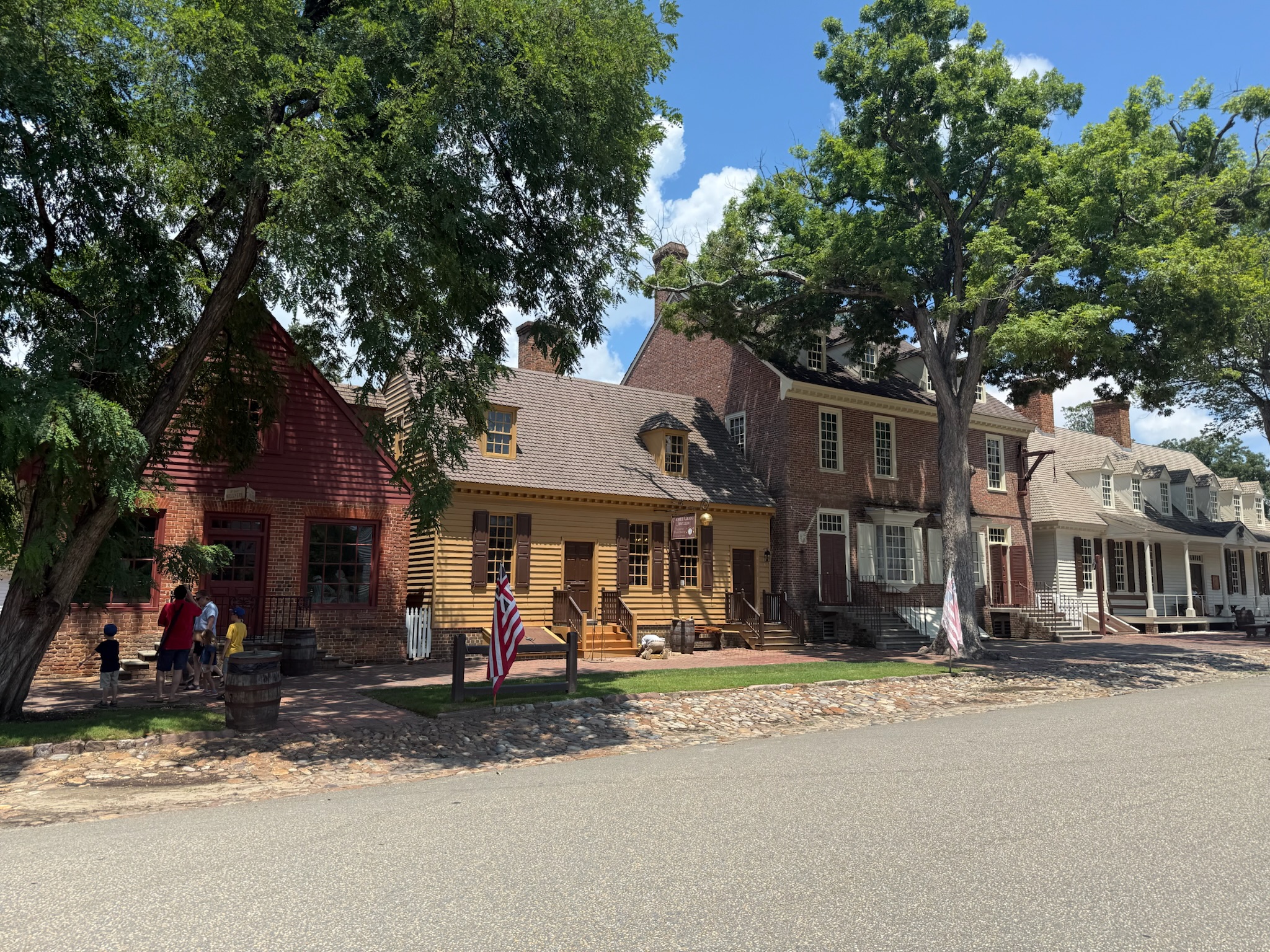
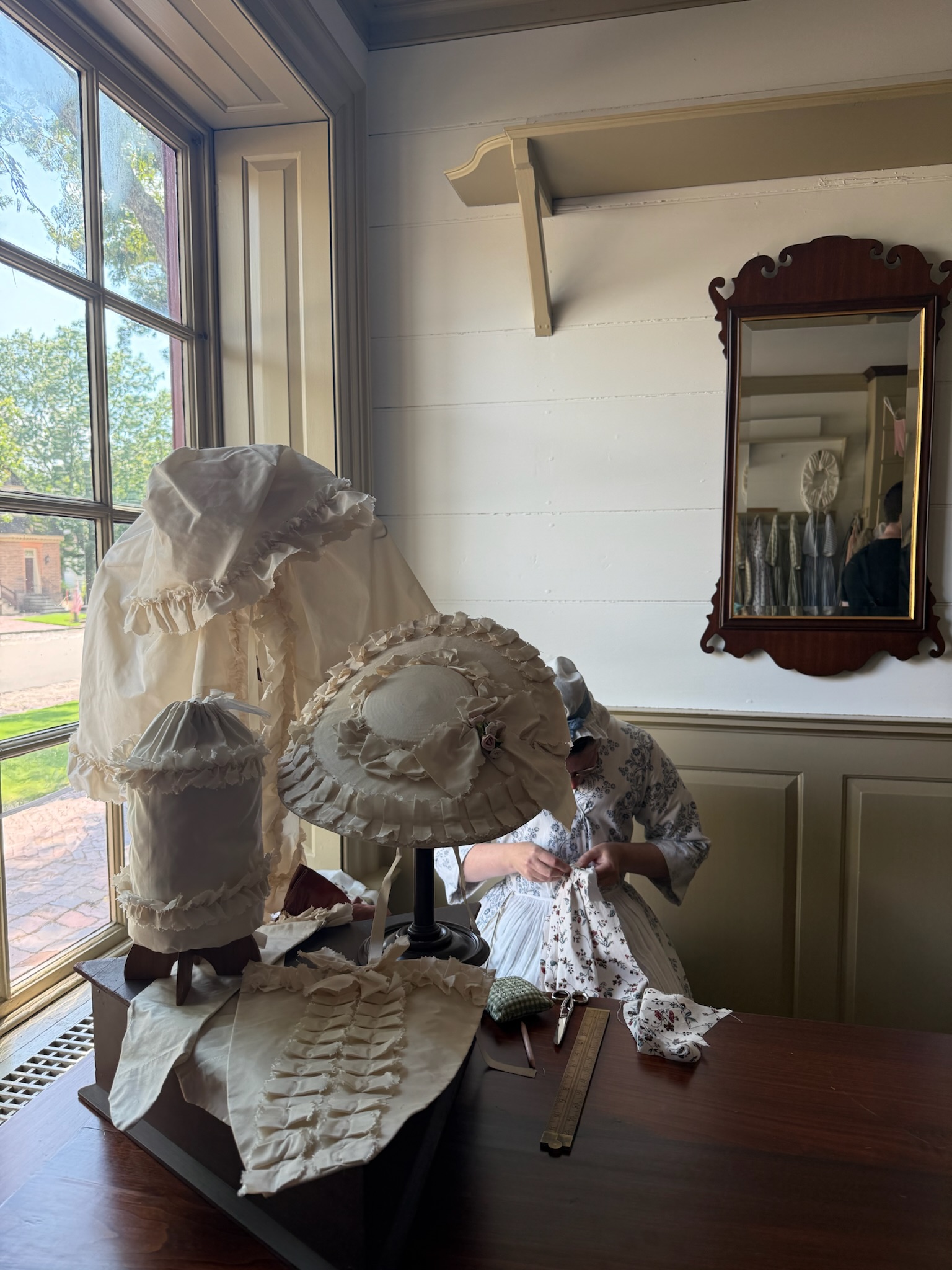
This was the actual building that the Margaret Hunter milliner shop was in, which opened around 1770. The first thing we saw was the retail area, where they weren’t actually selling anything, it was a recreation of what it had looked like back then. The clerk said that milliners made non-fitted clothing. Taylors made clothes with exact fit (our equivalent to a specific size, ie size 4-6-8, etc) and milliners made things like petticoats, cloaks, under garments, and accessories such as hats and gloves (things where sizing was more like S-M-L).
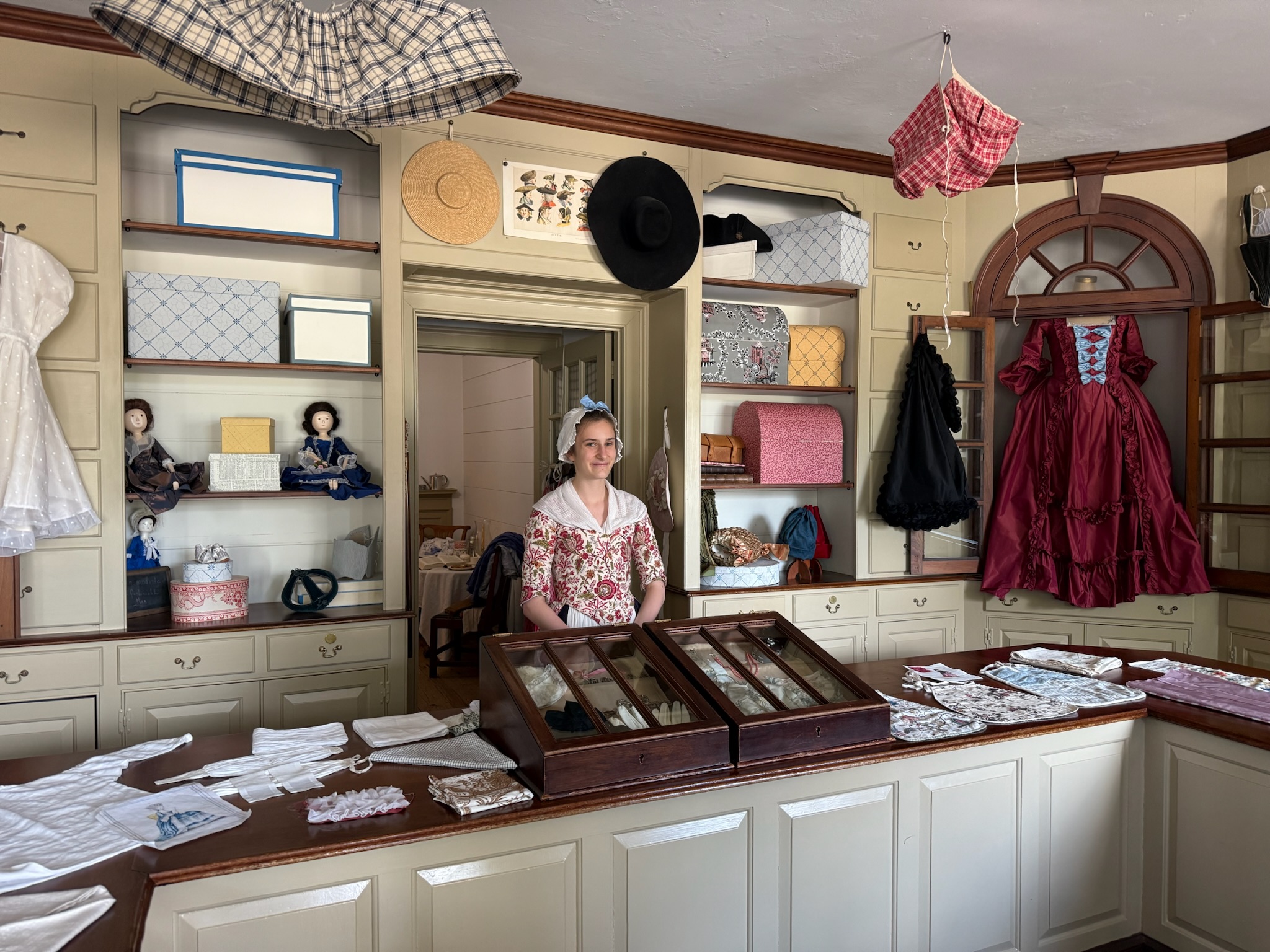
In each of the corners were females sewing.
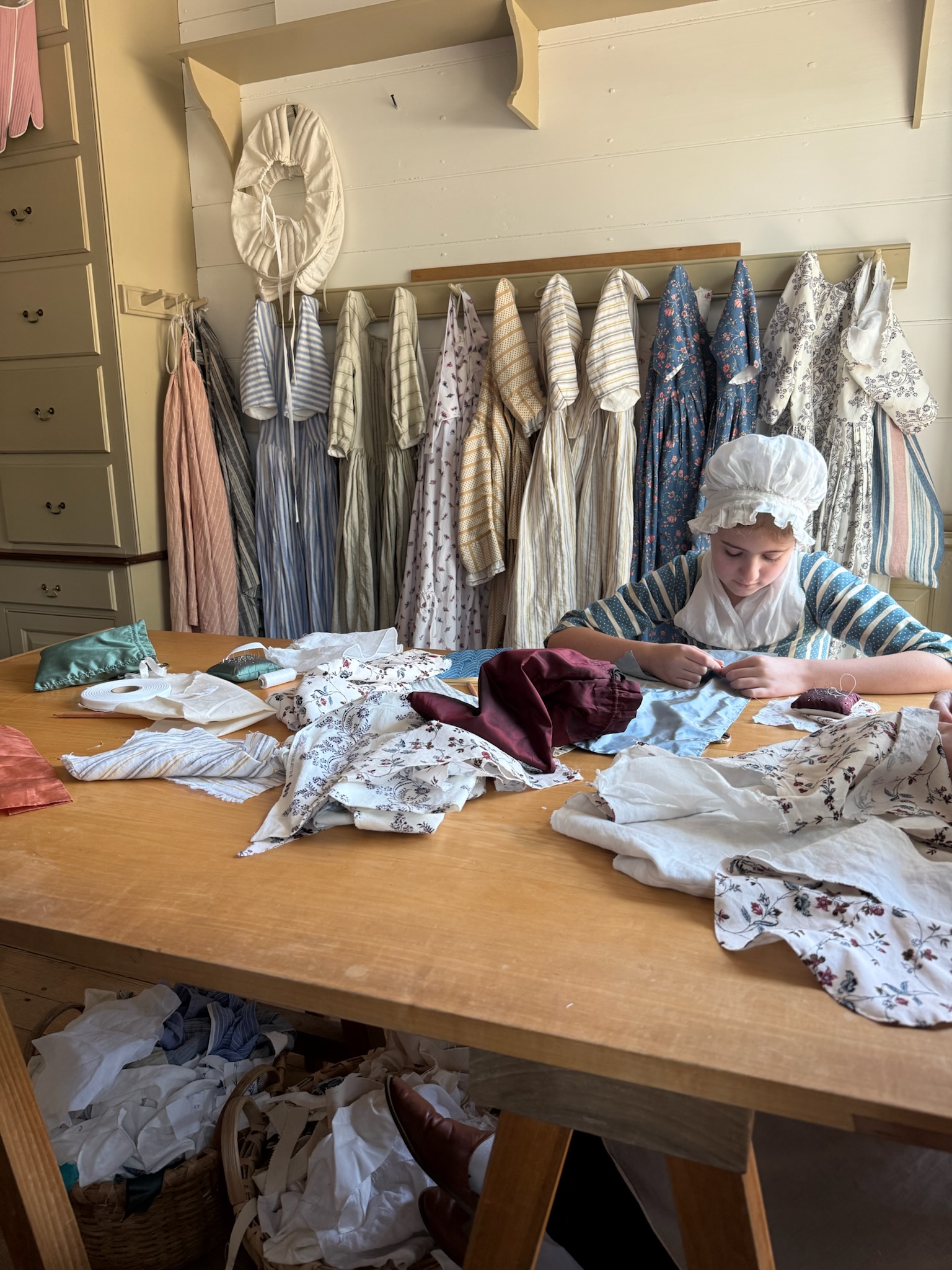
Since Keith and Eric had zero interest in this shop, we also moved on fast.
Next was the silversmith, which was the yellow building next to the milliner in the photo above. It looked like once upon a time there had been two shops side by side, but now only one side was open. We walked into what we’d expected to be a foundation recreation just like at the milliner. And for a moment we thought it was because the lady was wearing a period costume and it had colonial-era decor. But after a minute, we realized it was actually a retail store.
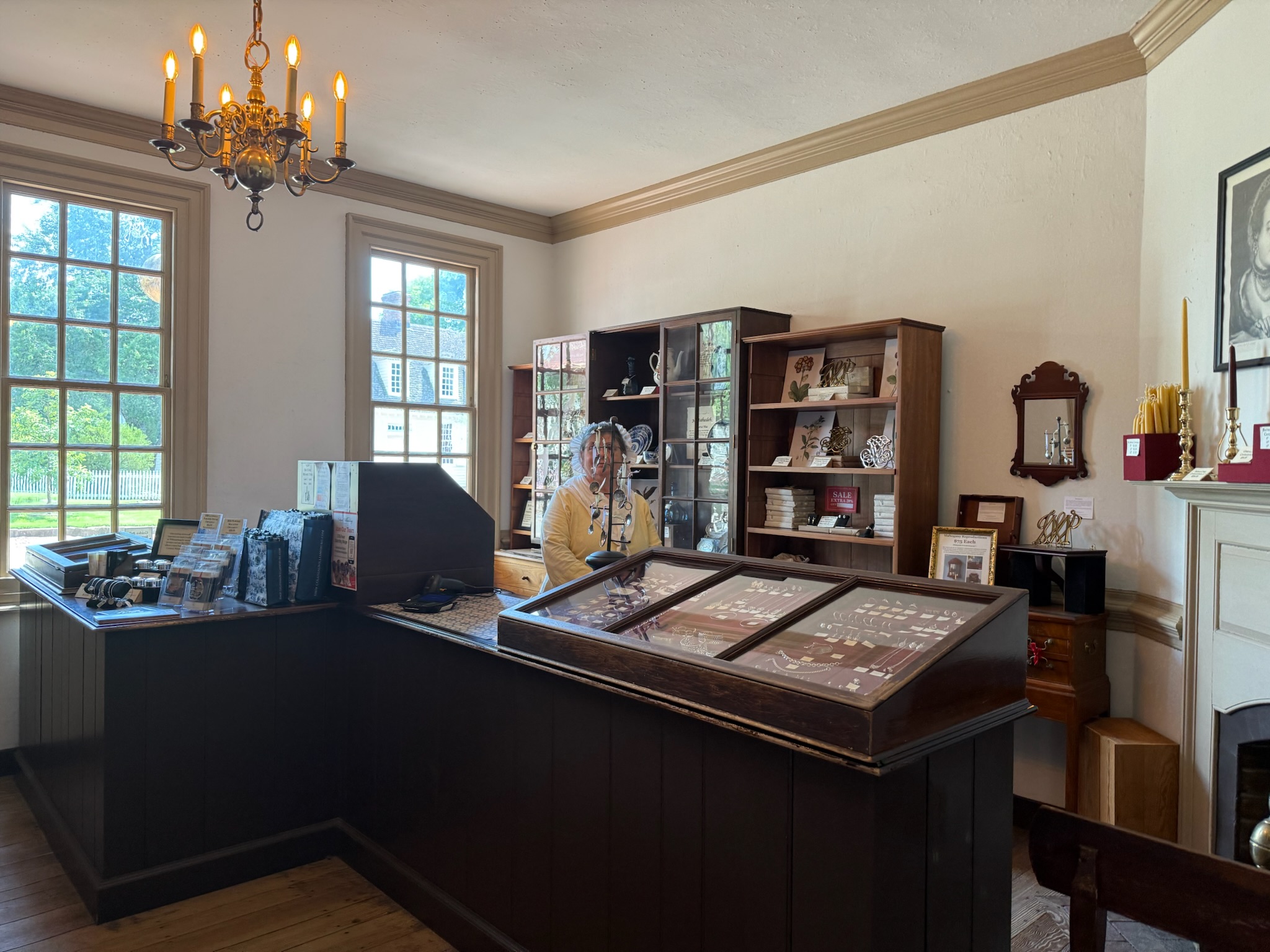
A little confused, we walked into a back room, which was the silversmith work area.
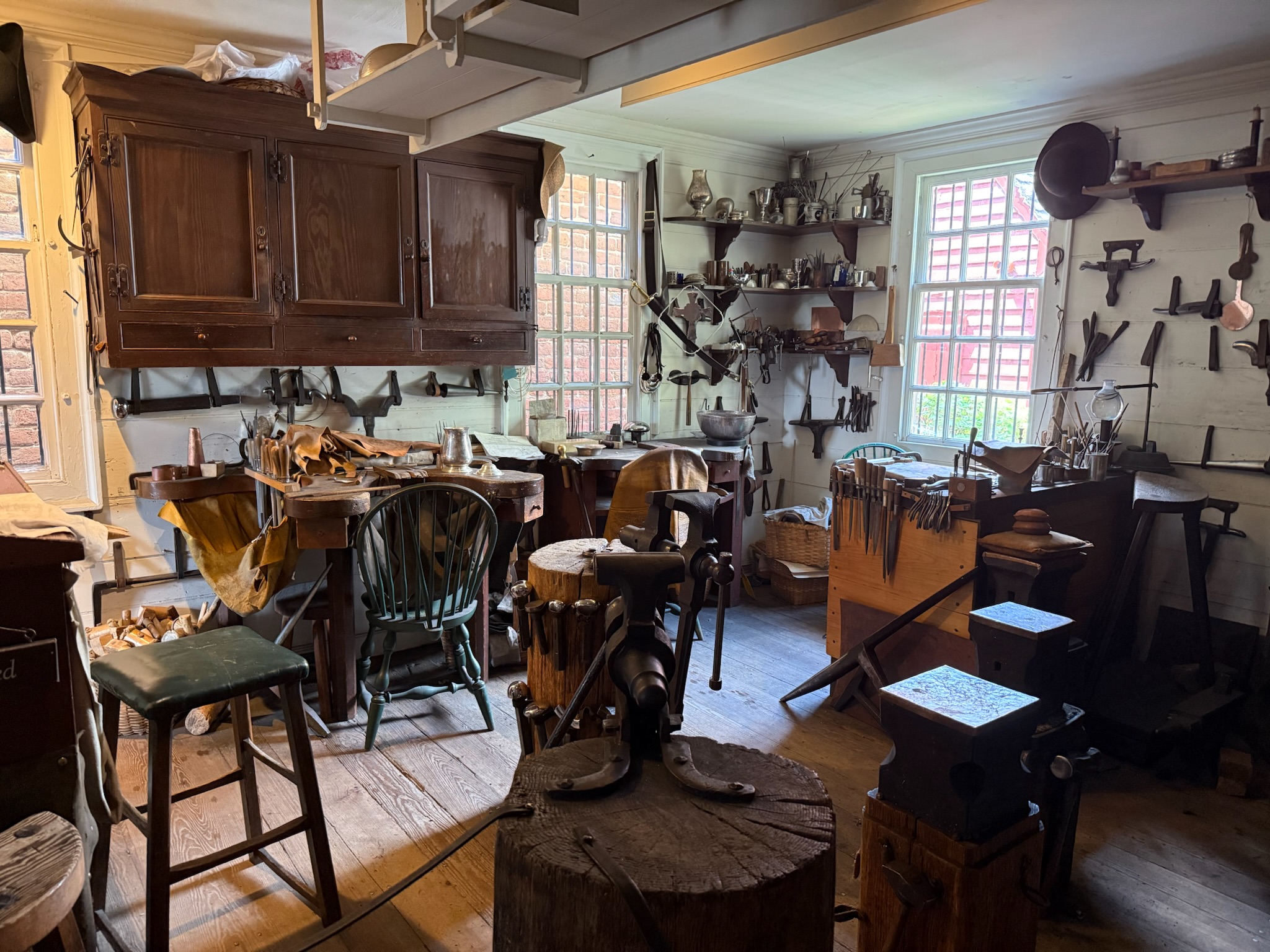
We walked through the work area to the adjoining shop front, which was a recreation of what the silversmith’s front retail area had looked like back in the day. Most of the items on display were food related — silverware, bowls, teapots, serving platters, etc. There were a few pieces of jewelry and a beautiful clock. We haven’t mentioned this before, but clocks were apparently big deals back then. The palace and the Moses Myers House had both said that the clocks in the homes were signs of wealth and prestige.
If we recall correctly, the silversmith said that in that era, the colonists didn’t get imports of raw silver, only finished goods. If someone wanted a finished good that was different from what was being imported, they had to take a different piece and melt it down in order to create what they wanted.
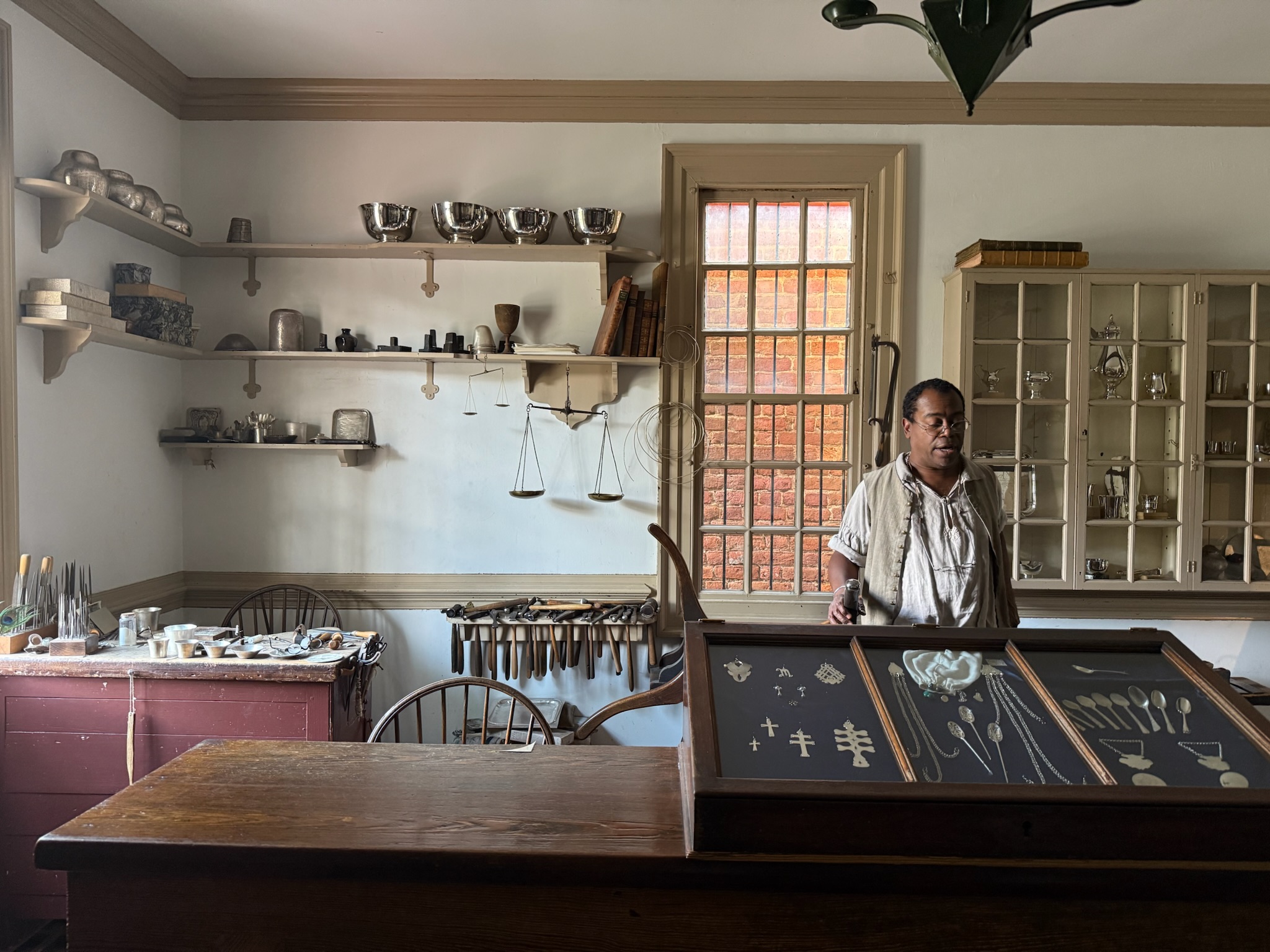
The tavern tour was about to get started, so we cut the silversmith visit short and headed back to the tavern. We had to exit through the jewelry store… to be continued...