continued… After the film, we pursued the small exhibit area in the visitor’s center. They had a timeline of events that occurred between 1777 and 2014. Many of the events they chose to highlight were tied to the American flag in some way, such as a few times there were changes to the number of stars, and when laws banning defamation of the flag were passed and then repealed by the Supreme Court. But many of the events highlighted were odd choices, such as the US winning the 1980 winter olympics.
There was an exhibit on The War of 1812 that probably took up half of the display area. We found out that near the start of the war, the Americans had executed a three-pronged attack on Canada, where they won some battles, but lost battles in the most strategic locations. The British attacked the US east coast to draw the US forces out of Canada. In 1814, the British won the war they’d been fighting against France, freeing up more troops to focus on the war in America. They created a naval blockade along the entire coast, damaging America’s commerce and keeping American warships contained. While reading the signs, we remembered that Moses Myers had gone bankrupt as a result of the economic hardship from this blockade.
In 1814, the British were especially aggressive in the Chesapeake, destroying ships filled with valuable cargo, destroying supplies, looting and destroying properties, and waging bloody battles. The British were also offering freedom to slaves who ran away and joined the British troops. The sign in the visitor’s center said about 2,600 slaves took the offer. A different sign at another part of the museum said that 200 slaves joined the British military and 4,000 slaves had run to the British to be resettled, so we’re not sure which set of signs was correct.
Much to the Americans shock, the British burned Washington DC. American leaders hadn’t thought the British would bother with DC, so it was poorly protected. The president and other government officials barely escaped, but they did manage to take some valuable documents with them, such as the Declaration of Independence.
The British then headed for Baltimore, the third largest city in the US and a wealthy port. Fortunately, Baltimore was more prepared than DC was. They’d built earthwork defenses and gathered together a strong force of citizen-soldiers. On September 12, British army troops advanced on the city by foot. The British won the battle, and both sides suffered heavy casualties. On September 13, the navy attacked Fort Henry in a 25-hour siege. The return fire from the fort caused severe damage to the ships. Amazingly enough, out of over 1,000 people defending the fort, only four Americans were killed. In the early hours of September 14, the British withdrew. This was when the flag was raised and Key was inspired to write the song.
Interestingly enough, the reason the flag was so prominent was because it was gigantic. A year prior, the Major in charge of Fort McHenry had commissioned a flag that was 30 feet long by 42 feet wide — about the size of a two-story building! The general who ordered it had said he wanted to make sure that “the British will have no difficulty in seeing it from a distance.”
The war had been controversial to begin with and was becoming increasingly unpopular with Americans as the British wreaked havoc on the economy. The government was having a hard time recruiting soldiers and raising money to pay the war debts. President Madison was viewed as weak and ineffective at choosing good military leaders. He was unable to even unite his own party, let alone the country. Likewise, the British were tired of war and ready to negotiate peace terms. They began negotiations in December 1814 and signed a peace treaty in February 1815. The US didn’t get control of Canada, but Britain ended its alliances with the indigenous tribes, making westward expansion easier for Americans. The rest of the terms sounded vague, such as “a return to the status quo that existed in 1811.”
After we finished in the visitor’s center, we bought tickets to see the inner fort. Like Ft. Monroe and the Castillo de San Lorenzo in Panama, there was an outer fort and an inner fort. The visitor’s center and outer fort were free, but there was a $15 fee for people 16 and up to go into the inner fort.
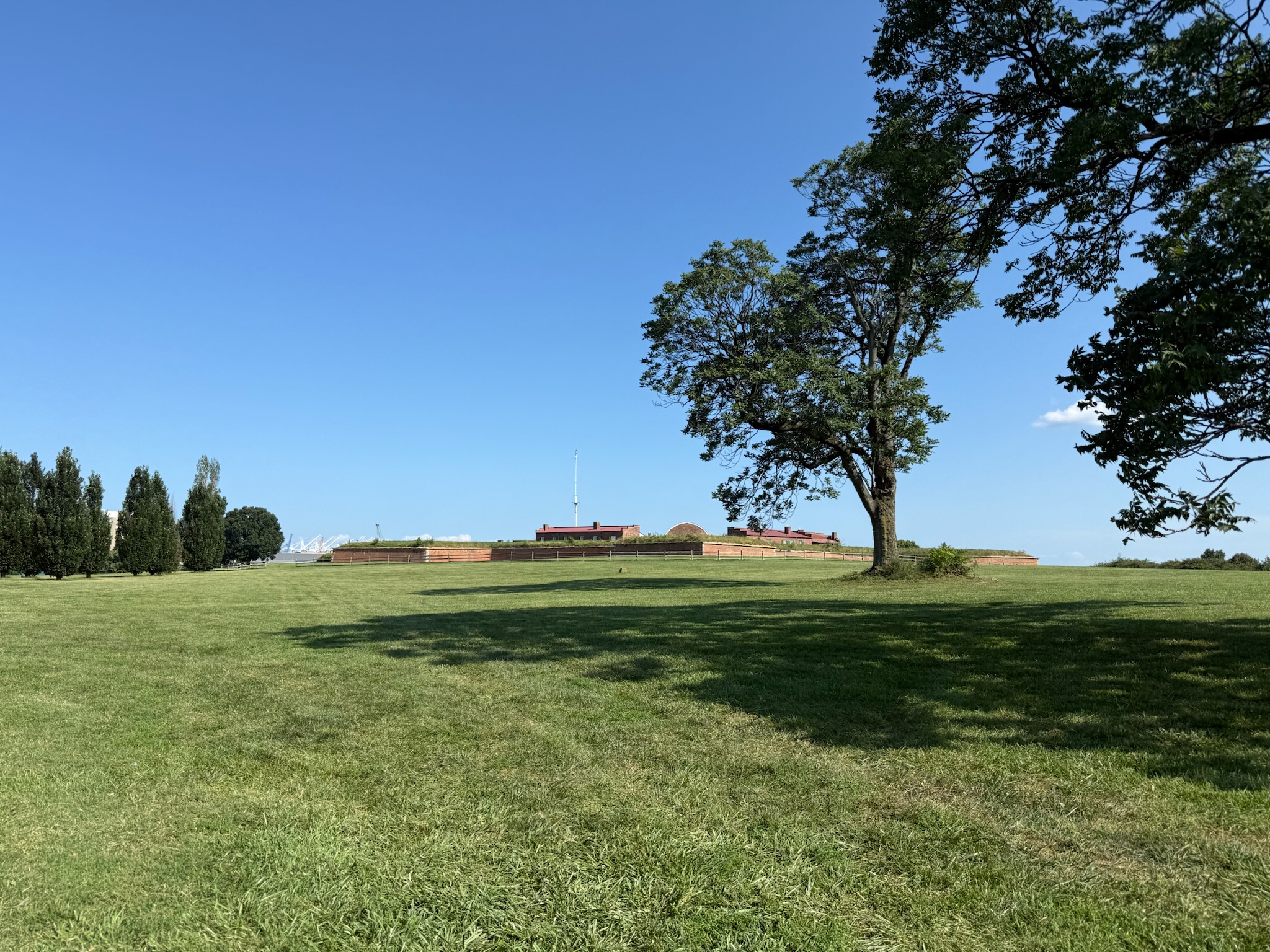
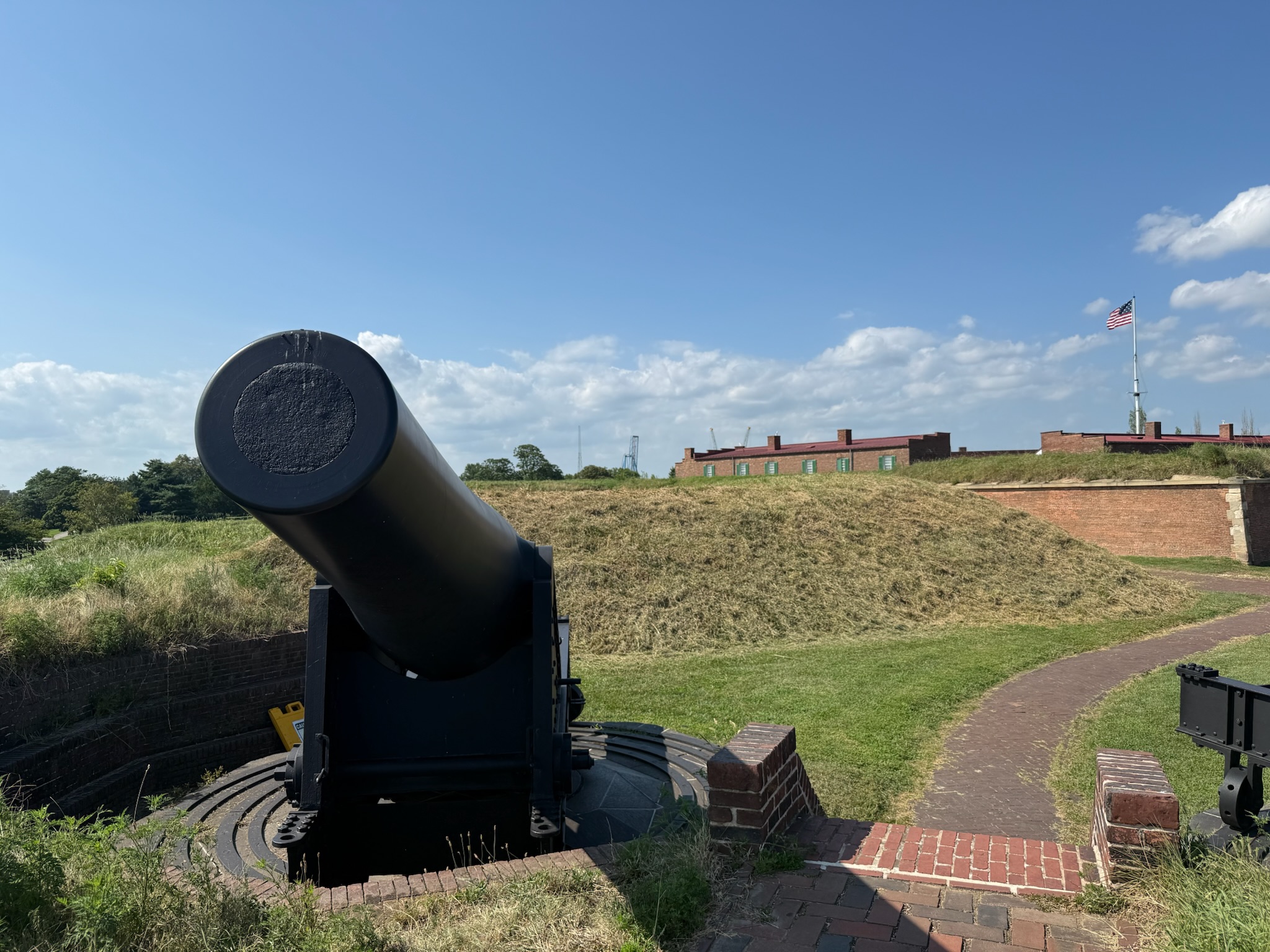
The water-facing edges of the inner fort was ringed with cannons. A sign said that in the Battle of Baltimore, there had been 36 cannons. Some fired 18-lb shot and some 36-lb. The shot was heated before being fired, which made the impact on a wooden boat worse. This was where the term “hot shot” came from. During the Battle of Baltimore, the British tried to stay far enough away that they were beyond the range of the cannons. But that also meant that the British couldn’t get close enough to destroy Fort McHenry, either. In 1886, they installed Rodman cannons, too.
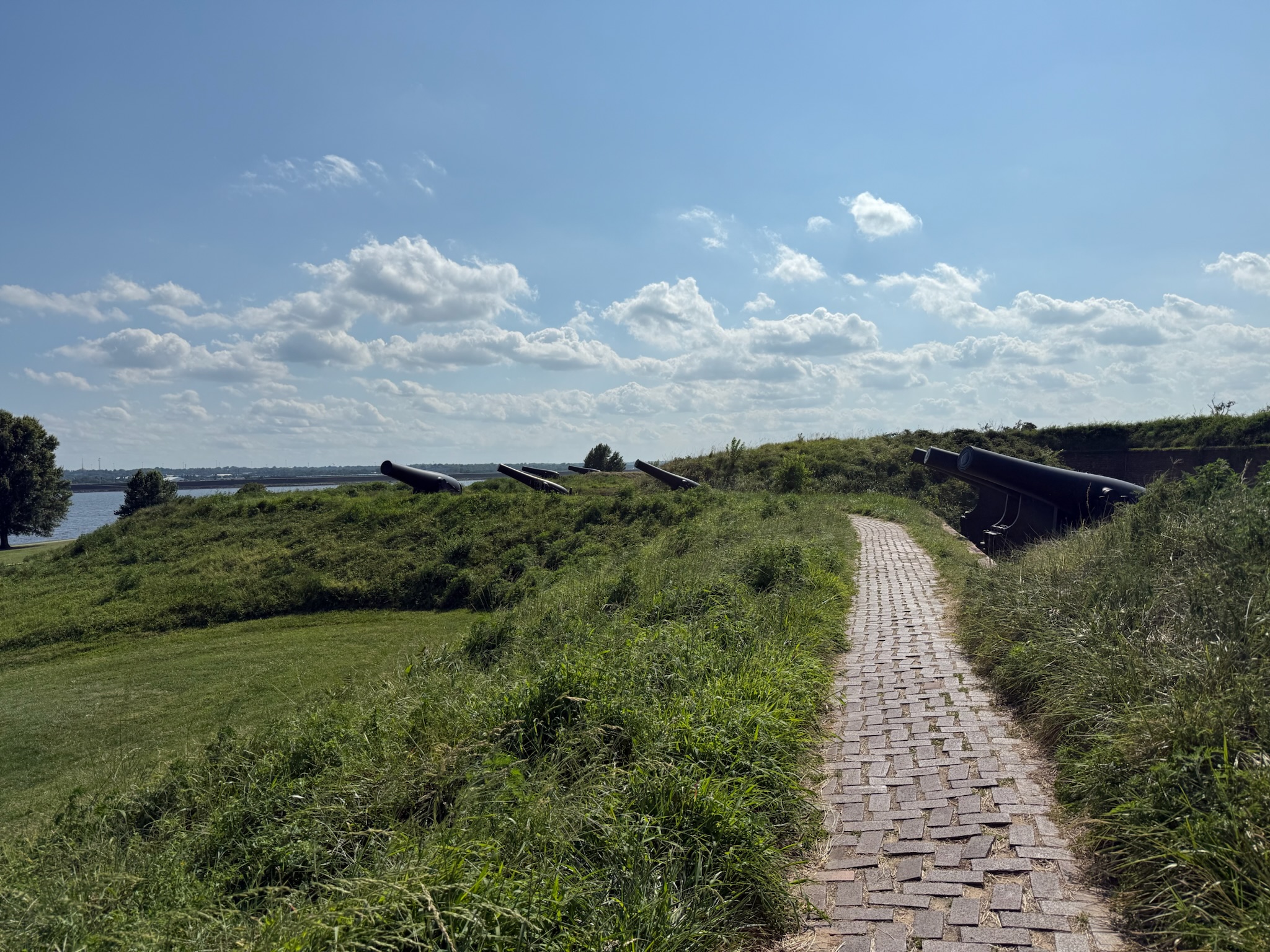
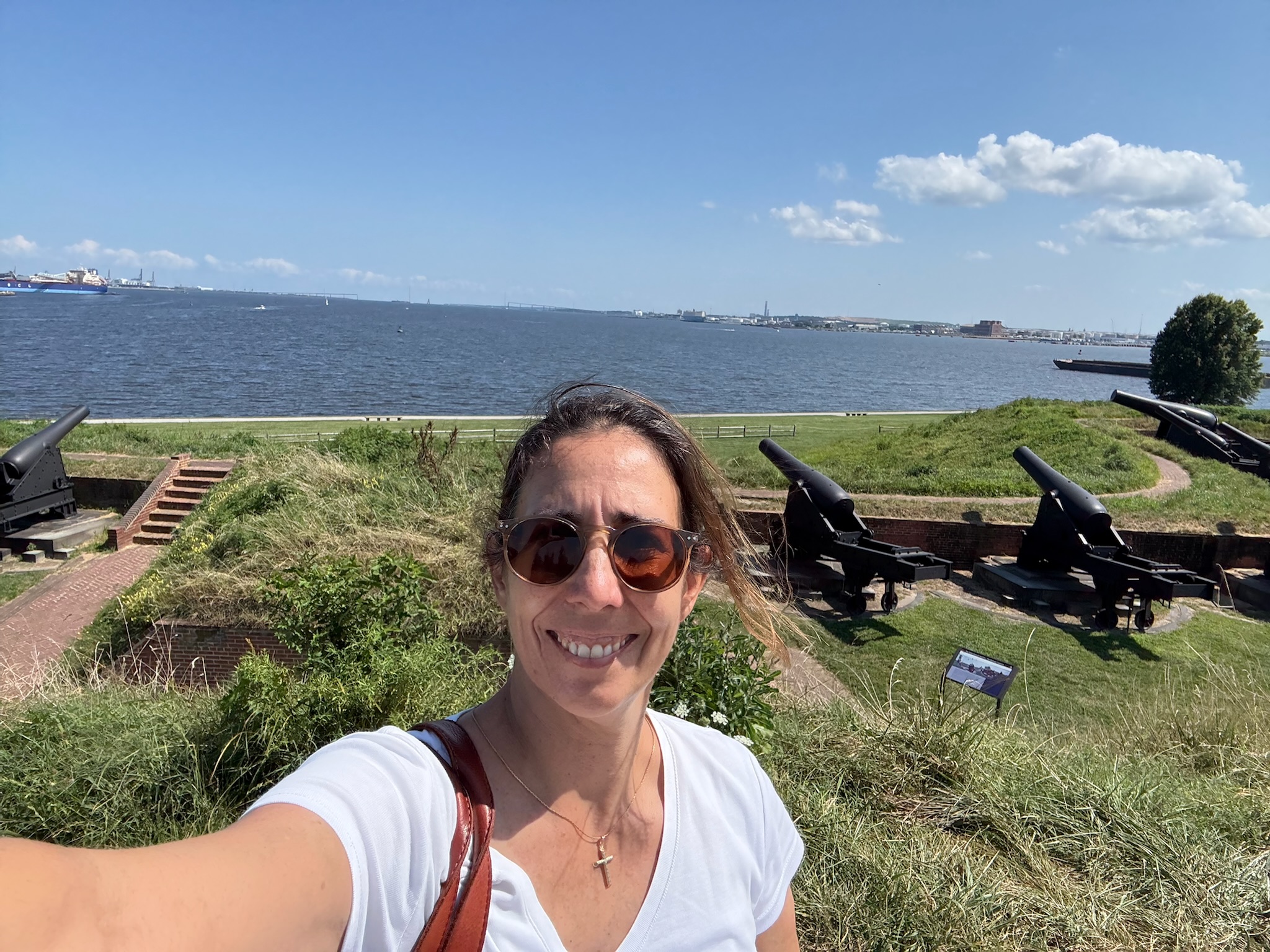
And had stunning views of the Chesapeake Bay.
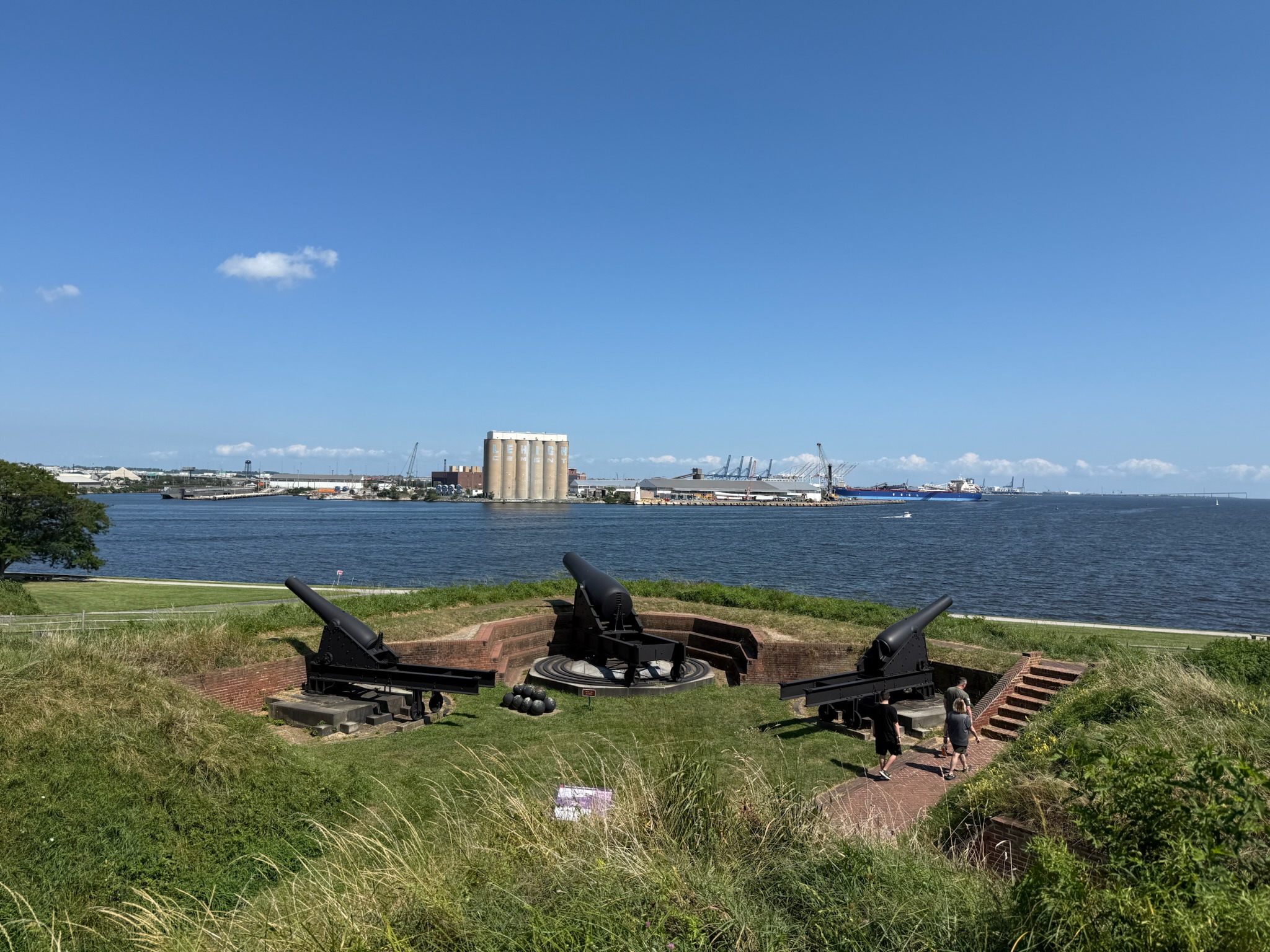
The park ranger told us that the Francis Scott Key bridge was built very close to the spot where Key had watched the bombardment of Fort Henry from (if you look carefully, you can see the remains of the bridge in the background of this photo).
Looking back at the fort from where one of the cannons was mounted.
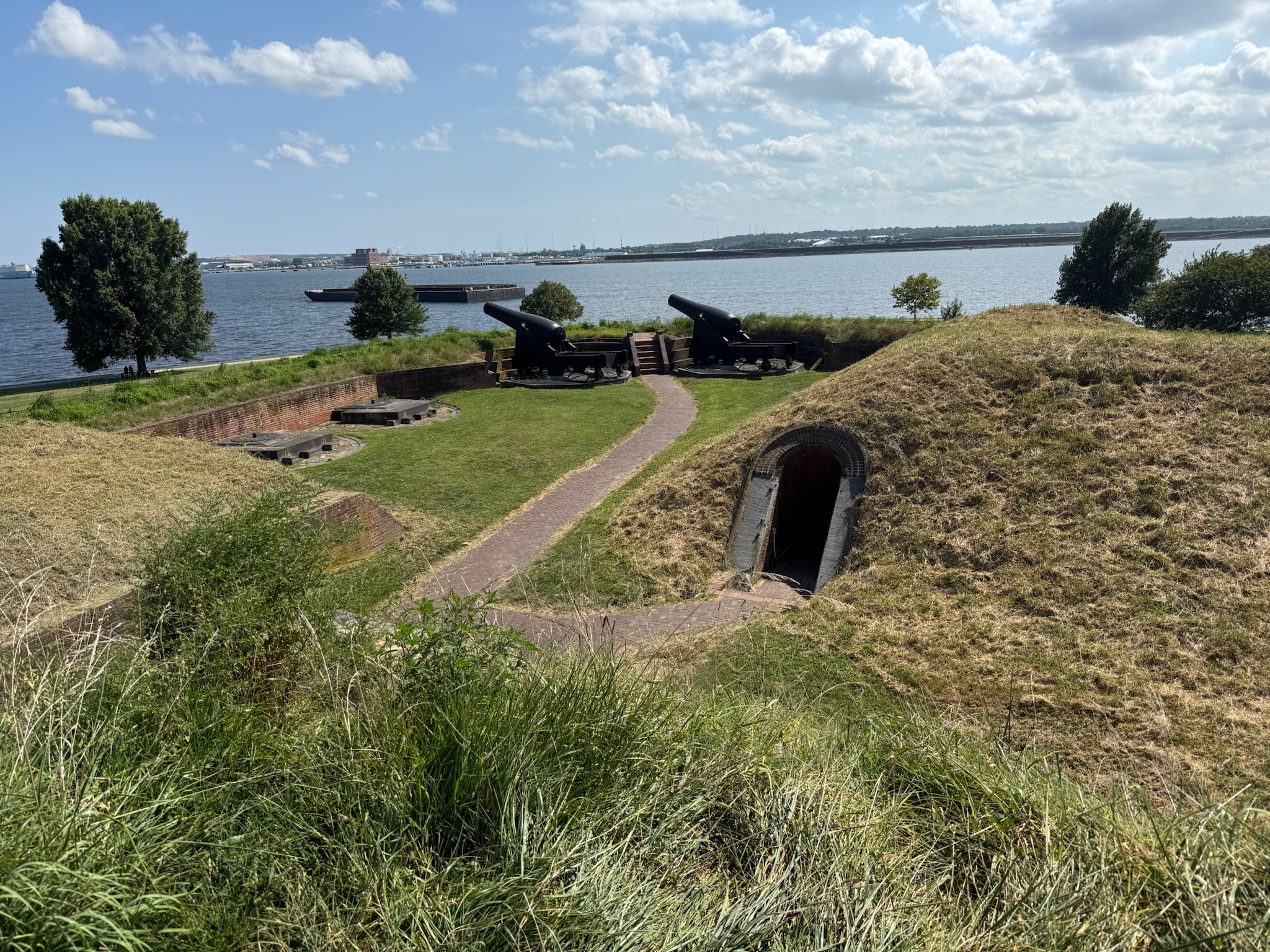
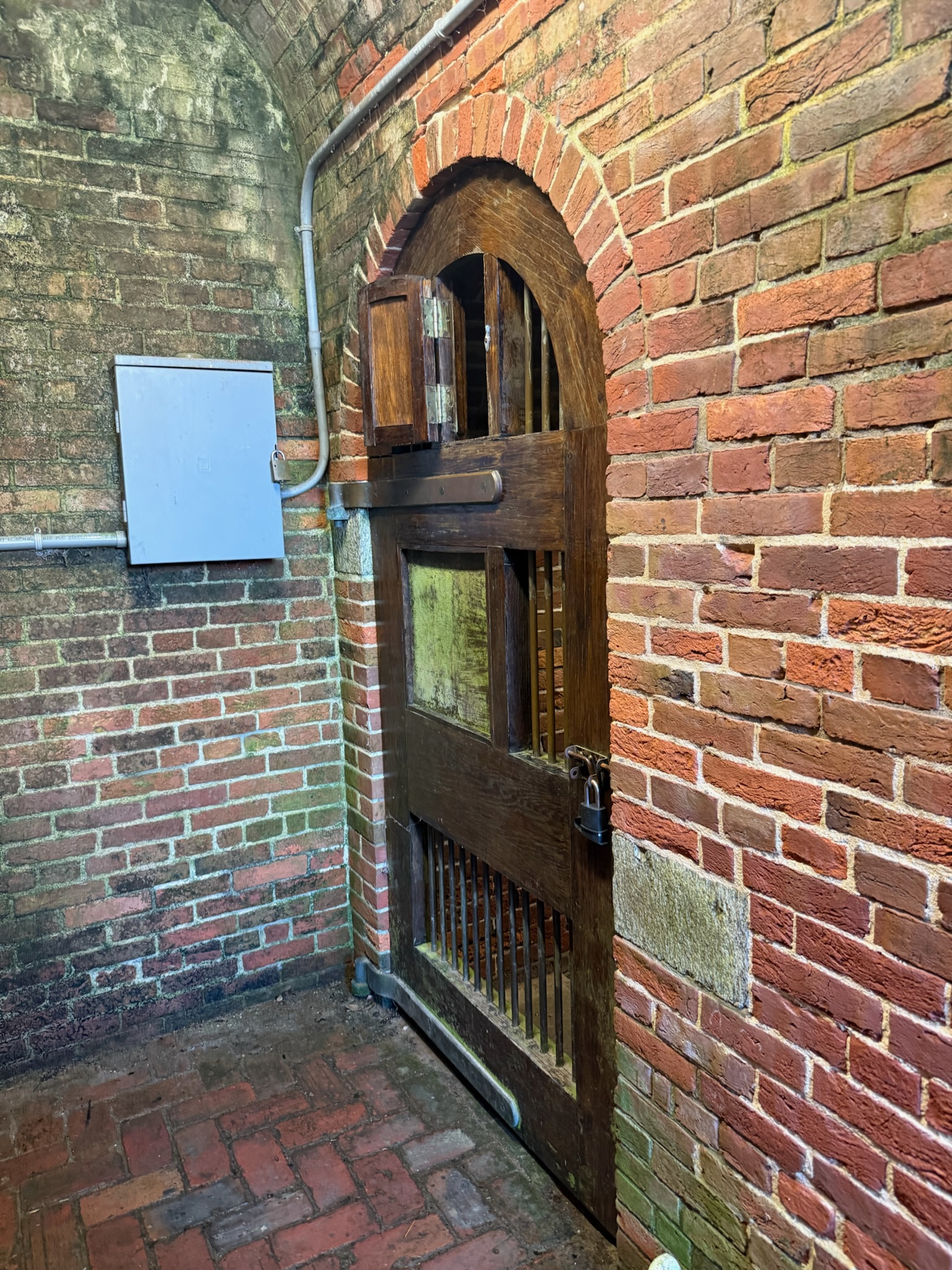
There were a couple of underground bomb shelters in the perimeter of the inner fort, and these were dug after the War of 1812.
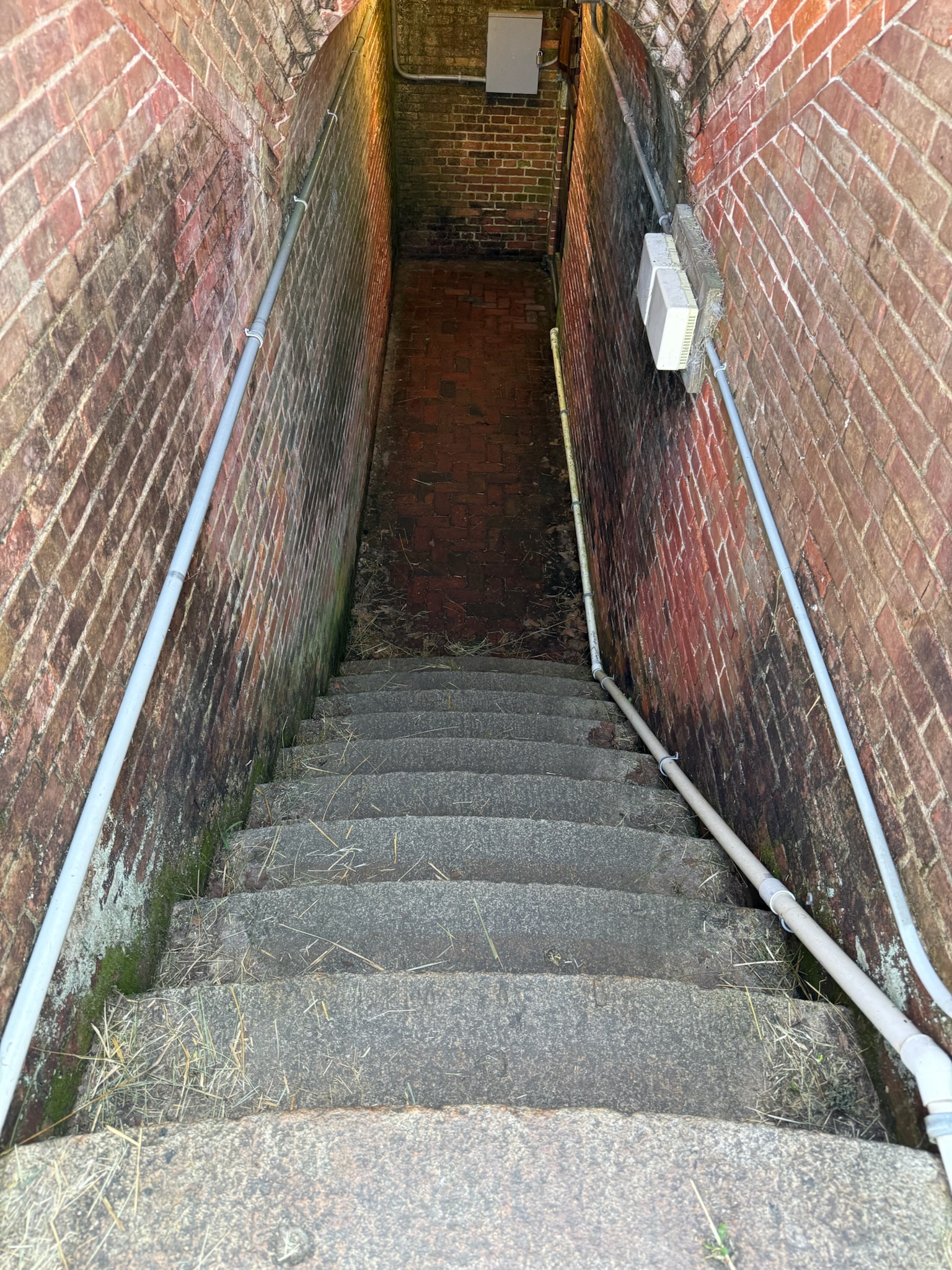
We were able to walk down the stairs of the shelters, but there was a locked gate at the bottom of the stairs, and we couldn’t see what was inside.
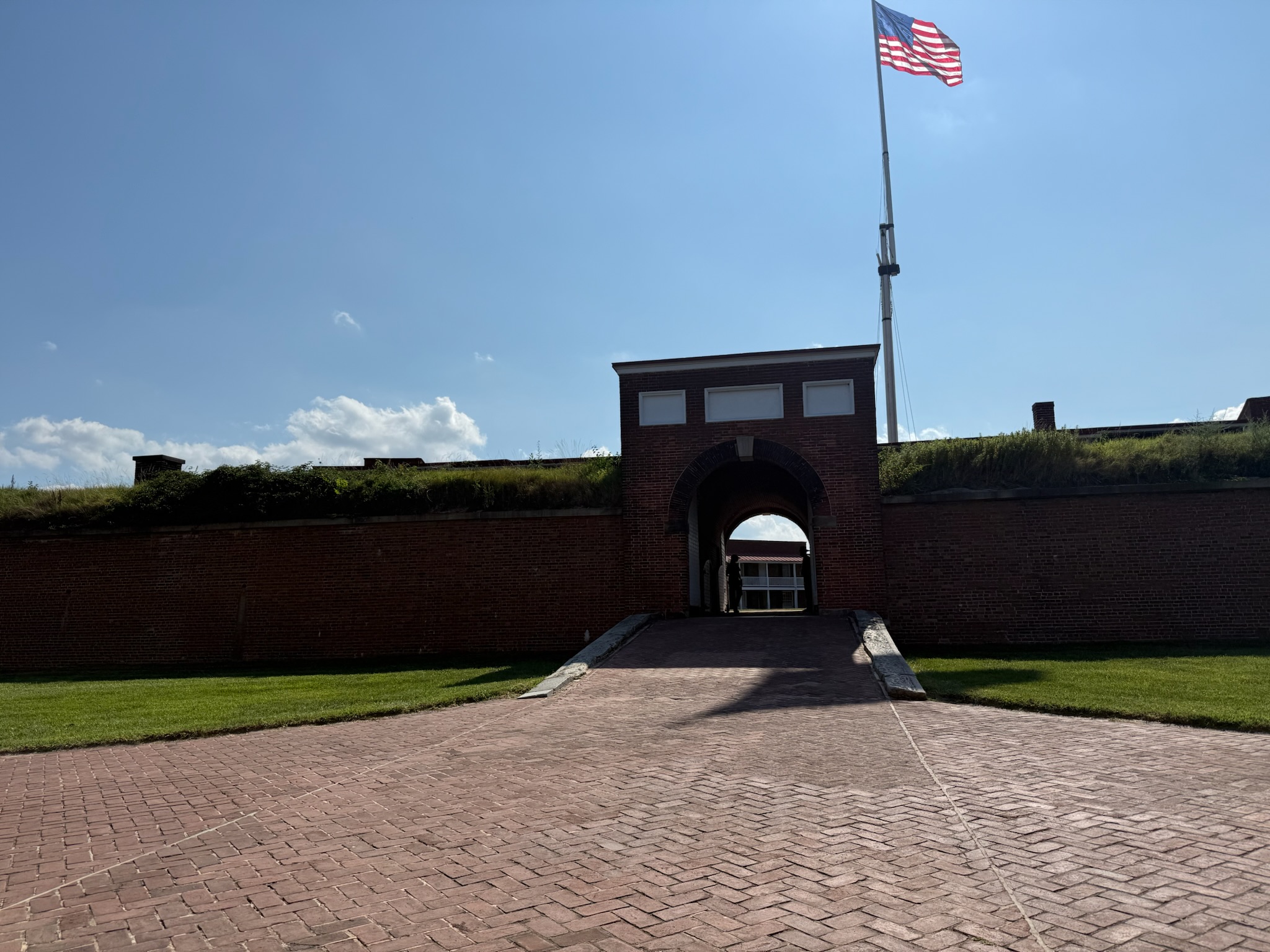
The entrance to the inner fort.
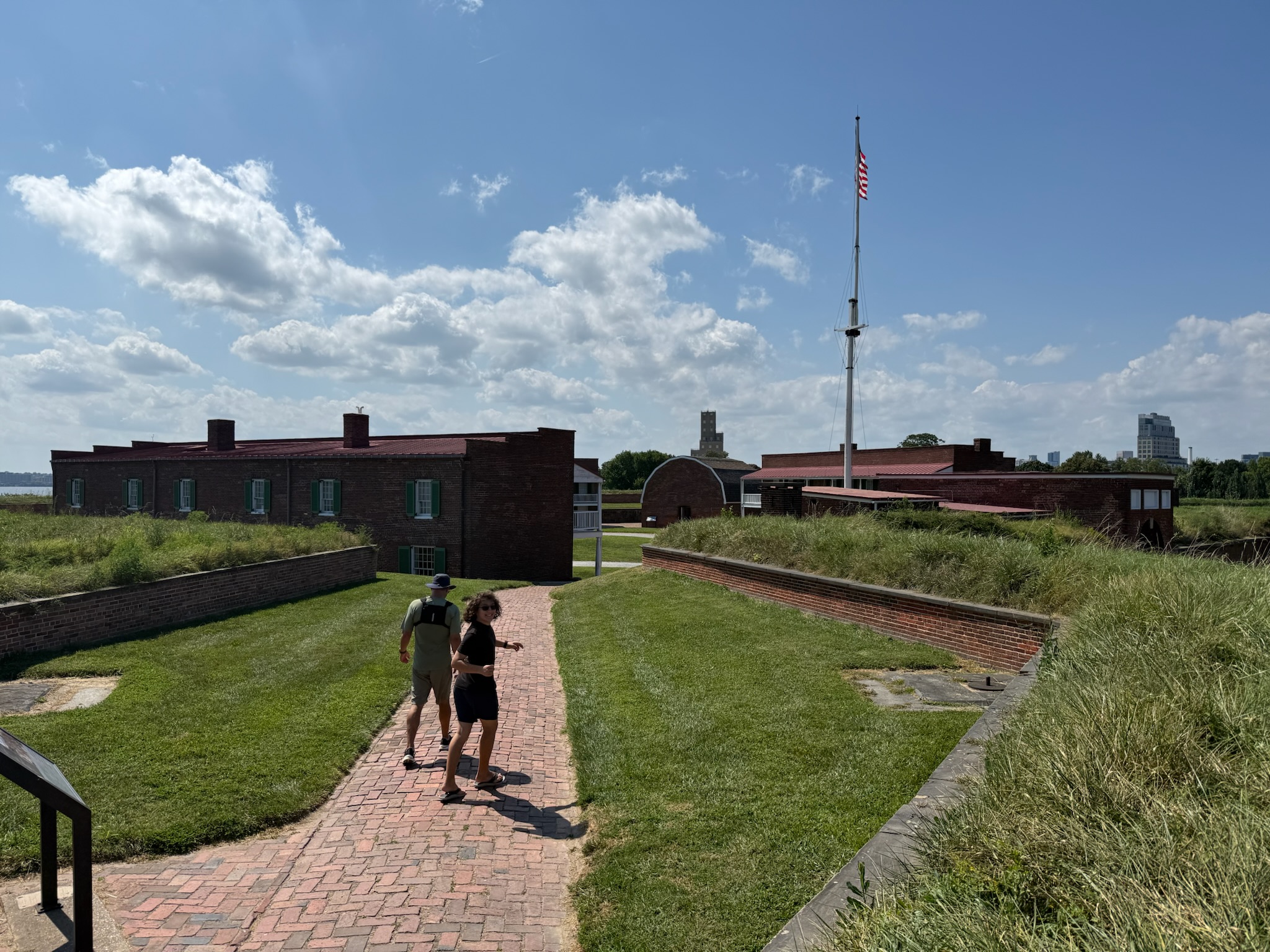
The inner fort was surprisingly small, with only six relatively small buildings in a ring around a center parade ground.
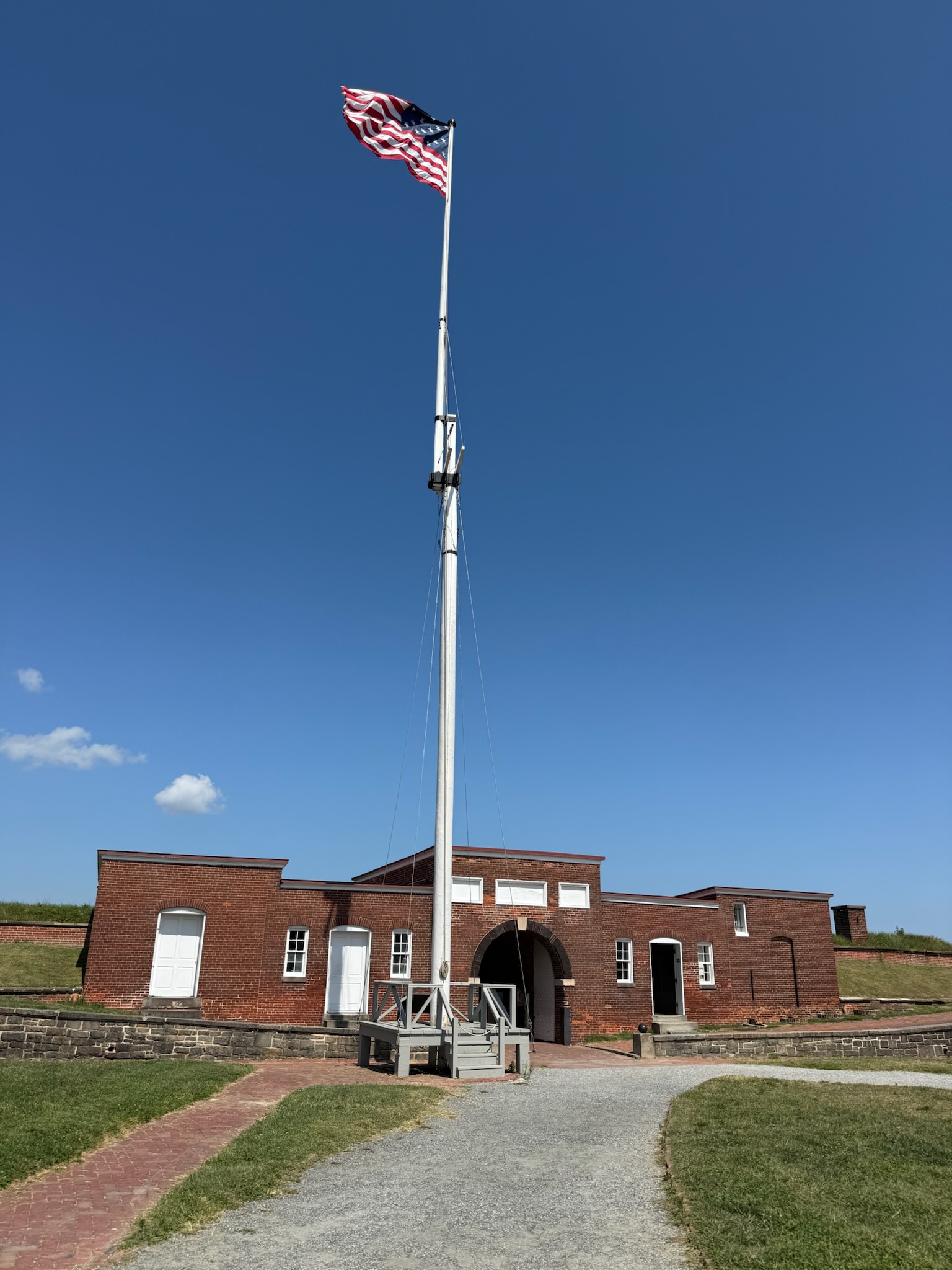
The flagpole is believed to be at the same spot that it was during the Battle of Baltimore, which was near the inner fort’s entrance. The park ranger pointed out that this was a replica of he flag that was flown after the Battle of Baltimore, though it was about half the size of the original.
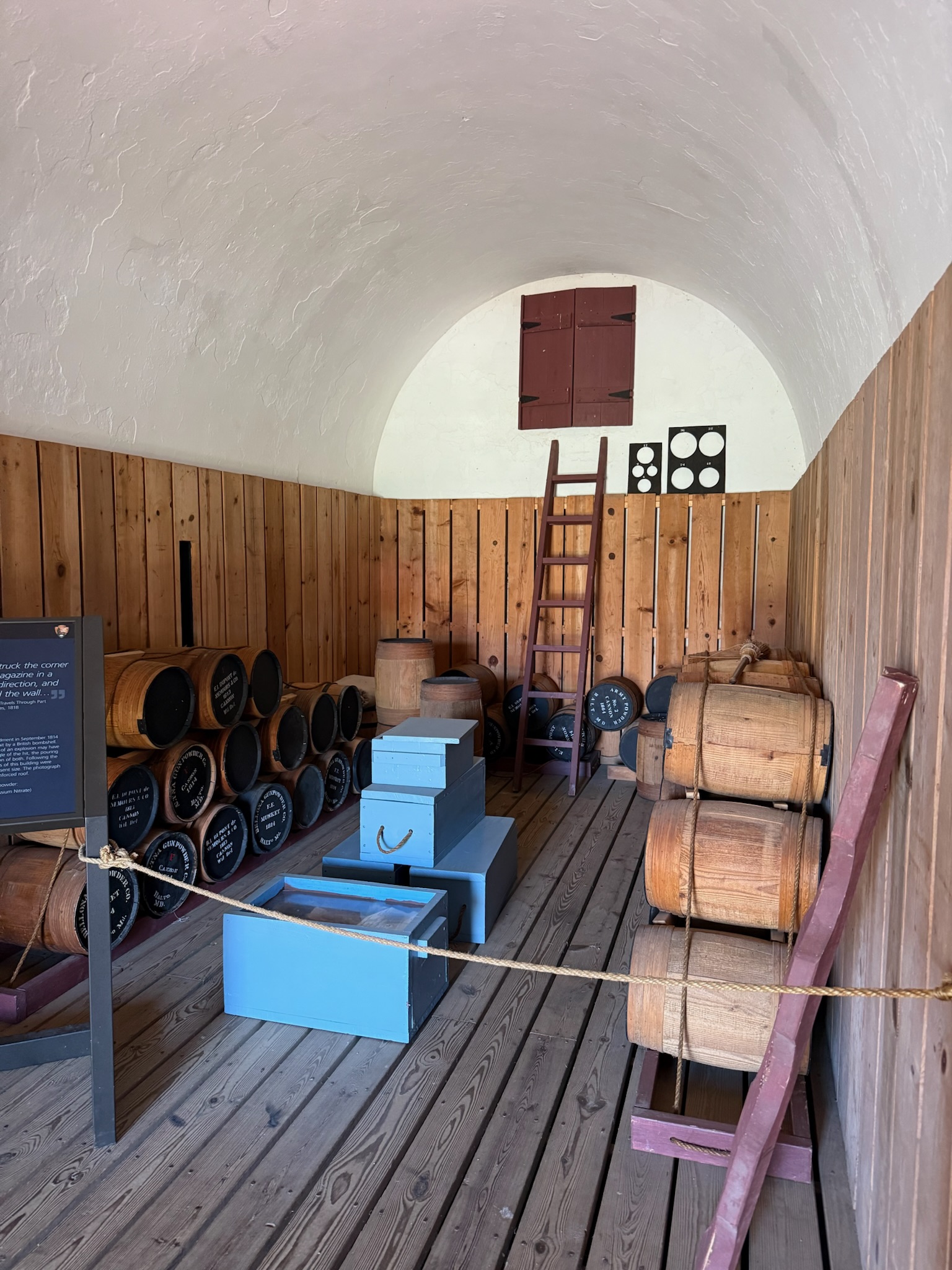
Each of the buildings had exhibits inside about the history of the fort. The dome shaped building was the magazine, where gun powder was stored.
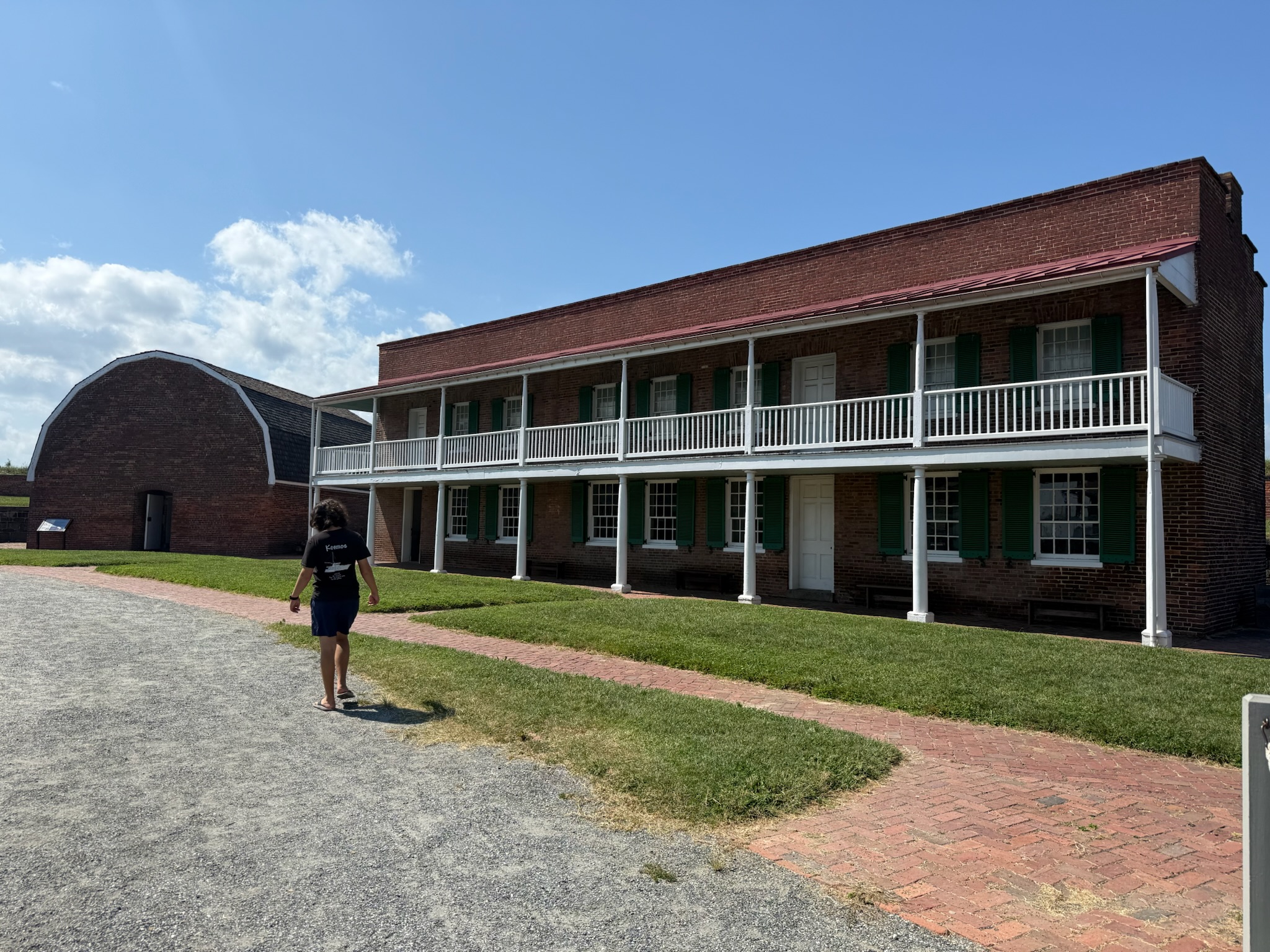
This magazine could hold 30,000 pounds of gunpowder, which was used for artillery and musket cartridges. There had been two factories just outside of Baltimore that manufactured the powder.
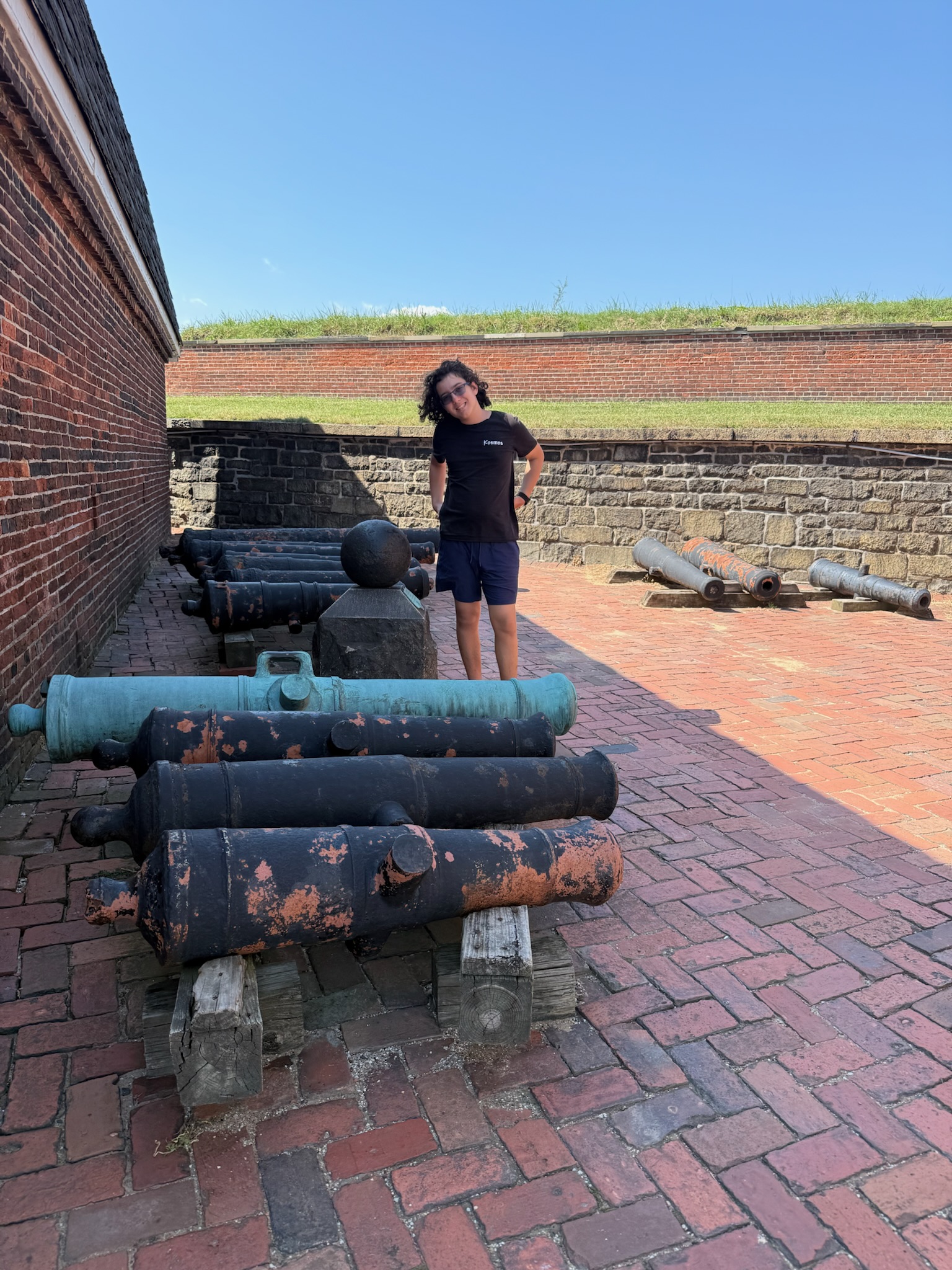
During the Battle of 1814, one of the British shells hit the magazine. Miraculously, the shell didn’t explode — had it, the entire fort would have blown up. Keith was standing next to the unexploded shell.
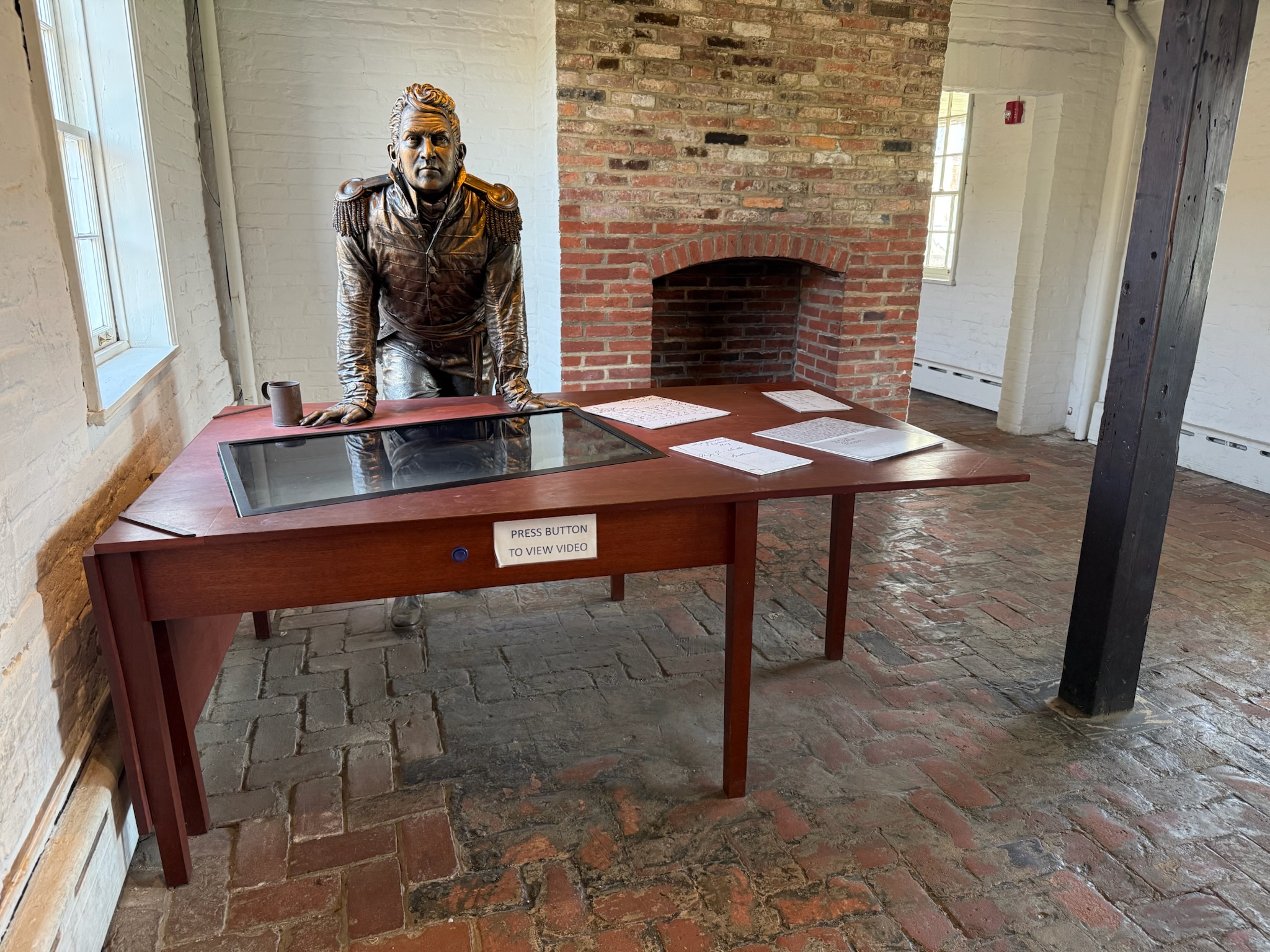
Part of the building to the right of the magazine had been the Command Center in 1814. There were plaques on the wall with the names, profiles and job duties of the officers that were serving here during the battle. There was a drawing of them strategizing around a map of Baltimore.
The rest of the building was used as a guardhouse, where the guard of the day kept watch over prisoners and a look out for British ships in the harbor.
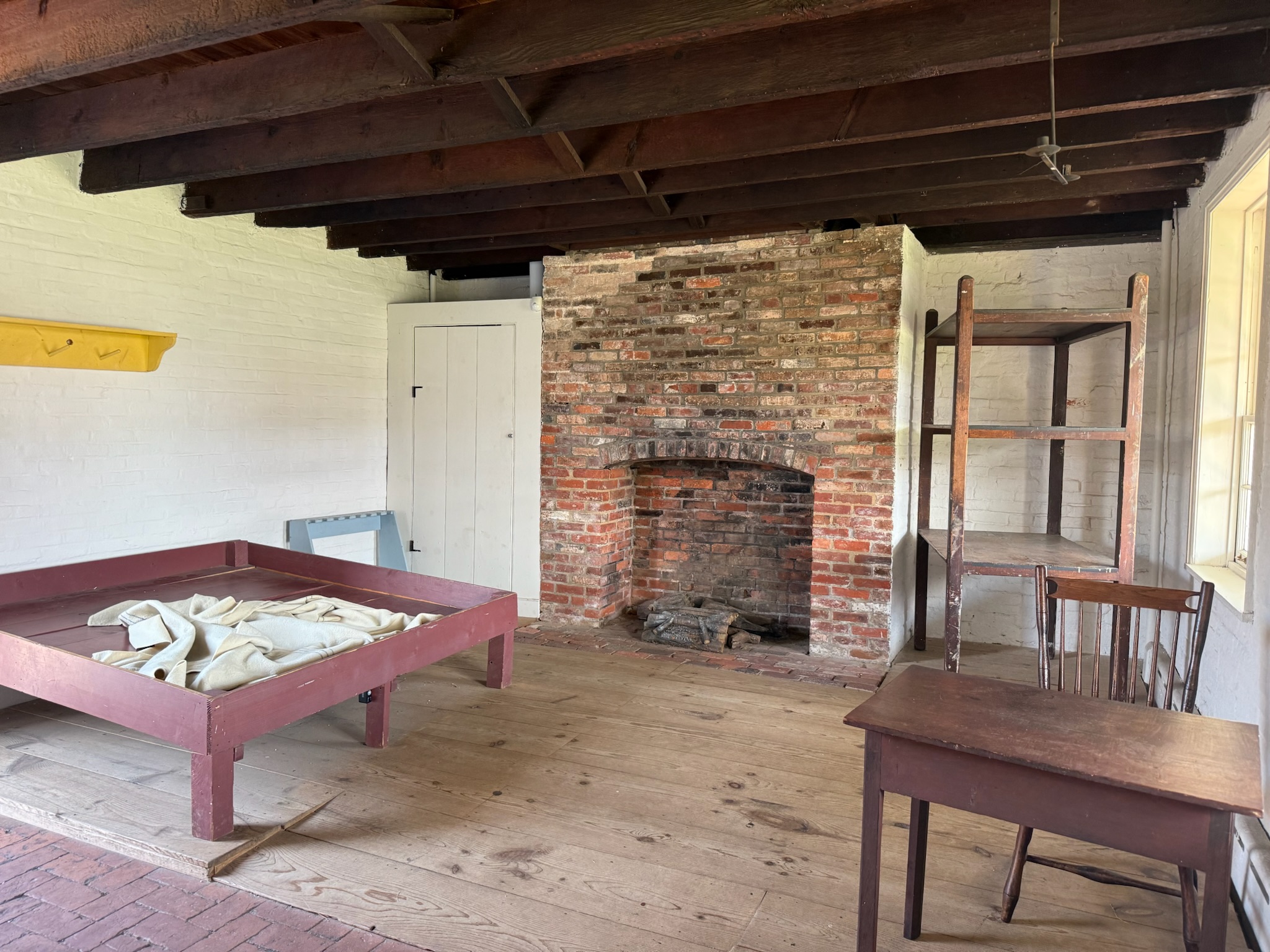
The upstairs was closed, but one of the signs said that originally, the officer’s area and the guardhouse had been two separate single story buildings. In 1829, the buildings were joined and the second story added.