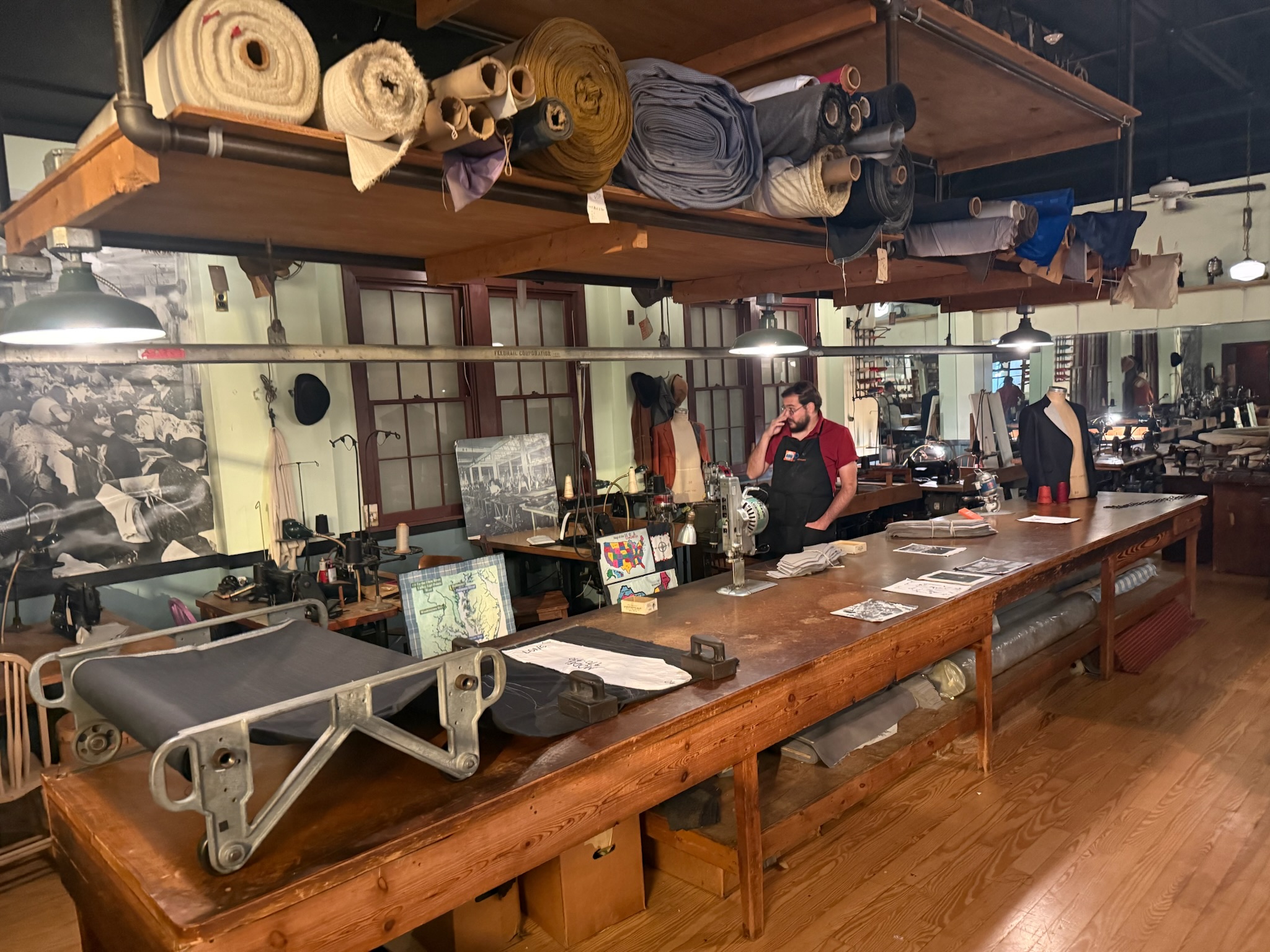
Next we went into another large room that was set up to look like a clothing manufacturing facility. Baltimore was also a hub for clothing manufacturing. Our tour guide showed us the revolutionary technology of the era that made mass-produced clothing possible — a device that simultaneously cut many pieces of cloth stacked together instead of cutting one piece at a time. Coupled with an assembly line sewing process, where each woman on the line sewed a particular piece of the garment and then passed it on to another who would sew her particular piece, ready-to-wear clothes could be quickly produced. The machines were loud and deafness was a problem for the workers.
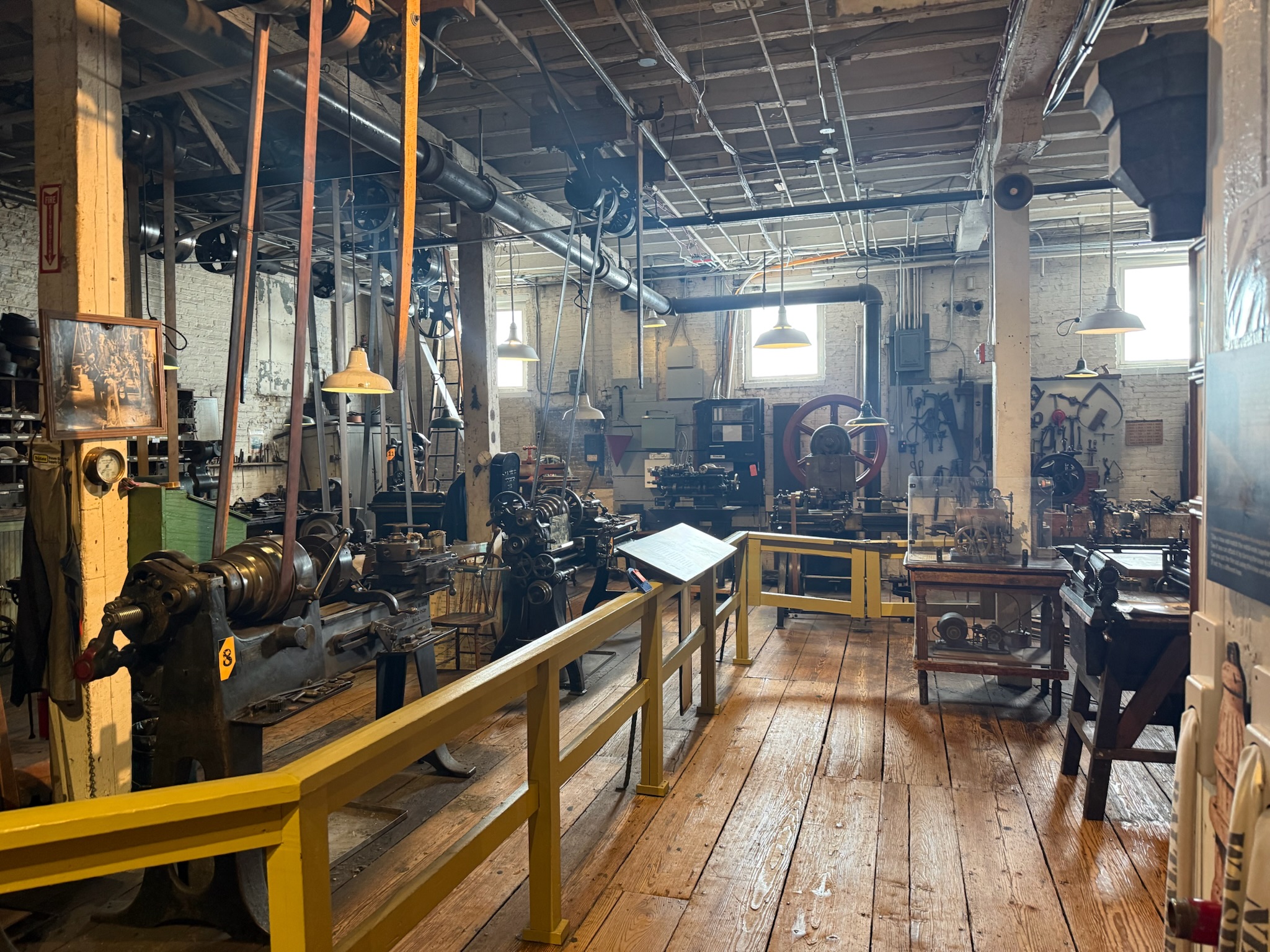
Next we went to a section that was designed to look like a belt-driven machine shop from 1910. Baltimore had also once been a hub for fabricating parts and tools for various industries. Most of the machines were connected via belt to a rod that ran along the ceiling. The rod rotated, moving the belt and powering the machine. The rod was rotated by a steam engine in the corner.
He showed us how the steam powered engine worked on a model.
The tour concluded and we explored the rest of the museum on our own. In the machine shop, we saw a sign that said the flexible shaft coupling, which is now the standard device to connect motors to machines, was invented in Baltimore by a German immigrant and produced by a Baltimore-based industrial shop.
We wandered back over to the food area. Next to the display on meat was a cute bakery with old-school bakery tools that had been donated by assorted local bakeries. Signs highlighted various iconic establishments.
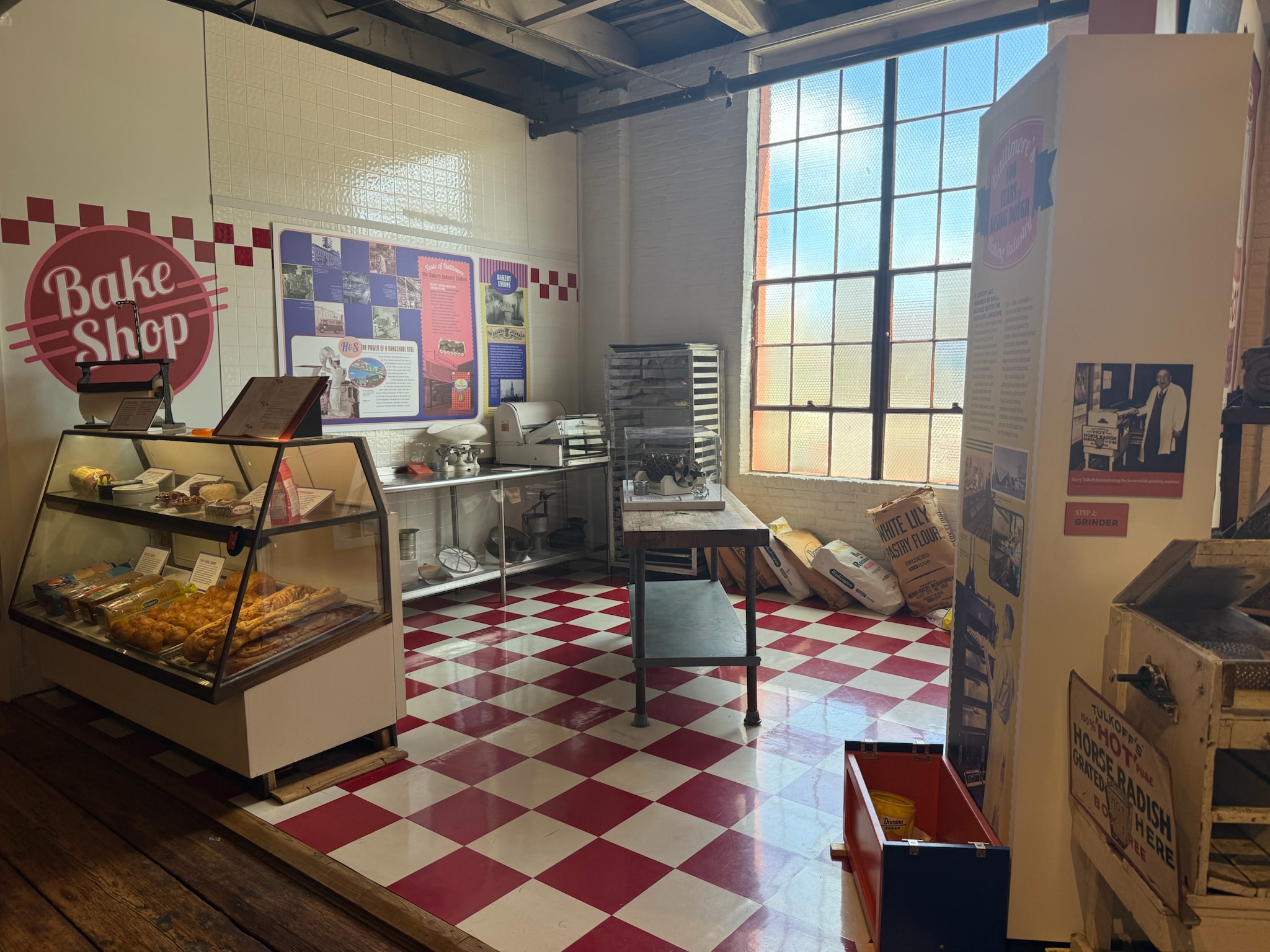
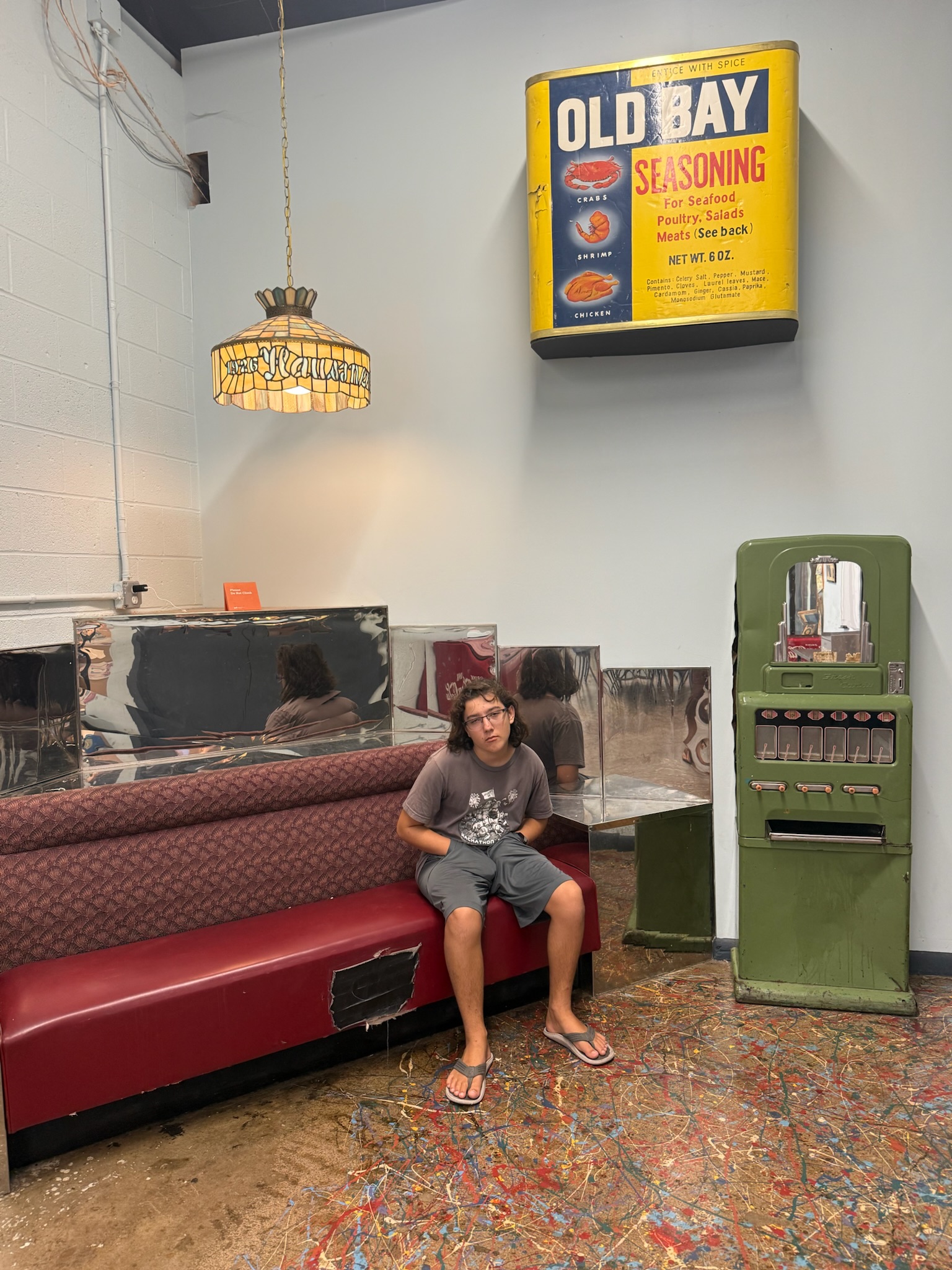
We found out that Old Bay Seasoning was invented here in Baltimore. A Jewish spice trader had fled Germany. In Baltimore, he made spice blends for the German sausage companies. Being in a seafood town, he worked on a spice blend for seafood and Old Bay was born.
H & S Bakery began in 1942 by a Greek immigrant and his son-in-law. In 1965, H & S became the supplier for buns for McDonald’s east coast restaurants, churning out tens-of-millions of buns per week. It remains one of the largest family-owned bakeries in the country and was still run by the same family. We’ve driven past the H & S bakery in downtown several times — the facility was huge and smelled wonderful.
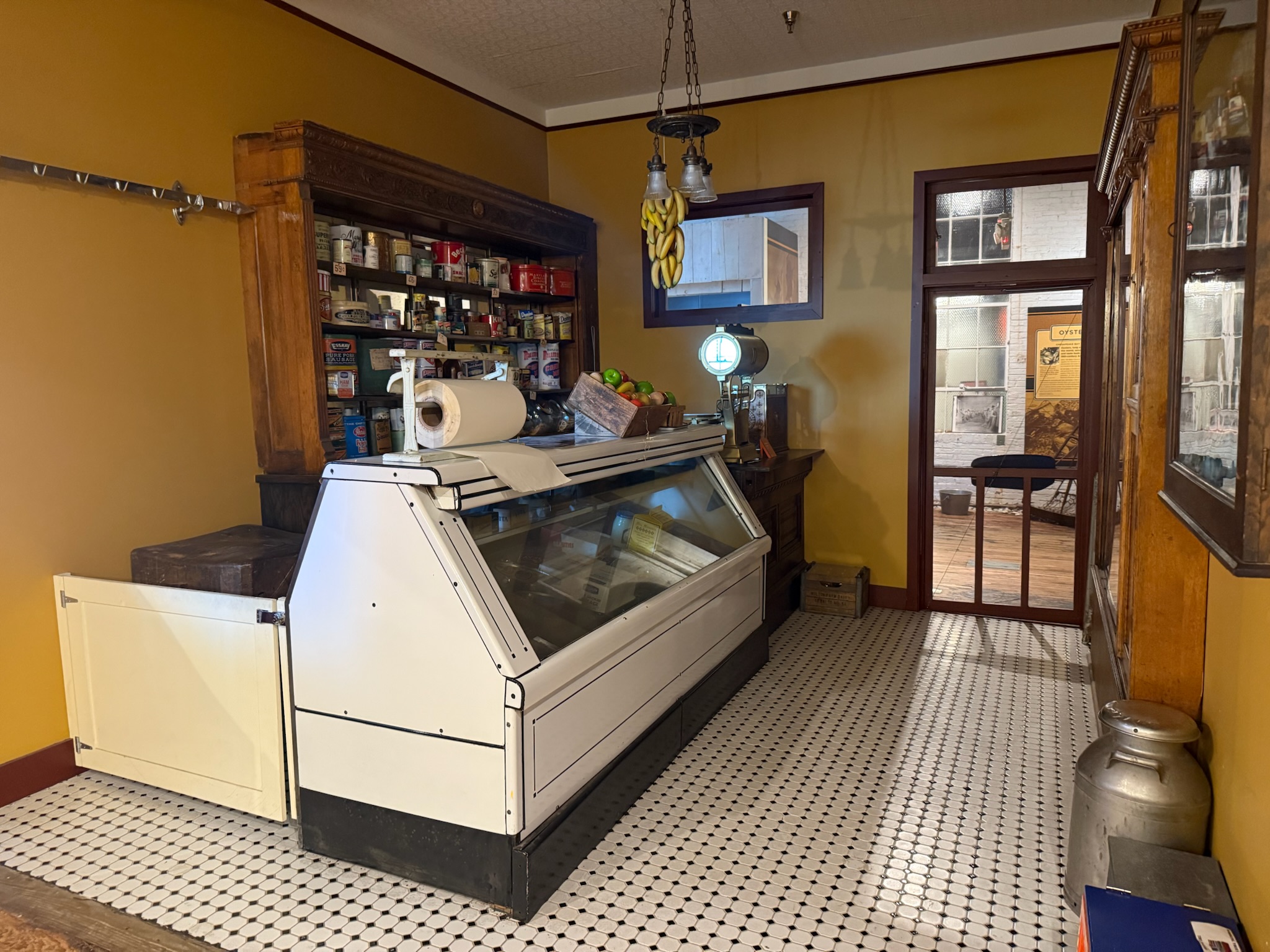
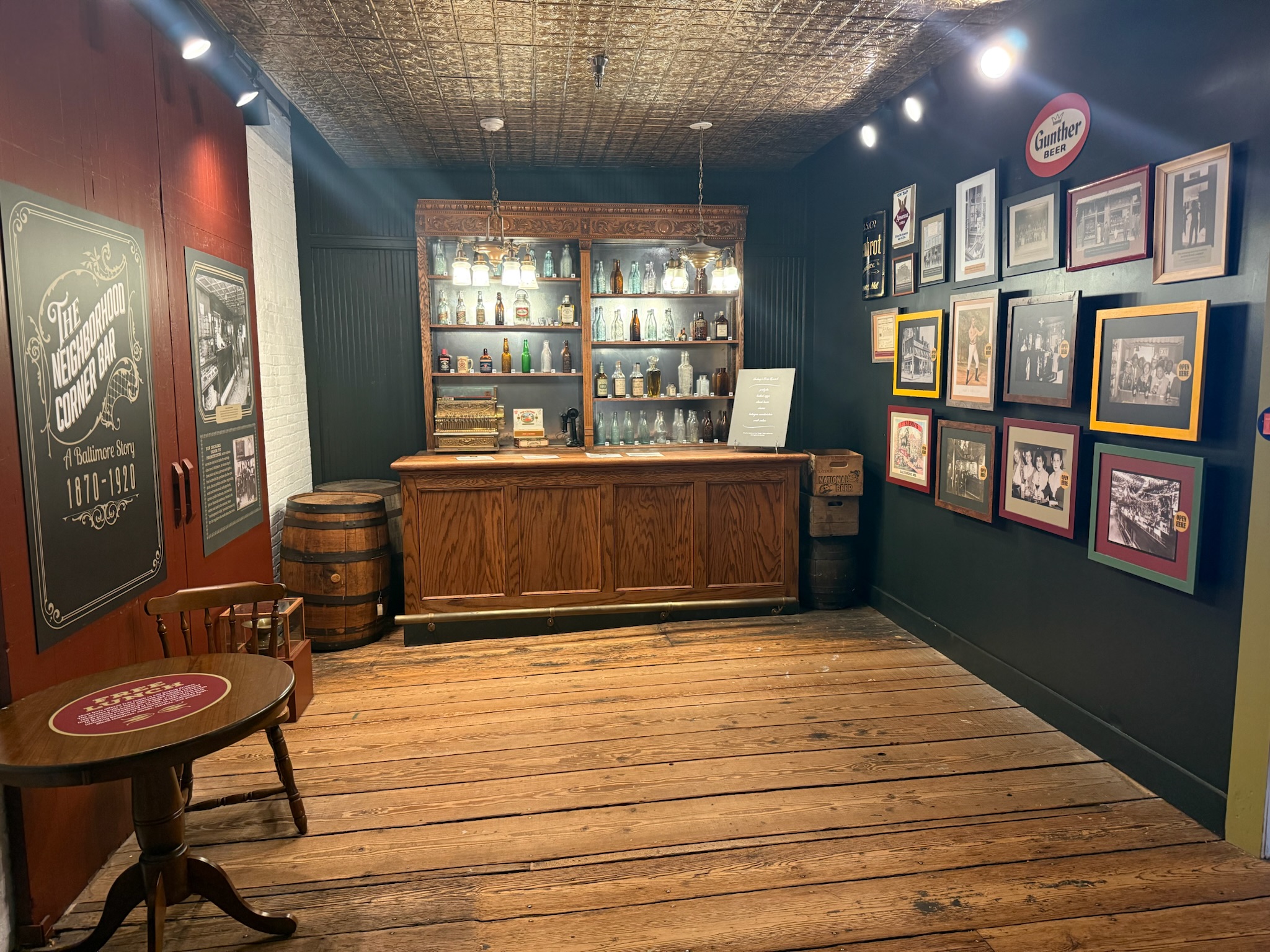
Next to the bakery was a typical neighborhood corner market and a typical neighborhood corner bar. The signs said both had the same square footage and layout that they typically had back in the day. Interestingly, at the turn of the 20th century, there was pressure to not let people drink on empty stomachs, so corner bars started giving customers free food if they bought drinks.
We headed back to the automotive section, as we had seen very little of it when we went through it with the tour guide. There was a display about an manufacturer that was based out of Baltimore. American Oil Company was started in 1910 by a Lithuanian immigrant that was residing in Baltimore. He was a kerosene deliveryman. He knew that automobiles were going to be the wave of the future and that gasoline would replace kerosene. He created a high octane gasoline called AMOCO and opened a chain of nearly 150 gas stations called Lord Baltimore Filling Stations. One of AMOCO’s early successes was with the famous Spirit of Saint Louis flight from New York to Paris in 1927. Charles Lindbergh almost had to cancel his transatlantic flight because his fuel supplier couldn’t provide enough fuel. AMOCO came to the rescue.
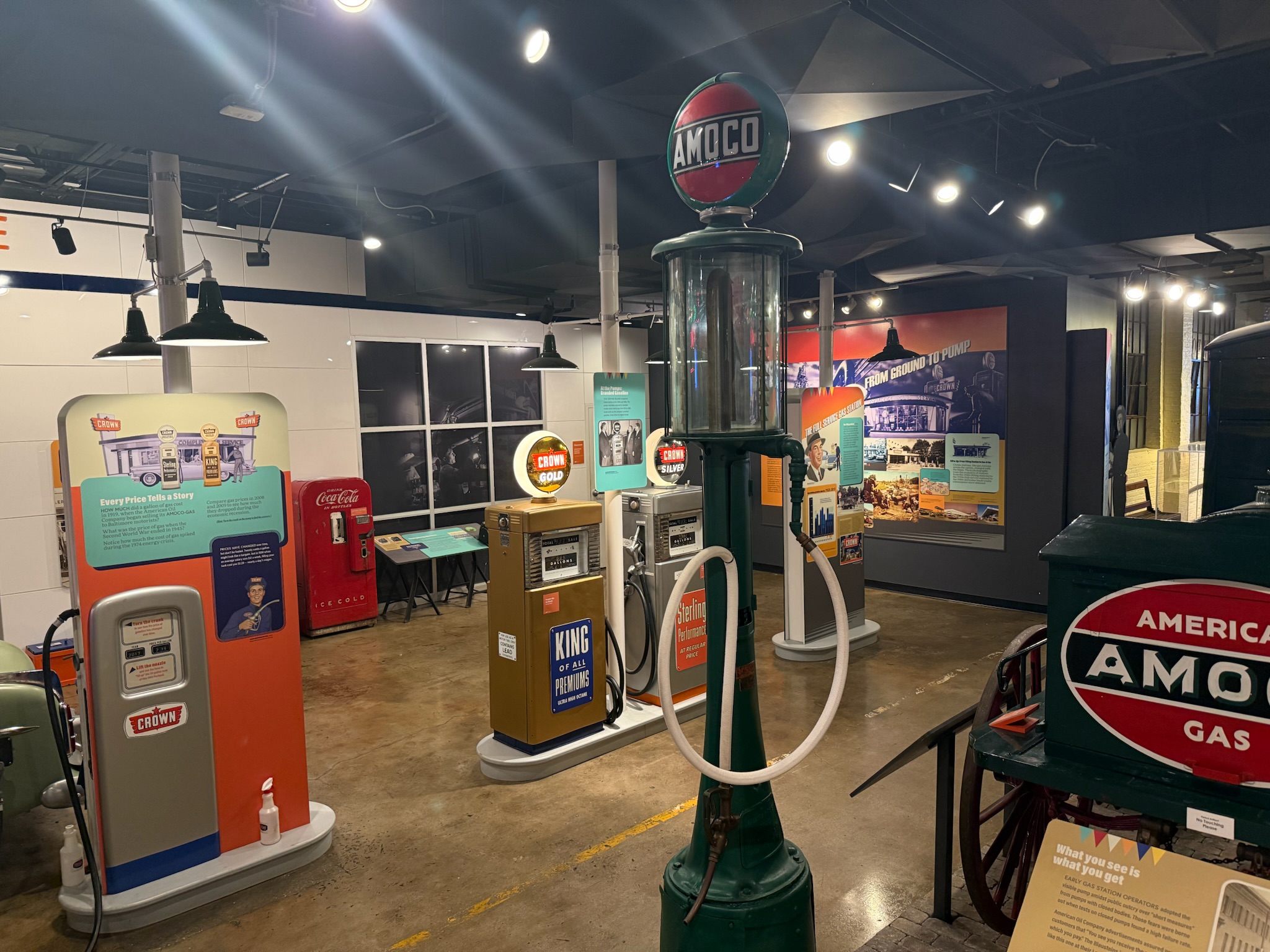
In 1930, American Oil acquired Houston based Crown Central Petroleum. Now they controlled every step of its products — drilling, refining, transporting and marketing at its own branded stations. They built gas stations from Connecticut to Florida to Texas, and became one of the nation’s largest regional independent petroleum companies. Crown sold its assets off in 2003.