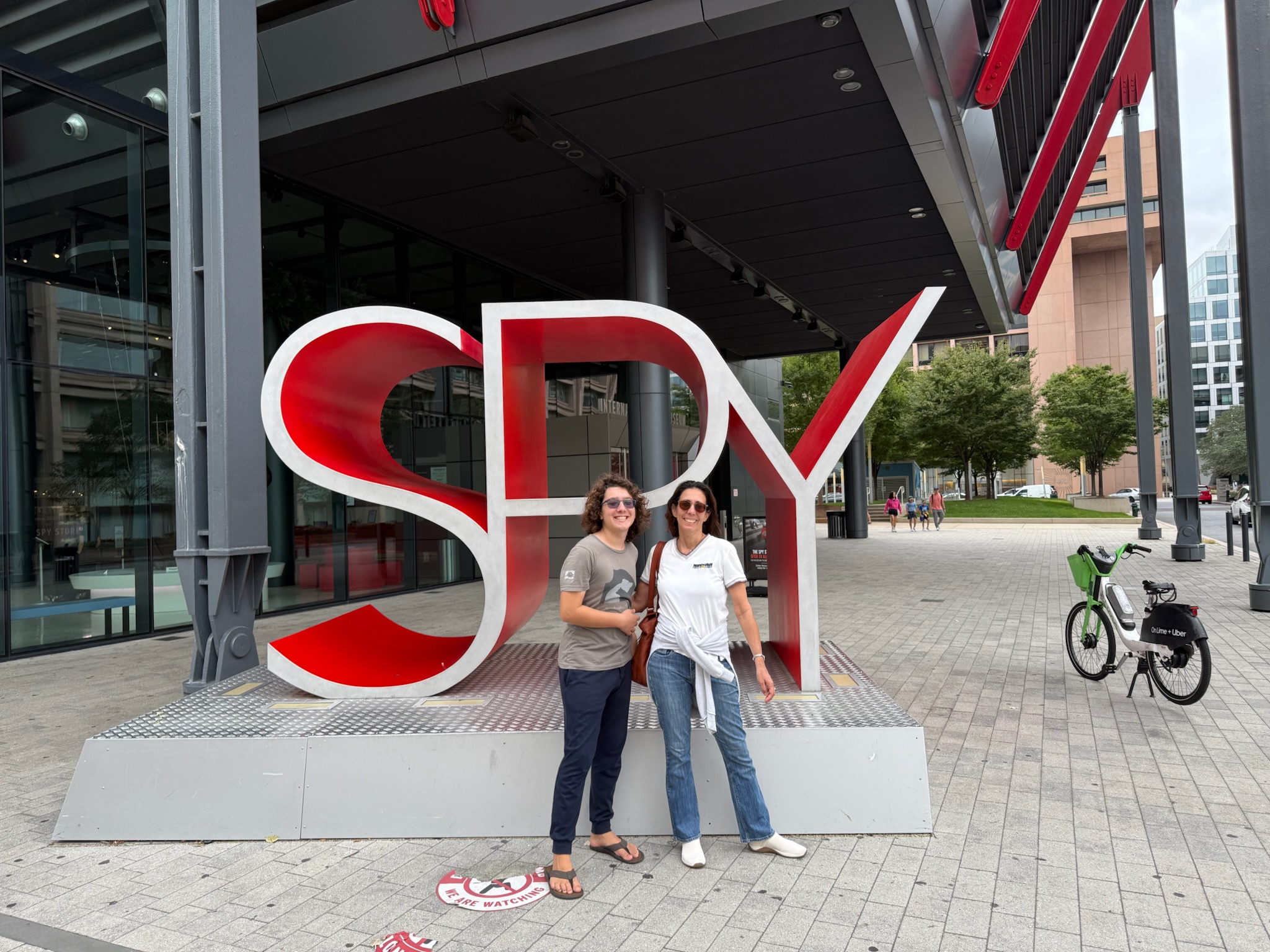
Sunday, Sept 21 — We’d asked several friends which DC museums they liked best. Everyone who had been to the Spy Museum said it was their favorite. So that was the first museum on the DC itinerary. Conveniently for us, it was also the closest to our marina, located in a complex called L’enfant Plaza. The plaza was named after Pierre Charles L’enfant, the architect who designed DC.
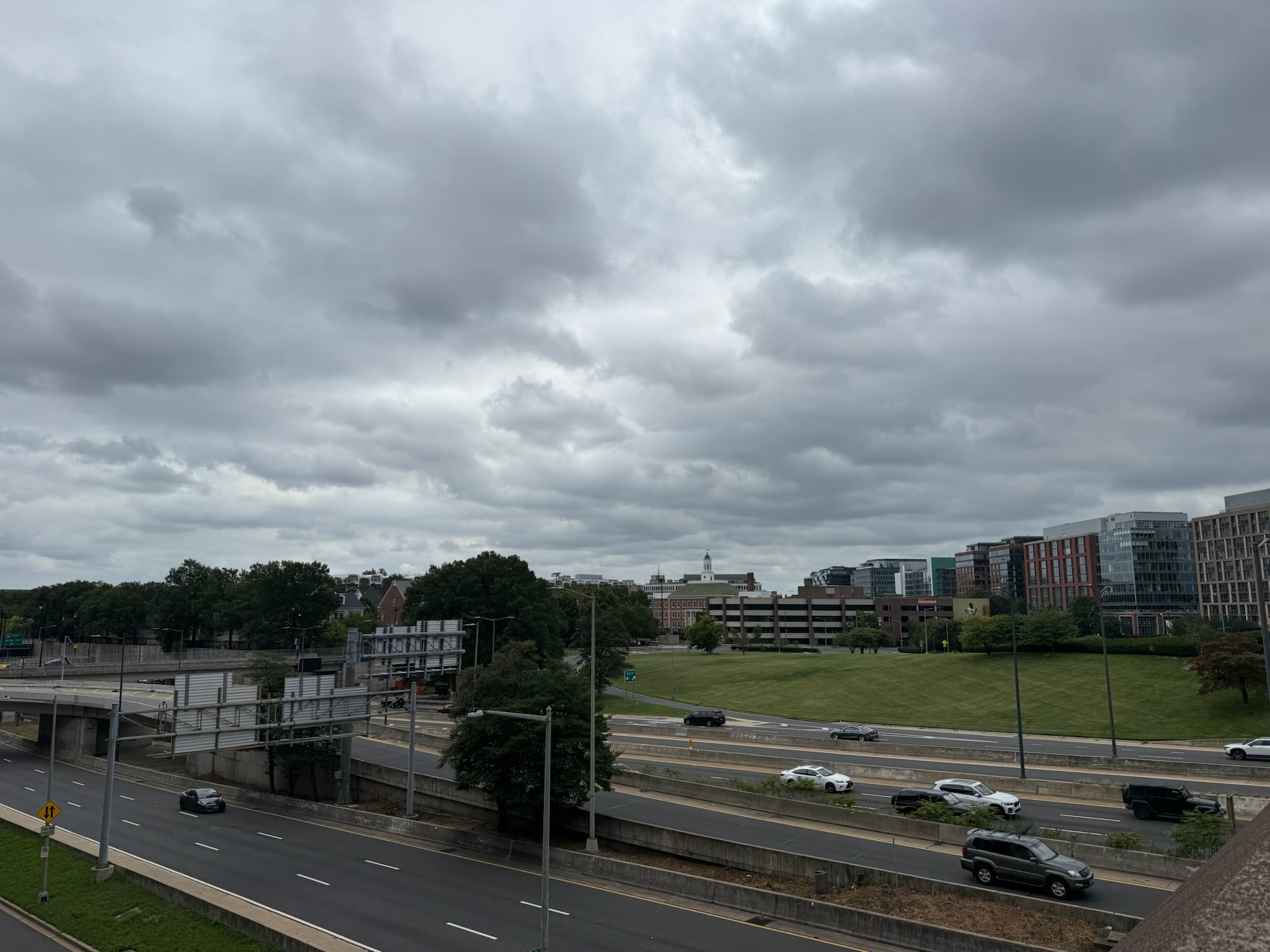
From the Wharf, we crossed over Main Ave SW, followed a bridge over a freeway, and the museum was one of the first buildings along the raised road.
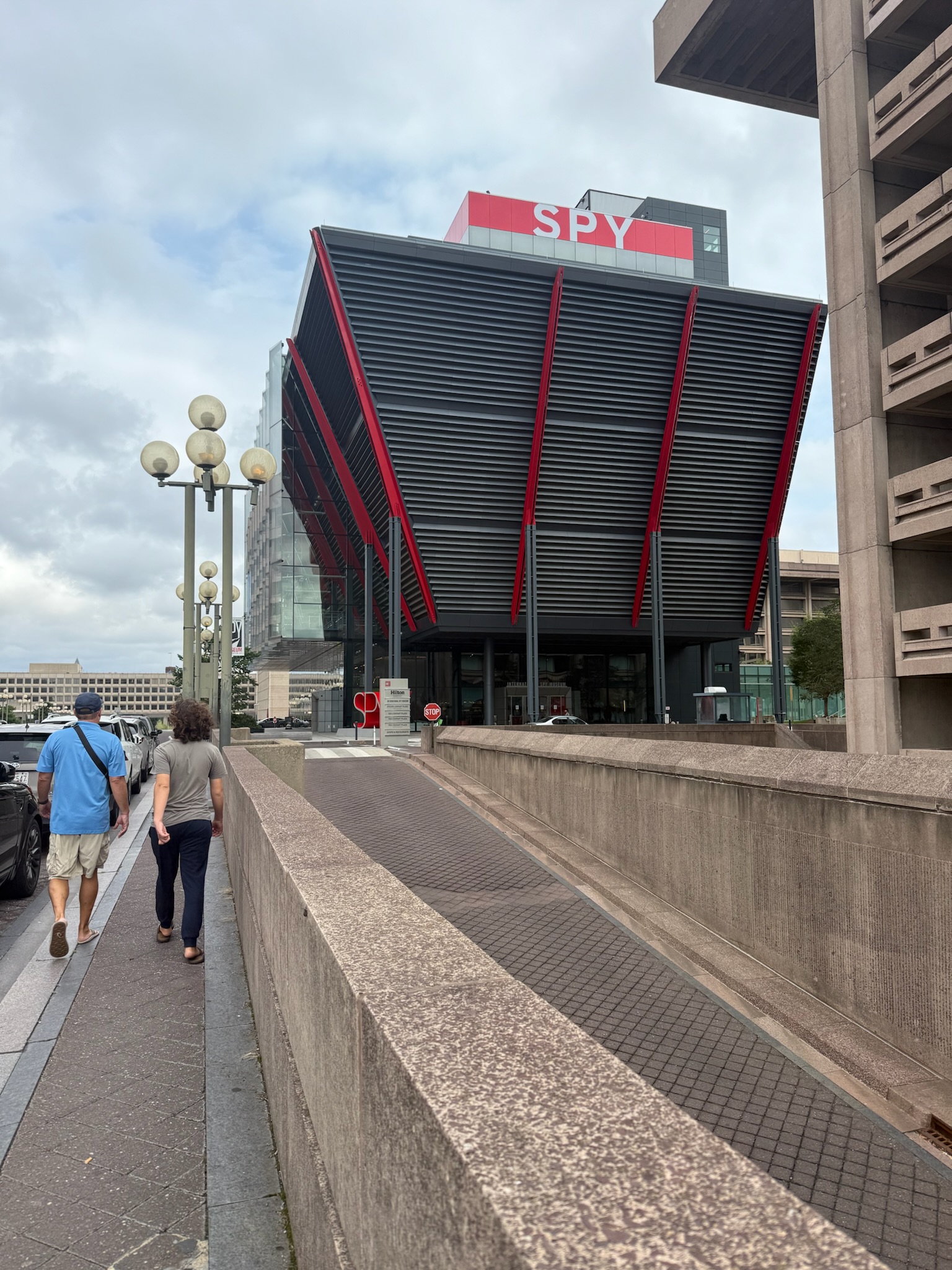
For some reason, we expected the museum to be nondescript, but it was probably the most obvious of all the modern buildings.
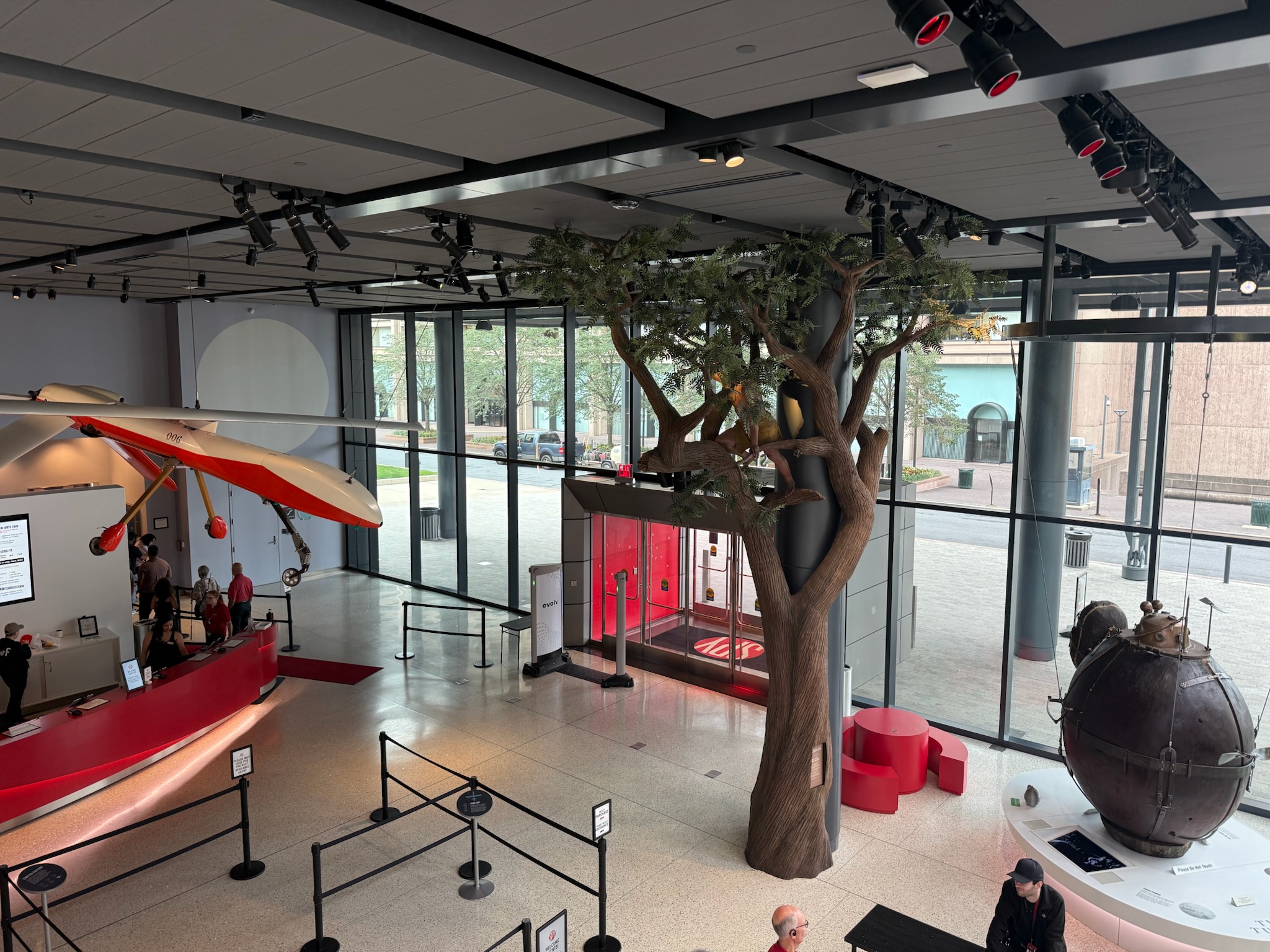
The lobby had some cool stuff. There was a fake tree with someone hiding in it — the sign said it was man’s first form of covert aerial reconnaissance. A small airplane was suspended from the ceiling. There was a replica of a submarine from the 1700s, Turtle. Christi immediately remembered that we’d seen Turtle in Monaco. Turtle was the first combat submarine, invented by David Bushnell prior to the American Revolutionary War. Turtle featured a hand-cranked screw-like oar that moved the boat forward and back underwater, air pipes that brought fresh air into the boat, ballast tanks that took on water to dive and emptied to ascend, and a primitive torpedo to attack enemy ships. Turtle was sent to New York Harbor in September 1776 to surprise the British ships blockading the city. Turtle’s pilot, Ezra Lee, crept up on HMS Asia and attempted to attach explosives to the side of the wooden ship, but had to abort the mission as he ran low on air. Despite the failure, Washington said “…it was an effort of genius!”
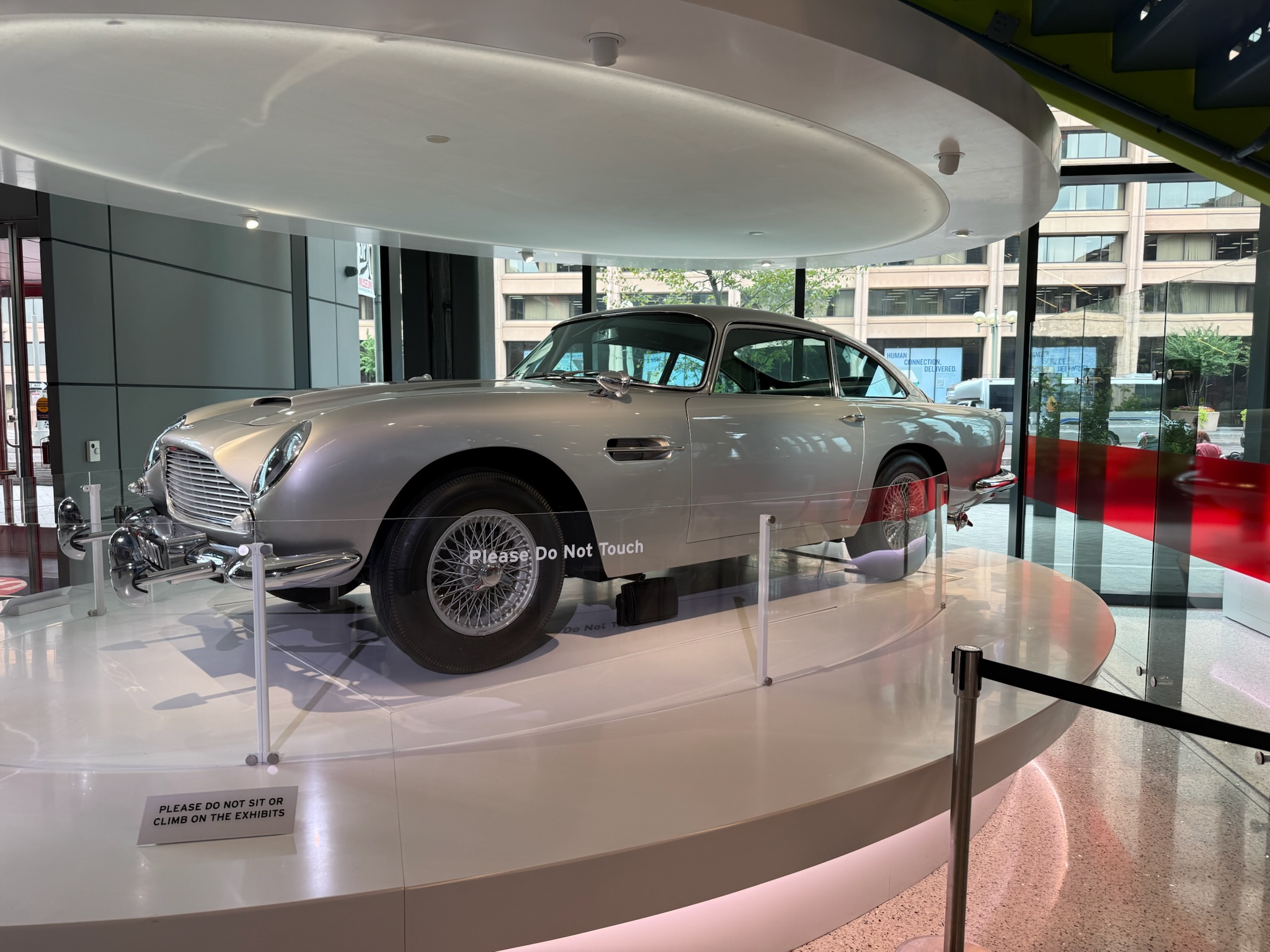
And there was an Aston Martin DB5, which James Bond drove in the 1964 film Goldfinger (we don’t believe this the actual car used in the filming). The author of the James Bond series, Ian Fleming, worked for the British Secret Service from 1939 – 1945
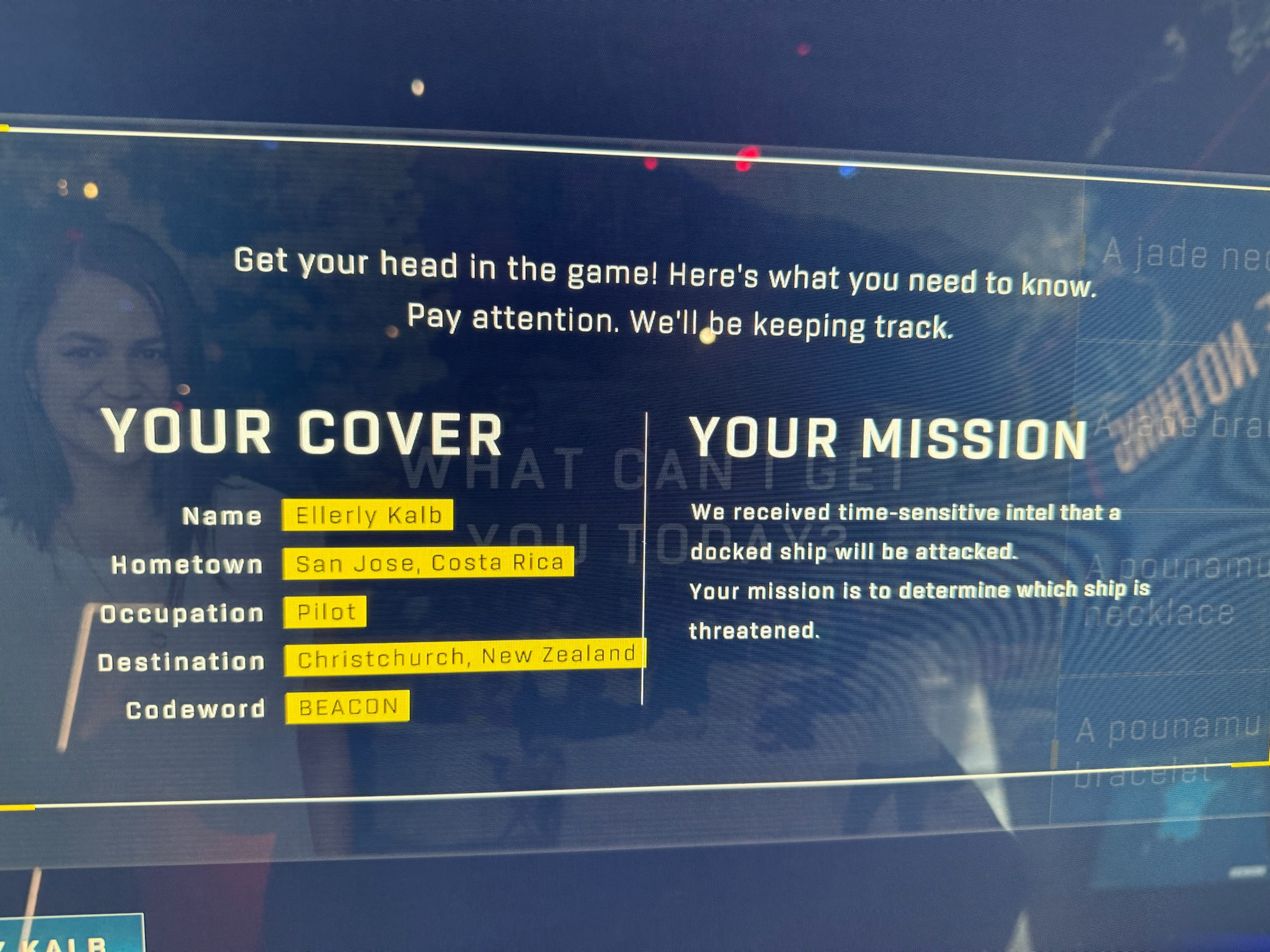
We’d thought all the museums in DC were free, so we were surprised to find that tickets were $36.00 for 13+. The lady who sold us the tickets explained that the Spy Museum was privately owned and operated. After purchasing tickets, we were told to go wait by an elevator, where we were giving a briefing by an attendant. Eventually, she told us to get in. It opened into a room with a bank of touch screen computers. We each manned a station and were assigned a secret identity.
A few minutes later, we were allowed to move into the next room, which was a theater that showed a 15-minute movie explaining how the museum worked: basically, we were going to be walking down a one-way, gently sloping spiral, much like the Baltimore Aquarium.
The first room beyond the theater had an exhibit on notable spies throughout history. An early documented spymaster was Sir Francis Walsingham, who set up a spy network to protect Queen Elizabeth. In the late 1500s, the catholics were mad about that England created its own Church of England and cut ties with the Vatican. Many catholics wanted to get rid of her. Walsingham stopping many schemes. Had it not been for his great skill in sniffing out and thwarting plots, England would likely not have become a world power.
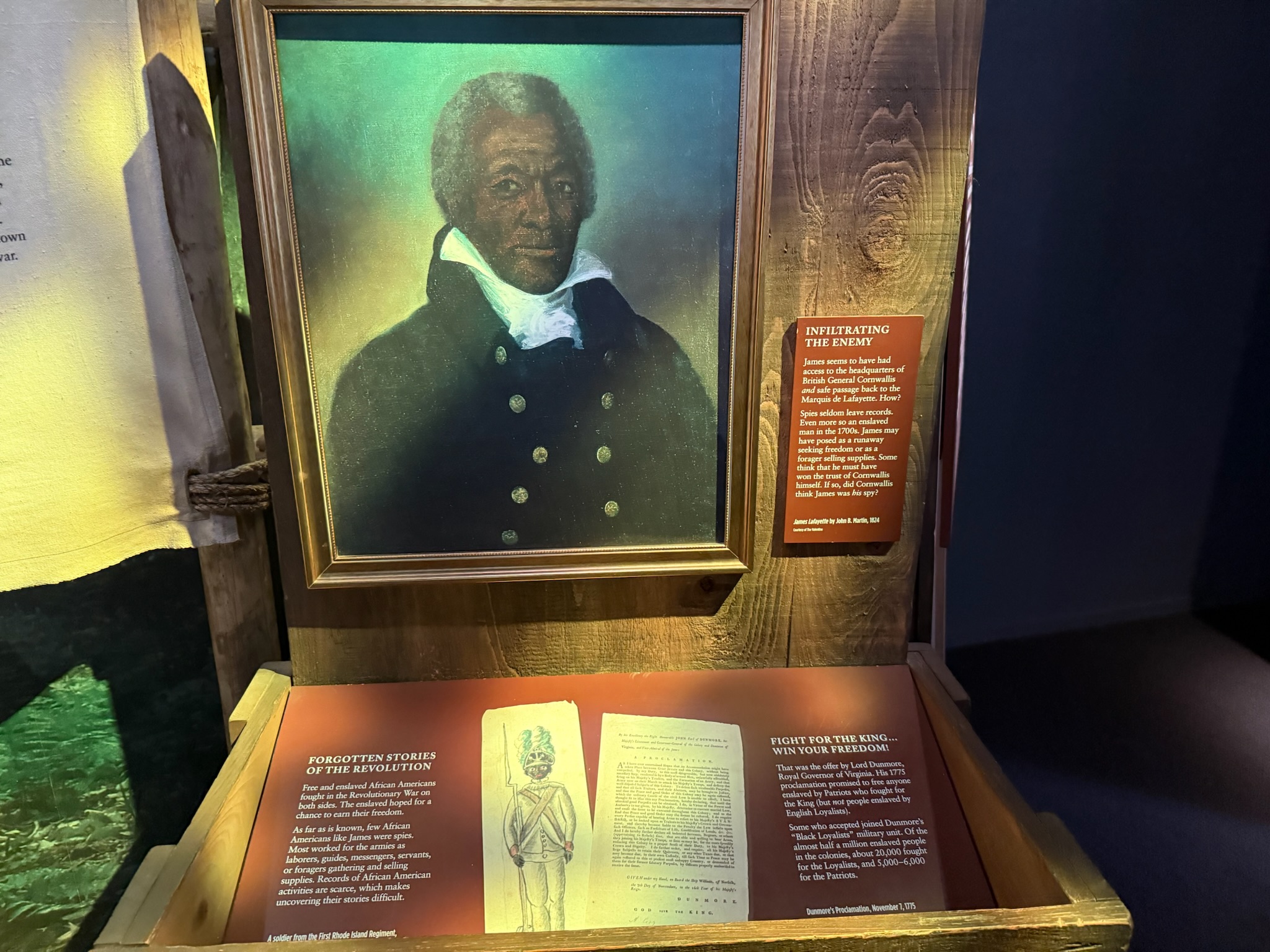
Another particularly interesting person was James Lafayette. James had been a slave prior to the outbreak of the Revolutionary War. James took Lord Dunmore’s offer to defect to the British side in exchange for freedom. James was apparently working directly with British General Cornwallis, and was reporting to the Marquis de Lafayette about Cornwallis’s moves. It is believed that James was the one who told the Marquis about Cornwallis building a base in Yorktown. Thanks to that piece of intel, Washington was able to surprise and defeat Cornwallis, effectively ending the war. As a slave, he didn’t have a last name, and took the name Lafayette when he became free.
Probably one of the most known spies was Mata Hari. She was an actress famous for her sex appeal who lived a lavish lifestyle. As she aged, she wasn’t getting as much acting work, so she supplemented her income by spying for multiple countries. She was executed in France in 1917 for espionage. While the spying had worked out for Sir Francis Walsingham and James Lafayette, the majority of people who were spotlighted in this section had tragic endings like Mata Hari.
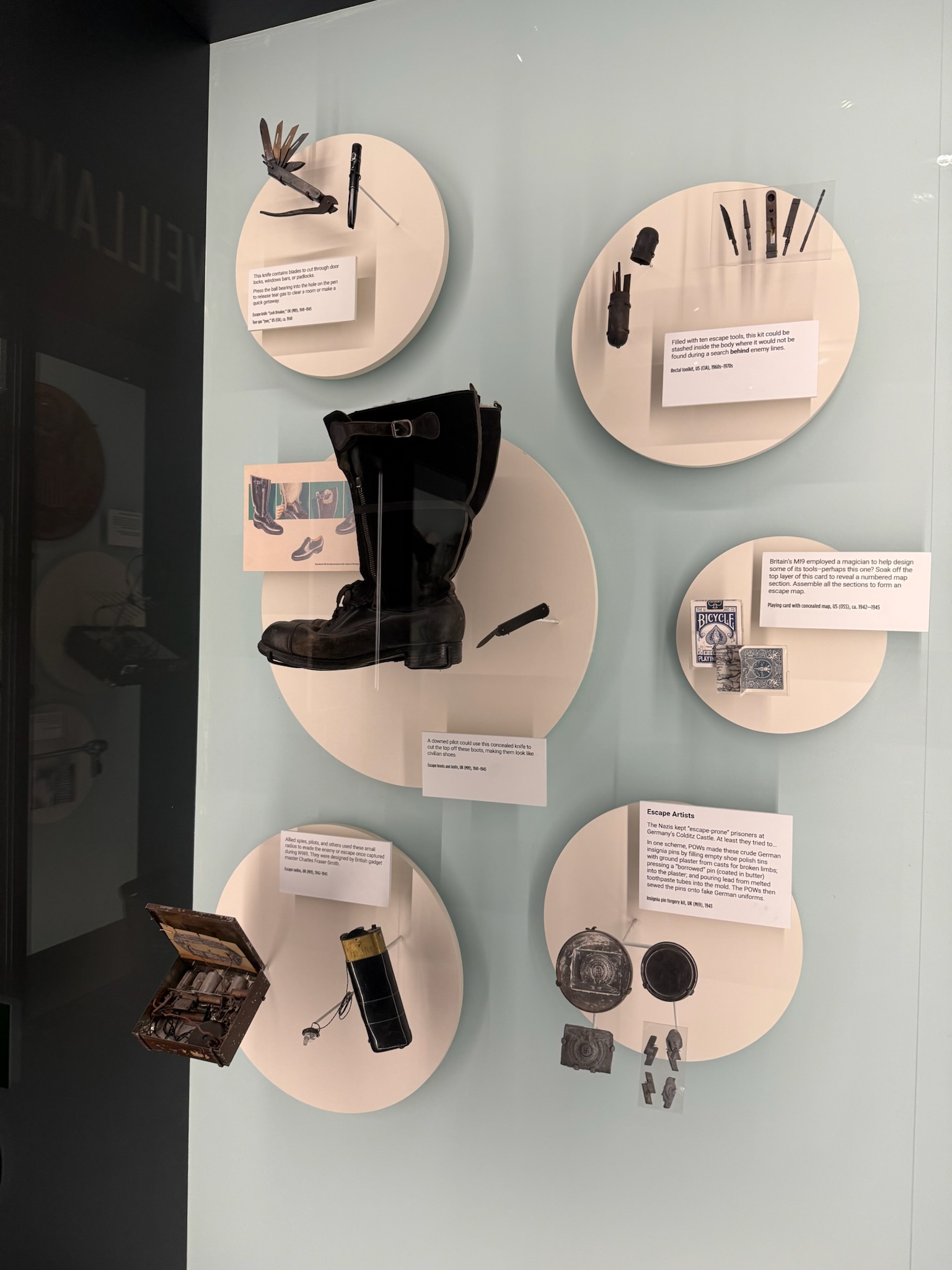
Next was a display of gadgets that were utilized in spying. Many were focused on opening mail/packages and resealing them so that no one knew they’d been opened. Apparently, for hundreds of years it has been a fairly common practice for governments to regularly intercept and read private correspondence, especially with foreigners. Christi thought one of the most clever was the boots; the boot could be cut away with the specialized knife, leaving ordinary looking shoes. This made it easy to not be identified by the shoes.
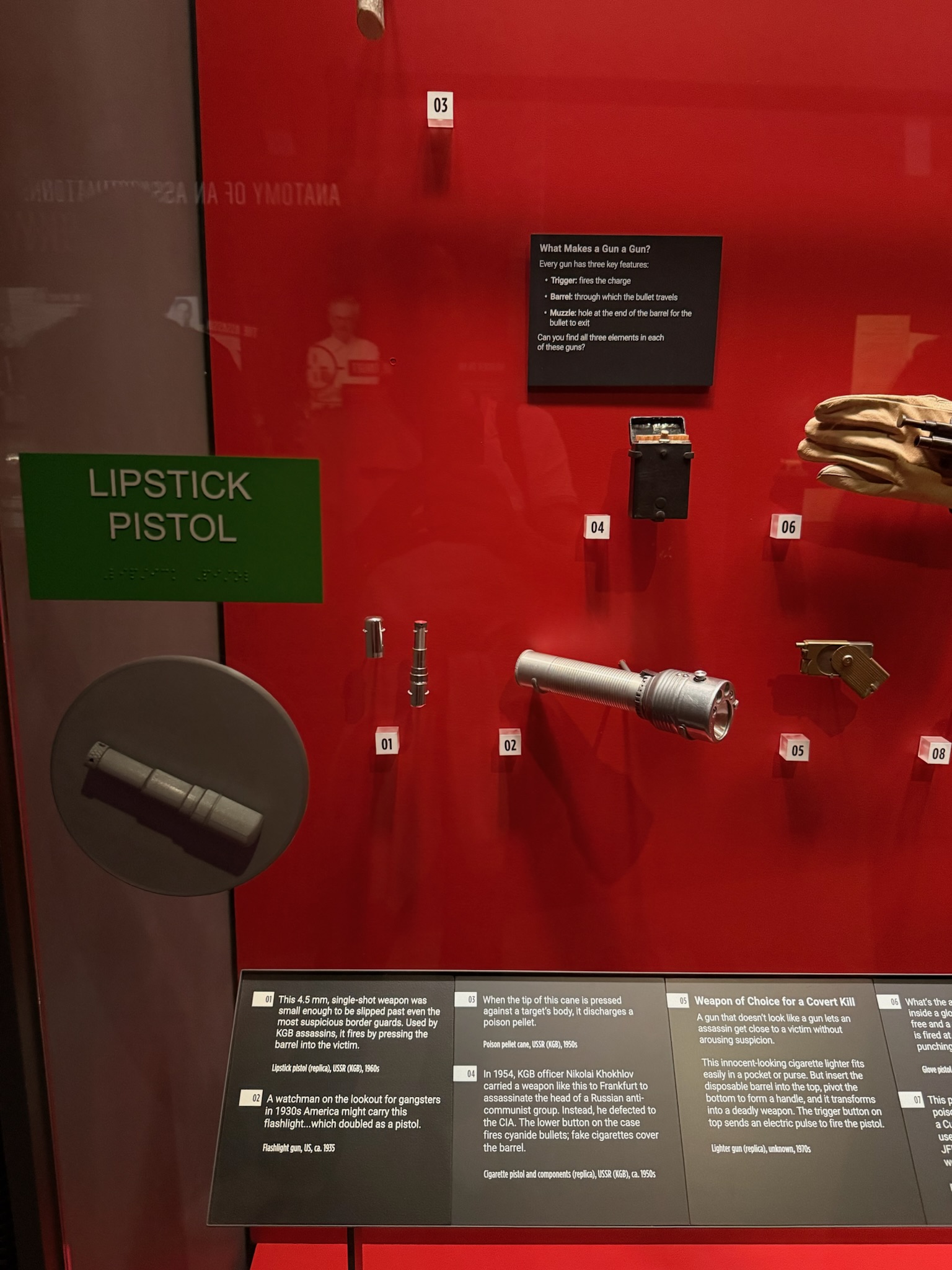
And of course, they had lots of types of small, discreet guns.
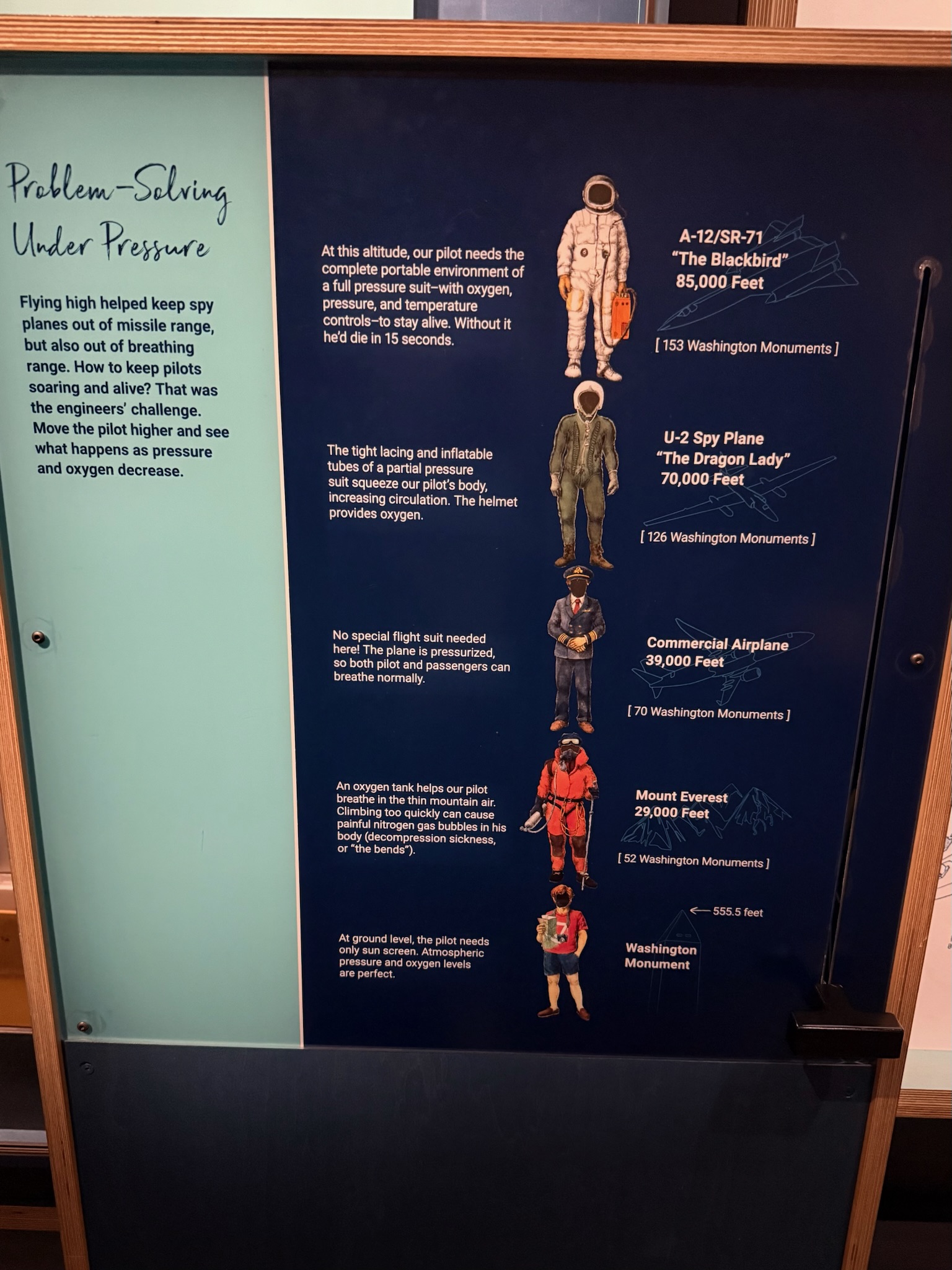
There was a display about the evolution of aerospace spying programs. In 1861, Abraham Lincoln created the Military Aeronautics Corps, which had seven hot air balloons that were utilized to watch the Confederate Army’s troop movements. The aerial spying evolved into high flying planes like the SR-71 Blackbird, then to satellites. The primary purpose for these groundbreaking inventions was for spying from very high altitudes/space.
There was a display on hunting for terrorists and/or preventing terrorism. Ancient technology, such as putting an ear to the ground to listen for sounds/feel motion, help indicate when an attack may be coming. They still use seismic technology, though it’s become more advanced, utilizing hidden sensors. They also test air, water and objects to find evidence. One of the interesting signs was about the British Army opening an undercover laundry service in the heart of the Irish Republican Army (IRA) territory. In an effort to identify terrorists, the undercover agents tested all the clothing that was dropped off for chemical signatures of ingredients commonly used in bombs, such as ammonium nitrate.
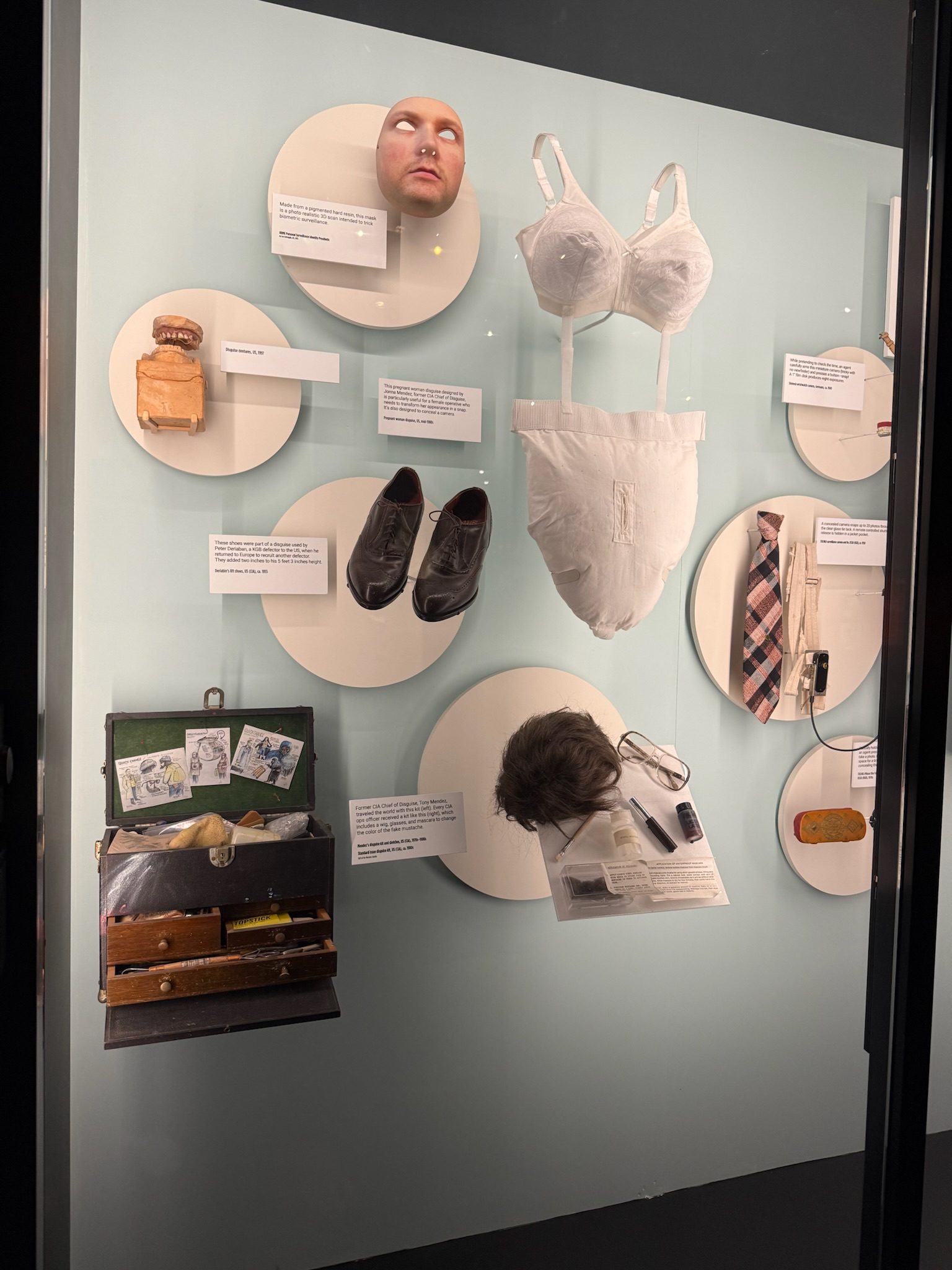
There was a display on disguises. Many agents wore disguises as part of their fake identity. And apparently, every agent was issued a kit in case they need to change appearances for any reason.
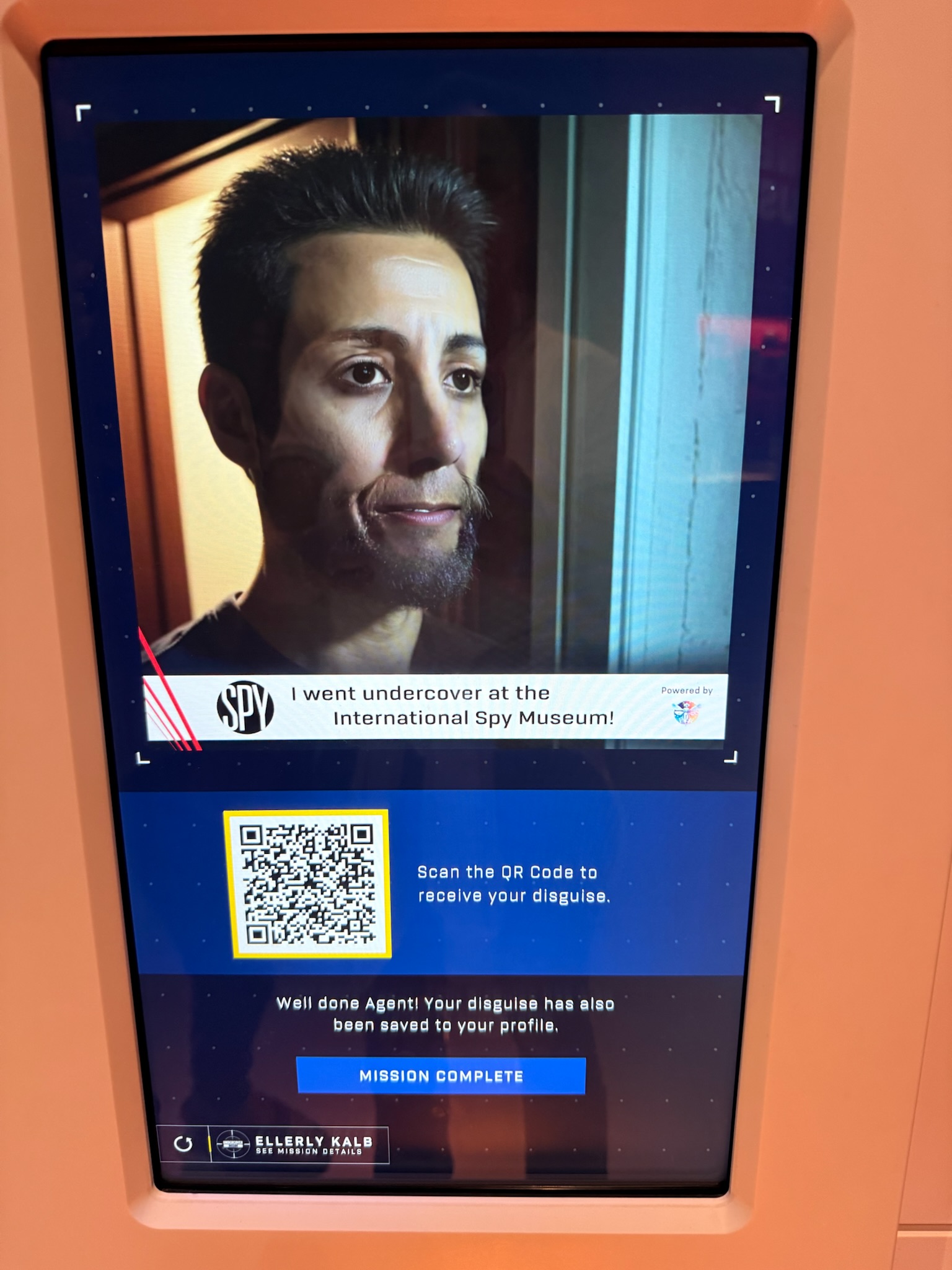
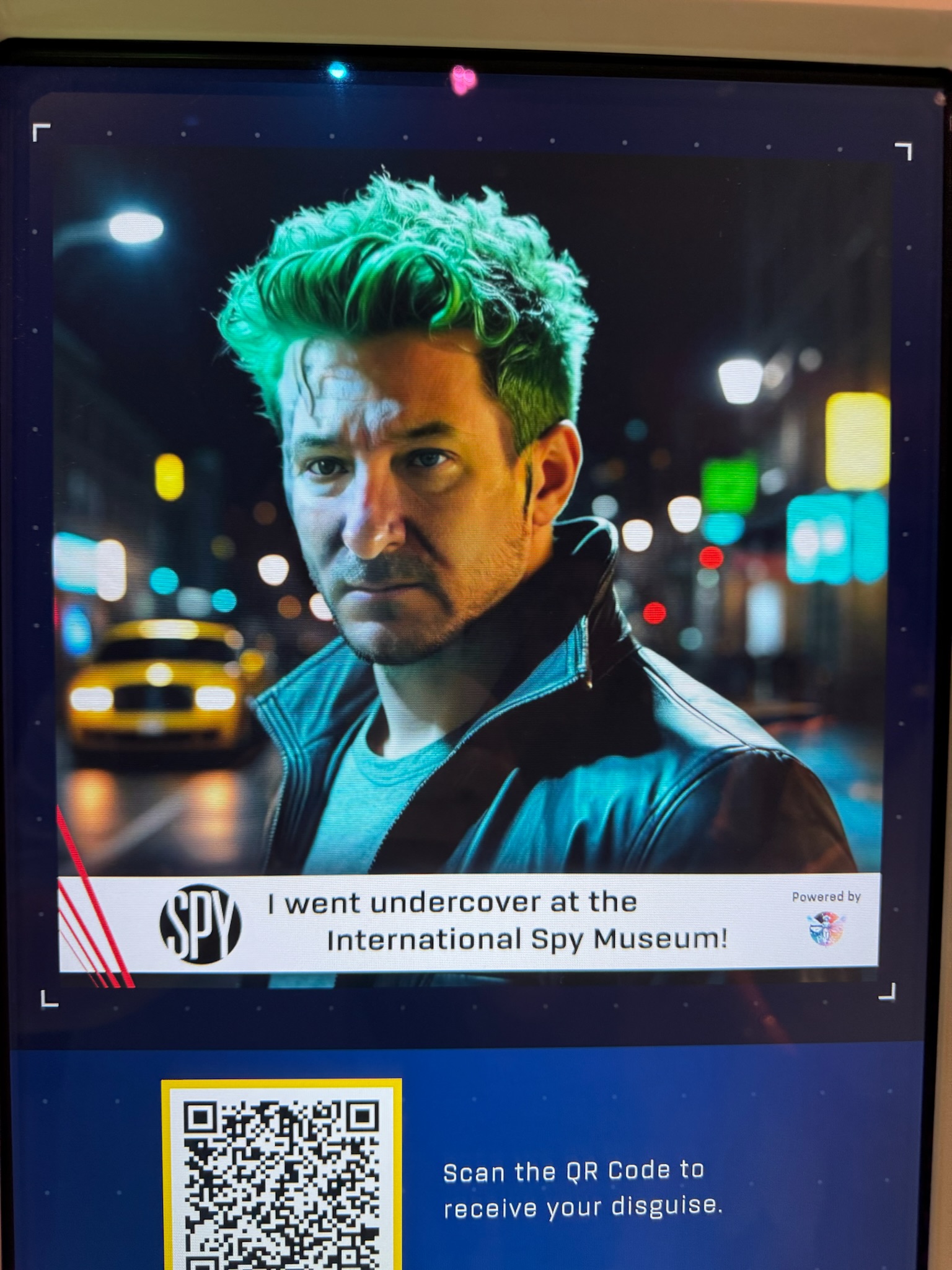
At various points throughout the museum were terminals where we could get more information about our secret mission. One of the kiosks said each of our secret identities required disguises and generated images of what our disguises should look like. Sadly, Keith deleted his before we could snap a photo.
There was a display on US spying operations. During the Cold War, the US managed to dig a tunnel into East Berlin and tapped their telephone and teletype lines. In 1970, the CIA built a massive ship in the hopes of using it to raise a sunken Russian submarine. Since people were curious about the giant ship, the CIA asked Howard Hughes to claim he was building it to start a deep-sea manganese mining operation. The results of this mission were still classified, but we know at least some part of the submarine was recovered. This mission was the first time the CIA used the term “We can neither confirm nor deny.”
There was a display on cryptography. Since Eric was a cryptographer, he was especially interested in this one. To be continued…