continued… The next exhibit was on terrorism, with signs commemorating terrorist attacks around the world in the 20th century and many signs about terrorist attacks that were stopped by the intelligence agencies. This exhibit was disturbing and not something to dwell on.
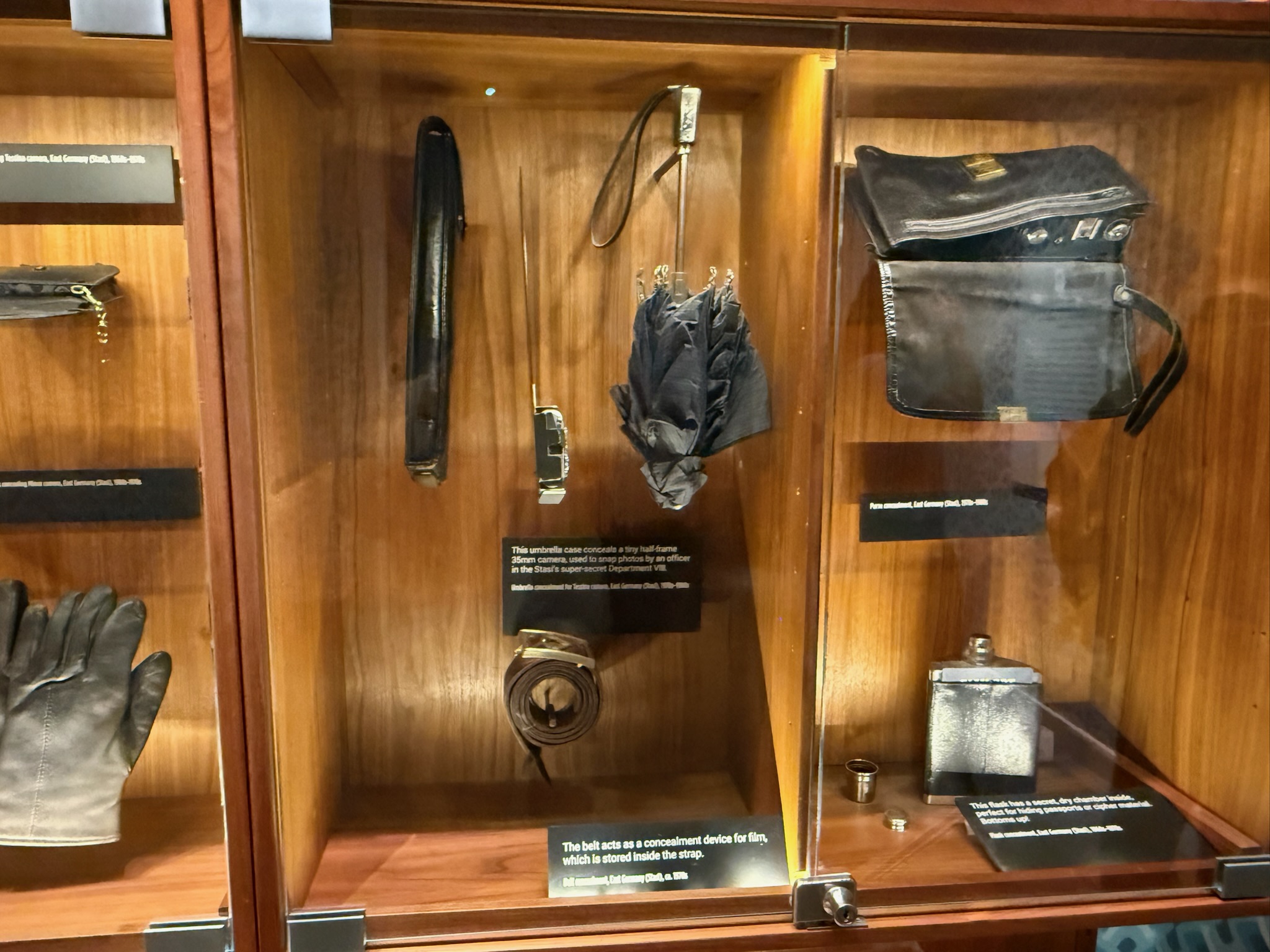
The next exhibit was on the East German Ministry of for State Security, AKA The Stasi. Their goal was to ensure that their citizens lived in fear, and they utilized techniques such as arbitrary arrest, kidnapping, harassment and relentless collection of information to attain this goal. They had 90,000 agents, plus a vast network of citizen informants. The signs talked in detail about their extensive spying network, showing many examples of where they hid microphones and cameras in order to monitor people, how they smuggled out film/recordings, etc.
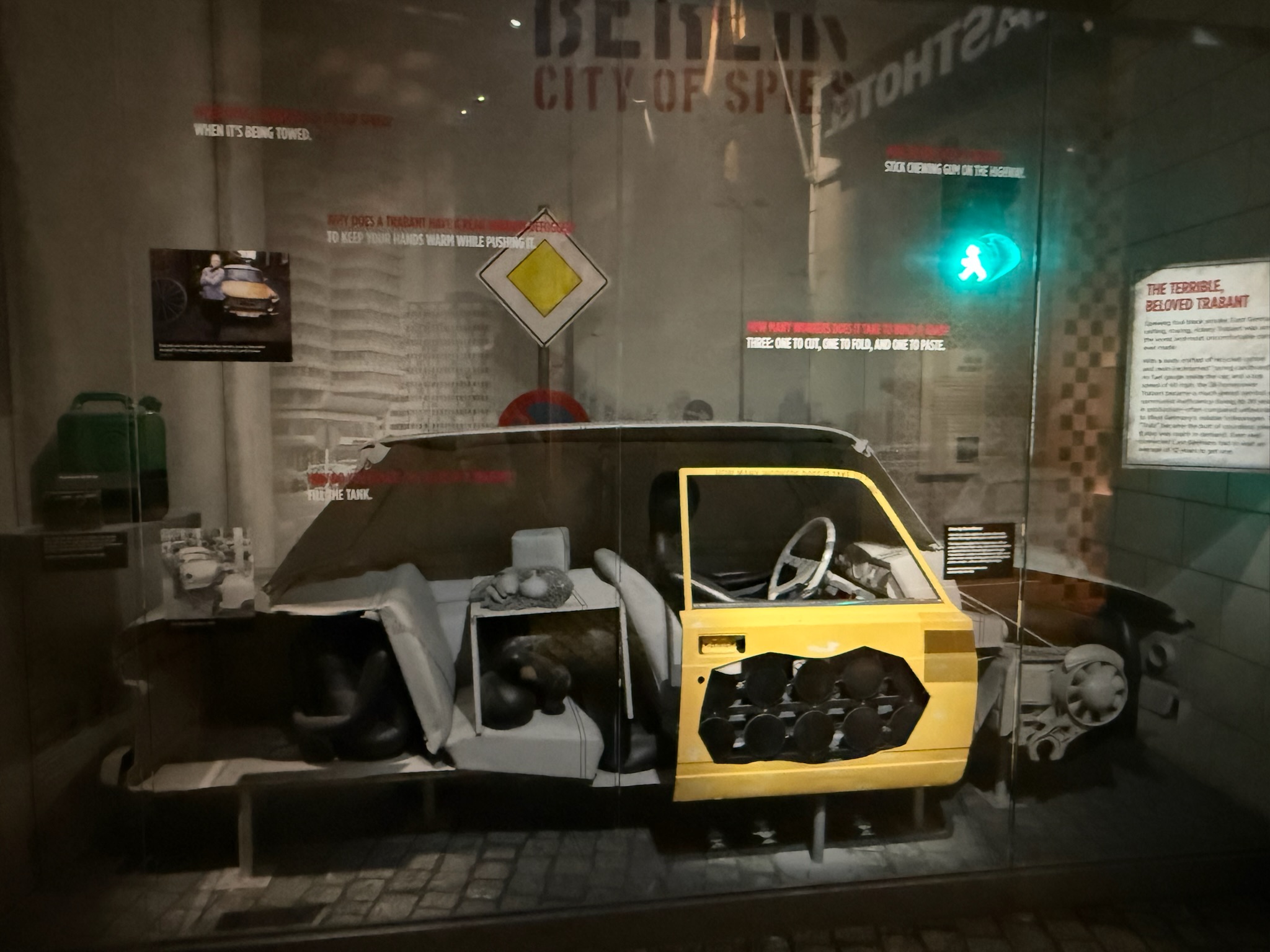
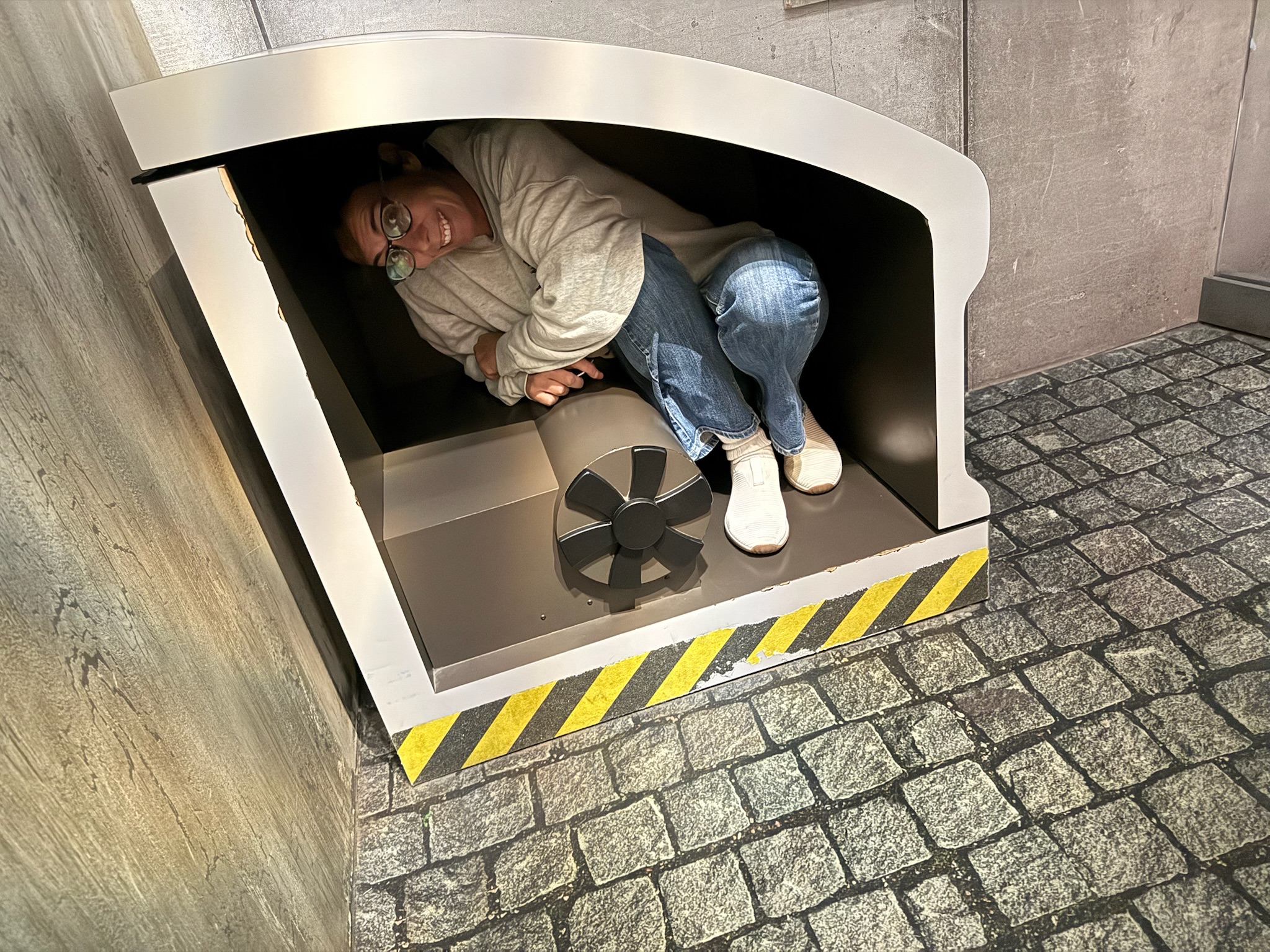
They also mentioned escaping from East Berlin before the wall fell. Between 1961 and 1989, at least 140 people were killed at the wall, most trying to escape. There were apparently many places to hide in a car, and it was common for the Stasi to disassemble cars in search of stowaways — and it was up to the owner to reassemble their cars!
Christi and Keith could each fit into the wheel well!
There was an exhibit on how foreign spies infiltrated countries. Extensive training went into making these foreigners seem to be ordinary locals. Not only did the foreign agents have to master the local accents and slang, they also needed to understand cultural norms, like the local way to tea was served or how the locals tied shoelaces, so that no one suspected they weren’t really locals. This was often for economic espionage — stealing ideas, formulas and technologies that could give one country an advantage over another.
This led into a display about Venice, which set up an extensive centralized intelligence agencies back in the early 1500s. Venice was an economic superpower at the time, in large part because they had commercial trade secrets that gave them monopolies on certain goods, such as mirrors. Laws were passed forbidding tradesmen from sharing these secrets — and they weren’t even allowed to leave town! They set up a spy network to watch both locals and visitors to ensure that the tradesmen were keeping their mouths shut. There was also a display about how Ancient China zealously guarded its trade secrets on how to make silk, tea and porcelain, and how westerners managed to steal both the secrets and specimens needed to grow the goods. Another interesting sign was about French intelligence bugging the first-class seats of French airlines in the 1980s. They gleaned insider information from unwitting businesses executives.
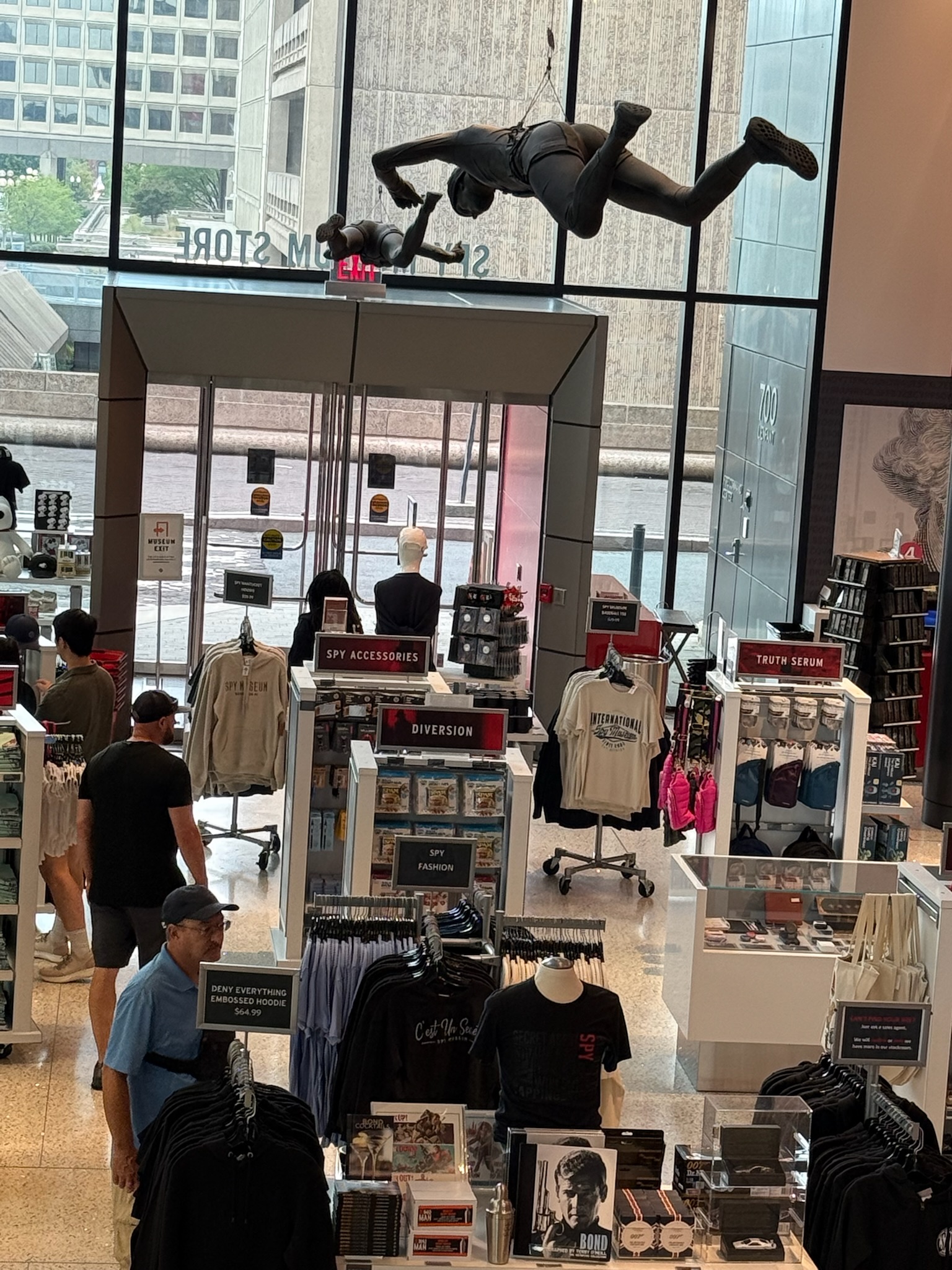
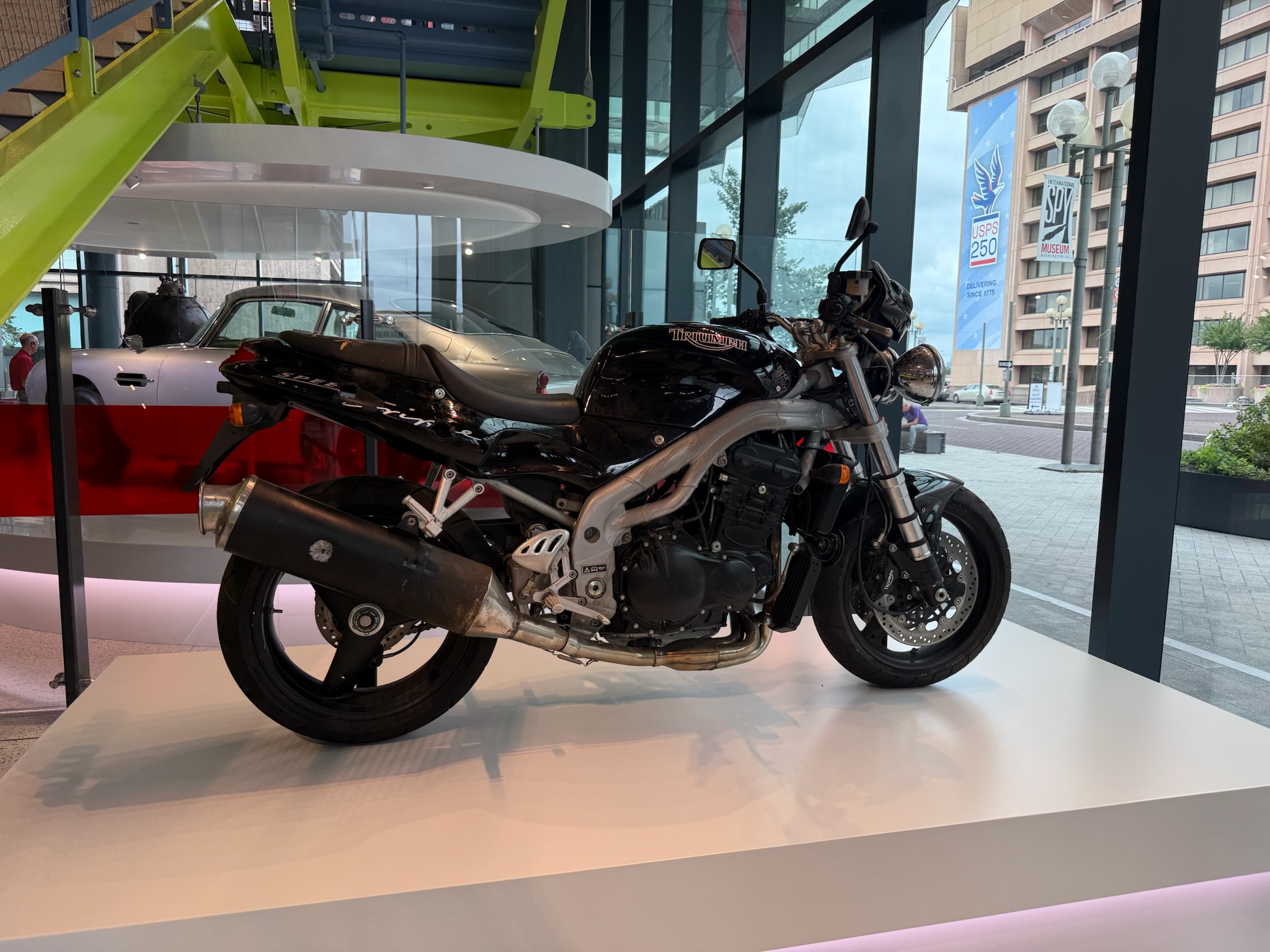
We had to exit through the store. It was actually a really big store with all kinds of interesting things related to spying, including a large book section with fictional and non-fictional works. There was even a big kids/teen book section. There was one small exhibit in the store: one of the motorcycles used in the actual filming of Mission Impossible II.
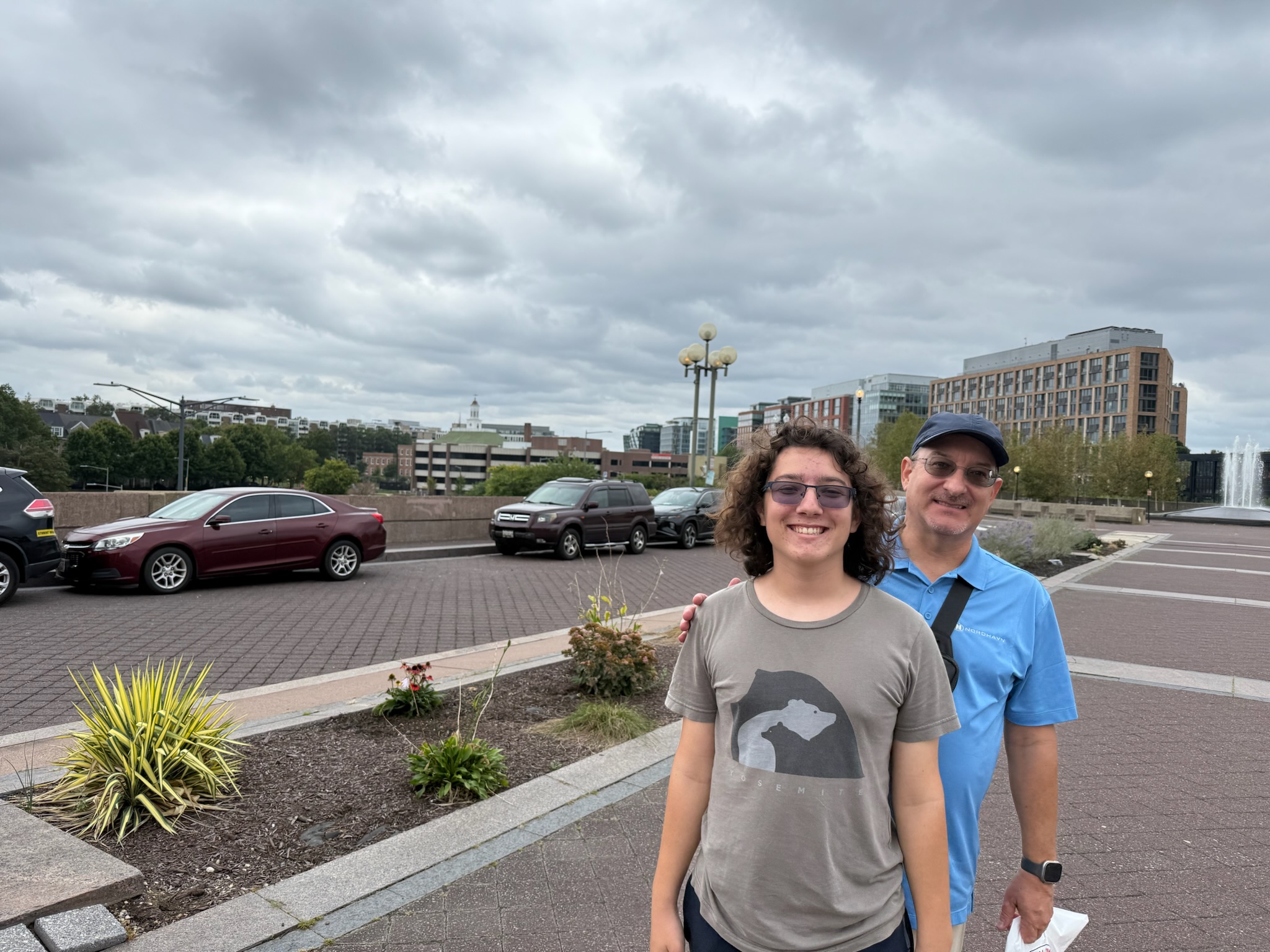
We headed back to The Wharf. This was standing on the bridge over the freeway, with The Wharf in the background.
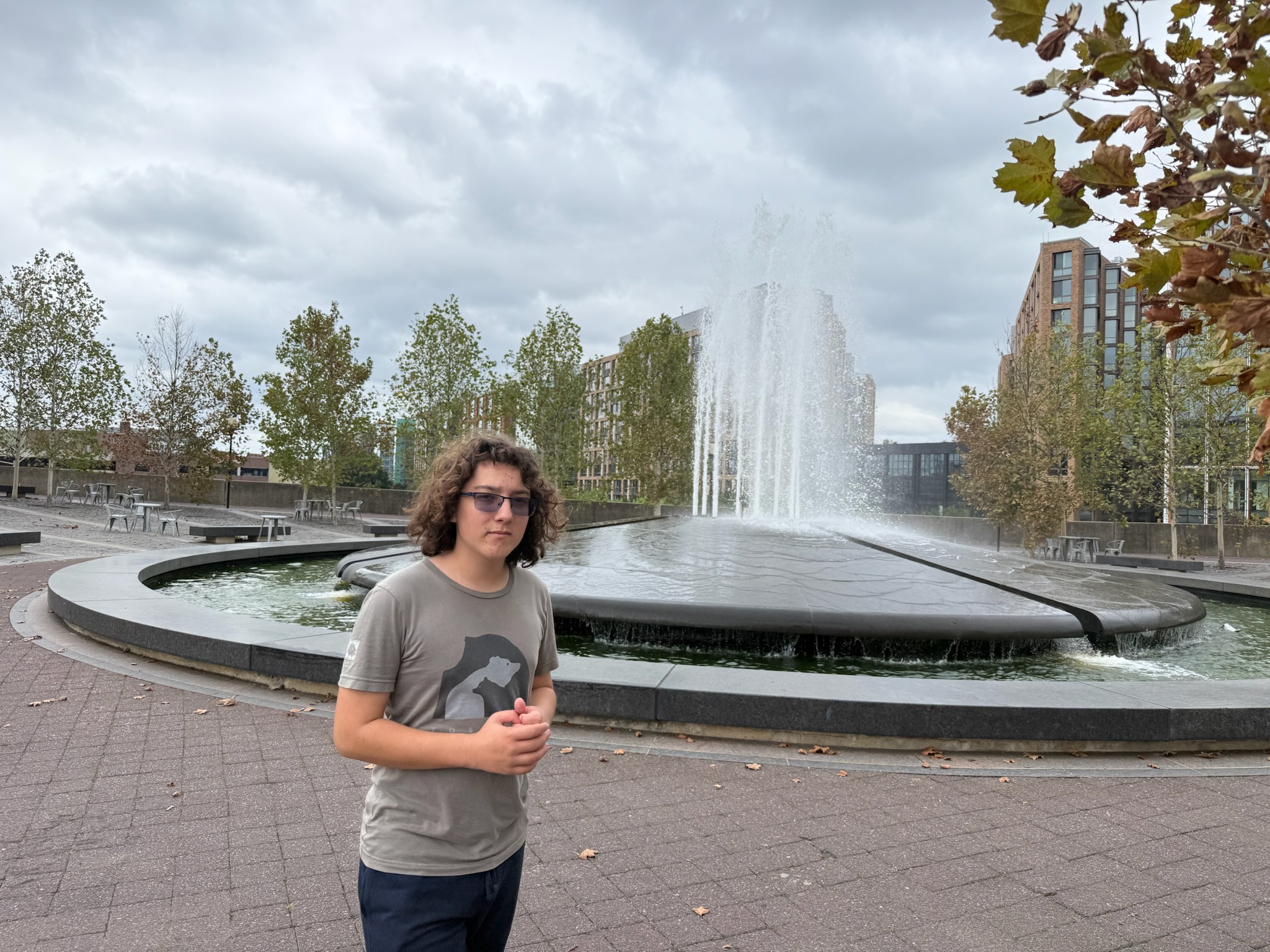
There was a small park called Banneker Circle at the end of the bridge. The park was dedicated to Benjamin Benneker, who was America’s first black man of science. He was born free in Maryland and had little formal education. He was mostly self-taught, becoming an expert in math and astronomy. After George Washington chose this location for the country’s new capital in 1791, Benneker charted the movement of the stars around DC, which was used by the surveyor to determine the boundaries of the ten-mile square that comprises DC.
View of the road below from the park.
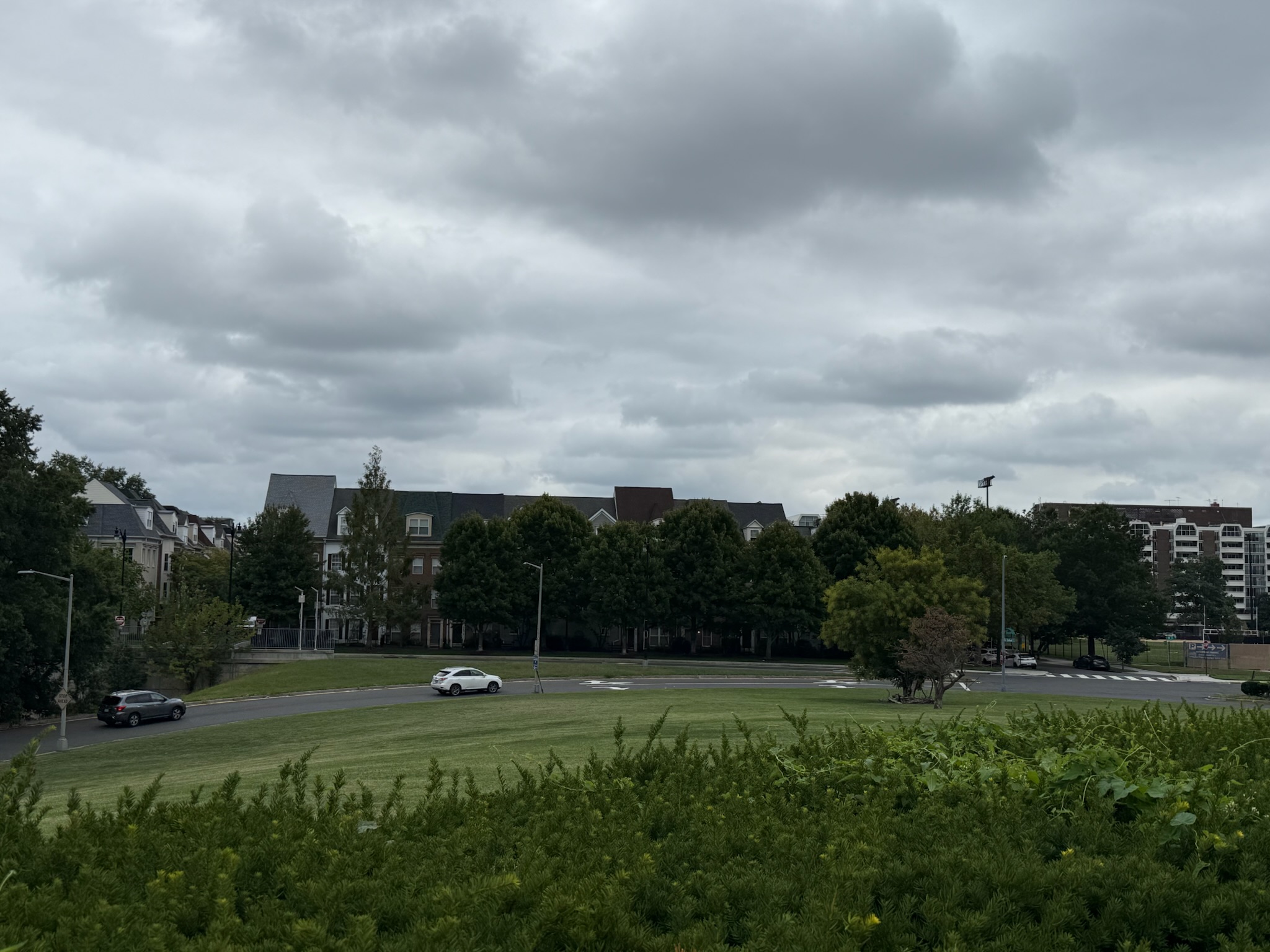
One of the entrances into The Wharf complex. The giant boot wasn’t normally there, it was a PR event by Timberland.
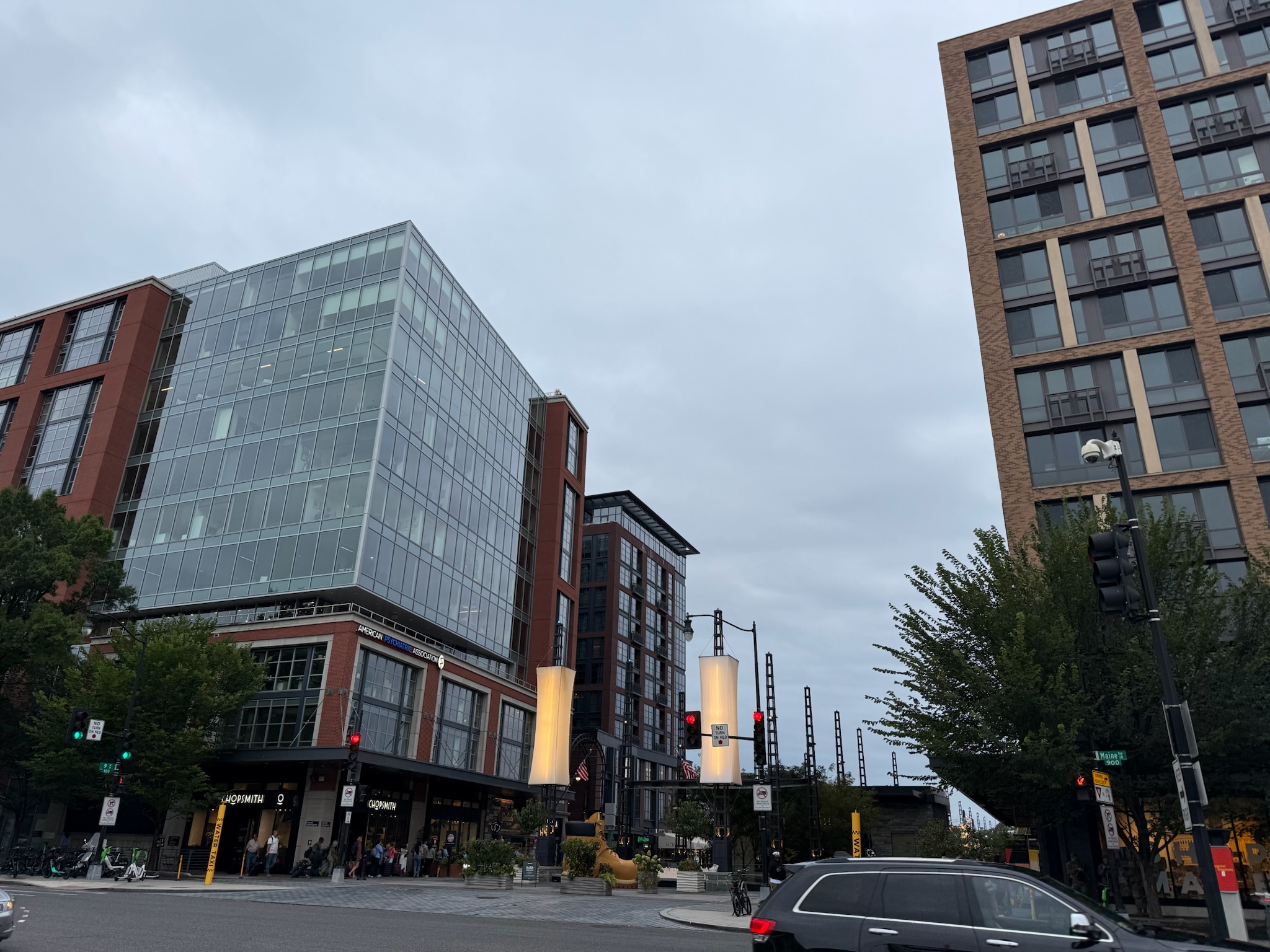
We stopped at a Mexican fast food restaurant called Surfside Taco Shop for lunch. It was good, but Bartaco’s food was better. Surfside had bigger portions and was more expensive; Bartaco was less expensive, but the portions were smaller so we needed to buy more food to fill up. So overall, we’d say the prices were comparable.
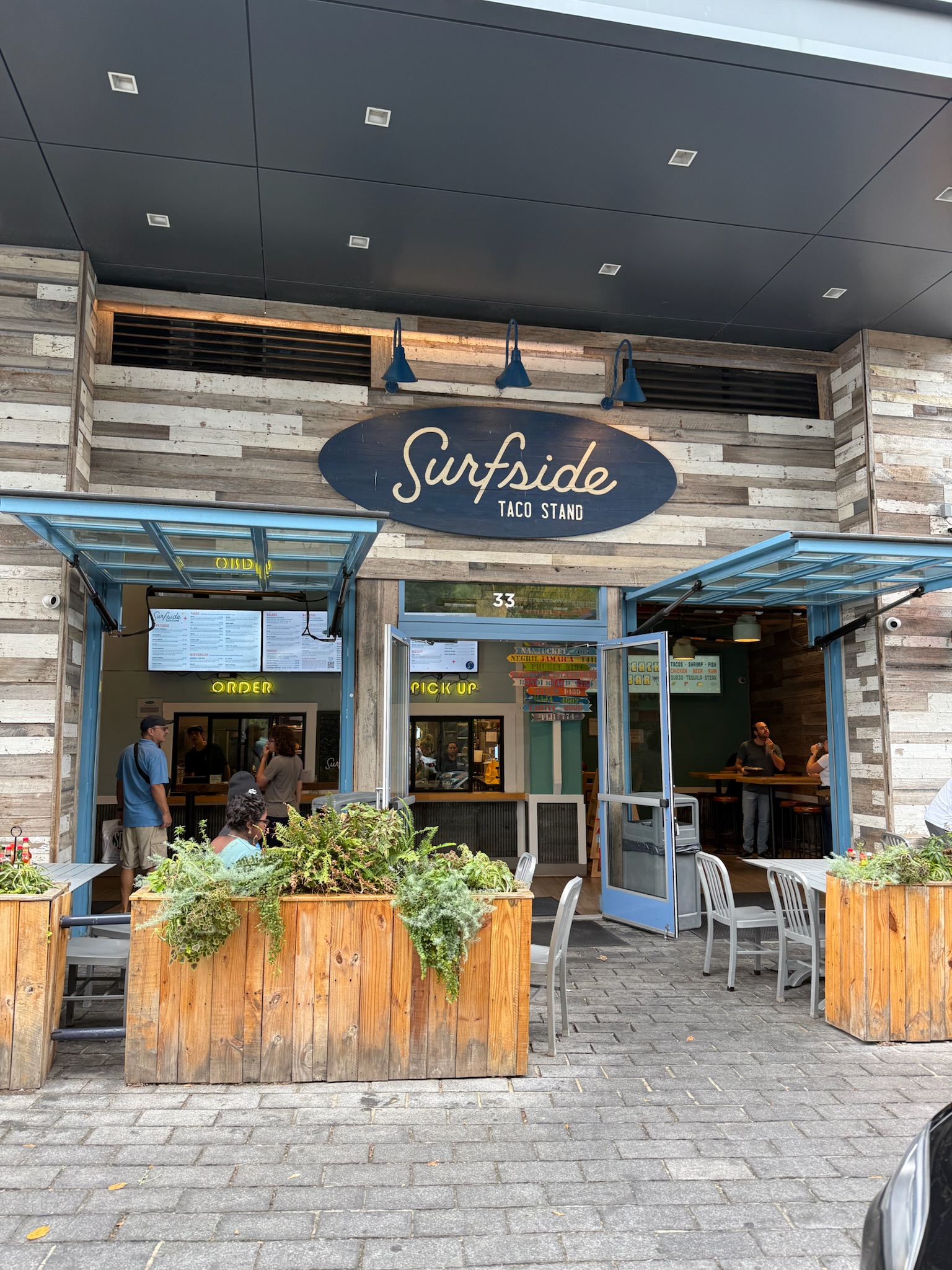
We forgot to mention that our friends on Blue Heeler arrived in our marina this morning. They were assigned the slip right behind us. It was wonderful to see them again! After a little downtime aboard Kosmos, we went to the National Mall with Blue Heeler.
Our neighbors in the marina had told us there was a free shuttle bus that did a loop around downtown, with a stop at a metro station and a stop at the Mall. The shuttle stop at The Wharf was in front of CVS, which was conveniently close to the marina. We caught the shuttle, which dropped us off at the corner of Independence Ave and 7th St, in front of the Hirschorn Museum and Sculpture Garden.
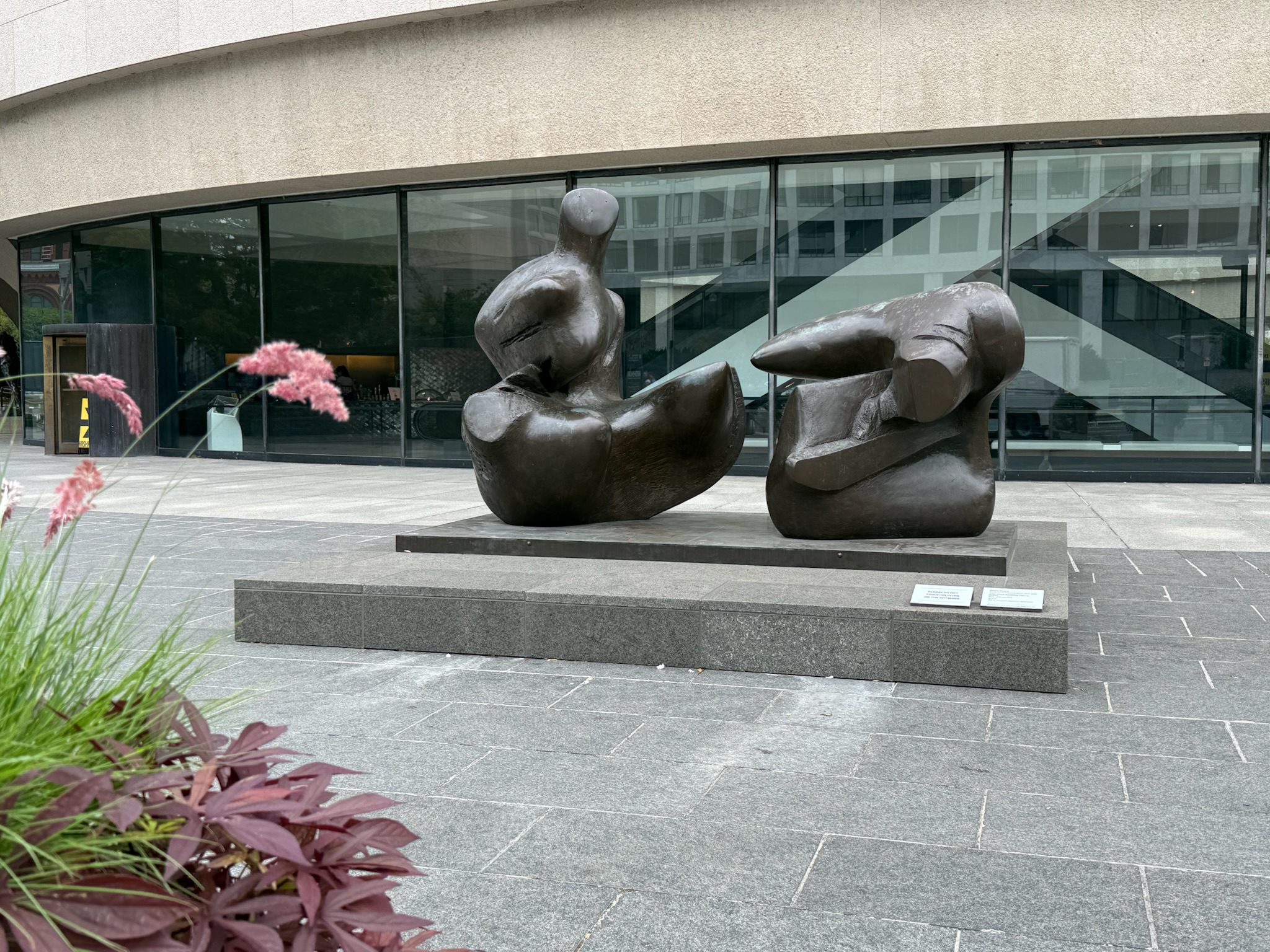
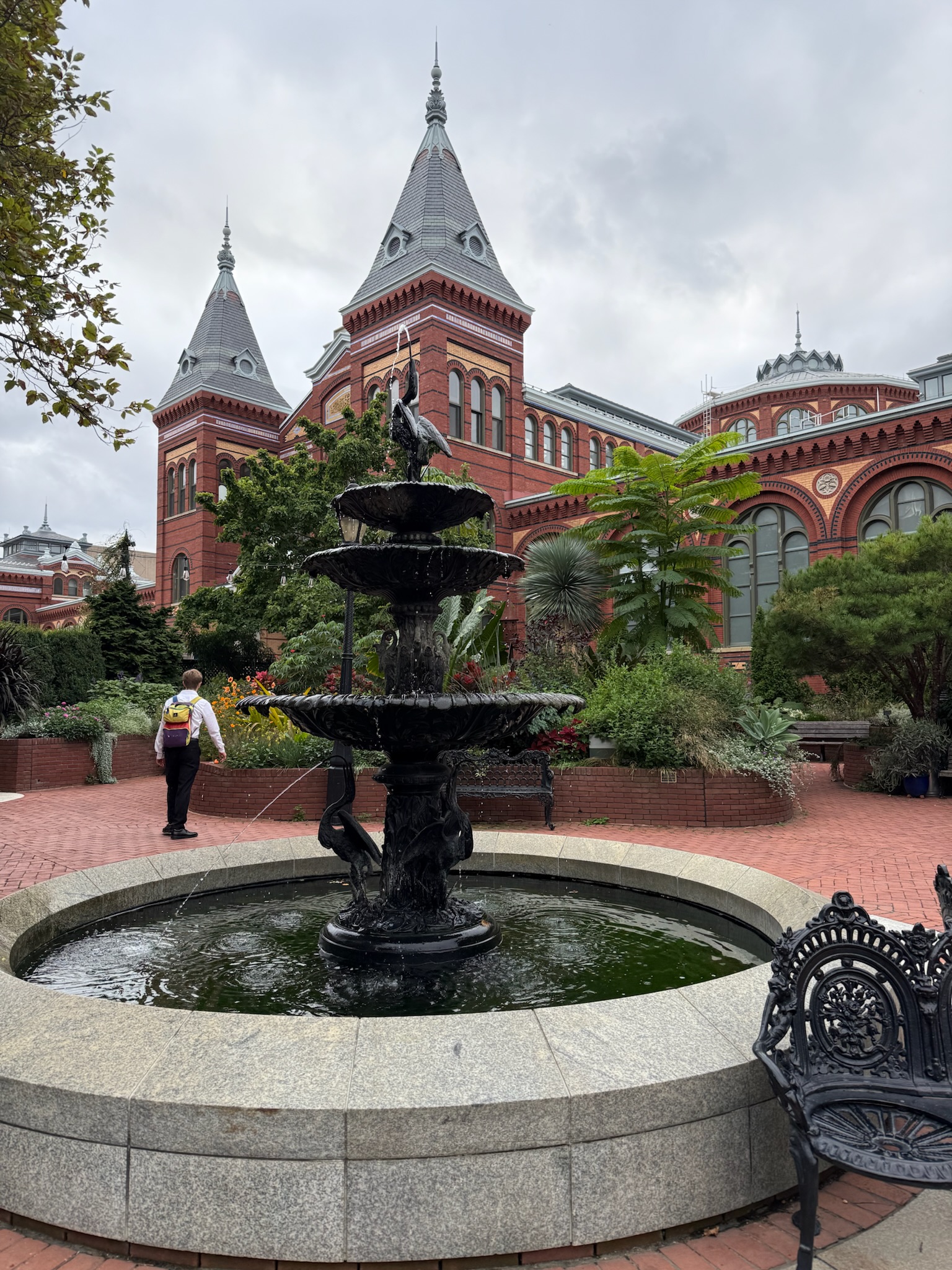
We walked west down Independence Avenue to a walkway between the Hirschorn and the Arts & Industries Museum, which was closed for renovation.
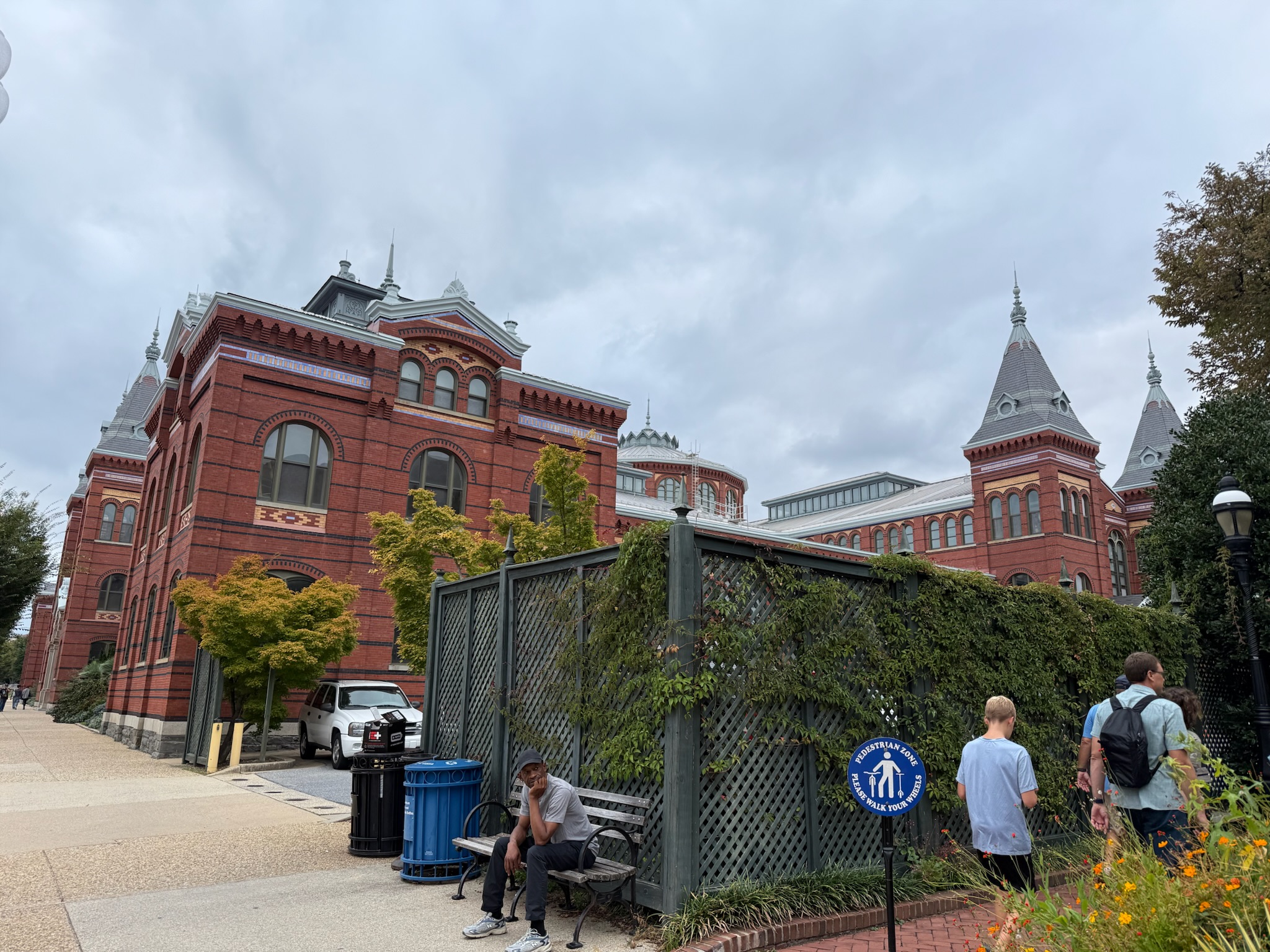
The walkway was lovely; a garden oasis.
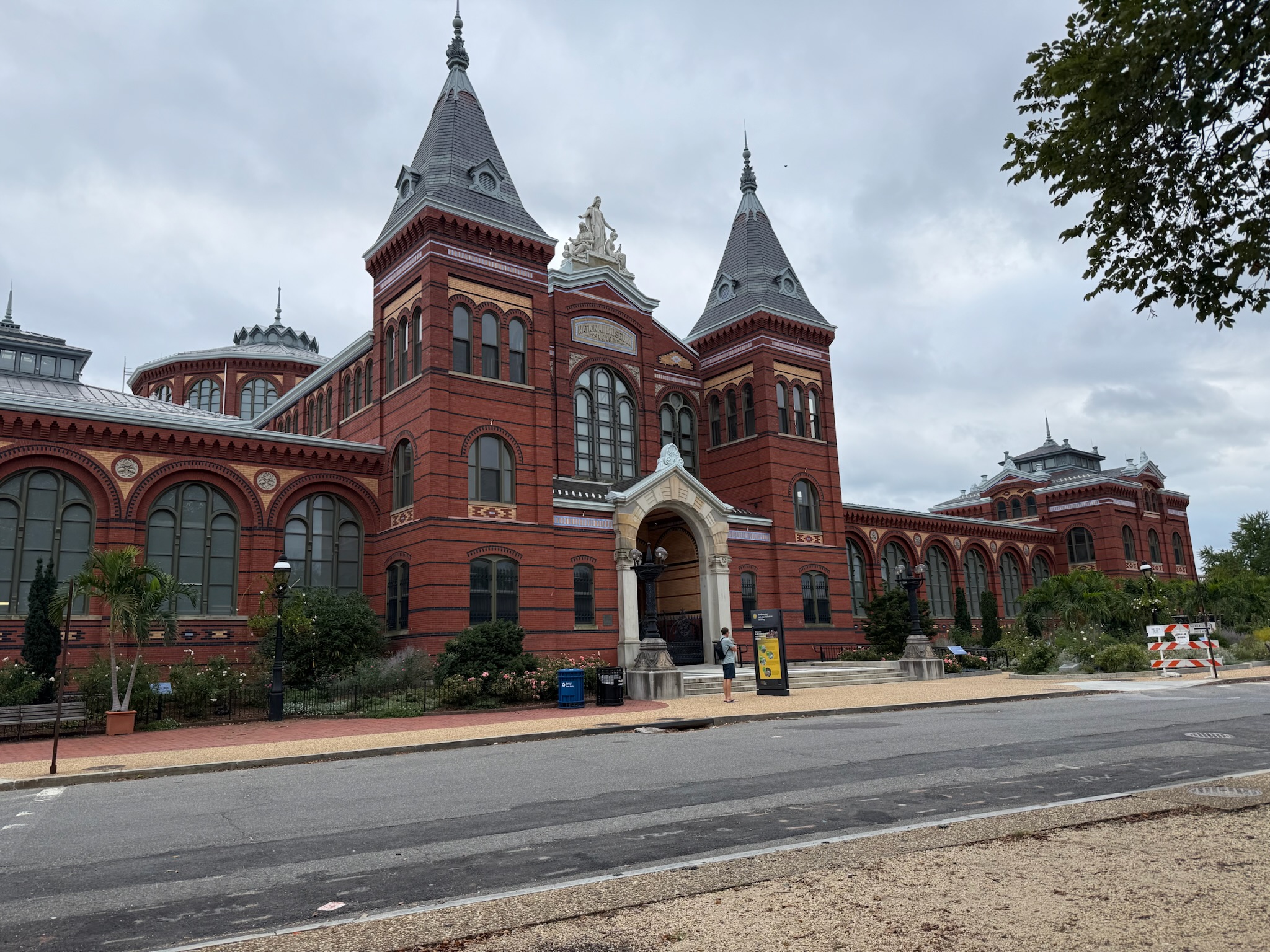
We popped out on Jefferson Dr, SW, which was the southern side of the stretch of grass known as The National Mall. Here was the front of the Arts & Industries Museum, which was on Jefferson Dr.
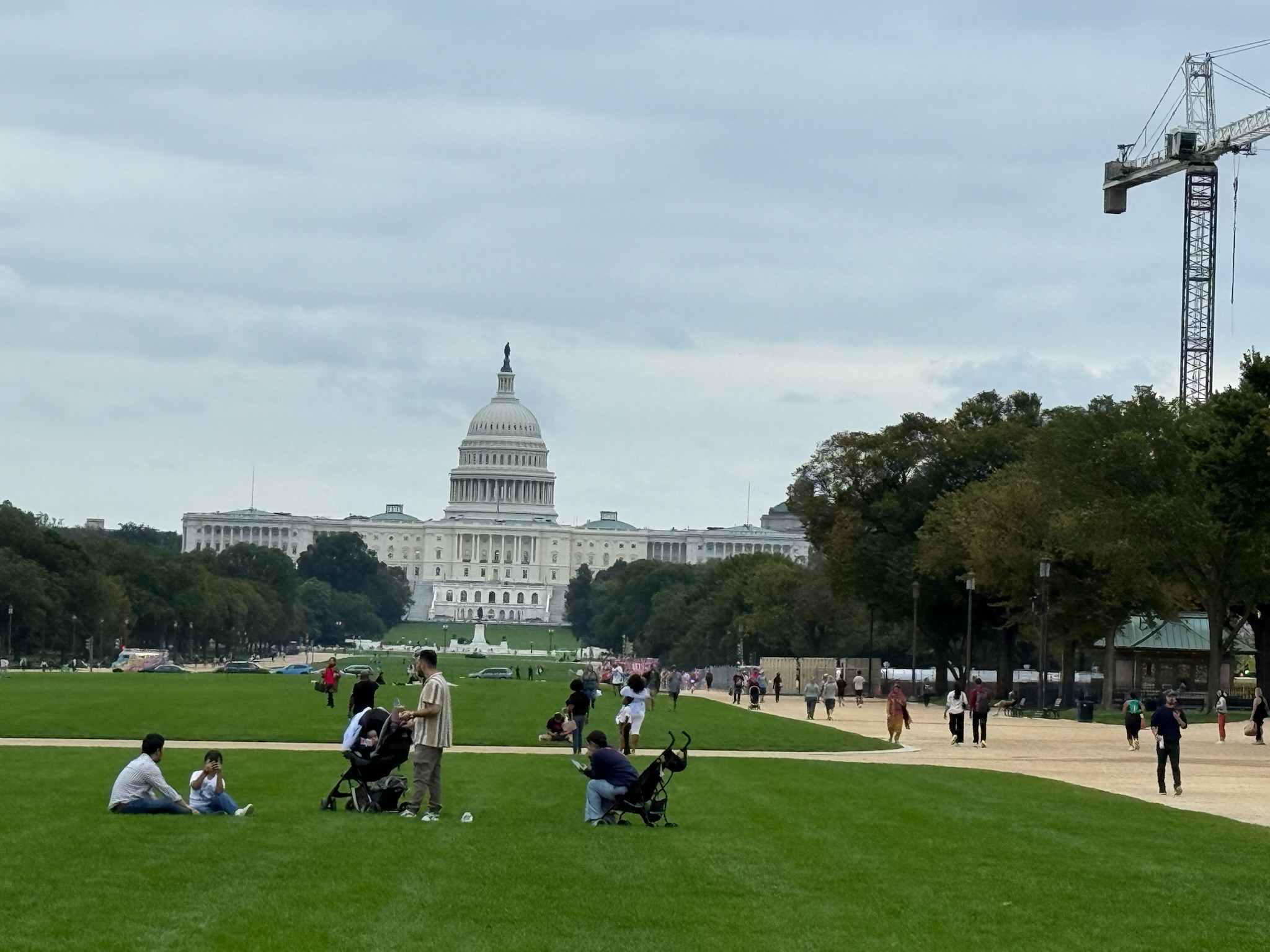
The view looking east down the mall to the US Capital.
And looking west down the mall to the Washington Monument.
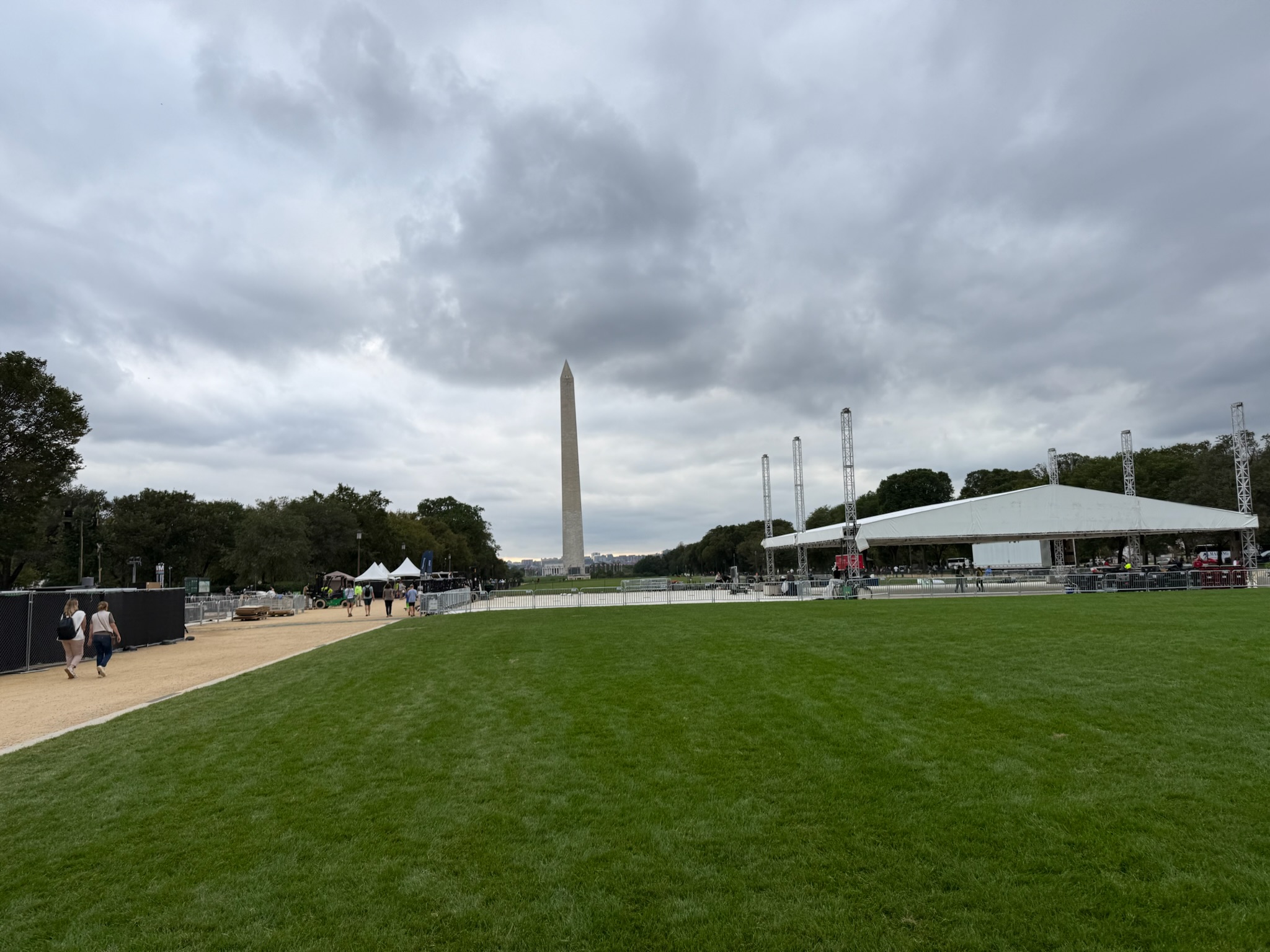
There had been a big tournament earlier in the day (we think it was pickleball, but we’re not 100% sure we’re remembering that correctly), and the white area in the center of the photo was where the event had taken place. There was a crew quickly disassembling the event area. To the left was the fence around the museum’s construction zone. It looked like they were digging up Jefferson Drive to replace the plumbing and/or electrical.