continued… The last Apollo mission was in 1972. The program ended primarily because American public support for the space program had waned due to concerns about the costs amid the expensive and controversial Vietnam War.
Next were some small displays about subsequent missions. There was a hiatus in the moon program until 1994, when it resumed with the launch of a Defense Department robotic craft called Clementine. NASA followed up with flights in 1998 and then again from 2009 – 2013.
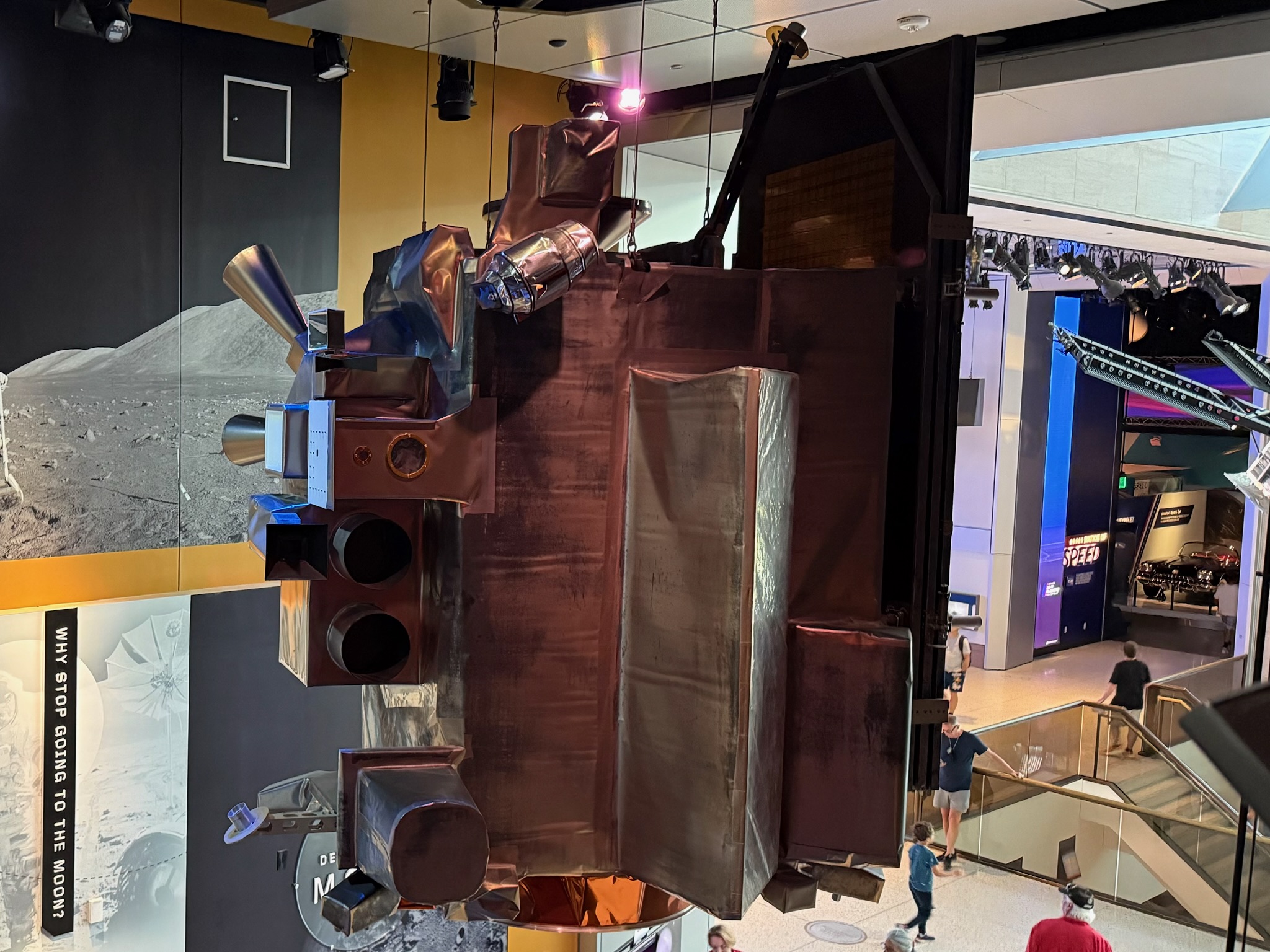
In 2009, NASA launched the Lunar Reconnaissance Orbiter to provide high resolution imagery of the moon. We think this was a replica, but once again, since it was hanging from the ceiling, we’re not 100% sure.
In 2022, NASA, in conjunction with several other countries, launched the Artemis program. They sent an uncrewed mission in 2022. They plan to send a 4-person crew to orbit around the moon in 2026. Artemis III will have a lunar landing. The long term goal is to have a space station in lunar orbit to be the base for further exploration of the moon and mars.
We never posted about this on the blog, but a few years ago, we’d flown to Florida to see Johnny & Joanne, Scott and Special Blend. While in Florida, we’d gone to Cape Canaveral. From what we remember, we think most of what we saw here was similar to what was in Cape Canaveral. But being inside the NASA launch center and seeing the rooms where various events/activities occurred, such as the operational training rooms, made the information feel more real and relevant.
Once we finished at the Destination Moon room, we went down the hall to the WWI Aviation room. We were delighted when our friends from Blue Heeler joined us! As we mentioned in the Wright exhibit, between 1908 – 1916, the new aviation technology took off like wildfire and advanced quickly. With the advent of the war, airplanes became important tools/weapons — scouting for enemy troops/vehicles, dropping supplies for allies, and dropping bombs on enemies. Each country added aviation units to their navies and/or armies that started small and rapidly expanded.
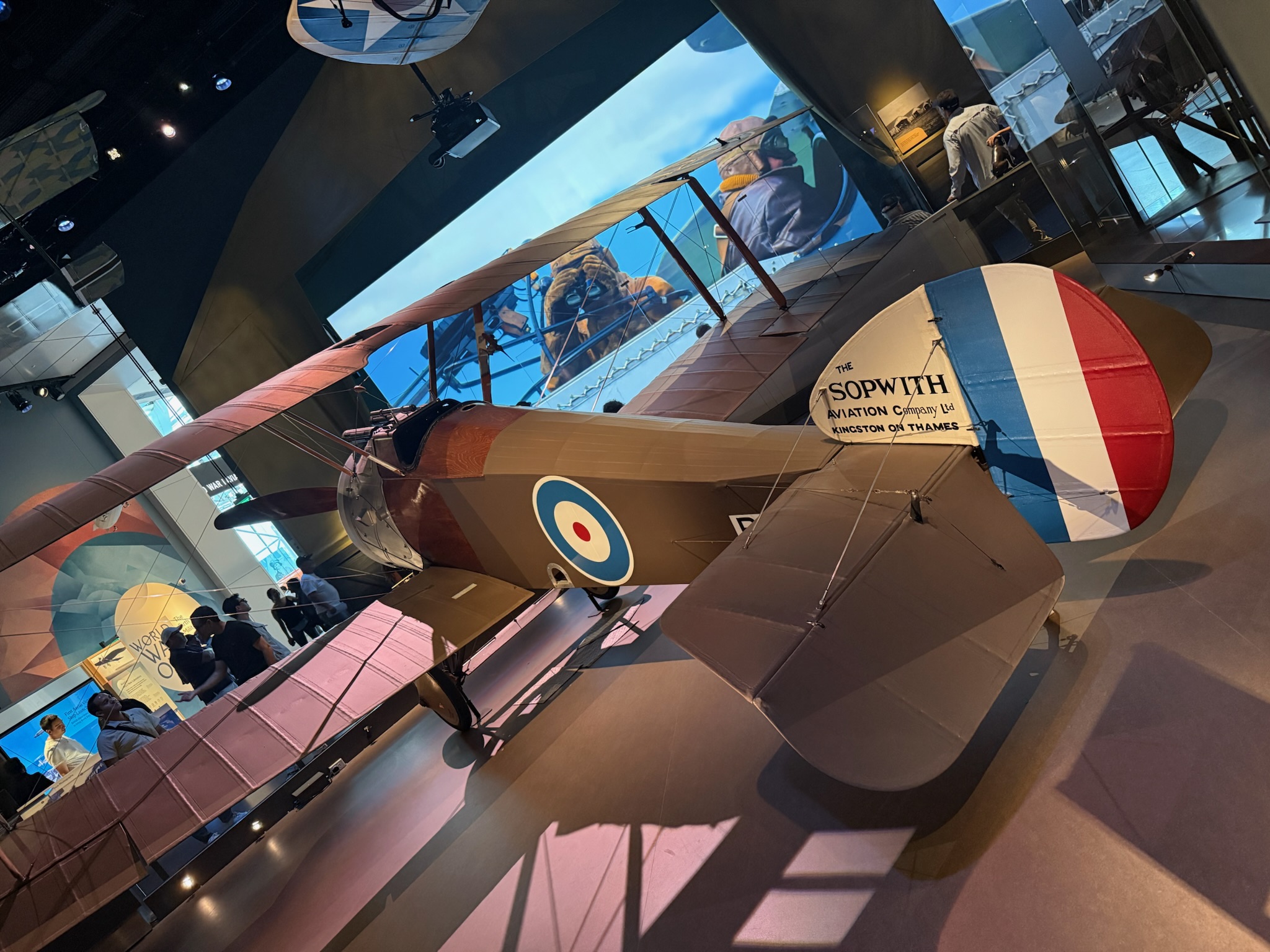
The war made the technological advances in aeronautics even more rapid. Throughout the war, planes evolved for specialized needs. Fighters became faster and more maneuverable. Reconnaissance craft became higher flying. Bombers became bigger and heavier. These new planes all needed more thrust, so engines became more powerful and the propellors improved. By the end of the war, planes were armored to protect them from the other side firing back. Several pivotal planes were featured in this exhibit, along with the accomplishments of some of the war heroes who flew them. This was a Sopwith Camel, which the British started using in 1917. Camel pilots shot down 1,294 enemy planes, which was triple the number of Camels that were shot down.
This was an Albatross D.Va., which the Germans started using in 1917. The majority of German flying victories were in these vehicles.
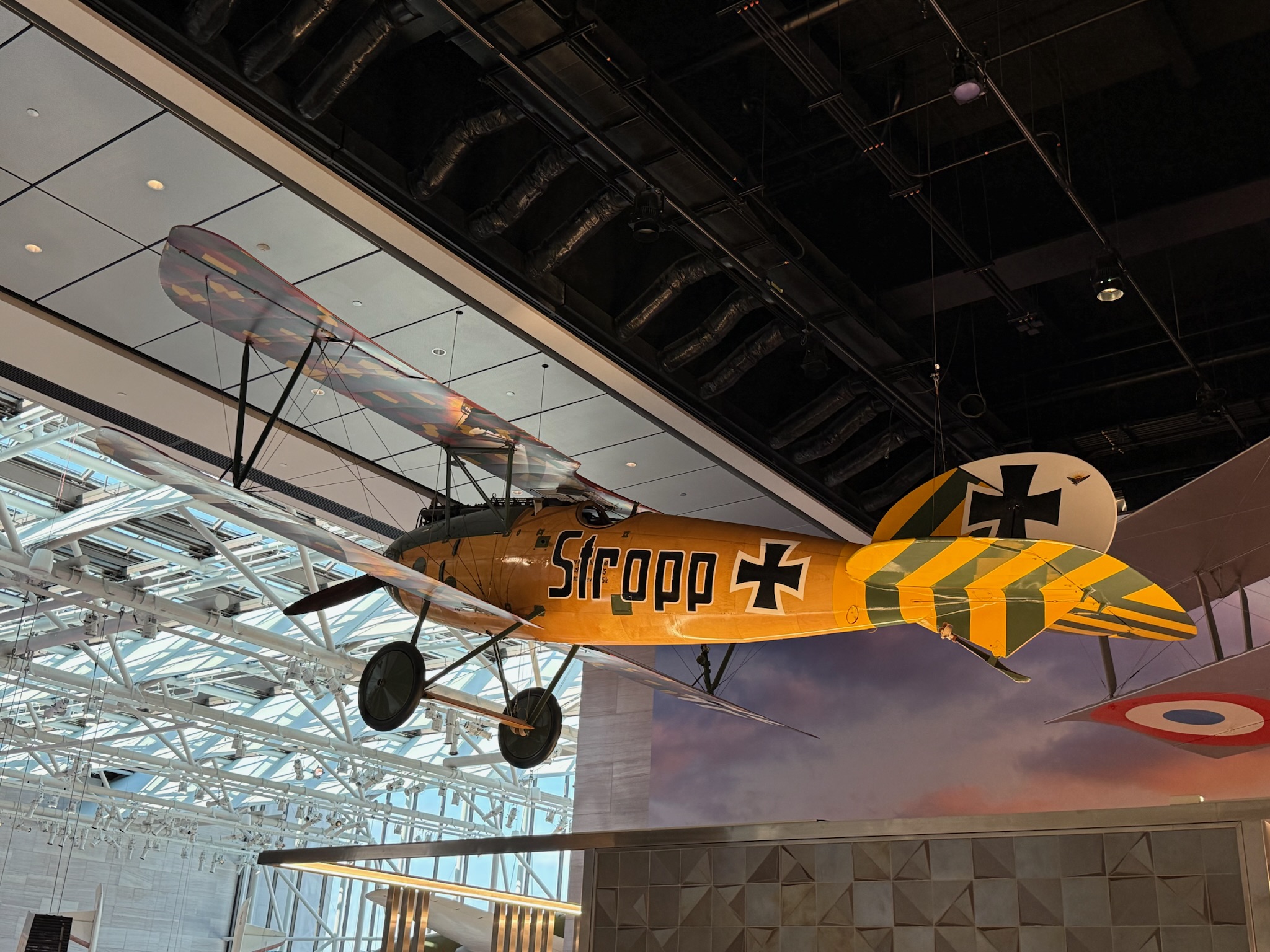
Armament was a high priority. Bombs started out round, but they quickly realized that a more aerodynamic shape improved accuracy. The Central Powers bombed cities, believing that terrorizing citizens would force a surrender. The Allies bombed supply chains, including manufacturing facilities and transportation networks.
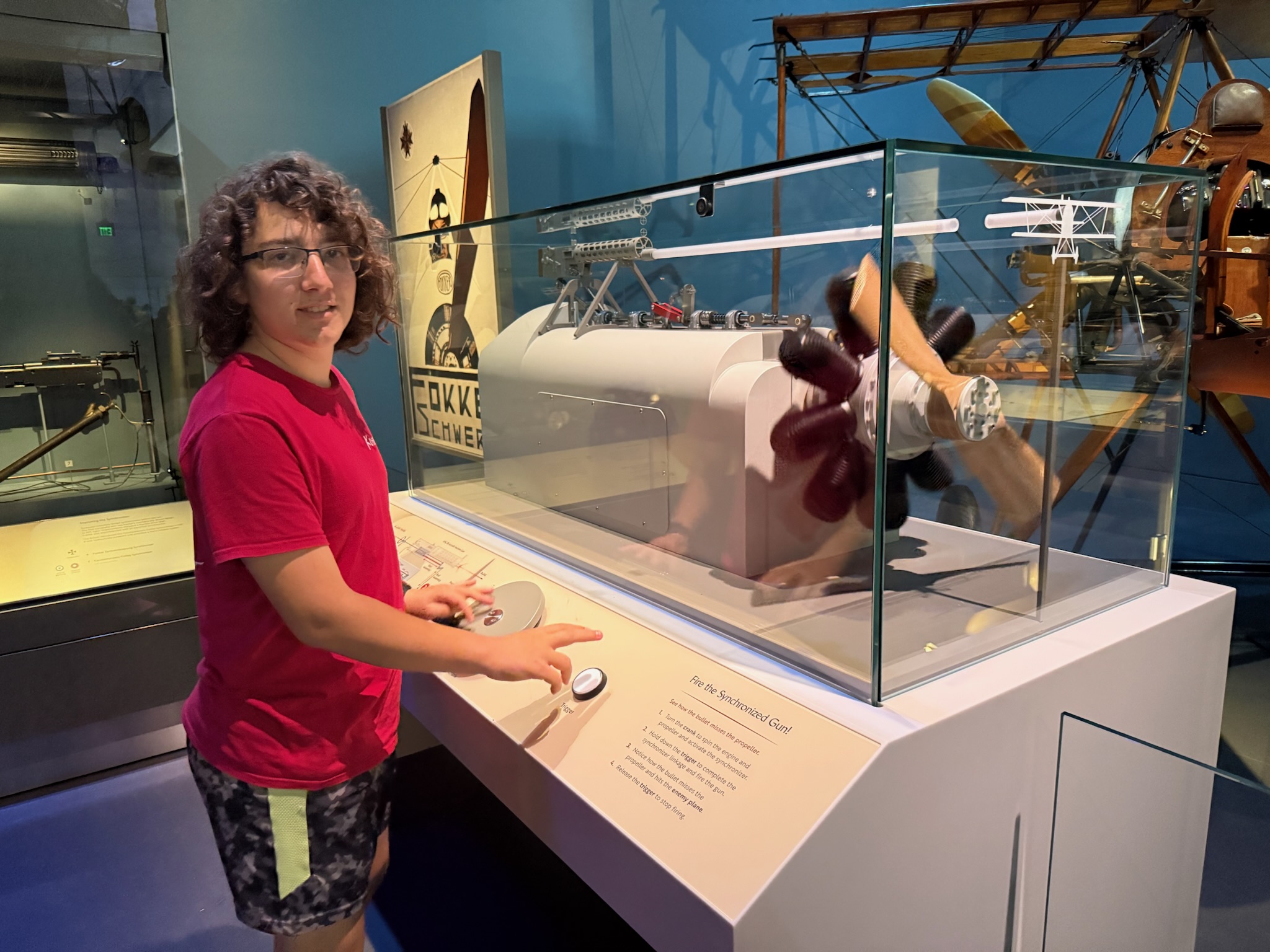
One of the struggles the manufacturers faced was equipping the planes with guns. When the Germans figured out how to synchronize a machine gun with the propellor, it was initially devastating for the Allies. But the Allies figured it out, too, not long after. Here was Keith shooting the machine gun that was synchronized with the propellor.
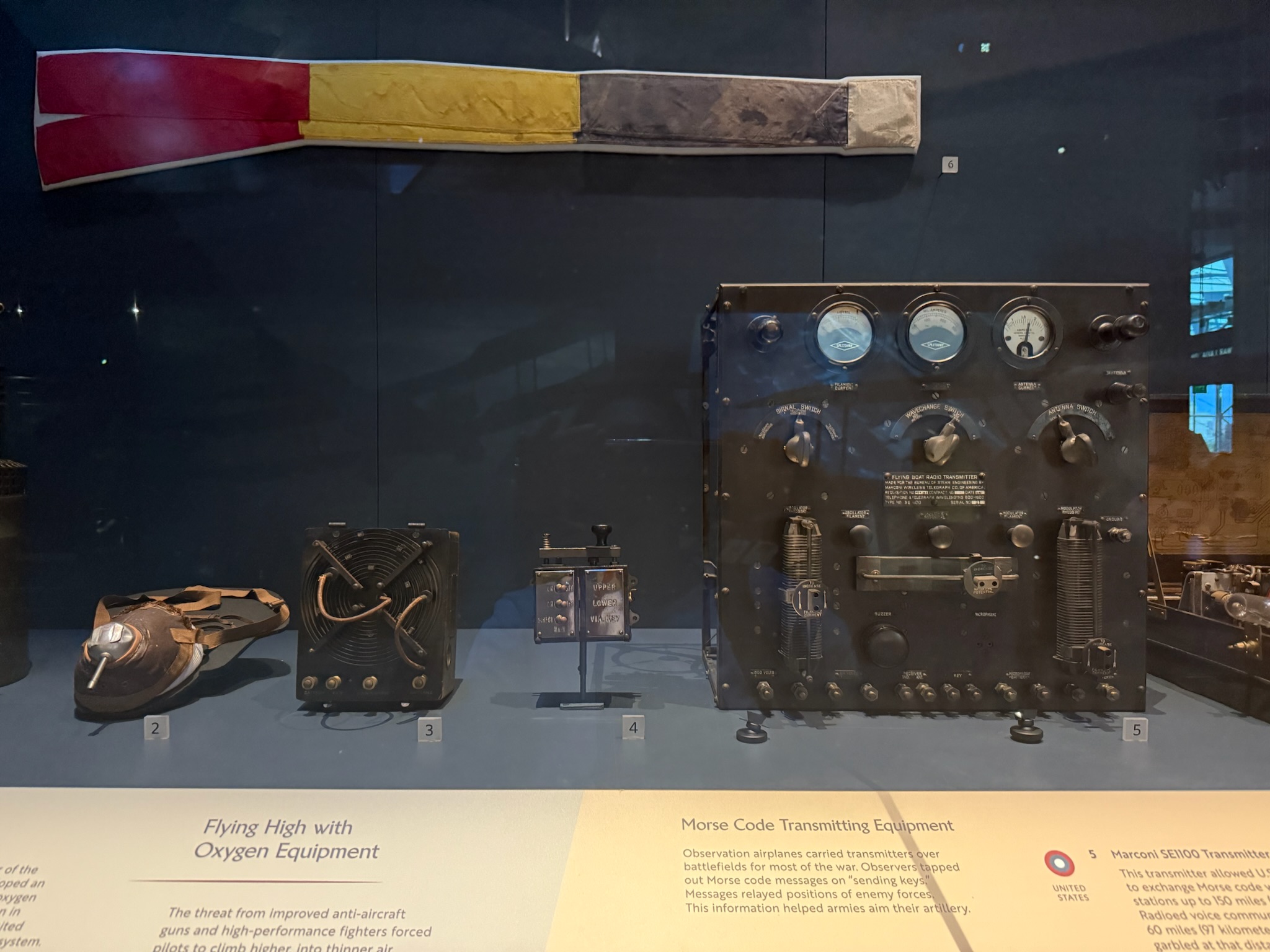
The equipment inside the planes rapidly advanced, too, including communications devices, such as morse code machines and radiotelephones, gauges, and oxygen masks to allow higher altitude flying.
Several notable innovators were spotlighted, such as American Charles Kettering, who invented a guided missile system, synthetic aviation fuel and an engine ignition system.
After World War I ended, most of the places were scrapped. The survivors were repurposed, with the primary uses being mail and commercial delivery services.
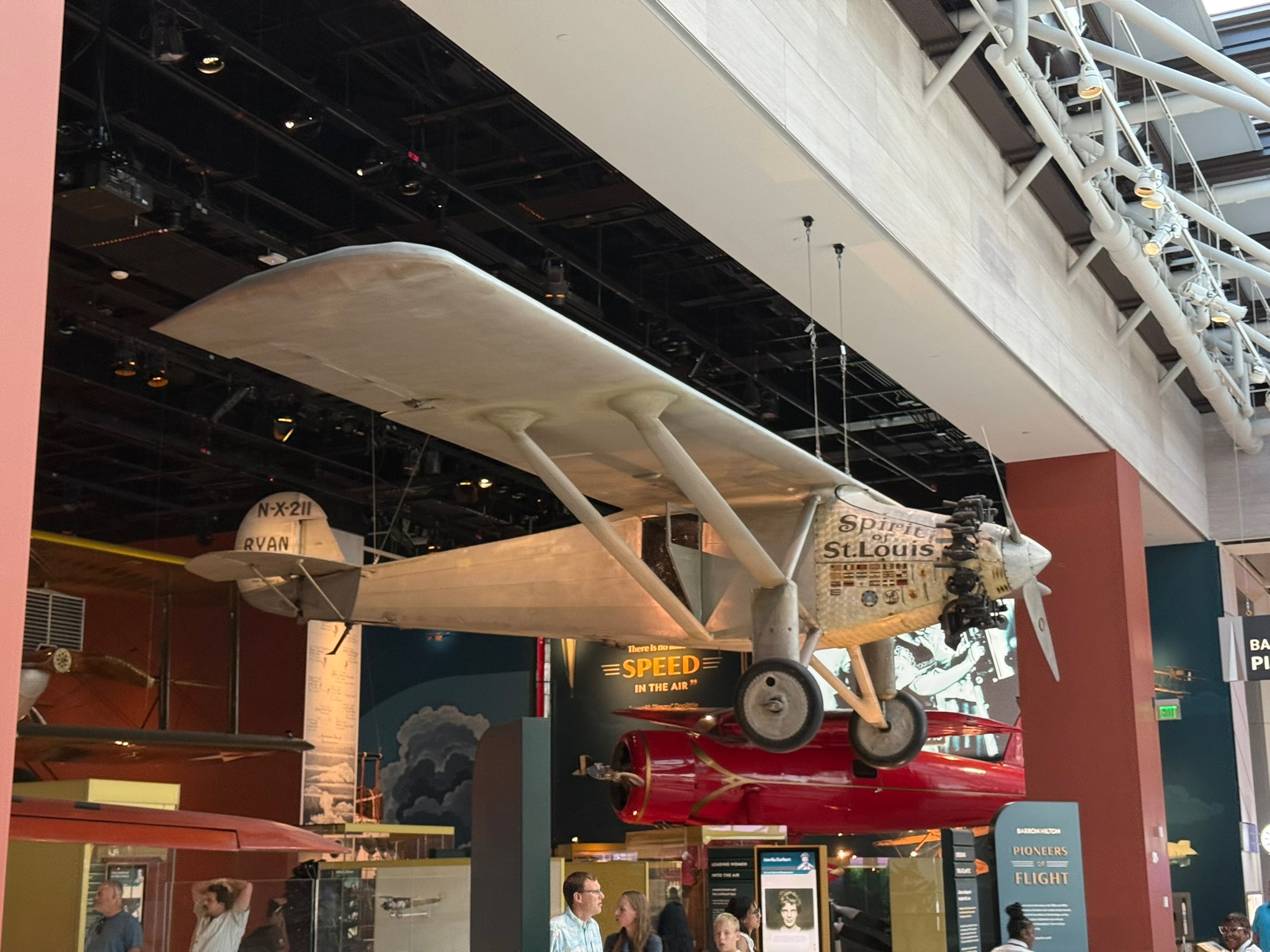
The next room we went to was called Pioneers of Flight. One of the first planes visible from the entrance was The Spirit of St. Louis. We’d also learned about the plane on the Air & Space Museum tour we went on in San Diego. This plane was built in San Diego (where the current airport is, hence the name Lindbergh field!) in 1925 – 1926 by Ryan Aeronautical. A second back-up plane was also built. In 1927, flown by Charles Lindbergh, it became the first plane to fly non-stop from New York to Paris. The flight took roughly 34 hours and the plane was flying so low that it was mostly skimming the water. It had no windshield, so Lindbergh looked out the side window and used a periscope. This successful flight led to the expansion of commercial aviation.