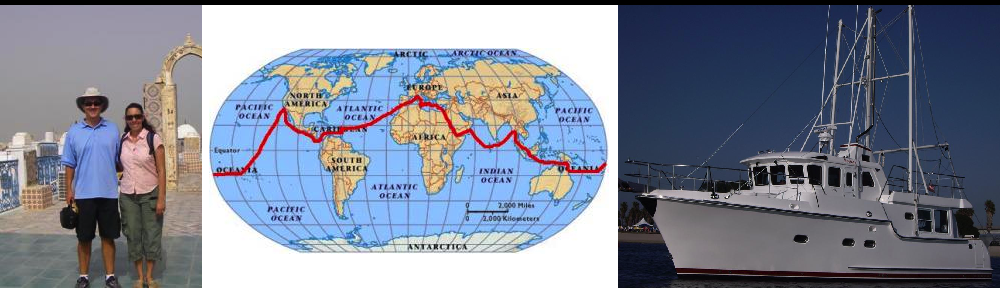
Eric went for another run at dawn on Tuesday, September 23. Here was the Capital in the early morning glow.
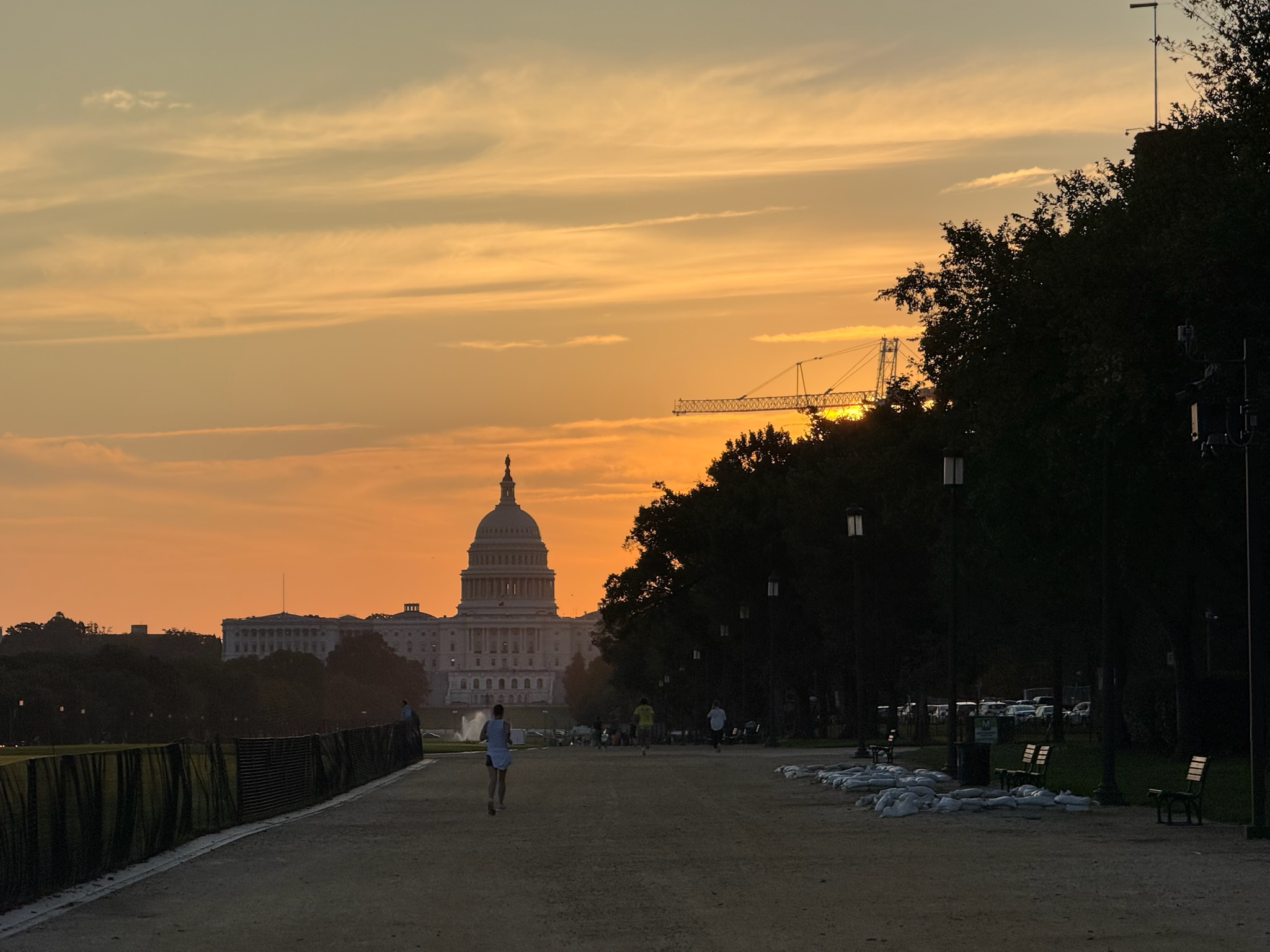
Meanwhile, this was the dawn back at the boat
Two months ago, we’d contacted our congressperson to ask for tickets to visit The White House, The Library of Congress, and Congress. We called their office and were told to fill out a form online. After waiting a week, Christi called to follow up. They said The White House hadn’t released dates they’d be open for tours yet, so they couldn’t submit our request. A few days later, we saw a press release that the White House was undergoing renovations and would be closed for tours indefinitely. Christi called again to follow up. The Congress woman’s office emailed her a link allowing her to sign up online for tickets to the other two venues. Tickets were free, but due to security reasons, they wanted personal information. Several days after that, Christi got emails from each venue saying we’d been approved for tickets, with a link to order them online.
Today was the day we were visiting The Library of Congress, which was 2.5 miles away from the marina. If we took the shuttle to the National Mall, it would still be a one-mile walk. We decided to take the Metro, which had a stop very close to our destination. Our appointment time was 1030, and a note on the tickets recommended arriving 1/2 hour early. We left Kosmos at 0930. We caught the shuttle and exited at the L’Enfant Metro stop instead of the National Mall.
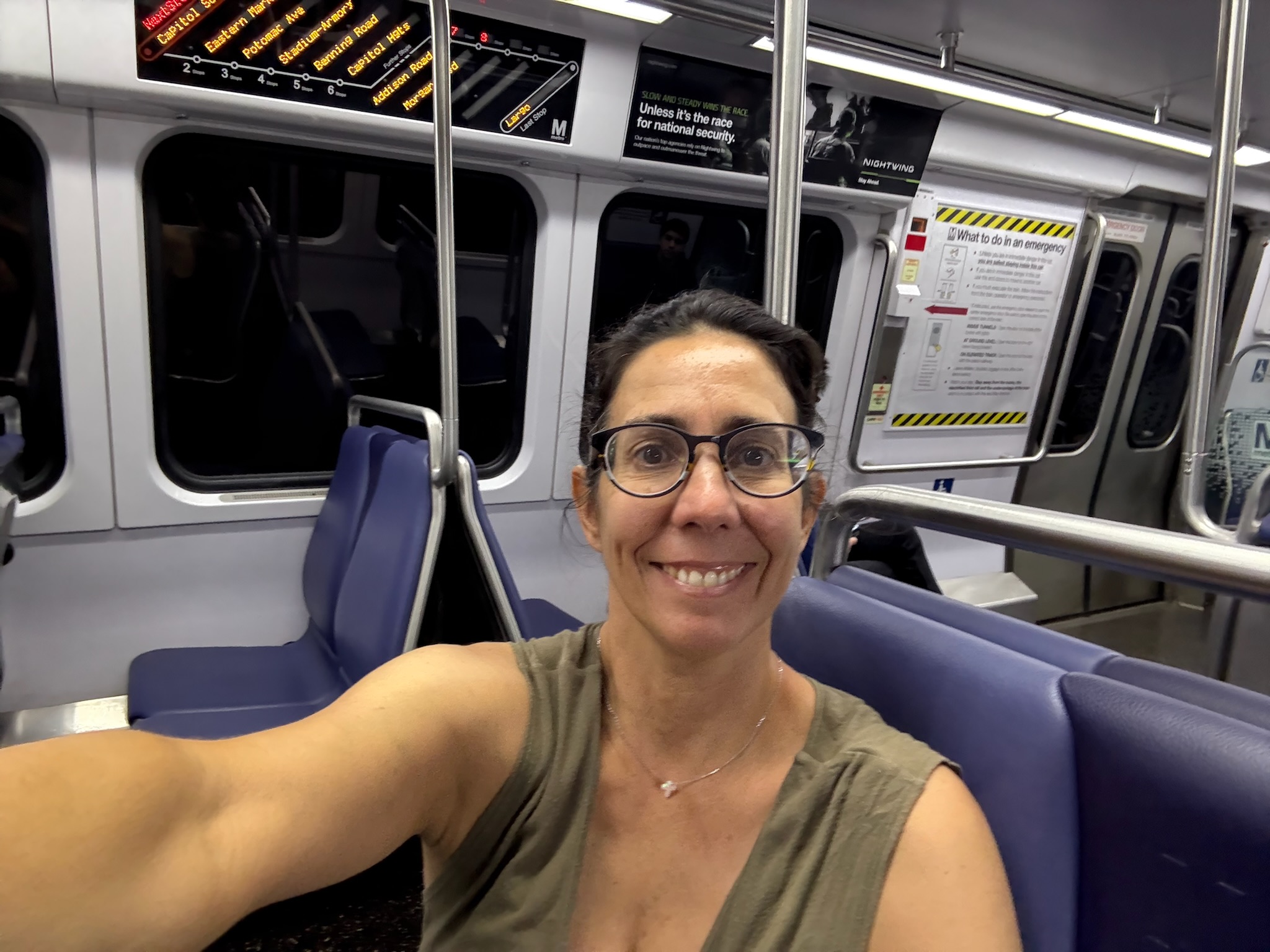
Before leaving Kosmos, Eric had bought one metro card and put enough money on it for all three of our tickets, which totaled $13.50 for the three roundtrips. However, the automatic gates would only let him scan his card once, so we had to find a vending machine and buy two more cards. Once inside, we could not find the correct track. We walked in circles for a little while, then eventually asked someone for directions. We were surprised at how long of a walk it was to get to the correct stop. In good news, the subway was very clean and well maintained.
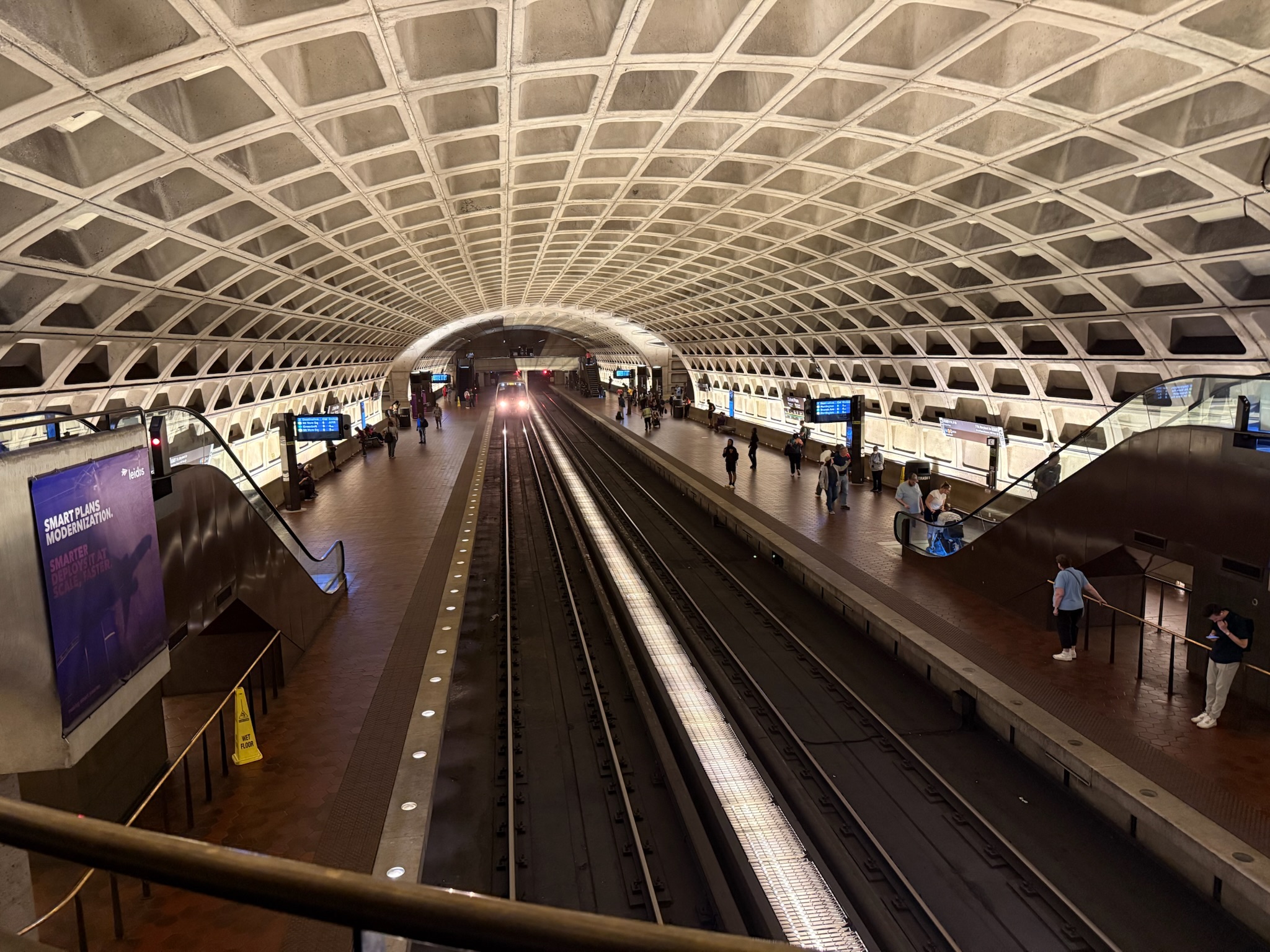
We didn’t have to wait long for a train. The trains were also clean and well-maintained.
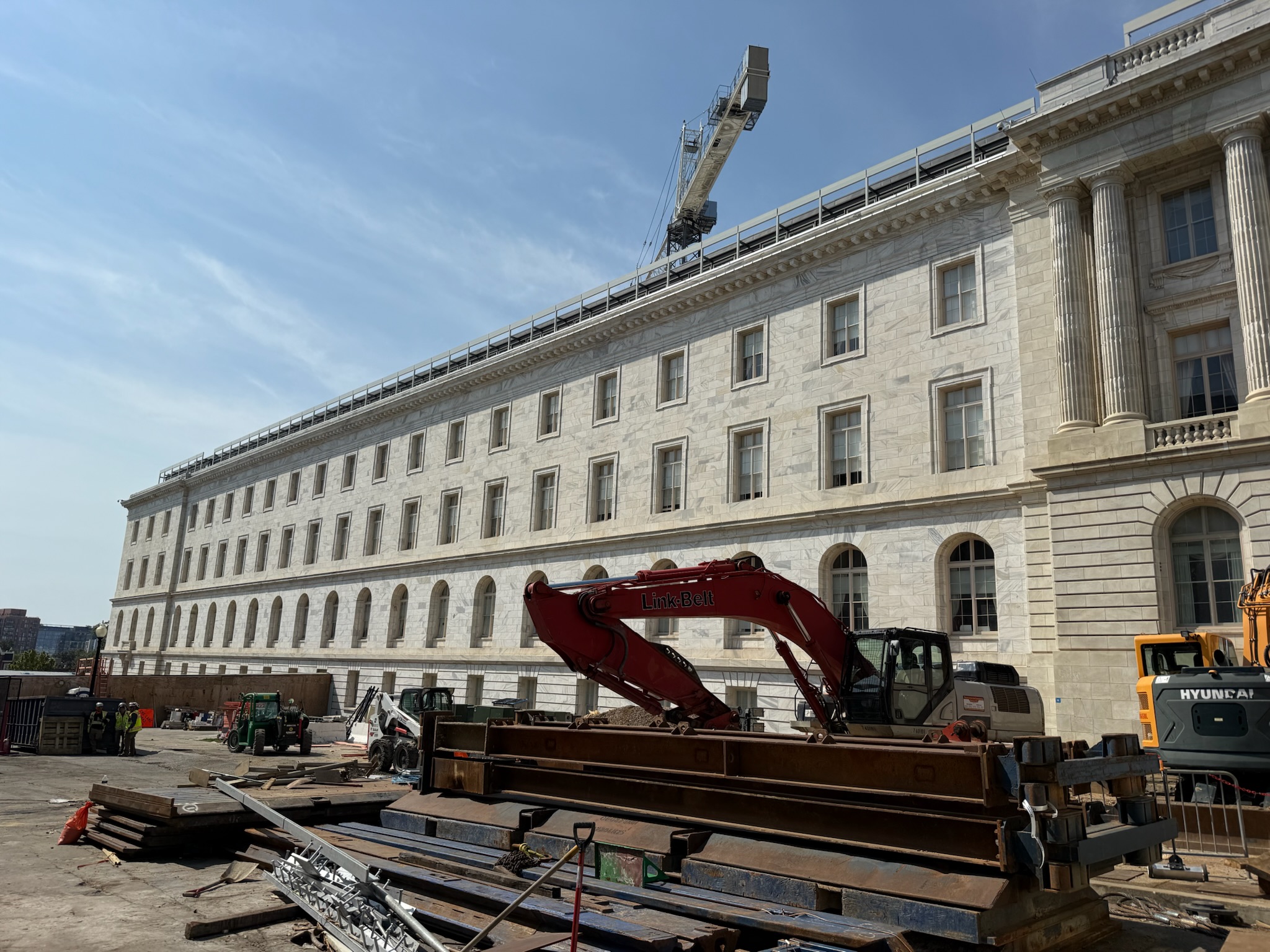
When we exited, we found ourselves behind a construction zone. A sign said that the Cannon House Office Building was being “renewed.”
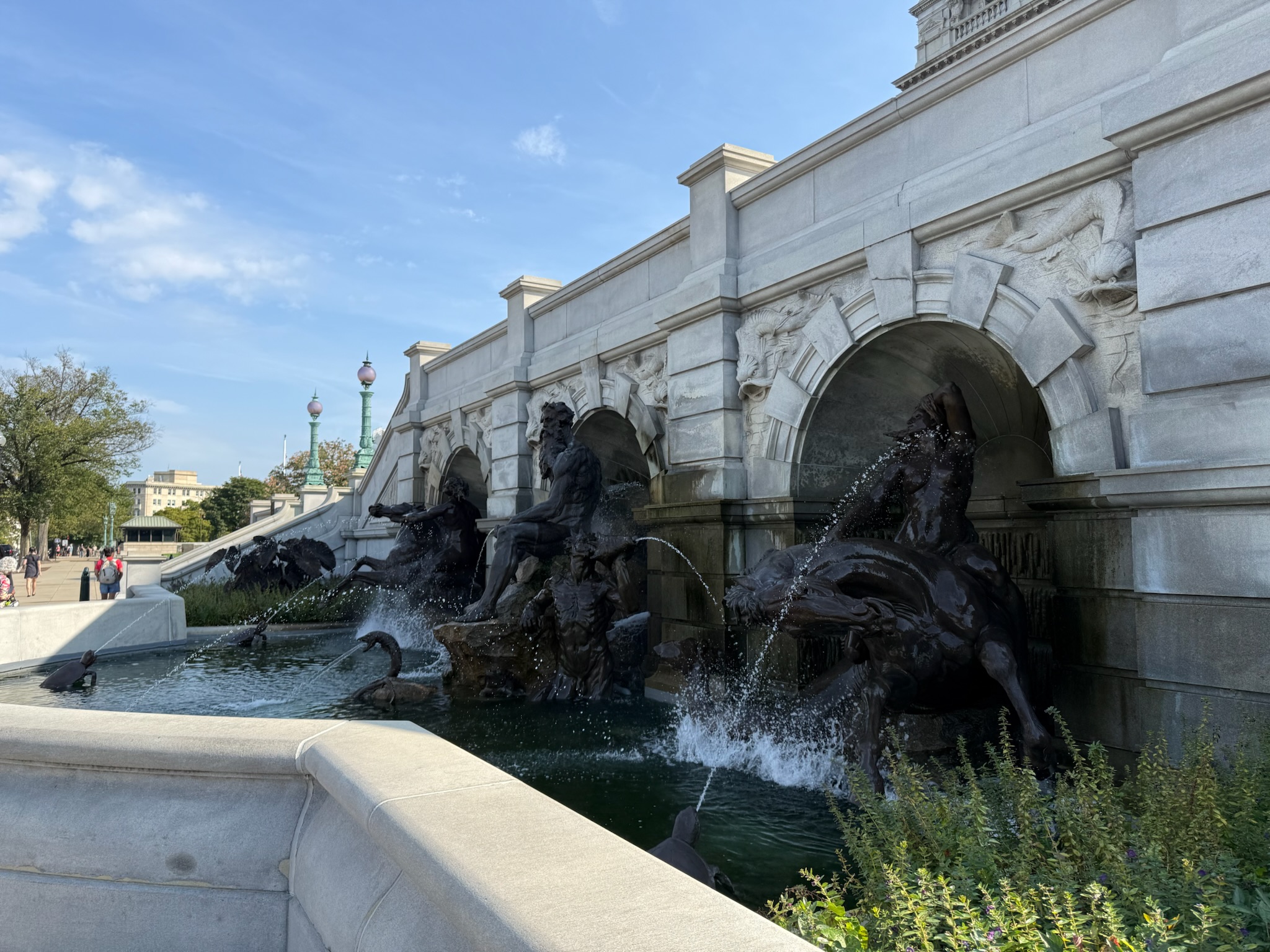
We walked north past the construction zone to the next intersection. A sign indicated that the Jefferson building of the Library of Congress was just ahead. There were apparently several more Library of Congress buildings, which makes sense since it was currently the largest library in the world. The Jefferson building was the original building, and the one that was open to the public. The ground level had a large fountain with multiple statues.
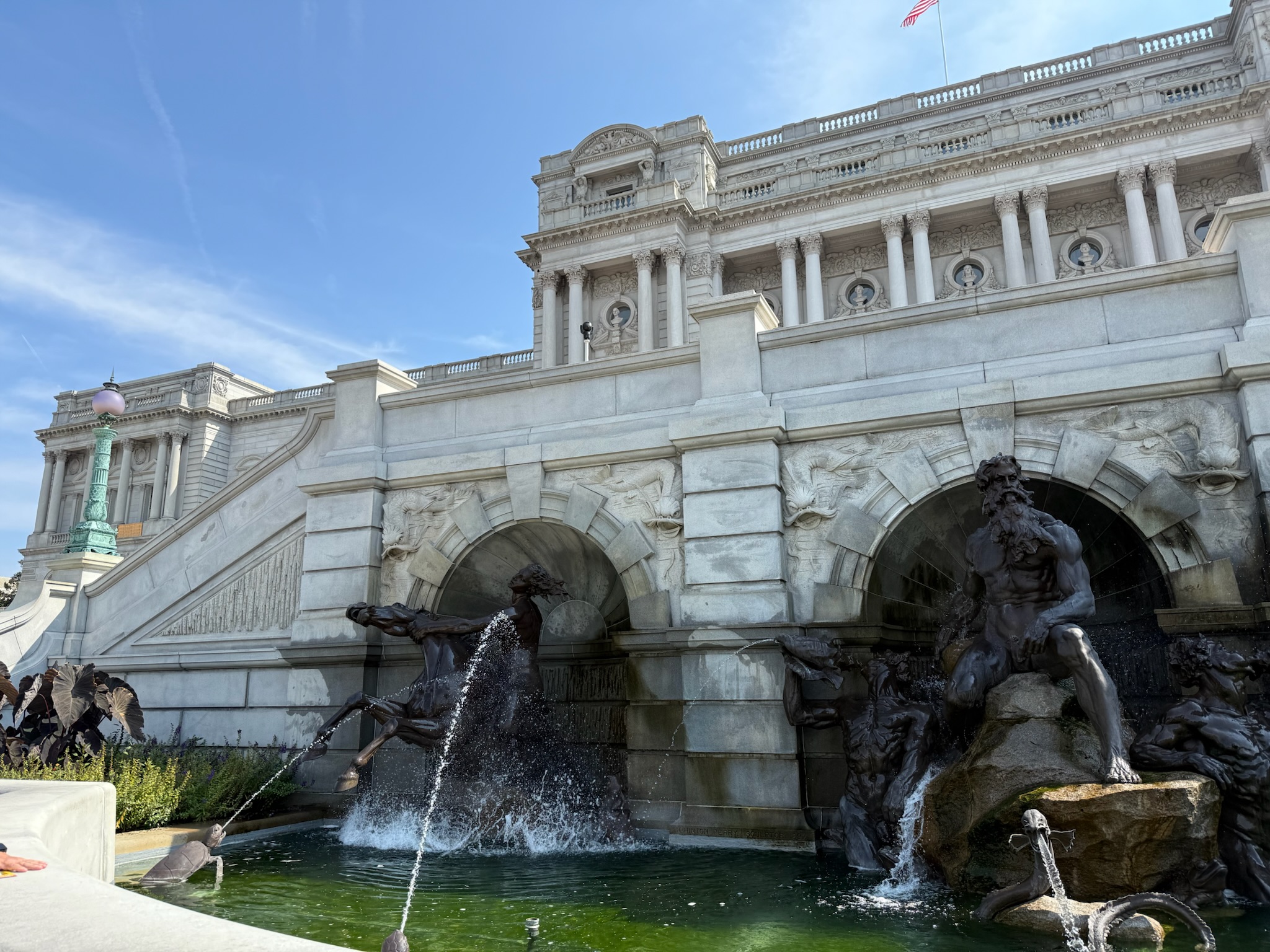
We walked up the stairs and arrived at the entrance at 1015.
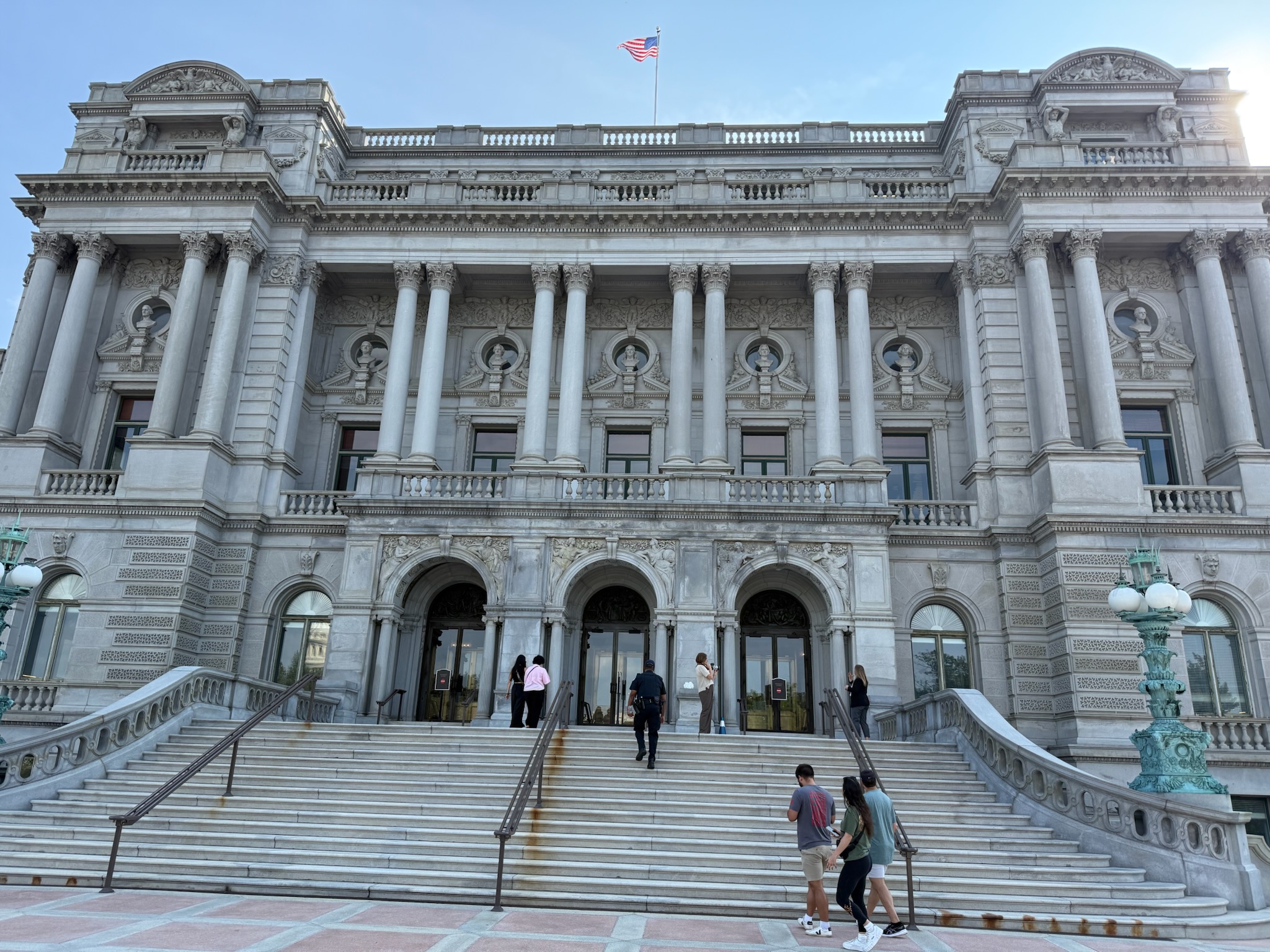
We were directed ti get into a very long line on the side of the building. The line moved fast, but it was still a solid half-hour wait to get in. We were glad that we’d waited to come to DC until the weather had cooled down. We would have been very unhappy standing for so long had it been sweltering out.
As we neared the front of the line, we saw the entrance being used was through a side door on the ground floor, not the main entrance in the photo above. When we got to the front of the line, they scanned our tickets and quickly inspected Christi’s purse before waving us inside. We followed the crowd up an escalator to the first floor. The building was gorgeous. Elaborately decorated in the style of Italian renaissance, it looked more like a European palace than a library.
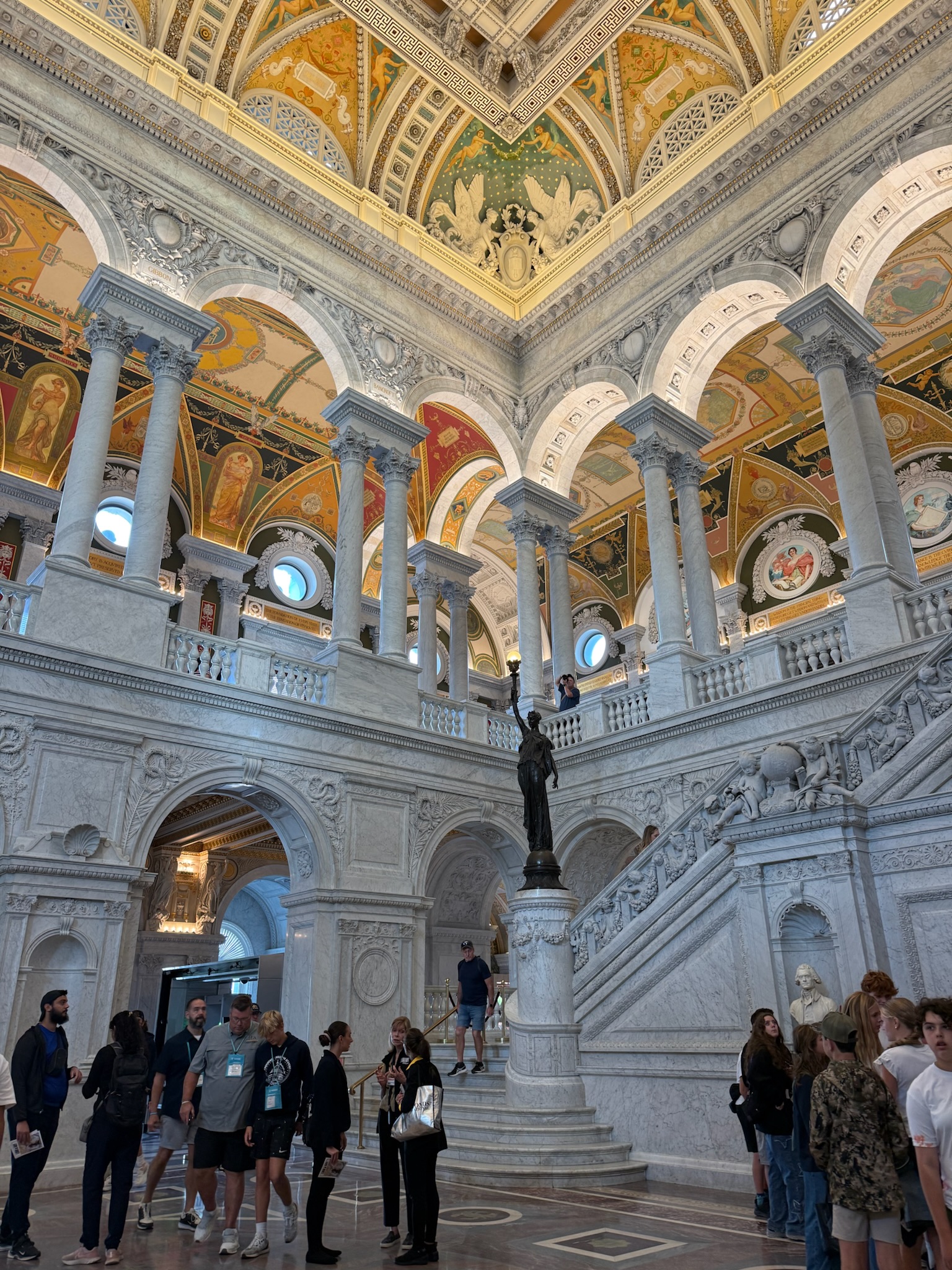
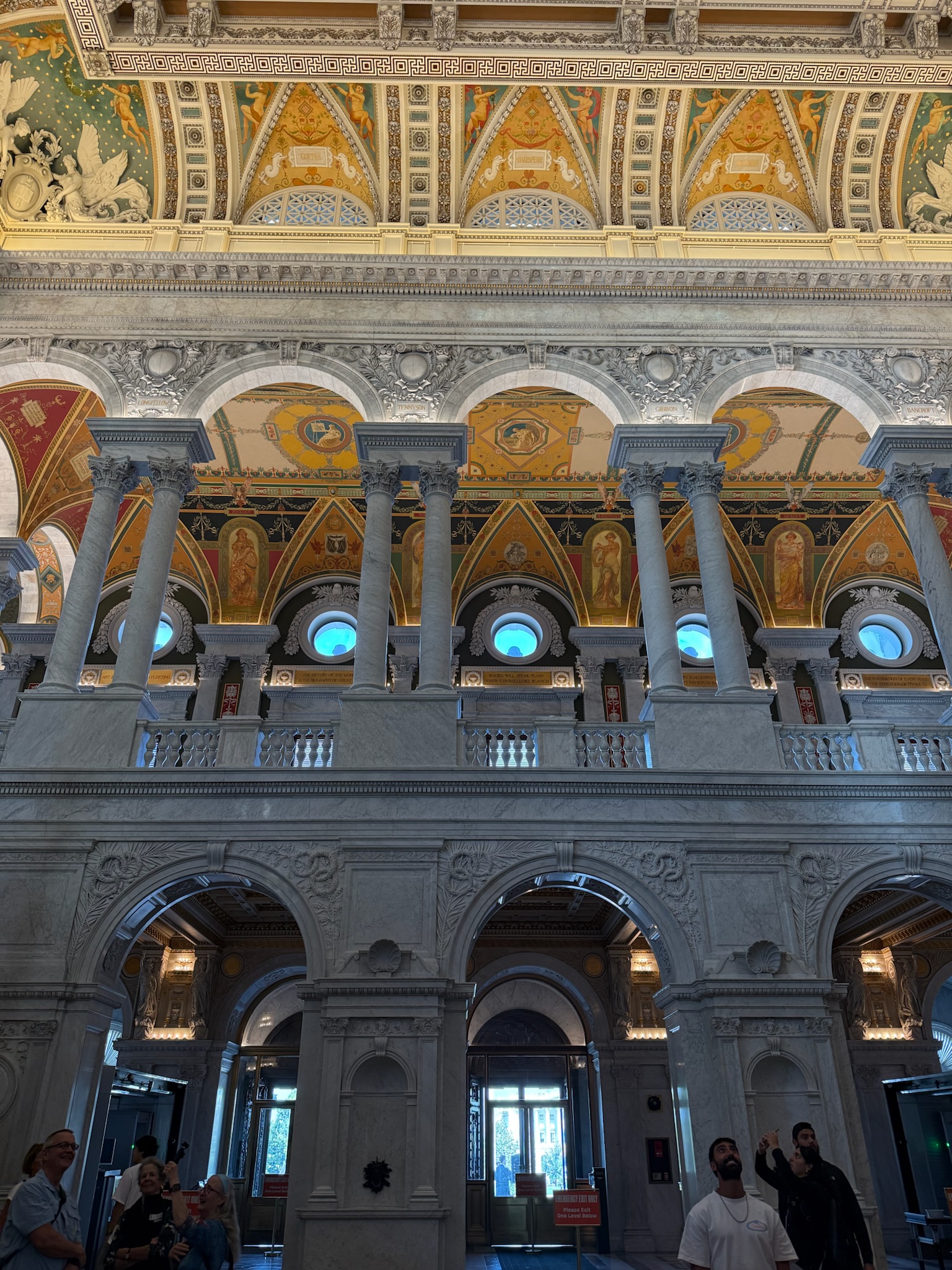
The Library of Congress was established in 1800. The legislation stated it should be a library of “such books as may be necessary for the use of congress.” At first, the books were housed in the Capital, but the collection was destroyed in the fire of 1814. In order to replace the lost collection, in 1815 congress paid previous president Thomas Jefferson $23,950 for his personal collection of 6,487 books. As we’d learned when we’d visited the home of Thomas Jefferson’s mentor, George Wythe, Jefferson was very much of the Enlightenment Era mentality, and thus was dedicated to understanding the world through observable nature and scientific inquiry, which he called “natural philosophy.” He was interested in a wide variety of topics, so it was an eclectic assortment of books. The Jeffersonian belief that all subjects were important to the American legislature was the foundation for the library’s comprehensive collecting policies.
Facing a shortage of space and concerned about another fire, a separate building was approved. This building opened in 1897. At the time, it was considered “an unparalleled national achievement.” It was the first public building in DC with electricity installed. Currently, the library holds more than 175-million items, including books and other print material, recordings (including motion pictures), photographs, maps, sheet music and manuscripts.
We immediately got into yet another line, this time to see the Main Reading Room.
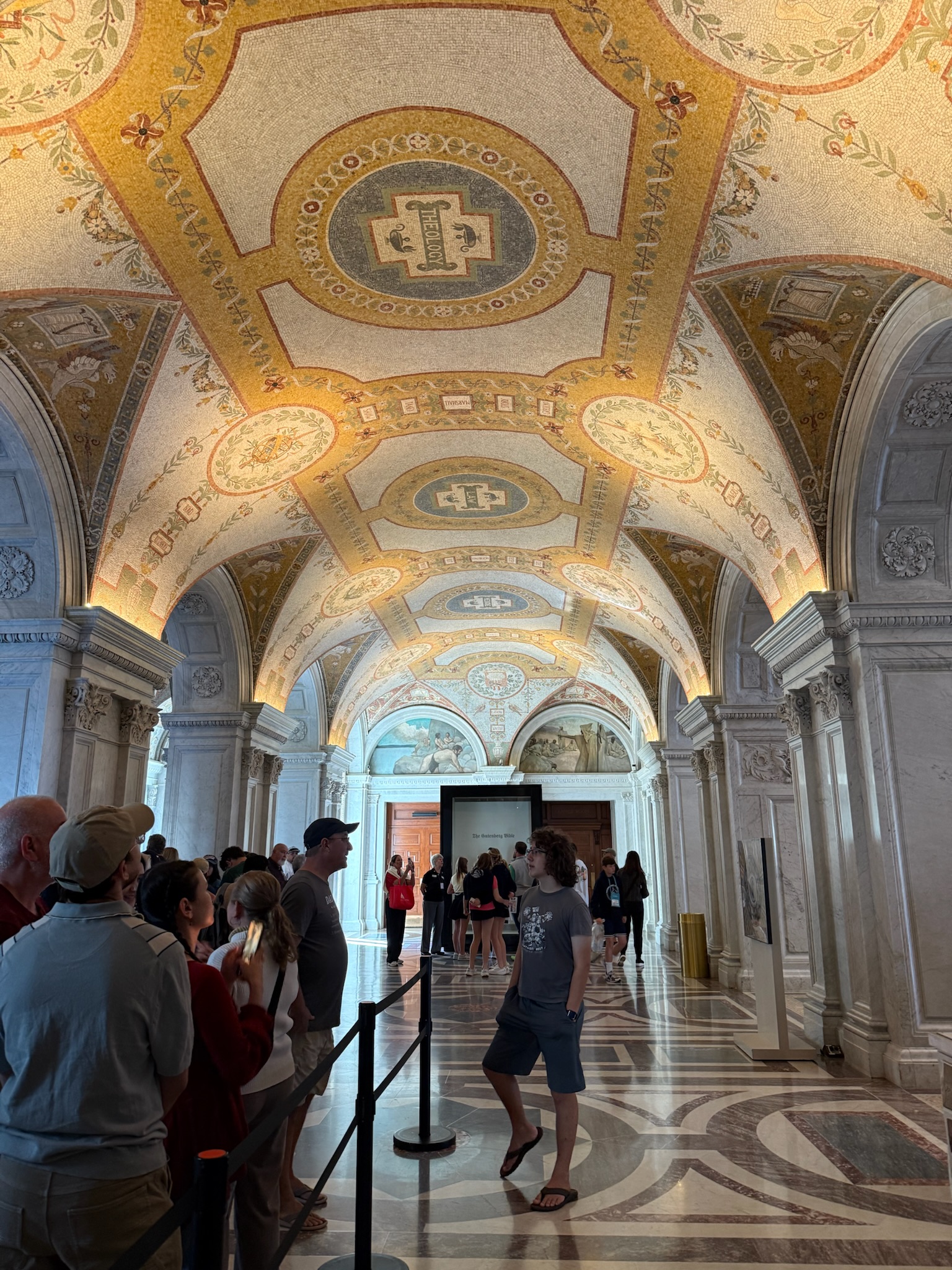
Keith was most unhappy about another long line, especially since this one was moving slowly.
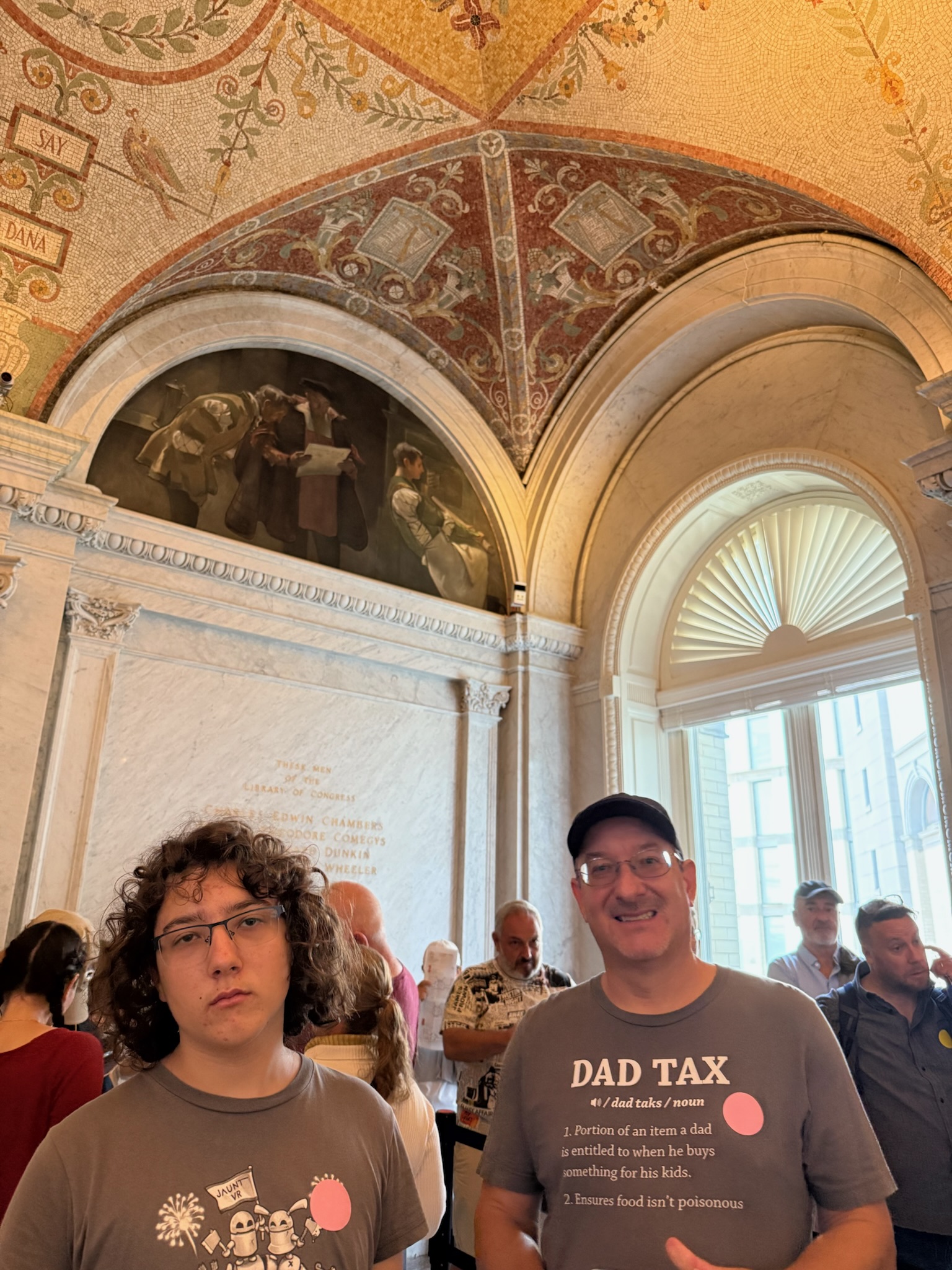
They let people into the room in groups. We barely missed the cut off for the group ahead.
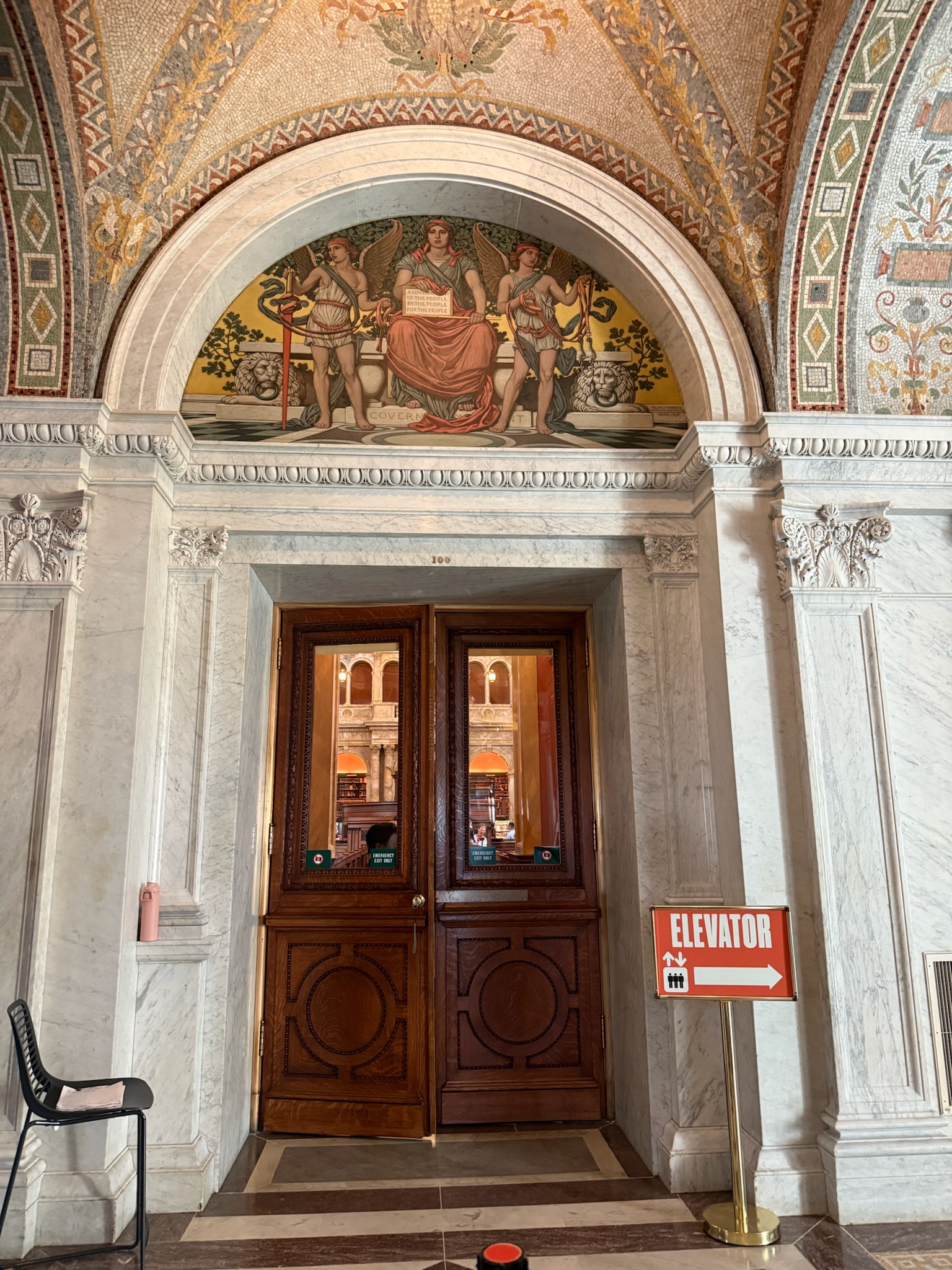
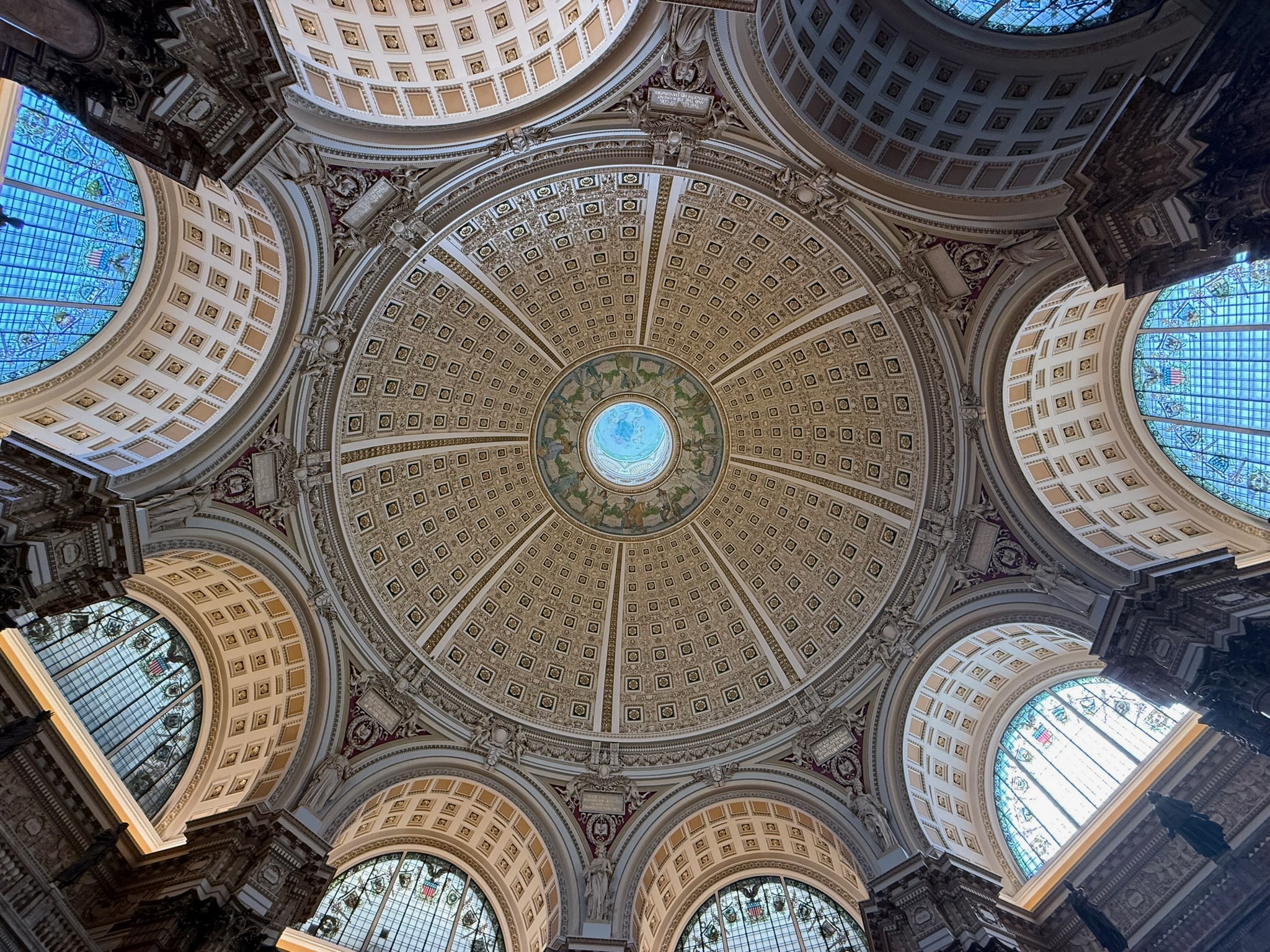
But that turned out to be a blessing, since we were the first into the room and able to take photos without a lot of strangers in them.
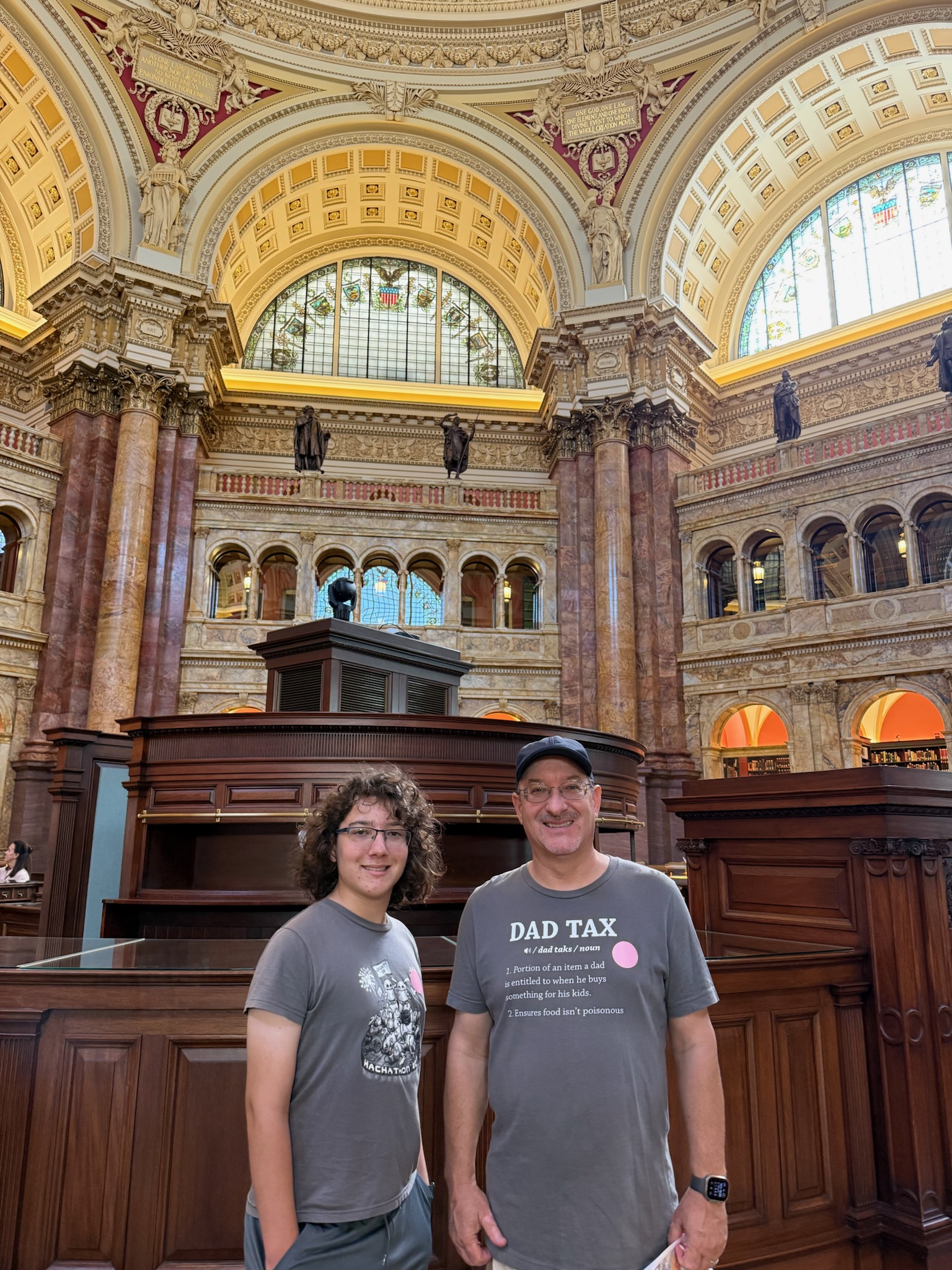
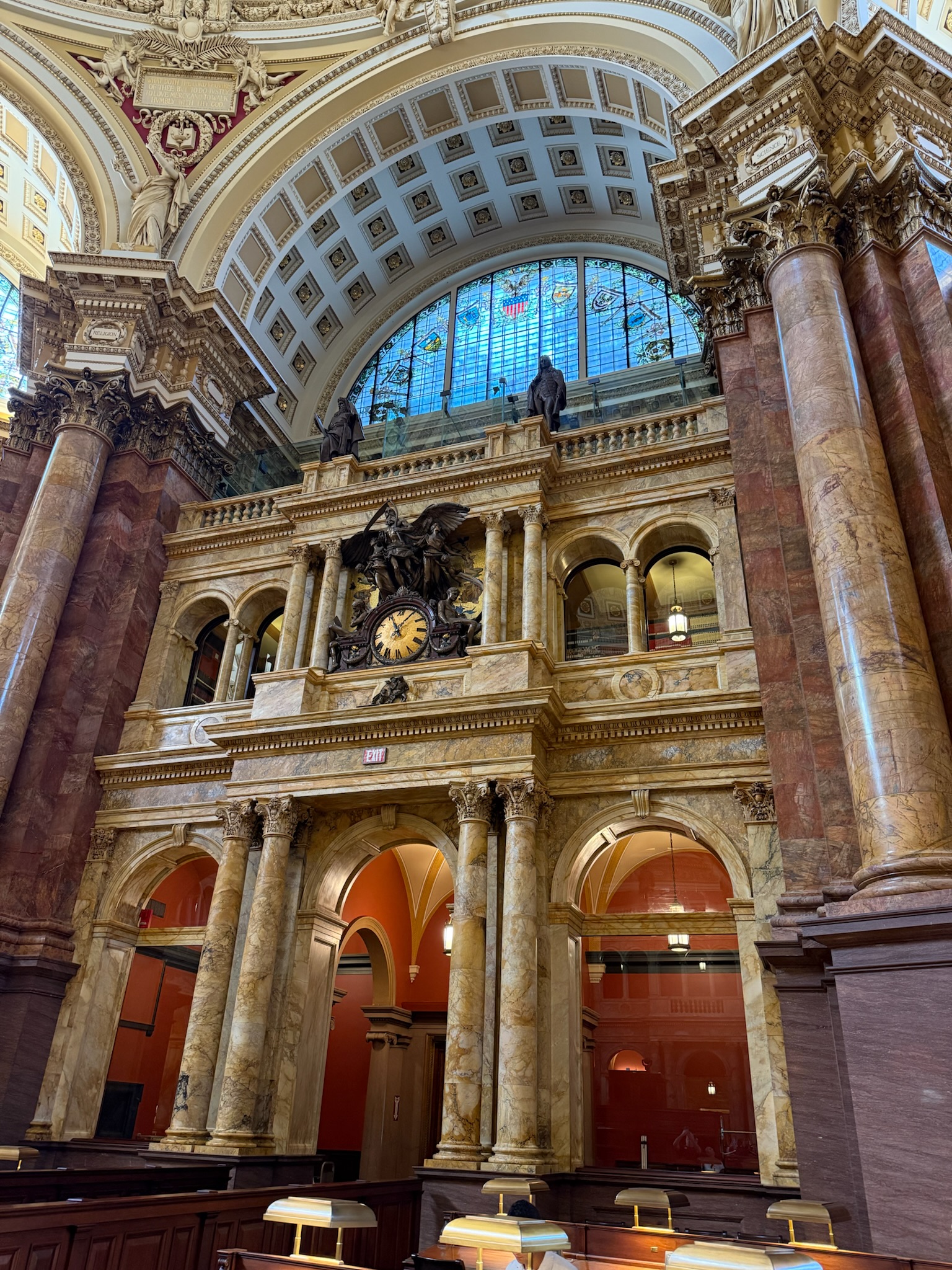
The domed ceiling and semi-circular stained glass windows around the perimeter of the room.
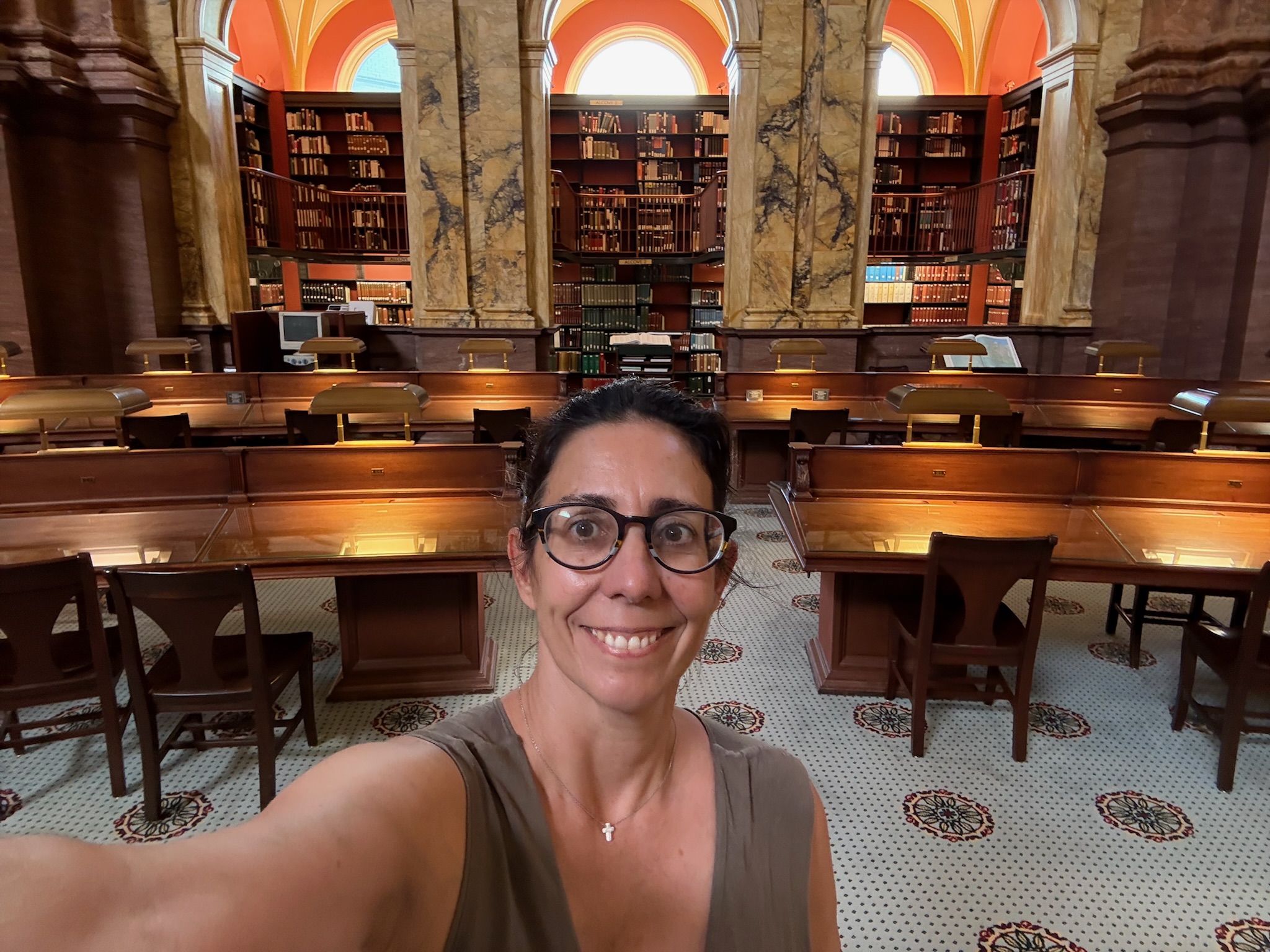
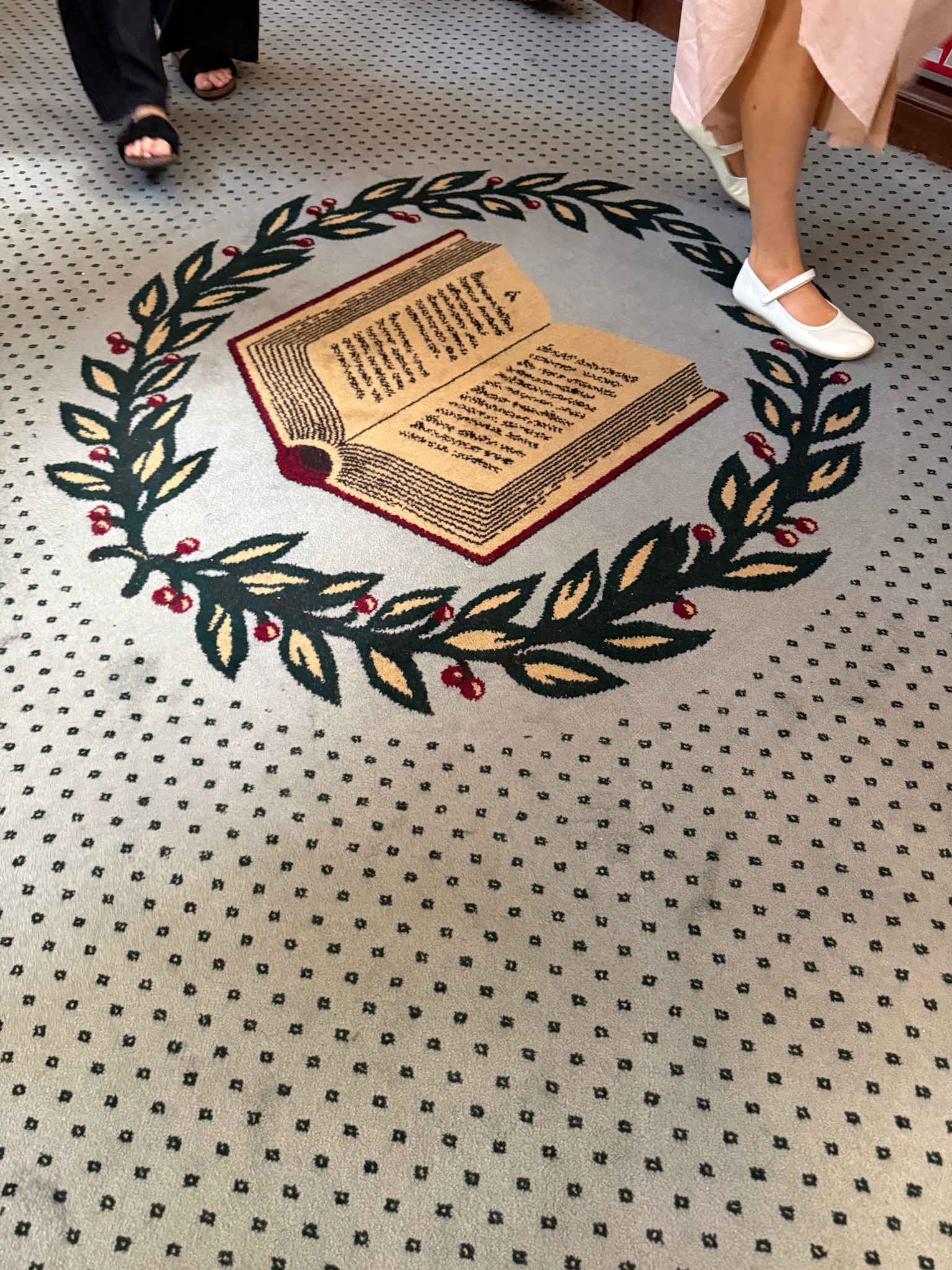
Fancy design in the carpet:
We had to stay silent since there were actually patrons reading library materials in the room. We were allowed to stay inside the room for 10 minutes, then we were ushered back out via the same door that we entered in. Once we were cleared out, the next group entered.
Near the entrance/exit of the Main Reading Room was a copy of a Gutenberg Bible. As Keith had learned in school last year, in 1455, Johann Gutenberg introduced the printing press in Germany. Prior to that, all books were hand written and few were produced. The ability to (relatively) easily print up many copies of books revolutionized society, leading to the renaissance as more people learned to read and became educated. 180 copies of this bible were printed; less than 50 still exist today and only 21 of them are complete. Most of the bibles were printed on paper; this was one of the few that had been printed on vellum (parchment made from animal skin). It was kept in monasteries for almost 500 years before being purchased by the Library of Congress in 1930. Unfortunately, there was a throng of people surrounding the case, so we weren’t able to get a look at it.
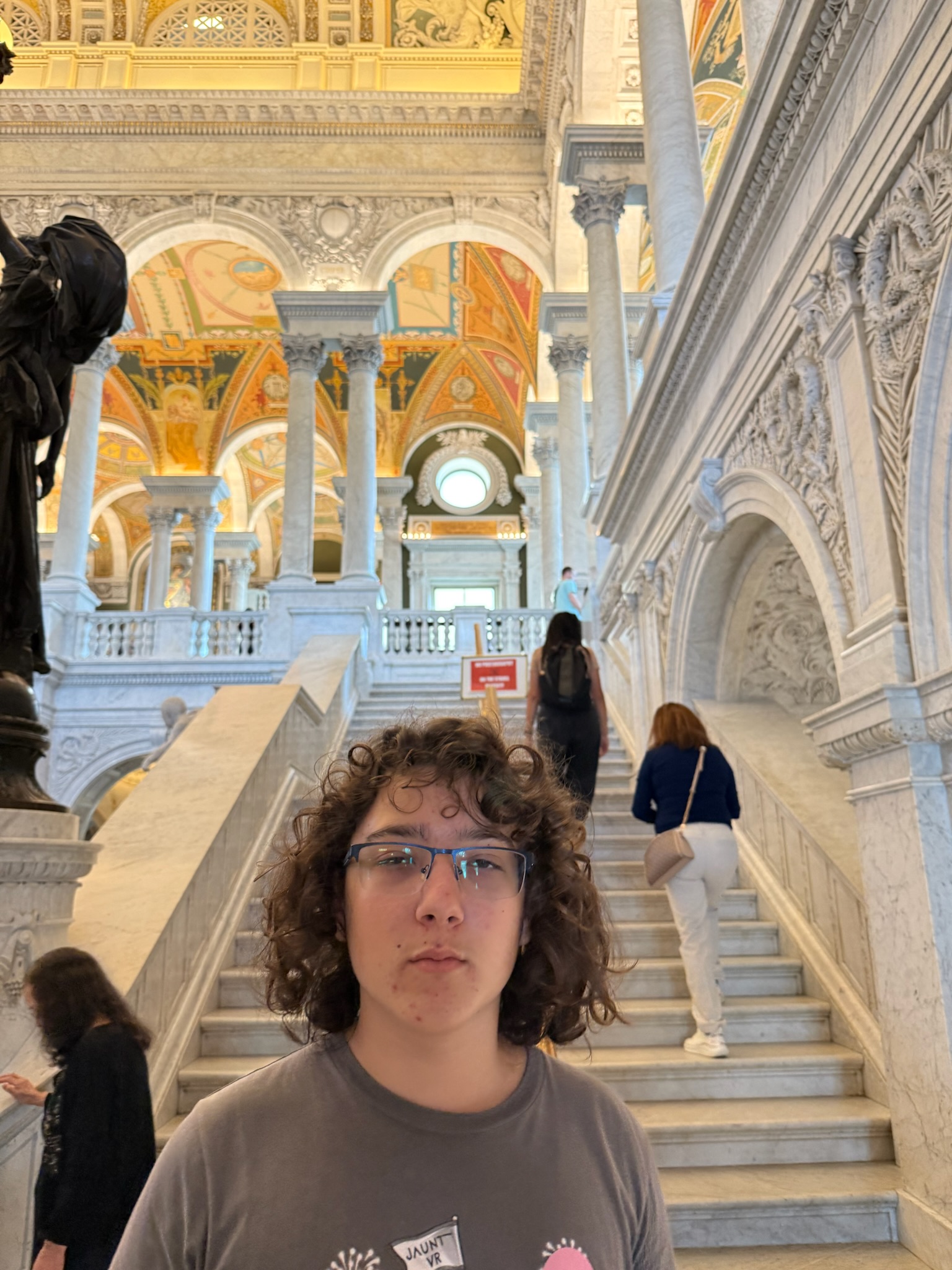
From there, we headed upstairs to the second floor, where the galleries were. Before going in to the galleries, we got a closer look at the beautiful decor. Looking down at the Great Hall.
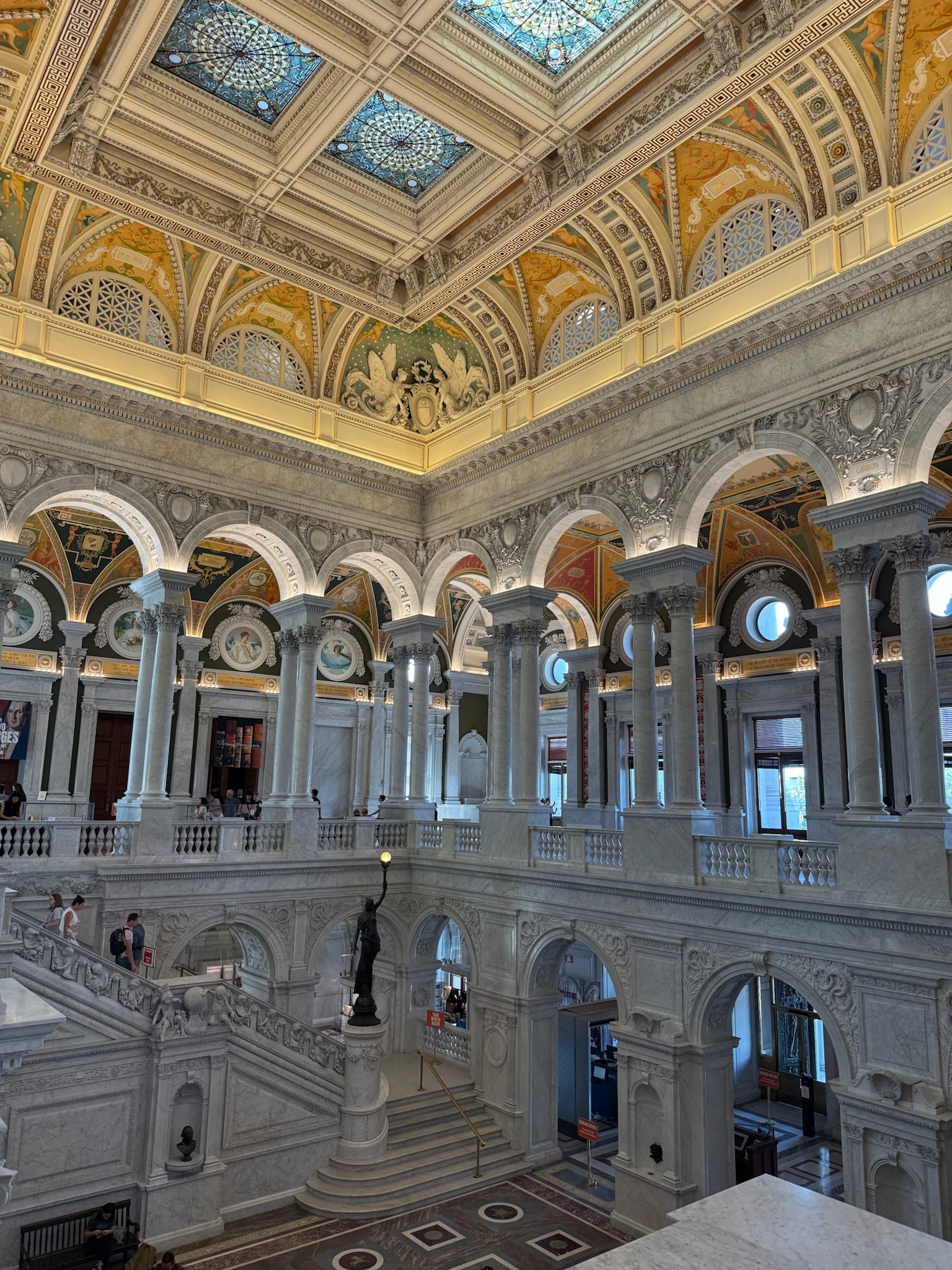
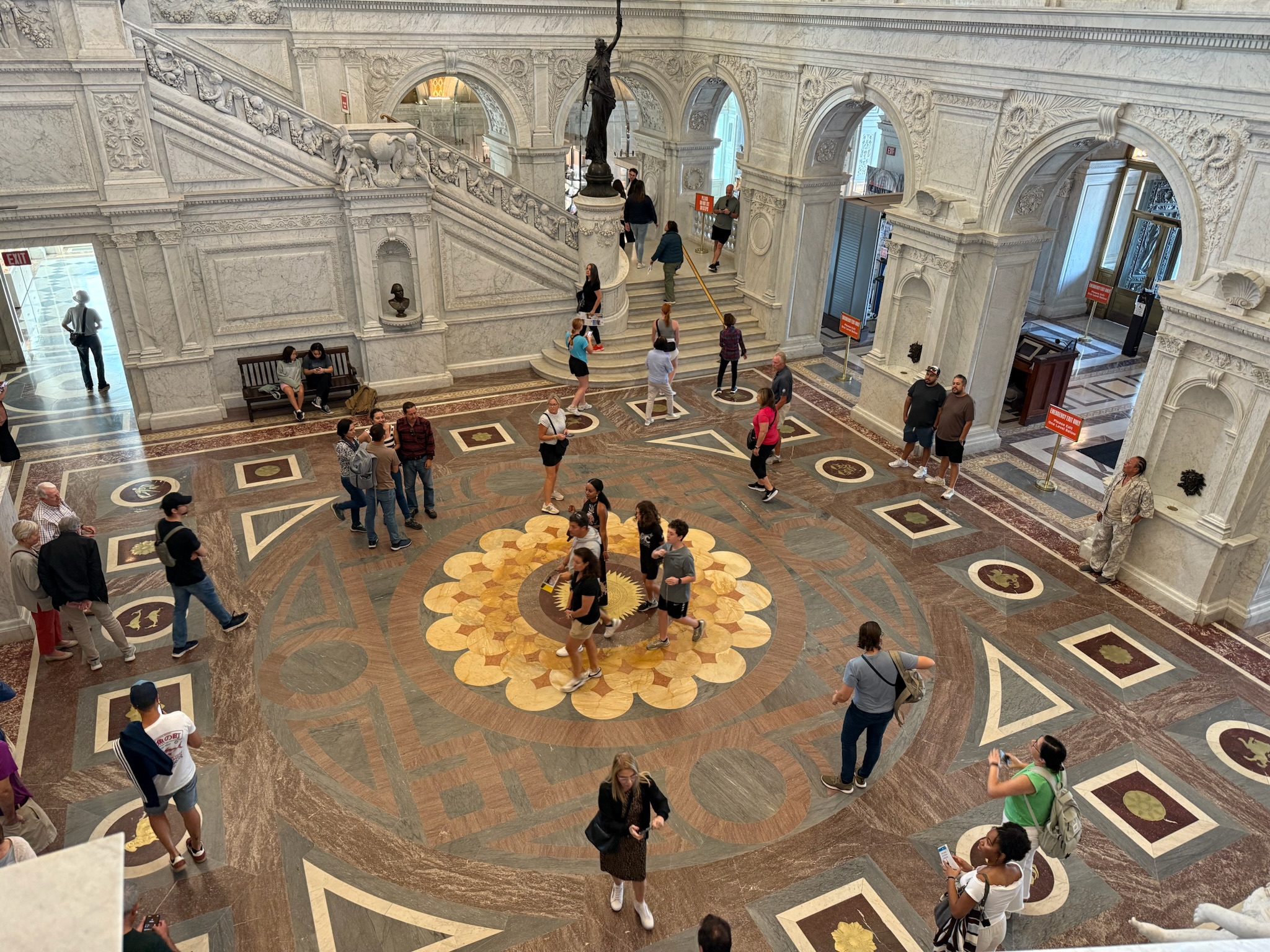
Inside the mezzanine hallways.
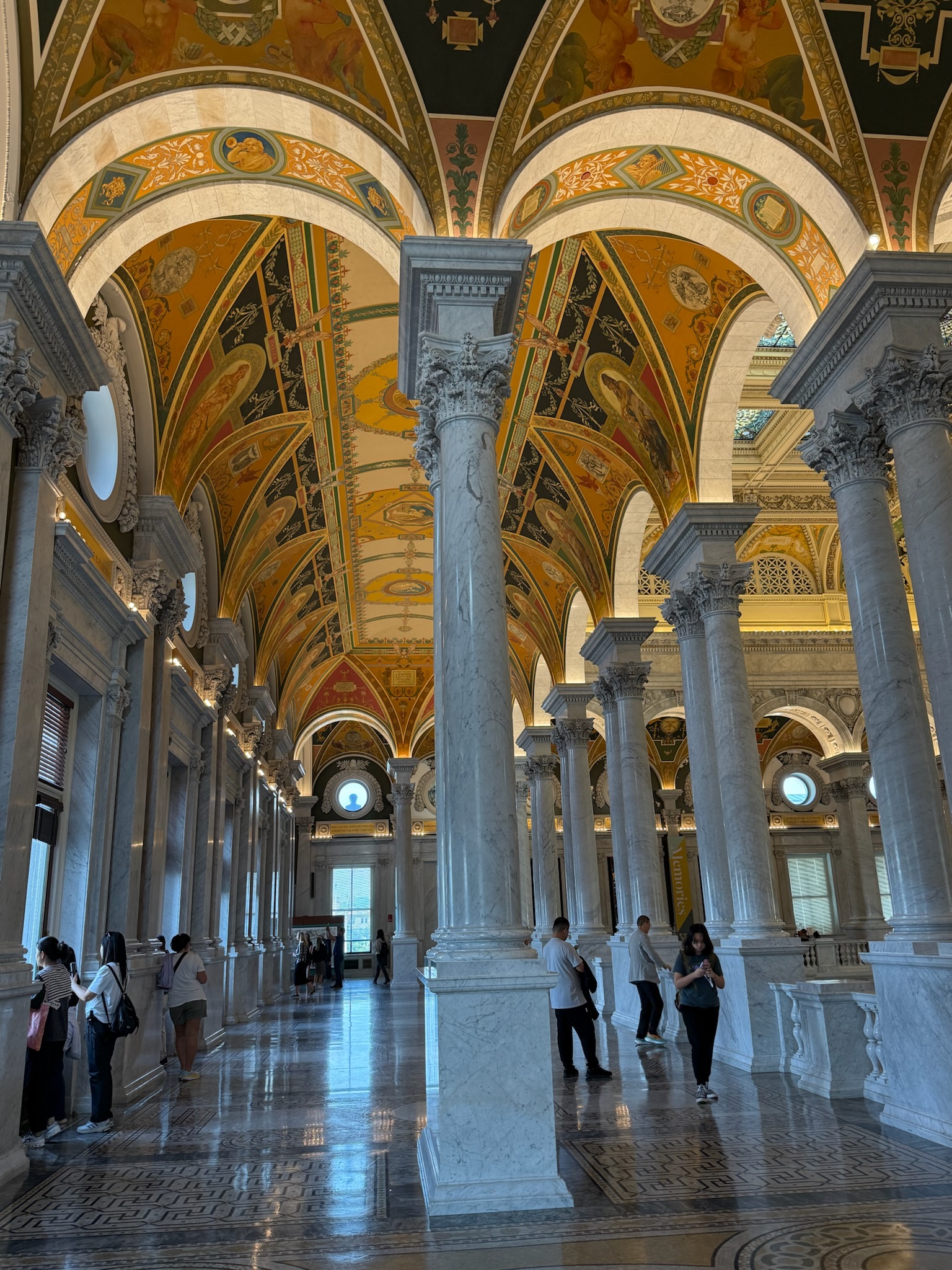
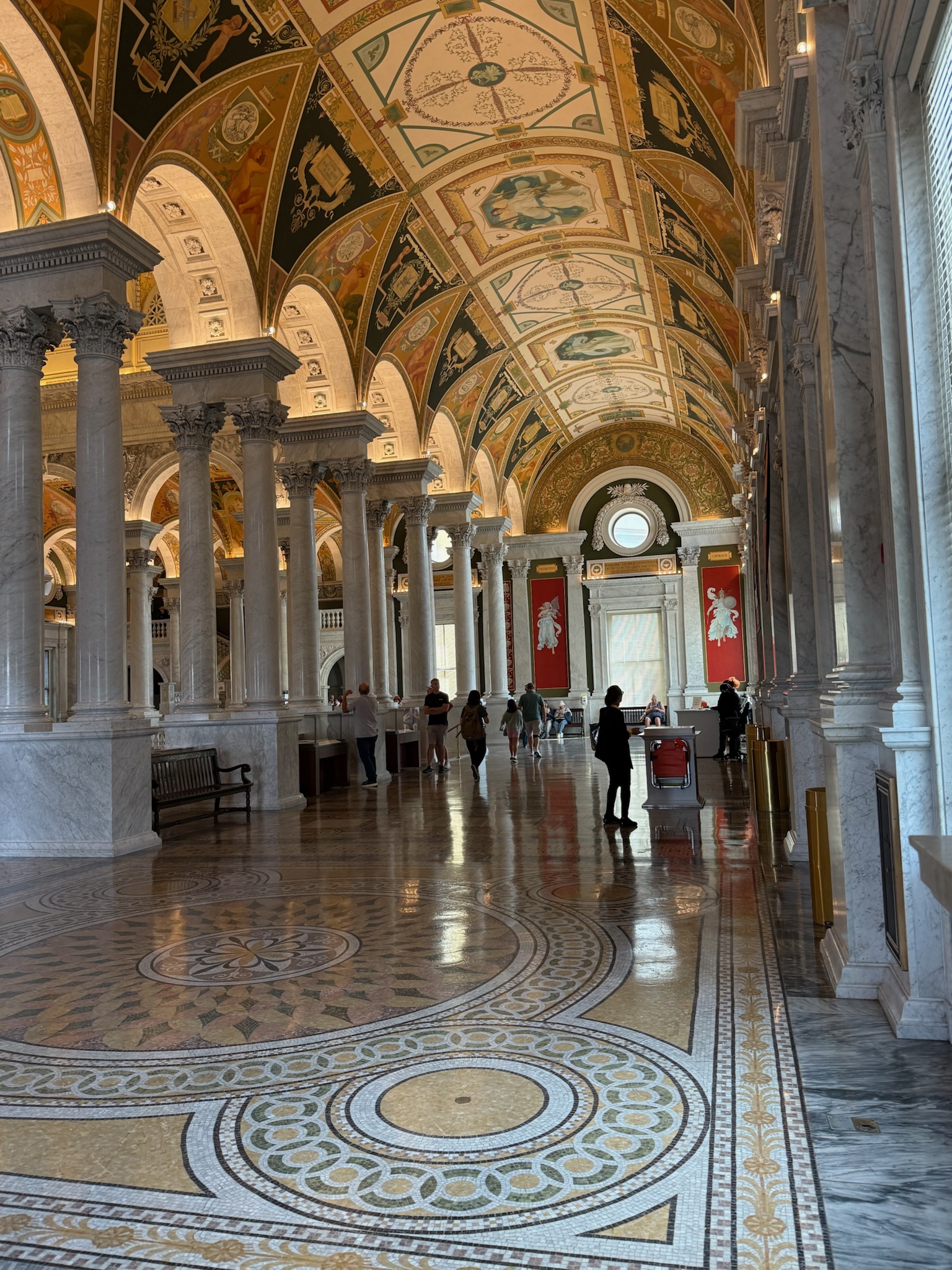
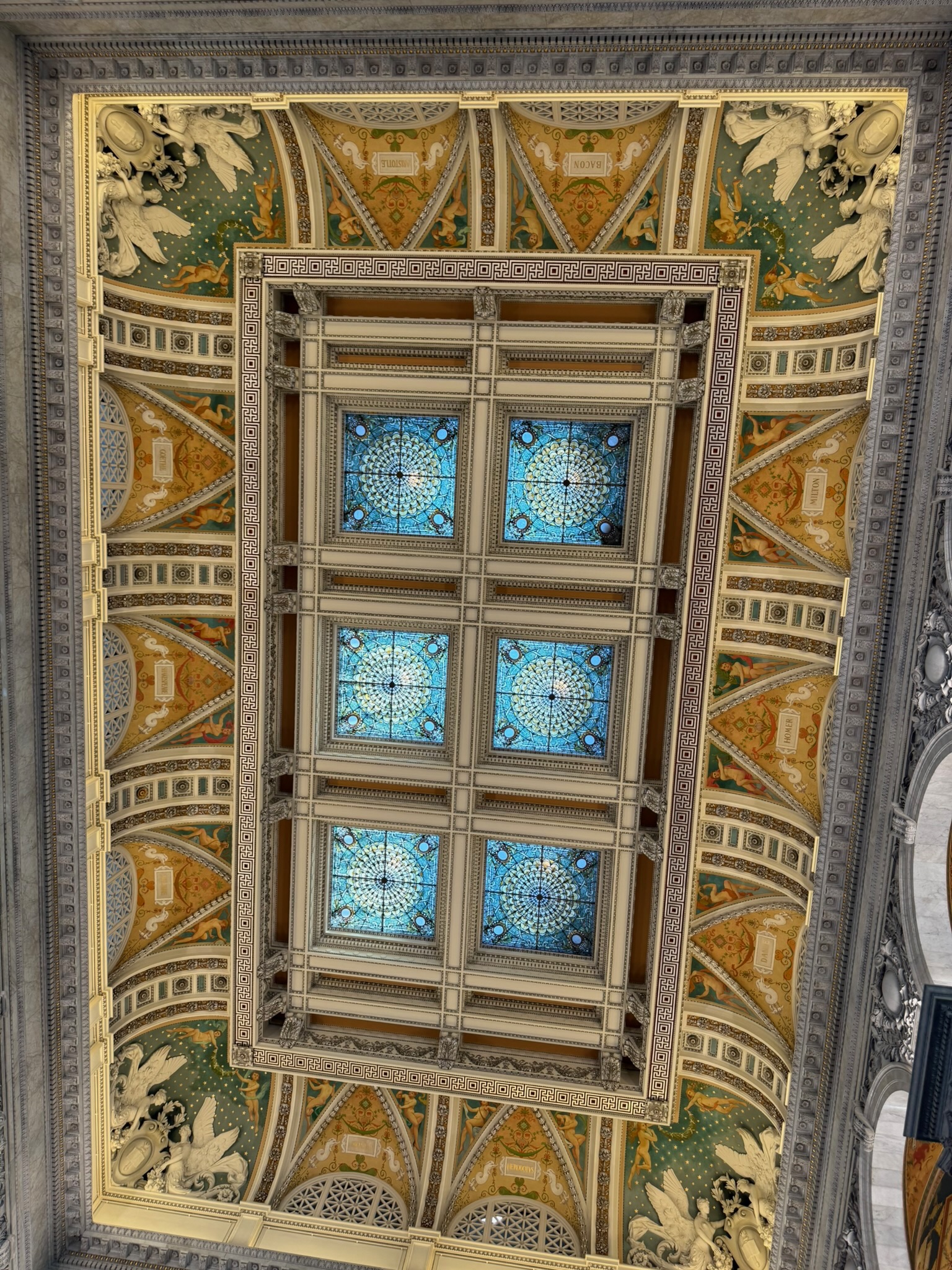
The ceiling above the Great Hall.
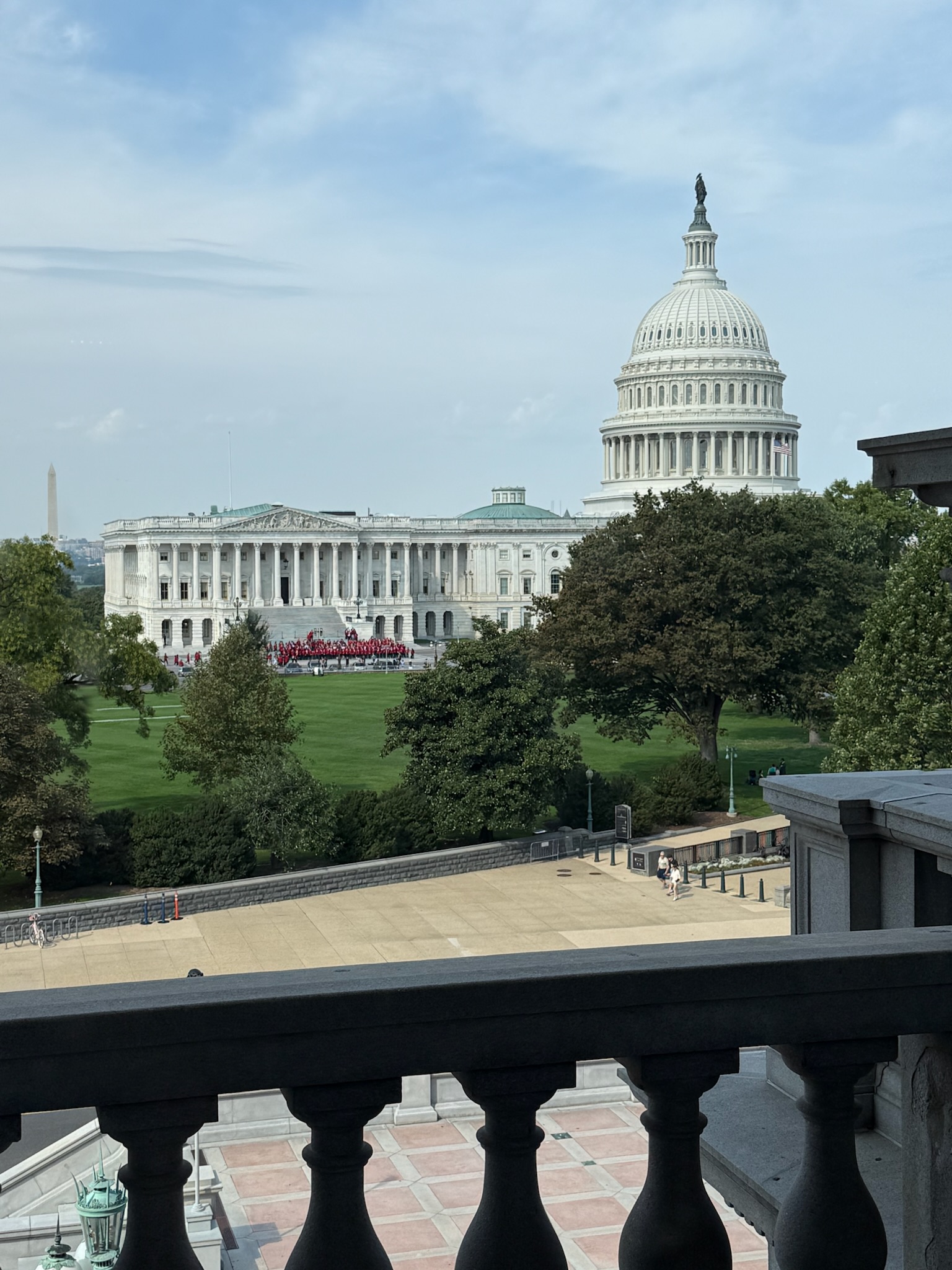
From the west side of the building, there was a fantastic view of the Capital building across the street.
We went into the Southwest Gallery. It had an exhibit called something along the lines of The Two Georges and was about President George Washington and King George III. To be continued…