continued… Once we finished in the Postal Inspector room, we went across the hall to a room about the partnership between the Post Office and the department of Defense for mail services to remote military personnel. Mail service has always been incredibly important for them. Life responsibilities were — and often still are — conducted through the mail, such as receiving and paying bills or voting via an absentee ballots. Personal correspondence was just as important. For a long time, mail was the only way for servicemen to communicate with their loved ones, so mail service was critical for the morale of the troops. Even as more methods of communication have been implemented over the decades, ensuring timely mail continues to be an important facet of military operations — especially during war times. The Department of Defense provides large subsidies to reduce the cost of mail going to/from military personnel stationed abroad, especially in combat zones — some types of mail are free.
Up until World War I, postal employees handled military mail. When the US first joined the war, some postal employees went to Europe to process the mail, but soon the military created the Military Postal Express Service staffed by soldiers to replace the civilians in the war zone. The Post Office handles service for bases within the US; the military operates the overseas military post offices. There is a military post office at every duty station. We remembered seeing one on the USS Wisconsin. The military has a separate address system that adapts as troops change locations. Delivering mail to the front lines can be challenging and dangerous. Like the Star Route contractors, the military has tried an assortment of creative and innovative delivery strategies. One time, in 1959, they tried shooting a Regulus 1 missile full of mail from a submarine to Florida. The sign did not say what the results were, but we’re assuming not good since they never attempted it again.
There was a display about a special Christmas operation in 1918. World War I had ended in November, but the majority of troops were still stationed overseas at Christmas time. The military, Red Cross and Post Office teamed up to organize a letter writing and holiday care package campaign to lift the spirits of as many overseas soldiers as possible. 46-million letters and 15-million parcels and print matter were delivered to soldiers in Europe. Meanwhile, the overseas soldiers sent 40-million letters to the US. The displays explained what an incredible logistics feat this was, given the limitations of that time.
There were signs detailing other ways that civilians have used the mail to help the military personnel. For example, people would go to hospitals and write letters on behalf of soldiers who were unable to write themselves (due to injury, illiteracy, etc). It mentioned a lot of organizations that have also done letter writing/package campaigns and organized pen-pals for the soldiers. And it mentioned some companies that some companies donate equipment that facilitates correspondence through the mail. For example, back in the day when it was rare and expensive, companies shipped equipment so that the soldiers could record themselves speaking, then mail the record/audio tape home.
The display had quite a few touching old letters from service personnel with their original envelopes. There were also some voice recordings that had been sent through the mail that we could listen to. Also of note, there was a sign acknowledging that during war times, censors checked all mail going to/from military personnel and to/from civilians in foreign countries to make sure that no sensitive information that could jeopardize national security was in them. The censors were trained to look for codes and secret inks.
We walked between the escalators to see the post office.
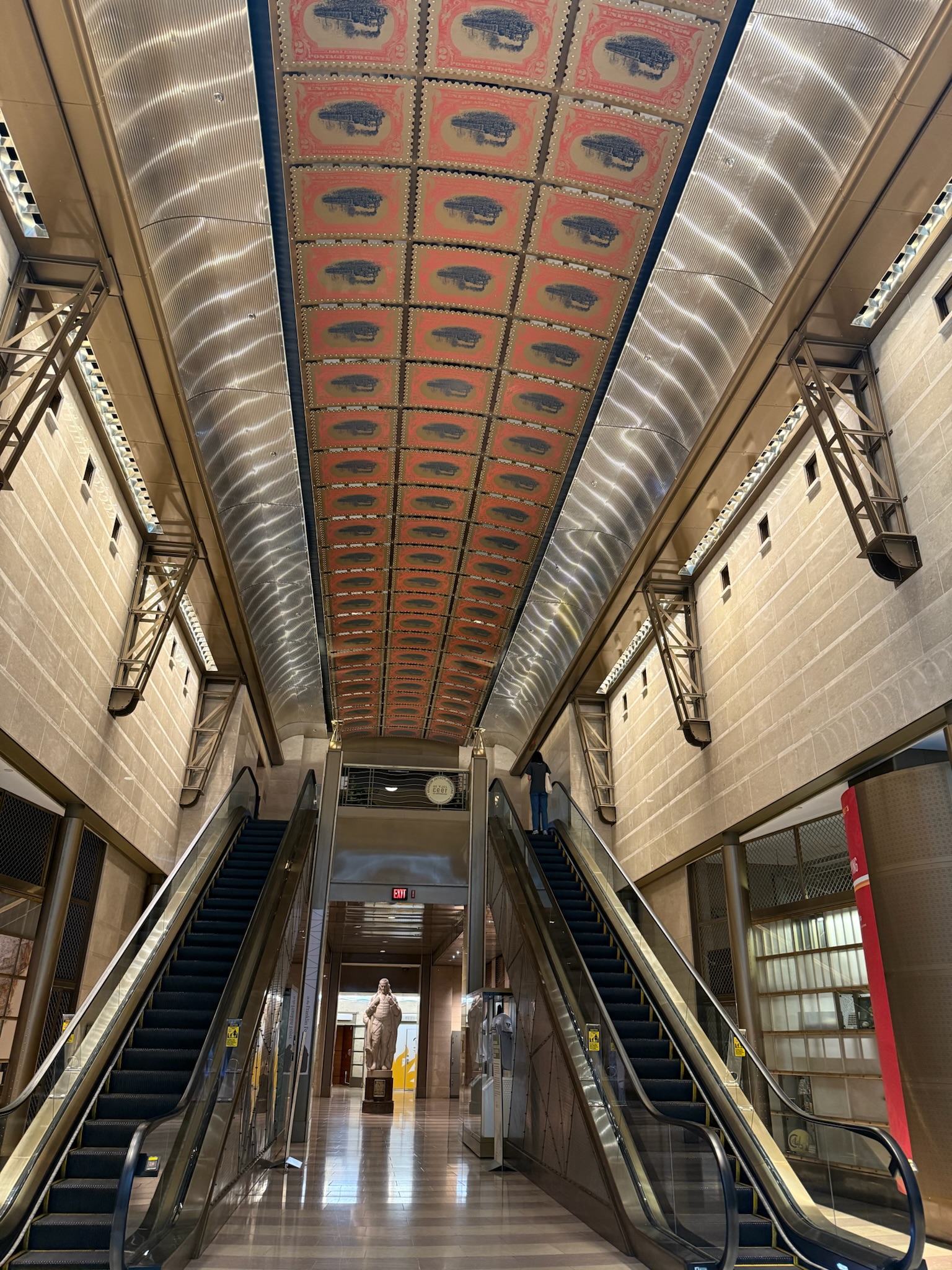
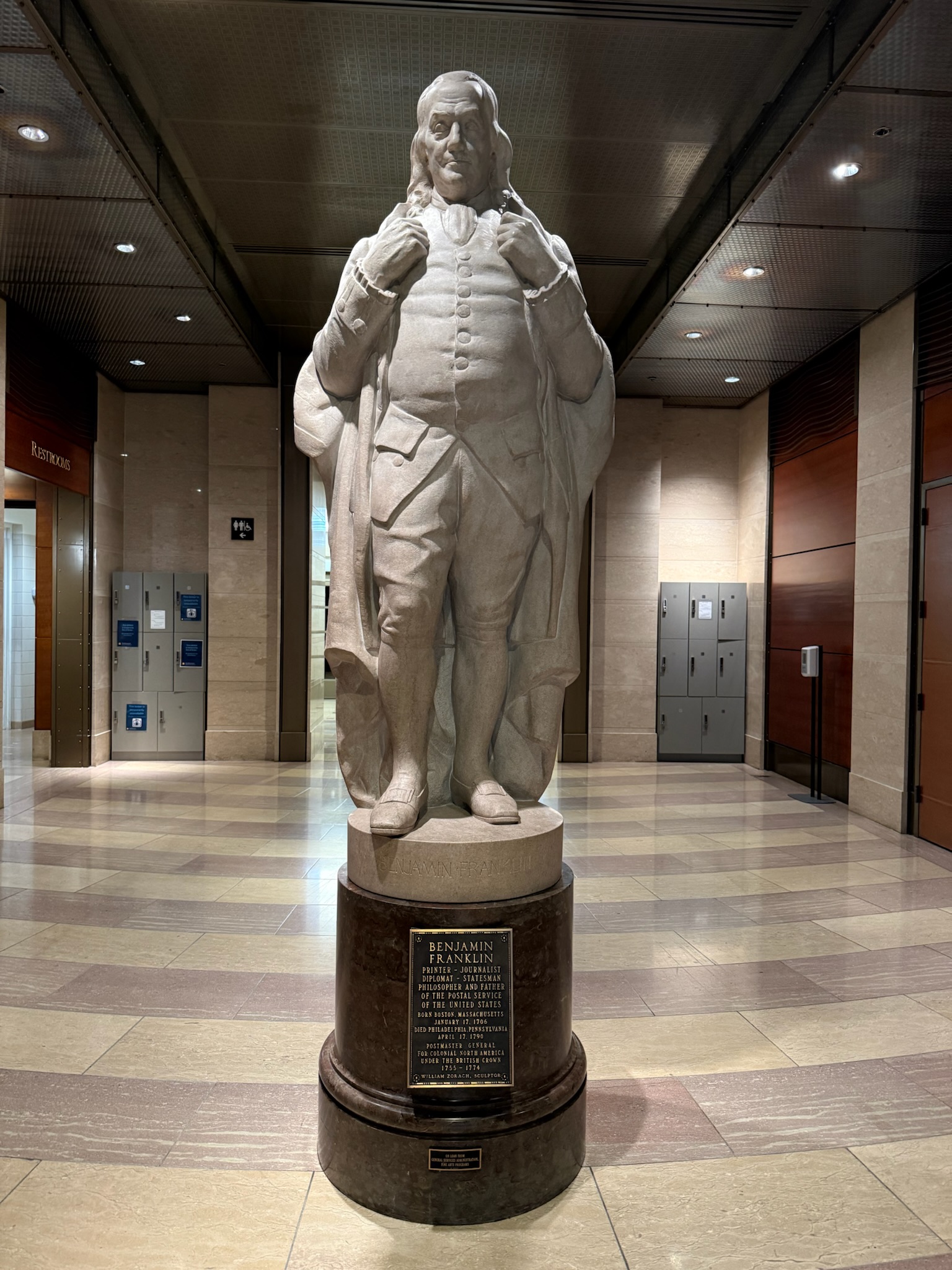
A statue of Benjamin Franklin was in the foyer area in front of the entrance. The post office was closed, and being that it was a Wednesday at 1330, we suspected it was permanently closed.
We went back up to Level 2 to learn about stamps. The first floor had been the post office part of the operation, where people sent and picked up mail. While more elegant than most post offices, it very much looked like a post office. The long hallway was lined with postal boxes and service windows.
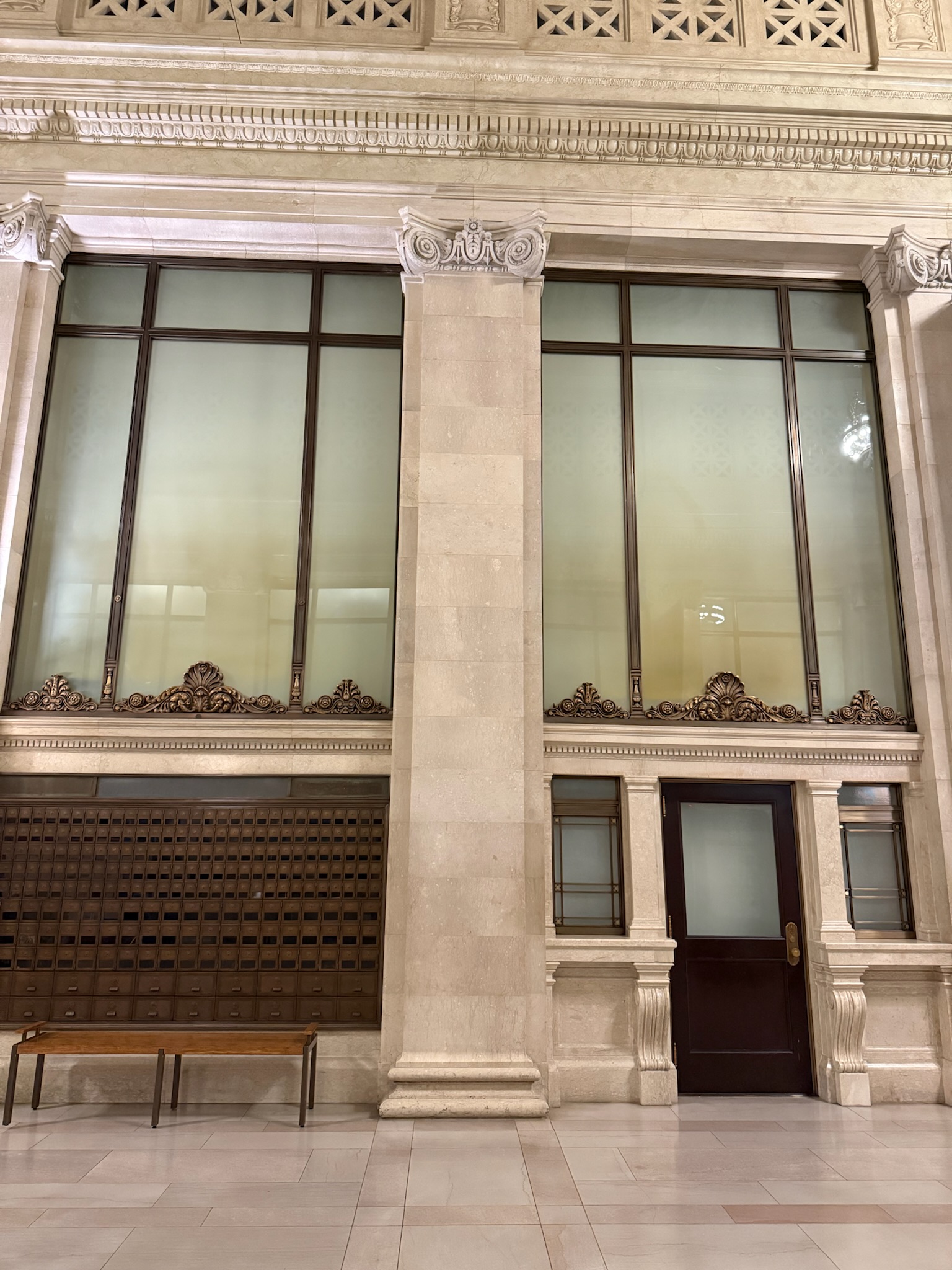
We went through one of those doors into the Stamp Gallery. Per the sign, stamps were evidence that the postal fees had been prepaid. Historically, they were made of paper, ink and gum — the gummy back stuck to the letter/package. They usually included the country name, value, and an image.
Prior to 1840, the receivers often paid the postal fees, and would sometimes refuse to pay. And the fees often varied. In 1837, former British schoolteacher Roland Hill had published a pamphlet called “Post Office Reform: Its importance and Practicability” in which he suggested that postal fees be prepaid with “a bit of paper… covered at the back with a glutinous wash.” The British government incorporated his ideas in the British postal reforms of 1839.
The world’s first postage stamp was issued In Great Britain in 1840 and it revolutionized postal services worldwide. The stamp allowed people in the UK to prepay to send a letter anywhere within the country for a standard fee. The postage stamp was very popular with the British people and mail usage soared.
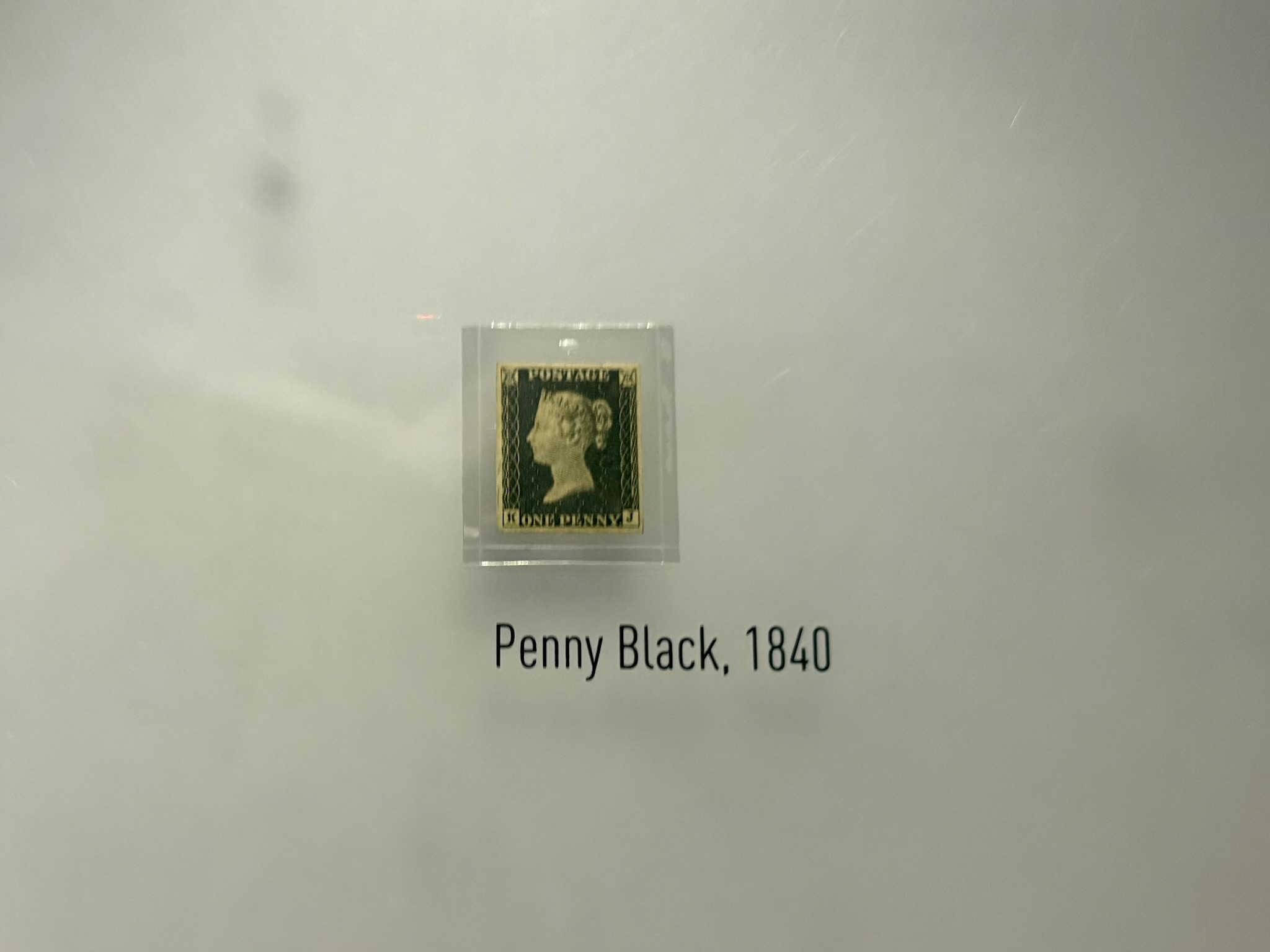
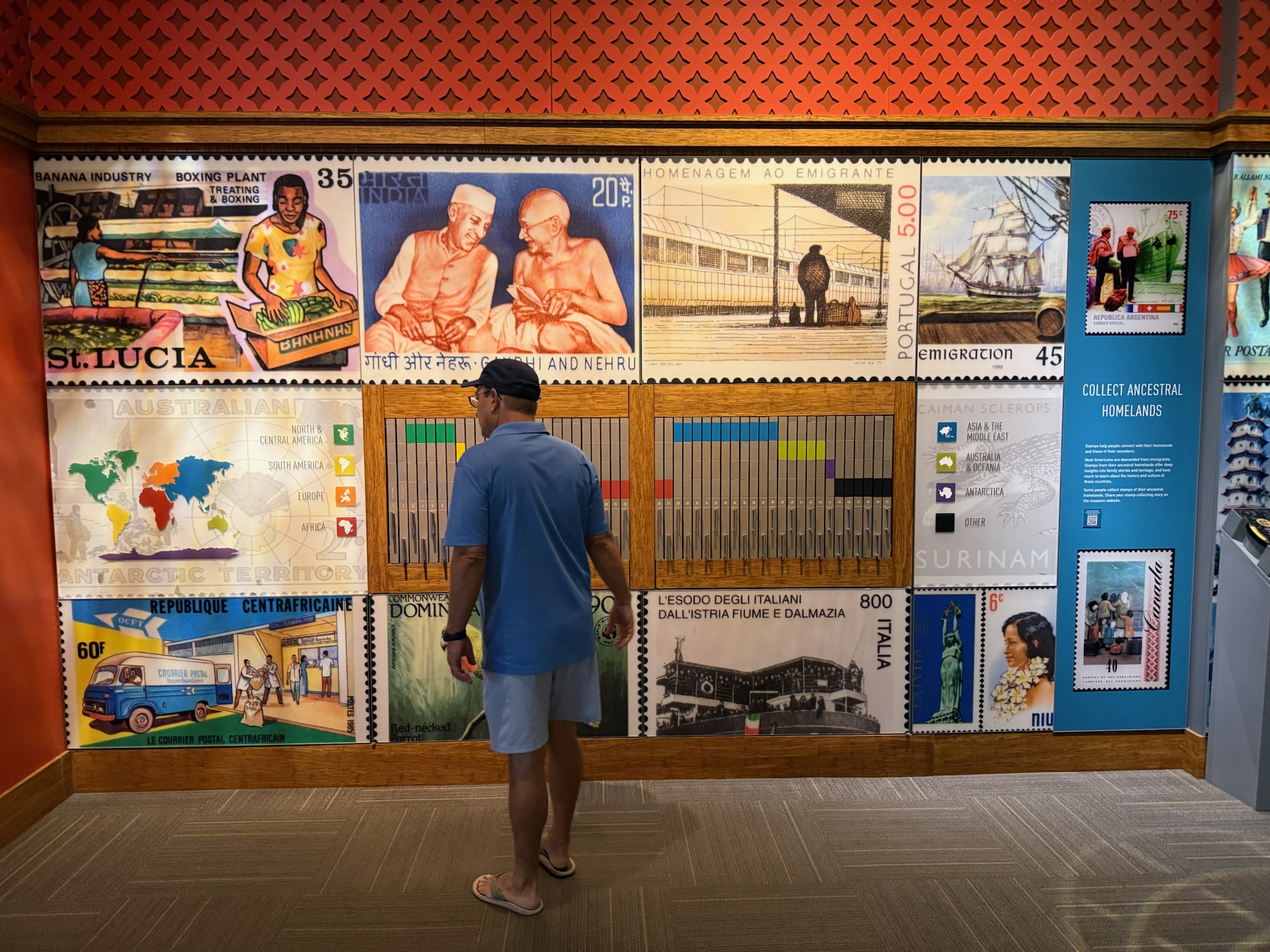
By the 1850s, seven more countries had issued postage stamps, including the United States. In the early days, stamps usually featured the image of a leader or simply the value of the stamp. However, it wasn’t long before countries began using stamp images as a way to honor people/events that were important to that country’s history and culture.
One of the rooms had stamps from around the world. According to the sign, the sliding cases had almost 800 stamps, with stamps from every country in the world that has ever issued stamps, including countries that no longer existed.
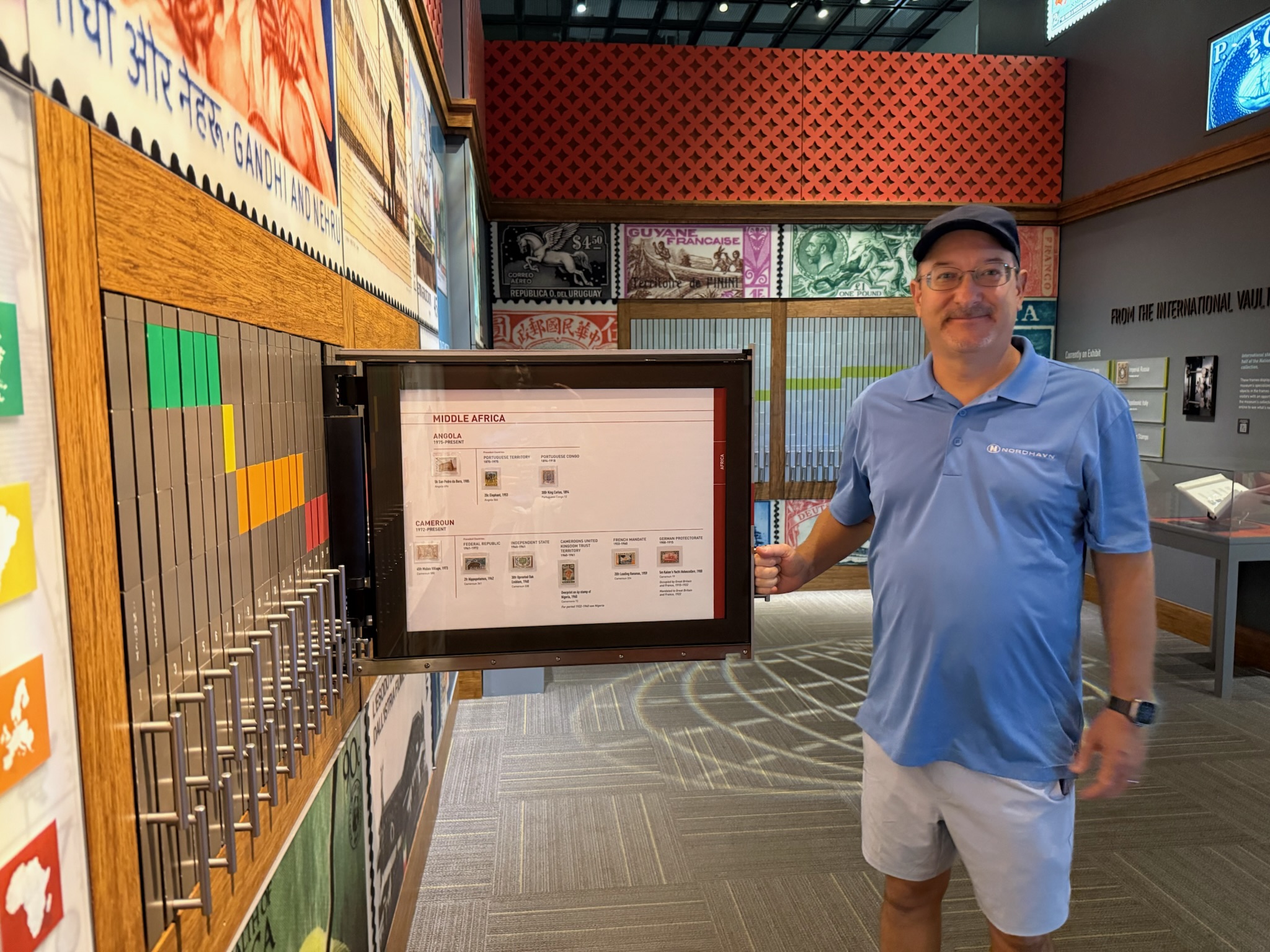
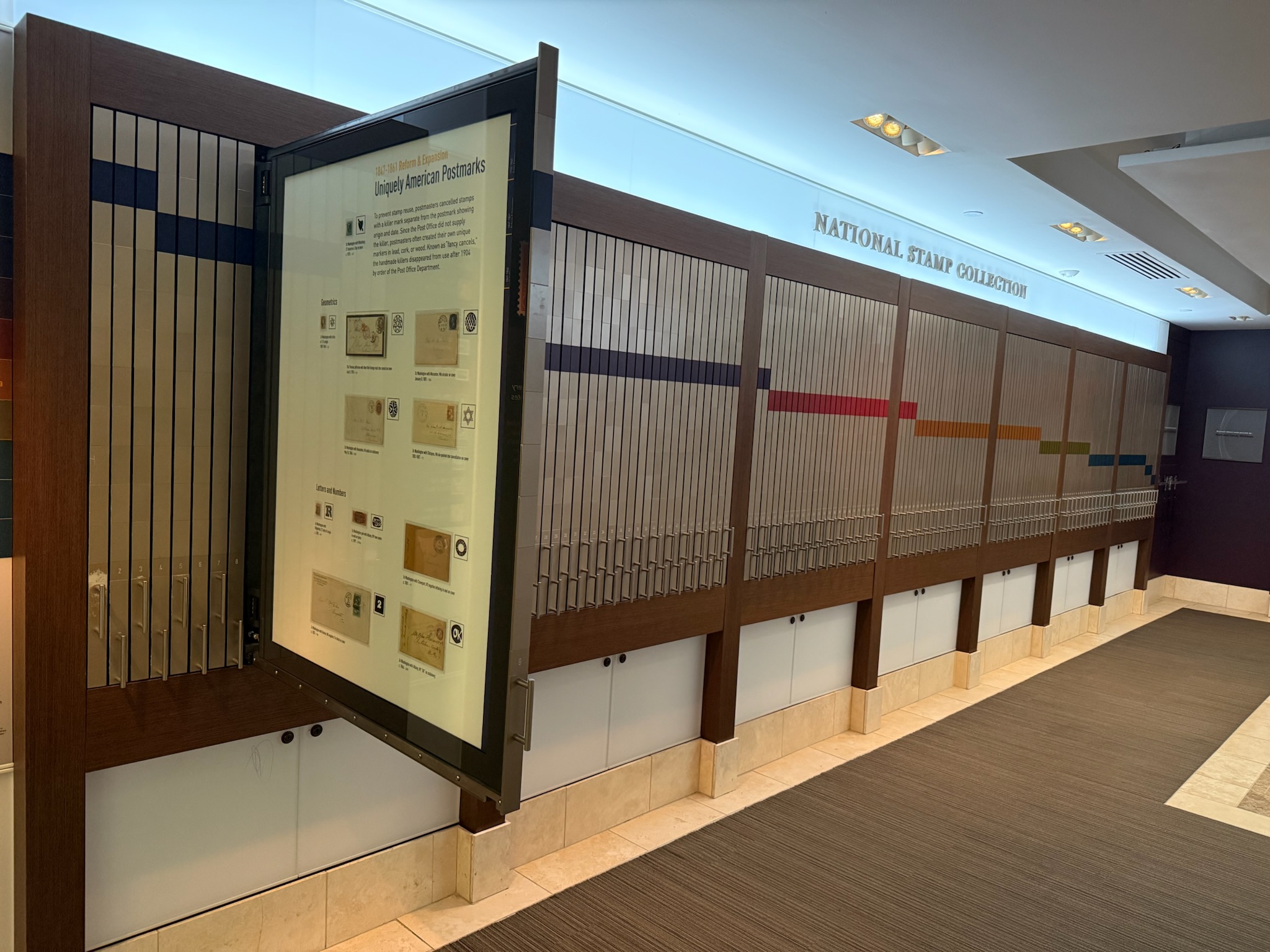
Since there were so many more storage cases, the domestic stamp area wasn’t nearly as festive as the international section. According to the signs, in these sliding cases were 4,000 domestic stamps and mail pieces arranged in chronological order. They told the story of the United States from before we became an independent country to the present — from the postal perspective.
There was also a glass display case with other types of historic pieces, such as mail boxes, cancellation stamps, printing plates, dies, etc.
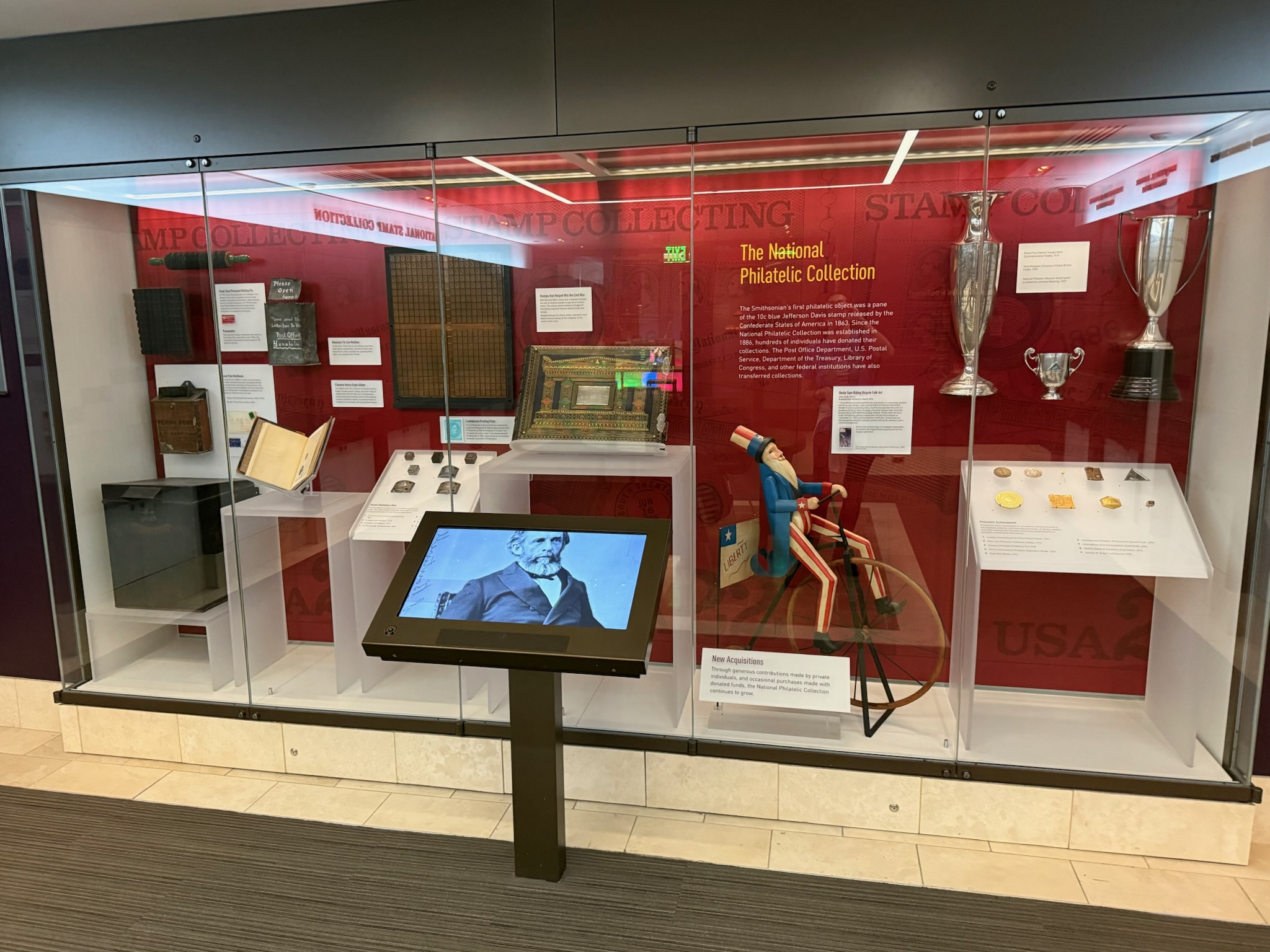
The items on display were a small percentage of the collection held here at the museum. In all, they had over 6-million stamps, pieces of mail and related materials from all over the world. It was the world’s oldest intact stamp collection and the Smithsonian’s second largest holding.
The oldest paper letter in the collection was from 1390. It was mailed by a Venetian merchant in Damascus, was carried to Beirut, and arrived in Venice one month later. The letter discussed the prices of luxury fabrics and spices.
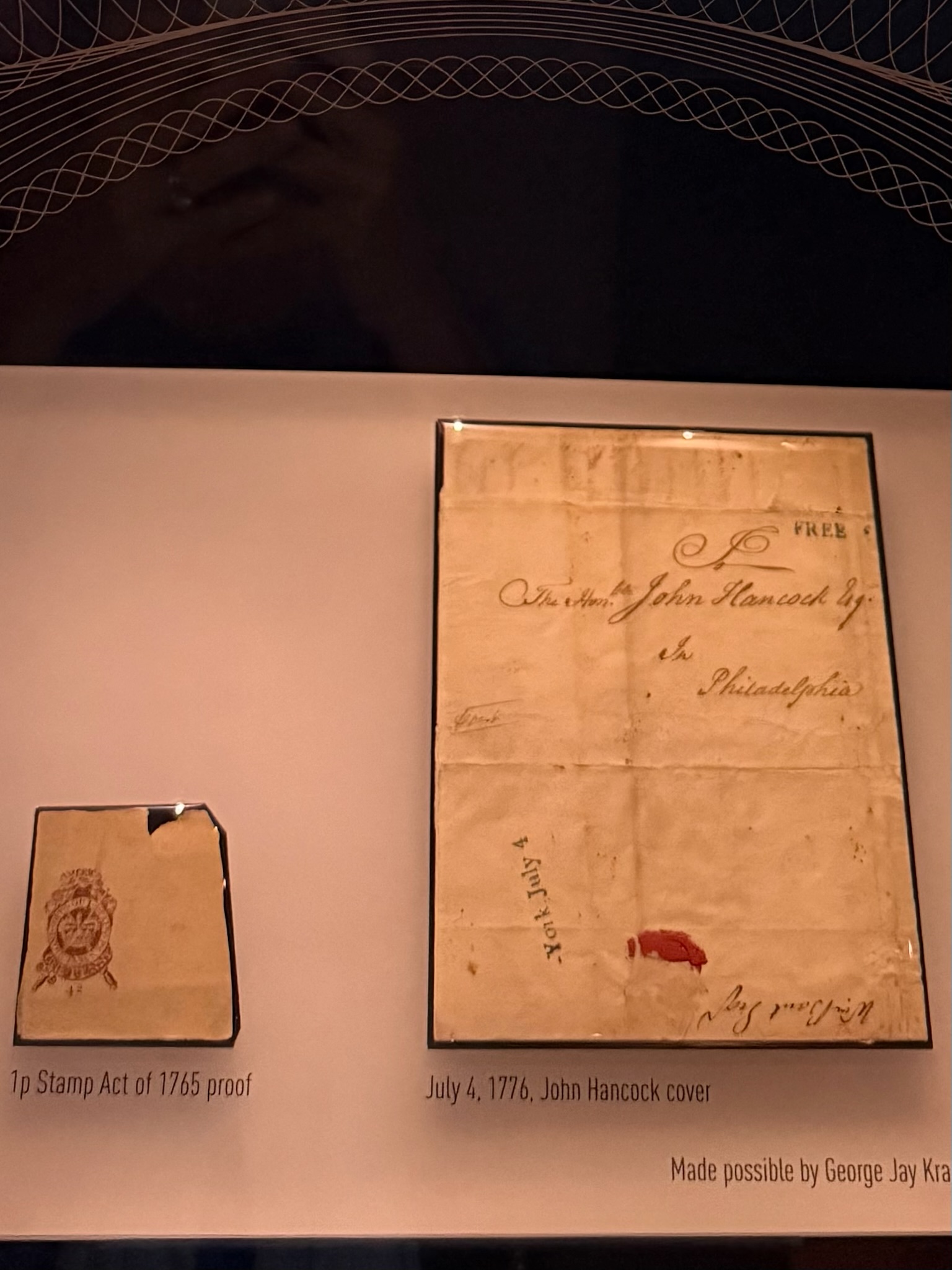
They had a collection of stamped (with a hand stamp) paper products from the British Stamp Act that helped spark the American Revolution. This was a letter from William Bant to John Hancock on Jay 4, 1776, complete with the required stamps provide the tax on paper products had been paid.