continued... Prior to the early 1900s, stamps were printed on small hand presses called a Spider Press.
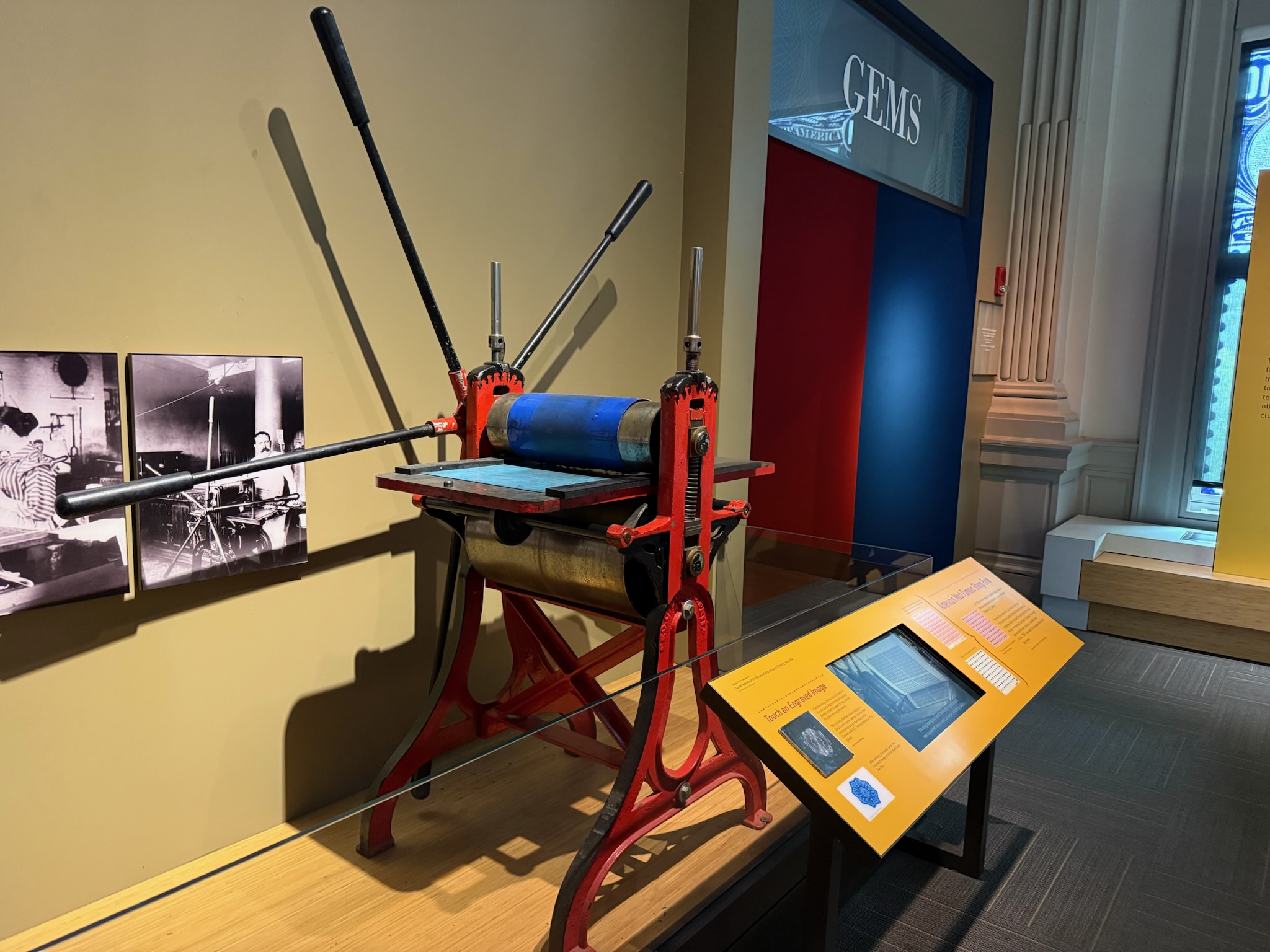
They utilized flat plate presses with recessed engraving to create a sharp image. They usually had fancy frames and were 1 – 2 colors. They could only utilize one color at a time, so the multicolored stamps had to be impressed separately with each color. This led to considerable variation among stamps and some errors. These early stamps with errors were some of the most valuable to stamp collectors.
At the end of the 1800s and early 1900s, they moved to rotary presses, which could do photo engraving (though the images were grainier), and expanded formats, such as coil stamps. Designs evolved from historical leaders to historical topics, such as territorial expansion, wars, important events and other famous Americans. A featured stamp was a herd of cattle seeking shelter during a blizzard that was part of a series representing the ruggedness of the American west.
Fun fact: In 1901, President McKinley announced he was going to build a canal in Nicaragua to connect the Atlantic and Pacific Oceans. In an effort to convince the government this was a bad idea, an engineer sent some Nicaraguan stamps featuring the Nicaraguan volcano, Mt. Momotombo, spewing ash to US Senators. According to the sign, the senate voted the next day to build the canal in Panama, instead, implying it was the volcano stamps that convinced them. As we learned while we were in Panama, the primary reason they chose to build it in Panama was because the Nicaraguan government said no. However, so did the Colombian government, but France and the US conspired to stage a coup to make Panama independent from Colombia. Who knows… maybe the coup would have happened in Nicaragua instead of Panama had it not been for the volcano stamps convincing the legislators to change countries. We’re always fascinated by the tiny things that wind up changing history.
Another fun fact: In 1932, when Amelia Earhart became the first woman to pilot solo across the Atlantic Ocean, she was carrying 50-pieces of privately transported mail. She was went on to break an astonishing number of aviation milestones. She was never an official US airman, but apparently she did regularly carry private mail to help fund her expeditions. She was believed to have been carrying private mail when she went missing on her flight across the Pacific Ocean. The US government spent $4-million looking for Earhart and her plane. The US created an 8-cent postage stamp in her honor.
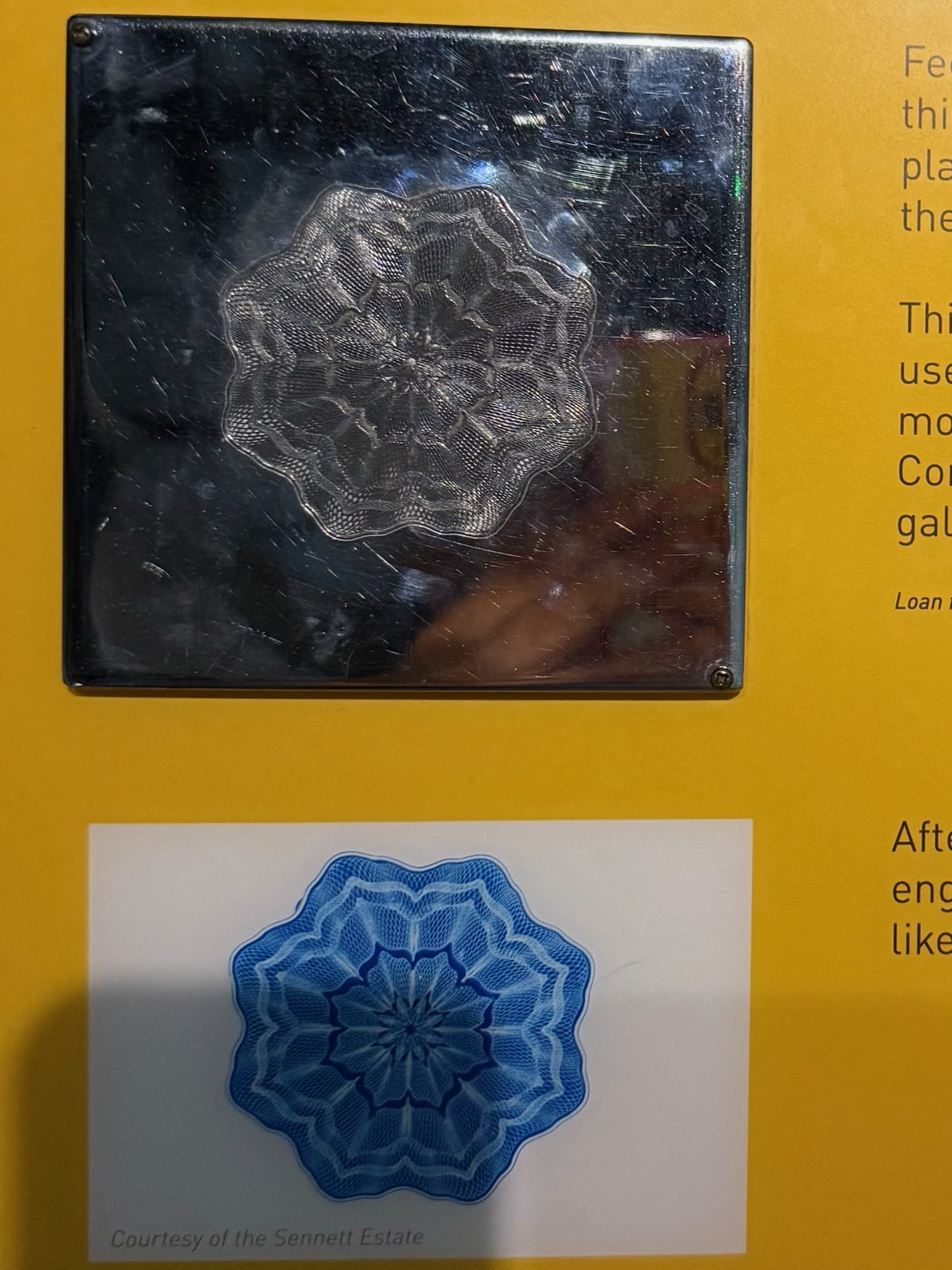
Back to the main topic… USPS does still use engraving to make stamps, but since engraving was expensive, they focused more on other methodologies. In recent decades, they’ve moved to offset presses and computer technology, such as photogravure and offset lithography. These allow for a wider range of ink colors, innovations such as holograms and die cuts, and self-adhesive stamps. They displayed the plate for a Lewis & Clark Expedition stamp from 2004 that used a combination of intaglio printing for the frame and offset printing for the vignette in the middle.
Every year, the Post Office comes out with new stamp designs. These days, the focus is on national interests, such as popular culture, diversity, holidays and great achievements. People can submit proposed stamp subjects/designs to the Citizen’s Stamp Advisory Committee, who reviews them and makes suggestions to the Postmaster General.
They cited some examples of recently issued stamps. In 1999, they issued a stamp commemorating Martin Luther King, Jr.’s “I Have a Dream” speech. In the 90s, they did a series on Legends in American Music featuring artists such as Elvis. In 1998, they tried something new: they issued a 32-cent breast cancer stamp with an extra 8-cent surcharge that was donated to support breast cancer research. It was launched with a White House ceremony. By 2013, the stamp had raised $76-million for breast cancer research.
There were many displays in the exhibit that talked about Philately — no, it’s not a dirty word, it means the collection and study of postage stamps and mail. A Philatelist is a person who collects and studies stamps and covers (envelopes, cards, or wrappers that have been sent through the mail). Stamp collecting was one of the world’s most popular hobbies, with 22-million stamp collectors in the US alone. Philatelists have competitive exhibitions at regional, national and international levels. Trophies and awards were given to the people with the best collections. There were displays about how to properly collect, store and exhibit stamps/covers and common tools used to do so.
Signs explained how a cover could track a letter’s history — the postmark indicated where the letter was mailed, the address indicated where it went, often the name and address of the sender was listed, the amount of postage indicated size/weight and which class it was sent, auxiliary markings indicated special services or routing information, and the condition of the envelope/wrapper indicated how it was handled. There was an envelope from the very first scheduled airmail flight in 1918 that had an hand-stamp that said “air mail service” and an envelope from the Apollo 15 mission in 1971 hand-stamped with “The Moon” as the post office.
There was also a large display with quite a few covers that had been found after the mail was stopped from normal delivery for one reason or another, such as fires, floods, explosions or robberies. As we’d learned downstairs, one of the duties of the Postal Inspector Service was to locate, secure the mail, and to try to get the mail back into normal service ASAP in a time of disaster/theft.
There was an envelope from 1860 that had a hand stamp that said “The Central Overland Company & Pike’s Peak Express Company,” which was the Star Route contractor that ran the Pony Express. Across the envelope was a handwritten message that said “recovered from a mail stolen by Indians in 1860.”
One incident we found particularly interesting was the Hindenburg. In the section downstairs on vehicles used for mail delivery, we hadn’t noticed anything about delivering mail via hot air balloons, gliders or zeppelins. But here we learned that, not only were all these methods tried, by the 1920s, zeppelins had established postal routes over long distances. When the German passenger airship Hindenburg caught fire in 1937 while trying to land in New Jersey, it had been carrying more than 17,000 pieces of mail. At least 360 letters and cards survived the disaster and were delivered despite being partially damaged. After that, air ships were quickly abandoned as a mode of transportation.
When we finished on Level 2, we didn’t go up to Mezzanine, which was the top floor. The sign said “Education Loft,” which we assumed meant it was just a conference room. Later, we found out there was a beautiful view of the city from the Mezzanine, so we were disappointed that we’d missed out on seeing the view.
We exited via the 1st Street entrance and proceeded across the street to Union Station.
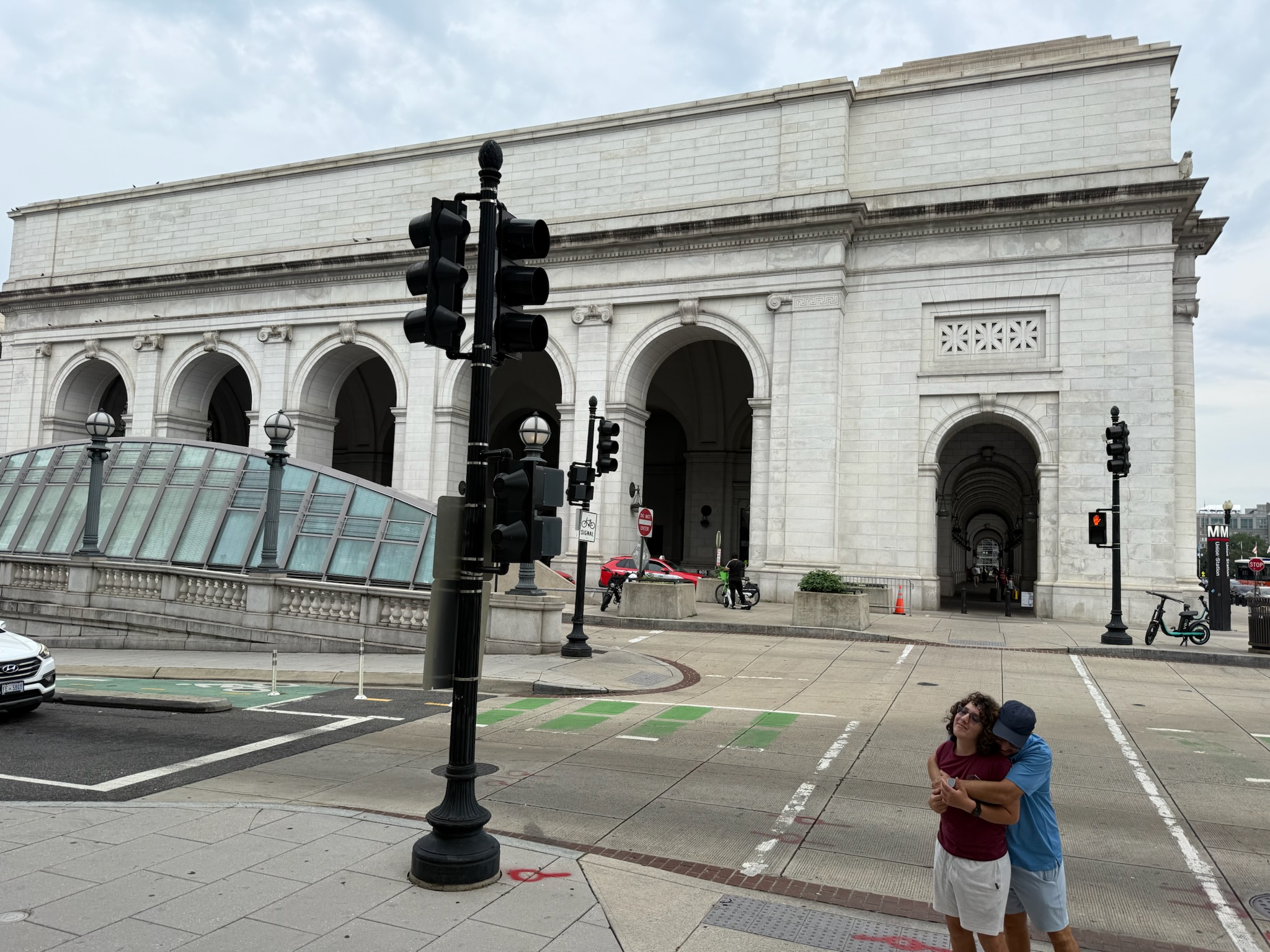
From Union Station, we could see the Postal Museum was enormous.
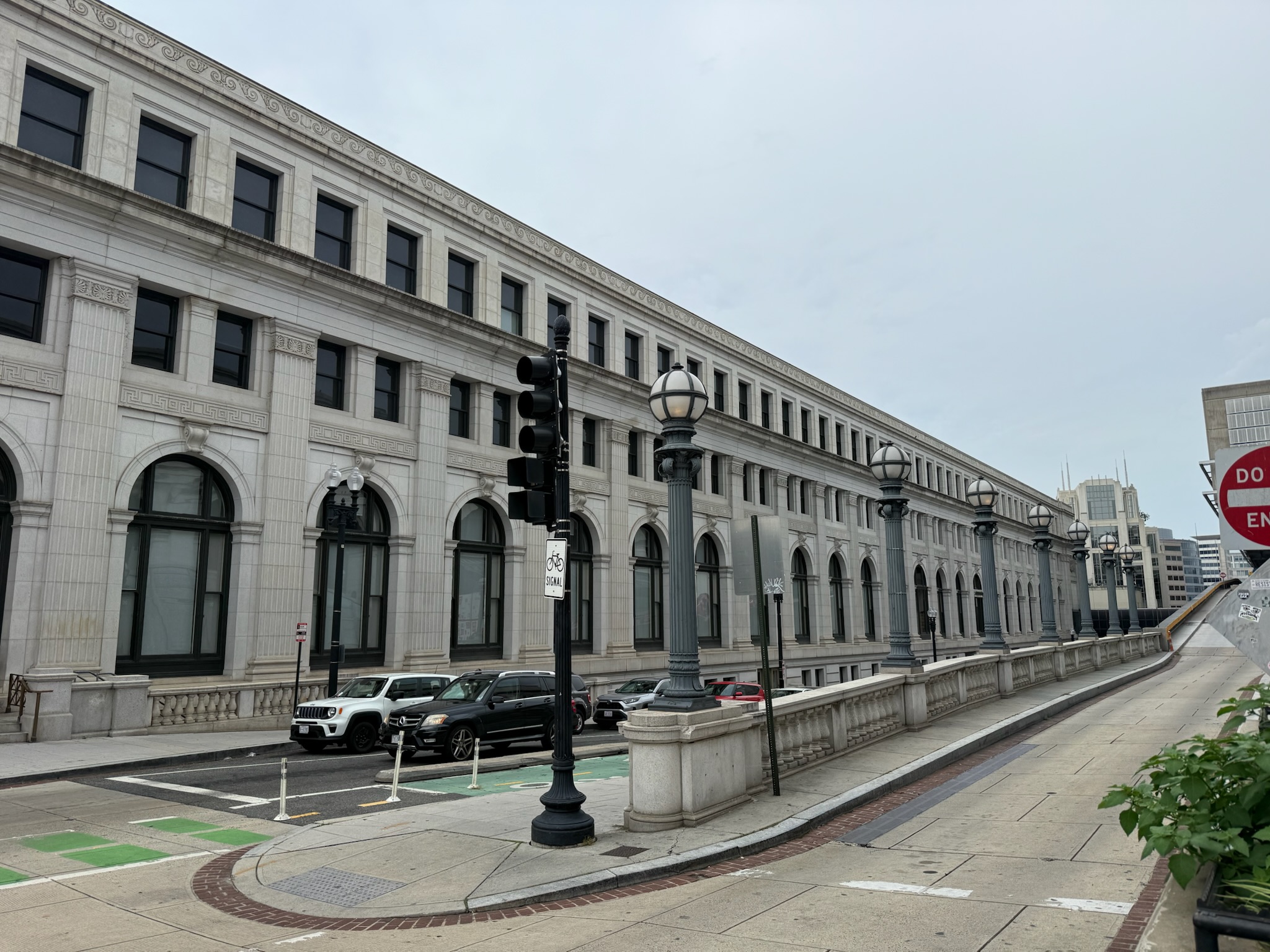
As our ride share driver had promised, Union Station was “an experience worth seeing.” This was the exterior.
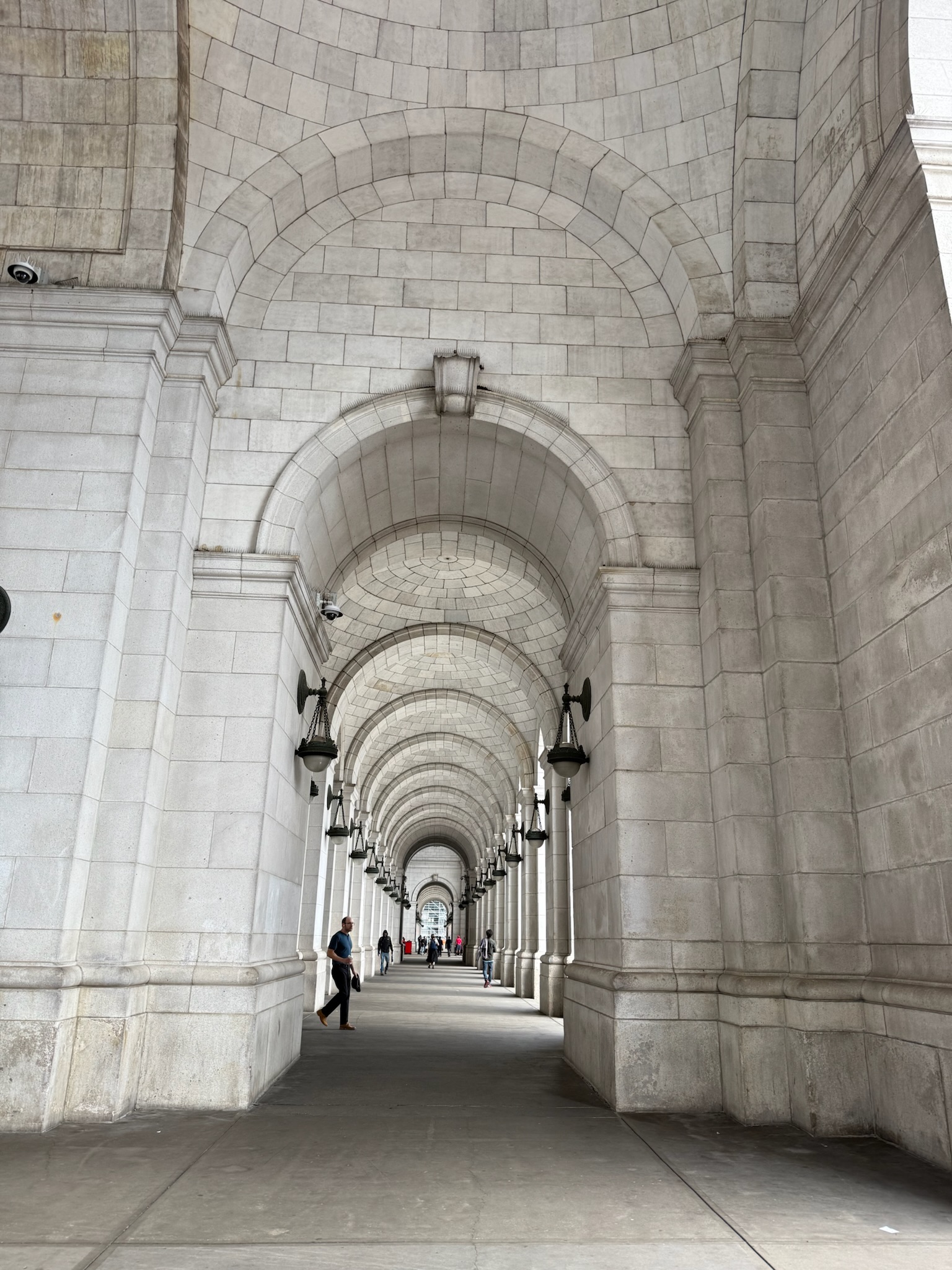
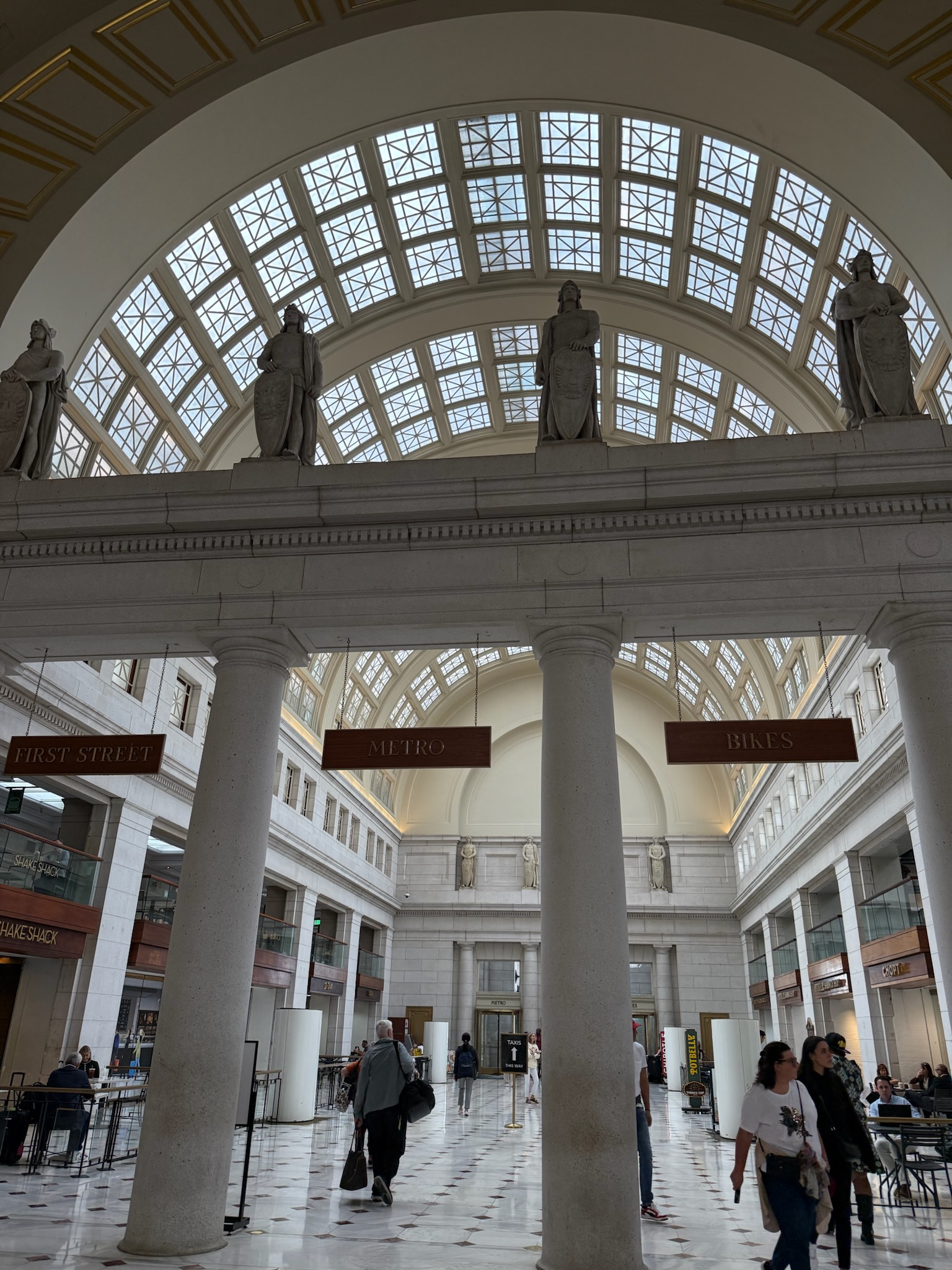
The entrance was spectacular, in the Neo-classical style with elaborate domed ceilings, marbled floors, columns and statues.
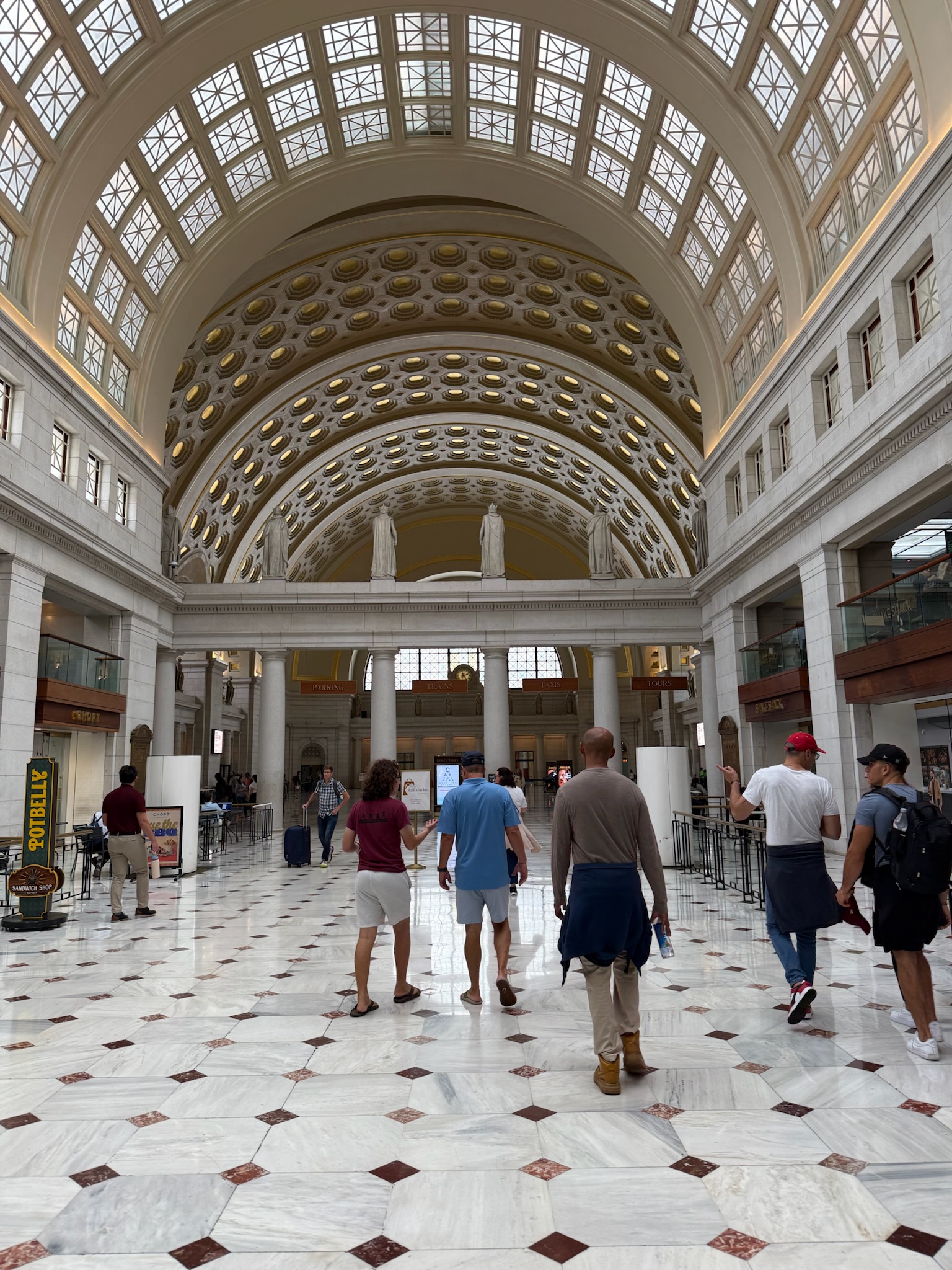
It was still beautiful and we moved deeper into building.
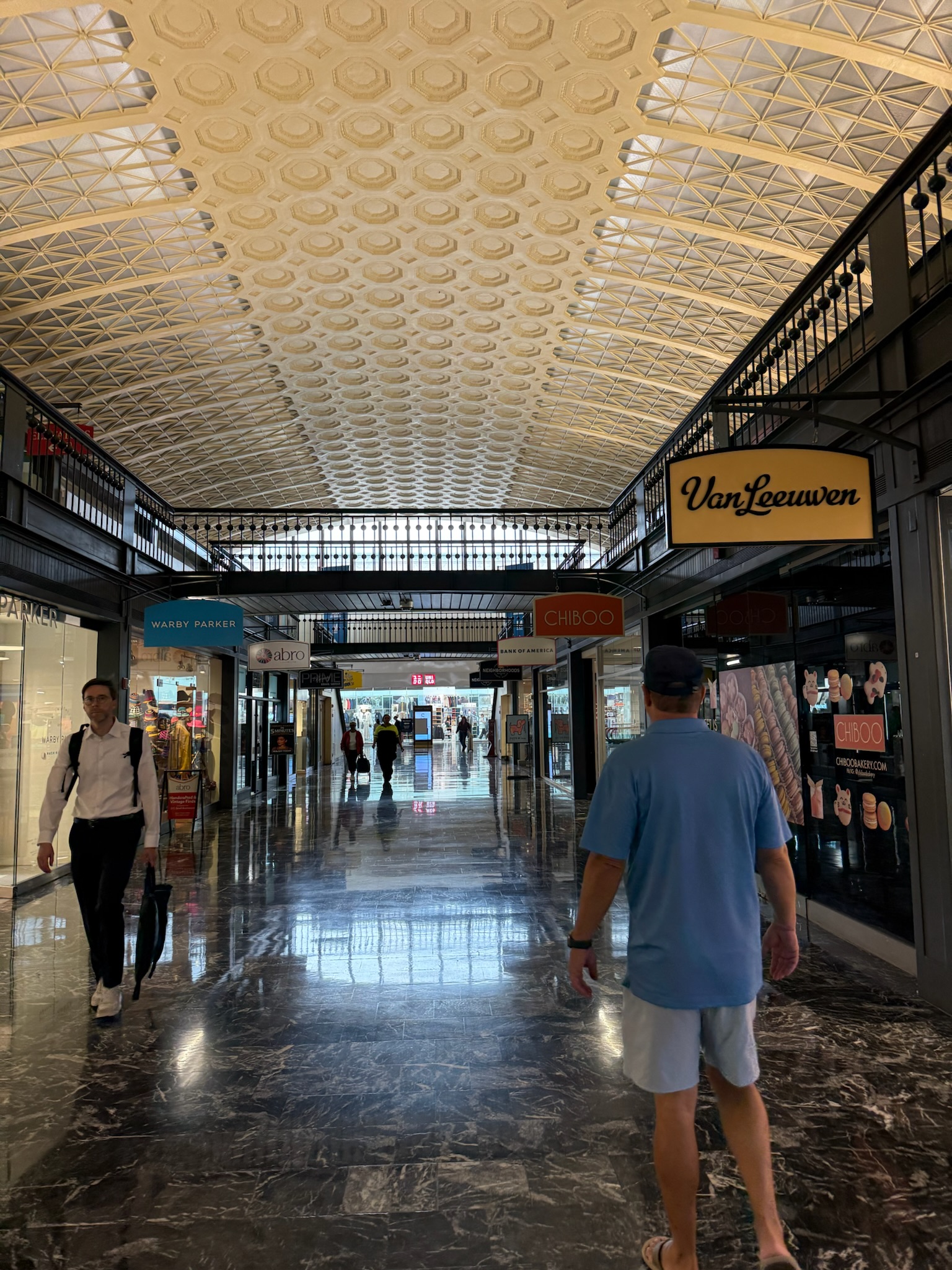
We went down a level and found ourselves in a shopping mall.
We wandered around until we found a food court, which was less grandiose than the other levels had been.
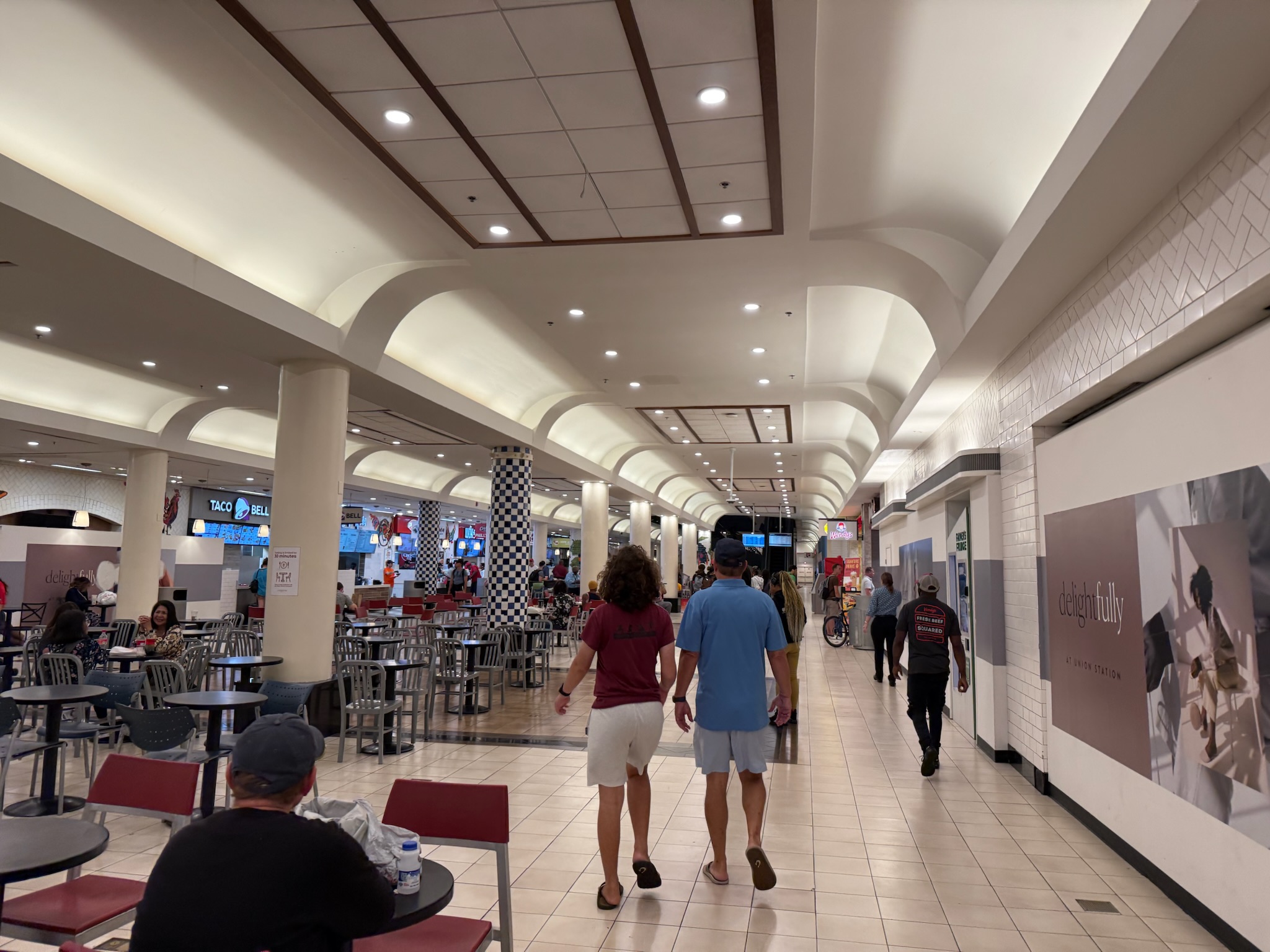
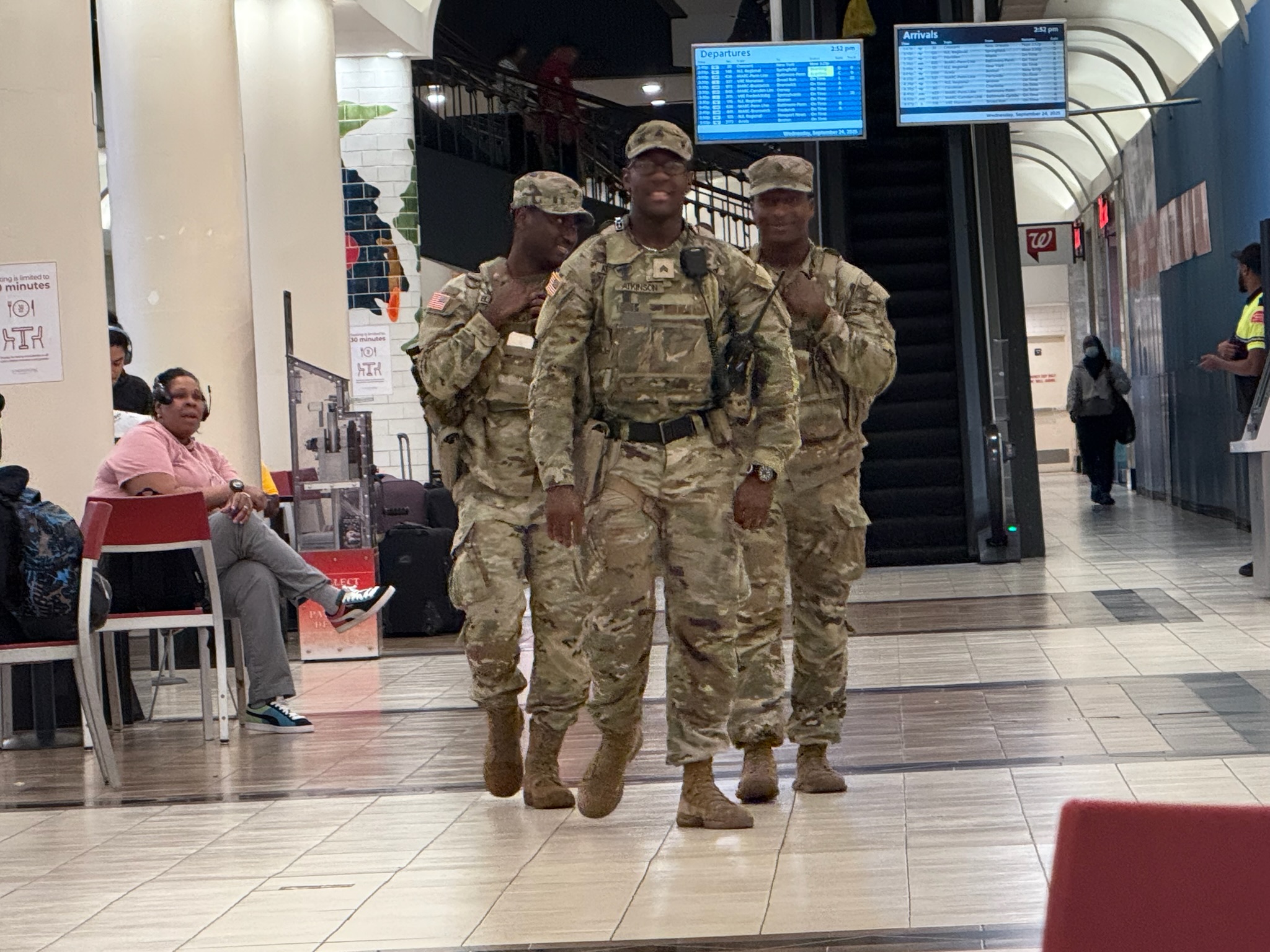
Eric and Christi got savory crepes for lunch at a place called Crepe Lena and Waffle. Keith got a Philly cheesesteak from a place called Charley’s. We noticed that the National Guard was regularly patrolling.
After lunch, we went back to the entrance to the Postal Museum and hailed a ride share back to the marina.
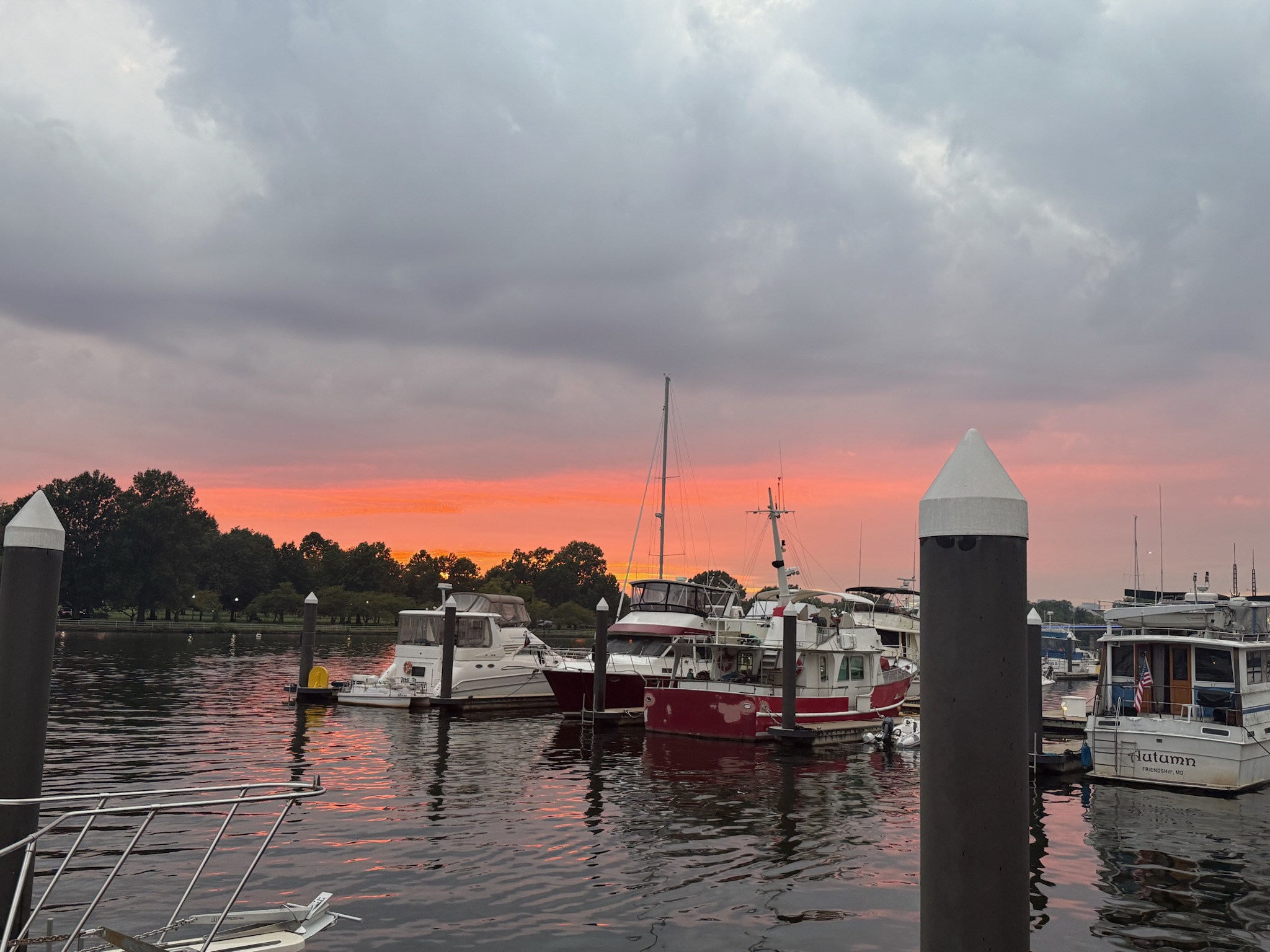
In the evening, Eric and Keith played D & D with Blue Heeler in the yacht club’s recreation room. Surprisingly, it was a colorful sunset despite the heavy clouds.