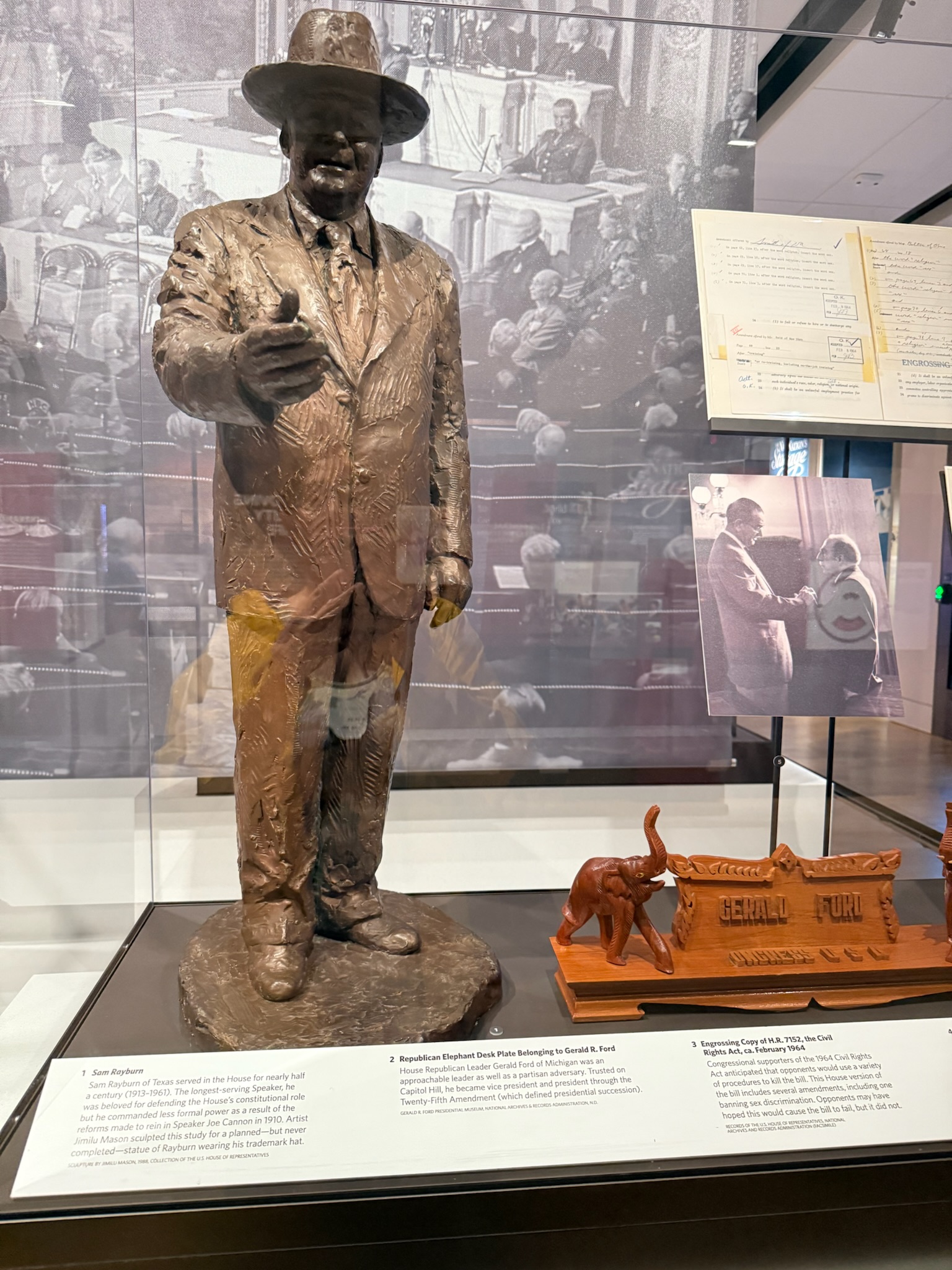
continued... In 1964, only 79 years after the Supreme Court overturned the first civil rights bill, Congress finally got around to passing another one. The Civil Rights Act was more expansive than its predecessor, outlawing discrimination on the basis of race, color, religion, sex or national origin.
There was a small exhibit on Congress’s investigational powers. They mentioned a few examples: A committee investigating organized crime in interstate commerce convened from 1950 – 1951. It was one of the first televised hearings, so it garnered a lot of attention. The Wherry-Hill Investigations of the 1950s sought to expose gay federal employees. And in 1975, the Church committee investigated “unlawful or improper conduct by intelligence agencies.”
The next exhibit was titled “Impacts of Congress” and explained that “Congress touches many areas of your life every day, in ways you may often take for granted.” The first few signs were about the types of things that Congress spends money on. The list was long, and includes exploration (ie Lewis and Clark Expedition, NASA), innovations (ie scientific research leading to advance in medicine), environmental protection (ie Environmental Protection Agency, national parks), national defense (ie US military bases, both domestic and in foreign countries), funding and development of weapons systems, and humanitarian aid to people around the world (ie the Peace Corps and USAID — they should probably update that sign now that DOGE has decimated USAID).
Another sign mentioned that Congress shapes the makeup of the US population by making and/or changing immigration policies. They can decide where immigrants, refugees and asylum seekers come from, and in what numbers, thus influencing the culture, economy and workforce. One law highlighted was the Immigration and Nationality Act of 1965, which changed the system from being based on a national origin quota and replaced it with a system that preferences family reunification and skilled labor.
Another sign talked about how Congress oversees and supports communications, which started with the US postal system. The post office was one of the very first things implemented when the US became an independent nation. It talked about how Congress has had to create more regulatory agencies and expand legislation with each generation of new technologies, such as the Communication Act of 1934 that made telegraph, telephone and radio services more accessible and created the Federal Communications Commission (FCC) to regulate public airwaves.
Another sign talked about facilitating the creation and expansion of transportation systems. As we’d already briefly mentioned, in 1862, Congress passed the Pacific Railroad Act, which provided federal land grants and loans to railroad companies for construction and enabled the establishment of the first transcontinental railroad. In 1965, Congress passed the Federal Aid Highway Act, which created the interstate highway system that connected the whole country. Several laws were mentioned regarding air travel, including creating the Federal Aviation Administration (FAA) and the Transportation Security Administration (TSA). In 1964, Congress passed the Urban Mass Transportation Act where they provide subsidies to cities for local public transit, such as buses and subways.
Another sign talked about workplace oversight. Since the turn of the 20th century, Congress has passed laws restricting child labor, setting minimum wages, limiting the number of hours in a work week, setting workplace safety standards, requiring equal opportunities for employment and promotions, requiring employers give time off for family and medical need, and much more.
There was a sign that listed eight large protests that took place in front of the Capitol between 1913 and 2019. Some of the protests brought about legislative changes — but not necessarily what they wanted. In 1952, Billy Graham led a peace rally where 40,000 people came out to the Capitol to pray for an end to the Korean War. Instead of ending the war, Congress responded by creating a National Day of Prayer. Some of the protests that were highlighted had bad endings. In 1932, World War I veterans set up a camp in front of the Capitol and protested for months to get their services bonuses paid to them early. They were eventually forcibly removed. In 1971, there was a Vietnam War protest where the police arrested more than 1,000 people for “unlawful assembly.” And some of the protests highlighted didn’t get a response. In 1979, more than 1,000 tractors convened at the Capitol to protest for policies that supported small family farms. The lawmakers ignored them and continued to push policies and subsidies that favored large agribusiness conglomerates which utilize genetically modified foods and chemical agents.
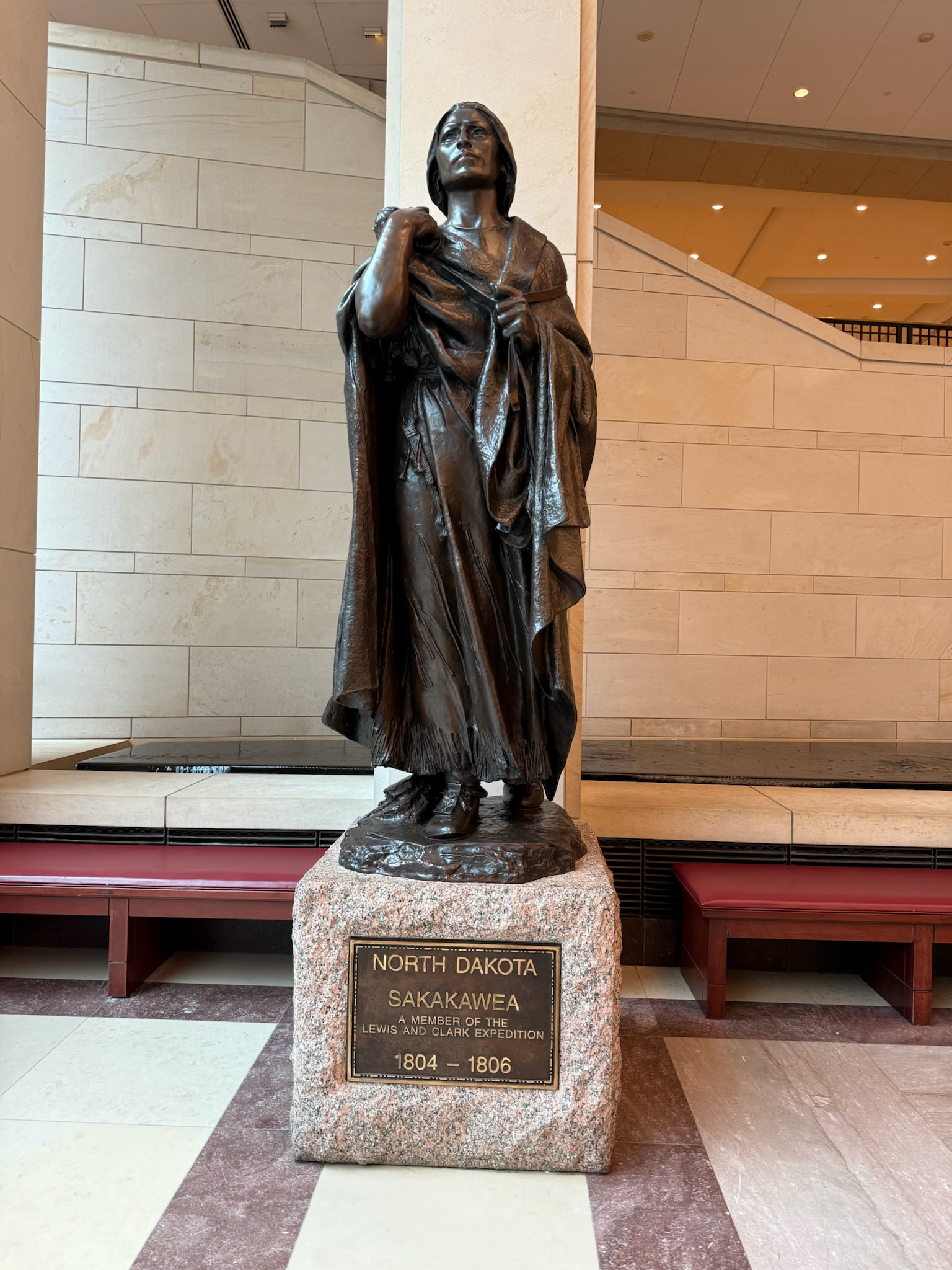
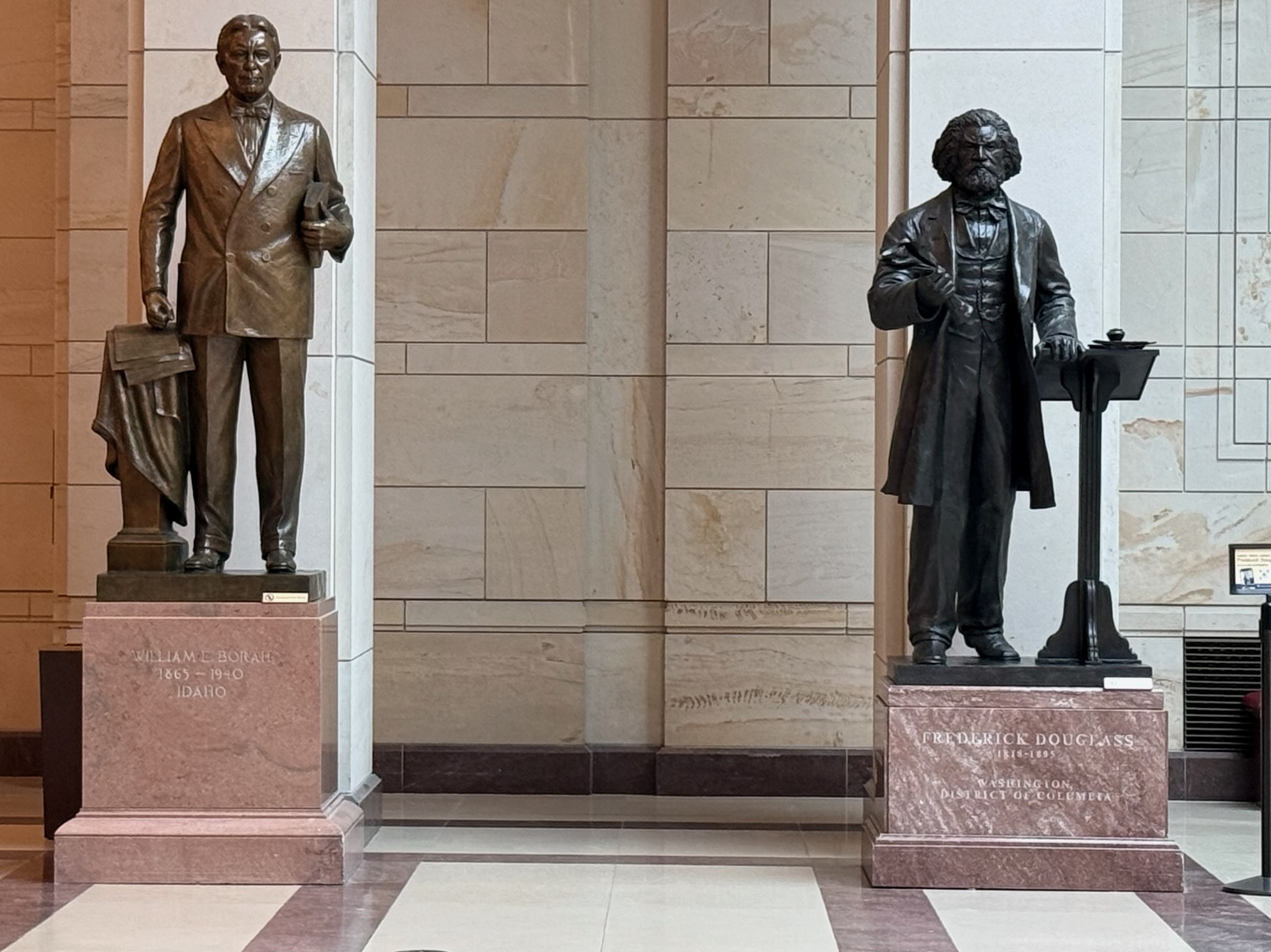
Once we finished in the Exhibition Hall, we wandered over to the Senate Appointment Desk to see if we could get tickets to see the current chambers of Congress. Here were some statues we passed along the way.
We were surprised to see that the Frederick Douglass represented DC and not Maryland, which was where he was from.
The appointment desk told us they could only give tickets to foreigners and that, as US residents, we needed to walk across the street and get tickets from one of our Congressmen. We decided that, since the current chambers were easily seen on TV, it wasn’t worth the walk there and back. We headed outside and found a suitable place to wait for a ride share. Here were some photos we took along the way.
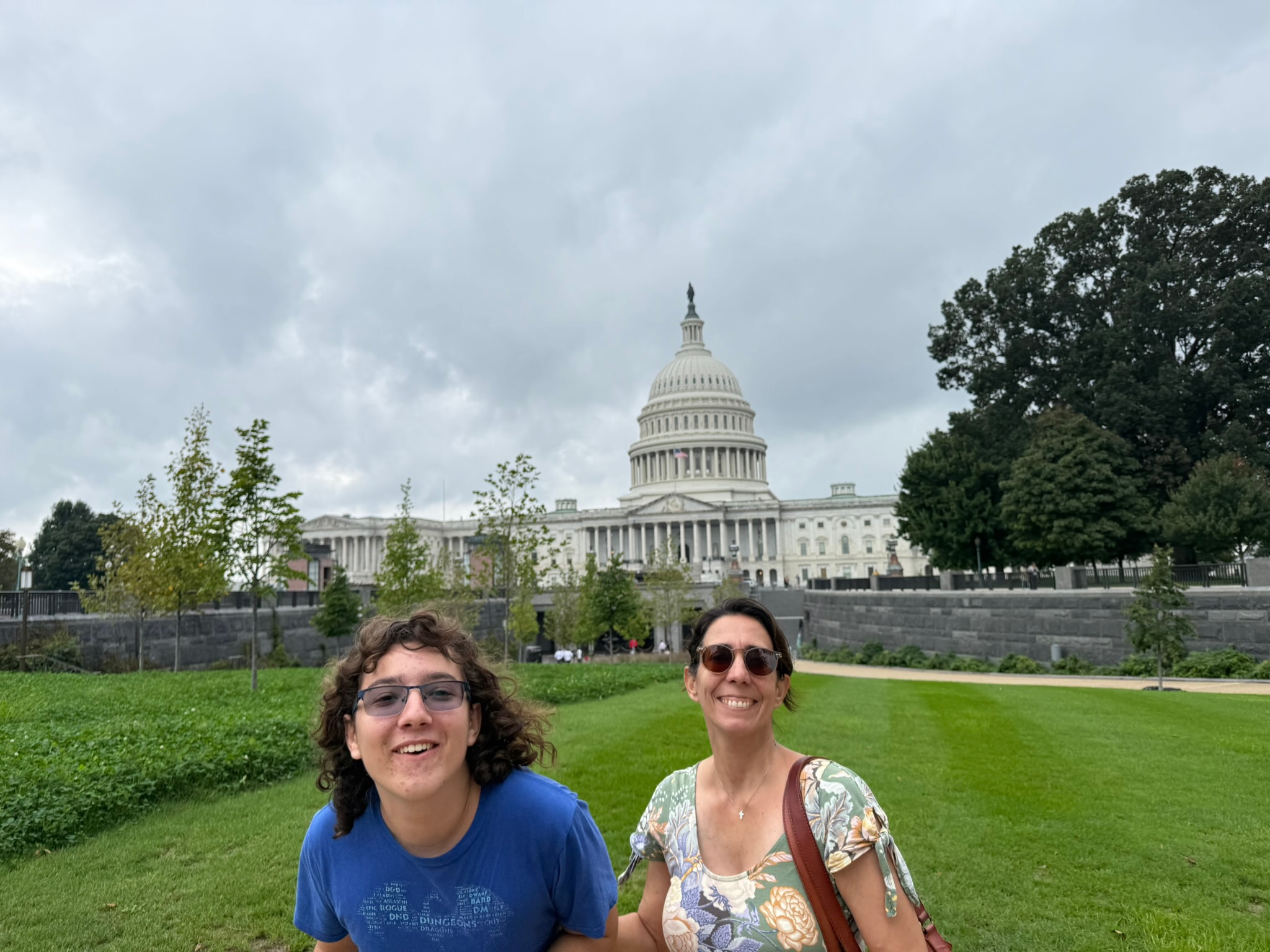
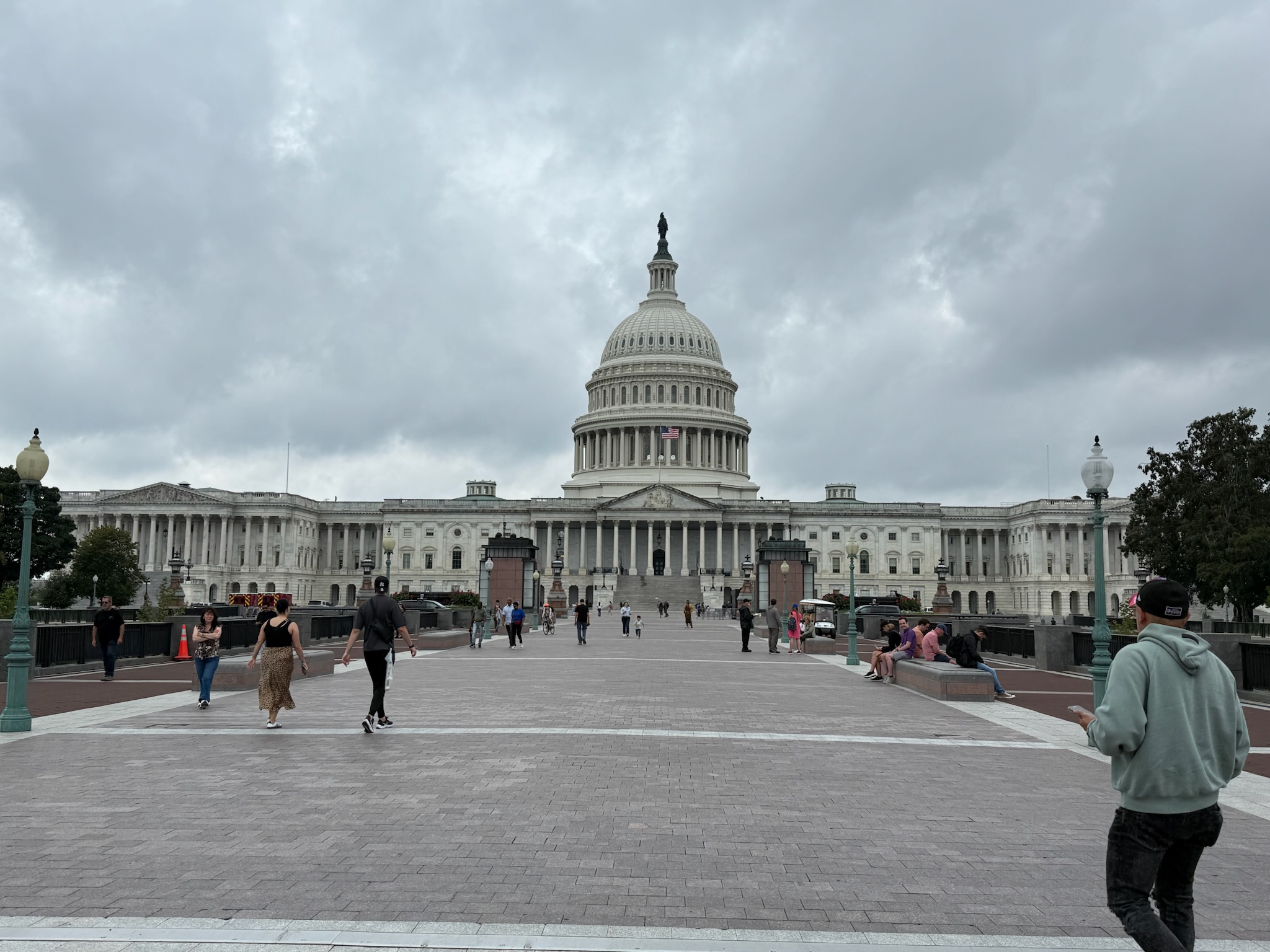
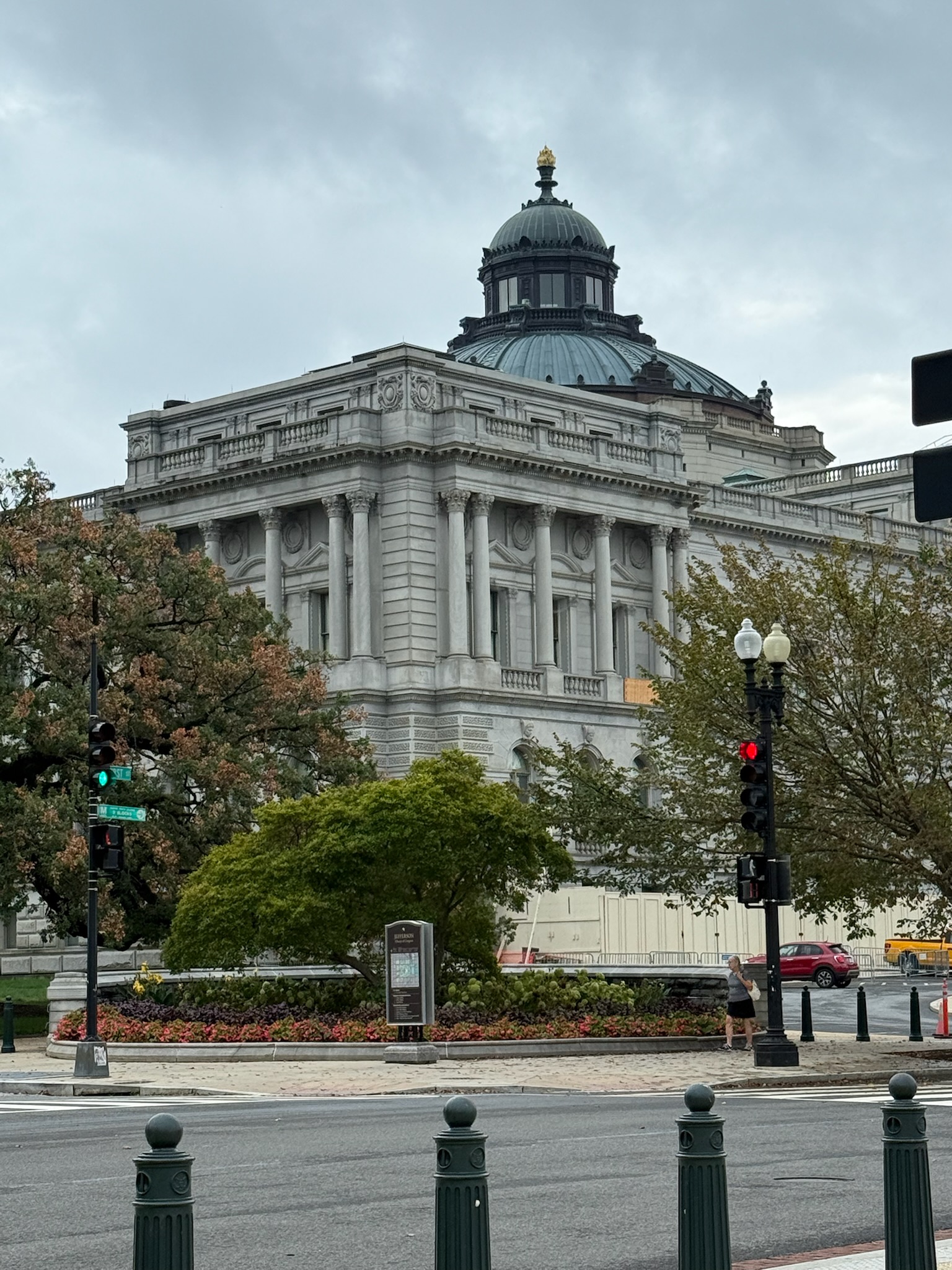
The Library of Congress across the street.
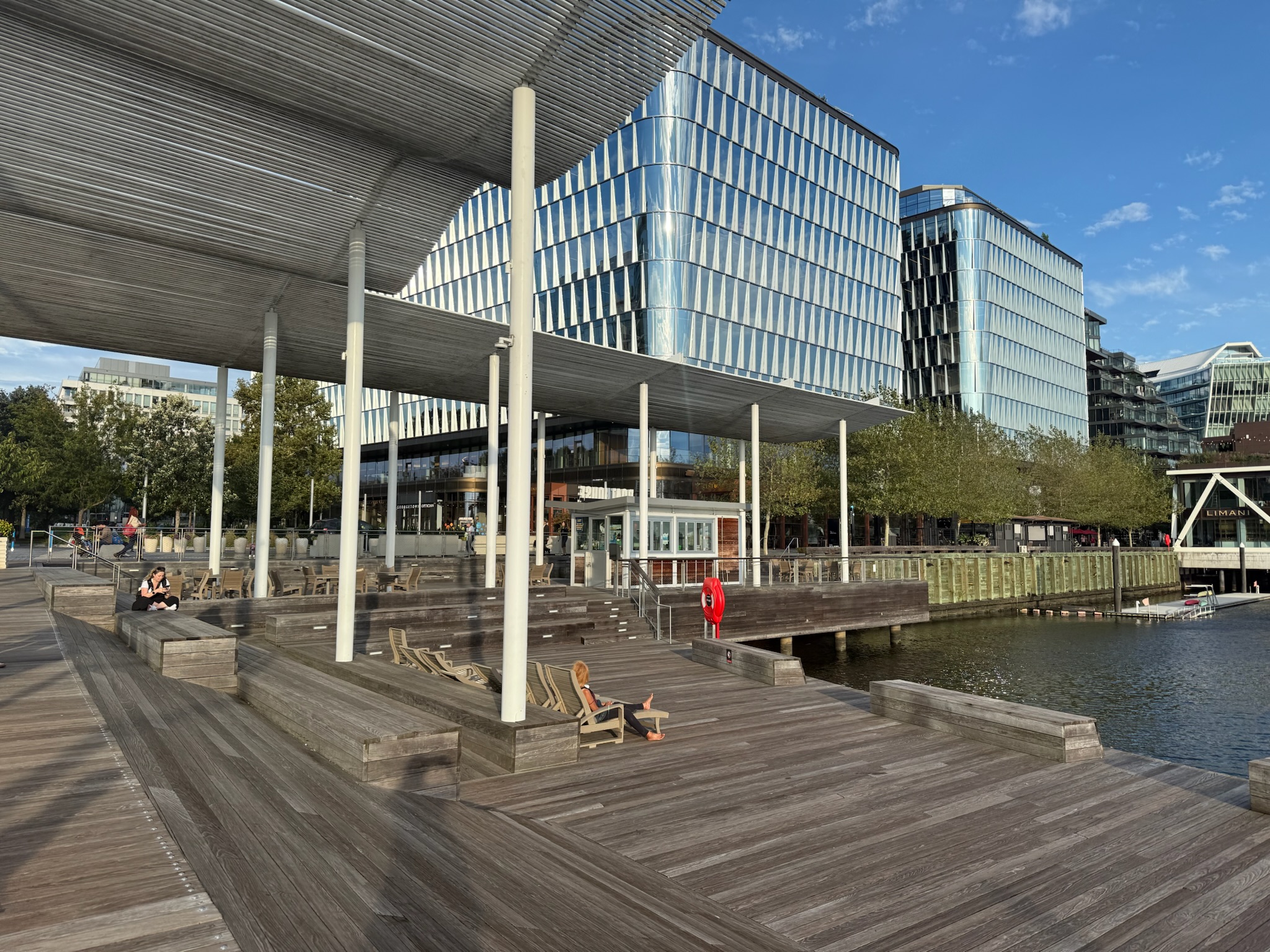
Once we arrived back at The Wharf, we went back to Bartaco for dinner. It was again fabulous. And fast. After dinner, we strolled down the pier near Kosmos’s slip. This is what it looked like where the wharf met the pier, with an interesting seating area where people could hang out and watch the river.
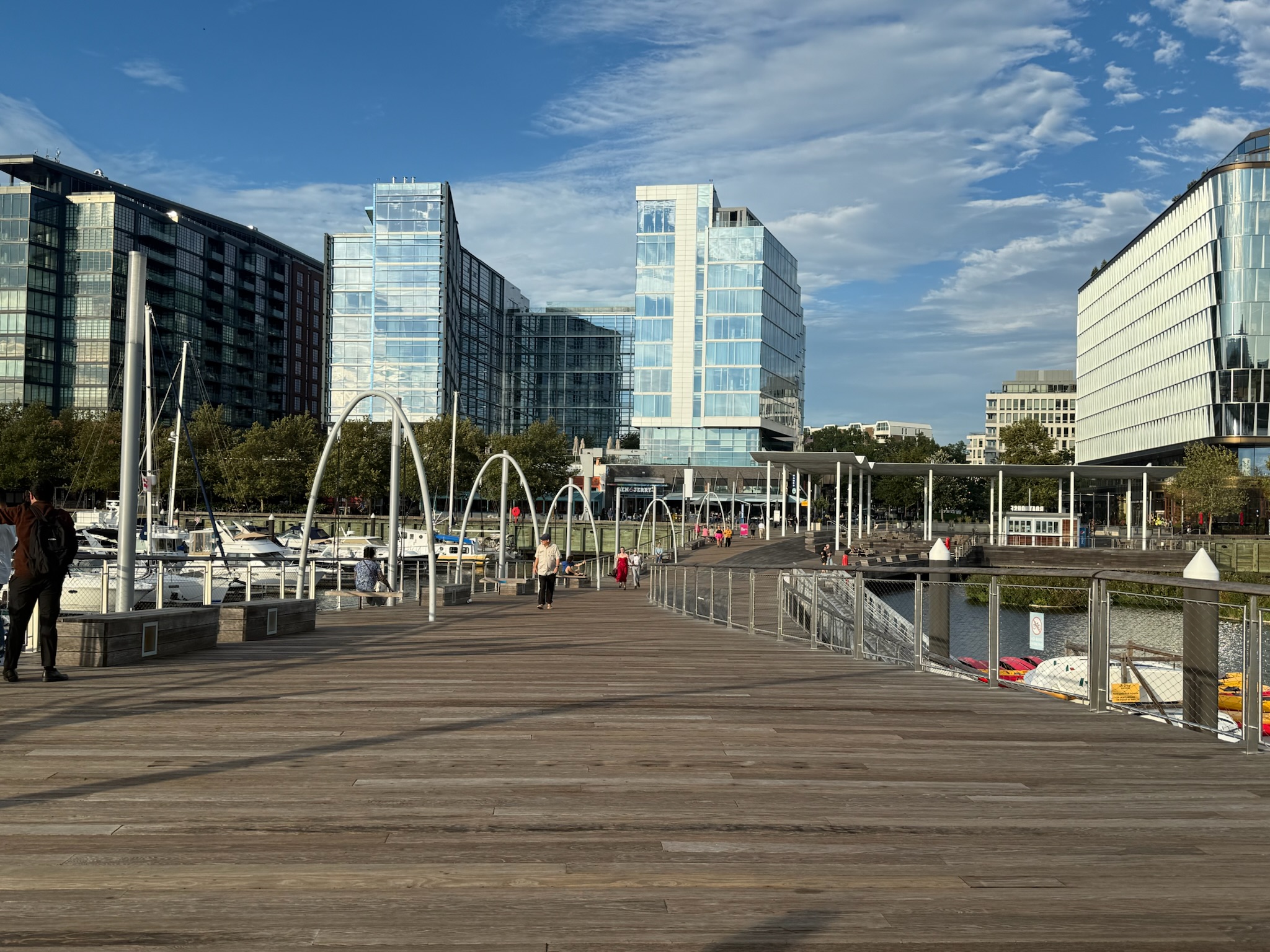
This was the view of The Wharf from the end of the pier. The dock was lined with swings, which was fun!
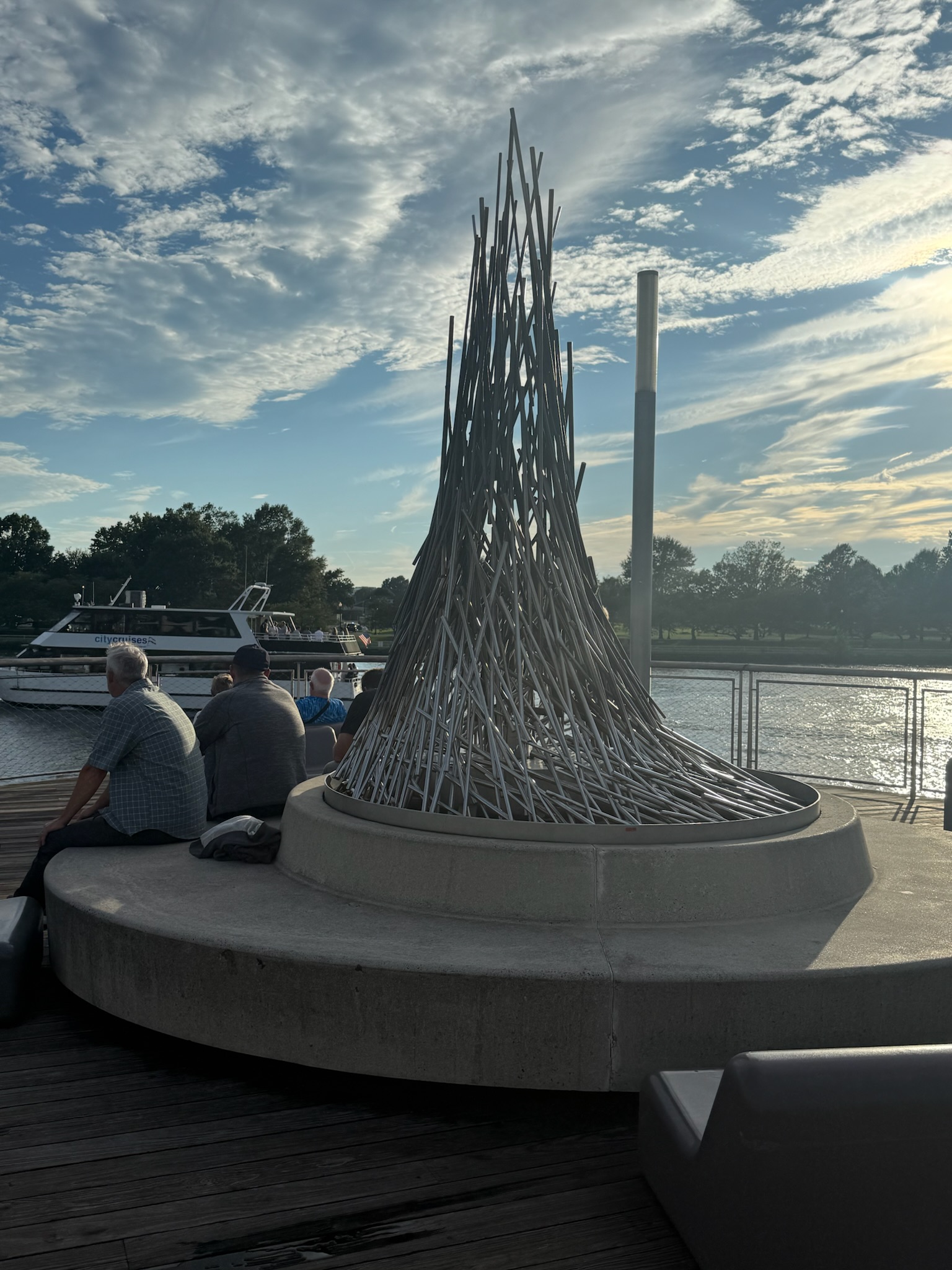
There was a sculpture at the end. We’re guessing it was supposed to simulate a campfire?
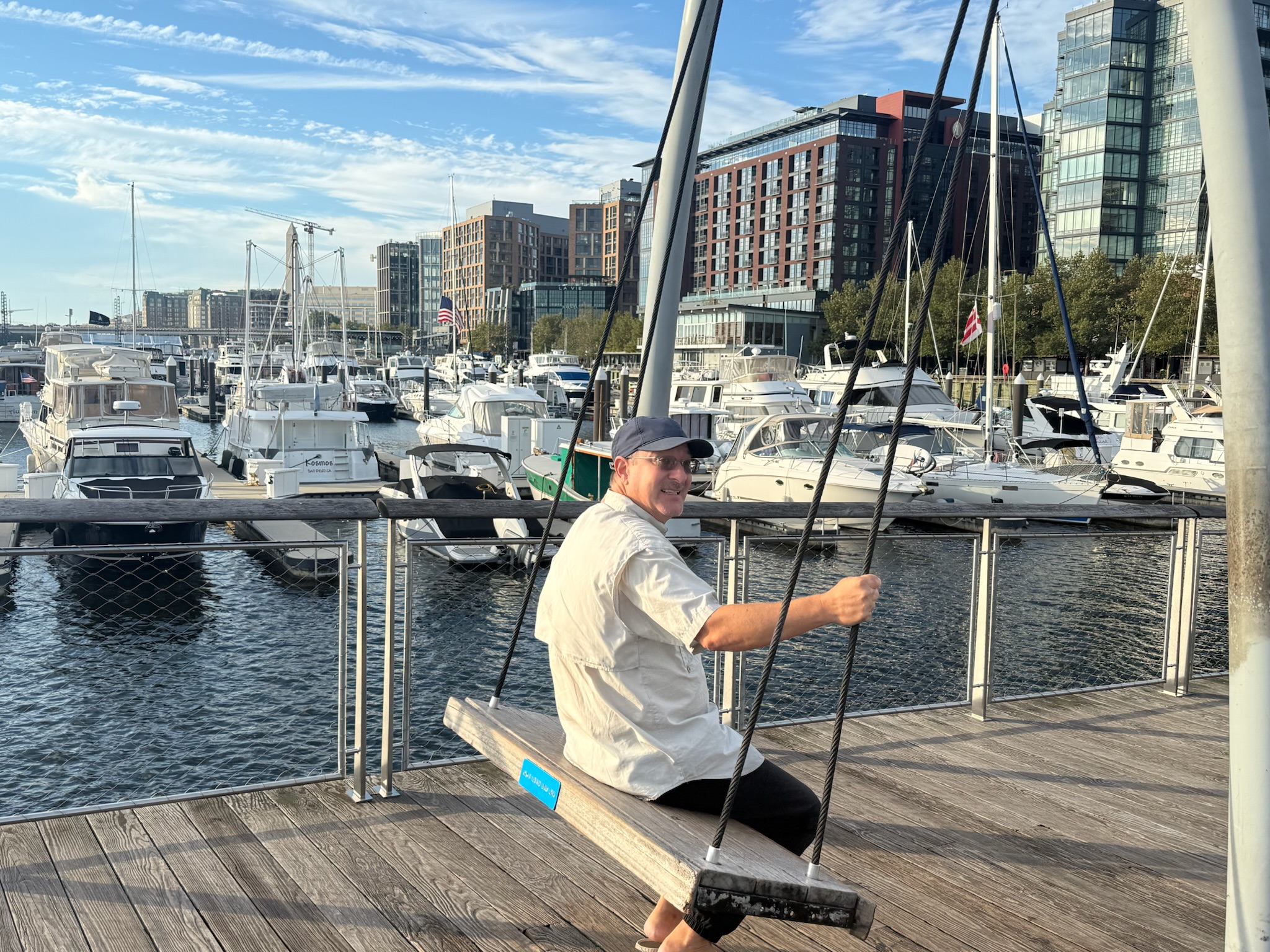
Here was Eric on a swing. You can see Kosmos to the left.
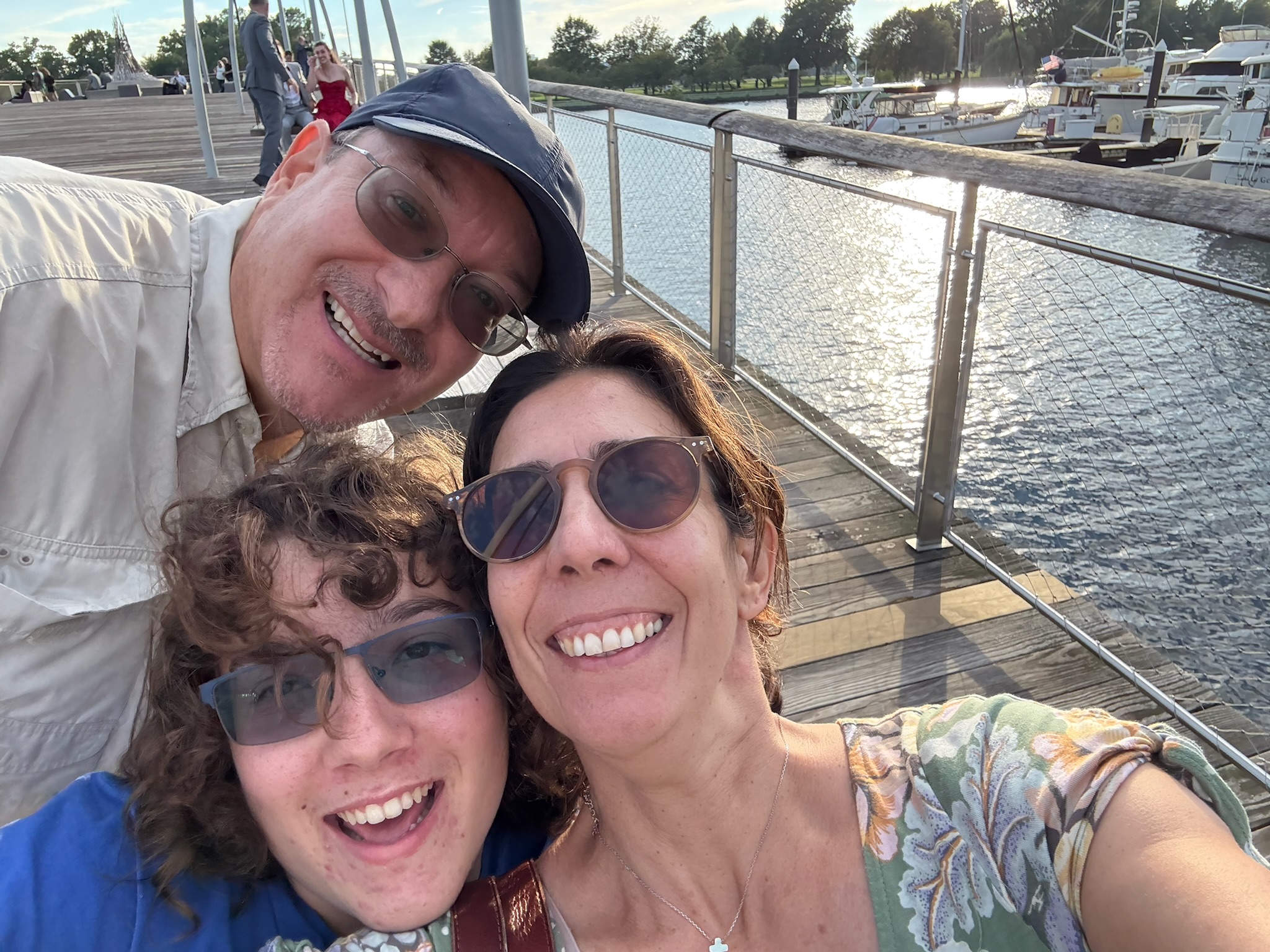
Here was a selfie of all three of us on the swing.
According to small sign, by the 1820s, the Southwest waterfront had become the principal commercial waterfront of the city, homes to municipal piers, ice and coal docks, and fish and coastal steam ship wharves. We figured this must have been one in a series of signs and were not sure where the rest of the signs may have been.
When we got back to the marina, we met up with Blue Heeler inside the yacht club to compare notes. Our Congressional tour appointment time had been1030 and Blue Heeler’s was at 1100, so we were surprised that we hadn’t bumped into them. When they’d requested tickets, they were told to go to their Congressman’s office. They were given a private tour and were taken to the current areas where the sessions took place. Their congressman hadn’t mentioned there was a standard tour for the masses, a welcome movie or a museum in the Visitor’s Center, either.
While we were talking, a gentleman came over and introduced himself to us. Scott welcomed us to the yacht club and asked us where we were from, how long we were staying, etc. While chatting, he mentioned that tomorrow he was speaking at Trawlerfest. When we inquired about which session he was on, we found out he was on the same panel with us. Talk about a small world!
As Christi was watching the sunset, she caught a video of another helicopter flying over the marina, which is supposed to be prohibited.
And she caught what she thinks may be one of the coolest twilight photos of all time: there was an airplane landing in the foreground, an airplane taking off in the background, and the crescent moon in the middle.
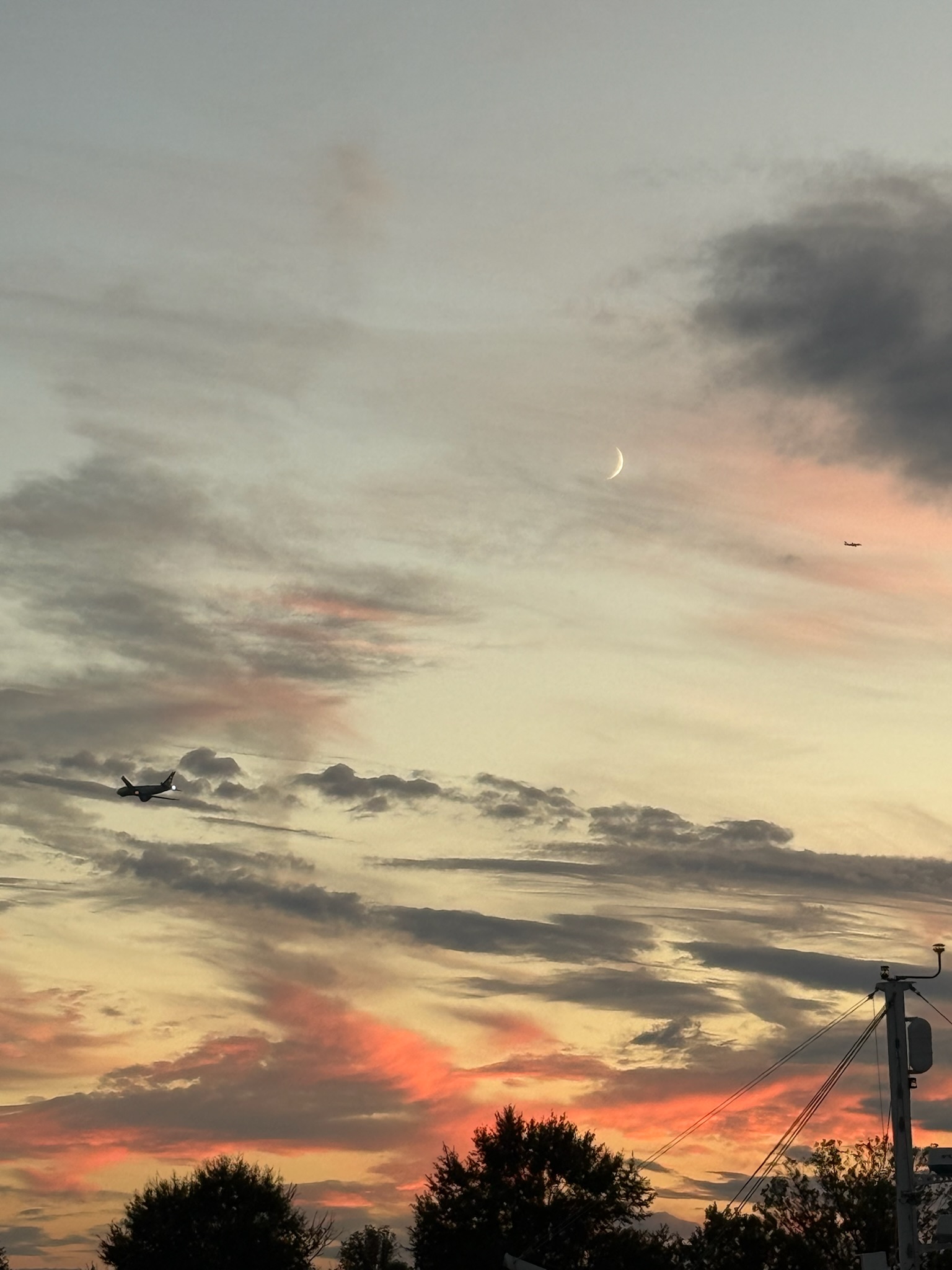
This seems like an appropriate time to mention that this marina is noisy. An airplane takes off or lands literally every minute and they were generally pretty loud. Plus, those helicopters were not unusual. We could also hear the train. And the river had a lot of boat traffic. Some of the boat engines were loud, but more of a problem were the boats that blared music, especially on the weekends. Being in the middle of all the action was exciting, but it wasn’t quiet.