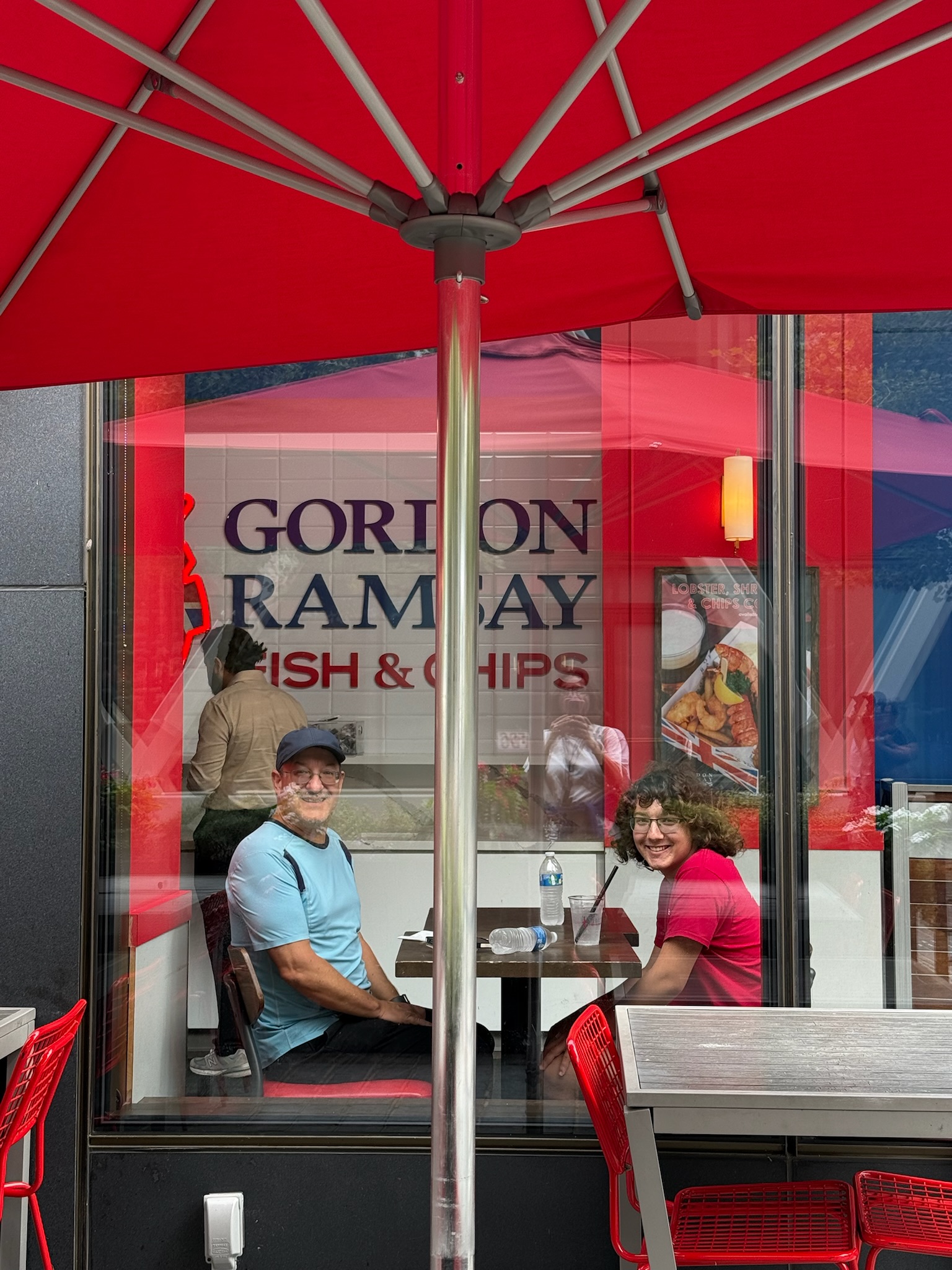
Tuesday, Sept 30 — After we finished school in the morning, we ventured farther east up The Wharf than we’d been before to have lunch at Gordon Ramsey Fish & Chips, conveniently located across the way from Gordon Ramsey Hell’s Kitchen. Due to her allergy, Christi generally can’t eat at restaurants where the food is prepped prior to cooking, so we were dubious that she could eat there. But much to our surprise, they prepared the food upon ordering, and making the fish and chips without pepper was not a problem for them. The food was really good. No wonder he’s a celebrity!
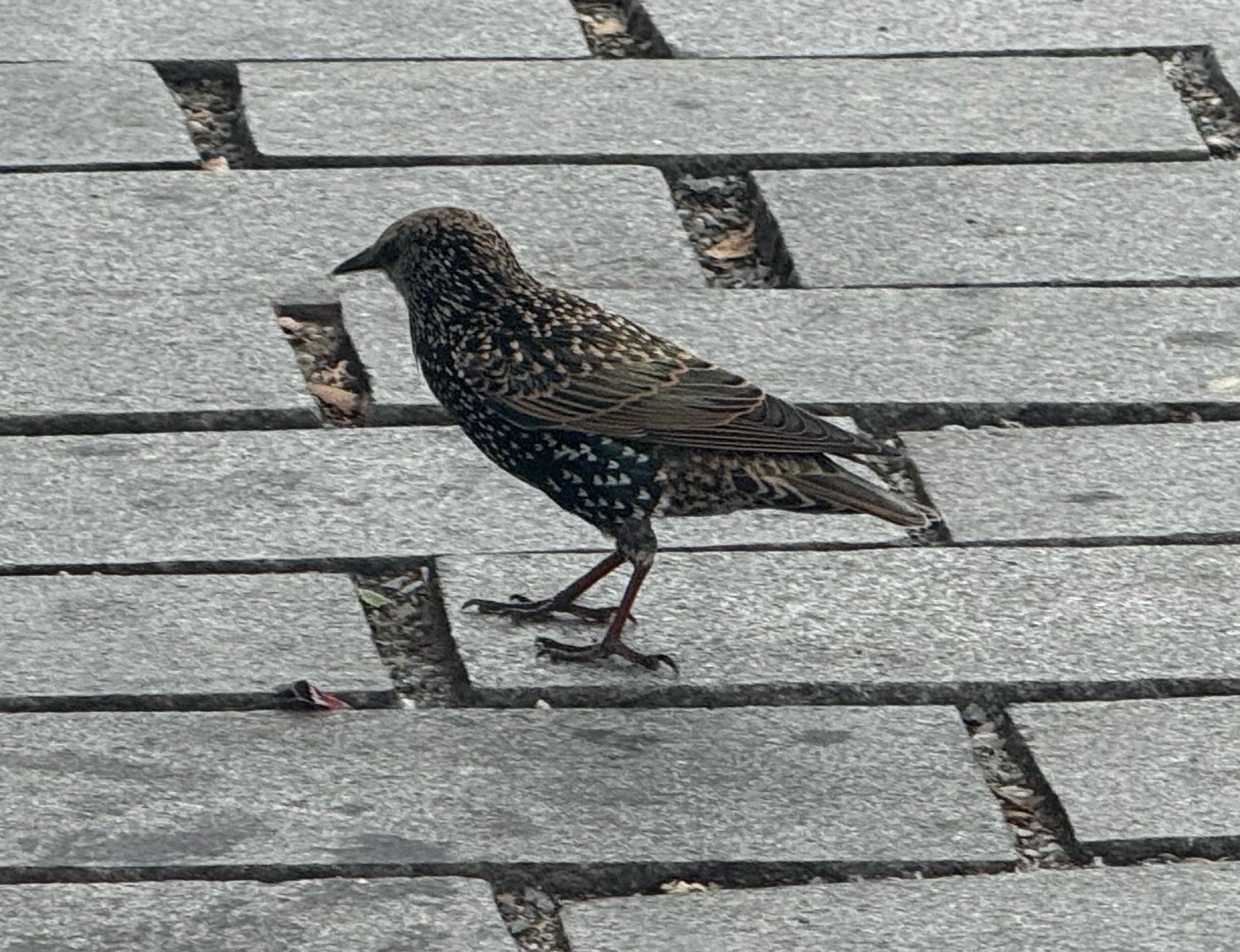
We’ve seen a lot of these cute little birds around DC, but they usually fly away the moment we pull out the camera. After more than a week of trying, we finally got a photo!
After lunch, we caught the free shuttle to the National Mall. We took a slightly different route into the grassy area, taking the walkway at the Smithsonian Castle instead of our usual route along the walkway at the Arts & Industries Museum. This walkway was even prettier than the Arts & Industries walkway, with a large grass area, walking paths and benches.
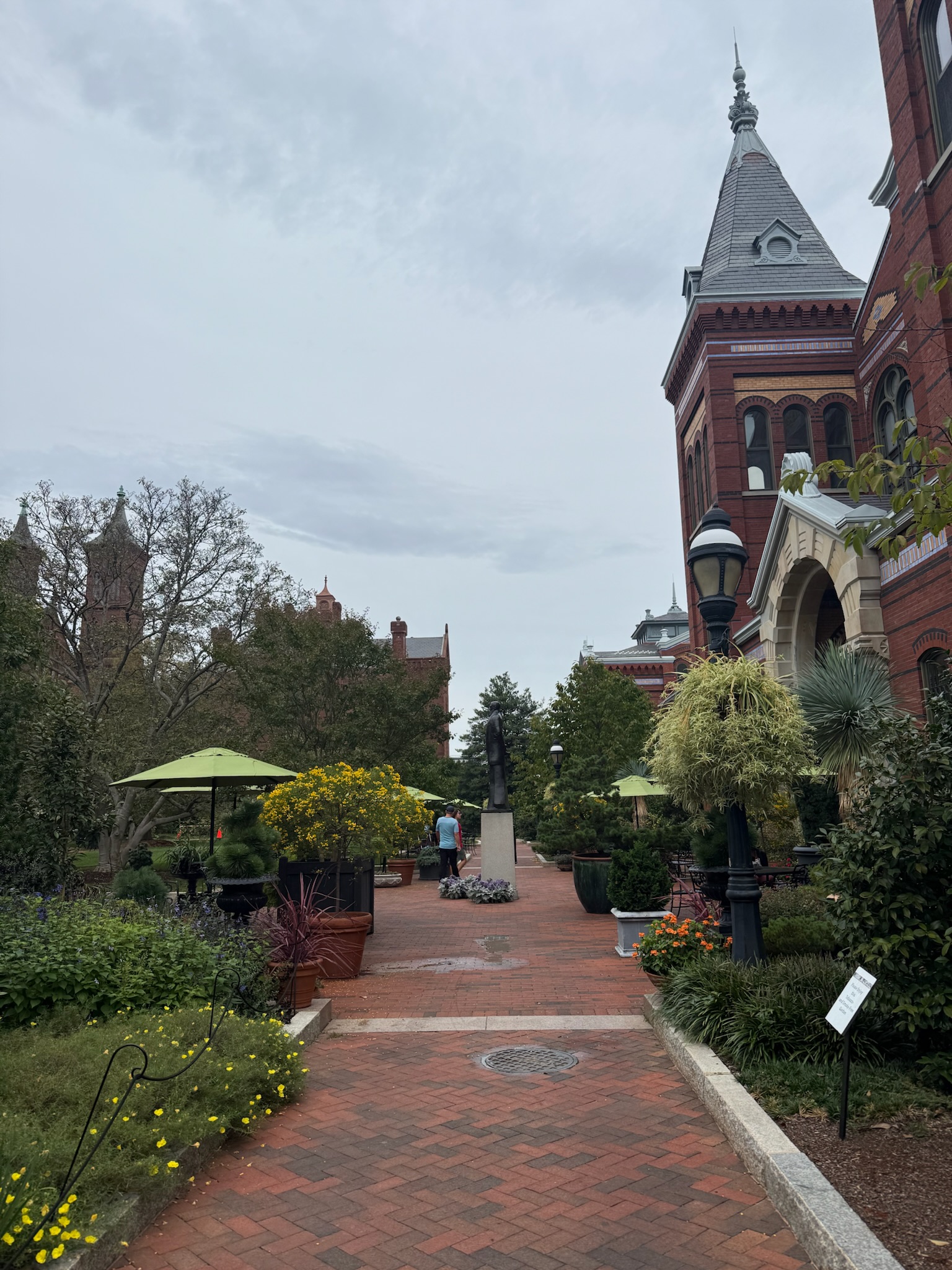
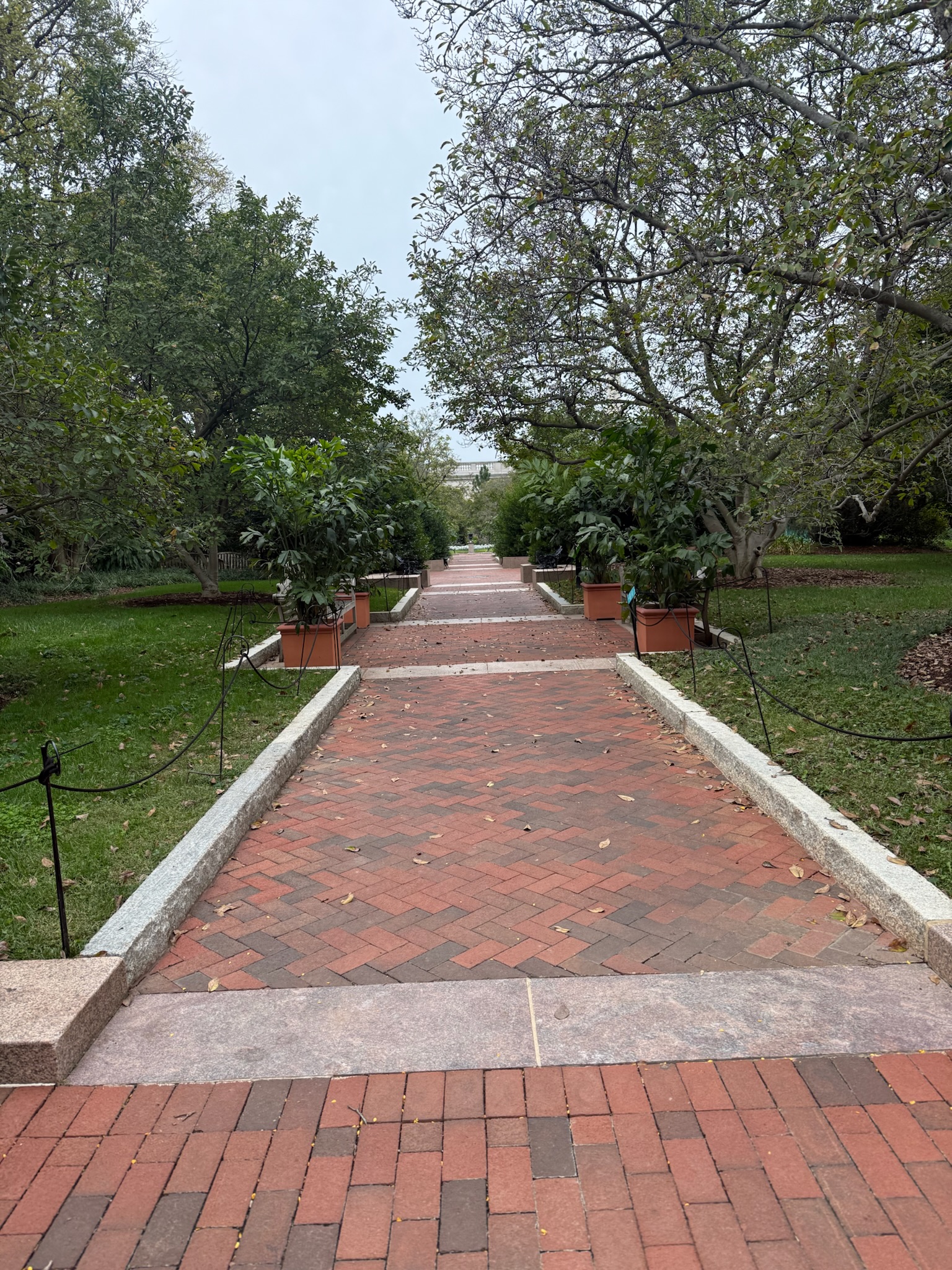
A sign said that The Castle was the first Smithsonian building, completed in 1855. It has always been the administrative headquarters for the 21 museums, zoo, education centers, research facilities, etc. Its other uses have varied over the decades. The last major renovation was 1968, so it was time to renovate again.
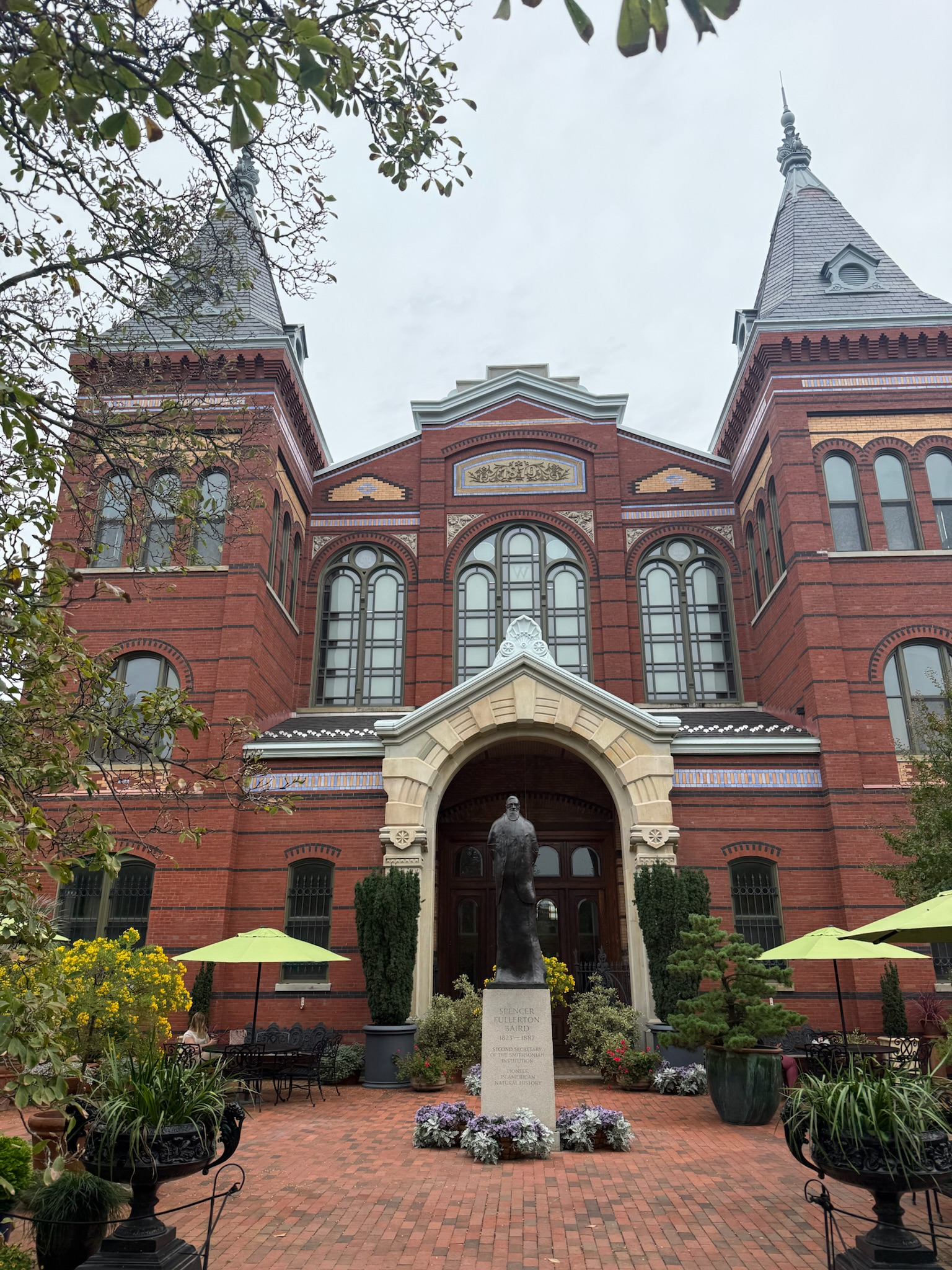
Our destination was the National Museum of Natural History. Truth be told, we were museumed out and none of us particularly wanted to go. But it was looking like tomorrow the federal government was going to shut down, which meant all the Smithsonian museums would close. And since we had no faith in the current government to get its act together, we were betting it would be a long shut down. So, it was now or never!
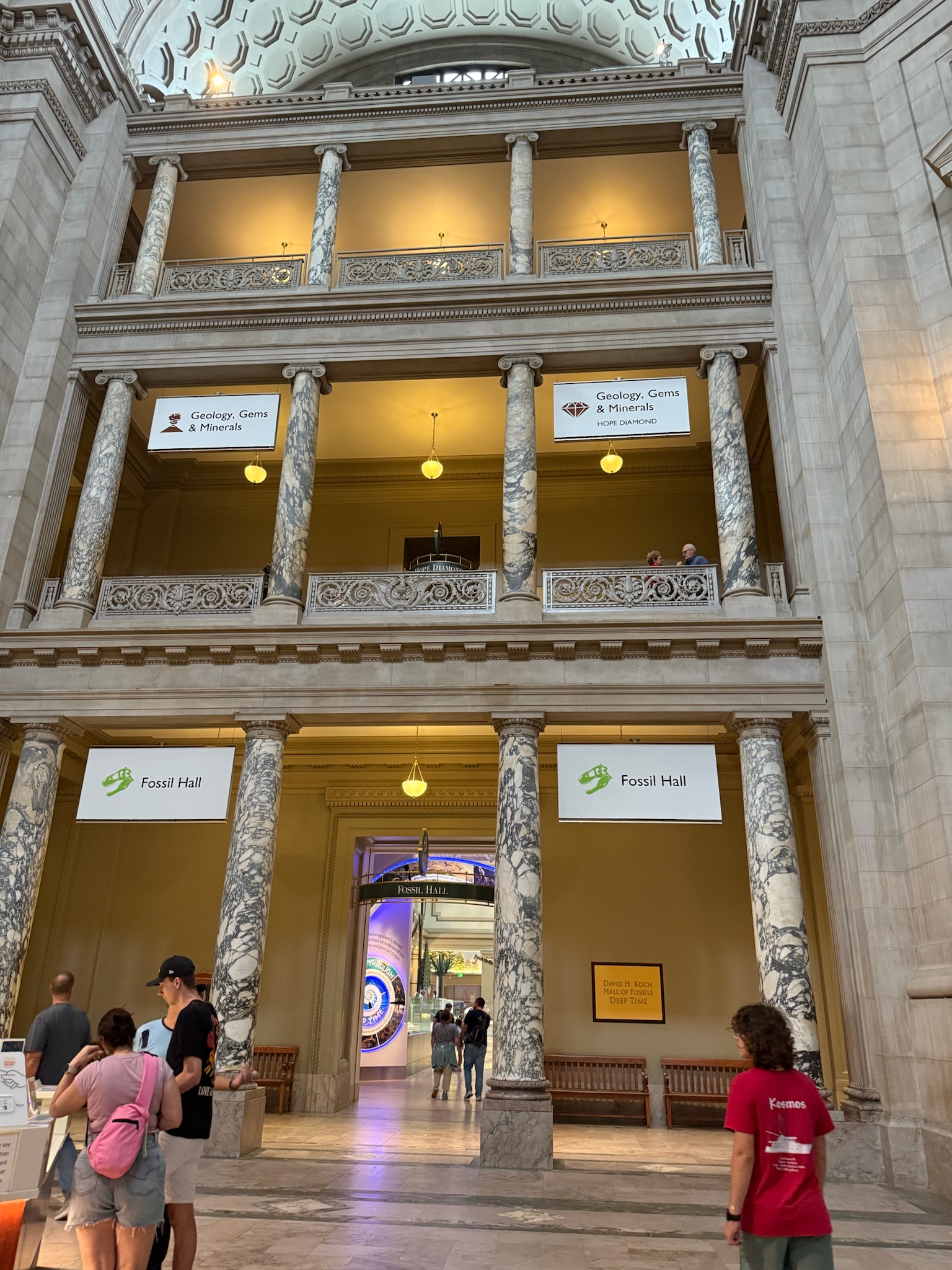
As with all Smithsonian museums, admission was free… although they charged $1.00 for a museum map. Like several of the other museums in DC, the museum building was beautiful, built in the Neo-classical style that was dominant around DC.
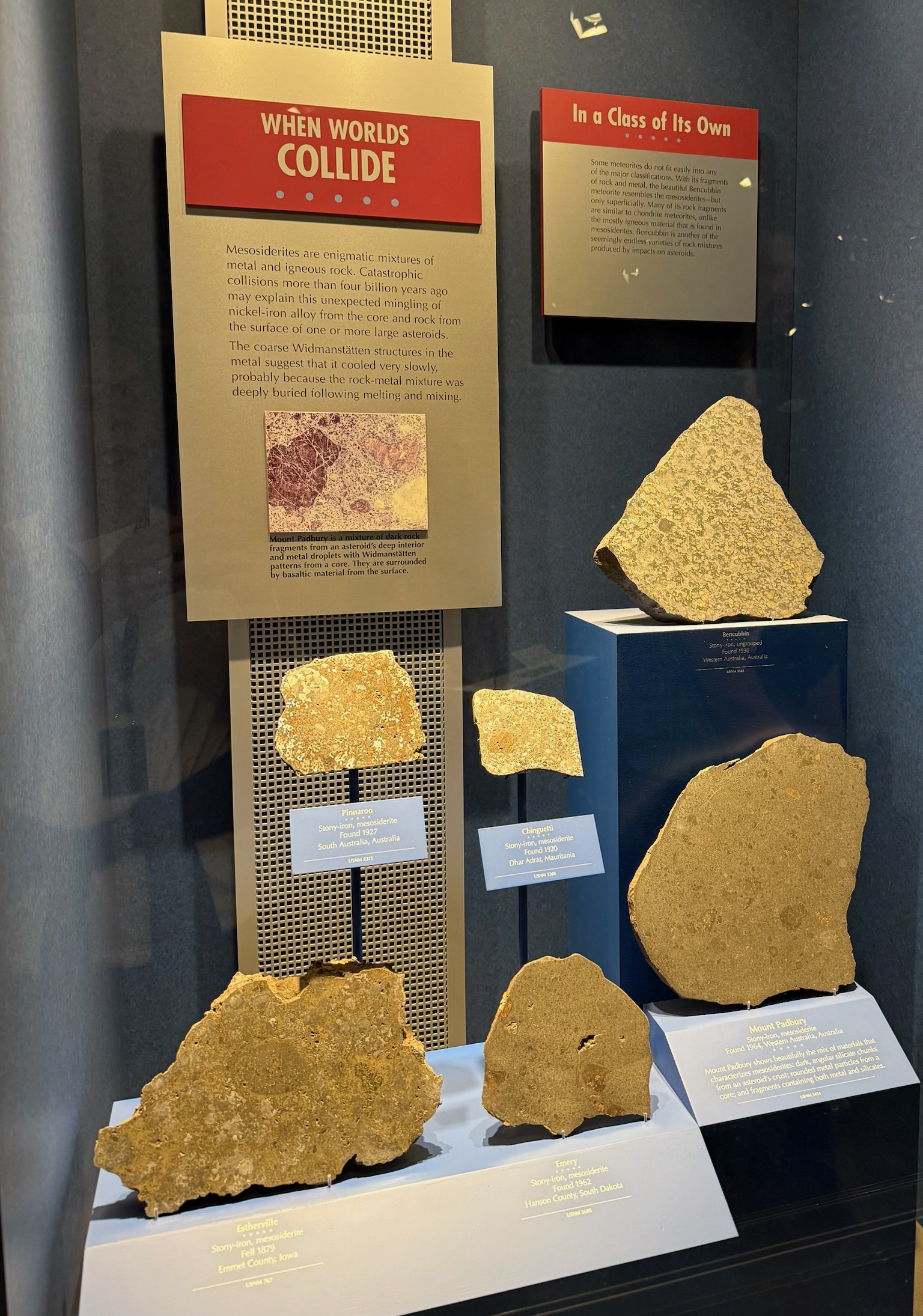
We started in the Solar System Gallery on the second floor. The first exhibit we saw was about meteorites. The over simplified definition: a meteorite was a rock that had been floating around in outer space and crashed into earth. Most meteorites asteroids, though sometimes they were chunks from comets and occasionally were volcanic rocks from Mars or the Moon. Meteorites had a composite and structure different from rocks on earth, and often contained minerals that were not found on earth. It was believed that many meteorites were 4.5 billion years old, dating back to the formation of the galaxy. The displays got into the various materials and structures of the meteorites they’ve analyzed, but we were too tired to absorb the information.
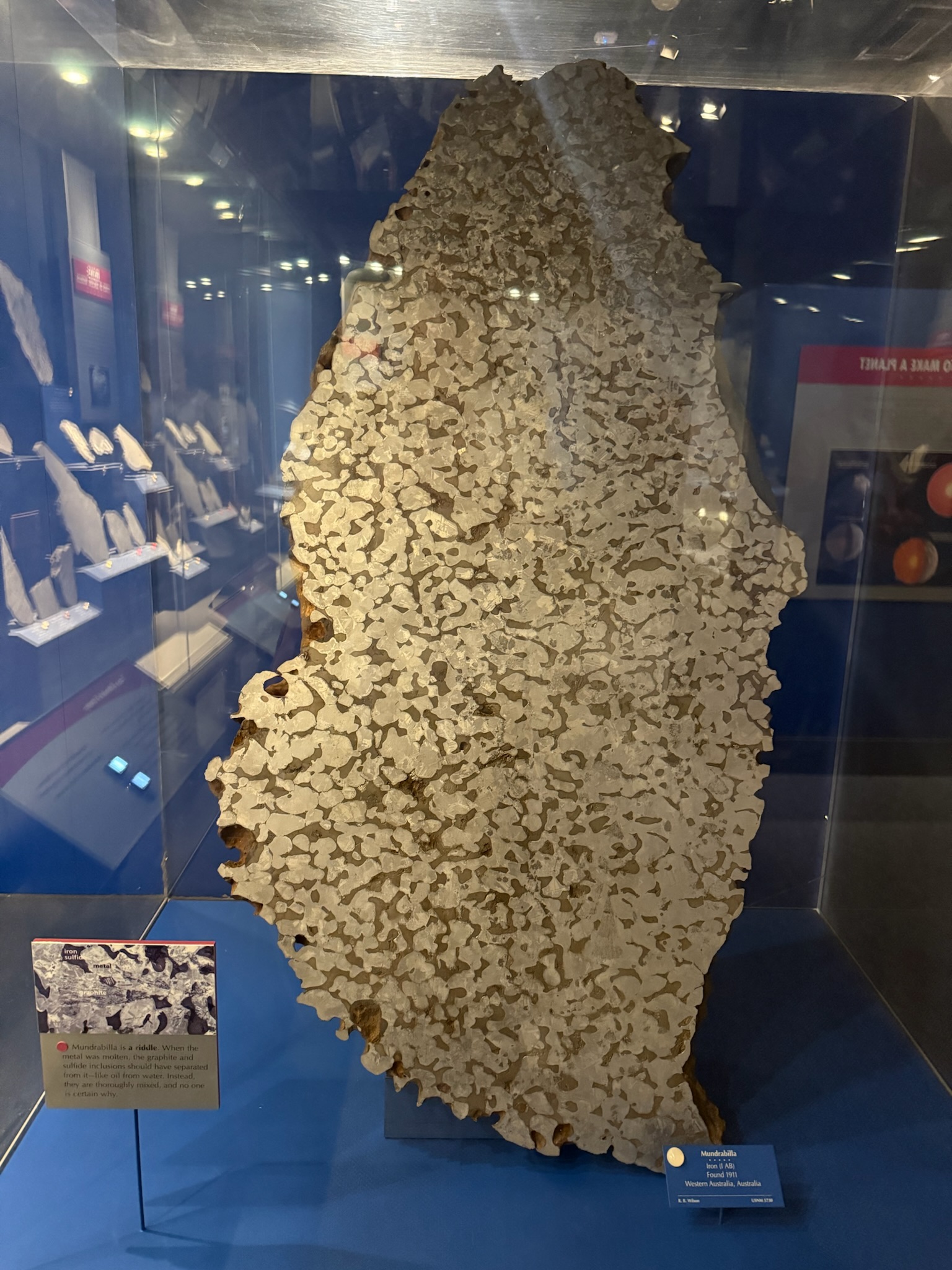
According to the signs, meteorites hit earth every day, but most burn up in Earth’s atmosphere and turn to dust. 50,000 tons of cosmic dust sailed through our atmosphere annually. The most intact meteorites have been found in Antarctica, primarily because it’s easy to find them there since there weren’t natural rocks or vegetation to disguise them. Meteorites that landed in Antarctica were also well preserved due to the deep freeze. In 2016, NASA sent a probe to an asteroid. NASA received the samples back in 2023. The sign said that being able to compare the meteorites found on earth versus the one from the probe helped scientists to better understand how the solar system formed.
Next we moved on to an exhibit on the moon. To be continued…