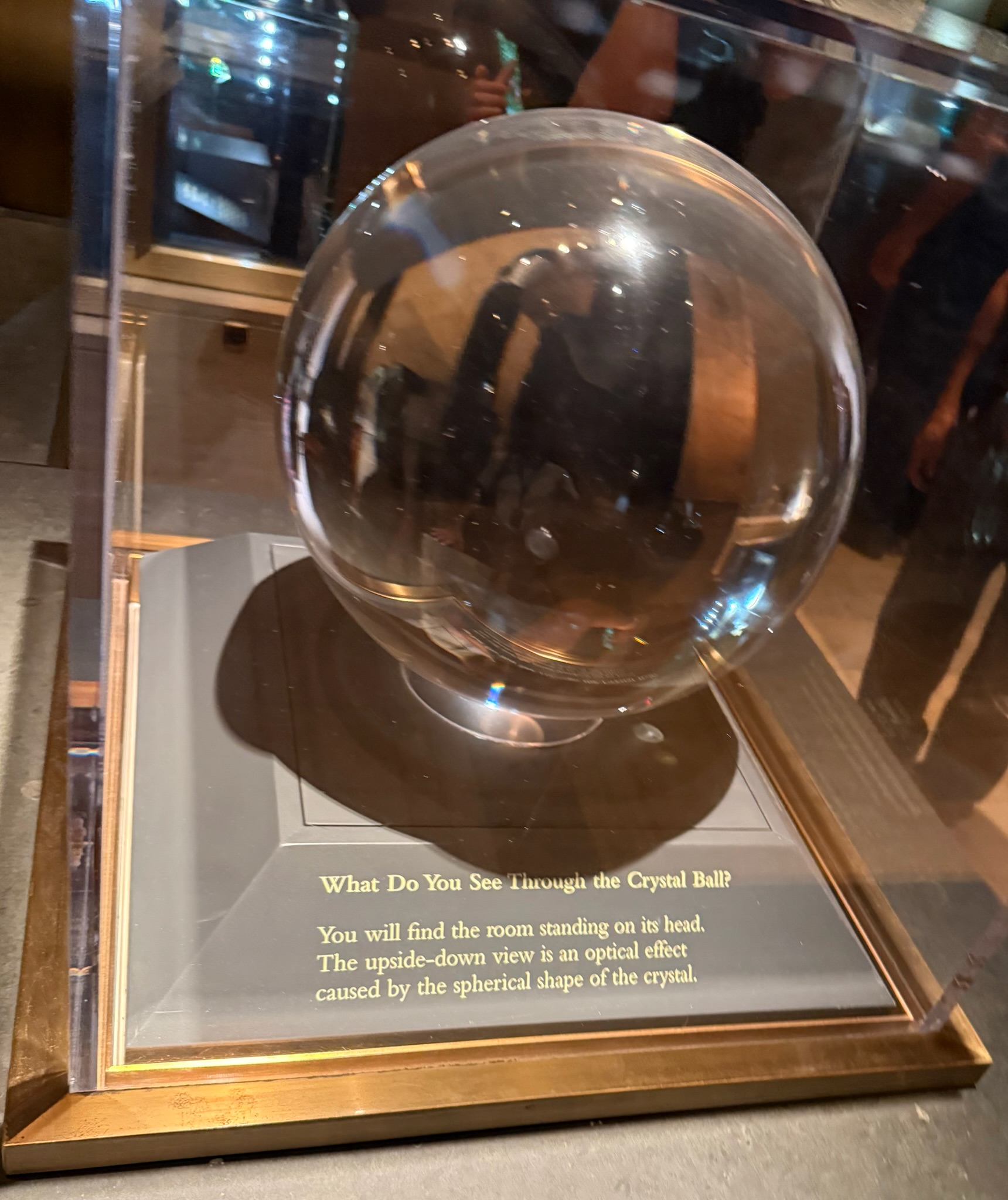
continued… After crystals, we moved on to gems. Gems were mineral crystals that grew naturally within the earth that have been cut and polished. The crystal room had had quite a few people in it compared to the other rooms we’d been in, and the gem room was jam packed. There were so many people that it was hard to get a good look at the objects on display. There were several extraordinarily large gems featured, including a literal crystal ball.
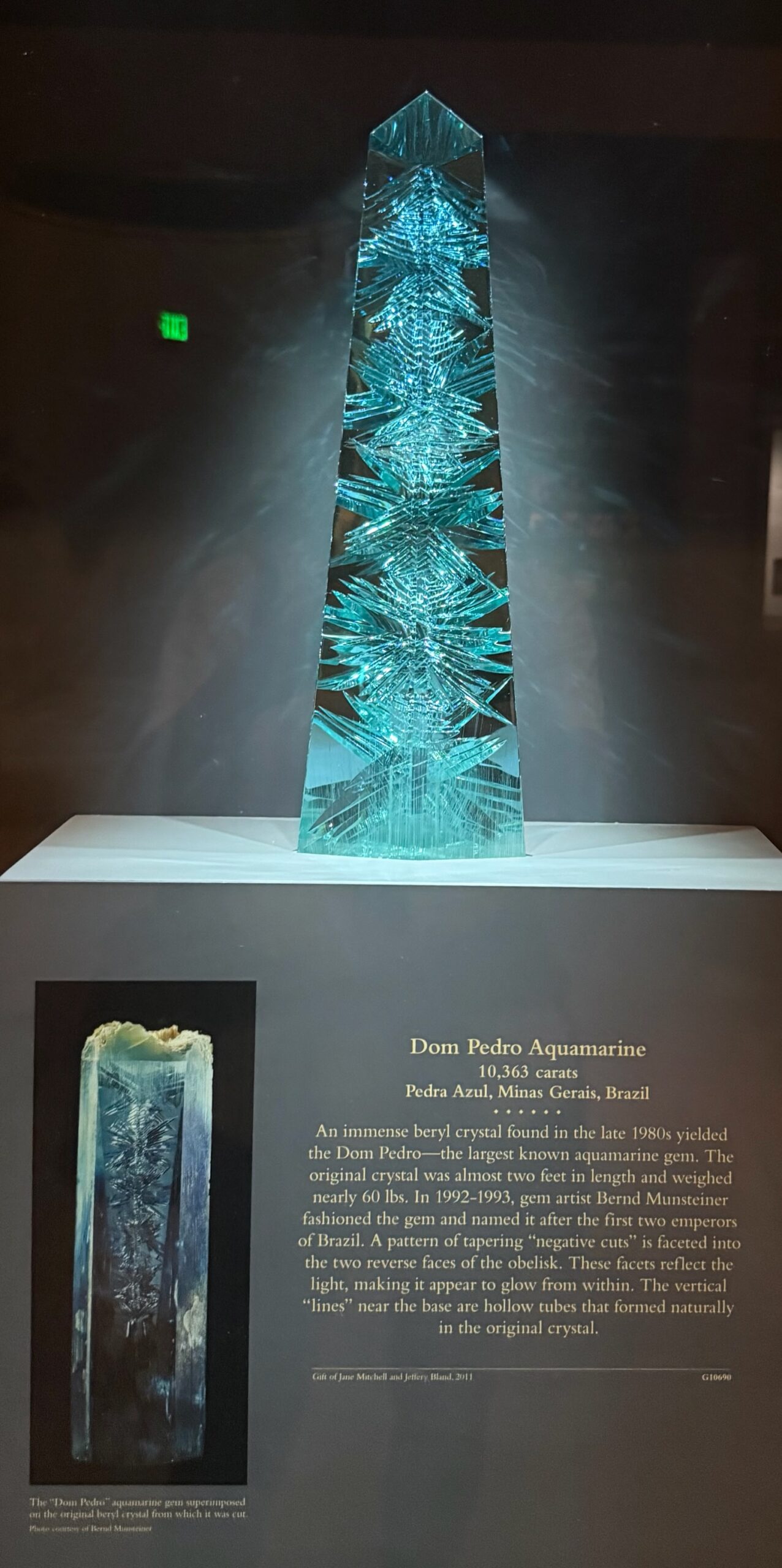
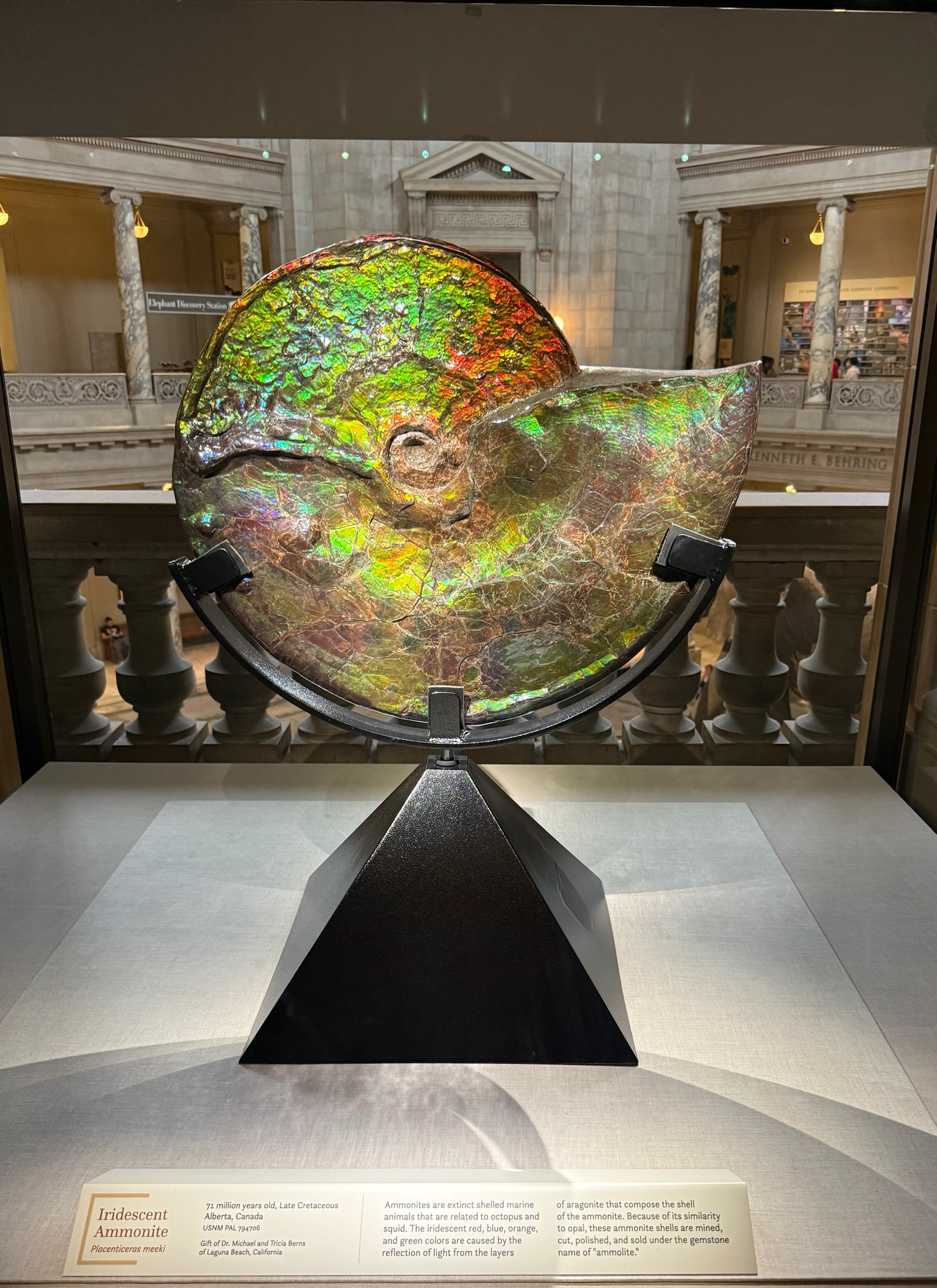
And several pieces of jewelry with extraordinarily large gems relative to what was normally found on jewelry.
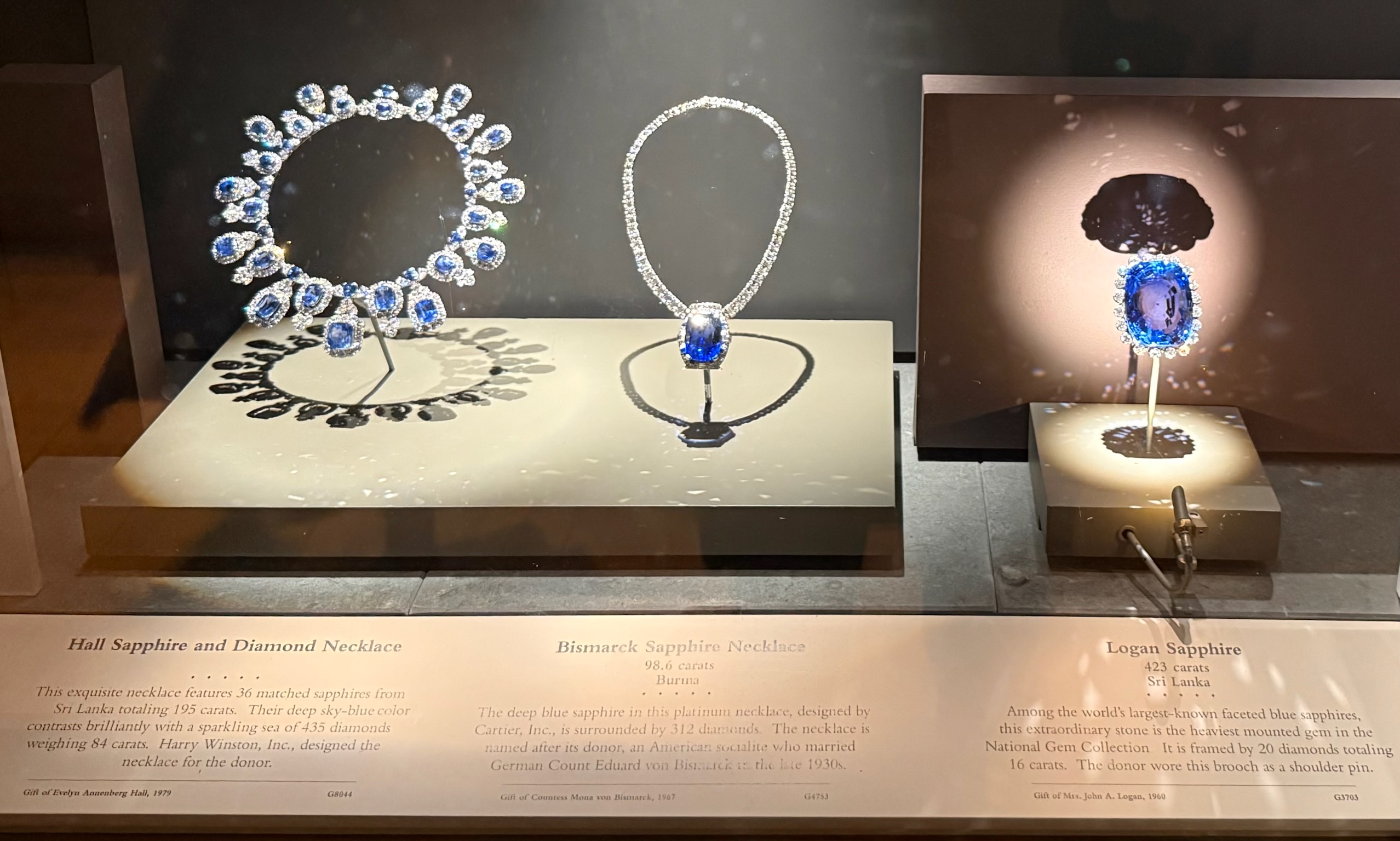
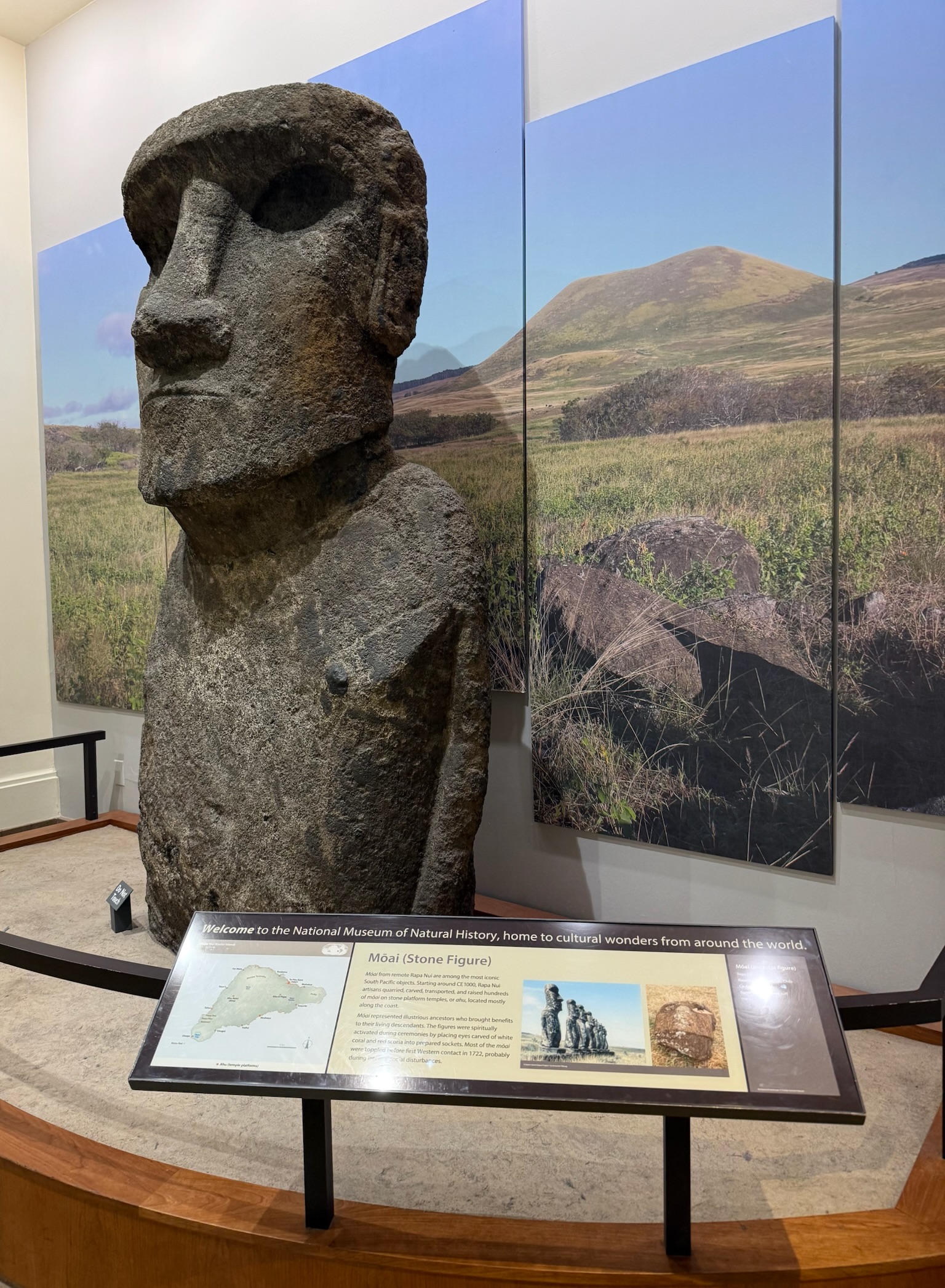
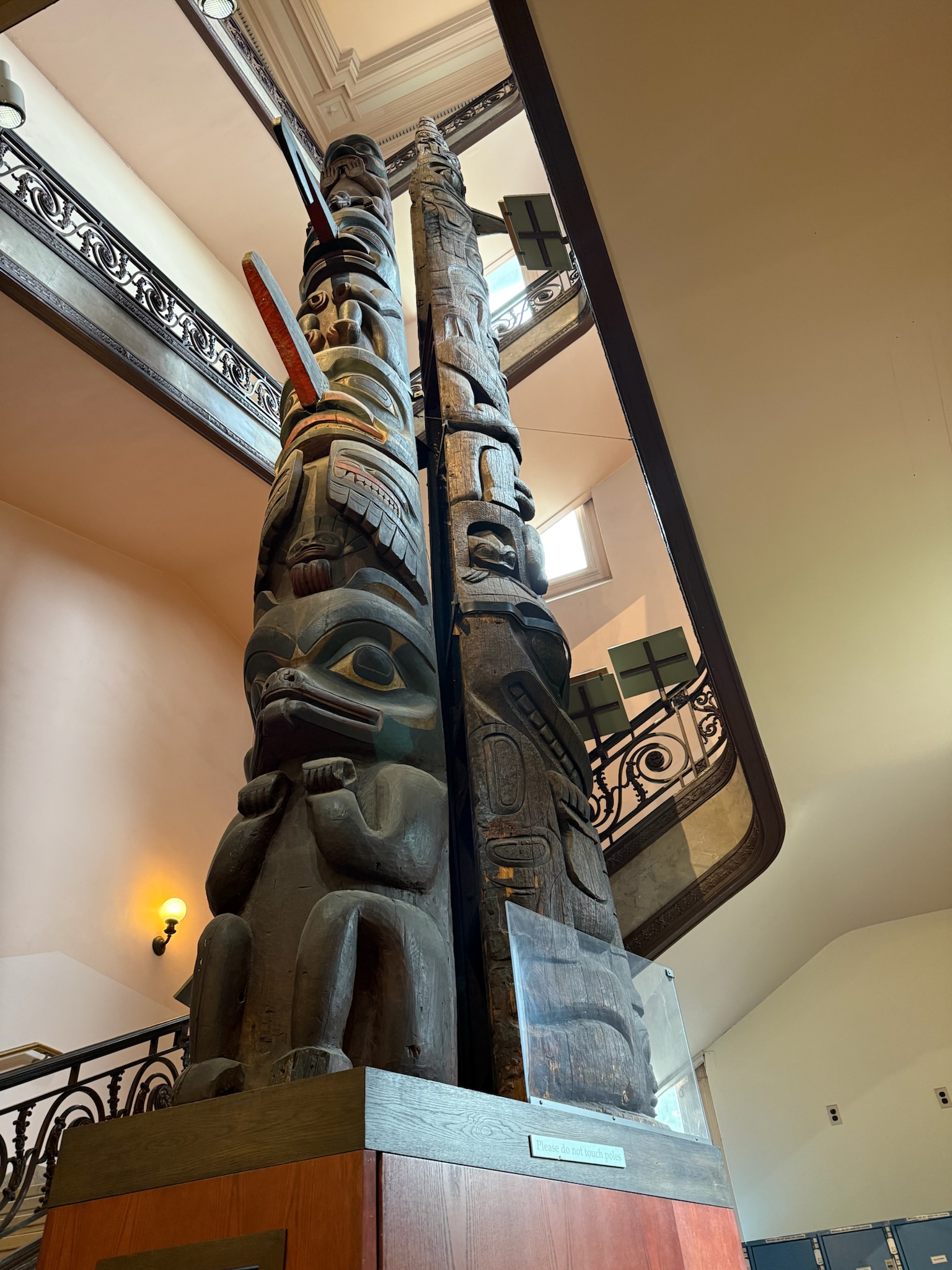
With all of the beautiful items, we all really liked the rocks/minerals/ore/crystal/gem exhibits. We wished we’d come on a day when we were feeling more energetic so we could have gotten more out of the extensive amount of information provided… and a day when it was less crowded in the gem room. At this point, Christi and Keith were both tired and ready to go. But Eric really wanted to see the exhibits on the first floor. We compromised by going to the cafe on the first floor to get caffeine to help us keep going. There were some interesting items in the hallways… the museum curators were good at maximizing spaces that were normally not utilized.
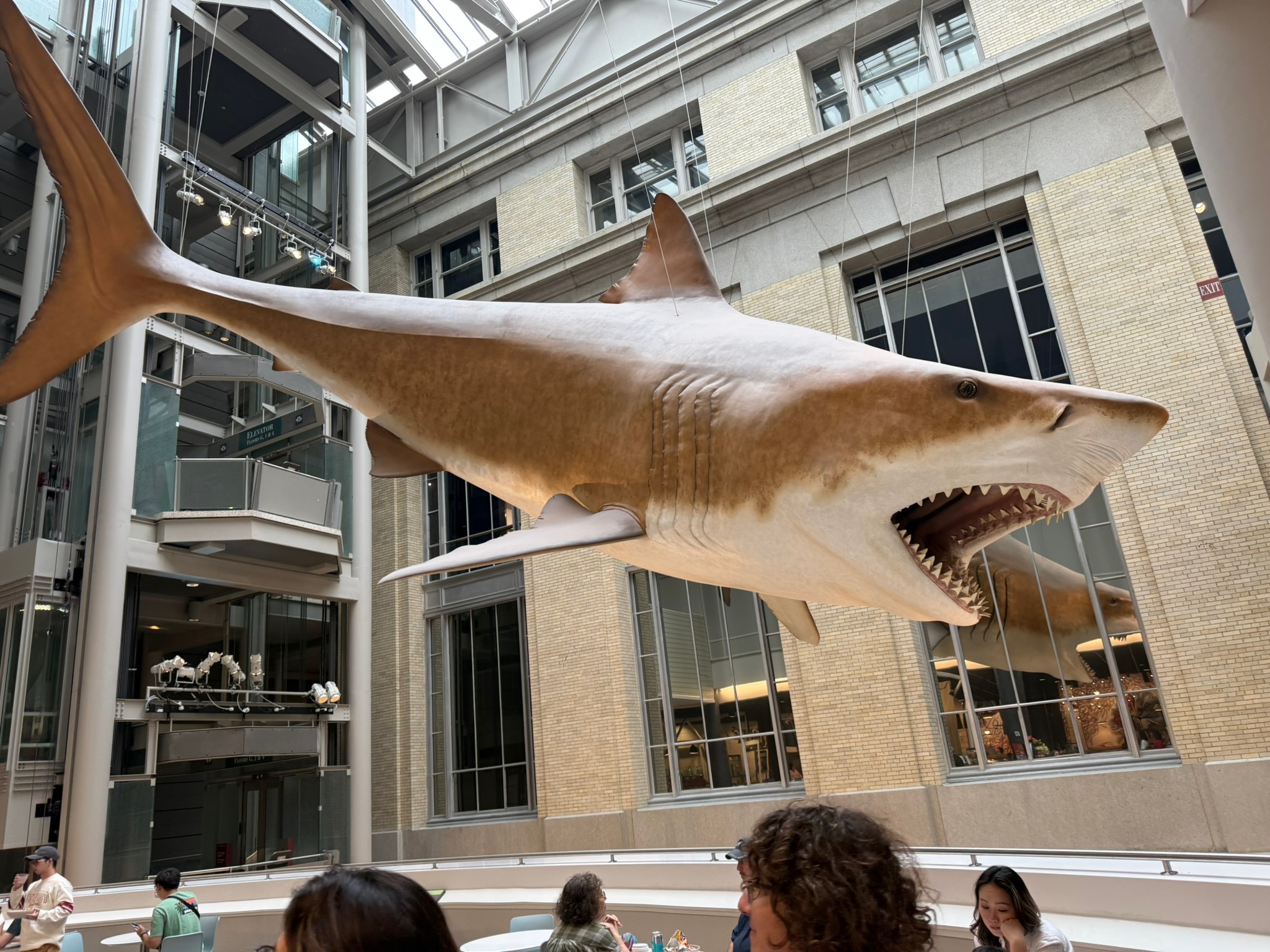
Through Blue Heeler, we’d met another boating family, named Peaks, via text. Peaks was also in DC and they were planning to go to the Natural History Museum today, too, and we agreed to try to meet up at the museum. In a perfect timing moment, they texted that they’d arrived while we were waiting for our beverages. They came to the cafe to meet us, and we sat and chatted with them for a little while. Thanks to rest and caffeine, we had a second wind and felt ready to continue on in the museum.
The closest exhibit to the cafe was Ocean Hall. Scientists believed that life began in the oceans 3.5 billion years ago with microbes. 600 million years ago, there was an increase in species diversity in the oceans, and eventually species moved to land. One of the most abundant organisms were Trilobites, arthropods which were distantly related to lobsters, scorpions and insects — and they did look like creepy bugs. The earliest Trilobites were mud dwellers with no vision, and they dated back to 542-million years ago. Over the next 300-million years, they evolved into 15,000 species — some crawled, some swam, some had complex eyes, some rolled up like pill bugs, some had spines, some were hunters, some were passive feeders, etc. Trilobites inhabited every ocean. They vanished 251-million years ago, though their populations began to decline well before that.
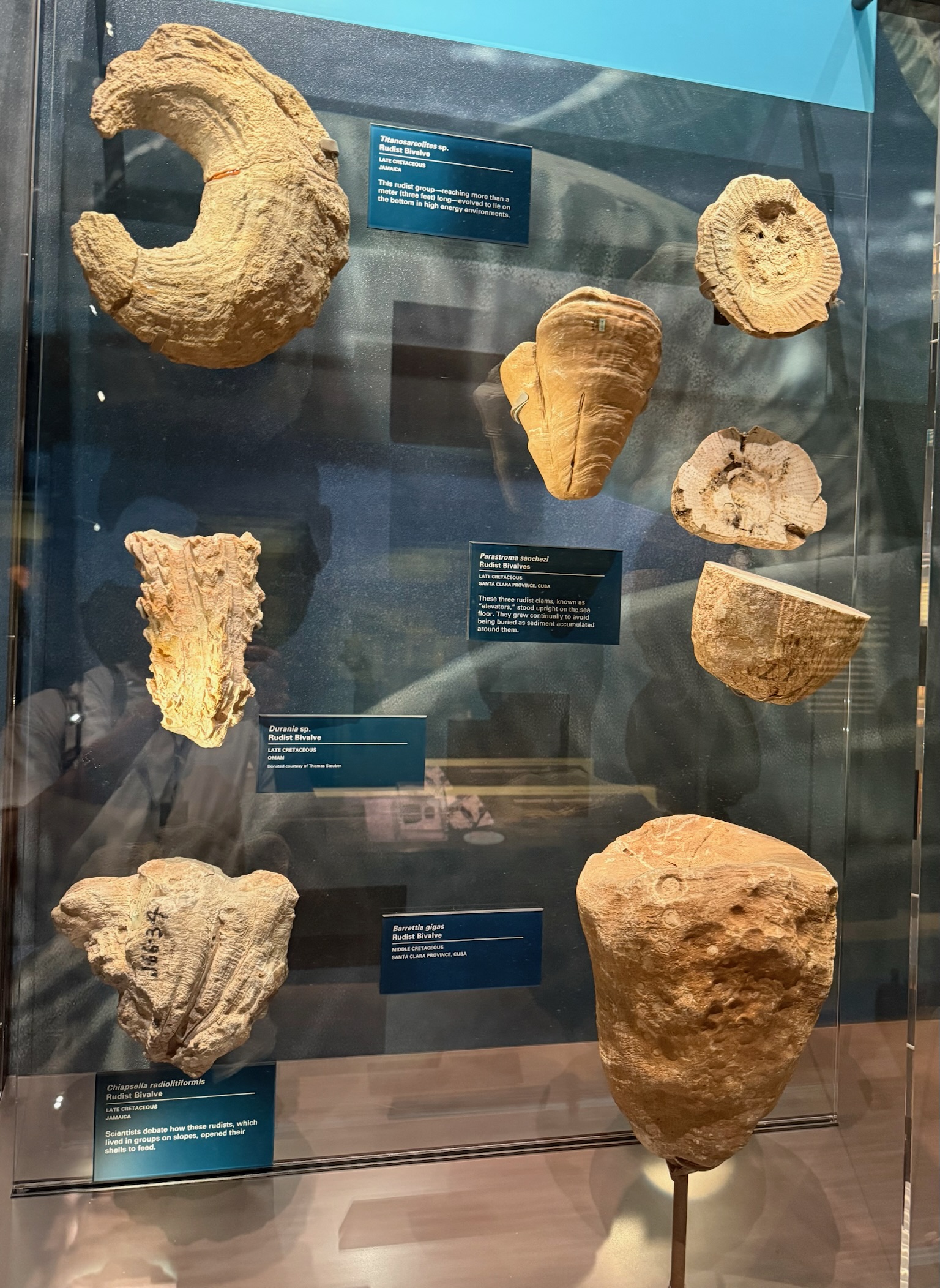
There was a display about ancient species of clams that built tropical ocean reefs 100 million years ago. These various species died out 65-million years ago, the same time as dinosaurs.
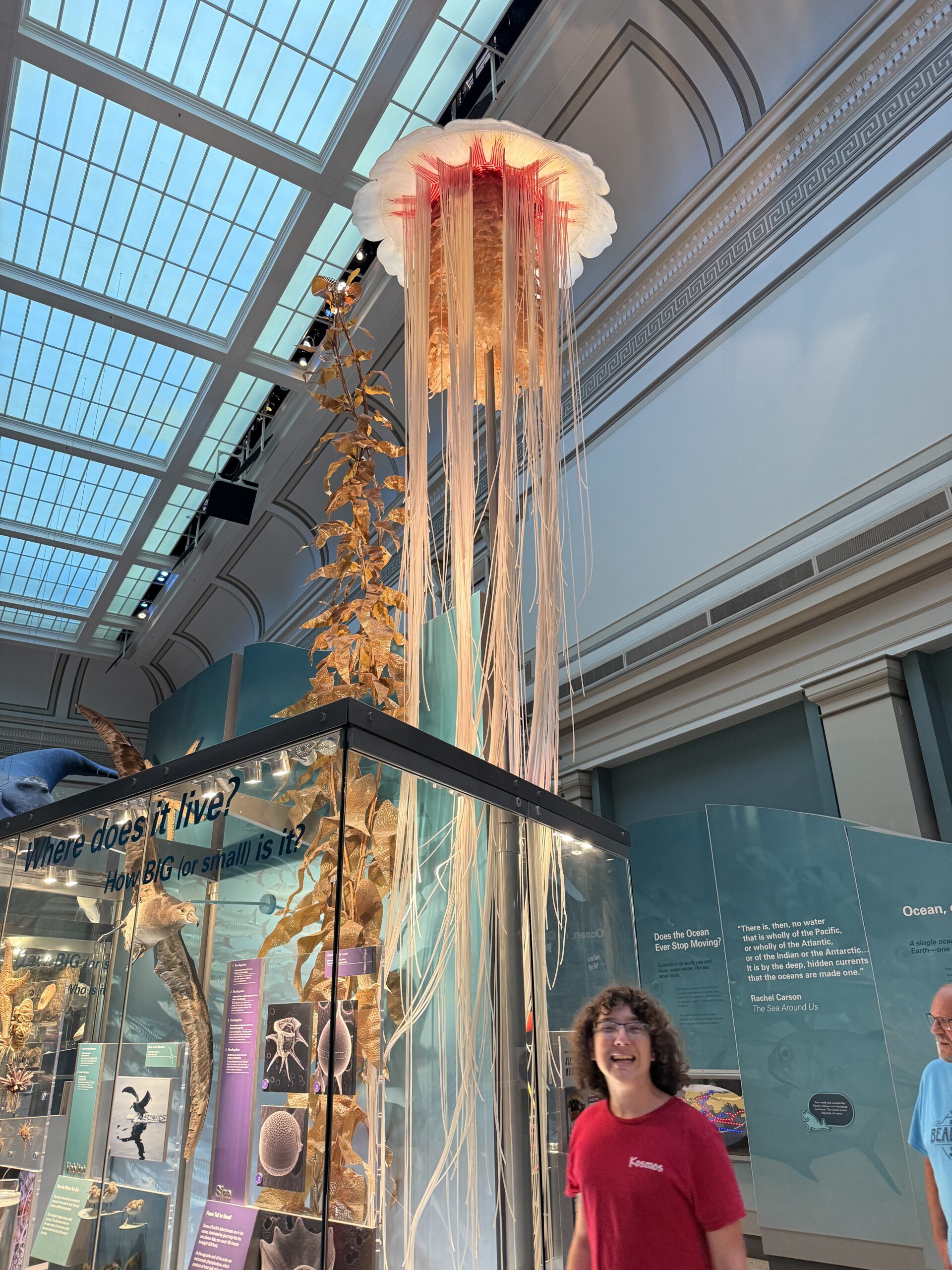
There was an exhibit about how assorted species that lived near the surface of the ocean have adapted to survive with so many predators around. There were a lot of adaptions mentioned — small fish swam in schools so they looked like a big fish and it was hard to pick off individuals, species like jellyfish were transparent and thus difficult to see, some species hid in seaweed, etc. Christi and Keith were already running out steam again and didn’t really absorb much from this exhibit.
There were a series of very short descriptions about different types of marine ecosystems, such as the polar oceans, estuaries, lava islands, kelp forests, salt marshes, mangrove swamps, rocky shores, etc. There was a display about how species evolved to adapt to different living environments, such as how a species of fish living in cold water was different from its cousin that lived in warm water.

There was an exhibit about baleen whales — species that eat via filters instead of teeth and live on tiny crustaceans. While this exhibit focused on Atlantic species of baleen whales and the Whale Museum in La Paz focused on Pacific species, overall, the information was similar.
There was a 13-minute video about using manned submarines to find life deep in the oceans. Being tired, we enjoyed sitting through a video. We were surprised to find that we already knew about many of the unique deepwater species mentioned from the cartoon show Octonauts that Keith loved when he was little. What was kind of hard to wrap our heads around was that more humans have been to outer space than into the deep ocean.
We were tired and had already learned a majority of the information at other museums, aquariums, rehabilitation/discovery centers, and/or in our boat travels, so we didn’t finish in the Ocean Hall. We moved on to the exhibit that Eric really wanted to see, Fossils. To be continued…