continued… We moved on to the exhibit that Eric really wanted to see, Fossils. It covered 600-million years of history, and it was quite large. Eric was really interested and keenly read each and every display. Christi was ambivalent and half-heartedly read the displays that caught her attention. Keith was grossed out by skeletons and didn’t even want to be in the room. Keith constantly asked if we could leave yet and was frustrated when Eric kept saying no.
Since it was believed that life on Earth began in the ocean, it wasn’t surprising that the display on ocean creatures was large. Like in the Ocean Hall, they explained the evolution of many specific types of species. Scientists believed that in the early days of Earth, the world was very hot. Species evolved from simple organisms like algae and plankton into all kinds of complex species. The evolution helped them to adapt to their surroundings better, as well as to changes in their surroundings — either the species changed locations for one reason or another (ie to find food) or there was an environmental change (ie a salinity change). Some species left the water for land.
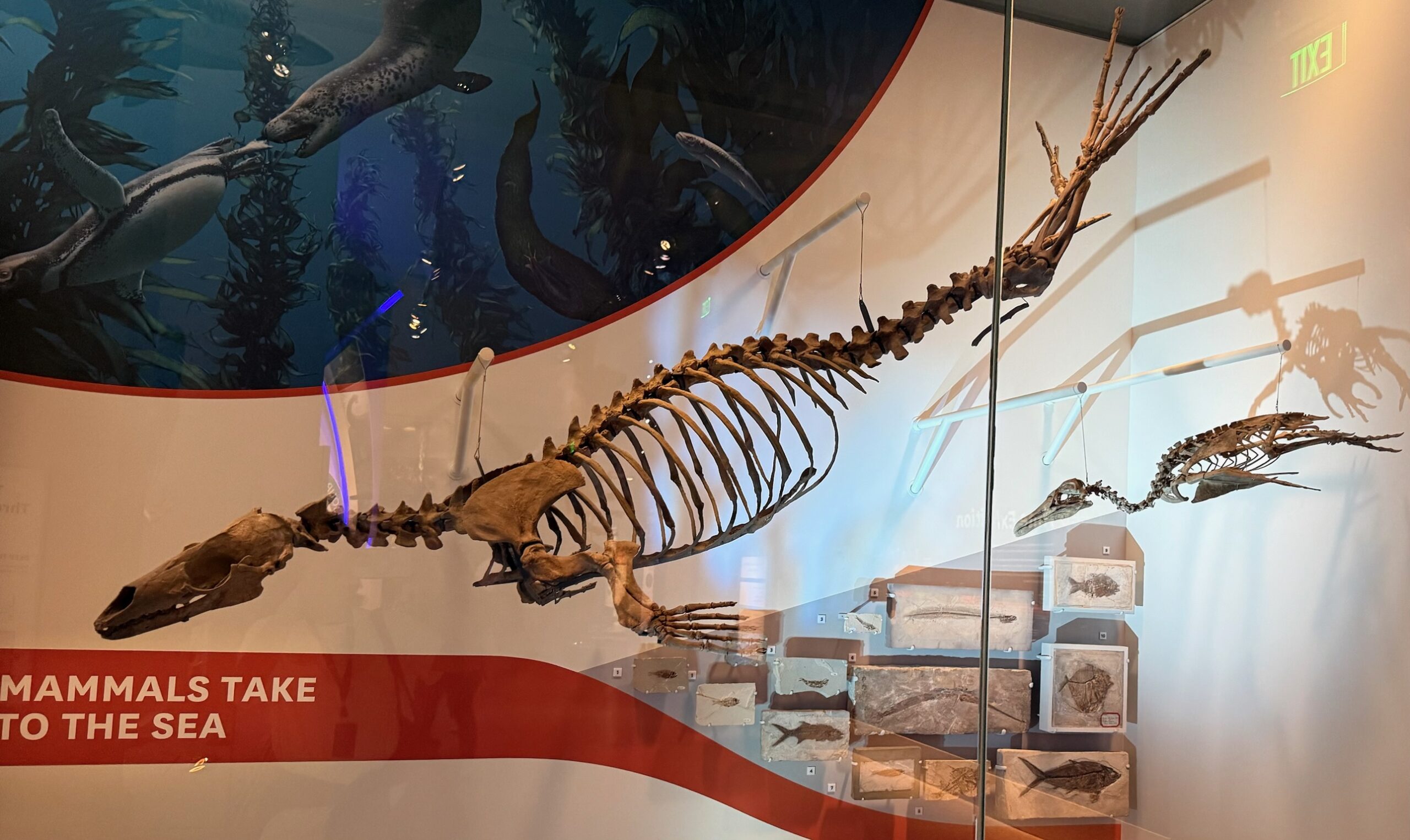
In the photo below was a species of seal that scientists believed to be 6-million years old; a species of penguin believed to be 6-million years old (though scientists believe that other penguin species dated back to 65-million years); and an assortment of fish that were believed to be 50-million years old. Fish haven’t changed much since then!
359-million years ago, there was an ice age. The ice sheets advanced and retreated in cycles, causing the sea levels to rise and fall, thus drastically changing the ecosystem. It was cooler and more oxygen rich than before. Lycopsid trees, giant ferns and horsetail plants flourished in the tropics. Vertebrates developed the ability to lay eggs, allowing them to be fully terrestrial. Many new species of arthropods appeared. Arthropods were invertebrates that had jointed legs, segmented bodies, and hard exoskeletons. Examples include trilobites, millipedes, scorpions, crustaceans, insects and spiders. Scientists believed the cockroach was 305-million years old. Back then, arthropods were much larger than they were nowadays. Currently, 9 out of 10 animal species were arthropods.
300-million years ago, herbivore creatures became larger. Since plants were harder to digest than meat, only carnivores became large until digestive systems developed that could handle the tough cellulose in plants. Once that shift occurred, many species of herbivores rapidly evolved.
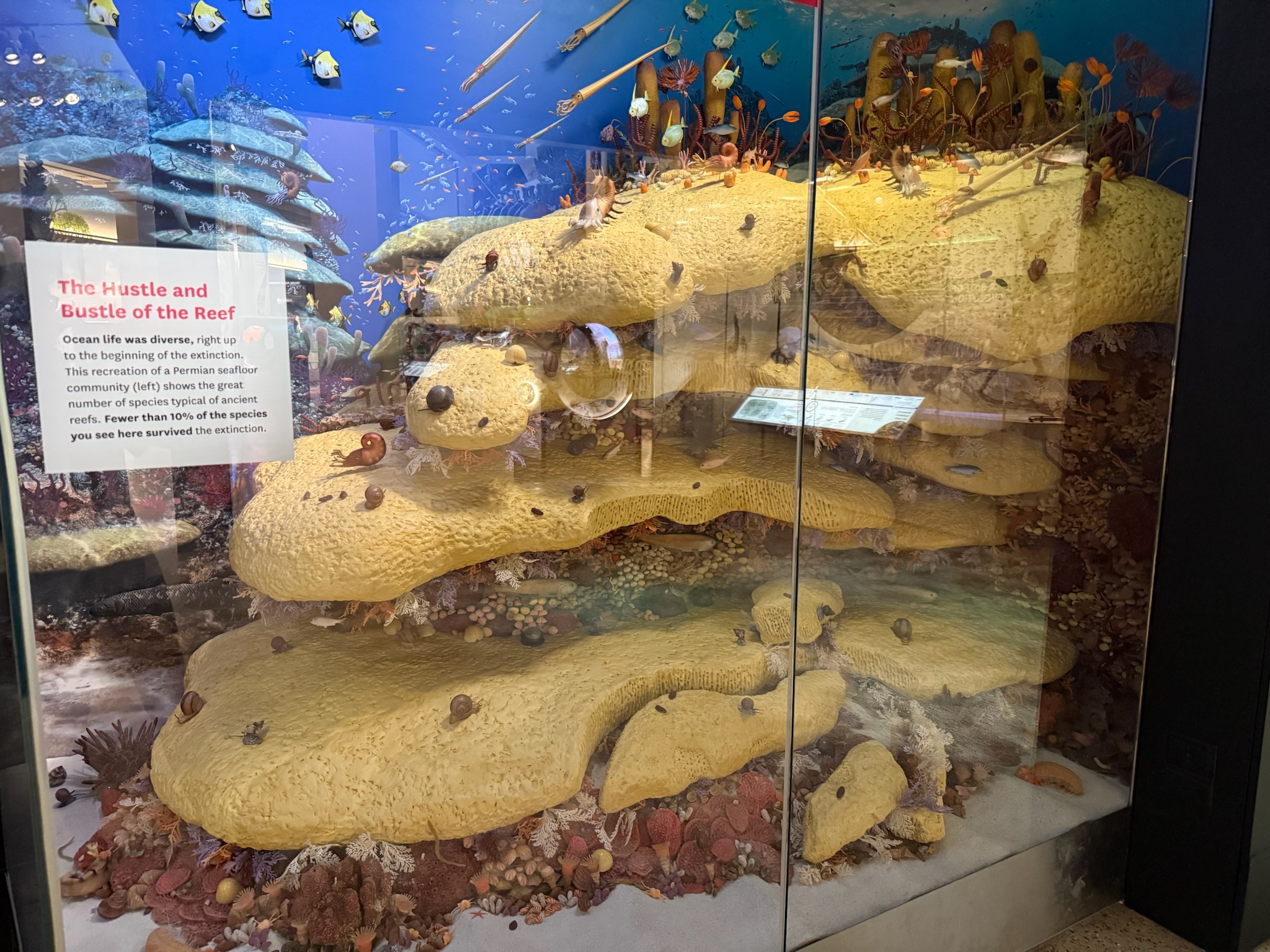
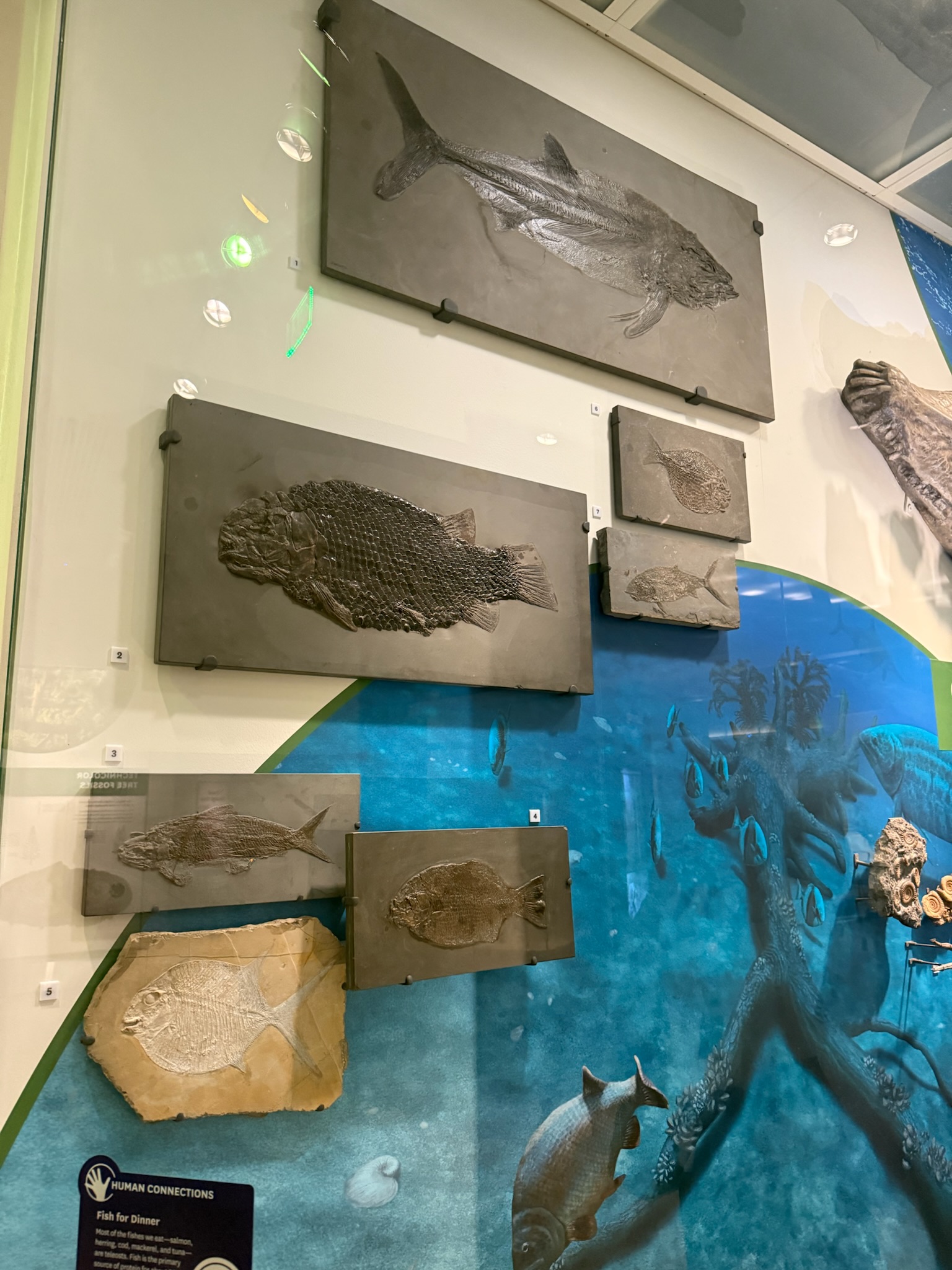
252-million years ago, there was 1 million year period of massive volcanic activity that caused the biggest mass extinction event in Earth’s history. Due to acidification the water, the ocean species were hit hard, with an estimated 90% of species dying out. The survivors repopulated the seas within a few thousand years. The creatures adapted and evolved into a flourishing — and changed — ecosystem within a few million years. Turtles and frogs appeared. It was believed that this era was when some land dwelling species returned to the sea, including the precursors to what are now mammals and reptiles. Teleosts were fish that first appeared 215 million years ago. Today, 90% of fish species were teleosts.
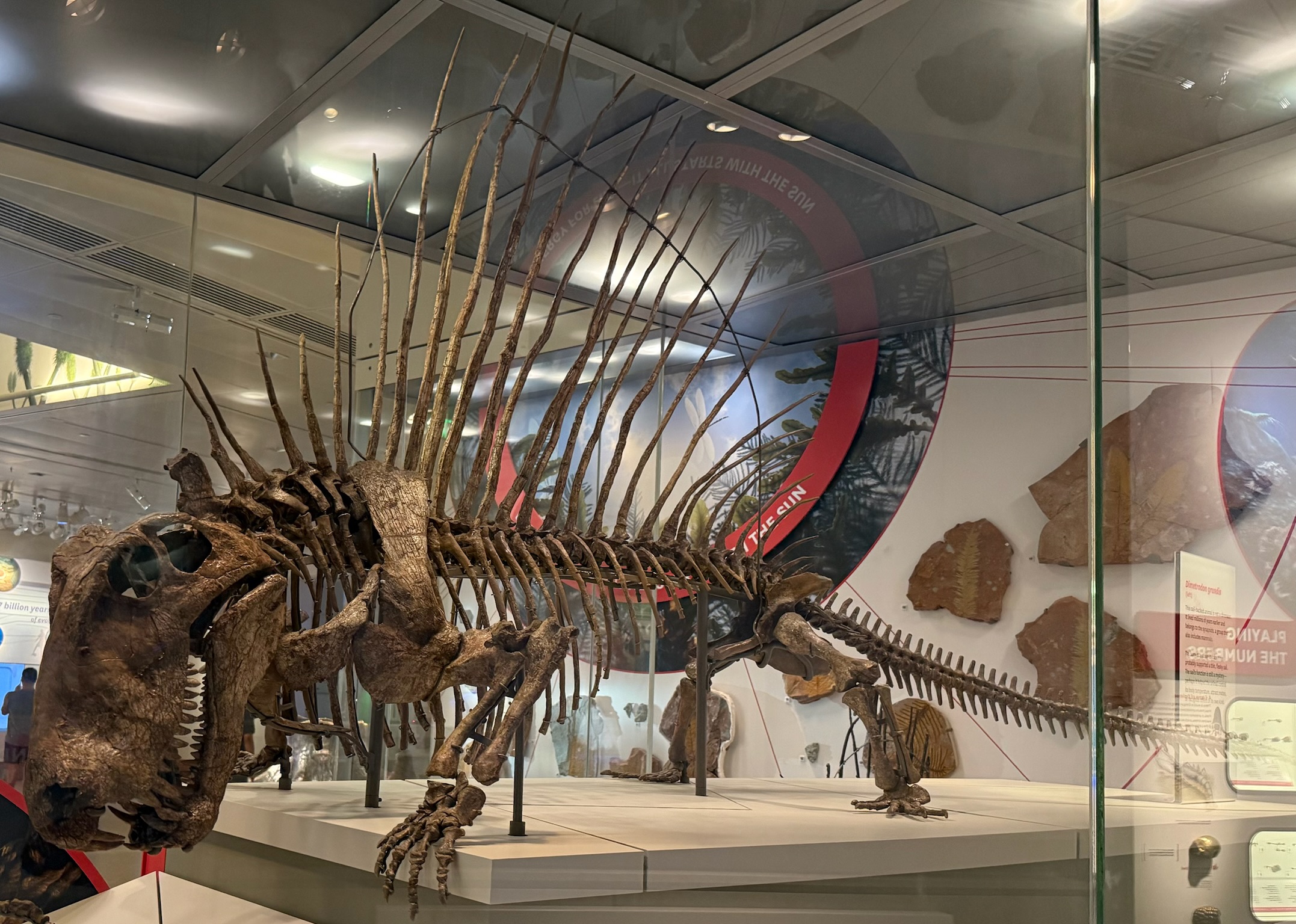
Meanwhile, on land, it was believed that conifers (evergreens) were the dominant tree species. Ferns were also abundant. Mammals and dinosaurs (which were reptiles) appeared and began to evolve. Dinosaurs came in all shapes and sizes, from little shrew-sized creatures to the gigantic tyrannosaurs and sauropods. Interestingly, modern birds originated from dinosaur lineage, so birds were counted in the dinosaur numbers. There were also ocean dwellers from the dinosaur lineage.
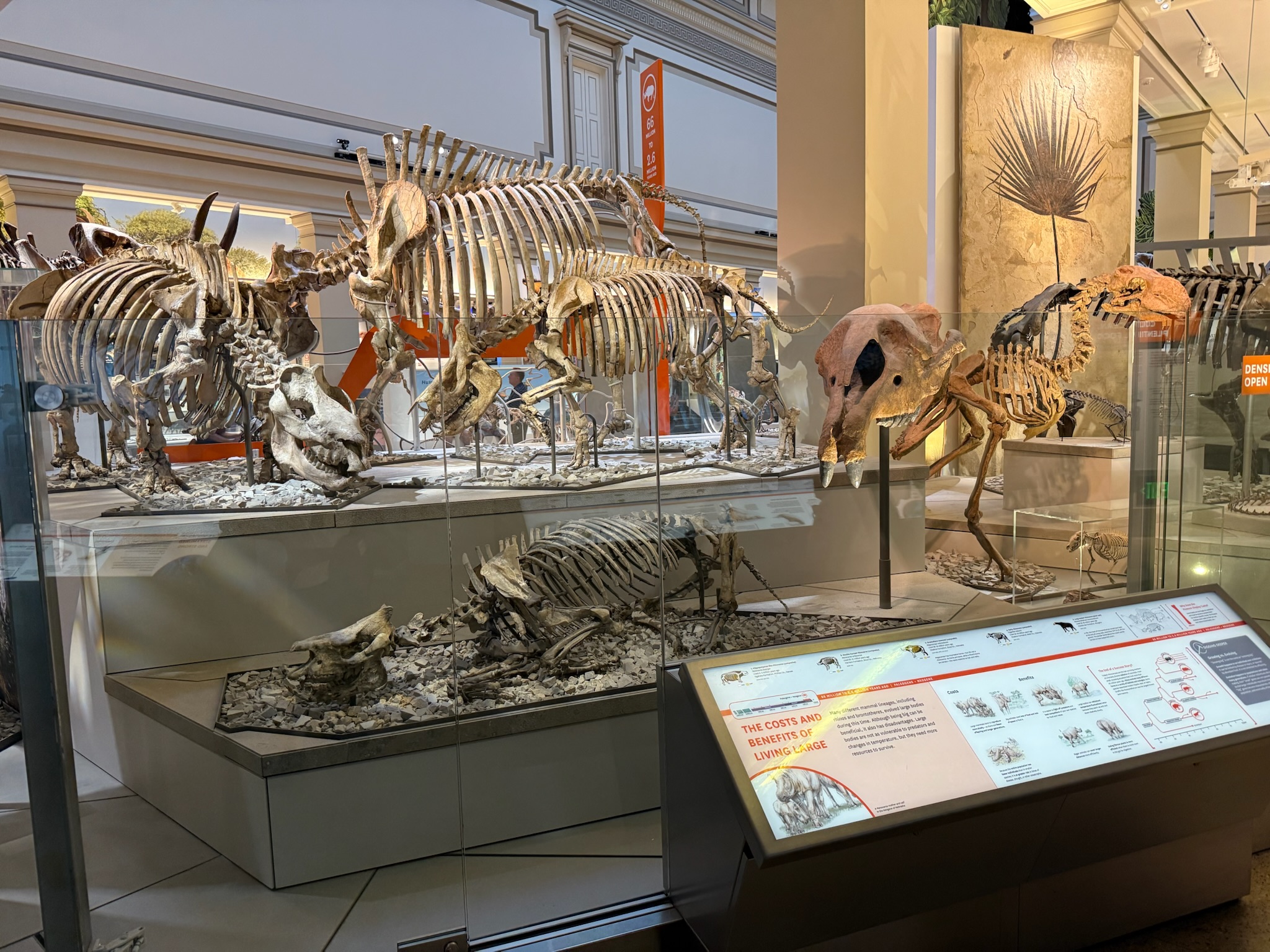
200-million years ago, Earth was very warm again. There was no ice at the poles and the sea levels were high. Angiosperms, or plants that flower, first appeared on land 130,000 million years ago. By the time the angiosperms had appeared, dinosaurs were already the dominant species.The angiosperms evolved quickly (by geological time) into different lines and they soon dominated the plant world. They also increased the amount of oxygen in the atmosphere. Today, 90% of plants were angiosperms. Insects evolved alongside the angiosperms, helping the plants flourish by facilitating the transfer of pollen so the plants could reproduce. Today, insects made up almost 80% of all living species on Earth.
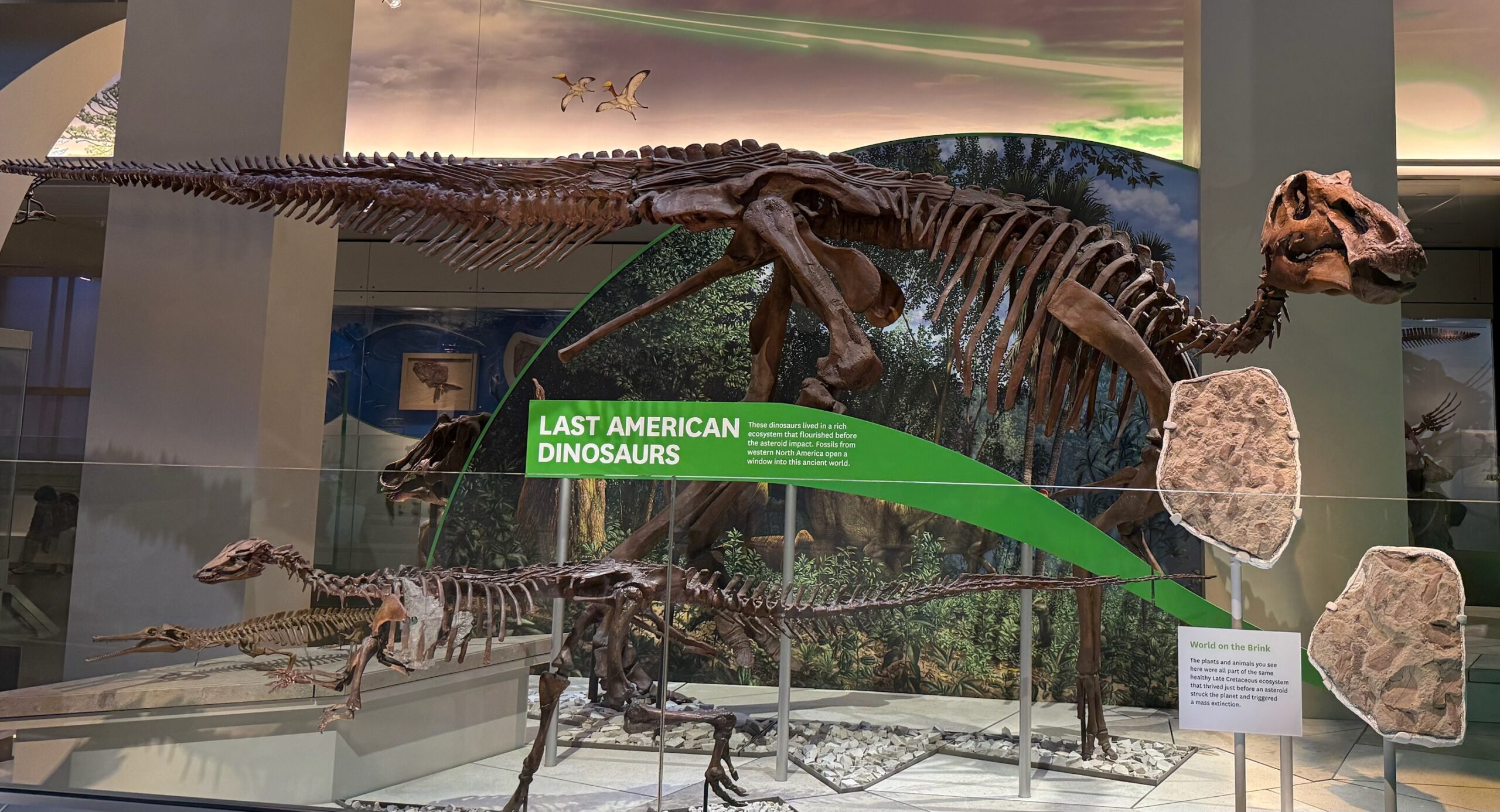
145-million years ago, Earth was hot again. There was no polar ice; the sea level was 100 meters higher than it currently is, so the continents were mostly covered with shallow seas. Volcanic activity was common. CO2 in the atmosphere was 4-times what it was now, average global temperature was 9 degrees celsius hotter than now. By 76-million years ago, it was still hot and the sea level had risen another 100-meters. The dinosaur populations decreased during this era.
There was a big display about a 6-mile wide asteroid that hit Earth near Mexico about 66-million years ago.It caused tsunamis and massive fires that led to a global ecosystem collapse and another mass extinction. Many species of creatures completely died out shortly after, including dinosaurs (except for a few bird variants) and the reef-building clams that we’d just learned about. While there were certainly many exceptions, in general, the creatures that went extinct tended to be larger and/or have less varied diets. The theory was that it was harder for them to find shelter and/or food. Organisms that could survive on decaying matter fared better than those that relied on living plants or animals. Less species of plants were wiped out because many of the plants were able to regenerate from the seeds that had previously dropped.
The species’ that survived hit the evolutionary jackpot. With less predators and competition for food, they were able to rapidly evolve (by geological standards). Within a million years, the ecosystem had completely rebounded, but with very different forms of life than the ecosystem that had existed prior to the asteroid. Modern mammals came into being, such as rodents, primates, rhinos and horses.
Humans appeared 300-million years ago in Africa. By 13,000 years ago, humans had spread to every continent except Antarctica. There have been two ice ages since then, and the changing temperature/sea levels of Earth have forced animals and plants — including humans — to adapt, evolve, move to another habitat or go extinct. Many species have become extinct, such as dire wolves and mammoths.
The Fossil exhibit was extensive and packed with information. The summary above barely touches the tip of the iceberg of information. We know there are some holes in the timeline; since Christi writes the blog posts and she didn’t read every sign, some information was missed.
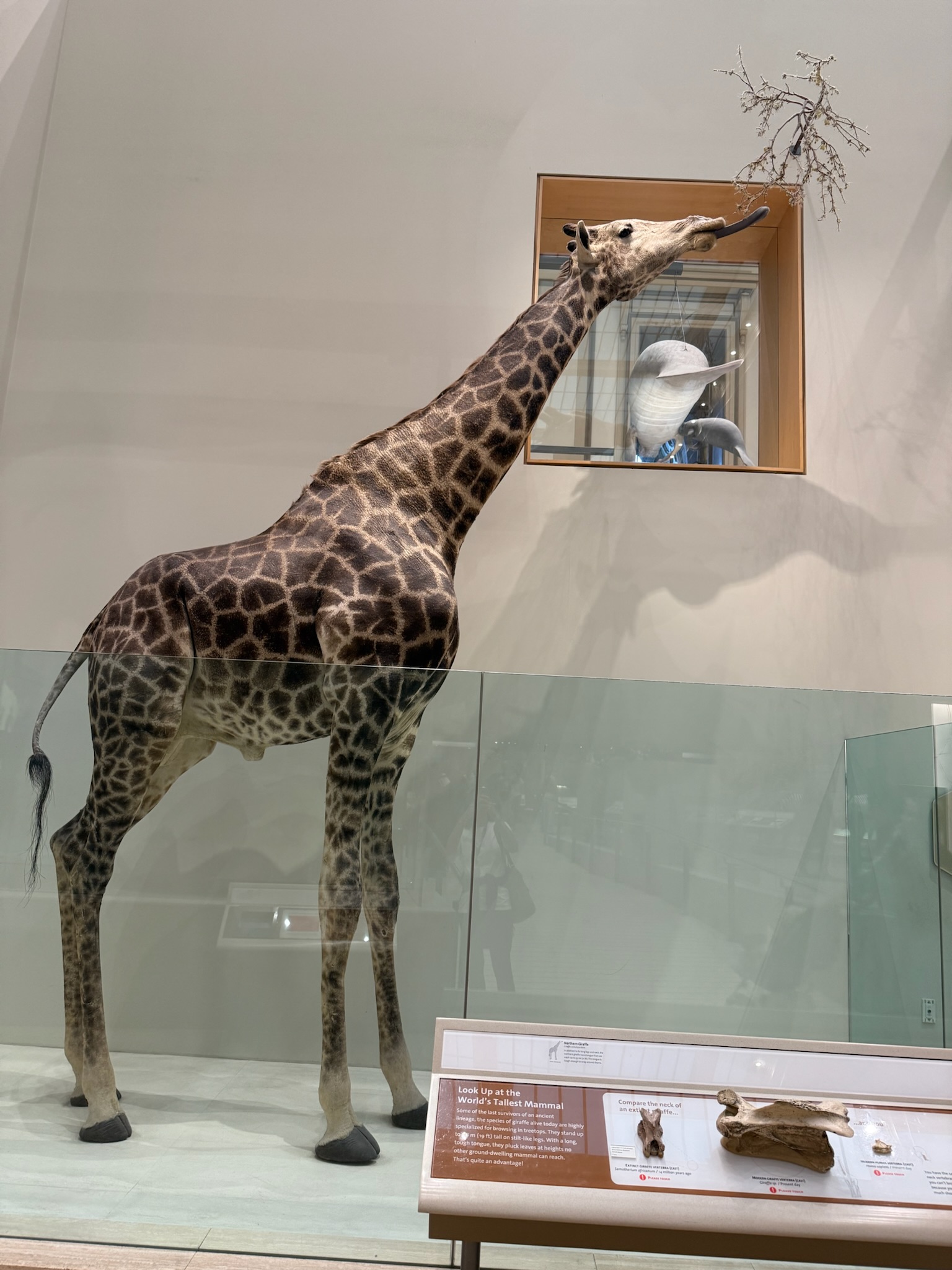
The last exhibit we went to was Mammals. Keith and Christi wished they had come to the mammal exhibit after our caffeine break instead of Ocean Hall and Fossils. The stuffed animals on display were really interesting. They were artfully displayed in habitat groups, showing which animals shared habitats with information about each animal. However, at this point, we were too tired to read any signs. We quickly walked through the exhibit and exited the museum.
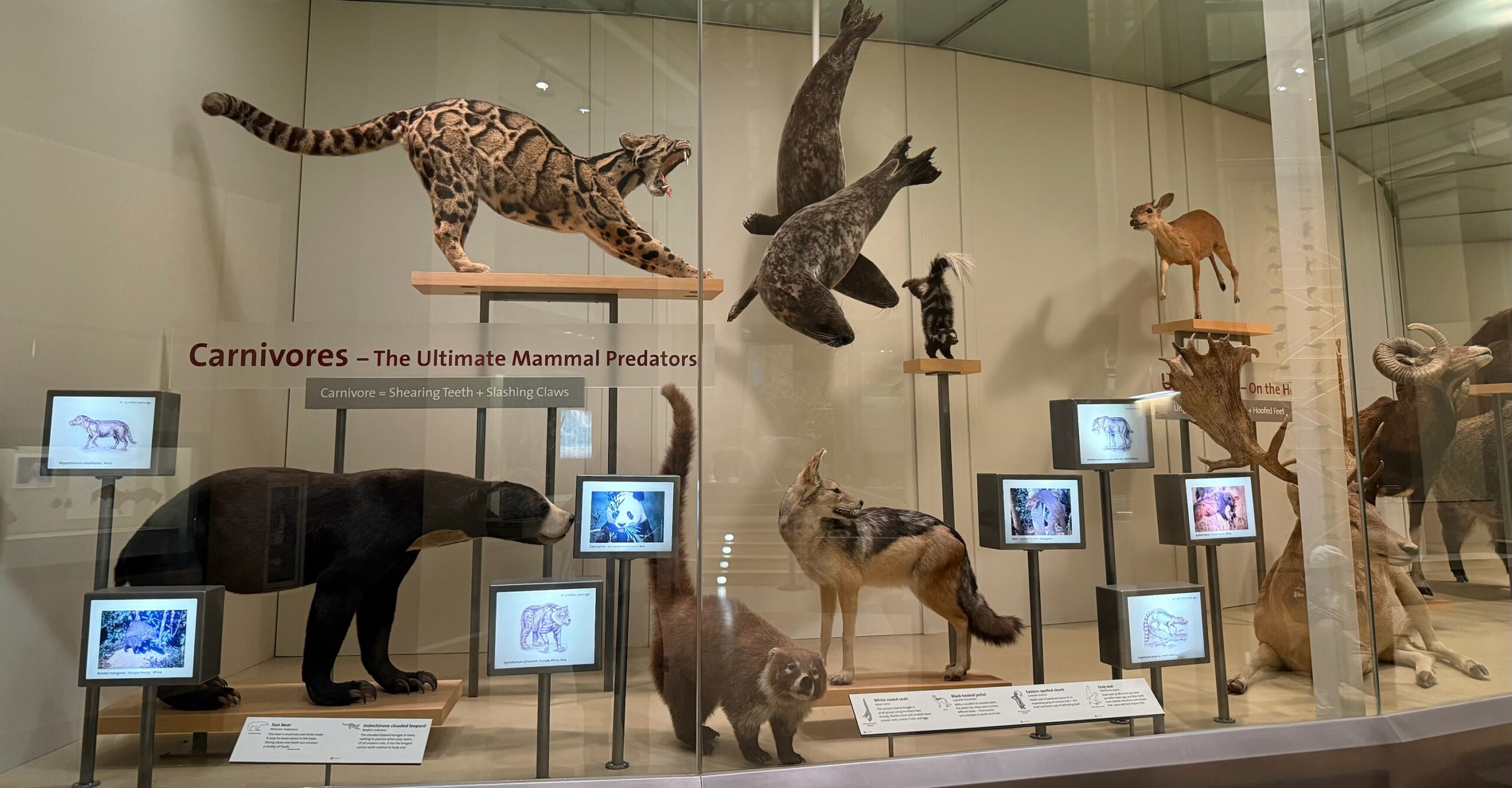
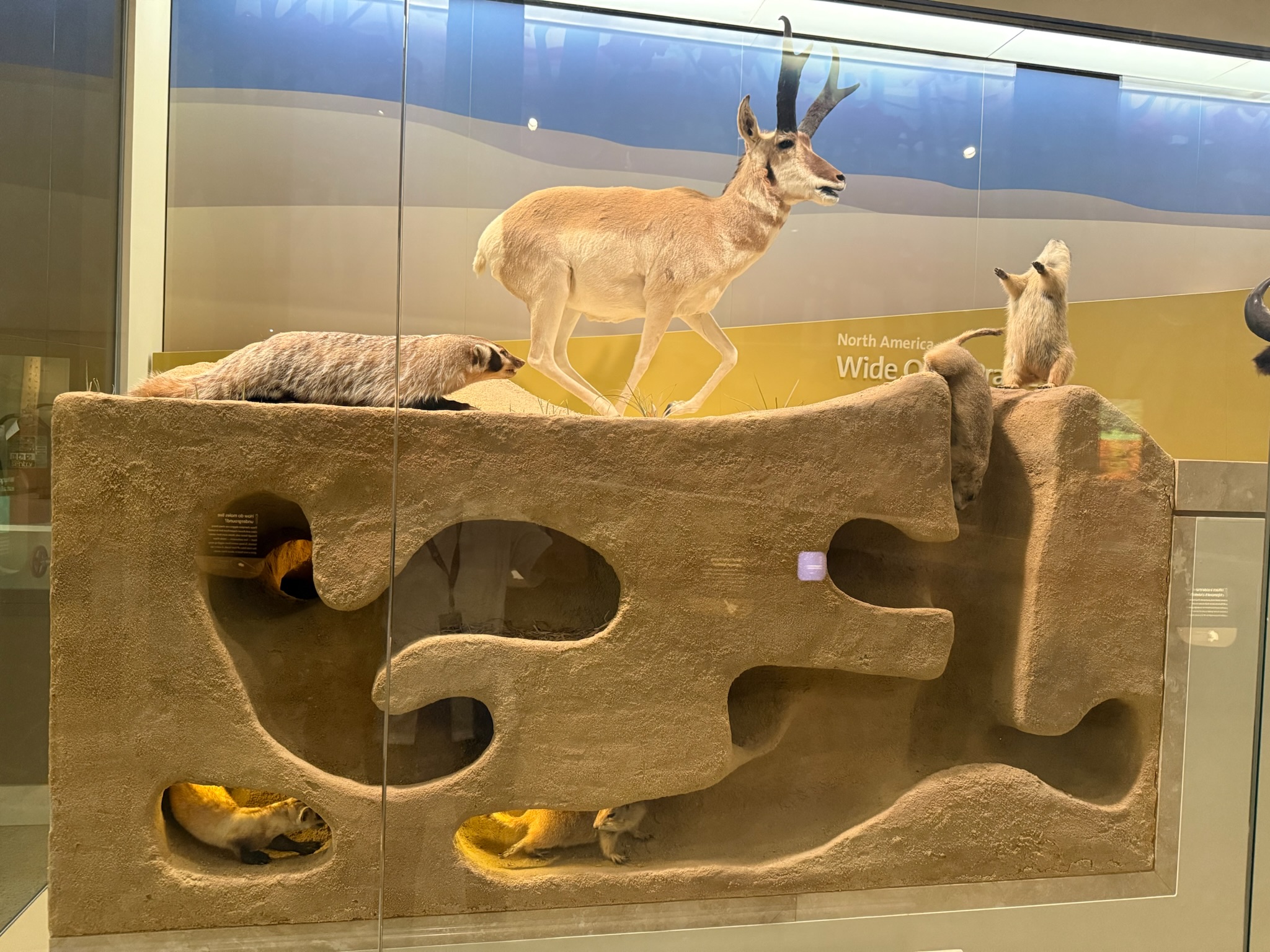
We again wished that we’d gone on a day where we were feeling more energetic because we probably would have enjoyed it more. We walked back to the bus stop, which was directly in front of the Hirshhorn Museum and Sculpture Garden. Again, feeling like we needed to see it now or never, we decided to go in.
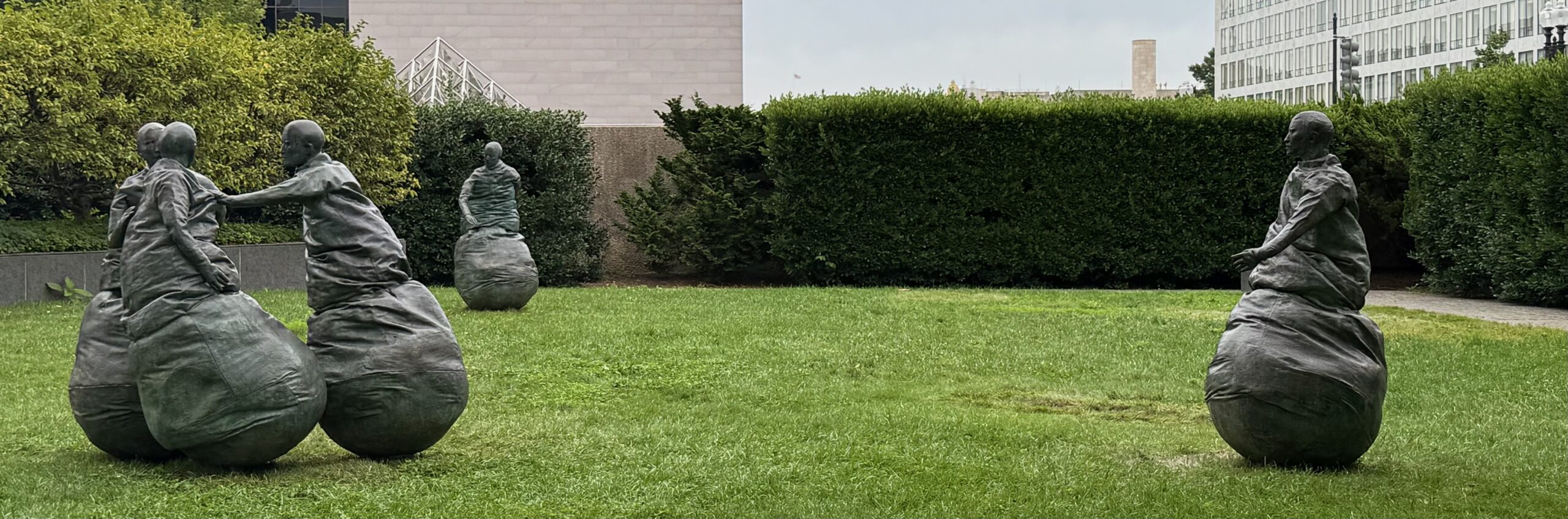
The sculpture garden portion on the first floor was being renovated, so the majority of the sculptures had been removed. The few left were… weird. The guy who collected this art seemed to have a fixation with decapitation and people melting.
This museum was also free. Inside, we realized it was modern art. We’re not the biggest modern art fans, but there are some types that we liked. The sign said that in the basement there was an exhibit called Basquiat x Banksy. Banksy happened to be one of the modern artists that we liked, so we headed down to the basement. The art on display was creepy and gross. Here was one of the most mild pieces.
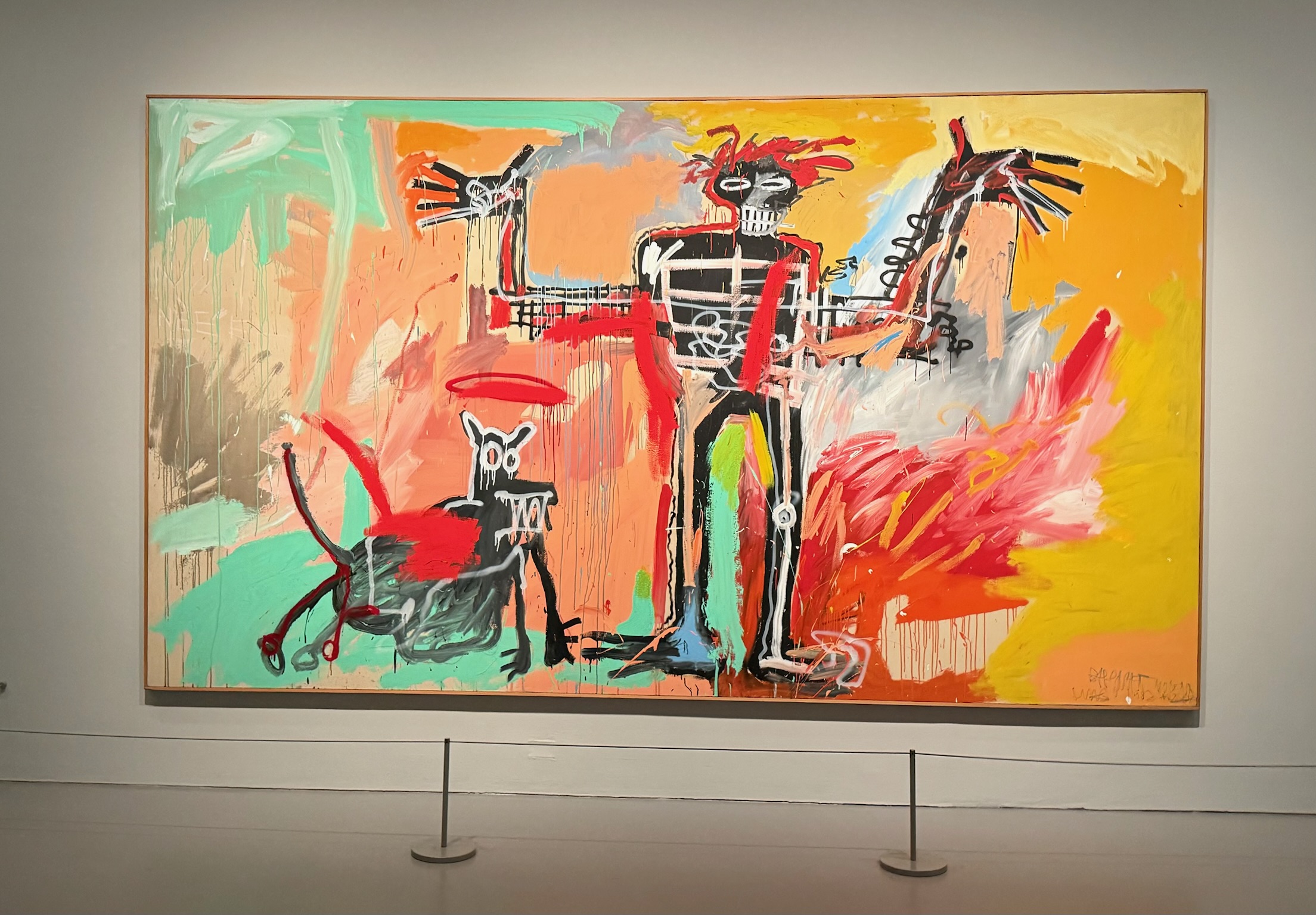
We’d never seen such creepy Banksy pieces before, and after seeing them, we realized that we didn’t like his work as much as we’d thought we did. We went up to the 3rd flood. The entire floor was a giant modern art piece that looked, from a distance, like a brick wall with some fuzzy images in it here and there. Again, it was a style of art that we didn’t particularly enjoy.
The second floor had two exhibits. Christi and Keith poked their heads into each and decided they probably wouldn’t enjoy these exhibits, either, so they sat in the hall and waited while Eric walked through the exhibits. Eric said that none of the art on the second floor resonated with him.
When we left the museum, we caught the free shuttle back to The Wharf. We went straight back to Kosmos and didn’t go back out again for the night.