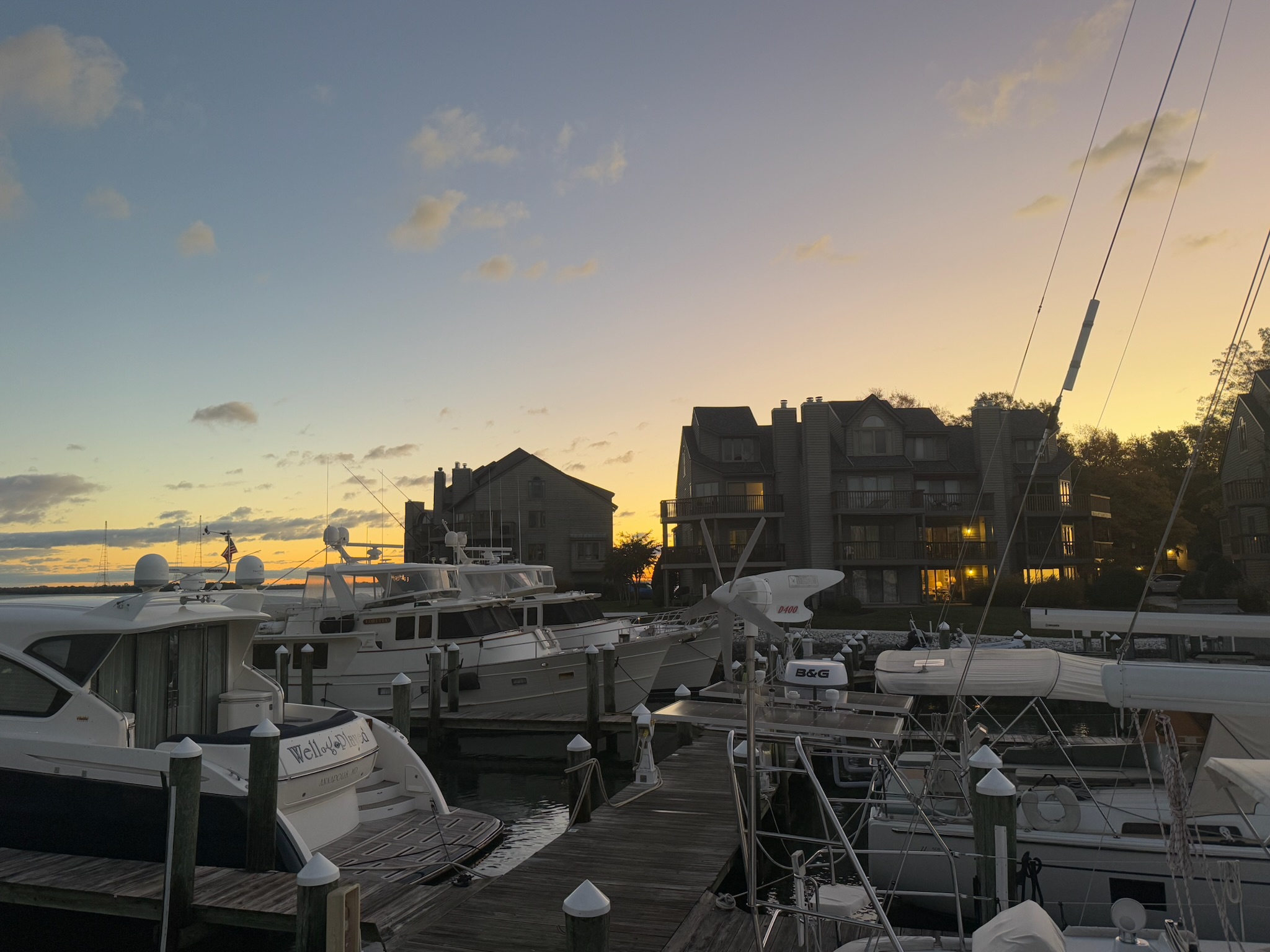
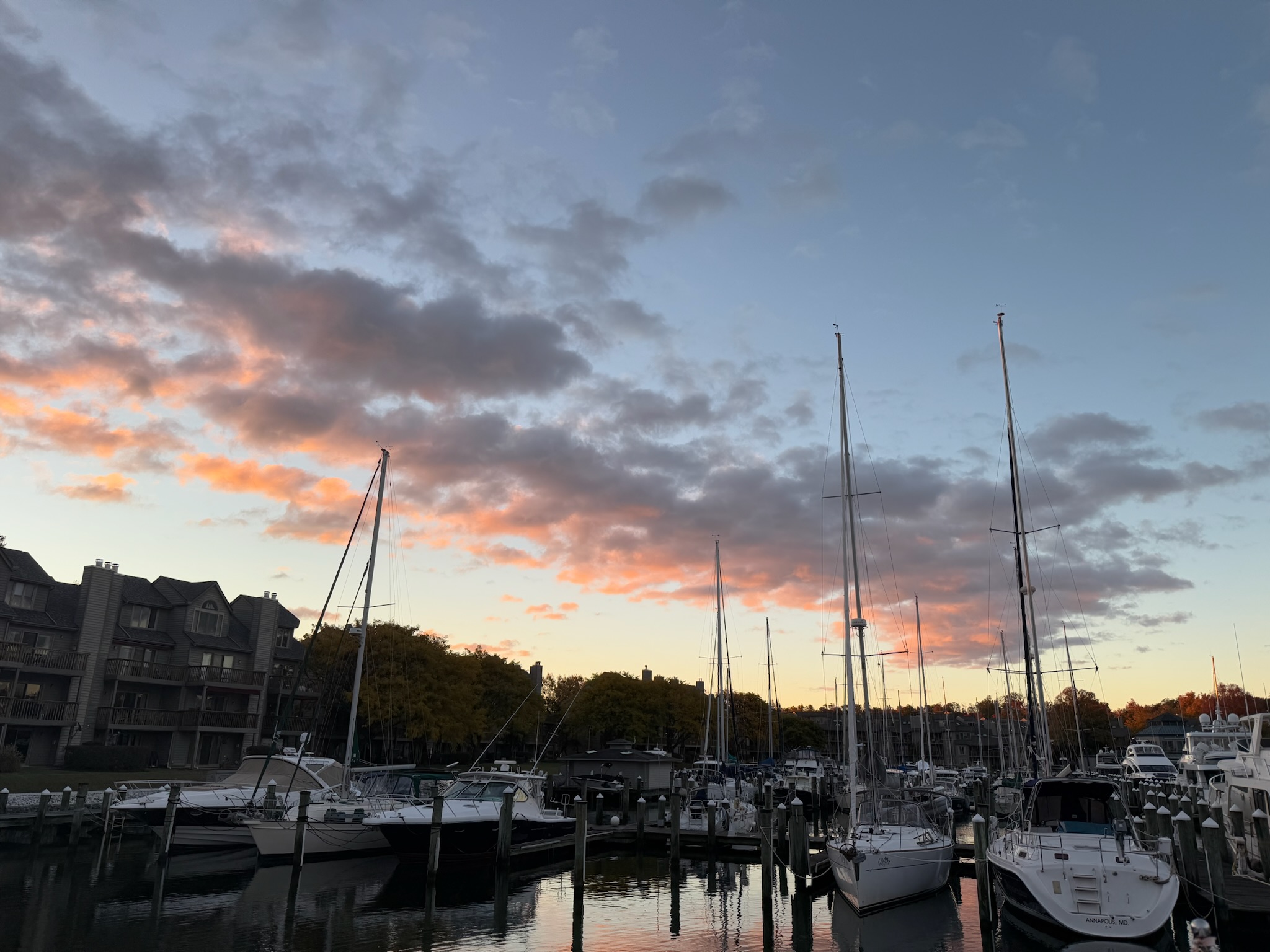
Friday, October 31 — This morning it felt like 38 degrees with wind chill factor. Christi had a hard time dragging herself outside to watch the sunrise. Because of the cold, she didn’t stay outside long, but she was glad she at least got to enjoy a few minutes of the lovely dawn, Here were a couple shots:
We were pleased to report that this morning, the flooding was gone and all was back to normal in the marina. While Christi and Keith did school, Eric cleaned the sea strainers. There was lots of mud in them and two live fish! One fish was long and skinny. He thought it looked like a snake and wondered if it was an eel.
Once we finished school, we again tried to go to the maritime museum in Eastport. We brought one of the kids from Tiki, Fynn, with us. Today, the road was dry.
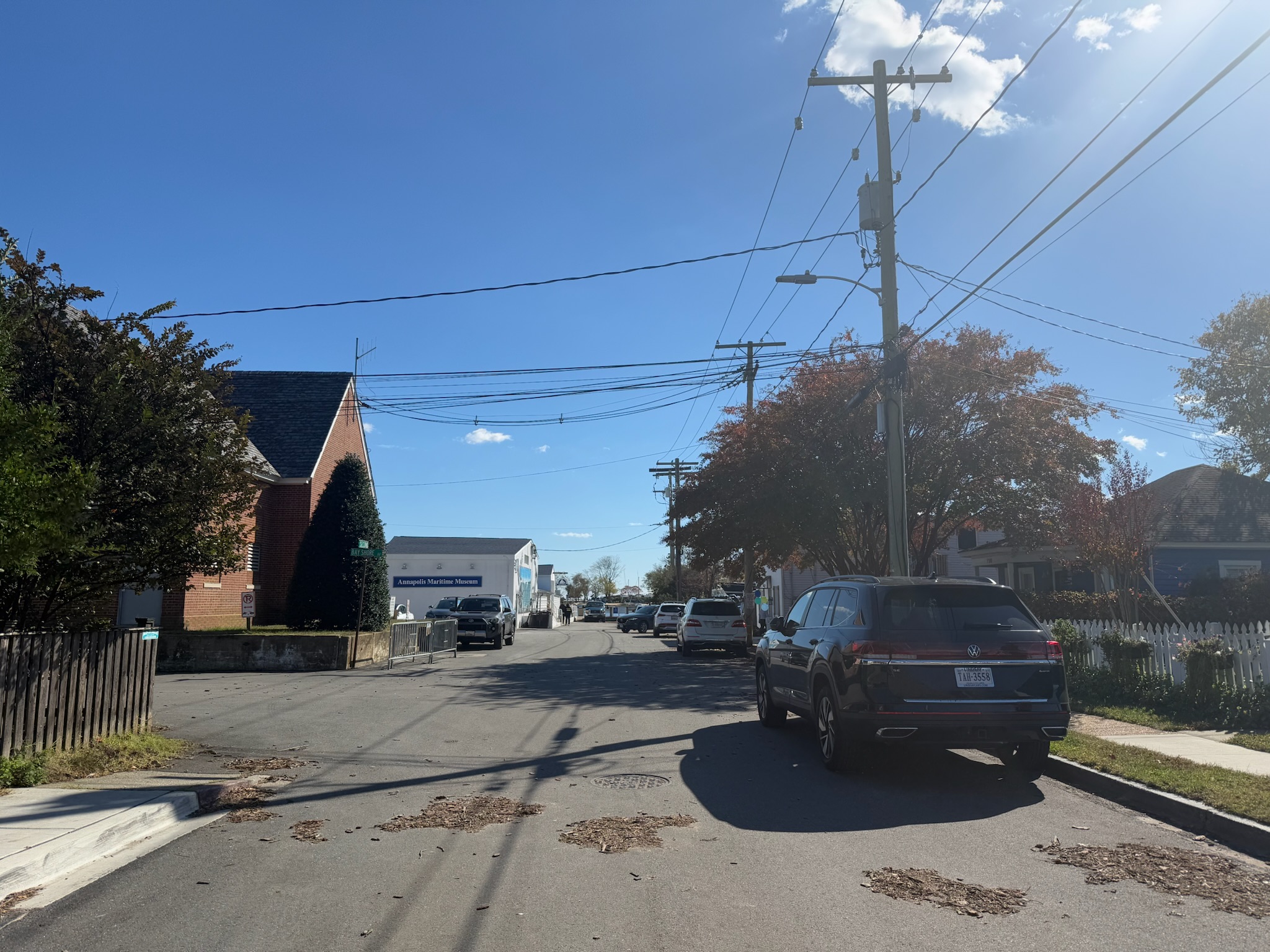
Per the sign outside, Eastport was a separate city from Annapolis until it was annexed in 1951. As we’d mentioned the first time we’d crossed the bridge into Eastport, it had a different feel to it than Annapolis did. The building the museum was in was originally the McNasby Oyster Company, which canned freshly caught oysters. McNasby’s originally began in downtown Annapolis in 1886, and moved to this location in 1918. Per the sign, a 12 foot by 49 foot portion of the building originally floated on a barge.
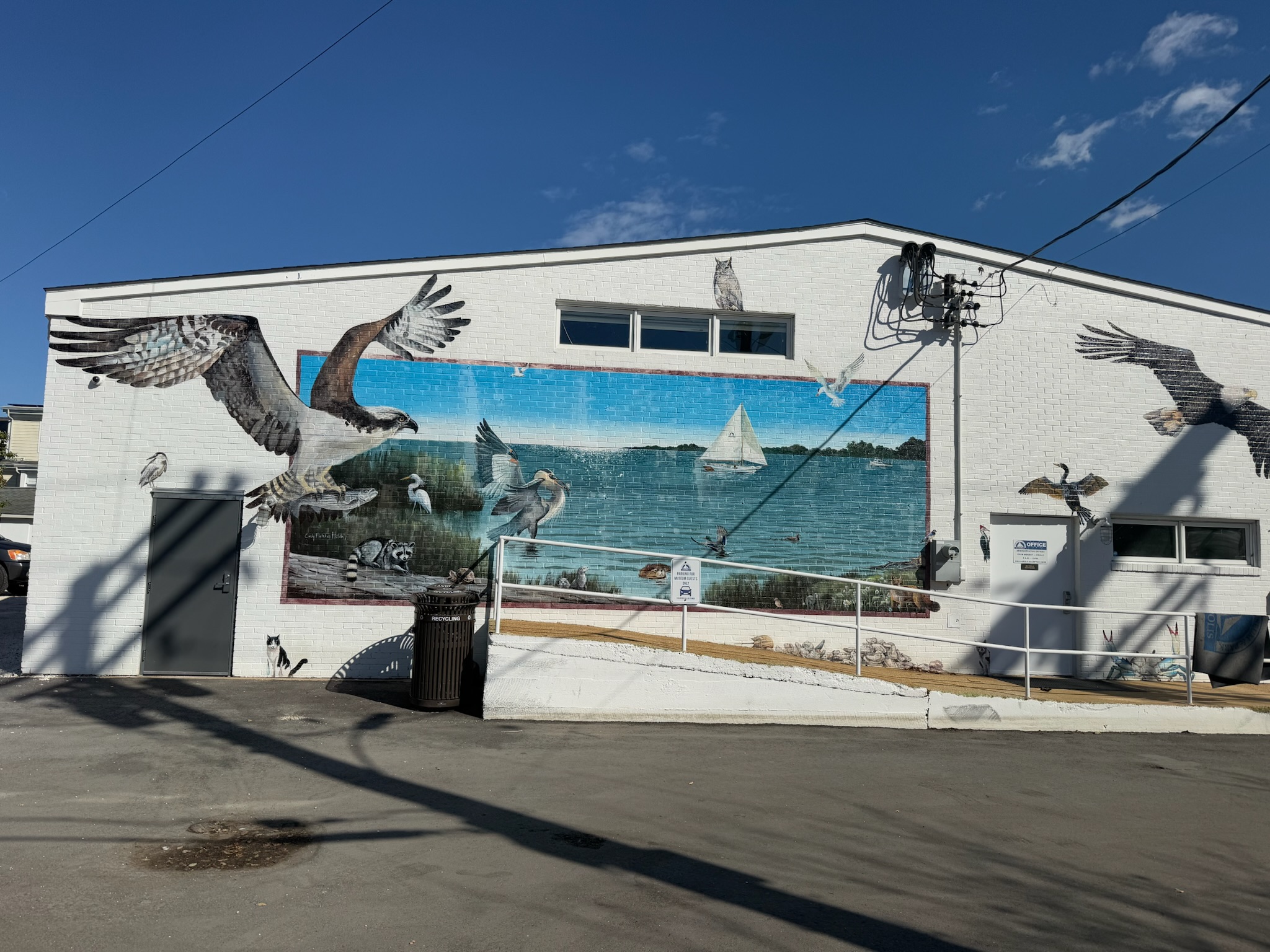
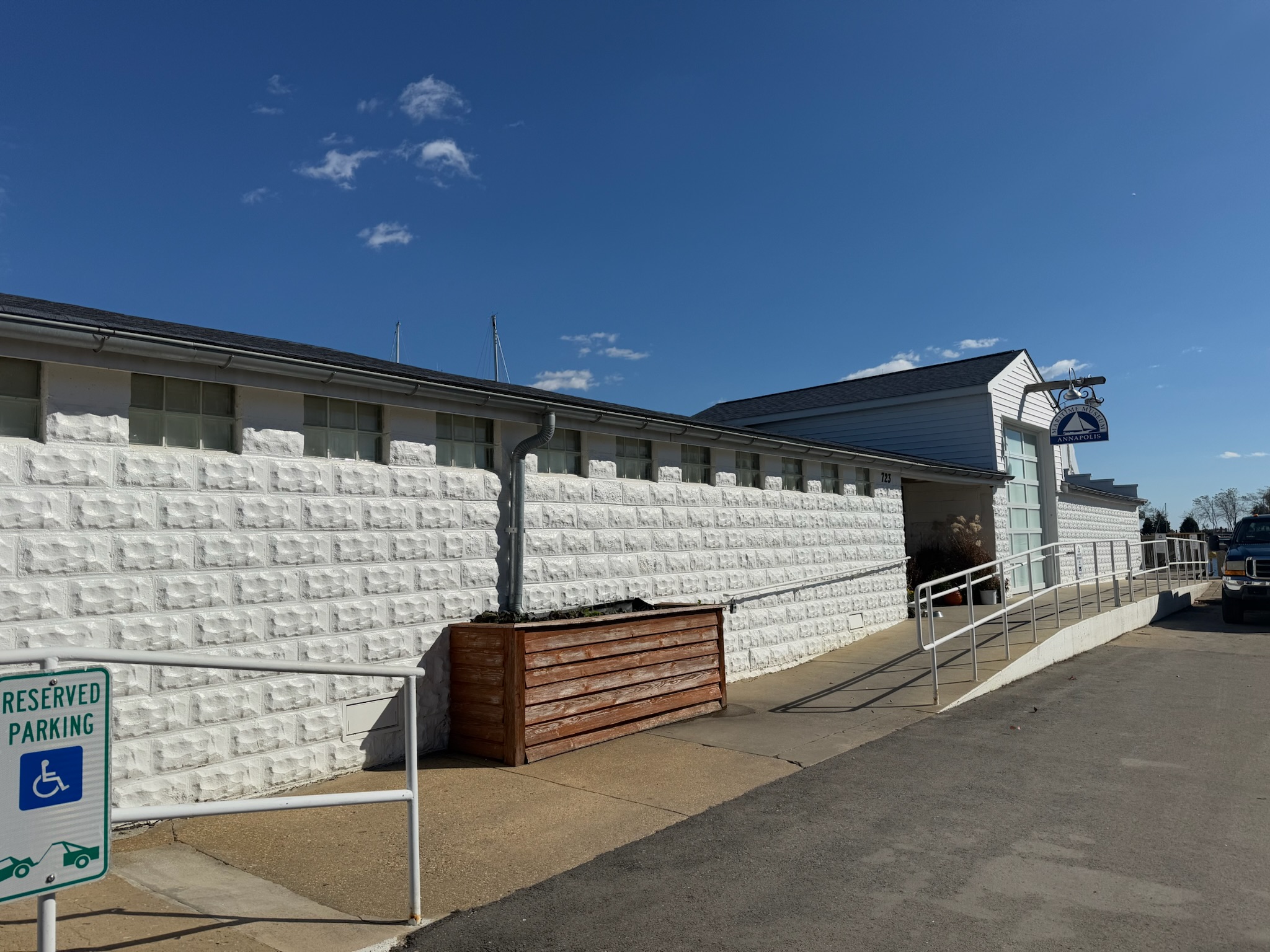
Tickets were $7 for regular adults and $5 for students. The boys counted as students. We were directed into a large room that had a video playing on a loop. If we remember correctly, video primarily focused on Annapolis’s — and especially Eastport’s — glory days as a commercial maritime hub. The walls of the room were lined with old photos and lengthy descriptions of what was in the photos. A sign said it was “a window into the Annapolis area’s rich maritime heritage.” The photos/signs had similar information to what had been in the video.
In addition to being a hub for watermen (people who caught seafood other than fish, such as oysters, crab and lobsters), Annapolis/Eastport was also a hub for boat building. Both industries go all the way back to the 18th century. Back in the 17th and 18th centuries, it was also a shipping hub, but Baltimore came to dominate shipping in the early 1800s. Since skipjacks were specific to the Chesapeake waterman industry (and the boats built for the watermen), they were important to the area’s history — so important that in 1985, skipjacks were named as the state boat of Maryland. As such, there were a lot of photos with skipjacks.
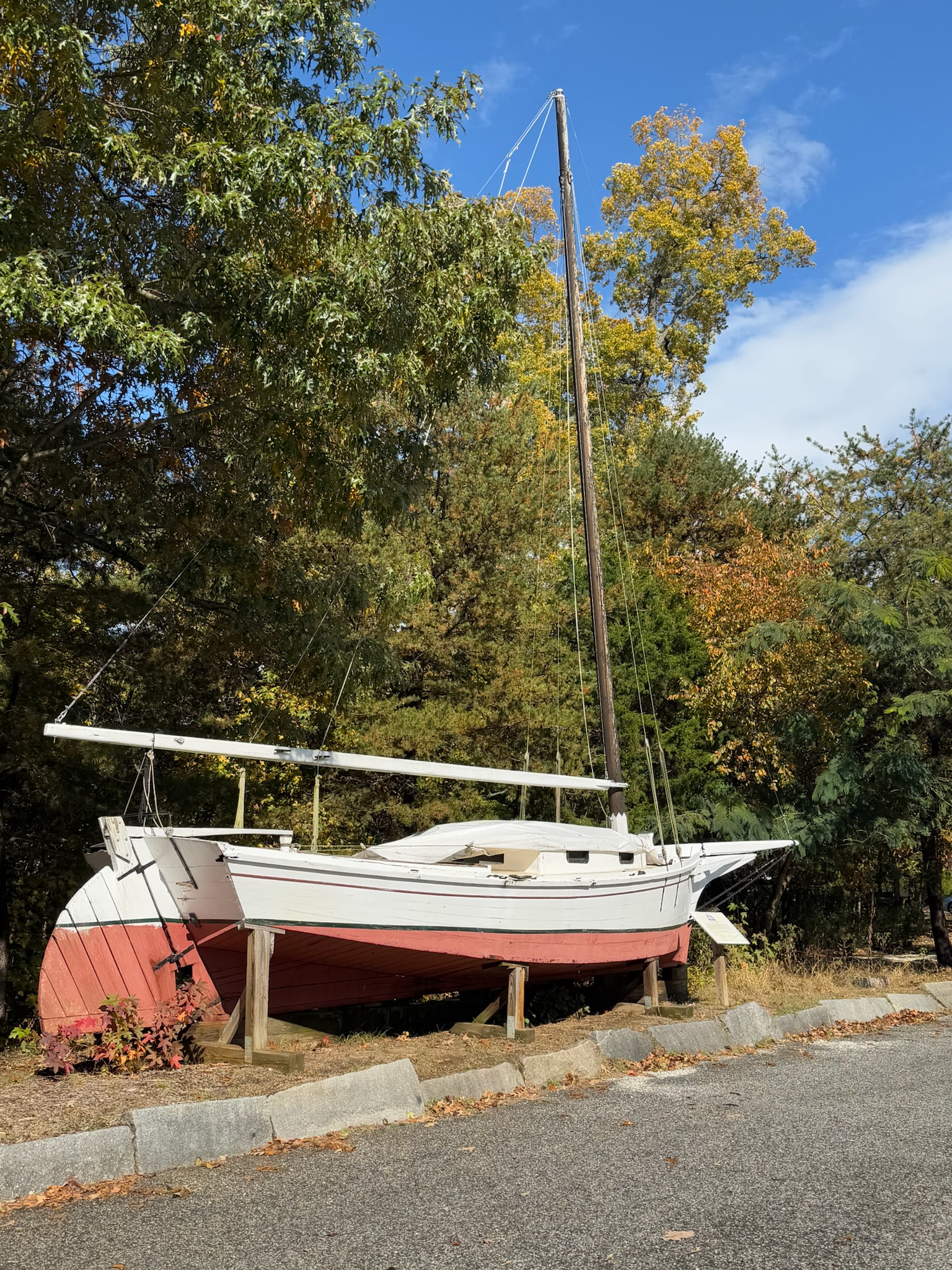
At least ten boat builders were mentioned. We’ll share the most notable. In 1930, Annapolis based Owens Yacht Company began building a 28-foot cruiser with an inboard motor. These quickly became popular and Owens became the second largest recreational boat manufacturer in the country. With their rapid growth, Owens needed to expand their boat yard and moved to another city to do so.
When World War II began looming, Annapolis Yacht Yard received a contract to build a Vosper PT, a 73-foot motor torpedo boat. By 1943, they employed 500 people to build these boats for the war effort. Since we’d read at the American History Museum that the US had only built Liberty and Victory boats during WWII, we did a quick internet search and found that the Vospers had been built for the British Royal Navy.
In 1947, established boat manufacturer John Trumpy and Sons, Inc., which built custom designed wooden yachts, moved from New Jersey to Eastport. Trumpy yacht Sequoia II served as the US Presidential yacht for Franklin Roosevelt, Harry Truman, Gerald Ford, John Kennedy, Jr and Richard Nixon. Trumpy boatyard closed in 1973.
As commercial fishing died off, along with the need for wooden commercial vessels, new innovations such as fiberglass hulls and synthetic sails and rigging made recreational boating more accessible and affordable, leading to an explosion in boating for pleasure instead of work. Today, Annapolis maritime industry is still an important part of the local economy, but the focus has changed to recreational boating, fishing, sailing, and racing. Annapolis has been dubbed “America’s Sailing Capital.” This room had a back deck. Attached to it were docks that looked like a marina of some sort.
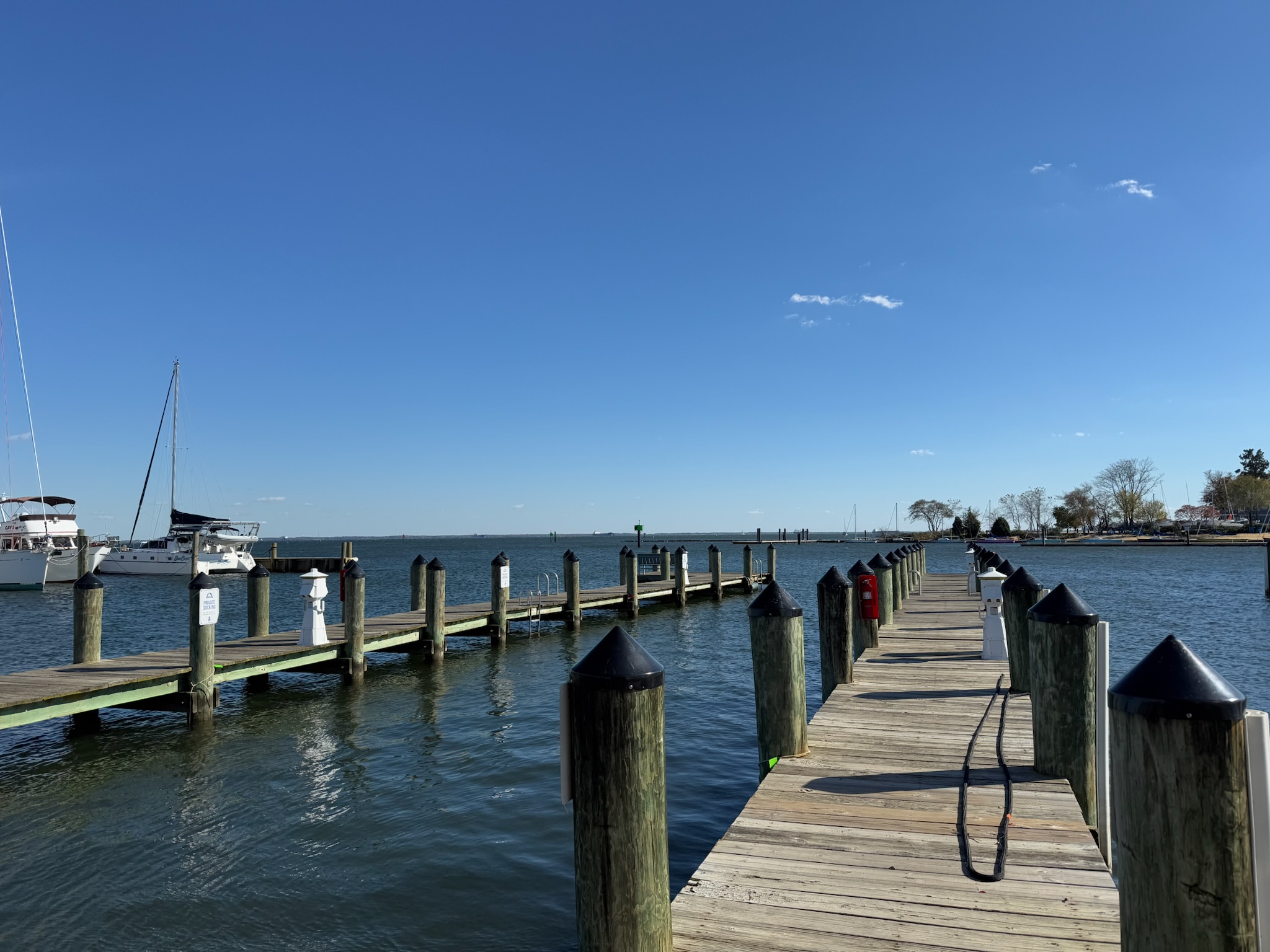
We moved on to the other room, which was the formal exhibit space. The first exhibit was about oysters. We’d already learned a lot about the industry at the Museum of Industry in Baltimore and at the American History Museum in DC, but we still learned a surprising amount of new (to us) information here. Oysters attached to hard surfaces, typically other oysters, and progressively grew into reefs that serve as homes to small fish, crab, and other small animals. Oysters also filtered sediment and plankton out of the water, making it cleaner and clearer. A mature oyster could filter up to 50-gallons of water per day. When the Jamestown colonists arrived in the Chesapeake Bay, the water was clear and teeming with diverse life. Back then, the oysters were so large and abundant that they filtered the entire bay’s water every three days.
Nowadays, the oyster population has been decimated, with less than 1% of the oysters alive today versus when the colonists arrived. The population decline was primarily caused by over harvesting, though disease has played a factor, too, in more recent years. Now, with the small oyster population, it takes almost a full year for the oysters to filter through the water in the bay. Currently, 18.1 million people live in the region. Between the slow filtering and unsustainable practices that have severely damaged and polluted the bay, the water in the Chesapeake was opaque. The overall diversity, health, and quantity of most species have declined due to the poor water quality.
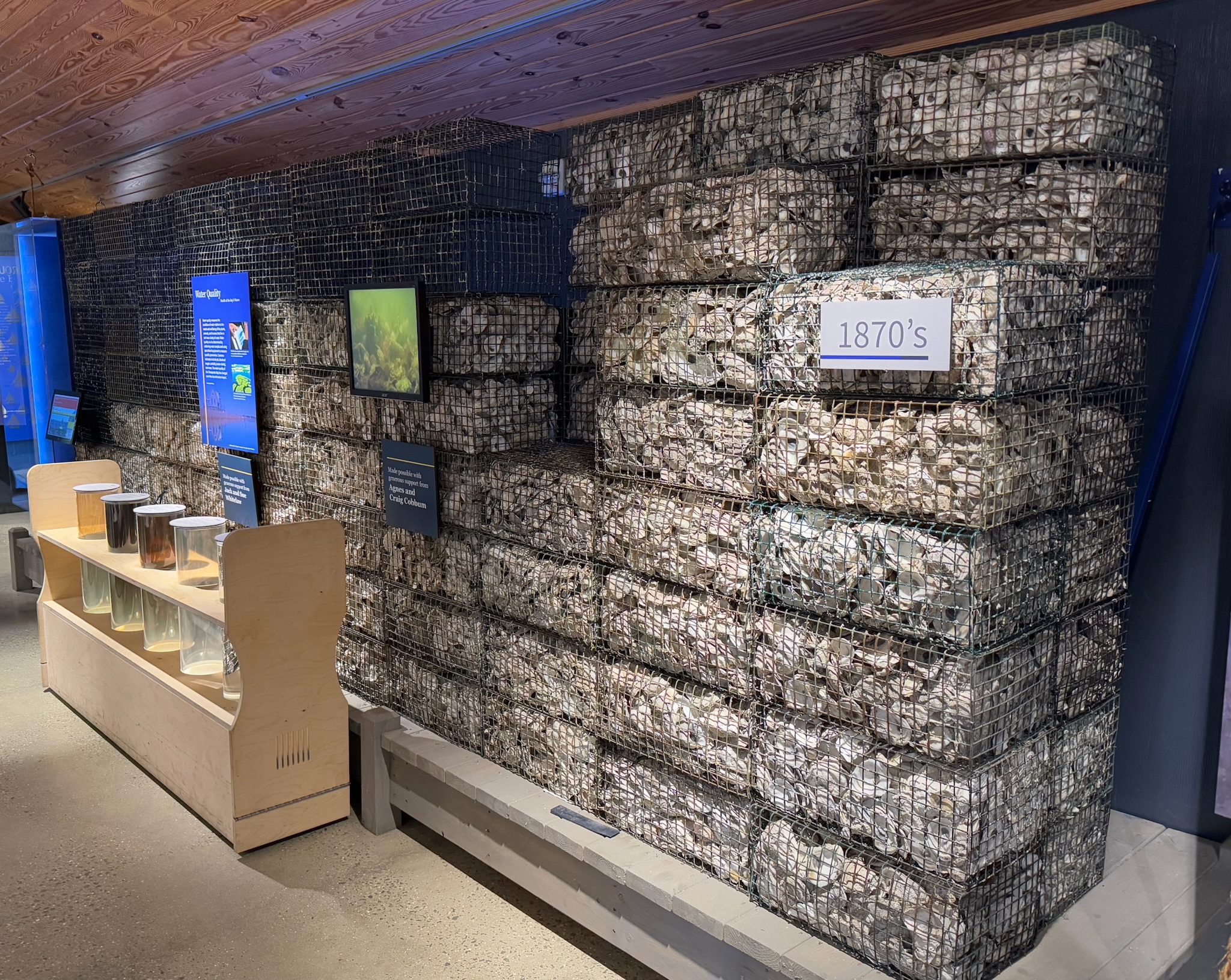
As we’ve mentioned in previous posts, In the mid-1880s, half the world’s harvested oysters came from the Chesapeake and oyster harvesting was an important facet of the Chesapeake’s economy. At that point in time, oysters were a cheap, nutritious source of protein and were popular with the masses. In the early days, the oysters couldn’t be shipped far, but as shipping via railroads and waterways grew, oysters were shipped all over the country. Today, harvests were less than 1% of what they were in the heyday. The sign didn’t specify if that was only for the Chesapeake or worldwide, but we suspect worldwide since the sign said that the Chesapeake was one of the few places in the world where wild oysters were still harvested.
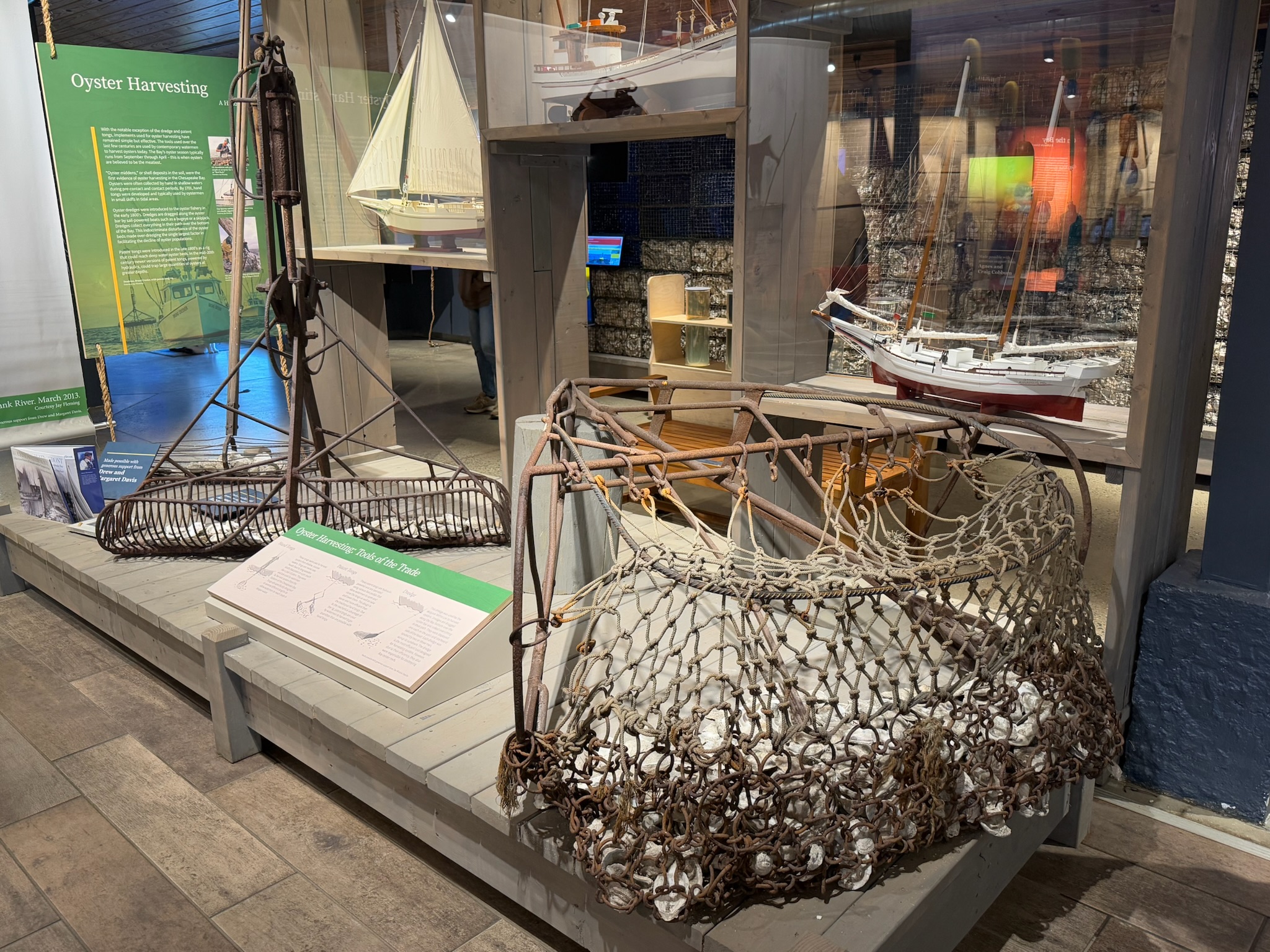
The oyster season runs from mid-September through April (ah, that explained why it looked like it was freezing in so many of the photos in the other room). Interestingly, watermen today still use the same tools — tongers and dredgers — that they did more than a century ago. Tongers began on the early colonial days as basically a metal rake used to pick up shellfish in shallow water, but by the late 1800s, they’d evolved into rigs that could collect oysters in pretty deep water. By the mid-20th century, the rigs were hyrdraulically powered and could trap large quantities of oysters at even greater depths. Dredgers were metal baskets run over the ground that picked up everything in its path. Dredgers were blamed as the primary cause of the decimation of the oyster population. Watermen and fisheries today were closely regulated as the government and environmentalists try to conserve and improve the dwindling sea life populations.
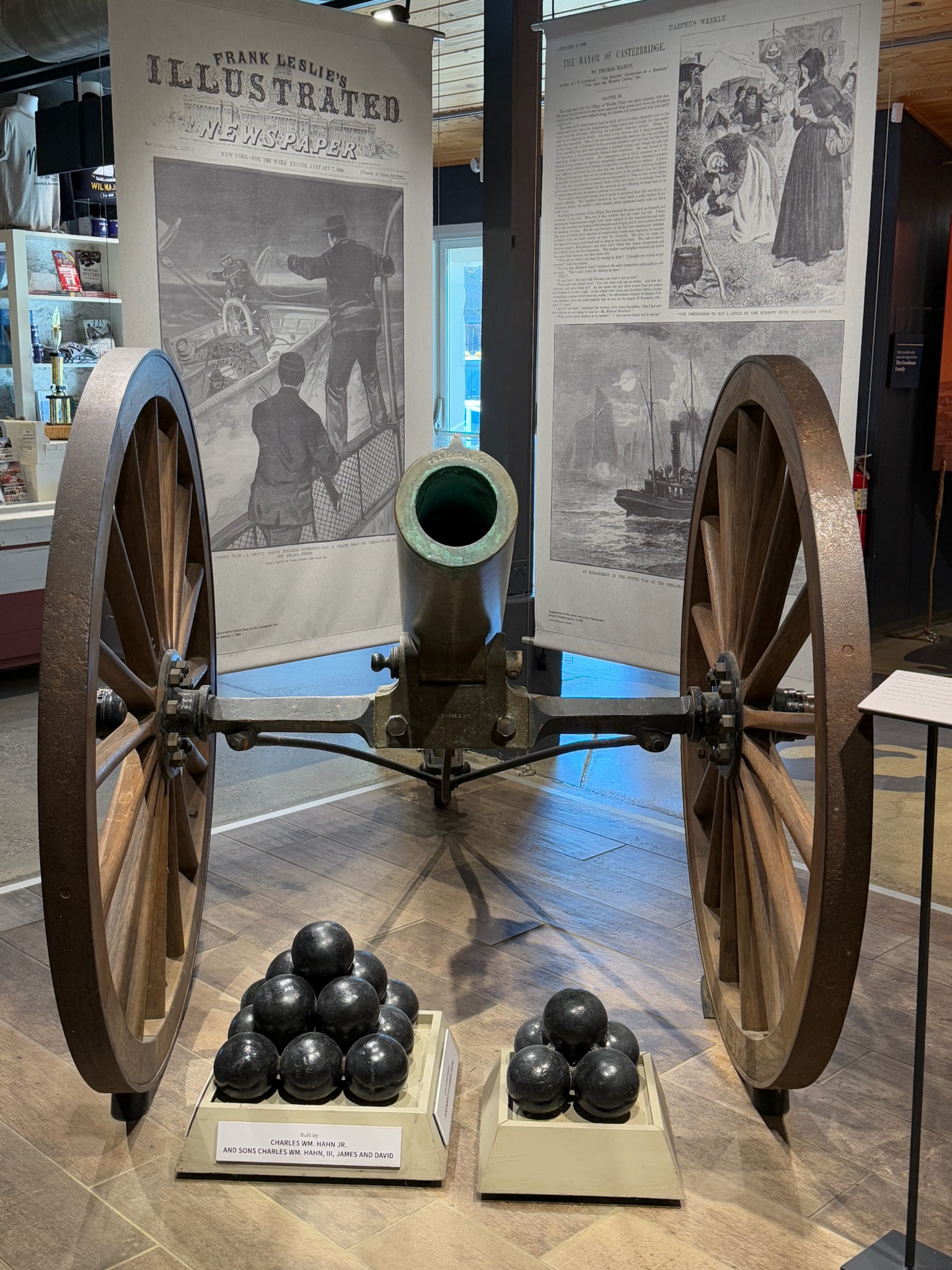
There was information on the Maryland State Oyster Police Force. In 1867, the Maryland General Assembly created this new law enforcement agency to try to combat oyster over harvesting. Annual licenses were issued to commercial tongers and dredgers. It sounded like there was a lot of conflict regarding watermen dredging in areas where only tonging was allowed. Power dredging was legal in Virginia but not Maryland, so there were also issues with illegal power dredging in Maryland. Often, confrontations between watermen and/or with the Oyster Police led to armed conflict. The Oyster Police patrol ships even had cannons mounted on them. The sign said the canons were likely left over from the Civil War.
At the turn of the 20th century, there were at least 8 oyster canneries in the area. There was an exhibit specifically about McNasby’s oyster canning operation, branded as Pearl Oysters. Watermen (or the buy boat middlemen) brought the oysters to the dock behind this building. Oysters were purchased by the bushel (the can to the left was a bushel).
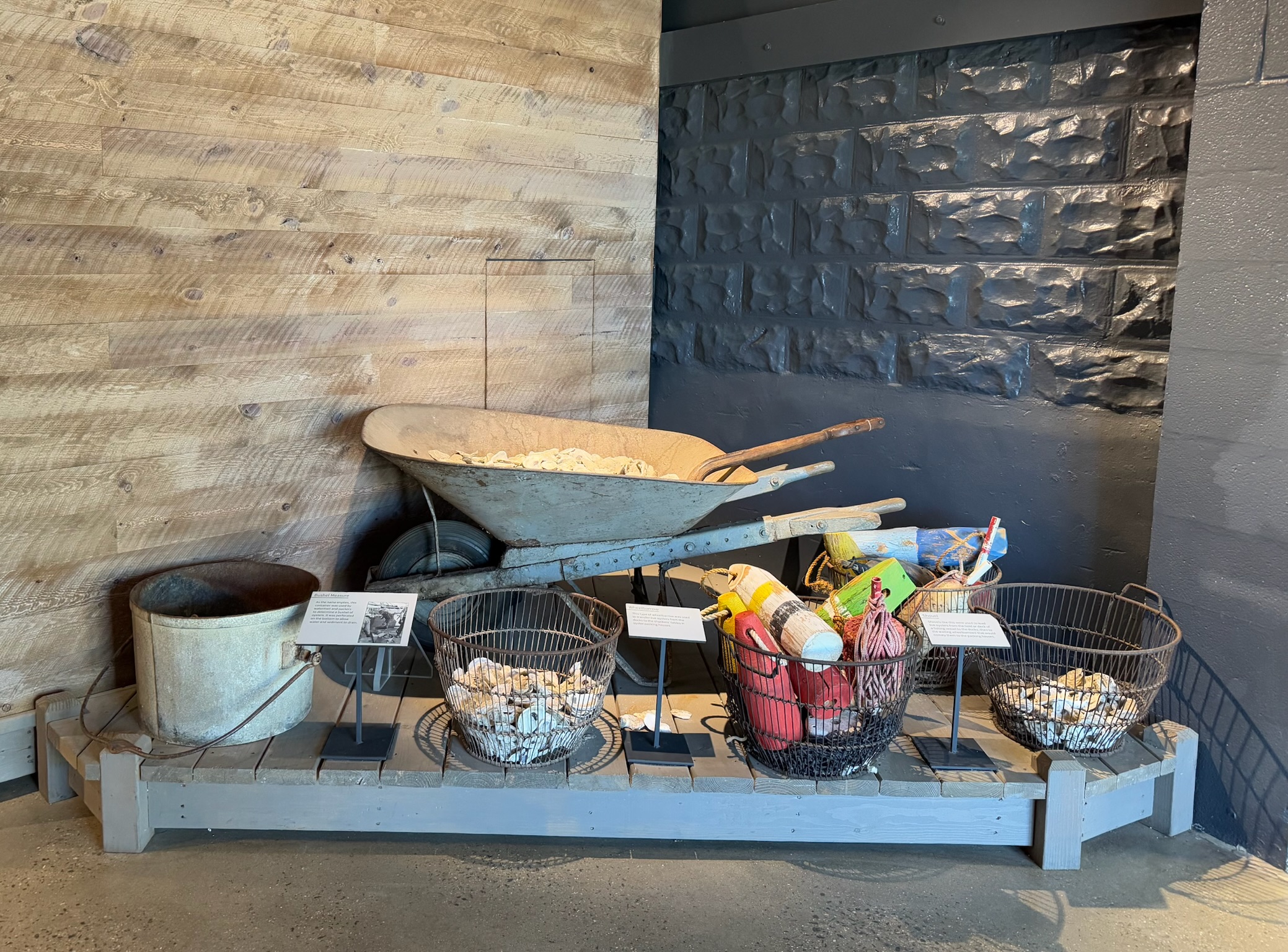
Then the oysters were shelled and cleaned prior to canning. A virtual host explained the process.
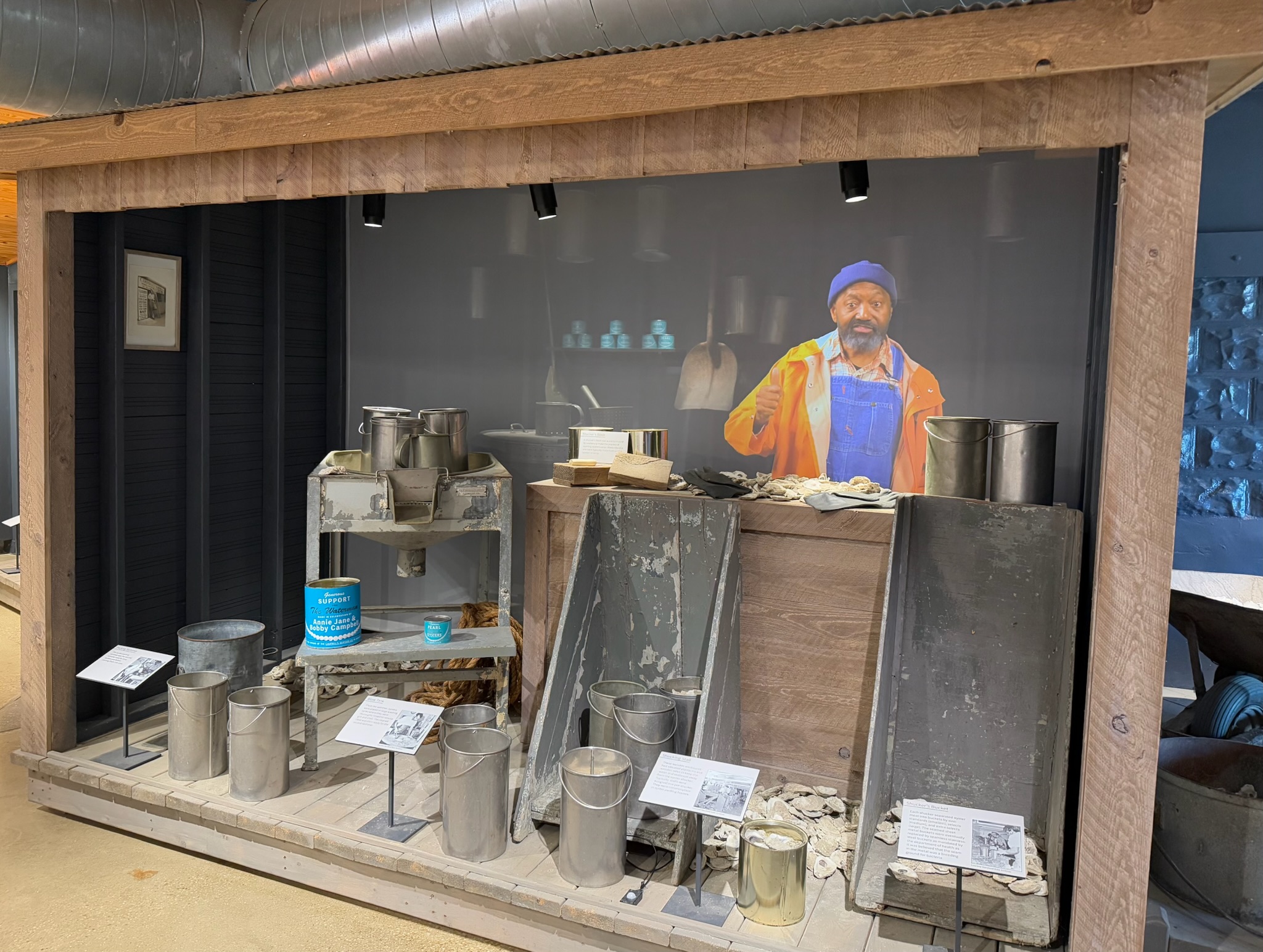
It didn’t sound like the cans were heat sterilized; they just put the lid on top of the fresh oysters. Since they weren’t sterile, they had to be kept cold. The cans were loaded into barrels, packed with ice, and loaded onto the truck. There had been several photos in the museum of the truck that took the barrels to the train station or shipping dock to be shipped out to towns across the country.
The main exhibit room had an oyster harvesting video game that the boys (and when we say boys, we include Eric) had a blast playing. The goal was to harvest as many oysters as possible without decimating the population. It was really well done and they learned a lot about the industry.
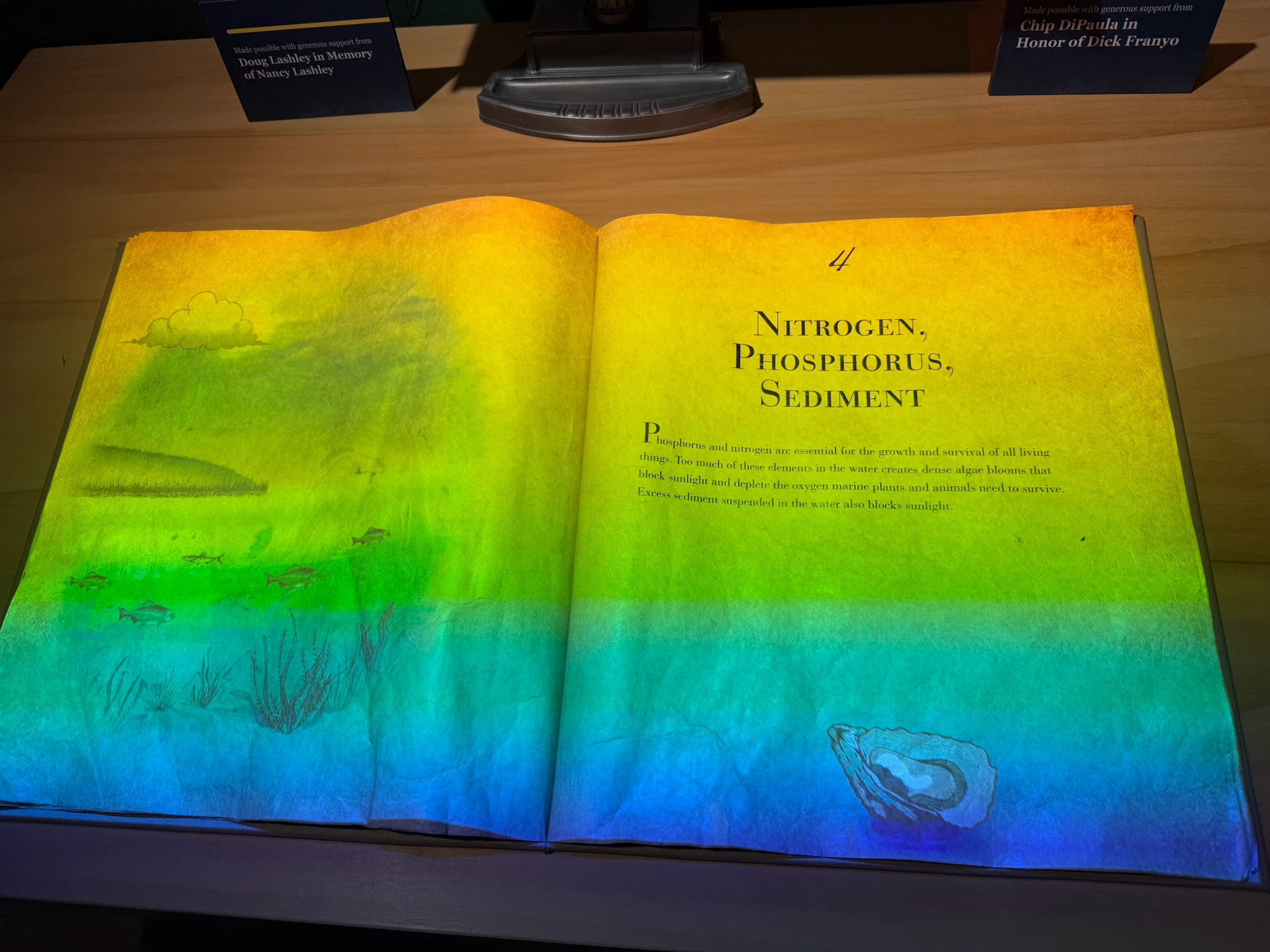
Also in the main exhibit room was a cool book about the Chesapeake’s watershed. The pages were plain white with small amounts of black text. When activated by a motion sensor, a UV light turned on and lit up the pages with colorful artwork. What made it so neat was that the pictures were different for each page. We tried flipping pages to trick it, but it always knew which drawings went with each page.
After we finished in the main room, we went out to the back deck. Signs said that John Smith had come by this very spot four times when he mapped the Chesapeake in 1608 and that the location of the original puritan settlement was visible from here.
Another sign told about the Annapolis Tea Party, which we had never heard of before. In October 1774, a brigantine called the Peggy Stewart, owned by merchant Anthony Stewart, returned from England with cargo. Stewart had promised the Patriots that he would not to import tea to support of the Patriot’s protest of the tea tax (remember that the Patriots were very aggressive about punishing people who didn’t comply with the protest). But he’d broken that promise and brought in 17.5 chests of tea. He declared the tea and paid the tax. The Patriots found out and mobbed his home, threatening to hang him. Stewart claimed that he didn’t know the tea was on the ship before it had left England; the tea had been ordered before the ban and he wasn’t aware that the order had not been canceled. Since he’d been caught smuggling twice before, if the British caught him smuggling tea, the consequences of a third strike would be severe, so he didn’t want to take the risk of not declaring the tea. The Patriots didn’t believe Stewart’s story. In order to placate the mob, he agreed to light the Peggy Stewart on fire with the tea still onboard. Soon after, he publicly came out as a British Loyalist. Like many Loyalists in that era, he fled to Canada. Peggy Stewart’s remains lie under dredged land below the Naval Academy.
There was a sign about some of the specific efforts being made to restore the bay. Since oyster reefs provide homes to many small species that bigger species feed on, restoring the oyster population is even more important than simply improved filtering: they need oysters to help restore the food chain. The State of Maryland, in conjunction with a group of scientists, grow disease-free oysters in hatcheries, then plant them in the wild on targeted reefs. There is also an effort underway for watermen to farm raise oysters and clams instead of harvesting them from the wild.
Yet another sign talked about NOAA’s Chesapeake Bay Interpretive Buoy System. The buoys not only mark channels, they also record air temperature, water temperature, wind speed/direction, wave heights, current speed/direction, salinity levels and more. The data helps the scientists/environmentalists protect, manage and restore the bay. It also used for meteorological forecasts.
It looked like they were starting to set the back deck up for a wedding rehearsal dinner, so we didn’t linger on the deck for long. We headed back to…. To be continued…