Saturday, April 4 – Friday, April 10 — This week has been boring. On Saturday, we layed low for most of the day. We had dinner with the leader of the Ocean Posse and some of his friends. Some other boaters joined us later on. On Sunday, we went to Dad’s cousin’s house for Easter dinner. The food was good but other than that it was boooorrrrriiiiiiinnnnnnggggggg. At one point we went for a walk and saw at least a dozen rabbits.
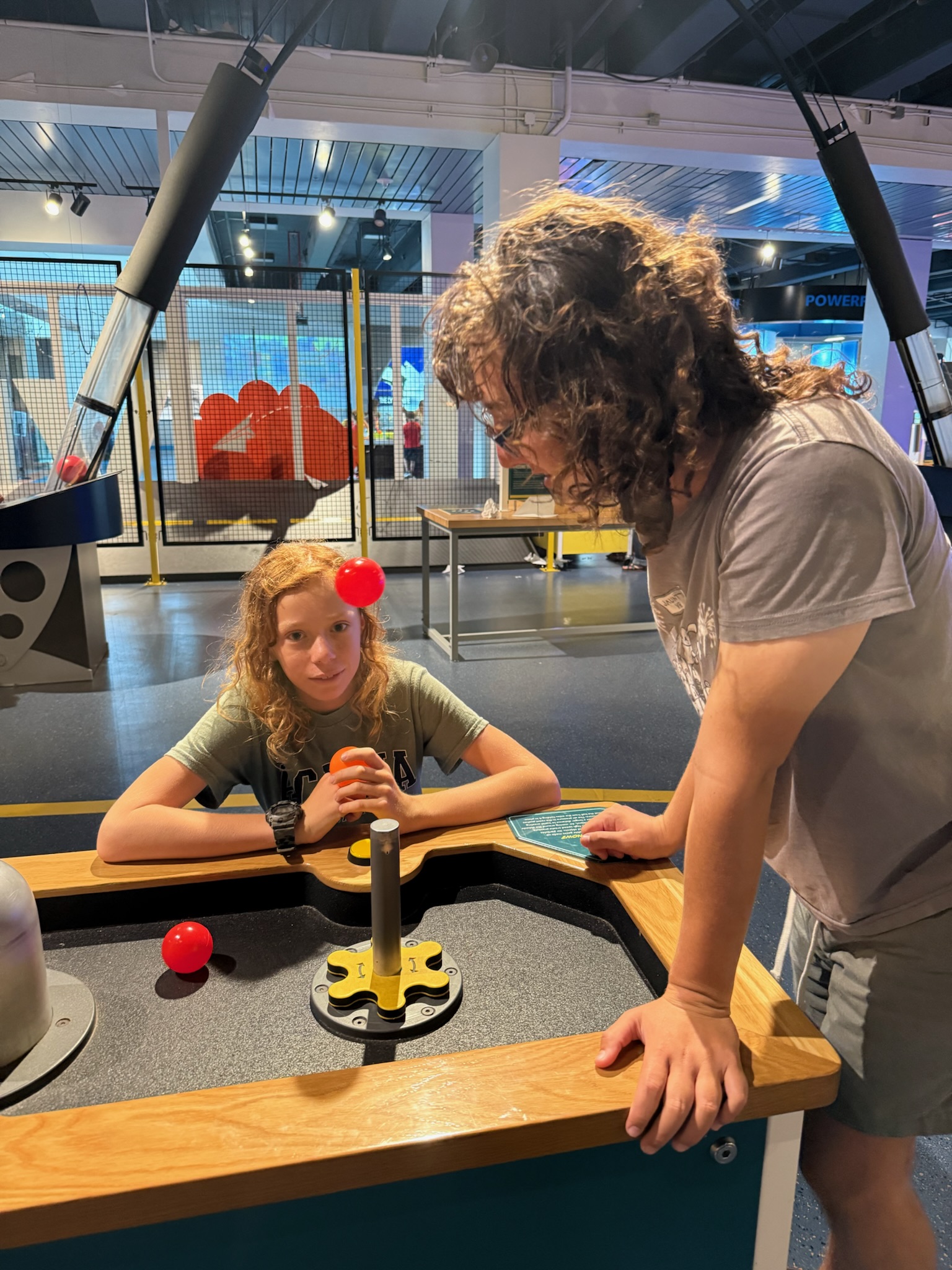
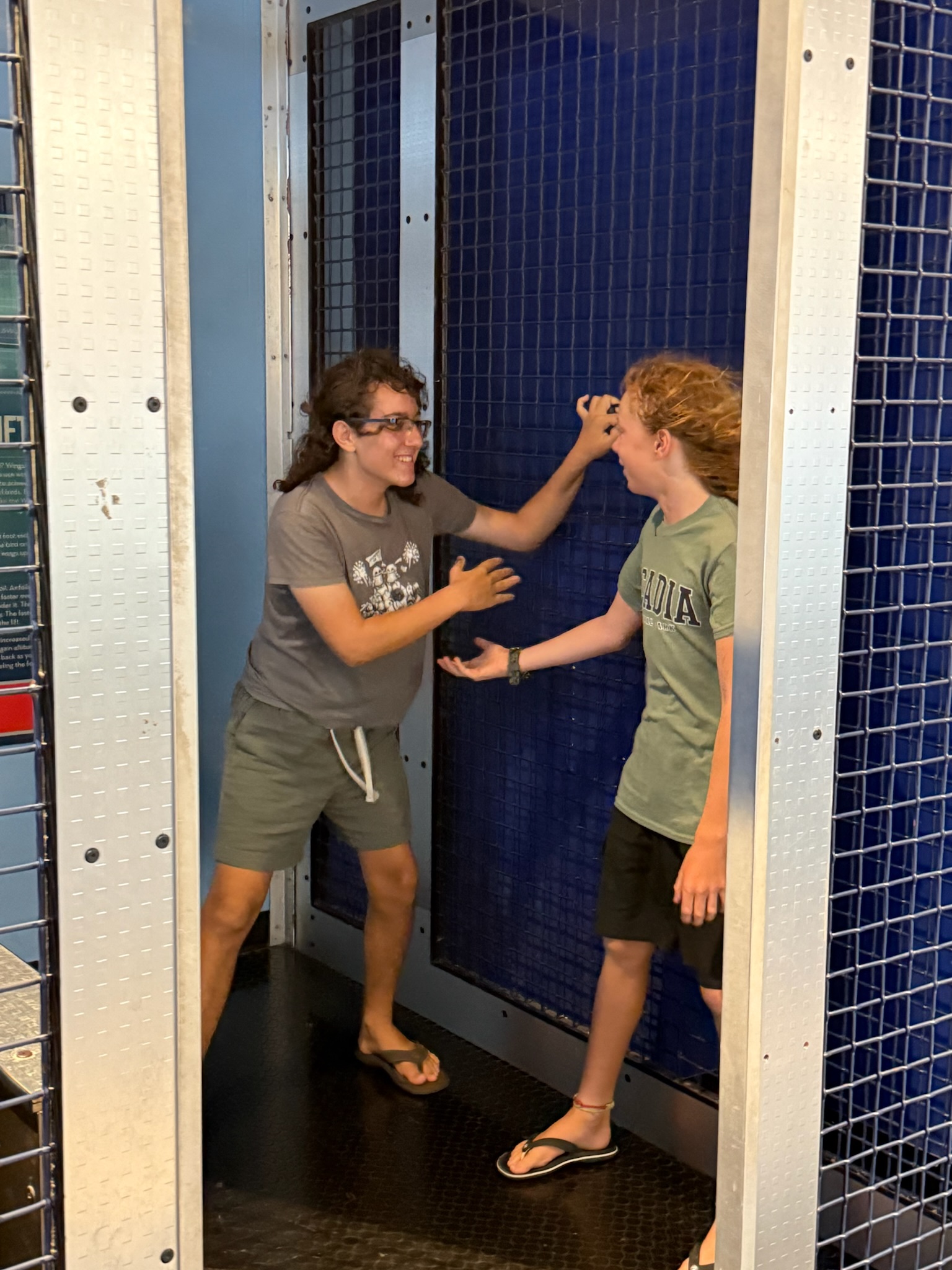
Museum of Discovery and Science in Ft. Lauderdale, FL
Cette semaine était ennuyante. Samedi, on n’a pas fait beaucoup de choses. On a mangé le dîner avec le chef d’Ocean Posse et ses amis. D’autres marins nous ont rejoints. Dimanche, nous sommes allés à la maison du cousin de papa pour un dîner de Pâques. La nourriture était bonne mais tout le reste était ennuyant. A un moment nous sommes allés nous promener, et on a vu beaucoup de lapins.
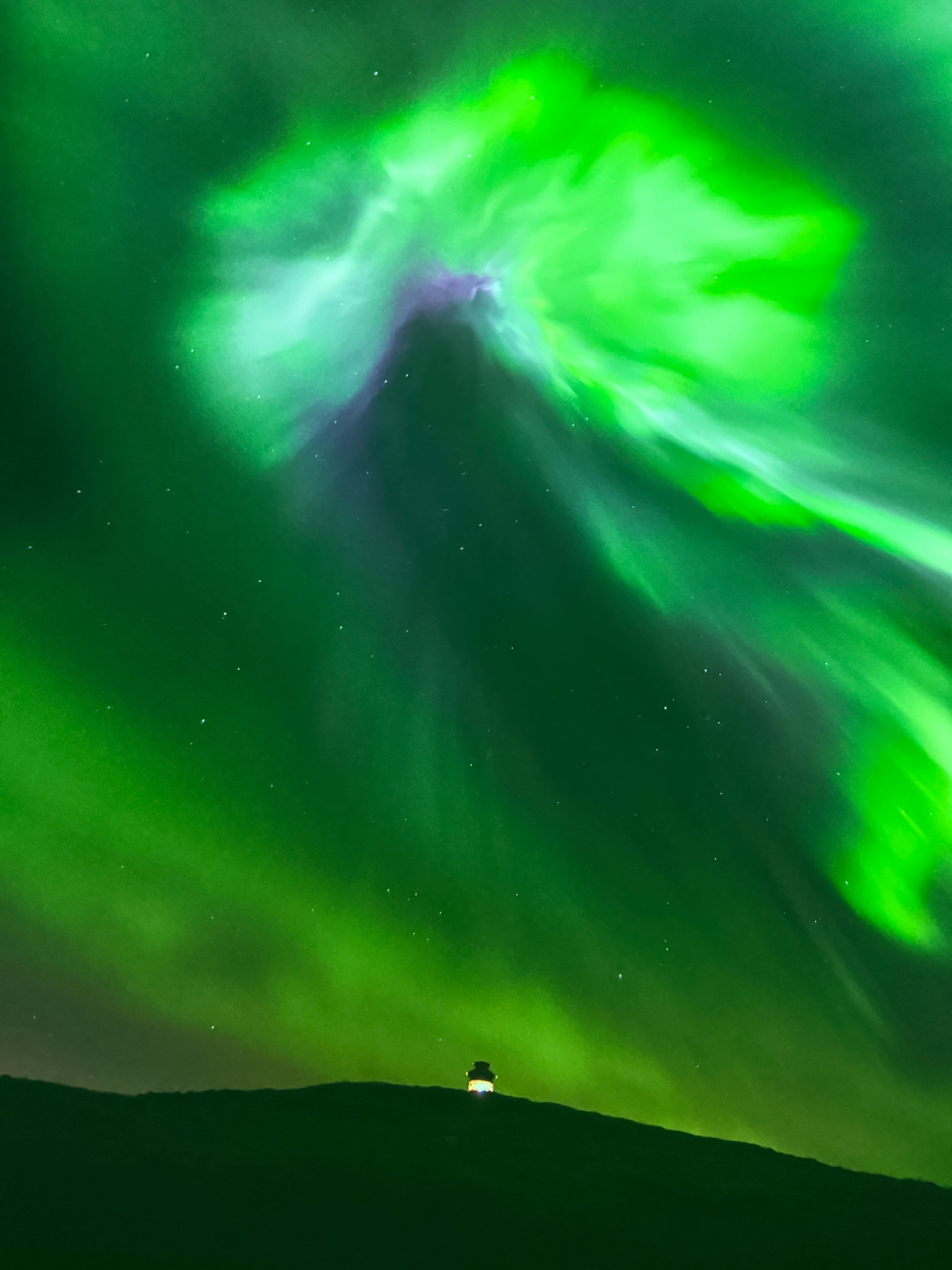
continued… We noticed it was nearly time for the IMAX movie about the northern lights to begin, so we headed back down to the first floor and lined up outside the IMAX theater. At the time the movie was supposed to start, we were still lined up. We’d expected them to open the doors to let us in, but instead they turned on a video that gave us some basic information that would help us to understand the main feature better. After that short video ended, they opened the door to the theater, and we quickly got seated. They told us no photography was allowed after Christi took this shot of the images that were being shown during seating.
It was a story told from the perspective of one of the deities from their traditional Norse mythology. She explained a little bit about astronomy and that other planets, as well as our moon, also had special activity at their north poles. She explained what the magnetosphere was and how it reacted to electromagnetic field (EMF) bursts that came from the sun, why the EMF bursts created auroral lights, etc. The video did an excellent job of explaining complicated science in an easy to understand manner, while also blending the science with some local folklore. Visually speaking, the film was stunning. The images of the auroral lights and the celestial bodies were gorgeous. There were also some folklore images weaved in there that were also beautiful.
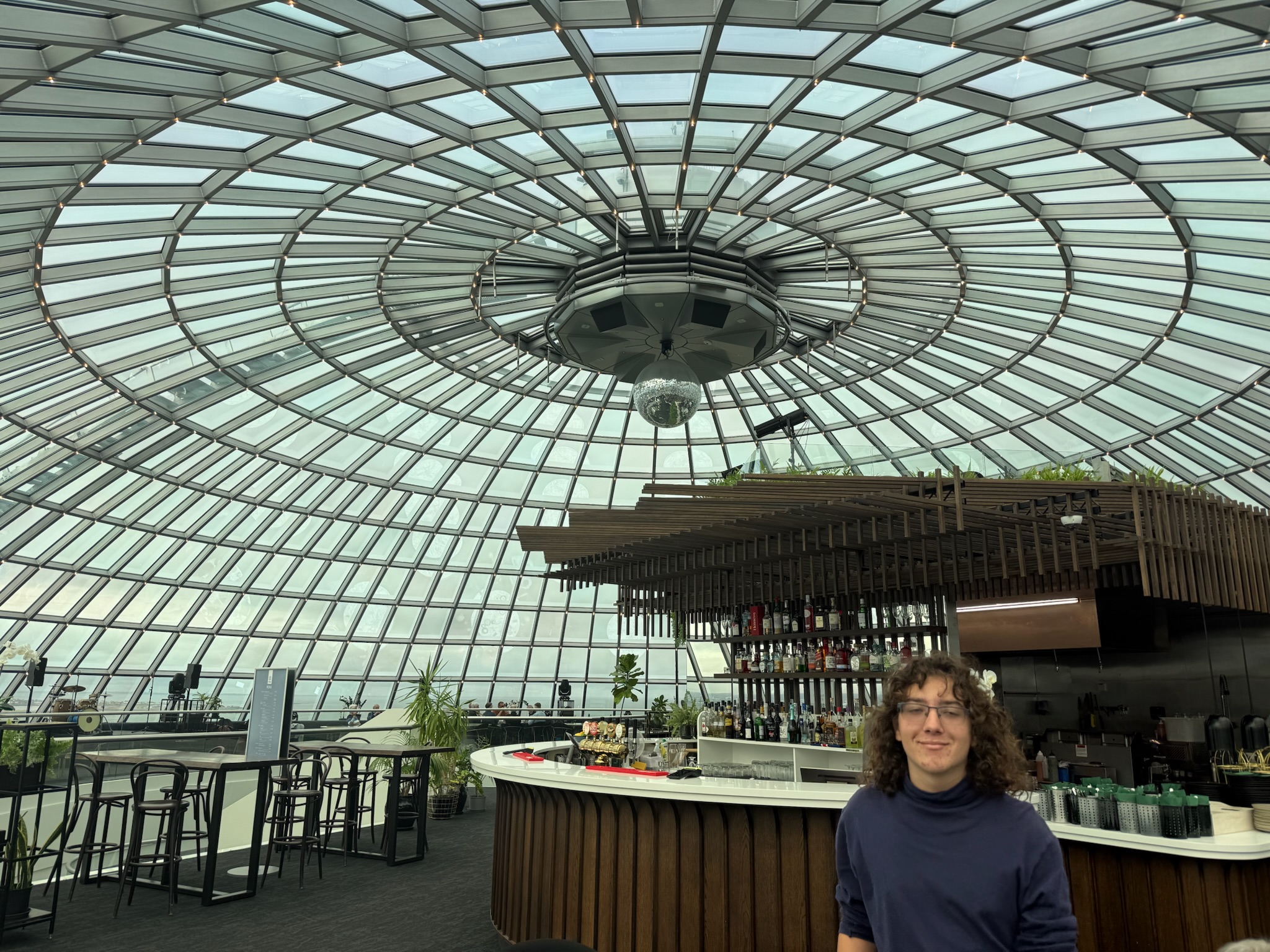
When movie let out, we took the elevator up to the cafe on the 5th floor for a latte (Christi) and lemonade (Keith). It was the top floor of the building, and it was a dome with a 360-degree view of the city. The latte was just as good as the one she’d gotten yesterday. She was pretty sure they used the same magical milk.
Continued… We were promptly escorted into a small amphitheater with uncomfortable bench seating. They showed a film of a recent volcano eruption with footage taken from drones above the crater. It was shown on a big screen and was very impressive footage – there were even shots looking into the crater. There were lots of images of lava exploding out of the crater. There was an image of people standing at the edge of the crater where they could easily be killed by particles from exploding lava. There was footage of a crowd standing at the edge of a flow, congregated right where the lava stopped.
From there, we were escorted into another room. It looked like a small theater with a movie screen, a flat floor, and individual seats. We were directed to sit down. These seats were much more comfortable. At first we thought it was going to be another lava movie, but it turned out to be a 3-D simulator ride. The floor was glass and the movie was projected on three of the walls, the ceiling, and under the floor. The story was that we were inside a drone. It drove down under the water very deep into a volcanic crater. The crater was somehow protected from the water and was dry inside, which felt like a plot hole in the story. The drone landed on the dirt floor, then zoomed forward to where the lava was pushing up through a fissure. We flew over the fissure, then had to escape up quickly to outrun the lava. Then we were flying over the crater and the ride ended. Keith said the ride was creepy and he didn’t like it. Christi liked it better than Keith did, but she didn’t love it. She probably would have liked it more if it were a mellow experience than a death defying thrill ride.
When the ride ended, the group was escorted into the ice tunnel. It was the only indoor ice tunnel in the world, and it was a recreation of the tunnel that Eric had gone to yesterday. It was real ice and they kept the temperature at 32-degrees Fahrenheit. There was a main tunnel that was tall enough to stand in and a few off shoot tunnels that were lower — we needed stoop over to get through those. There was the volcanic ash lines that Eric had told us about.
There was simulation of the crevasse that Eric had told us about.
continued… They perused most of the exhibits on the first floor while they waited for the volcano/ice cave tours to begin. The majority of the displays were about Iceland’s history, with about half focusing geological history and the other half human history.
With volcanoes, geysers, glaciers, earthquakes, a divergent tectonic plats and erosion, land was created and destroyed faster in Iceland than anywhere else in the world. Iceland first formed 64-million years ago, about the time that a cataclysmic event changed Earth. It sounded like it was initially connected to Greenland and Europe via land bridges, so animals could come and go. Thanks to continental drift and erosion, the bridge between Iceland and Europe eroded 10-million years ago. They missed the sign explaining when/how they separated from Greenland.
Over the millions of years, there have been at least five ice ages and also periods where the planet was so hot that there was little to no ice on Earth. There were points in time where Iceland was completely buried under snow and ice, and the land was devoid of flora and fauna. There were times where the temperature was so balmy that there was a wide variety of flora and fauna, including redwood trees. There were a lot of signs about various specific volcanic eruptions and the amount of land the eruption added to the island, as well as some signs that explained areas affected by glacial erosion. There were also a few that explained how some unique geological features, such as psuedocraters, formed.
Changes to the ocean’s currents (the Gulf Stream and the Atlantic Meridional Overturning Circulation [AMOC]) also affected Iceland’s development, temperatures (in and out of the water) and sea life. A rise of invertebrates being pushed in from other areas brought a rise in creatures that ate them, including whales and walruses. Twenty species of whales inhabited the waters around Iceland, and twelve of them were commonly seen. A sign explained how whales fed at the bottom of the ocean and then went up for air — often pooping on the surface. Doing this cycled the nutrients in the water from the bottom up to the surface, providing nutrients to the photosynthesizing creatures that lived on the surface. Other signs gave more detailed information on some of the species.
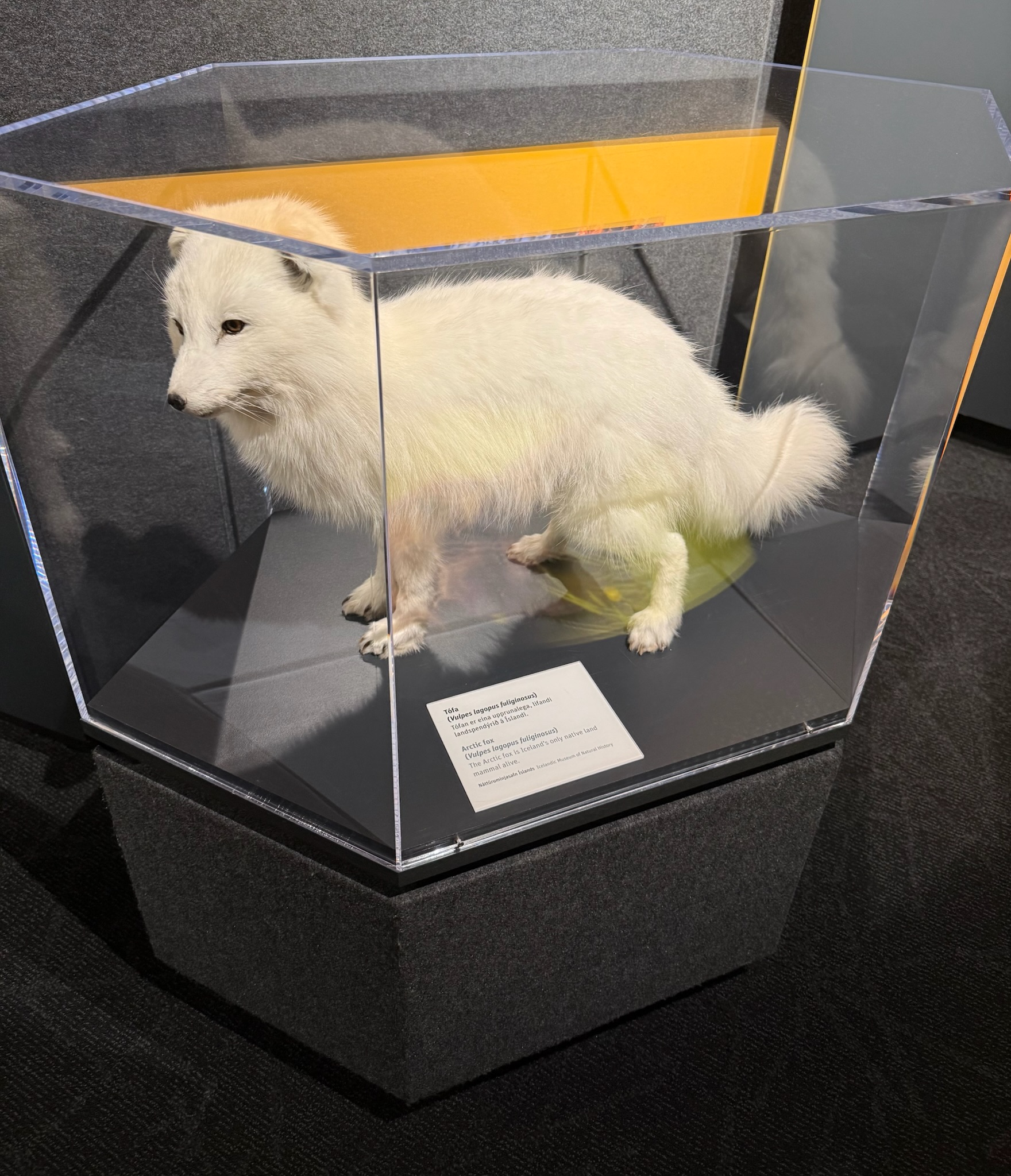
The only indigenous terrestrial mammal to Iceland in the current era was the Arctic Fox. They were omnivores that would eat just about anything, changed color from grey-blue when it wasn’t snowy to white when it was, lived in pairs, and had 4 – 6 cubs each spring.
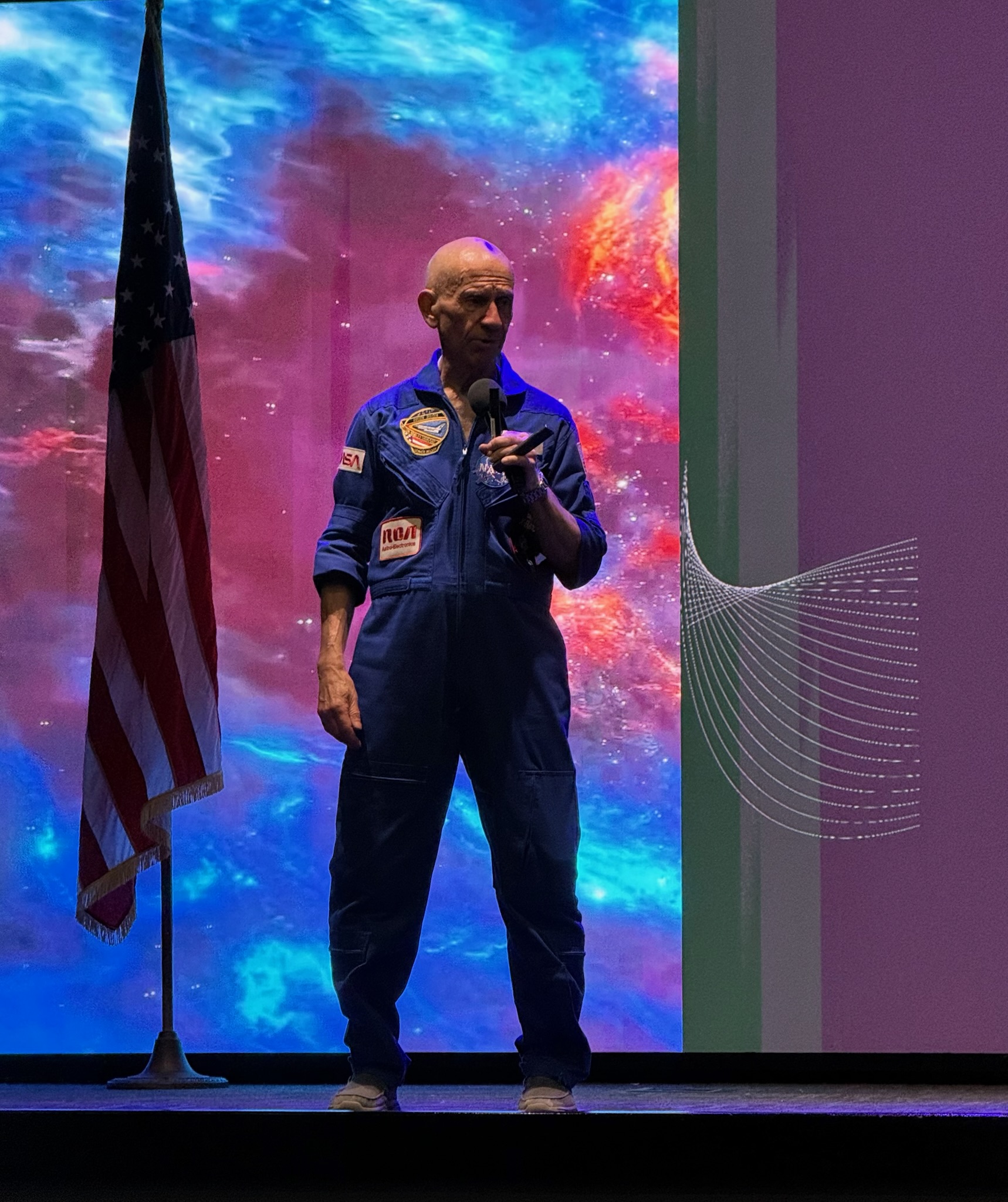
continued… We hustled over to the building the Astronaut Talk was in and took a seat in the mostly empty theater. The astronaut of the day was Bob Cenker, who did one mission aboard the Space Shuttle as a private contractor — he wasn’t an actual NASA astronaut.
Bob was chosen for the mission because he was a satellite specialist and they needed his specialist services on this particular mission. He talked about what it was like to be in space – the first day, he was very sick. Once he adjusted, he could eat fine, but preparing food was a challenge. He also talked about the challenges of using the toilet. He was very detailed about his experience — what day to day life was like, how his body changed, etc. He also talked about adjusting back to Earth upon return. He told a funny story about dropping dishes because he forgot they didn’t float.
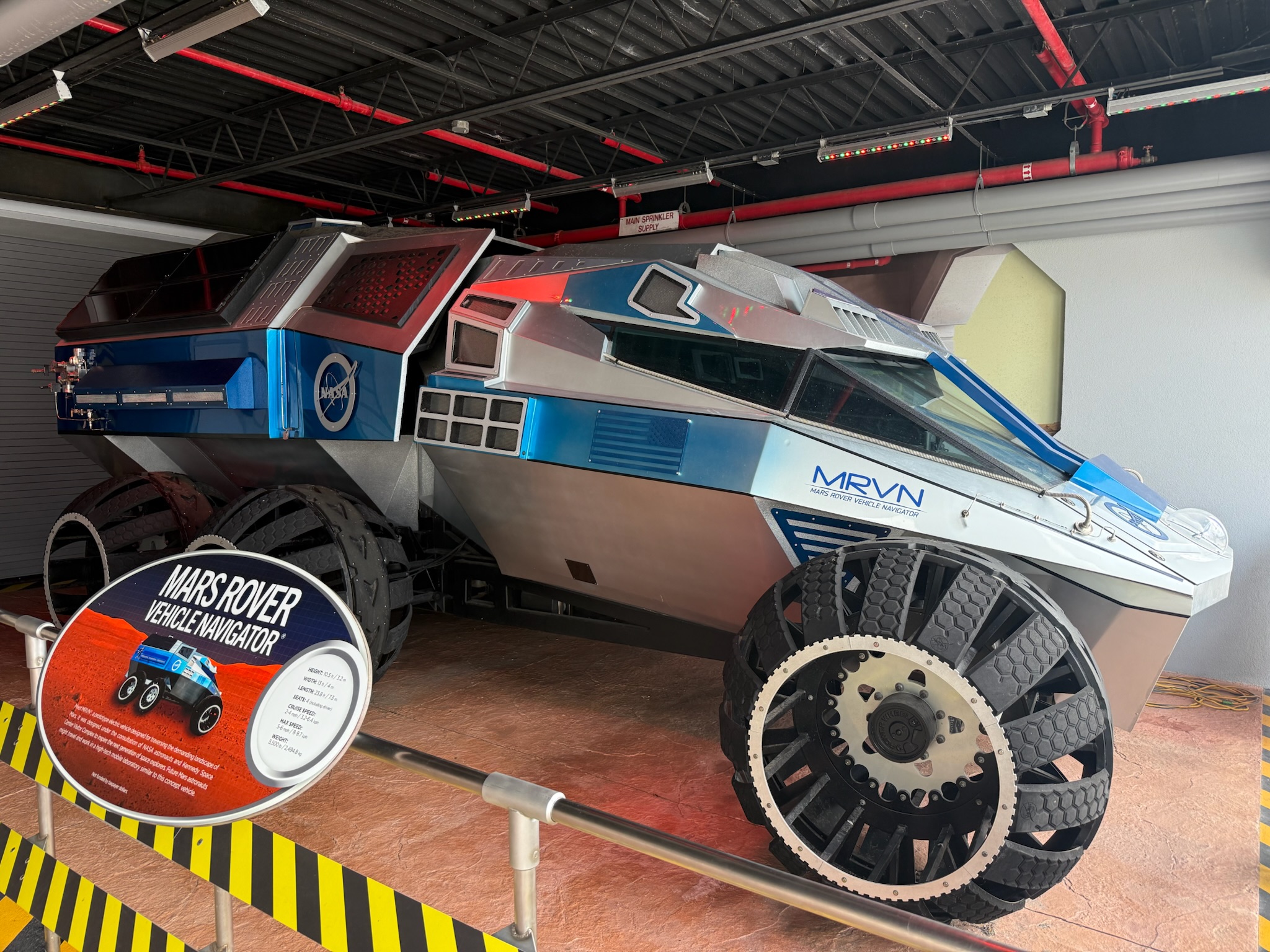
Next on the to-do list was an exhibit called Journey to Mars, which was in a building across the way from the theater. On the way over, we stopped to look at a vehicle called the Mars Rover Vehicle Navigator that was parked near the Journey to Mars. According to the signs, it was a prototype of a high tech mobile laboratory. The vehicle was electric and designed to traverse the demanding landscape of Mars. It could seat 4 people, cruise at 2 – 4 mph (3.2 – 6.4 kph) and had a max speed of 5 – 6 mph (8 – 9.7 kph). We found it interesting that the sign said “Not funded by taxpayer dollars.”