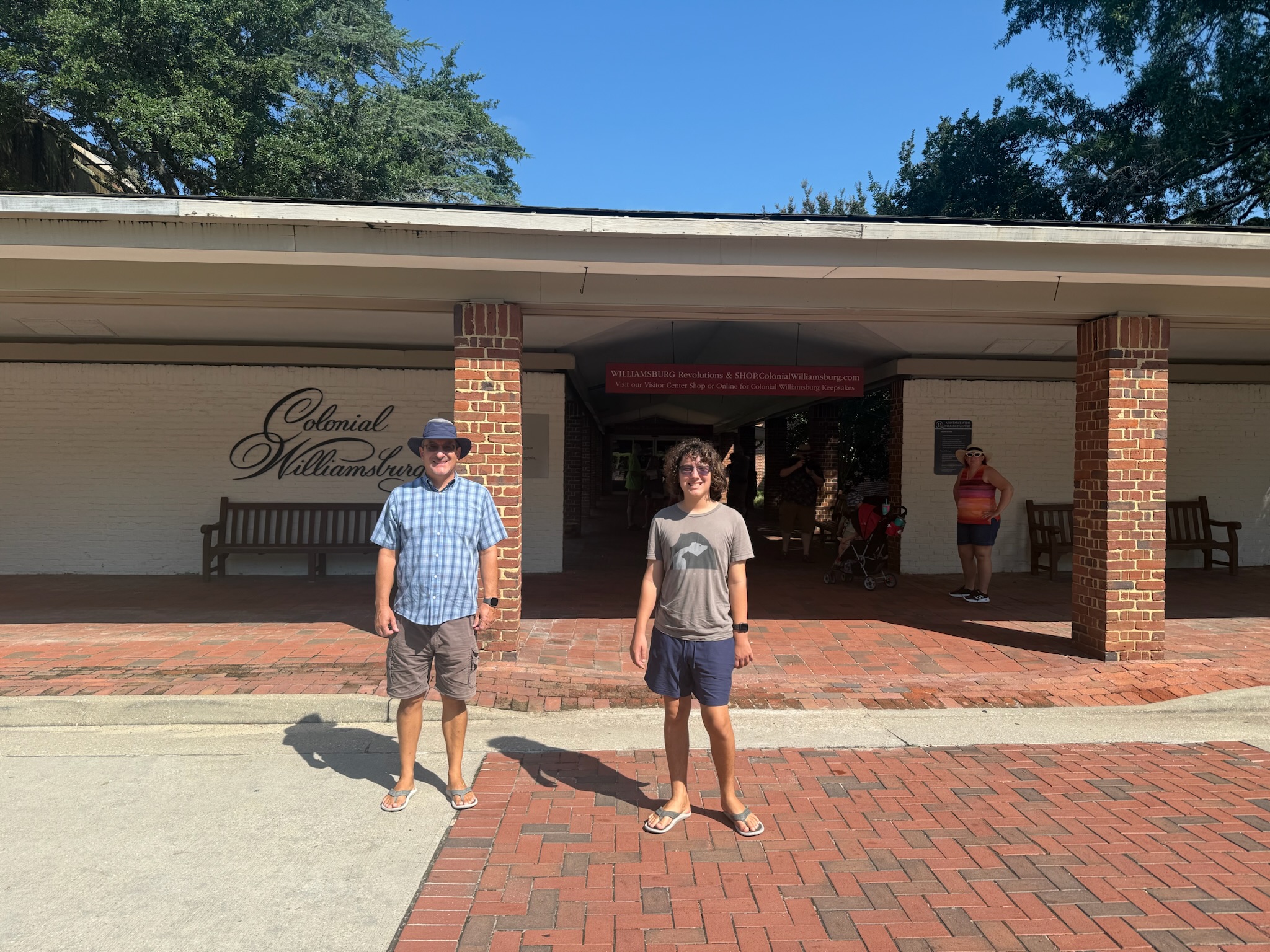
Monday, July 14 — We were still confused about Colonial Williamsburg. According to what we’d read online, we needed to buy tickets to see the historic town at the Regional Visitor’s Center, which was about 3/4 of a mile away from the historic district (by car, not as the bird flies). The visitor’s center opened at 1000. We pulled into the parking lot promptly at 1000, and it was packed. Parking cost $10, and it was a flat fee for the entire day.
Inside the center, there was a fairly long line to purchase tickets, which were $35 per person for 13 and up. The cashier gave us a map and explained that there was more to see and do than could be done in one day and that we needed to decide on what we wanted to see and plan our day in advance. When we asked for clarification of what exactly it was that we were going to see, he explained that the Colonial Williamsburg Foundation owned several of the buildings in the historic downtown. Their buildings had been restored to look as they had in 1775. Inside, there were actors dressed in costumes of the era explaining the history of their particular building, with the focus being on the years between 1699 (when Williamsburg became the capital of Virginia) and 1776 (just as the Revolutionary War began). Anybody could walk around the historic downtown for free and look at the buildings, but only ticket holders could go inside of the foundation’s buildings. All the buildings on the map were color coded to identify which buildings were owned by the foundation. There were several buildings that were not owned by the foundation which were open to the general public, mostly shops and restaurants. Some of those venues had their employees dressed up in period costumes, too. We later found out that not every foundation building was open every day; if it had a flag out front, then visitors knew it was open.
There was no museum in the visitor’s center like there had been at Jamestown, but there was a 70-minute movie. We decided to save the movie for the end of the day. We followed the signs out to the exit, where we could either take a walking trail to the historic area or take a bus. It was blazing hot, so we opted for the bus. We waited about 10-minutes. There was a long line, and we lucked out and got some of the last seats. According to the map, the bus did a loop around the outer edges of the 3/4 mile historic area, with multiple stops along the loop.
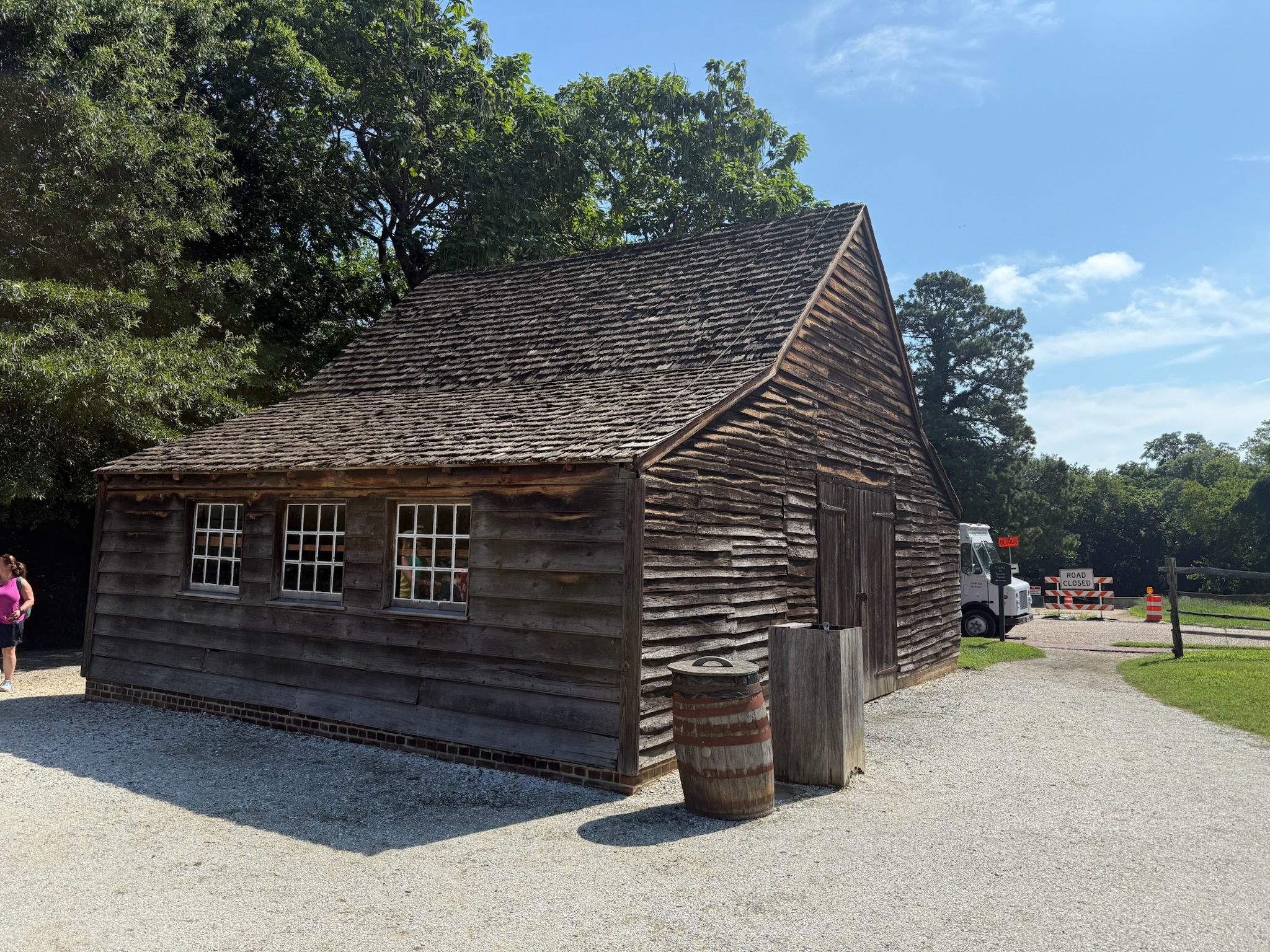
We decided to get off at stop 1, the governor’s palace. From the bus stop at the main road, we followed a small foot path to a smaller paved road. We passed this along the path, but the map didn’t specify what it was and the color indicated that it didn’t belong to the foundation.
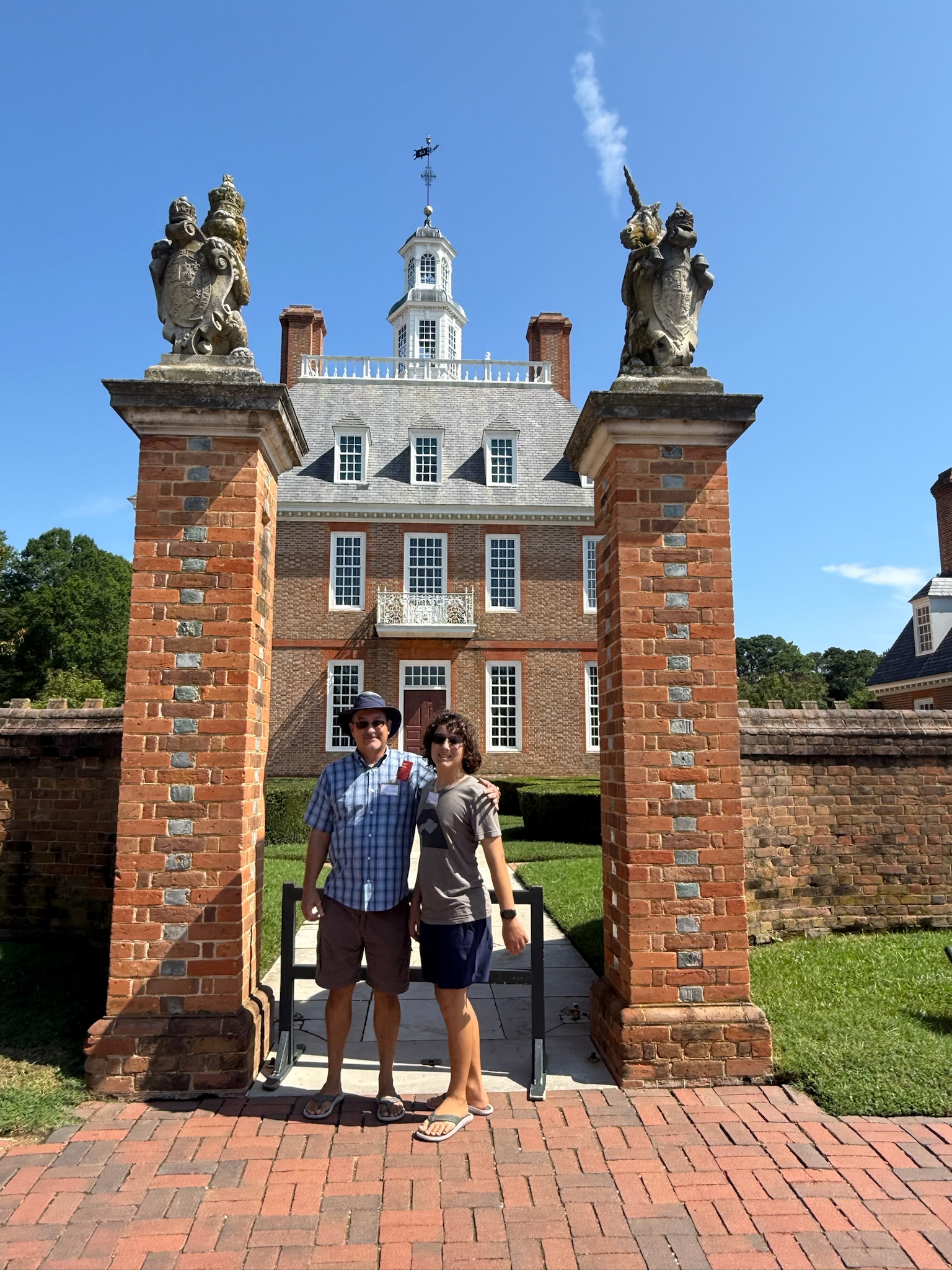
Once on the paved road, we could see the palace up ahead on the right. There was a center building flanked by a building on each side. The gate at the front was closed.
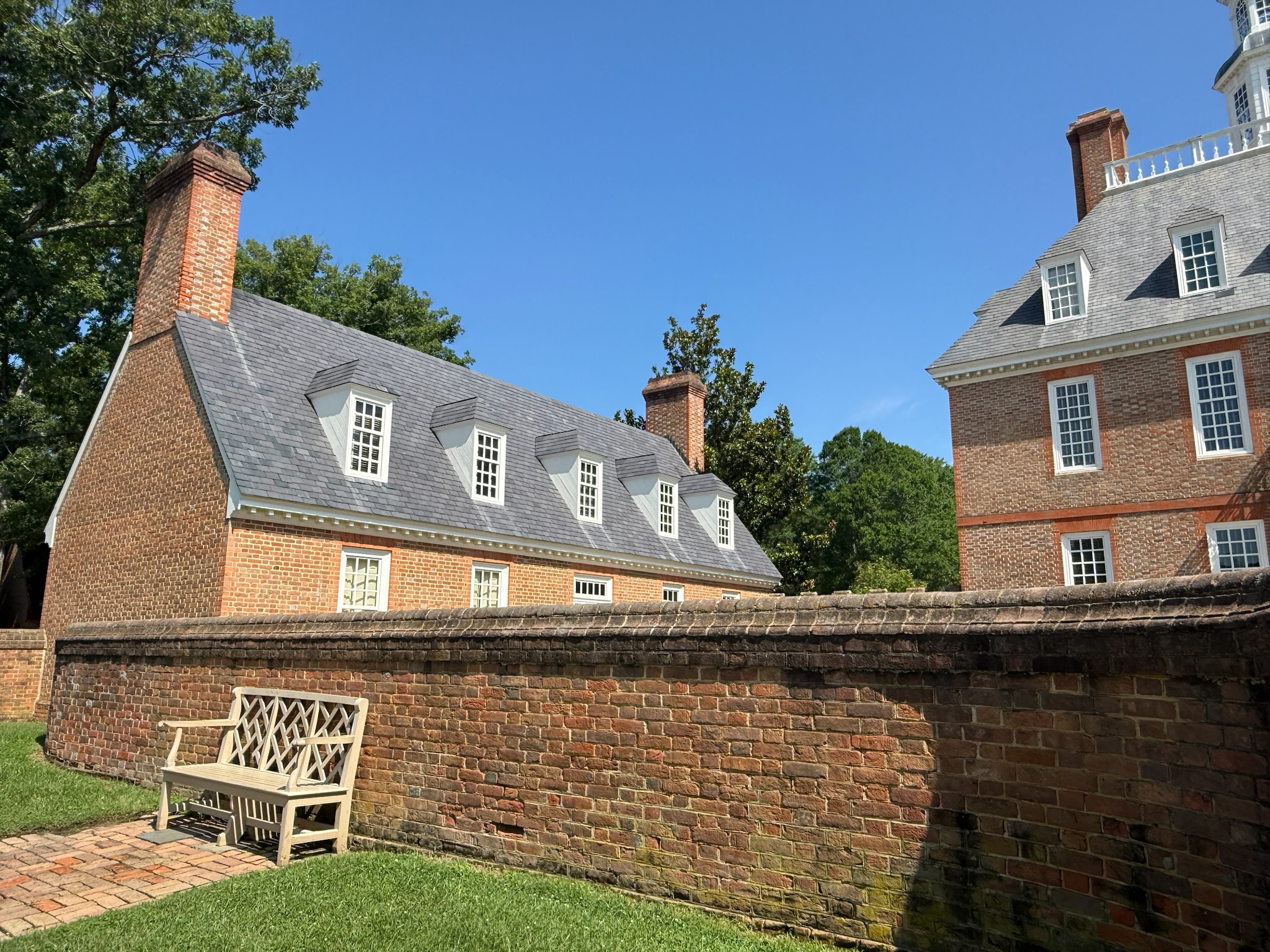
We did noticed that there was another gate open a little farther down the road. That gate led into an area between the side of the west building and several small outbuildings. When we tried to enter, we were told we had to wait for the next tour and were ushered over to some benches inside the gate along the side of the building. The benches were shaded, thank goodness.
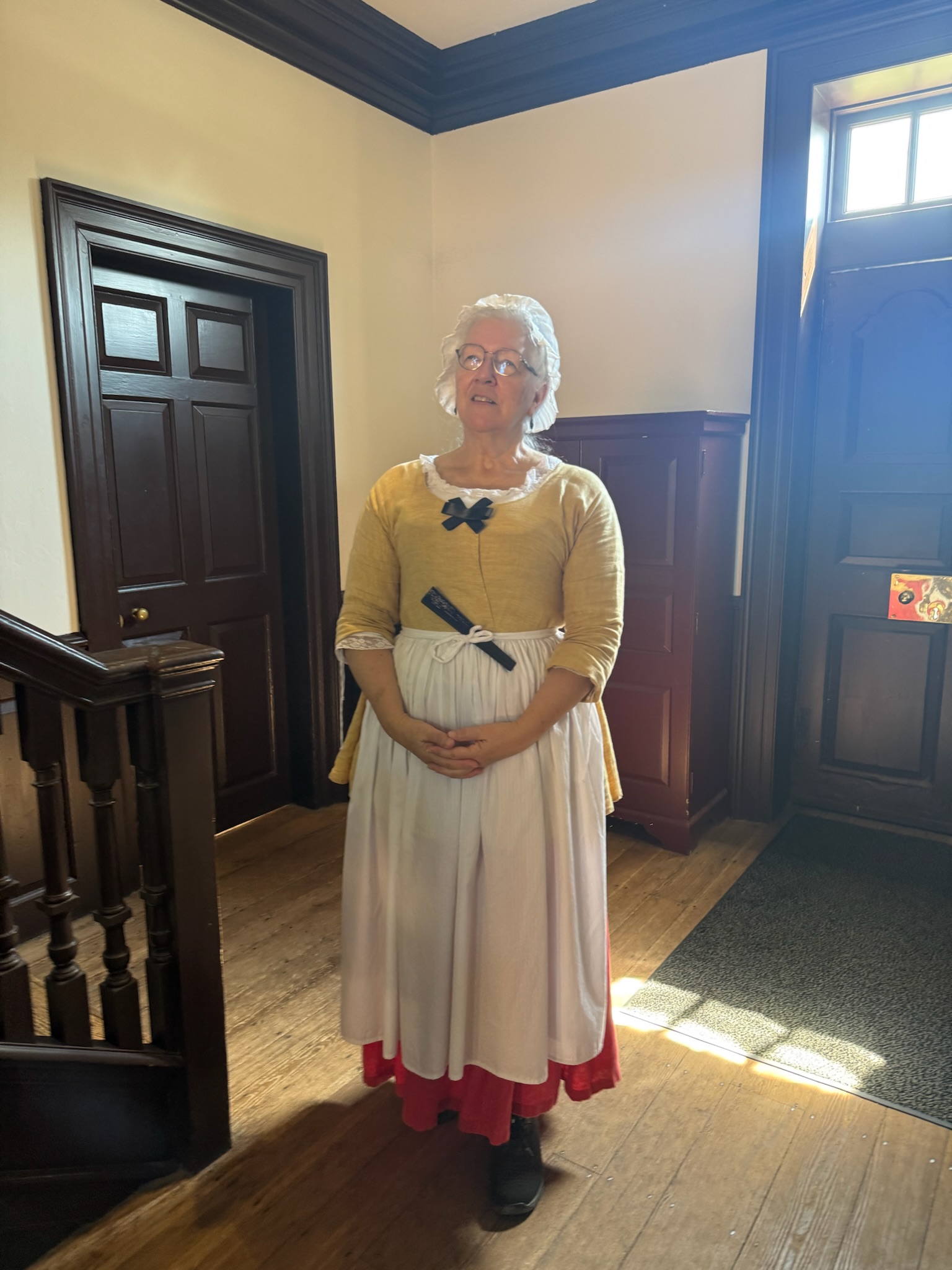
After waiting a few minutes, a woman came out in a period costume and told us to come inside. We shuffled into an air conditioned room and sat down while she gave us information. The palace was approved for construction in 1705, but was not completed until 1722. It ran far over budget and colonists were angry that the governor “lavishes away” the colony’s funds. The palace became a point of contention amongst the colonists. The guide said that while most of the buildings in Colonial Williamsburg were original, this one was a replica made to resemble the original as closely as they could. The original had burned down in 1781. The house had simultaneously been both a residence and an administrative building and had been home to seven British Crown governors and Virginia’s first two American elected governors,Patrick Henry and Thomas Jefferson. It was also home to hundreds of servants and enslaved people over the years. After the capital was moved to Richmond, the palace was turned into a hospital and burned down shortly after. The reconstruction began in 1931 and it opened to the public in 1934. In 1774, the year being recreated, the colonies were still under the purview of Britain, so it was now presented as it had been when it was the property of the crown. From there, we exited that building into the front courtyard and went into the main building.
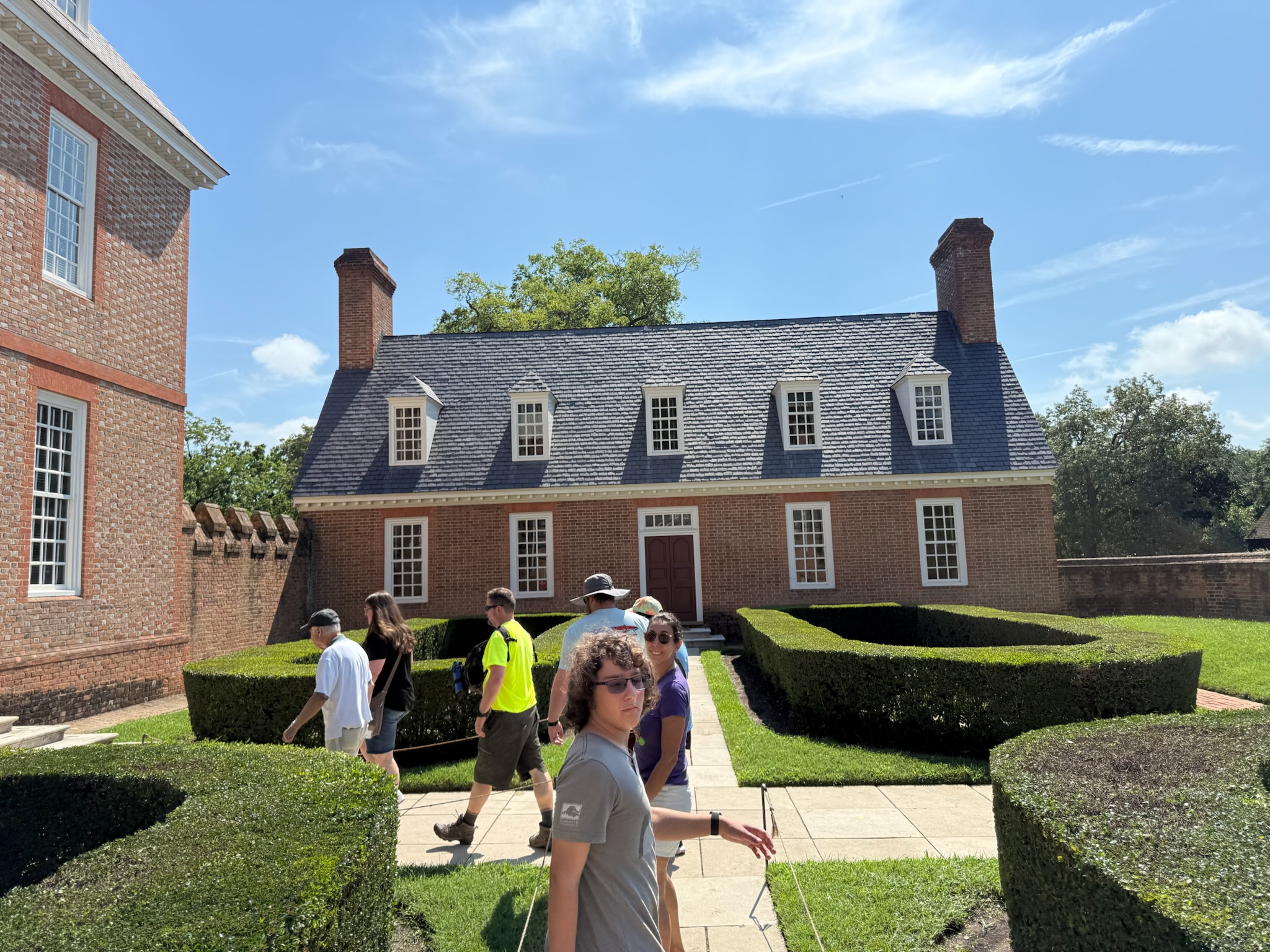
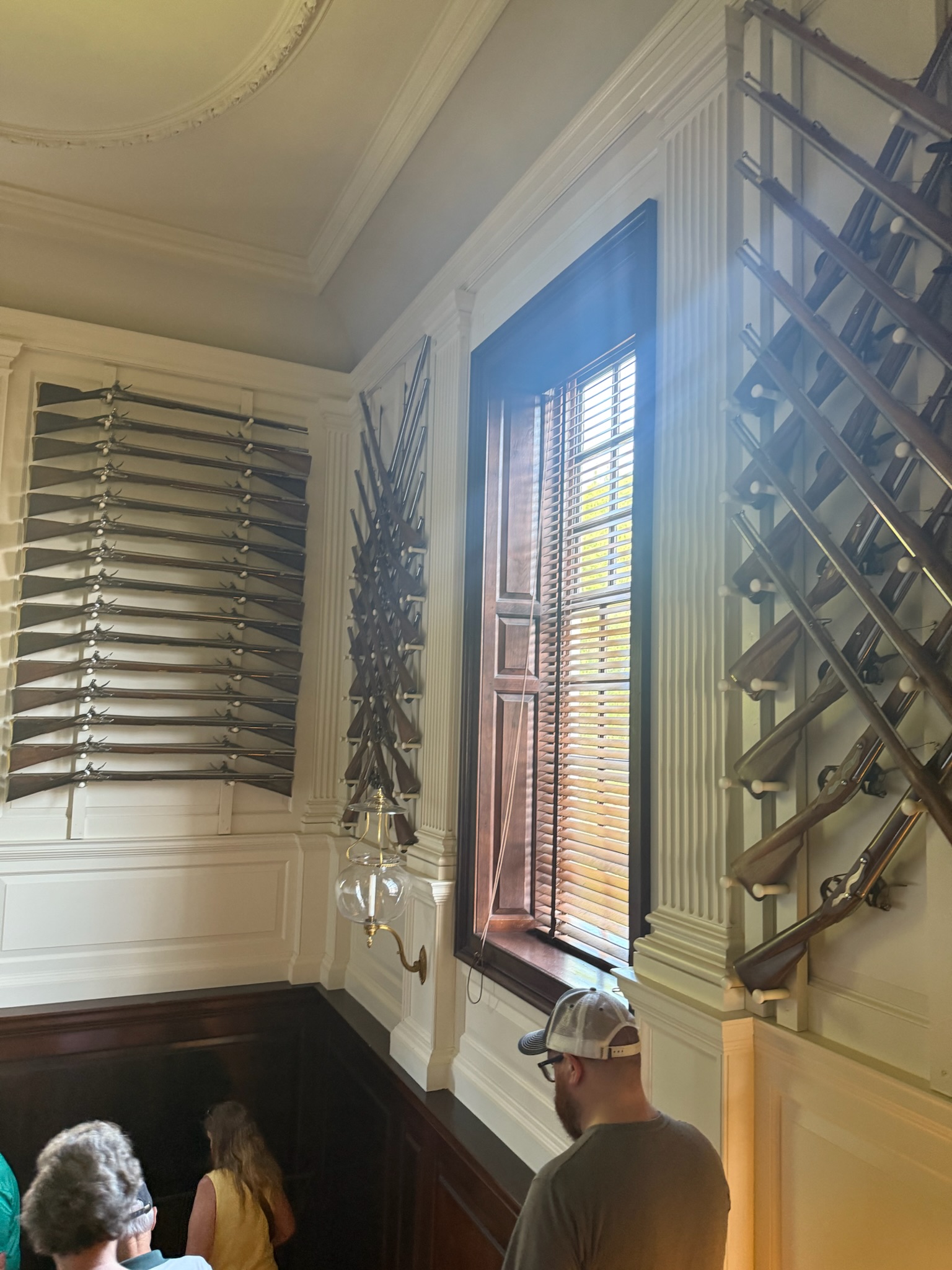
We entered via the foyer, which was completely covered in weaponry. It was an artistic way to store spare arms where they could be easily accessed when needed, and also a bold display of power. These weapons were actually used in battles against the Shawnee indigenous tribe, the French and Indian War and Revolutionary War.
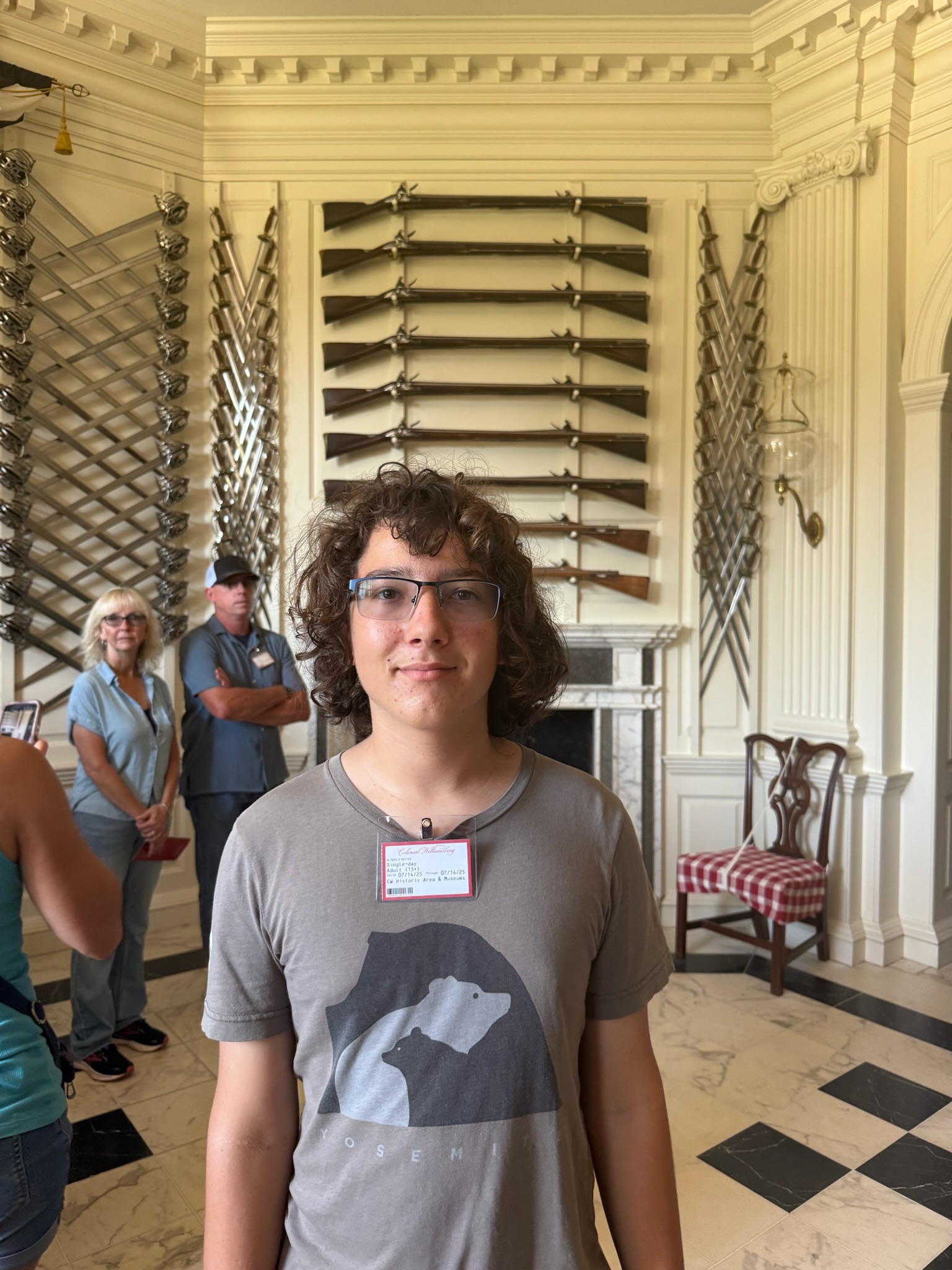
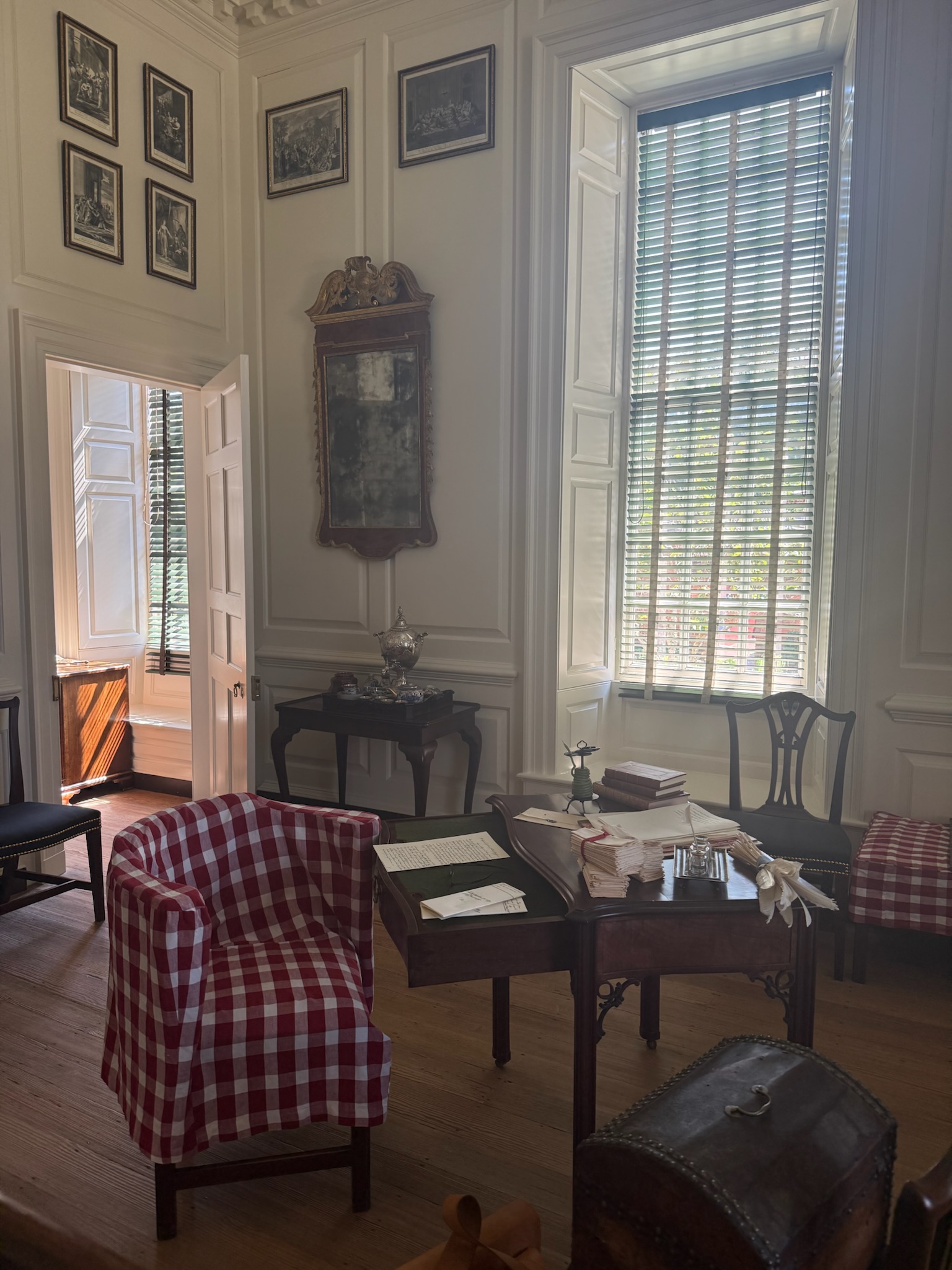
Off to the side of the foyer were two offices. One was called the parlor, and it was for the person who administered governmental duties on the governor’s behalf.
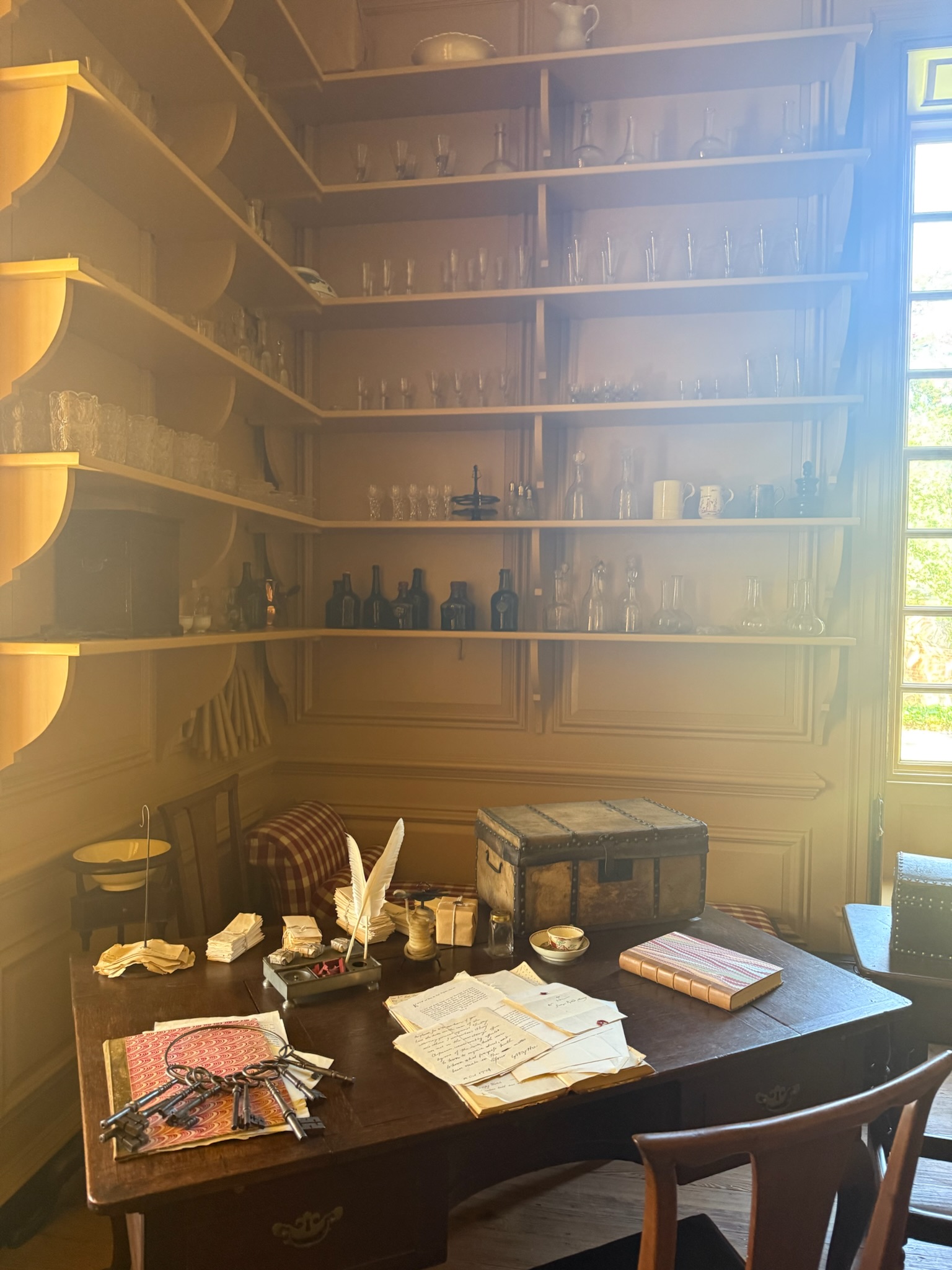
The other office was called the pantry and was where the butler oversaw the administration of the house. There were normally 20 – 30 people on staff, some slaves, some free servants. Extra staff would be brought in for special events.
From the foyer, we headed into the hallway, which had a staircase and a couple of doors leading into other rooms that were closed. There were weapons in the hall and along the staircase walls, too. We went upstairs to the living spaces on the second floor.
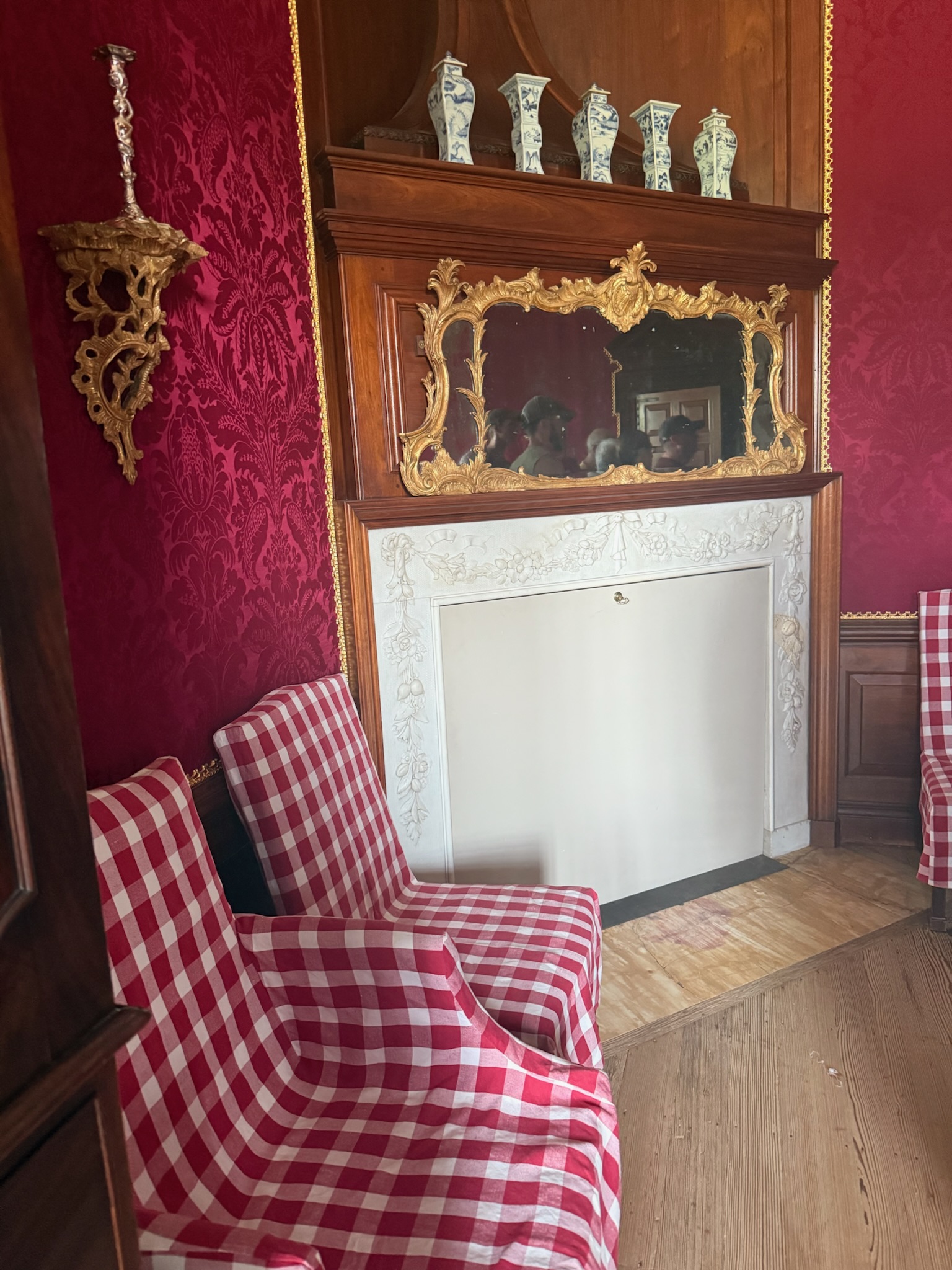
In 1774, Lord Dunmore and his family had been in residence. As we’d learned at Ft. Monroe, Lord Dunmore had been a pivotal player in sparking the revolution. We found out that his name was actually John Murray and Lord Dunmore was only a title — he was the Earl of Dunmore. He was originally from Scotland and had moved to New York in 1770 to be the new governor as appointed by the king. He left his wife and 8 children behind in Britain. In less than a year, the king reassigned Lord Dunmore to Virginia. He did not want to move to Virginia and had written everyone he could think of begging to be released from the appointment. He had said unkind things about the location and people. Someone leaked this information to the press, so when Lord Dunmore arrived in Williamsburg, his reception by the locals was quite frosty. His wife and six of their children joined him in Virginia. The locals seemed to like the wife and children, despite not liking him much. Mrs. Murray had another child while living in the palace who they named Virginia in honor of the colony.
This was Mrs. Murray’s sitting room, where the family spent most of their time. She also welcomed guests into this room.
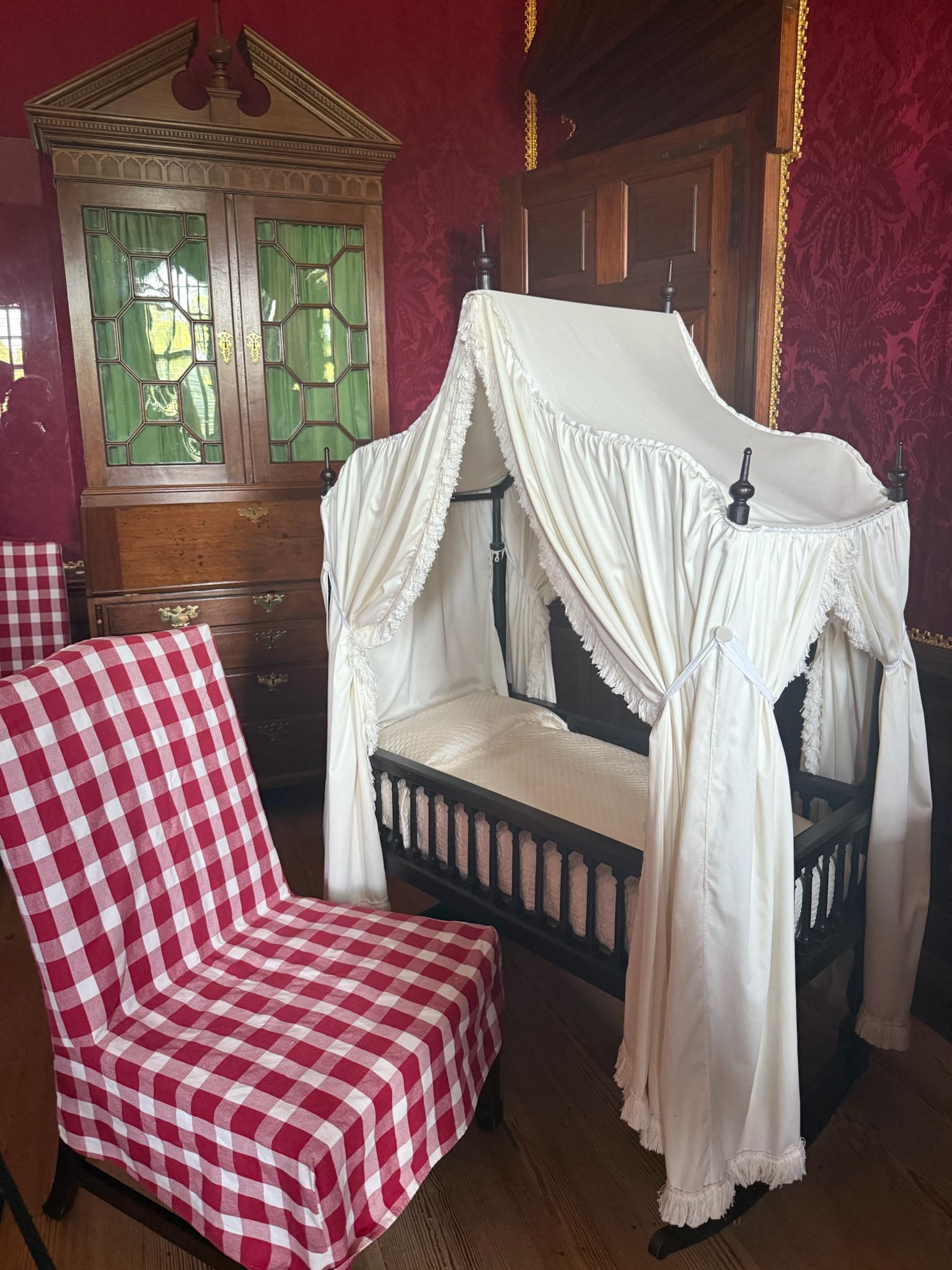
We believe this was Lord Dunmore’s office, but we’re not totally sure we remember that correctly.
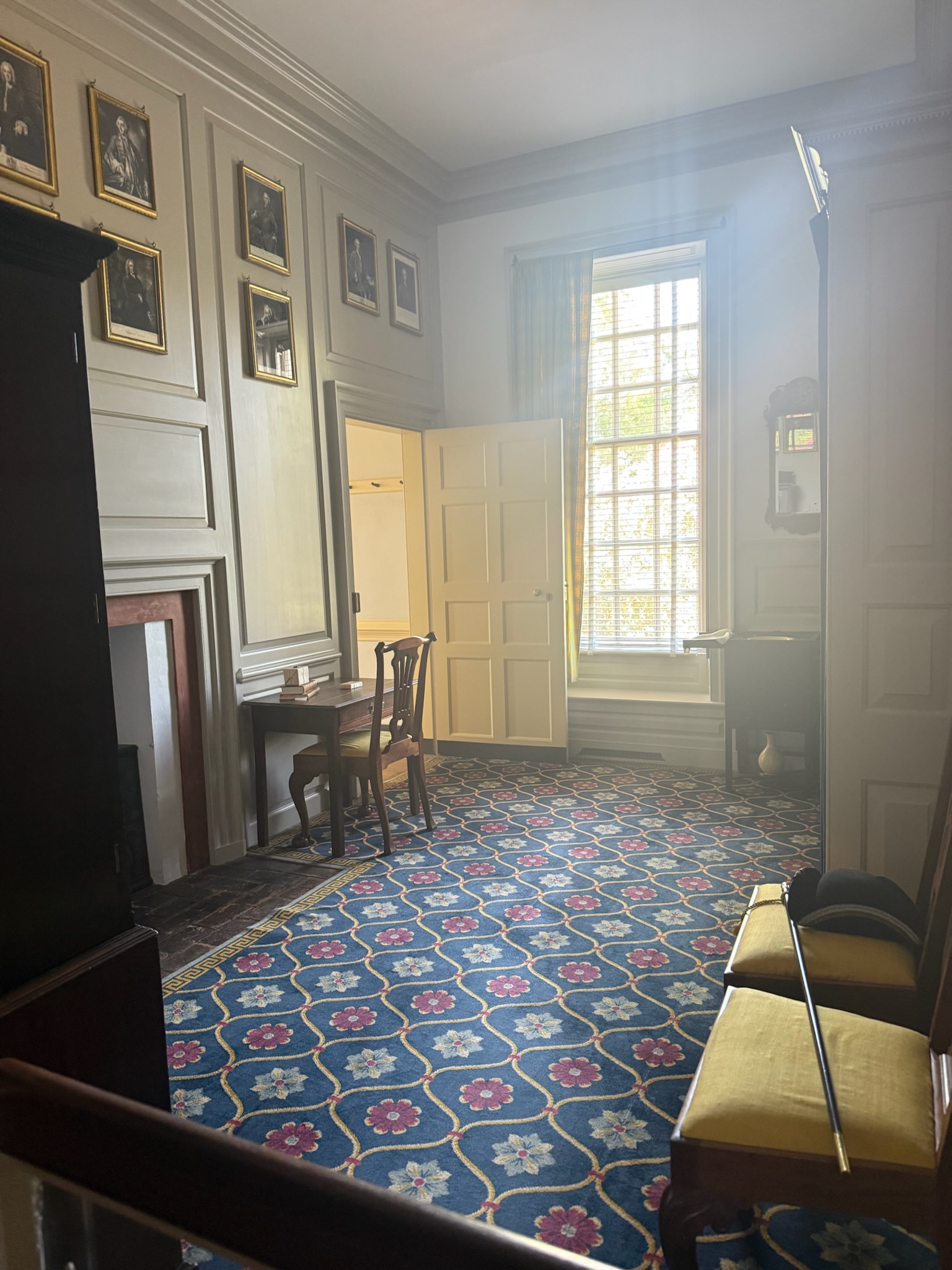
We believe this was the guest room, but we’re not totally sure we remember that correctly.
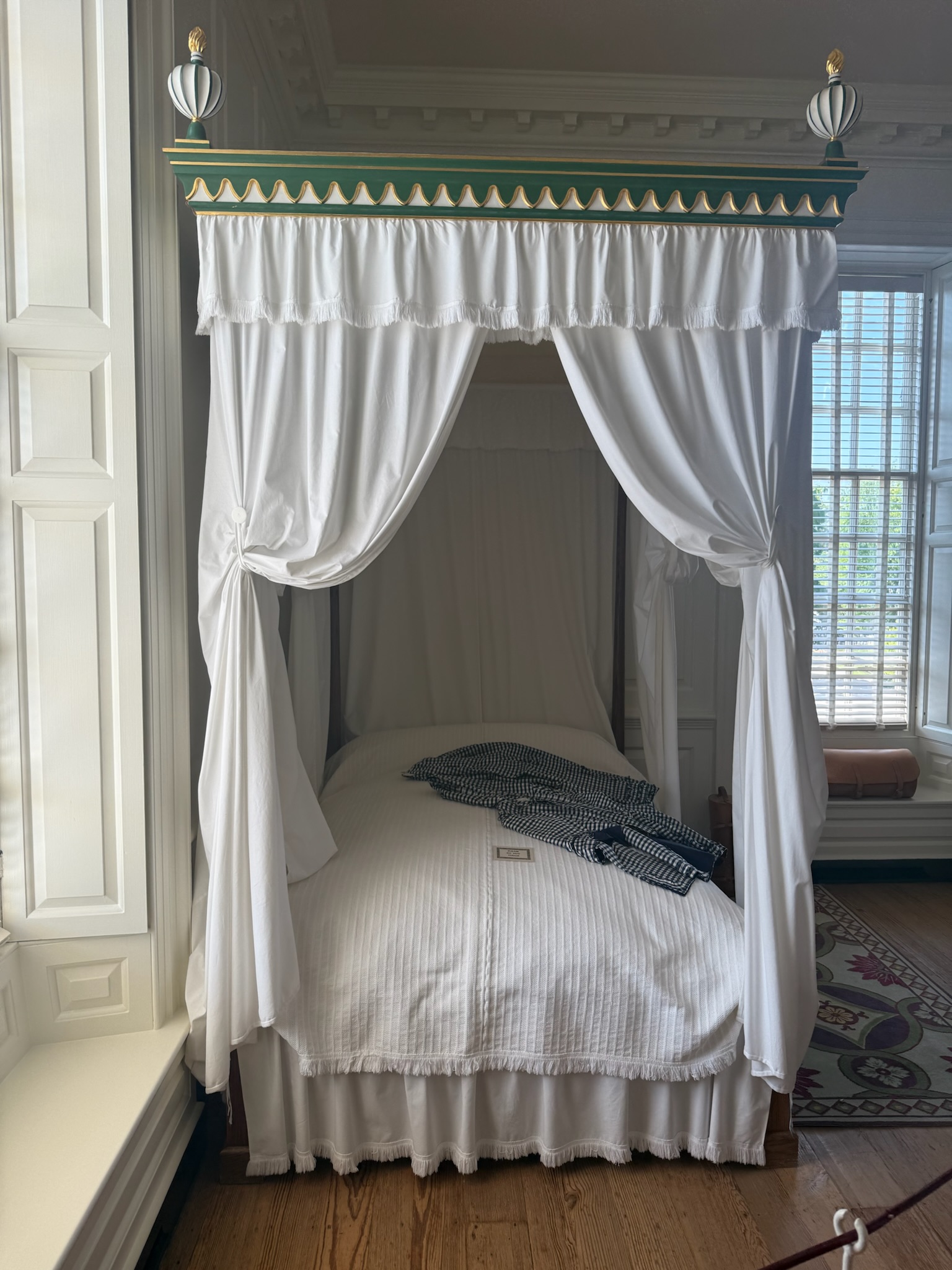
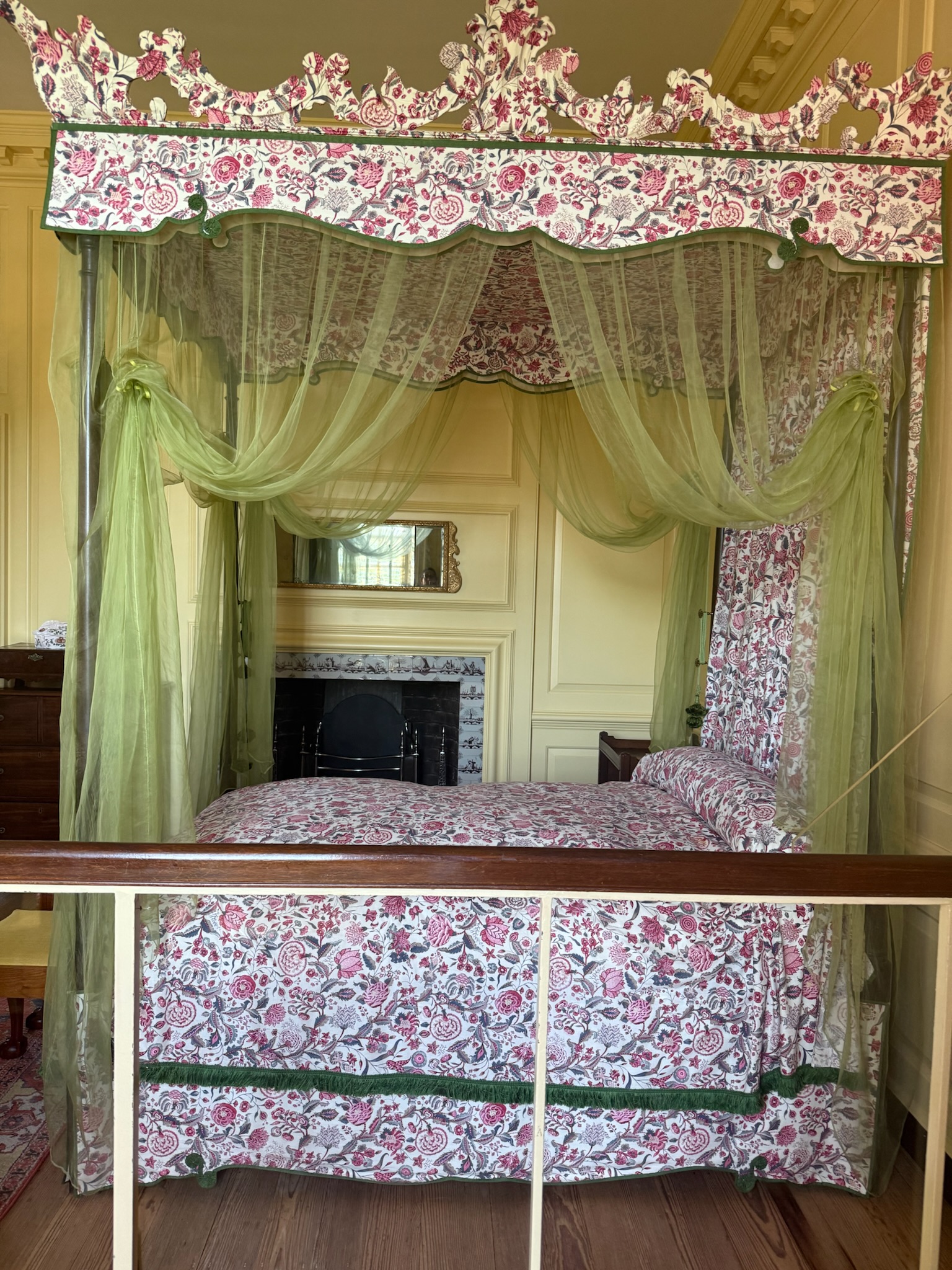
The bedroom of the two eldest girls. The rest of the children lived on the third floor, and we were not taken up there.
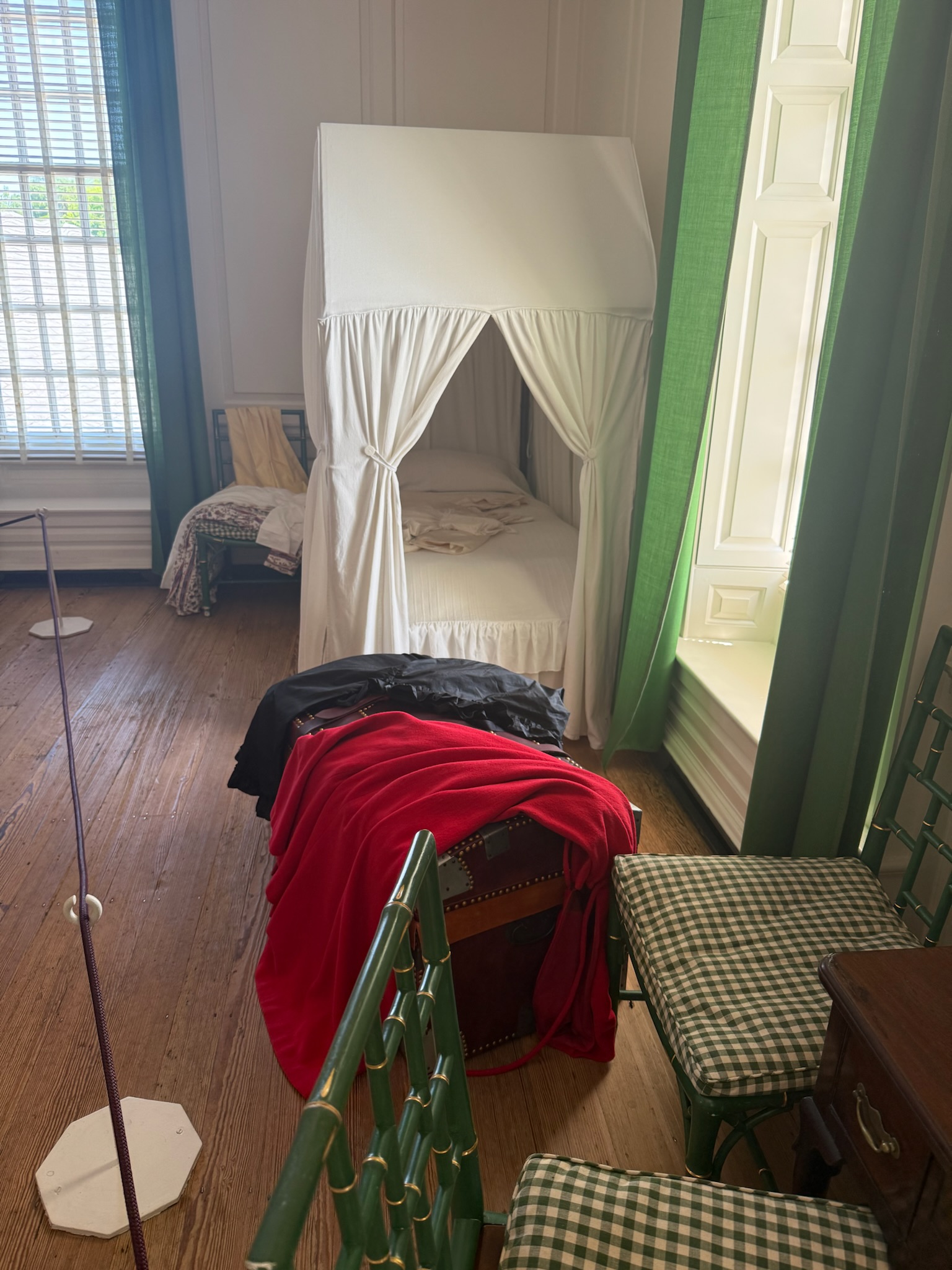
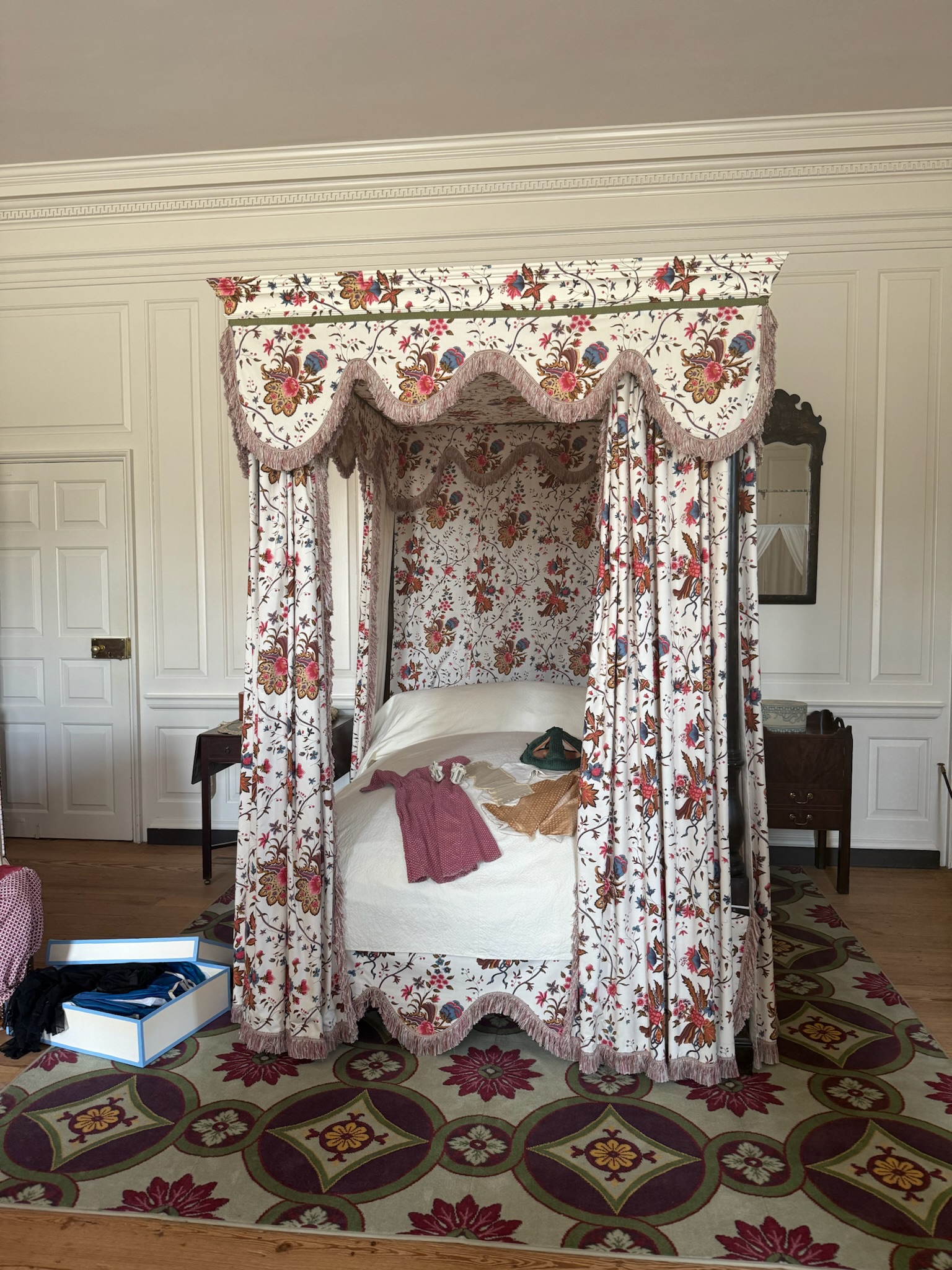
The Murray’s bedroom.
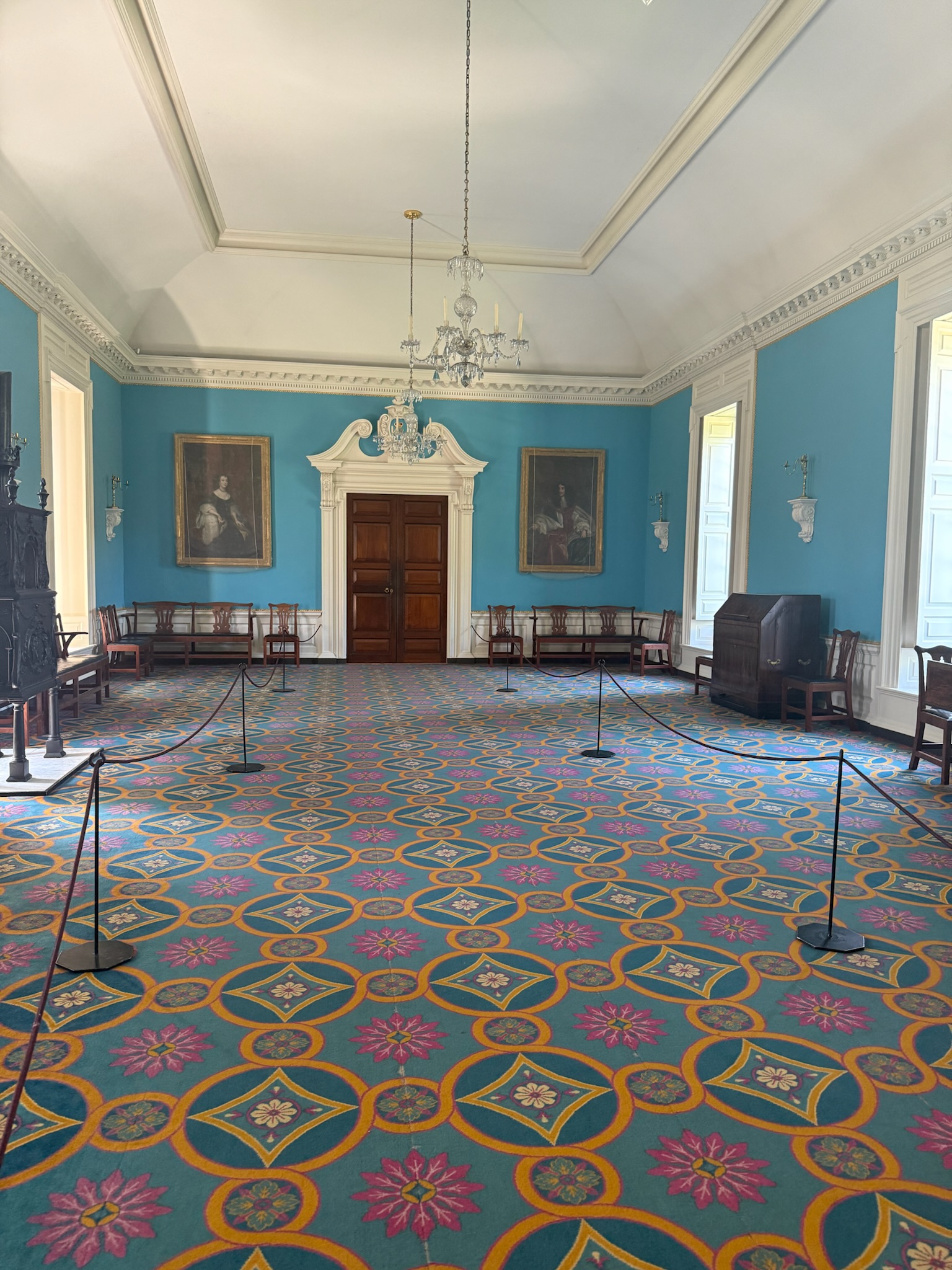
We headed back downstairs and went into the ballroom. She shared a story about how Lord Dunmore threw a party right before the revolution started. We don’t remember the details now, but most of the guests were involved with planning a subversive action against him in the near future, making the party awkward.
After the incident where Dunmore had Williamsburg’s gun powder seized, the colonists, were so angry that he sent his wife and children to another town where they would be safer and turned the palace into a fortress. There was never any combat, but knowing that the colonists intended to kill him, two months later he literally snuck out the back door and fled to a military ship, where he tried to continue to try to rule from. The palace was seized and Dunmore’s possessions were sold.
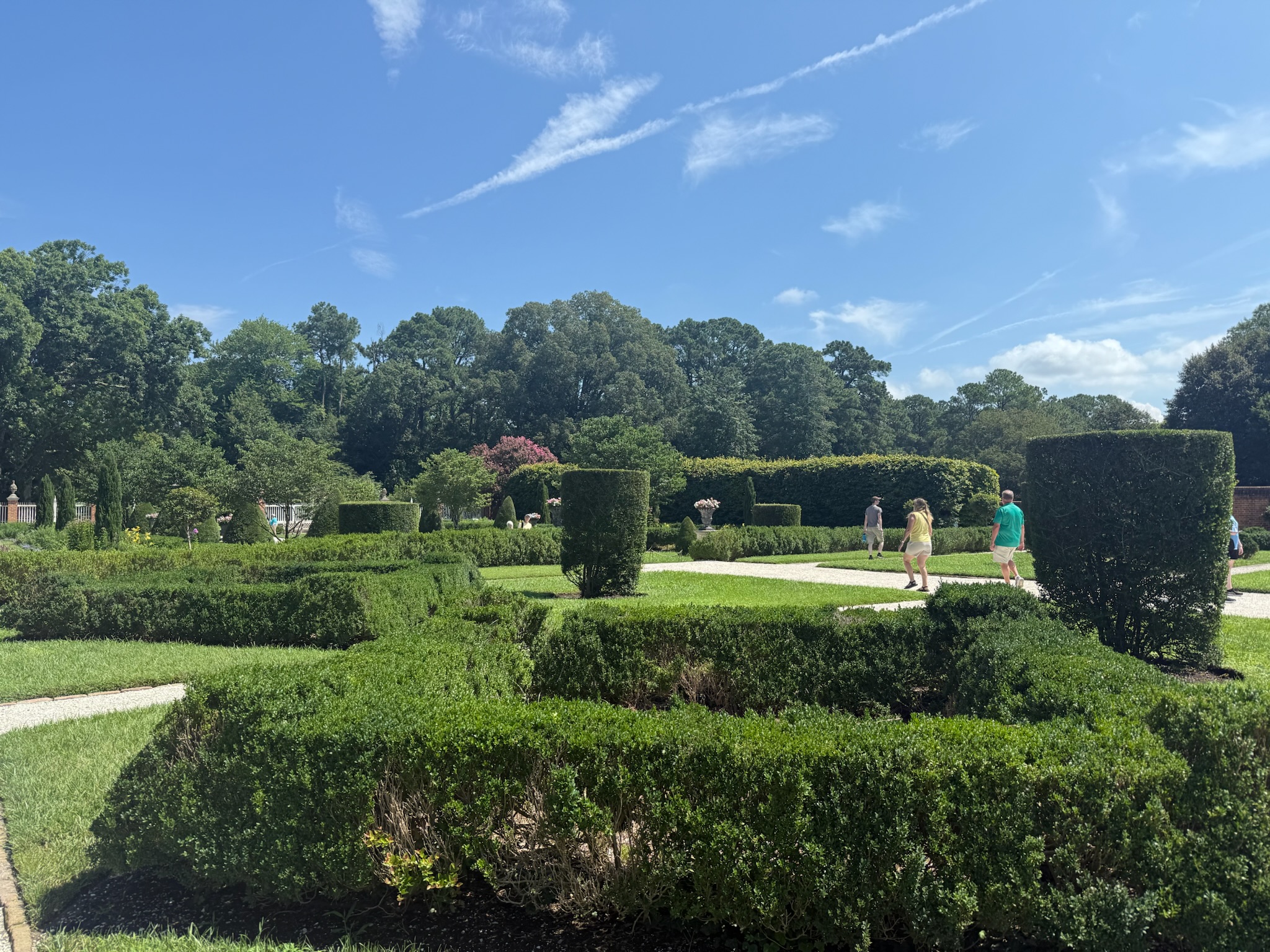
When the tour ended, we were let out into the back yard and told that we were free to wander the gardens, go into the cellar, and look at the outbuildings at our leisure. The palace gardens were among the most imitated and admired in the American colonies and were apparently quite beautiful, especially in the spring. However, we skipped them.
We visited to the cellar first. It was really dark. We’re glad we had flashlights on our cell phones!
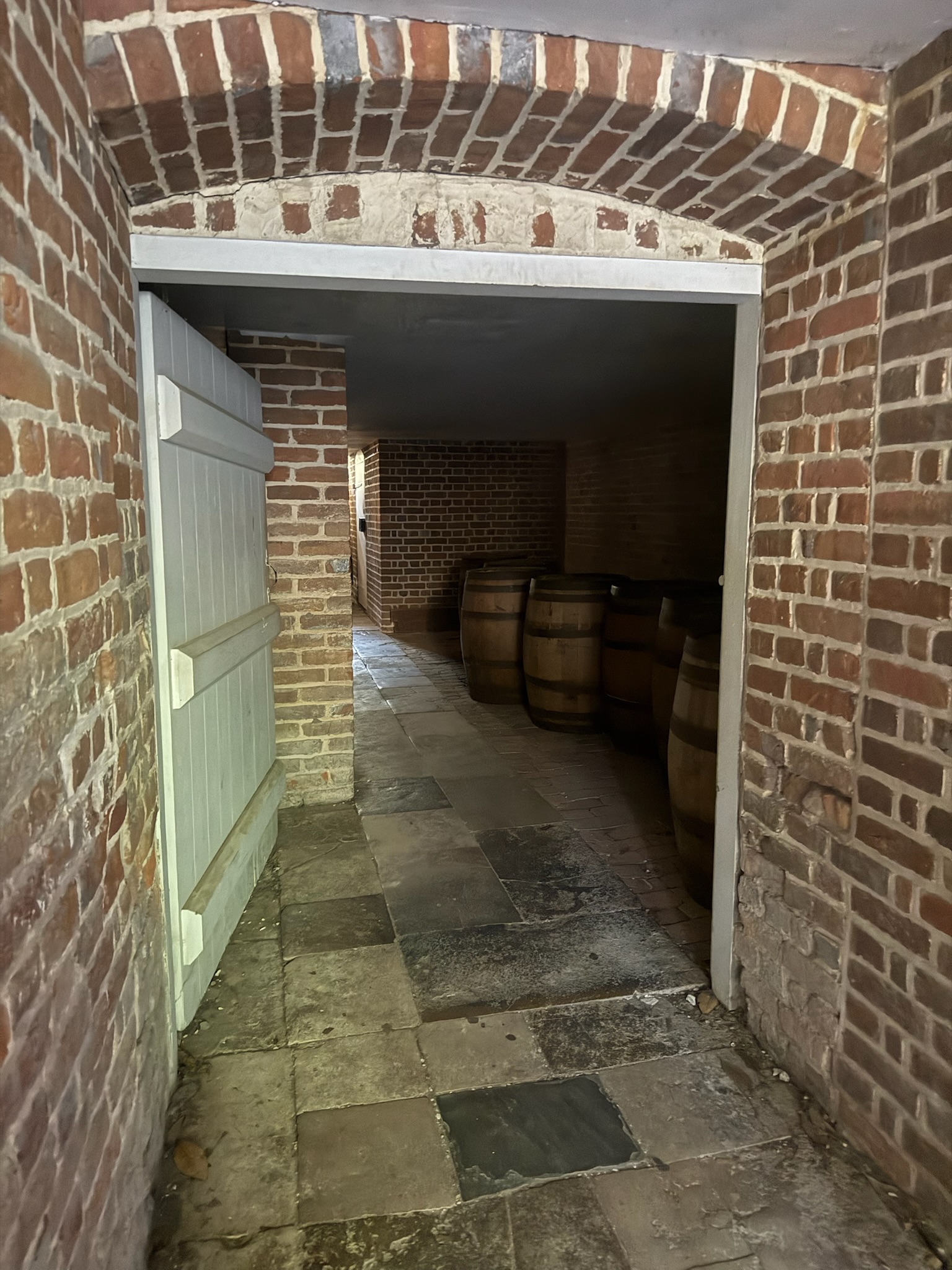
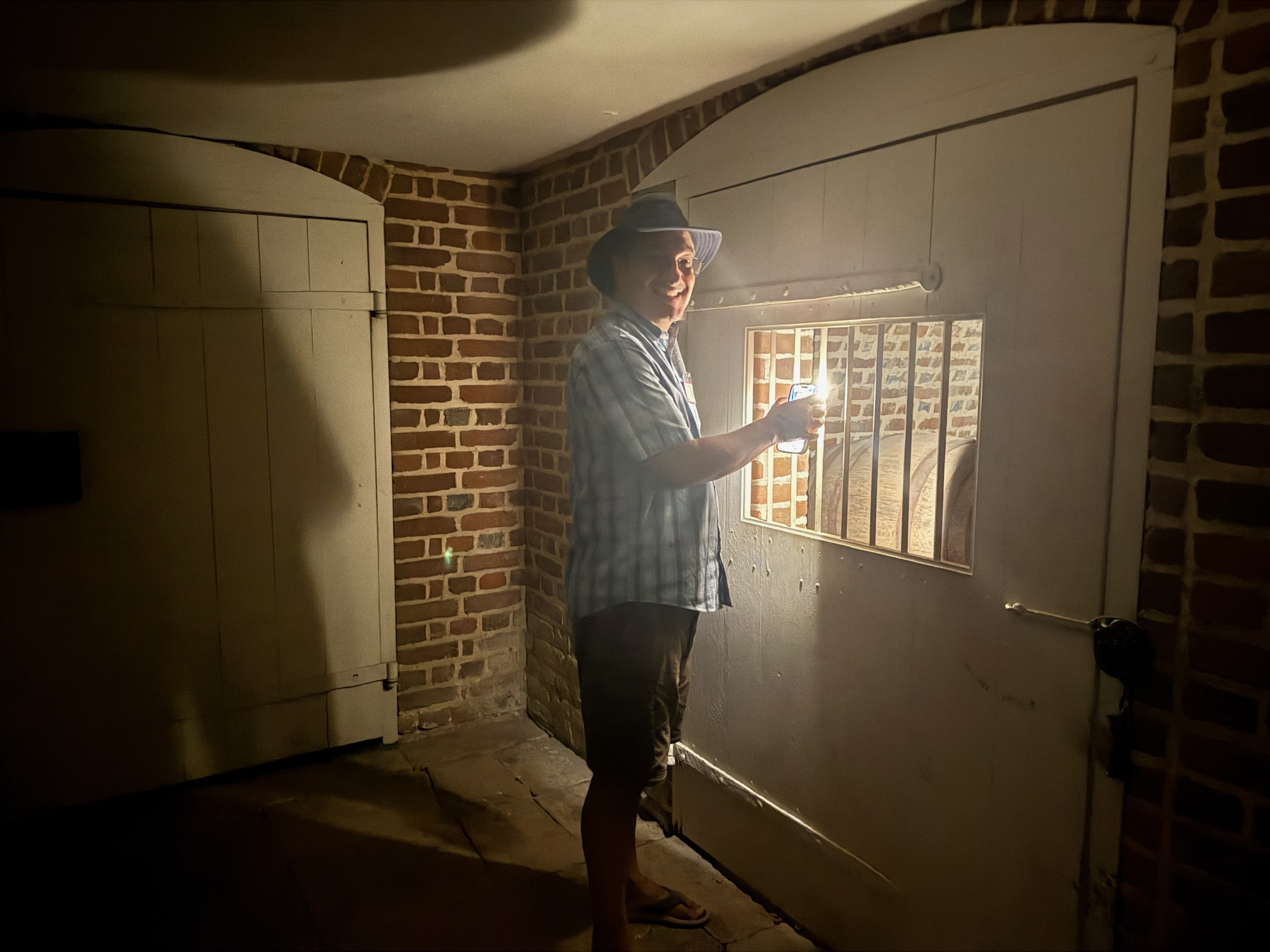
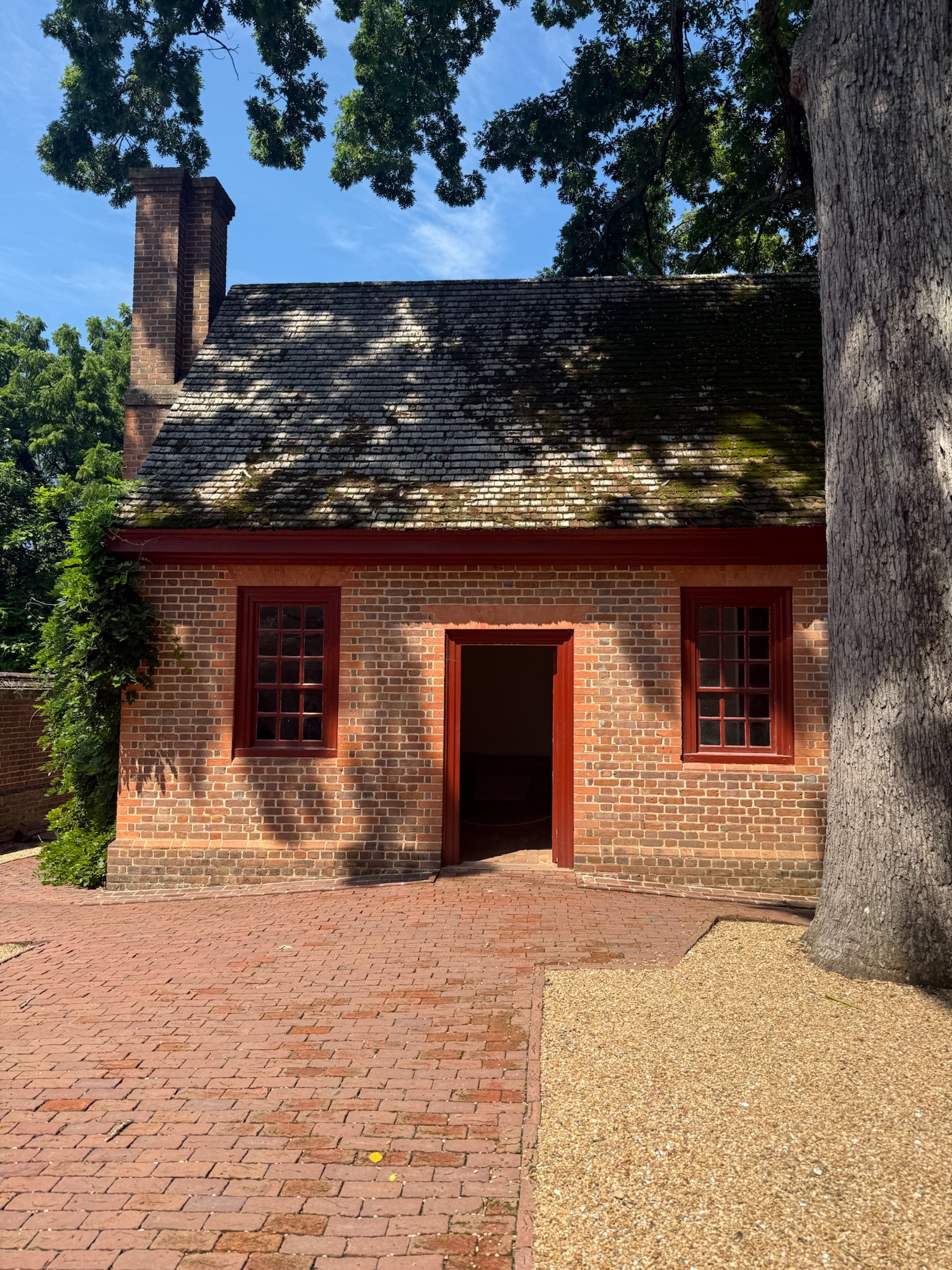
The kitchen and scullery buildings were side by side and were similar.
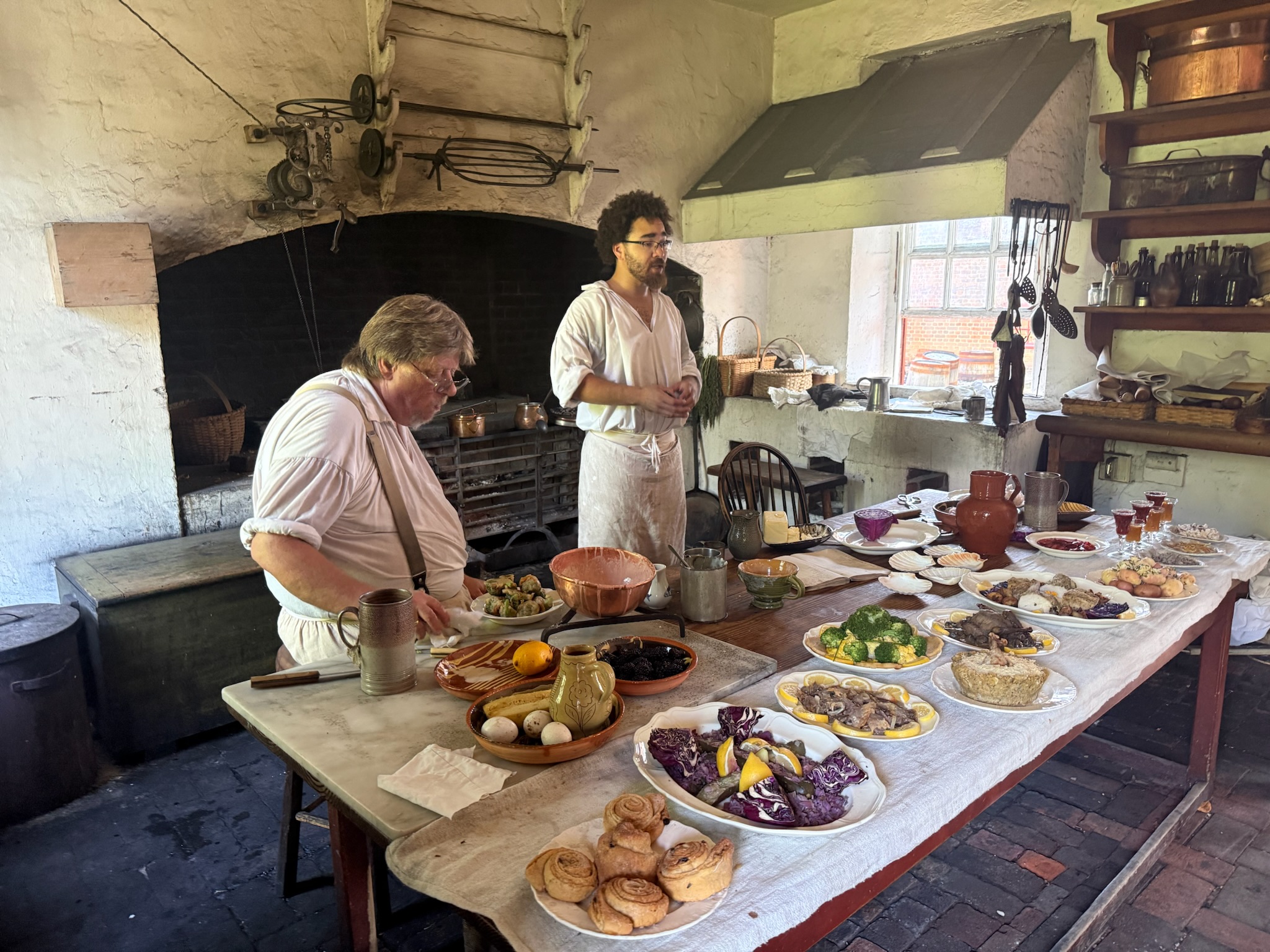
The chef showed us what he had made for the day and it sounded delicious! The governor certainly ate well!
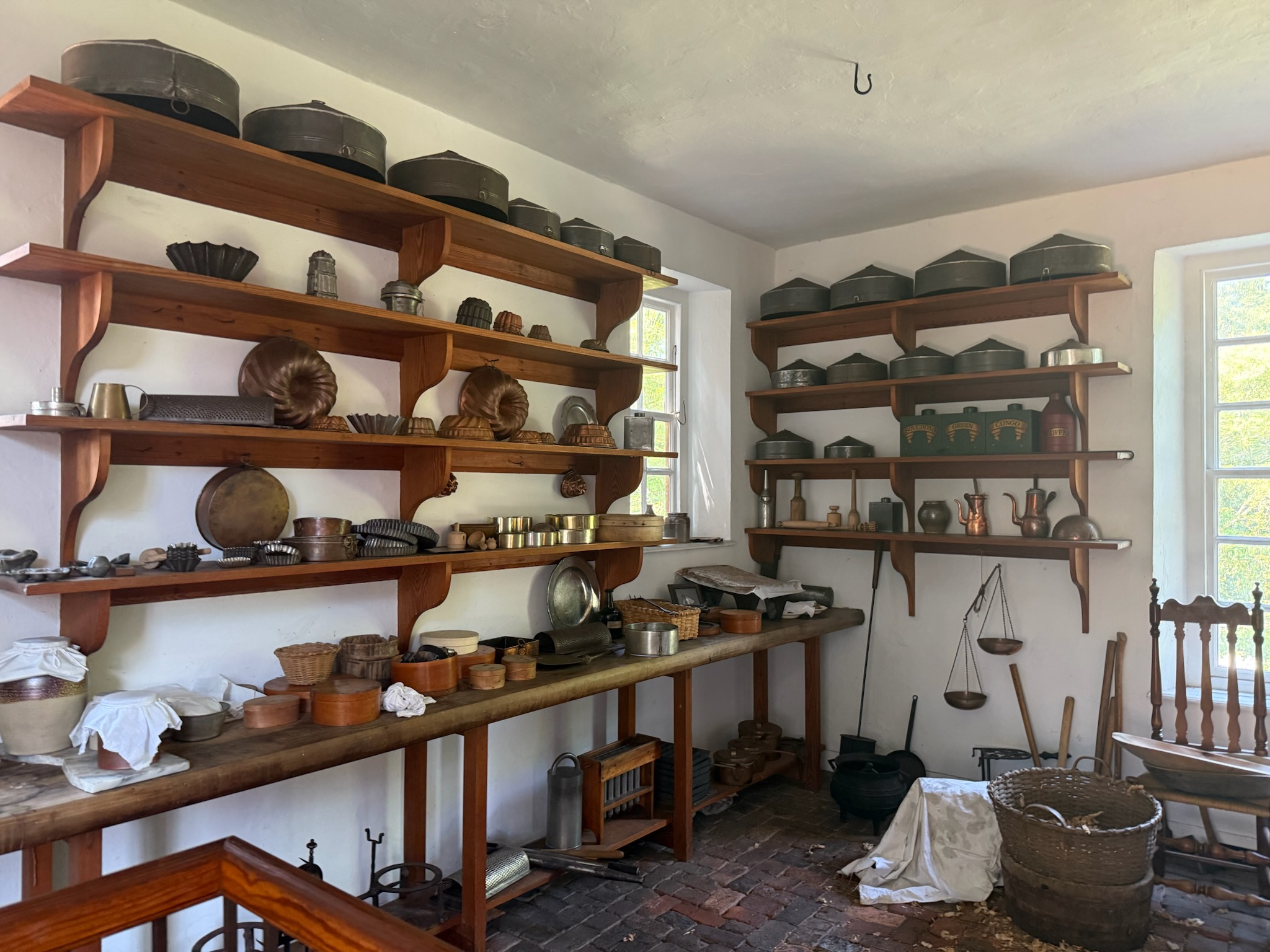
The scullery was where the prep and cleanup was done for the kitchen (particularly the smelly work). Scullery workers were the lowest ranking kitchen staff. They lived in a loft on the second floor.
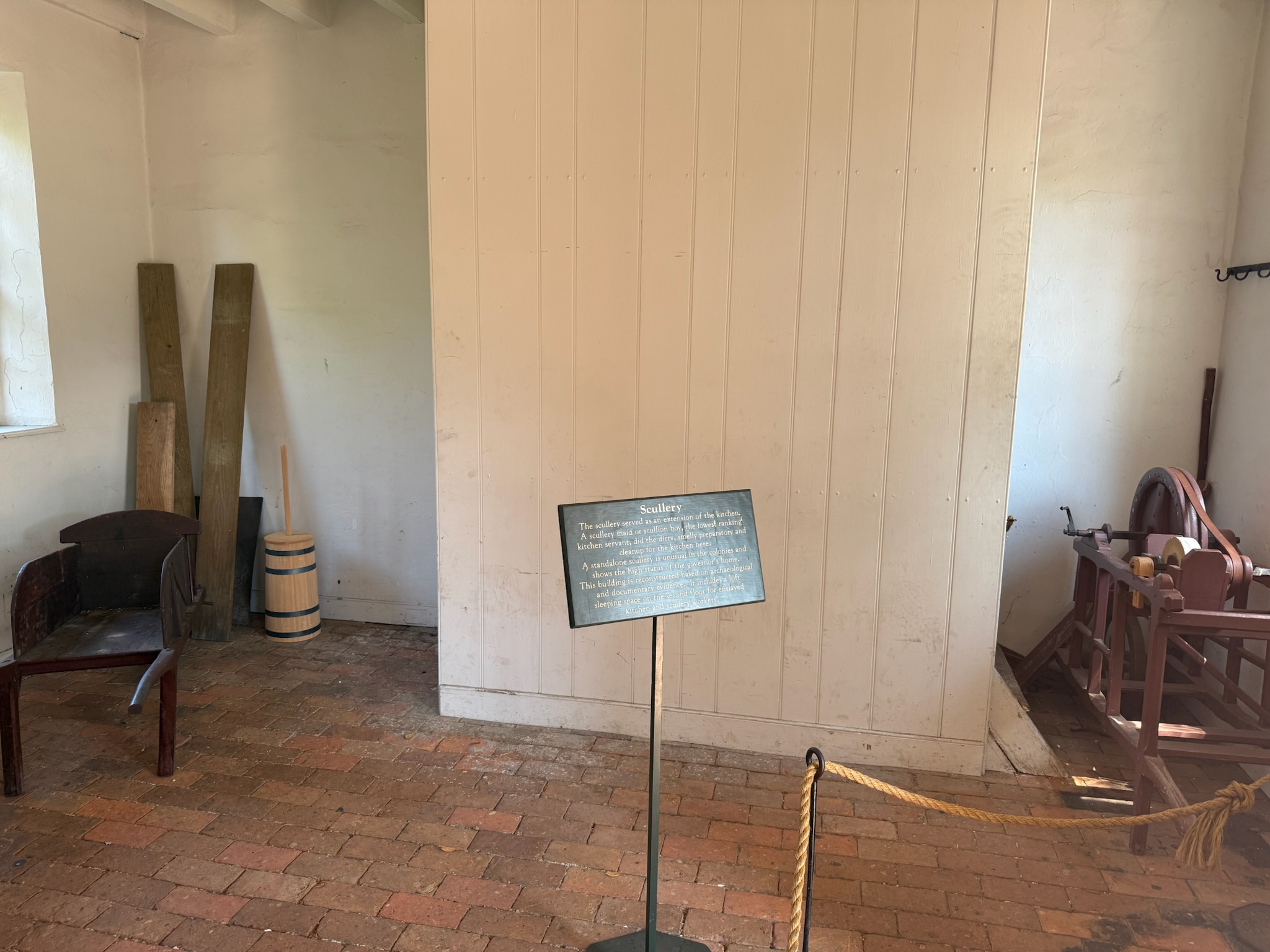
There was another garden behind the kitchen, and it looked like this one grew food. This garden did not appear to be open to the public.
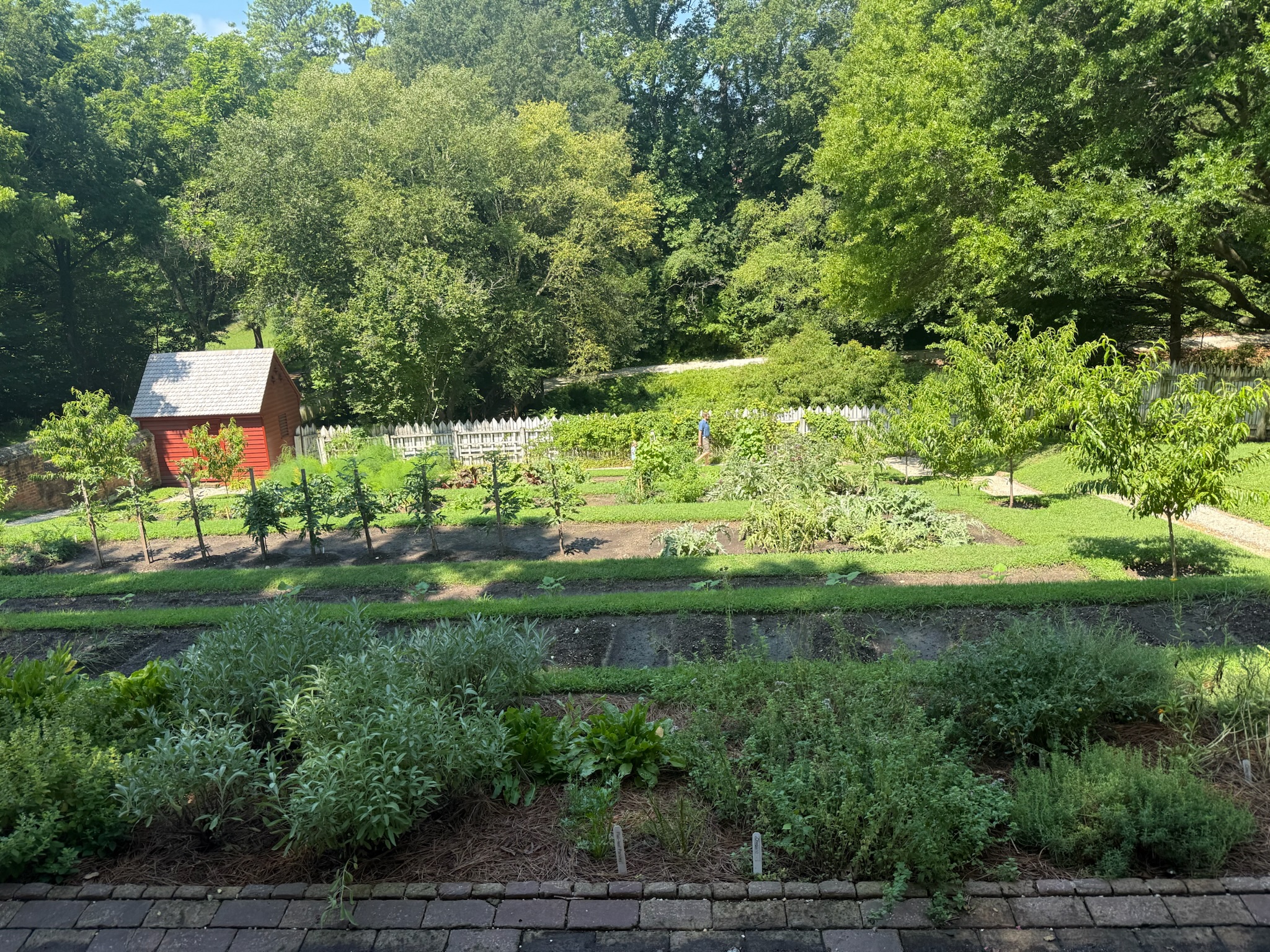
There were two nearly identical little buildings side by side. One was the salt house, where meats were preserved by covering them in salt until they dried. The salt was imported. The other was the smokehouse, where they further preserved the salted meats by smoking them.
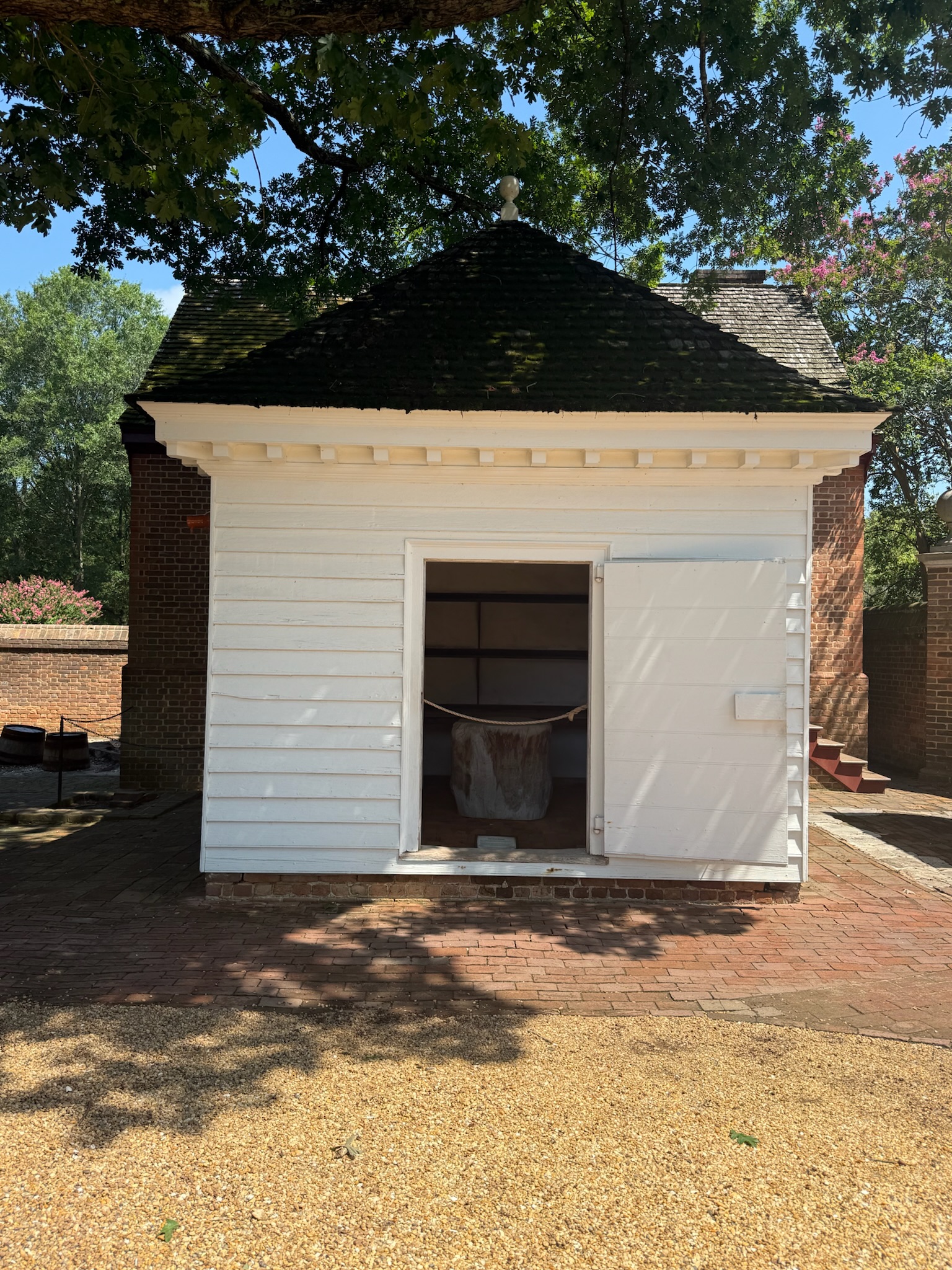
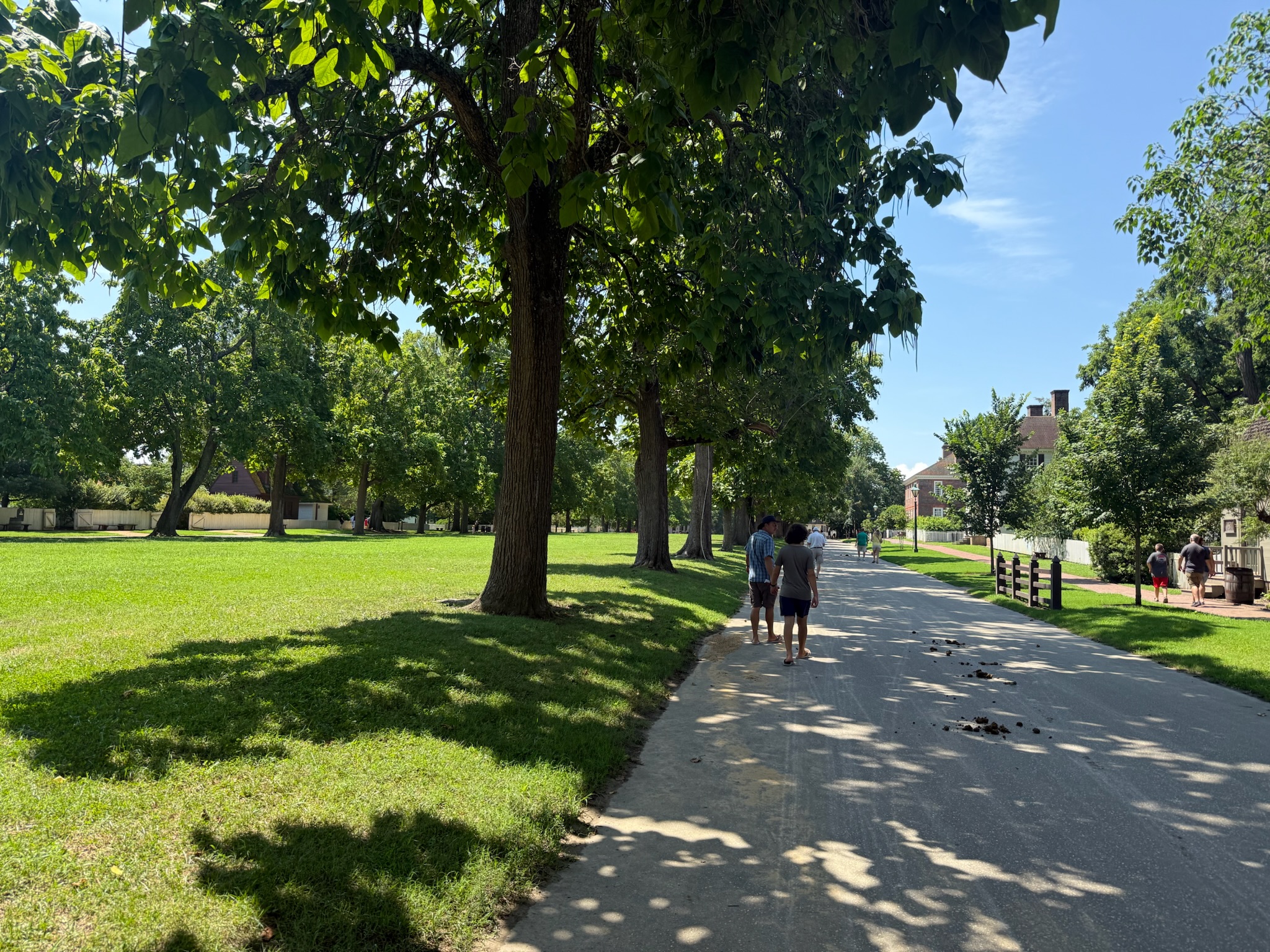
There were several more outbuildings, but Eric was anxious to eat before the restaurants got too crowded, so we headed out. We walked towards the closest restaurant per Apple Maps, which was a few blocks away. We walked south down the Palace Green, a strip of green grass with a dirt road on each side. Historic homes lined the dirt roads. It was apparent that the horses still used this road.
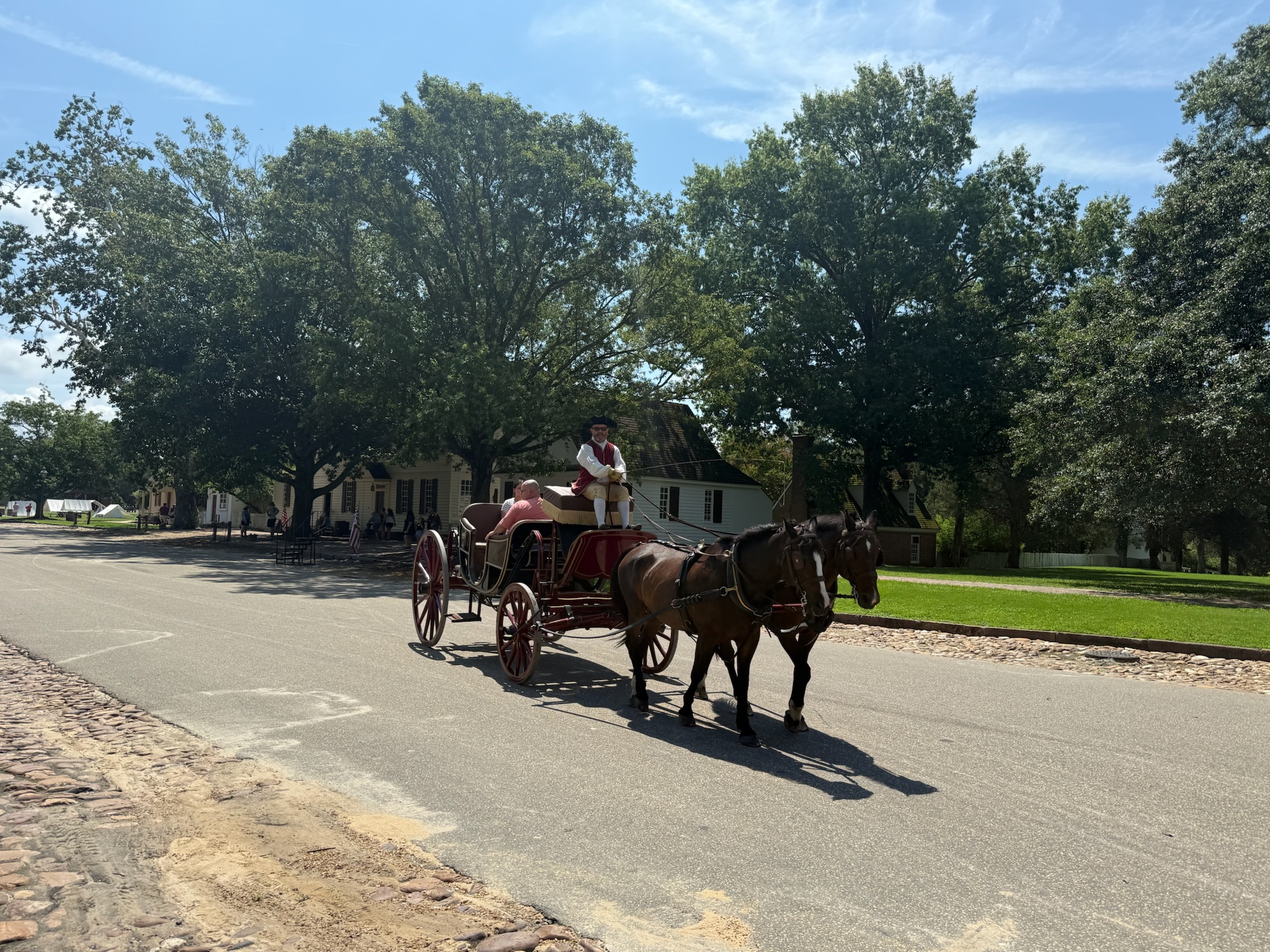
At the corner of Duke of Gloucester Street, we saw a horse carriage giving people rides.
From there, it was a half block west to the restaurant. However, Eric noticed that Apple Maps said it wasn’t open. But there were several open restaurants another couple of blocks west in a section designated as Merchant’s Square, so we headed over there.
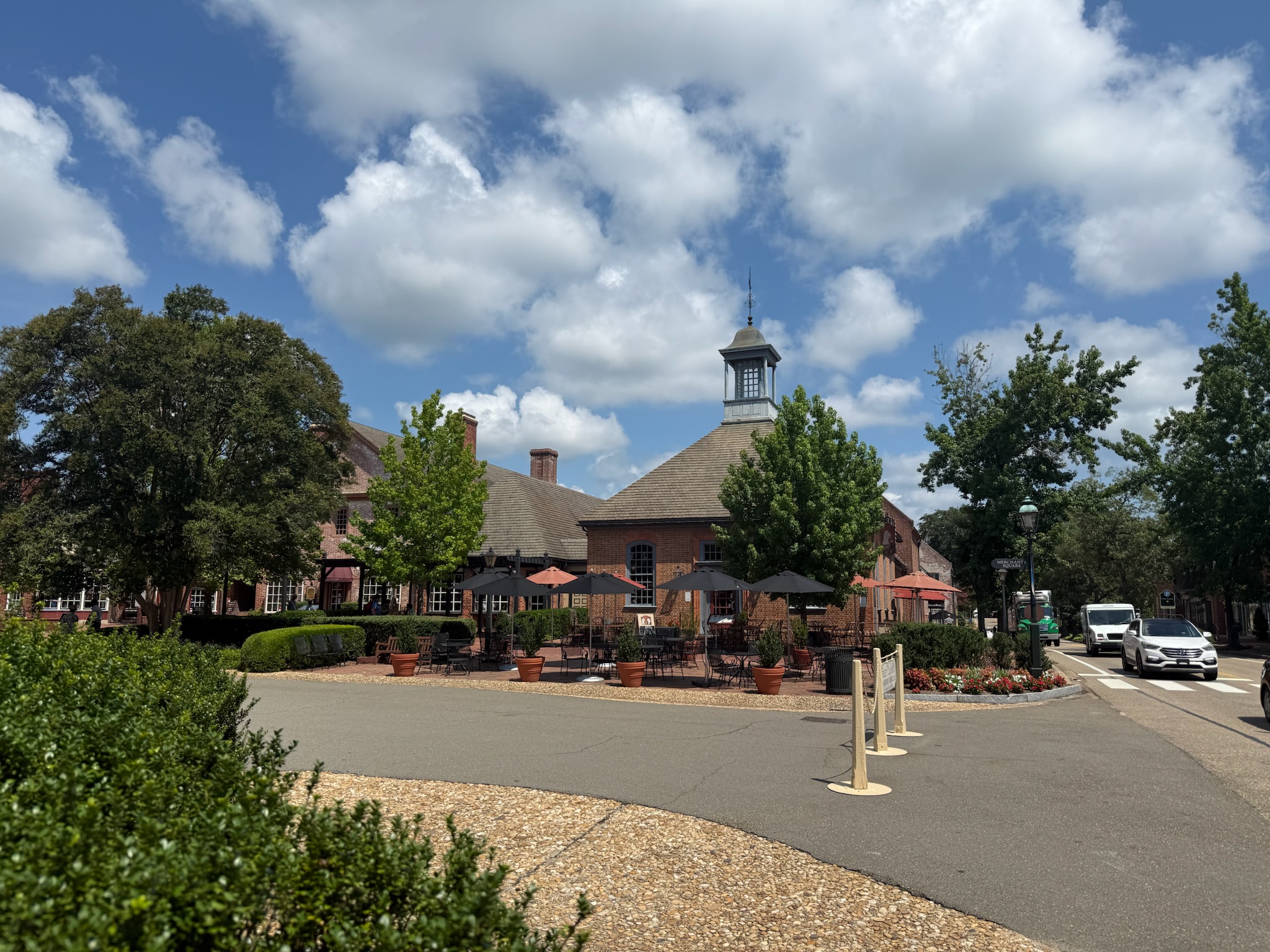
We hadn’t noticed that all the paved streets that we’d seen since exiting the bus had been closed to cars until we had to wait for a break in the traffic to cross the street that separated Merchant’s Square from the rest of the historic district. We also noticed that none of the buildings in Merchant’s Square were owned by the foundation. Ah, okay. Now we understood a little better why the information that we’d read seemed to be conflicting.
We picked a restaurant called Dog Street Pub (the building on the corner in the photo above)…. to be continued…
I love following you. It is so interesting. Thank you for sharing