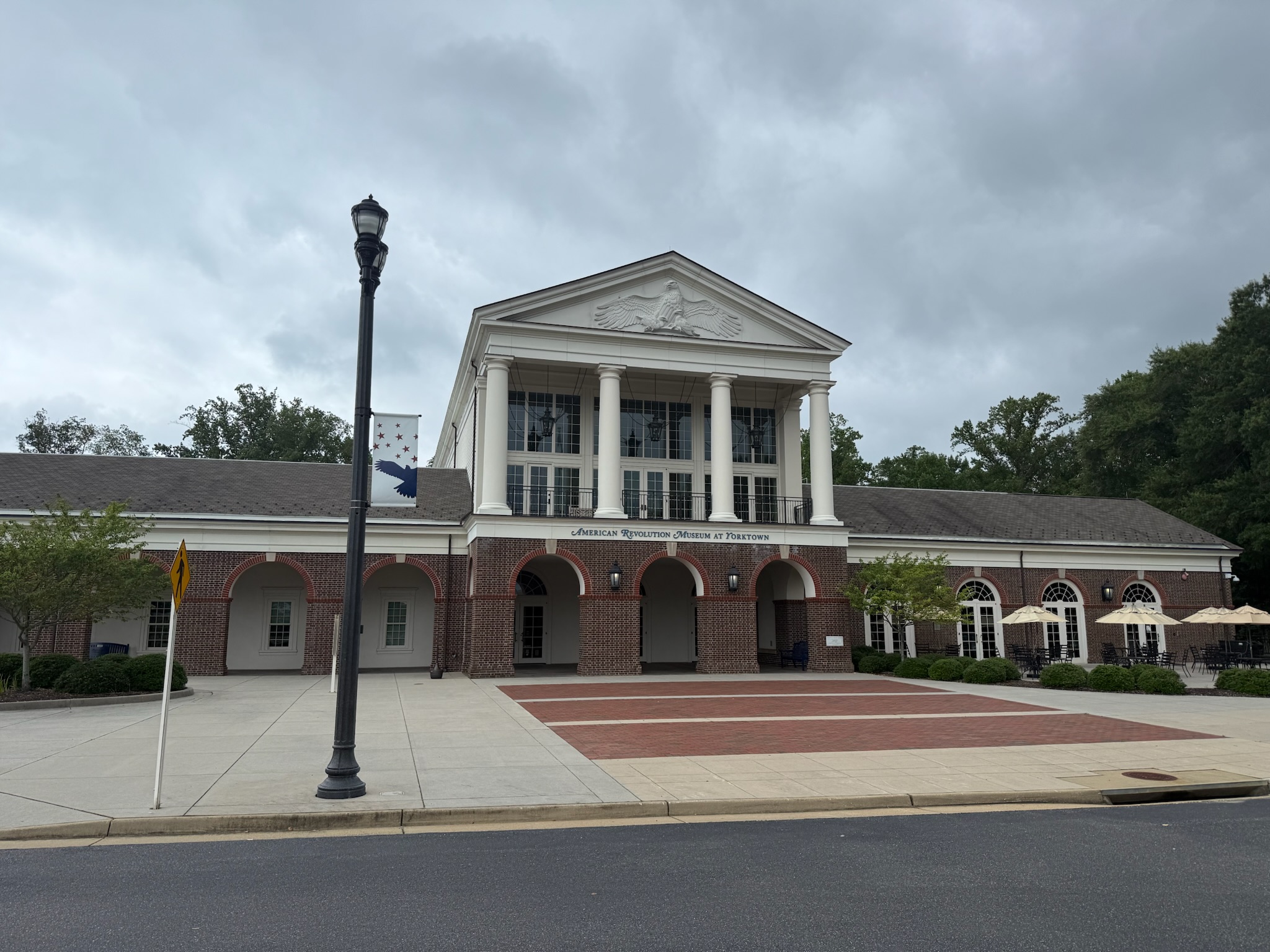
Friday, August 1 – Since Eric and Keith were still on west coast time, they slept much later than normal. Our plan was to go back to Williamsburg to go to the American Revolution Museum at Yorktown, which was about 20-miles east of Jamestown. Yorktown was the town where the final major military engagement in the American Revolution took place in 1781. The British had set up a base at Yorktown. Washington marched his troops down from New York for a siege on the base. The French navy secured the Chesapeake, so no British supplies or reinforcements could get in to aid the troops in Yorktown, nor could the British escape. After the Patriots won this battle, a peace treaty was negotiated and signed, giving the United States sovereignty over itself.
Like Jamestown, there were two different historical attractions. One was an archeological tour run by the National Parks Service (NPS) and the other was a “living history museum” — meaning it was a recreation of what life was like back then — which was run by the same organization that ran the Jamestown Settlement.
The day was grey and very windy, and felt kind of ominous. However, there was no rain in the forecast and the temperature was pleasant. It was a nice change from the oppressive heat that we’ve experienced since arriving in Virginia.
The museum opened at 0900, but between the late start and traffic, we arrive until 1100. Parking was free. The tickets were $22 for 13+, so $2 more per person than the Jamestown Settlement. Like Jamestown, there was a large, nicely laid out and beautifully decorated indoor museum and an outside area with recreations of what life was like towards the end of the War of Independence.
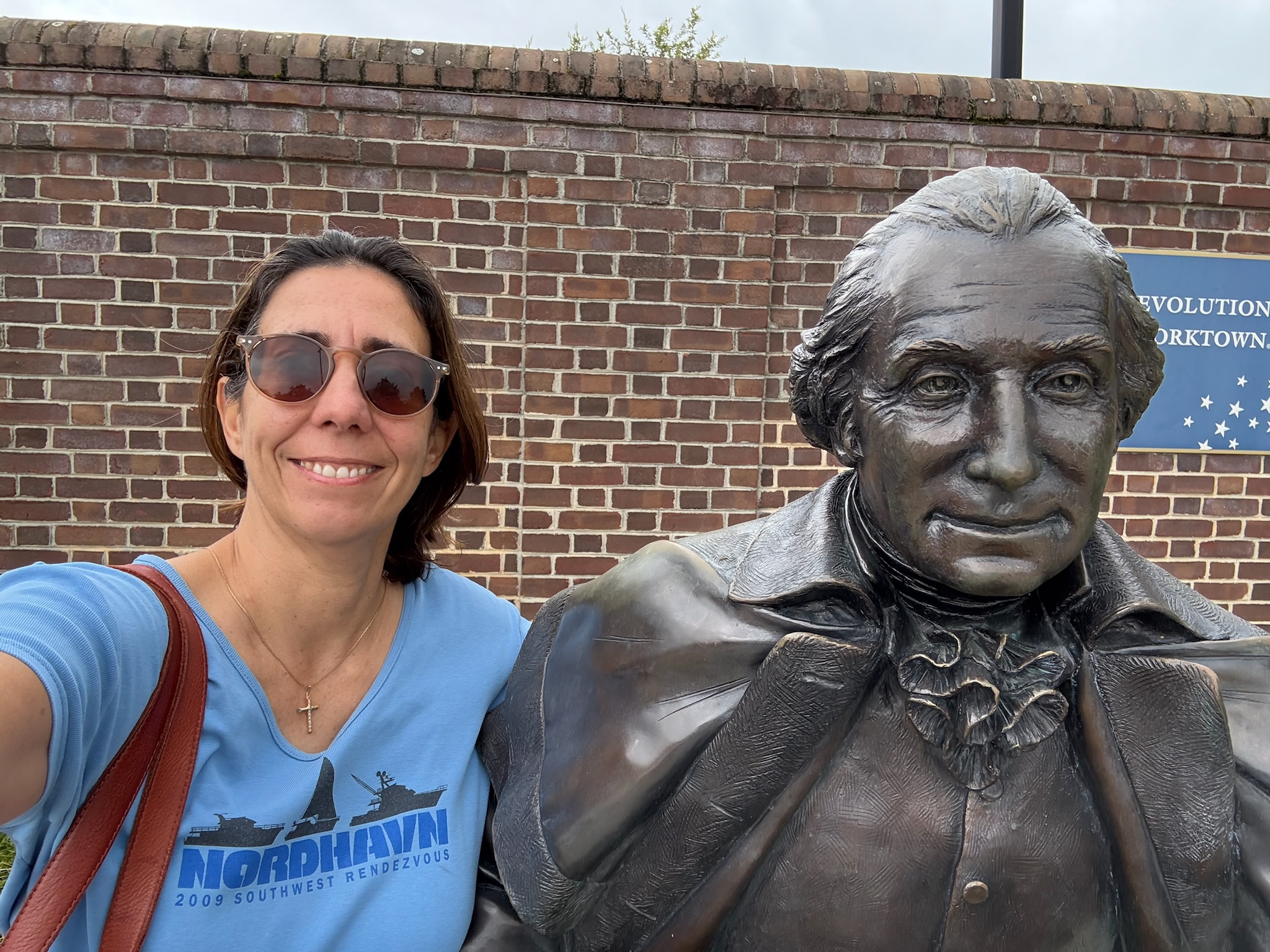
Also, like Jamestown, there was an overview movie. The movie happened to be starting shortly after we arrived, so we pursued the museum until the move began. Jamestown had focused on Virginia in the 1600s. Colonial Williamsburg had focused on Virginia in the early 1700s through 1775. From what we’d gathered in the little we saw in the museum and from the movie, Yorktown focused on how the colonies united against Great Britain, the War of Independence, and the struggles of creating a uniquely different government structure after the war ended.
Once the movie finished, we went to the outdoor area. Jamestown had had four areas: a Native American village, the docks, the riverfront, and the fort. This only had two: a Continental Army encampment and a middle class person’s farm.
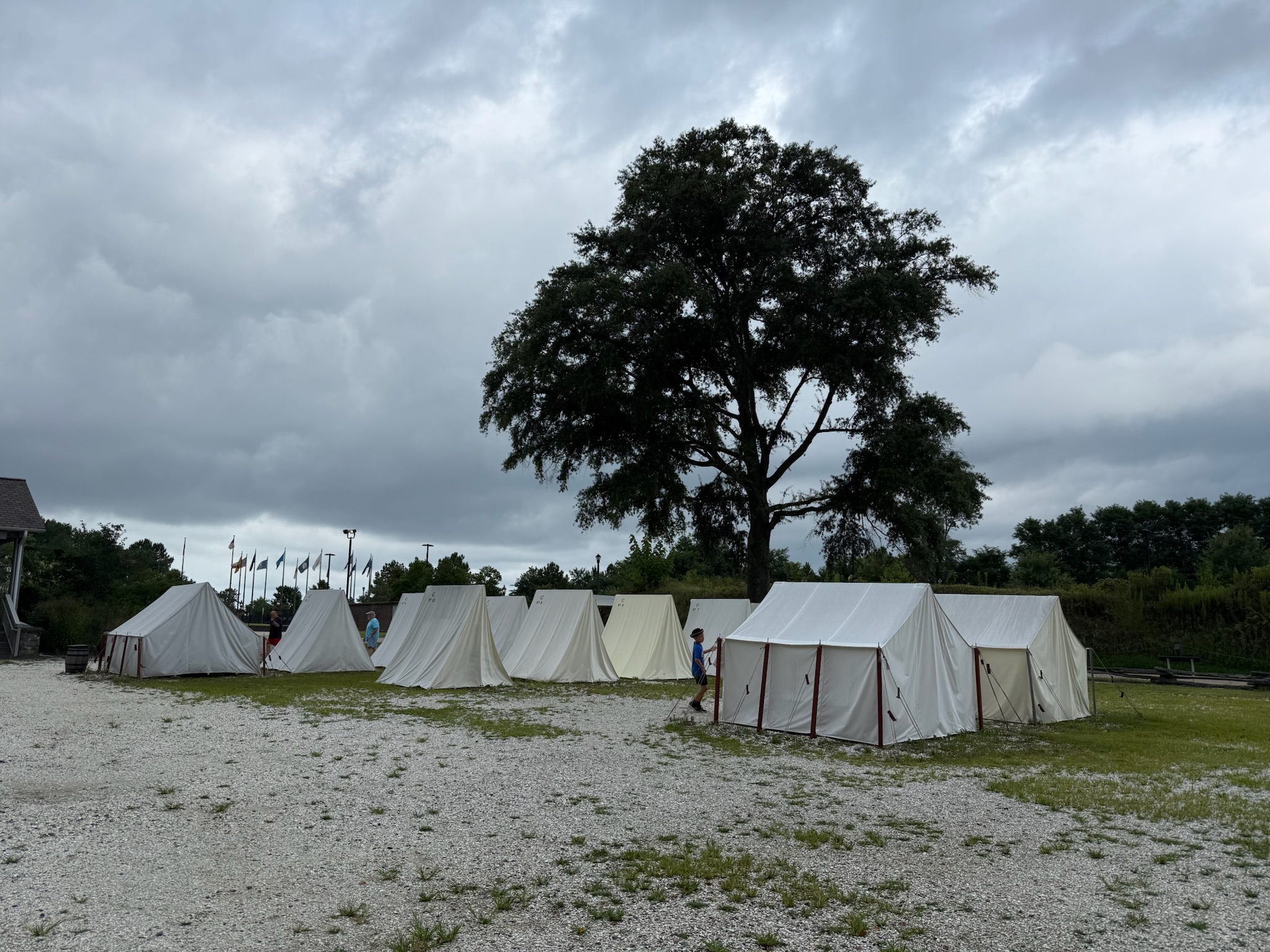
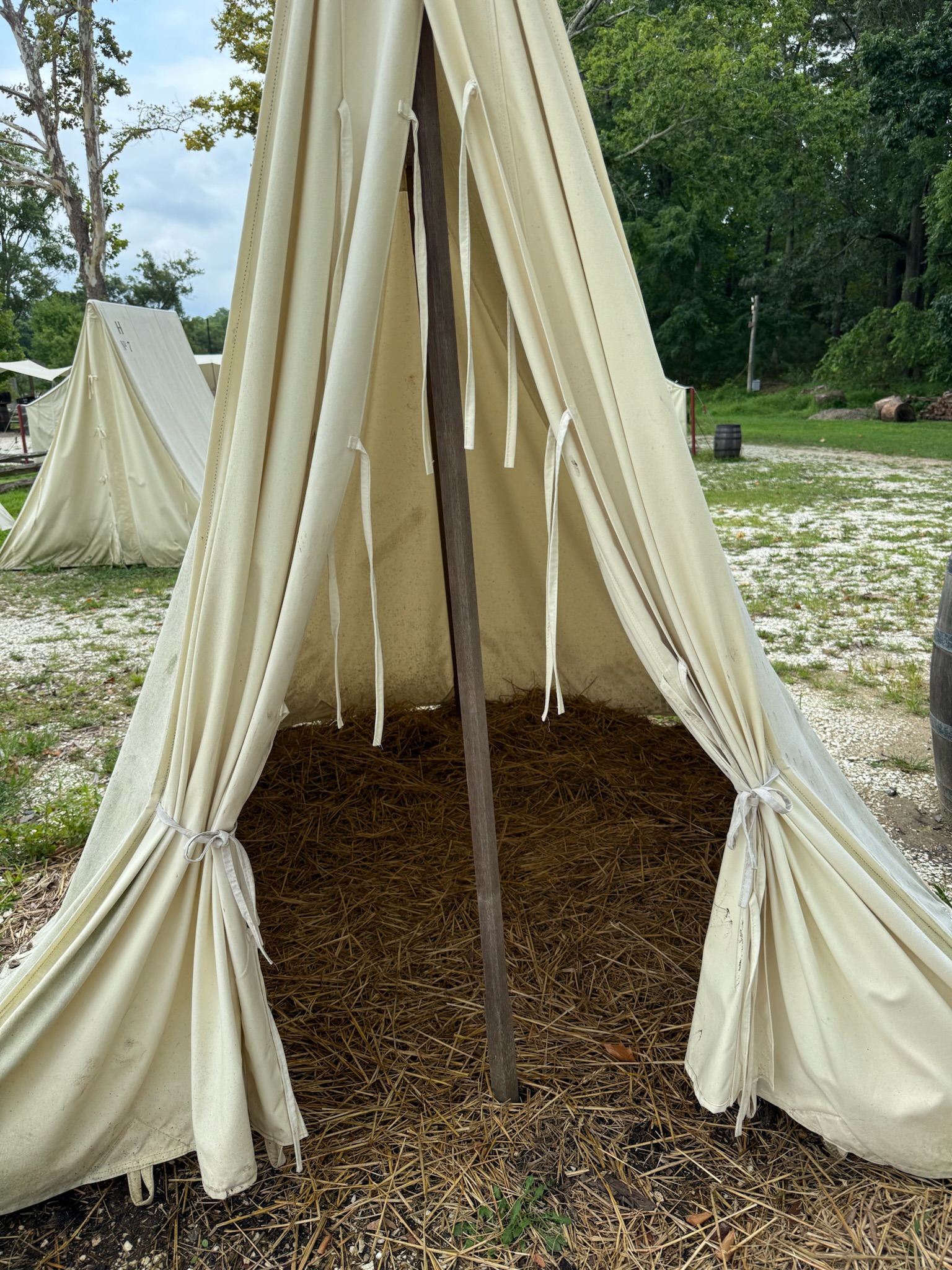
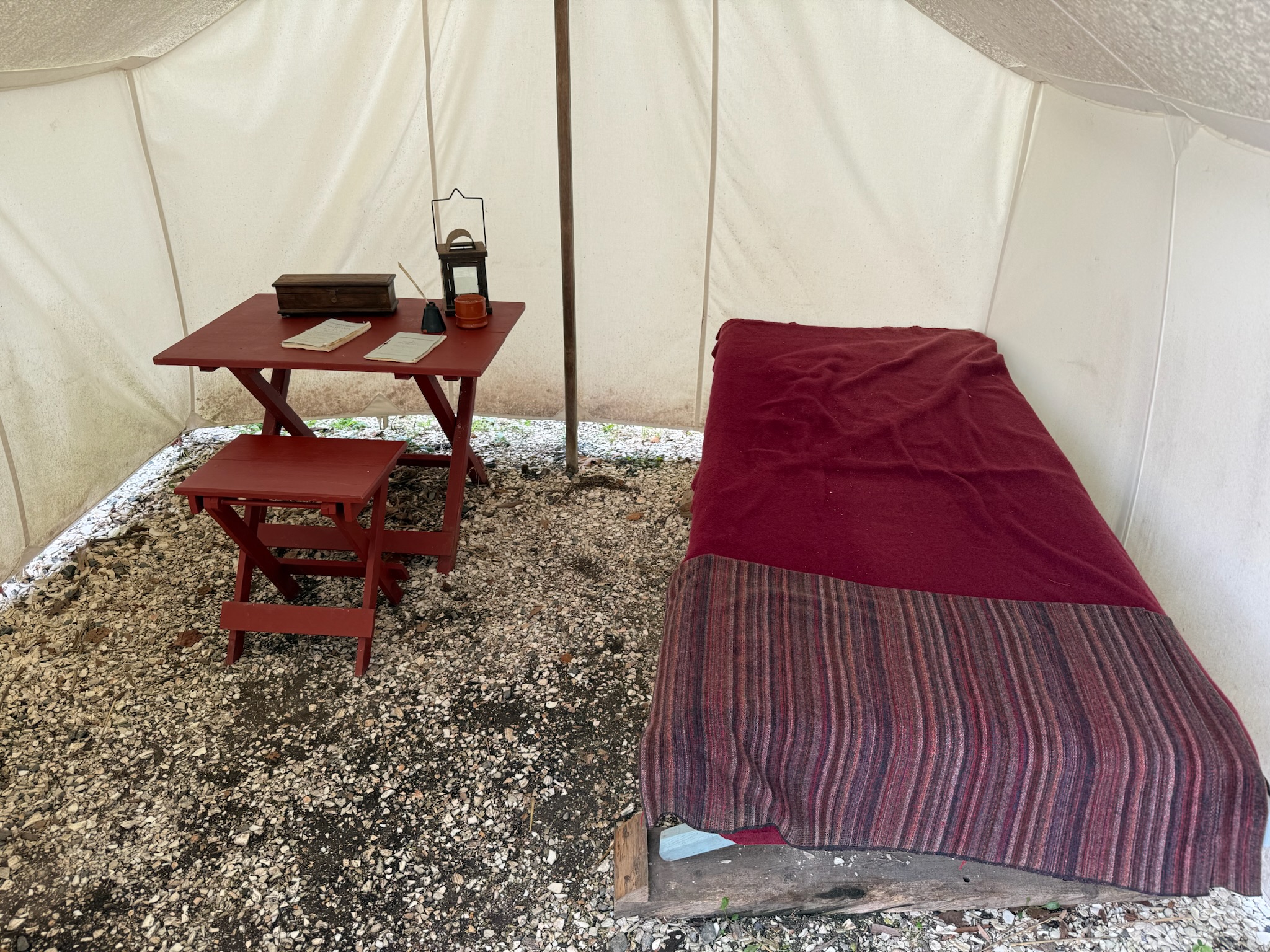
The army was to provide basic necessities and pay, but due to lack of funds, seldom fully lived up to its promises. Soldiers struggled with hunger, cold and disease. The first thing we noticed when we entered the encampment area were the rows of tents. The smaller tents were for the enlisted men and had straw for beds. The larger tents were for the officers and had actual beds.
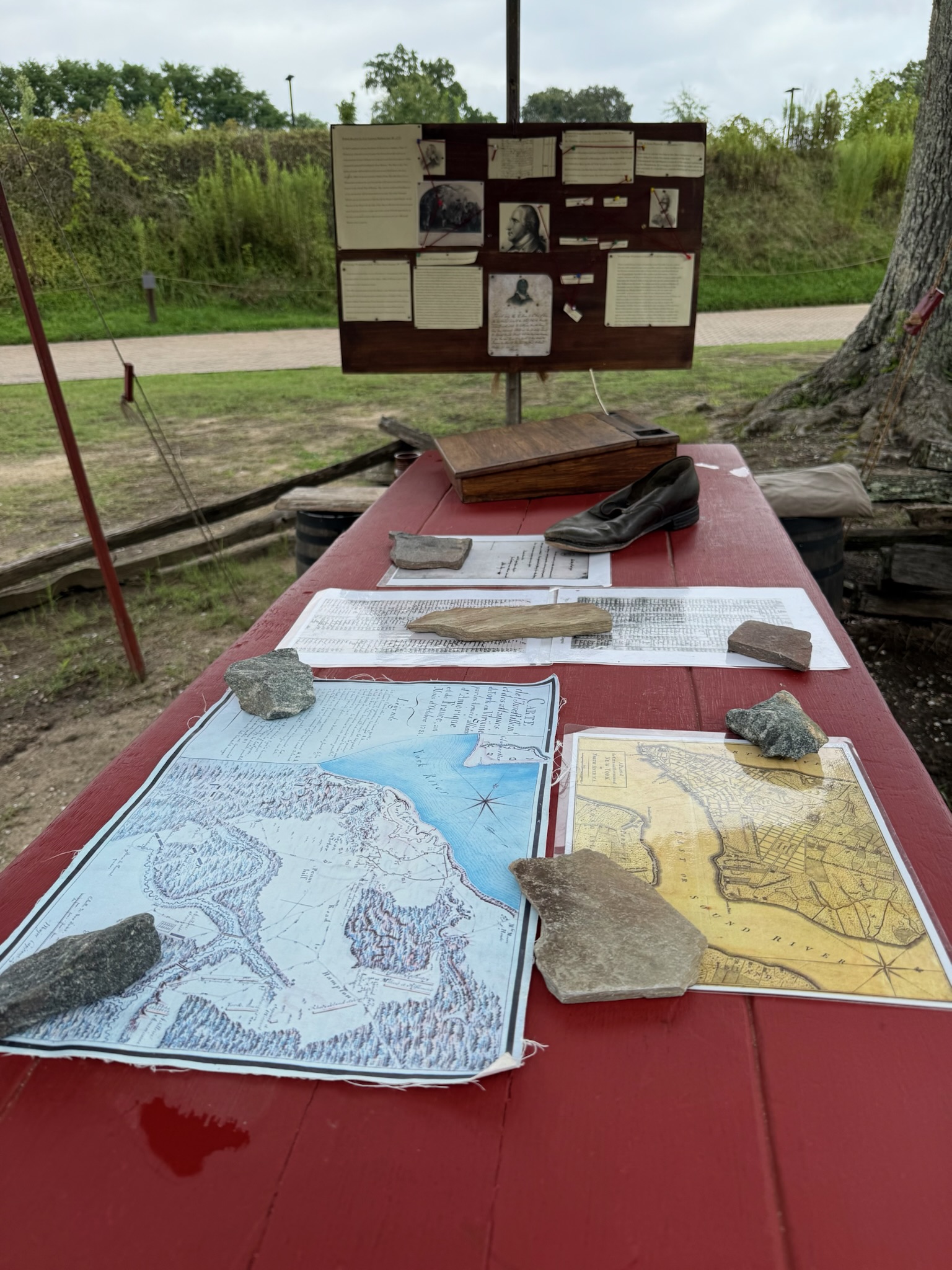
There was a command center in the corner. The character manning the command center told us about George Washington’s extensive spy network that helped him to keep abreast of what the British had planned. Information was laid out so it could be analyzed to create strategies.
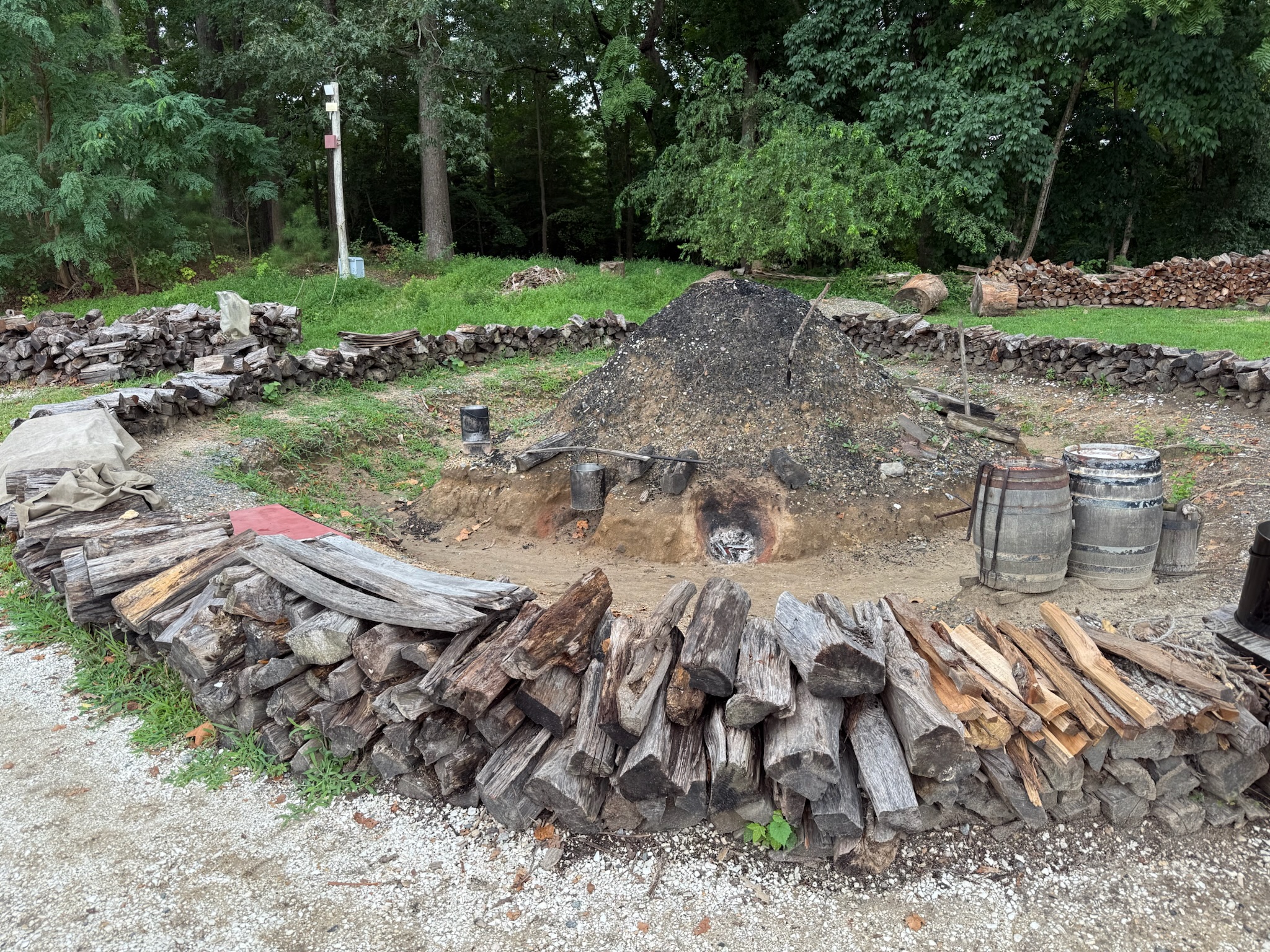
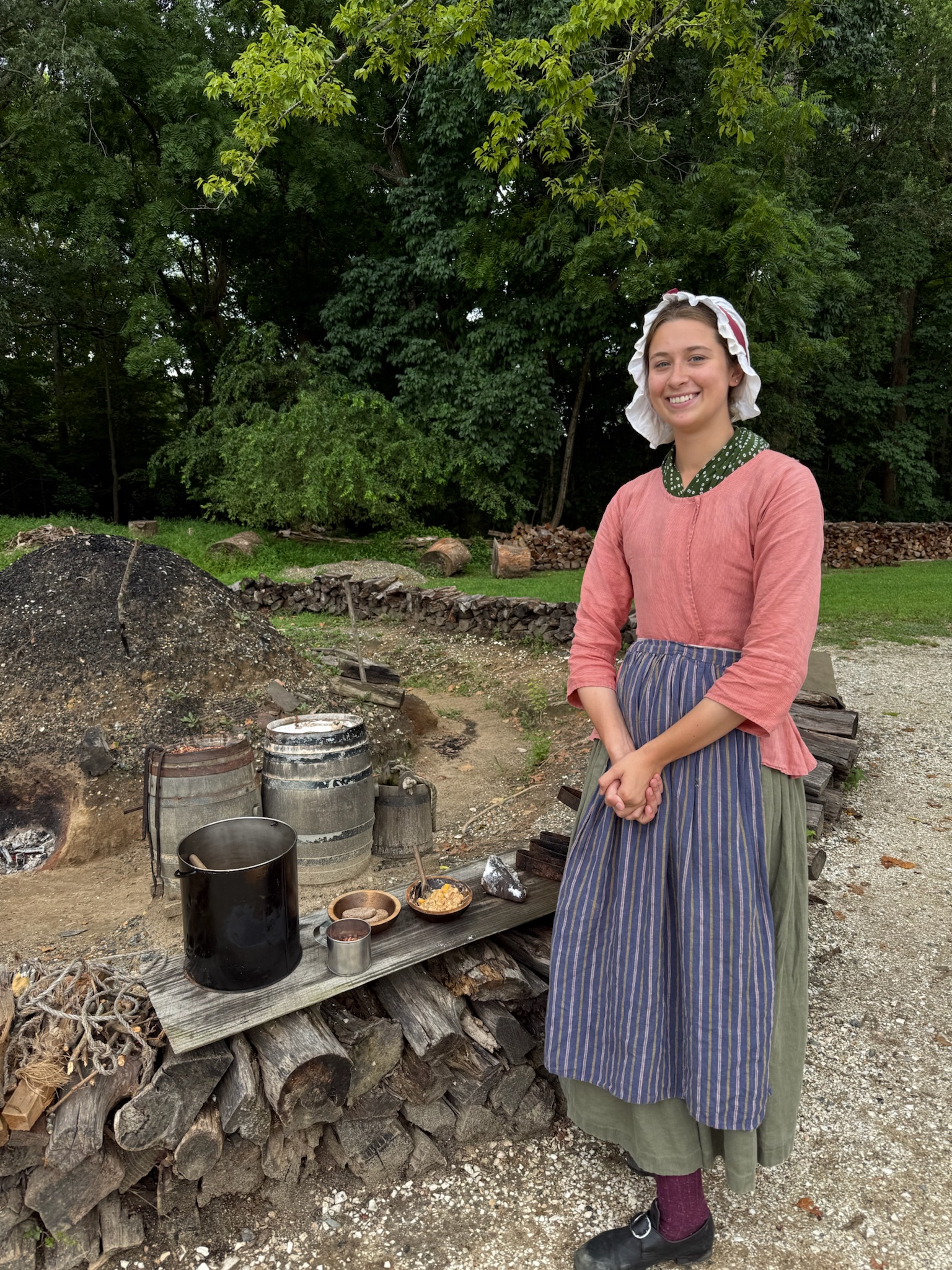
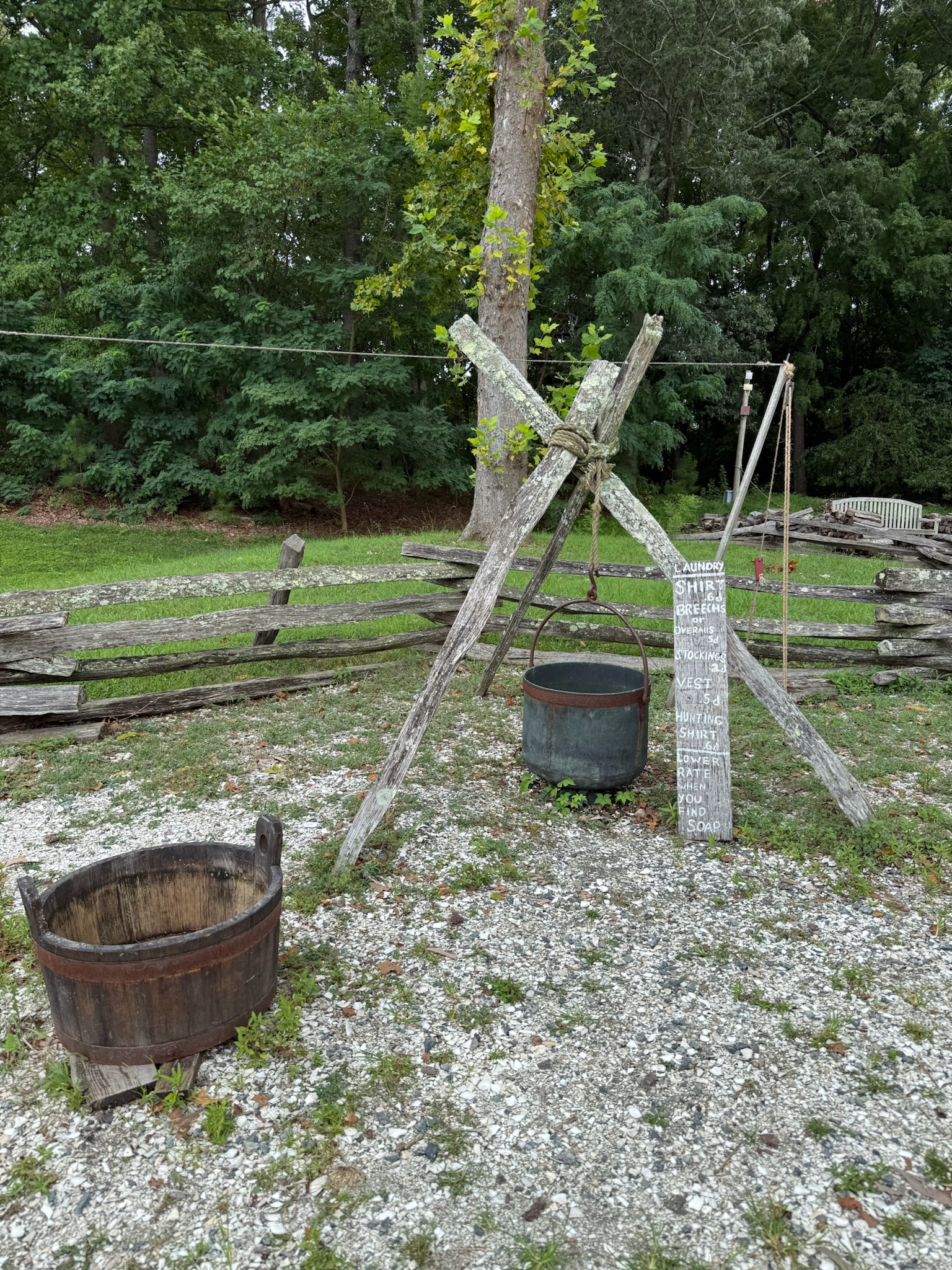
This was the kitchen area. One of the characters, a woman, explained that this display was a small fraction the size of an actual installation, and there would have been multiple kitchens for so many men. While the men were expected to cook for themselves, it was common for women to help with cooking. Many women, usually wives of the soldiers, followed the camp to help meet the soldiers needs, such serving as nurses and washing and mending uniforms. Sometimes the women were paid for their services by the army, sometimes by the soldiers, and sometimes they helped out for free.
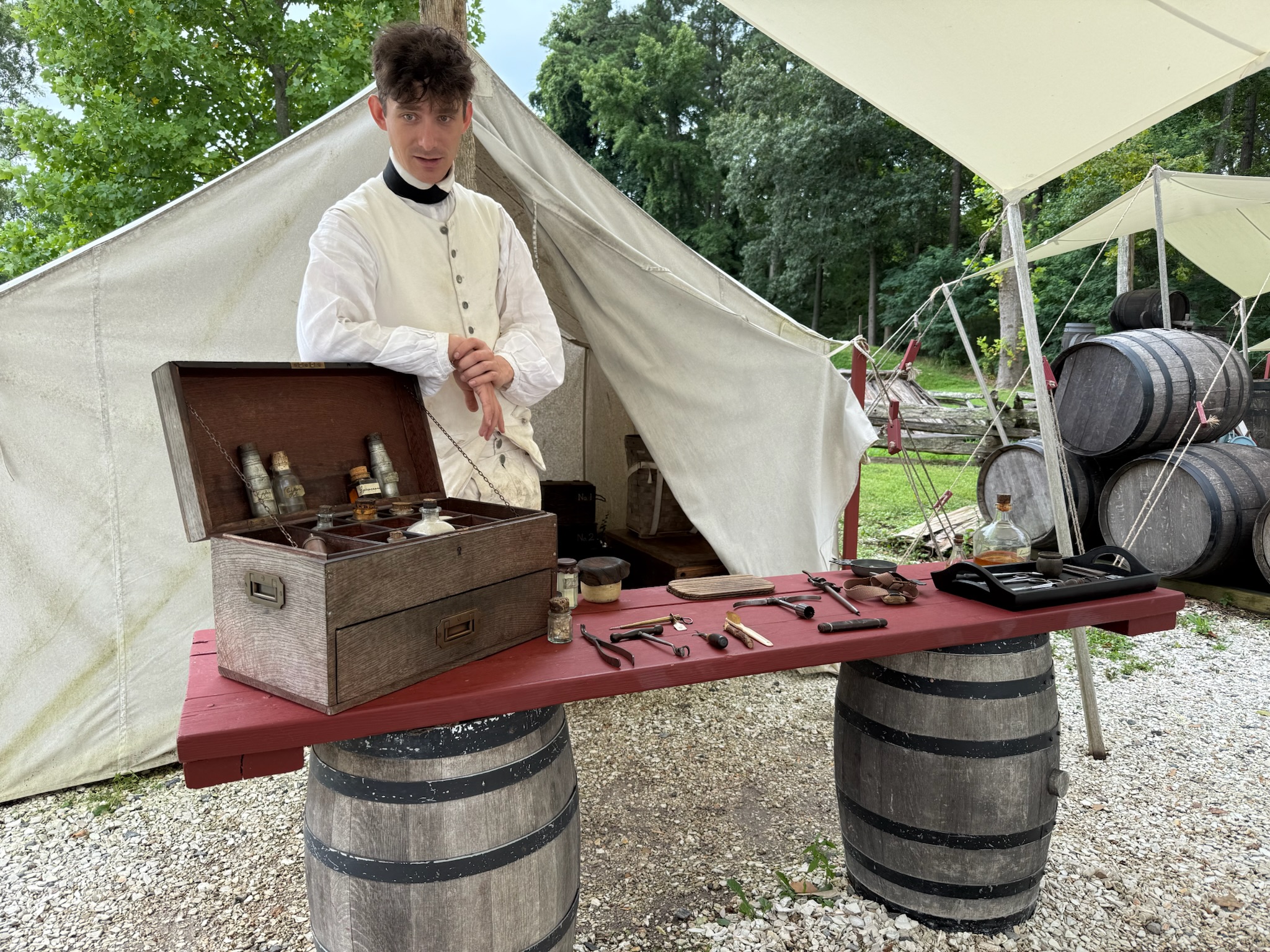
The doctor was giving a talk about medical care back then. As we learned later in the military exhibition, musket shots didn’t do nearly as much damage as rifles did, so few actually died in combat. However, the death toll was high because about 2/3 (or was it 3/4?) of the injured people later died from infection to the injured areas. Back then they understood that diseases were transmitted, so they knew it was important to keep sick people quarantined from the healthy. They just didn’t yet know how exactly it was transmitted. They thought the cure to disease was to expel it from the body, so many of the medicines were intended to induce diarrhea or vomiting. He showed us some of the tools used back then. Some of them were kind of scary.
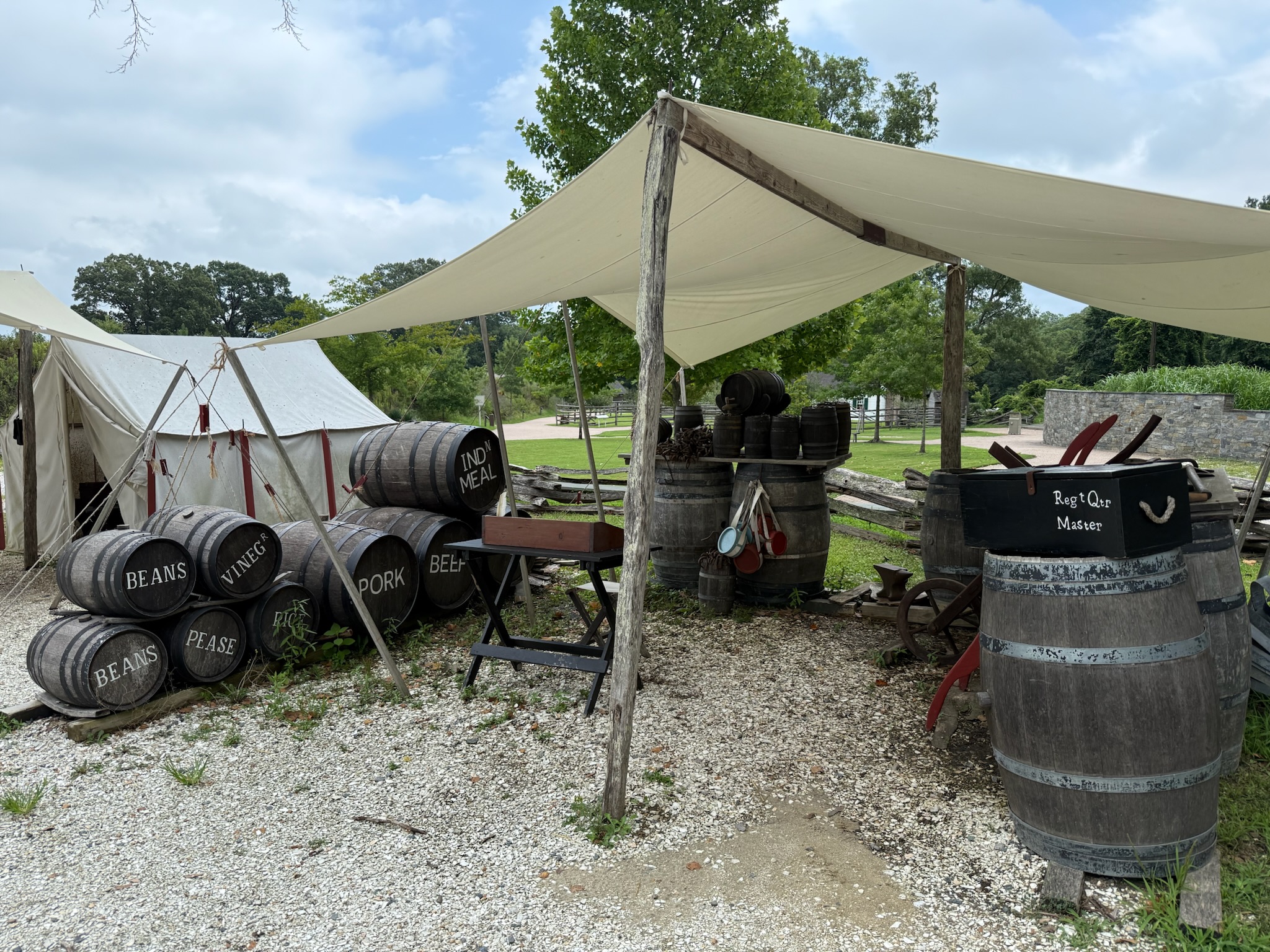
This was the storage area for rations
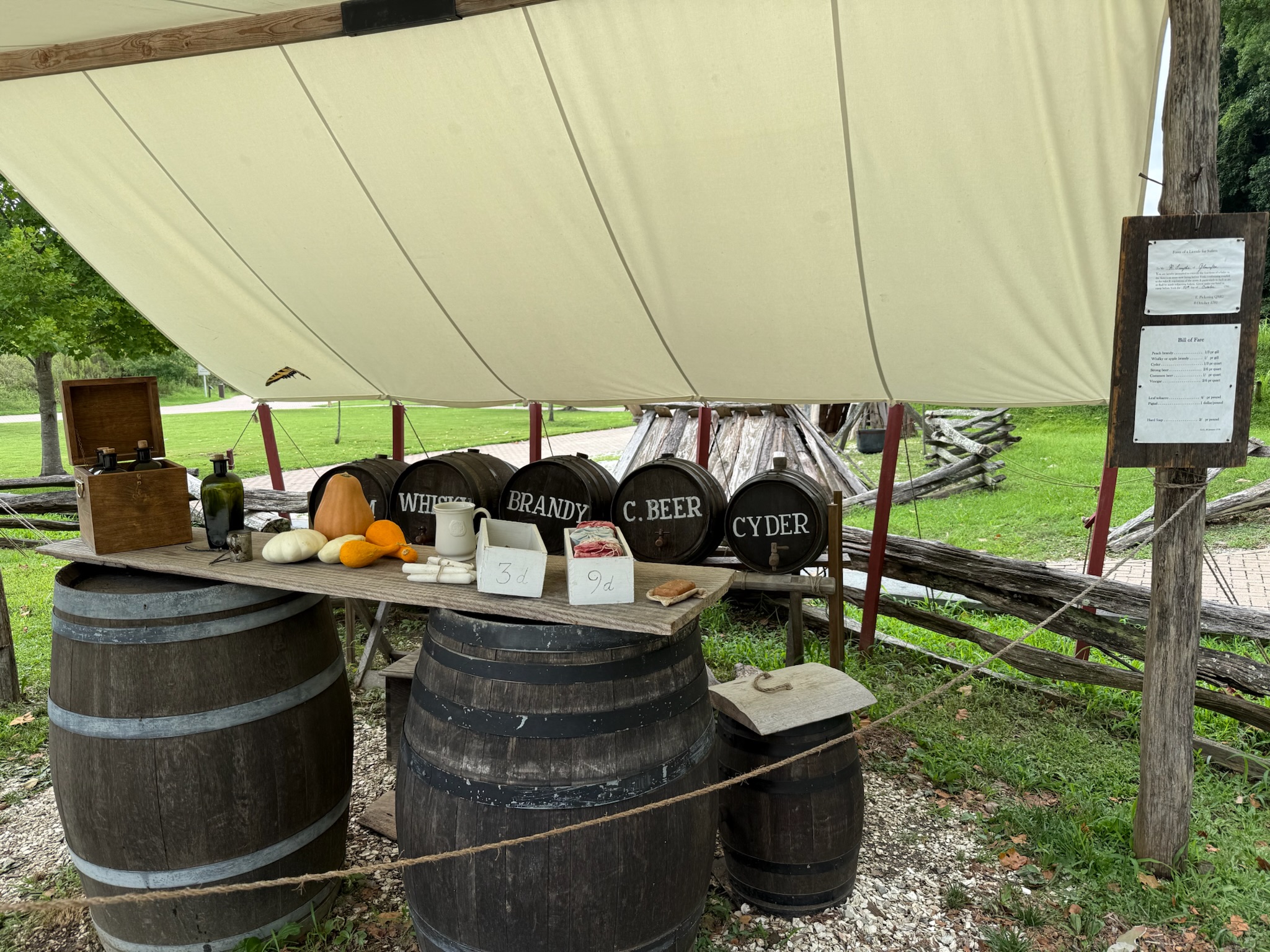
We found it interested that the military did allow vendors into the camp to sell goods and services to the soldiers. However, there were restrictions, particularly on how much alcohol could be sold. The military was strict with their limits; any vendor caught not following the rules would have their goods confiscated and be banned from returning to the camp.
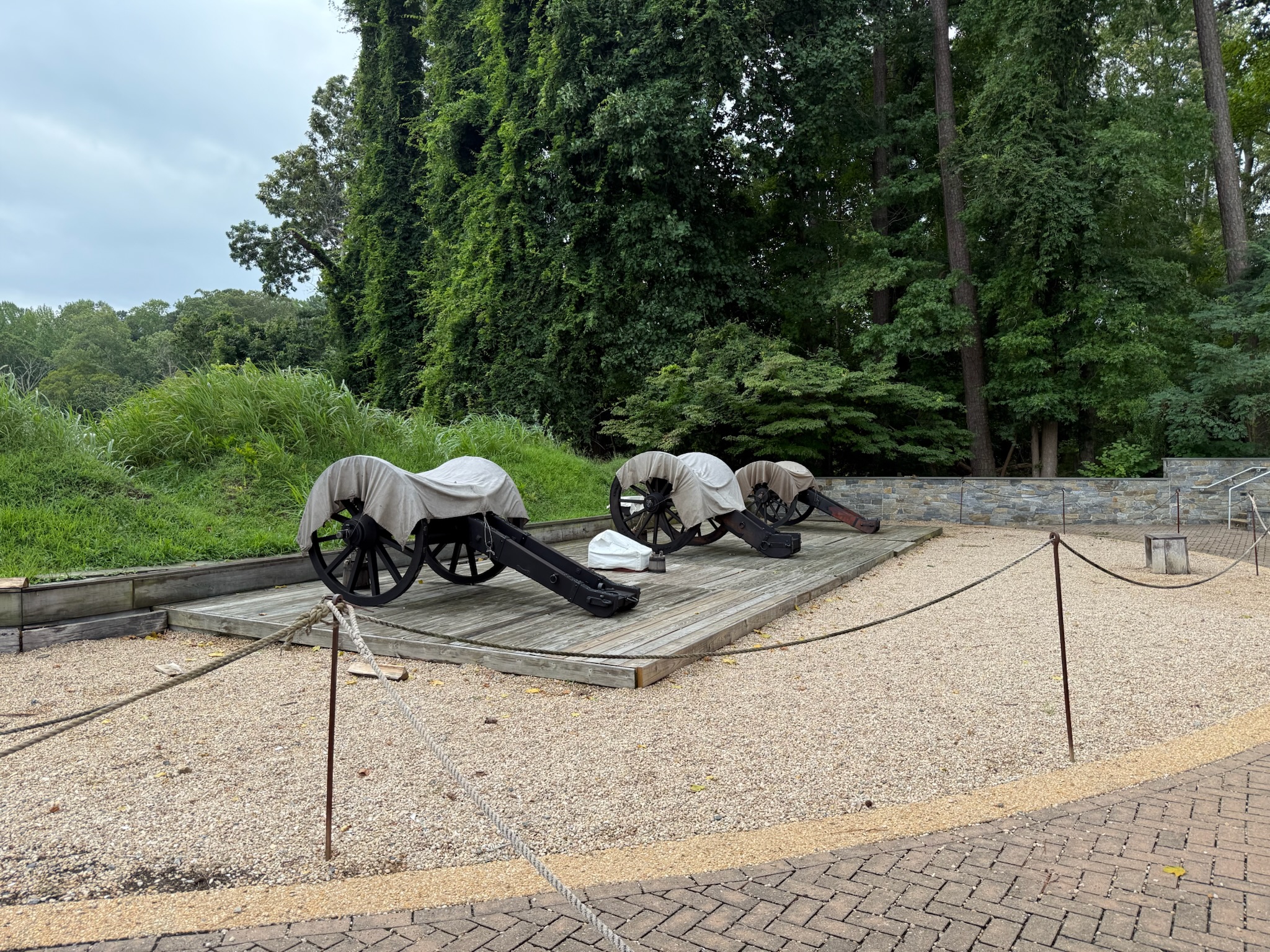
There were three canons in what looked like a small amphitheater. It looked like maybe some kind of presentation may be done there, but nothing was scheduled in that location for today.
From there, we went on to the farm… to be continued…