
continued… After seeing the entire Continental Army encampment, we went over to the farm. This recreation was based on a real farm owned by Edward Moss that had existed at that time. We don’t remember the details now, but he had a lot of acres, so this was a tiny microcosm of what the actual farm was like.
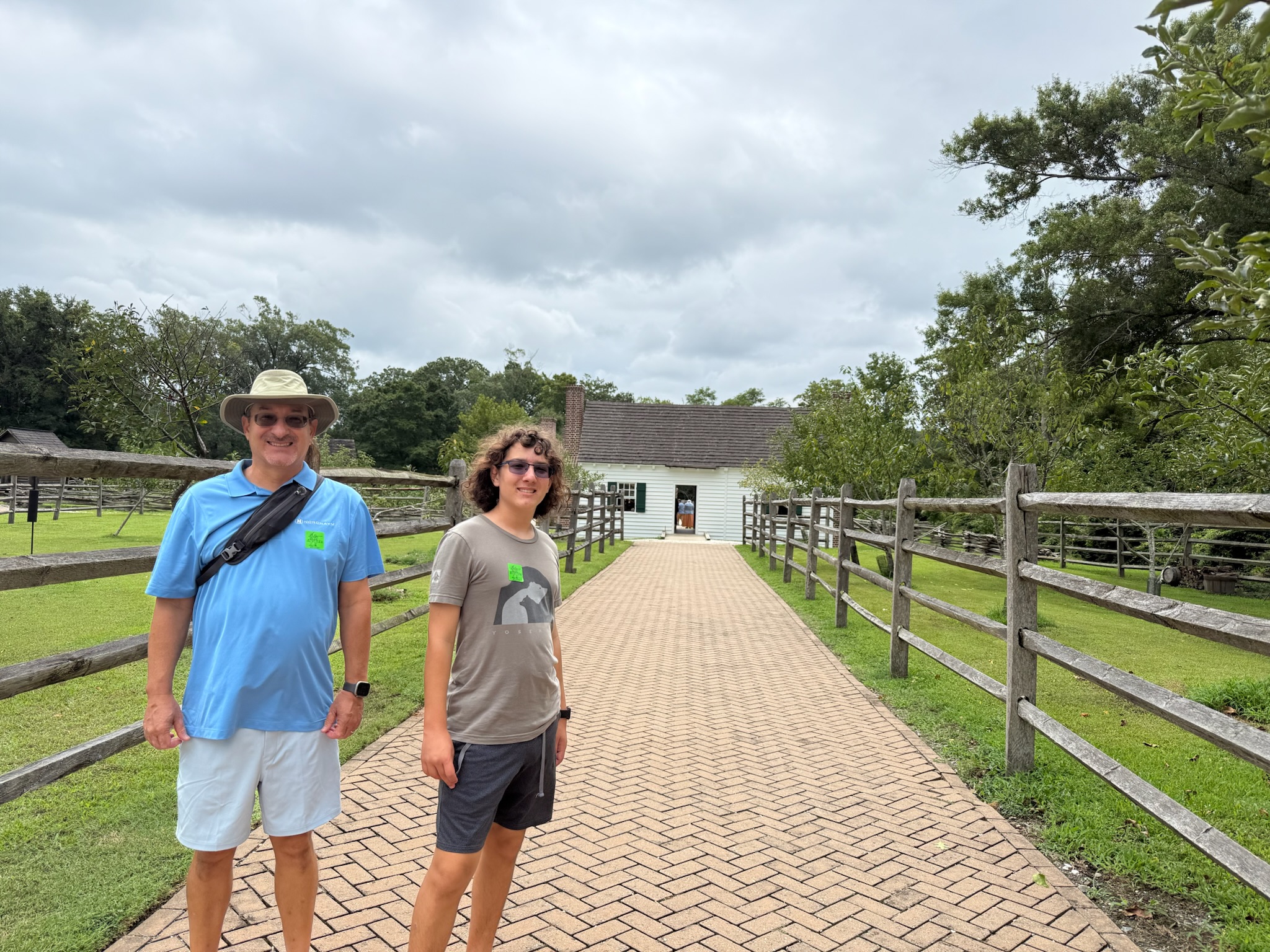
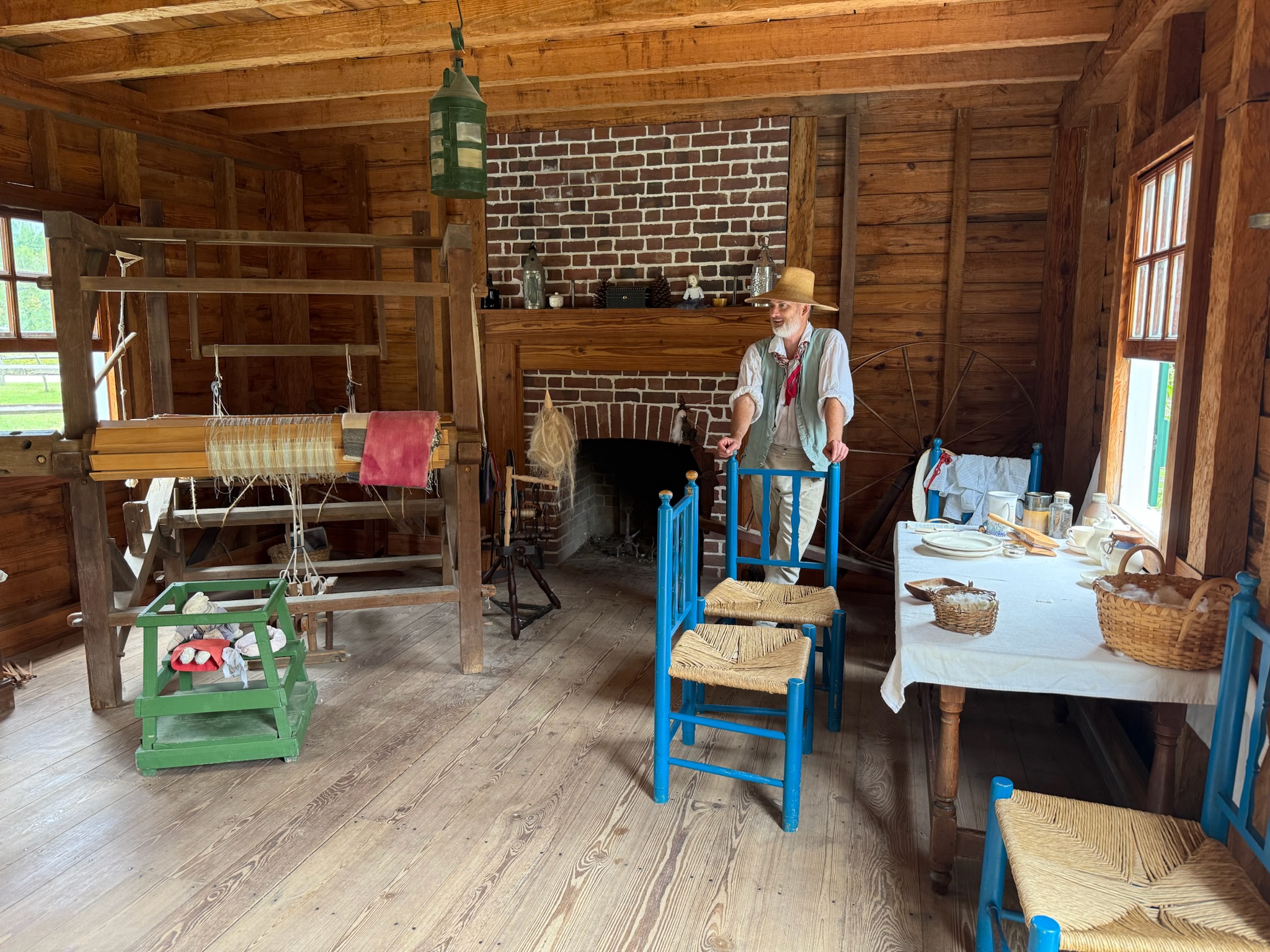
The house was two rooms. There was a spindle wheel in the parlor, and “Edward” was making thread. He explained that prior to the rebellion, textiles were imported from England. But when the Patriots had ordered a boycott of all British goods, people had to start making their own textiles. He said that thread was made out of a variety of materials. The easiest and most popular yarn material was wool, but today he was using cotton. Even though cotton grew well in Virginia, it was unpopular because it was difficult to separate the seeds out (the cotton gin had not yet been invented).
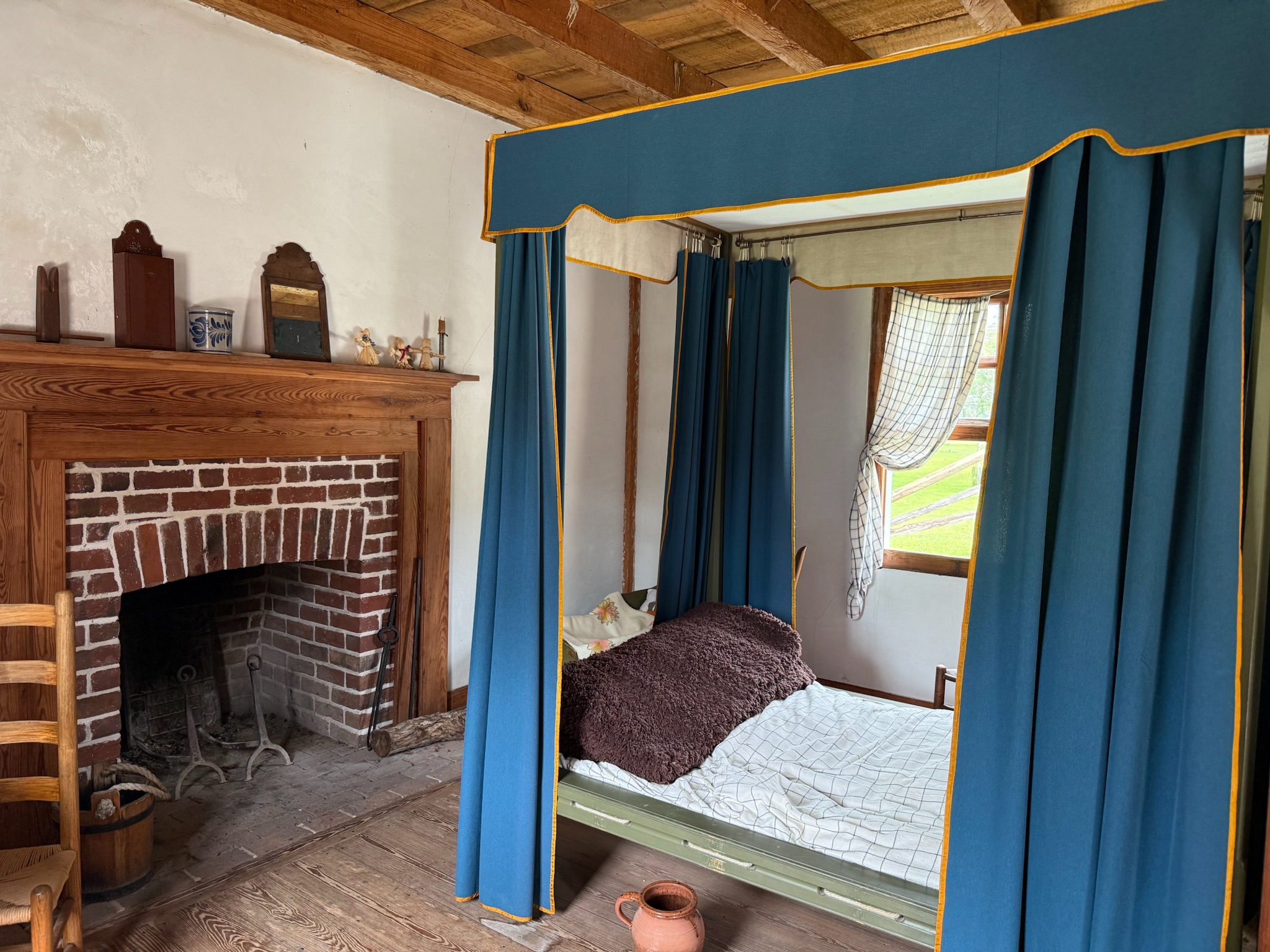
The other room was a bedroom. It only had one bed. They’d had several children, so we weren’t sure what the accommodations had been for the children.
The next building was the kitchen.
He showed us the different arms in the fireplace that were used with different kinds of pots/pans for cooking various types of food. There were dried fruits, herbs and meats hanging in the corner.
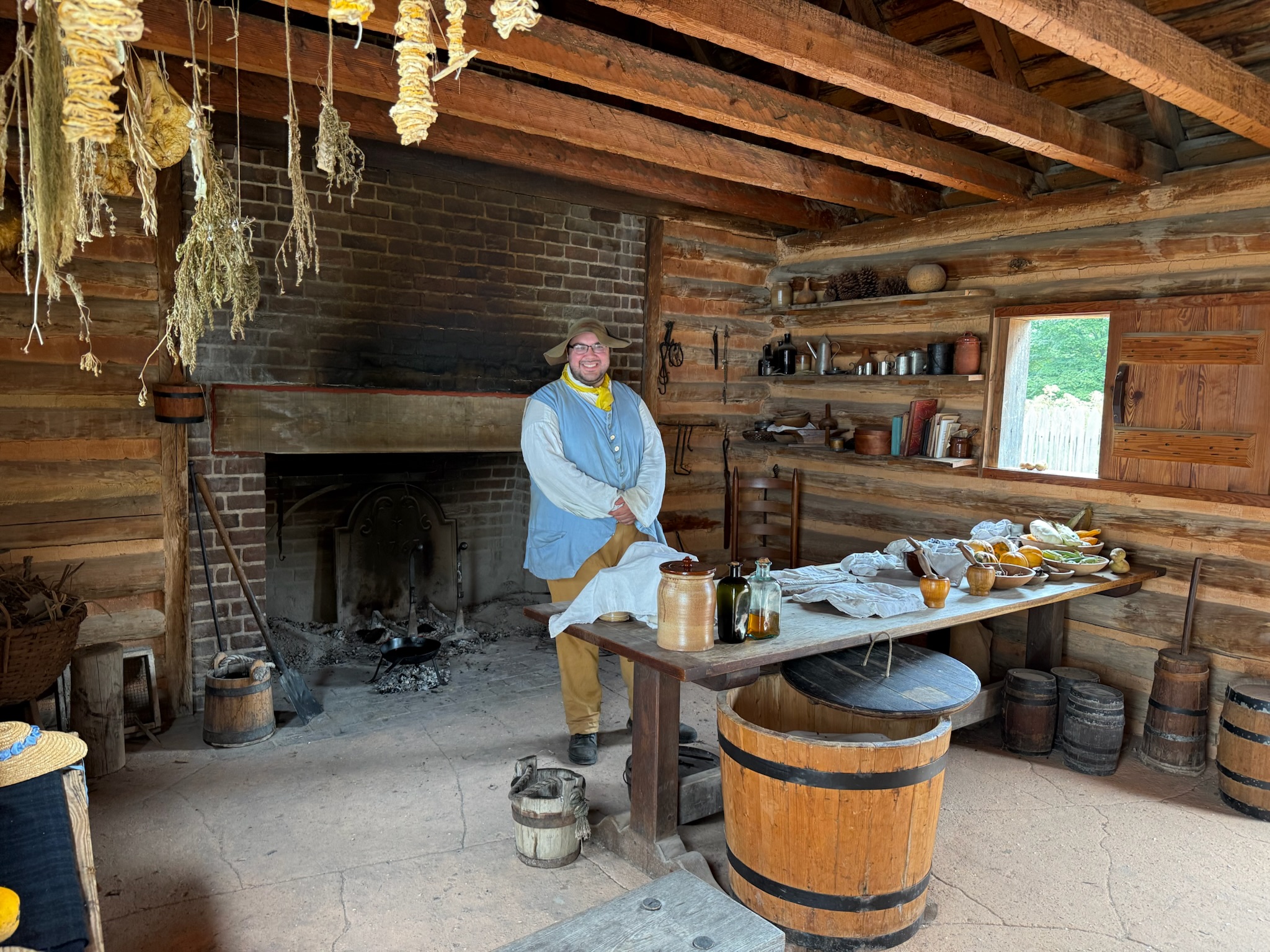
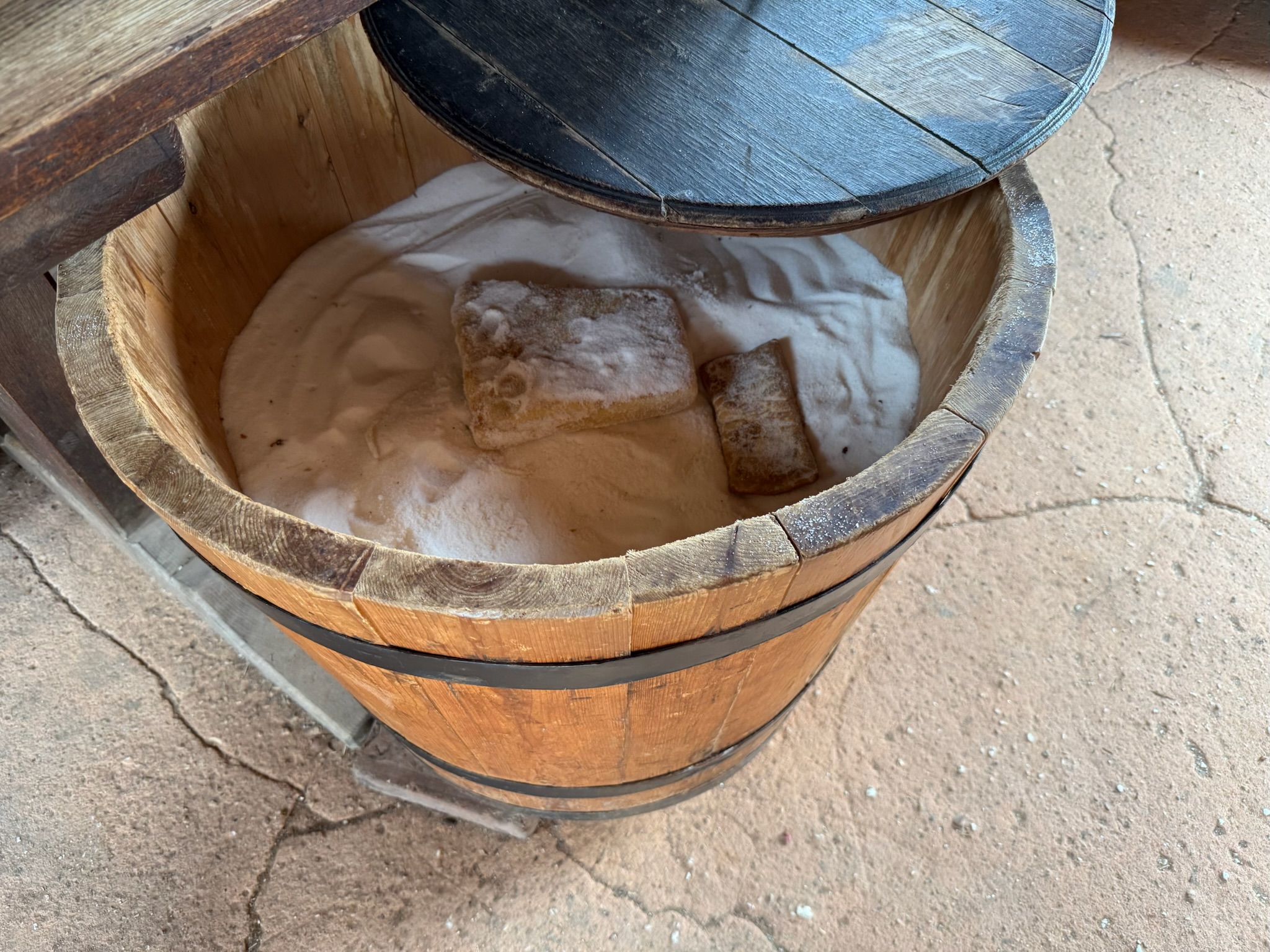
He explained how meats were cured. The pieces of meat were completely buried in salt and the barrel covered. The barrel had holes in the bottom and gross drippings would come out. It took 90 days to cure, then they would smoke it. They didn’t have a smokehouse on site, but they said that normally a farm like this one would have had a smoke house.
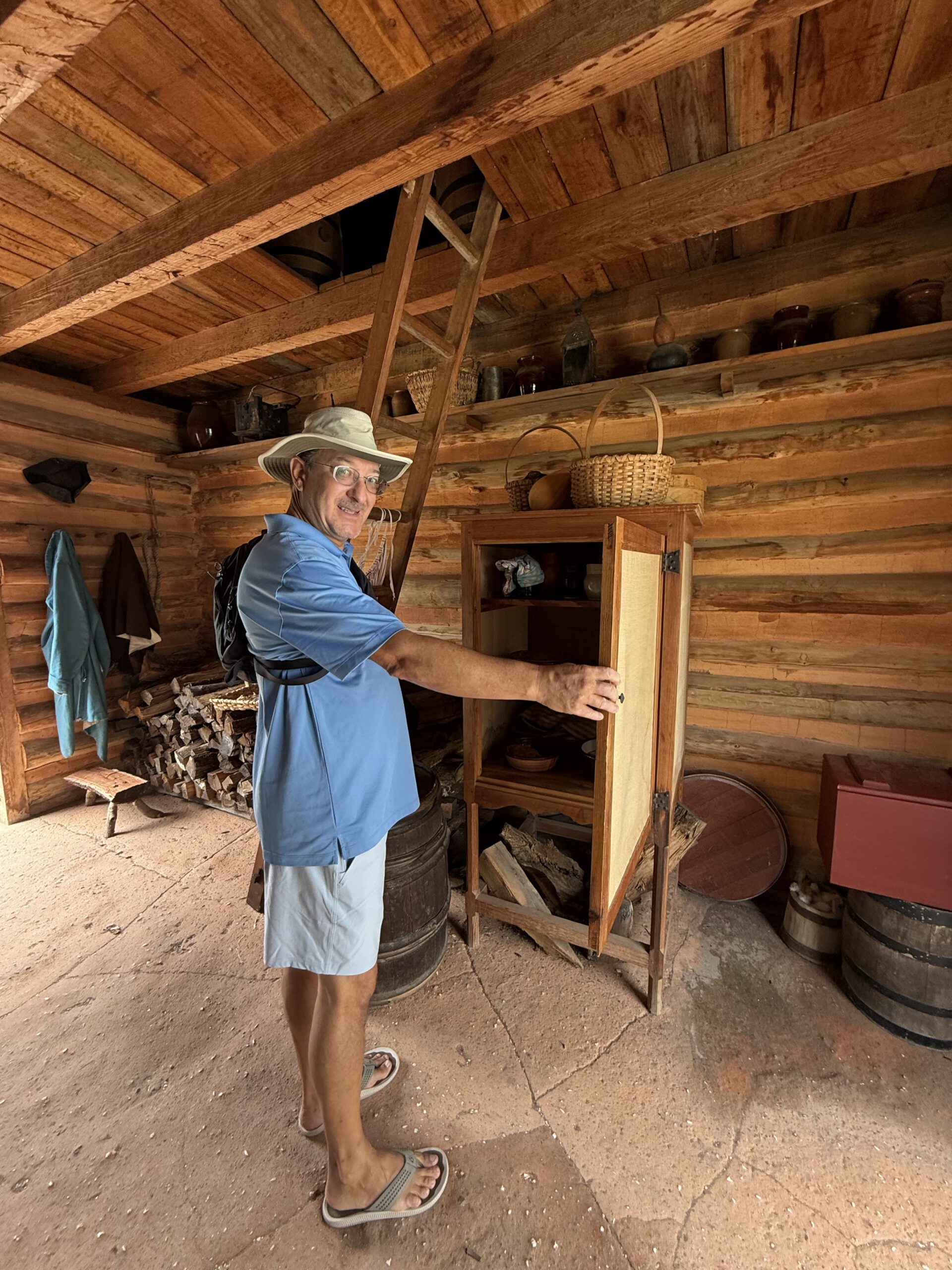
They’d cooked this morning, and what they’d made was laid out on the table and in a special cabinet that had cloth doors and walls. Since it wasn’t chilled, the food didn’t last long, but it lasted longer in this special cabinet than out in the open.
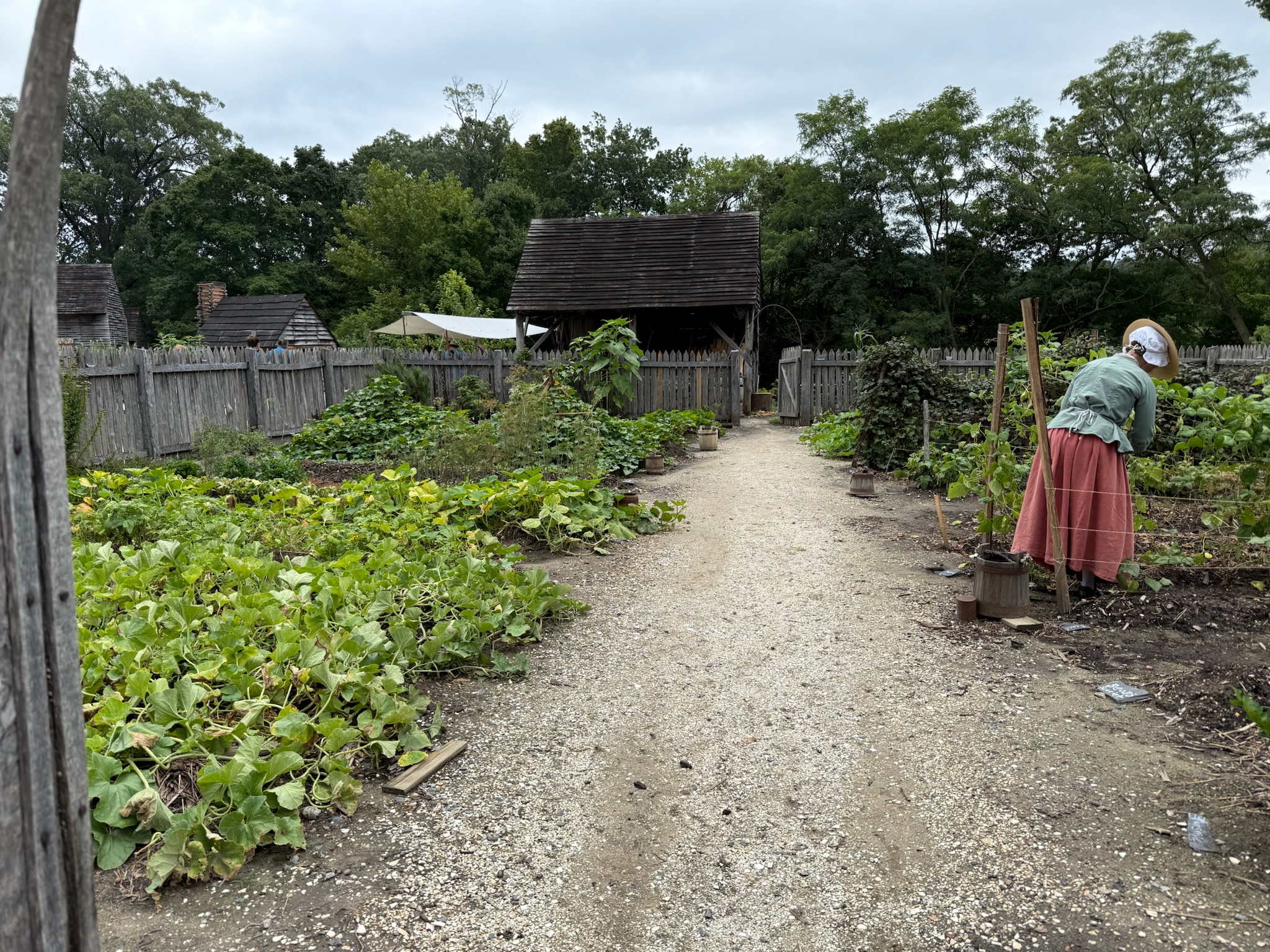
Next was the garden. It was an active garden that the characters were working in. They told us they were at the end of the early summer crops and would be planting the late summer/early autumn crops soon.
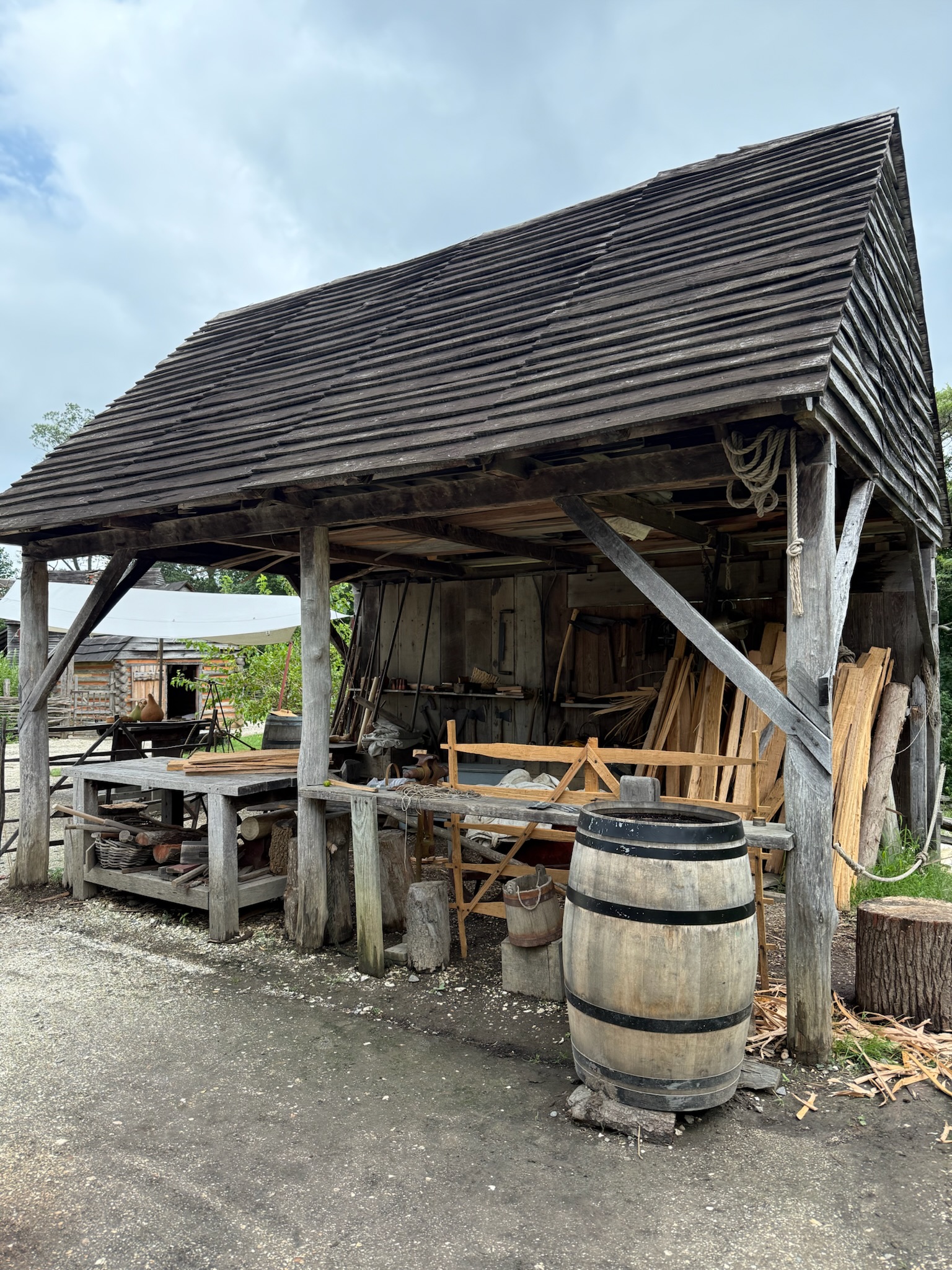
This was apparently a toolshed. No one was manning it when we were there.
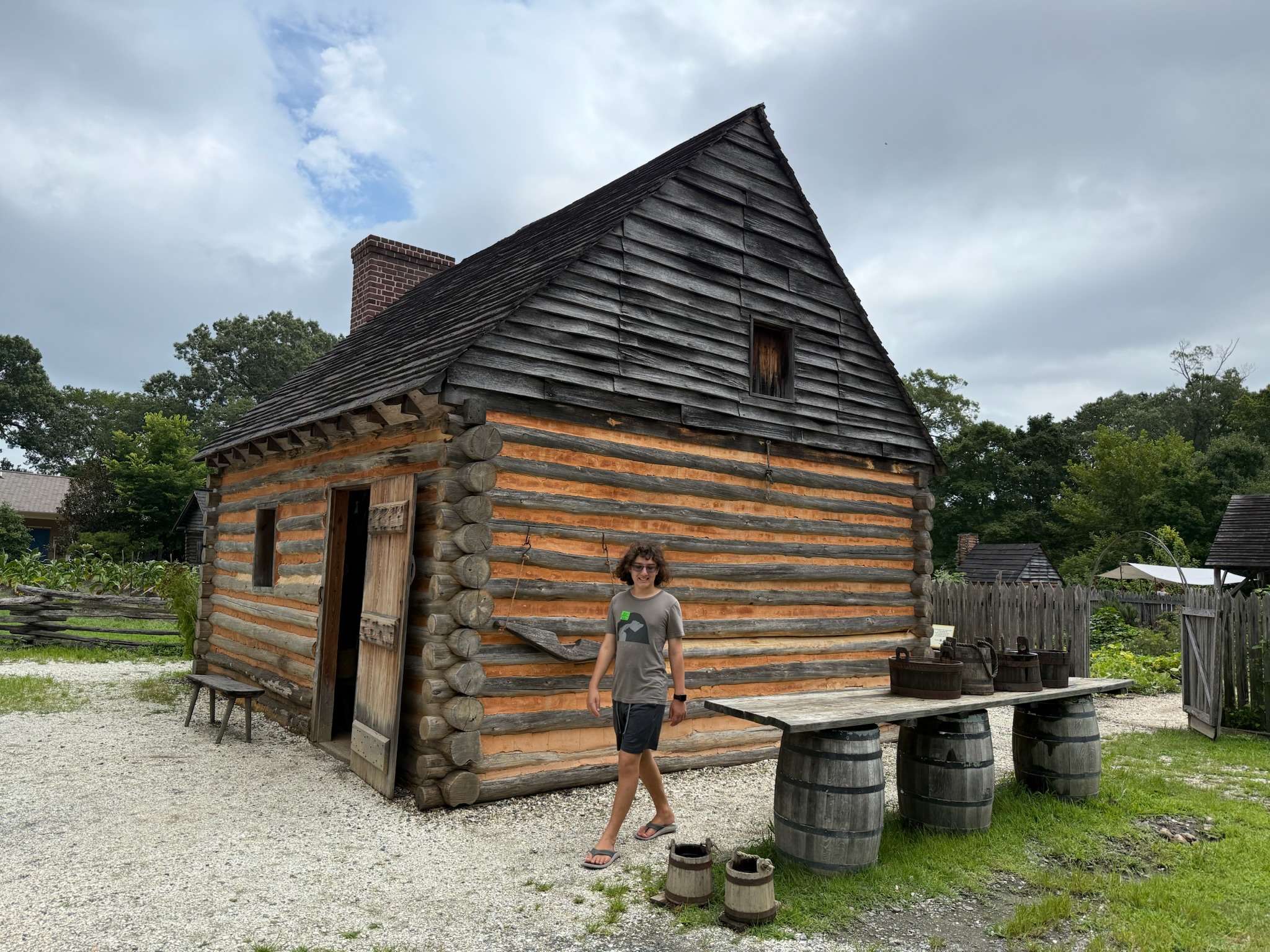
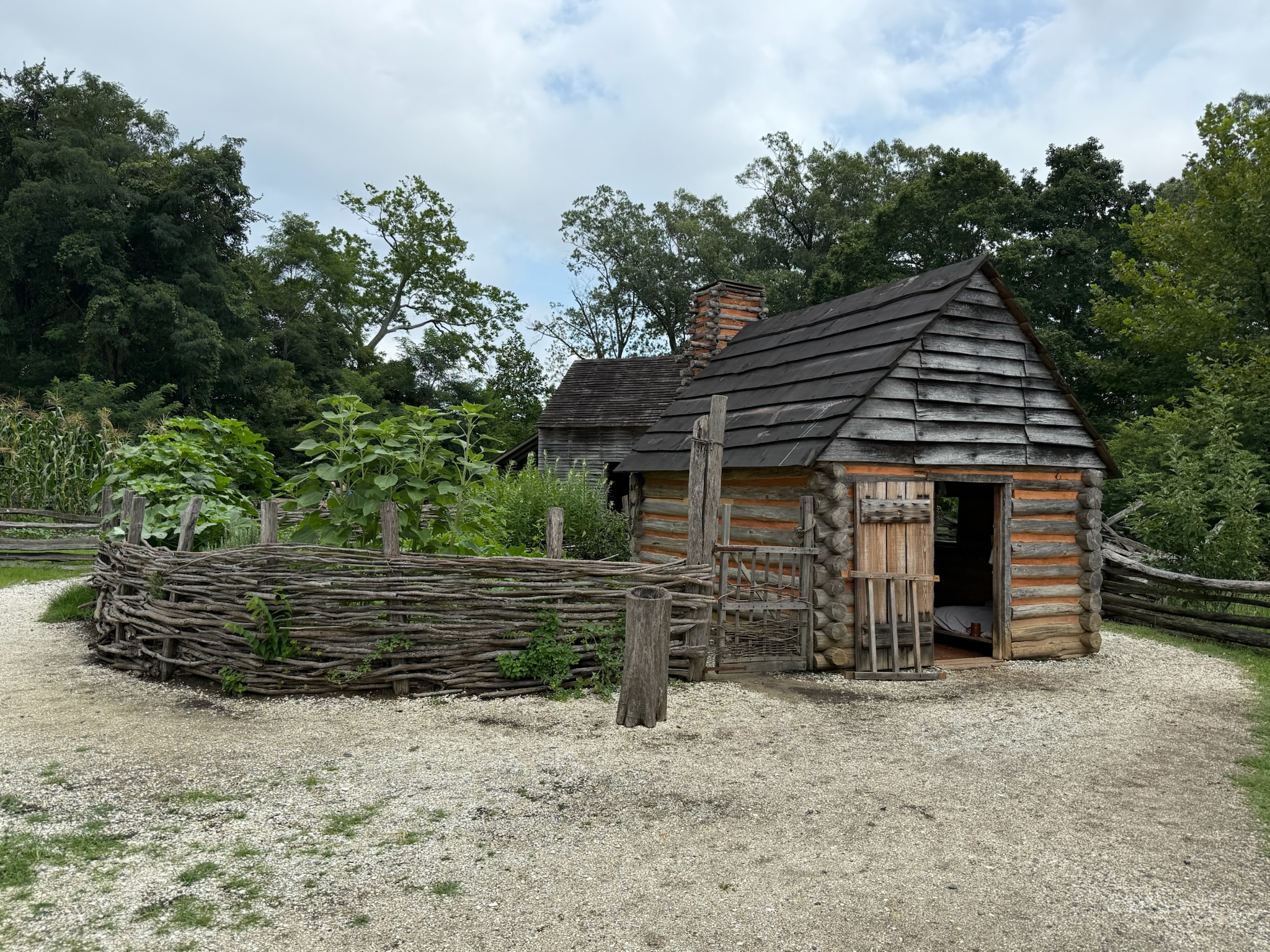
Next was the slave’s quarters. They had their own separate garden. The sign said that “middling” farms had up to 10 slaves.
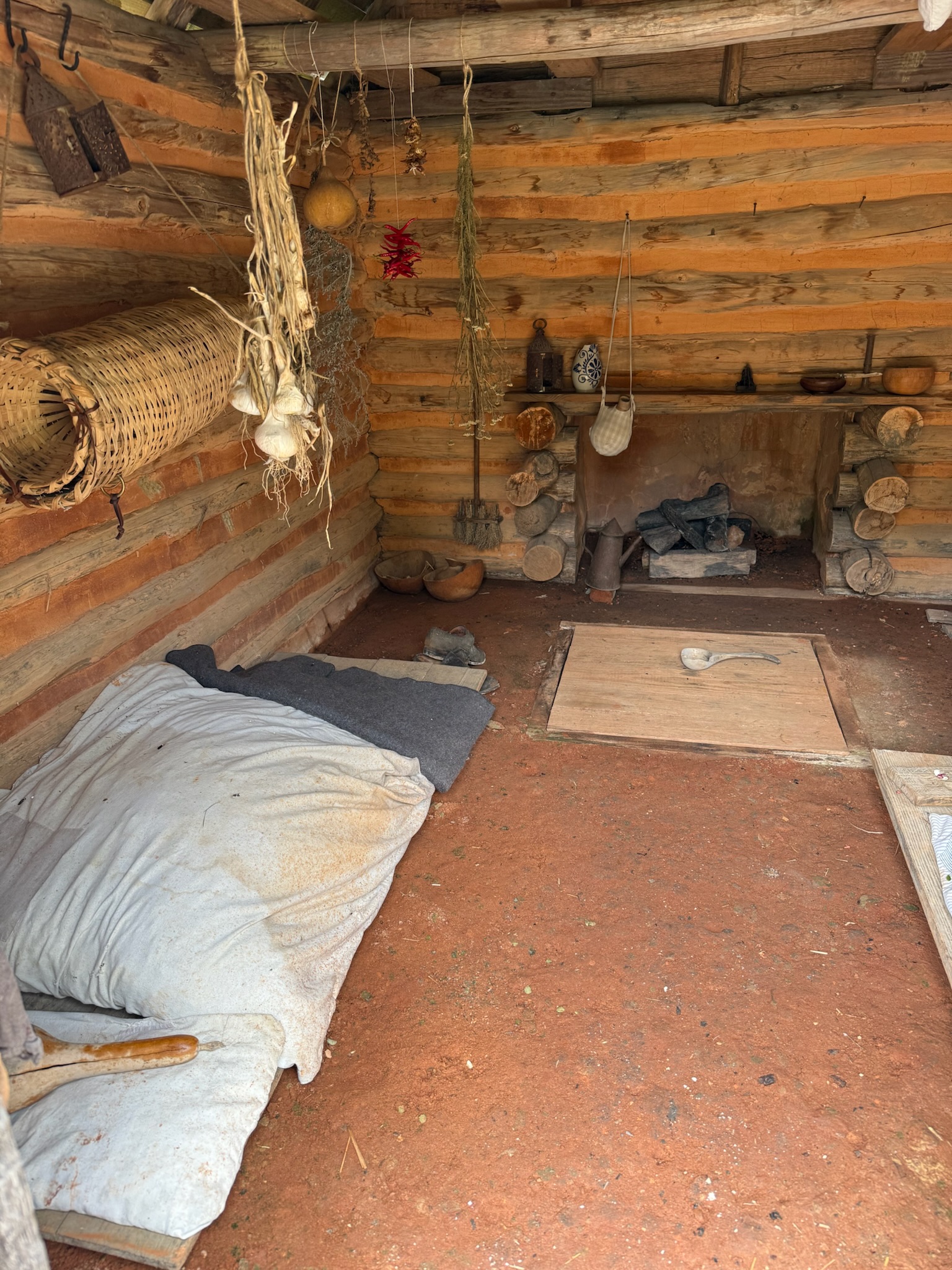
There was no insulation and the floor was bare ground. They slept on makeshift mattresses on the ground. we believe the wood covered a space where they stored personal belongings.
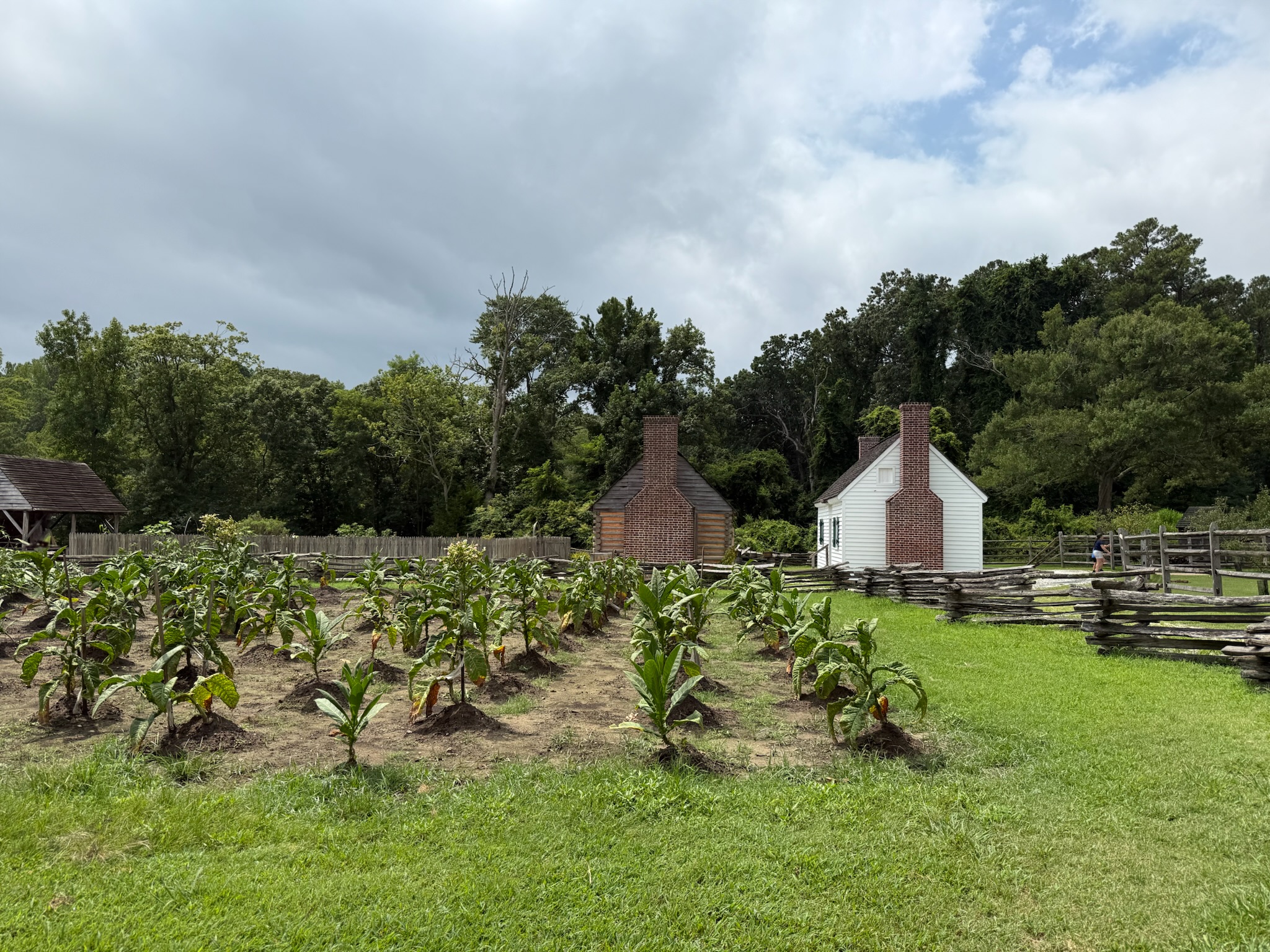
The tobacco fields. The white building was the farm house, the brown building the kitchen. The structure to the left was the toolshed.
The tobacco processing sheds.
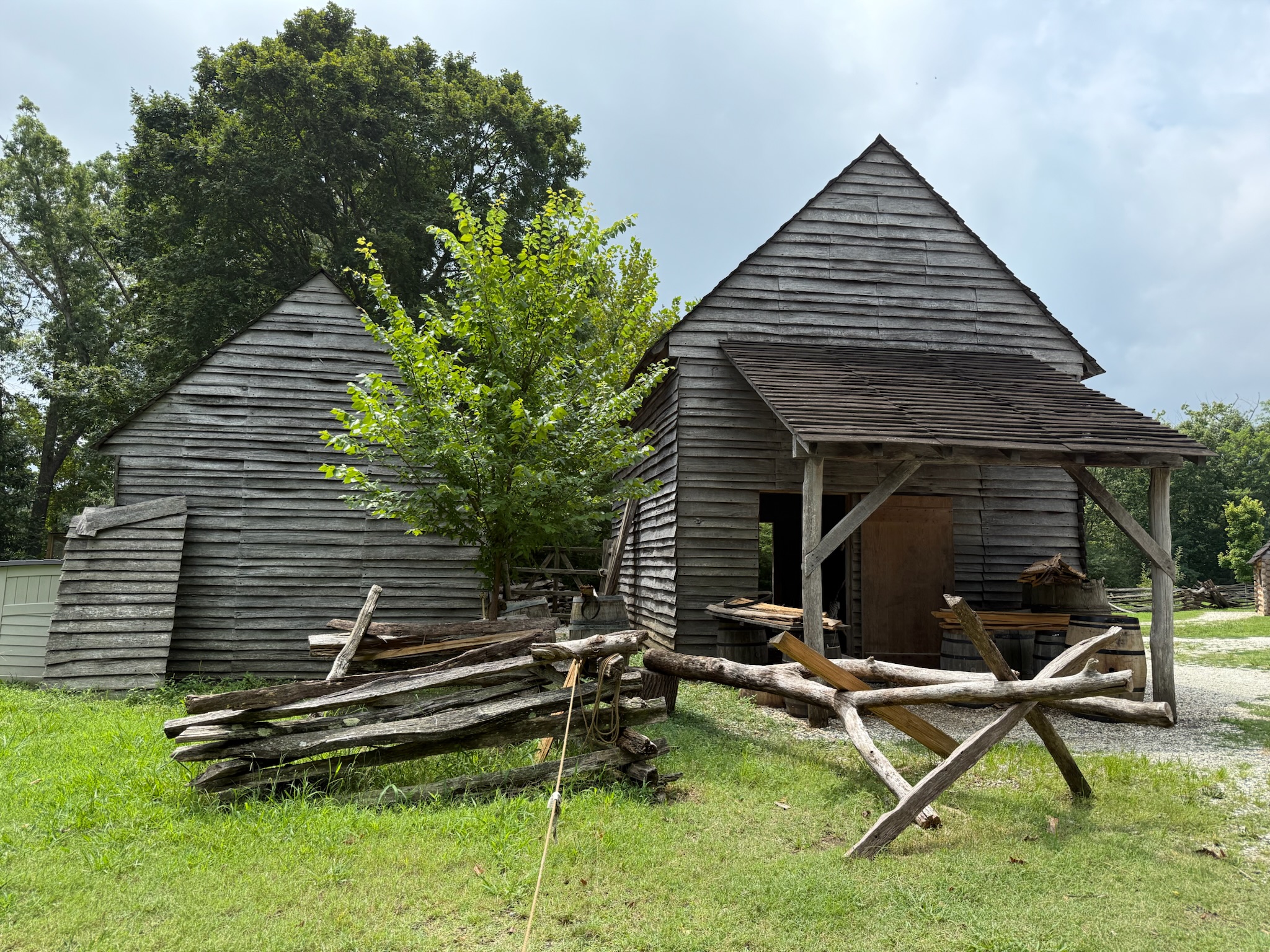
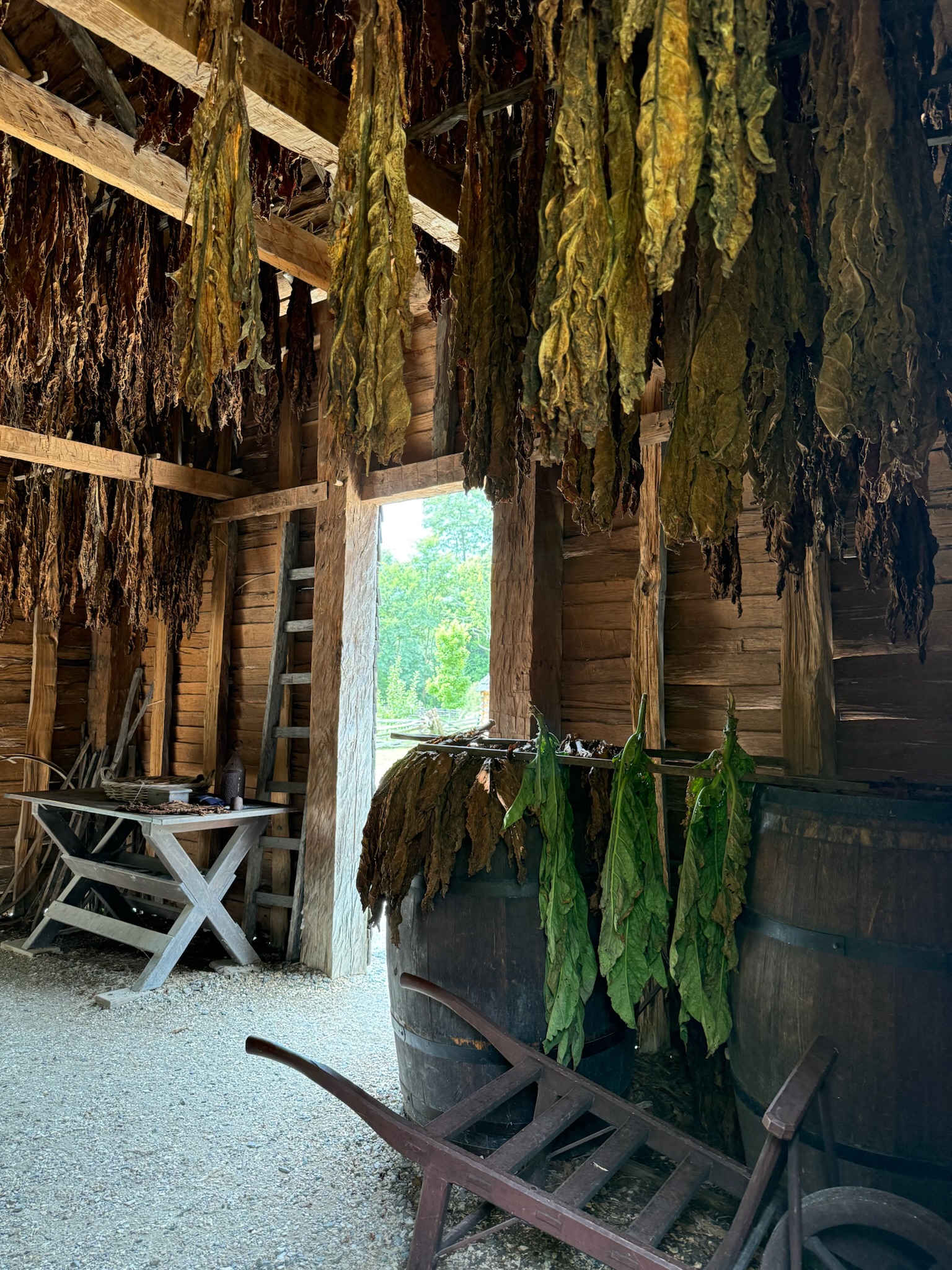
The tobacco leaves were hung in small bundles from the rafters to dry. The dried bundles were packaged into barrels (bottom right) for shipment to England.
A musket demonstration was scheduled at 45-minutes past every hour, and it was almost time for the next one to start. We hustled back to the Continental Army encampment to see it… to be continued….