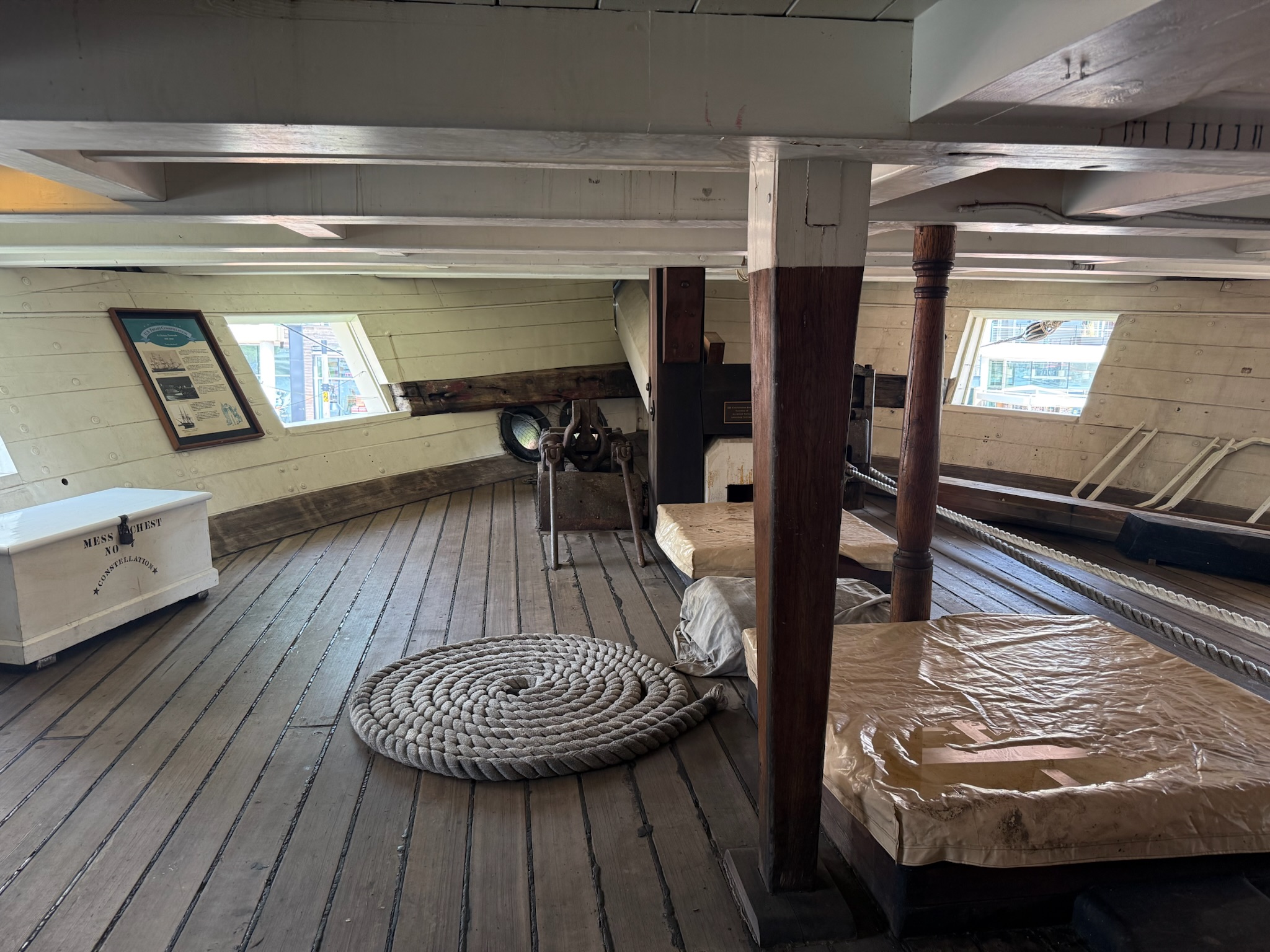
continued… This was the forward of the boat on the gun deck.
After three years of patrolling the Mediterranean, the USS Constellation was sent back to the US for maintenance work. She returned to service in 1862 and was sent back to the Mediterranean Sea. In 1864, she was sent to patrol in the West Indies. That cruise only lasted for a few months before she was sent to Norfolk to become a Receiving Ship. Receiving ships were essentially floating dormitories where new recruits were housed and trained prior to being deployed. Then in 1859 she was called back into active service as the flagship of the African Squadron.
In 1869, she was reassigned to the Naval Academy in Annapolis, Maryland, to be used as a training ship. She was used on summer training cruises every summer for 22 yers. Sometimes, she was given special assignments in between training cruises. In 1894, she was moved to Newport, Rhode Island, where she was used as a stationary training vessel (which meant she was permanently moored and no longer went out on cruises). In 1920, the navy stopped teaching sail handing. However, the USS Constellation was apparently not used much. In 1933, she was finally decommissioned and qualified to be preserved as a naval relic. After World War II, she was put into storage. In 1955, she was moved to a dry dock in Baltimore for restoration and preservation by a private, non-profit company. It sounds like they did some work on her and like maybe she was a tourist attraction. However, In 1994 she was condemned and in 1996, they began work on a complete restoration.
As we’ve talked about in other posts, since the ship had changed over its many years of use, the restoration committee had to pick a single point in time, and they chose 1854. There was a photo gallery of the renovation work. 90% of the hull was rotten, so was most of the planking. Some of the masts were rotten. The keel was hogged (bent). They basically had to tear it down and start over. Like in Colonial Williamsburg, they hired blacksmiths to create replicas of the fittings and fasteners that were utilized in 1854.
Interestingly, her name caused a lot of confusion. The first USS Constellation was authorized by congress in 1794 and launched in 1797. She was on the Navy list until 1853 after a survey determined that she was beyond repair. As she was being scrapped, a new vessel with the same name was being built. The new ship was slightly bigger and had a moderately different layout. The close timing and similar size/design led many historians to believe that the second USS Constellation wasn’t a new ship; the original ship had simply been retrofitted and upgraded. It sounds like much of the reason the historical societies pushed for her renovation was because of this mistaken belief that she was the 18th century ship that fought in the War of 1812. Had her name been different, she likely would have been scrapped!
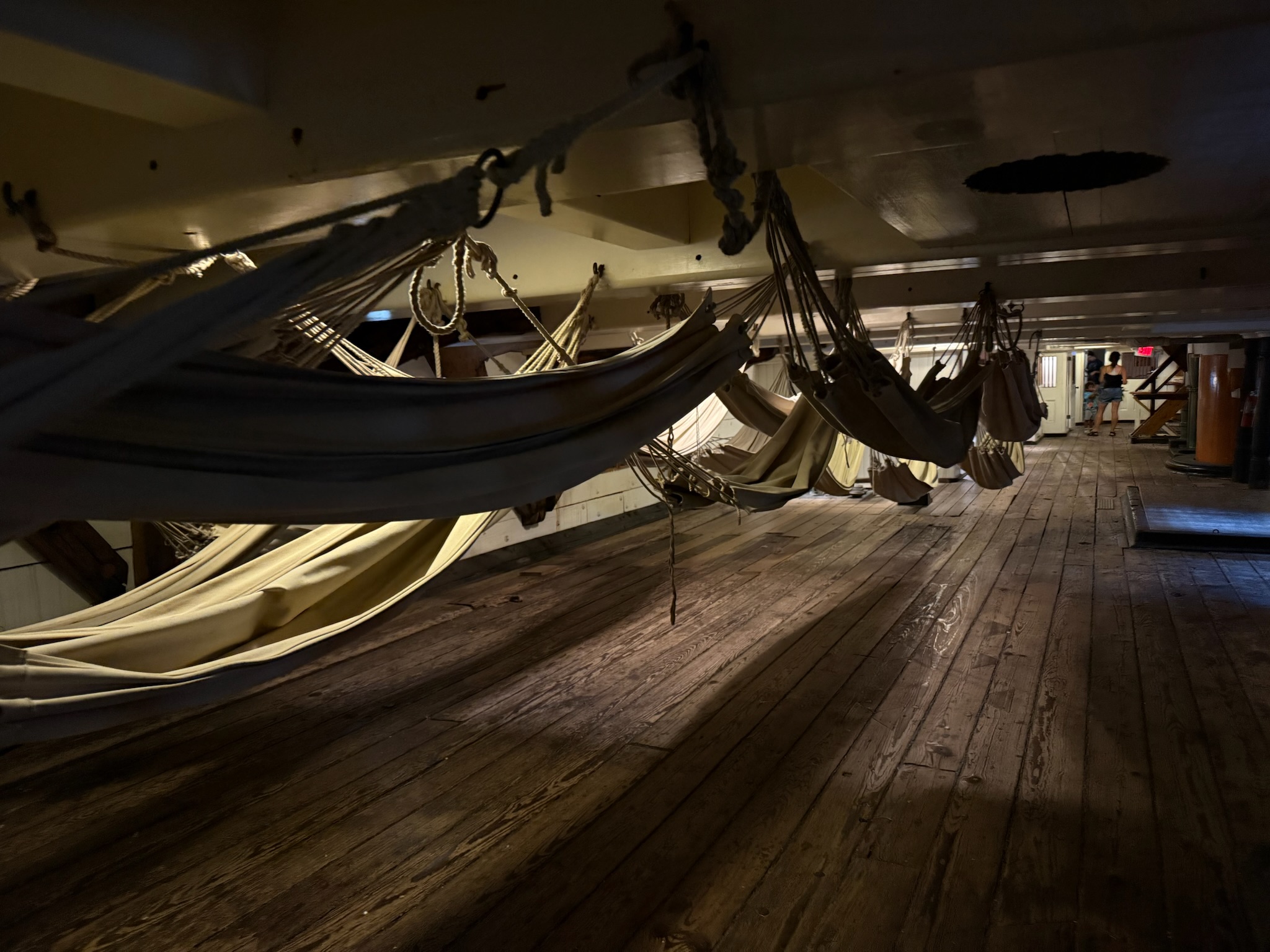
Next we went down to the berth deck. The enlisted men slept in the middle of the deck in hammocks suspended from the ceiling. When the hammocks were not in use, they were taken down and stored along the rails of the spar deck. They also ate their meals here picnic-style (meaning no table – they sat on a blanket on the floor.
When the Civil War started, about 1/4 of the fleet resigned to join the Confederacy, leaving the navy woefully understaffed. Before the Civil War, only free black men could join the navy, but after the war commenced, they allowed escaped slaves to join, as well. By the end of the war, blacks made up 20% of the lower ranks within the navy. They were treated and paid the same as their white counterparts. Boys as young as 11 could enlist as apprentices, but the ship was required to have less than 5% of the crew be under 18.
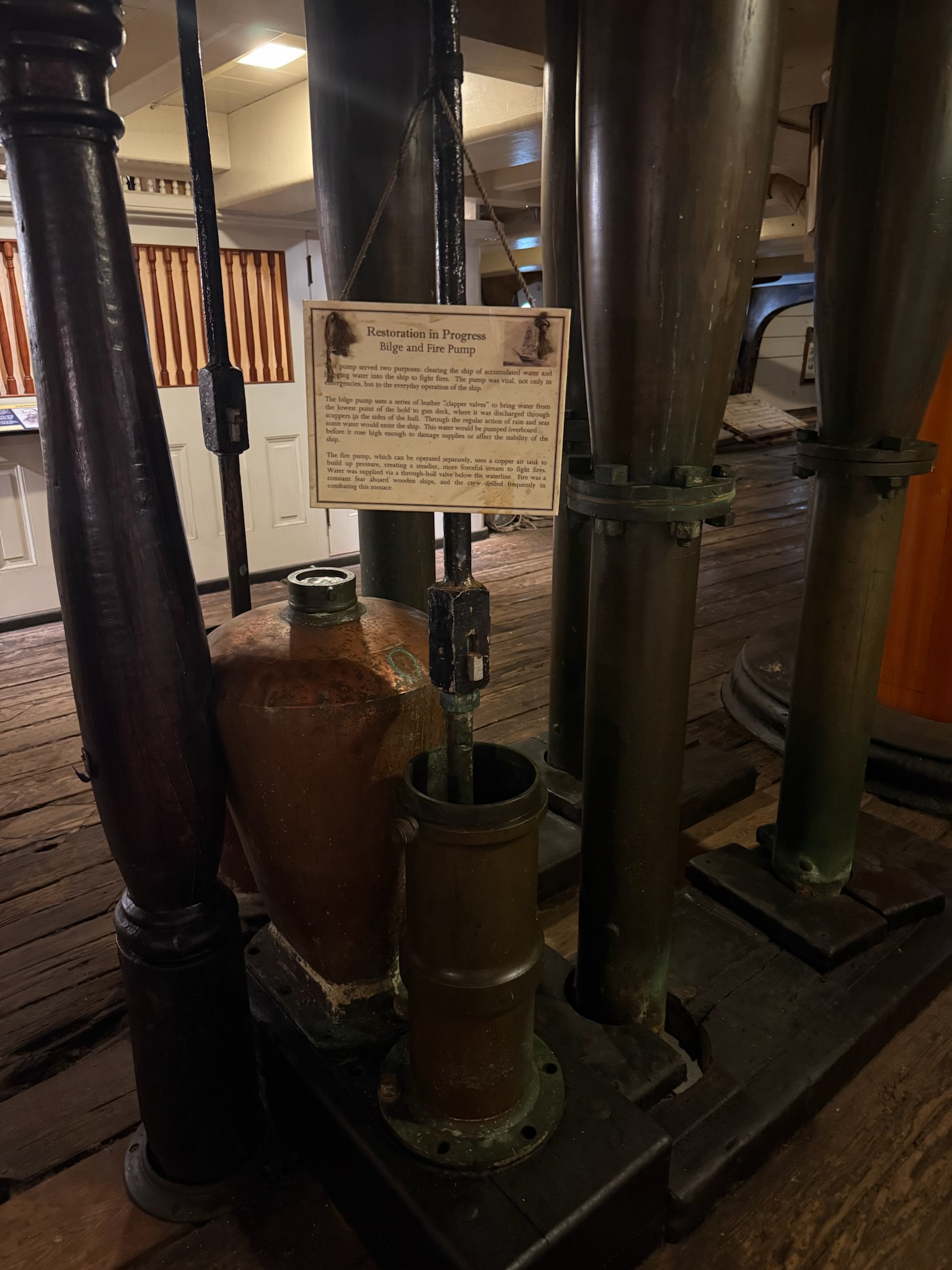
The bilge pump/fire suppression system were in the hammock area, located directly beneath the set on the gun deck.
The forward area was the sick bay. The signs said that prior to the Civil War, the US Navy had made a concerted effort to eliminate the diseases that plagued sailors, such as scurvy, and in doing so, focused on cleanliness and personal hygiene. The introduction of steam distillers to convert salt water to fresh also seriously reduced illness from contaminated drinking water. At the time, it was believed that malaria and yellow fever were spread by toxins emanating from the ground, so if there was an outbreak in an area, the ship would head out to sea (and there were no mosquitos at sea, so this prevention method worked!) The navy had also started producing its own medicines, so there was a dedicated supply chain of reliable medicine, too. During the Civil War, 1 in 12 in the army died from disease, but only 1 in 50 in the navy died of disease.
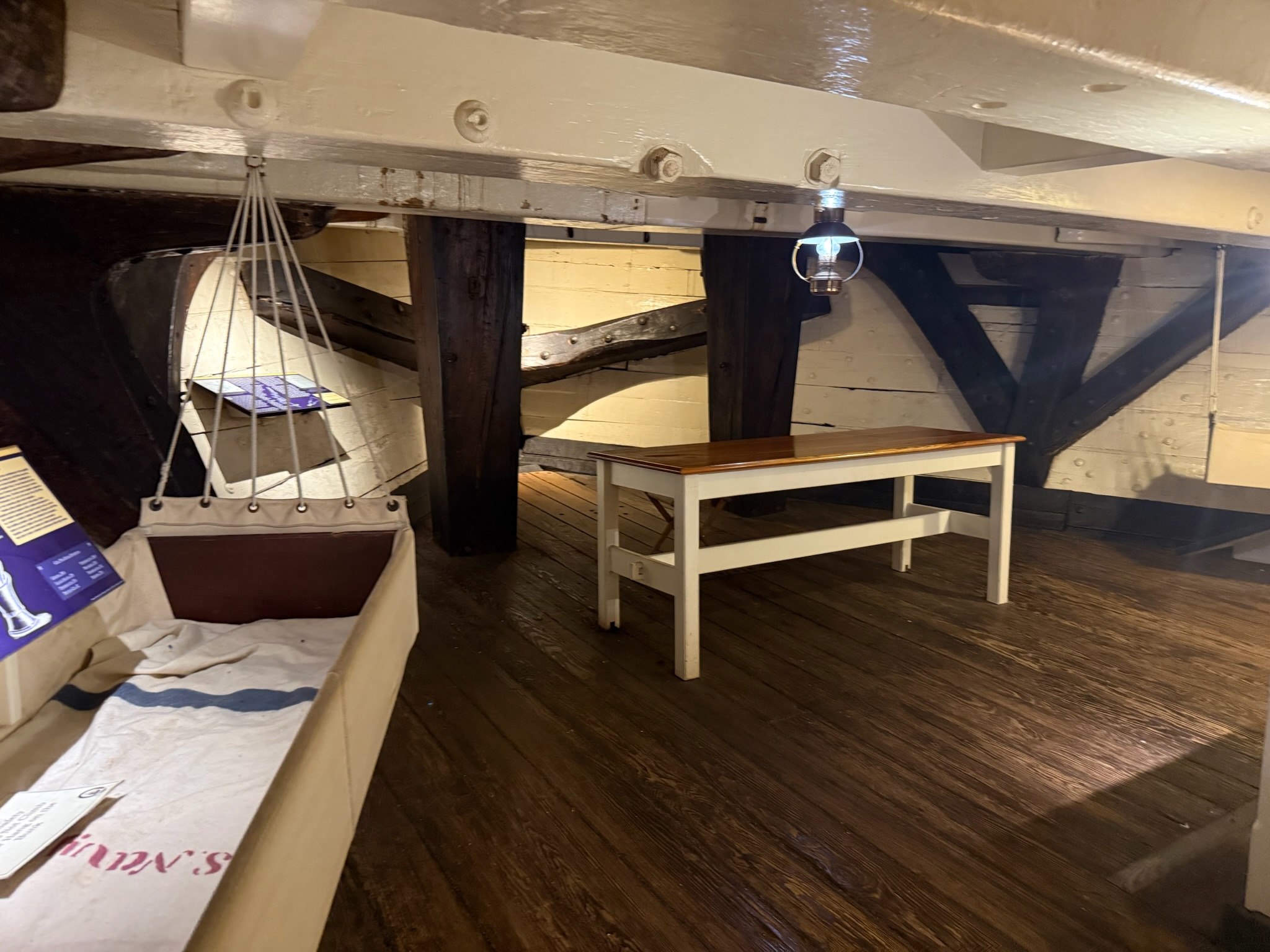
It sounded like this was where illnesses were diagnosed and minor injuries treated. Crew that were too sick to work slept in hanging cots up here so that the doctor could keep an eye on them. Surgeries were performed in a special surgical area on the deck below this one.
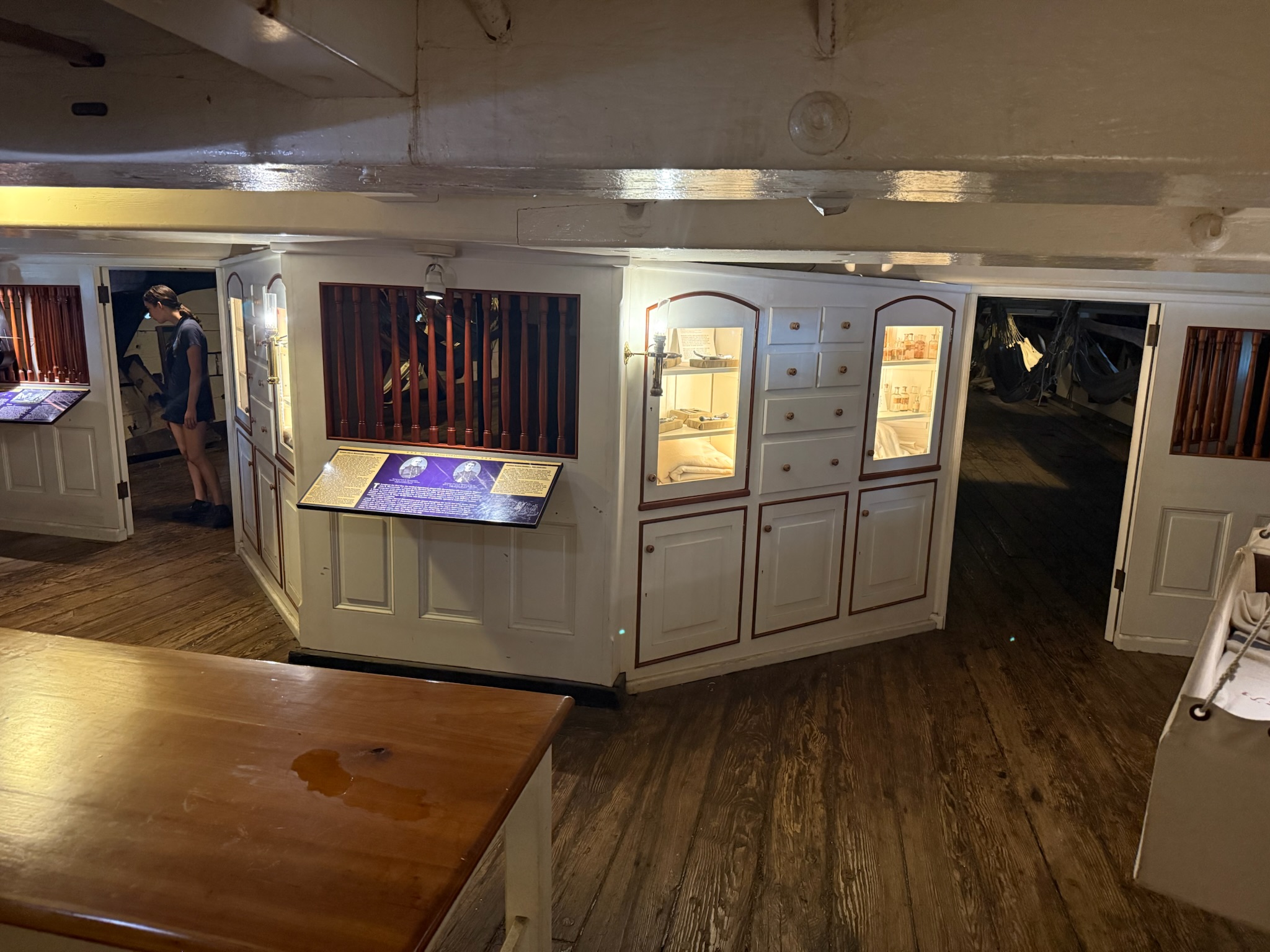
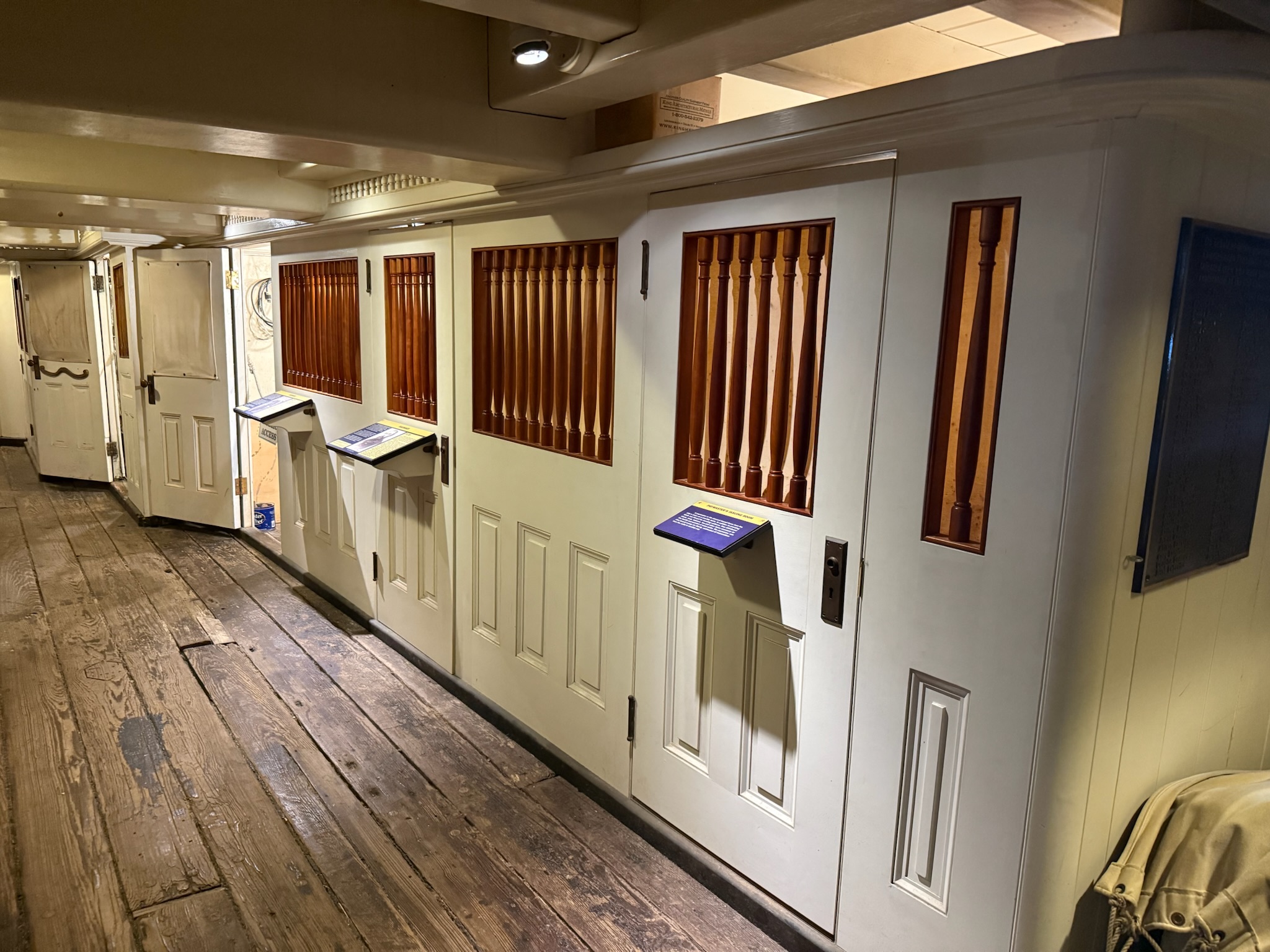
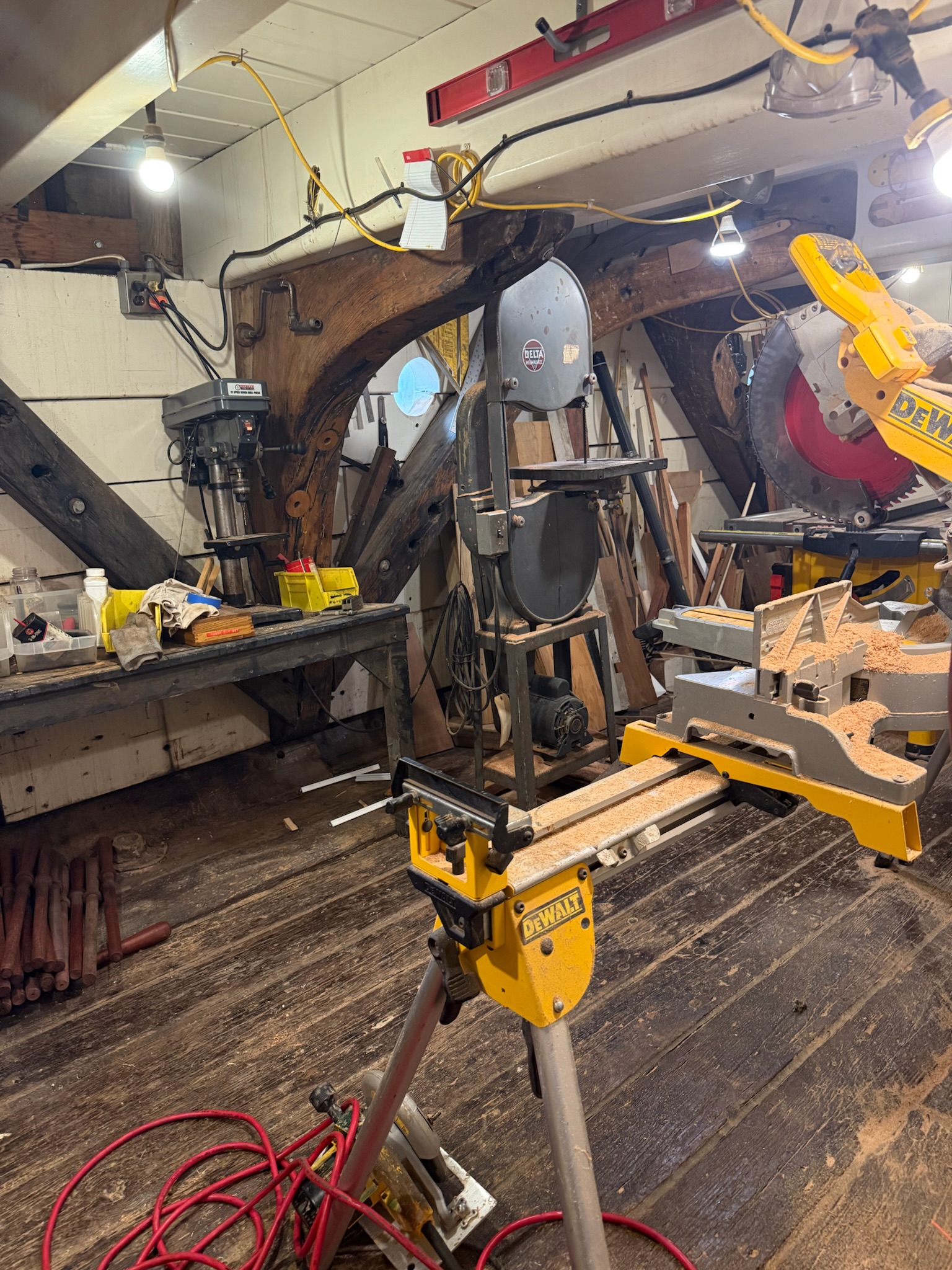
Aft of the area with the hammocks, there was a row of offices: the paymaster, the sailmaker, the carpenter and the medicine dispensary.
We had not realized how advanced carpentry tools were in 1854!
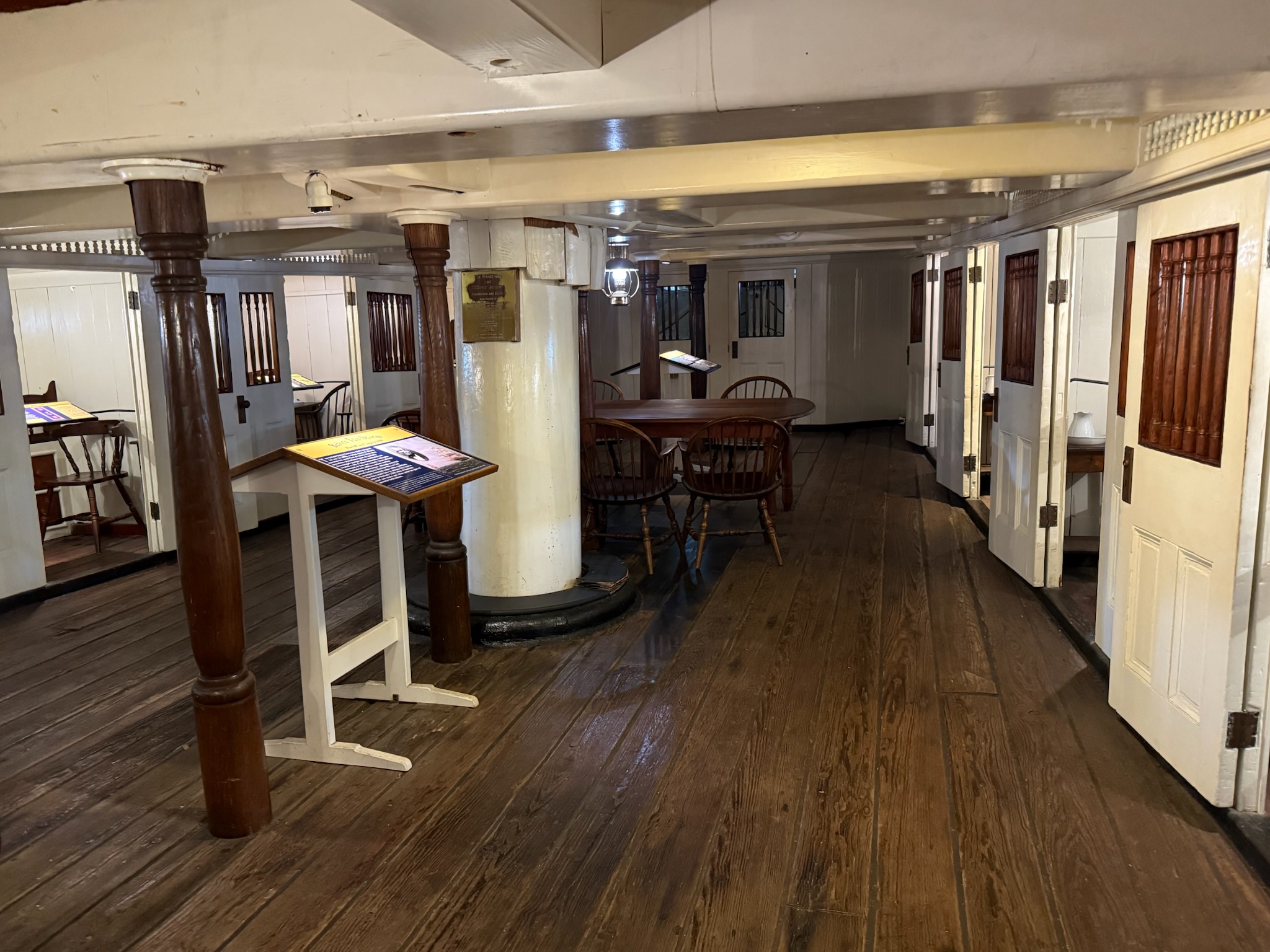
Aft of the offices were the officers quarters and wardroom. It appeared that each officer had a tiny private room.
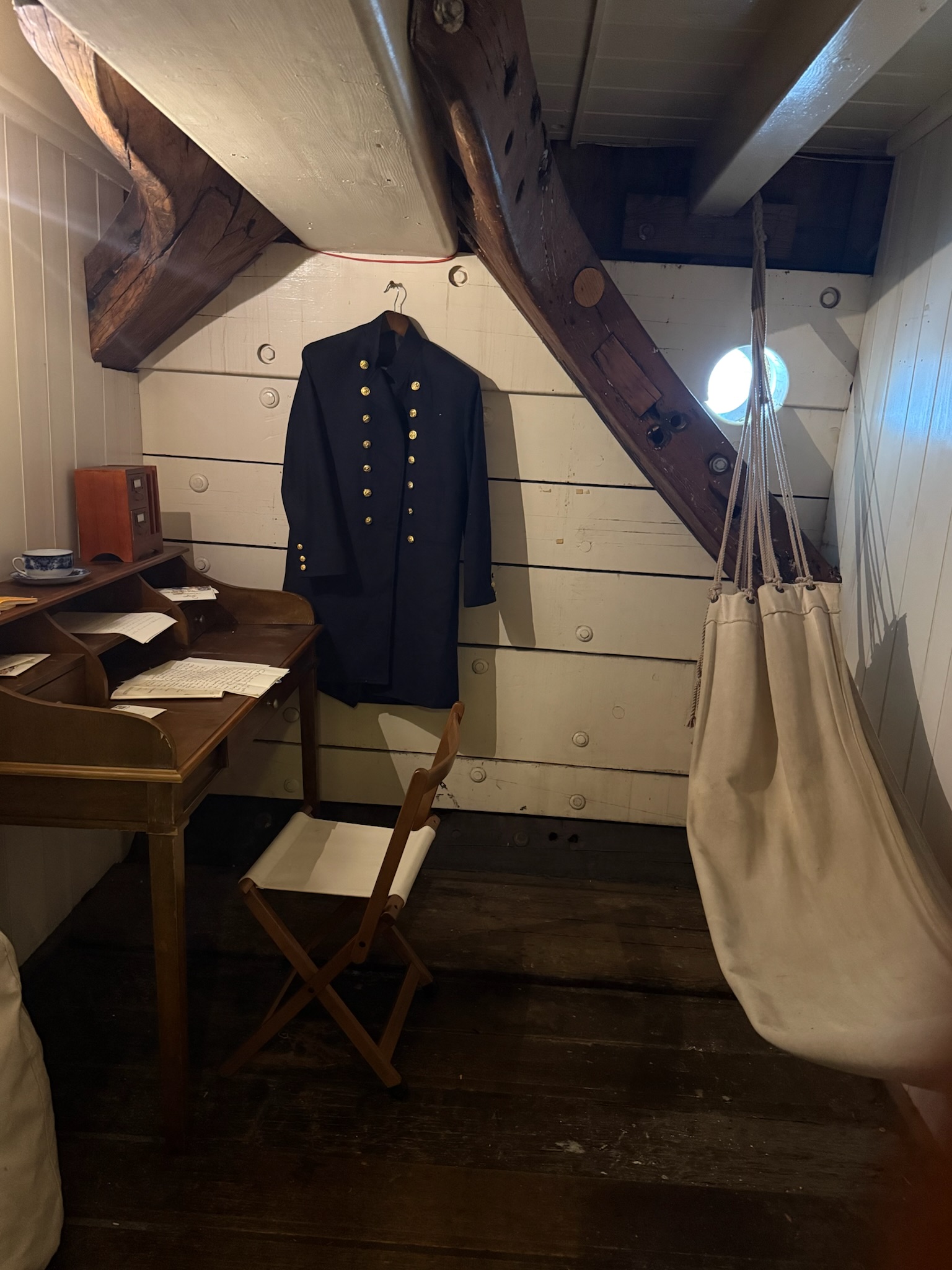
It seemed the lower ranking officers had hammocks, making it easy to share the room, if needed. while the higher ranking officers had fixed beds with storage underneath.
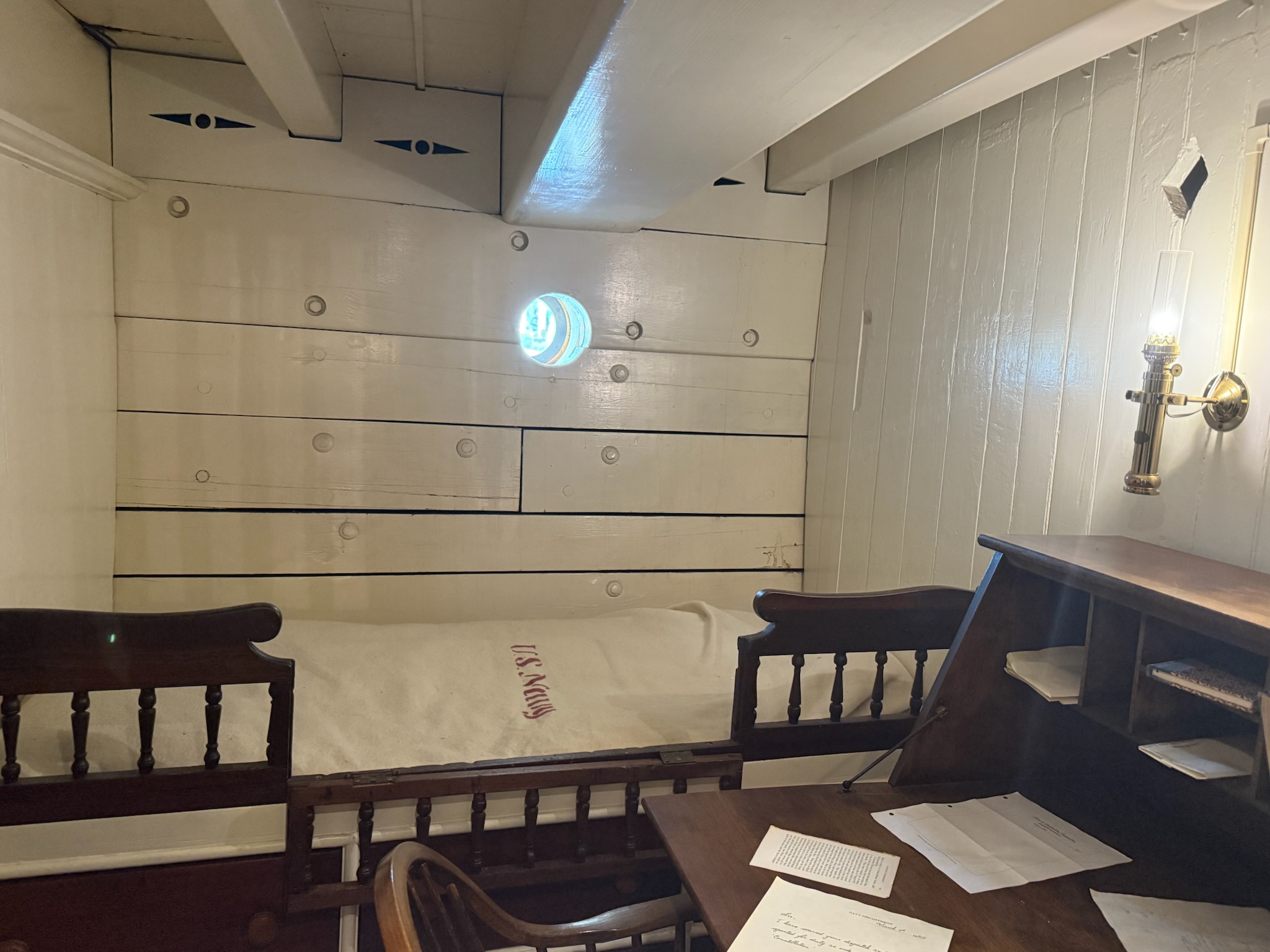
The higher ranking officers had fixed beds with storage underneath.
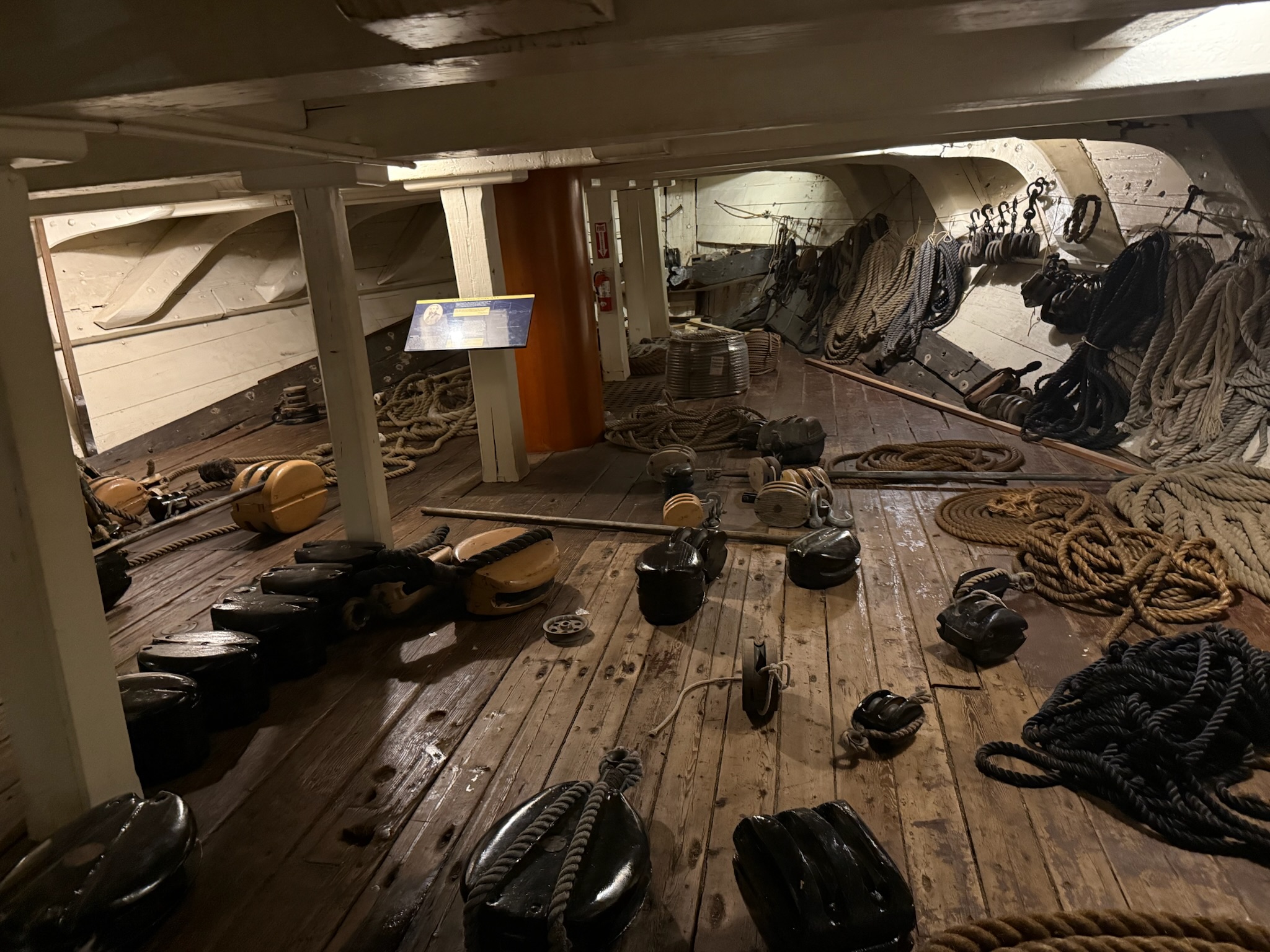
We went down to the bottom deck, called the Orloop deck, which housed the 48 freshwater tanks. The open space was primarily used for storage.
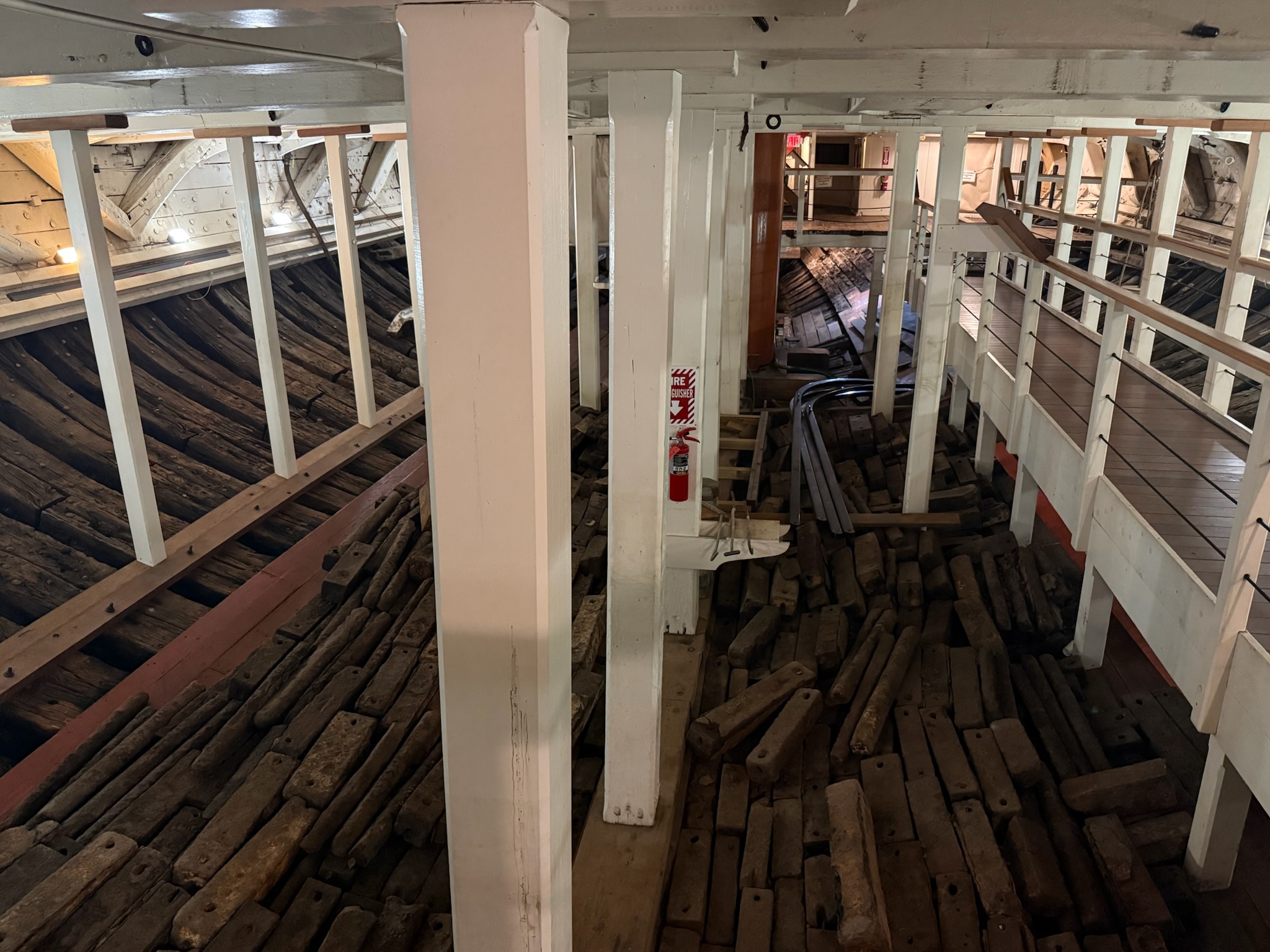
The forward was where the anchor chain was stored when not anchored. It was also used for stowing rigging, lines and sails. It doubled as the brig (prison) — though, since it wasn’t locked, someone had to guard the prisoners. We can’t imagine where they performed surgeries.
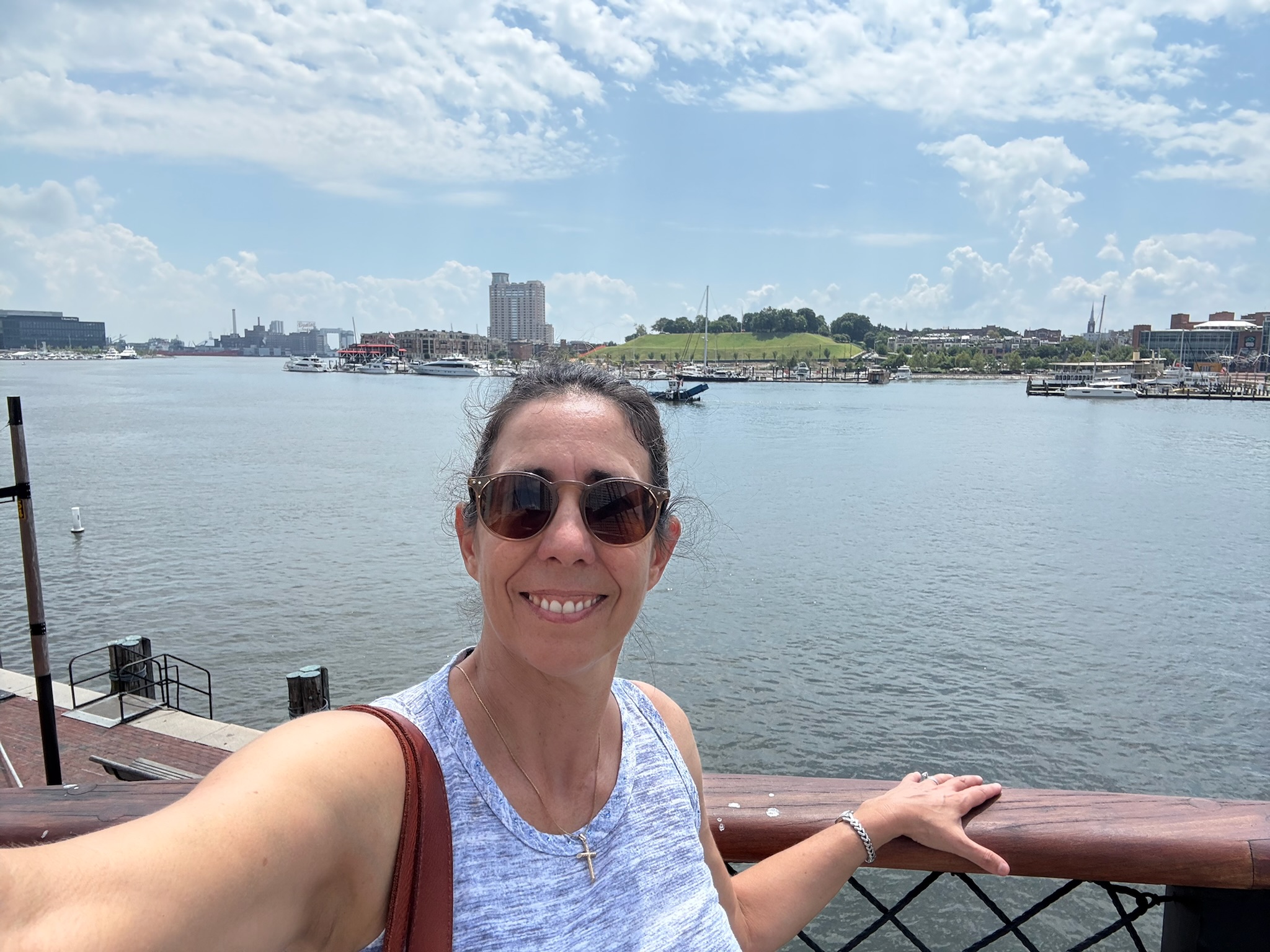
We headed back up to the spar deck to access the staircase into the little museum area. On the way out, we snapped a couple of photos of downtown from the deck.
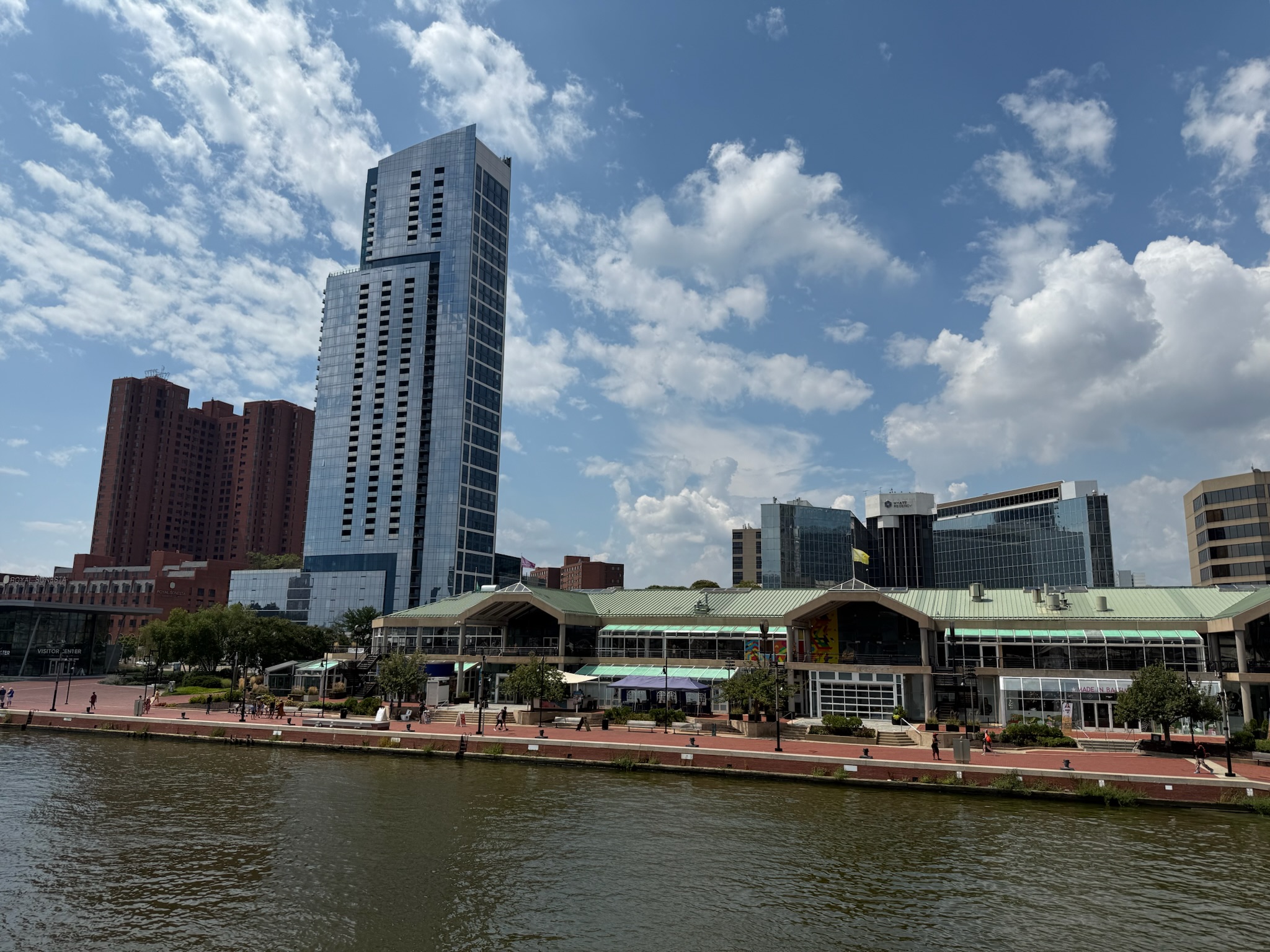
We were all hungry and eager for lunch. Eric looked online and saw that there was a highly rated lobster roll restaurant called Mason’s in the shopping center in the photo above.
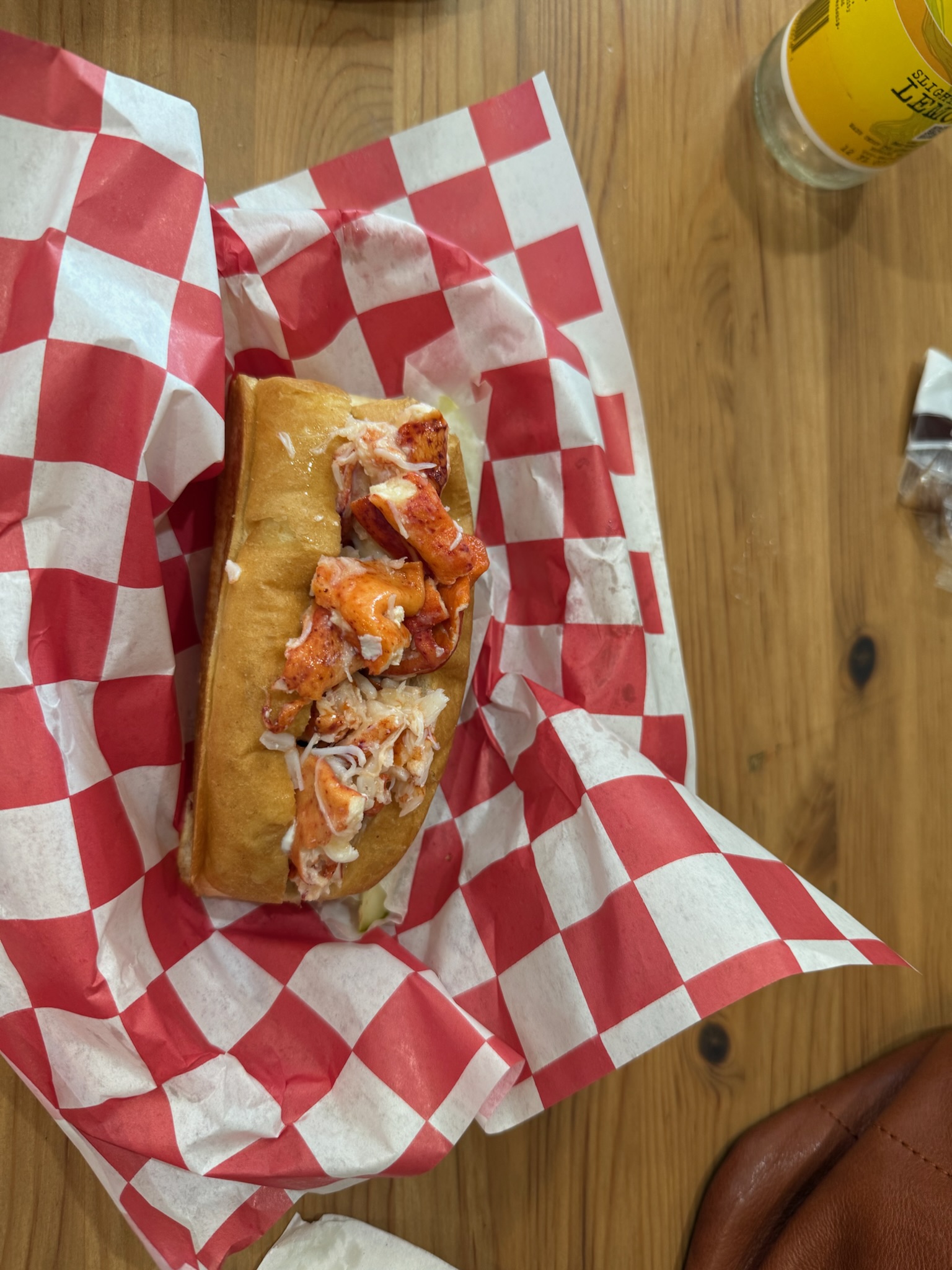
The lobster rolls were phenomenal. Very simple — just lobster and butter on a buttered roll, but both the lobster and bread were high quality.
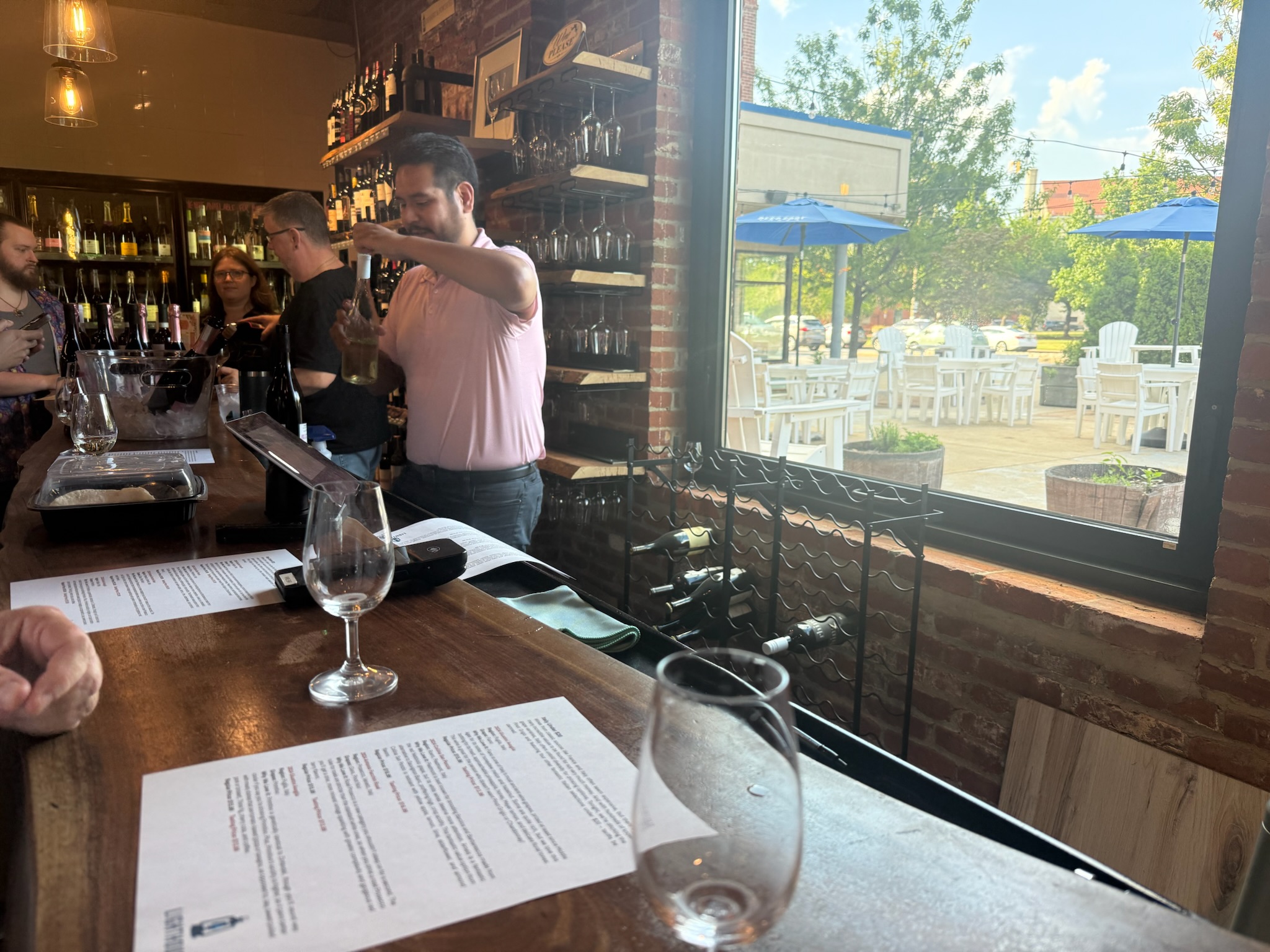
After lunch, we headed back to the boat. We’d mentioned that there was a high end wine/beer shop in the Lighthouse shopping center. When we’d walked by, we noticed a flyer advertising free wine tasting on Fridays. So Christi and Eric stopped by. They had four Italian wines, each between $16 – $19 per bottle, with a $2.00 per bottle discount for any bottles purchased right then. Sadly, we didn’t like any of them, and there was zero pressure to buy anything. They just said to come back next week and see if we liked any of those.
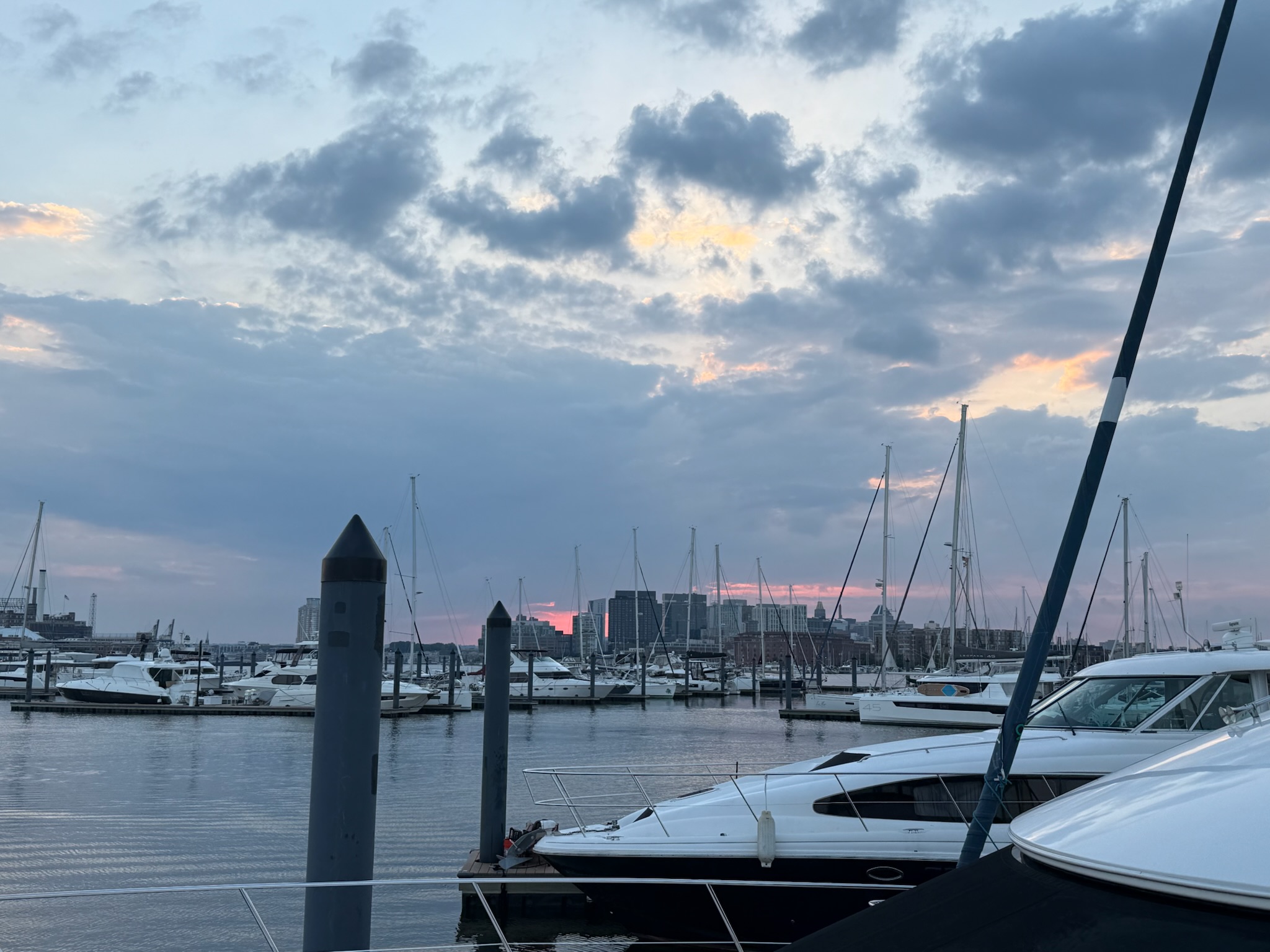
The sunset was muted by the low atmospheric clods.