Continued… The Southwest Gallery had an exhibit called something along the lines of The Two Georges that compared and contrasted US President George Washington and British King George III.
As we’d learned in Yorktown, when the colonies had been established, the Monarchy had been pretty hands-off. When King George III came to power in 1760, he pursued stricter policies of control over the colonies. Long story short, the American Revolution was basically the colonies saying no to this control, viewing the king as a tyrannical ruler who could not be reasoned with. King George III stayed in power until 1811, when he became too sick to rule. Rather than abdicating the throne, King George III had his son rule on his behalf as the Prince Regent. The king died in 1820.
George Washington was a wealthy farmer from Virginia. He became the commander-in-chief of the military during the Revolutionary War. The two Georges were literally fighting one another over control of the colonies. Washington resigned from the military when the war ended in 1783, but remained active in the politics of the new nation. He became the US’s first president in 1789 and was in power until 1797, when he chose to retire despite being encouraged to run for a third term. The exhibit made a point of stating that Washington voluntarily relinquished power while King George clung to power to the very end, even when he was too sick to rule. Washington died unexpectedly in 1799 from an infection, only three-years after leaving office.
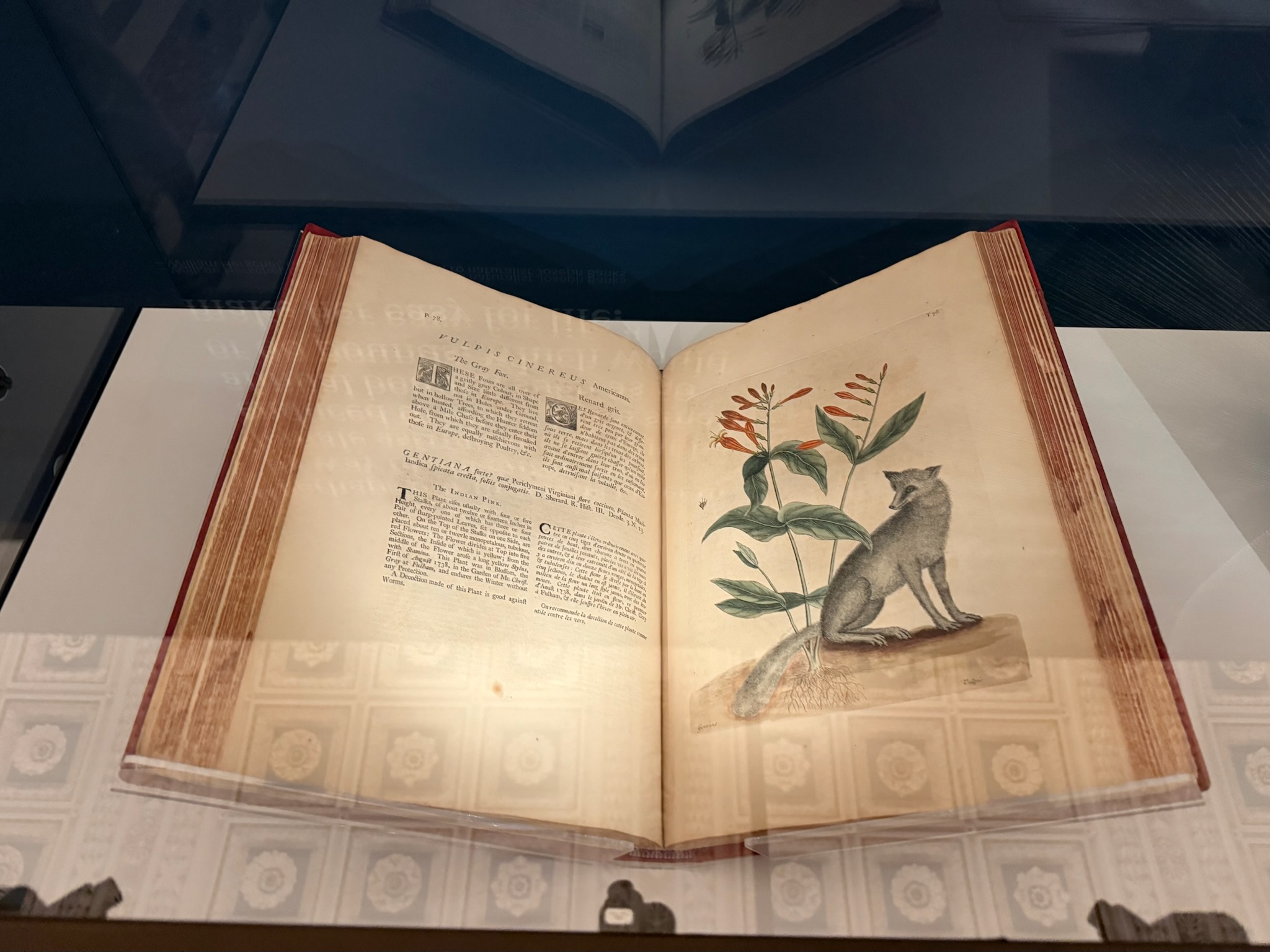
Both Georges were Enlightenment men who were into science and agricultural advancements. George III was an important patron of scientists and explorers, funding people such as Captain James Cook, naturalist Joseph Banks and astronomer William Herschel. Washington had wanted to establish a university in the Capital, believing that “flourishing the state of the arts and sciences” would lead to “national prosperity and reputation.” Both Georges owned this book on botany/horticulture.
Both Georges personally benefitted from slavery — the British empire’s wealth came from slavery in the colonies and Washington utilized slaves on his plantation — yet both made steps towards ending slavery in their respective countries. Washington helped to draft the Constitution with a clause that Congress could outlaw slavery in 20-years and King George III passed the Act for the Abolition of the Slave Trade in 1807. Neither country outlawed slavery until later in the 19th century.
The Constitutional Republic was a radical, idealistic form of government that had never been tried before: elected leaders representing the people instead of a leader ruling the people. Washington was anxious about presenting the presidency in a manner that did not seem to be akin to a king. There was a display about how the new Republican Court that Washington set up needed to impress foreign diplomats who were used to fancy European courts while also not emulating a monarchy too closely. From the context, we got the sense that “court” meant setting up his house in a way that was suitable for entertaining important people; they were clearly not addressing the legal system. As an FYI, John Adams wife, Abigail, helped him set up the court. John had been the first American minister to England, so she was familiar with the British court. One of Washington’s friends picked out the tableware while on a trip to Europe.
It was a relatively small exhibit, and it felt like a weird collection of information with strange gaps. Since there was a temporary partition up in the room, we’re guessing there may have been more that was currently closed. At the end of the gallery was another room that housed what was left of Jefferson’s books.
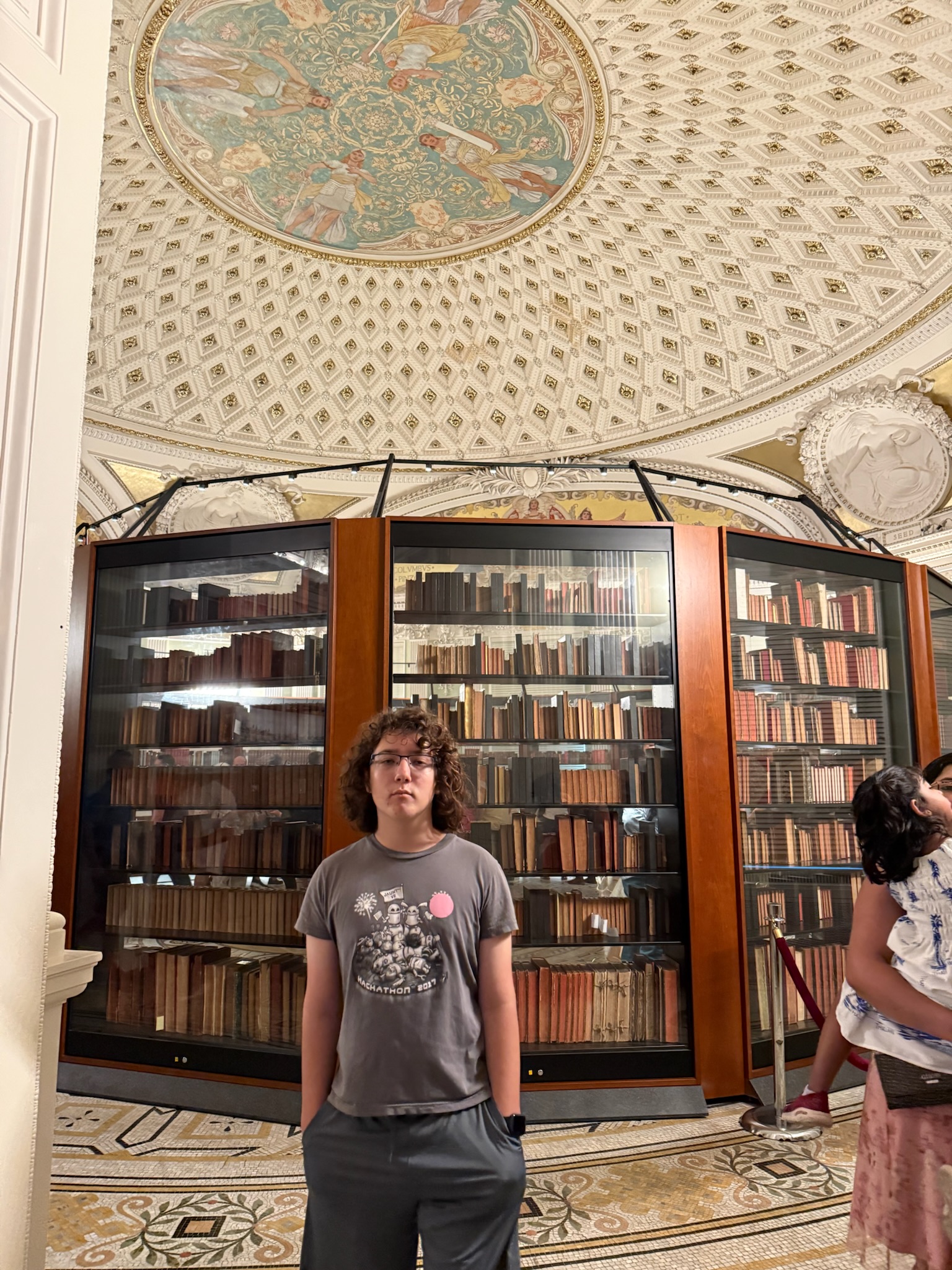
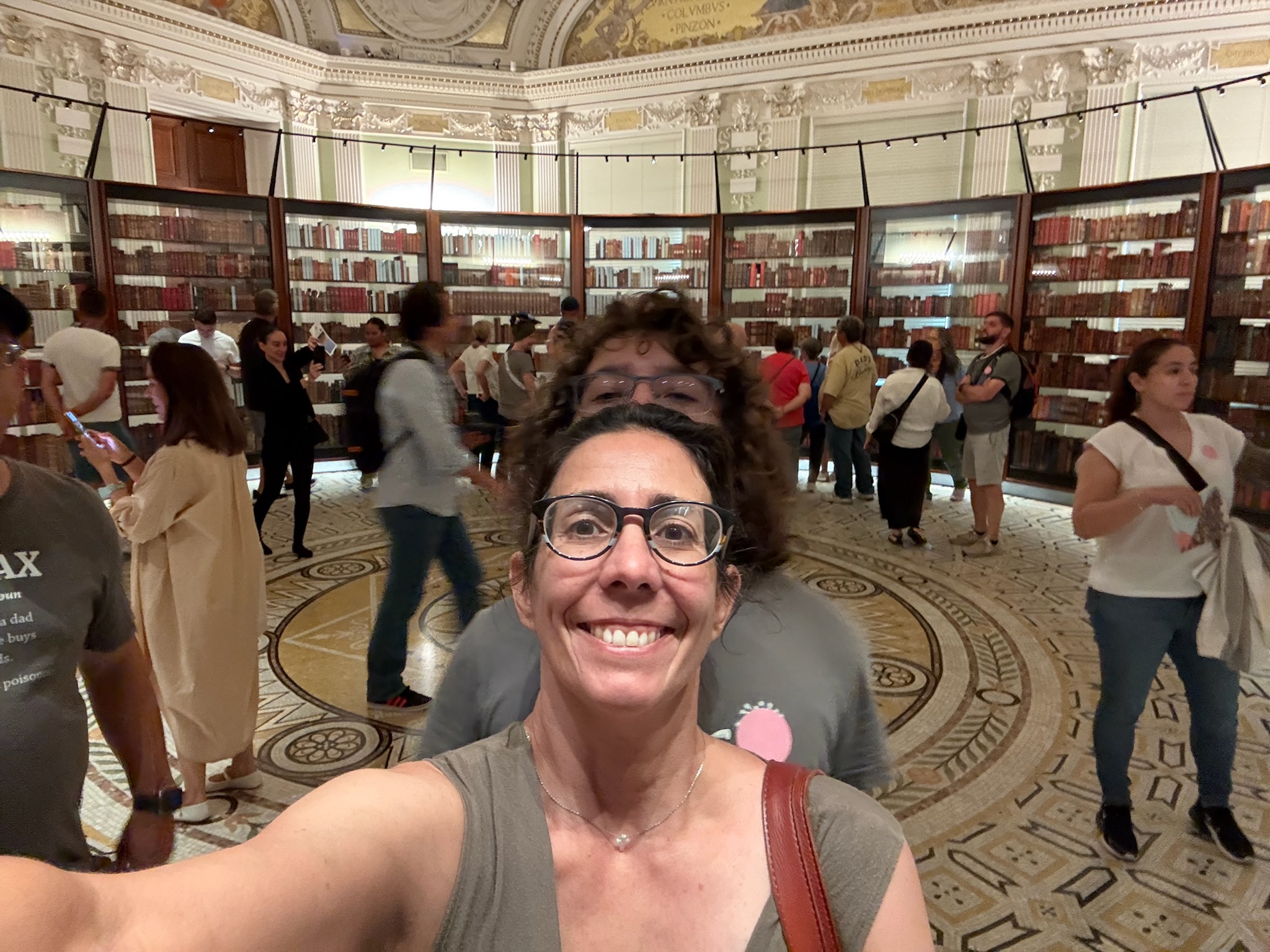
Sadly, 2/3 of them were destroyed in a fire in 1851. This was a recreation of what the library looked like in Jefferson’s home before he sold the books to congress. 2,000 of the books were original, another 3,000 were copies of books that were lost in the fire. There were quite a few fake books. Called “book boxes,” they represented books lost in the fire that had yet to be replaced. The boxes had the book name and author printed on the fake spine, and were placeholders until the Library could find a real copy of the book.
Next, we went to the gallery on the other side of the building, called Treasures from Congress, which was about “the ways and means by which cultures preserve memory… exploring how cultures may guide and honor memory, memorialize the past, assemble knowledge, create collective histories, recall events of the day and recount individual lives.”
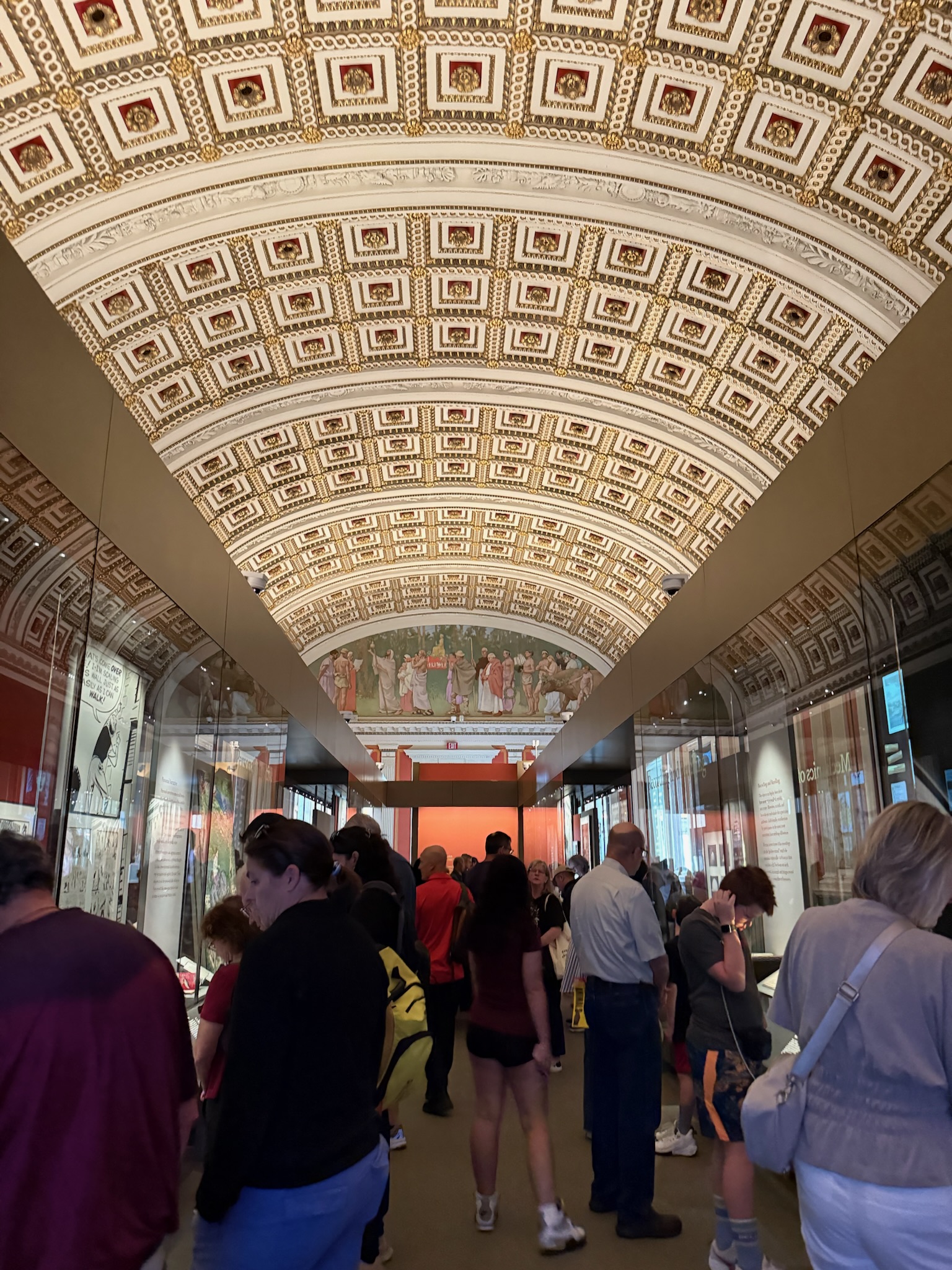
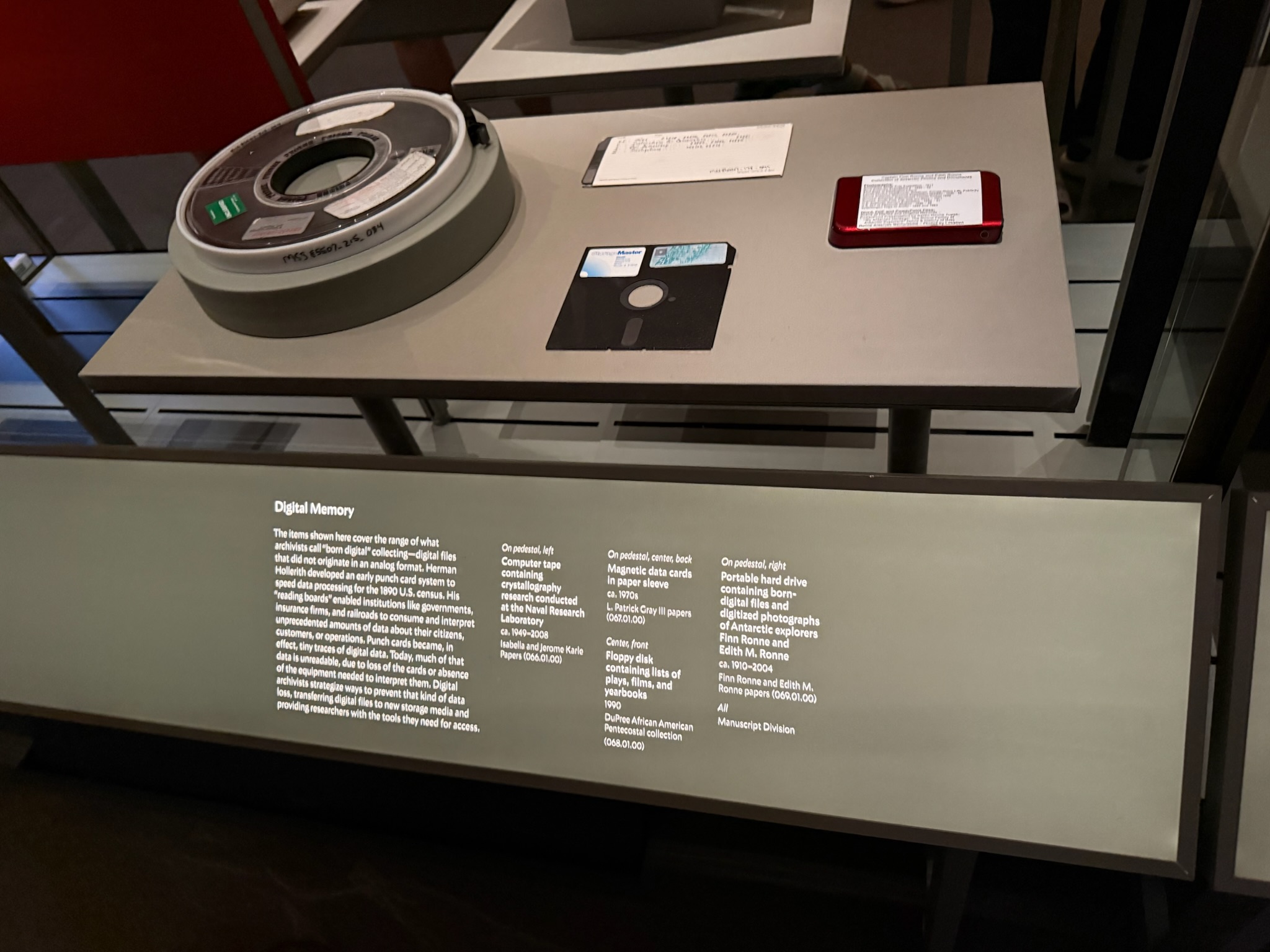
As one may have guessed from the intro, the exhibit was very eclectic. There was an exploration into how memories are stored, such as written, visual, audio, etc, and culminating with more modern (though already outdated) storage systems:
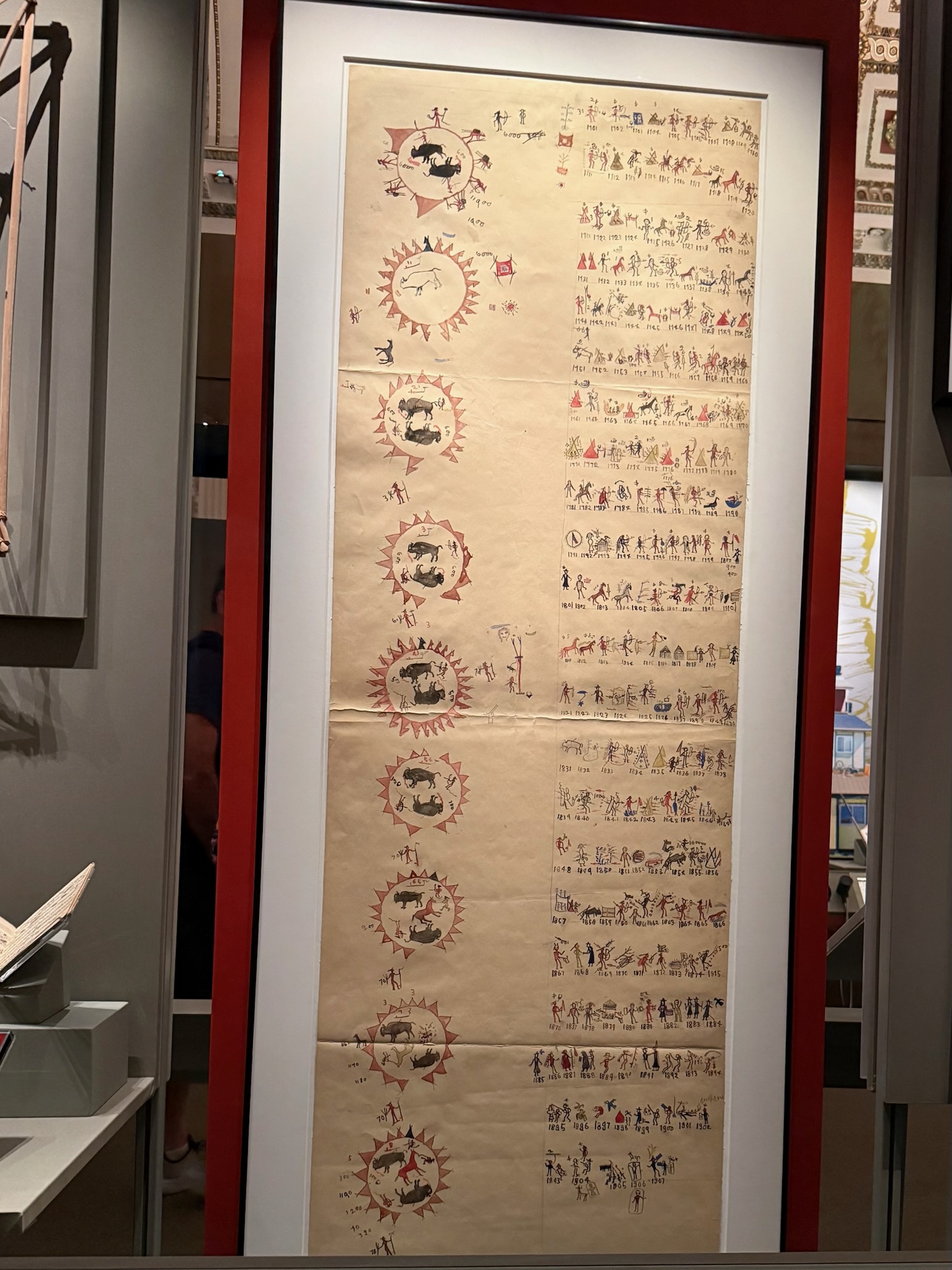
There were pieces of art memorializing specific historically important moments in time and pieces of art that recounted many important historical events compiled together to serve as a collection of important history.
There were many books of compiled information, such as atlases and encyclopedias. There were also maps, globes and other types of medium that visually illustrated such compiled information.

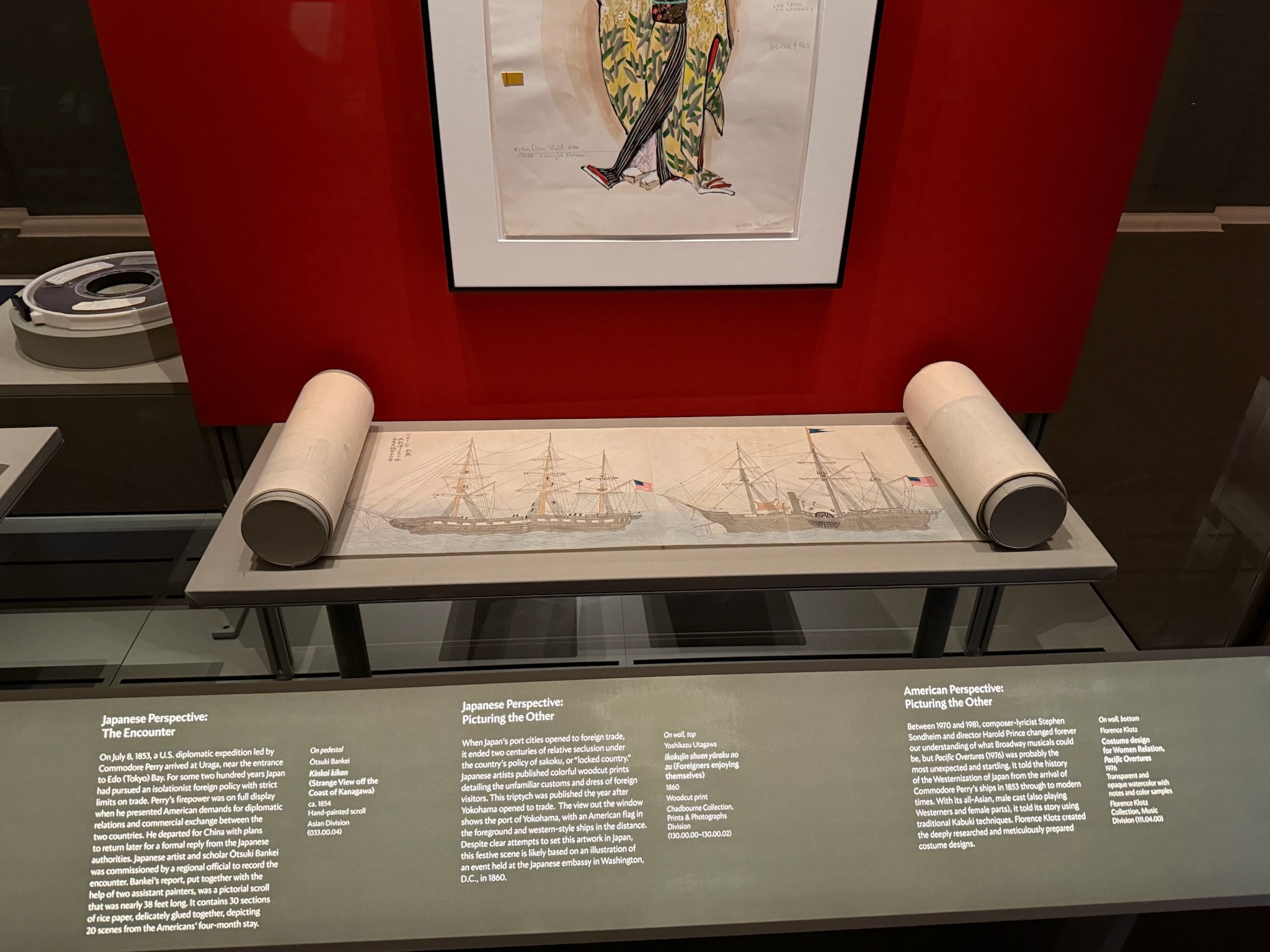
The main focus, though, was on personal narratives. There was some beautiful art that people made reflecting their own life story. There were books, including the book below written by the Japanese describing their encounter with American Commodore Perry, who sailed into Japan in 1853 demanding that Japan open trade with the U.S. And there were a lot of audio recordings where we could listen to people recounting their personal stories.
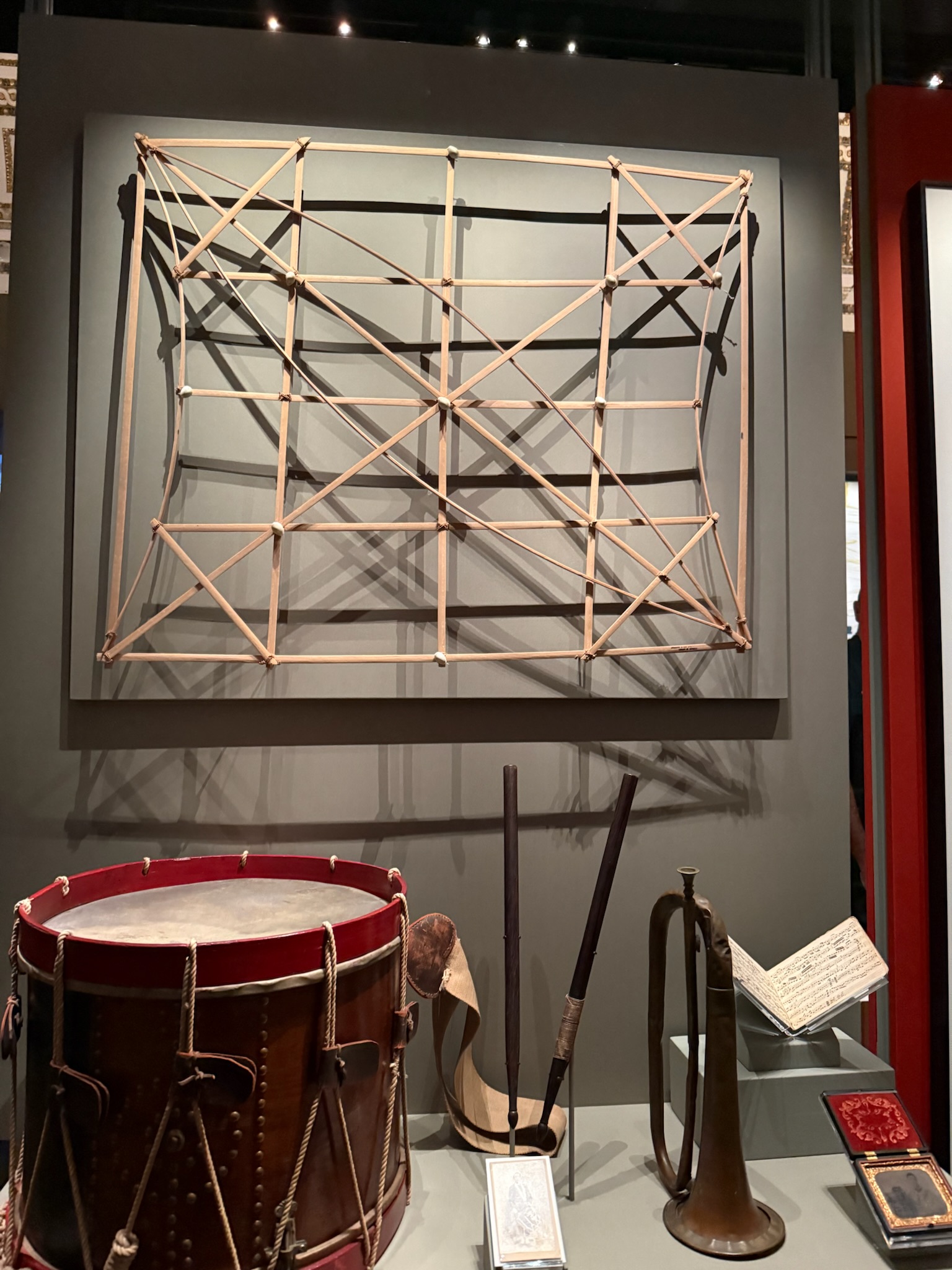
One item that Christi found interesting in the audio-via-music section was that in the Civil War, the Union army communicated through music. Commands would be given via drum and bugle; soldiers had to memorize the music as cues to their maneuvers.
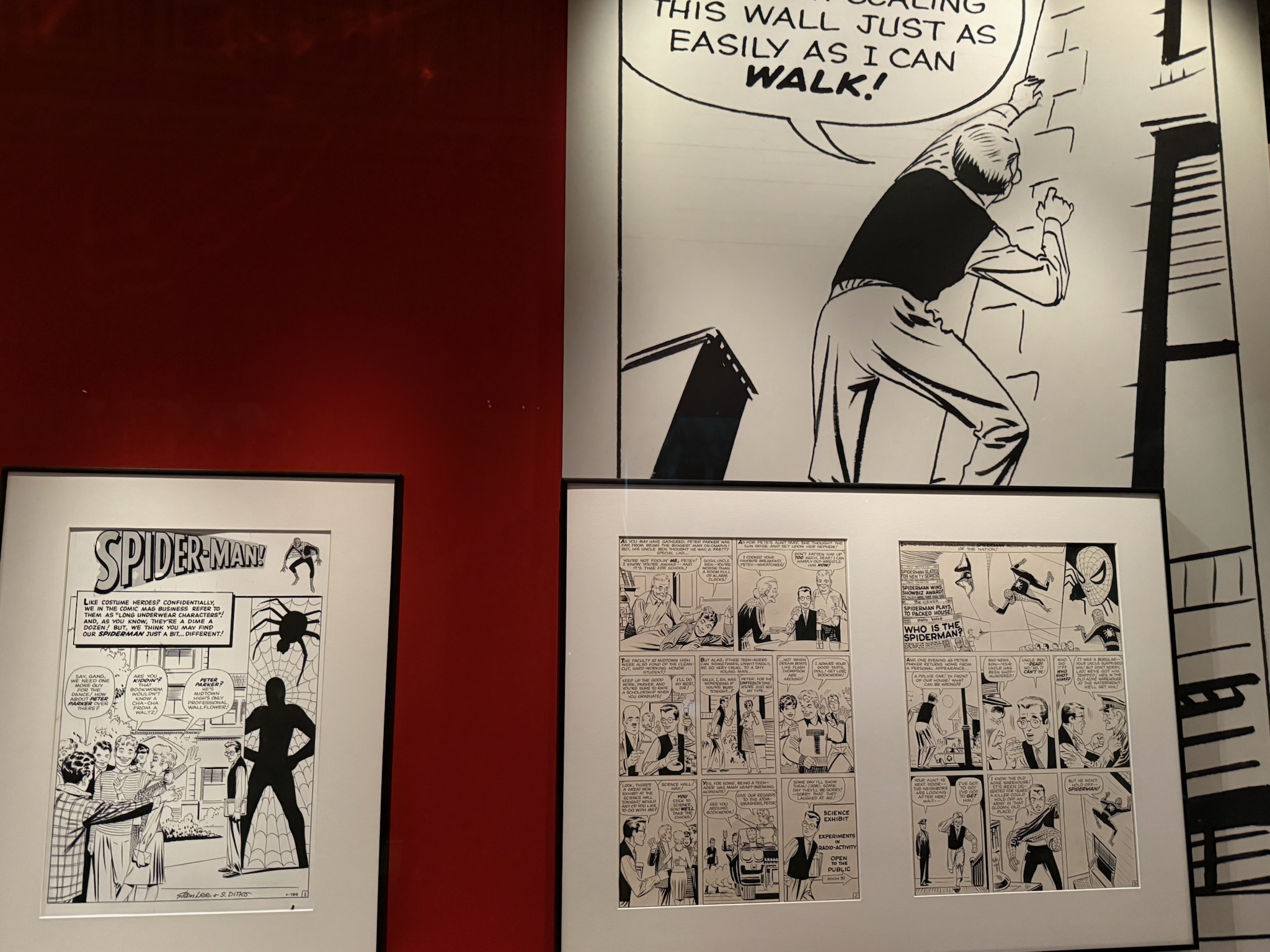
There was a display of the original drawings from the first Spider Man comic book. We have no idea why it was there, as it didn’t fit the theme. Maybe because Spider Man was culturally iconic?
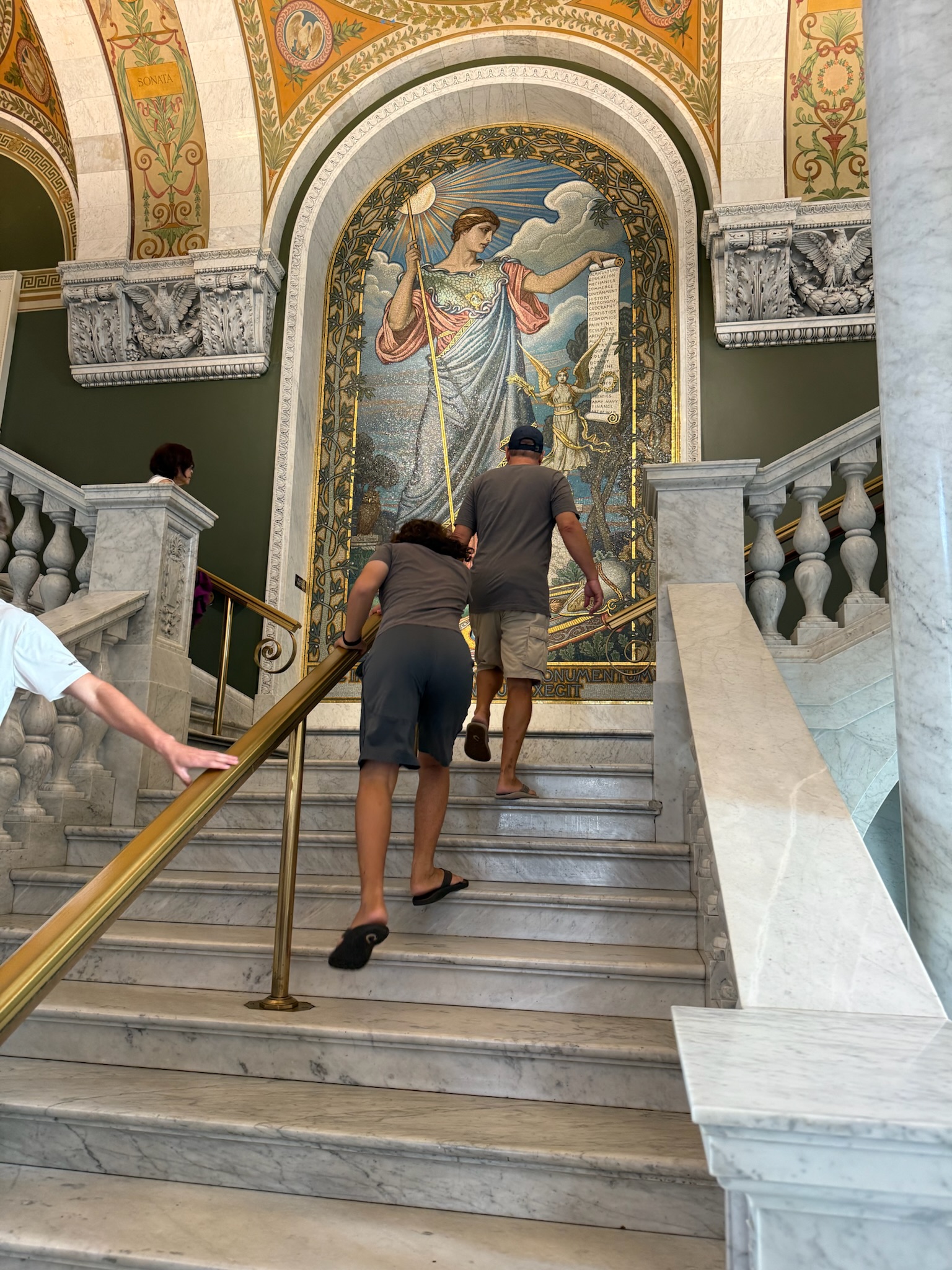
Our last stop in the Library of Congress was up the stairs to the top floor, which had an observation area where we could look down into the Main Reading Room. This mosaic of Minerva was in the stairwell. It was apparently made of glass and gold.
At the top of the stairs, we found ourselves on a small balcony with a couple of the large statues.
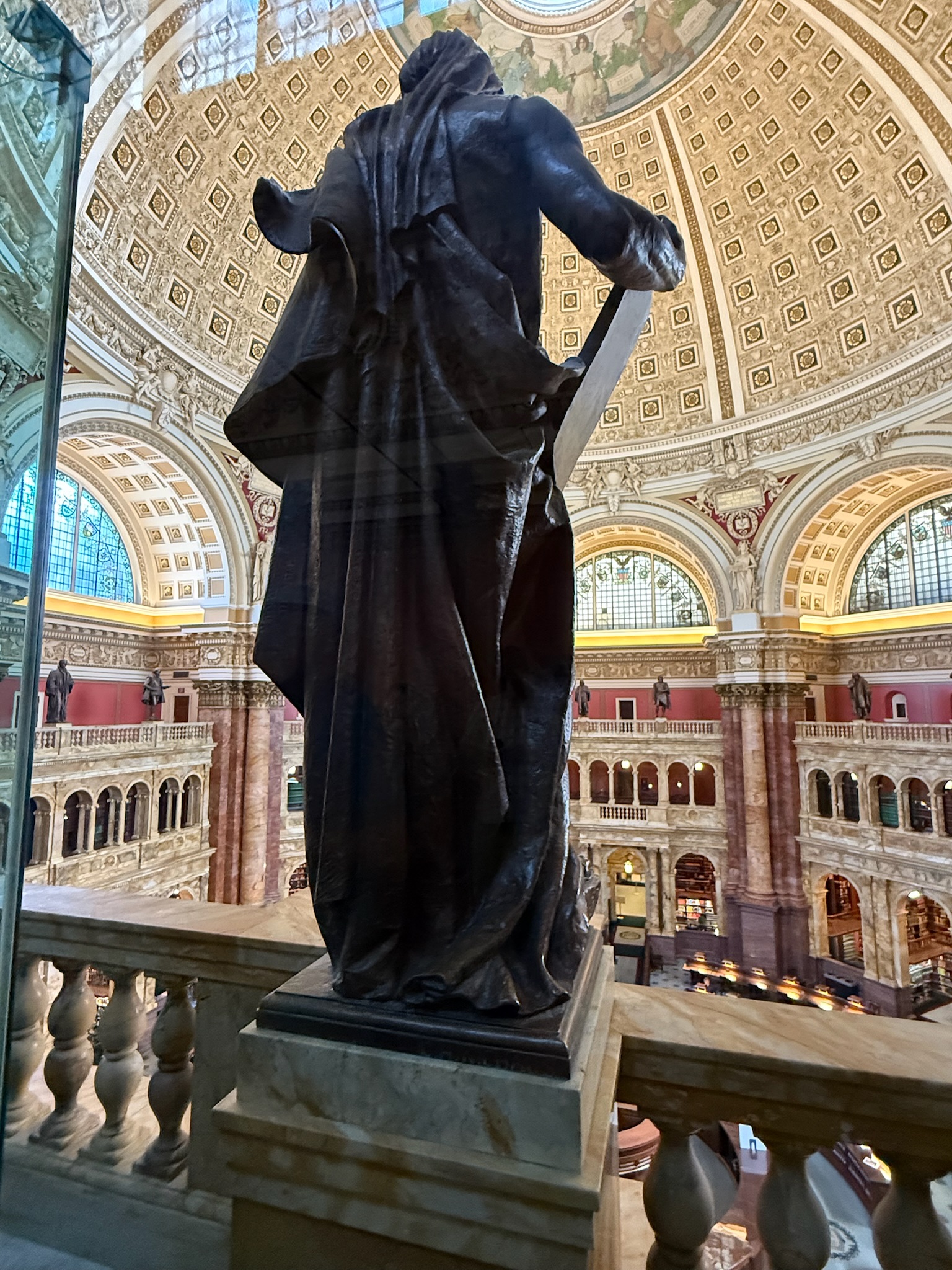
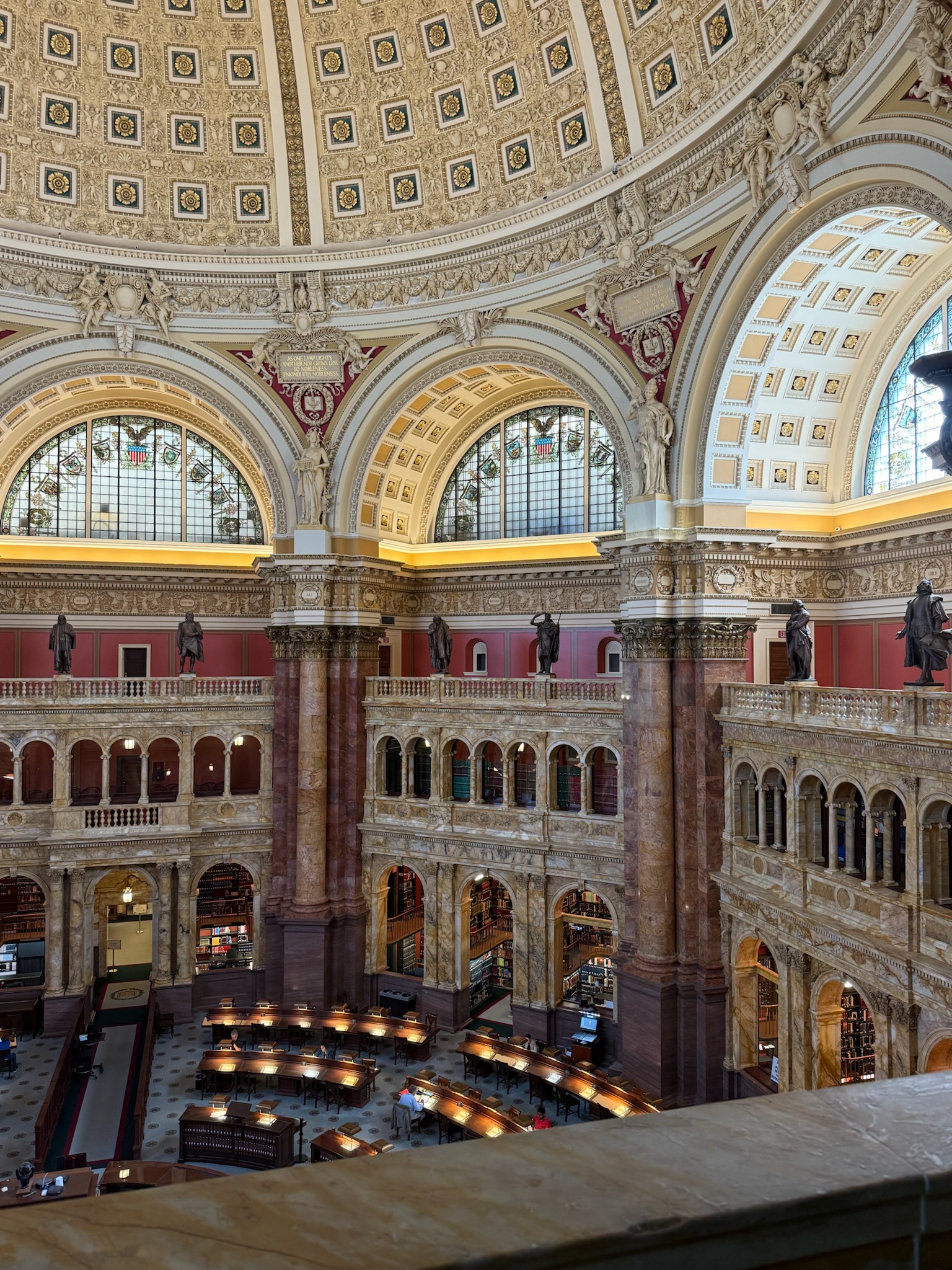
Between the statues, we had a good view of the room below.
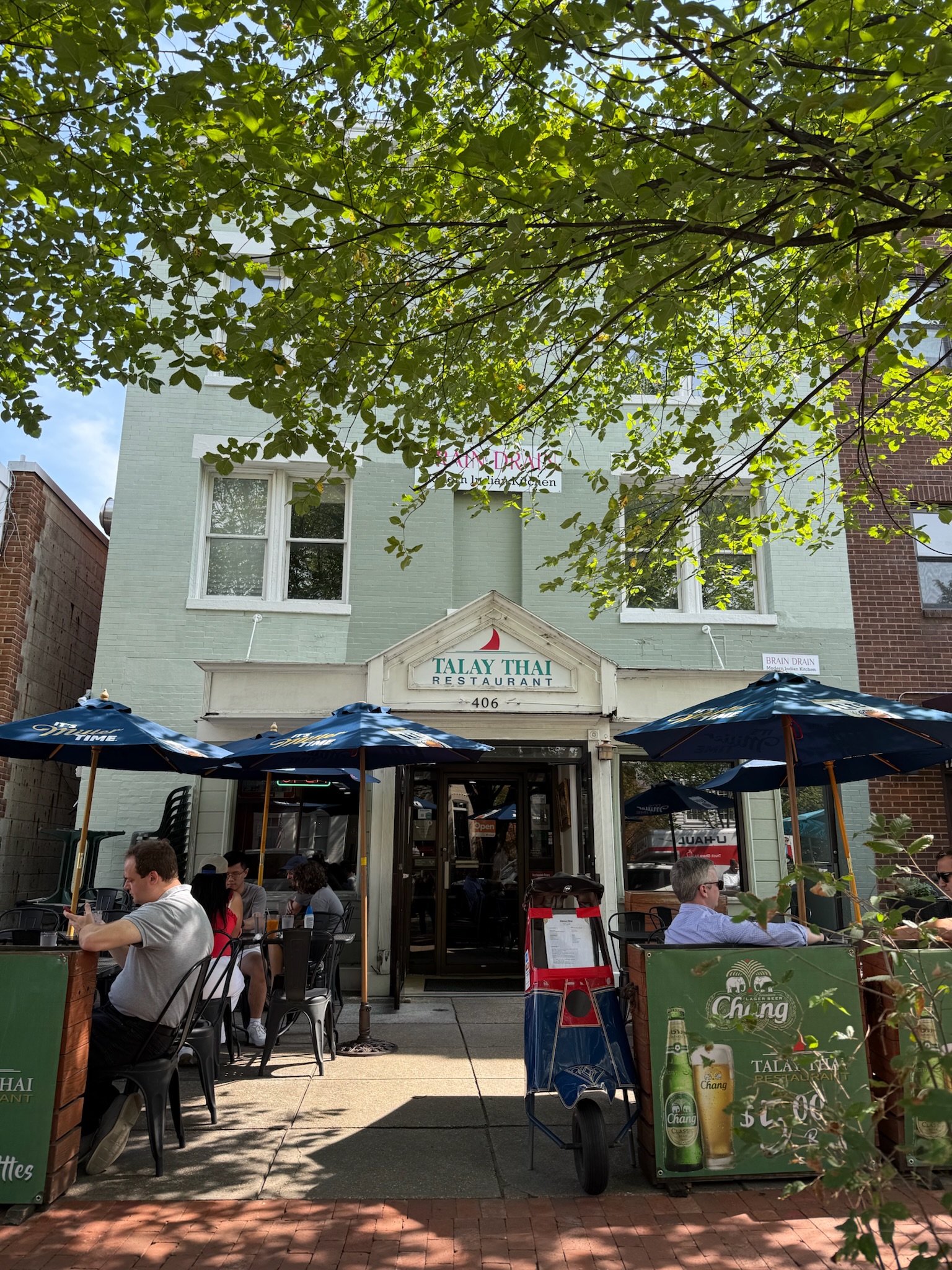
When we were done, we decided to get lunch before heading back to The Wharf. We found a small Thai restaurant near the subway station entrance. The food was good and reasonably priced.
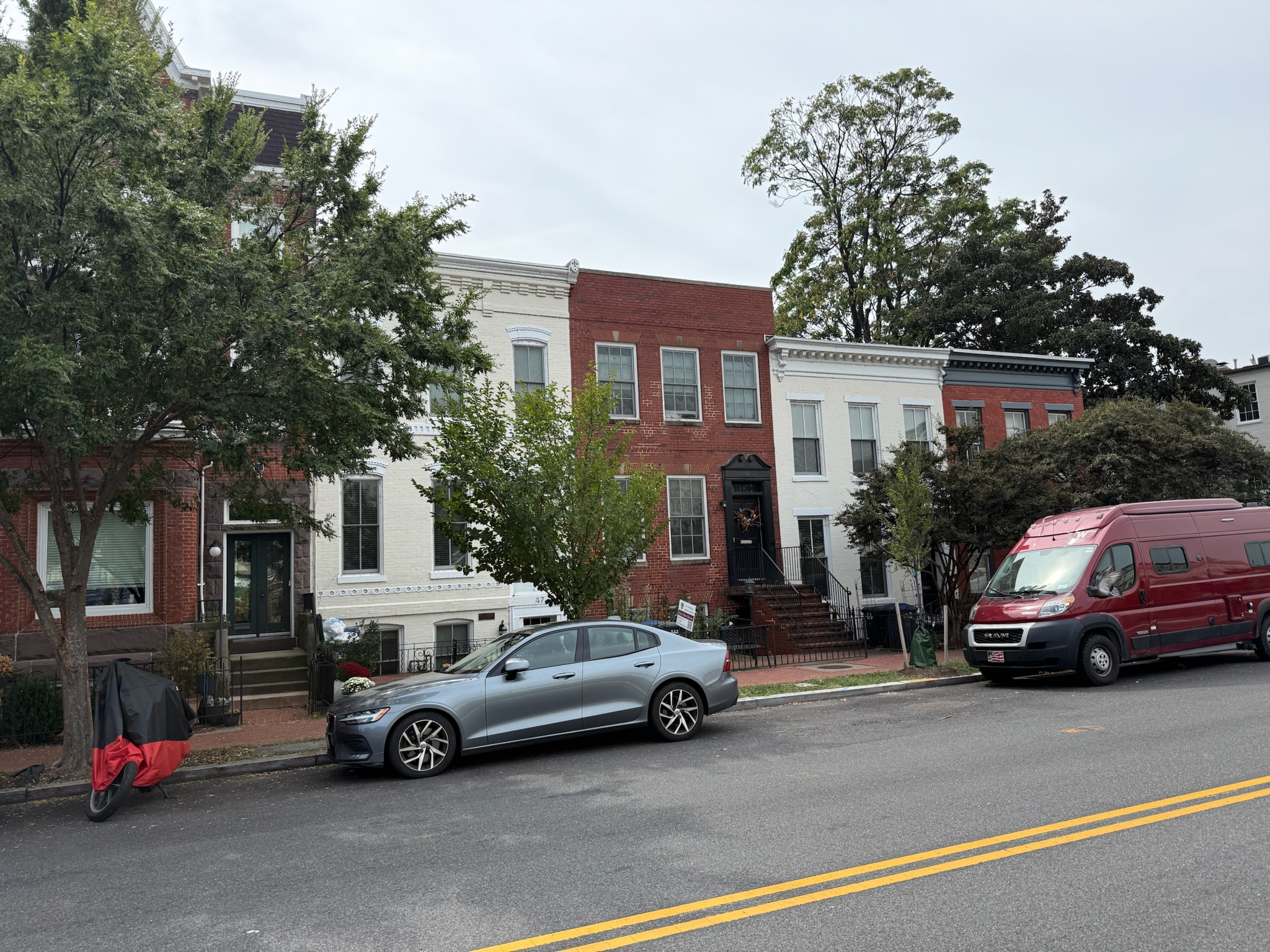
The neighborhood felt a bit like Baltimore.
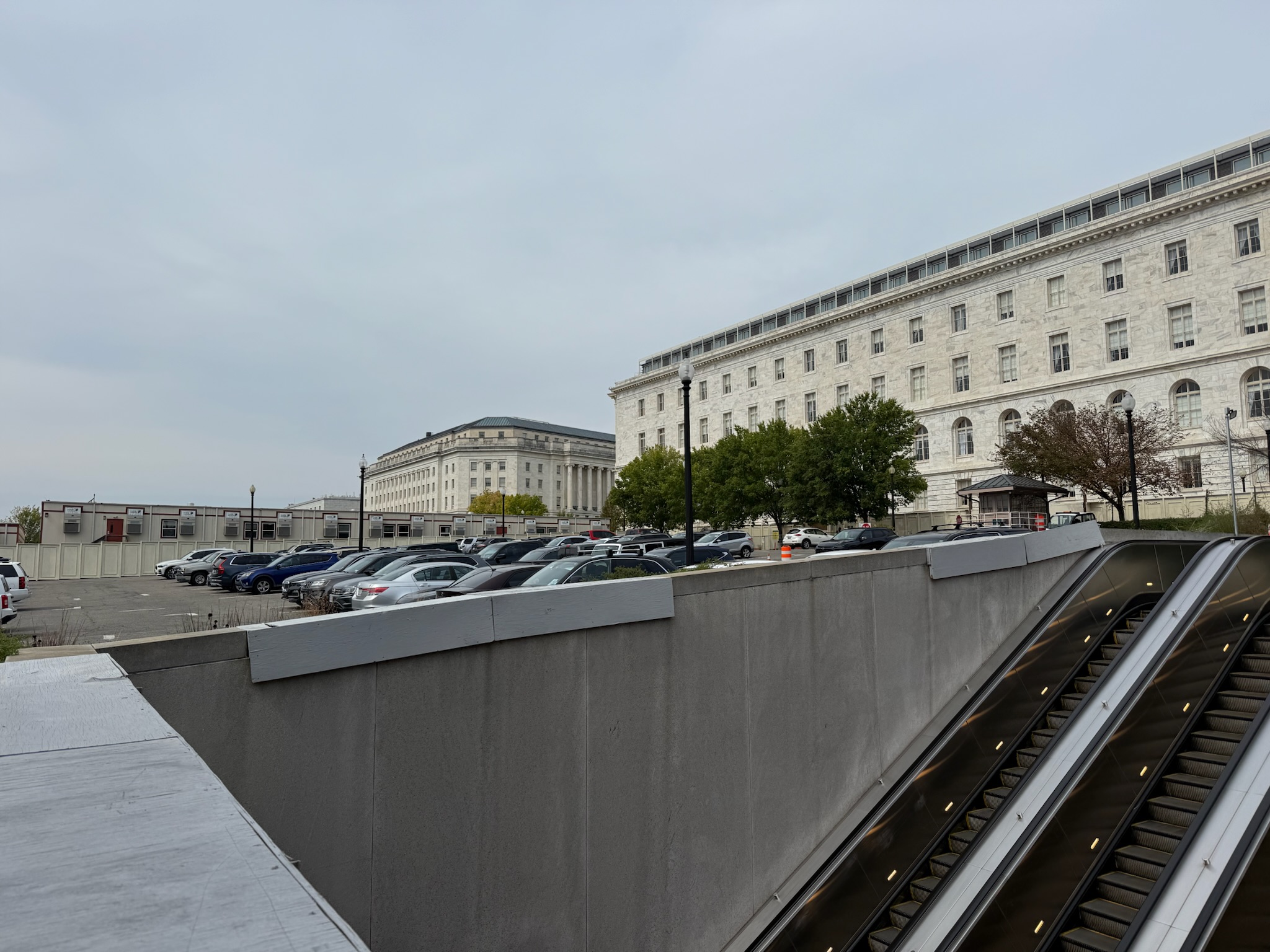
Here was a shot of the subway station, tucked between the imposing Canon federal office building and the neighborhood.
The ride back to L’Enfant Plaza was uneventful. When we got off the train, we left via the closest exit, which was not where we’d entered from. At first we wandered a bit, trying to find the shuttle stop, but eventually we realized it would be faster and easier to just walk back to The Wharf. Apparently, like the Department of Energy building, L’Enfant Plaza is also built over a road.
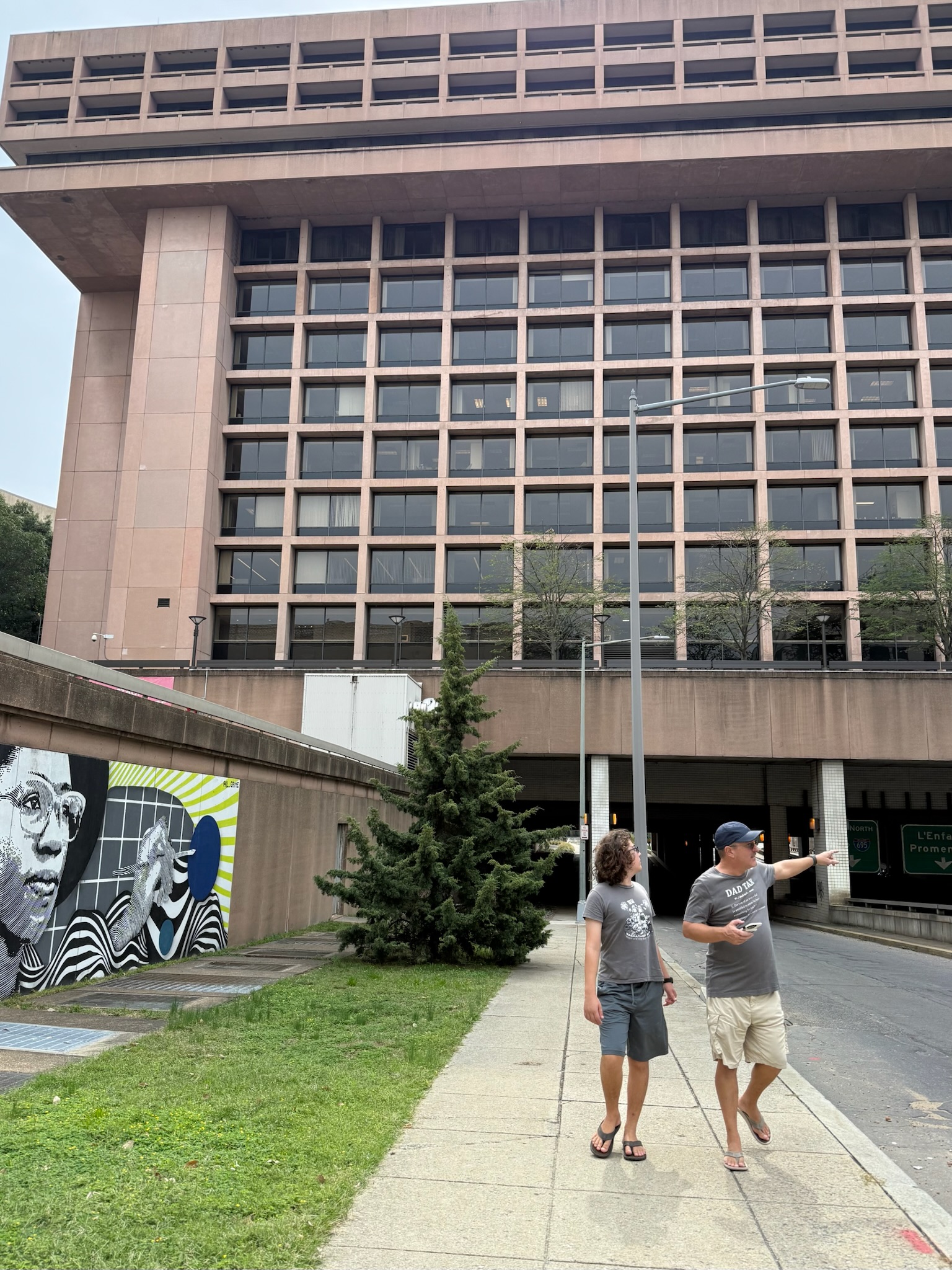
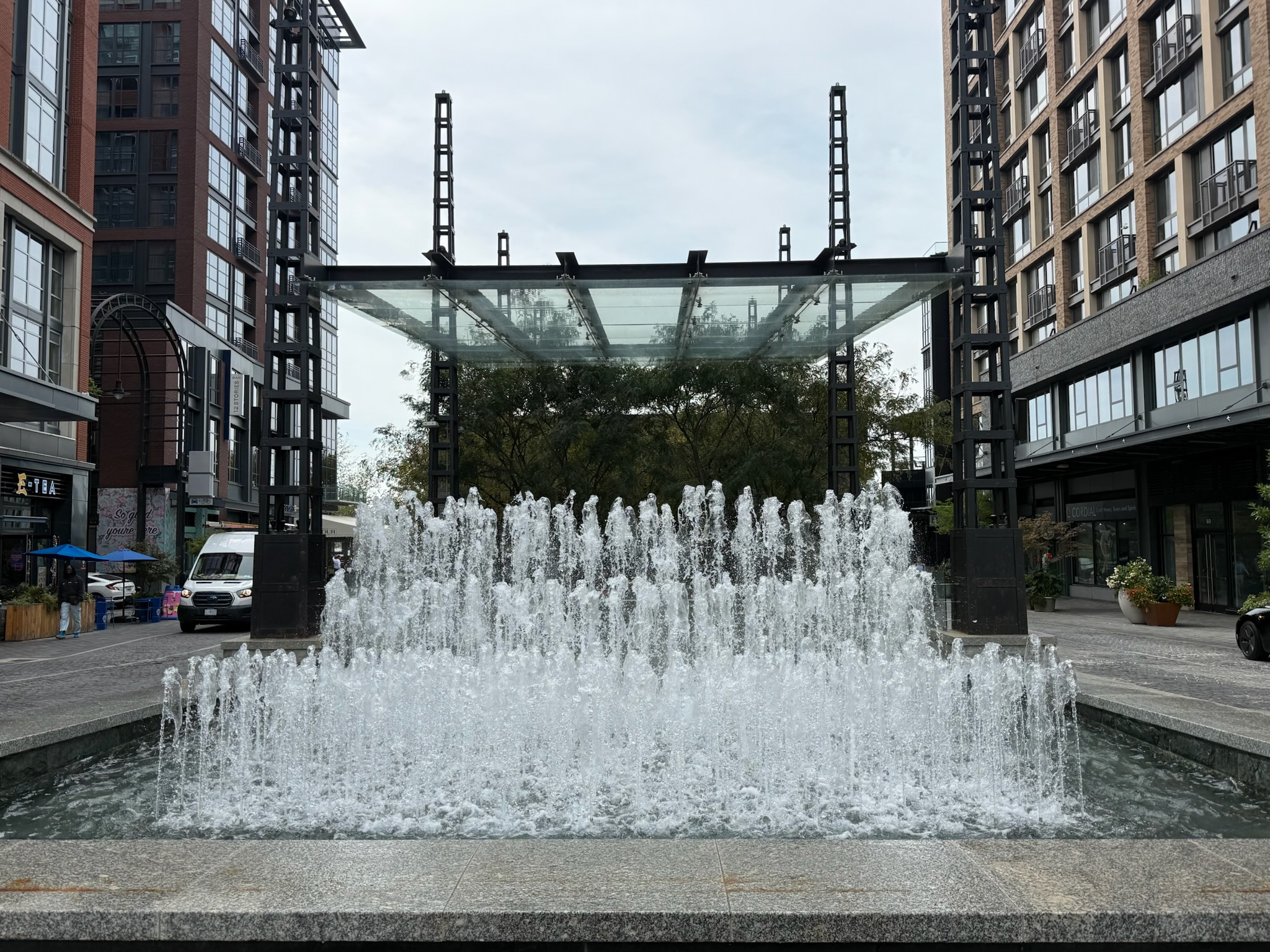
In retrospect, we think we probably walked more today by taking the subway than we would have had we taken the shuttle to the National Mall. Back at Th Wharf, the fountain next to Surfside Cafe was more active than we’d normally seen it.
In the evening, it rained a little. Christi was tired and rested onboard. Eric and Keith played D & D with Blue Heeler. Afterwards, they got pizza at an Italian restaurant in The Wharf complex. Then they had chimney cake cones for dessert.