Wednesday, Sept 24 – Dawn in the marina
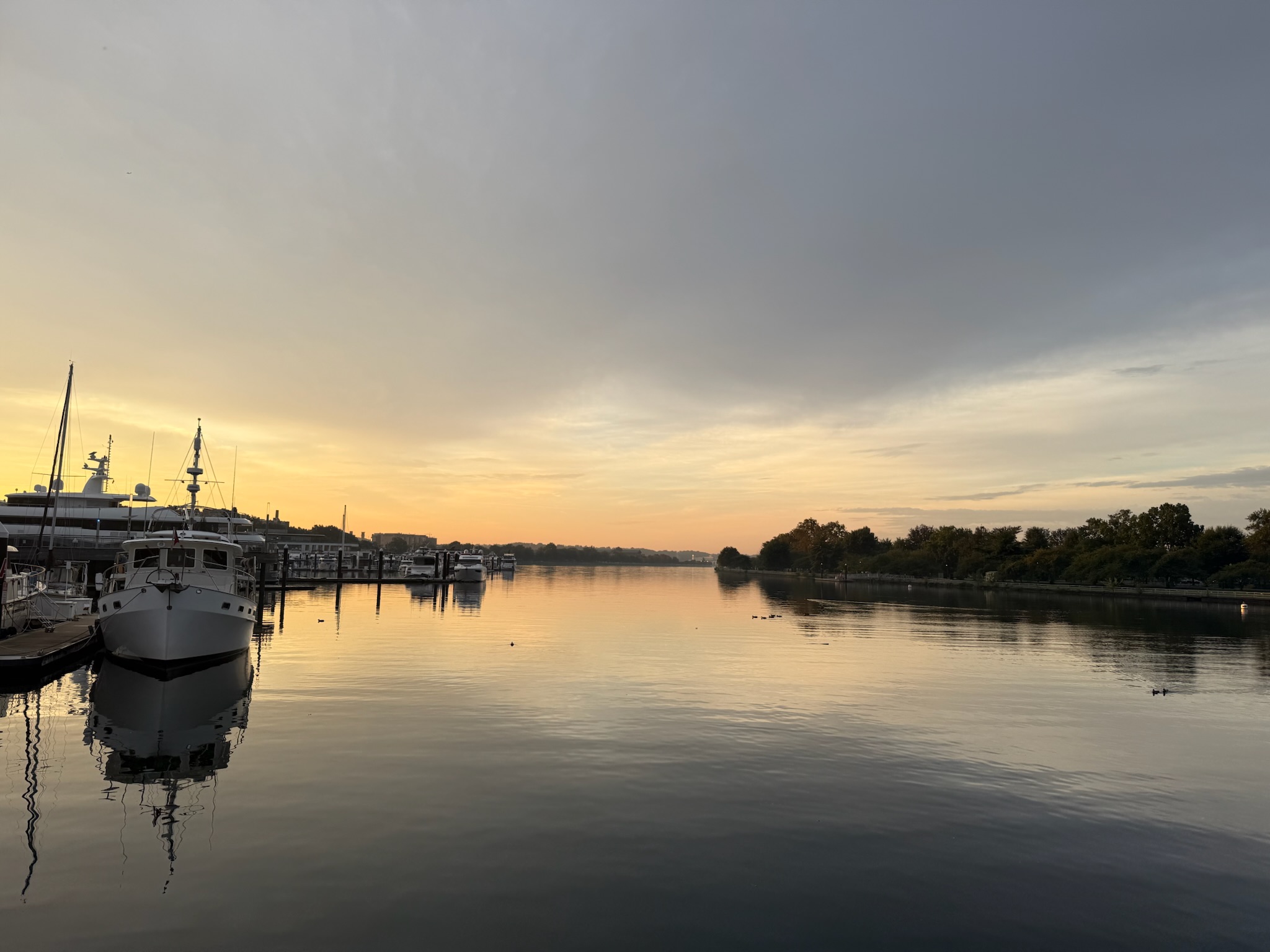
Yesterday, the marina had told us another boat was coming in on Friday that needed our end-tie, and that we needed to move prior to their arrival. Since it was such a calm morning, the first thing we did was move to another slip. All went smoothly with that, and interestingly enough, the power worked fine and we didn’t need the isolation transformer.
Our big outing of the day was the National Postal Museum. It was 2.3 miles away, located a little bit north of the Capital building. According to Apple Maps, if we took the Metro, it would cost $6.75 each way for the three of us, we’d need to change lines, and the total transit was estimated to take 35-minutes. Eric checked the ride-share app and found that it would cost $9.00 and take 20-minutes to be delivered door to door. We opted for the ride-share. We waited for the driver at the fountain by Surfside taco, which had a traffic light and a small U shaped road that made it an easy location for the driver to pick us up.

While in the car, the driver suggested that after we finished at the museum, we should go across the street to Union Station. He said that even if we took another ride share back to the marina instead of the Metro, that the station was an “experience worth seeing.” He dropped us off at the Massachusetts Ave. East entrance, which was the south side of the building.
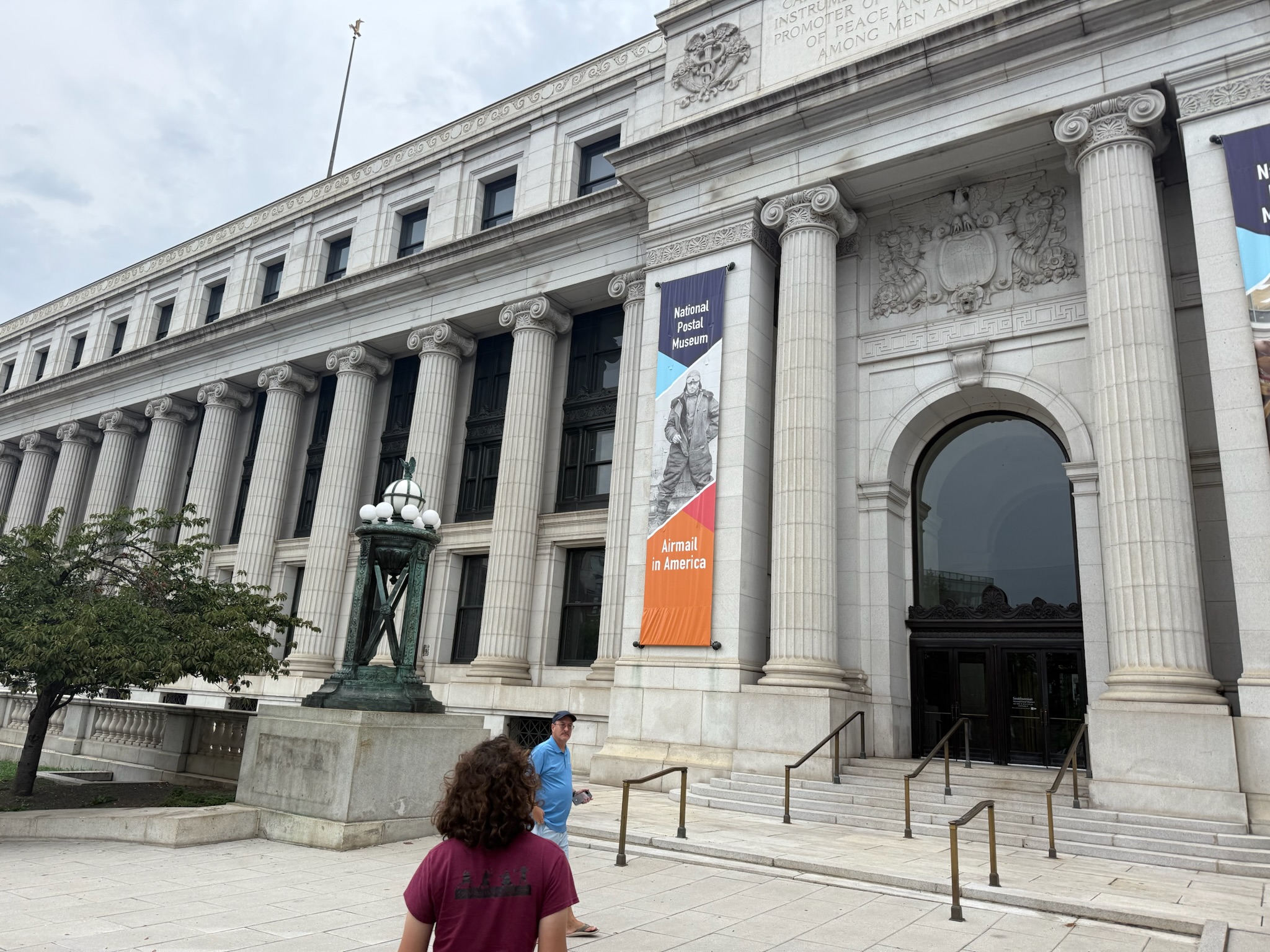
The National Postal Museum was a beautiful Neo-classical building.
It was beautiful inside, too.
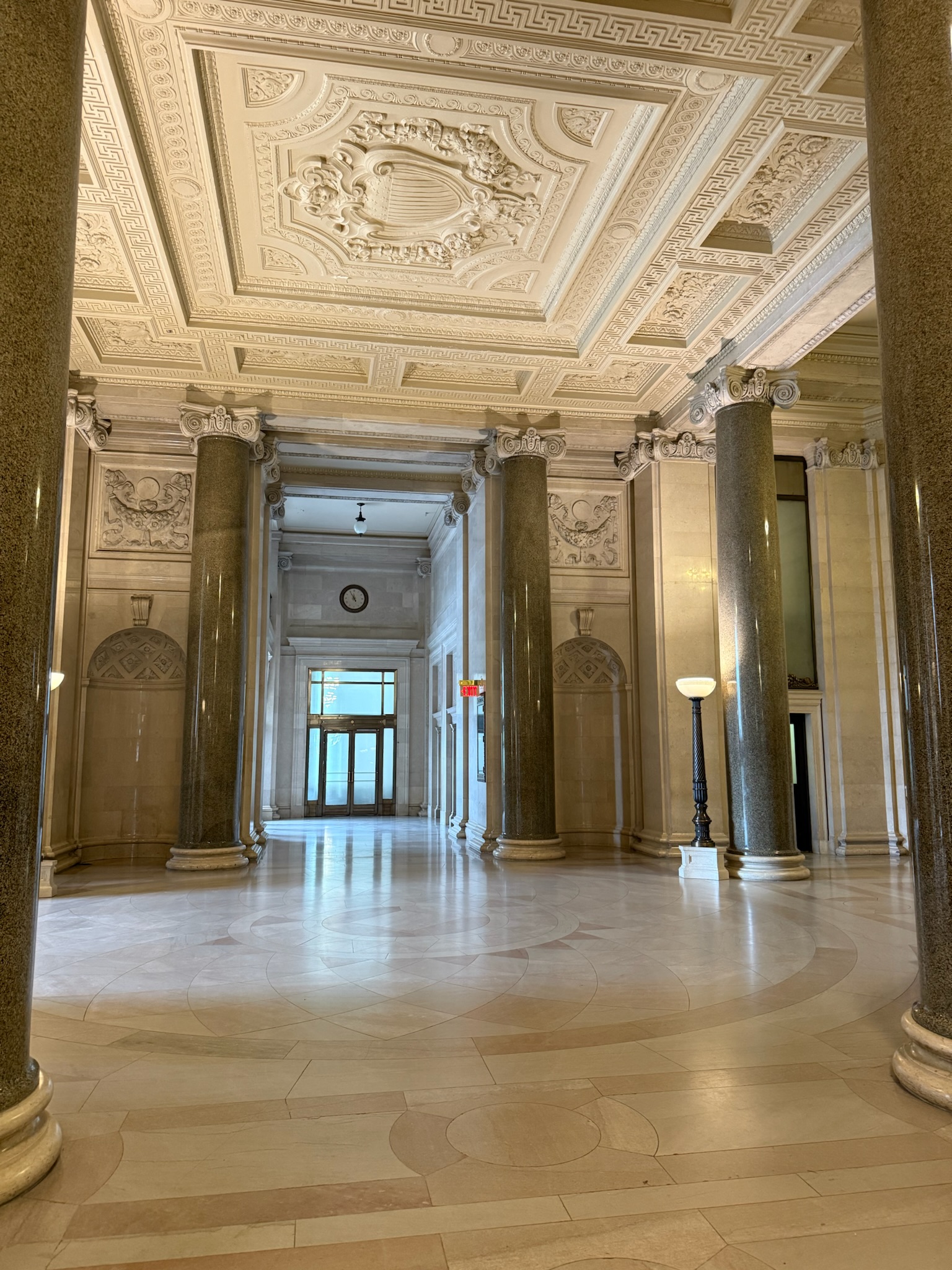
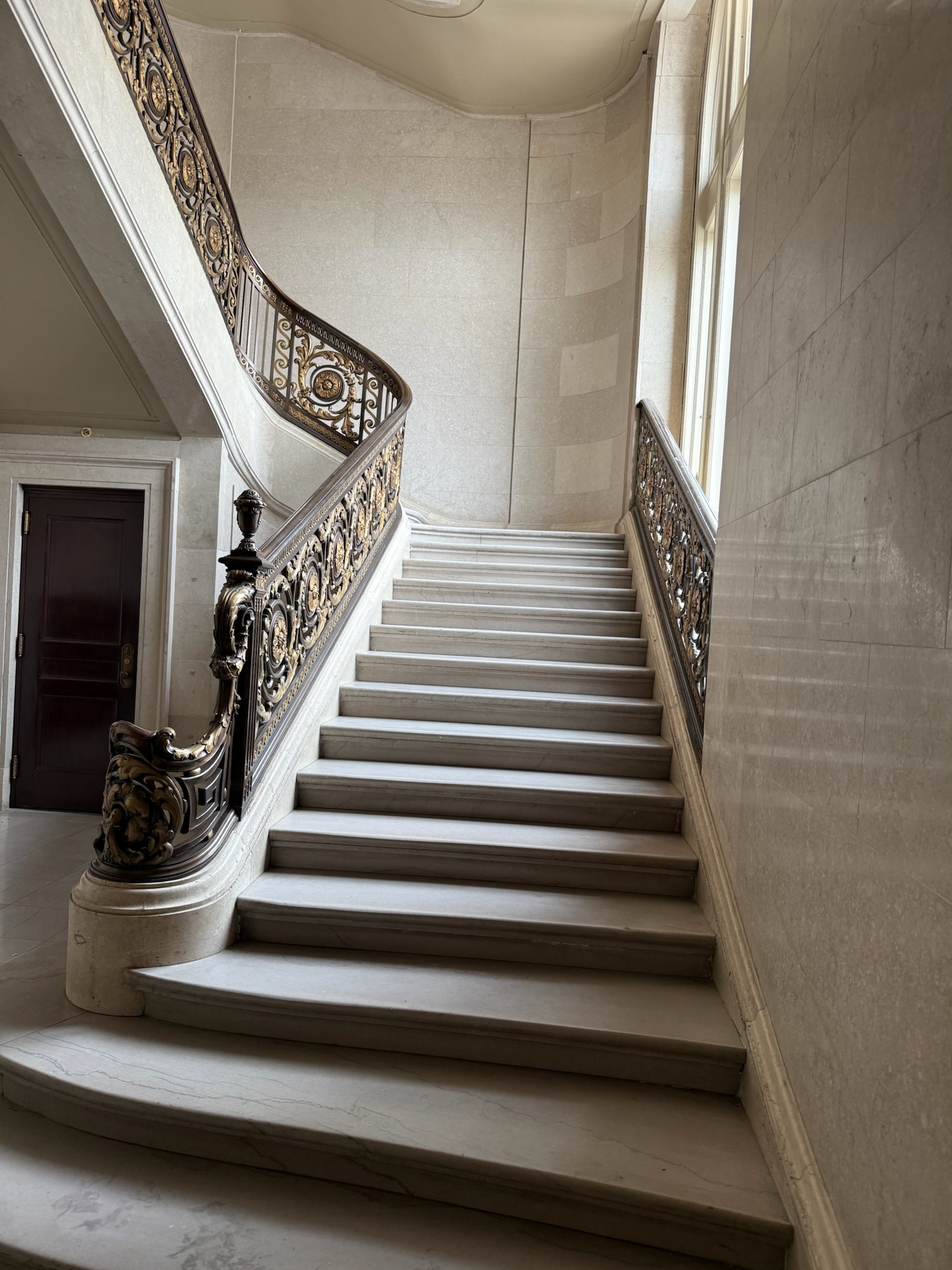
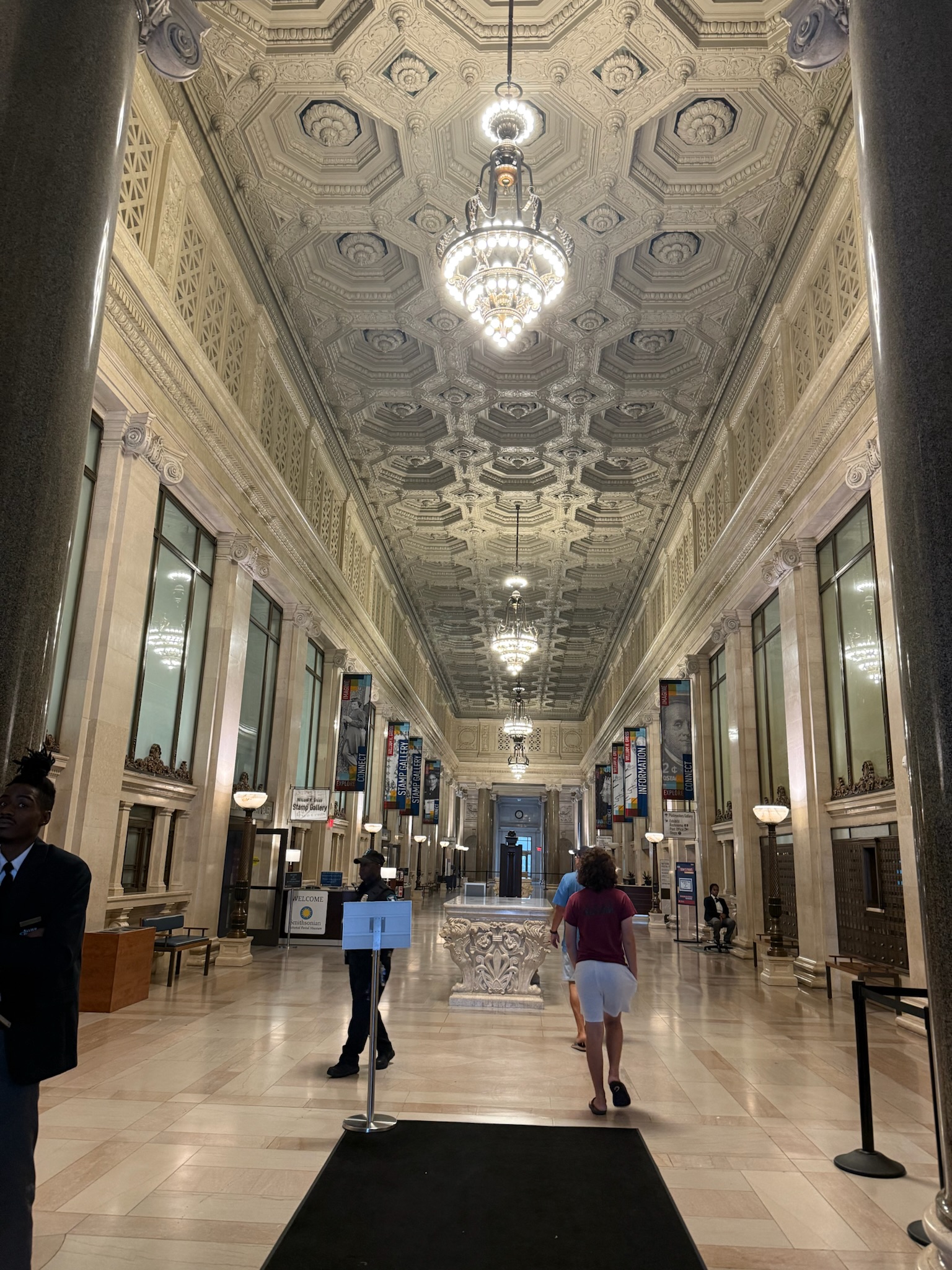
It was originally built as the main post office for Washington DC. Construction began in 1911 and it opened in 1914. It was intentionally put next door to the main train station because back then most mail was transported via trains. The same architect designed both the train station and post office so that they would compliment one another.
In 1935, as part of the FDR’s New Deal to create jobs, the building was expanded. From 1957 – 1959, it was modernized. In 1971, it was modernized again, but this time, they covered up the beautiful original architecture with drop ceilings and formica countertops. In 1986, they built a big processing plant two-miles north. A regular post office was opened on the first floor. In 1989, they began restoring the building back to its original glory in order to be used as a museum. The museum opened in 1993.
Since it was one of the Smithsonian Museums, it was free to get in. The signs indicated that Level 2 seemed to focus on stamps and Level 1 on mail service. We went down the escalator to Level 1. Back in the day, this floor had been the mail sorting center for local deliveries. The large central area was loaded with an assortment of vehicles that had once been used to transport mail.
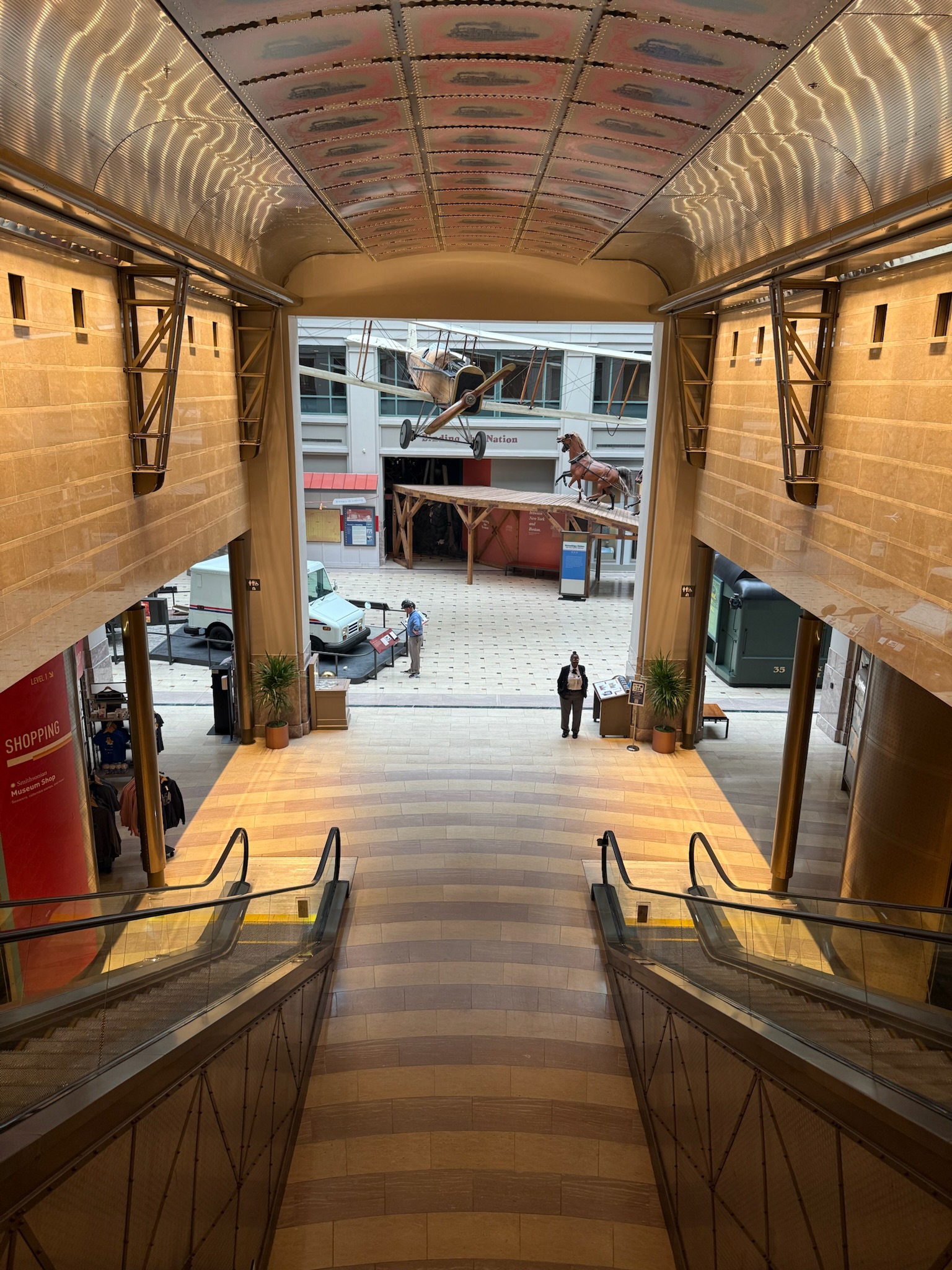
We started with the delivery trucks. From 1899 – 1906, postmasters in several cities started using horseless carriages to deliver mail. These amazing vehicles could move more mail at faster speeds. In 1906, the Post Office Department started using Columbian Marks to deliver mail. Since few people knew how to drive back then, the drivers were contractors who drove the postal workers to the beginning of their foot route and drove the mail to distribution boxes along the routes. After serious issues with reckless driving, in 1914, the Post Office Department created the Motor Vehicle Service and started hiring their own drivers and mechanics.
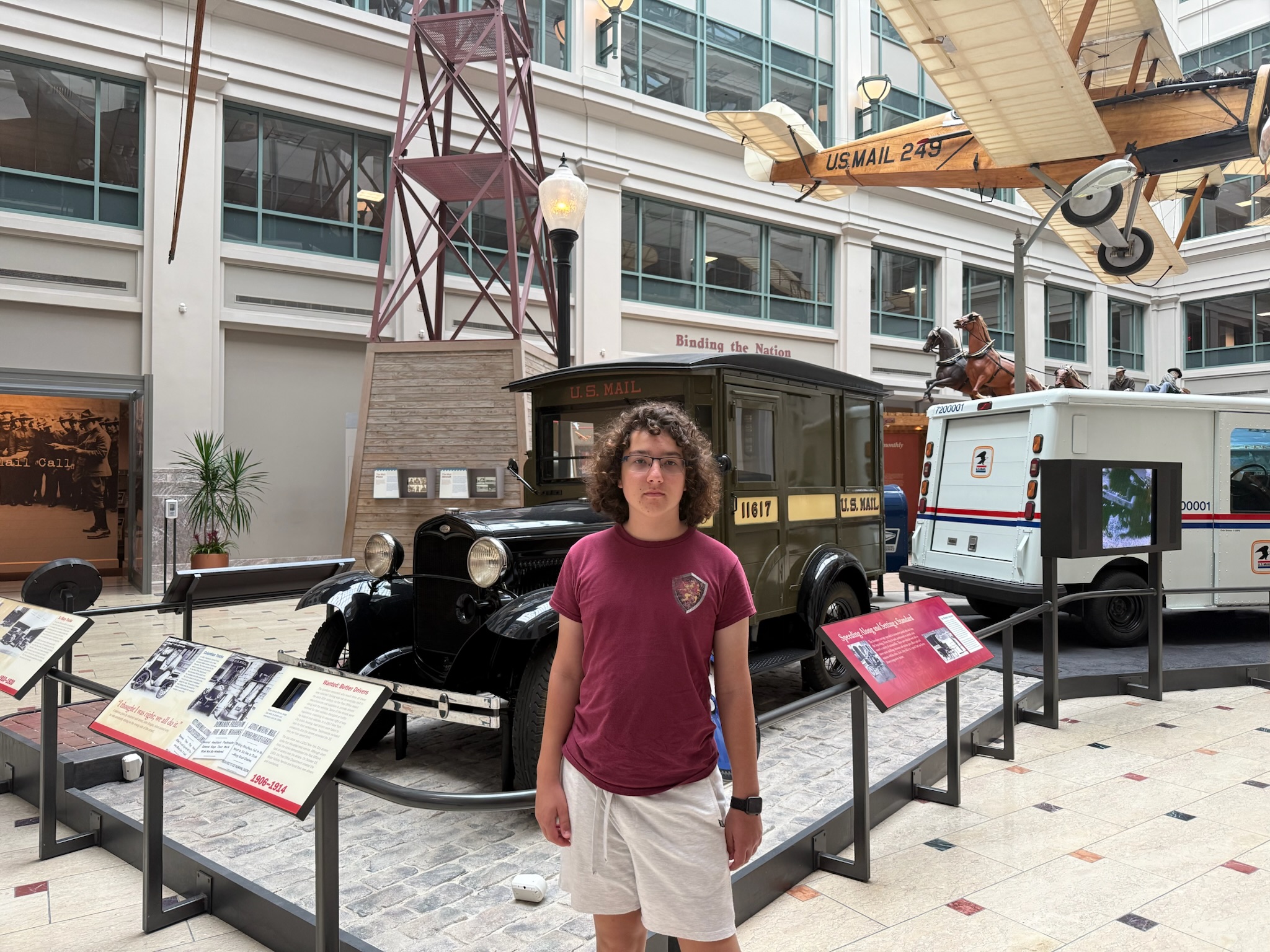
After World War I ended in 1918, the U.S. military gave surplus trucks, motorcycles and airplanes to the Post Office Department. By 1920, the Post Office Department controlled the largest fleet of civilian vehicles in the world. They had over 4,000 trucks, with 43 different models from 23 different manufacturers. The cost to maintain parts and train the mechanics was draining the postal budget. Officials realized they needed to standardize the postal fleet and began to only purchase vehicles made by Ford, Commerce, or White Motor Company.
During the Great Depression and during World War II, the Post Office was not allowed to purchase any vehicles. Skilled mechanics kept the vehicles on the road for many years longer than they should have been.
After World War II ended in 1945, they were authorized to buy 3,247 new trucks. Meanwhile, the post-war boom had led to a big increase in postal mail. The growing suburban sprawl made it harder to deliver the mail. The carriers walked their route, picking up mail to be delivered from distribution boxes along the route. The carriers simply could not keep up with so much mail to be delivered over such long distances. Around 1950, the Post Office realized the solution was to allow the postal carriers to drive themselves and the mail along the routes. This meant the Post Office needed to purchase vehicles appropriate for the carriers to drive. In the early 50s, they experimented with a few types of vehicles and configurations of vehicles. The winner was Willy Jeeps with the driver on the right hand side. They purchased the first Willy Jeep in 1953 and continued to purchase these vehicles until 1986.
In the early 1980s, it was time to upgrade the fleet again. This time, they had vehicles custom-made for them by Grumman Corporation. They began incorporating these Long Life Vehicle, or LLVs, into the fleet in 1986. After the “Collecting Memories” exhibit yesterday, we were feeling attuned to important cultural icons embedded in a culture’s memory — and In our opinion, the LLVs were probably one of the most iconic parts of American culture. Even though they were being phased out, there were still a ton of LLVs on the road.
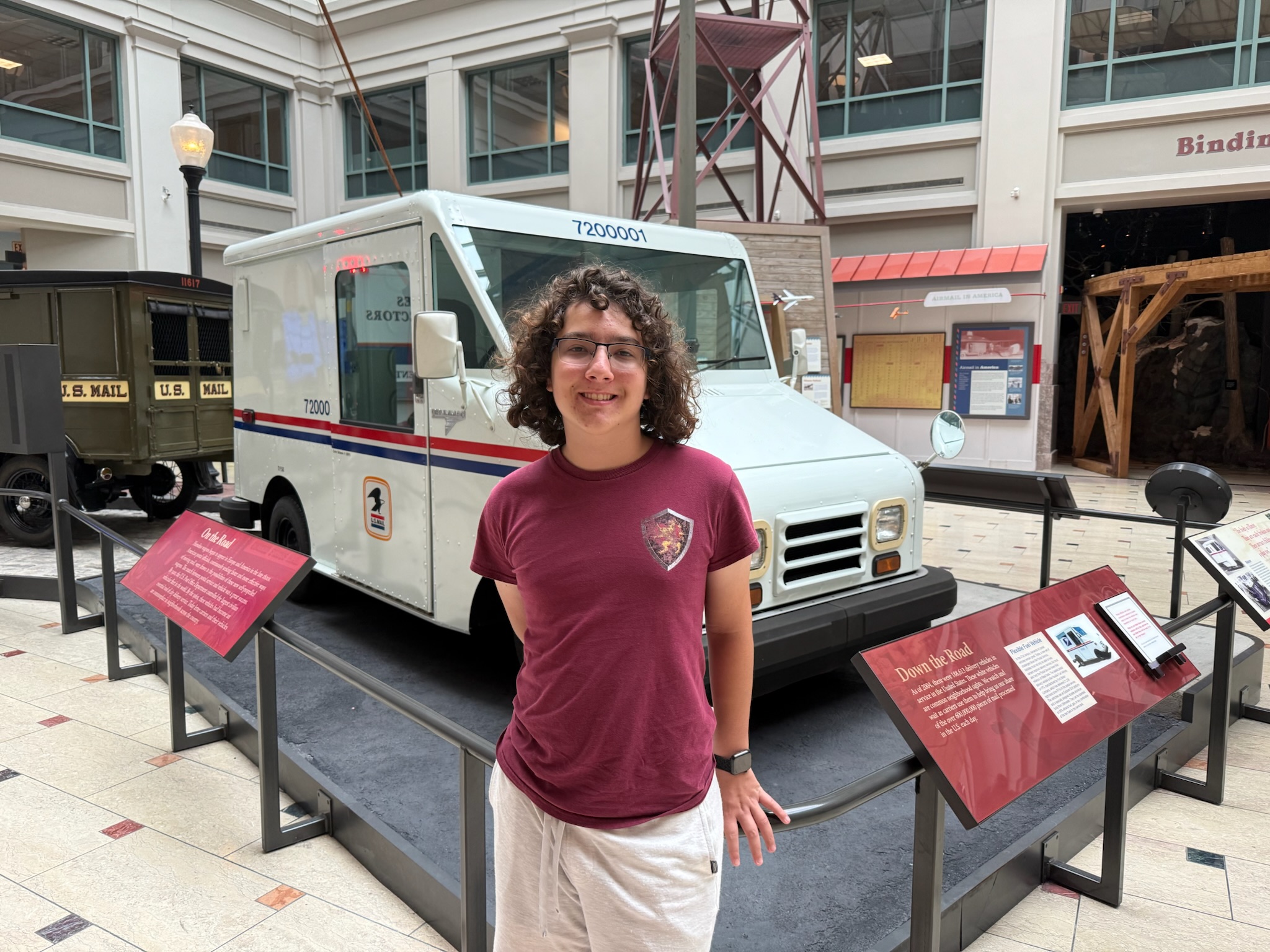
Per the signs, the latest postal delivery vehicle is the Ford Flexible Fuel Vehicle (FFV), which can run on 85% ethanol or gasoline or a combination of both mixed together. The exhibit must be old, because in 2023, the post office announced it was going to transition to an all-electric fleet. They currently have 7,200 electric vehicles in service. This year there was a big drama over eliminating the electric postal vehicles as part of the Big Beautiful Bill, but in the end, the legislators left the postal vehicles alone.
As of 2004, there were 188,613 delivery vehicles in service in the U.S.
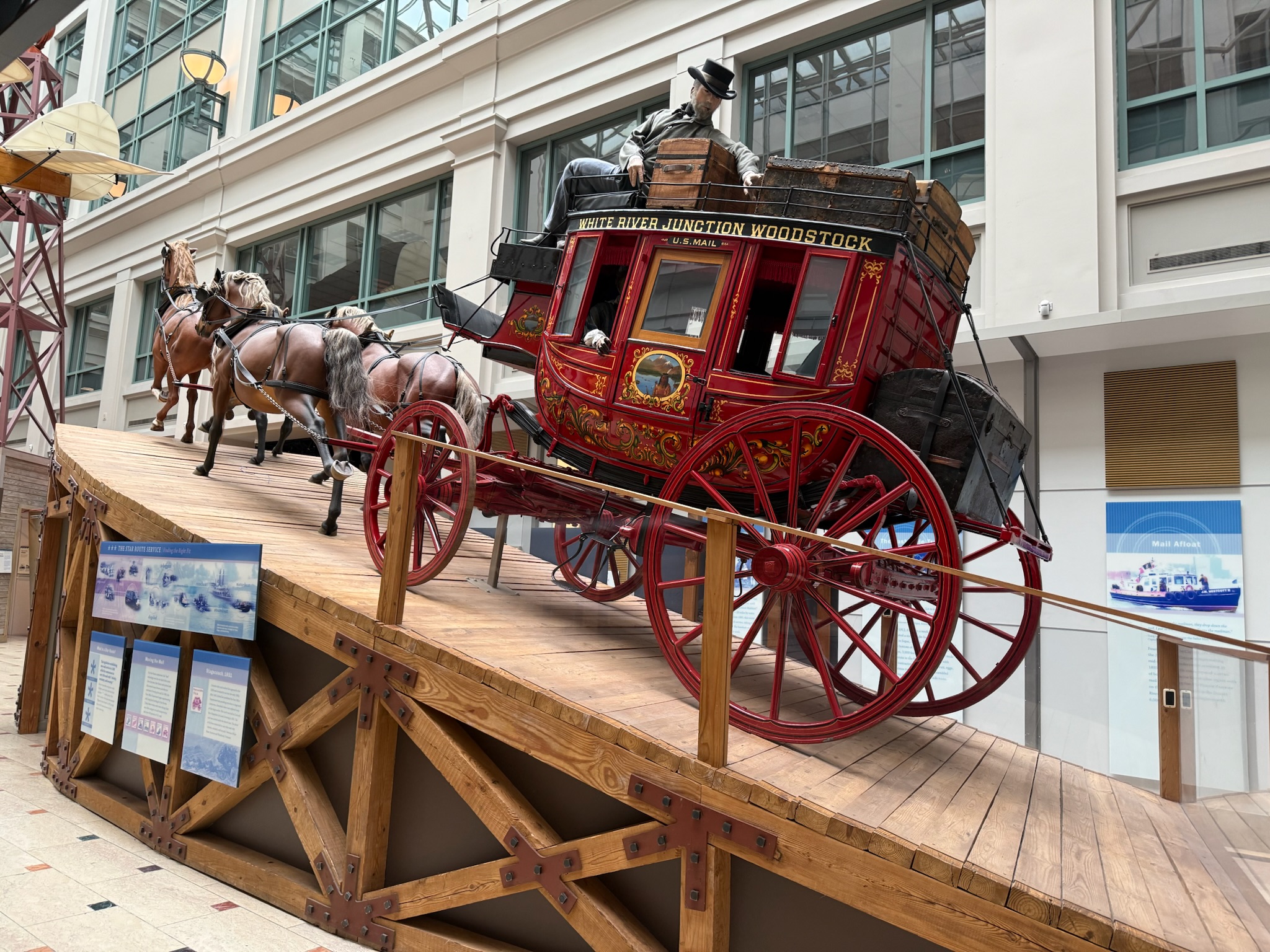
Of course, prior to the invention of automobiles, horses and horse-drawn carriages were used for overland deliveries. But since roads were often bad, ships would were preferred in areas with inland waterways.