continued… The next exhibit was about the building itself. As we had briefly mentioned earlier, the original structure was planned in 1791, construction started in 1793, and was completed in early 1800s… when the country had 16 states and 5.5-million people. By 1850, there were 32 states and the population had exploded to 23-million. Both the House and Senate had outgrown their chambers, so they decided to add grand extensions onto the original wings. The House moved into its new chambers in 1857, and the Senate moved into theirs in 1859. The old dome was replaced with the current dome as a part of this expansion project. By the beginning of the 20th century, the legislators ran out of space yet again. The first House and Senate office buildings were opened across the street in 1908 and 1909, respectively.
Fun fact: Originally, the name for the building was going to be Congress House, but then-Secretary of State Thomas Jefferson insisted on Capitol, wanting the gravitas of Ancient Rome’s Republic and its Capitoline Hill.
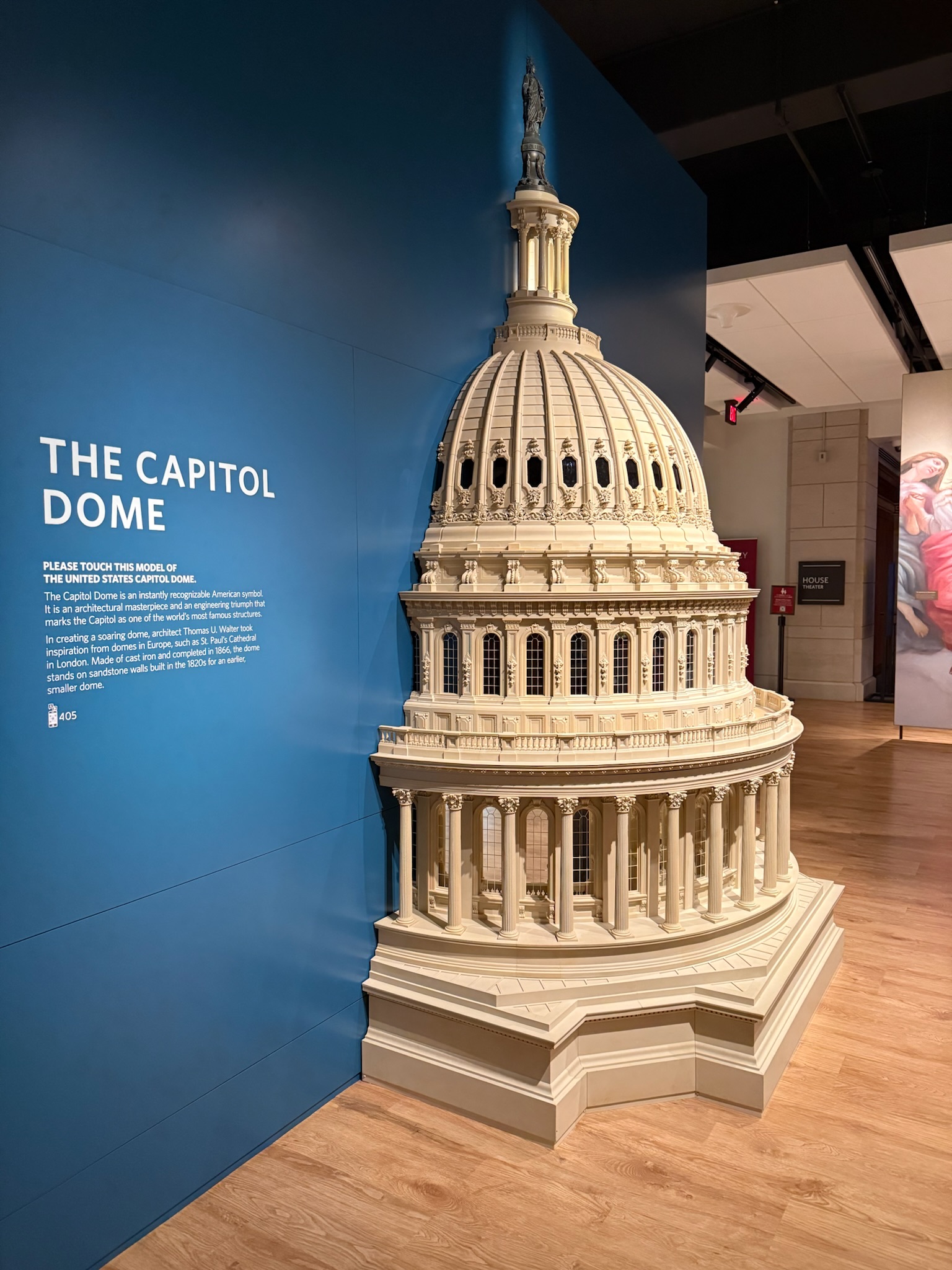
The display about the dome gave a lot of details about the structure. Architectural enthusiasts would probably find the display fascinating as it was something of an engineering feat. We found this model of the dome to be a clever and unique presentation format.
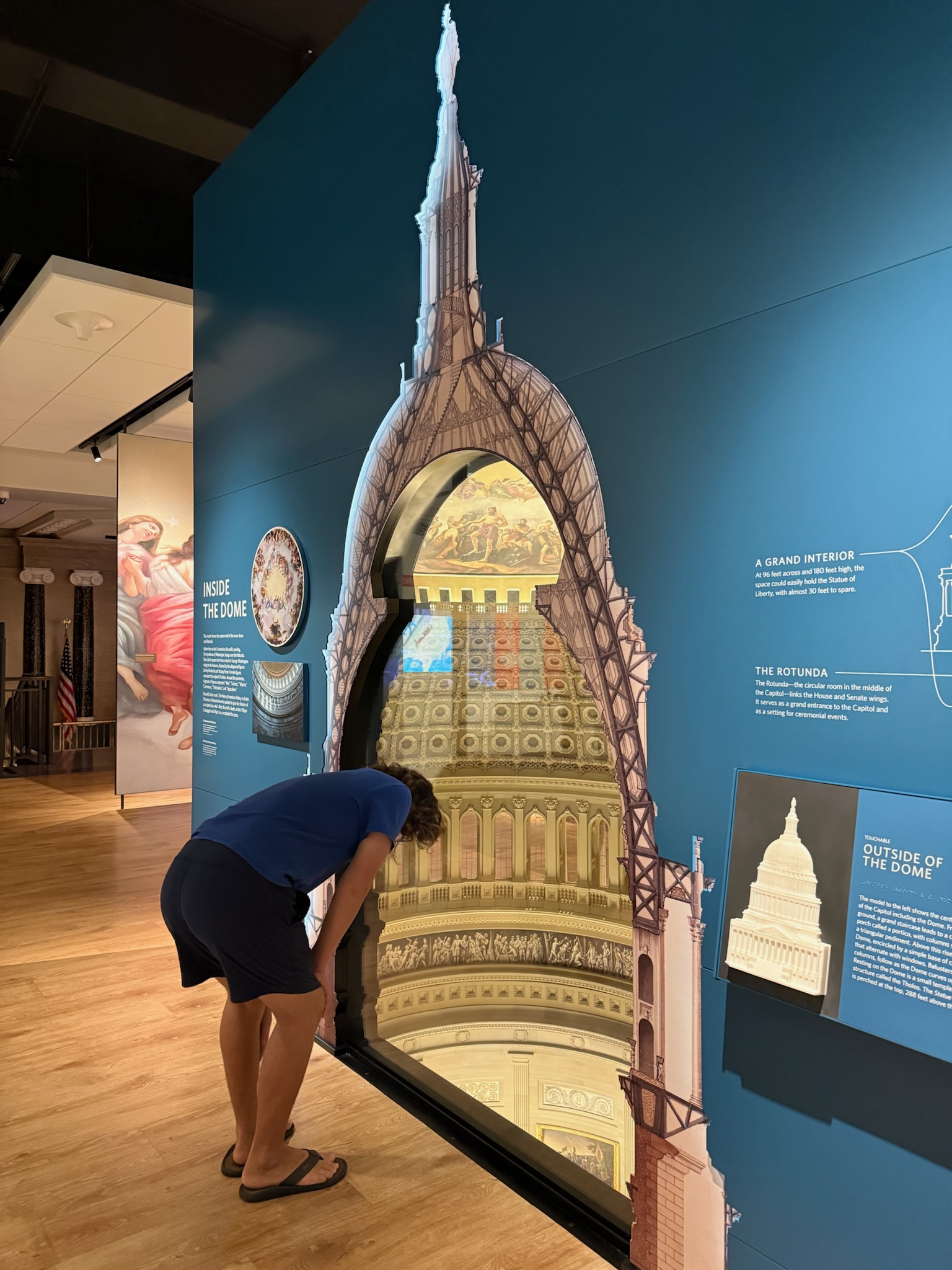
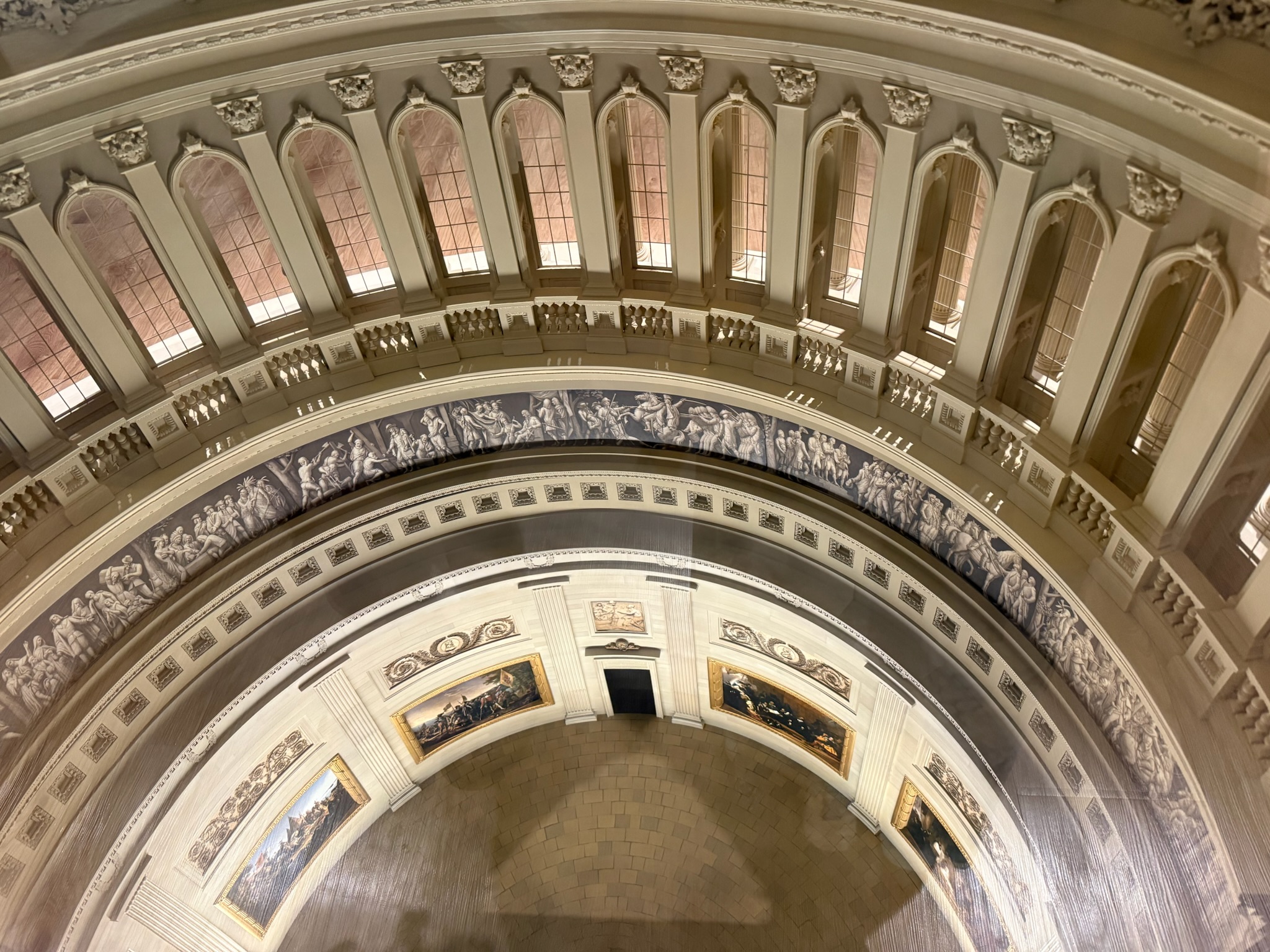
It was cool to be able to peer inside the model to see what it looked like on the inside when standing on the ledge between the friezes and octagonal panels.
There was a big section on restoration efforts. Even the newer parts of the building were old, and a team of people were devoted to maintaining and restoring the building. Erosion of the sandstone walls has been a big issue. Between 1958 – 1962, the East front was extended by 32-feet and its facade was replicated in marble. In the 1980s, they restored the West Front walls; it was the only part of the original exterior that has not been covered in marble. The Visitor’s Center was built in 2008.
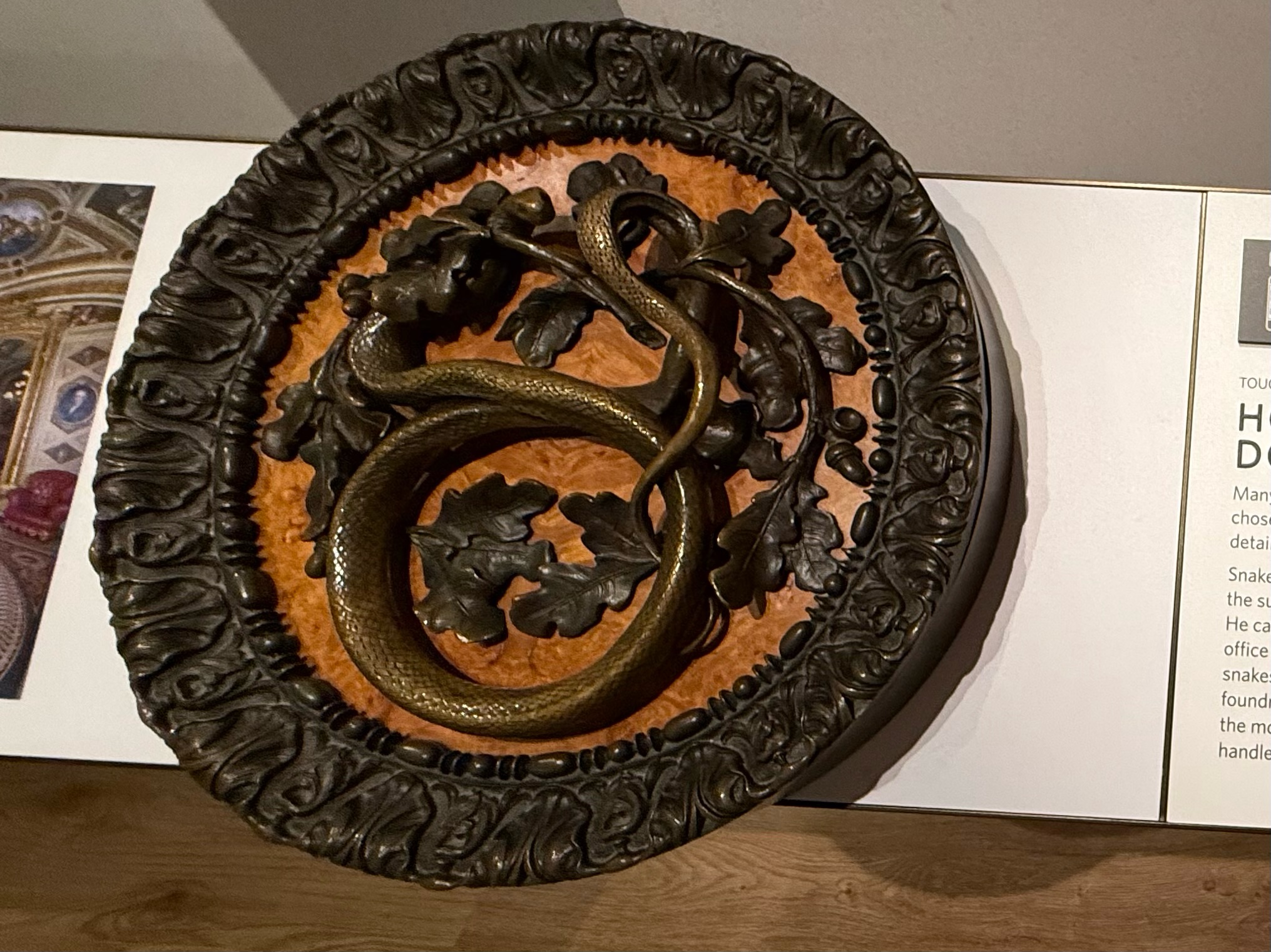
In addition to the building itself, the team has to maintain and restore the building’s contents. A sign pointed out that in a museum, artifacts can be carefully preserved, but in this building, artifacts are touched, sat on, and otherwise utilized every day, making preservation more challenging. Here was a replica of the door handles for the House of Representatives, which have apparently been on the doors since 1857. Eric and Christi could not think of a more appropriate creature to represent the House.
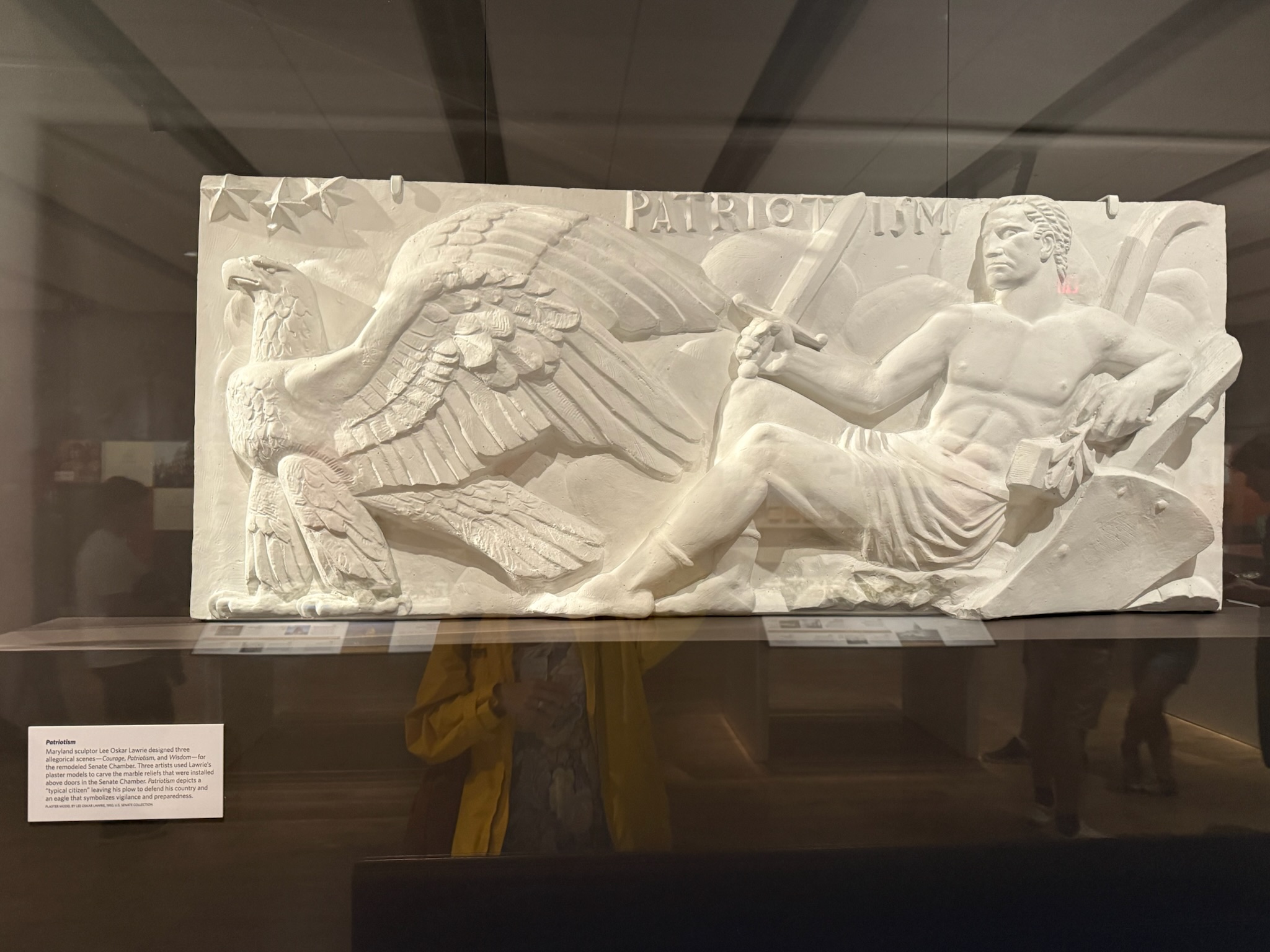
There was a section on how the Capitol chose art: they were trying to visually tell the story of America. Art was sometimes donated, sometimes they bought an existing piece, and often, they commissioned a piece for a specific reason. Even when art was commissioned in the Neo-classical style to match the architecture of the building, he artists were required to add special touches that identified the art as American; for example, if there were decorative plants or animals, they were to be iconic to America, such as tobacco leaves, corn stalks, chipmunks, eagles, etc. Some actual pieces of art were displayed in this section, but most of the display highlighted art that was featured in other parts of the building. This was a plaster model of a marble relief that sits over the doors of Senate chamber.
The exhibit was about the responsibilities of the House and Senate — how they were similar and how they were different. There was a short video that recapped the displays. The Senate has 100-members, 2 for each state. They serve 6-year terms. The House has 435 voting members (representing states) + 6 non-voting members (representing DC and overseas territories). Every state has at least one representative; how many a state gets was determined by census every 10-years. House members serve two-year terms.
In addition to making laws (detailed below), Congress approves treaties and executive nominations, raises funds through taxation and decides how those funds are spent, and declares war. They also hold the executive and judicial branches accountable through oversight and investigations, and can impeach federal officials. Since the power to do these things is shared by the two chambers, there are specific rules about which chamber does which aspects of each of these additional duties. For example, during impeachment, the House makes a formal allegation of wrongdoing and then the Senate conducts a trial and renders a verdict.
There was a display about how the how laws get passed. The following summary is a generic overview to help understand how the system works; the diagram was actually kind of complicated because the specific rules are subtly different between the two chambers. Every legislator sits on one or two committees that specialize in certain areas (ie agriculture, armed services, banking, etc). Legislators can introduce bills to be considered by their chamber. The bill is assigned to the appropriate committee within the chamber. The committee (usually) holds public meetings to listen to experts on the topic. The committee can outright reject it or “table” it, meaning set it aside to consider at another point in time. Or they can approve it as-is, or amend and approve it. Once approved, the bill is sent it to “the floor.” On “the floor,” they (usually) debate the bill and may possibly amend it. Once debate/amendments are concluded, they vote. If it passes, it gets sent to the other chamber for approval. It is common for the House and Senate to pass different versions of the same bill. When that happens, the two chambers have to resolve the discrepancies and do the debate/vote again in each chamber. Once the bill is approved in both chambers in the same form, it goes to the President, who either signs it into law or vetoes it. Vetoes can be overridden if 2/3 of the legislators vote to do so.
There was a display about State power vs Federal power. The Federal government can: print money, regulate interstate and international commerce, support national defense and maintain the postal system. Both the Federal and State governments can raise taxes and establish courts. The States can: regulate local business, conduct elections and maintain public schools.