Monday, September 29 — After we finished doing school in the morning, we went to lunch at the pizza restaurant that Eric and Keith had gone to last Tuesday. They’d really liked it and wanted Christi to try it. It was along one of the perpendicular streets that connect the waterfront and Main Avenue SW, but this street was closed on the street side, making it a little cul-de-sac accessible only from the waterfront side.
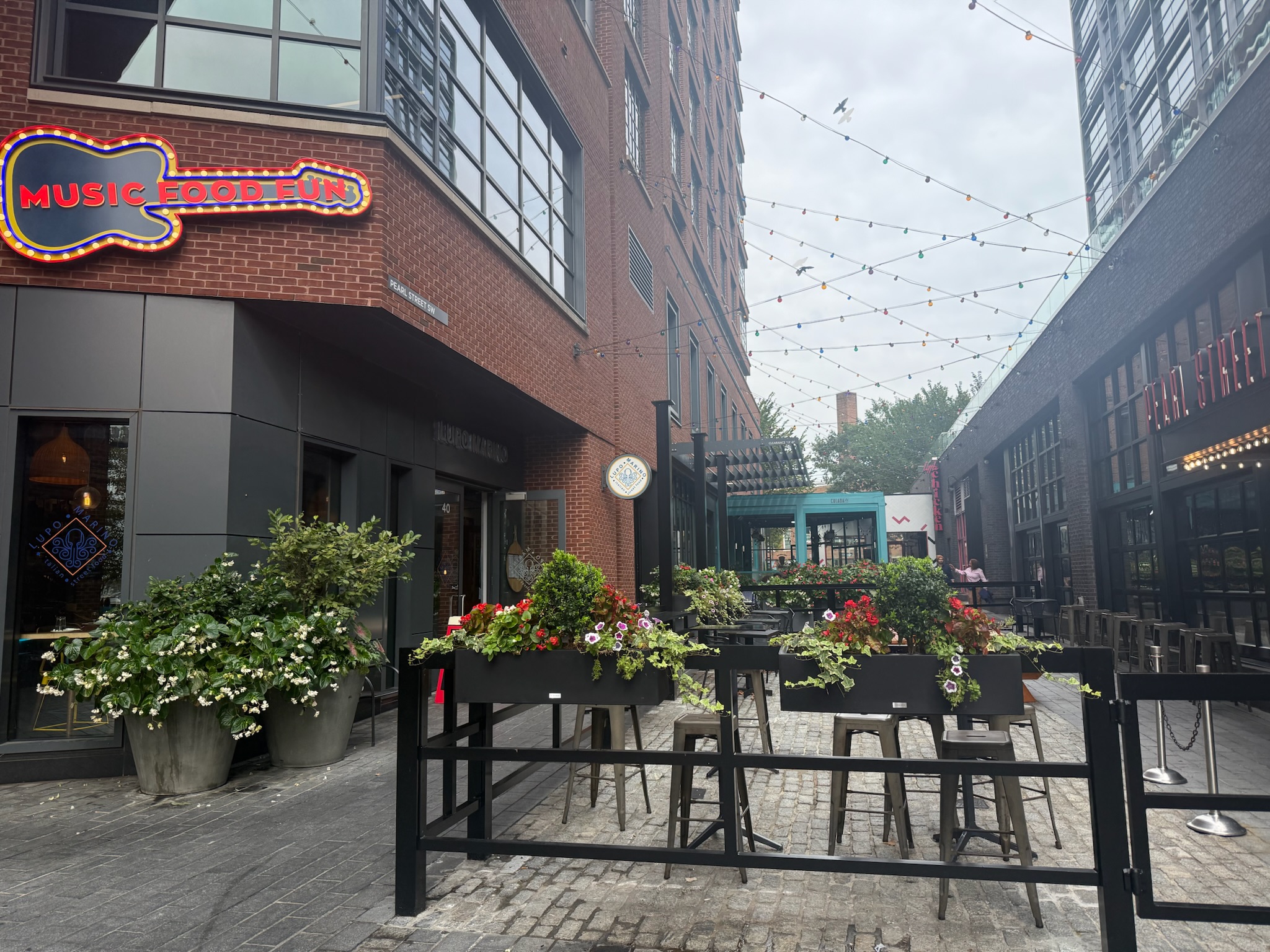
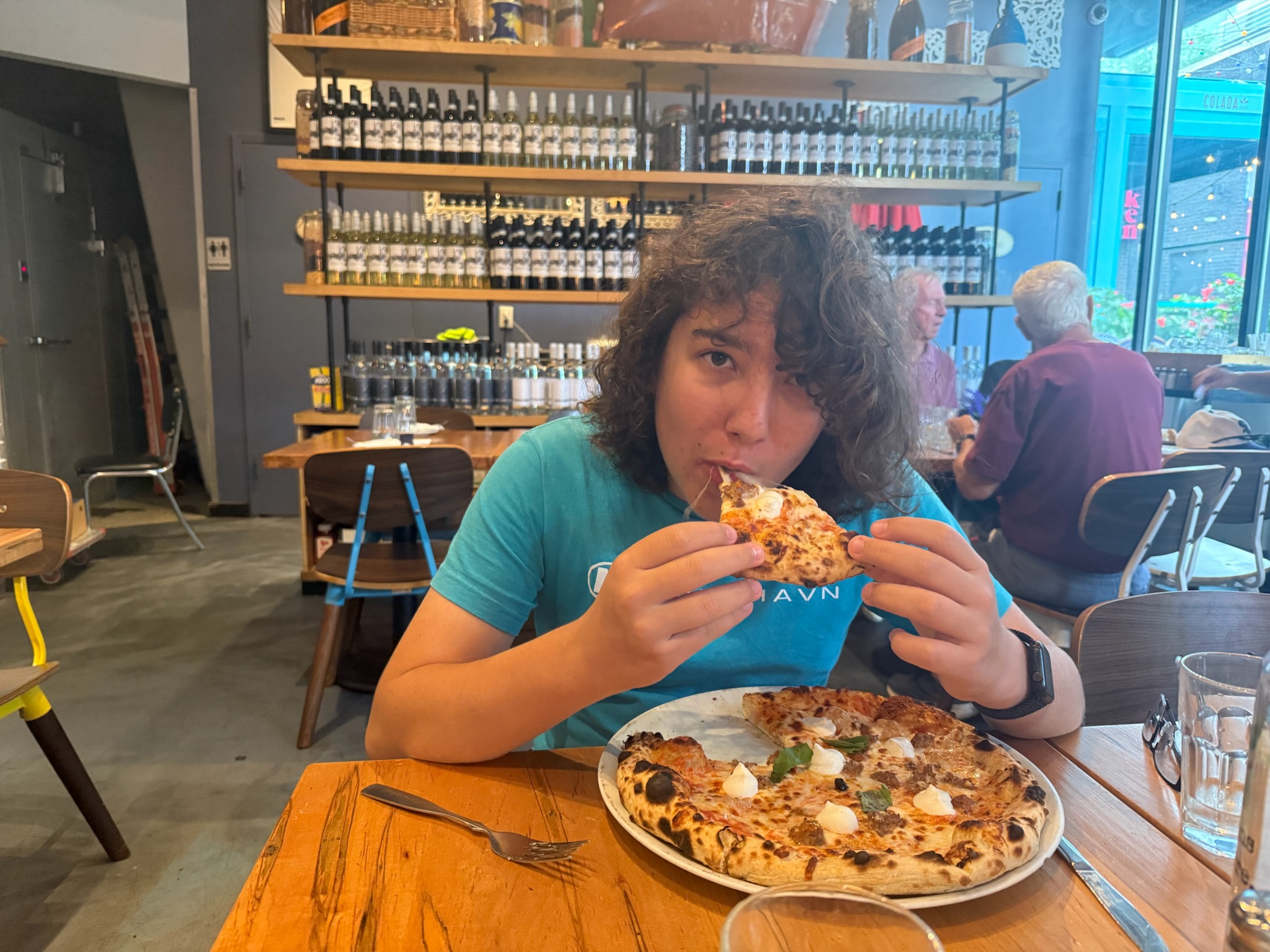
The restaurant was called Lupo Marino Italian Street Food. The sign was small and discreet, so the restaurant was easy to miss. As promised, the food was great.
After lunch, we went to the American History Museum. Eric picked it because he wanted to see the cryptological exhibit that he remembered as being really good. We caught the free shuttle to the National Mall, then walked northwest to the museum.
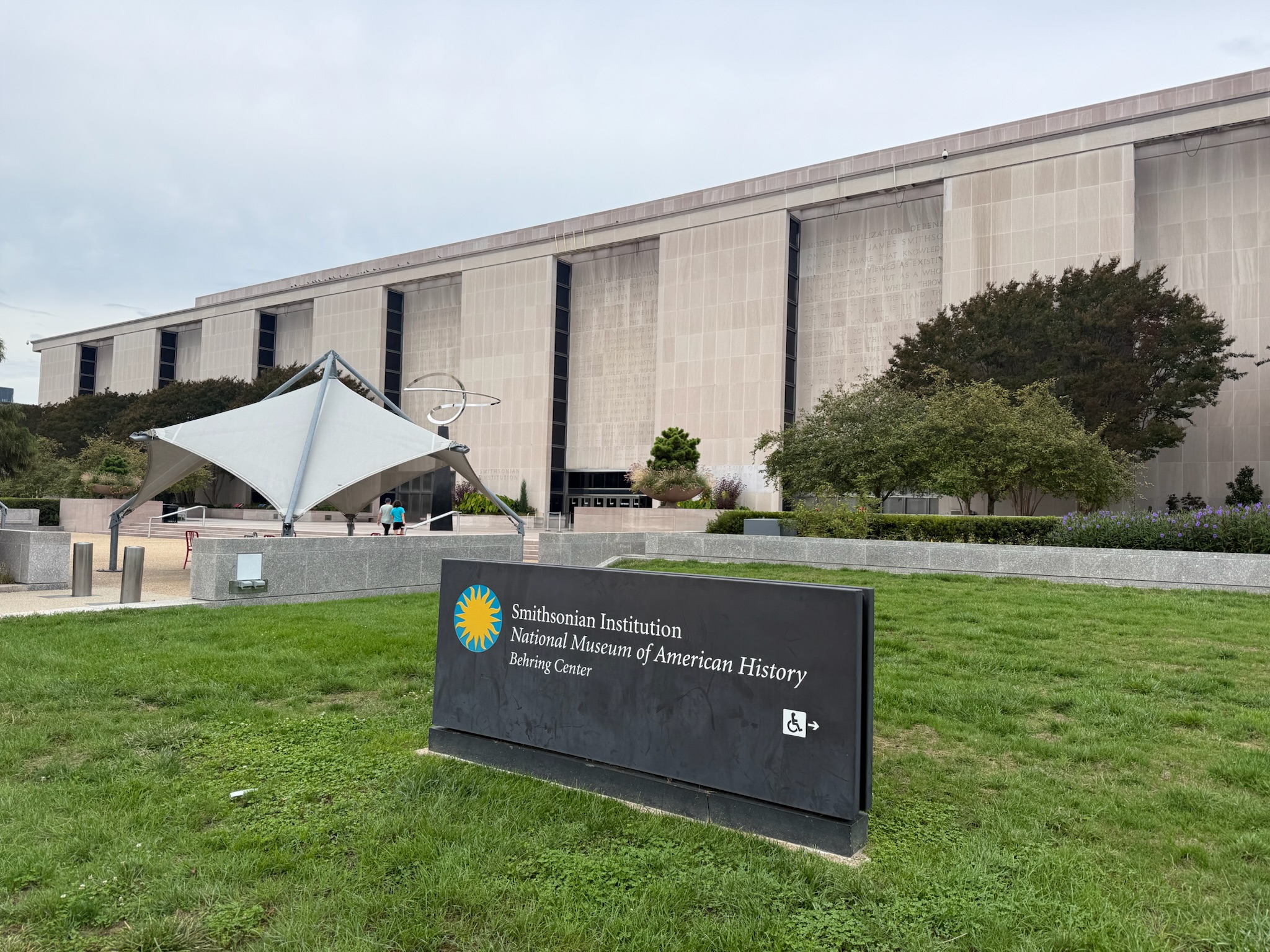
Since it was a Smithsonian Museum, entry was free. The first exhibit that we went to was the original Star Spangled Banner on the 2nd flood. This was the entrance to the room that had the flag on exhibit.
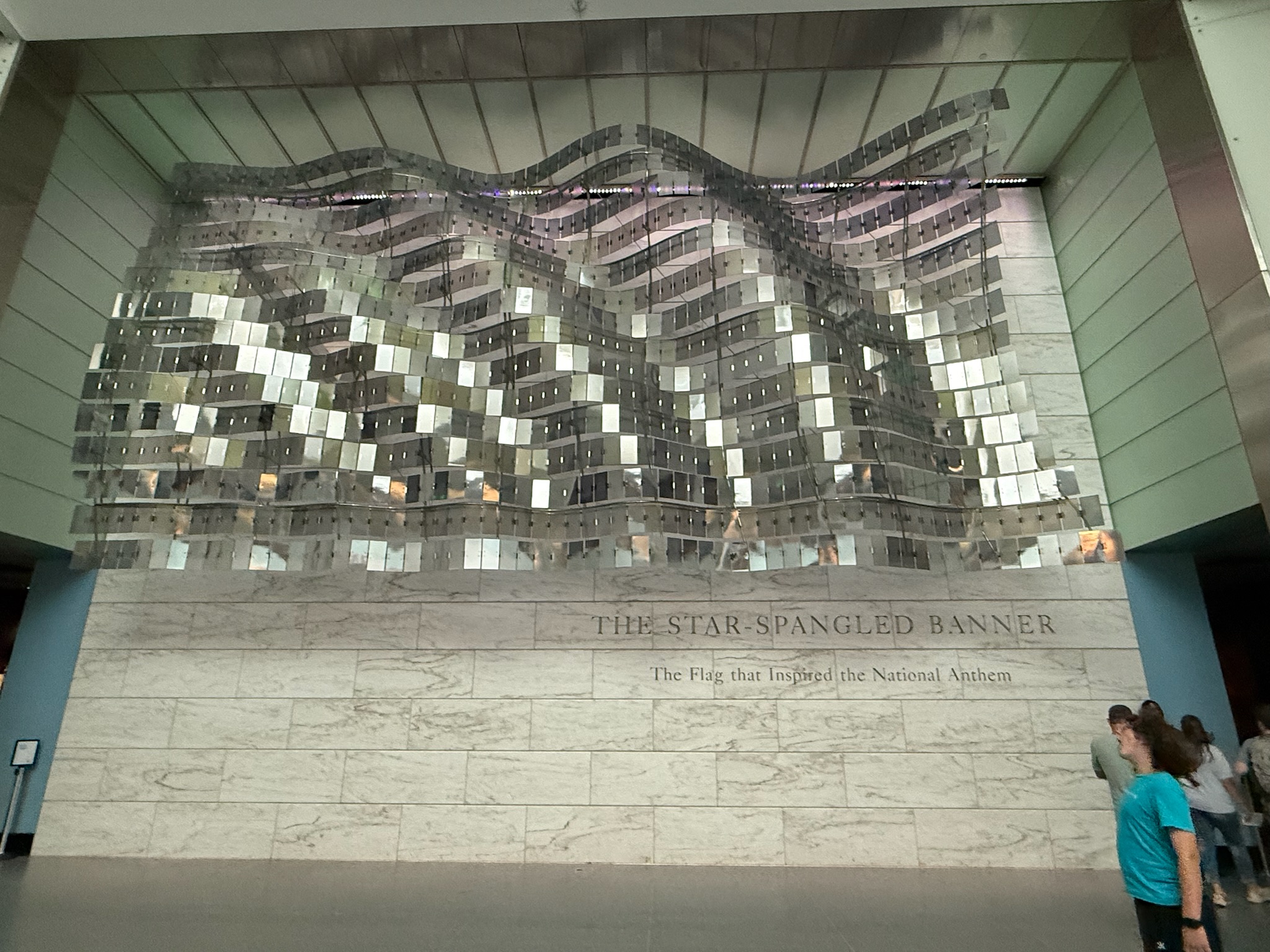
Photography was prohibited in this room. Knowing how big the flag was supposed to be, we were surprised to find that it wasn’t nearly as big as we’d expected. The sign said that it had been cut up and the pieces had been given out as souvenirs, and this was all that was left of it. Since we’d recently already learned about how the flag helped shape history by inspiring the song that is now our national anthem the Fort McHenry Museum and the Star Spangled Banner Museum, we didn’t bother to look at any of the other exhibits in the room.
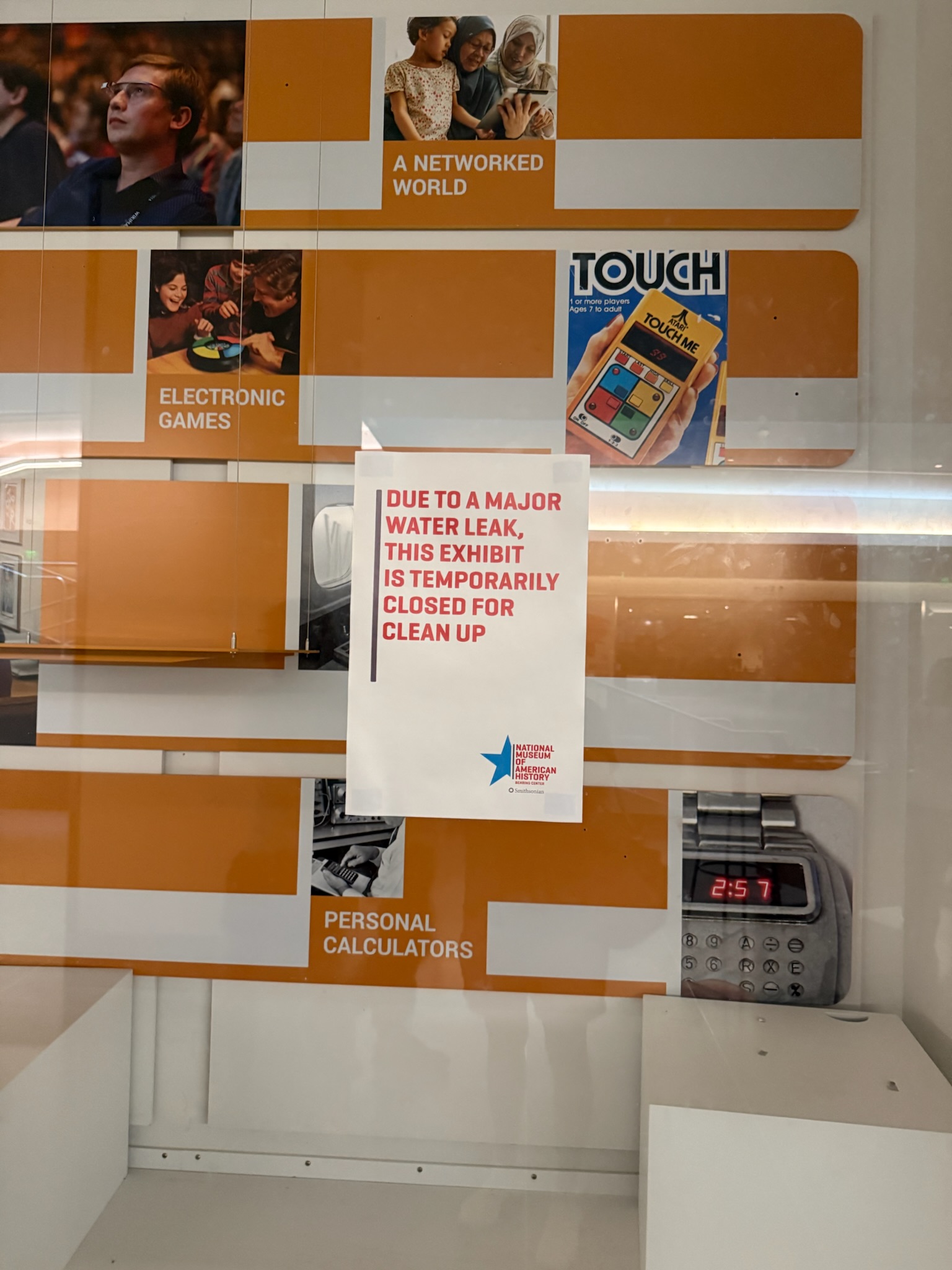
We then went down to the first floor to see the cryptological exhibit. Eric was crushed to find that the room with the exhibit was closed.
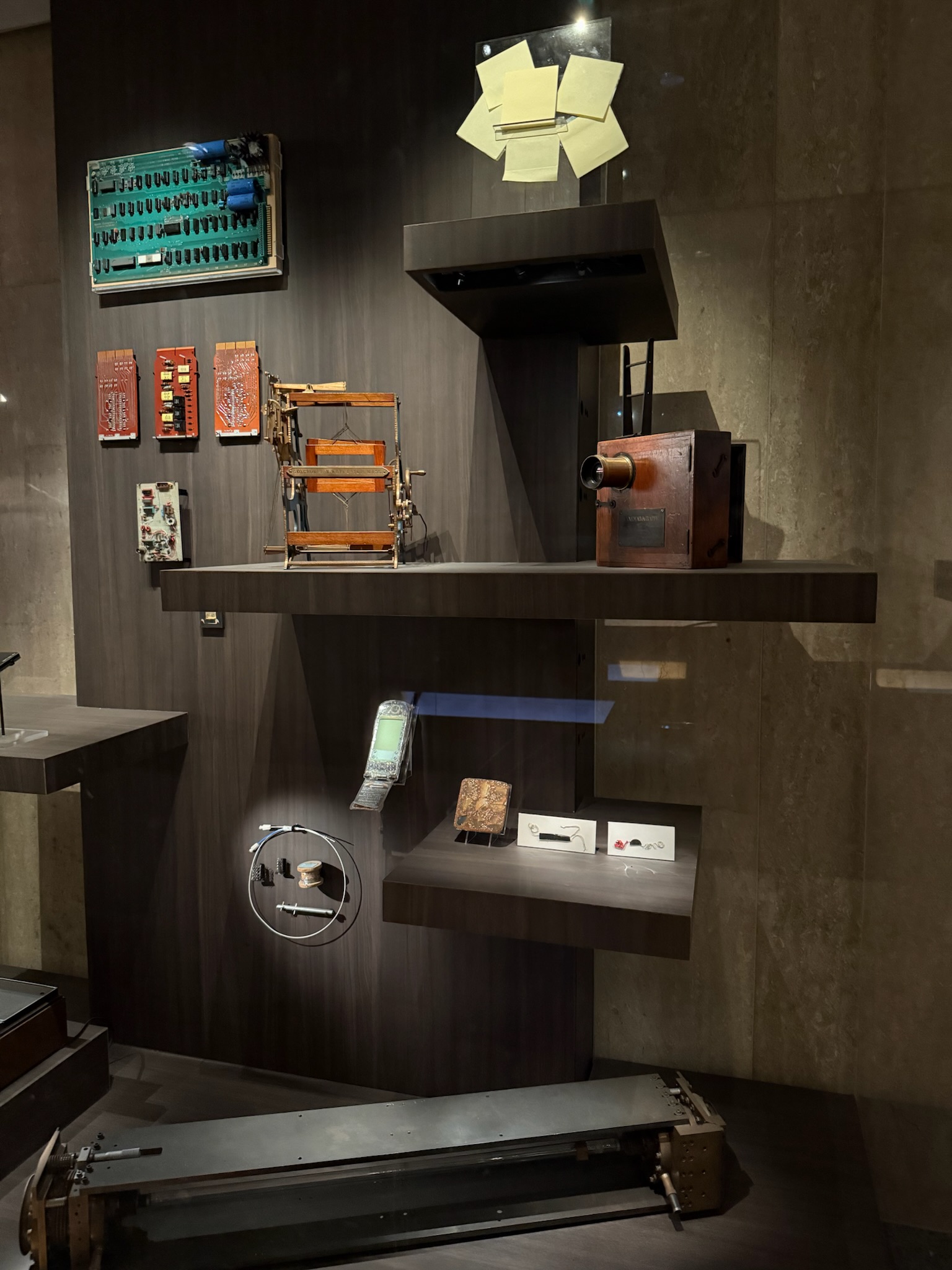
There was a display case in the hallway outside the room commemorating some inventions that have been inducted into the National Inventors Hall of Fame. The sign invited us to visit the Hall of Fame Museum in Alexandria, Virginia to see all of the inventions that have been recognized. The oldest item on display was a machine loom, patented in 1869. Another really old one was a machine that both recorded and projected moving images, patented in 1895. The newest was sticky notes, patented in the 2000s. While some of the items were non-electronic, like laminate skis, stents and Band-Aids, most were electronic devices such as circuit boards, computers, lasers, and cell phones. Also recognized was the solar cell to power electronic devices.
We headed to the next room over, which was called The Gallery of Numismatics.
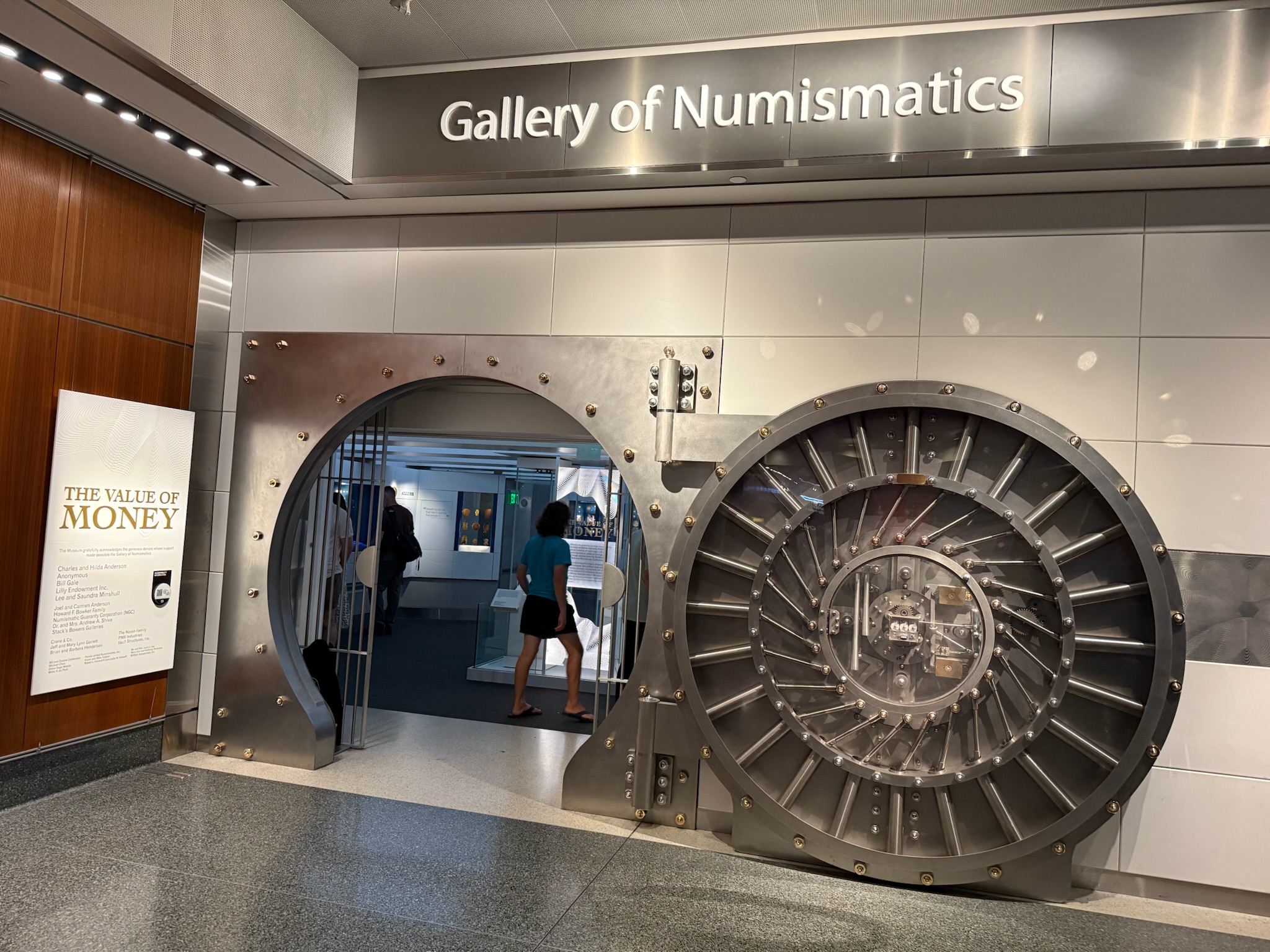
According to the sign, money is something that can be used to make a payment. Any object can be used as long as both parties agree to the value. All kinds of things have been used as money throughout history: seashells, cloth, teas, gems, metals, stones, etc.
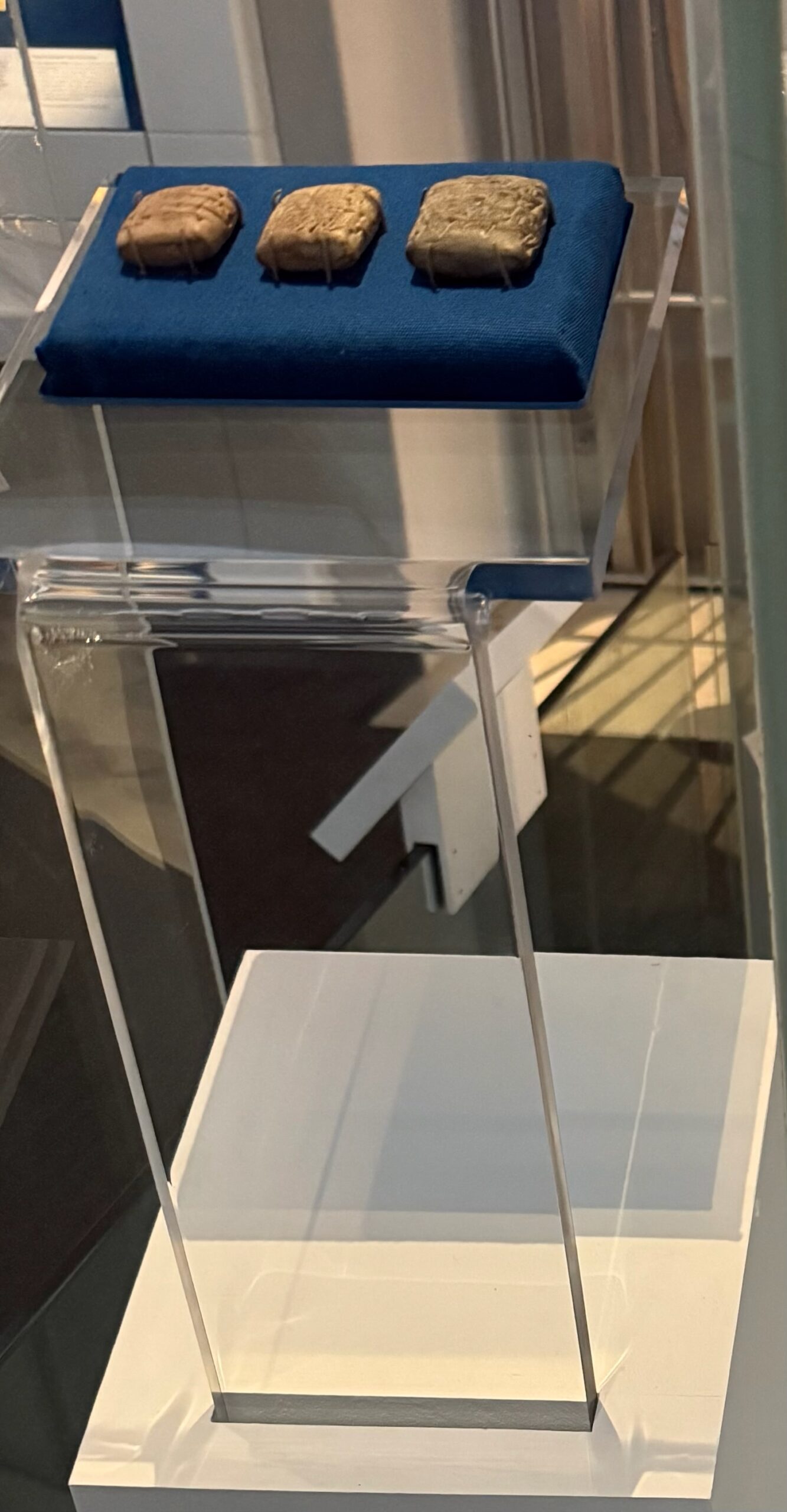
They had some cuneiform tablets on display from Ancient Mesopotamia that date back 2112 – 2004 BCE. They were believed to be accounting records for business transactions and trade in items such as sheep, goats, oxhide and barley.