continued…Next we moved on to an exhibit on the moon. According to the signs, analysis of the rocks brought back by the NASA lunar missions have helped scientists to unlock the moon’s history. Scientists believed that when Earth was very young, it was hit by an object the size of Mars. The impact vaporized massive amounts of rock from both celestial bodies and the moon formed from that vapor. When the moon first formed, it had volcanoes. Craters left by large meteorites hitting the moon became oceans of magma. The moon was actively volcanic for almost a billion years. Like Earth, meteorites still frequently hit the moon, but without an atmosphere to burn them up, the intact meteorites do more damage to the surface.

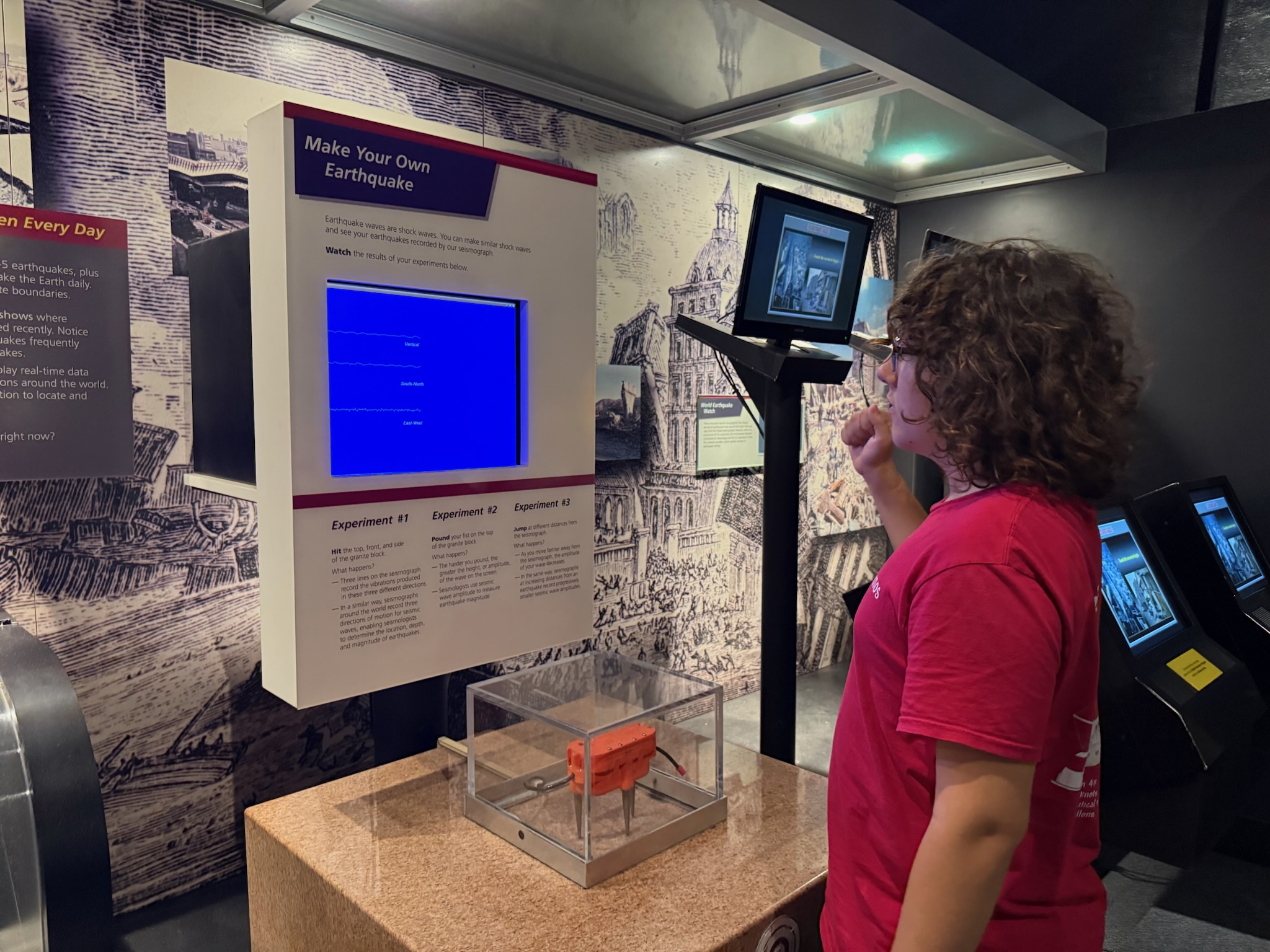
The moon exhibit was followed by an exhibit on Earth’s geology. There was a model showing that inner Earth was layered and how it formed this way. Another sign explained that plate tectonics caused the surface of Earth to regularly change. A series of signs talked about earthquakes, and there was a scale that measured how much of an earthquake someone made when they jumped.
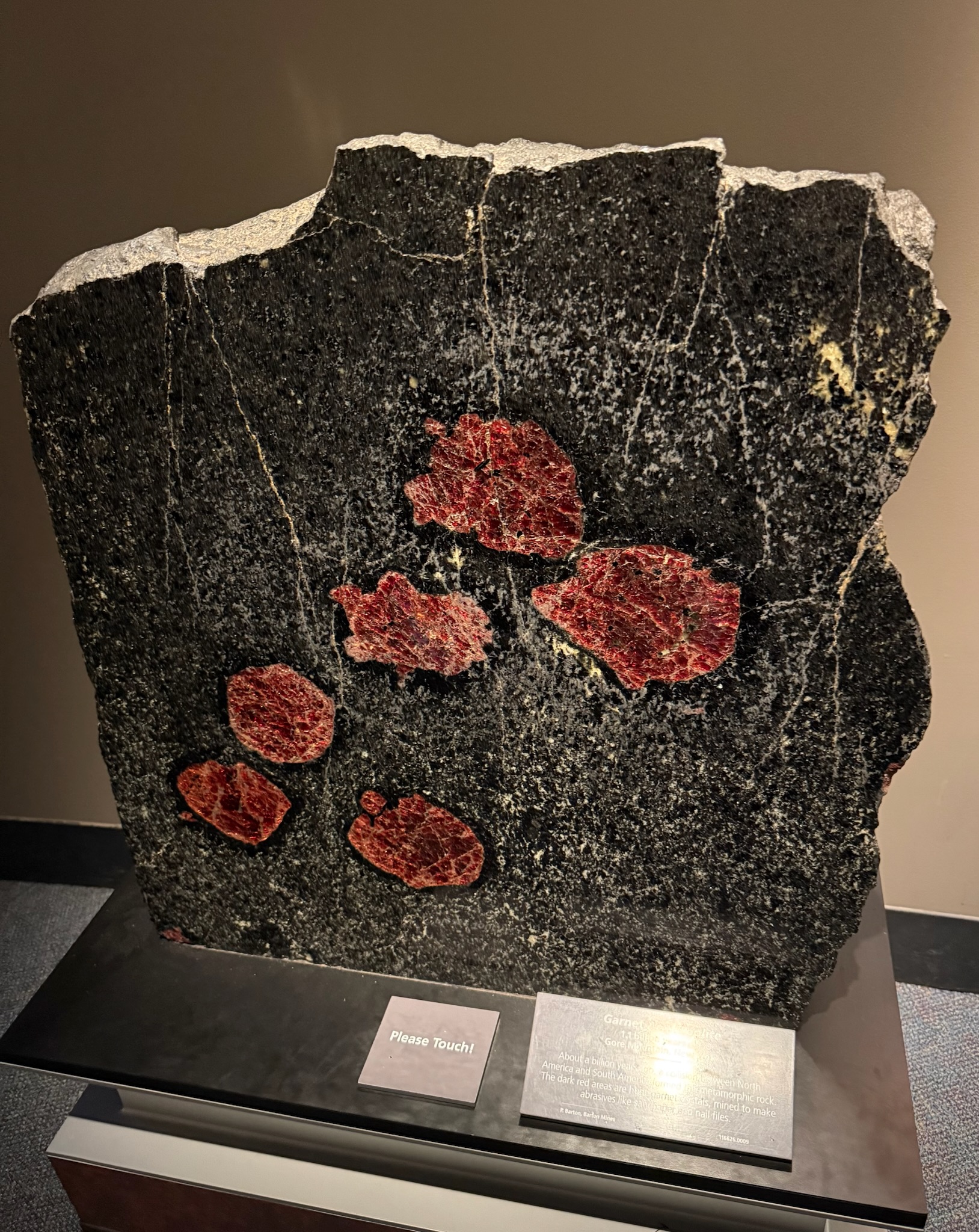
There was a display about rocks. Rocks are naturally occurring solid masses made up of one or more minerals. The display went into detail about many of the types found on Earth, what they were composed of, and how they formed. Since many types of rocks originate from lava, much of the display was about volcanoes. Some types of rocks form as a result of plate tectonics, too. Keith has been fascinated by rocks and gems ever since he was a toddler. Christi became fascinated by geology while we were in Baja. They both probably would have enjoyed this exhibit a lot if they weren’t mentally tired.
At the end, there was a short film recapping the information in the Earth exhibit.
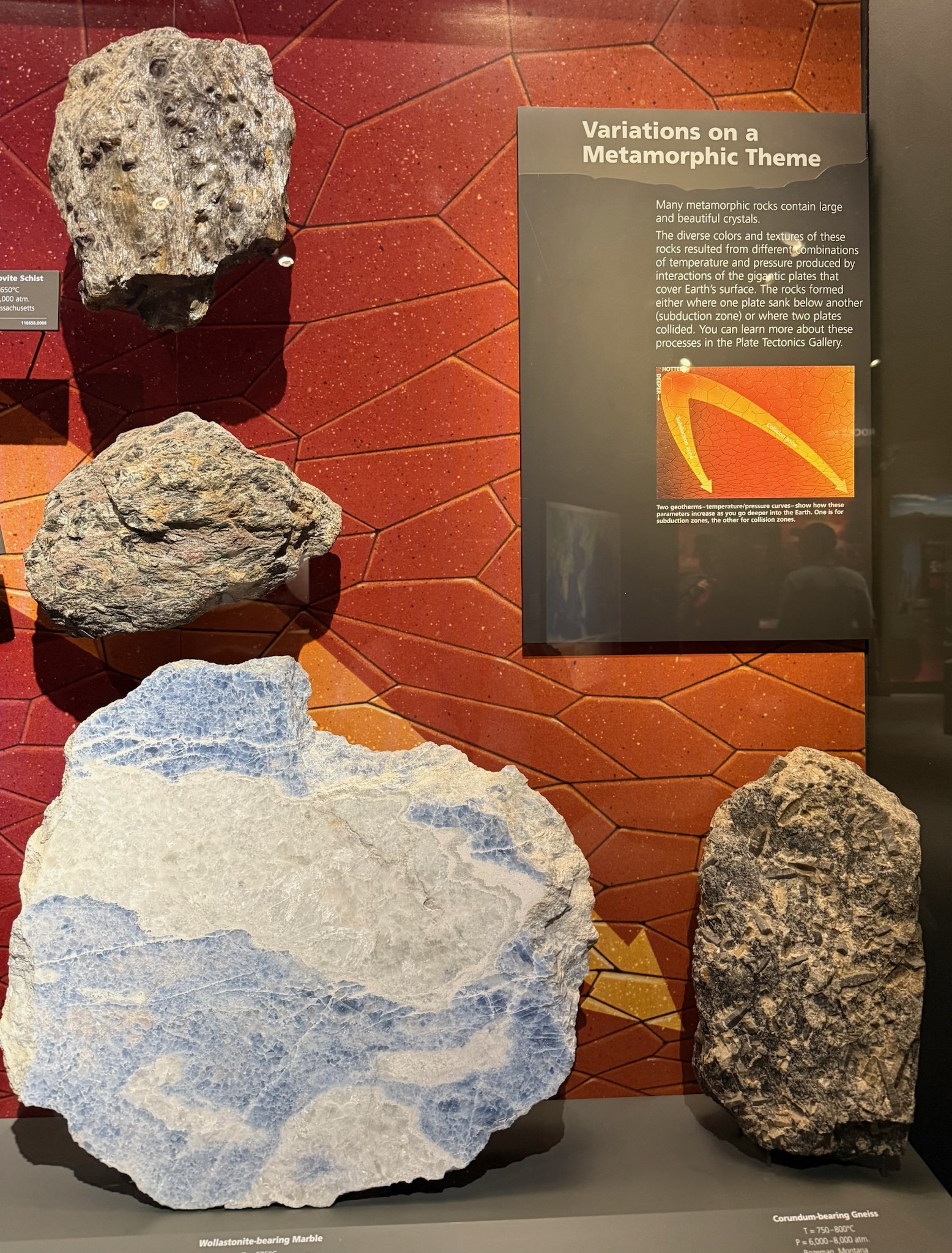
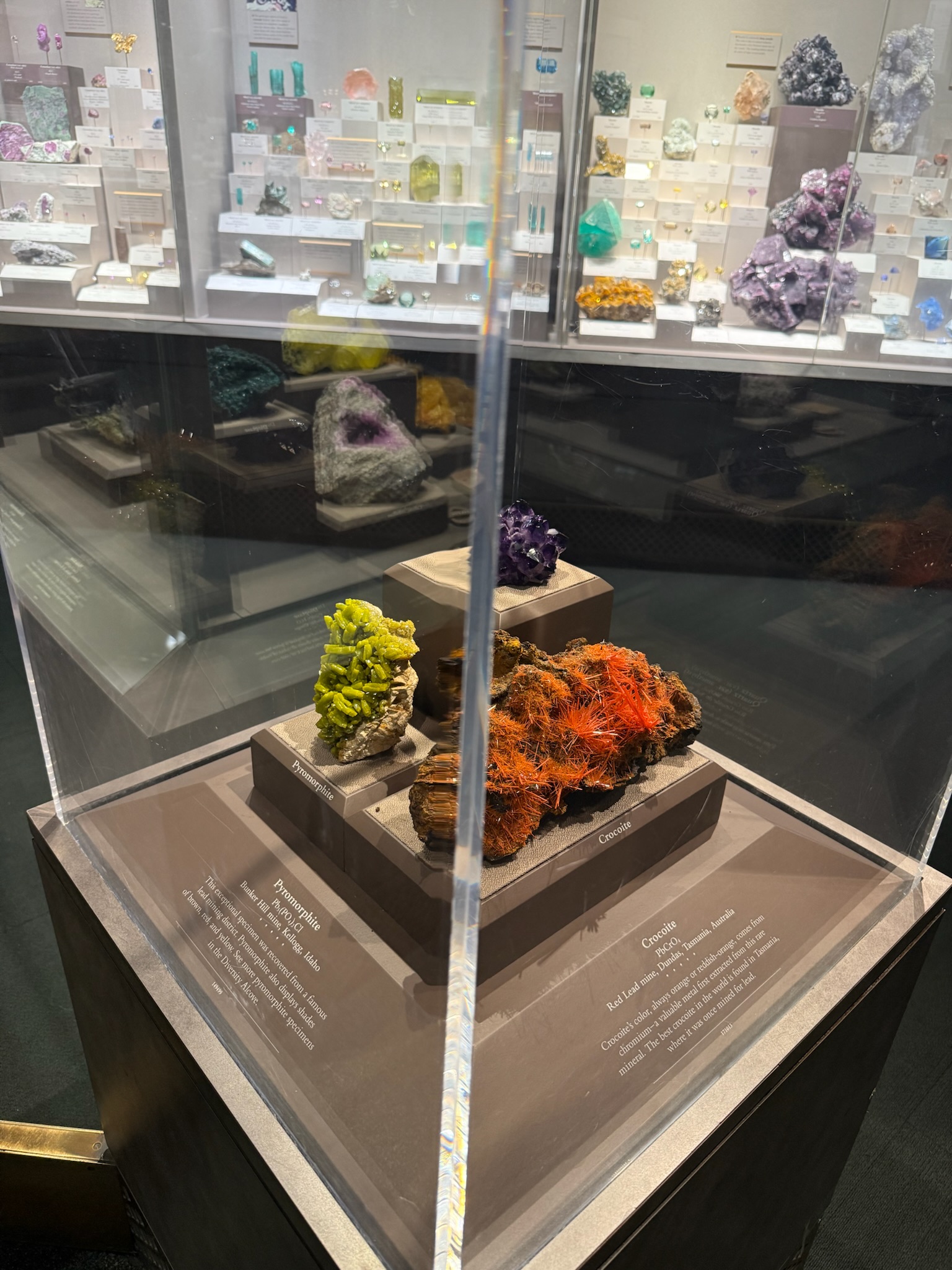
The rock exhibit led to an exhibit on minerals, ore, crystals and gems. Minerals were naturally occurring elements that have specific chemical and physical properties. Scientists have identified about 5,000 minerals, and they fine new ones every year. Some minerals were plentiful; some were rare. Some were found only on meteorites or in the rocks brought back from the moon.
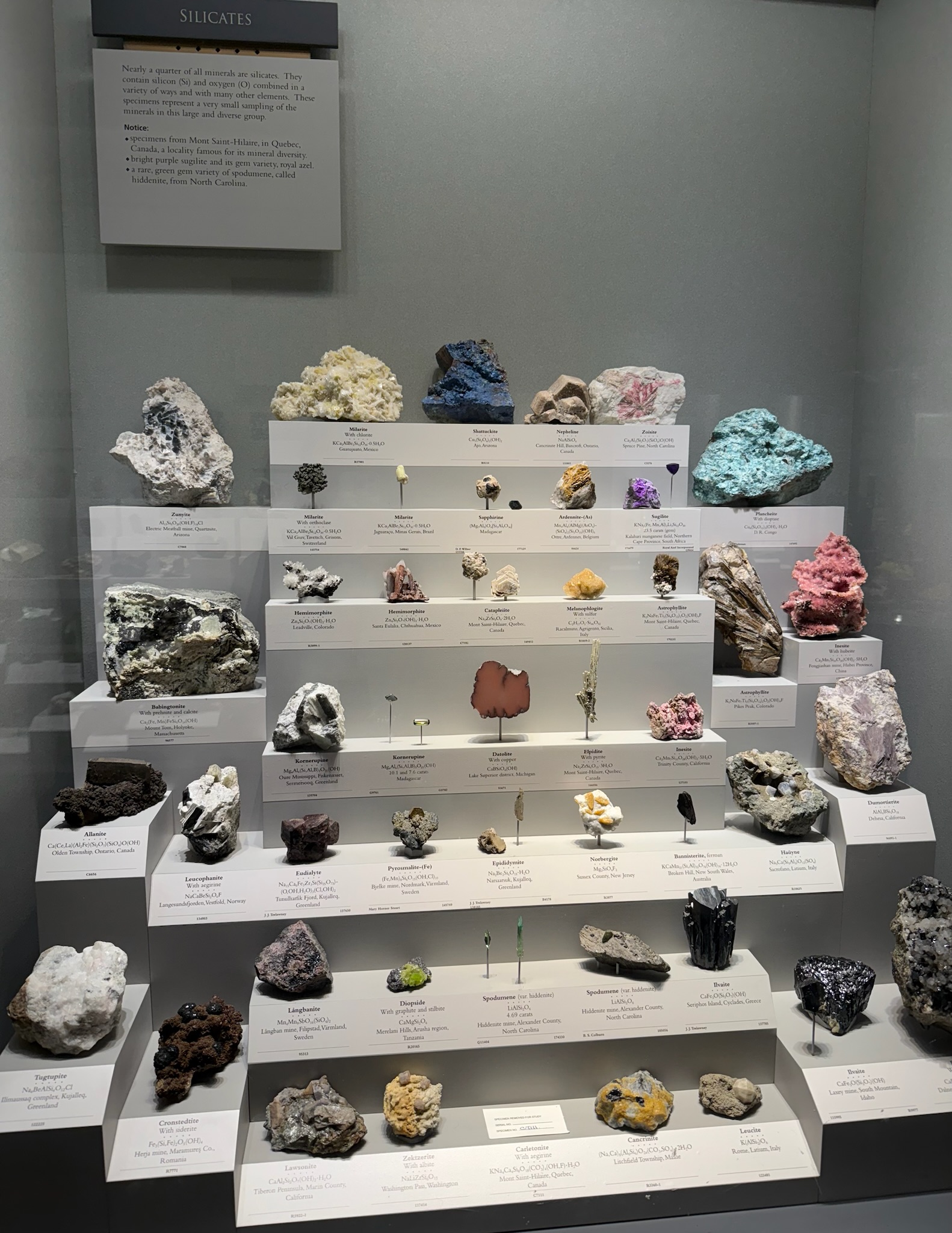
Metals were specific types of minerals.

Ore were rocks that contain a valuable mineral — usually a metal — that could be mined to extract the mineral. Some ore was stunningly beautiful. It was sad that in mining, such pretty rocks were usually destroyed for the mineral.
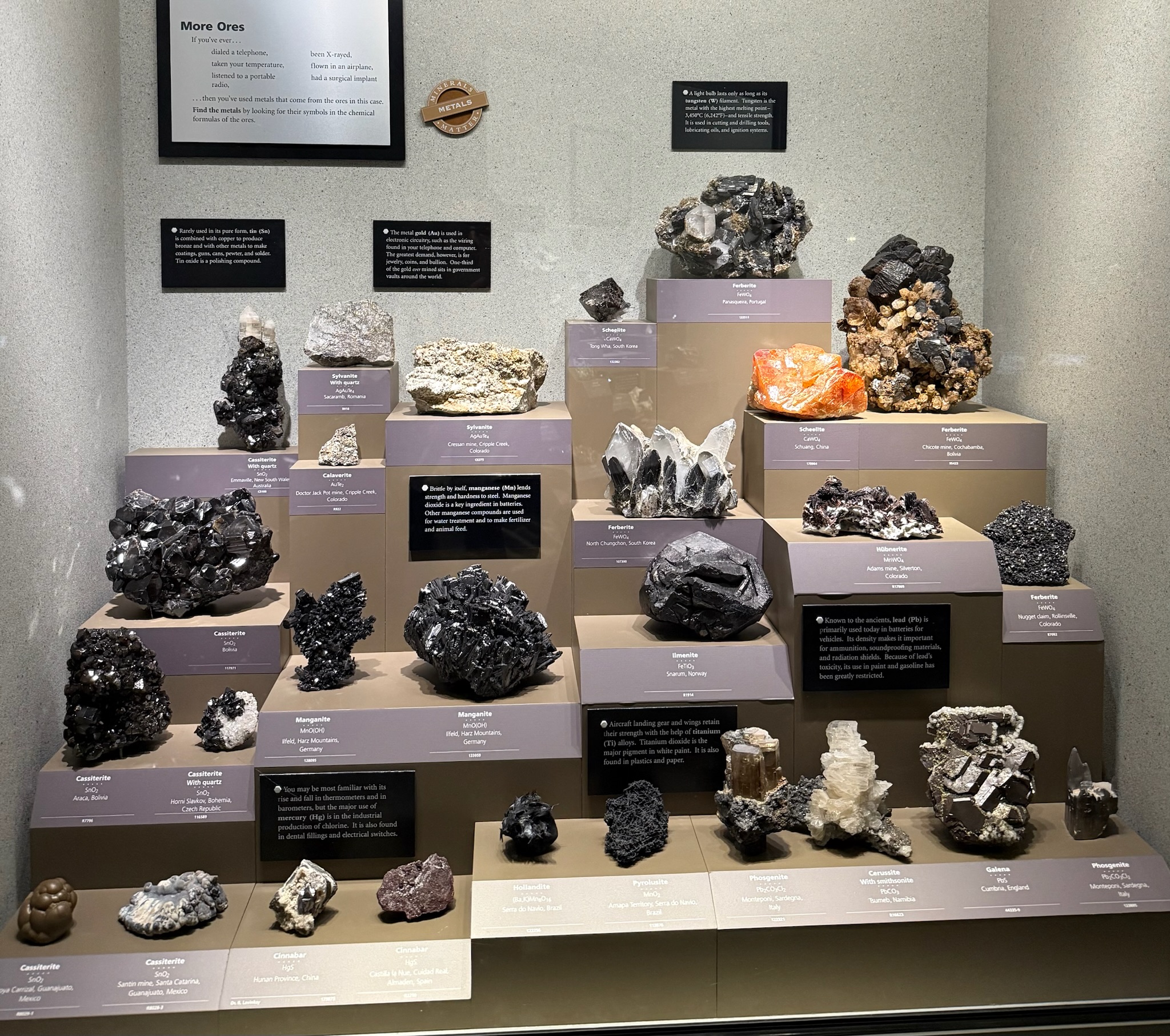
Some minerals glowed in the dark, so ore with those minerals glowed, too! This specimen was taken from a mine in New Jersey.

Crystals were solid structures that grew from dissolved minerals in water, water vapor or melted rock. The trillions of atoms connected into an orderly, repeating three-dimensional internal pattern. The crystals all start small, but how large and fast they grow, as well as the shapes they create, vary widely based on the conditions, including how much of the dissolved minerals were available, the space it was growing in, temperatures and pressures. All the crystals in this case were the mineral gypsum, but they all looked very different from one another because they formed in different conditions.
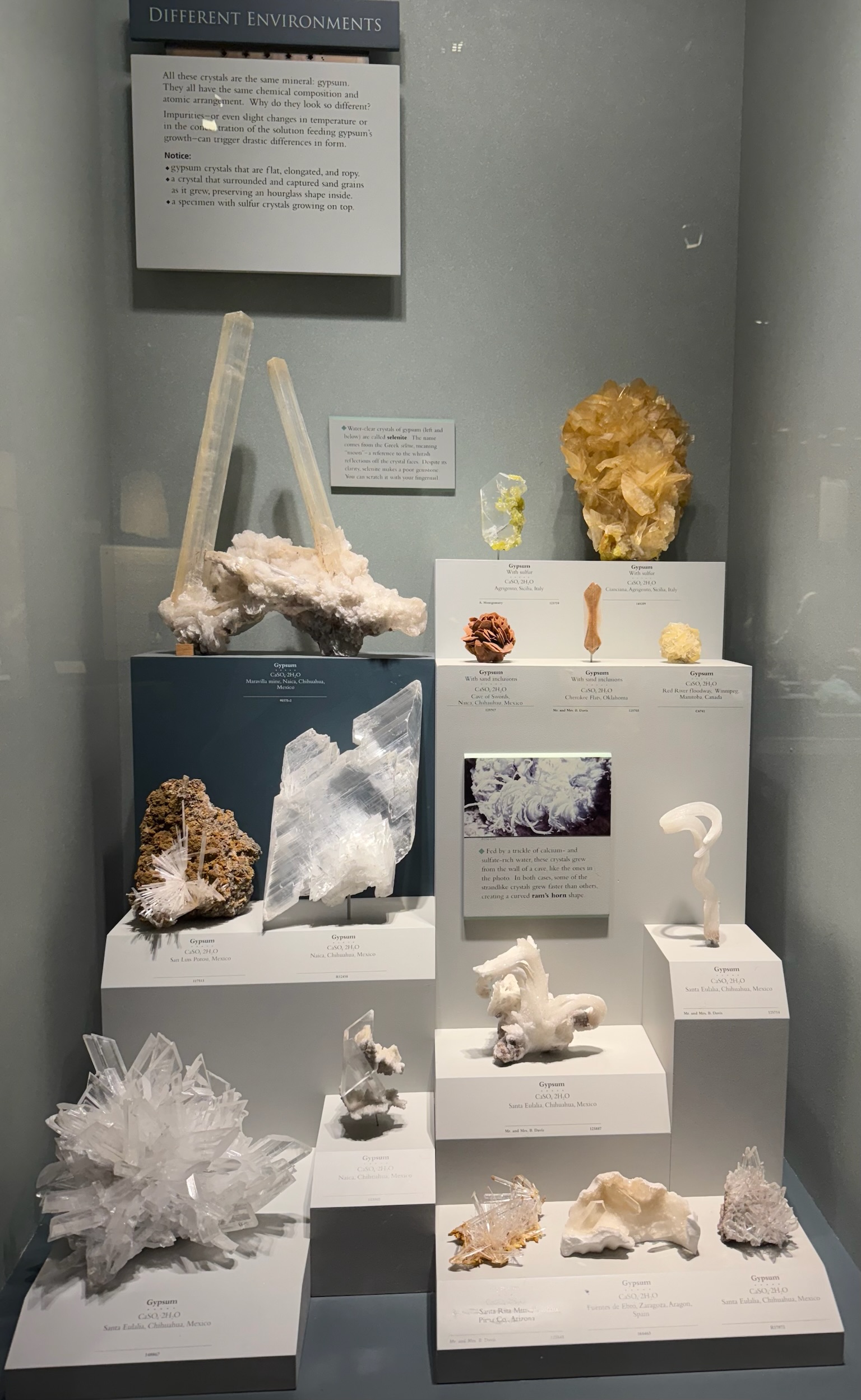
Since crystals could grow from a wide variety of mineral solutions and into a wide variety of shapes and sizes, there seemed to be limitless amounts of crystal structures that could be formed. After crystals, we moved on to gems.